

10 Best Visual Project Management Software For 2026

10 Best Visual Project Management Software Shortlist


If you’ve ever struggled with scattered information, unclear timelines, or tracking work across teams, you’re not alone. That’s where visual project management software comes in. By using interactive dashboards, dynamic reports, and intuitive workflows, these tools help you get a clear, real-time picture of your projects at a glance.
However, with so many different tools that offer visuals, figuring out which is best for you is tough. Therefore, in this post I make things simple, leveraging my experience managing big, complex projects, and using dozens of different PM tools to bring you this shortlist of the best visual project management software.
Why Trust Our Software Recommendations
Our team has been testing and reviewing software since 2012. As project managers ourselves, we know how difficult—and important—it is to choose the right software.
For this guide, we evaluated tools using hands-on testing and independent research, scoring tools using our selection criteria. We also draw on insights from industry thought leaders and practicing project management experts.
Our reviews reflect our human editorial judgment, not a sales pitch.
Expert reviewers:
Visual Project Management Solutions Software Comparison Table
| Tool | Best For | Trial Info | Price | ||
|---|---|---|---|---|---|
| 1 | Best for free plan with bold color-coding of tasks | Free plan + 14-day trial available | From $9/user/month (billed annually) | Website | |
| 2 | Best collaborative visual project management software | Free plan + 14-day free trial + free demo available | From $10/user/month (billed annually) | Website | |
| 3 | Best for real-time financial reporting | 14-day free trial | From $10/user/month (billed annually) | Website | |
| 4 | Best for capacity planning visualization | Free demo available | Pricing upon request | Website | |
| 5 | Best for visualizing projects of varying complexity | Free plan + 15-day free trial + free demo available | From $4/user/month (billed annually) | Website | |
| 6 | Best for spreadsheet-style visual scheduling | 30-day free trial | From $9/user/month (billed annually) | Website | |
| 7 | Best for projects, resources, and finances in one | Free demo available | Pricing upon request | Website | |
| 8 | Best for entreprise control with frontline flexibility | 30-day free trial + demo available | From $15/user/month (billed annually) | Website | |
| 9 | Best for portfolio-wide analysis reports | Free plan available; 14-day free trial | From $3/user/month | Website | |
| 10 | Best for building Gantt charts | 14-day free trial + free demo available | From $7/user/month (billed annually) | Website |


Overviews Of The 10 Best Visual Project Management Solutions
If you’ve ever struggled with scattered information, unclear timelines, or tracking work across teams, you’re not alone. That’s where visual project management software comes in. By using interactive dashboards, dynamic reports, and intuitive workflows, these tools help you get a clear, real-time picture of your projects at a glance.Here’s a brief description of each of the visual project management software that is featured on this list.

Best for free plan with bold color-coding of tasks
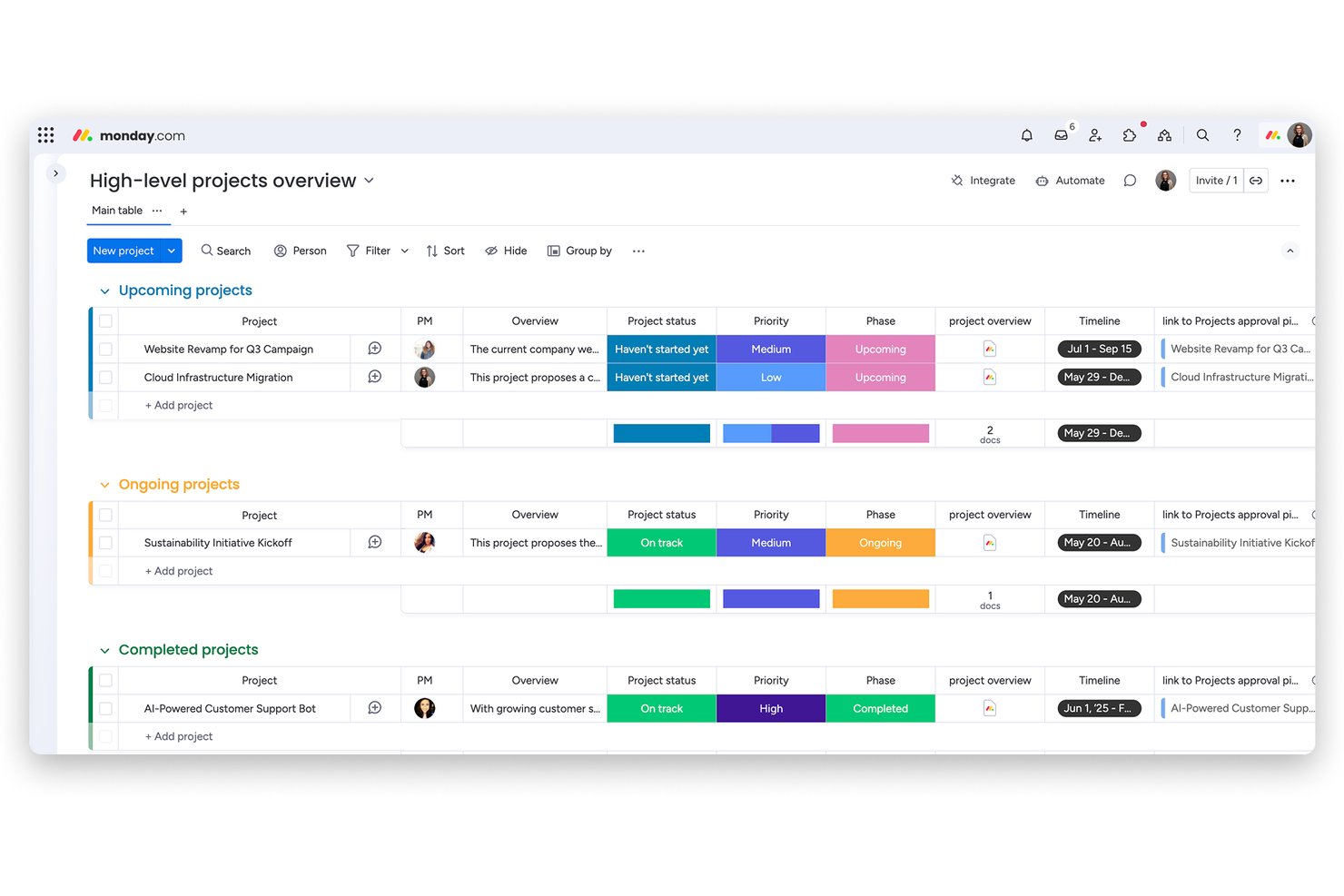
monday AI Workspace is a visual work management platform that combines color-coded task boards, Gantt timelines, Kanban views, and AI-powered dashboards to help teams plan, track, and report on projects across functions.
Who Is monday AI Workspace Best For?
It's a strong fit for cross-functional teams at mid-size companies that need a visually intuitive way to manage multiple projects without heavy IT setup.
Why I Picked monday AI Workspace
monday AI Workspace earns its spot on my shortlist because the free plan delivers a genuinely visual experience, not a stripped-down text list. You get up to three color-coded boards where each status column maps to a distinct color, so task states like "Stuck," "In Progress," and "Done" are immediately readable across a whole team's work. I particularly like that those status colors are fully customizable, so my team can build a visual language that reflects our actual workflow stages.
monday AI Workspace Key Features
- AI-powered dashboards: Build customizable visual dashboards that sync project data in real time from multiple boards.
- Drag-and-drop Gantt and timeline views: Schedule and adjust tasks visually across timelines and milestones without switching tools.
- No-code workflow automation: Automate task assignments, notifications, and status changes with an intuitive visual builder.
- Native portfolio project tracking: Aggregate progress and status updates from several boards into a single high-level portfolio view.
monday AI Workspace Integrations
monday AI Workspace offers hundreds of native and marketplace integrations, including Slack, Google Workspace, Microsoft 365, Salesforce, HubSpot, Jira, GitHub, and Zendesk. It also supports Zapier and provides an API for custom integrations.
Pros and Cons
Pros:
- AI auto-generates project plans from prompts
- Multiple project views sync in real time
- Free plan includes real color-coded visual boards
Cons:
- Dashboards require higher-tier plans to unlock
- Gantt charts locked behind paid tiers
New Product Updates from monday AI Workspace
monday AI Workspace Adds Human Approval Routing
monday AI Workspace adds a human-in-the-loop approval block to AI Workflows, sending approval requests and routing workflow paths based on responses. For more information, visit monday AI Workspace's official site.

Wrike
Best collaborative visual project management software
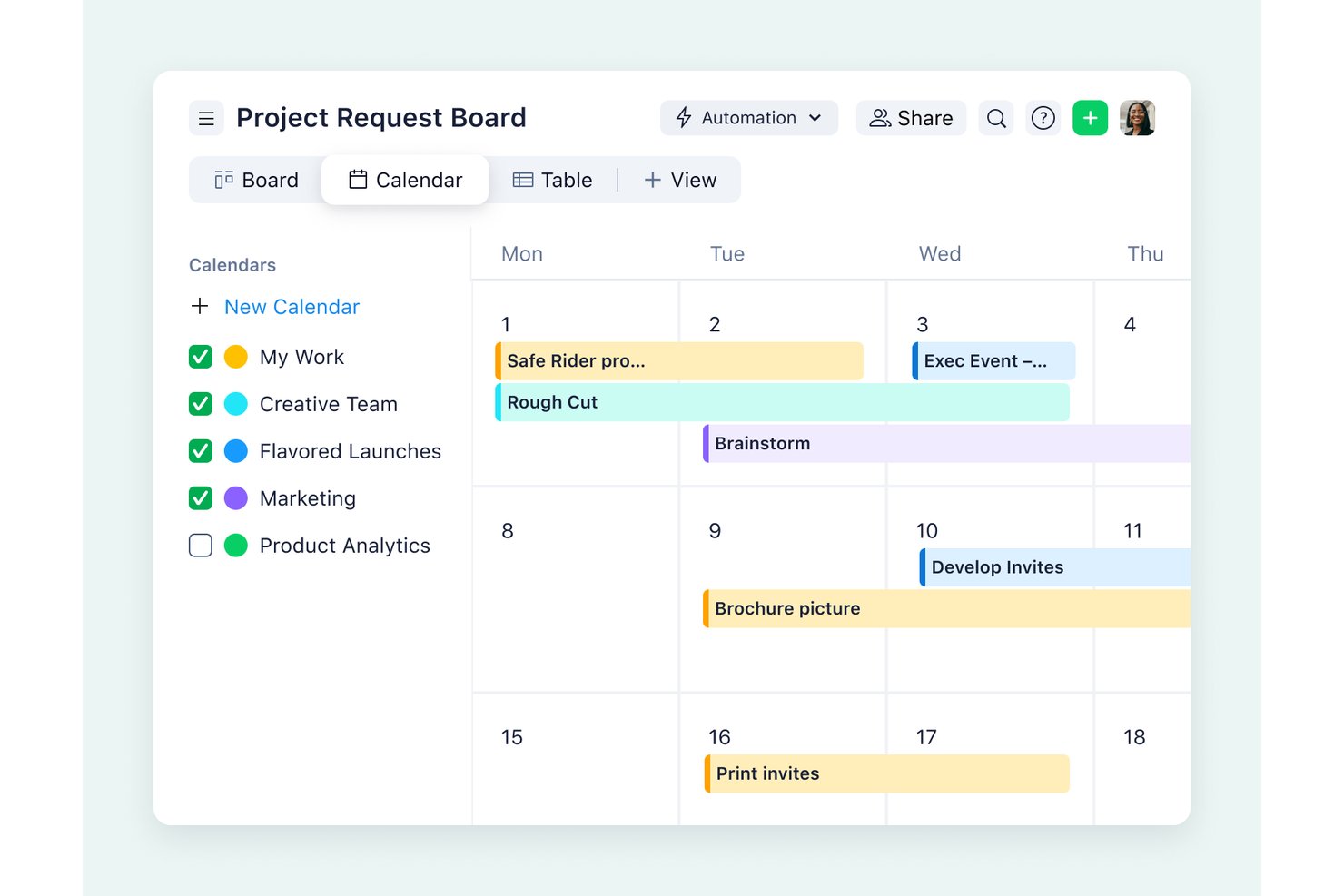
Wrike is a visual project management platform that brings together Gantt charts, Kanban boards, workload views, and real-time dashboards alongside built-in proofing, approval workflows, and automated dependency scheduling.
Who Is Wrike Best For?
Wrike is a strong fit for project managers and team leads at mid-size to large organizations who need enterprise-grade dependency tracking, workload visibility, and cross-functional collaboration in one place.
Why I Picked Wrike
Wrike earns its spot as one of the best on my shortlist because the depth of its collaborative visual tools genuinely sets it apart. I love that proofing, approval chains, and live document editing sit right alongside Gantt charts and workload heatmaps in one workspace. When my team is reviewing a campaign asset, we can leave pinned visual feedback, route it through an approval chain, and immediately see how sign-off delays ripple through dependent tasks on the timeline.
Wrike Key Features
- Critical path tracking: Wrike highlights the tasks that directly control your project's finish date, showing total and free float so you can spot schedule risk before it becomes a problem.
- Workload charts: Visualize each team member's capacity at a glance and reassign tasks directly from the chart to balance uneven workloads.
- Dynamic request forms: Capture incoming work through customizable intake forms that automatically route tasks to the right project or folder.
- Public Gantt links: Share a live, view-only timeline with external stakeholders via a password-protected link, no Wrike account required.
Wrike Integrations
Wrike supports 400+ prebuilt connectors, including Jira, GitHub, Slack, Microsoft Teams, Google Workspace, Adobe Creative Cloud, Salesforce, and Power BI. It also offers an open REST API for custom integrations; two-way Jira and GitHub sync requires Wrike Sync.
Pros and Cons
Pros:
- Proofing connects visual feedback with approval workflows
- Workload charts expose capacity imbalances across teams
- Gantt dependencies reschedule linked tasks automatically
Cons:
- Seat bundles can leave small teams overprovisioned
- Complex setup can slow team onboarding
New Product Updates from Wrike

Wrike Redesigns AI Agent Builder
Wrike redesigns its AI Agent Builder with a side-by-side setup, Scopes, sentence-style triggers and actions, and clearer filters. These changes make it easier to configure, test, and manage agent behavior. For more information, visit Wrike’s official site.

Celoxis
Best for real-time financial reporting
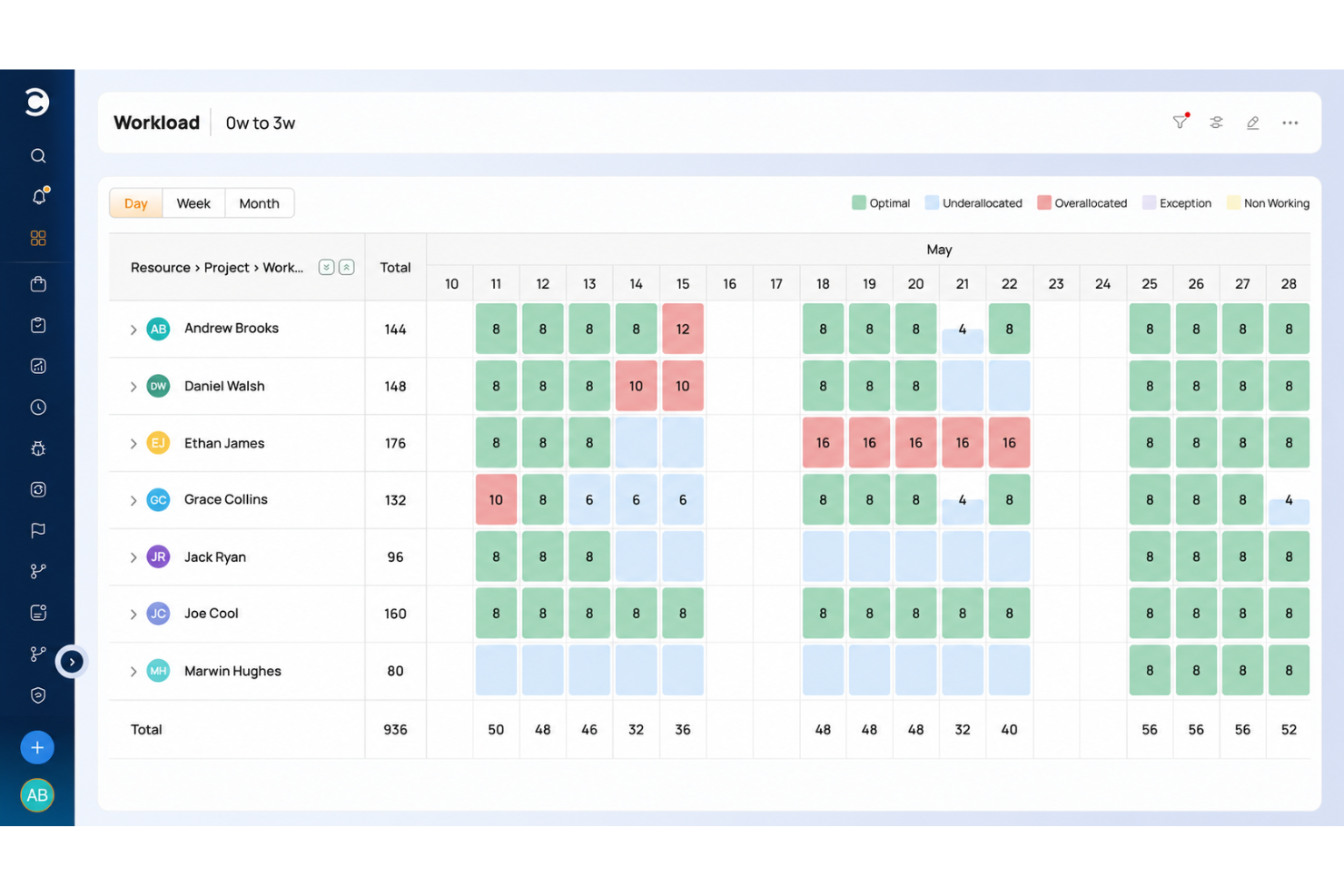
Celoxis is an enterprise project and portfolio management platform offering Gantt scheduling, dependency mapping, resource workload heatmaps, financial tracking, and customizable dashboards across multiple project views.
Who Is Celoxis Best For?
Celoxis suits PMOs and portfolio managers at mid-to-large organizations who need financial tracking and scheduling depth alongside visual project reporting.
Why I Picked Celoxis
Celoxis earns its spot on my shortlist because its real-time financial reporting goes deeper than what most visual project management tools offer. I love that earned value metrics, plan vs. actual cost tracking, and project health RAG indicators all feed into customizable dashboards that update live. Pair that with full critical path Gantt scheduling across multiple projects simultaneously, and portfolio managers get a genuinely clear financial and timeline picture in one place.
Celoxis Key Features
- Multi-project Gantt view: See tasks, dependencies, and milestones across multiple projects simultaneously in a single interactive Gantt timeline.
- Workload heatmaps: Visualize team capacity across the portfolio and spot overloads or availability gaps before they affect delivery.
- Client portal: Share branded, customizable project reports and task updates with clients directly, with financial fields automatically hidden.
- Automatic task rescheduling: When a dependency shifts, Celoxis recalculates downstream task dates based on work calendars, holidays, and shifts.
Celoxis Integrations
Celoxis offers 21 native integrations, including Jira, GitHub, Azure DevOps, Slack, Google Drive, Google Sheets, Microsoft 365, Outlook, Trello, and QuickBooks Online. It also supports a REST API, webhooks, and Zapier.
Pros and Cons
Pros:
- Workload heatmaps reveal team capacity gaps
- Financial dashboards track earned value and costs
- Gantt maps dependencies across project portfolios
Cons:
- Complex screens slow first-time project setup
- Kanban cards depend on editable report fields
Best for capacity planning visualization
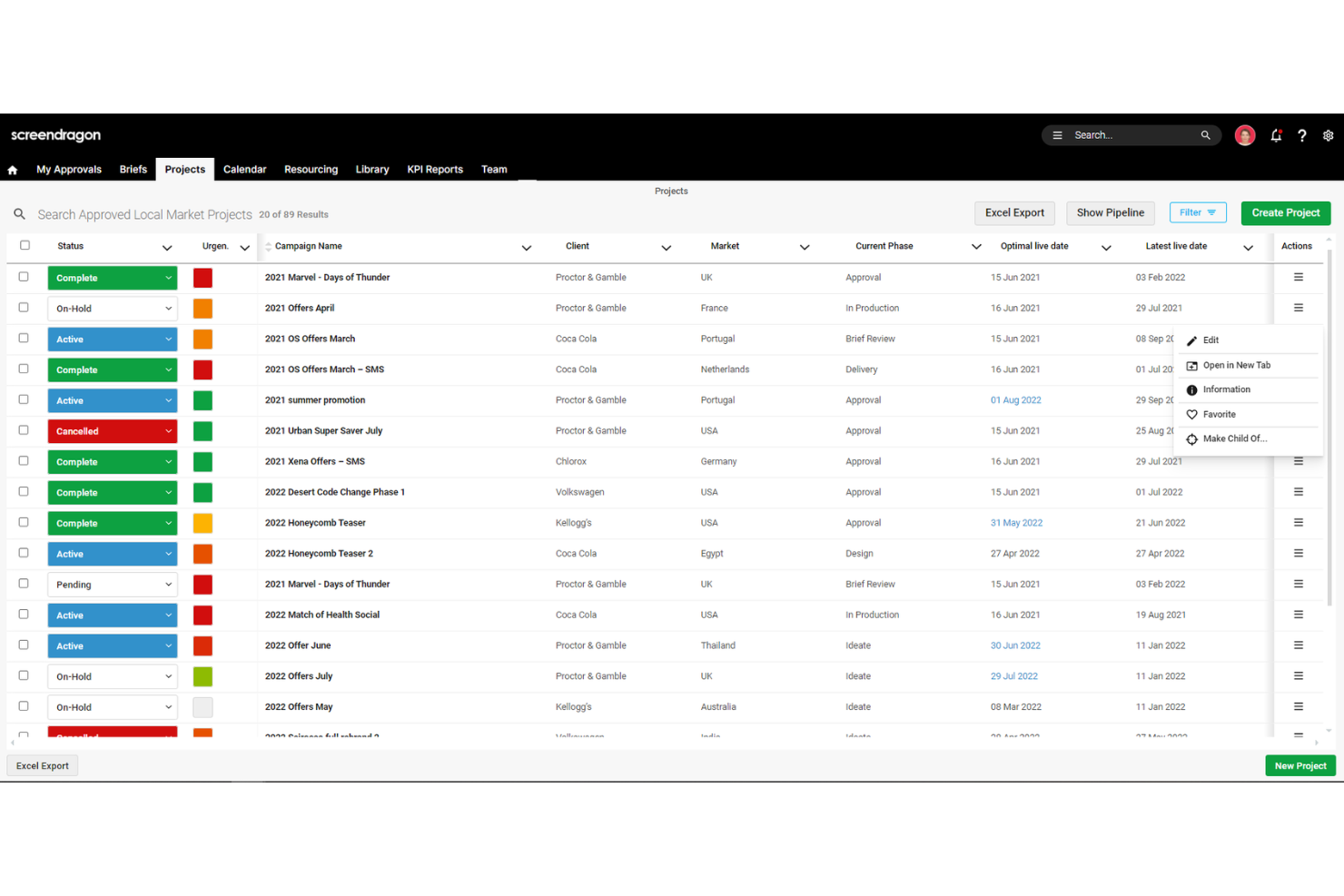
Screendragon is an enterprise workflow and project management platform built for marketing and creative teams, offering Gantt, Kanban, and calendar views alongside capacity heatmaps, resource planning, financial dashboards, and built-in proofing tools.
Who Is Screendragon Best For?
Screendragon is built for enterprise marketing and creative teams that need to visualize resource capacity across large, multi-project workloads.
Why I Picked Screendragon
Screendragon earns its spot on my shortlist because the capacity heatmaps genuinely change how you manage workload visibility across large, multi-project environments. I love that you can filter by department, skill, region, or client to see exactly where demand outpaces availability before a deadline slips. The platform also syncs Gantt, Kanban, and calendar views in real time, so color-coded task changes ripple across every view automatically.
Screendragon Key Features
- Built-in proofing tools: Review and annotate static, video, and rich media assets directly in the platform, with time-stamped comments, markups, and side-by-side version comparison.
- Financial reporting dashboard: Track budget vs. actuals, resource burn, and out-of-pocket spend across projects, with drill-down views and multi-currency support.
- Automated timeline adjustment: When dependencies shift, the planner automatically updates related timelines, assignees, and budget figures without manual rescheduling.
- Customizable live dashboards: Monitor project status, milestones, and bottlenecks in real time, with one-click export of client-ready reports to Excel or PDF.
Screendragon Integrations
Screendragon offers integrations with Microsoft Power BI, Slack, Microsoft Teams, Jira Software, Trello, Smartsheet, Google Drive, and Microsoft 365. It also provides an open API, developer portal, and Zapier connectivity.
Pros and Cons
Pros:
- Custom workflows and responsive support earn praise
- Synced Gantt, Kanban, and calendar views
- Capacity heatmaps expose workload gaps early
Cons:
- No traditional drag-and-drop task cards
- Busy menus slow new-user navigation
New Product Updates from Screendragon
Screendragon Unveils New AI Hub
Screendragon introduced AI Hub, a new capability that lets teams build and manage AI agents directly within workflows. The update helps marketing teams automate tasks, maintain governance controls, and scale AI-driven operations more efficiently. For more information, visit Screendragon's official site.

Best for visualizing projects of varying complexity
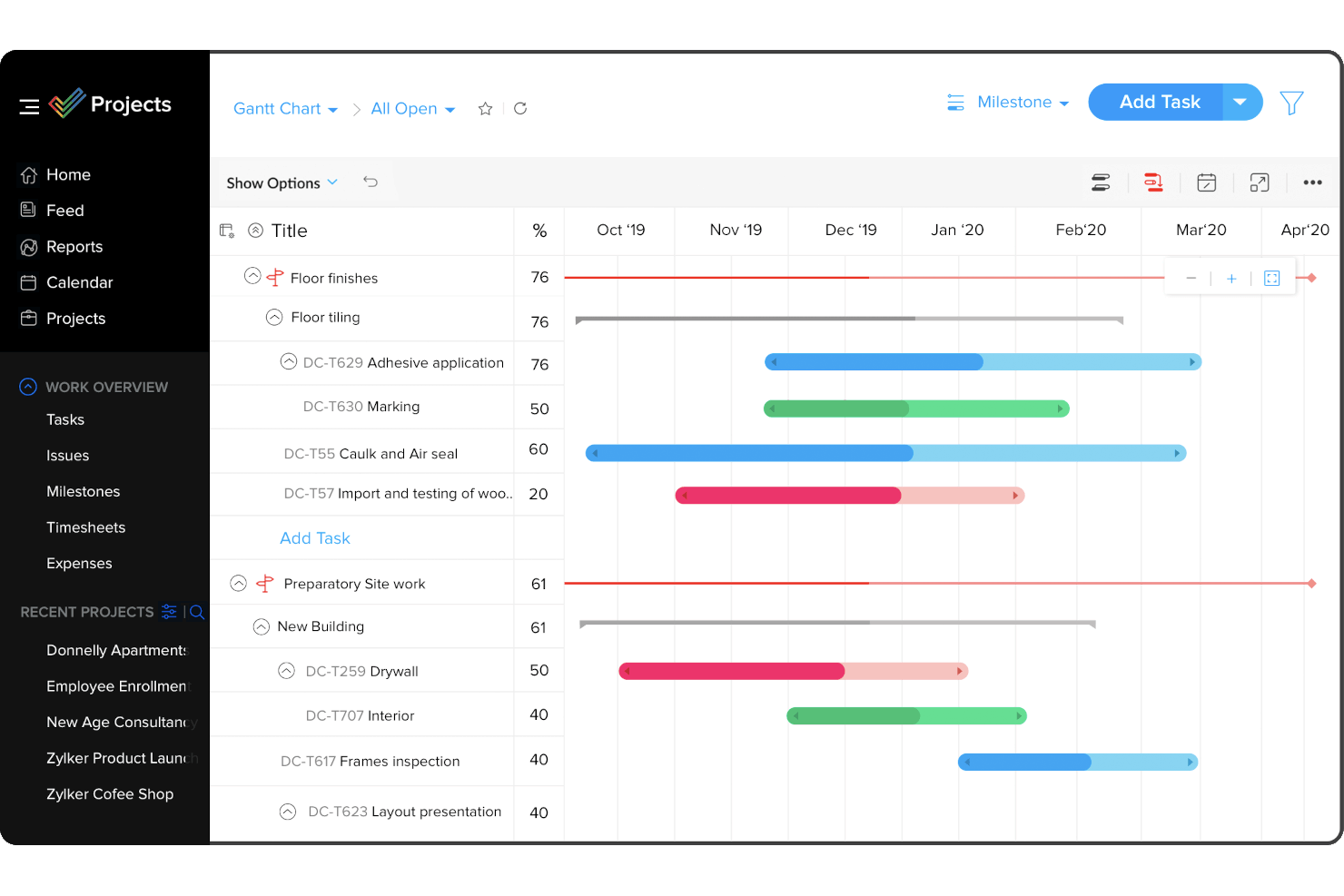
Zoho Projects is a project management platform that brings together Gantt charts, Kanban boards, calendar views, workload heatmaps, and dependency tracking across tasks and milestones.
Who Is Zoho Projects Best For?
Zoho Projects is a strong fit for project managers and creative teams that need a wide range of visual views—from Gantt charts to Kanban boards to workload heatmaps—without paying enterprise-level prices.
Why I Picked Zoho Projects
Zoho Projects earns its spot on my shortlist because it handles projects of wildly different shapes without forcing you into a single view. I can run a simple Kanban board for a quick campaign sprint, then switch to a full Gantt with critical path analysis and baseline comparisons for a longer, dependency-heavy rollout. The workload heatmap is what I keep coming back to: it color-codes overloaded team members instantly, and I can drag tasks directly onto another person to reassign without leaving the chart.
Zoho Projects Key Features
- All four task dependency types: You can set finish-to-start, start-to-start, finish-to-finish, and start-to-finish dependencies between tasks, with lag time applied to any of them.
- Baseline comparison: Enterprise and Ultimate plans let you save up to 15 project baselines and compare them against current progress to track schedule slippage.
- Workload bar and heatmap views: Two resource views display team capacity side by side, color-coding anyone booked beyond their available hours.
- Blueprint process automation: A drag-and-drop editor lets you map out task workflows with defined transitions, conditions, and approvals before work begins.
Zoho Projects Integrations
Zoho Projects offers 50+ integrations, including Zoho CRM, Slack, Microsoft Teams, Google Drive, Figma, GitHub, Google Calendar, and Zapier. It also connects with Microsoft 365, SharePoint, Dropbox, Jira, and Power BI.
Pros and Cons
Pros:
- Drag tasks between owners from workload charts
- Heatmaps expose overloaded teammates at a glance
- Kanban, calendar, and Gantt views stay synced
Cons:
- Large Gantt charts can drag slowly
- Dense screens can obscure project views
New Product Updates from Zoho Projects
Zoho Projects Adds CodeX Scripts for Custom Modules
Zoho Projects now supports CodeX Scripts for custom modules, enabling conditional logic and rules for creating, updating, and deleting records. For more information, visit Zoho Projects' official site.
 .
Best for spreadsheet-style visual scheduling
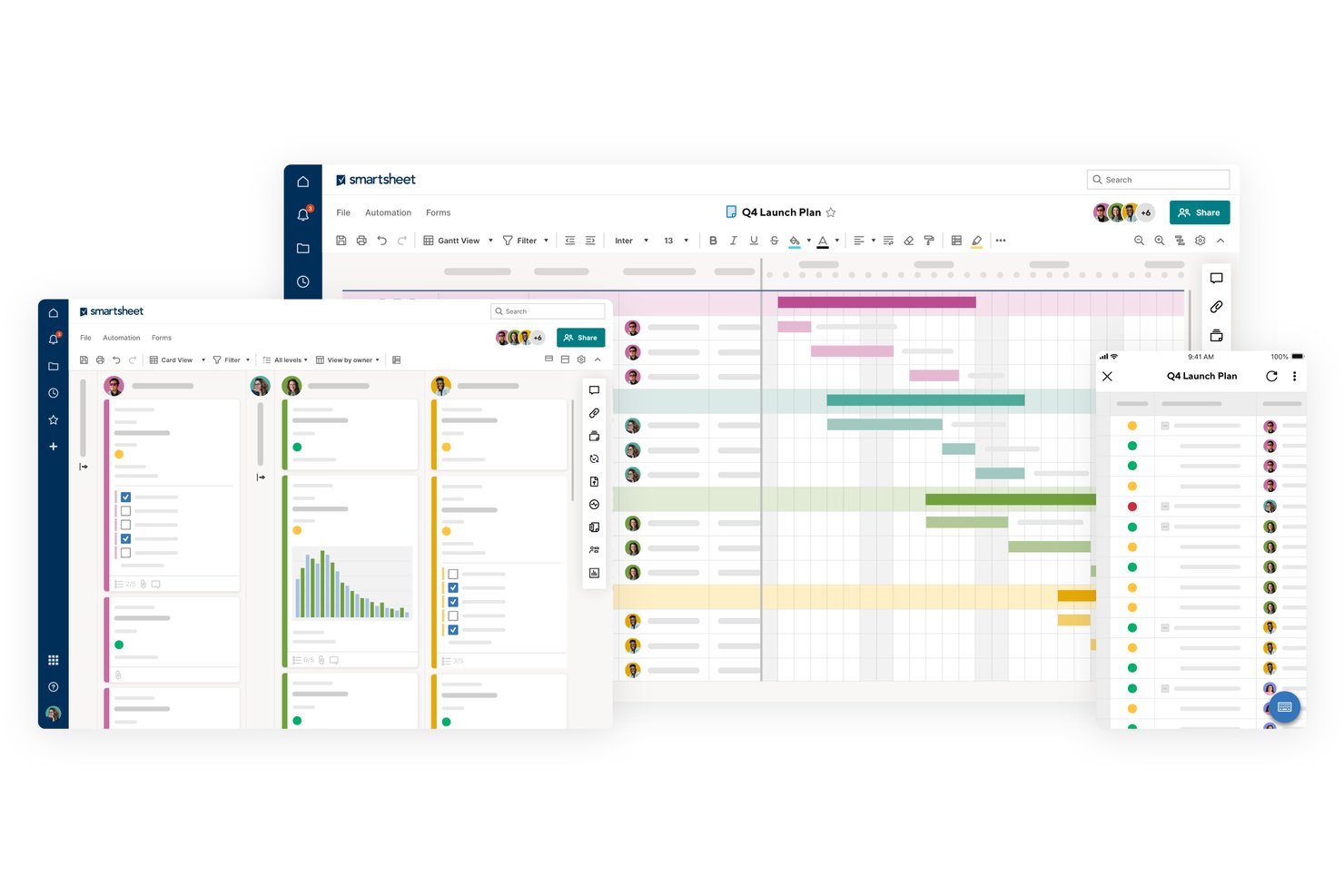
Smartsheet is a spreadsheet-style project management platform that combines grid, board, Gantt, calendar, and timeline views with task dependencies, workload tracking, and automated scheduling.
Who Is Smartsheet Best For?
Smartsheet is a strong fit for project managers and operations teams who want the structure of a spreadsheet with the visual flexibility of Gantt, board, and calendar views built in.
Why I Picked Smartsheet
I picked Smartsheet as one of the best because it's the only tool on this list that starts from a spreadsheet and grows into a full visual scheduling suite. I love how dependencies automatically cascade date changes across the entire project, so when one task slips, the Gantt chart adjusts without manual rework. The workload heatmap is genuinely useful too, surfacing over-allocated team members directly in the grid before a deadline becomes a problem.
Smartsheet Key Features
- Board view: Arrange tasks into Kanban-style lanes with cards that display up to 14 sheet fields, including assignees, due dates, and status indicators.
- No-code workflow automation: Build automated alerts, reminders, and approval requests without writing code, with unlimited automations on Business plans and above.
- Resource workload heatmap: View team allocation across all tracked sheets in a color-coded heatmap that flags over-assigned members before deadlines are missed.
- Publishable dashboards and reports: Share live dashboards and editable reports with stakeholders who don't need a paid seat, using public links or free Contributor access.
Smartsheet Integrations
Smartsheet offers native integrations with Slack, Google Workspace, Microsoft 365, Microsoft Teams, Jira, Adobe Creative Cloud, Power BI, and Tableau. Business plans and above include API access for custom integrations, with additional marketplace connectors available.
Pros and Cons
Pros:
- Workload heatmaps flag team over-allocation
- Dependencies automatically recalculate downstream dates
- Spreadsheet grid eases migration from Excel
Cons:
- Large, complex sheets can feel slow
- Grid-first workflow keeps visual work sheet-centered
New Product Updates from Smartsheet

Smartsheet Adds Non-Plan User Management in Admin Center
Smartsheet adds a Non plan users tab to the Seat types and true-up page in Admin Center. This lets system admins review non-plan users and add them to the plan or remove them from the organization in one place. For more information, visit Smartsheet’s official site.

Forecast
Best for projects, resources, and finances in one
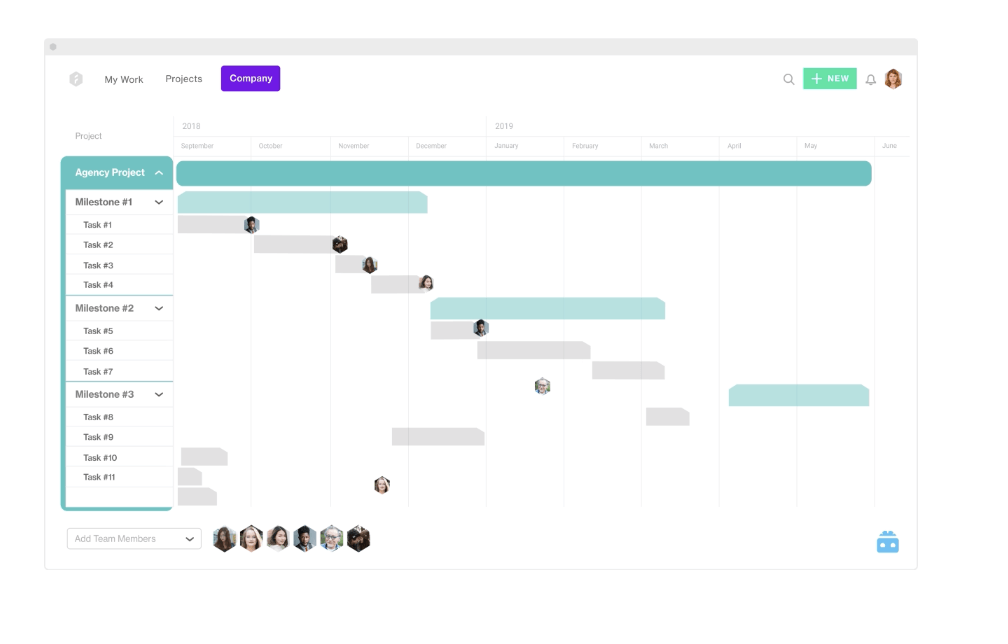
Forecast is a professional services automation platform that brings together visual project management, resource scheduling, and financial tracking through Gantt timelines, Kanban boards, portfolio views, and workload heatmaps.
Who Is Forecast Best For?
Forecast is built for project managers and operations leads at consulting, agency, and IT services firms that need to manage project timelines, team capacity, and budgets in a single platform.
Why I Picked Forecast
I picked Forecast as one of the best because it's the only tool on my list that genuinely unifies project timelines, resource scheduling, and budget tracking in one view. I love how the People Schedule heatmap shows capacity by role or department in real time, so I can spot overbooked teammates before it becomes a problem. The All Timelines portfolio Gantt layers project stages, completion percentages, and team allocations across every active project at once.
Forecast Key Features
- Sprint board: A dedicated Scrum board that lets agile teams manage sprint cycles separately from the main Kanban task view.
- Dependency chain lock: A toggle that moves an entire chain of linked tasks together when you drag one, keeping sequences intact across the timeline.
- Advanced Analytics dashboards: Four built-in reporting dashboards covering profit, portfolio performance, revenue, and resource management, with custom widgets and exportable PDFs.
- Guest user access: Client contacts can be added as guests at no extra seat cost, with admin controls to limit what each guest can view or edit.
Forecast Integrations
Forecast offers integrations with Jira, Azure DevOps, GitHub, GitLab, Slack, MS Teams, Trello, Asana, Google Drive, and Zapier. It also provides REST and Forms APIs for custom integrations.
Pros and Cons
Pros:
- Timeline shading compares logged and remaining work
- Portfolio Gantt connects stages, progress, and allocations
- Resource heatmaps expose overbooking across projects
Cons:
- Mobile task workflows receive usability complaints
- Cluttered screens can obscure task details
Best for entreprise control with frontline flexibility
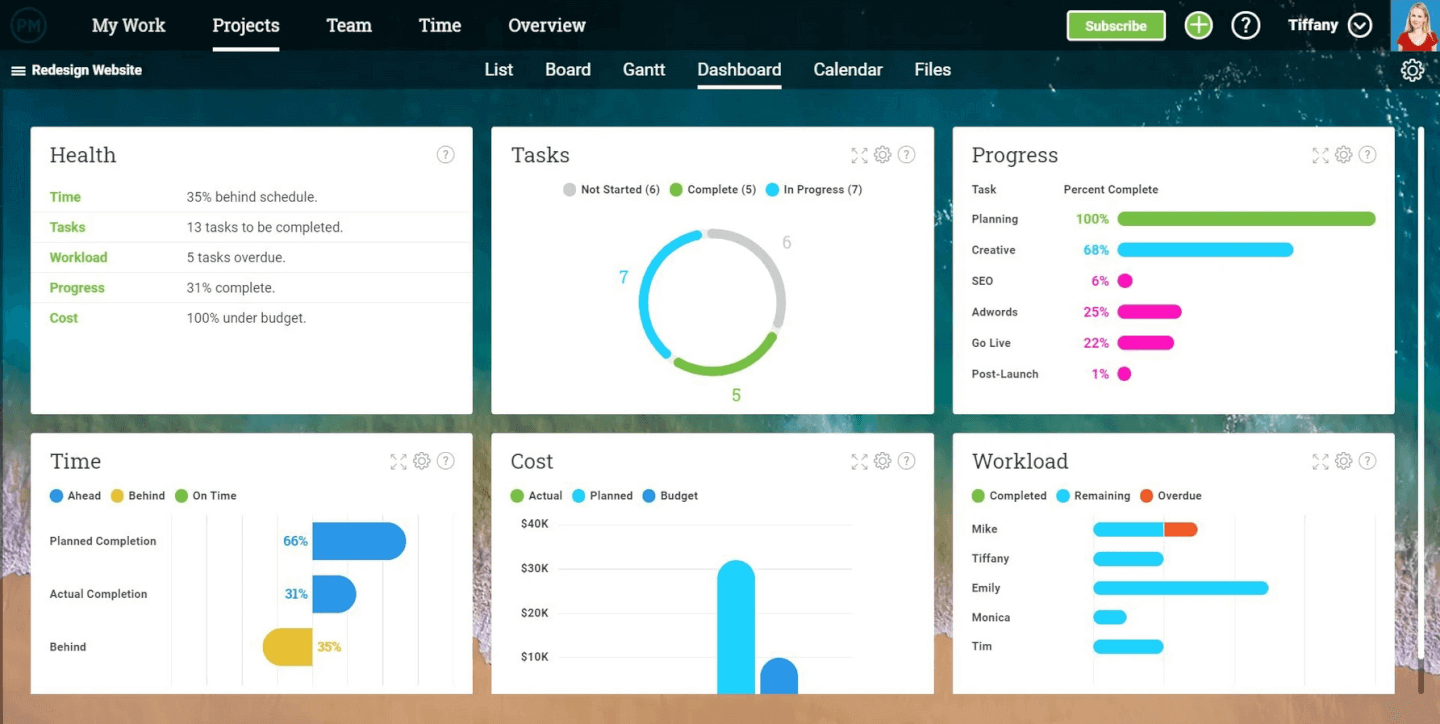
ProjectManager is a visual project management platform offering Gantt charts, Kanban boards, real-time dashboards, and multi-view scheduling tools designed for teams managing complex, dependency-heavy projects.
Who Is ProjectManager Best For?
ProjectManager is a strong fit for project managers and operations teams running complex, dependency-heavy projects who need real-time visibility across multiple workstreams.
Why I Picked ProjectManager
I've included ProjectManager in my top picks because its real-time dashboards are genuinely the best-looking I've seen in this category. Every widget, from percent complete to planned-versus-actual cost, updates automatically with no manual setup. I also love that you can customize colors, filters, and expandable metric tiles, then share or print a polished view for executive check-ins without reformatting anything.
ProjectManager Key Features
- Critical path filtering: The Gantt view highlights the critical path so you can instantly see which tasks directly affect your project's end date.
- Four dependency types: Link tasks using finish-to-start, start-to-start, finish-to-finish, or start-to-finish dependencies, with automatic schedule updates when anything shifts.
- Baseline tracking: Set a project baseline to compare planned versus actual dates and costs, so you can spot schedule slippage as it happens.
- Unlimited free guest licenses: Every plan includes read-only guest seats, letting stakeholders follow project progress without taking up a paid user slot.
ProjectManager Integrations
ProjectManager offers native integrations with Jira, Azure DevOps, Microsoft Teams, Slack, QuickBooks Online, and Microsoft Excel. It also supports an open API and Zapier.
Pros and Cons
Pros:
- Four dependency types protect connected project timelines
- Five synced views keep task updates aligned
- Customizable dashboards show live schedule and cost
Cons:
- Pages can lag or require refreshing
- Complex schedules take time to learn

Best for portfolio-wide analysis reports
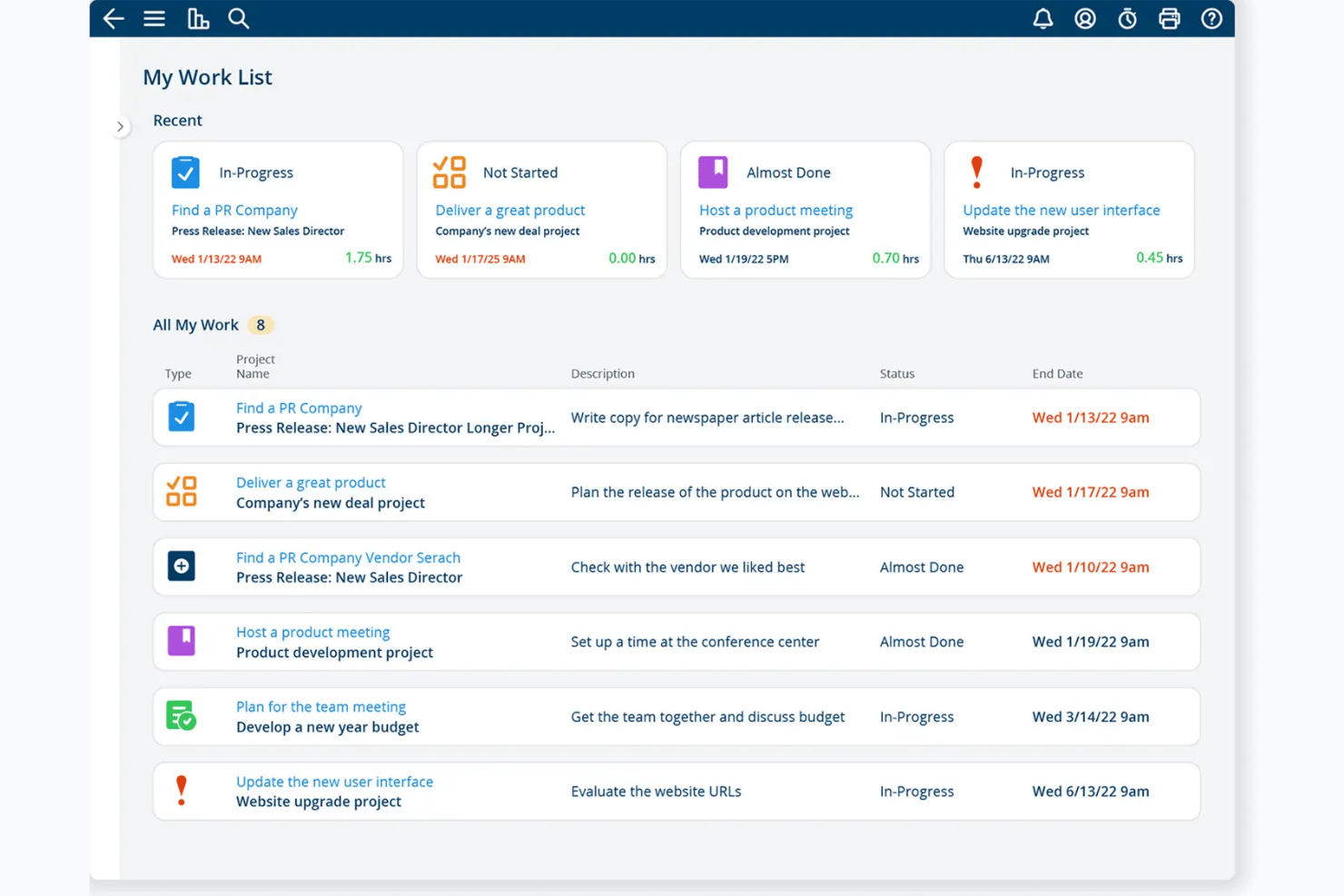
Project Insight is a strategic PPM platform built for PMOs that combines portfolio reporting, Gantt and Kanban views, intelligent scheduling, and resource capacity planning across projects.
Who Is Project Insight Best For?
Project Insight is a strong fit for PMO teams and project managers who need to track multiple projects and present progress through detailed, visual reports.
Why I Picked Project Insight
I picked Project Insight as one of the best because its portfolio reporting capabilities are genuinely impressive. Cross-project dashboards roll up status, health, and KPIs from every active project, and you can edit assignments or adjust resources directly inside a report without leaving the view. I also love that saved reports can be scheduled and delivered to stakeholders automatically, which makes sharing progress with leadership far less manual.
Project Insight Key Features
- Intelligent scheduling: Tasks auto-reschedule based on dependencies, so date changes cascade through the plan without manual updates.
- Cross-project Gantt view: A portfolio-level Gantt chart shows timelines across all active projects in a single, editable view.
- Resource capacity planning: Capacity and demand views show team availability across projects, with drag-and-drop reassignment for overloaded members.
- Kanban task boards: Project and task-level boards let teams move cards between columns, updating status and completion percentages in real time.
Project Insight Integrations
Project Insight offers native integrations with Jira, Azure DevOps, Microsoft Teams, Slack, Power BI, Trello, Basecamp, and Microsoft Project. It also supports REST API access for custom integrations.
Pros and Cons
Pros:
- Dependency-driven scheduling updates connected timelines automatically
- Synced Gantt, Kanban, and calendar views
- Editable portfolio reports roll up project health
Cons:
- PMO workflows exceed lightweight task-tracking needs
- Dense interface can overwhelm first-time users

GanttPRO
Best for building Gantt charts
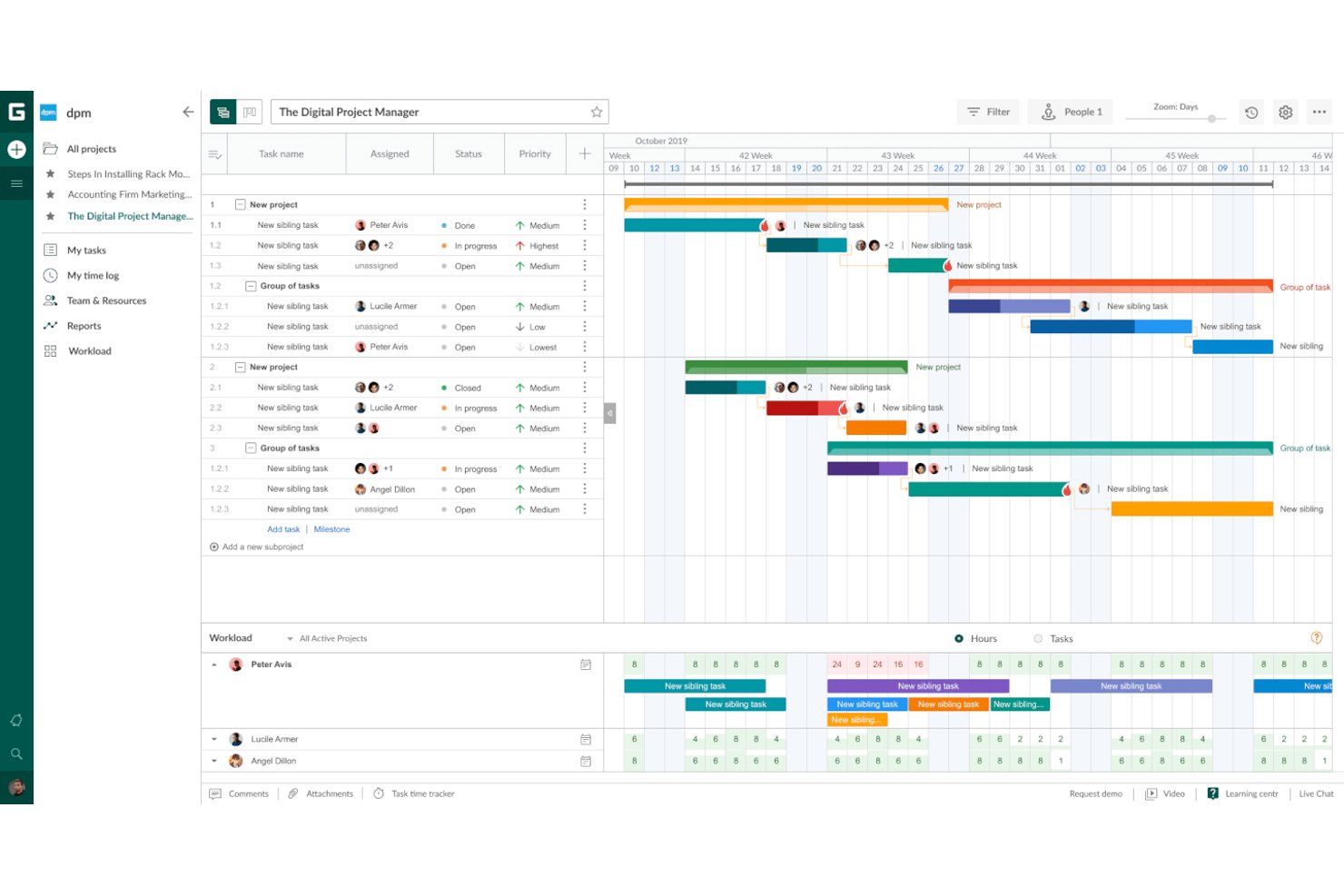
GanttPRO is a visual project management tool built around Gantt charts, offering timeline scheduling, task dependencies, critical path tracking, kanban boards, and multi-project portfolio views.
Who Is GanttPRO Best For?
GanttPRO is a strong fit for project managers who need precise timeline control, from dependency mapping to critical path tracking, across multiple concurrent projects.
Why I Picked GanttPRO
GanttPRO earns its spot on my shortlist because no other tool I've tested makes Gantt chart building this precise and this fast. I love that auto-scheduling recalculates every dependent task the moment something shifts, and the critical path highlights automatically in red, so I can see exactly where a delay will hurt delivery. Task float, added in 2026, takes that a step further by showing how much slack each task has before it pushes the deadline.
GanttPRO Key Features
- Resource workload heatmap: Color-coded cells show each team member's capacity across one or all active projects, so you can spot overloads before they become delays.
- Baseline comparison: Saves a snapshot of your original plan and overlays it against the current schedule so you can see exactly where things have shifted.
- AI project planner: Builds a full project plan from a text prompt, voice input, or uploaded file, and saves each revision as a separate version.
- Portfolio view: Displays status, progress, and health indicators across all active projects in a single view, available on Business and higher plans.
GanttPRO Integrations
GanttPRO offers documented integrations with Slack, Microsoft Teams, Google Drive, OneDrive, Jira Cloud, Google Calendar, and Outlook Calendar, plus Excel and Microsoft Project imports. Its open API supports custom integrations.
Pros and Cons
Pros:
- Reviewers praise drag-and-drop Gantt planning
- Critical path and task float clarify schedule risk
- Auto-scheduling recalculates dependent tasks after changes
Cons:
- Mobile app offers limited Gantt editing
- Reporting offers limited chart and formatting options
Other Visual Project Management Options
Here are a few more that didn’t make the top list. If you need additional suggestions for handy visual PM apps, check these out.
- ClickUp
For 15-plus views on one dataset
- Hive
For time-logged tasks with timesheet approval
- airfocus
For scalable multi-view product roadmaps
- Teamwork.com
Free plan for small businesses and freelancers
- ProWorkflow
For visualizing resource management
- Notion
For remote or hybrid teams
- GoodDay
For visual project timelines and planning
- Asana
For scalability, large or small teams
- TaskRay
For CRM-linked project tracking in Salesforce


How I Evaluate Visual Project Management Software
I split my evaluation into three parts, with core functionality carrying the most weight: assign tasks, map dependencies, and show progress across board or timeline views. Next, I look for workload heatmaps that expose overallocated teammates. Finally, I consider onboarding, support, permissions, and pricing as teams grow.
Core Functionality (Table Stakes For This List)
When I'm selecting tools for my list, I score each one on a scale from 0 (does not offer the functionality) to 5 (excels in this area) for each core functionality listed below. I then convert the total into a percentage to help assess each tool's overall fit, with extra weight on any functionalities I’ve deemed essential.
- Visual Task Boards (Essential): I look for interactive boards that make task status and ownership clear, so teams can spot blocked work during a project check-in.
- Multiple Views (Essential): I compare how easily teams can switch between board, calendar, and timeline views while keeping project data consistent.
- Drag-And-Drop Tasks: I assess whether teams can move and reorder work directly on a board or timeline as priorities shift.
- Task Dependencies: I look for clear links between tasks and dates, so teams can see how a delayed handoff affects the schedule.
- Progress Tracking: I check for visual status cues and project-level reporting that help teams spot stalled work across multiple projects.
- Task Collaboration: I look for task-level assignments, comments, and updates that keep decisions and next steps with the work.
Once I have a list of tools that meet the criteria, I consider what sets each platform apart.
Differentiating Factors (What Sets Vendors Apart)
Here's how I compare and contrast different vendors:
Standout Features
Resource workload heatmaps are the first thing I check. When a team lead can spot an overallocated designer mid-sprint, they can rebalance before deadlines slip. I also evaluate automated scheduling engines—if moving one milestone doesn't ripple updated dates across dependent tasks, you're back to manual rework. Client-facing portals matter too, especially for agencies sharing progress without exposing internal boards.
Beyond Features
I evaluate how well each tool scales from a single Kanban board to a multi-project portfolio with cross-team dependencies. Platforms like monday.com and Asana offer tiered plans that unlock advanced views as needs grow, which matters when your PMO expands. Pricing models also get close attention—per-user licensing adds up fast if you're inviting clients or freelancers, so I look for free or low-cost guest seats. I also check integration depth with tools like Figma, GitHub, and Slack, since broken handoffs between platforms kill the visibility these tools are supposed to provide.
How to Choose Visual Project Management Software
It’s easy to get bogged down in long feature lists and complex pricing structures. To help you stay focused as you work through your unique software selection process, here’s a checklist of factors to keep in mind:
| Factor | What to Consider |
|---|---|
| Scalability | Ensure the software can grow with your team. Consider if it can handle an increase in users or projects without performance issues. |
| Integrations | Check if the tool connects with your existing apps like Slack, Google Workspace, or Trello to streamline your workflows and avoid data silos. |
| Customizability | Look for options to tailor features to your team's needs. This includes creating custom fields, workflows, or dashboards to match your processes. |
| Ease of Use | Choose a platform with an intuitive interface that your team can pick up quickly without extensive training. Consider the learning curve involved. |
| Budget | Assess the cost against your budget. Look for transparent pricing plans that fit your financial constraints and offer good value for the features. |
| Security Safeguards | Evaluate the platform’s data protection measures. Ensure it complies with industry standards like GDPR and offers features like encryption and access controls. |
| Collaboration Tools | Consider tools that support real-time teamwork, such as shared boards or live updates, to enhance team communication and project efficiency. |
| Support and Resources | Look for software with strong customer support and a wealth of resources like tutorials, forums, and FAQs to assist your team when needed. |
Trends in Visual Project Management Software
In my research, I sourced countless product updates, press releases, and release logs from different visual project management software vendors. Here are some of the emerging trends I’m keeping an eye on:
- AI-Powered Insights: AI is being used to predict project outcomes and provide insights, helping teams make better decisions. Tools like Wrike are integrating AI to analyze project data and suggest improvements.
- Virtual Reality (VR) Collaboration: VR is being explored to create more immersive collaboration experiences, allowing teams to interact in a virtual space. Miro is experimenting with VR to enhance remote team collaboration. Although this is a trend that could be more fitting for a creative agency project management software, it seems to be spreading to less specialized software as well.
- Template Marketplaces: More platforms are offering marketplaces for user-created templates, making it easier to find and share workflows. Notion is expanding its template gallery with community contributions.
- Enhanced Data Visualization: New tools are focusing on advanced data visualization to help teams understand project metrics at a glance. Monday.com offers customizable dashboards to visualize data effectively.
- Focus on Sustainability: Some vendors are incorporating features to track and reduce the environmental impact of projects. This trend is gaining traction as businesses prioritize sustainability in their operations.
What is visual project management software?
Visual project management software is a type of project management software specialized in visual representations to facilitate project planning, tracking, and communication. It goes beyond traditional text-based interfaces, offering graphical elements such as charts, diagrams, and dashboards to present project information in a more digestible and actionable format.
Visual project management software helps streamline project oversight by providing a visually intuitive platform that fosters better communication with stakeholders, understanding of complex information, and decision-making throughout the project lifecycle.
Visual Project Management FAQs
Find answers to common questions other people ask about this topic.
What key features are in visual PM software?
- Drag-and-drop visual organization of tasks and project planning
- Color coding (for due dates, project status, or project progress)
- Task management including task dependencies, custom fields, etc.
- File sharing or the ability to exchange and manage docs
- Reporting and analytics dashboards to measure productivity and output
- Checklists or to-do lists for individual or shared task prioritization
- Multiple project views like Gantt charts, Kanban boards, timeline views, calendar views, etc.
- Collaboration tools so remote teams can work together in real-time
- Agile project management features to manage the project lifecycle
- The ability to visualize and track complex projects in progress
What is the benefit of using visual PM software?
The main benefit is the positive impact on your productivity and your team’s productivity. This is related to the objectives pursued by user interface design and is caused by a reduction in thinking time. The less you think about finding the information, the more you spend time analyzing it, drawing conclusions, and executing.
How do you visually track a project?
There are 4 common ways to visually track projects:
- Gantt charts. Seeing your project schedule in a timeline view is a great way to see where you are standing, dependencies between tasks, and your main deliverables.
- Kanban boards. Similar to timelines, boards let you have your workflows in a single view. This helps teams work with agile frameworks and quickly change the status of a task with a simple drag and drop.
- Dashboards. A quick way to get summarized information of various project components.
- Project roadmaps. A high-level visual overview of a project’s goals, milestones, and key deliverables over time. Roadmaps are particularly helpful for strategic planning and stakeholder communication.