

10 Best Agency Management System Tools Reviewed For 2026

10 Best Agency Management System List


The best agency management systems centralize project, resource, and financial management to improve team efficiency and ensuring timely results. Using multiple tools for these functions can make managing client projects, resources, and budgets disjointed, which can lead to missed deadlines, scope creep, and financial discrepancies.
With 20 years of experience in agency operations and over a decade as a software reviewer, I’ve evaluated and implemented a variety of agency management systems. This has shown me how the right software can boost efficiency, reduce errors, and improve client relationships.
After testing over 20 different tools, I’ve compiled a list of the most reliable options available, highlighting key features, pricing, and more to help you choose the best fit for your team.
Why Trust Our Software Recommendations
Our team has been testing and reviewing software since 2012. As project managers ourselves, we know how difficult—and important—it is to choose the right software.
For this guide, we evaluated tools using hands-on testing and independent research, scoring tools using our selection criteria. We also draw on insights from industry thought leaders and practicing project management experts.
Our reviews reflect our human editorial judgment, not a sales pitch.
Expert reviewers:
Agency Management System Tools Comparison Table
This comparison table summarizes pricing details for my top agency management system tool selections:
| Tool | Best For | Trial Info | Price | ||
|---|---|---|---|---|---|
| 1 | Best all-in-one agency management system with sales and invoicing tools | 14-day free trial | From $10/user/month | Website | |
| 2 | Best depth of functionality and reporting | Free bespoke demo | From $17/month | Website | |
| 3 | Best for end-to-end work management | 14-day free trial | From $17/user/month | Website | |
| 4 | Best for AI-powered workflows and resourcing | Free demo available | Pricing upon request | Website | |
| 5 | Best agency management software for customizable views | Free plan available; 14-day free trial | From $10/user/month (billed annually) | Website | |
| 6 | Best customizable advertising agency software | Free plan available; 14-day free trial | From $9/user/month (billed annually) | Website | |
| 7 | Best for full lifecycle service delivery | Free demo available | Pricing upon request | Website | |
| 8 | Best free plan with unlimited tasks and users | Free plan available | From $7/user/month (billed annually) | Website | |
| 9 | best for enabling client collaboration | Free plan available; 14-day free trial | From $9.99/user/month (billed annually) | Website | |
| 10 | Best for managing the entire agency process | Free 7-day trial available | From $9/user/month (billed annually) | Website |


Best Agency Management System Reviews
Here’s a brief description of each of the agency management systems that are featured on this top 10 list.
Best all-in-one agency management system with sales and invoicing tools

Productive is a well-rounded agency management software with a stack of powerful functionality that gives you the tools and data you need to keep an agency running smoothly. The tool was built by a team with a decade of experience in founding, managing, and scaling a software development shop, so it's especially well-suited to digital agencies. Fran Vižintin, Senior Account Executive at Productive, explains why the platform works so well for agencies: “Productive is designed for agencies and supports high-level resource planning. It allows agencies to assign services, billable rates, and track budget within each project phase.”
The tool's features fully satisfy my criteria for agency management tools. You'll find client and prospect management in the Sales Pipeline (manage deal flow, get sales organized). The Resource Planning feature, time tracker, and task collaboration tools fit the criteria for resource and project management that I look for in an agency tool or platform.
Billing and invoicing can also be managed straight from the tool, along with useful reports on profitability and costs to help with finance management. The reporting feature actually goes quite a bit beyond that, with real-time reports on margins, utilization, and a whole lot more—including reports on individual employees' or contractors' history with the company, salary report, etc.
Productive's integrations include Zapier as well as Jira, Open API, QuickBooks Online, Xero, and Exact.
Productive costs $9/user/month (billed annually). They also offer a fully-featured, free 14-day trial.
New Product Updates from Productive
Productive Adds Voice Dictation, Slack Connector, Proposals, and Overtime
Productive adds voice dictation, a Slack Connector, proposal controls, and overtime tracking. These updates support faster AI interactions, client proposals, and time management. For more information, visit Productive’s official site.

Best depth of functionality and reporting

Synergist is a comprehensive agency management software designed to support growing agencies by providing tools for tracking project profitability, managing projects, and overseeing team utilization. For agencies aiming to improve their financial performance, Synergist can be used to monitor profitability metrics and forecast pipelines, profits, and payments.
I specifically picked this software because it offers an all-in-one solution with a depth of functions, such as reporting, a scheduling tool, project-tracking capabilities, and a centralized system for managing client interactions and finances. It also ensures that resources and teams are optimally allocated to enhance efficiency across the board.
Overall, Synergist stands out as an indispensable tool for agencies focused on maximizing profitability due to its access to real-time insights and financial control over projects.
Synergist integrates with various software systems, including Microsoft 365, Google, Xero, Sage, HubSpot, Salesforce CRM, Outlook Calendar, and iCal, alongside file management through Microsoft OneDrive, Google Drive, and Dropbox.
Scoro
Best for end-to-end work management

Scoro is an agency management system designed to help businesses manage operations more effectively. It combines tools for project management, sales and customer relationship management (CRM), quoting, resource planning, time tracking, billing, and reporting, bringing every aspect of agency work into one centralized platform.
The system facilitates end-to-end project management across the entire lifecycle, from initial quotes to final invoicing. Real-time dashboards and detailed reports provide visibility into progress, results, and overall performance, helping teams make informed decisions and minimize miscommunication.
Scoro also includes resource planning capabilities that help allocate workloads efficiently and prevent team burnout. Its retainer management functionality ensures that recurring client work is tracked and delivered consistently across projects.
The platform integrates with Google Calendar, Microsoft Exchange, HubSpot, Jira, Xero, QuickBooks, Sage Intacct, Exact Online, Expensify, Stripe, BambooHR, Slack, Asana, Dropbox, PayPal, and more. You can also connect additional tools through Zapier for extended automation.
Pricing starts from $19.9/user/month, with a free trial available.
New Product Updates from Scoro

Scoro Adds Time Mobile App and ELI Improvements
Scoro adds the Scoro Time mobile app for iOS/Android to track time anywhere and expands ELI with attachments, smarter filtering, and trigger-based actions. For more information, visit Scoro's official site.

Best for AI-powered workflows and resourcing

Screendragon is an agency management software designed to manage projects, people, processes, and profitability in one place. It is easy to use and offers powerful customization. The world’s top agency groups like Omnicom, WPP, and IPG rely on Screendragon to power their agency operations.
Screendragon is seamlessly integrated offering project management, workflow management, resource management, and forecasting, time-tracking, budget management, and asset management. The tool is highly configurable, giving users the ability to customize forms, dashboards, templates, workflow rules, permissions, notifications, reports, and even the terminology used on the platform.
Screendragon’s integrated budget module enables users to build SOW’s and estimates, as well as forecast future revenues and resourcing needs. Reviews and approvals are made simple with features for visual proofing, real-time collaboration, version control, and granular permissions. Screendragon’s advanced automation capabilities facilitate the secure and efficient approval of assets and can adapt easily to support scaling agencies. Intuitive task management allows users to switch between Kanban boards, interactive Gantt charts, and list views.
Screendragon offers native integrations with ERP systems such as SAP and PeopleSoft and can integrate with thousands of apps through Zapier like Slack, Trello, Google Drive, Office 365, and Microsoft Dynamics. It also has an open API, allowing custom integrations with any solution.
Screendragon starts from $20/user/month with a one-off implementation fee, and a free demo is available.
New Product Updates from Screendragon
Screendragon Unveils New AI Hub
Screendragon introduced AI Hub, a new capability that lets teams build and manage AI agents directly within workflows. The update helps marketing teams automate tasks, maintain governance controls, and scale AI-driven operations more efficiently. For more information, visit Screendragon's official site.
Wrike
Best agency management software for customizable views

Wrike is an easy-to-use advertising agency software that is suitable for teams with five or more members. It’s highly configurable, allowing users to customize processes, workflows, dashboards, reports, and request forms to suit their exact needs. It can help you break down costly silos between teams, centralize communication, and automate time-consuming admin tasks. For agencies dealing with complex or high-pressure projects, Wrike can also prove invaluable in times of uncertainty. Danilo Coviello, Founder of Espresso Translations, explained: “The real value of Wrike is seen in crisis management. A client in the fintech sector expressed compliance changes that were required in three countries. The dependency mapping indicated to me exactly what tasks will be hit prior to any damage occurring.”
Wrike enables users to switch between customizable Kanban boards, one-click Gantt charts, and classic workload views, so teams can choose how to visualize their campaign deliverables. Wrike also features task lists, subtasks, shared calendars, custom workflows, file sharing, and real-time collaboration. Users can get advanced performance insights across 50 marketing platforms, assess resource management and allocation, and track time.
Wrike has an easy-to-use, intuitive interface and navigation with distinct spaces, folders, and tasks. Toggle between the home screen and timesheets, dashboards, calendars, reports, and the activity stream. Wrike has a dedicated help center with interactive training, videos, a ‘Getting Started’ guide, and a thriving community. The tool also offers a specific solution for marketing teams, as well as a variety of templates for common organizational processes.
Wrike offers 400+ pre-built native integrations, including integrations with Adobe Creative Cloud; file management software from Microsoft, Google, and Dropbox; and over 50 marketing-specific tools.
New Product Updates from Wrike
Wrike Adds Klaxoon MCP Integration
Wrike’s Klaxoon MCP integration is now generally available, enabling AI agents to navigate between Wrike tasks and attached whiteboards, read task context, and manage whiteboard attachments via API. For more information, visit Wrike's official site.
Best customizable advertising agency software
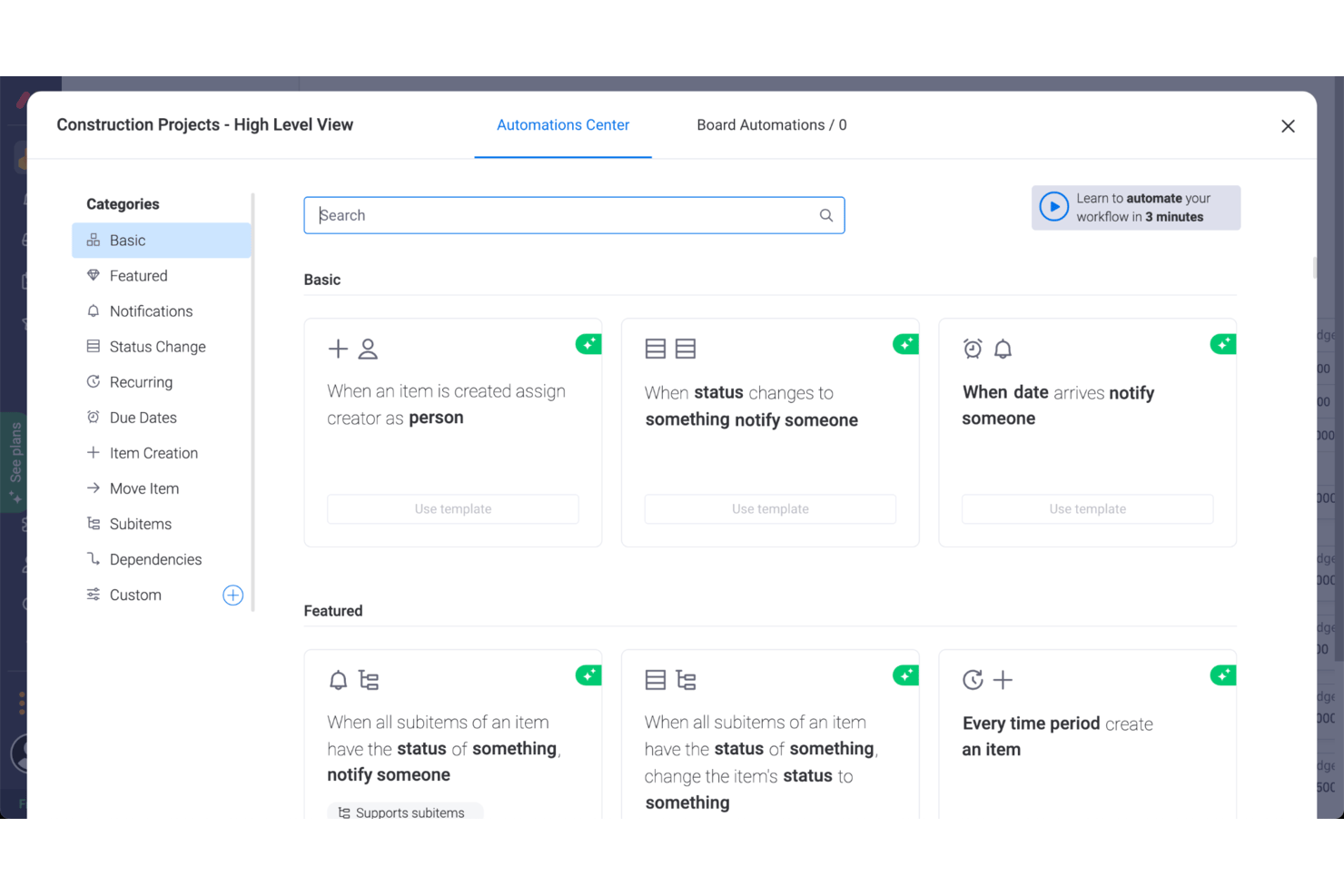
monday AI Workspace is a great advertising agency software because of the way the tool has done away with a lot of the trimmings of typical management tools and focused on simple, visually intuitive layouts that help clarify the sequence of work.
monday AI Workspace features for managing advertising projects include resource and project management modules, as well as some great collaboration tools. For example, users can upload and attach files to cards, make comments, mention teammates, and more. It also offers a great project reporting dashboard that can collect data from multiple boards, allowing better tracking abilities of progress. And while monday AI Workspace doesn't offer a complete set of tools for project accounting and invoicing solutions, you can use monday AI Workspace to track hours, timelines, and invoices. monday AI Workspace also adds AI-powered capabilities that can help agencies automate routine work and move projects forward faster. Teams can use AI to summarize information, generate and refine content, extract insights from work data, and automate parts of their workflows.
Overall, it's a highly customizable tool that lets you work in whatever methodology—kanban or otherwise—that fits your project and team. You'll also find some useful workflow tools for automating parts of your process.
monday AI Workspace's integrations include project management apps like Slack, Google Drive, Gmail, Google Calendar, Jira, GitHub, Trello, Dropbox, Typeform, and many more, accessible via Zapier.
monday AI Workspace costs from $9/user/month and comes with a free 14-day trial. They offer a free plan for up to 2 users.
New Product Updates from monday AI Workspace
monday AI Workspace Adds Human Approval Routing
monday AI Workspace adds a human-in-the-loop approval block to AI Workflows, sending approval requests and routing workflow paths based on responses. For more information, visit monday AI Workspace's official site.

Kantata
Best for full lifecycle service delivery

Kantata is an agency management platform built to unify every stage of the client delivery lifecycle. From project planning and resource scheduling to financial tracking and client reporting, it gives agencies a centralized system to manage operations, improve profitability, and scale efficiently.
The platform includes features designed specifically for agencies, such as client onboarding tools, project planning, time and resource tracking, invoicing, contracts, and collaboration hubs. These capabilities make it easy to track your team’s progress against deadlines and budgets, monitor client satisfaction, and forecast utilization or revenue—all from the same platform. By consolidating workstreams, Kantata eliminates silos and provides a complete view of agency health.
Beyond daily project management, Kantata supports data-driven decision-making across the entire service lifecycle. Dynamic dashboards, business intelligence reporting, and scenario planning let agency leaders identify risks, adjust plans, and demonstrate value to clients. This combination of visibility and flexibility helps agencies deliver on promises while strengthening client trust.
Some other notable features include customizable skills databases for tracking your team’s expertise, scenario-specific reports (like profitability trackers and executive scorecards), Kanban views for agile campaign work, and automated alerts that flag potential timeline or task misalignments.
Kantata integrates with a range of tools, like Salesforce, SAP, Jira, Xero, BambooHR, Slack, Worday, QuickBooks, HubSpot, and NetSuite.
New Product Updates from Kantata

Kantata Adds Access Group Change History
Kantata adds Access Groups History, letting account administrators track changes to group details, membership, and permissions in Recent History. The update also makes these events available through the Subscribed Events API for broader monitoring. For more information, visit Kantata’s official site.
 .
.
ClickUp
Best free plan with unlimited tasks and users

ClickUp is a work management software tool with project management, team collaboration, goal-setting, and document management functionality. Users can plan projects and assign tasks to manage team members' workloads and time. The task management features include subtasks, checklists, prioritization, reminders, and templates. Users can filter and sort tasks and reorder them to meet their preferences.
Gantt charts, Kanban boards, calendars, and timelines are all available for visualizing team workloads. Time tracking can be done directly in the platform or through a third-party integration. Files can be shared through the platform and users can collaborate on work through live chat, whiteboards, comments, and work proofing features. Users can set measurable goals right in the platform and connect them with specific tasks, helping keep team members aligned on shared objectives.
Reporting dashboards are available in the software to monitor team productivity, project progress, KPIS, and other team metrics. This includes goal tracking, workload tracking, milestone tracking, and even automatic pulse checks from the software's machine learning capabilities.
Clickup has native integrations for other SaaS apps like Dropbox, Figma, GitHub, Google Drive, Harvest, HubSpot, Intercom, Loom, Microsoft Teams, OneDrive, Outlook, Slack, Toggl Track, Webhooks, Zoom, and more. Zapier can also unlock additional integrations.
A freemium plan is available with unlimited tasks and users, and paid plans start from $9/user/month.
New Product Updates from ClickUp
ClickUp Adds Meetings Hub, Super Agent Templates, and ZoomInfo Integration
ClickUp adds a searchable Meetings Hub, new ways to clone and template Super Agents, and a ZoomInfo integration through the App Center. These updates improve meeting retrieval, agent reuse, and access to sales intelligence. For more information, visit ClickUp’s official site.
best for enabling client collaboration

Teamwork is a flexible agency management system that helps agencies become more productive and profitable. It enables agencies to manage high volumes of client projects from start to finish. Teamwork allows you to build flexible, custom workflows and gives you one central place to visualize your team and client projects.
Teamwork offers a number of tools and features to help agencies manage their work. With the Workload feature, you can get a complete picture of your team’s capacity and manage resources and keep your team on track. Another popular tool is the Gantt view. As Melody MacKeand, project manager and former Principal Consultant at Teamwork, shares: “In Teamwork, the Gantt view is very intuitive; you can move tasks around, and the timeline auto-updates.” There's also built-in time-tracking on Teamwork to log hours spent working on tasks and track billable hours. Profitability reports allow you to track financial performance by project or team member and compare it against the budget for that client.
Something especially useful about this agency software is that you can add clients as collaborators for free so they can communicate with your team, leave comments in context, review assets and get visibility on project progress.
Teamwork integrates easily with other tools including Gmail, Harvest, Hubspot, QuickBooks, Slack, Dropbox and more.
Teamwork costs from $10/user/month. They also offer a 30-day free trial
Best for managing the entire agency process

Bonsai is a comprehensive business management software tool that integrates various solutions for managing different aspects of a business. It offers features such as client management, project management, financial management, proposals, contracts, forms, time tracking, file sharing, and collaboration, making it ideal for agencies looking to manage all their processes. For agencies, the difference lies in having a platform designed around their specific workflows rather than adapting generic tools. As Johnny Digges, Owner of Symmetric Design, explained: “Because tools like Monday and ClickUp are designed for any type of business, we were constantly working around them to fit our needs. But Bonsai is specifically designed for agencies like us, with clients and projects organized just the way we work. Now information stays organized from the moment a client becomes a lead and throughout the project.”
Bonsai's strengths in agency management come from its integrated approach to facilitating agency needs through the entire process, from lead to invoice. The platform efficiently captures and tracks leads and seamlessly syncs with CRM, allowing for prompt follow-ups. For proposals, it offers customizable templates and analytics to track client engagement and feedback. Additionally, projects and tasks can be assigned to different clients, and users can invite teammates and contractors to client projects to manage tasks together and ensure delivery is on time and within budget.
Users can also easily set automated workflows that can be customized for each client or project. This comprehensive suite ensures that agencies can manage their client interactions from initial contact to project completion effectively.
Furthermore, Bonsai simplifies the billing process with features like automated invoice creation, recurring invoices, and the ability to accept payments through various channels directly through the platform. The software even has a time-tracking tool for users to record time spent on individual tasks or projects directly, which can be seamlessly integrated into invoices, ensuring accurate billing based on the recorded work hours.
Bonsai integrates with Gmail, Google Calendar, Zapier, Slack, QuickBooks Online, Calendly, ClickUp, Trello, Google Drive, Google Sheets, Xero, HubSpot, and more.
Bonsai starts at $10/user/month with a free trial available.
Other Agency Management Systems
Digital advertising agencies may struggle to find the right complete software solution, so here’s a few more that didn’t make the top list. If you need additional suggestions for handy agency systems, check these out.
- Nutcache
Agency management system for invoicing and managing expenses
- FunctionFox
Software for creative teams and agencies
- Parallax
Agency management software for resource tracking & forecasting
- Yanado
Agency management tool for Gmail users
- Ravetree
Agency management system with retainers and billing
- Workamajig Platinum
For marketing & creative teams
- Service Provider Pro
Software for client portals & billing
- Height
For collaborating with clients on projects
- Punchlist
The best free tool for client feedback management
- Gain
Social media agency management system
- Synergist
Agency operations management software
- Insightful
For agency workforce intelligence
- Monitask
For tracking agency productivity
- Project.co
For collaborating with clients
- ClickTime
For real-time staffing insights
- Hive
Agency management system for multiple project views
- Accelo
For mid-sized agencies and consultancies
- Float.com
For resourcing with financial visibility
- VOGSY
For international agencies managing global resources
- GoodDay
For integrated time tracking
- Hub Planner by Milient
For scheduling agency resources
- Adobe Workfront
Enterprise agency management system
- Forecast
Advertising agency software for intelligent automation
- Function Point
Tool for managing agency finances, billing, and forecasting
- Streamtime
Creative agency management system
- TeamGantt
Visual agency management software for simple timelines and charts
- flow
Simple agency management software


And you can also check out these tools often used in agency settings:
How I Evaluate Agency Management Systems
I evaluate agency management systems across two layers: the baseline capabilities a platform must have—like time tracking, client billing, and resource planning—and the differentiators that separate a strong fit from a generic one.
Core Functionality (Table Stakes For This List)
When I'm selecting tools for my list, I rank each one on a scale from 0 (does not offer the functionality) to 5 (excels in this area) for each core functionality listed below. Then, I calculate the tool's total score into a percentage. Each tool needs to achieve a minimum total score of 65% to be considered for inclusion.
- Project & Task Management: I check whether you can plan deliverables across multiple client accounts with dependencies, milestones, and templates suited to campaign or retainer work.
- Time Tracking & Timesheets: Distinguishing billable from non-billable hours at the task level matters here, along with timesheet approvals and logging options like timers or mobile entry.
- Resource & Capacity Planning: I look for workload views that show team availability against active assignments so you can staff new projects without overloading your senior designers or developers.
- Budgeting & Project Profitability: The platform should track cost rates and bill rates per project or client, giving you real-time margin visibility rather than a spreadsheet reconciliation at month-end.
- Client & CRM Management: I evaluate whether client records connect meaningfully to projects, contacts, and engagement history rather than living in a disconnected contact list.
- Invoicing & Billing: Agency billing is rarely simple, so I look for support across billing models like time-and-materials, fixed-fee, and retainer arrangements with tracked hours flowing into invoices.
Once I have a list of tools that meet the criteria, I consider what sets each platform apart.
Differentiating Factors (What Sets Vendors Apart)
Here's how I compare and contrast different vendors:
Standout Features
Retainer management is a big differentiator. Agencies running monthly retainers need to track rollover hours and burn-down rates per client, and not every platform handles this well. I also look at utilization and forecasting dashboards—knowing your team's billable efficiency and projected revenue helps you make staffing decisions before gaps become problems. A built-in proposal builder is worth noting too, especially when scoped estimates convert directly into active projects without re-entering data.
Beyond Features
Accounting integrations matter a lot here. If your agency runs on QuickBooks or Xero, I check whether invoices and expenses sync bi-directionally to eliminate double entry between delivery and finance teams. Agency size fit is another consideration—a platform built for 200-person shops may overwhelm a 10-person creative studio, and vice versa. I also evaluate pricing transparency, specifically whether add-on modules for CRM or resourcing inflate the cost as your team scales beyond initial seat counts.
How to Choose an Agency Management System
It’s easy to get overwhelmed by long feature lists and complex pricing. To help you stay focused during your software selection process, here’s a checklist of key factors to keep in mind:
| Factor | What to Consider |
| Scalability | Ensure the system can grow with your agency’s needs. Look for features like user expansion, support for more clients, and adaptable workflows as your business scales. |
| Integrations | Confirm the system can integrate with tools your team uses, such as accounting software, CRMs, or email platforms, to streamline operations and avoid silos. |
| Customizability | Look for options to tailor the software's dashboards, workflows, and reporting to match your team’s processes. |
| Ease of Use | Your team needs a system they can adopt quickly. Choose platforms with intuitive interfaces, simple navigation, and onboarding resources. |
| Budget | Understand total costs, including upfront fees, recurring subscriptions, add-ons, and implementation. Select a solution that balances affordability with necessary features. |
| Security Safeguards | Ensure client and agency data are protected. Look for features like data encryption, role-based access controls, and compliance with security standards like GDPR. |
| Reporting Tools | Choose a system with advanced reporting capabilities. Features like real-time dashboards and custom analytics can help track performance and improve decision-making. |
| Support Options | Reliable customer support matters. Look for 24/7 assistance, dedicated account managers, or self-service resources to resolve issues quickly. |
Trends in Agency Management Systems
In my research, I sourced numerous product updates, press releases, and release logs from various agency management system vendors. Here are some emerging trends I’m monitoring:
- AI-Powered Analytics: Vendors are integrating AI to analyze client data and agency performance, which can help teams predict trends and optimize operations. Tools like AI-driven forecasting and sentiment analysis also enable smarter planning.
- Client Self-Service Portals: More systems now include advanced portals that allow clients to access updates, share feedback, and view project progress. This reduces back-and-forth communication and improves transparency.
- Customizable Dashboards: Agencies want adaptable dashboards where teams can drag-and-drop widgets, filter metrics, and focus on key insights. For example, a marketing agency might display campaign ROI, client budgets, and timelines side-by-side for an at-a-glance overview.
- Built-In Resource Optimization: Tools now help allocate talent and time by tracking workloads and suggesting adjustments. Features like workload balancing prevent teams from becoming overburdened.
- Enhanced Data Privacy Controls: As data security gains importance, systems are adding tools like role-based access and audit trails to protect sensitive information, while aligning with strict compliance standards like GDPR.
What is an Agency Management System?
An agency management system (AMS) is a type of professional services software that helps agencies manage operations like client projects, finances, communications, and resources.
AMS empowers marketing, advertising, and staffing agencies to effectively manage their operations. By centralizing workflows, automating tasks, and enhancing collaboration, it streamlines processes and consolidates key variables—such as client data, budgets, project progress, and team performance—onto a single platform. This integration fosters better organization, transparency, and informed decision-making.
Features
When selecting agency management systems, keep an eye out for the following key features:
- Client management: Handle all your client information in one spot, from contact details to transaction history. You can personalize service, track communication, and never have to dig through messy spreadsheets again.
- Policy administration: Manage insurance policies throughout their lifecycle, including quoting, endorsements, renewals, and cancellations. This feature helps you save time and avoid costly mistakes when dealing with complex policy changes.
- Document management: Store, organize, and retrieve documents easily. Say goodbye to frantic searches—this feature allows you to upload and access important files right when you need them.
- Commission tracking: Automatically calculate, monitor, and report commissions. This keeps you on top of payments without having to do any manual math (unless you really like spreadsheets).
- Workflow automation: Streamline everyday tasks such as renewals, document requests, and follow-ups. It’s like setting up little robots to handle the busywork, so you can focus on your clients.
- Reporting and analytics: Generate detailed reports on sales, revenue, productivity, and client retention. With this feature, you can make informed decisions based on real data instead of just guessing.
- Integration capabilities: Connect with other popular software, like email platforms, accounting tools, or industry databases. Seamless integrations save you time and reduce manual data entry.
- Task and calendar management: Assign tasks, set reminders, and keep your agency organized with a shared calendar. This helps everyone stay on track, even on the busiest days.
- Secure data access: Protect sensitive customer information with robust user permissions and data encryption. You’ll have peace of mind knowing your agency’s—and clients’—data is safe.
- Mobile access: Manage your agency on the go with mobile-friendly access or dedicated apps. You can keep up with client requests and agency tasks whether you’re at your desk or out meeting clients.
AI Features
Agency management systems are increasingly incorporating AI, with AI agency management systems unlocking new levels of efficiency and insight.
- Automated data entry: AI can scan emails and documents to automatically update client records, saving you from tedious manual work.
- Predictive analytics: Get forecasts on client retention, sales trends, and policy renewals so you can proactively address potential issues and seize new opportunities.
- Smart recommendations: AI suggests cross-selling or upselling opportunities based on client profiles and behavior, helping you grow your business with less guesswork.
- Chatbots and virtual assistants: Provide instant responses to client inquiries, schedule appointments, and handle routine requests—24/7.
- Fraud detection: Advanced AI algorithms flag suspicious activities or inconsistencies in claims and applications, helping you protect your agency and your clients.
- Sentiment analysis: AI can analyze client communications to gauge satisfaction levels, so you can intervene early if someone seems unhappy.
Benefits
Implementing an agency management system can provide several benefits for your team and your business. Here are some key advantages:
- Improved organization: Centralizes client, project, and resource data so everything is easy to find and manage in one place.
- Better time management: Tracks hours spent on tasks and projects, helping teams stay productive and focused.
- Increased profitability: Monitors budgets, expenses, and billing to keep projects financially on track and reduce overspending.
- Enhanced collaboration: Keeps teams aligned with tools for shared task lists, project updates, and real-time communication.
- Accurate reporting: Provides clear insights into project performance, resource usage, and profitability for better decision-making.
- Simplified workflows: Automates repetitive tasks like invoicing, reporting, and task assignments to save time and reduce manual effort.
- Stronger data security: Protects sensitive information with role-based permissions and compliance-focused security features.
Costs and Pricing
Selecting an agency management system requires an understanding of the various pricing models and plans available. Costs vary based on features, team size, and add-ons. The table below shows common plans, average prices, and typical features found in agency management system solutions:
Plan Comparison Table for Agency Management System
| Plan Type | Average Price | Common Features |
| Free Plan | $0-$10/user/month | Basic client management, task tracking, limited storage, and basic reporting. |
| Personal Plan | $10-$30/user/month | Client management, project tracking, time tracking, basic reporting, and limited integrations. |
| Business Plan | $30-$80/user/month | Advanced reporting, resource allocation, financial management, document storage, and collaboration tools. |
| Enterprise Plan | $80+/user/month | Custom workflows, advanced analytics, enhanced security, role-based permissions, and dedicated support. |
FAQs
Find answers to common questions other people ask about this topic.
How do I choose the best agency management system for my team's workflow?
Start by mapping your team’s workflow and listing must-have features. Look for systems that match your agency’s size, project type, and collaboration style. Request demos to see if the interface is clear and aligns with how your team works. Check user reviews and consider vendors with strong onboarding and support. Prioritize tools with solid integrations and reporting.
Can agency management software integrate with tools my team already uses?
Yes, most agency management systems offer direct integrations with common tools like Slack, Google Workspace, or accounting platforms. Before committing, ask vendors for a full list of supported integrations and explore API options for custom connections. Testing integrations with your daily tools can help avoid workflow disruptions.
What kind of onboarding and support should I expect from an agency management system vendor?
Most reputable vendors provide onboarding ranging from self-serve resources to tailored team training. You’ll usually get a knowledge base, email/chat support, and live sessions to help your team get started. Check if ongoing support is included or if there are extra fees. Responsive support is crucial for quick troubleshooting.
How can an agency management system help improve project visibility and reporting?
Agency management software gives a clear view of project status with dashboards, task timelines, and progress tracking. You’ll get real-time reporting on resource use, budgets, and deadlines. This lets you spot issues early and make data-led decisions. Customizable reports can help you show value to clients or leadership.
How do agency management systems handle data security and client confidentiality?
Leading systems use encryption, secure login protocols, and strict user permissions to protect your data. Many comply with industry standards such as GDPR or SOC 2. Ask vendors about their data storage, backup procedures, and policies for keeping client files confidential. Choose a platform with transparent, up-to-date security practices.
