

10 Best Project Management Software For Mac in 2026

Best PM Software For Mac Shortlist


The best project management software for Mac helps you organize tasks, track progress, and collaborate with your team, as well as avoid compatibility headaches or complicated workarounds. Without the right tool, you'll struggle to manage projects from your Mac, measure project performance, and set up and use intuitive workflows.
I've used my 20+ years of experience in project management to test a variety of project management software for Mac. I'll help you find the right fit to organize work across teams, communicate with clients, and deliver successful projects without being handcuffed by clunky tools.
Why Trust Our Software Recommendations
Our team has been testing and reviewing software since 2012. As project managers ourselves, we know how difficult—and important—it is to choose the right software.
For this guide, we evaluated tools using hands-on testing and independent research, scoring tools using our selection criteria. We also draw on insights from industry thought leaders and practicing project management experts.
Our reviews reflect our human editorial judgment, not a sales pitch.
Expert reviewers:
Project Management Software for Mac Comparison Table
Compare pricing and specs for each of my picks for the best project management software for Mac:
| Tool | Best For | Trial Info | Price | ||
|---|---|---|---|---|---|
| 1 | Best for communication and collaboration features | Free plan available | From $9/user/month (billed annually) | Website | |
| 2 | Best project management software for teams of all sizes | Free plan + 14-day free trial + free demo available | From $10/user/month (billed annually) | Website | |
| 3 | Best for dynamic project management | 30-day free trial | Pricing upon request | Website | |
| 4 | Best for its integration with the Zoho app ecosystem | Free plan available | From $4/user/month (billed annually) | Website | |
| 5 | Best for all-in-one project management platform | 14-day free trial | From $10/user/month (billed annually) | Website | |
| 6 | Best free project management compatible with Mac | Free plan + free demo available | From $7/user/month (billed annually) | Website | |
| 7 | Best for multi-project tracking across teams | Free plan available | From $10.99/user/month (billed annually) | Website | |
| 8 | Best for client work and workload balancing | 14-day free trial | From $9.99/user/month (billed annually) | Website | |
| 9 | Best for custom reporting and stakeholder reports | 30-day free trial | From $15/user/month | Website | |
| 10 | Best for MS Project file editing on Mac | 14-day free trial | From $10.99/user/month (billed annually) | Website |


Best Project Management Software for Mac Reviews
Here’s a brief description of the each of my best for the best project management apps for Mac. Read what makes each stand out, why they were selected, and pricing and trial information.

Best for communication and collaboration features
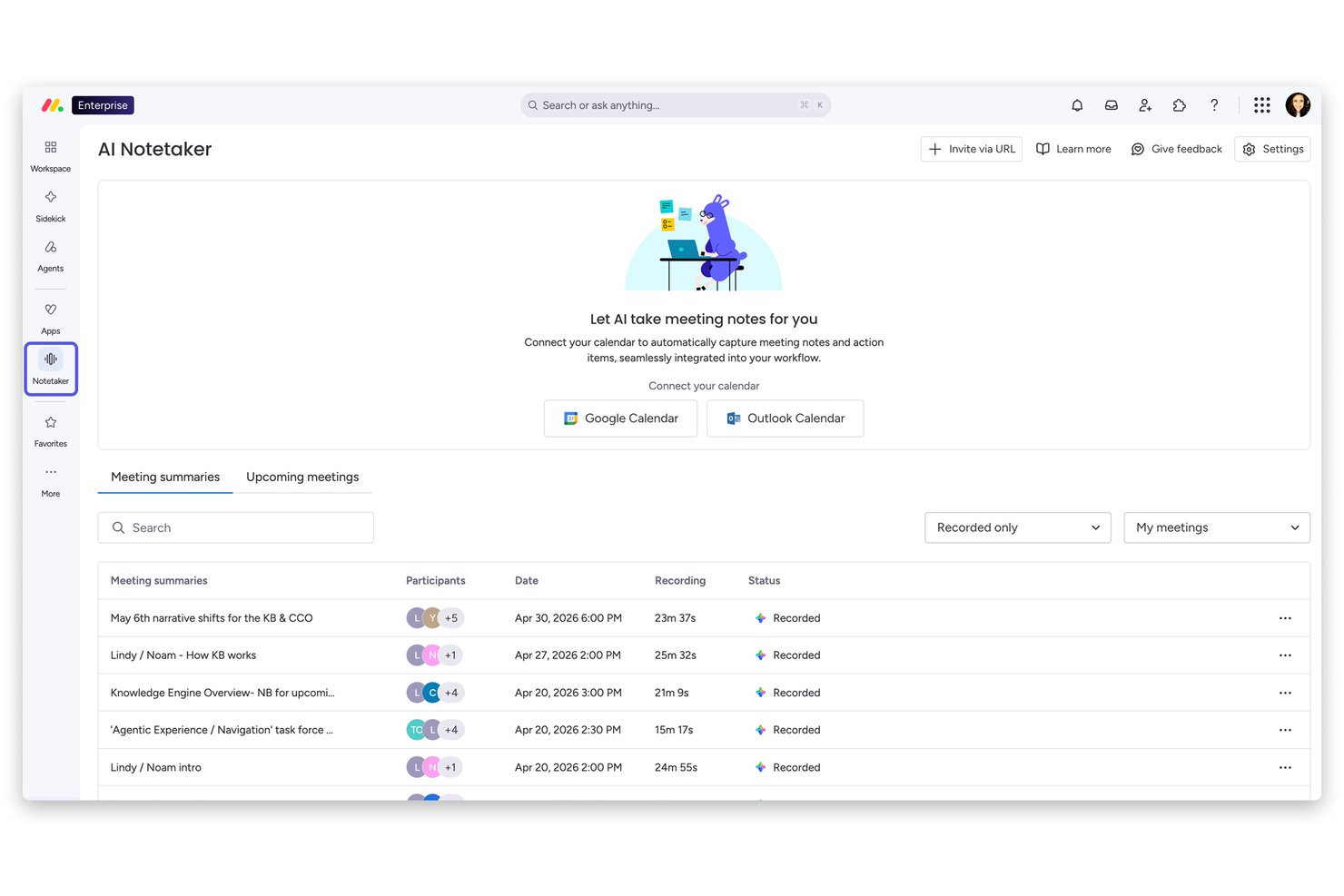
monday AI Workspace is a project management platform with boards, Gantt and timeline views, workload tracking, and built-in AI tools for task assignment, dependency tracking, and workflow automation.
Who Is monday AI Workspace Best For?
monday AI Workspace is a strong fit for cross-functional teams that need a central hub for keeping communication, task ownership, and project visibility in one place.
Why I Picked monday AI Workspace
I've included monday AI Workspace in my top picks because it genuinely excels at keeping cross-functional teams aligned through built-in communication and collaboration tools. Every task has its own comment thread with @mentions and file attachments, so conversations stay tied to the work instead of scattered across email. I also like that shareable boards let you bring in external collaborators like contractors or clients without exposing your whole account.
monday AI Workspace Key Features
- Gantt chart with critical path: Visualize task dependencies and automatically highlight the critical path in red to see which tasks will delay your project if they slip.
- Workload view: See each team member's capacity across projects with color-coded indicators showing who is under, at, or over capacity.
- AI task assignment and risk flagging: Built-in AI recommends task owners, sets milestones, tracks dependencies, and flags risks before they become blockers.
- Shareable boards for external collaborators: Invite clients or contractors to specific boards without giving them access to your full account.
monday AI Workspace Integrations
monday AI Workspace offers more than 850 integrations and apps, including Slack, Microsoft Teams, Google Calendar, Google Drive, Zoom, Dropbox, Jira, GitHub, and GitLab. It also supports API access for custom integrations.
Pros and Cons
Pros:
- Regularly updated Mac app supports Apple silicon
- Gantt dependencies and critical path clarify schedule risks
- Task comments keep team discussions attached to work
Cons:
- Users report freezing and slowdowns under heavy use
- Desktop app lacks Mac-specific features like Spotlight
New Product Updates from monday AI Workspace
monday AI Workspace Adds Human Approval Routing
monday AI Workspace adds a human-in-the-loop approval block to AI Workflows, sending approval requests and routing workflow paths based on responses. For more information, visit monday AI Workspace's official site.
Wrike
Best project management software for teams of all sizes
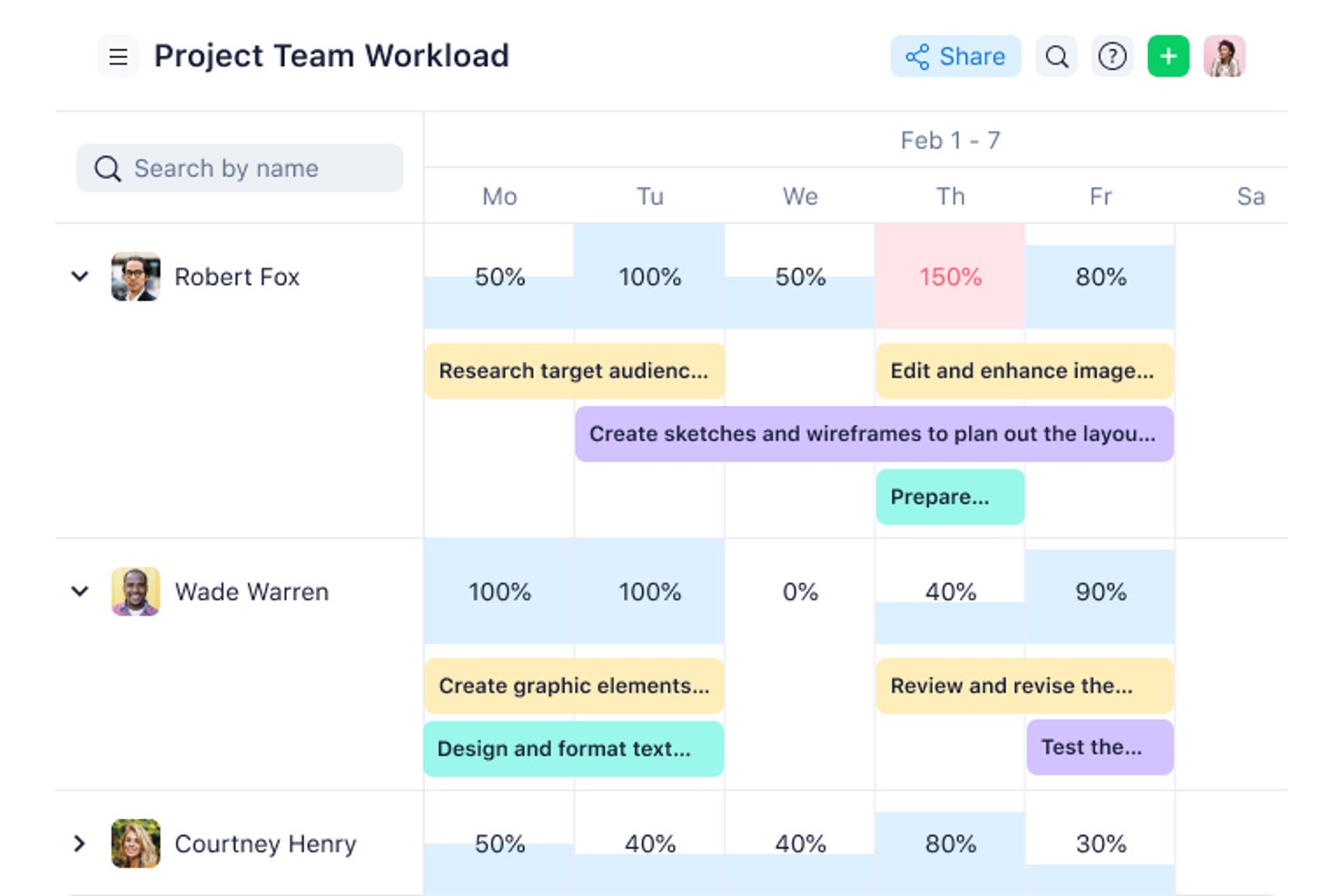
Wrike is a project management platform with 15+ view types—including Gantt charts, Kanban boards, and workload charts—alongside task tracking, online proofing, no-code automation, and AI-assisted workflows across Mac, Windows, and mobile.
Who Is Wrike Best For?
Wrike suits cross-functional teams that need one platform to manage tasks, timelines, and creative reviews across both Mac and Windows.
Why I Picked Wrike
Wrike earns its spot as one of the best on my shortlist because it genuinely scales with your team, whether you're coordinating a five-person product sprint or managing cross-functional work across dozens of contributors. I love the interactive Gantt charts with dependency tracking, which let me drag and reschedule tasks without rebuilding the whole timeline. The online proofing tools are a standout for creative reviews: guest reviewers can approve files without needing a Wrike seat, which cuts a lot of back-and-forth.
Wrike Key Features
- No-code automation: Build automation rules using natural language to trigger actions, escalate at-risk tasks, and route approvals without writing a single line of code.
- Online proofing and version comparison: Review and annotate creative files directly in Wrike, with guest reviewers able to approve without needing a paid seat.
- Cross-functional workload charts: Visualize team capacity across projects to spot overloads and redistribute work before deadlines slip.
- Request forms: Create custom intake forms that automatically generate tasks or projects when submitted, routing work to the right team instantly.
Wrike Integrations
Wrike offers 400+ integrations, including Jira, GitHub, GitLab, Salesforce, HubSpot, Microsoft Teams, Google Workspace, Slack, and Adobe Creative Cloud. It also provides an open API for custom integrations.
Pros and Cons
Pros:
- Proofing keeps creative reviews in project
- Gantt dependencies support schedule changes
- Mac app offers a focused workspace
Cons:
- Desktop work requires an internet connection
- Electron app isn't truly macOS native
New Product Updates from Wrike

Wrike Adds Quick Search to Table View
Wrike adds Quick Search to Table View with full-table search across titles, descriptions, and fields, plus highlighted matches. This helps users find tasks faster in large tables. For more information, visit Wrike’s official site.

Best for dynamic project management
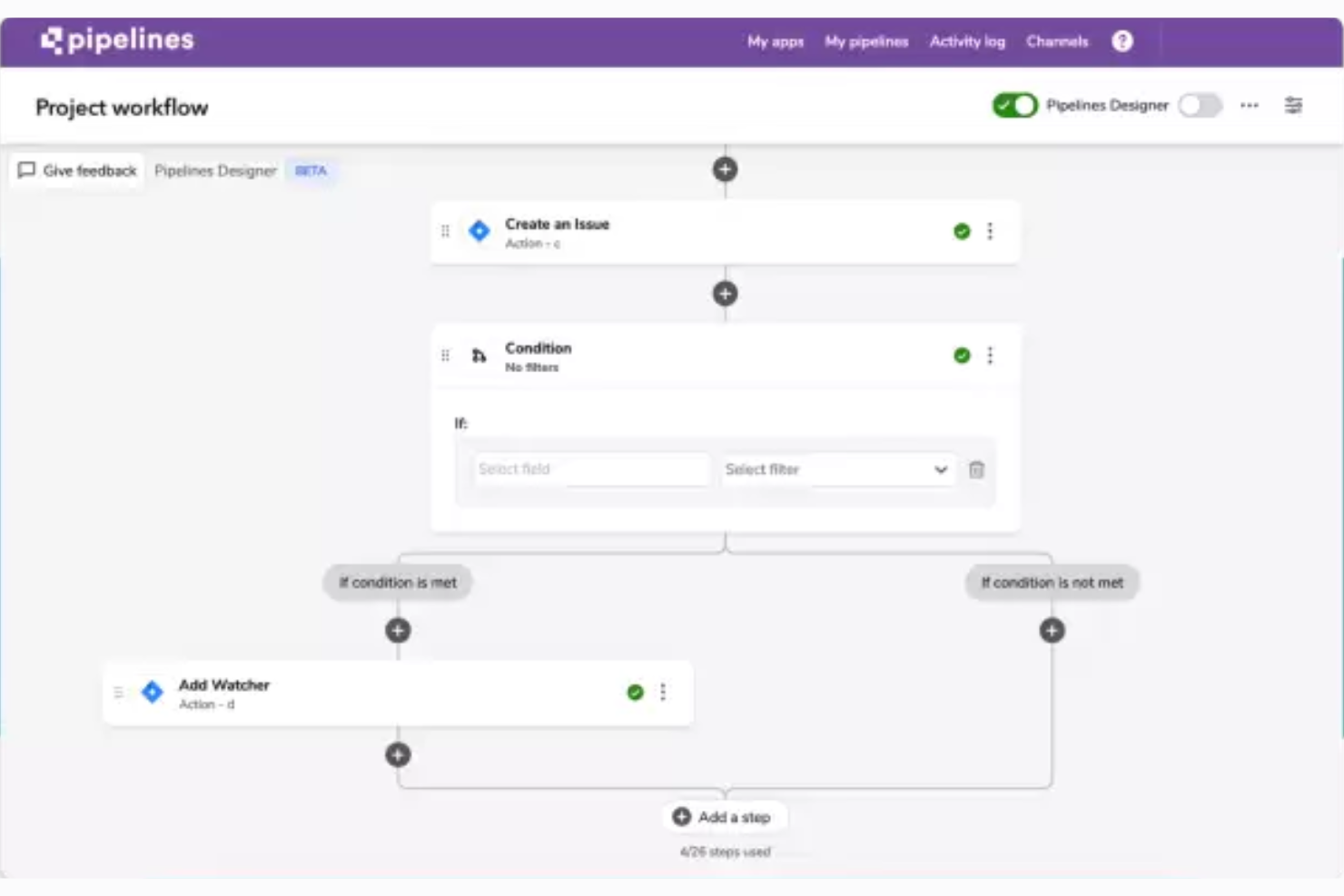
Quickbase is a no-code/low-code platform that lets teams build custom project management apps with Gantt charts, portfolio dashboards, automated workflows, and multi-project reporting.
Who Is Quickbase Best For?
Quickbase suits project managers at mid-size to enterprise organizations who need to build custom workflows around complex, multi-team programs rather than rely on a fixed PM tool.
Why I Picked Quickbase
I've included Quickbase in my top picks because it's built for projects that don't fit a fixed template. When I'm managing a program that spans multiple teams with shifting scopes, Quickbase's Gantt chart handles all four dependency types plus critical path and what-if analysis, so I can model timeline changes before they become problems. Its portfolio dashboards give me real-time status across every active project at once, which is exactly the kind of visibility dynamic work demands.
Quickbase Key Features
- No-code app builder: A visual builder lets you create custom project management apps from templates or scratch without writing any code.
- Portfolio dashboards: Real-time dashboards surface status, budget tracking, and progress across all active projects in one view.
- Role-based permissions: Granular access controls let you assign different data visibility and editing rights to each team member or stakeholder.
- Automated workflows: Built-in automation handles task assignments, approvals, and stage-gate notifications based on rules you configure.
Quickbase Integrations
Quickbase offers 40+ ready-made integrations, including Jira, Slack, Microsoft Teams, Google Drive, SharePoint, Salesforce, SAP, Oracle, ServiceNow, and Procore. Its RESTful API supports custom integrations.
Pros and Cons
Pros:
- Custom apps adapt to changing project workflows
- Dashboards track progress across multiple projects
- Gantt supports dependencies and critical path analysis
Cons:
- Collaboration tools need app-specific setup
- Mac access is browser-based, not native

Best for its integration with the Zoho app ecosystem

Zoho Projects is a browser-based project management tool that covers task tracking, Gantt scheduling, team collaboration, time tracking, and reporting across web, iOS, and Android.
Who Is Zoho Projects Best For?
Zoho Projects is a strong fit for small businesses and consultants already running their operations on Zoho tools like CRM, Books, or Desk.
Why I Picked Zoho Projects
I've included Zoho Projects in my top picks because it's the strongest option on this list if your team already runs on Zoho tools like CRM, Books, or Desk. Its Blueprint workflow designer lets you define exactly how tasks move through stages, enforcing approvals and transitions without manual follow-up. I also like that Gantt charts with baselines and cross-project dependencies are available even on the lower tiers, giving you real schedule control without upgrading just to see critical path visibility.
Zoho Projects Key Features
- Blueprint workflow designer: Lets you define exactly how tasks move through stages, with enforced transitions and approvals at each step.
- Time tracking and invoicing: Task timers and multi-level timesheet approvals connect directly to Zoho Books or Invoice for client billing.
- Portfolio dashboard: Gives you a single view of status, ownership, and budget health across all active projects.
- Cross-project workload reports: Shows capacity and task load across your entire team, with the ability to reassign work directly from the report.
Zoho Projects Integrations
Zoho Projects has native integrations across Zoho CRM, Books, Invoice, Desk, Sprints, Analytics, WorkDrive, Google Calendar, Microsoft Teams, Outlook, Slack, GitHub, and GitLab. It also supports Zapier and an MCP server for custom AI connections.
Pros and Cons
Pros:
- Feeds, chat, and whiteboards support collaboration
- Time logs support consultant billing workflows
- Gantt charts include baselines on lower tiers
Cons:
- Large projects can feel slow
- No dedicated macOS app or offline mode
New Product Updates from Zoho Projects
Zoho Projects Adds CodeX Scripts for Custom Modules
Zoho Projects now supports CodeX Scripts for custom modules, enabling conditional logic and rules for creating, updating, and deleting records. For more information, visit Zoho Projects' official site.
 .
.
Celoxis
Best for all-in-one project management platform
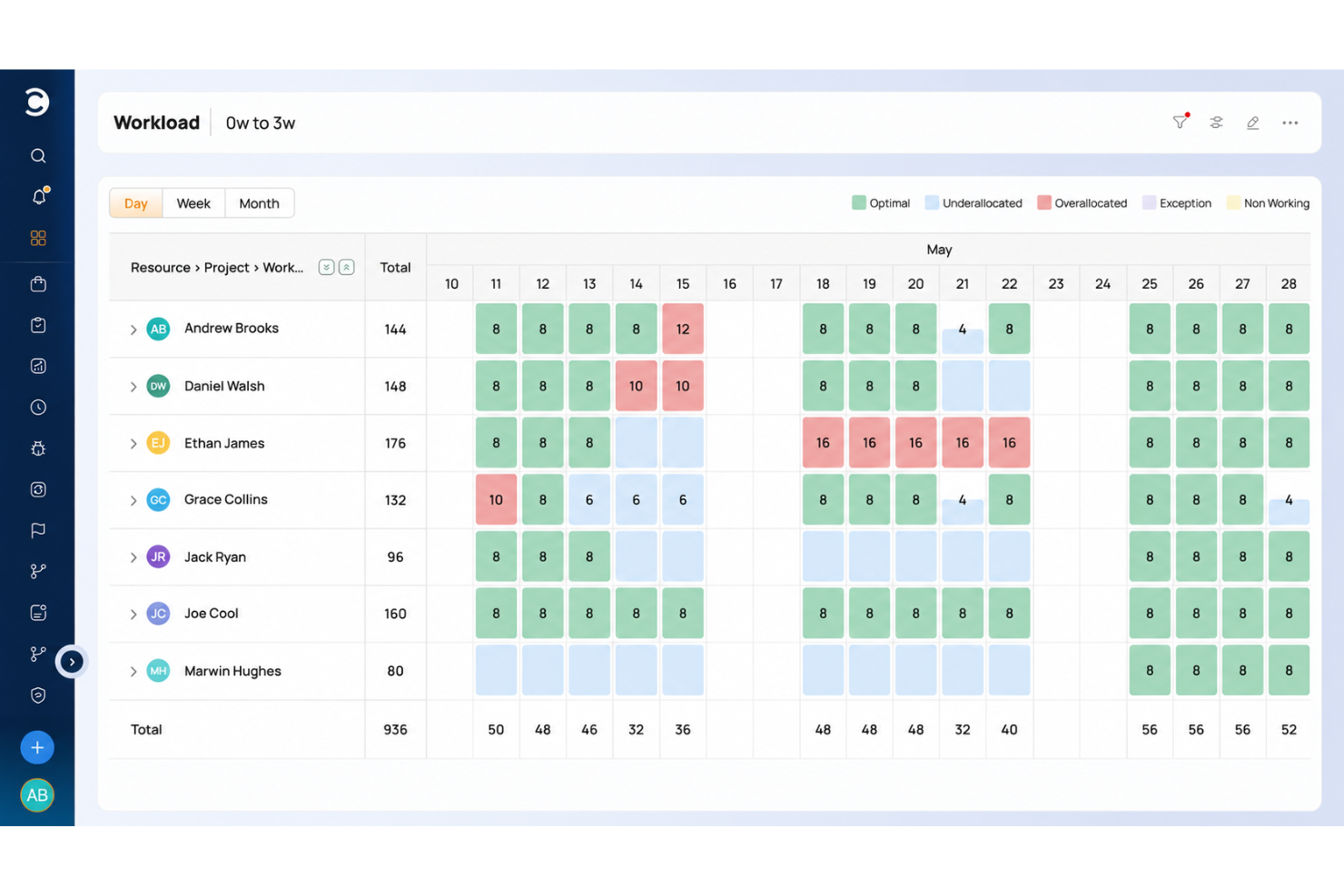
Celoxis is a browser-based project portfolio management platform that covers project planning, interactive Gantt scheduling, resource and capacity management, time tracking, budget control, and cross-portfolio reporting in one place.
Who Is Celoxis Best For?
Celoxis is built for PMOs and enterprise project managers who need to run multiple projects across portfolios with full budget, resource, and scheduling control in one place.
Why I Picked Celoxis
I've included Celoxis in my top picks because it's the closest thing I've found to a single platform that handles the full project lifecycle, from intake and prioritization through scheduling, budgeting, and portfolio reporting. I love its interactive Gantt chart, which supports all four dependency types, cross-project links, critical path analysis, and automatic recalculation when anything upstream changes. Pair that with built-in earned value analysis and RAG-status portfolio dashboards, and you get a level of scheduling and reporting depth that most Mac-friendly PM tools simply don't match.
Celoxis Key Features
- Project intake and prioritization: A built-in request management workflow lets you capture, score, and approve incoming projects before they hit the schedule.
- Earned value analysis: Tracks cost performance against planned value so you can catch budget drift before it compounds.
- Client portal: A branded, view-only workspace where clients access their projects and tasks without needing a paid license.
- AI assistant (Lex): Answers plain-English questions about your live portfolio data and surfaces recommended actions.
Celoxis Integrations
Celoxis offers 21 native integrations, including Microsoft 365, Google Sheets, Google Calendar, Jira, Azure DevOps, GitHub, Slack, and Trello. It also supports 400+ connections through Zapier and a REST API for custom integrations.
Pros and Cons
Pros:
- Budgets, workload, and time tracking together
- Portfolio dashboards reduce manual status reporting
- Detailed Gantt scheduling across project dependencies
Cons:
- Mobile apps trail the desktop experience
- No dedicated native macOS application

ClickUp
Best free project management compatible with Mac
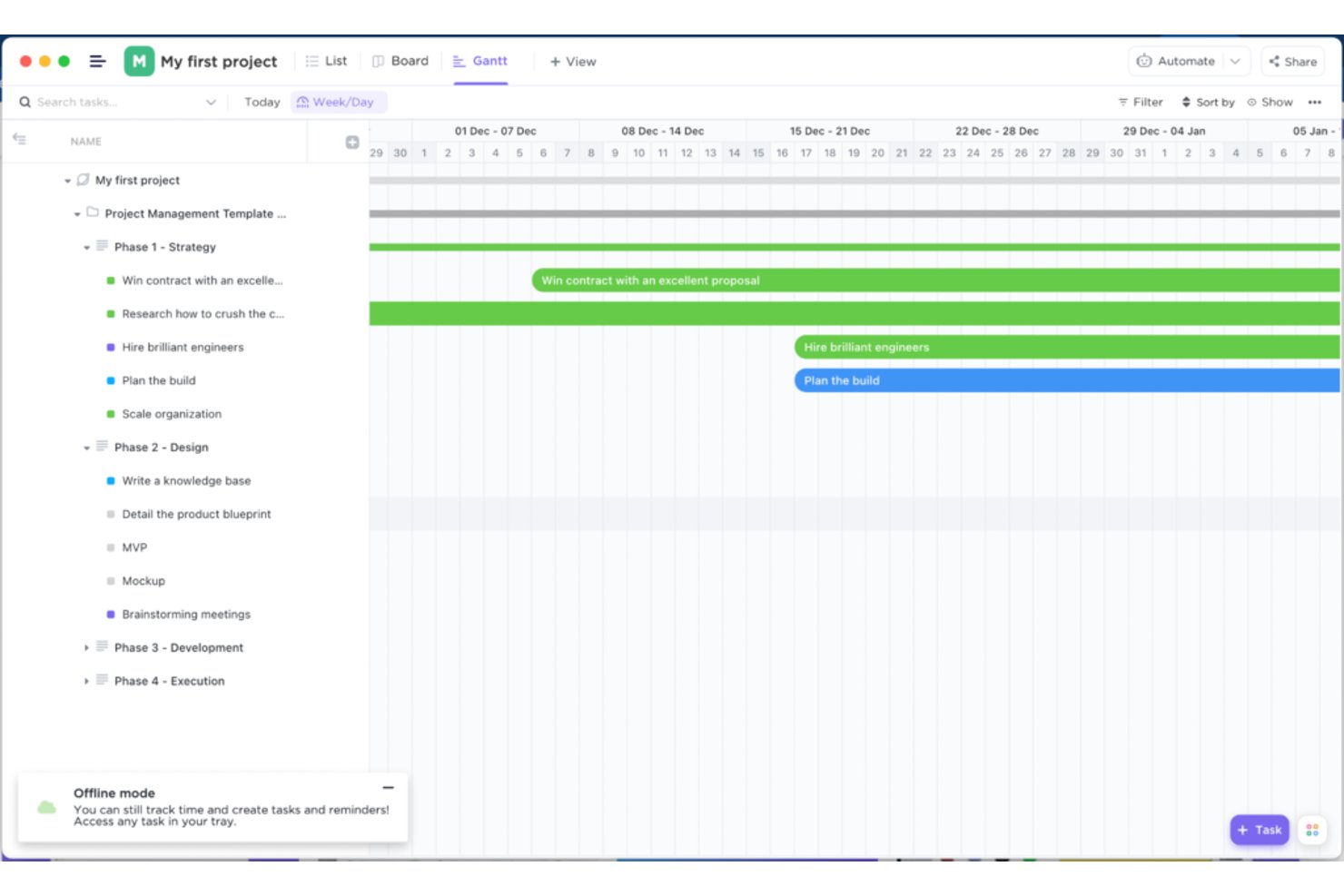
ClickUp is a project management platform for Mac, Windows, and mobile that combines task tracking, scheduling, team collaboration, reporting, and AI-assisted project insights in one workspace.
Who Is ClickUp Best For?
ClickUp suits small teams and project managers who want a full-featured workspace without paying for it upfront.
Why I Picked ClickUp
ClickUp earns its spot as one of the best on my shortlist because its free plan is genuinely usable, not a stripped-down teaser. I rely on its Gantt view to map dependencies across workstreams, with critical path and auto-rescheduling built in at no cost. The desktop app runs on Mac, Windows, and mobile, so mixed-device teams stay in sync without extra setup.
ClickUp Key Features
- Cross-platform desktop app: A dedicated app runs on Mac, Windows, and Linux, so mixed-device teams share one workspace without compatibility issues.
- Two-way Google Calendar sync: ClickUp tasks and deadlines sync bidirectionally with Google Calendar, keeping your schedule consistent across tools.
- Custom fields and task hierarchy: Organize work across Spaces, Folders, Lists, and Tasks, with custom fields and statuses tailored to your workflow.
- Workload and capacity view: See each team member's assigned work on a visual timeline to spot overbooking before it becomes a problem.
ClickUp Integrations
ClickUp offers native integrations with Google Calendar, Slack, Microsoft Teams, GitHub, GitLab, Bitbucket, Figma, Google Drive, and Outlook. It also supports Apple Calendar sync, Zapier, webhooks, and a public API for custom integrations.
Pros and Cons
Pros:
- Reviewers praise configurable workflows in one workspace
- Free plan includes unlimited tasks and members
- Advanced Gantt dependencies reschedule downstream tasks
Cons:
- Reviewers report lag and slowdowns
- Mac app lacks native macOS behaviors
New Product Updates from ClickUp
ClickUp Adds Meetings Hub, Super Agent Templates, and ZoomInfo Integration
ClickUp adds a searchable Meetings Hub, new ways to clone and template Super Agents, and a ZoomInfo integration through the App Center. These updates improve meeting retrieval, agent reuse, and access to sales intelligence. For more information, visit ClickUp’s official site.

Asana
Best for multi-project tracking across teams
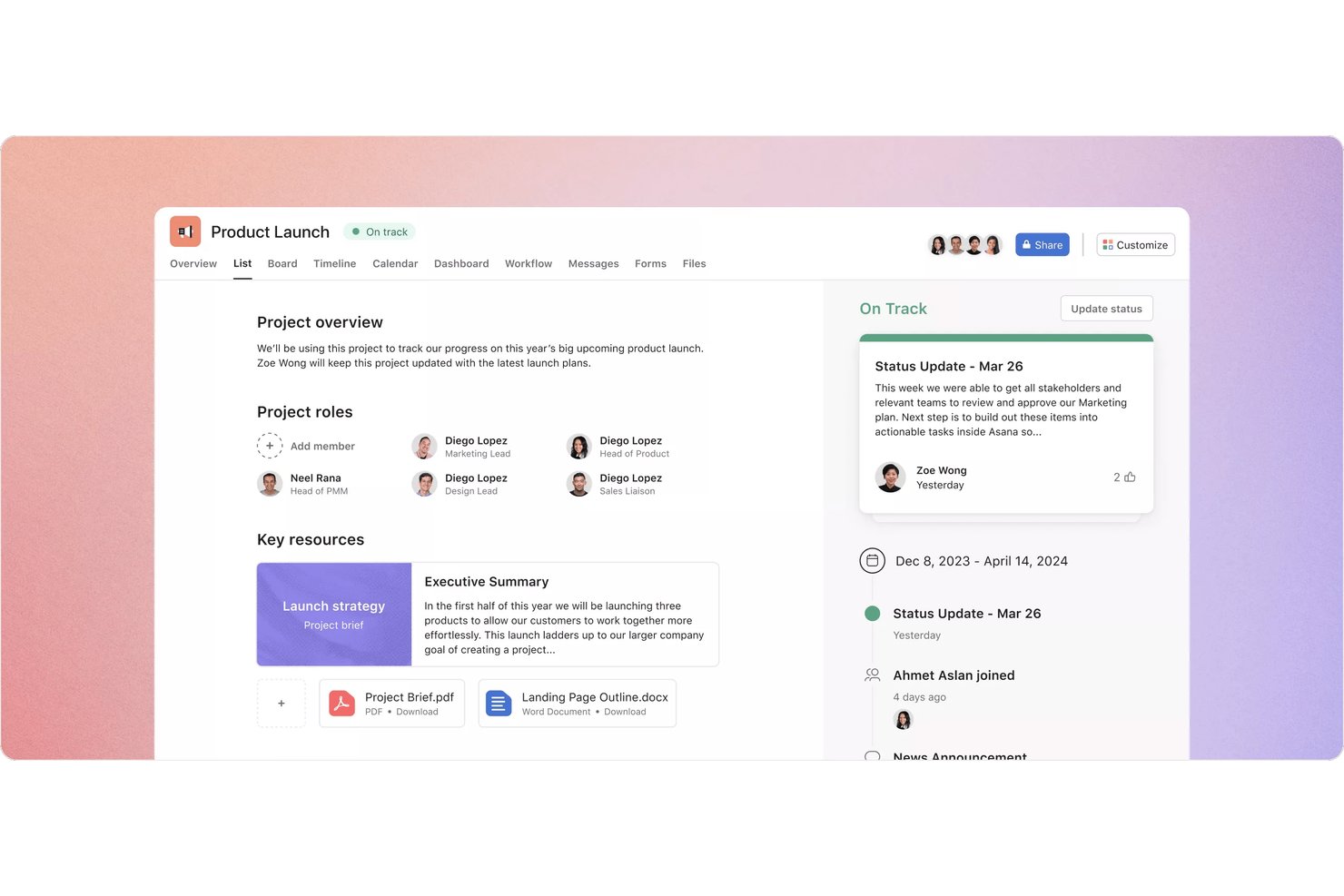
Asana is a cloud-based project management platform with desktop and mobile apps that covers task tracking, timeline and Gantt scheduling, workload management, and multi-project reporting across teams.
Who Is Asana Best For?
Asana works well for project managers and cross-functional teams who need to track multiple projects, deadlines, and workloads in one place.
Why I Picked Asana
I've included Asana in my top picks because it's the strongest option on this list for tracking multiple projects across teams simultaneously. I love how its portfolio view pulls every active project into a single status dashboard, so I can spot bottlenecks across workstreams without toggling between projects. The timeline view adds drag-and-drop dependency management and critical path highlighting, which makes it easy to see exactly which tasks are blocking delivery.
Asana Key Features
- Multi-homing: Add the same task to multiple projects so it stays visible across every workstream without duplication.
- Global quick-add shortcut: Use Shift + Cmd + + to create tasks instantly from anywhere on your Mac without switching windows.
- Workload view: See each team member's assigned work as a capacity bar, set weekly limits, and drag tasks to rebalance assignments.
- Unlimited free guests: Invite clients or contractors to Starter and higher plans without adding paid seats.
Asana Integrations
Asana lists 100+ integrations, including Slack, Microsoft Teams, Google Drive, Figma, Jira, GitHub, and Microsoft Azure DevOps. It also offers an API and Zapier connectivity for custom workflows.
Pros and Cons
Pros:
- Menu bar quick-add supports Mac workflows
- Portfolios reveal status across multiple projects
- Timeline dependencies and critical path planning
Cons:
- Mac users report slow task loading
- Desktop app is web-based, not native
Best for client work and workload balancing
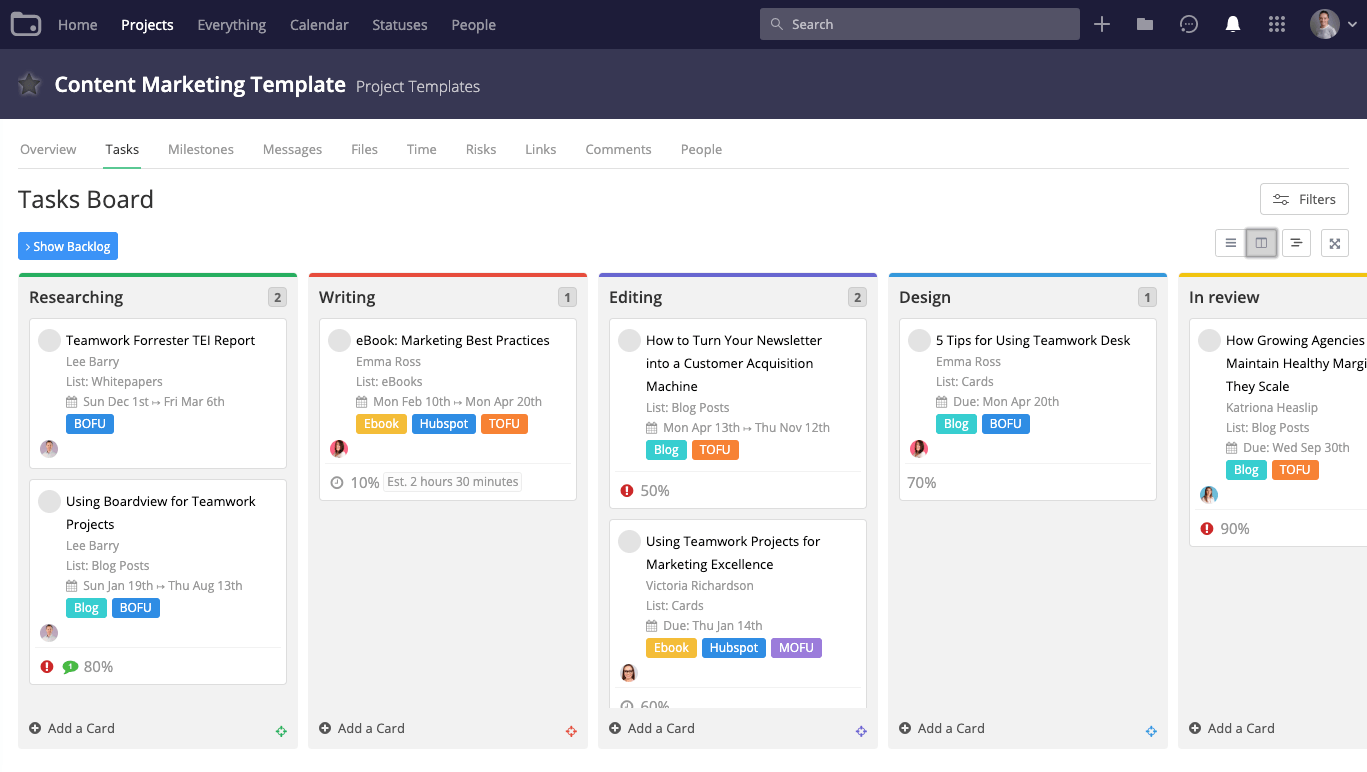
Teamwork.com is a project management platform built for client-facing teams, combining task tracking, Gantt scheduling, time and budget tracking, workload planning, and client collaboration tools across Mac, Windows, and mobile.
Who Is Teamwork.com Best For?
Teamwork.com is a strong fit for project managers and account leads at agencies or professional services firms juggling multiple client engagements at once.
Why I Picked Teamwork.com
I've included Teamwork.com in my top picks because it's purpose-built for client work in a way most project management tools aren't. The workload planner gives me a live view of who's overbooked and who has capacity, so I can reassign tasks before a deadline slips. I also rely on the Gantt chart's dependency tracking and critical path highlighting to keep multi-client timelines from colliding.
Teamwork.com Key Features
- Interactive Gantt chart: Drag and drop tasks to adjust dates, set dependencies between tasks, and export timelines as a PDF or Microsoft Project file.
- Built-in time tracking: Log billable and non-billable hours directly on tasks, run timesheet approval workflows, and generate time reports across projects.
- Client user access: Invite unlimited clients into your projects at no extra cost, letting them comment, add tasks, and view progress without a paid seat.
- Proofs and approvals: Upload files for structured client feedback, collect annotations in a single thread, and track approval history across rounds.
Teamwork.com Integrations
Teamwork.com lists 150+ integrations, including Slack, Microsoft Teams, Google Calendar, Outlook Calendar, Google Drive, HubSpot, and QuickBooks. It also offers API access on every plan and Zapier.
Pros and Cons
Pros:
- Workload views flag overloaded teammates
- Client proofs organize approval feedback
- Interactive Gantt tracks task dependencies
Cons:
- Dense navigation can slow project reviews
- Mac desktop wrapper requires internet access

Best for custom reporting and stakeholder reports
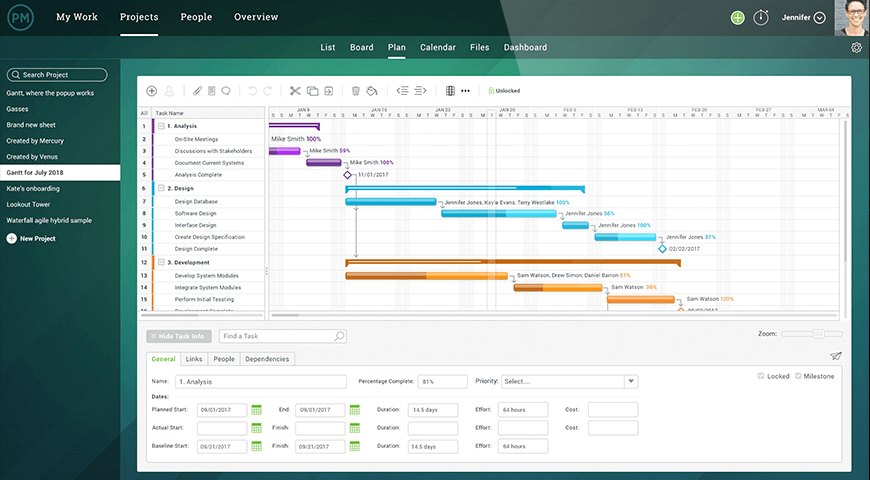
ProjectManager is a browser-based project management platform that offers Gantt chart scheduling, multi-view task tracking, team collaboration, and customizable reporting across projects and portfolios.
Who Is ProjectManager Best For?
ProjectManager suits project managers who need to produce polished, stakeholder-ready reports and track complex schedules across multiple projects, all from a browser on any Mac.
Why I Picked ProjectManager
I've included ProjectManager in my top picks because its reporting suite is genuinely hard to beat when stakeholder communication is a priority. I can filter any report by project, team member, or cost data, then export a polished PDF or Excel file ready for a C-suite review in minutes. The AI Project Insights feature on the Business plan goes a step further, writing executive summaries and risk analysis automatically, which saves real time when you're managing multiple projects at once.
ProjectManager Key Features
- Interactive Gantt chart: A drag-and-drop Gantt view with four dependency types, critical path filtering, baselines, and milestones that update automatically when dates shift.
- Workflow automation: Rule-based automation triggered by status, priority, assignee, cost, or duration to move tasks through defined stages without manual updates.
- RAID log: A built-in log for tracking risks, assumptions, issues, and dependencies, complete with a risk matrix for structured project governance.
- Free read-only guest access: Unlimited guests can view plans, milestones, dashboards, and status updates without consuming a paid seat.
ProjectManager Integrations
ProjectManager offers native integrations with Slack, Microsoft Teams, Jira, Azure DevOps, QuickBooks Online, Microsoft Power BI, Microsoft Excel, and Trello. It also supports API access on every plan and Zapier.
Pros and Cons
Pros:
- Browser access keeps teams in sync
- Gantt dependencies support complex schedules
- Stakeholder-ready reports earn user praise
Cons:
- Mobile app omits Gantt and offline access
- No dedicated macOS desktop application

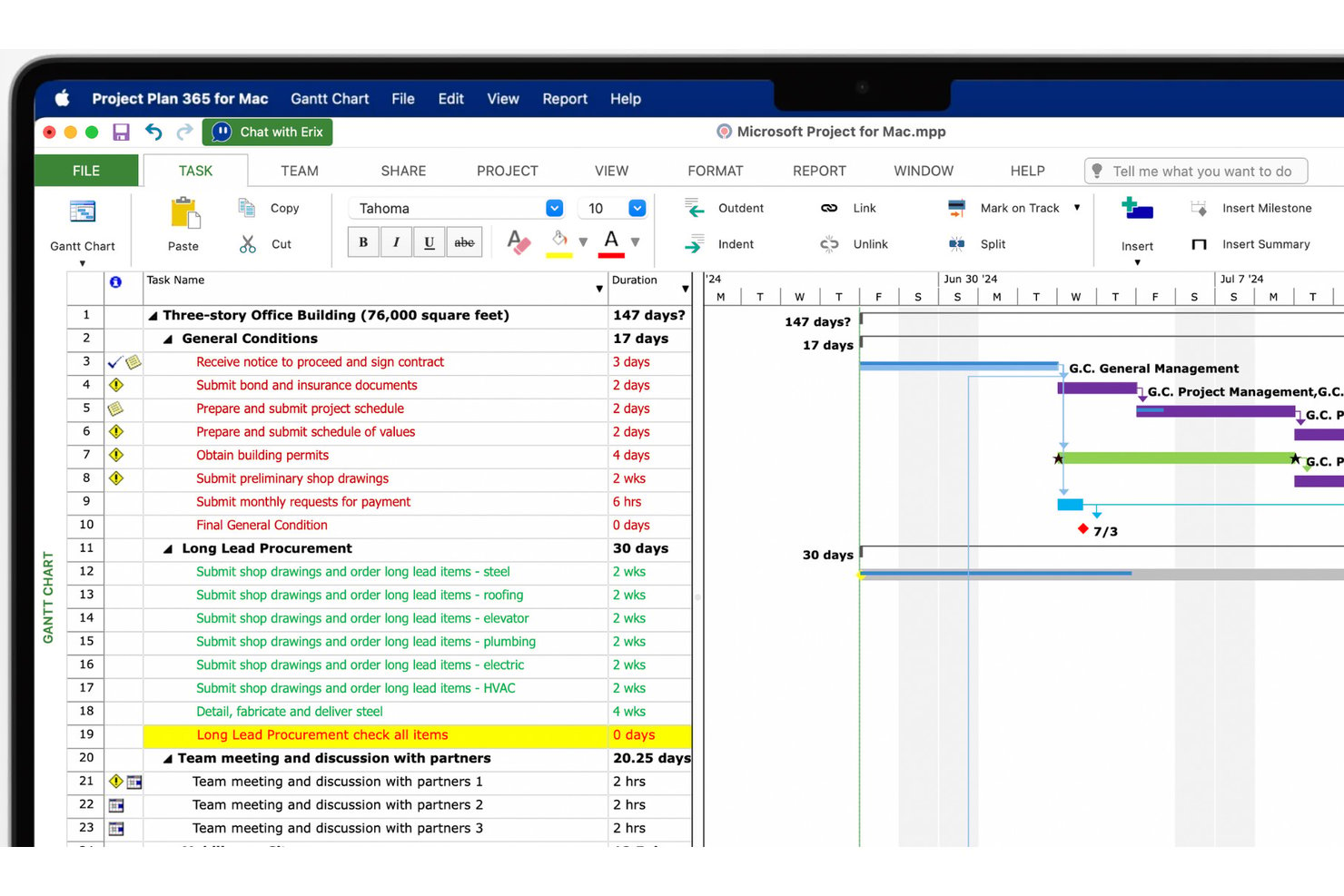
Project Plan 365 is a Mac-native project management app built around MS Project–style scheduling, offering Gantt charts, critical path analysis, resource management, and direct
.mpp
file editing across Mac, Windows, iOS, Android, and web.
Who Is Project Plan 365 Best For?
Project Plan 365 is a strong fit for project managers who work in mixed Mac and Windows environments and need to open, edit, and share
.mpp
files without converting them.
Why I Picked Project Plan 365
Project Plan 365 earns its spot on my shortlist because it's the only Mac app I've found that opens, edits, and saves
.mpp
files directly, no conversion needed. If you're on a Mac but regularly exchange project files with colleagues running MS Project on Windows, that compatibility is a genuine differentiator. I also like that it supports critical path analysis and multiple baselines, so you get serious scheduling depth without switching to a Windows machine.
Project Plan 365 Key Features
- Gantt chart scheduling: Build and adjust task schedules with drag-and-drop Gantt bars, custom timescales, and bar shape formatting across multiple views.
- Real-time collaboration: Up to 20 users can edit a shared plan simultaneously on the Business plan, with color-coded edits and a live "Who's Online" indicator.
- Agile board views: Switch between Scrum and Kanban boards, including a backlog board and board statuses, alongside traditional Gantt planning.
- Resource overallocation detection: The scheduling engine automatically flags overbooking and supports resource leveling to help you balance workloads across your team.
Project Plan 365 Integrations
Documented integrations include Google Drive, iCloud, Dropbox, OneDrive, Box, SharePoint Online, Basecamp, and the Microsoft Project ecosystem. It also supports MPP files stored through cloud services for cross-platform collaboration.
Pros and Cons
Pros:
- Native Mac app supports Apple Silicon
- Baselines and dependencies support detailed scheduling
- Reviewers praise Mac MPP file compatibility
Cons:
- No in-app chat, comments, or mentions
- G2 reviewer called interface outdated
Other Project Management Software For Mac
Here are a few more tools that did not make my shortlist, but which are worth your consideration.
- Smartsheet
For project work paired with brand asset control
- GoodDay
For customizable multi-view workspaces
- Jira
For agile tracking across engineering teams
- MeisterTask
For personalized dashboards
- GanttPRO
For Gantt-driven schedule planning
- Merlin Project
For mind map-to-Gantt project planning
- Hive
For automating project workflows
- TeamGantt
For Gantt chart capabilities
- OmniPlan
For Apple-native Gantt scheduling
- TaskRay
For Salesforce-native project delivery teams


How I Evaluate Project Management Software for Mac
I split my evaluation into baseline requirements—like a true native macOS app and Apple device sync—and the differentiating factors that matter most to agency PMs and studio leads.
Core Functionality (Table Stakes For This List)
When I'm selecting tools for my list, I rank each one on a scale from 0 (does not offer the functionality) to 5 (excels in this area) for each core functionality listed below. Then, I calculate the tool's total score into a percentage. Each tool needs to achieve a minimum total score of 65% to be considered for inclusion.
- Native macOS Desktop App: I check whether each tool offers a true native Mac app—not just a Chrome tab in a wrapper—with support for macOS features like notifications, menu bar access, and Spotlight search.
- Task & Project Management: Each tool should let you create tasks with assignees, due dates, dependencies, and subtasks, so a sprint backlog or client deliverable tracker actually works.
- Multiple Project Views: I look for at least two visual layouts like Kanban boards, Gantt charts, or calendars, since a creative team's workflow board looks very different from an engineering timeline.
- Apple Ecosystem Sync: The tool should sync across Mac, iPhone, and iPad, with hooks into native Apple apps like Calendar or Reminders for teams that live inside the Apple ecosystem.
- Team Collaboration Features: I evaluate shared workspaces, inline comments, file attachments, and @mentions—the kind of features that keep a distributed design and dev team aligned without switching to email.
- Third-Party Integrations: Tools should connect with the apps Mac-based teams already rely on, like Slack, Zoom, Google Workspace, Figma, or GitHub, through native integrations or an open API.
Once I have a list of tools that meet the criteria, I consider what sets each platform apart.
Differentiating Factors (What Sets Vendors Apart)
Here's how I compare and contrast different vendors:
Standout Features
Built-in time tracking matters for agency PMs and freelancers billing clients by the hour—I look for timesheets tied directly to tasks that generate billable reports. Resource and workload management is another differentiator, especially for studio leads juggling multiple projects who need a visual way to spot overallocation before it causes burnout. I also evaluate no-code automations, like auto-assigning tasks when a project moves to a new phase, which save hours of manual status updates each week.
Beyond Features
Performance on Apple Silicon is a big one—I check whether apps run natively on M-series chips or rely on Electron, which directly affects battery life and responsiveness during long planning sessions on a MacBook. Pricing structure also gets close attention, since freelancers and solopreneurs need viable free tiers while growing agencies need plans that scale without per-seat costs spiraling. I also evaluate onboarding resources, looking for macOS-specific guides and templates that help teams get productive within the first week rather than spending a month configuring views.
How to Choose Project Management Software for Mac
It’s easy to get bogged down in long feature lists and complex pricing structures. To help you stay focused as you work through your unique software selection process, here’s a checklist of factors to keep in mind:
| Factor | What to Consider |
|---|---|
| Scalability | Make sure the software can grow with your team. Look for flexible user limits, advanced features for larger projects, and performance reliability as your needs expand. |
| Integrations | Check if the software connects with tools your team already uses, like Slack, Google Drive, or accounting software. Seamless integrations can streamline workflows and save time. |
| Customizability | Ensure the software allows you to tailor dashboards, task views, and workflows to match your team’s specific project needs and preferences. |
| Ease of Use | Prioritize intuitive navigation, simple setup, and minimal learning curves. A clean interface ensures your team can quickly adopt and use the software effectively. |
| Budget | Evaluate pricing structures to ensure they align with your budget. Look for transparent pricing, free trials, and features that match your value expectations. |
| Security Safeguards | Confirm robust data protection with features like encryption, regular backups, and secure access controls to keep your team’s information safe. |
| Cross-Device Compatibility | Verify that the software runs smoothly on your Mac and offers seamless experiences across other devices, like iPhones and iPads, for added flexibility. |
| Customer Support | Look for accessible support channels, like chat or email, and consider user reviews that highlight responsiveness and expertise in solving technical issues. |
Trends in Project Management Software for Mac
In my research, I sourced countless product updates, press releases, and release logs from different Mac program vendors. Here are some of the emerging trends I’m keeping an eye on:
- AI-powered insights: Many platforms now include AI-driven analytics that help teams make better decisions by spotting trends and suggesting next steps. For example, AI might analyze project data to prioritize tasks automatically, making the tool a valuable task manager for macOS.
- Data visualization: New visualization tools can turn project data into easy-to-understand charts and dashboards, helping teams see patterns and progress at a glance. These tools often feature customizable views and are becoming some of the best Mac utility apps for professionals who need quick data summaries and reports on macOS.
- Voice command capabilities: Some vendors are experimenting with voice commands to speed up task creation and updates. This feature allows users to quickly add items or check statuses with voice input, making it ideal for hands-free work on MacBook devices, essentially creating a hands-free task manager MacBook Air equivalent.
- Hybrid collaboration tools: Software is adapting to support both in-office and remote work, offering flexible tools like virtual whiteboards and breakout rooms for hybrid teams. These platforms let teams collaborate visually and communicate in real-time, regardless of location.
- Sustainability tracking: Some platforms now offer features to help teams track the environmental impact of projects, such as tools for carbon footprint analysis or resource consumption metrics. This feature appeals to users looking for business plan software for Mac that professionals can use to monitor sustainability goals, adding new value to software that was once focused solely on task and document management.
What is Project Management Software for Mac?
Project management software for Mac is a tool made to run smoothly on your Mac devices, using macOS or iOS, either as an app or in your browser.
Project managers who use Macs (as well as designers, marketers, or anyone loyal to Apple) use these tools to plan projects, track work, manage schedules and project management calendars, and collaborate with their teams. You get core project management features without needing a Windows machine, so you can stick with the Apple interface you know.
Features of Project Management Software for Mac
When selecting project management software for Mac, keep an eye out for the following key features:
- Task management: An intuitive macOS task manager lets users create, assign, and prioritize tasks, making it one of the best apps for MacBook users seeking organized workflows.
- Gantt charts: Visualizes timelines and dependencies in projects, providing a useful, Mac-compatible alternative to Microsoft Project with visual planning capabilities.
- Time tracking: Tracks time on tasks or projects, giving a clear view of time allocation and helping optimize productivity. This is ideal for users seeking time tracking apps for Mac that integrate with project management.
- Document management: Provides a secure document manager on Mac users can rely on for storing and sharing files directly within the platform, keeping all essential documents accessible.
- Collaboration tools: Enables real-time communication through built-in chat, comments, and file sharing, so teams can stay connected without additional monitoring software Mac tools.
- Budget tracking: Allows teams to track project expenses against the budget, offering visibility into costs for users who need a MacBook task manager that supports financial oversight.
- Customizable dashboards: Users can create dashboards tailored to their metrics, offering a Mac organizer experience for monitoring project health, timelines, and progress in one place.
- Reporting and analytics: Generates detailed reports and analytics on project performance, making it a common feature on the best apps for iMac users needing in-depth project insights. You can also opt for specific reporting tools.
- Resource management: Manages team availability and assignments, ensuring work is balanced and that no one is overloaded, ideal for a schedule app for Mac approach. You might also choose specific resource scheduling software.
- Mobile access: Provides a mobile-friendly interface for users to access project details on the go, catering to planner on MacBook needs for team members who work remotely or need flexibility.
Benefits of Project Management Software for Mac
Implementing project management software for Mac can provide several benefits for your team and your business. Here are a few you can look forward to:
- Improved organization: Keeps tasks, files, and schedules in one place, making it easy for teams to stay organized and know where to find what they need. This feature can function like a file organizer Mac users would rely on daily.
- Enhanced collaboration: With built-in messaging and file-sharing tools, team members can communicate and work together effectively, even from different locations.
- Better time management: Time tracking and task assignment features ensure deadlines are met, which is ideal for teams needing the best time tracking app to manage workloads efficiently.
- Easy access on-the-go: Mobile-friendly options let users check updates and manage tasks from anywhere, which is great for remote workers who need to stay on top of tasks.
- Data-driven decisions: Reporting and analytics tools provide insights into project performance, helping teams make informed decisions based on real data.
- Resource allocation: Tracks team availability and workload, allowing managers to distribute tasks evenly and avoid burnout. This feature is a helpful addition if you need to juggle multiple projects.
- Cost control: Budget tracking features help teams monitor expenses against project budgets, helping users to keep their finances in check.
Costs & Pricing for Project Management Software for Mac
Selecting project management software for Mac requires an understanding of the various pricing models and plans available. Costs vary based on features, team size, add-ons, and more. The table below summarizes common plans, their average prices, and typical features included in project management software for Mac solutions:
Plan Comparison Table for Project Management Software for Mac
| Plan Type | Average Price | Common Features |
|---|---|---|
| Free Plan | $0 | Basic task management, limited storage, and community support |
| Personal Plan | $5-$15/user/month | Task management, calendar integration, and email support |
| Business Plan | $20-$50/user/month | Advanced reporting, team collaboration, integrations, and priority support |
| Enterprise Plan | Custom pricing | Custom integrations, dedicated account manager, enhanced security, and training |
Project Management Software for Mac FAQs
Find answers to common questions other people ask about this topic.
What is the Apple equivalent of MS Project?
Although many of the popular project management software on this list have Mac native apps now, I would highlight Merlin Project. The company behind this tool was founded in 2002 and has been focusing on bringing project management to Mac users for over two decades.
Among the top features Merlin Project offers are:
- Automatic resource leveling
- Costs and budget using top-down and bottom-up strategies
- Kanban boards & Gantt charts
- Mind maps
And to make it easier to transition to this tool, it has import features for Excel, Numbers, and MS Project, among others.
What types of project visualization tools are available with project management software?
Project management software for Mac users offers a range of powerful visualization tools to help teams stay organized, track progress, and manage workflows efficiently. Here are some popular options:
- Gantt charts: Essential for visualizing timelines, dependencies, and task progression, Gantt charts provide a clear view of the project’s entire lifecycle. Apps like Wrike, monday.com, and OmniPlan 3, considered among the best software for Mac, offer advanced Gantt chart capabilities with drag-and-drop functionality and real-time updates.
- Kanban boards: Kanban boards are ideal for task and workflow management, displaying tasks in columns to show their current status. Tools like monday.com and Wrike, often listed among the best apps for Mac, feature Kanban boards that allow teams to monitor progress and collaborate effectively.
- Dashboards: Dashboards offer a quick overview of essential project metrics, such as task completion, resource allocation, and budget status, making them a key feature in some of the best Mac utility software. These real-time data visualizations assist project managers in making well-informed decisions.
- Calendar and timeline views: Calendar and timeline views are useful for visualizing schedules and managing overlapping tasks. These views keep teams aligned on due dates and timelines.
- Digital asset management integration: For teams handling large volumes of visual or media files, integration with Mac-compatible digital asset management (DAM) software adds another layer of efficiency.
Is there a Mac version of Microsoft Project?
While MS Project is incompatible with MacOS, you still have options for using Microsoft Project on your Mac. Like most Microsoft-designed software, this particular tool was built specifically for Windows devices. However, the Project Online web app comes with Microsoft 365 for Mac, and is a fully functional project management software.
However, if all you need to do is open .mpp files you can use a Microsoft Project viewer to do this from your Mac device.
What are the major differences between desktop and mobile versions of project management software?
The main difference between desktop and mobile versions of project management software is in their functionality and user experience. While desktop versions often deliver more extensive features, mobile versions focus on accessibility and quick updates for on-the-go use. Here’s a breakdown of key differences:
- Functionality: Desktop versions typically provide more advanced features, such as document management software for Mac, detailed Gantt charts, and reporting tools. Mobile versions, designed for quick access, prioritize core features like task updates and notifications, ideal for users seeking a lightweight task manager for their Apple mobile device.
- User interface: Desktop interfaces are optimized for larger screens, often supporting intricate layouts and extensive navigation options. Mobile versions simplify the interface, making it easier to view tasks, updates, and files on smaller screens. Many apps offer a Mac version of task manager with an interface that’s streamlined for desktop use.
- Offline access: Desktop versions often support offline access with automatic syncing, allowing users to work without internet and sync later. Mobile apps may have limited offline capabilities, focusing on essentials to remain lightweight and accessible.
- Collaboration and communication: Desktop versions frequently include more advanced collaboration tools, such as shared dashboards and detailed comments. Mobile apps, however, emphasize quick messaging, push notifications, and updates, allowing team members to stay connected on-the-go.
Can project management software be tailored to suit different industries?
Yes, project management software can be tailored to suit different industries, offering unique tools and integrations for specific workflows and compliance needs. Here are some examples:
- Construction: Includes features for job site management, budgeting, and resource allocation. Some also integrate with automatic file organizers for Mac to keep plans and project documents neatly sorted.
- Marketing and advertising: Offers tools for campaign tracking and client collaboration, including asset management and approvals. Teams often benefit from using the best Mac file managers to organize media files and creative assets efficiently.
- Healthcare: Compliance tracking, patient data security, and scheduling tools help maintain regulatory adherence. Healthcare teams benefit from using specialized tools that ensure patient data remains secure while streamlining appointment scheduling and resource allocation.
- Consulting: Resource management and time-tracking tools streamline billing and project accounting. Consultants may also use a Mac contact management app to keep client interactions organized and accessible across projects.
What are some free PM software for Mac options?
Here are some free project management software options for Mac, each catering to different user needs:
- Trello: Includes Kanban boards, task cards, checklists, due dates, and basic automation. Best for individuals or small teams managing simple workflows and visual task organization.
- Asana: Includes task assignments, due dates, project timelines, and integrations with other tools. Ideal for teams neeing a structured approach to task management without advanced features.
- ClickUp: Includes task management, customizable views (List, Kanban, Calendar), time tracking, and limited automation. Suitable for users looking for a versatile platform with rich features in a free plan.
- Wrike: Includes task lists, file sharing, basic dashboards, and team collaboration tools. Best for teams that need a straightforward tool for managing shared tasks and priorities.
- Todoist: Includes task lists, priority tagging, reminders, and productivity tracking. Great for individuals and freelancers managing personal tasks or simple projects.
- Notion: Includes customizable workspaces, task tracking, databases, and note-taking. Perfect for those who need an all-in-one workspace for project planning and documentation.
Each tool offers free plans with limitations, such as reduced project numbers, fewer integrations, or limited storage. Users should assess their specific project needs before choosing a tool.