

10 Best Project Task Management Software Reviewed For 2026

10 Best Project Task Management Software List


You want to organize, prioritize, and track tasks within your projects more effectively, but need to figure out which tool will be the best for you. After all, with so many different project task management solutions available, figuring out which is right for you can be tough. I've got you!
In this post I'll help make your choice easy by sharing my personal experiences using dozens of different task management tools with a variety of projects, including my picks for the best project task management software on the market.
Why Trust Our Software Recommendations
Our team has been testing and reviewing software since 2012. As project managers ourselves, we know how difficult—and important—it is to choose the right software.
For this guide, we evaluated tools using hands-on testing and independent research, scoring tools using our selection criteria. We also draw on insights from industry thought leaders and practicing project management experts.
Our reviews reflect our human editorial judgment, not a sales pitch.
Expert reviewers:
Compare Software Specs Side-by-Side
Here is a table you can use to compare the tools we just covered in the overviews.
| Tool | Best For | Trial Info | Price | ||
|---|---|---|---|---|---|
| 1 | Best all-in-one work management solution for agencies | 14-day free trial + free demo available | From $10/month (billed annually) | Website | |
| 2 | Project task management software with built-in project management templates | 14-day free trial | From $10/user/month (billed annually) | Website | |
| 3 | Best for visual tracking with Kanban and Gantt | Free plan available | From $9/user/month (billed annually) | Website | |
| 4 | Best with deep Google Workspace integration | 14-day free trial | From $3/user/month (billed annually) | Website | |
| 5 | Best for no-code workflows at enterprise scale | Free demo available | Pricing upon request | Website | |
| 6 | Best for breaking down complex tasks | Free plan available | From $10.95/user/month | Website | |
| 7 | Best for managing connected projects within a portfolio | 14-day free trial | From $10/user/month (billed annually) | Website | |
| 8 | Best for seamless collaboration and visualization for effective project management | Free plan + 14-day free trial available | From $8/user/month (billed annually) | Website | |
| 9 | Project task management software for prioritizing tasks | Free demo available | Pricing upon request | Website | |
| 10 | Best for brainstorming, ideation, and task management in one | Free trial + free plan + free demo available | From $13/user/month (billed annually) | Website |


Best Project Task Management Software Reviews
Here are the juicy details on each tool and what they offer.
Best all-in-one work management solution for agencies

Productive is an all-in-one work management tool that caters to the needs of agencies. It provides tools to plan and manage projects, break down and assign tasks, track employee time, manage invoicing and billing, and more. When you plan your team's projects, you can assign tasks to specific team members, set deadlines, and then track the task's progress as your team moves forward.
Because it has built-in resource management, you can also assign tasks based on employee capacity and skills. Team members track their time right in the system, giving you clear gauges of how long certain tasks take, thereby assigning work more effectively. The time tracking tool also connects with the billing capabilities, and lets employees track both their billable and non-billable working hours.
This software integrates with several other popular work tools, including Dropbox, Exact, Jira, Outlook, Microsoft Calendar, Slack, QuickBooks, and Xero. A Zapier integration is also available, which can unlock more integrations with a paid account.
New Product Updates from Productive

Productive Adds Agent Triggers, Teams Integration, and Time Controls
Productive adds automated agent triggers, broader AI file support, Microsoft Teams integration, Resource Planner improvements, and new time entry controls. These updates expand automation while improving scheduling, collaboration, and time tracking. For more information, visit Productive’s official site.
Wrike
Project task management software with built-in project management templates

Wrike is a work management platform with dashboards, workflows, and request forms you can use to complete tasks and projects. It has Gantt charts and Kanban boards you can use to visually assess your team’s progress and help you determine if you can meet a deadline or if you need more time from your client. Wrike has a file-sharing functionality that allows project members to collaborate to beat project due dates.
Large projects take time, and they are easier to manage if you break them down into phases. If you need project task management software with built-in and customizable templates, then Wrike should be on top of your list. Wrike lets you create multiple phases for a project and further break down phases into tasks to make them easier to complete. You can also assign milestones or due dates for each phase, so assignees know exactly how much time they have to complete a task.
Wrike integrates with other time management and work management tools like Microsoft OneDrive, MS Excel, MS Project, Microsoft Office 365, Dropbox, etc.
Wrike has a free version and a free trial for paid plans.
New Product Updates from Wrike

Wrike Adds Quick Search to Table View
Wrike adds Quick Search to Table View with full-table search across titles, descriptions, and fields, plus highlighted matches. This helps users find tasks faster in large tables. For more information, visit Wrike’s official site.
Best for visual tracking with Kanban and Gantt
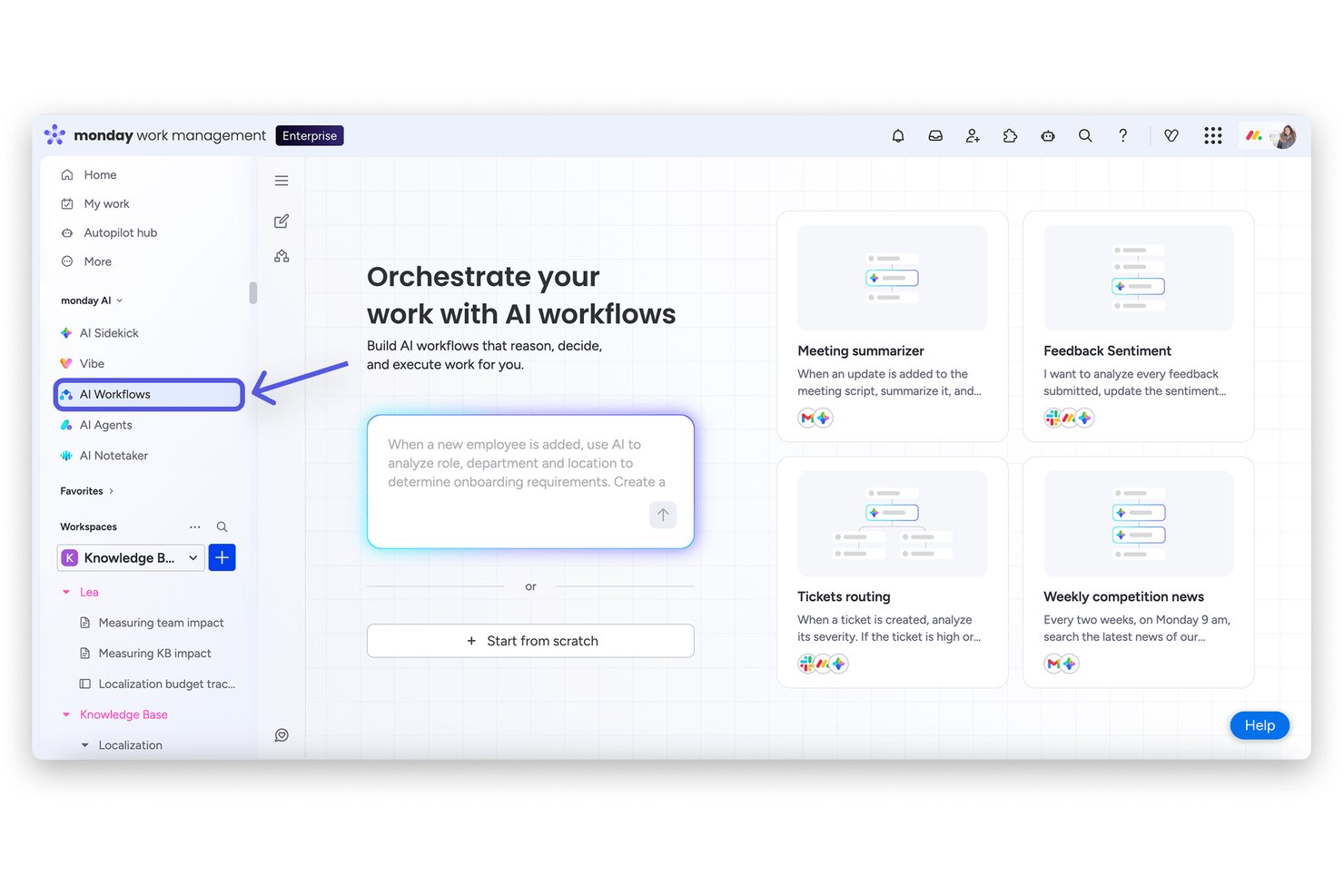
monday AI Workspace is a work management platform that combines AI-powered task tracking, multiple project views, workflow automation, and cross-team collaboration tools in a single configurable workspace.
Who Is monday AI Workspace Best For?
It's a strong fit for mid-sized to enterprise teams that manage multiple concurrent projects across departments and need one shared workspace to keep everyone aligned.
Why I Picked monday AI Workspace
monday AI Workspace earns its spot as one of the best on my shortlist because of how its visual project tracking actually works in practice. I can switch a board from Kanban to Gantt view in seconds, which means my team can shift between sprint-style task flow and timeline planning without rebuilding anything. The dependency tracking in Gantt view also flags scheduling conflicts before they become a problem, which I find valuable when managing overlapping workstreams.
monday AI Workspace Key Features
- AI-powered dashboards: Users can build and customize real-time dashboards that pull data from any board for detailed project tracking.
- Automated workflow builder: Teams can create rule-based automations to reduce manual updates and repetitive admin work across projects.
- Portfolio management: Roll up multiple projects into portfolios with cross-project reporting and strategic goal tracking for leadership.
- Native time tracking: Log hours directly on tasks, track billable and non-billable work, and generate detailed timesheet reports.
monday AI Workspace Integrations
monday AI Workspace offers hundreds of native integrations through its built-in integrations and marketplace, including Slack, Google Workspace, Microsoft 365, Jira, Dropbox, Zoom, HubSpot, Salesforce, GitHub, and Outlook. It also supports Zapier and provides an API for custom integrations.
Pros and Cons
Pros:
- Portfolio-level dashboards across multiple projects
- AI-generated task summaries and status updates
- Switchable Kanban and Gantt project views
Cons:
- Reporting depth requires higher-tier subscriptions
- Automations are capped on lower-tier plans
New Product Updates from monday AI Workspace
monday AI Workspace Adds Human Approval Routing
monday AI Workspace adds a human-in-the-loop approval block to AI Workflows, sending approval requests and routing workflow paths based on responses. For more information, visit monday AI Workspace's official site.

GQueues
Best with deep Google Workspace integration
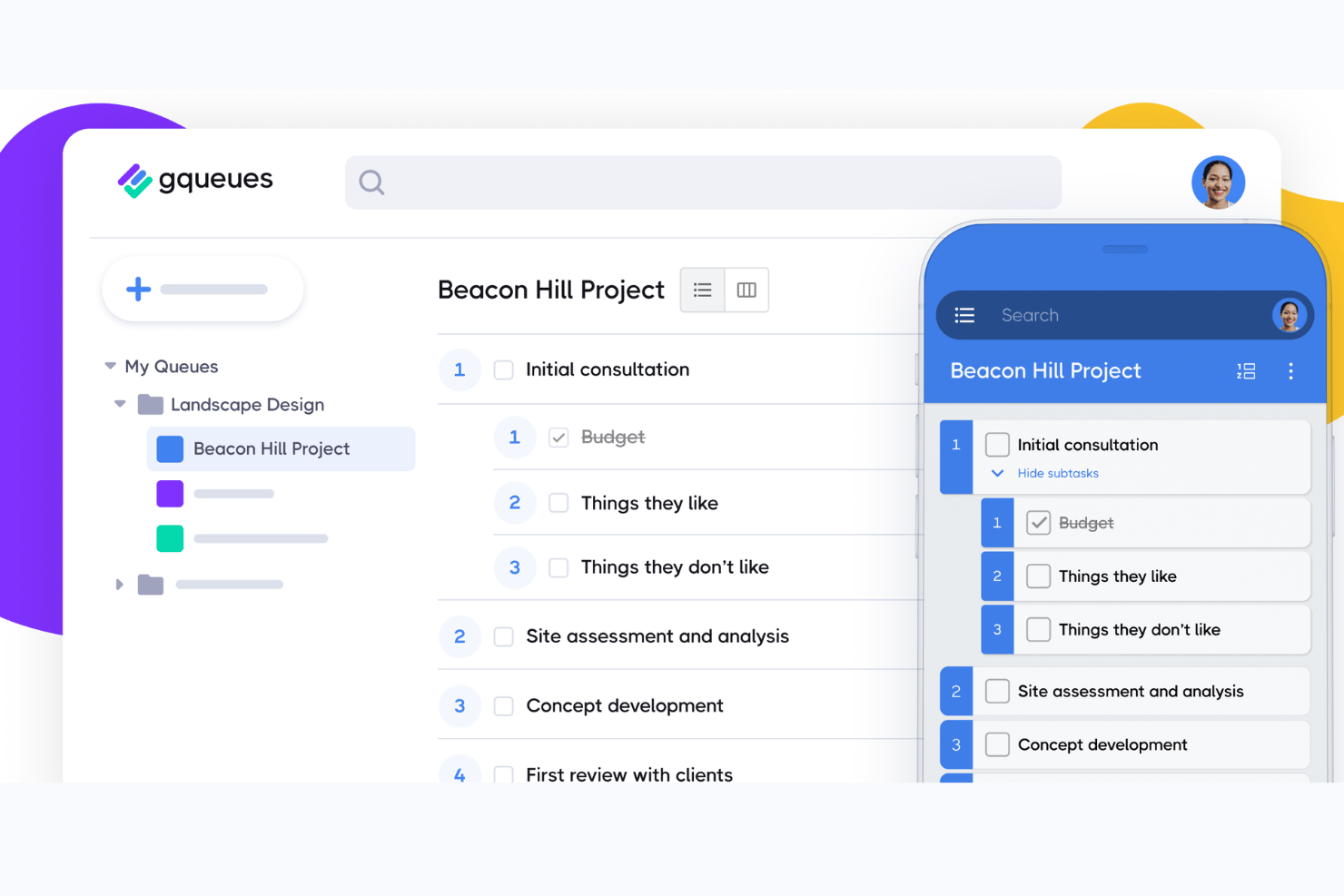
GQueues is a task management tool built natively for Google Workspace, combining task creation, assignments, subtasks, Kanban boards, and two-way syncing across Google Calendar, Gmail, and Drive.
Who Is GQueues Best For?
GQueues fits small-to-mid-sized teams that run their work entirely inside Google Workspace and want task management without leaving that ecosystem.
Why I Picked GQueues
I've included GQueues in my top picks because its Google Workspace integration goes deeper than any other task manager I've used. Creating a task directly from a Gmail thread, having it appear instantly in Google Calendar, and attaching a Drive file without leaving the task view is something I rely on daily. The 2-way Calendar sync is particularly useful: tasks with due dates become real calendar events, not just app-side reminders.
GQueues Key Features
- Smart Queues: Save custom task filters for instant access to prioritized, tagged, or scheduled work.
- Unlimited subtasks: Create detailed task breakdowns with unlimited nested subtasks for complex workflows.
- Shared queues: Collaborate with your team on shared task lists, each with its own set of permissions.
- Mobile apps: Access and manage all your tasks on both Android and iOS devices with full feature support.
GQueues Integrations
GQueues offers native integrations with Google Calendar, Gmail, Google Drive, Google Contacts, Google Chrome, and Google Workspace Marketplace.
Pros and Cons
Pros:
- Reliable recurring task scheduling built in
- Tasks created directly from Gmail threads
- Deep two-way Google Calendar sync
Cons:
- Reporting features are minimal and basic
- No Gantt or timeline view available
Best for no-code workflows at enterprise scale
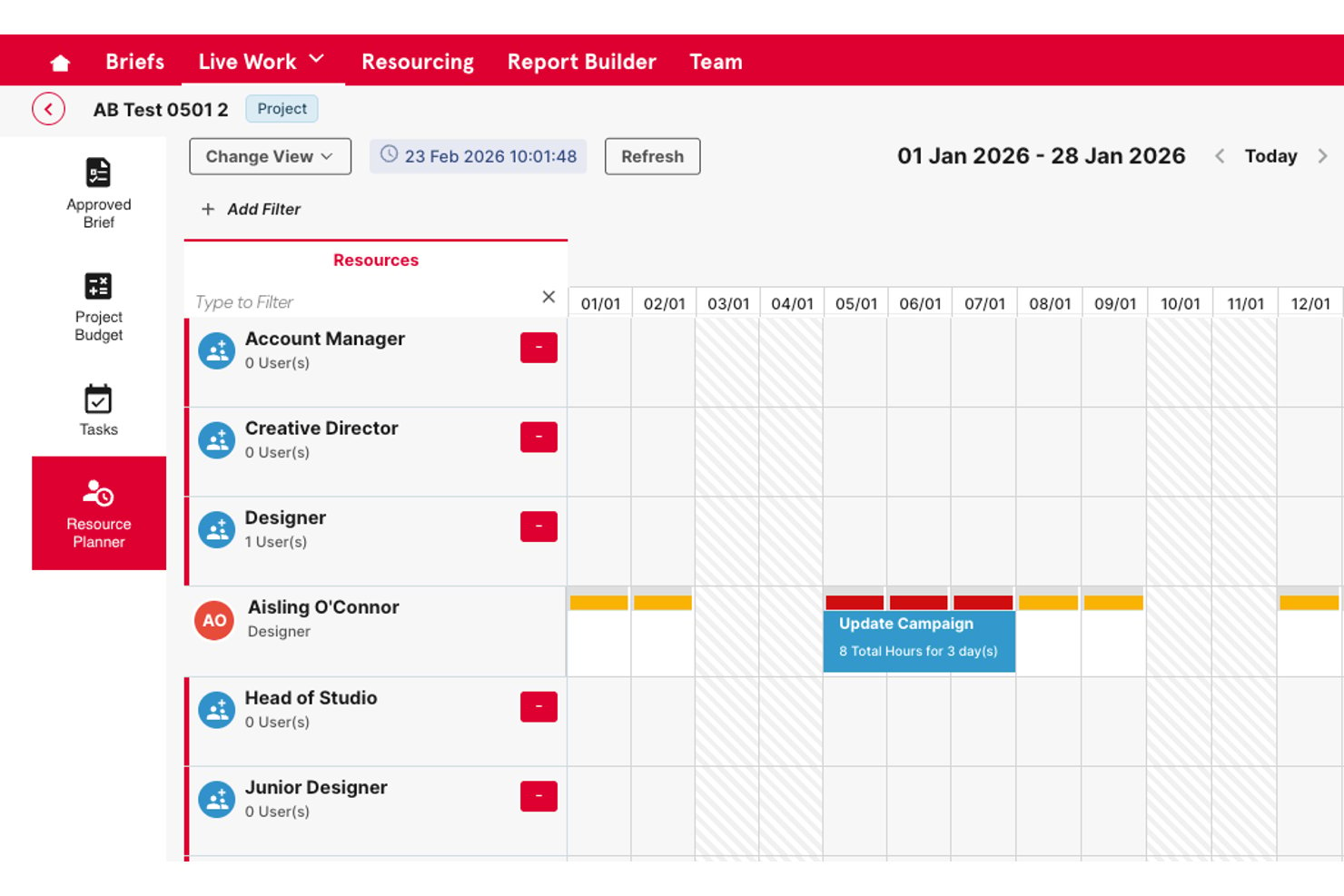
Screendragon is an enterprise work management platform that combines no-code workflow building, task and project tracking, resource planning, approval automation, and operational reporting in a single configurable system.
Who Is Screendragon Best For?
Screendragon is a strong fit for enterprise marketing and creative operations teams that manage high-volume, multi-stakeholder workflows at scale.
Why I Picked Screendragon
I picked Screendragon as one of the best because its no-code workflow builder lets enterprise teams design complex, multi-step approval and review processes without writing a single line of code. I particularly like how dynamic forms connect directly to automated workflow sequences, replacing the scattered email chains that typically slow creative and marketing operations down. The AI Hub takes it further, letting my team deploy AI agents directly inside live workflows to handle routing, compliance checks, and approvals at scale.
Screendragon Key Features
- Resource and workload planning: Lets you allocate resources, track capacity, and balance team workloads across projects.
- Portfolio management dashboards: Provides executive-level visibility with cross-project rollups and KPI tracking.
- Custom intake forms: Converts work requests into structured tasks using configurable forms tailored to each workflow.
- Advanced permissions and audit trails: Supports granular, role-based access controls and maintains detailed records of every change.
Screendragon Integrations
Screendragon offers native integrations with Google Drive, Box, OneDrive, Egnyte, Adobe Creative Cloud, Jira, Trello, Salesforce, Microsoft Dynamics 365, and Microsoft 365. An API is available for custom integrations.
Pros and Cons
Pros:
- Built-in approval routing with automated review stages
- Role-based permissions across large teams
- No-code workflow builder handles complex processes
Cons:
- Steeper setup process than lighter task tools
- Reporting customization requires initial configuration
New Product Updates from Screendragon
Screendragon Unveils New AI Hub
Screendragon introduced AI Hub, a new capability that lets teams build and manage AI agents directly within workflows. The update helps marketing teams automate tasks, maintain governance controls, and scale AI-driven operations more efficiently. For more information, visit Screendragon's official site.

Quire
Best for breaking down complex tasks

Quire is a project task management software that helps teams plan, organize, and track work in a structured way. It supports nested task lists, kanban boards, and timeline views to manage projects from start to finish.
One reason I picked Quire is its nested task structure, which lets you break down complex projects into smaller, manageable pieces. You can create tasks and subtasks in a tree format, making it easy to see the hierarchy and relationships between different parts of your project.
Another feature that stands out is the dynamic timeline view, which provides a visual representation of your project's schedule. You can see how tasks overlap, identify potential bottlenecks, and adjust deadlines as needed. This is especially useful for teams that need to coordinate multiple tasks and ensure everything stays on track.
Some of Quire's integrations include Google Calendar, Gmail, Slack, Outlook, Zoho Flow, GitHub, Apple Calendar Sync, Box, Dropbox, Google Drive, and Microsoft Teams.
New Product Updates from Quire

Quire Adds Task and Standalone Reminders
Quire adds task reminders and standalone reminders with shared notifications, recurring schedules, and automatic date tracking. These updates help teams stay ahead of deadlines and manage reminders that do not need a task. For more information, visit Quire’s official site.
 .
.
Celoxis
Best for managing connected projects within a portfolio
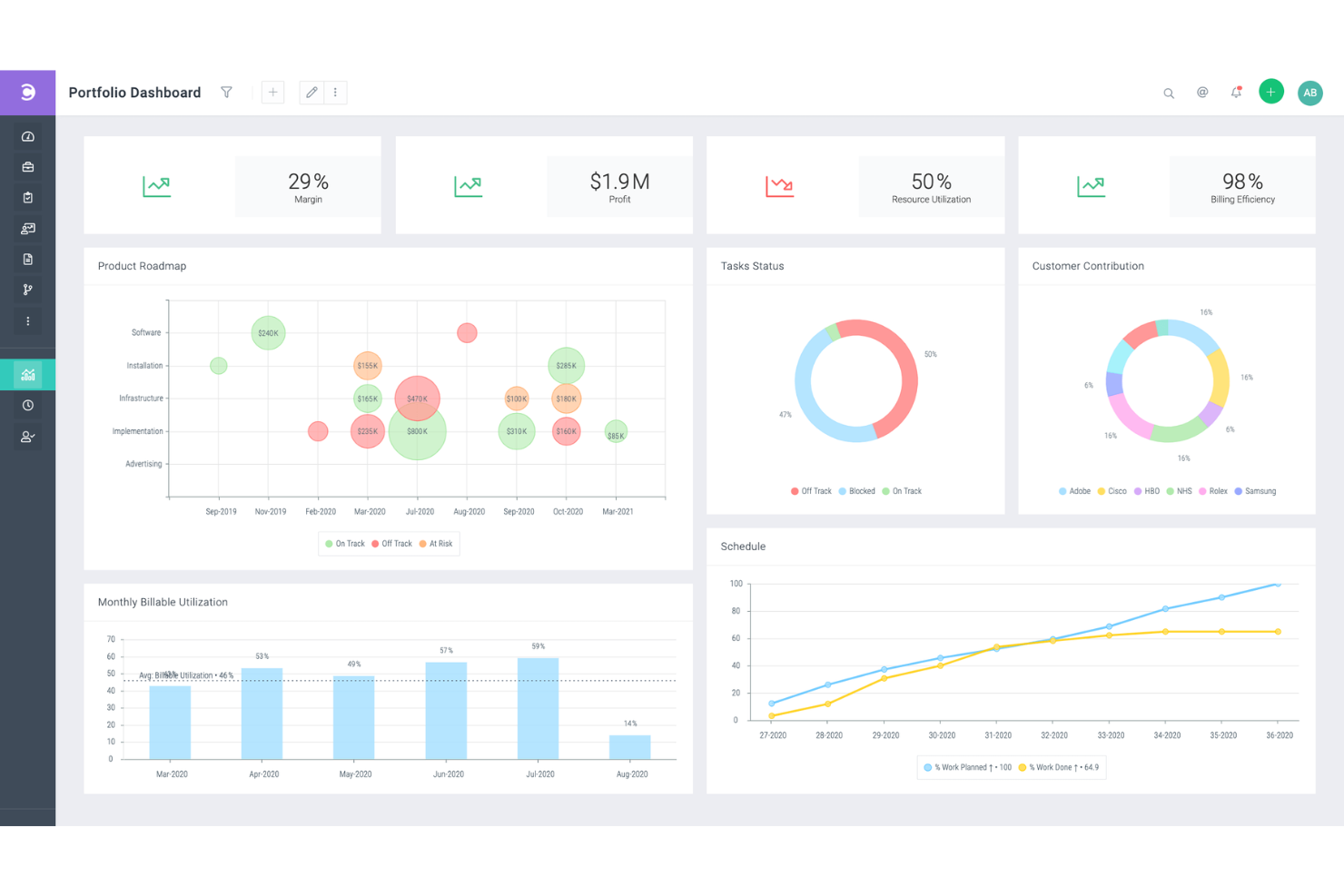
Celoxis is a project portfolio management (PPM) software with project, resource, time, expense, and workflow management features. It's capable of handling complex, inter-connected projects, and is well-suited to the needs of enterprise and professional services businesses.
The Gantt chart tool helps you plan a high-level overview of each of your projects. It includes features like color coding, recurring tasks, and inter-project task dependencies. Not only can you connect tasks across different projects, you can also assign multiple resources to the same task. All of these tools allow you to clarify your multi-project or multi-product strategy and keep your plans well-documented.
In addition to project management, the software offers resource management tools. Work can be assigned to specific team members based on capacity and other factors. You can also manage project expenses in the platform, and track the time spent on various tasks and projects. This helps you keep your budget up-to-date and accurate, and avoid overspending before it happens.
Several pre-built integrations are included, for tools like Google Drive, Microsoft Excel, Microsoft Project, Jira, Slack, Salesforce, Google Calendar, Outlook, Evernote, and QuickBooks Online. You can also access additional integrations with a paid Zapier account.
Paid plans for Celoxis start from $25 per user, per month. A 30-day free trial is also available.
Miro
Best for seamless collaboration and visualization for effective project management

Miro is an online whiteboard platform tailored for collaborative and visual work in project management. It's a tool where teams, whether co-located or remote, can bring their ideas to life in a shared, interactive space. This project task management software caters to a variety of team types and sizes, from tech developers to marketers and small businesses.
The platform's flexibility allows everyone to express ideas, allowing users to incorporate various data forms, including images, videos, and text, into their project boards. This adaptability aids in creating detailed and informative visual elements for projects. Additionally, Miro's planner feature offers a visual representation of tasks by different categories, such as sprints or status, while the dependencies app provides insights into task interdependencies, assisting teams in navigating and managing project complexities.
Integrations include Asana, monday.com, Notion, Webex, Figma, Jira, Azure DevOps, Confluence, Trello, Slack, Microsoft Teams, Google Workspace, Zoom, and 100+ others. You can access thousands of additional tools using a Zapier integration. This may require an additional expense.
New Product Updates from Miro
Miro Adds Japan Data Residency for Enterprise Customers
Miro has introduced Japan data residency for enterprise customers, offering in-region storage for production data, backups, and metadata, plus in-region compute infrastructure. For more information, visit Miro's official site.

Project task management software for prioritizing tasks

Profit.co is an OKR (Objectives and Key Results) software to help you measure and achieve company goals. Profit.co helps you plan your to-do-list to focus on urgent task assignments throughout the day. You can use Profit.co to track tasks easily by sorting tasks and projects according to their progress or level of importance, ensuring that you prioritize projects with approaching due dates. Profit.co also lets you create workspaces where you communicate and collaborate with team members in private to protect confidential or sensitive projects.
As much as we want to treat all tasks equally, some tasks are critical and require immediate attention, making Profit.co an ideal project task management for prioritizing tasks. When you create a task using Profit.co, it lets you set a priority level, so assignees know that you need a specific task completed quickly. The software also lets you assign a date and time when a project task is due, so team members know when to complete their task and estimate if they require extensions.
Profit.co works well with other project task management tools like Microsoft Planner, Asana, G Suite, BambooHR, and others.
Profit.co has a free plan for up to 5 users, while the pricing for plaid plans starts at $7/user/month. They also offer a free 30-day trial.
MeisterTask
Best for brainstorming, ideation, and task management in one
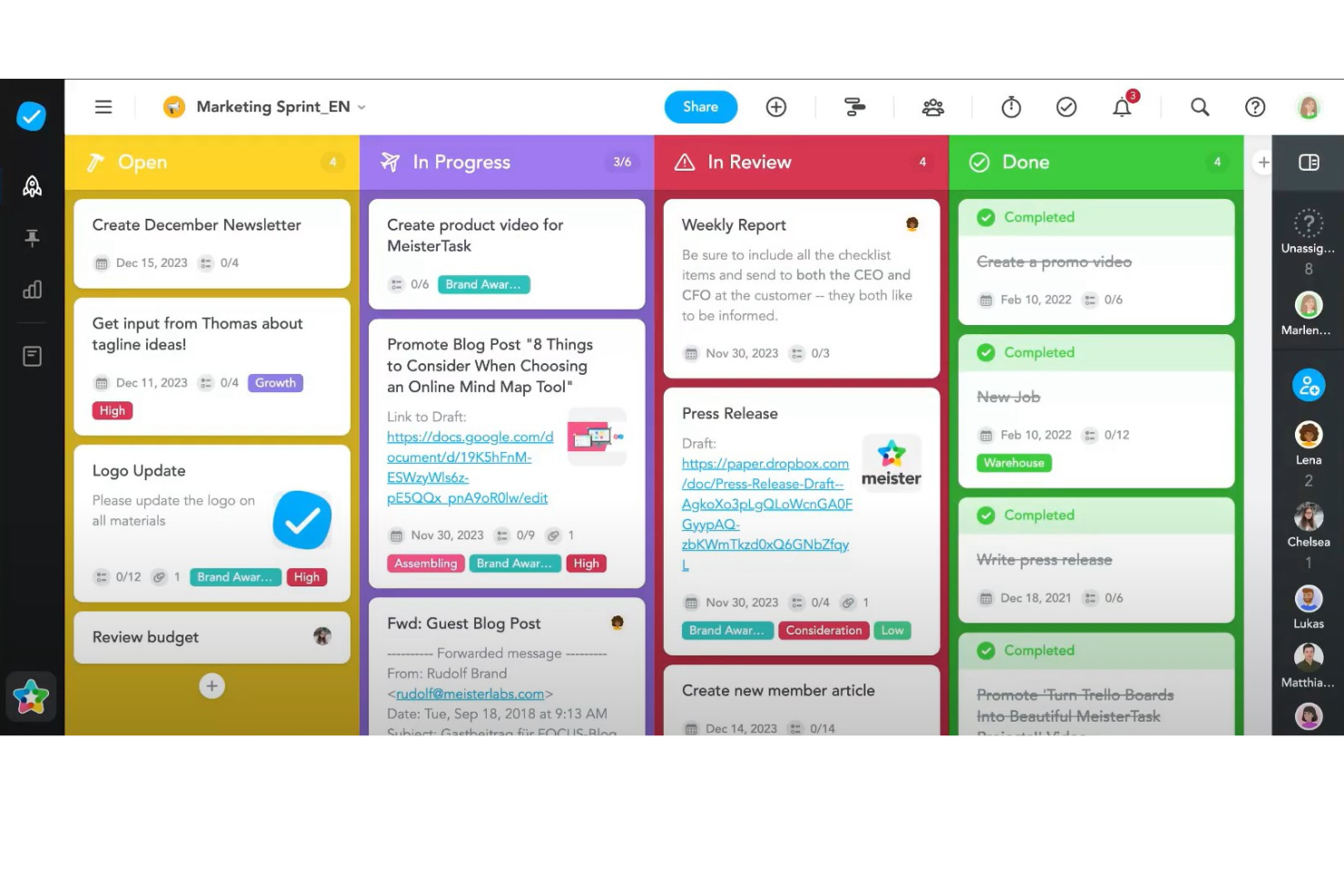
MeisterTask is a project task management software that excels in providing a streamlined, intuitive platform for teams to manage their tasks and projects efficiently. It adopts a visual approach to task management through the use of Kanban boards, making it easy for users to organize tasks, monitor progress, and adapt workflows in real-time. The software is designed to cater to a variety of project types and sizes, offering customizable boards that can be tailored to match specific project needs. Features such as task automation, due date reminders, and time tracking are integrated into the platform, simplifying the management process and enabling teams to focus on the work that matters most.
Beyond its core task management capabilities, MeisterTask stands out for its emphasis on collaboration and integration. The software facilitates seamless team communication with features like file sharing, commenting, and task assignments, ensuring that all team members are on the same page. Additionally, MeisterTask offers robust integration options with popular tools such as Slack, Google Drive, and MindMeister, the latter providing a unique bridge between mind mapping and task management. This integration enables a fluid transition from brainstorming and planning stages to actionable tasks, enhancing the overall productivity and creativity of teams.
Integrations include Slack, Dropbox, Github, Google Drive, Microsoft Teams, Outlook, Trello, Asana, MindMeister, and hundreds more through a paid plan with Zapier.
MeisterTask costs from $14.50/month (billed annually) and offers a fre trial.
Other Project Task Management Software
Here’s a few more that didn’t make the top list.
- ClickUp
Project task management software that lets you break down big projects into subtasks
- Backlog
For Agile workflows and bug tracking
- Workzone
For managing multiple projects and clients
- ActiveCollab
For its focus on simplicity
- Teamwork.com
Project task management software with a portfolio of projects and their status
- Bonsai Agency Software
For integrated project, client, and financial management
- Birdview
For resource allocation and portfolio management
- FunctionFox
Project task management software with time tracking feature
- Ravetree
For managing projects, resources, and requests in one place
- Stackfield
For GDPR-compliant teams
- Height
Efficient task and project management for remote teams.
- Mosaic
Project task management software that lets you outline project tasks
- Smartsheet
Project task management software that lets you automate tasks
- Hive
For teams looking for a user-friendly interface
- Accelo
For project, task, and resource management
- ProWorkflow
For resource management tools
- Kantata
Project task management software with team collaboration tools
- PathPro
For product development teams
- Adobe Workfront
Web-based work and project management software for enterprises
- Forecast
Project task management software with resource management features


How I Evaluate Project Task Management Software
I split my evaluation into two layers: baseline capabilities a tool must have to qualify—like task dependencies and Gantt views—and differentiators like workload management and portfolio reporting.
Core Functionality (Table Stakes For This List)
When I'm selecting tools for my list, I rank each one on a scale from 0 (does not offer the functionality) to 5 (excels in this area) for each core functionality listed below. Then, I calculate the tool's total score into a percentage. Each tool needs to achieve a minimum total score of 75% to be considered for inclusion.
- Task Creation & Assignment: I check whether you can create tasks with assignees, due dates, priorities, and custom fields—the basics for running a sprint or managing a product launch.
- Multiple Project Views: Switching between Kanban boards, Gantt charts, calendars, and lists matters because different stakeholders digest progress differently.
- Task Dependencies & Subtasks: I evaluate how well a tool handles finish-to-start dependencies and nested subtasks, like mapping a phased release where QA can't start until dev signs off.
- Collaboration & Comments: Threaded comments, @mentions, and file attachments on tasks are what I look for—teams shouldn't need to chase updates across Slack and email.
- Progress Tracking & Reporting: Dashboards and status reports should show task completion, milestone health, and workload distribution without requiring manual spreadsheet exports.
- Workflow Automation & Integrations: I look at whether a tool connects to your existing stack (Slack, Google Workspace, GitHub) and lets you automate recurring steps like status changes or assignee routing.
Once I have a list of tools that meet the criteria, I consider what sets each platform apart.
Differentiating Factors (What Sets Vendors Apart)
Here's how I compare and contrast different vendors:
Standout Features
Resource and workload management is a big differentiator—I look for tools that show each team member's capacity across projects so you can rebalance assignments before deadlines slip. Portfolio management matters when you're overseeing multiple projects at once, because rolling up status and progress into one dashboard beats compiling manual updates for leadership. I also evaluate whether a tool offers AI features that can draft task summaries or generate status reports, saving time on administrative overhead.
Beyond Features
Integration depth matters a lot—I check whether a tool connects natively to dev platforms like GitHub or Jira, since project managers in tech often need task updates to sync with engineering workflows. Pricing transparency is another factor I weigh carefully, particularly whether core task management features are available on lower tiers or locked behind enterprise plans. I also consider how well a tool scales, from a five-person team to a 200-person department, without requiring a full migration later.
How to Choose Project Task Management Software
It’s easy to get bogged down in long feature lists and complex pricing structures. To help you stay focused as you work through your unique software selection process, here’s a checklist of factors to keep in mind:
| Factor | What to Consider |
| Scalability | Look for software that can grow with your team. Choose a tool that can accommodate more users and projects as needed. |
| Integrations | Ensure the software integrates with tools your team already uses, like Slack, Google Workspace, or CRM platforms. |
| Customizability | Select a tool that lets you tailor your workflows, dashboards, and task fields to fit your team’s processes. |
| Ease of Use | Opt for a tool with a simple, intuitive interface so your team can adopt it quickly without extensive training. |
| Budget | Consider both upfront costs and any add-ons you may need. Check for free trials to evaluate the tool without full commitment. |
| Security Safeguards | Choose software with robust data protection, such as encryption and regular backups, to keep your information safe. |
| Collaboration Tools | Make sure the software offers features like task comments, file sharing, and notifications for seamless team communication. |
| Mobile Accessibility | If your team works remotely or travels, look for a solution with a mobile app to help you manage tasks on the go. |
Trends in Project Task Management Software for 2025
In my research, I sourced countless product updates, press releases, and release logs from different project task management software vendors. One major theme across the board? Increased automation. Many platforms are evolving into robust task automation software solutions, with new features designed to reduce manual effort and improve overall productivity. Here are some of the emerging trends I’m keeping an eye on:
- AI-Assisted Task Prioritization: AI can now help users prioritize tasks based on deadlines, workload, and dependencies. This trend aims to reduce decision fatigue and improve productivity by guiding teams to focus on what matters most each day.
- Predictive Analytics for Project Outcomes: Predictive features analyze past project data to forecast timelines, identify potential delays, and assess risks. These insights can help teams manage expectations and improve planning accuracy without relying solely on manual scheduling.
- Emotion Recognition for Team Wellbeing: Some tools are experimenting with sentiment analysis to gauge team morale through chat or task comments. This trend helps managers identify burnout risks and provides insights to improve team wellbeing, which is especially relevant in remote and hybrid work environments.
- Gamification of Task Completion: Gamification features like badges, points, and leaderboards are on the rise to motivate teams. Adding these elements makes task management more engaging and can drive productivity, especially in highly collaborative settings.
- Real-Time Resource Management Visualization: Vendors are enhancing visualization tools that show real-time resource availability, workload, and potential conflicts. This trend helps managers make quick adjustments and improve efficiency by balancing tasks across teams and projects. As more teams adopt hybrid or fully remote work setups, cloud collaboration tools are becoming essential for managing distributed workflows, enabling real-time updates, and keeping everyone aligned across locations.
What is Project Task Management Software?
Project task management software is a tool that helps you organize and keep track of different tasks in a project. It allows you to create a list of tasks, assign them to people, set deadlines, and monitor the progress of each task. This type of software can be really helpful for keeping everything in one place, so you don’t have to juggle information across different platforms or lose track of what needs to be done.
The main benefit of using project task management software is that it makes managing projects a lot simpler and clearer. It helps you see at a glance what needs to be done, who’s working on what, and when tasks need to be completed. This can be really helpful for teams, as everyone knows what they should be doing and can collaborate more effectively. It’s also great for making sure that nothing gets forgotten or left behind, and it can help keep projects on schedule.
Features of Project Task Management Software
When selecting project task management software, keep an eye out for the following key features:
- Task assignment: Assigns tasks to specific team members, ensuring clear ownership and accountability for every task.
- Deadline tracking: Tracks due dates to keep projects on schedule and avoid missed deadlines.
- Dependency management: Sets task dependencies to identify bottlenecks and manage workflows more effectively.
- Progress tracking: Monitors task progress in real time so your team can stay updated and adjust priorities as needed.
- Time tracking: Tracks time spent on tasks to analyze productivity and allocate resources more effectively.
- Collaboration tools: Enables team communication through comments, mentions, and file sharing directly within tasks.
- Customizable dashboards: Personalizes dashboards for different roles, so everyone has easy access to relevant information.
- Reporting and analytics: Generates reports on task completion, team productivity, and project progress for data-driven decisions.
- Calendar integration: Syncs tasks and deadlines with external calendars to streamline scheduling and reminders.
- Notifications and alerts: Delivers timely notifications for task updates and approaching deadlines, keeping everyone aligned.
Benefits of Project Task Management Software
Implementing project task management software can provide several benefits for both your team and your business overall. Here are a few you can look forward to:
- Improved organization: Keeping all tasks, files, and discussions in one place makes it significantly easier for your team to stay organized and find what they need.
- Enhanced accountability: Clear task assignments and progress tracking let everyone know who's responsible for what, reducing confusion.
- Better time management: Features like deadline tracking and time tracking help you manage schedules more effectively and avoid missed deadlines.
- Increased productivity: By keeping tasks prioritized and visible, the team can focus on important work without getting sidetracked.
- More informed decisions: Reporting and analytics provide insights into productivity and project progress, helping you make data-backed decisions.
- Greater flexibility: Customizable dashboards and views allow each team member to see their tasks in a way that works best for them.
- Improved collaboration: Built-in collaboration tools make it easy for team members to communicate directly within tasks, keeping all discussions relevant and accessible.
Costs & Pricing for Project Task Management Software
Selecting project task management software requires an understanding of the various pricing models and plans available. Costs vary based on features, team size, add-ons, and more. The table below summarizes common plans, their average prices, and typical features included in project task management software solutions:
Plan Comparison Table for Project Task Management Software
| Plan Type | Average Price | Common Features |
| Free Plan | $0 | Basic task management, limited projects, basic reporting, and basic collaboration tools. |
| Personal Plan | $5-$15/user/month | Task assignments, deadline tracking, basic integrations, customizable dashboards, and priority support. |
| Business Plan | $15-$25/user/month | Advanced reporting, automation options, time tracking, team collaboration tools, and custom workflows. |
| Enterprise Plan | $25-$50/user/month | Advanced security, custom integrations, dedicated support, advanced analytics, and unlimited projects. |
Project Task Management Software FAQs
Here are some answers to common questions about project task management software:
Can project task management software handle complex projects with dependencies?
What security features should I look for in project task management software?
How do I onboard my team to new project task management software?
How does project task management software incorporate time tracking and billing features?
What role does AI and automation play in task management?
How can task management software cater to specific team needs?
What are some budget-friendly project task management software options?
What’s the difference between business and enterprise plans?
What’s Next:
If you're in the process of researching project task management software, connect with a SoftwareSelect advisor for free recommendations.
You fill out a form and have a quick chat where they get into the specifics of your needs. Then you'll get a shortlist of software to review. They'll even support you through the entire buying process, including price negotiations.