

10 Best Remote Project Management Tools Reviewed For 2026

10 Best Remote Project Management Tools List


Managing projects remotely comes with its own particular set of hurdles, as you must facilitate communication, assign tasks, and meet deadlines—all without face-to-face interaction. Without the right tools to keep everyone aligned, projects can easily veer off course.
That’s why I’ve put together this list of remote project management tools. These solutions are designed to help your team stay connected, organized, and productive, no matter where they’re working from.
I’ve personally reviewed each tool to offer you an honest, unbiased assessment of their features and benefits. In this article, you’ll find a clear overview of what each remote project management option provides so you can choose the best fit for your team.
Why Trust Our Software Recommendations
Our team has been testing and reviewing software since 2012. As project managers ourselves, we know how difficult—and important—it is to choose the right software.
For this guide, we evaluated tools using hands-on testing and independent research, scoring tools using our selection criteria. We also draw on insights from industry thought leaders and practicing project management experts.
Our reviews reflect our human editorial judgment, not a sales pitch.
Expert reviewers:
Remote Project Management Tools Comparison Table
| Tool | Best For | Trial Info | Price | ||
|---|---|---|---|---|---|
| 1 | Best for real-time profitability tracking | 14-day free trial | From $10/user/month | Website | |
| 2 | Best for remote collaboration across departments | Free plan available; 14-day free trial | From $10/user/month (billed annually) | Website | |
| 3 | Best remote PM tool for 3rd-party integrations | Free plan available; 14-day free trial | From $9/user/month (billed annually) | Website | |
| 4 | Best for remote planning with the Zoho suite | Free plan available; 15-day free trial | From $5/user/month | Website | |
| 5 | Best remote project management for growing portfolios | 14-day free trial + free demo available | From $10/user/month (billed annually) | Website | |
| 6 | Best for breaking down complex projects | Free plan + 30-day free trial available | From $7.65/user/month (billed annually) | Website | |
| 7 | Best for remote screen recording in context | Free plan available | From $7/user/month (billed annually) | Website | |
| 8 | Best for goal-linked remote team tracking | Free plan available; 14-day free trial | From $16/user/month | Website | |
| 9 | Best for client-work project tracking | 14-day free trial + free demo available | From $9.99/user/month (billed annually) | Website | |
| 10 | Best remote project management tool for sales reps | 30-day free trial | From $9/user/month (billed annually) | Website |


Best Remote Project Management Tool Reviews
Here’s a brief description of each of the remote project management tools on my list showing what it does best, plus screenshots to showcase some of the features.
Best for real-time profitability tracking
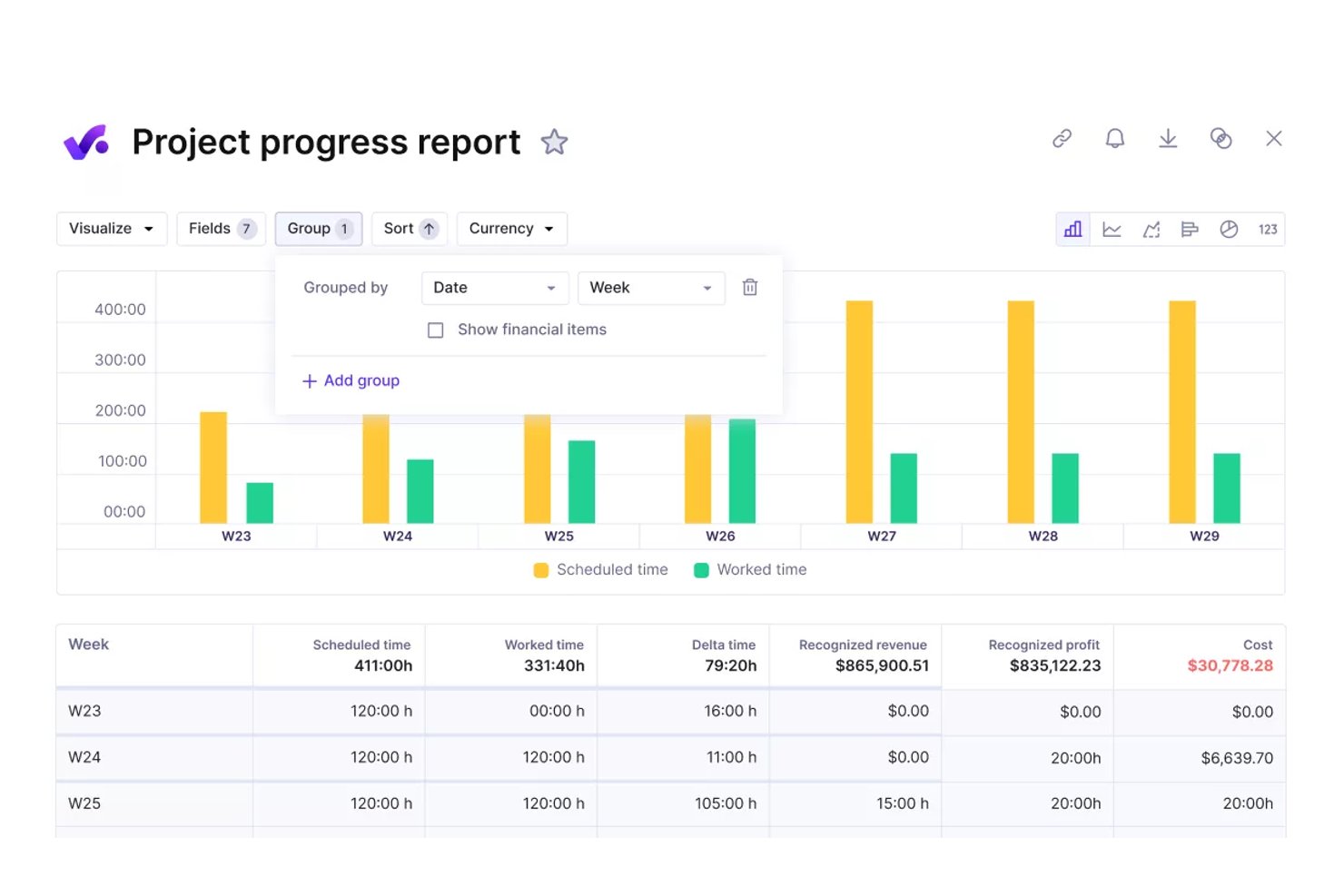
Productive is a professional services management platform that combines project and task management, resource planning, time tracking, budgets, and financial reporting in one workspace.
Who Is Productive Best For?
Productive is a strong fit for agencies and professional services teams that need to manage client work, budgets, and distributed team capacity in one place.
Why I Picked Productive
I picked Productive as one of the best because it's the only tool on my list that surfaces real-time budget burn, margin, and profitability data directly inside the project workflow. I especially like how the Scenario Builder lets you prototype budget and deal configurations before committing, so you can spot margin risk early rather than after a project goes sideways. The Capacity & Availability report adds another layer by comparing task-based workload hours against available time, giving distributed teams a clear picture of who has room and who's overloaded.
Productive Key Features
- Task dependencies: Link tasks with Blocking, Waiting on, or Linked dependency types so closing one task automatically updates the status of dependent tasks.
- Pulse reports: Schedule automated report delivery to email or Slack on a daily, weekly, or monthly cadence to keep distributed stakeholders informed.
- Time zone settings: Configure separate organization-level and individual-level time zones to govern task deadlines, overdue filtering, notifications, and calendar syncing.
- Client-facing comments: Control which task comments are visible to clients, letting you collaborate with external stakeholders without exposing internal discussion.
Productive Integrations
Productive offers native integrations with Jira, Slack, Google Calendar, Microsoft Outlook, Gmail, HubSpot, and Xero, plus HR and accounting platforms. It supports custom integrations through its open API and webhooks, with Zapier available.
Pros and Cons
Pros:
- Dependencies clarify cross-team task sequencing
- Capacity reports support async workload planning
- Project, budget, and profitability visibility
Cons:
- Capacity and time reports confuse reviewers
- Future recurring tasks may understate workload
New Product Updates from Productive
Productive Adds Voice Dictation, Slack Connector, Proposals, and Overtime
Productive adds voice dictation, a Slack Connector, proposal controls, and overtime tracking. These updates support faster AI interactions, client proposals, and time management. For more information, visit Productive’s official site.
Wrike
Best for remote collaboration across departments
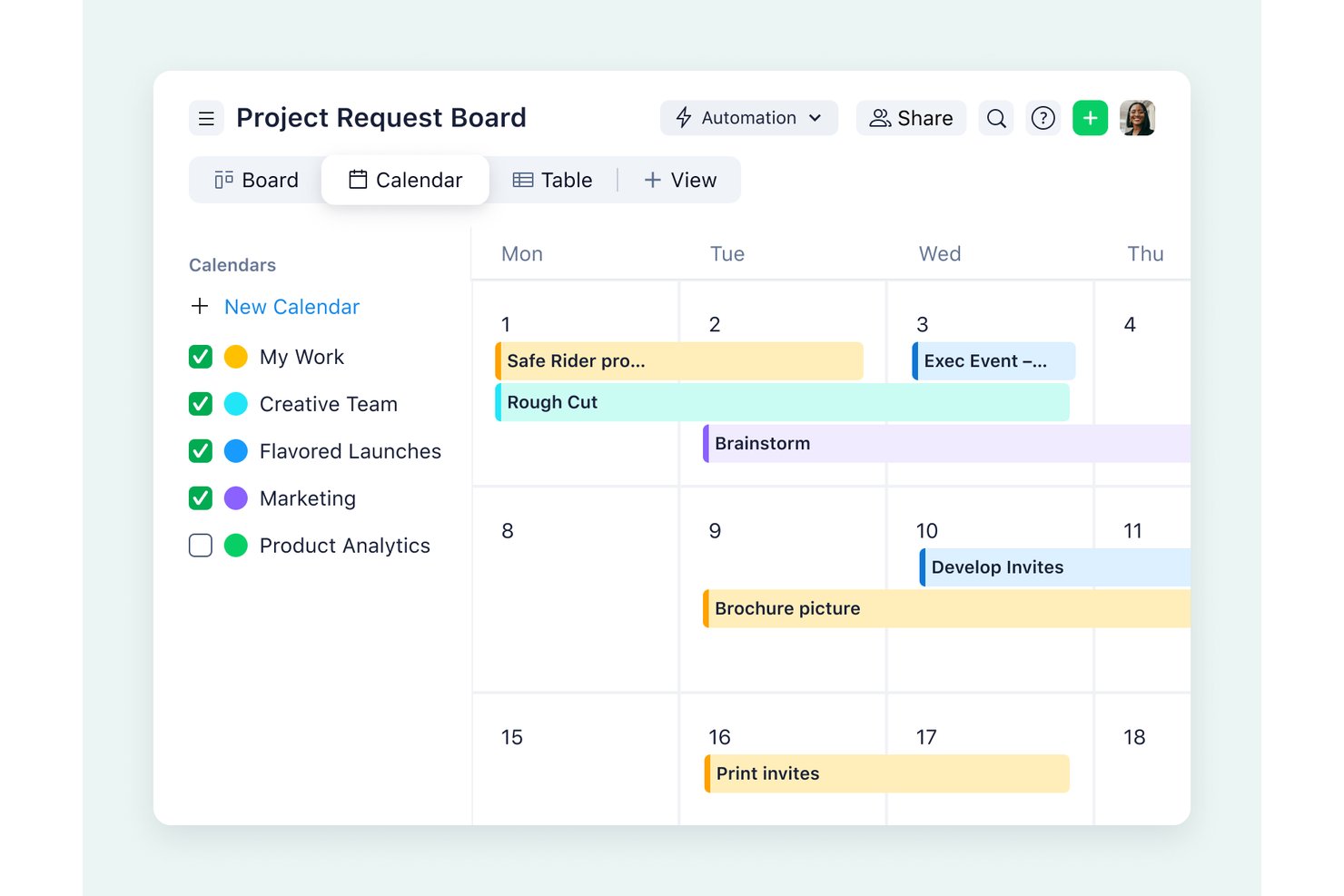
Wrike is a work management platform that brings together task tracking, project planning, cross-departmental collaboration, workload management, and real-time reporting across distributed teams.
Who Is Wrike Best For?
Wrike is a strong fit for mid-sized to large teams managing work across multiple departments, where cross-functional visibility and accountability are the priority.
Why I Picked Wrike
Wrike earns its spot on my shortlist because cross-departmental visibility is genuinely where it shines. I love how workload charts let managers see who's overloaded across multiple teams and redistribute tasks without a single meeting, and the cross-tagging feature means the same task surfaces in every relevant department's space without duplicating work. Real-time co-editing on task descriptions keeps distributed contributors aligned as work moves through review and approval.
Wrike Key Features
- Dynamic request forms: Collect and route incoming work requests to the right team members or workflows automatically.
- Automated workflow rules: Build no-code WHEN–IF–THEN automation rules to trigger actions across tasks, folders, and spaces.
- Proofing and approvals: Leave visual feedback directly on images, videos, PDFs, and Office files, and record formal sign-offs through approval chains.
- Cross-tagging: Surface the same task across multiple spaces, folders, or projects without duplicating it.
Wrike Integrations
Wrike lists 400+ integrations, including Slack, Microsoft Teams, Google Drive, Dropbox, Jira, and GitHub. Its REST API, webhooks, OAuth 2.0, MCP Server, Datahub API, and BI Export API support custom integrations.
Pros and Cons
Pros:
- Workload charts help redistribute overloaded teammates
- Task comments keep files and approvals together
- Shared dashboards reduce remote status-chasing
Cons:
- No direct messaging splits conversations across tools
- Dense menus complicate cross-team navigation
New Product Updates from Wrike
Wrike Adds Klaxoon MCP Integration
Wrike’s Klaxoon MCP integration is now generally available, enabling AI agents to navigate between Wrike tasks and attached whiteboards, read task context, and manage whiteboard attachments via API. For more information, visit Wrike's official site.
Best remote PM tool for 3rd-party integrations
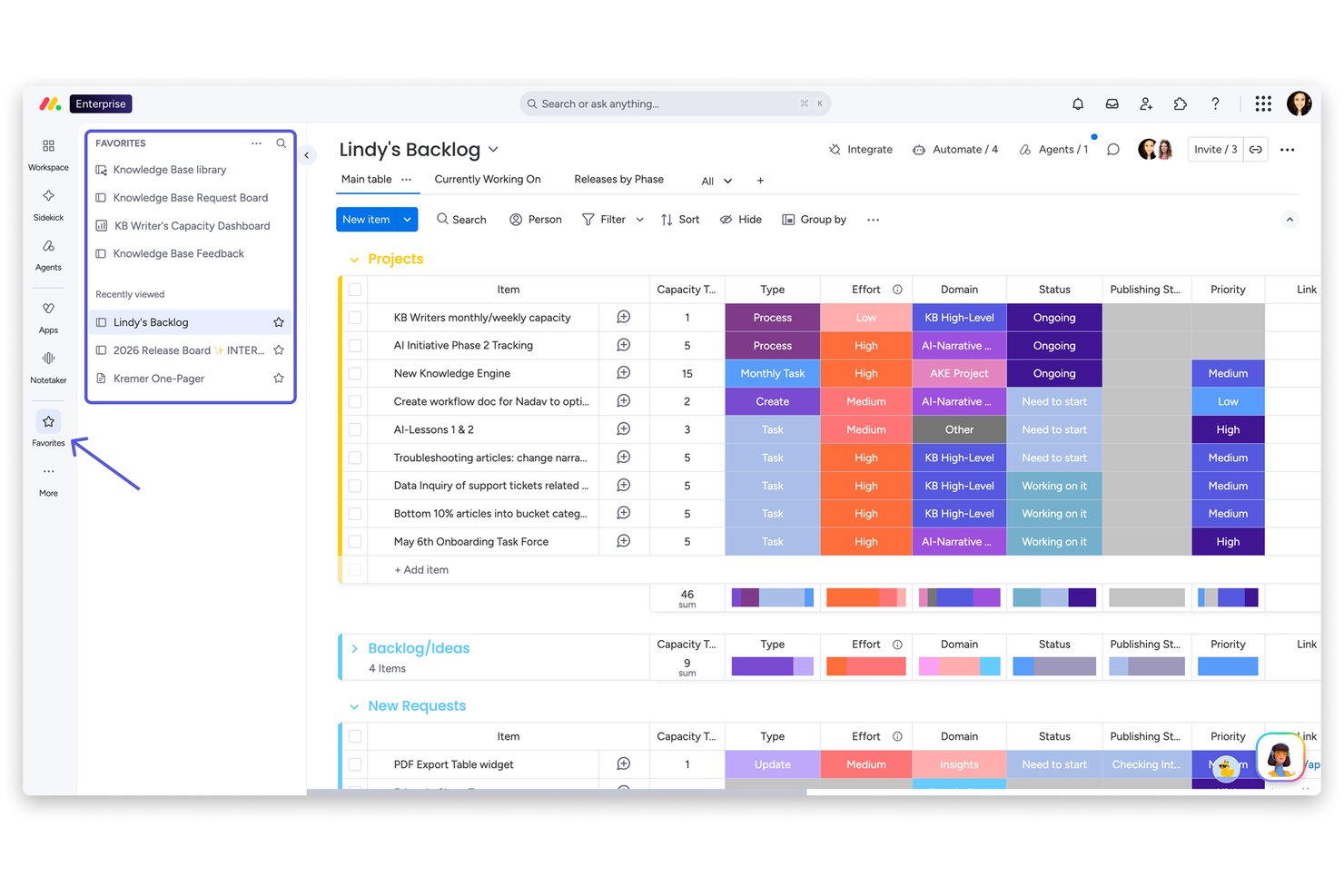
monday work management is a project management platform that combines task tracking, visual planning, automated workflows, AI-powered project agents, and cross-tool integrations across Kanban, Gantt, Timeline, and dashboard views.
Who Is monday work management Best For?
Teams managing multiple concurrent projects across distributed contributors will get the most value from monday work management, especially when they rely on a wide ecosystem of third-party tools.
Why I Picked monday AI Workspace
I've included monday work management in my top picks because no other tool on this list connects as many external platforms without requiring custom development. With 200+ out-of-the-box integrations covering tools like Slack, GitHub, Jira, Zoom, and Salesforce, distributed teams can keep work centralized without constantly switching contexts. I also like that its AI-powered project monitoring agents automatically flag schedule conflicts and notify owners, which removes a lot of the manual follow-up that slows remote teams down.
monday AI Workspace Key Features
- Scheduled board updates: Post comments and file updates at a future time, which monday.com specifically documents as useful for communicating across global time zones.
- AI meeting notetaker: Automatically transcribes Zoom, Microsoft Teams, and Google Meet calls, then links summaries and action items directly to boards and workflows.
- Workload widget: Visualizes team capacity across multiple boards by item count or effort, using work schedules that account for working days, hours, and time off.
- OKR board workflow: Build a dedicated objectives and key results board with subitems for initiatives, formula-calculated grades, and dashboard charts for progress reporting.
monday AI Workspace Integrations
monday work management offers 200+ out-of-the-box integrations, including Slack, Microsoft Teams, GitHub, Jira, Zoom, Google Drive, Salesforce, and HubSpot. It also supports 850+ marketplace integrations and apps, plus a GraphQL API and SDK for custom integrations.
Pros and Cons
Pros:
- Flexible boards adapt to changing team workflows
- Automated follow-ups reduce status-chasing for leads
- Cross-board dashboards surface progress and blockers
Cons:
- Mobile app offers less flexibility than desktop
- Complex resource planning can require workarounds
New Product Updates from monday AI Workspace
monday AI Workspace Adds Human Approval Routing
monday AI Workspace adds a human-in-the-loop approval block to AI Workflows, sending approval requests and routing workflow paths based on responses. For more information, visit monday AI Workspace's official site.
Best for remote planning with the Zoho suite
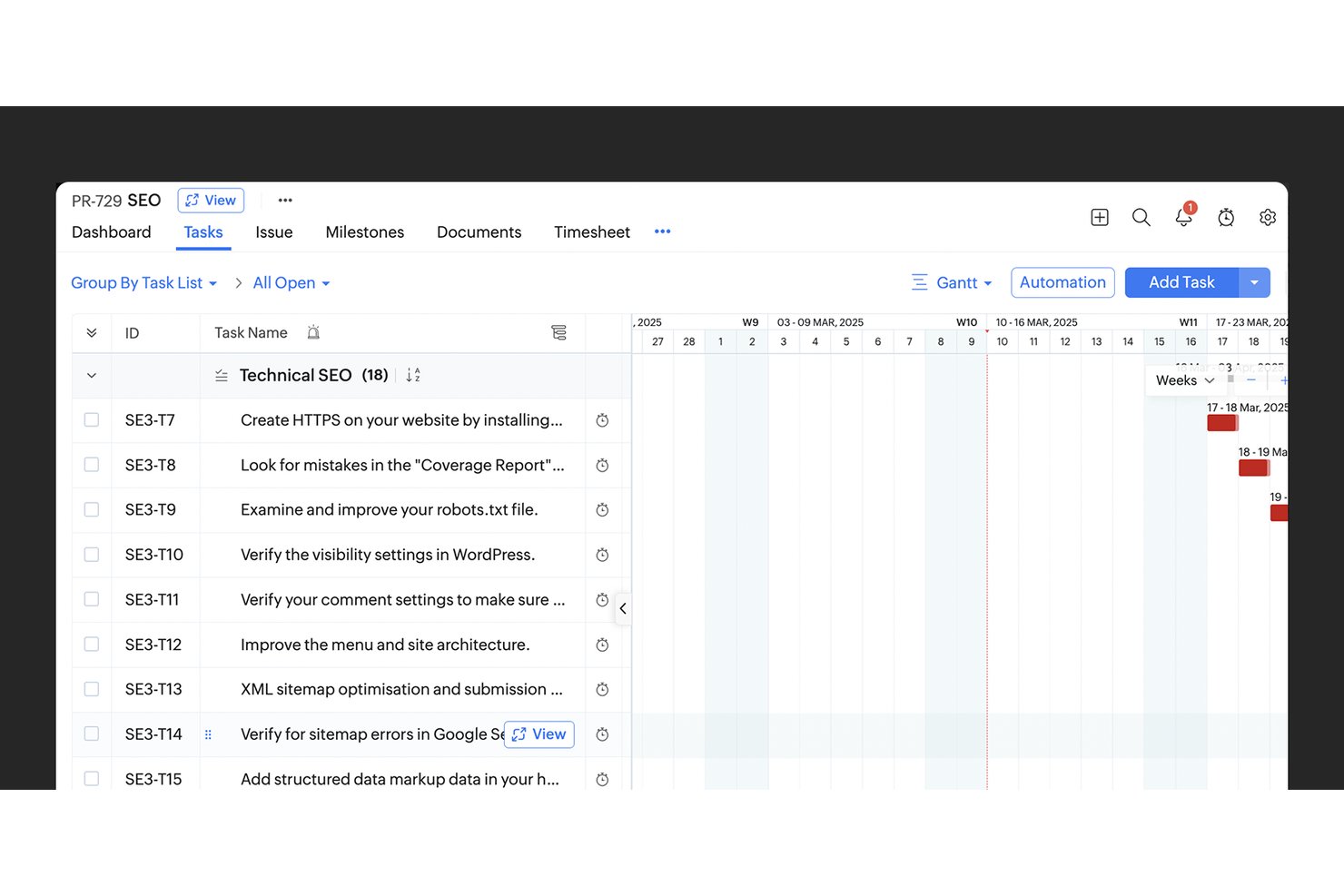
Zoho Projects is a project management platform that combines task tracking, Gantt-based scheduling, workload reporting, time logging, and multi-app collaboration across the broader Zoho ecosystem.
Who Is Zoho Projects Best For?
Zoho Projects is a strong fit for teams already using other Zoho apps who need a connected way to plan and track remote work without switching ecosystems.
Why I Picked Zoho Projects
I've included Zoho Projects in my top picks because it's the natural choice for remote teams already running on the Zoho ecosystem. What I like most is the workload report: it shows each team member's allocation in color-coded status (under, over, or optimal) and lets me reassign tasks or adjust schedules directly from that view. Pair that with Gantt-based critical path tracking and portfolio dashboards, and you get real schedule control without needing a check-in call.
Zoho Projects Key Features
- Task blueprints: Automate task processes by triggering assignments, field updates, and alerts whenever a task status changes.
- Project forums: Create dedicated discussion threads within a project so distributed team members can share ideas and keep decisions documented.
- Email alias: Manage project work directly through email, including adding comments, filing issues, and attaching documents without logging into the app.
- Earned value management: Compare planned and actual schedule, cost, and time values to measure performance and forecast project outcomes.
Zoho Projects Integrations
Zoho Projects offers native integrations with Zoho Sprints, Zoho Analytics, Zoho Cliq, Zoho WorkDrive, Google Calendar, Google Drive, Microsoft Teams, Slack, and GitHub. It also supports 50+ marketplace integrations, a REST API, and Zapier.
Pros and Cons
Pros:
- Reviewers value task ownership and time logs
- Dashboards surface overdue work across projects
- Color-coded workload reports help rebalance assignments
Cons:
- Crowded screens complicate workflow setup
- Mobile app can lag behind desktop
New Product Updates from Zoho Projects
Zoho Projects Adds CodeX Scripts for Custom Modules
Zoho Projects now supports CodeX Scripts for custom modules, enabling conditional logic and rules for creating, updating, and deleting records. For more information, visit Zoho Projects' official site.
 .
.
Celoxis
Best remote project management for growing portfolios
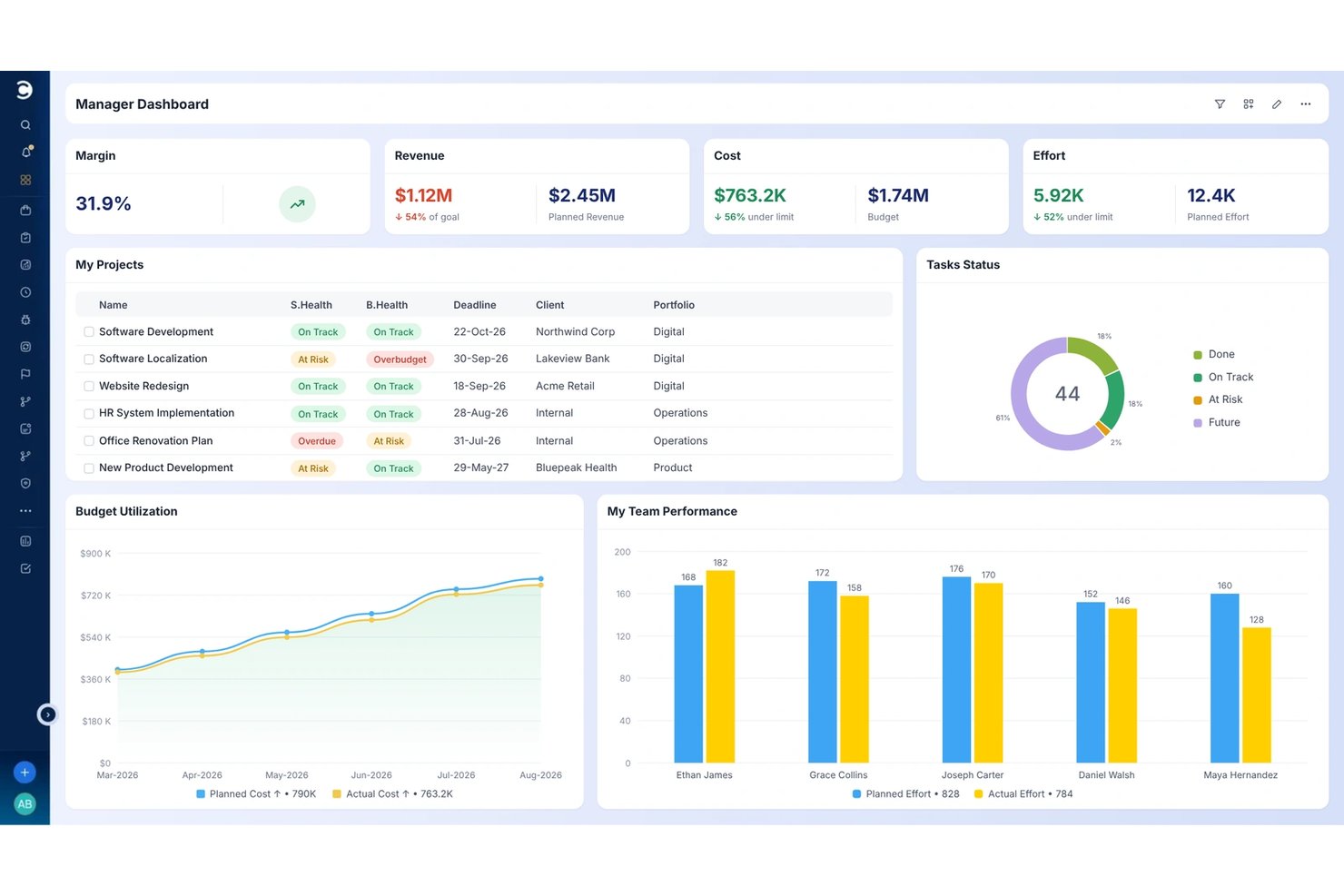
Celoxis is a project and portfolio management platform that combines Gantt scheduling, resource capacity planning, workload monitoring, financial tracking, and portfolio-level reporting across distributed teams.
Who Is Celoxis Best For?
Celoxis is a strong fit for operations directors and portfolio managers who need to oversee multiple projects across distributed teams from a single platform.
Why I Picked Celoxis
I picked Celoxis as one of the best because it's purpose-built for teams managing multiple projects at once, not just a single workstream. I love how its portfolio dashboards roll up RAG health, resource capacity, and financial data across every active project, so I can spot an overloaded team or a slipping milestone without chasing status updates. The time-zone-aware work calendars are especially useful: when I update a holiday exception for one region, Celoxis automatically recalculates dependent task dates across the whole schedule.
Celoxis Key Features
- Project intake and prioritization: Submit, rank, and route incoming project requests against business KPIs and available capacity before work begins.
- RAG health indicators: Automatically calculate red, amber, and green status for tasks, milestones, and projects to surface delivery risks across the portfolio.
- Multi-level timesheet approvals: Configure approval chains and policies for submitted time entries, with automated reminders for missing timesheets.
- Native Jira and Azure DevOps integrations: Sync development work tracked in Jira or Azure DevOps directly with project schedules and portfolio data in Celoxis.
Celoxis Integrations
Celoxis offers 21 configured integrations, including Jira, Azure DevOps, Slack, Google Drive, Microsoft 365, Salesforce, QuickBooks Online, GitHub, and Trello. It also supports REST API connections and 379 additional integrations through Zapier and the API.
Pros and Cons
Pros:
- Gantt dependencies clarify schedule impacts across projects
- Calendar exceptions recalculate dependent task dates
- Portfolio dashboards reveal cross-project workload and health
Cons:
- Mobile experience trails desktop for portfolio updates
- No in-app chat or file proofing

Quire
Best for breaking down complex projects
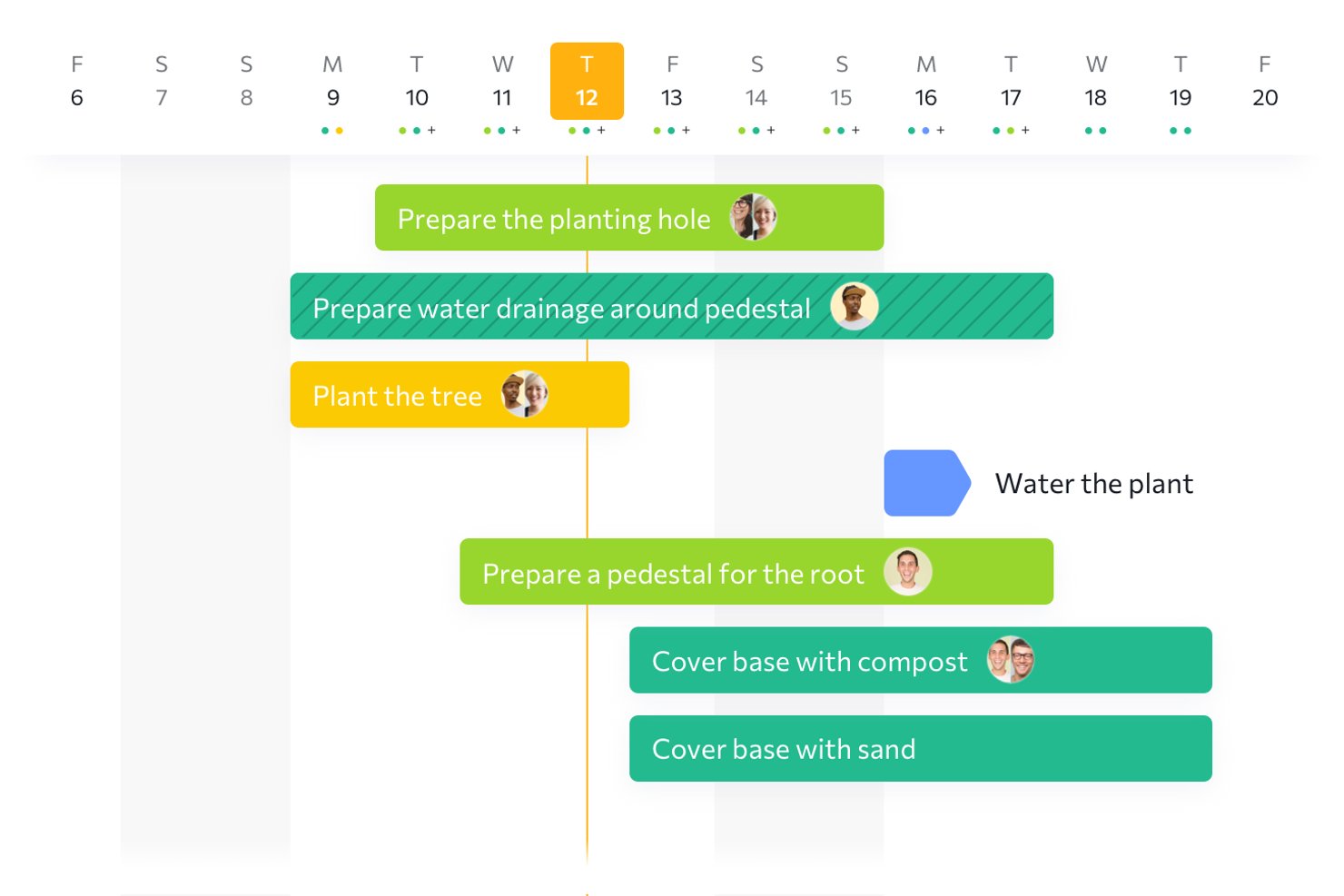
Quire is a project management tool built around hierarchical task lists, giving teams nested subtasks, Kanban boards, timelines, and dashboards to plan and track work across projects.
Who Is Quire Best For?
Quire is a strong fit for project managers and team leads who need to break large, complex projects into structured layers of tasks and subtasks without losing sight of the bigger picture.
Why I Picked Quire
I picked Quire as one of the best because it handles the kind of deep project breakdown that most remote tools handle awkwardly. Its nested task hierarchy lets you split a complex deliverable into unlimited subtask levels, then use sublists to pull out just the work relevant to each team member without losing the full structure. I also like that the Dashboard's At-Risk Tasks widget flags overdue and stale work automatically, so you're not waiting for a check-in to find out something's slipped.
Quire Key Features
- Project chat channels: Communicate with teammates directly inside each project using dedicated chat channels, keeping conversations tied to the work at hand.
- External teams access: Share specific tasks with clients or contractors through External Teams, giving outside collaborators scoped access without exposing your full project.
- Kanban board view: Visualize and move tasks across workflow stages using a Kanban board that runs alongside your nested task list.
- Billable time tracking: Log time on tasks using a stopwatch or manual entry, mark entries as billable, and pull time reports across projects.
Quire Integrations
Quire offers native integrations with Slack, Microsoft Teams, Google Drive, OneDrive, SharePoint, and GitHub, plus marketplace integrations with Dropbox and Box. It also provides a REST API, webhooks, MCP server, CLI, and Zapier access to 2,000+ apps.
Pros and Cons
Pros:
- Billable time tracking supports agency accountability
- Multiple planning views expose deadlines across schedules
- Nested task breakdown keeps complex projects organized
Cons:
- Offline access is limited to previously opened projects
- Reporting lacks depth for portfolio trends
New Product Updates from Quire
Quire Adds Custom Field Locking and Comment Reaction API Support
Quire adds custom field locking and API support for reading and setting emoji reactions on comments. These updates give teams more control over field data and expand comment interaction options for developers. For more information, visit Quire’s official site.
 .
.
ClickUp
Best for remote screen recording in context
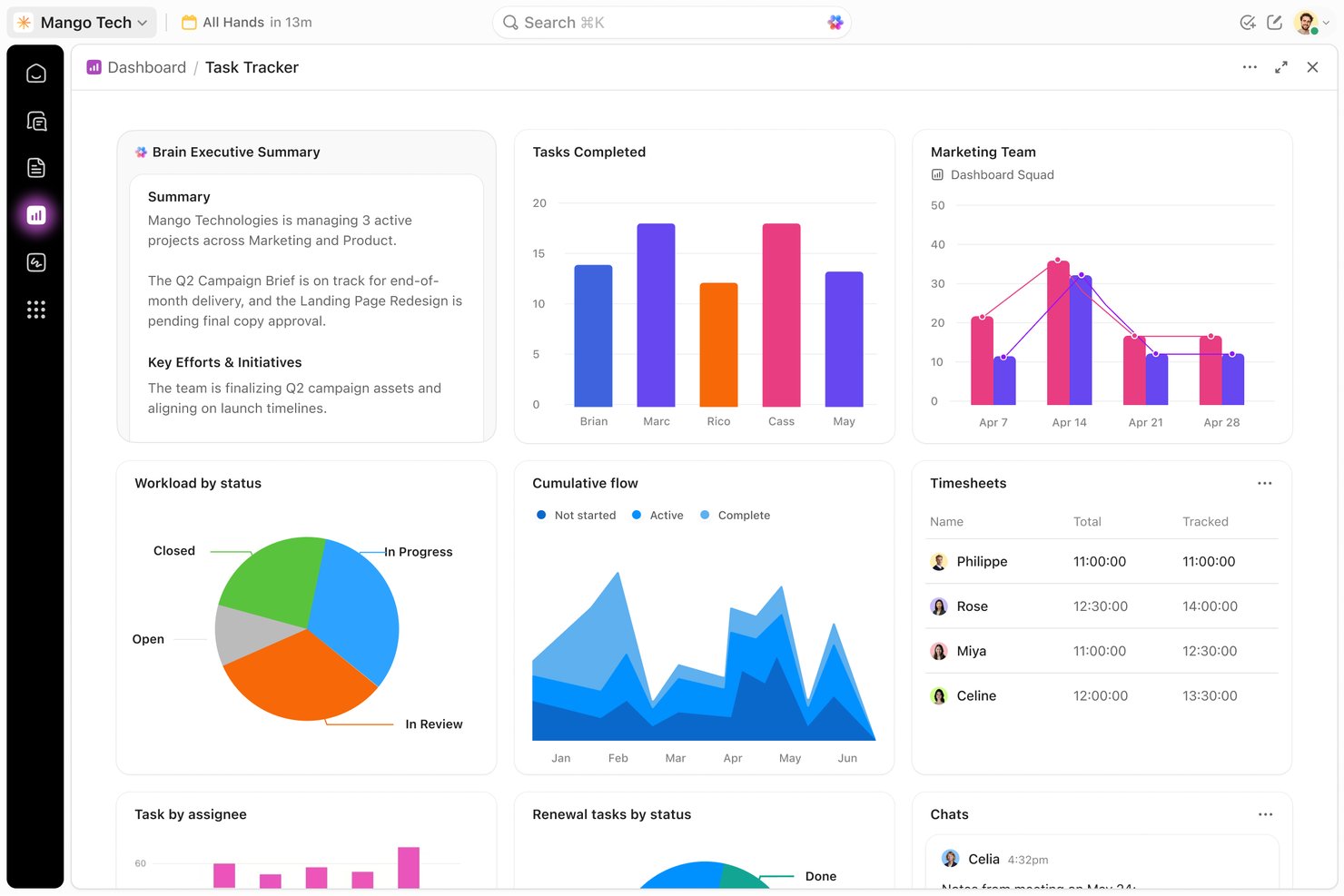
ClickUp is an all-in-one project management platform that combines task tracking, visual planning views, docs, chat, screen recording, and dashboards for distributed teams.
Who Is ClickUp Best For?
ClickUp fits distributed teams that need task tracking, async video, and project documentation in one workspace without juggling multiple tools.
Why I Picked ClickUp
I picked ClickUp as one of the best because its Clips feature lets you record your screen directly inside a task comment, which means async context travels with the work rather than getting buried in a separate thread or inbox. I also love that Clips aren't standalone recordings you have to track down later: they're embedded right where the conversation is happening, up to 45 minutes long, and accessible across web, desktop, and mobile. Paired with real-time co-editing in Docs and Chat that converts messages into trackable tasks, ClickUp keeps distributed teams genuinely connected without requiring a single scheduled call.
ClickUp Key Features
- Workload view: Visualize each team member's assigned work over a selected period, with capacity settings that members and admins can adjust individually.
- Goal tracking: Set and monitor OKRs, sprint targets, and weekly scorecards, then link them directly to the tasks driving progress.
- Workflow automations: Create rules that automatically update task statuses, reassign work, and trigger notifications based on conditions you define.
- Real-time collaborative Docs: Co-edit documents simultaneously with live cursors, inline comments, and direct links to related tasks and projects.
ClickUp Integrations
ClickUp offers 50+ native integrations, including Slack, GitHub, GitLab, Google Drive, Dropbox, Google Calendar, Figma, Zoom, and Microsoft Teams. It also supports a public API, MCP Server, webhooks, OAuth, and Zapier.
Pros and Cons
Pros:
- Multiple planning views keep schedules in sight
- Clips attach screen recordings to task discussions
- Task ownership keeps remote deadlines visible
Cons:
- Large workspaces can slow searches and boards
- Busy interface makes task details harder to find
New Product Updates from ClickUp
ClickUp Adds Meetings Hub, Super Agent Templates, and ZoomInfo Integration
ClickUp adds a searchable Meetings Hub, new ways to clone and template Super Agents, and a ZoomInfo integration through the App Center. These updates improve meeting retrieval, agent reuse, and access to sales intelligence. For more information, visit ClickUp’s official site.
Nifty
Best for goal-linked remote team tracking
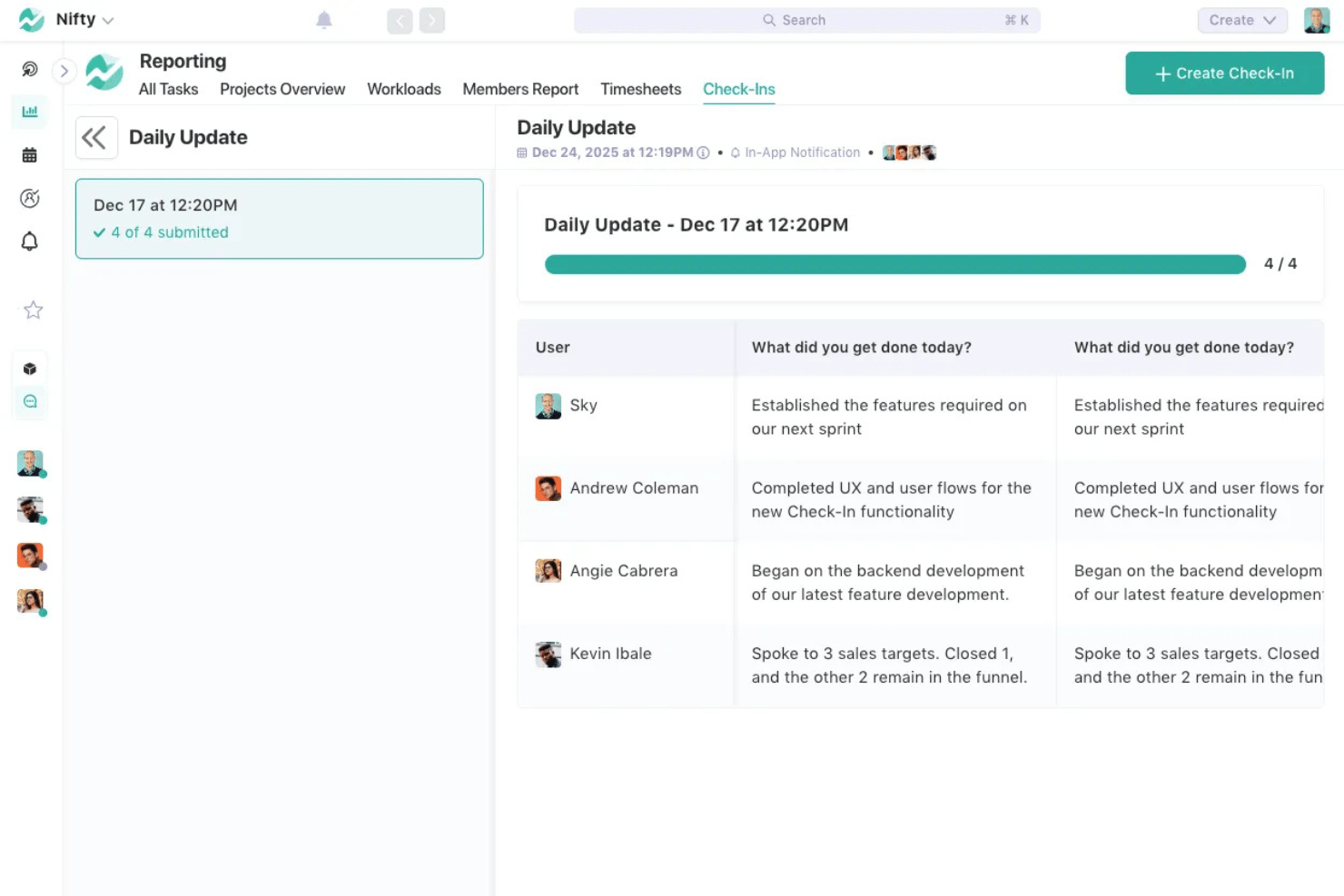
Nifty is a project management platform that brings together task tracking, roadmaps, team discussions, docs, time tracking, and workload visibility in a single workspace built for distributed teams.
Who Is Nifty Best For?
Nifty suits distributed project teams that need task tracking tied directly to goals and milestones, particularly remote leads coordinating across product, design, and freelance contributors.
Why I Picked Nifty
I've included Nifty in my top picks because it directly connects daily task work to goals and milestones, which is the piece most remote tools miss. When a task is completed, milestone progress updates automatically, so distributed teams always know where a project actually stands without anyone chasing status updates. I also like that roadmaps can be shared as read-only views with stakeholders who don't have Nifty access, keeping everyone aligned without adding seats.
Nifty Key Features
- Workflow automations: Build if/then rules that automatically assign tasks, update due dates, add subtasks, or post messages when triggered by task events or custom field changes.
- File proofing: Collect creative feedback directly on uploaded files and convert comments into subtasks without leaving the project.
- Portfolio organization: Group multiple projects into portfolios for cross-project visibility and high-level status tracking across teams or initiatives.
- Goal tracking: Create measurable goals tied directly to project work, with progress updated automatically as linked tasks and milestones are completed.
Nifty Integrations
Nifty offers native integrations with Slack, Zoom, Webex, Google Drive & Calendar, Microsoft Suite, GitHub, Miro, Figma, Harvest, and Typeform, plus a REST API for custom connections. It also supports over 2,000 integrations through Zapier.
Pros and Cons
Pros:
- Workload views reflect schedules and time off
- Project conversations turn decisions into tasks
- Milestones update as linked tasks finish
Cons:
- Mobile board functionality limited compared to desktop
- Reports offer limited customization and broad visibility

Teamwork
Best for client-work project tracking
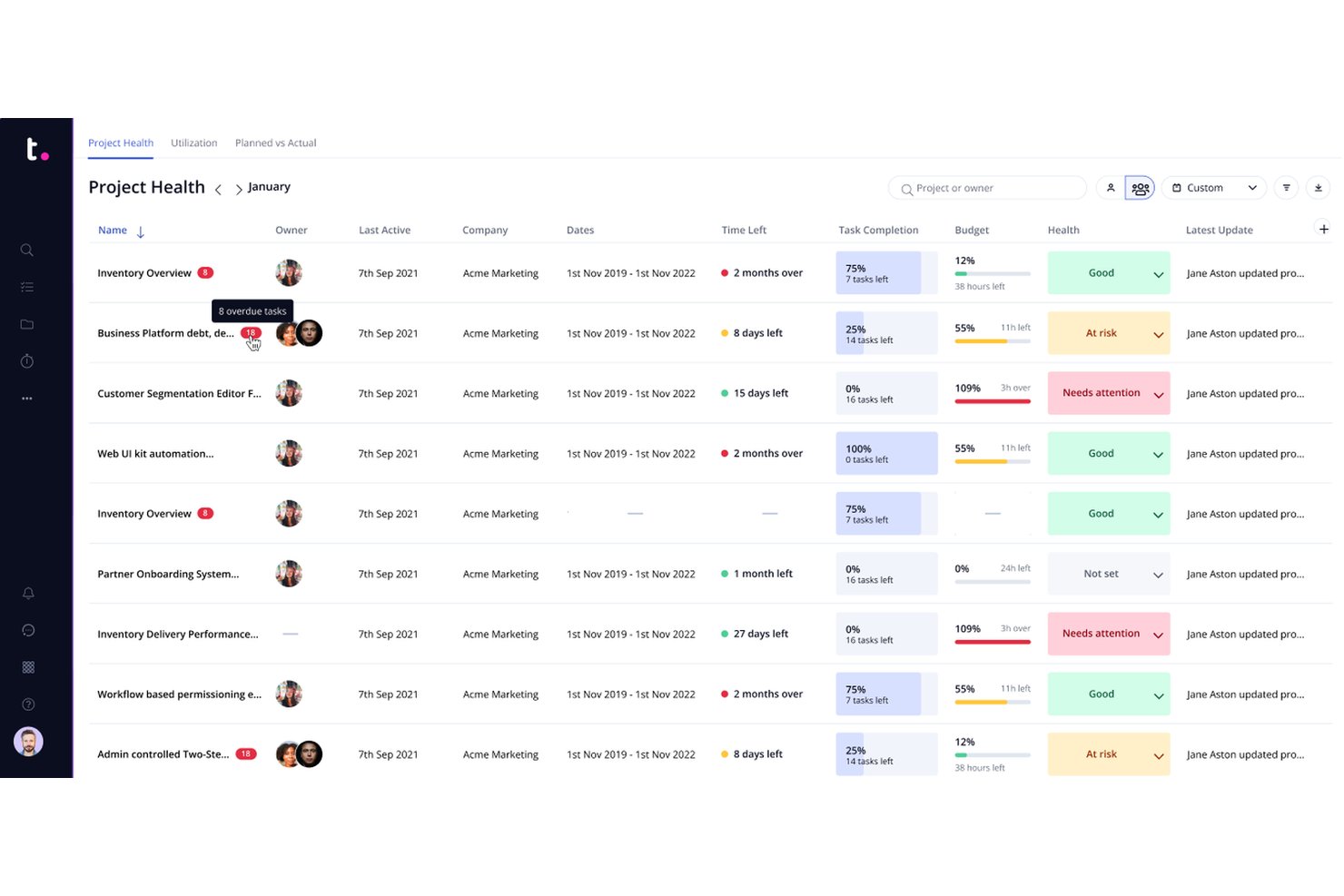
Teamwork is a project management platform built around client work, combining task tracking, time logging, resource planning, invoicing, and client collaboration tools in one place.
Who Is Teamwork Best For?
Teamwork is a strong fit for agencies and client-services teams that need to manage deliverables, track billable time, and keep clients in the loop—all within a single platform.
Why I Picked Teamwork
I picked Teamwork as one of the best because it's purpose-built for client work in a way that most remote project management tools simply aren't. I love that you can log billable time directly against tasks, pull that time into a client invoice, and view project health across your entire portfolio without switching tools. The Workload Planner also lets me see scheduled workload against real capacity, so I can reassign tasks before a remote team member hits a wall.
Teamwork Key Features
- Task dependencies and milestones: Link tasks to control sequencing and set project checkpoints that clients and team members can track.
- Customizable automations: Build trigger-based rules that move tasks through workflow stages, send notifications, or create follow-up tasks automatically.
- Client user access: Invite external client users to specific projects with defined permissions so they can view progress and collaborate directly.
- Custom fields: Add text, number, dropdown, date, and other field types to projects, tasks, and client records to capture the data your team actually needs.
Teamwork Integrations
Teamwork lists 150+ integrations, including Slack, Google Drive, Microsoft Teams, QuickBooks, HubSpot, Salesforce, and Microsoft Office, plus Zapier. It also supports API access and webhooks for custom connections.
Pros and Cons
Pros:
- Workload planner shows capacity for reassignment
- Clients can follow project progress and updates
- Billable time links directly to project tasks
Cons:
- Large projects can clutter navigation and reports
- Mobile app feels less intuitive to some
Smartsheet
Best remote project management tool for sales reps
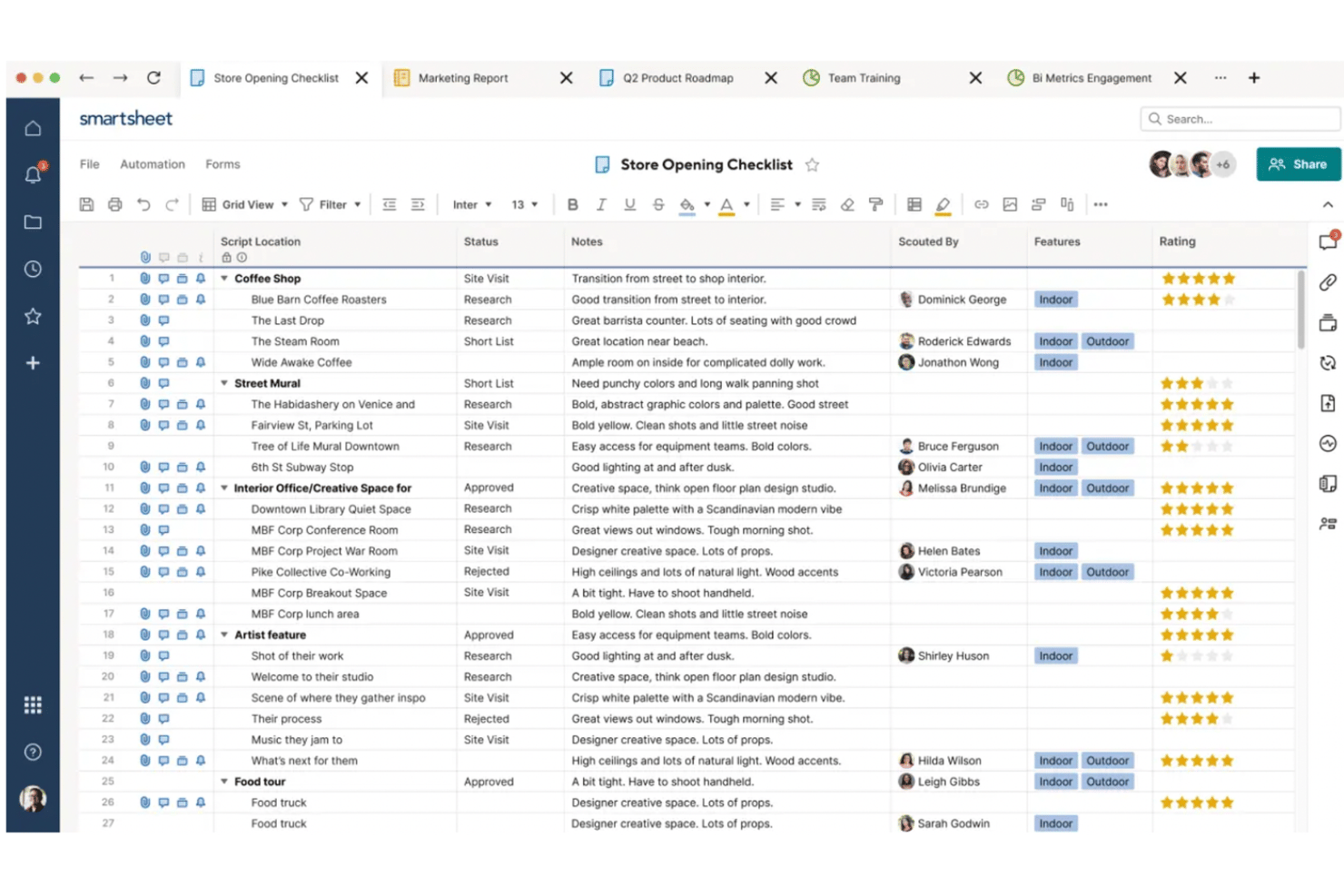
Smartsheet is a cloud-based work management platform that combines project planning, task tracking, workflow automation, resource management, and portfolio-level reporting across Gantt, board, grid, calendar, and timeline views.
Who Is Smartsheet Best For?
Smartsheet is a strong fit for operations-heavy teams and distributed project leads who need to manage multiple workstreams, automate repetitive processes, and roll up progress into shareable dashboards—all within a familiar spreadsheet-style interface.
Why I Picked Smartsheet
I picked Smartsheet as one of the best because it's genuinely built around how sales reps manage pipeline-linked projects across distributed teams. I love how the automated workflow engine handles approval chains and status updates without anyone chasing teammates manually. The workload heatmap gives sales ops managers a clear picture of who's over-allocated across multiple deal cycles, which I think is where Smartsheet earns its spot for sales-focused remote teams.
Smartsheet Key Features
- Portfolio-level dashboards: Roll up data from multiple sheets into a single real-time dashboard that refreshes automatically every 10 minutes.
- Dependency and critical path tracking: Flag task relationships, milestones, and critical paths directly within Gantt views to keep project timelines on track.
- Automated approval workflows: Build condition-based workflows that trigger approval requests, update assignments, and send alerts to Slack or Microsoft Teams without manual intervention.
- Workload heatmap: Visualize team member allocation and over-allocation across multiple projects in a single view, available on Business and Enterprise plans.
Smartsheet Integrations
Smartsheet supports over 175 integrations, including native integrations with Microsoft Office 365 and Google Workspace, plus marketplace integrations with Jira Software, Salesforce, Slack, Microsoft Teams, Power BI, Tableau, and Google Drive. Its REST API and SDKs support custom integrations on Business, Enterprise, and Advanced Work Management plans.
Pros and Cons
Pros:
- Dashboards clarify progress across workstreams
- Automated reminders reduce manual follow-ups
- Familiar spreadsheet layout eases project tracking
Cons:
- Cross-sheet formulas require extra setup
- Mobile app limits complex project edits
New Product Updates from Smartsheet

Smartsheet Adds Non-Plan User Management in Admin Center
Smartsheet adds a Non plan users tab to the Seat types and true-up page in Admin Center. This lets system admins review non-plan users and add them to the plan or remove them from the organization in one place. For more information, visit Smartsheet’s official site.
Other Remote Project Management Tools
Here’s a few more that didn’t make the top list.
- Scoro
For managing remote team workflows
- GoodDay
For Kanban-centric Agile project management
- ProjectManager
For hybrid methodology remote teams
- Teamwork.com
For large companies and enterprises
- Ravetree
Client-facing all-in-one work platform
- Hive
Tool for project templates
- Workzone
For project lifecycle management
- Height
For organizing and streamlining complex projects
- Asana
For tasks co-living in multiple pipelines
- monday.com
For visual workload balancing across remote teams


How I Evaluate Remote Project Management Tools
I split my evaluation into two layers: the baseline capabilities a tool must have to keep a distributed team aligned across time zones, and the differentiators that set the best options apart.
Core Functionality (Table Stakes For This List)
When I'm selecting tools for my list, I rank each one on a scale from 0 (does not offer the functionality) to 5 (excels in this area) for each core functionality listed below. Then, I calculate the tool's total score into a percentage. Each tool needs to achieve a minimum total score of 65% to be considered for inclusion.
- Task & Project Management: I check whether you can create tasks with subtasks, dependencies, and custom fields—the kind of structure a distributed team needs to hand work off across shifts.
- Multiple Project Views: Different team members prefer different layouts, so I look for at least Kanban, list, calendar, and Gantt options similar to what Asana and monday.com offer.
- Real-Time Collaboration: I evaluate how teams can communicate within the tool itself—comments, @mentions, shared editing—so remote contributors stay in context instead of switching to email.
- Cloud-Based Accessibility: Full web and mobile access matters when your team spans multiple time zones, so I check for feature parity across platforms and reliable offline sync.
- File Sharing & Documentation: I look for native file storage, version tracking, and integrations with cloud drives like Google Drive or OneDrive to keep project assets centralized and accessible.
- Progress Tracking & Reporting: Dashboards, workload views, and status reports help remote managers stay informed without scheduling check-in calls, so I evaluate depth and customization here.
Once I have a list of tools that meet the criteria, I consider what sets each platform apart.
Differentiating Factors (What Sets Vendors Apart)
Here's how I compare and contrast different vendors:
Standout Features
Automation rules are a big differentiator—I look for tools that let you trigger task assignments or status updates based on conditions, so a handoff between team members in different time zones happens without anyone waiting on a manual nudge. AI features are gaining ground too, with tools like ClickUp and monday.com offering generated summaries and task suggestions that cut down on async back-and-forth. I also evaluate resource and capacity planning, since workload heatmaps help managers spot burnout risks across distributed teams before deadlines slip.
Beyond Features
Integration depth matters when your remote stack relies on Slack, Microsoft Teams, or Zoom for daily standups—I check whether the tool connects natively or requires workarounds. Security is another key factor for distributed teams where data crosses jurisdictions. I look for SOC 2 compliance, SSO, and role-based permissions that let you grant contractors limited access. Pricing flexibility also plays a role; guest or external collaborator seats are valuable when you regularly loop in clients or freelancers without paying for full licenses.
How to Choose Remote Project Management Tools
It’s easy to get bogged down in long feature lists and complex pricing structures. To help you stay focused as you work through your unique software selection process, here’s a checklist of factors to keep in mind:
| Factor | What to Consider |
| Scalability | Ensure the tool can grow with your team’s needs, from small projects to enterprise-level workloads. |
| Integrations | Check for compatibility with the tools you already use, such as Slack, Google Workspace, or Asana. |
| Customizability | Look for options to tailor dashboards, workflows, and task views to match your team’s preferences. |
| Ease of Use | Prioritize a clean interface and intuitive design that won’t overwhelm your team. |
| Budget | Assess whether the pricing aligns with your team size and feature needs without unexpected add-ons. |
| Security Safeguards | Make sure the tool offers features like data encryption, role-based access, and regular backups. |
| Collaboration Features | Confirm that the tool supports real-time chat, file sharing, and progress updates to keep everyone aligned. |
| Reporting Tools | Look for detailed analytics and custom reports to track progress and identify bottlenecks. |
Trends in Remote Project Management Tools
In my research, I sourced countless product updates, press releases, and release logs from different remote project management tool vendors. Here are some of the emerging trends I’m keeping an eye on:
- AI-Driven Insights: Tools are increasingly using AI to predict project delays, allocate resources more efficiently, and provide actionable insights. These features analyze past project data and patterns to help teams make better decisions and optimize workflows.
- Focus on Mental Health: Vendors are adding features like workload balancing and team well-being metrics to reduce burnout. Tools now include pulse surveys and features that encourage healthier work habits for distributed teams.
- Advanced Collaboration for Hybrid Teams: Tools are evolving to offer virtual workspaces where remote and in-office teams can collaborate effectively. These include shared visual spaces, real-time communication tools to mimic in-person interaction, and screen-sharing capabilities for presentations and collaborative problem-solving during meetings.
- Sustainability Tracking: More and more, project management tools are incorporating carbon footprint tracking and resource usage monitoring to help businesses meet sustainability goals.
- Visual-First Interfaces: Platforms are prioritizing Kanban boards, Gantt charts, and other visual workflows to simplify managing complex projects. These designs reduce reliance on text-heavy formats, making it easier for teams to see project progress at a glance.
What are Remote Project Management Tools?
Remote project management tools are software solutions that help teams plan, organize, and track work, even when members are in different locations. These tools are commonly used by project managers, team leads, and freelancers who need to collaborate and manage projects remotely. Features like task tracking, team communication, and file sharing help teams stay aligned, meet deadlines, and avoid miscommunication. Overall, these tools make it easier to manage projects efficiently, no matter where team members are located.
Features of Remote Project Management Tools
When selecting remote project management tools, keep an eye out for the following key features of project management software:
- Task management: Lets you assign, track, and prioritize tasks to keep projects organized and on schedule.
- Team communication: Provides built-in messaging or discussion boards to simplify communication among team members.
- File sharing: Allows teams to upload, share, and store documents in a centralized location for easy access.
- Time tracking: Helps monitor how much time is spent on tasks and projects to improve productivity and budgeting. See our picks for best remote time tracking software.
- Progress tracking: Offers visual tools like Gantt charts or Kanban boards to track project milestones and deadlines.
- Resource allocation: Ensures team members and assets are assigned efficiently to avoid overloading or underutilization.
- Mobile access: Lets team members manage tasks and collaborate from smartphones or tablets while on the go.
- Project reporting: Generates reports and insights to evaluate project performance and identify areas for improvement.
- User permissions: Allows admins to set role-based access for secure and controlled use of the platform.
- Integration options: Connects with other tools like calendars, email, and CRM systems to keep workflows connected.
Benefits of Remote Project Management Tools
Implementing remote project management tools can provide several benefits for your team and your business. Here are a few you can look forward to:
- Improved collaboration: Helps your team stay connected with features like chat, file sharing, and real-time updates, no matter where they’re working.
- Increased productivity: Keeps tasks organized and visible so team members can focus on what matters most.
- Better resource management: Tracks workloads and availability to ensure no one is overworked or underutilized.
- Enhanced transparency: Gives everyone access to progress updates and deadlines, reducing confusion and miscommunication.
- Time savings: Automates repetitive tasks like reminders and reporting, freeing up time for more important work.
- Cost control: Tracks time and resources spent on projects to help you stay within budget.
- Scalability: Adapts to your growing team or changing project needs, ensuring long-term usefulness.
Costs and Pricing of Remote Project Management Software
Selecting remote project management software requires an understanding of the various pricing models and plans available. Costs vary based on features, team size, add-ons, and more. The table below summarizes common plans, their average prices, and typical features included in remote project management software solutions:
Plan Comparison Table for Remote Project Management Software
| Plan Type | Average Price | Common Features |
| Free Plan | $0/user/month | Basic task management, limited storage, simple collaboration tools, and access for small teams. |
| Personal Plan | $5-$15/user/month | Task prioritization, basic reporting tools, integrations with calendars, and limited file sharing. |
| Business Plan | $15-$40/user/month | Advanced reporting, time tracking, workflow automation, unlimited storage, and custom dashboards. |
| Enterprise Plan | $40+/user/month | Dedicated support, advanced security features, custom integrations, scalability, and API access. |
Remote Project Management Software FAQs
Here are some answers to common questions about remote project management software: