How To Run Project Kickoff Meetings + Agenda Template 2026


A project kickoff meeting helps align stakeholders before project work begins. It gives the team a shared understanding of the project goals, scope, timeline, responsibilities, communication processes, and next steps.
I'll cover how to run a project kickoff meeting properly so that you and your team can get the answers you need to complete a successful project. I’ll explain the purpose of the meeting, why you need to have a 'pre-kickoff' meeting, and what to cover, and I'll also provide an agenda template.
What Is A Project Kickoff Meeting?
A project kickoff meeting is the first meeting between a project team and the client or project sponsor when kicking off a new project.

It’ll take place after contracts have been signed and there’s agreement on the statement of work (SoW), project charter, costs, and project timeline, although sometimes with new clients, this paperwork may not be finalized. By this point, you’ll likely have started the project planning phase of the project life cycle and decided on your project management software.
No time to read? Watch this video instead:

What Is The Purpose Of The Project Kickoff Meeting?
There are a few purposes of the project kickoff meeting. The main one is getting the project up and running and ensuring clarity on what needs to be done to get things moving. You also need to:
- Introduce the client and project team members and their roles and responsibilities
- Make sure everyone understands the project background
- Make sure everyone agrees on what a successful project looks like
- Make sure everyone agrees on what teamwork looks like
Essentially, you want to get all key stakeholders and attendees, including your own team, on the same page.
Types of Project Kickoff Meetings
Project kickoff meetings can serve different purposes depending on the stage of the project and the audience involved.
| Kickoff meeting type | Purpose | Common attendees | Typical focus areas |
|---|---|---|---|
| Pre-kickoff meeting | Prepare for the formal kickoff meeting and align expectations early | Project manager, primary client contact | Relationship building, expectation setting, agenda refinement, missing project details |
| Internal kickoff meeting | Align the internal delivery team before meeting with the client | Project manager, internal project team | Deliverables, timelines, team responsibilities, risks, client questions |
| Client kickoff meeting | Officially start the project with stakeholders and delivery teams | Client stakeholders, project team, decision-makers | Goals, scope, timeline, communication, workflow, next steps |
| Executive kickoff meeting | Align leadership on strategic priorities and project expectations | Sponsors, executives, department leaders | Business objectives, project priorities, high-level risks, stakeholder alignment |
| Technical kickoff meeting | Align technical teams before implementation begins | Developers, architects, QA teams, IT stakeholders | Infrastructure, integrations, technical requirements, environments, dependencies |
Who Should Attend A Project Kickoff Meeting?
Invite the people responsible for approving, managing, contributing to, or supporting the project. The exact attendee list will depend on the size and complexity of the project, but the goal is to include stakeholders who need alignment before execution begins.
Project kickoff meeting attendees typically include:
- Project manager
- Client stakeholders or sponsors
- Project team members
- Department leads
- Decision-makers and approvers
- Designers, developers, or technical leads
- Operations or implementation teams
- Vendors or external partners, if relevant
Avoid inviting people who are not directly involved in the project. Large kickoff meetings can become difficult to manage and may slow down decision-making or discussions.
What To Cover During A Project Kickoff Meeting
When creating a kickoff meeting agenda, here's what you'll want to cover:
- Why: Why are we doing this project in the first place? What business need does it satisfy? What are the business and user goals?
- What: What’s the solution or deliverable? What are we going to do or make? What project process and workflow are we going to use? What are the requirements?
- How: How are we going to work together to make the project happen? What’s the communication plan and what collaboration tools will use to work together? How will risks, dependencies, issues, and change management be managed?
- When: When are we going to do it? What is the timeline?
- Where/Who: Where is the starting point for kicking things off? Who’s going to do what?
Project Kickoff Meeting Agenda Template
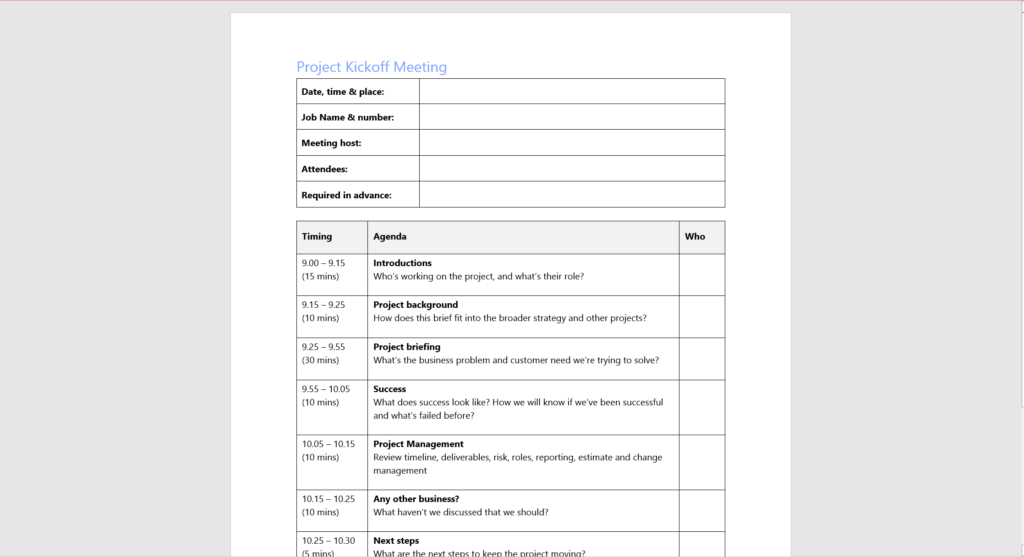
You can download a template agenda and a sample agenda for a kickoff meeting here. It’s a bit more structured than simply echoing the questions listed above. Read more about the specifics of the project kickoff meeting agenda template here.

Checklist To Prepare For A Project Kickoff Meeting
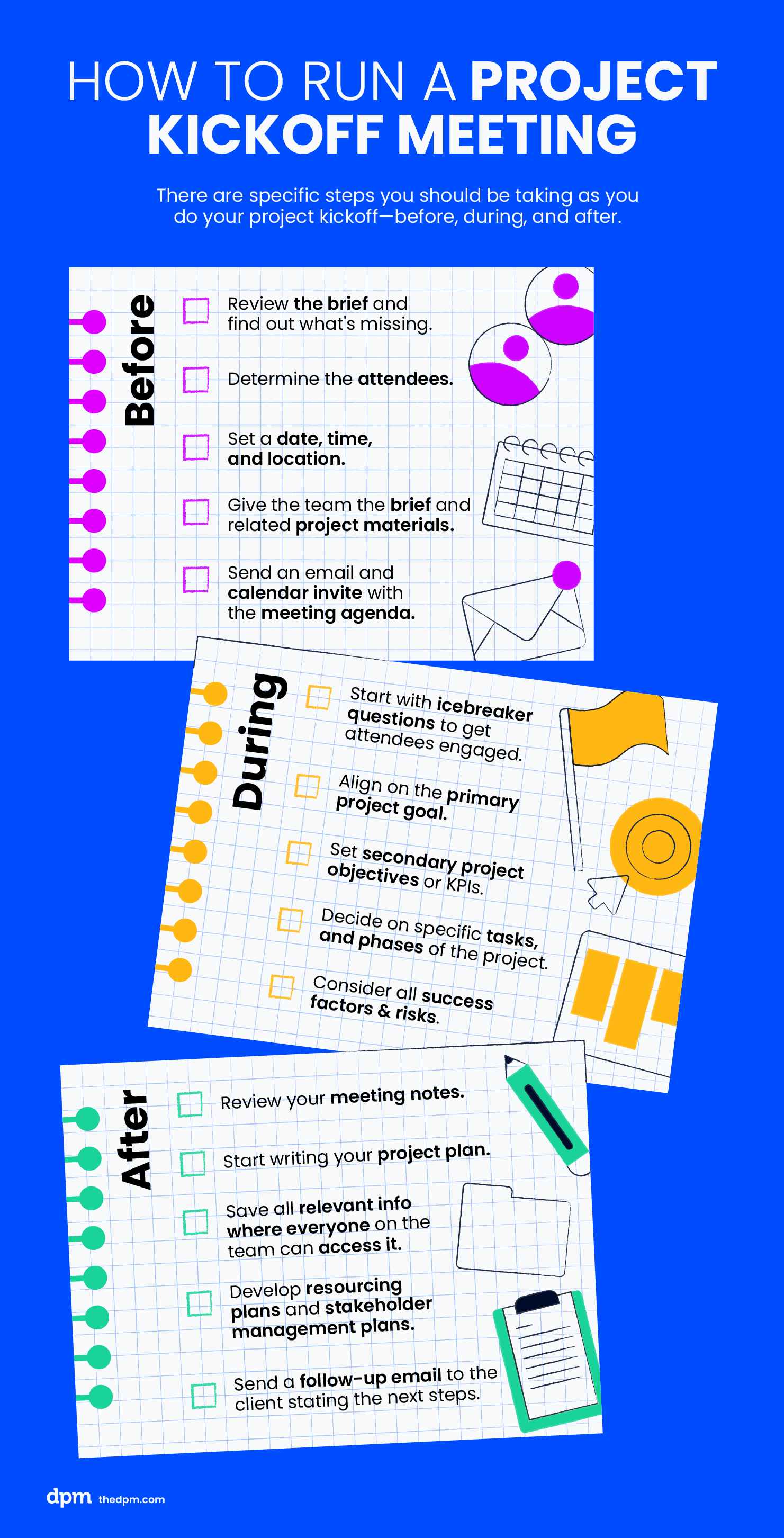
There are specific steps you should be taking as you do your project kickoff—before, during, and after.
Before The Project Kickoff Meeting
Prior to the project kickoff meeting with the client, you'll need to:
- Check to make sure that the project charter has been approved and signed (find some example project charters here for reference).
- Review the brief and find out what's missing. Do you have a timeline? A set list of project deliverables? Have you chosen an approach?
- Determine who needs to attend the kickoff meeting (think about whether you'll be taking meeting minutes yourself or assigning this duty to someone else)
- Set a date, time, and location
- Distribute the brief and any materials relevant to the project background to the team
- Send an email and calendar invite with the meeting agenda attached
During The Project Kickoff Meeting
Here are the steps you'll need to take during the project kickoff meeting (you'll notice that our project kickoff agenda template aligns loosely with this, so you shouldn't have to think about this separately):
- Start with some icebreaker questions to get attendees engaged
- Align on the primary project goal
- Set any secondary project objectives or KPIs
- Decide on specific tasks, phases, and parts of the project
- Consider all success factors & risks
After The Project Kickoff Meeting
Immediately following the project kickoff meeting, follow these steps:
- Review your meeting notes
- Start writing your project plan
- Save all relevant info in a spot that's accessible for everyone on the project team, or even configure a chat-based AI knowledge base
- Develop resourcing plans and stakeholder management plans
- Send a follow-up email to the client reiterating the next steps and action items
5 Steps To Run A Successful Project Kickoff Meeting
A good kickoff meeting gets your team and stakeholders aligned before project work begins. Use the meeting to confirm goals, clarify responsibilities, review the project approach, and identify risks or blockers early.
1. Introduce The Team And Project
Start by introducing the internal team, client stakeholders, and decision-makers. Clarify each person’s role and involvement in the project.
Suggested time: 5–10 minutes
Then review the project background:
- Why the project exists
- The business problem being solved
- The main project goal
- What success looks like
2. Review Scope, Deliverables, And Timeline
Walk through the project scope, deliverables, timeline, and major milestones so everyone understands what the team is delivering and when.
Suggested time: 10–15 minutes
Use this part of the meeting to:
- Review project phases
- Confirm deliverables
- Discuss dependencies or constraints
- Clarify assumptions
- Align on deadlines and review cycles
3. Define Communication And Working Processes
Explain how the team and client will work together throughout the project.
Suggested time: 5–10 minutes
Review:
- Communication tools and channels
- Meeting cadence
- Approval workflows
- Feedback processes
- Escalation paths
- Change management expectations
4. Discuss Risks, Questions, And Concerns
Use the kickoff meeting to surface risks, missing information, or unresolved questions before project work begins.
Suggested time: 10–15 minutes
Ask stakeholders about:
- Timeline risks
- Technical concerns
- Resource limitations
- Approval dependencies
- Missing assets or requirements
Document open questions and assign follow-up actions where needed.
5. Confirm Next Steps And Action Items
End the meeting by reviewing decisions, responsibilities, and immediate next steps.
Suggested time: 5–10 minutes
Before closing the meeting:
- Confirm action items and owners
- Review upcoming milestones
- Clarify outstanding requirements
- Explain what happens after the kickoff meeting
- Share when stakeholders can expect follow-up notes or documentation
The kickoff meeting should leave everyone aligned on the project goals, workflow, responsibilities, and next steps before execution begins.
Common Project Kickoff Meeting Mistakes To Avoid
A poorly run kickoff meeting can create confusion, misalignment, and unrealistic expectations before project work even begins. Avoid these common mistakes when planning and running your kickoff meeting.
| Common project kickoff meeting mistakes | How to avoid them |
|---|---|
| Treating the kickoff like a status update | Focus the meeting on alignment, expectations, responsibilities, and next steps instead of detailed project reporting |
| Inviting too many stakeholders | Only invite people directly involved in approvals, delivery, communication, or decision-making |
| Skipping preparation | Finalize the agenda, review the project brief, and align internally before meeting with the client |
| Focusing too much on scope discussions | Keep the conversation focused on goals, workflow, communication, and execution instead of renegotiating requirements |
| Failing to clarify roles and responsibilities | Clearly define who owns approvals, communication, delivery, and decision-making |
| Not discussing risks early | Surface blockers, dependencies, missing assets, and operational concerns before project work begins |
| Ending without action items | Close the meeting with documented next steps, owners, and timelines |
Tips For Running An Effective Project Kickoff Meeting
A successful kickoff meeting keeps stakeholders aligned, engaged, and prepared for execution. Use these tips to keep the discussion productive and make sure everyone leaves the meeting with a clear understanding of the project goals, workflow, and next steps.
- Send the agenda in advance: Share the meeting agenda and project materials ahead of time so stakeholders can prepare questions and review important information before the discussion.
- Document decisions in real time: Capture action items, risks, approvals, and open questions during the meeting so nothing gets lost afterward.
- Send follow-up notes quickly: Share meeting notes, action items, and next steps shortly after the meeting while discussions are still fresh.
- Leave time for discussion: Build space into the agenda for stakeholder questions and clarification instead of overloading the meeting with presentations.
- Clarify communication expectations: Review communication channels, meeting cadence, approval workflows, reporting processes, and escalation paths early in the project.
Project Kickoff Meetings FAQs
Here, I'll answer a few frequently asked questions about kickoff meetings.
What are the objectives of a project kickoff meeting?
By the end of the project kickoff meeting with your client, you want to have:
- Established the project's goals and purpose
- Set the tone for communication & teamwork between the client and your project team
- Agreed upon the project brief
- Assigned team roles & responsibilities to the client and their team, as well to your team (specific project team roles should have been established during the internal project kickoff)
- Established a timeline, deliverables, and status update format & frequency
Is the project kickoff meeting a milestone?
No, the project kickoff meeting is not a milestone. Milestones are set during the project planning phase, and they are used to mark a specific point in the project timeline by which to measure project progress.
The kickoff meeting happens before any work has been completed, so it can't be a milestone!
When should teams hold a project kickoff meeting?
Teams should hold the project kickoff meeting after the project is approved and key project details are defined, but before execution begins.
In most cases, the kickoff meeting happens after:
- Contracts or statements of work are approved
- Project goals and scope are defined
- The core project team is assigned
- Initial timelines and deliverables are outlined
The kickoff meeting should happen early enough to align stakeholders before work starts, but late enough that the team can discuss the project with enough detail and clarity.
How long should the project kickoff meeting be?
Try to keep your kickoff meeting to a maximum of an hour and a half (you'll notice that our project kickoff agenda outlines a meeting of this length). Any longer and you'll just end up going in circles. Be sure to leave plenty of time for client questions.
What should not be included in the project kickoff meeting?
The kickoff meeting shouldn’t be a discussion about project scope. Rather, it’s an opportunity to level set with the project stakeholders and discuss expectations around project milestones, rounds of review cycles, and how the approach can be streamlined.
Try and steer it away from being purely about project management—with lots of people in the room, you want to avoid any conversations where you could be pressured into extending the scope of the project.
What should I include in a project kickoff presentation?
It's a good idea to create a slide deck for use during your project kickoff. Make sure it aligns with your agenda. Generally, you'll want to include the following in your project kickoff meeting presentation:
- Introductions: Names & faces of the project team. Fun facts can be a great icebreaker!
- Background information on the project
- Project briefing
- What project success looks like
- Project management items: Project plan, timelines, methodology, deliverables, risks, change management plan, and any other relevant project documents.
How do I lead a project kickoff meeting?
With confidence! But seriously, acting as a project leader that can rally the team together around the vision before the project really gets going is crucial.
Read more about being a project leader during kickoff here.

What’s Next?
Once the project kickoff meeting is out of the way, you and your team can get started on the project, assuming you also have all the info and assets you need. In some cases, you may need to finalize the project plan and any other project planning activities before moving on to project execution.
Learn more about how to make your project meetings more effective here, and keep in mind that project management software can be a big help in getting your projects on track and keeping them there.