

10 Best monday.com Alternatives For Project Teams in 2026

10 Best monday.com Alternatives Shortlist


The best monday.com alternatives let you get up and running much quicker, fully customize your workflows and views, and more tightly integrate your project management tool with the other tools you and your team use to collaborate and complete project work. With the right alternative to monday.com, you'll be able to manage your projects and collaborate with the team in a way that best fits your needs.
I've used my 20+ years of experience in project management to test a variety of monday.com alternatives so you can find the right tool that will help you and your team better manage your projects and teams. Below, I cover strengths and key differences, pros and cons, and ideal use cases for each tool.
Why Trust Our Software Recommendations
Our team has been testing and reviewing software since 2012. As project managers ourselves, we know how difficult—and important—it is to choose the right software.
For this guide, we evaluated tools using hands-on testing and independent research, scoring tools using our selection criteria. We also draw on insights from industry thought leaders and practicing project management experts.
Our reviews reflect our human editorial judgment, not a sales pitch.
Expert reviewers:
monday.com Alternative Comparison Table
Here are my picks for the best alternatives side-by-side so you can compare them.
| Tool | Best For | Trial Info | Price | ||
|---|---|---|---|---|---|
| 1 | Best for large projects and scaling | Free plan + 14-day free trial + free demo available | From $10/user/month (billed annually) | Website | |
| 2 | Best for industry-tailored agency operations | 14-day free trial + free demo available | From $10/user/month (billed annually) | Website | |
| 3 | Best for industry-specific workflows | Free demo available | Pricing upon request | Website | |
| 4 | Best for customizable creative workflows | Free demo available | Pricing upon request | Website | |
| 5 | Best for project cost and performance analysis | 14-day free trial + free demo available | From $10/user/month (billed annually) | Website | |
| 6 | Best for customization options | 15-day free trial + free plan + free demo available | From $4/user/month (billed annually) | Website | |
| 7 | Best for clear & simple resource scheduling | Free trial available | From $5/user/month (billed annually) | Website | |
| 8 | Best for efficient lead management | 30-day free trial | From $25/user/month | Website | |
| 9 | Best for hierarchical task management | Free plan + 30-day free trial available | From $7.65/user/month (billed annually) | Website | |
| 10 | Best for team collaboration tools | 14-day free trial + free plan + free demo available | From $5/user/month (billed annually) | Website |


Best monday.com Alternative Reviews
To help you see whether a monday.com alternative would better fit your needs, I’ve covered the pros and cons, trial info, pricing, and expert opinion for a few competitors.
Wrike
Best for large projects and scaling
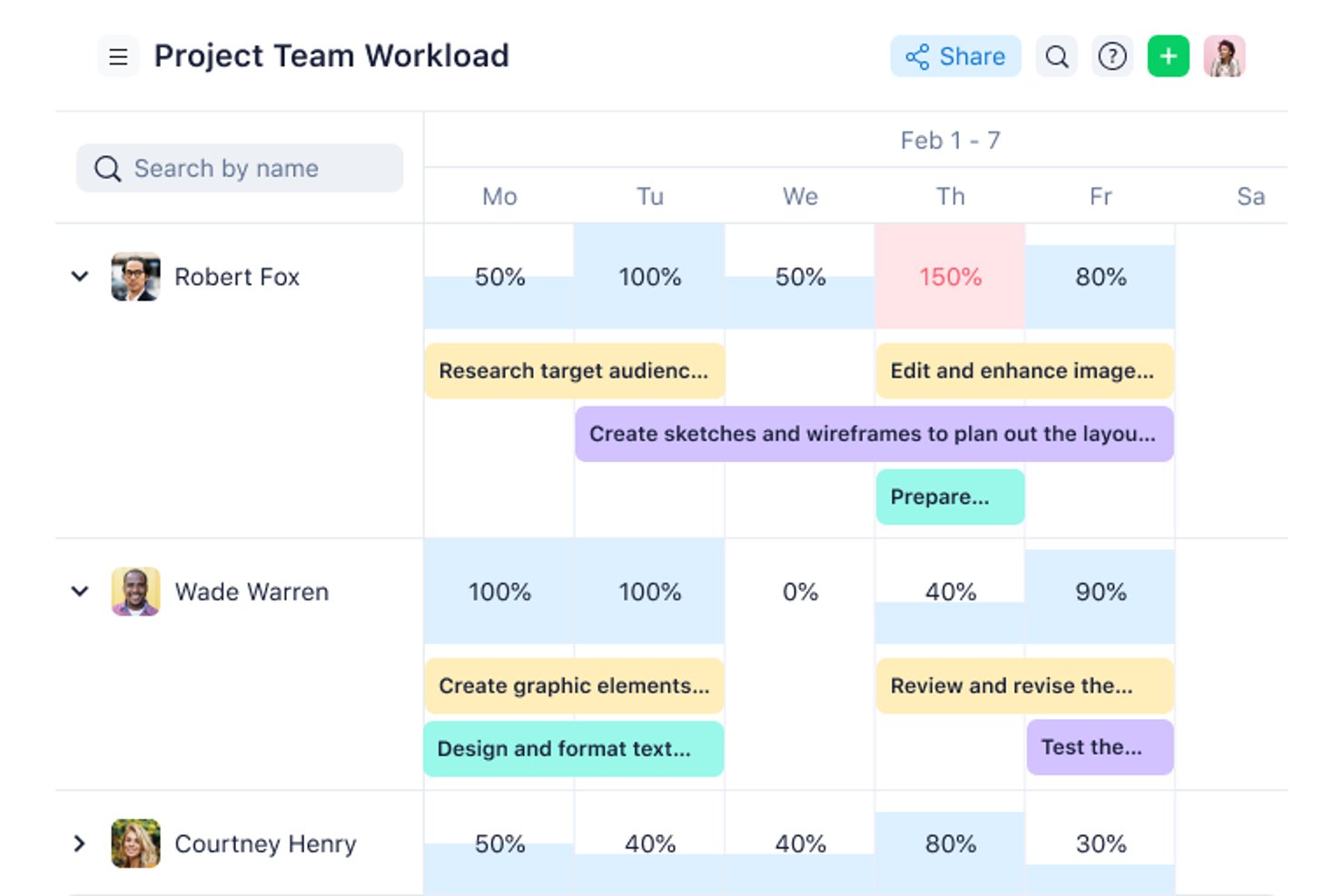
Wrike is a project management platform for cross-functional teams that need to coordinate tasks, timelines, and approvals while keeping priorities visible across complex initiatives.
Who Is Wrike Best For?
Wrike suits project managers at growing organizations who coordinate large, multi-team projects and need workflows that can scale with their work.
Why I Picked Wrike
I picked Wrike as a monday.com alternative because it is Best for large projects and scaling. I like its Gantt charts for mapping dependencies across workstreams and project blueprints for launching repeatable initiatives. Cross-tagging keeps a shared engineering milestone visible in multiple project folders without duplicating it.
Wrike Key Features
- Custom request forms: Create forms that route submitted requests into Wrike workflows.
- Custom dashboards: Arrange widgets to view tasks, timelines, and project updates.
- Time tracking: Record task hours with a timer or manual time logs.
- Online proofing: Add comments directly to files during review.
Wrike Integrations
Wrike offers 400+ prebuilt connectors, including Jira, GitHub, Salesforce, Slack, Microsoft Teams, Google, Zoom, and Dropbox. It also supports Zapier and provides an API for custom integrations.
Pros and Cons
Pros:
- Cross-tagging keeps shared milestones visible
- Request forms route work into workflows
- Gantt charts make dependencies easy to map
Cons:
- Large dashboards can load slowly
- Dense menus complicate initial onboarding
New Product Updates from Wrike

Wrike Adds Quick Search to Table View
Wrike adds Quick Search to Table View with full-table search across titles, descriptions, and fields, plus highlighted matches. This helps users find tasks faster in large tables. For more information, visit Wrike’s official site.
Best for industry-tailored agency operations
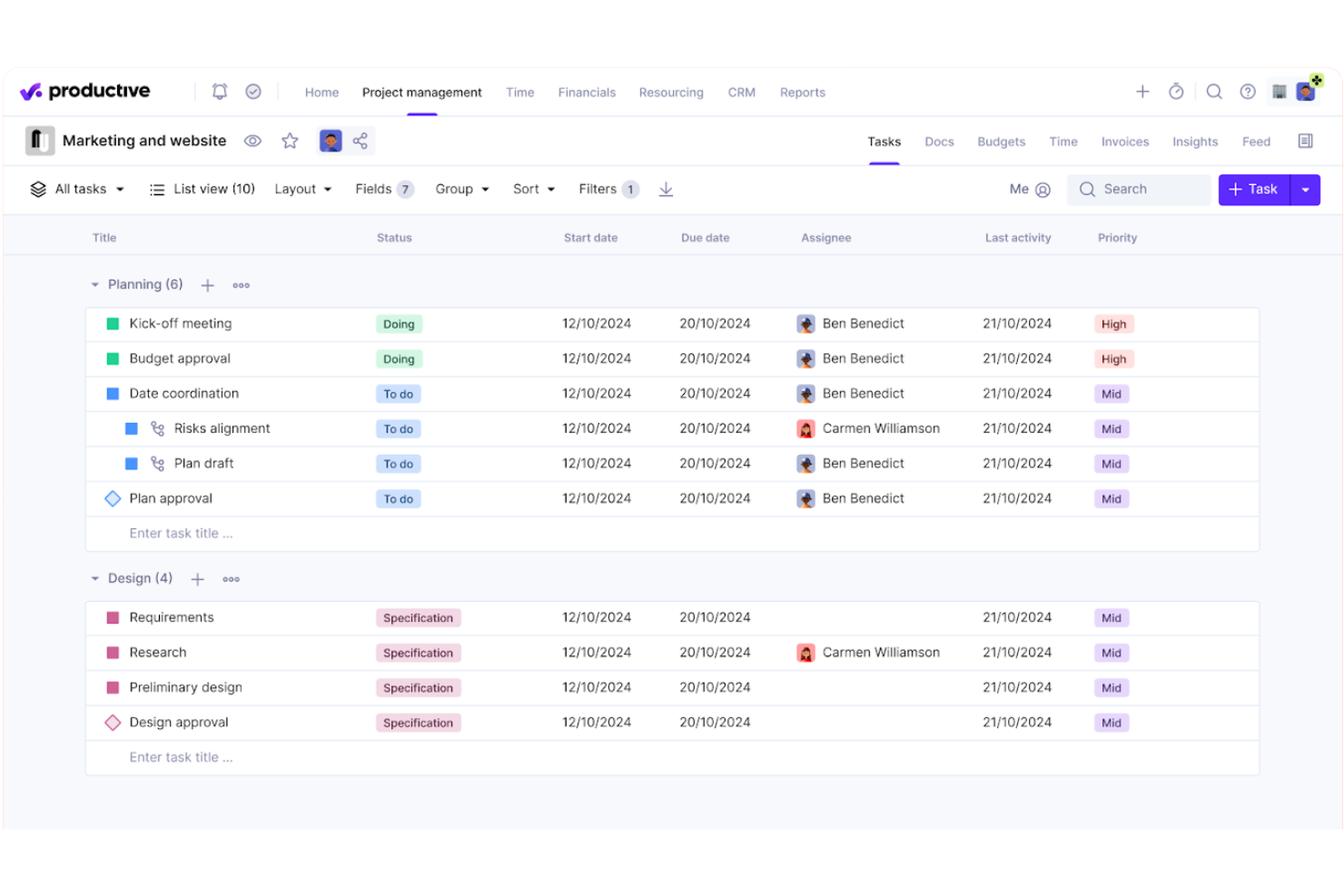
Productive is a professional services automation platform built for agencies and consultancies that need to manage projects, track time, plan resources, and monitor budget profitability all in one place.
Who Is Productive Best For?
Productive is a strong fit for agency operators and client services teams at small-to-mid-sized firms who need financial oversight built into their project workflows.
Why Productive Is a Good monday.com Competitor
I picked Productive as one of the best because no other tool on this list connects time tracking directly to project budgets and invoicing in one native workflow. When my team logs hours, Productive updates the budget in real time and can generate invoice drafts automatically. I also appreciate the Scenario Builder, which lets you model revenue and utilization forecasts before committing to resourcing decisions.
Productive Key Features
- Gantt chart view: Plan, visualize, and adjust project timelines using a drag-and-drop Gantt chart interface.
- AI-powered reporting: Use AI to generate custom reports and insights from project and financial data.
- Docs and file storage: Create, edit, and collaborate on project documents directly within each workspace.
- Resource planning dashboard: Allocate team members to projects and monitor utilization with capacity heatmaps.
Productive Integrations
Productive offers native integrations with GitHub, Slack, HubSpot, Notion, Amplitude, Stripe, Linear, Xero, Sage, Jira, and more. It also connects with Zapier, and has an API for custom integrations.
Pros and Cons
Pros:
- Scenario planning for budgets and resourcing
- Real-time project profitability monitoring
- Built-in agency project and financial controls
Cons:
- Limited whiteboard and documentation tools
- No built-in Agile sprint management
New Product Updates from Productive
Productive Adds Voice Dictation, Slack Connector, Proposals, and Overtime
Productive adds voice dictation, a Slack Connector, proposal controls, and overtime tracking. These updates support faster AI interactions, client proposals, and time management. For more information, visit Productive’s official site.

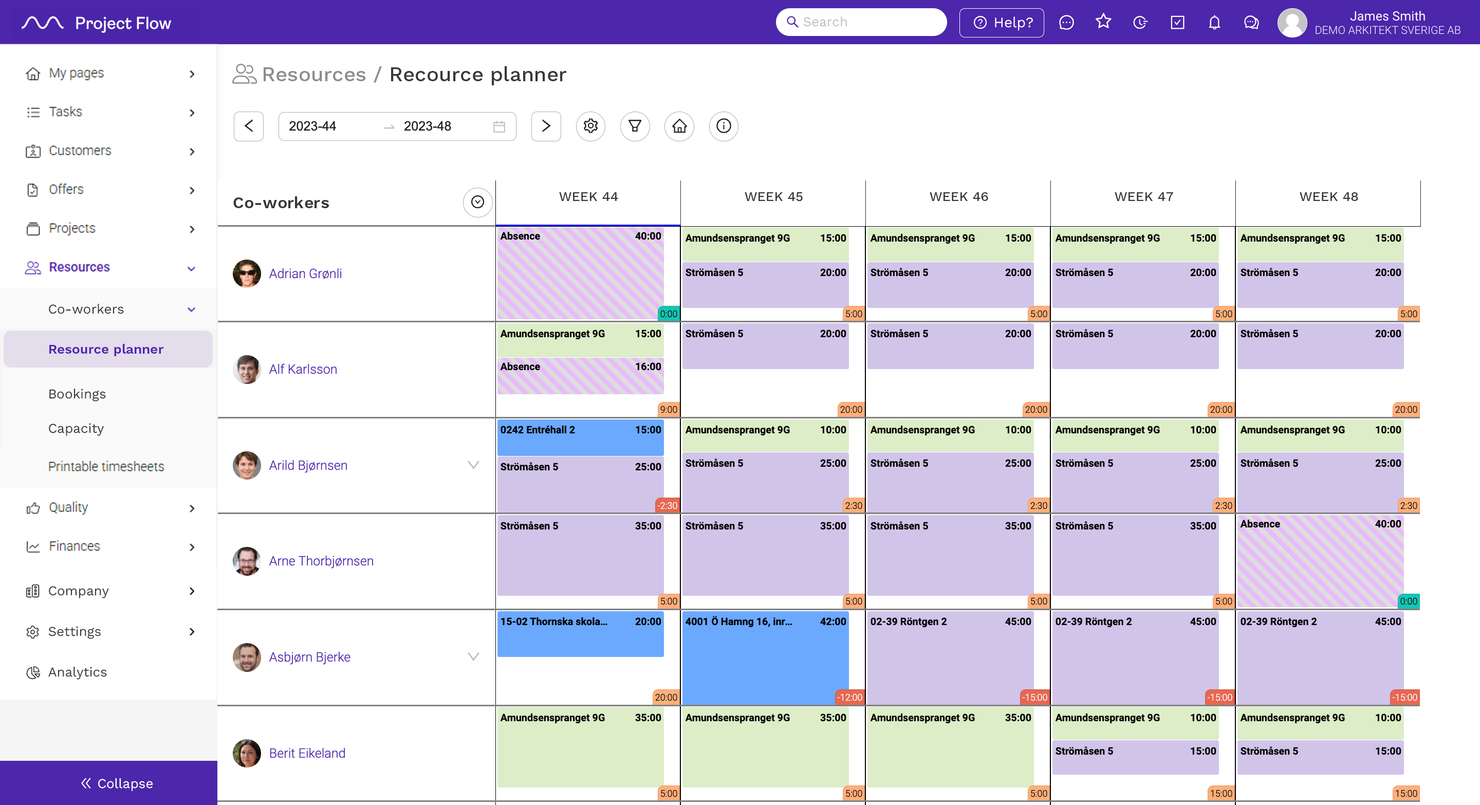
Why Project Flow by Milient is a great monday.com alternative
I chose Project Flow by Milient as a monday.com alternative because it’s purpose-built for architecture, engineering, and IT firms. While monday.com serves a broad range of industries, Project Flow focuses on helping project-based teams in these sectors plan, track, and manage work with industry-specific workflows.
I like that Project Flow centralizes project management from offer to invoice and ties in essential features like time tracking, resource planning, and quality assurance. These tools help technical teams stay on schedule and ensure compliance with industry standards. It’s particularly strong in knowledge management—making it easier to store and access documentation—and offers helpful reporting features for analyzing project performance. While it may not offer the same level of general-purpose customization or third-party integrations as monday.com, Project Flow’s specialization makes it ideal for teams that need detailed control over time, resources, and quality in architectural or engineering projects.
Pros and Cons
Pros:
- Integrated features like checklists and non-conformity tracking
- Centralized knowledge management
- Covers the full project lifecycle—from proposal to invoicing
Cons:
- May be niche for broader teams
- Geographically focused integrations

Best for customizable creative workflows

Why Screendragon is a great monday.com alternative
I chose Screendragon as a monday.com alternative because it’s built for large marketing, creative, and agency teams that need more flexibility than monday.com typically offers. While monday.com focuses on quick setup and simple task boards, Screendragon gives you the freedom to create entirely custom workflows without coding—perfect if your projects require advanced approvals, resource tracking, or multi-department collaboration.
I also like that Screendragon includes powerful reporting tools that surface real-time insights across projects and budgets. Its enterprise-grade security controls and granular permissions make it a solid option for global teams handling sensitive client or campaign data. If you’ve outgrown monday.com’s standard automation features, Screendragon’s tailored configuration may be a better fit.
Pros and Cons
Pros:
- Strong enterprise security controls
- Robust creative team integrations
- Highly customizable workflows
Cons:
- No public pricing
- Longer onboarding process
New Product Updates from Screendragon
Screendragon Unveils New AI Hub
Screendragon introduced AI Hub, a new capability that lets teams build and manage AI agents directly within workflows. The update helps marketing teams automate tasks, maintain governance controls, and scale AI-driven operations more efficiently. For more information, visit Screendragon's official site.

Celoxis
Best for project cost and performance analysis
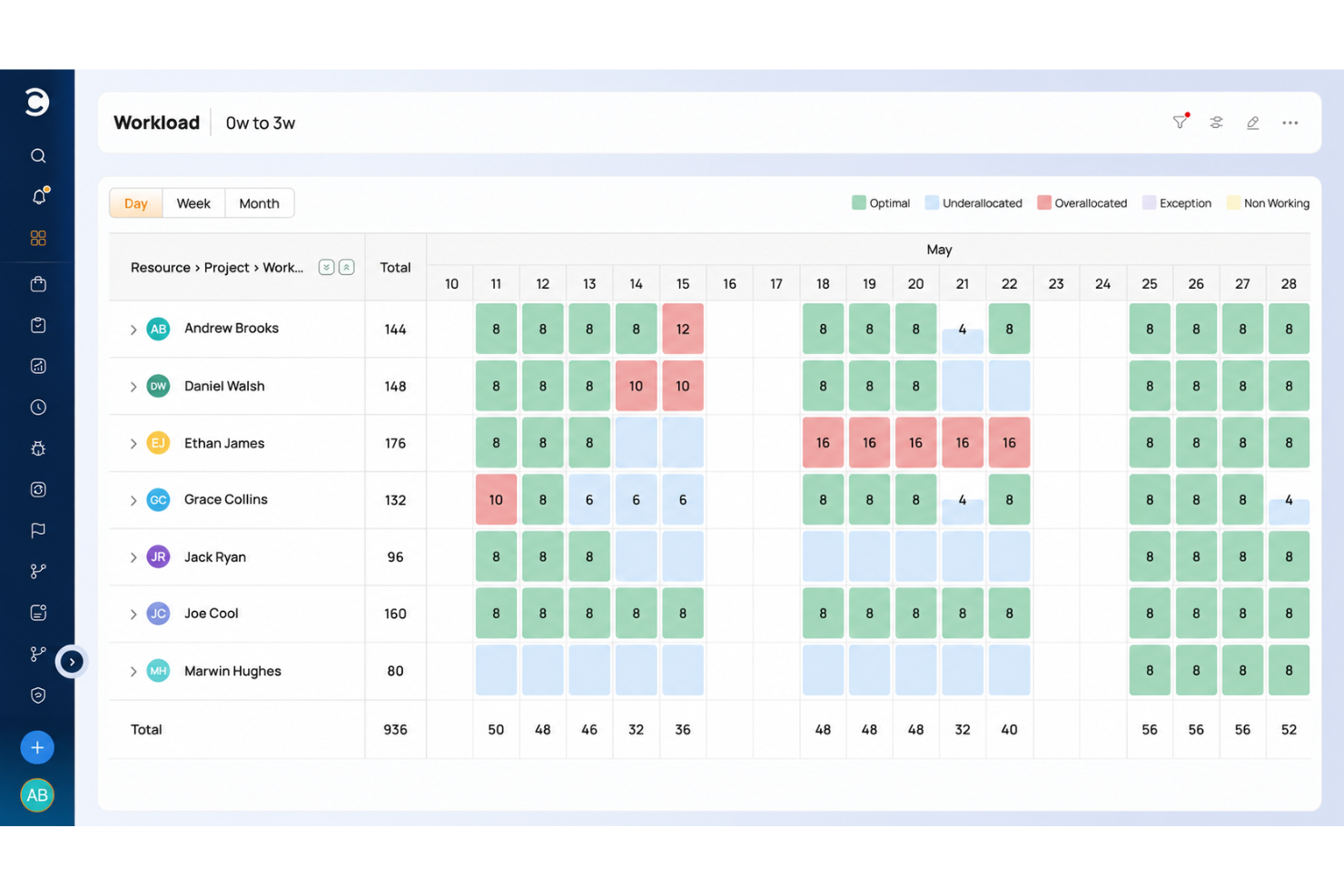
Celoxis is a project management platform for organizations coordinating cross-functional work, helping project managers plan schedules, manage resources, track tasks, and keep teams aligned as priorities shift.
Who Is Celoxis Best For?
Celoxis suits PMOs and project leaders who need to track project budgets, resource use, and performance across multiple workstreams.
Why I Picked Celoxis
I picked Celoxis as a monday.com alternative for project cost and performance analysis. Its earned value analysis calculates schedule and cost metrics against project baselines, while budget forecasts and actuals help me spot overruns. I can use portfolio dashboards to review those variances across multiple workstreams.
Celoxis Key Features
- Gantt scheduling: Map task dependencies and critical paths on interactive Gantt charts.
- Resource capacity planning: Plan availability by skill, role, location, and time zone.
- Timesheets and expenses: Log time with timers or weekly timesheets, then submit entries for approval.
- Workflow apps: Track risks, issues, change requests, bugs, and RAID items in configurable apps.
Celoxis Integrations
Celoxis offers 21 native integrations, including Jira, Azure DevOps, Microsoft 365, Google Drive, Slack, Salesforce, Trello, QuickBooks Online, and Microsoft Project, and connects with Zapier. It also provides a documented REST API for custom integrations.
Pros and Cons
Pros:
- Dependency-aware Gantt charts recalculate shifting schedules
- Resource capacity views expose workload conflicts early
- Project budgets, actuals, and forecasts stay visible
Cons:
- Workflow and report setup takes substantial effort
- Dense, dated interface slows routine navigation
Best for customization options
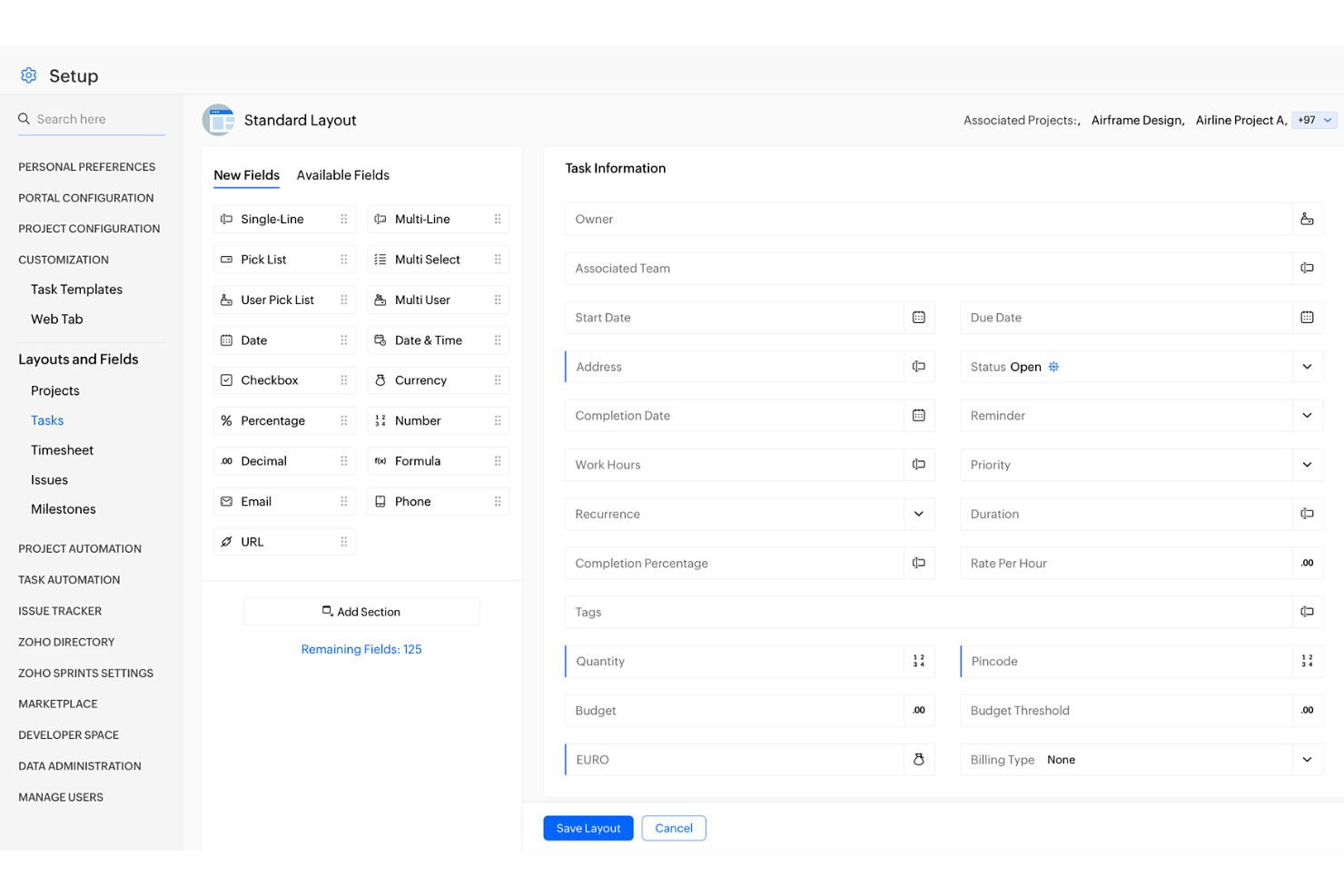
Zoho Projects gives cross-functional teams a shared workspace for planning schedules, tracking tasks and dependencies, logging time, and coordinating project work.
Who Is Zoho Projects Best For?
Product, engineering, and operations teams that need to tailor project workflows, fields, and views to fit varied delivery processes will find Zoho Projects a good fit.
Why I Picked Zoho Projects
I picked Zoho Projects for teams that need to shape project management around their delivery processes. I like that you can tailor workflows, fields, and views, so product teams can track release stages while operations teams organize work around their own process. That flexibility makes it a useful monday.com alternative when one shared setup doesn’t fit every team.
Zoho Projects Key Features
- Gantt charts : View project schedules, milestones, and task dependencies on a timeline.
- Timesheets : Log time against tasks and record billable hours.
- Issue tracking : Report, assign, and track bugs through resolution.
- Project forums : Post topics and discuss project questions with the team.
Zoho Projects Integrations
Zoho Projects integrates with Zoho CRM, Zoho Sprints, Google Drive, Google Calendar, Microsoft Teams, Microsoft 365, Slack, GitHub, GitLab, and Zendesk. It also connects with Zapier and offers an API for custom integrations.
Pros and Cons
Pros:
- Built-in timesheets track task-level effort
- Gantt charts map milestones and dependencies
- Custom task statuses adapt workflows
Cons:
- Reporting options need more depth
- Mobile dashboards feel cluttered
New Product Updates from Zoho Projects
Zoho Projects Adds CodeX Scripts for Custom Modules
Zoho Projects now supports CodeX Scripts for custom modules, enabling conditional logic and rules for creating, updating, and deleting records. For more information, visit Zoho Projects' official site.
 .
.
Best for clear & simple resource scheduling
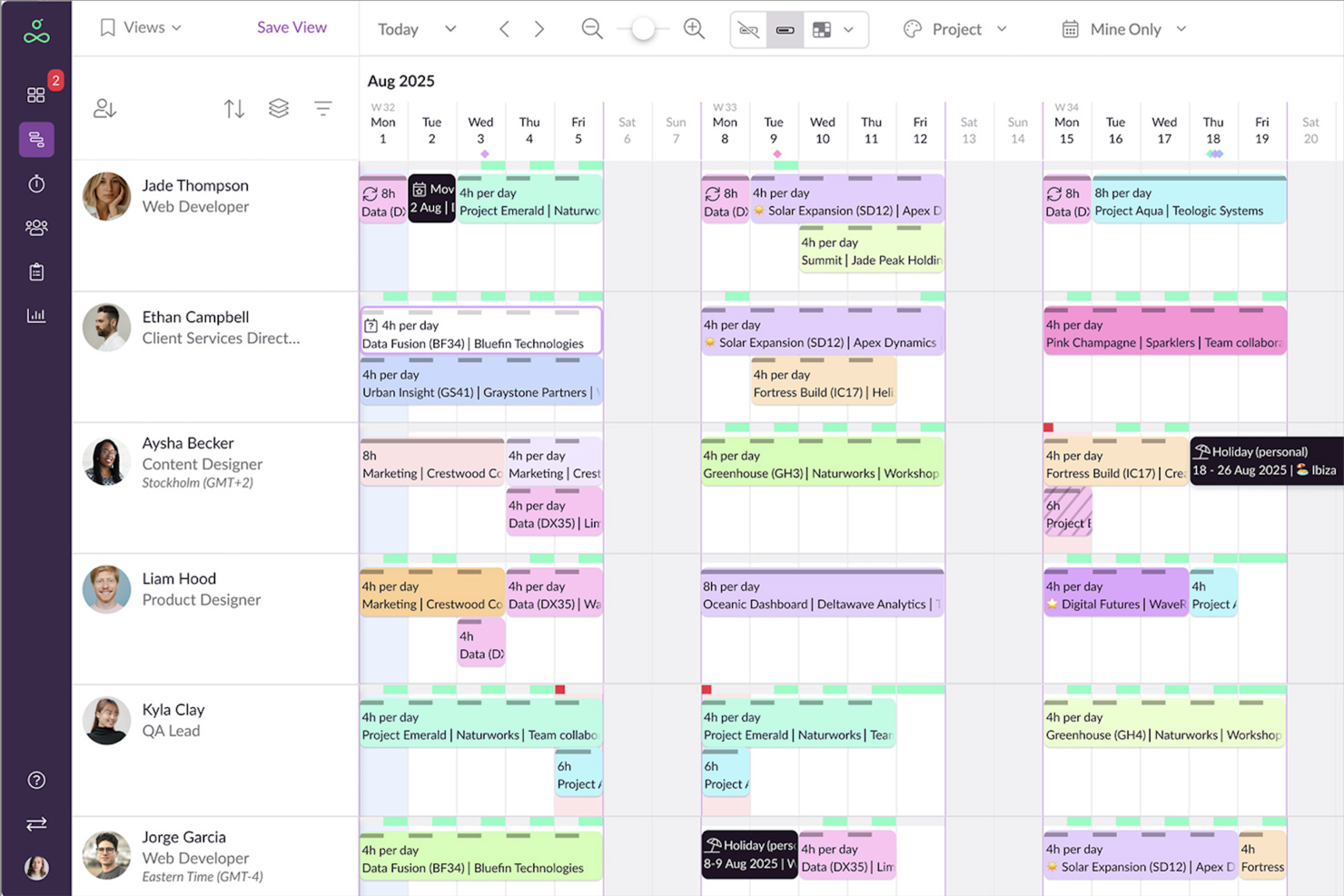
Resource Guru is a resource management platform for project teams that need to plan staff and equipment capacity, spot scheduling conflicts, and coordinate work across multiple projects.
Who Is Resource Guru Best For?
Resource Guru suits project managers at growing service businesses who need a straightforward way to coordinate team availability across projects.
Why I Picked Resource Guru
I picked Resource Guru as a monday.com alternative when project plans depend on people and equipment availability. Its schedule, availability and leave tracking, and conflict alerts help me assign designers or equipment across overlapping projects without double-booking. That focus matches its USP: Best for clear & simple resource scheduling.
Resource Guru Key Features
- Project Gantt charts: Map project phases, tasks, and milestones against team capacity.
- Timesheets: Log actual hours with entries that can auto-fill from booked work.
- Custom reports: Review project and team data, including billable utilization and overtime.
- Integrations: Connect calendars, task managers, and financial software.
Resource Guru Integrations
Resource Guru offers 17 native integrations, including Jira, Asana, monday.com, ClickUp, Trello, Slack, Microsoft Teams, Google Calendar, and Outlook Calendar. It also connects with Zapier and provides a REST-style API for custom integrations.
Pros and Cons
Pros:
- Schedules staff and equipment together
- Drag-and-drop bookings make reallocations quick
- Availability and conflicts visible at a glance
Cons:
- Multi-day bookings require individual edits
- Reporting offers limited long-range forecasting
New Product Updates from Resource Guru

Resource Guru Adds More Control Over Calendar Sync
Resource Guru adds more control over Google and Outlook Calendar sync, including source calendar selection and destination calendar options. These updates help users manage external events and Resource Guru bookings with less clutter. For more information, visit Resource Guru’s official site.
 .
.
Best for efficient lead management
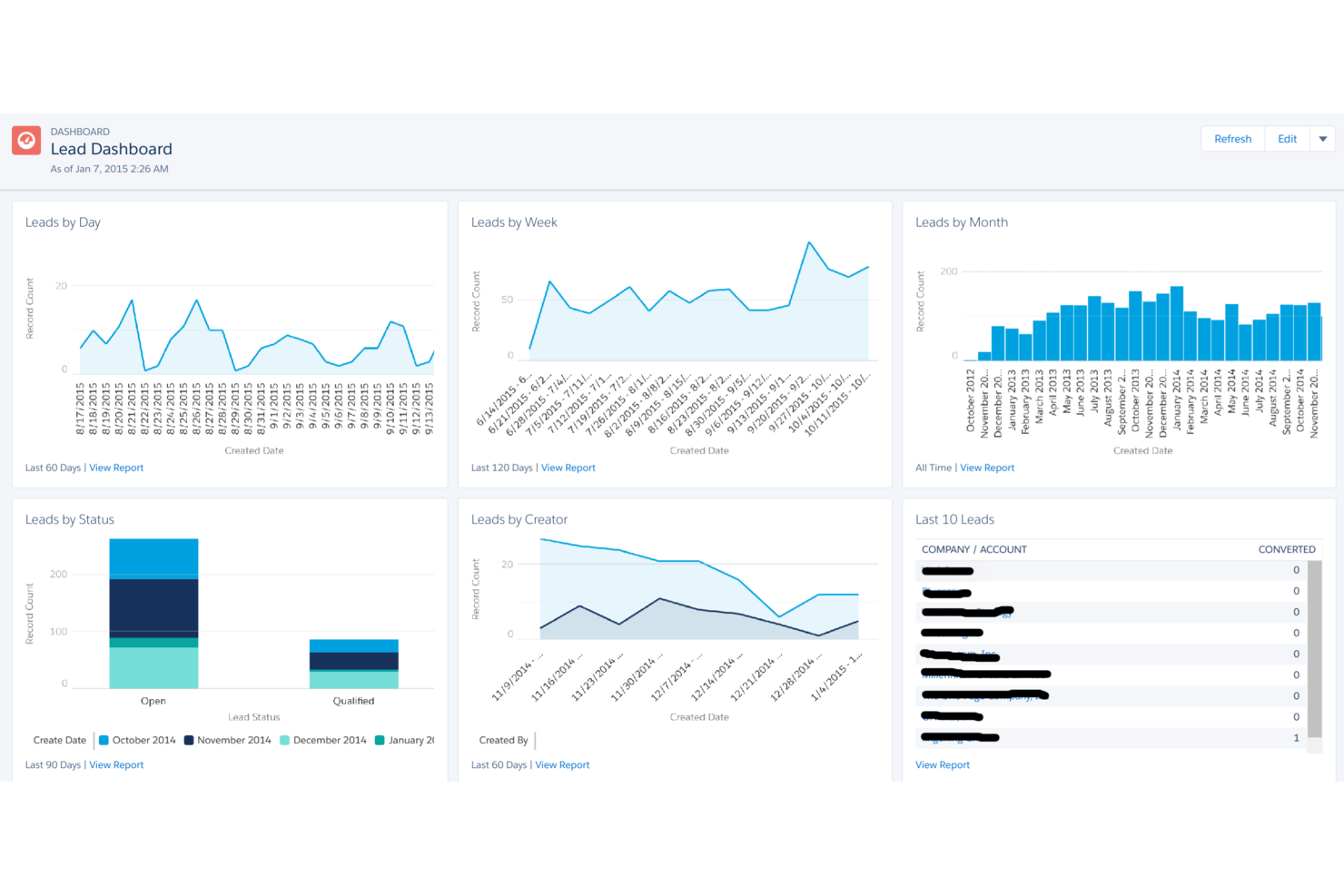
Salesforce CRM is a customer relationship management platform for sales-led teams that need to organize account and opportunity data and give project teams clearer context during customer handoffs.
Who Is Salesforce CRM Best For?
Salesforce CRM suits sales teams that need to track prospects, manage lead pipelines, and coordinate follow-ups across a growing business.
Why I Picked Salesforce CRM
I picked Salesforce CRM as a monday.com alternative because its USP is “Best for efficient lead management.” Lead records and activity histories help track qualification and follow-ups, then convert qualified prospects into accounts, contacts, and opportunities. I value the clearer customer handoff, which gives project teams deal context as delivery work begins.
Salesforce CRM Key Features
- Custom objects: Create records for projects, milestones, or delivery data.
- Reports and dashboards: Build views and charts from Salesforce records.
- Flow Builder: Configure automated steps triggered by record changes.
- AppExchange apps: Add third-party tools, including project management apps.
Salesforce CRM Integrations
Salesforce documents integrations with Slack, Microsoft Teams, Gmail, Google Drive, and Google Sheets, with availability varying by edition. It also offers apps through AppExchange, connects with Zapier, and provides APIs for custom integrations.
Pros and Cons
Pros:
- Record-triggered flows can automate customer handoffs
- Custom objects can represent project milestones
- Lead-to-opportunity tracking preserves customer context
Cons:
- Complex setup can require dedicated admin support
- Sales-first workflows need adapting for project delivery
New Product Updates from Salesforce CRM

Salesforce CRM Adds Automated CMS Access Expiration
Salesforce CRM adds automated access expiration and a new view-only support role for Point of Sale CMS users. These controls reduce manual access cleanup and help teams limit unnecessary permissions. For more information, visit Salesforce CRM’s official site.
 .
.
Quire
Best for hierarchical task management
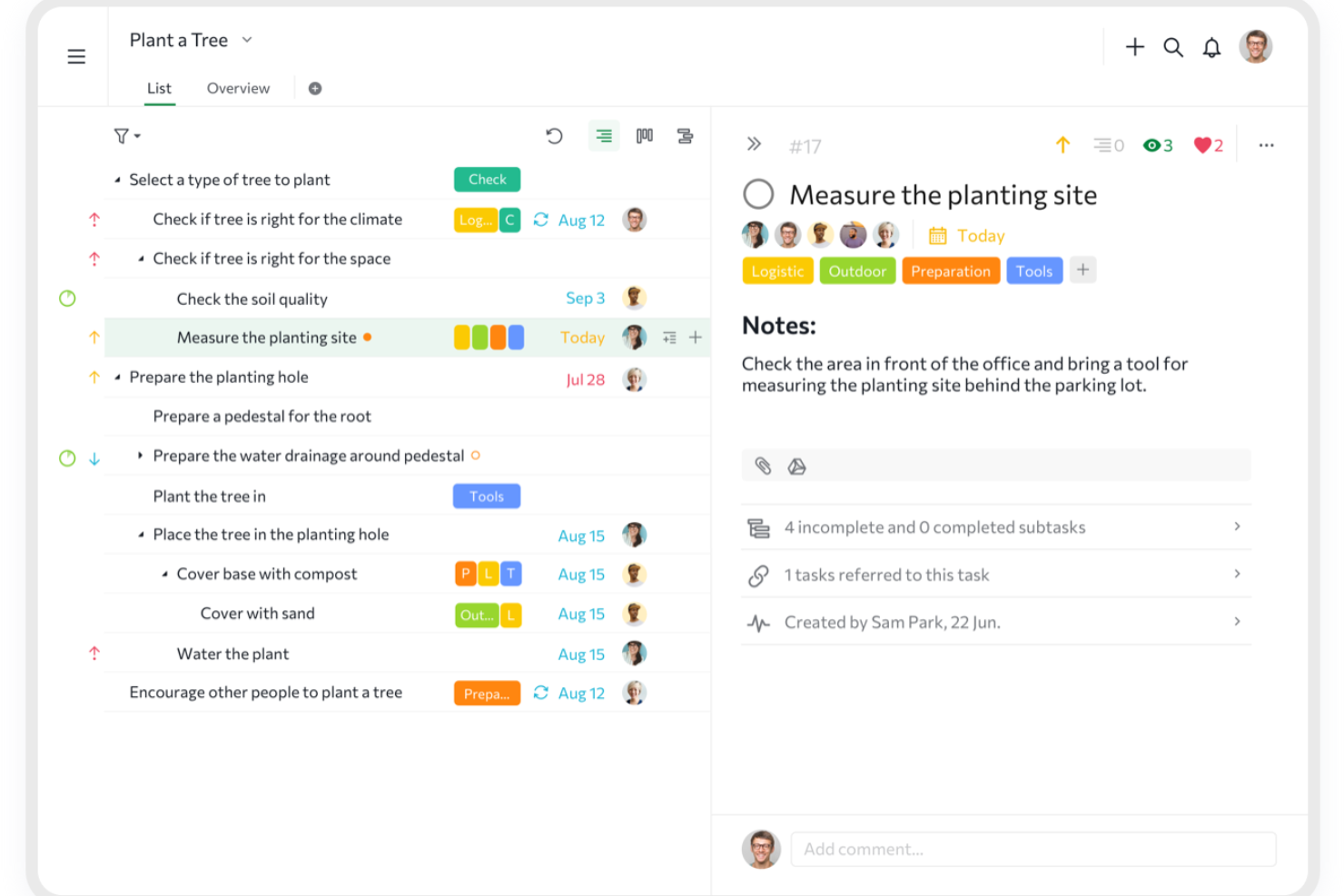
Quire is a project management platform for product and engineering teams that need to coordinate tasks and keep project progress visible, with a focus on Best for hierarchical task management.
Who Is Quire Best For?
Project managers in tech teams who break complex deliverables into nested tasks can use Quire to organize work by level.
Why I Picked Quire
I picked Quire as a monday.com alternative for its “Best for hierarchical task management” focus. Its nested task trees let me break a product launch into milestones, workstreams, and engineering tasks while keeping each item connected to its parent. I can track progress within that structure instead of flattening complex deliverables into a single task list.
Quire Key Features
- Gantt chart: Map project schedules and adjust task timelines in a visual view.
- Calendar view: View dated tasks and drag them to reschedule.
- Recurring tasks: Set tasks to repeat on a schedule.
- Offline access: Create and edit tasks offline, then sync changes when reconnected.
Quire Integrations
Quire lists integrations with Slack, GitHub, Google Drive, OneDrive, Microsoft Teams, Dropbox, Box, Google Calendar, and Zapier; availability and sync options vary by plan. Quire also provides an API for custom integrations.
Pros and Cons
Pros:
- Gantt charts map task schedules visually
- Switch between outline, Kanban, and timeline
- Nested task trees preserve parent-child context
Cons:
- Mobile app lacks some desktop capabilities
- Detailed productivity trend reports remain limited
New Product Updates from Quire

Quire Adds Task and Standalone Reminders
Quire adds task reminders and standalone reminders with shared notifications, recurring schedules, and automatic date tracking. These updates help teams stay ahead of deadlines and manage reminders that do not need a task. For more information, visit Quire’s official site.
 .
.
Hive
Best for team collaboration tools
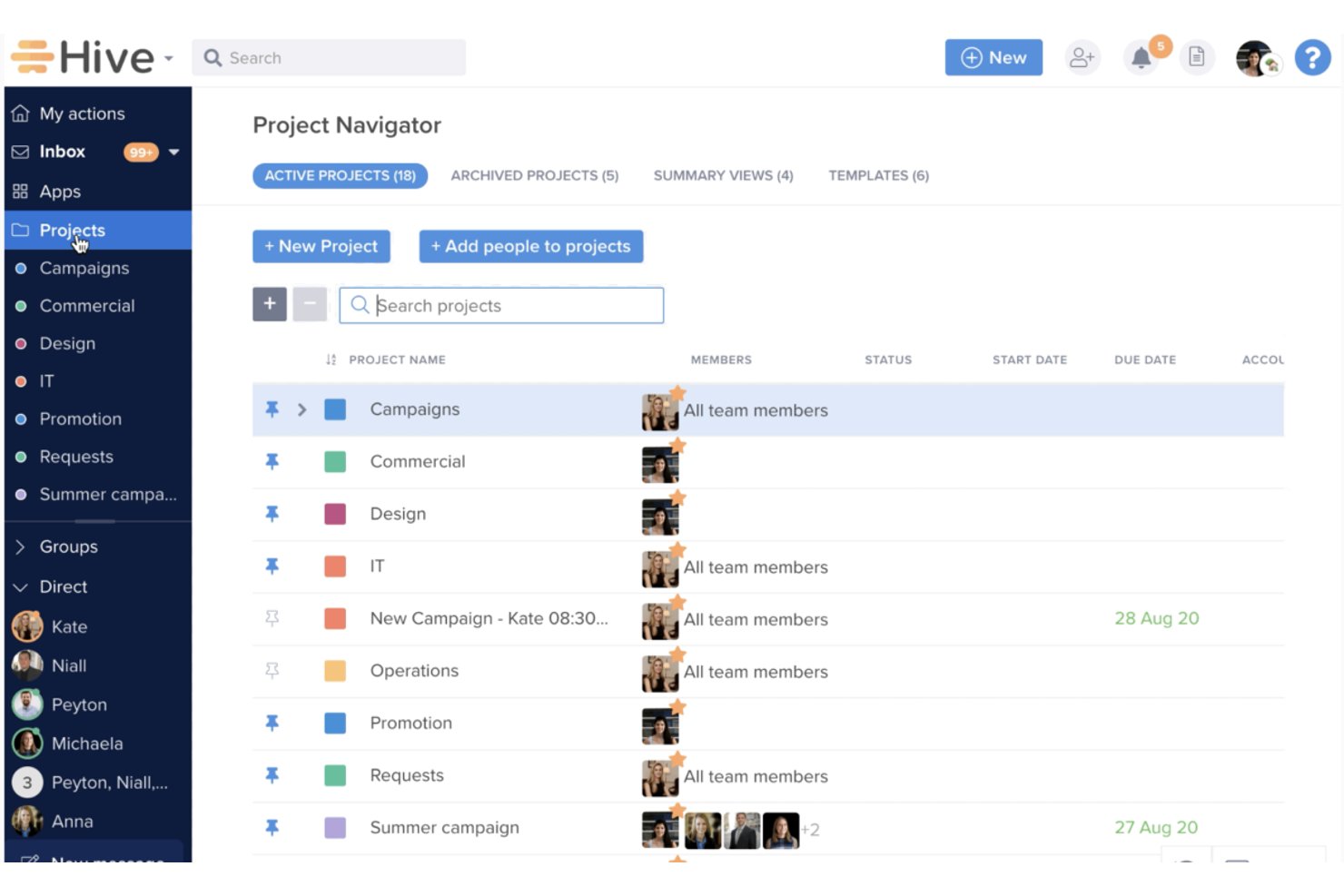
Hive is a project management platform for cross-functional teams that connects task planning, project timelines, and team communication to help you clarify ownership and keep work moving as priorities change.
Who Is Hive Best For?
Hive suits project managers and contributors who need a shared space to coordinate day-to-day work and team collaboration.
Why I Picked Hive
I rate Hive highly among monday.com alternatives because it’s Best for team collaboration tools: comments and keep decisions on tasks, while native chat and proofing help product, design, and marketing review campaign assets and approvals in context.
Hive Key Features
- Project views: Switch among Kanban, Gantt, calendar, timeline, and table layouts.
- Forms: Collect requests and automatically turn submissions into action cards, projects, or tasks.
- Time tracking: Log time on action cards and transfer entries to timesheets.
- Capacity planning: Assign work based on teammate availability and view resource distribution by project.
Hive Integrations
Hive documents native integrations with Google Drive and Calendar, Microsoft Teams and Outlook Calendar, Slack, Zoom, Jira, GitHub, Dropbox, and Box. It also supports Zapier and offers an API for custom integrations.
Pros and Cons
Pros:
- Forms turn incoming requests into trackable tasks
- Kanban, Gantt, and calendar views clarify schedules
- Comments, chat, and proofing keep reviews contextual
Cons:
- Native reports offer limited flexibility
- Mobile notifications and workflows can feel unreliable
Other monday.com Alternatives
Here are some additional monday.com alternatives that didn’t make it onto my shortlist, but are still worth checking out:
- ClickUp
For more features per dollar than monday
- Adobe Workfront
For creative and marketing work approvals
- MeisterTask
For integrated ideation and task management
- Workzone
For comprehensive project visibility
- Plaky
For visual task management without user limits
- Bonsai Agency Software
For agency clients and project management
- GoodDay
For flexible, configurable workflows
- Pneumatic Workflow
For streamlining business processes
- Height
For collaborating with clients
- Stackfield
For security-conscious EU data hosting


Related Project Management Software Reviews
If you still haven't found what you're looking for here, check out these other related tools that we've tested and evaluated:
- Project Management Software
- Resource Management Software
- Workflow Automation Software
- Task Management Software
- Collaboration Tools
- Productivity Tools
About monday.com
monday.com is a task management tool and project management platform with a smart, user-friendly user interface comprised of workspaces, teams, boards, items, and subitems. Flexible columns accommodate different data types: status, text, people, timeline, dates, tags, numbers, and so on.
monday.com is a great project planning tool that becomes intuitive once your initial customizations are all set. Its visual layout lets you track projects and progress on multiple tasks using dashboards, custom reports, and multiple views.
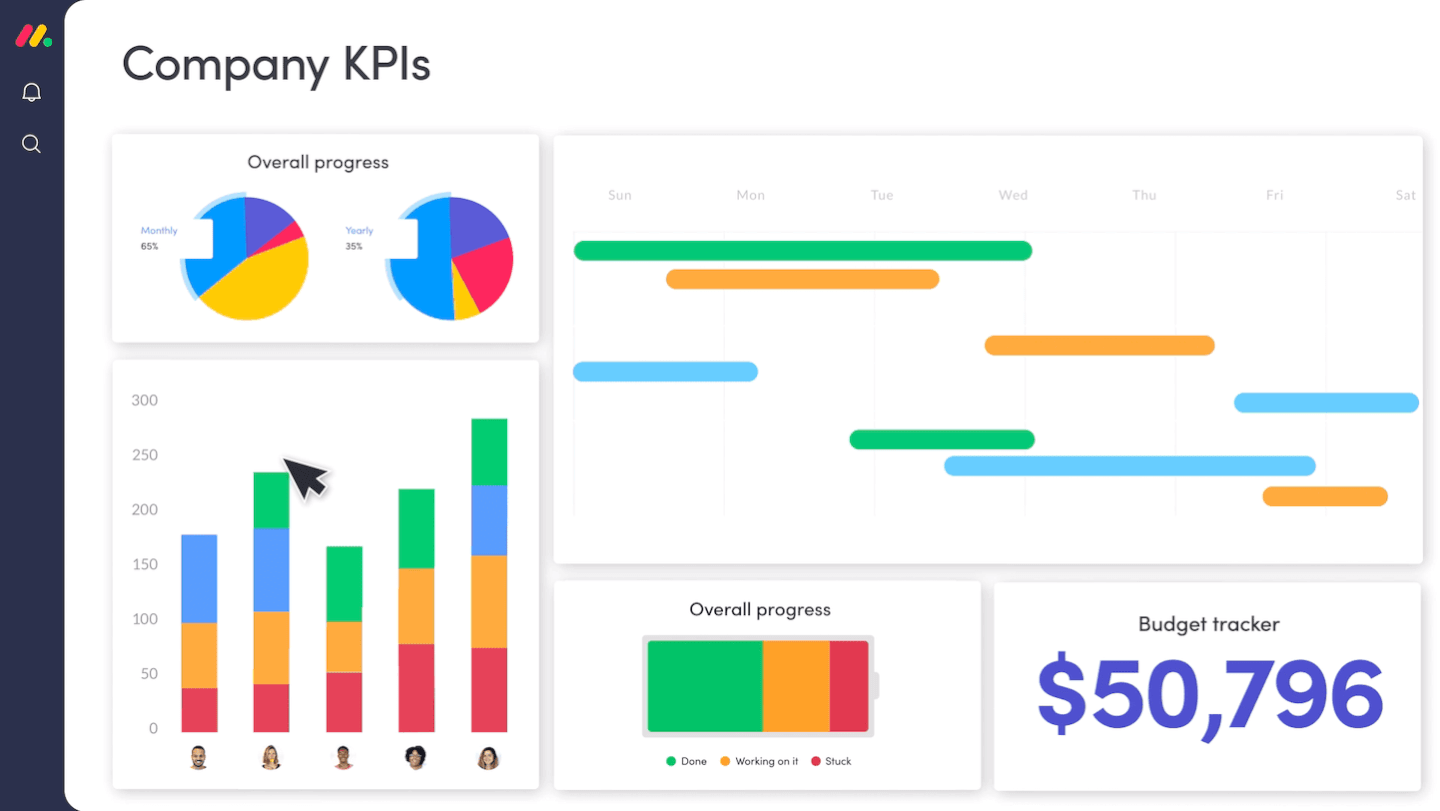
monday.com allows you to allocate & prioritize tasks, set task dependencies, use project views to see where everything stands, and track multiple projects using dashboards that provide high-level insights in a visual and intuitive way. The platform is completely customizable, so you can adjust it to your workflow. It also provides customizable notifications and automations so you and your team can focus on what’s important.
With monday.com you can plan, manage and track your budgets in an intuitive interface. Track expenses, income, their dates, and access file sharing features in each item. You can also filter items by many different variables such as: status, people, text, time, location and others. Formula columns are also available.
monday.com's standard plan costs from $8 per user per month and offers a free forever version that is still much better than using Excel. The company’s customer support is available 24/7 by phone or email, and they typically answer within 10 minutes.
monday.com's Criticism
monday.com is widely recognized for its intuitive design and versatility in project management, but it has also faced criticism for its pricing structure, which some users find to be less accessible for small businesses or startups. Here are 5 things that users typically criticize monday.com for:
- Complexity for new users: Despite its user-friendly interface, the platform can be overwhelming for new users. It requires a steep learning curve to be able to make the most of all its features.
- Pricing and subscription model: The tiered pricing model can quickly become expensive as teams grow, and essential features are often locked behind higher-priced plans.
- Limited customization: While monday.com offers a range of customization options, some users feel restricted by the inability to tailor the platform more closely to their specific workflows or industries.
- Performance issues: Users have reported occasional sluggishness, especially when working with large boards or a high volume of tasks.
- Integration limitations: Although monday.com integrates with many third-party apps, there are notable gaps or limitations in how these integrations function, which might lead to challenges in workflow continuity.
Why Look For A monday.com Alternative?
You might be looking for an alternative to monday.com if you:
- Want a cheaper alternative: Small businesses or team typically have lower budgets. Although monday.com isn’t the most expensive project management app out there, you can find better alternatives to suit your expense limits without giving up any of the features you want.
- Need to invoice your clients: monday.com doesn’t yet have a quoting and invoicing feature. Any type of billing or budgeting is also impossible unless you’re using boards as workarounds.
- Are looking to use advanced time tracking capabilities: Time tracking in monday.com is easy to use but besides attaching time spent to associated task list items, you can’t easily do much with the data. monday.com lacks timesheets, invoicing, and non-billable tracked hours.
How I Evaluate monday.com Alternatives
I look at every candidate through two lenses: core criteria a tool must meet—task management, automation, and reporting—and differentiators like sprint support, workload tools, and pricing.
Core Functionality (Table Stakes For This List)
When I'm selecting tools for my list, I rank each one on a scale from 0 (does not offer the functionality) to 5 (excels in this area) for each core functionality listed below. Then, I calculate the tool's total score into a percentage. Each tool needs to achieve a minimum total score of 75% to be considered for inclusion.
- Task & Project Management: I check whether a tool supports full task lifecycles—subtasks, dependencies, milestones, and assignees—so teams can map out a product launch or sprint from start to finish.
- Multiple Project Views: Each tool should offer at least Kanban, Gantt, calendar, and list views, since PMs often toggle between a timeline for stakeholder updates and a board for daily standups.
- Team Collaboration: I evaluate how well a platform handles threaded comments, @mentions, file sharing, and notifications—features that keep distributed teams aligned without bouncing to Slack or email.
- Workflow Automation: The tool should let you build no-code automations like auto-assigning tasks when a status changes or notifying a lead when a blocker is flagged, similar to what Asana and ClickUp offer.
- Custom Fields & Workflows: I look at whether you can tailor statuses, field types, and pipelines per project—for example, configuring a creative review workflow differently from an engineering bug triage.
- Reporting & Dashboards: A strong candidate provides real-time dashboards with widgets for progress, workload, and deadlines so you can pull a portfolio-level status report without exporting to a spreadsheet.
Once I have a list of tools that meet this criteria, I consider what sets each platform apart.
Differentiating Factors (What Sets Vendors Apart)
Here's how I compare and contrast different vendors:
Standout Features
Native time tracking is a big differentiator—teams billing clients or tracking utilization shouldn't need a separate tool just to log hours against tasks. I also evaluate resource and workload management features, since knowing who's overloaded before a sprint review beats finding out after a missed deadline. For Agile teams, I check whether a platform offers dedicated sprint planning, backlog grooming, and burndown charts rather than forcing you to approximate Scrum inside a generic board.
Beyond Features
Pricing structure matters a lot when switching from monday.com—I look at whether a platform charges per seat, enforces minimum seat requirements, or gates key features behind enterprise tiers. Integration depth is equally important; your PM tool needs to connect with Slack, GitHub, Jira, or whatever your team already relies on daily. I also consider how well a platform scales, since a 10-person startup and a 200-person org with multiple departments need very different permission models and workspace structures.
How To Choose an Alternative to monday.com
As you're shortlisting, trialing, and selecting alternatives to monday.com, consider the following:
- What problem are you trying to solve? Start by identifying the project management feature gap you're trying to fill to clarify the features and functionality the monday.com alternative needs to provide. Consider what monday.com offers and how other options differ in feature sets or functionality.
- Who will need to use it? To evaluate cost and requirements, consider who'll be using the software and how many licenses you'll need. You'll need to evaluate if it'll just be the project managers or whether your whole organization will require access. Consider whether to prioritize ease of use for all or speed for your power users.
- What other tools it needs to work with? Clarify what tools you're replacing, what tools are staying, and the tools you'll need to integrate with, such as accounting, CRM, or HR software. Decide whether to integrate everything together or replace multiple tools with one consolidated tool.
- What outcomes are important? Consider the result that the software needs to deliver to be considered a success, what capability you want to gain, what you want to improve, and how you will measure success. For example, an outcome could be the ability to get greater visibility into performance.
- How it would work within your organization? Consider the software selection alongside your workflows and delivery methodology. Evaluate what's working well and the areas that are causing issues. Remember every business is different—don’t assume that because a tool is popular that it'll work in your organization.
Trends in Project Management Software for 2025
Here are several trends I'm seeing in project management software this year.
- Remote work adaptability: Project management tools are being increasingly designed to support distributed teams. This includes features for asynchronous communication, remote task assignment, and tracking, as well as tools to foster team cohesion and collaboration across time zones.
- Better security measures: Project management tools are incorporating advanced security measures like end-to-end encryption, multi-factor authentication, and more rigorous access controls.
- Blockchain: Blockchain technology is beginning to be applied in project management for its potential to improve transparency, accountability, and security in project documentation, contracts, and transactions. This trend could revolutionize how project data and records are maintained and shared.
- Personalization and AI-driven Insights: Tools are increasingly leveraging AI to offer personalized project management experiences. This includes providing recommendations based on past behavior and predictive insights about project risks and opportunities. This trend aims to improve decision-making and strategic planning in project management.
Specific Trends Related to monday.com
- Custom workflows and automations: monday.com has introduced more advanced custom workflow and automation features, so users can tailor the software more precisely to their processes. This innovation addresses the need for flexibility and efficiency when managing complex projects.
- Expansion of templates library: The platform has significantly expanded its library of templates to respond to the demand for quick setup and deployment of project management frameworks. This feature supports the rapid initiation and standardization of new projects.
- Enhanced visualization tools: New visualization tools, including more customizable Gantt charts and dynamic project timelines, have been added. These improvements cater to the need for clear and comprehensive project planning and tracking.
What are monday.com Alternatives?
monday.com alternatives are software tools that offer more customization options, are more light-weight for smaller teams and simple projects, and have built-in quoting and invoicing for your projects that monday.com doesn't offer. They might also have more advanced time-tracking capabilities compared to monday.com, and come at a lower price point.
Alternatives to monday.com will include many of the standard project management and collaboration features typically included in this kind of software, such as resource utilization and allocation, project timeline tracking, and document sharing and management.
Features of Project Management Software
Here are the most crucial features to look for when selecting such a project management tool, monday.com or otherwise.
- Task management: This feature allows for the creation, assignment, and tracking of tasks. It helps teams stay organized and clear on their responsibilities and deadlines.
- Resource management: This helps you allocate and monitor resources, as well as prevent bottlenecks and make sure each aspect of the project is adequately resourced.
- Timeline tracking: This includes a visual representation of project timelines. It’s important for keeping projects on schedule and to provide stakeholders with a way to visualize progress and deadlines.
- Collaboration tools: These features facilitate communication and collaboration among team members. This helps make sure everyone is aligned and can contribute effectively to project goals.
- Document sharing and management: These features help with centralized sharing and management of project documents. It helps you maintain consistency of information and easy access to project materials.
- Reporting and analytics: The software should provide insights into project progress and performance metrics. This helps you make informed decisions and continuously improve your project management practices.
- Integration capabilities: This makes sure your software can integrate with other tools and systems, which is important for streamlining workflows and keeping your technology ecosystem cohesive.
- Customization options: This software should offer the ability to tailor the software to specific project needs. This flexibility is crucial for adapting the tool to support your unique project requirements and processes.
- User-friendly interface: The software should be easy to use for all team members. A simple and intuitive interface is important for making sure team members can effectively use the software without extensive training.
- Mobile accessibility: The tool should provide access via mobile devices so your team members can stay updated and contribute to projects anytime, anywhere.
Benefits of monday.com Alternatives
Here are five benefits of implementing an alternative to monday.com:
- Improved customization: Users and businesses can tailor the software to fit their specific processes and workflows, which means improved productivity and satisfaction.
- Superior integration with industry-specific tools: If you're operating within niche markets, this advantage makes sure your project management software works hand in hand with specialized tools. You'll improve efficiency and reduce manual work.
- More affordable pricing structures: Other tools might offer more cost-effective solutions. This is important for small businesses and startups, as it allows you to access project management capabilities without straining your budget.
- Advanced security features: You'll get better data protection. If you're concerned with intellectual property and data privacy, a different tool might offer more peace of mind or better secure your sensitive project information against unauthorized access or breaches.
- Diverse reporting and analytics: You'll be able to make data-driven decisions, identify trends, and improve project outcomes through detailed analytics and customized reports.
Costs & Pricing for monday.com Alternatives
Here, I've outlined the general plan options for project management software alongside monday.com's specific plans and pricing. This comparison should help you understand what each plan typically includes and how monday.com aligns with these standards.
| Plan Type | Average Price | Common Features | monday .com Plan | monday .com Pricing | monday .com Specific Features |
|---|---|---|---|---|---|
| Free | $0 | Task management, limited projects, basic collaboration tools, limited storage | Individual | $0 | Up to 2 users, 500MB storage, unlimited boards |
| Basic | $10-15 per user/month | Task management, unlimited projects, integrations, some reporting, increased storage | Basic | $8 per user/month | Unlimited users, 5GB storage, 24/7 support |
| Standard | $20-25 per user/month | Full project planning, advanced reporting, team collaboration tools, more integrations, increased storage | Standard | $10 per user/month | Timeline & Gantt views, guest access, automation & integrations, 20GB storage |
| Premium | $30-35 per user/month | Resource management, time tracking, risk analysis, premium support, advanced customization | Pro | $16 per user/month | Private boards & docs, time tracking, chart view, formula column, 100GB storage |
| Enterprise | Custom Pricing | Advanced security, tailored onboarding, dedicated account management, custom integrations, unlimited storage | Enterprise | Custom Pricing | Enterprise-grade security & compliance, advanced reporting, multi-level permissions, unlimited storage |