

10 Best Freelance Project Management Software For 2026

10 Best Freelance Project Management Software Shortlist


Managing projects as a freelancer means juggling multiple clients, deadlines, and workflows—often without the support of a full project management team. However, this becomes less overwhelming with freelance project management software. These tools help you streamline task management, client collaboration, and invoicing so you can focus on delivering great work instead of chasing down details. But with so many options available, how do you choose the right one?
I’ve tested a variety of tools to identify the best solutions for freelancers, ensuring they offer essential features like time tracking, task automation, and seamless communication.
Why Trust Our Software Recommendations
Our team has been testing and reviewing software since 2012. As project managers ourselves, we know how difficult—and important—it is to choose the right software.
For this guide, we evaluated tools using hands-on testing and independent research, scoring tools using our selection criteria. We also draw on insights from industry thought leaders and practicing project management experts.
Our reviews reflect our human editorial judgment, not a sales pitch.
Expert reviewers:
Freelance Project Management Software Comparison Table
Here is a table where you can compare the tools we just covered in the overviews.
| Tool | Best For | Trial Info | Price | ||
|---|---|---|---|---|---|
| 1 | Best for small teams with a limited budget | 15-day free trial + free plan + free demo available | From $4/user/month (billed annually) | Website | |
| 2 | Best for customizable project views | Free plan + free demo available | From $9/user/month (billed annually) | Website | |
| 3 | Best for client work with built-in billing | Free plan + 14-day free trial + free demo available | From $9.99/user/month (billed annually) | Website | |
| 4 | Best for freelancers managing client work end-to-end | Free demo + 7-day free trial | From $9/user/month (billed annually) | Website | |
| 5 | Best for businesses seeking features on a tight budget | 14-day free trial + free demo available | From $3.5/user/month (billed annually) | Website | |
| 6 | Best for freelancers billing clients from tracked time | 7-day free trial | From $19/month | Website | |
| 7 | Best for freelancers managing proposals to payment | Free demo + 14-day free trial available | From $10/month (billed annually) | Website | |
| 8 | Best for growing from solo to small agency | Free plan available; 15-day free trial | From $9.9/month | Website | |
| 9 | Best for agency-scale financial tracking | 14-day free trial + free demo available | From $10/user/month (billed annually) | Website | |
| 10 | Best for quote-to-invoice project billing | 14-day free trial | From $19.90/user/month (billed annually) | Website |


Overviews Of The 10 Best Freelance Project Management Software
Below, I review the best freelance project management software. I’ve included screenshots, standout features, integrations, information on pricing and trials, and the pros and cons of each.

Best for small teams with a limited budget

Zoho Projects is a project management platform that enables project managers to organize and budget their projects. This includes creating tasks, assigning them to team members, estimating costs, and tracking progress.
Why I picked Zoho Projects: Zoho Projects is one of the top-notch simple project management software that streamlines upcoming work and tasks. It provides all the essential tools for project management, such as Gantt charts, resource management tools, and timesheets at an affordable cost.
Zoho Projects is easy to use, but it may take a while to understand all its features fully. I found this platform to be an ideal choice for small teams with limited funds.
Zoho Projects Standout Features and Integrations
Standout features include time-tracking, Gantt charts for visualizing data, file management systems, and extensive integration capabilities. Zoho project stood out as one of the simple and easy-to-use platforms to organize tasks and projects with a single click.
Integrations include Google Calendar, Google Tasks, Google Spreadsheets, Google Drive, Microsoft Excel, OneDrive, Outlook Calendar, Office 365, Microsoft Teams, Dropbox, and Slack. There is also an integration with Zapier that you can use to connect to thousands of additional applications (at an additional cost).
Pros and Cons
Pros:
- Task and project tracking is effective.
- Billing and time-tracking capabilities are great functionalities
- The pricing is reasonable and convenient
Cons:
- The functionality of the dashboard lacks quality
- Searching for tasks requires improvement
New Product Updates from Zoho Projects
Zoho Projects Adds CodeX Scripts for Custom Modules
Zoho Projects now supports CodeX Scripts for custom modules, enabling conditional logic and rules for creating, updating, and deleting records. For more information, visit Zoho Projects' official site.
 .
.
ClickUp
Best for customizable project views

ClickUp is a comprehensive productivity platform designed to enhance team efficiency and collaboration by consolidating tasks, documents, and project management into a single application.
Why I picked ClickUp: One of the most significant advantages of ClickUp is its customizable project views, which include list, Kanban, table, and Gantt chart views. These views allow freelancers to visualize their work in the most effective way for their specific needs. For instance, the Gantt Chart view is particularly useful for scheduling tasks, tracking project progress, and managing deadlines. I also like that ClickUp allows users to automate repetitive tasks such as task creation, status updates, and priority adjustments.
ClickUp Standout Features and Integrations
Standout features include customizable dashboards that provide a powerful tool for visualizing project progress and key metrics, aiding in better tracking and reporting. Additionally, ClickUp's real-time document collaboration feature allows teams to draft plans and share knowledge.
Integrations include Slack, GitHub, GitLab, Webhooks, HubSpot, Everhour, Toggl, Harvest, Google Drive, OneDrive, Dropbox, Outlook, Google Calendar, Google, Microsoft, Okta, Figma, Vimeo, and YouTube.
Pros and Cons
Pros:
- Good collaboration tools
- Comprehensive project management features
- Highly customizable platform
Cons:
- The hierarchy of spaces, folders, lists, and tasks can be confusing
- Extensive features may be overwhelming
New Product Updates from ClickUp
ClickUp Adds Meetings Hub, Super Agent Templates, and ZoomInfo Integration
ClickUp adds a searchable Meetings Hub, new ways to clone and template Super Agents, and a ZoomInfo integration through the App Center. These updates improve meeting retrieval, agent reuse, and access to sales intelligence. For more information, visit ClickUp’s official site.
Best for client work with built-in billing
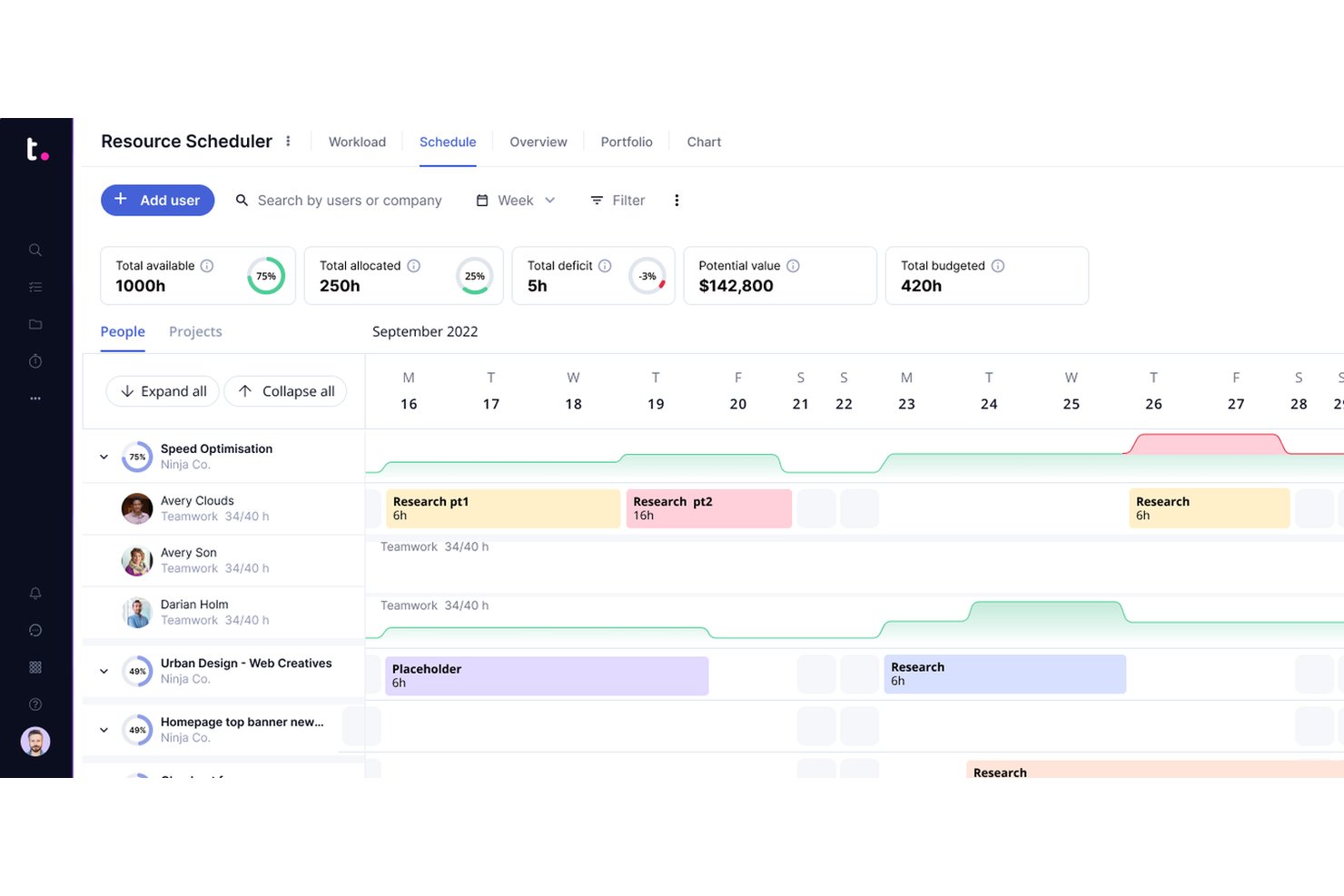
Teamwork.com is a client work management platform that combines project organization, time tracking, invoicing, budget management, and client collaboration tools.
Who Is Teamwork.com Best For?
Teamwork.com is a strong fit for small agencies and client-facing teams that need to track billable hours, manage multiple client projects, and generate invoices from logged time—all in one place.
Why I Picked Teamwork.com
I picked Teamwork.com as one of the best because it's purpose-built for client work, with billing baked directly into the project layer. I love that you can log billable hours against specific tasks, then build an invoice from those exact time entries without ever leaving the platform. The Proofs feature is also genuinely useful: clients can review deliverables, leave feedback, and sign off on revisions in a structured approval workflow that keeps everything on the project record.
Teamwork.com Key Features
- Workload and capacity planning: View your team's workload across projects and reassign tasks to manage bottlenecks before they affect delivery.
- Automation builder: Set up trigger-based automations to move tasks through workflow stages, send notifications, or create follow-up tasks automatically.
- Project templates: Save existing projects as reusable templates so you can spin up new client engagements with consistent structure.
- Resource forecasting: Plan and allocate resources to upcoming projects, including tentative work, before deals are confirmed.
Teamwork.com Integrations
Teamwork.com offers 150+ integrations, including Slack, Harvest, Xero, QuickBooks, FreshBooks, Google Drive, Dropbox, HubSpot, and Zapier. An API and webhooks support custom integrations.
Pros and Cons
Pros:
- Budget reports reveal project profitability
- Client proofs keep approvals with deliverables
- Billable time ties directly to client projects
Cons:
- Invoices lack integrated online payment collection
- Paid plans require multiple seats

Bonsai
Best for freelancers managing client work end-to-end

Bonsai is a robust tool used by over 500,000 freelancers and agencies. It is an all-inclusive workflow management solution that enables self-employed people to monitor clients, create invoices, receive payments, and handle tax-related matters.
Why I picked Bonsai: This tool has user-friendly time tracking and workflow features that streamline and automate business operations. It is particularly best for freelancers and small agencies to help them create and manage their businesses.
For me, I found this tool so easy to use and might save a lot of time when managing invoices. Using this tool definitely makes it easier to focus on projects.
Bonsai Standout Features and Integrations
Standout features that make this platform stand out from competitors include CRM features, which help track leads and existing clients. In the client's menu, add your contacts and tag them as clients or leads. You can also easily track their progress in your workflow.
Integrations include ClickUp, Gmail, Google Sheets, Google Drive, Trello, QuickBooks Online, Google Calendar, Slack, HubSpot CRM, Xero, and more. Additionally, you can access thousands of apps using a paid subscription with Zapier. And if you are interested in building custom integrations, it has an API available for it too.
Pros and Cons
Pros:
- Multiple payment and payout alternatives
- Use client portals to provide user-friendly interfaces for clients
- Easily handle projects and tasks
- Create and send professional proposals and invoices to potential clients
Cons:
- Automated expense tracking limited to US and Canada
- Payment options depend on the location
- Limited only in the English language

ActiveCollab is an integrated project management software that automates busy work and helps you arrange your work into tasks and subtasks, establish priorities, and work together with your team and clients in real-time.
Why I picked ActiveCollab: I picked ActiveCollab for its extensive features and easy-to-use interface. It provides the flexibility to create unlimited projects, enabling freelancers to handle multiple projects simultaneously, regardless of the number of clients.
In addition, this tool provides robust task management capabilities where freelancers can create tasks, assign them to team members or clients, set due dates, and track progress. One thing I like most about this platform is the quality of service versus the cost. I found it to be one of the best on the market for its easy-to-use and time-tracking features.
ActiveCollab Standout Features and Integrations
Standout features include tracking time, generating reports, in-app chat, task dependencies management, automatic rescheduling, supporting real-time communication, and file-sharing. For me, what stood out from this platform is the appealing user-interface features that minimize distractions and enable efficient work.
Integrations include tools like TrackingTime, QuickBooks, Online Advanced, TimeCamp, Google Drive, Hubstaff, Xero, Paypal, Basecamp, and Asana. You can also access more apps via Zapier, but it will require a paid subscription.
Pros and Cons
Pros:
- Enable users to assign tasks for easy filtering and organization
- Users can upload files to tasks and share relevant documents
- Allows users to receive notifications whenever someone comments on tasks
Cons:
- Tasks cannot have their own hours and deadlines
- Staff members cannot work part-time

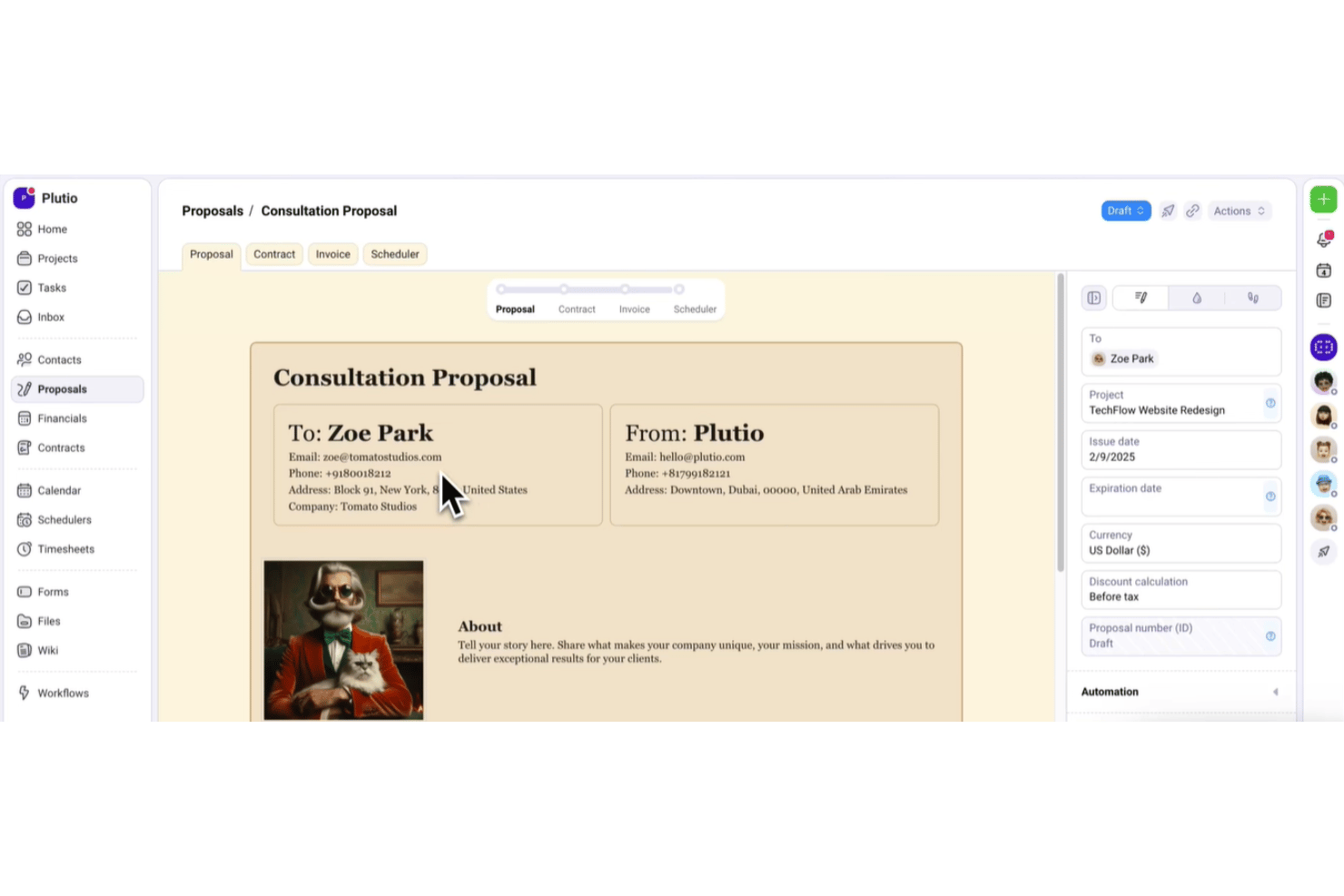
Plutio is an all-in-one freelance business management platform that brings together project management, task tracking, time tracking, client portals, proposals, contracts, and invoicing in a single workspace.
Who Is Plutio Best For?
Plutio suits independent freelancers and solo consultants who need to track billable hours across multiple clients and turn that time directly into client invoices.
Why I Picked Plutio
I picked Plutio as one of the best because it closes the loop between working and getting paid in a way few tools actually do. You start a timer on a task, mark the hours as billable, and when the project wraps, those entries convert directly into invoice line items, complete with task descriptions and your preset billing rate. I also like that you can set different rates by client or project, so if you're juggling a retainer at one rate and a one-off engagement at another, Plutio keeps them separate without manual math.
Plutio Key Features
- Client portal access: Clients can view shared projects, tasks, files, and linked invoices or proposals through a branded portal without needing a Plutio subscription.
- Proposal builder: A drag-and-drop editor lets you create proposals with optional or required items, packages, and electronic signatures.
- No-code automation builder: Visual workflows connect triggers and actions across projects, proposals, invoices, and forms to automate repetitive steps.
- Recurring task scheduling: Tasks can repeat on daily, weekly, monthly, or custom intervals, with details and subtasks carried forward automatically.
Plutio Integrations
Plutio offers 10 documented native integrations, including Stripe, PayPal, Square, Xero, Outlook, Zoom, and Google Meet. It also supports a REST API with OAuth and webhooks, plus 5,000+ apps through Zapier.
Pros and Cons
Pros:
- Shared portals keep client work visible
- Separate boards organize concurrent client projects
- Billable hours flow into invoice line items
Cons:
- Profitability reporting lacks budget-versus-actual analysis
- Automation falls short for complex workflows

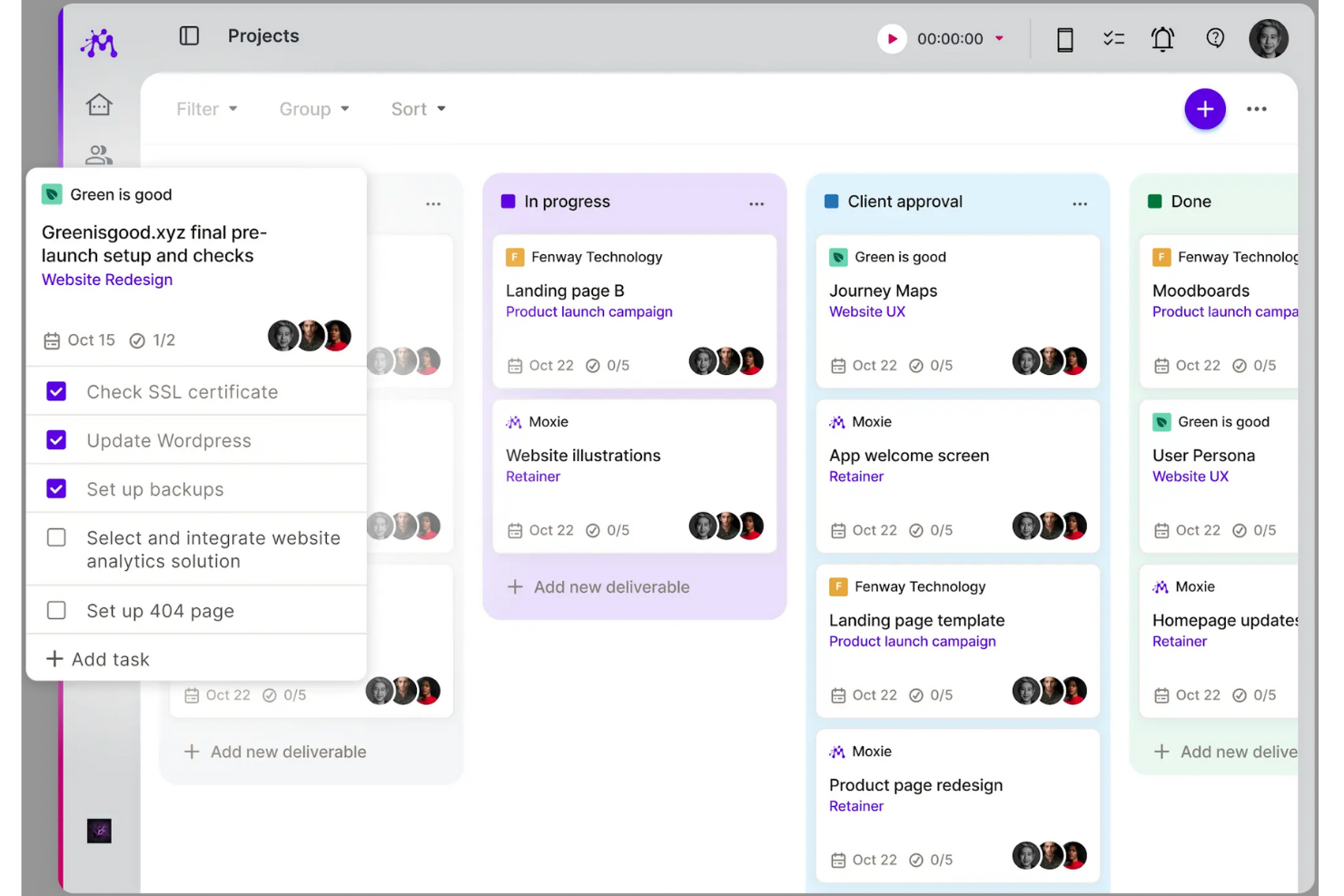
Moxie is a customizable personal app curated to streamline workflow and boost productivity. It offers features such as task creation, task assignment, and time tracking.
Why I picked Moxie: By using this platform, freelancers can simplify their workflow and be more productive. It enables you to organize all your work in a central location. With this software, I could merge multiple web browser windows with multiple user accounts and apps into one window with one account. This allows me to manage my business more effectively.
Moxie Standout Features and Integrations
Standout features include project management, client management, time tracking, invoicing, and customizable apps. These features are user-friendly and suitable for both new and experienced freelancers.
Integrations include FreeAgent, Trello, Asana, Basecamp, Slack, Microsoft Teams, Google Calendar and more. These integrations enable you to manage all aspects of your business on a single platform.
Pros and Cons
Pros:
- Easy to use and navigate
- Offers affordable pricing
- It combines all you need in one location
Cons:
- It doesn’t go too deep into some features it supports
- Various features may be ''too simple'' for some users
Paymo
Best for growing from solo to small agency
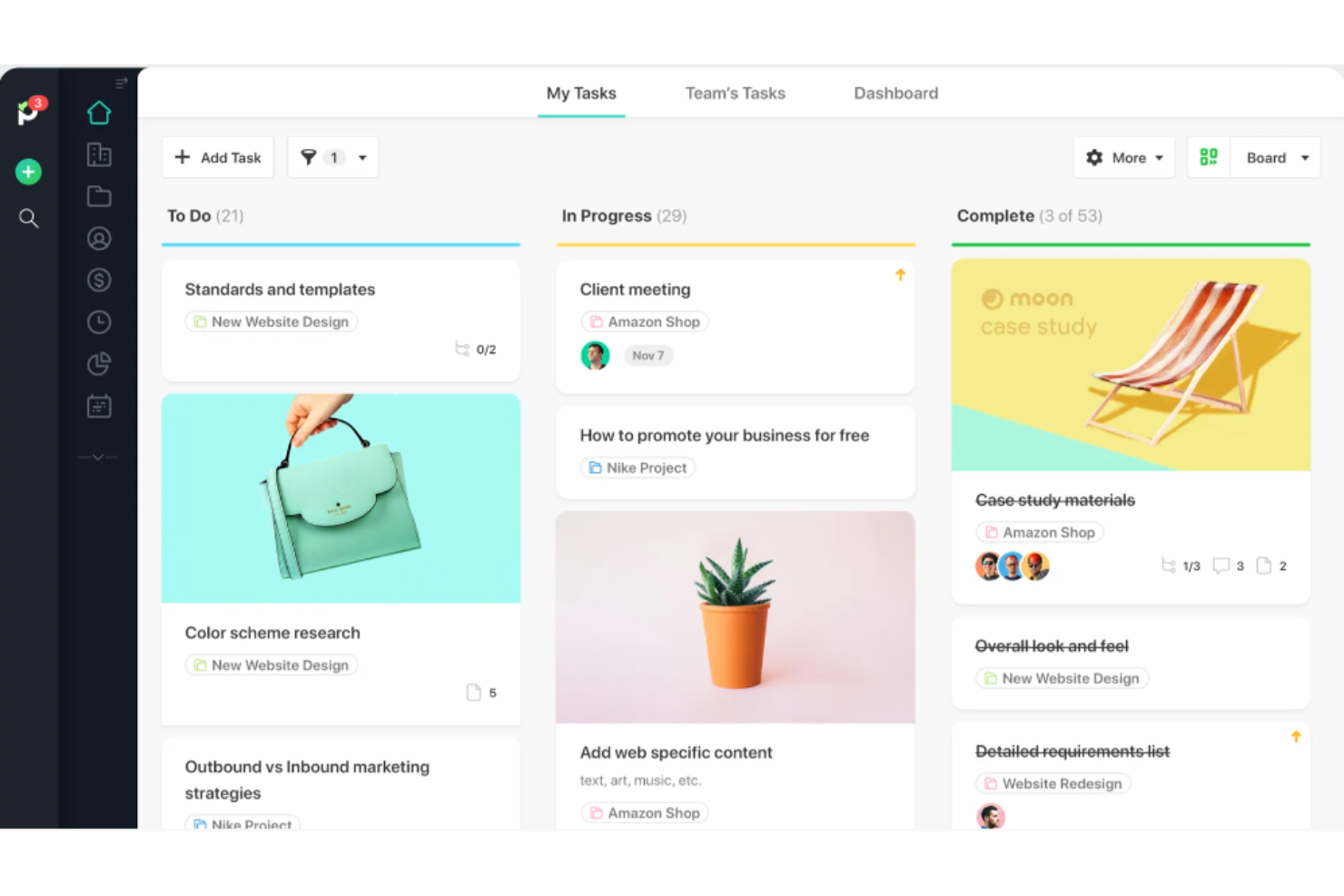
Paymo is a software for managing projects that provides a comprehensive solution for the entire project life cycle, from start to finish.
Why I picked Paymo: I chose Paymo because it's easy to use and can be customized, making it a cost-effective option for freelancers aiming to improve workflows and increase profits. What stood out for me was its customization capability that allows you to simplify workflow and improve organization. You don't need to separate apps for different project management tasks.
Paymo Standout Features and Integrations
Standout features include task project management, time tracking, resource management, invoicing, online payments, customization, and integration. Paymo stands out for its scalable solution, which accommodates the growth of businesses and adapts to their changing needs.
Integrations include Google, Google Calendar, Xero, Slack, JotForm, Typeform, Pomodone, and more. You can access thousands of additional apps via Zapier (requires paid subscription).
Pros and Cons
Pros:
- Offers robust task management capabilities
- Provides a web and desktop timer that lets users track time spent on tasks
- Team members collaborate in real-time, share files, and communicate effectively
Cons:
- Tedious learning curve
- Limited customization

Best for agency-scale financial tracking
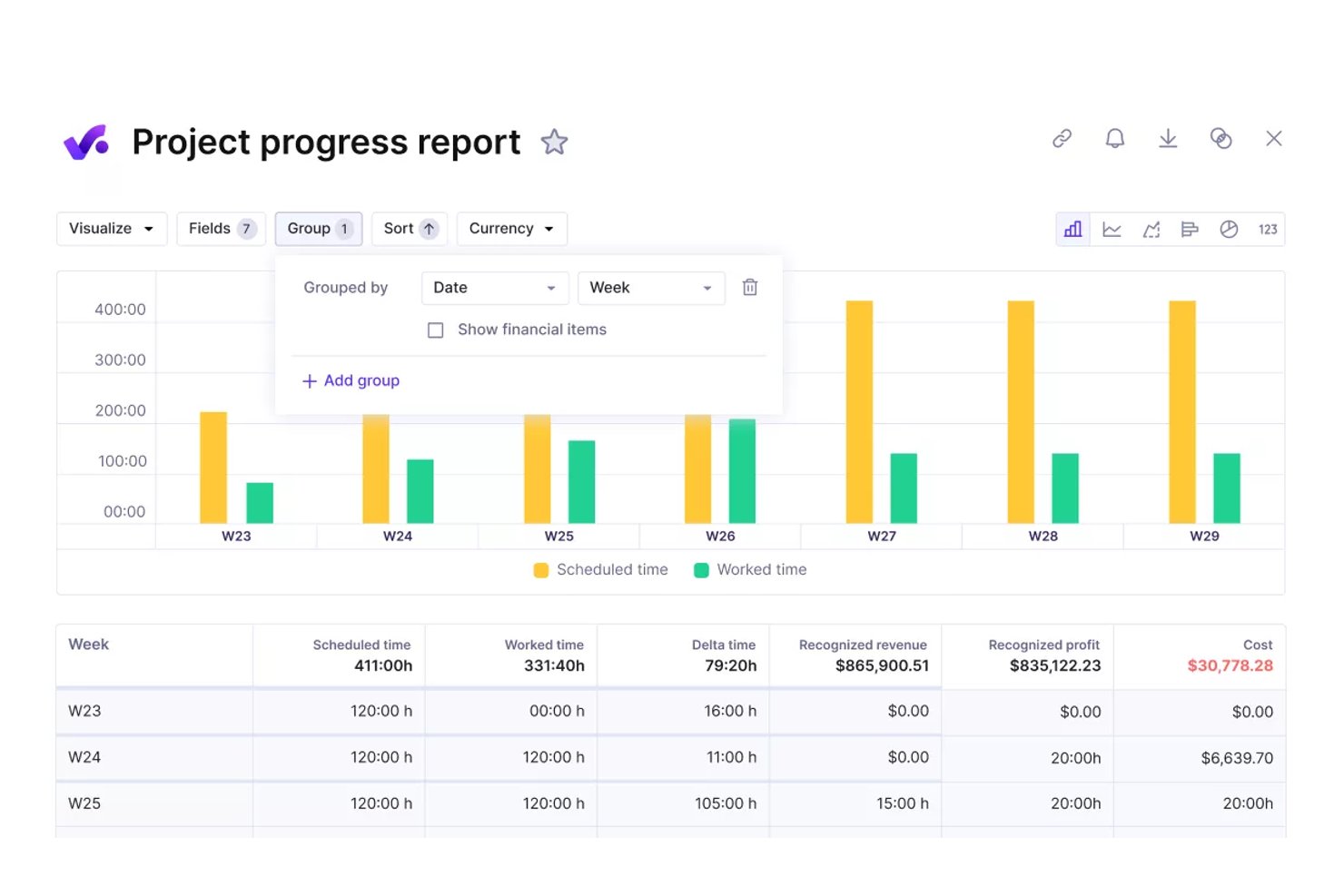
Productive is an all-in-one agency operations platform that brings together project management, time tracking, budgeting, invoicing, resource planning, and financial reporting for client-based work.
Who Is Productive Best For?
Productive is a strong fit for small agencies and consultancies that need to connect project delivery, team resourcing, and client finances in one place.
Why I Picked Productive
I picked Productive as one of the best because its financial tracking runs deeper than most tools in this category. Budget and profitability charts pull together actual time, scheduled bookings, revenue, and profit in a single view, so I can see at a glance whether a client engagement is on track financially. I also like that milestone invoicing lets me set up multiple future-dated draft invoices tied to specific budget phases, which keeps billing organized across longer projects.
Productive Key Features
- Resource planning: View team availability, schedule bookings by person or project, and manage utilization across active client engagements.
- CRM with deal-to-project conversion: Track client deals through a sales pipeline and convert won deals directly into projects or budgets.
- Project templates: Build reusable templates with tasks, docs, dependencies, and custom fields to spin up repeat client projects quickly.
- Timesheet approvals: Submit, review, and approve time entries before they're applied to budgets or invoices.
Productive Integrations
Productive offers native integrations with Jira, QuickBooks, Xero, Google Calendar, Slack, HubSpot, Microsoft Outlook, and Office 365. It also provides an Open API, webhooks, and integrations via Zapier.
Pros and Cons
Pros:
- Reuses project templates with tasks and dependencies
- Forecasts project profitability against scheduled work
- Connects billable hours directly to client budgets
Cons:
- Task bulk editing can require extra steps
- Agency workflows can feel oversized for solo freelancers
New Product Updates from Productive
Productive Adds Voice Dictation, Slack Connector, Proposals, and Overtime
Productive adds voice dictation, a Slack Connector, proposal controls, and overtime tracking. These updates support faster AI interactions, client proposals, and time management. For more information, visit Productive’s official site.
Scoro
Best for quote-to-invoice project billing

Scoro is an all-in-one business management software designed to help professional service businesses enhance their operations. It combines project management, resource planning, sales, billing, and reporting into a single platform.
Why I picked Scoro: One of the reasons I chose Scoro is its robust project management capabilities. With Scoro, you can manage your entire project lifecycle—from estimating scope and planning projects to tracking results and issuing invoices—all within one platform. This end-to-end management ensures that nothing falls through the cracks and that you maintain control over every aspect of your projects. It also allows you to plan and forecast your resources effectively, helping you know when to bring in more work and spot resource shortages before they happen.
Scoro Standout Features and Integrations
Standout features include comprehensive reporting and dashboards that provide actionable insights into your business performance. Additionally, Scoro's time-tracking capabilities allow you to monitor both billable and non-billable hours in detail, ensuring accurate billing and accountability.
Integrations include Gmail, Google Calendar, Microsoft Exchange, QuickBooks, Xero, Stripe, PayPal, Jira, Asana, HubSpot, Salesforce, Dropbox, and Zapier.
Pros and Cons
Pros:
- Robust reporting and analytics
- Good resource planning and utilization management
- Comprehensive project management features
Cons:
- Some time tracking features are limited to higher-tier plans
- Mobile app could be improved
New Product Updates from Scoro

Scoro Adds Time Mobile App and ELI Improvements
Scoro adds the Scoro Time mobile app for iOS/Android to track time anywhere and expands ELI with attachments, smarter filtering, and trigger-based actions. For more information, visit Scoro's official site.
Other Freelance Project Management Software Options
Here are a few more alternatives that did not make it to my top shortlist but are worth your consideration:
- Hive
For freelancing teams managing multiple clients
- GoodDay
For workload and capacity planning
- Wrike
For client management and project organization
- MeisterTask
For Kanban-based task and deadline tracking
- 17hats
For solo service businesses with client portals
- Indy
For freelance contracts and client sign-off
- Worksuite
For a complete freelancer management solution
- Project.co
For client-facing project collaboration
- HoneyBook
For all-in-one client management solution
- Dubsado
For collecting client payments on projects


How I Evaluate Free Freelance Project Management Software
First, I define what counts as free. For project management software built around freelance client work, that means a free-forever plan—not a trial—since a freelancer managing five ongoing clients can't rely on a tool that expires. From there, I weigh the core functionality every contender must have against the differentiators that make one tool a better fit than another.
Core Functionality (Table Stakes For This List)
In addition to my free offer requirements, I also use a scoring system to select tools for my list. Here's how it works:
I rank each one on a scale from 0 (does not offer the functionality) to 5 (excels in this area) for each core functionality listed below. Then, I calculate the tool's total score into a percentage. Each tool needs to achieve a minimum total score of 65% to be considered for inclusion.
- Task & Project Management: I look for the ability to create tasks with due dates, statuses, and priorities—enough structure to manage a client deliverable pipeline from brief to final handoff.
- Multi-Project Handling: Freelancers juggle several clients at once, so I check whether the free plan allows enough separate projects to reflect a real workload.
- Time Tracking: Built-in timers or manual time logs tied to tasks matter here. Tools like Toggl Track and Clockify handle this well, and I evaluate whether PM tools match that standard.
- Client Collaboration & Sharing: I evaluate whether freelancers can invite clients as guests to view progress, comment on tasks, or approve deliverables without creating a full paid seat.
- Multiple Project Views: A kanban board alone won't cut it for every workflow. I look for at least two views on the free tier, such as list plus calendar or kanban plus timeline.
- File Attachments & Storage: Attaching contracts, mockups, or brand assets directly to tasks keeps projects organized. I check whether storage limits on free plans are practical for real file sizes.
Once I have a list of tools that meet the criteria, I consider what sets each platform apart.
Differentiating Factors (What Sets Vendors Apart)
Here's how I compare and contrast different vendors:
Standout Features
Recurring task automation and project templates save real time when you're onboarding similar client engagements month after month. I also look for a personal dashboard that pulls tasks from every active project into one prioritized view—when you're your own project manager, that single-pane overview drives your daily workflow. Built-in invoicing tied to logged hours is another differentiator, since it keeps freelancers from toggling between their PM tool and a separate billing app.
Beyond Features
Free plan scalability matters—I check how many projects, guests, and storage a tool allows before hitting a paywall, since a cap of two projects won't serve a freelancer with five active clients. Integration support is equally important; I look for native connections to tools like Google Calendar, Dropbox, or QuickBooks that freelancers already rely on. I also evaluate how quickly someone can get up and running, favoring tools with freelance-ready templates and self-serve onboarding over platforms that require lengthy configuration.
How to Choose Freelance Project Management Software
It’s easy to get bogged down in long feature lists and complex pricing structures. To help you stay focused as you work through your unique software selection process, here’s a checklist of factors to keep in mind:
| Factor | What to Consider |
|---|---|
| Scalability | Ensure the tool can grow with your business. If you plan to expand your freelance work or take on bigger projects, check if the software supports larger workloads. |
| Integrations | Look for software that connects with tools you already use, like Google Drive, Slack, or Trello. Seamless integration can save you time and keep your workflow smooth. |
| Customizability | Choose a tool that allows you to tailor workflows and dashboards to fit your specific needs. This flexibility can enhance productivity and project management. |
| Ease of Use | Opt for a user-friendly interface that doesn’t require extensive training. This is crucial if you need to get up and running quickly without a steep learning curve. |
| Budget | Consider your financial constraints. Look for software that offers the features you need at a price you can afford, and check for any hidden costs or fees. |
| Security Safeguards | Protect your client data by selecting software with strong security measures like encryption and regular updates. This is essential for maintaining trust. |
| Support | Reliable customer support can make a big difference. Look for providers that offer 24/7 assistance, live chat, or comprehensive help documentation. |
| Mobile Access | If you work on-the-go, ensure the software has a mobile app or responsive design so you can manage projects from anywhere. |
Honestly, it's a lot to digest—and there's a lot of pressure to get it right so I'd suggest using our project management software advisory service to help you shortlist project manager tools that'll be a good fit for you and your organization's specific needs.
Trends in Freelance Project Management Software
In my research, I sourced countless product updates, press releases, and release logs from different freelance project management software vendors. Here are some of the emerging trends I’m keeping an eye on:
- AI-Driven Insights: AI is being used to analyze project data and provide actionable insights. This helps freelancers make informed decisions quickly, optimizing project workflows. Some vendors are integrating AI to predict project risks and suggest mitigation strategies.
- Remote Collaboration Tools: As remote work becomes the norm, tools that facilitate virtual collaboration are gaining traction. Features like virtual whiteboards and real-time chat are being enhanced to support freelancers working with global clients.
- Sustainability Features: Vendors are adding features that help track and reduce the environmental impact of projects. This includes tracking carbon footprints and promoting sustainable practices, appealing to eco-conscious freelancers.
- Enhanced Security Protocols: With data privacy concerns on the rise, software vendors are focusing on strengthening security measures. Features like end-to-end encryption and multi-factor authentication are becoming standard to protect sensitive client information.
- Custom Workflow Builders: More tools are offering drag-and-drop workflow builders, allowing freelancers to create custom project pipelines. This flexibility helps tailor the software to specific project needs and enhances overall productivity.
What Is Freelance Project Management Software?
Freelance project management software is an online freelance tool with features designed to streamline and optimize the work of freelancers working on multiple independent projects. With project management tools for freelancers, you can organize and track tasks, collaborate with clients and team members, set deadlines, and monitor project progress.
Freelance project management software features include task management, communication tools, file sharing, time tracking, and reporting capabilities. These features streamline project workflows, improve productivity, and ensure effective project delivery.
Features of Freelance Project Management Software
When selecting freelance project management software, keep an eye out for the following key features:
- Task management - Effective task management capabilities allow you to break projects into smaller, manageable tasks. You can create to-do lists, set priorities, assign due dates, and track progress, ensuring that no deadlines or deliverables slip through the cracks. Advanced features may include task dependencies, recurring tasks, and automation to streamline workflow.
- Time tracking - Integrated time tracking tools help you log billable and non-billable hours accurately. This feature ensures transparency in client billing, allows for better time allocation, and provides insights into productivity. Some tools also offer automated timers and timesheet exports to simplify invoicing.
- Client communication - A centralized communication system eliminates scattered email threads and missed messages. Look for software that provides direct messaging, discussion threads, and real-time collaboration features. This helps maintain clear and organized communication with clients, ensuring expectations are aligned throughout the project.
- File sharing - You often handle multiple documents, contracts, and creative assets. A secure file-sharing feature ensures all project-related files are stored in one accessible location. Version control, cloud storage integration, and permission settings can enhance collaboration while keeping sensitive data protected.
- Project scheduling - A visual scheduling interface, such as Gantt charts or calendar views, helps you plan projects efficiently. This feature enables deadline tracking, milestone setting, and workload balancing, ensuring projects stay on schedule and resources are allocated effectively.
- Customizable workflows - Every freelancer has a unique way of managing projects. Customizable workflows allow you to adapt the software to your specific needs by setting up automation, personalized task statuses, and workflow templates. This flexibility helps improve efficiency and reduces manual work.
- Invoicing - Billing clients efficiently is a crucial part of freelancing. Built-in invoicing tools simplify the process by allowing you to generate invoices, track payments, and even set up recurring billing. Some systems integrate with accounting software or offer expense tracking for complete financial management. There are also cost management software that help you manage your budgets efficiently.
- Reporting tools - Having access to analytics and reports helps you assess your performance and project progress. These tools provide insights on time spent, task completion rates, profitability, and workload distribution. Customizable dashboards can offer real-time updates to help with strategic decision-making.
- Collaboration tools - For freelancers who work with subcontractors or clients who require direct access to projects, collaboration features are essential. These may include shared workspaces, real-time editing, commenting, and team task assignments, ensuring seamless teamwork and feedback loops.
- Security safeguards - Handling client data requires robust security measures. Look for software that offers data encryption, role-based permissions, multi-factor authentication, and secure cloud storage to protect sensitive information from unauthorized access.
Choosing the right freelance project management software ensures you can efficiently manage tasks, track time, communicate with clients, and streamline your workflow—all while keeping your projects on schedule and finances in order. By selecting a tool with the right mix of features, you can stay organized, improve productivity, and deliver high-quality work with confidence.
Benefits of Freelance Project Management Software
Implementing freelance project management software provides several benefits for your team and your business. Here are a few you can look forward to:
- Improved Organization: Task management tools ensure that all assignments, deadlines, and responsibilities are clearly structured, while integrated file-sharing systems keep important documents accessible and well-organized. This minimizes lost files, overlooked tasks, and unnecessary back-and-forth communication.
- Enhanced Productivity: Time tracking, scheduling, and workflow automation help freelancers manage their workload efficiently. By visualizing deadlines and monitoring time spent on tasks, you can prioritize effectively, minimize distractions, and optimize your daily workflow.
- Better Client Relationships: A centralized communication system streamlines client interactions by consolidating feedback, discussions, and updates in one place. This reduces misunderstandings, keeps clients informed, and fosters transparency—leading to stronger, more trusting professional relationships.
- Accurate Billing: Integrated invoicing and time-tracking features help freelancers track billable hours precisely and generate invoices seamlessly. This reduces disputes over payments, improves cash flow, and ensures that every hour worked is accounted for.
- Data-Driven Decisions: Reporting and analytics tools provide valuable insights into project progress, resource allocation, and profitability. By analyzing key performance indicators (KPIs), you can identify areas for improvement, optimize your processes, and make informed business decisions.
- Increased Flexibility: Customizable workflows allow freelancers to tailor the software to their specific needs, whether they follow Agile methodologies, manage multiple clients, or handle diverse project types. This adaptability enhances efficiency by streamlining processes that align with your unique working style.
- Secure Data Management: With sensitive client data at stake, robust security features—such as encryption, role-based access controls, and multi-factor authentication—help safeguard critical information. This ensures compliance with data protection standards and builds client trust in your professionalism.
Costs and Pricing of Freelance Project Management Software
Selecting freelance project management software requires an understanding of the various pricing models and plans available. Costs vary based on features, team size, add-ons, and more. The table below summarizes common plans, their average prices, and typical features included in freelance project management software solutions:
Plan Comparison Table for Freelance Project Management Software
| Plan Type | Average Price | Common Features |
|---|---|---|
| Free Plan | $0 | Basic task management, limited storage, and basic collaboration tools. |
| Personal Plan | $5-$15/user/month | Task management, time tracking, file sharing, and basic reporting. |
| Business Plan | $20-$50/user/month | Advanced reporting, enhanced security, integrations, and customizable workflows. |
| Enterprise Plan | $50-$100/user/month | Enterprise-level security, dedicated support, API access, and advanced customization options. |
Freelance PM Software FAQs
Find answers to common questions other people ask about this topic.
What is project management freelancing?
Project management freelancing refers to the practice of working as a project manager on a contract basis for different clients or organizations. Freelance project managers work independently and are hired for specific projects and tasks.
How do I get a freelance project?
- Build a strong professional network: Attend industry events, join online communities, and connect with professionals in your field.
- Create a compelling portfolio: Showcase your past projects, certifications, and relevant experience in a portfolio. Highlight your successes and outcomes achieved during previous projects to show your expertise.
- Cold pitching: Identify businesses or organizations that could benefit from your project management services. Craft personalized pitches explaining how you can solve their specific challenges.
What are the benefits of project management freelancing?
- Flexibility and autonomy: Freelance project manager positions offer the flexibility to determine your own schedule, location, and work style. This freedom in your professional life enhances both your job satisfaction and overall well-being.
- Collaboration options: When comparing a full-time project management job to a freelance position, freelancing provides the chance to expand your network and opens up more opportunities for growth. This opportunity has the potential to enhance both your professional career and personal life, as it allows you to meet new individuals and take on additional projects to manage.
- Financial independence: As a freelance project manager, you have full control over your earnings and keep all profits. The more projects you handle, the more money you make. In contrast to a traditional 9 to 5 project management job, where your payment is fixed, freelance work allows for greater income potential.
- Choosing your clients: Freelancing project management gives you the advantage of selecting clients according to your preference. You have the freedom to decide which projects to work on and which clients to collaborate with.
Do I need a project manager portfolio to freelance?
Having a project manager portfolio can be a valuable asset when freelancing, but it’s not always a strict requirement. Whether or not you need a portfolio as a freelance project manager depends on various factors, including your target clients and the nature of your freelance work. Here are a few considerations:
- The type of clients you are targeting can influence whether a portfolio is necessary.
- If you have a strong reputation and extensive experience in project management, your clients may rely more on your references, testimonials, and industry reputation rather than a portfolio.
- Certain industries may require it. For example, if you specialize in web development project management, having a portfolio showcasing successful web projects could be a significant asset.
- A portfolio can help you build and showcase your personal brand as a project manager.