




TimeClock Plus is a time tracking software built for organizations managing hourly, shift-based workforces across multiple locations. It's worth considering if you need detailed attendance tracking, complex pay rule configuration, and scheduling tools that go well beyond what something like QuickBooks Time offers—without committing to a full HR platform. I'd mainly recommend it if your team has grown past basic punch-in tools and needs more control over labor compliance and shift management.
TimeClock Plus Evaluation Summary

- Pricing upon request
- Free demo available
Why Trust Our Software Recommendations
Our team has been testing and reviewing software since 2012. As project managers ourselves, we know how difficult—and important—it is to choose the right software.
For this guide, we evaluated tools using hands-on testing and independent research, scoring tools using our selection criteria. We also draw on insights from industry thought leaders and practicing project management experts.
Our reviews reflect our human editorial judgment, not a sales pitch.
Expert reviewers:
TimeClock Plus Overview
TimeClock Plus excels in providing user-friendly time tracking and workforce management, making it perfect for businesses seeking reliability and accuracy in time management.
pros
-
TimeClock Plus simplifies workforce management with easy scheduling and time tracking.
-
Its user-friendly interface helps your team quickly adapt without a steep learning curve.
-
You get reliable customer support to address any challenges you face.
cons
-
TimeClock Plus may require time to configure to match your specific needs.
-
It lacks some advanced reporting features found in other tools.
-
Occasionally, users report that the mobile app performance could be improved.
Is TimeClock Plus Right For Your Needs?
Who Would be a Good Fit for TimeClock Plus?
TimeClock Plus is ideal for businesses in sectors like healthcare and retail, where precise scheduling and compliance are crucial. If your team needs accurate time tracking and detailed reporting, TimeClock Plus’s robust features can help you streamline these processes. Its compliance management capabilities make it a great fit for industries that face strict labor regulations, ensuring your team stays on track with minimal hassle.
-
Healthcare Facilities
TimeClock Plus is perfect for managing complex shift schedules and ensuring compliance with labor laws.
-
Retail Chains
It helps track employee hours accurately across multiple locations, simplifying payroll management.
-
Manufacturing Plants
The software’s detailed reporting can optimize workforce allocation and improve productivity.
-
Educational Institutions
TimeClock Plus can manage diverse schedules for teachers and staff, reducing administrative burdens.
-
Hospitality Industry
It handles high employee turnover with ease, ensuring efficient scheduling and time tracking.
-
Construction Companies
The mobile app feature lets your team clock in and out from job sites, enhancing time management.
Who Would be a Bad Fit for TimeClock Plus?
TimeClock Plus might not suit small businesses or startups with simple scheduling needs, as its robust features may be more than you require. If your team prefers a modern, intuitive interface, you might find the user interface lacking. Additionally, if your business relies heavily on mobile operations, the occasional bugs in the mobile app could cause frustration.
-
Small Startups
If your scheduling needs are simple, TimeClock Plus may feel overly complex.
-
Tech Companies
You might find the user interface outdated compared to modern software.
-
Freelancers
TimeClock Plus is overkill if you’re just tracking your own hours.
-
Event Planners
The limited customization might not meet your dynamic scheduling needs.
-
Remote Teams
The mobile app’s occasional bugs can be a hassle for teams always on the go.
-
Creative Agencies
If you need seamless integration with design tools, TimeClock Plus may not be ideal.
Our Review Methodology
How We Test & Score Tools
We’ve spent years building, refining, and improving our software testing and scoring system. The rubric is designed to capture the nuances of software selection and what makes a tool effective, focusing on critical aspects of the decision-making process.
Below, you can see exactly how our testing and scoring works across seven criteria. It allows us to provide an unbiased evaluation of the software based on core functionality, standout features, ease of use, onboarding, customer support, integrations, customer reviews, and value for money.
Core Functionality (25% of final scoring)
The starting point of our evaluation is always the core functionality of the tool. Does it have the basic features and functions that a user would expect to see? Are any of those core features locked to higher-tiered pricing plans? At its core, we expect a tool to stand up against the baseline capabilities of its competitors.
Standout Features (25% of final scoring)
Next, we evaluate uncommon standout features that go above and beyond the core functionality typically found in tools of its kind. A high score reflects specialized or unique features that make the product faster, more efficient, or offer additional value to the user.
We also evaluate how easy it is to integrate with other tools typically found in the tech stack to expand the functionality and utility of the software. Tools offering plentiful native integrations, 3rd party connections, and API access to build custom integrations score best.
Ease of Use (10% of final scoring)
We consider how quick and easy it is to execute the tasks defined in the core functionality using the tool. High scoring software is well designed, intuitive to use, offers mobile apps, provides templates, and makes relatively complex tasks seem simple.
Onboarding (10% of final scoring)
We know how important rapid team adoption is for a new platform, so we evaluate how easy it is to learn and use a tool with minimal training. We evaluate how quickly a team member can get set up and start using the tool with no experience. High scoring solutions indicate little or no support is required.
Customer Support (10% of final scoring)
We review how quick and easy it is to get unstuck and find help by phone, live chat, or knowledge base. Tools and companies that provide real-time support score best, while chatbots score worst.
Customer Reviews (10% of final scoring)
Beyond our own testing and evaluation, we consider the net promoter score from current and past customers. We review their likelihood, given the option, to choose the tool again for the core functionality. A high scoring software reflects a high net promoter score from current or past customers.
Value for Money (10% of final scoring)
Lastly, in consideration of all the other criteria, we review the average price of entry level plans against the core features and consider the value of the other evaluation criteria. Software that delivers more, for less, will score higher.
Core Features
Time Tracking
TimeClock Plus lets your team clock in and out from web, mobile, or kiosk devices. You can track hours in real time and view who’s working instantly.
Scheduling
You can build and adjust employee schedules easily. Managers can assign shifts, set rules, and prevent overlapping hours.
Leave Management
Employees can request time off directly in the system, and you can approve or deny it in one click. It automatically updates attendance records.
Overtime Calculation
The software automatically calculates overtime based on your organization’s policies. It helps you stay compliant and reduce payroll errors.
Payroll Integration
TimeClock Plus connects hours worked directly to your payroll process. This saves time and reduces manual entry mistakes.
Reporting Tools
You can generate detailed reports for attendance, labor costs, and compliance. This helps you make smarter workforce decisions quickly.

Standout Features
Biometric Time Clocks
You can use fingerprint or facial recognition to verify employee identity. This prevents buddy punching and improves accuracy in time tracking.
Custom Rules Engine
The system lets you create custom rules for overtime, breaks, or specific departments. It gives you full control to match your policies and compliance needs.
Ease of Use
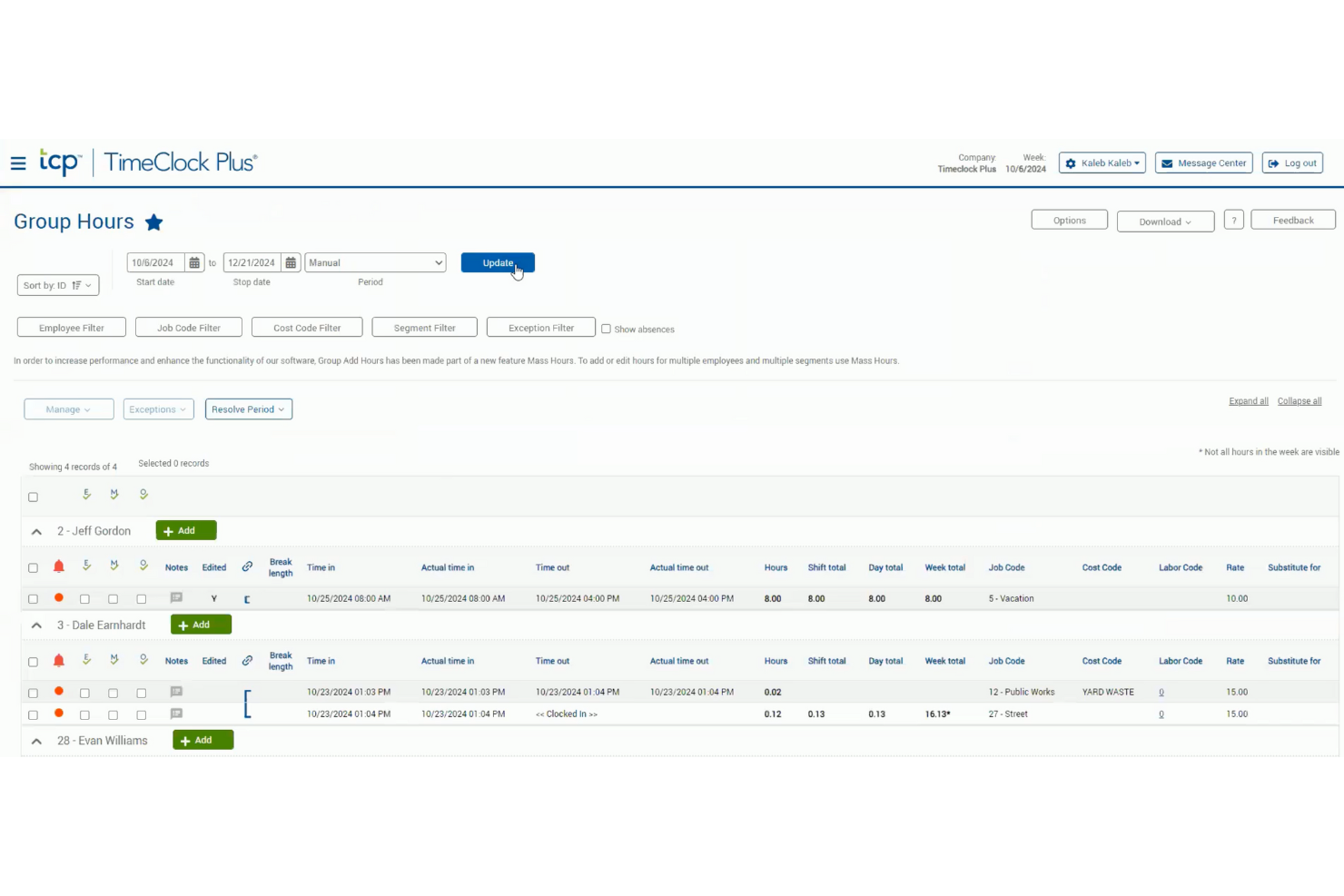
The software offers a clean layout that makes tracking time and managing schedules simple for most users. You can access key features quickly, whether on desktop or mobile. Some setup steps may take time, but once configured, your team can navigate it easily and complete tasks with minimal training.

Onboarding
The setup process is straightforward, with guided steps that help you configure time tracking and scheduling quickly. You can access online tutorials, documentation, and customer support to assist your team during implementation. While advanced customization may take extra effort, most users find the onboarding smooth and efficient once the basics are in place.

Customer Support
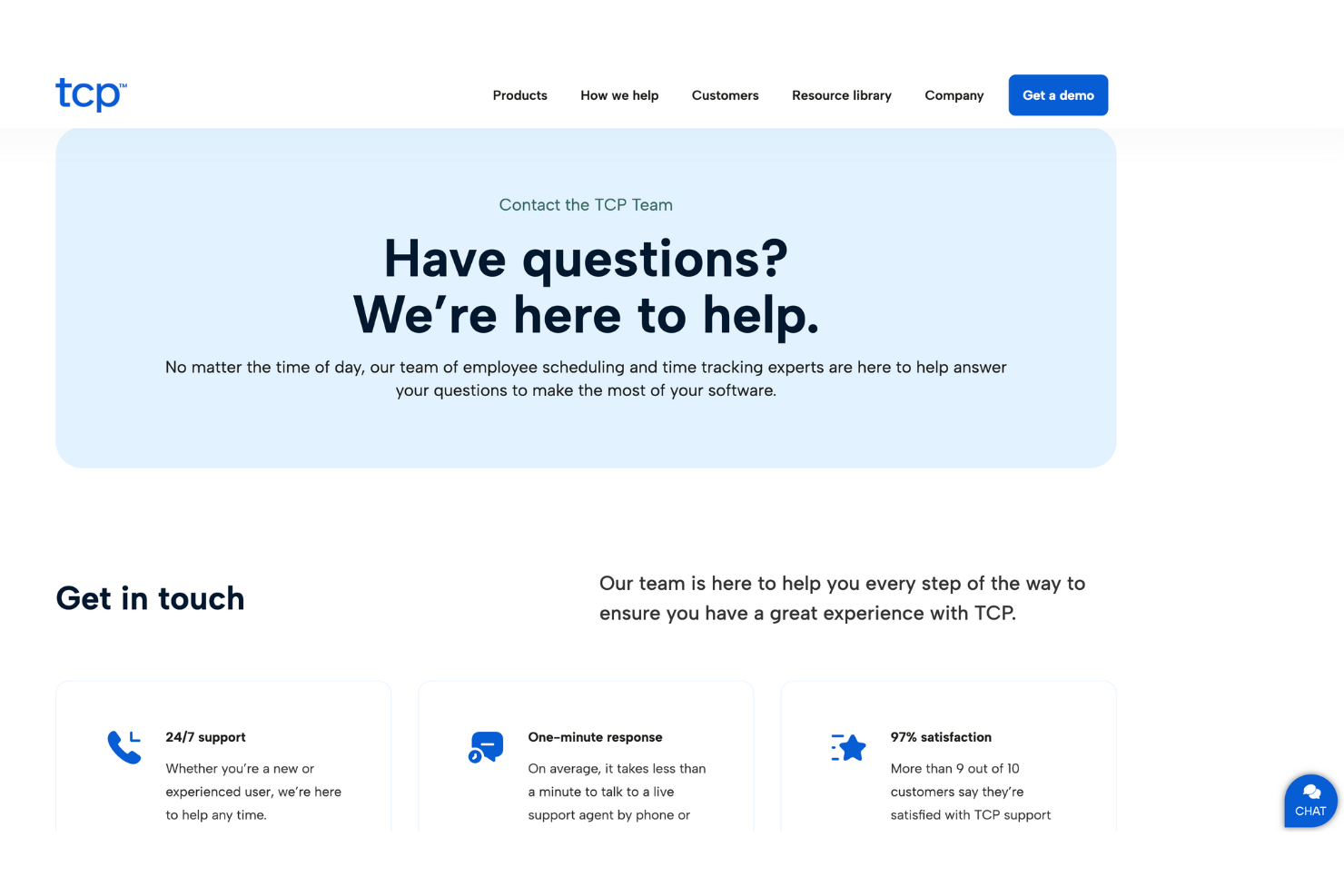
The platform offers responsive assistance through phone, email, and live chat, helping you resolve issues quickly. Users appreciate the knowledgeable support team and detailed online resources, including FAQs and guides. While wait times can vary during peak hours, most users find the support reliable and helpful for managing day-to-day needs.
Integrations
TimeClock Plus integrates natively with ADP, Paychex, QuickBooks, Oracle, SAP, UKG, Workday, Tyler Technologies, Microsoft Dynamics, and Lawson.
It also offers an API for custom integrations but doesn’t connect through third-party tools like Zapier.

Value for Money
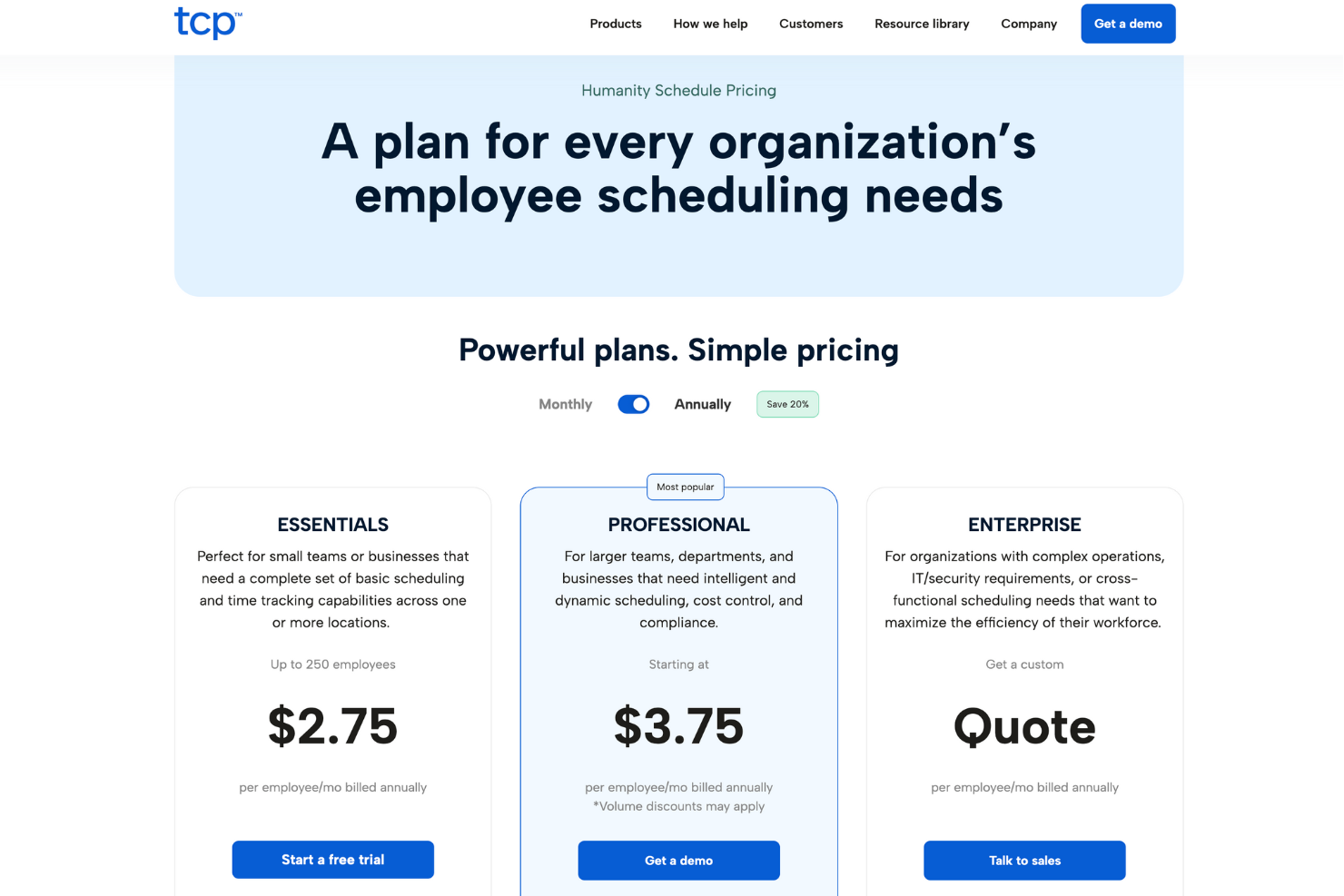
TimeClock Plus pricing delivers solid value with flexible plans suited for different business sizes. Users appreciate its reliability, robust features, and scalability, though costs may rise with advanced customization and integrations. Overall, it offers strong functionality for the investment.
- Essentials: Core time tracking tools with basic scheduling and reporting.
- Professional: Adds advanced labor management, leave tracking, and compliance features.
- Enterprise: Includes full customization, analytics, and enterprise-level support for large teams.
TimeClock Plus Specs
- 360 Degree Feedback
- API
- Attendance Tracking
- Budgeting
- Calendar Management
- Dashboard
- Data Export
- Data Import
- Data Visualization
- Employee Database
- Employee Onboarding
- External Integrations
- Feedback Management
- Forecasting
- Multi-User
- Notifications
- Scheduling
- Time Management
- Timesheets
- Travel Management
- Vacation & Absence Calendar
TimeClock Plus FAQs
How does TimeClock Plus handle data security?
Can TimeClock Plus support complex shift patterns?
How does TimeClock Plus manage employee time-off requests?
Is TimeClock Plus suitable for multi-location businesses?
How does TimeClock Plus assist with compliance management?
Can employees access TimeClock Plus remotely?
Does TimeClock Plus offer reporting capabilities?
How user-friendly is TimeClock Plus for new users?
TimeClock Plus Company Overview & History
TimeClock Plus (now TCP Software) is a workforce management and time-tracking company that got its start in San Angelo, Texas, back in 1988, and still runs from there today. It serves over 30,000 businesses worldwide with tools like scheduling, leave tracking, and attendance management. You’ll find it integrated into public and private organizations across industries, supported by around 1,000 employees as of 2023. It also remains privately held, having received a majority investment from Providence Equity Partners in 2019 to fuel growth.
TimeClock Plus Major Milestones
- 1988: Founded in San Angelo, Texas.
- 1996: Launched as a DOS-based time and attendance system.
- 2019: Received majority investment from Providence Equity Partners.
- 2020: Rebranded under the TCP Software identity.
- 2023: Employee count around 1,000, serving tens of thousands of clients worldwide.
What's Next?
Want to connect with other digital project managers to share resources and best practices? Join our membership community and get access to 100+ templates, samples, and examples and connect with 100s of other digital project managers in Slack.