


Runn Review: Pros, Cons, Features and Pricing Explained for 2026



Capacity planning across projects can quickly descend into guesswork without the right tools. Demand changes, priorities shift, disconnected spreadsheets create conflicting versions of the truth, and leaders are left scrambling to answer a deceptively simple question: do we actually have the capacity to take this on?
Runn is a resource management and capacity planning software designed for organizations that need better visibility into how people are allocated across projects, combining resource scheduling, capacity planning, forecasting, and reporting in a single platform. Runn can help balance workloads, anticipate future resourcing needs, and make informed decisions about project delivery, giving teams a clearer picture of both current commitments and upcoming demand.
In this detailed review, I've evaluated and tested Runn using my expertise as a project manager to help you determine whether this tool is the right fit for your project needs and goals.
Runn Evaluation Summary
- From $7/user/month (billed annually)
- 30-day free trial
Why Trust Our Software Recommendations
Our team has been testing and reviewing software since 2012. As project managers ourselves, we know how difficult—and important—it is to choose the right software.
For this guide, we evaluated tools using hands-on testing and independent research, scoring tools using our selection criteria. We also draw on insights from industry thought leaders and practicing project management experts.
Our reviews reflect our human editorial judgment, not a sales pitch.
Expert reviewers:
Runn Overview
In my opinion, Runn stands out as a capable tool for resource and capacity planning. Its real-time visual project visibility is appealing, especially for technical development teams balancing multiple deliverables. With features like forecasting, capacity planning, and financial reporting, Runn provides a comprehensive view of ongoing projects and resource allocation. The software's ease of use and intuitive onboarding experience set it apart from competitors.
pros
-
Accurate forecasting tools provide insights into project health and resource needs, and help make informed decisions about future projects.
-
Custom tags and fields make it easier to structure your data and make faster decisions.
-
Reusable project templates reduce manual setup and help maintain consistency across recurring projects.
cons
-
Teams with highly complex permission requirements should review whether Runn’s role-based permissions meet their needs
-
You may experience issues with managing over 1000 resources.
-
Timesheet functionality isn't as robust as dedicated timesheet solutions.
Is Runn Right For Your Needs?
Who Would be a Good Fit for Runn?
Runn is ideal for technical-facing outfits like IT departments and software development teams that need real-time resource management and capacity planning. Its clear visual timelines and intuitive interface make it perfect for creative agencies that juggle multiple projects. If your team needs quick onboarding and easy task reassignment, Runn can save you time and effort. It can also generate instant reports to help you make informed decisions.
-
IT Solutions
Runn's project forecasting and capacity planning features are tailored for IT teams and help you manage resources effectively.
-
Software Delivery
The intuitive timeline view helps with planning sprints and managing project phases seamlessly.
-
Digital Transformation Agencies
Runn helps manage specialist workloads, plan future projects, and allocate resources more effectively across client engagements.
-
Consulting firms
With Runn, you can quickly adapt to changing client needs through its flexible scheduling.
-
Marketing teams
Its visual timelines help you coordinate campaigns and track deliverables efficiently.
-
Cross-functional teams
The skills management feature helps you assign tasks based on expertise and improve collaboration across departments.
Who Would be a Bad Fit for Runn?
Runn may not be the best fit for very large organizations managing thousands of resources or companies that need a single platform for both workforce planning and detailed task management. It can also be less suitable for businesses with highly variable shift-based scheduling, multi-year project lifecycles, or very short-duration projects that require rapid day-to-day resource changes.
-
Large enterprises
Organizations managing thousands of resources across complex portfolios may find the platform less suited to their scale and operational requirements.
-
Organizations Without Project Management Software
Companies with more than 100 employees that lack a dedicated project management tool may need additional software to handle task tracking and project execution.
-
Shift-Based Work Environments
Businesses that rely on highly variable shift-based scheduling may struggle with frequent changes to staffing requirements and working hours.
-
Short-Duration Project Work
Teams running projects that last only a few days may find the platform's planning capabilities more robust than their workflows require.
Our Review Methodology
How We Test & Score Tools
We’ve spent years building, refining, and improving our software testing and scoring system. The rubric is designed to capture the nuances of software selection and what makes a tool effective, focusing on critical aspects of the decision-making process.
Below, you can see exactly how our testing and scoring works across seven criteria. It allows us to provide an unbiased evaluation of the software based on core functionality, standout features, ease of use, onboarding, customer support, integrations, customer reviews, and value for money.
Core Functionality (25% of final scoring)
The starting point of our evaluation is always the core functionality of the tool. Does it have the basic features and functions that a user would expect to see? Are any of those core features locked to higher-tiered pricing plans? At its core, we expect a tool to stand up against the baseline capabilities of its competitors.
Standout Features (25% of final scoring)
Next, we evaluate uncommon standout features that go above and beyond the core functionality typically found in tools of its kind. A high score reflects specialized or unique features that make the product faster, more efficient, or offer additional value to the user.
We also evaluate how easy it is to integrate with other tools typically found in the tech stack to expand the functionality and utility of the software. Tools offering plentiful native integrations, 3rd party connections, and API access to build custom integrations score best.
Ease of Use (10% of final scoring)
We consider how quick and easy it is to execute the tasks defined in the core functionality using the tool. High scoring software is well designed, intuitive to use, offers mobile apps, provides templates, and makes relatively complex tasks seem simple.
Onboarding (10% of final scoring)
We know how important rapid team adoption is for a new platform, so we evaluate how easy it is to learn and use a tool with minimal training. We evaluate how quickly a team member can get set up and start using the tool with no experience. High scoring solutions indicate little or no support is required.
Customer Support (10% of final scoring)
We review how quick and easy it is to get unstuck and find help by phone, live chat, or knowledge base. Tools and companies that provide real-time support score best, while chatbots score worst.
Customer Reviews (10% of final scoring)
Beyond our own testing and evaluation, we consider the net promoter score from current and past customers. We review their likelihood, given the option, to choose the tool again for the core functionality. A high scoring software reflects a high net promoter score from current or past customers.
Value for Money (10% of final scoring)
Lastly, in consideration of all the other criteria, we review the average price of entry level plans against the core features and consider the value of the other evaluation criteria. Software that delivers more, for less, will score higher.
Core Features
Resource Management
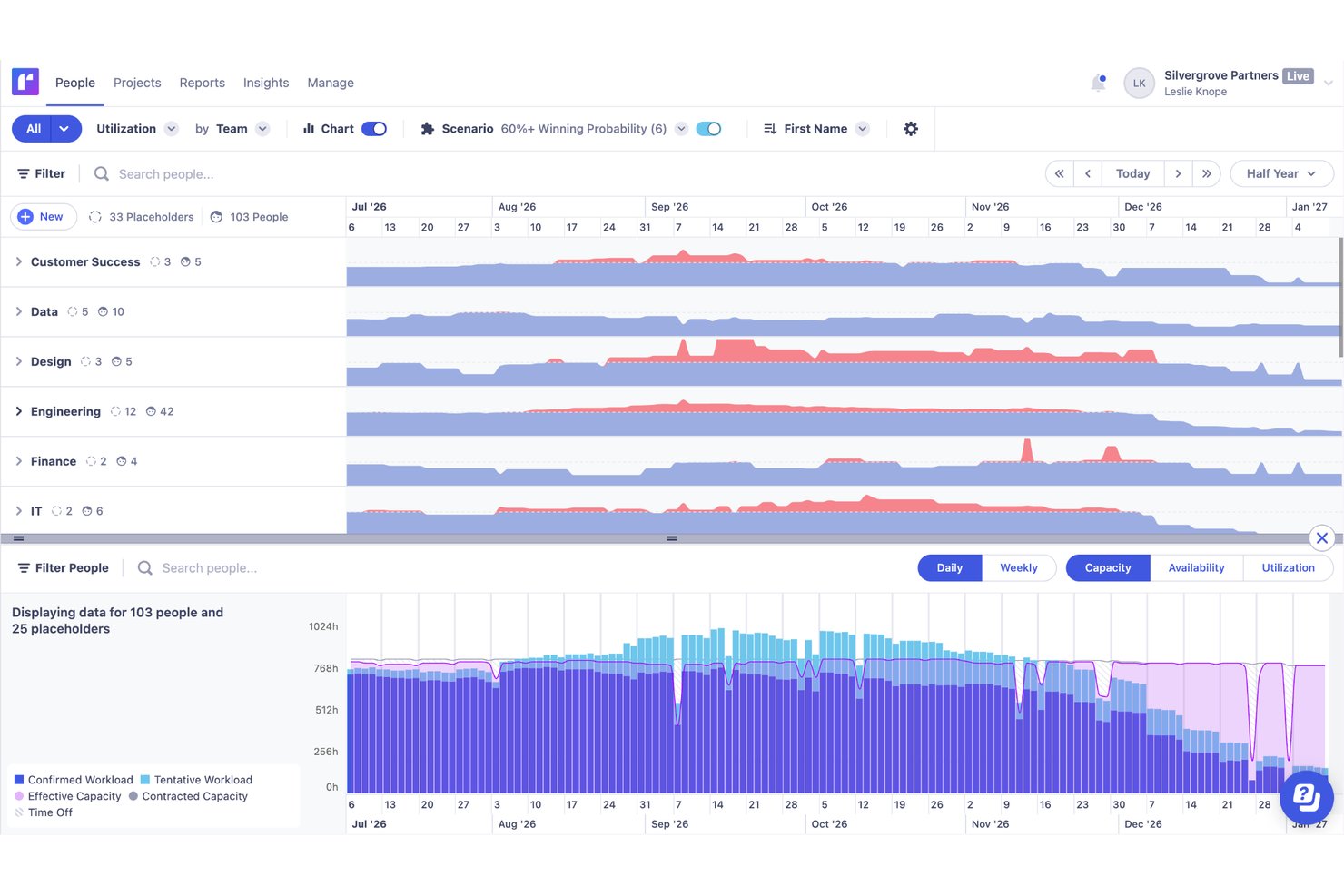
You can easily manage resources with Runn's drag-and-drop interface, which lets you quickly assign and reassign work. Live reports give you real-time insights into how your decisions impact resources.
Forecasting and Capacity Planning
Runn lets you forecast resources using placeholders and tentative work. This helps you understand team capacity and plan for potential hires or reallocations.
Resource Scheduling
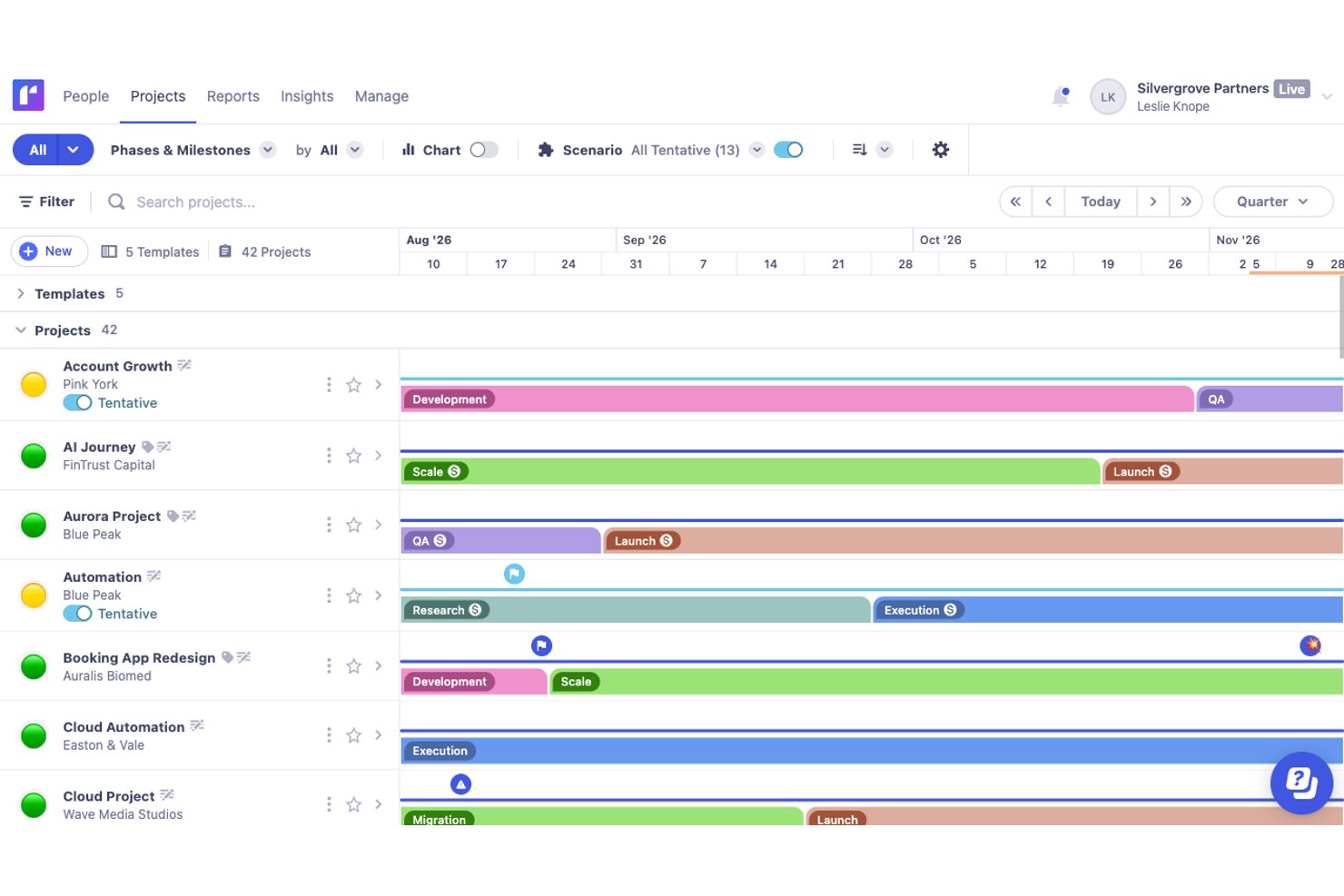
Assigning resources to projects is straightforward with Runn's intuitive drag-and-drop timeline. Multi-select mode allows for bulk actions and makes scheduling adjustments quick and efficient.
Scenario Planning
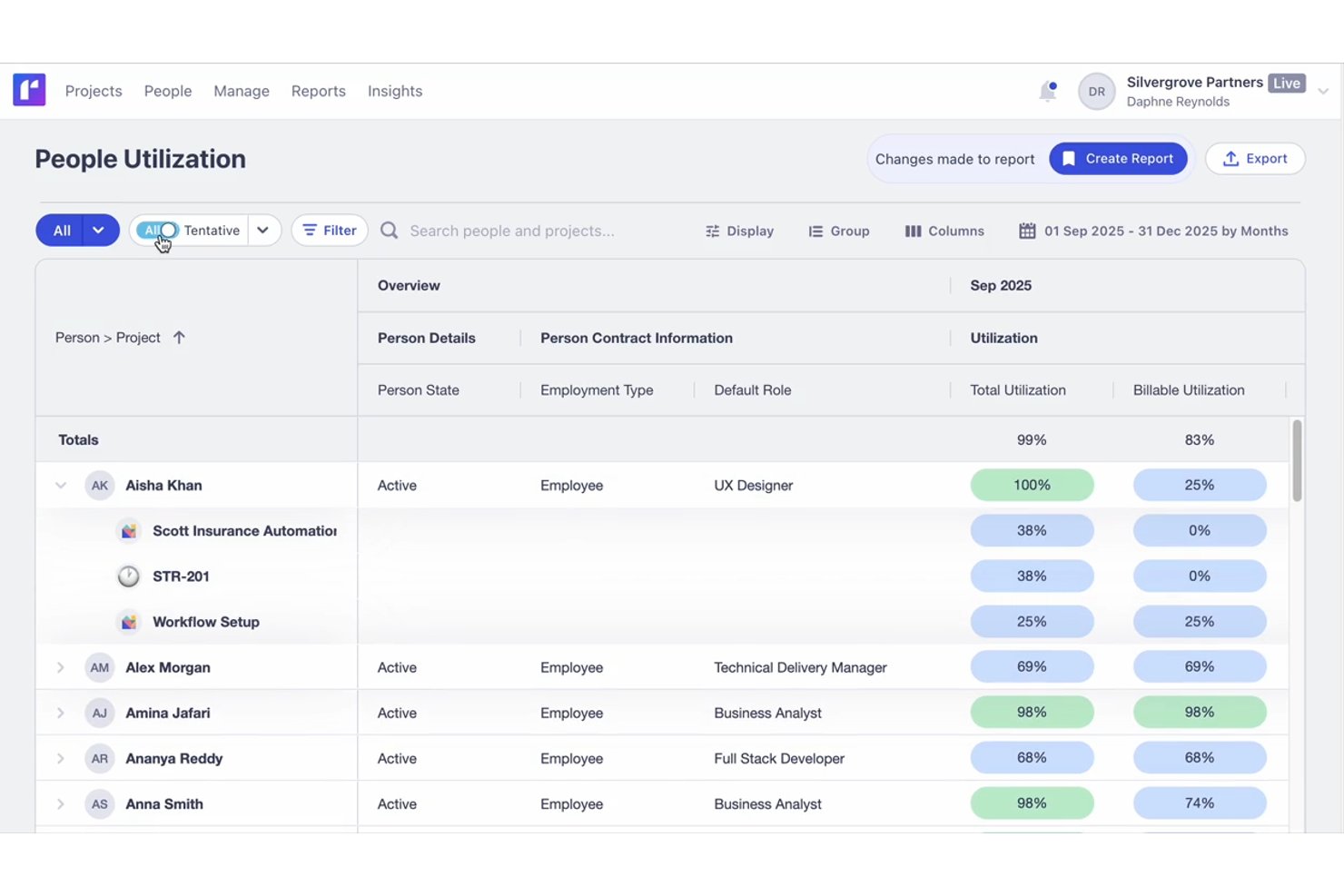
Runn's side-by-side reports let you see utilization and capacity in real-time and conduct scenario planning. You can adjust schedules and immediately see the impact on your team's resources.
Financial Reporting
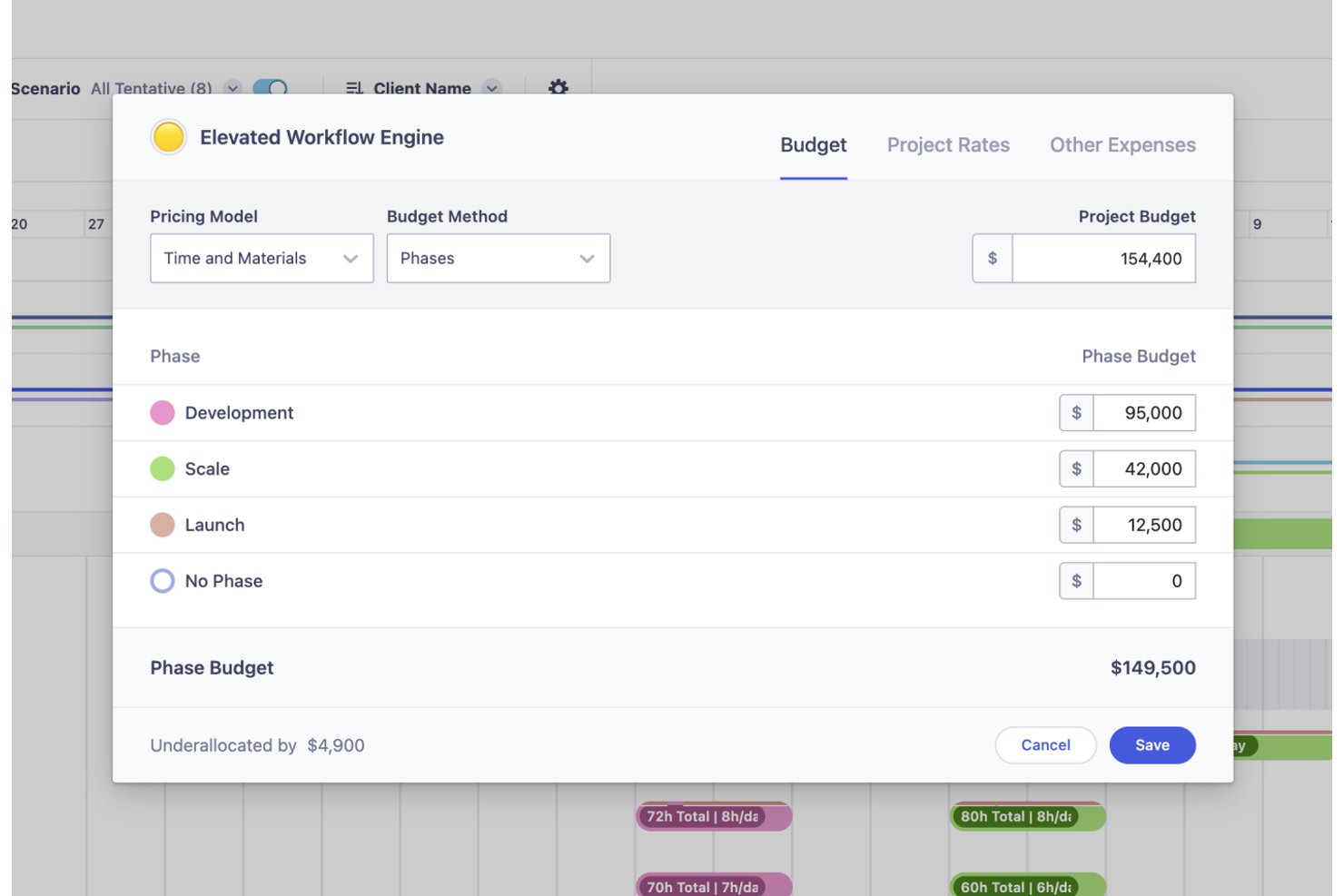
Runn’s financial tools help you track project budgets and costs, so you can meet financial goals. Its support for both fixed-price and time-and-materials billing models adds flexibility to budget management.
Standout Features
Milestones
Runn's milestone feature lets you add context to projects with categories like financial milestones and warning symbols. This helps in signaling important phases, payments, or potential issues to improve project clarity.
Skills Management:
Runn’s skill database lets you list and filter skills across your organization which helps with decision-making. You can assign expertise levels to team members to make it easier to form cross-functional teams for various projects.
Ease of Use
Runn stands out for making complex capacity questions easier to answer. Its visual planning interface helps teams see availability, forecast demand, and understand whether they have the right people to take on upcoming work. Instead of digging through disconnected spreadsheets or guessing at staffing needs, teams can quickly spot capacity gaps, compare future scenarios, and make more confident resourcing decisions.
Onboarding
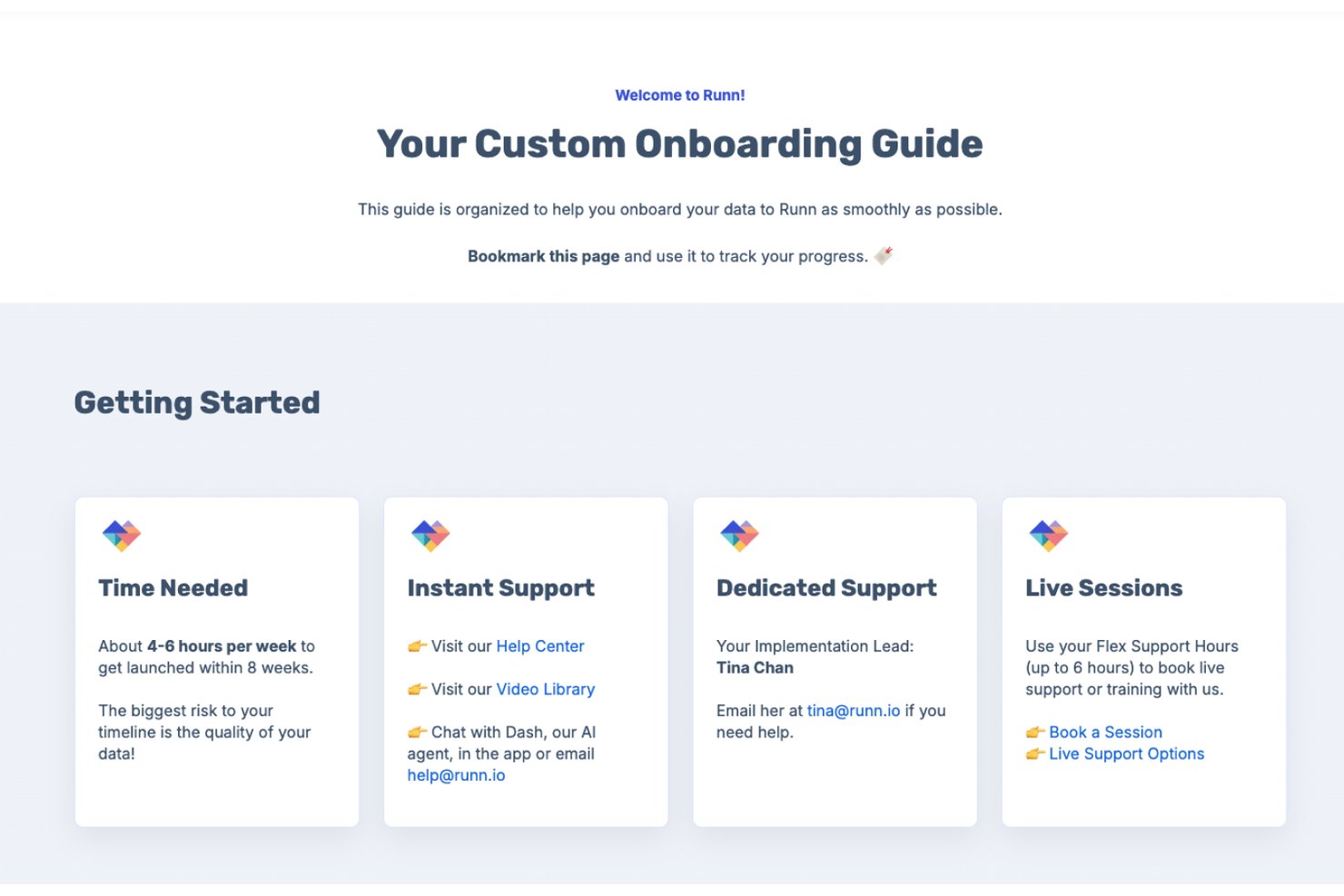
Runn offers flexible onboarding options to suit different team sizes and implementation needs. Organizations can get started quickly through a self-service free trial with guided in-app tutorials and walkthroughs, while those requiring a more hands-on approach can work directly with Runn's customer success team for tailored onboarding and data migration support. Depending on the complexity of the rollout, teams can be fully operational in a matter of days or follow a structured implementation process over several weeks. Users also benefit from ongoing support from resource management specialists who help ensure teams get the most value from the platform.
Customer Support
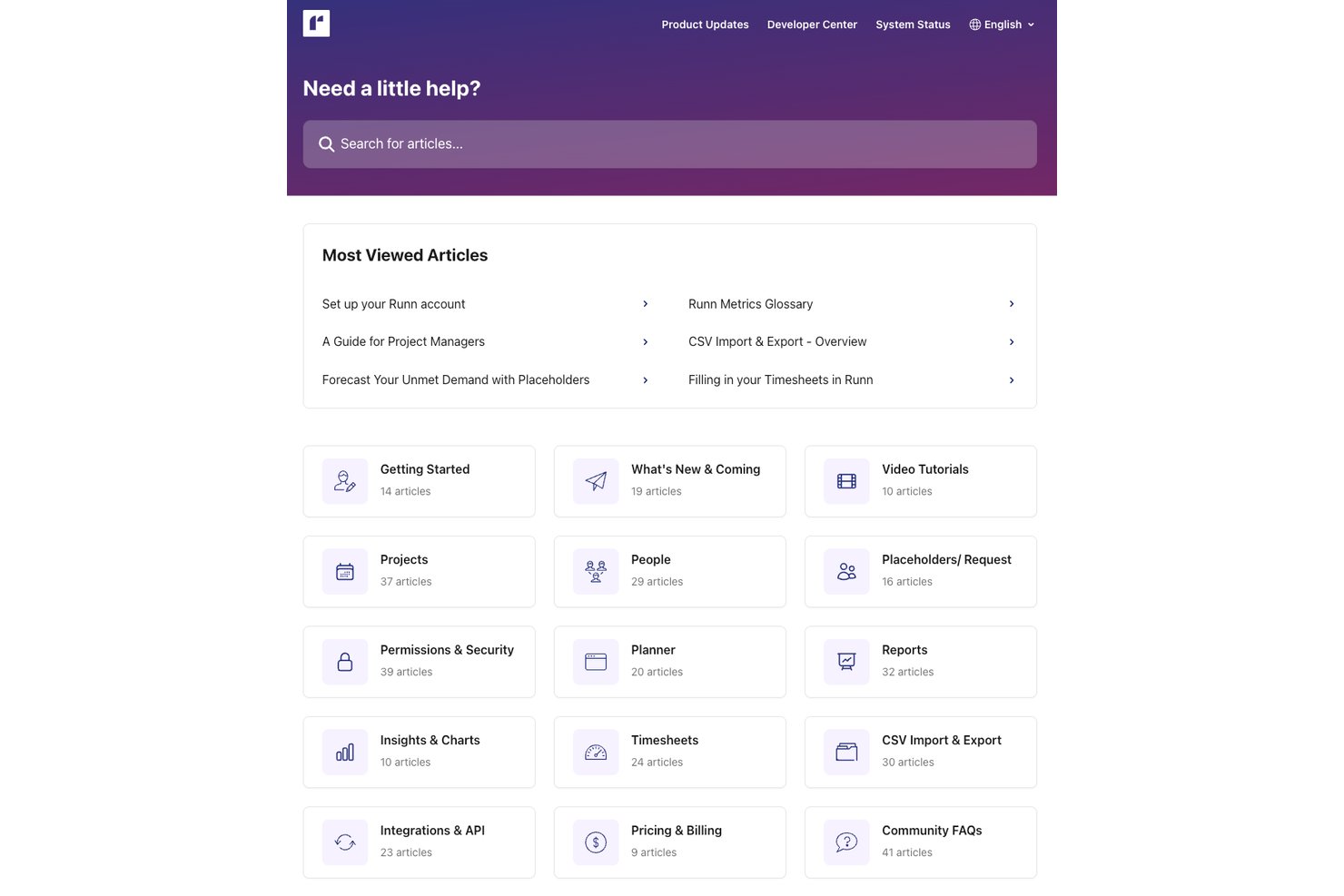
Runn provides reliable customer support from a knowledgeable and helpful team. You can also access guides, FAQs, and other resources through its extensive knowledge center.
Integrations
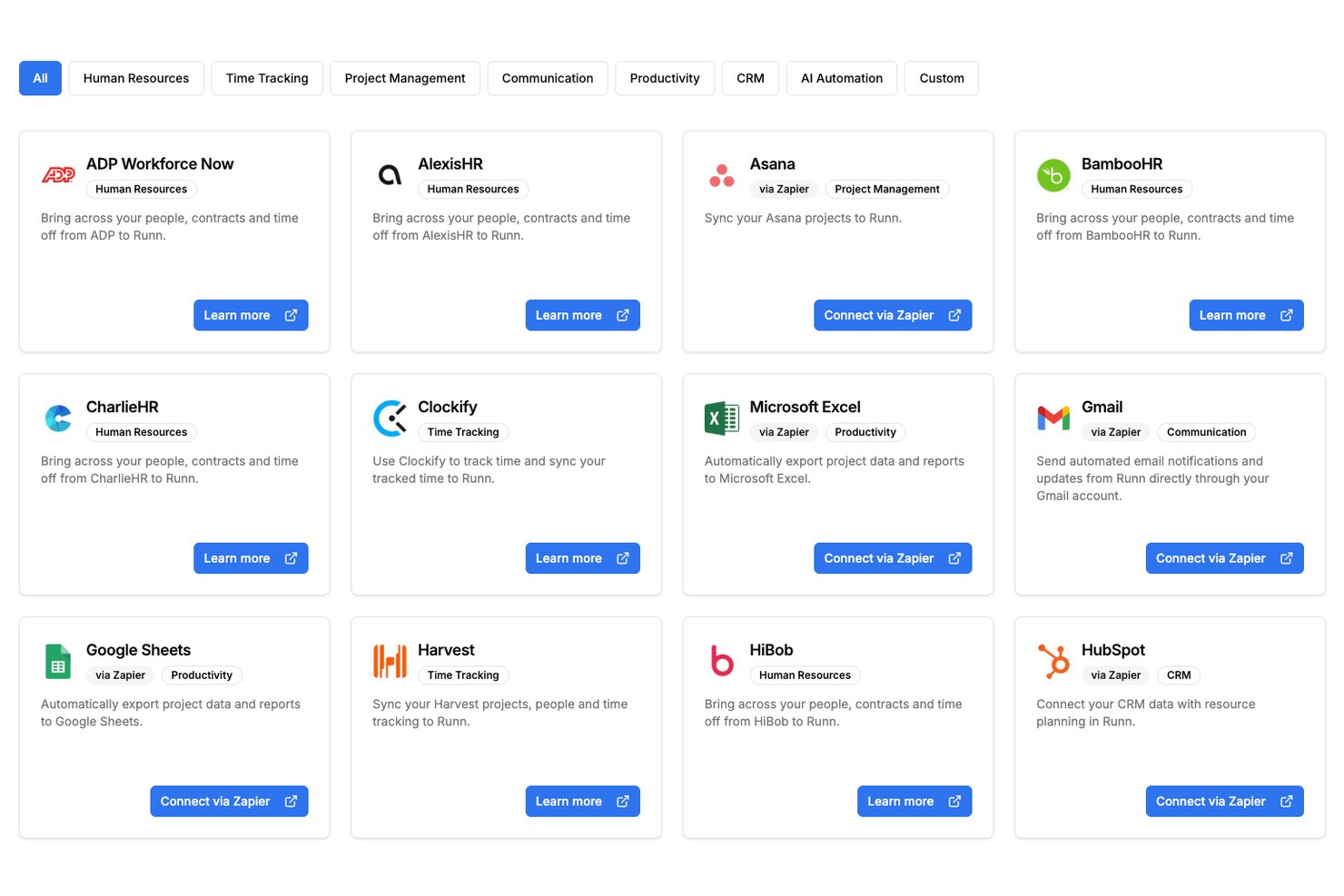
Runn offers native integrations with selected tools, plus API access and additional connections through Zapier and n8n.
Value for Money
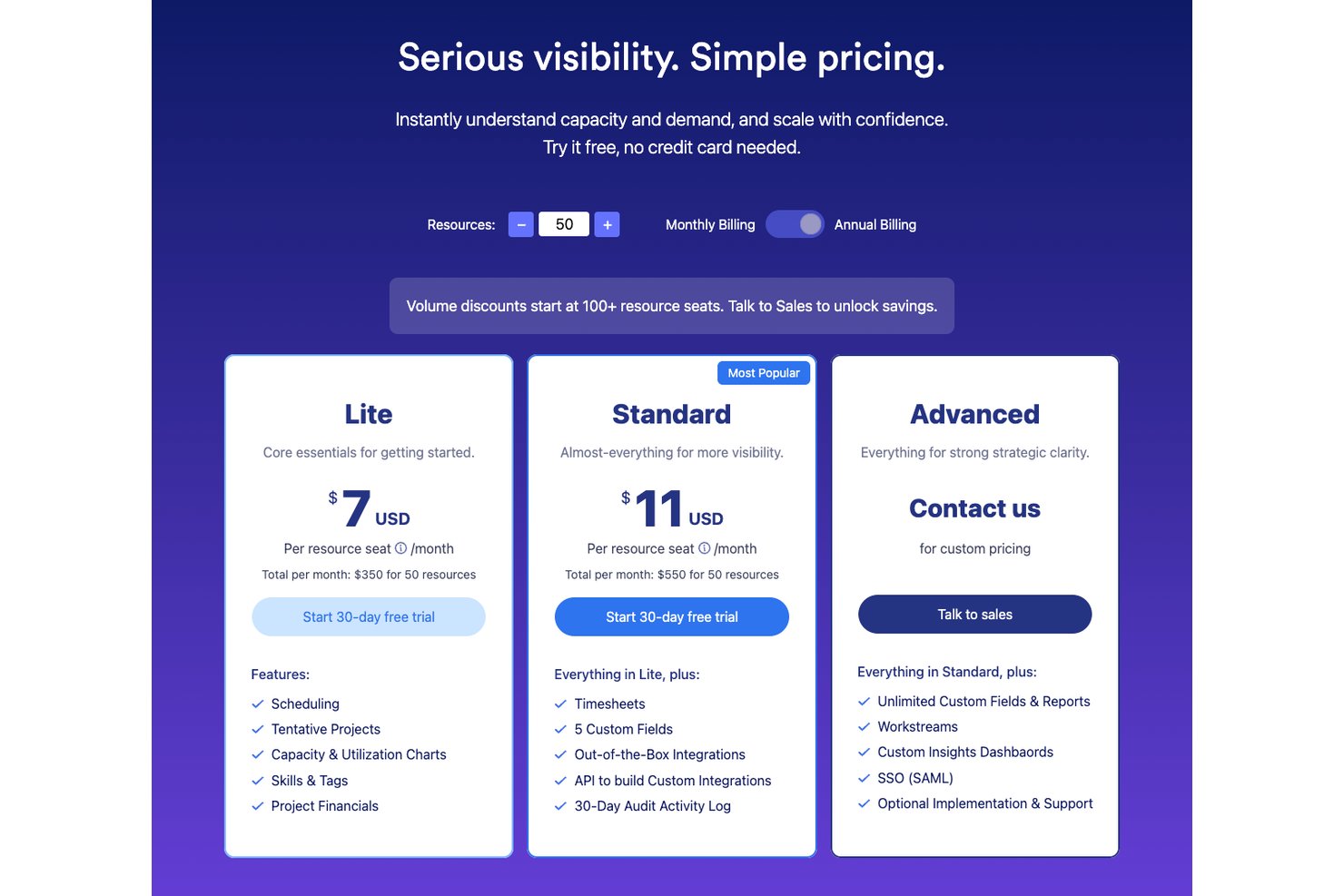
Runn's pricing is based on the number of resource seats and is split across three plans: Lite, Standard, and Advanced. The Lite and Standard plans are charged per resource seat and include progressively more advanced resource planning, reporting, and integration features. There is also an Advanced plan designed for organizations that need enterprise-grade capabilities, which requires contacting Runn for a custom quote. Larger teams can access volume discounts at higher seat counts. Users appreciate Runn's intuitive design, capacity planning tools, and project financial visibility, which help justify its cost compared to more general project management platforms.
- Lite: Includes capacity planning, scheduling, project planning, and advanced filtering.
- Standard: Adds timesheets, utilization insights, integrations, and API access.
- Advanced: Offers custom dashboards, SAML, SSO, resource requests, and workforce insights.
Runn Specs
- API
- Approval Workflows
- Audit Trail
- Budgeting
- Calendar Management
- Compliance Tracking
- Custom Reports
- Customer Management
- Dashboard
- Data Export
- Data Import
- Data Visualization
- Document Management
- Expense Tracking
- External Integrations
- Forecasting
- Inventory Tracking
- Multi-Currency
- Multi-User
- Notifications
- Prioritization
- Process Reporting
- Project Management
- Resource Management
- Risk Assessment
- Roadmapping
- Scheduling
- Supplier Management
- Third-Party Plugins/Add-Ons
- Workflow Management
Runn FAQs
How does Runn handle data security and compliance?
Is there a mobile app for Runn?
How often does Runn update its software?
What kind of training does Runn offer new users?
How does Runn facilitate resource planning?
Does Runn offer customer support on weekends?
Runn Company Overview & History
Runn was founded in 2018 and is headquartered in Wellington, New Zealand. The team is fully remote and operates across three continents. It specializes in resource scheduling and project management solutions for industries like IT and consulting. Runn aims to improve visibility and collaboration in project workflows has over 10,000 users worldwide.
Runn Major Milestones
- 2018: Founded in New Zealand.
- 2025: Reached $6.9 million ARR.