

10 Best Project Management Software Picked For 2026

10 Best Project Management Software Shortlist


Project management software helps your team plan work, assign tasks, track deadlines and report progress in one place. Most paid plans cost $7–$25 per user per month, and once your team actually uses it, checking a project’s status takes a glance at a dashboard rather than a round of Slack messages.
I’ve managed large-scale agency projects for 20 years and used many different PM tools, and I know the tricky part is that most of them look identical on a feature list, but they’re often built for different kinds of work. Some are designed for complex projects with detailed timelines and resource planning, while others are better for lightweight task tracking across a busy team.
To help you choose, I used, tested, and compared 40+ tools, evaluating their task tracking, timeline views, team collaboration, workload management and reporting. Here are my top picks, with an explanation of who each product is best suited for.
Why Trust Our Software Recommendations
Our team has been testing and reviewing software since 2012. As project managers ourselves, we know how difficult—and important—it is to choose the right software.
For this guide, we evaluated tools using hands-on testing and independent research, scoring tools using our selection criteria. We also draw on insights from industry thought leaders and practicing project management experts.
Our reviews reflect our human editorial judgment, not a sales pitch.
Expert reviewers:
Video Walkthrough of Project Management Tools
Check out our video on the top project management tools:

Project Management Tools Comparison Table
Score legend (out of 5)
- Excellent 4.5–5
- Good 4–4.4
- Average 3–3.9
- Below average 2–2.9
- Poor 1–1.9
| Tool | Starting Price | Website | |||||||
|---|---|---|---|---|---|---|---|---|---|
| Best for cross-functional enterprise delivery | 4.0 out of 5 | 5 | 3 | 4 | 4 | 4 | 4 | $10/user/month Free plan + 14-day trial + demo available | Book Demo |
| Best for customizable dashboards | 4.7 out of 5 | 5 | 4 | 5 | 4 | 5 | 5 | $9/user/month 30-day free trial + demo available | Book Demo |
| Best for agency projects and budgeting | 3.8 out of 5 | 4 | 3 | 5 | 4 | 3 | 4 | $10/user/month 14-day free trial | Book Demo |
| Best for project forecasting | 2.8 out of 5 | 2 | 1 | 4 | 5 | 3 | 2 | $7/resource/month 30-day free trial available | Book Demo |
| Best with AI-powered resource optimization | 4.7 out of 5 | 5 | 4 | 5 | 4 | 5 | 5 | $9/user/month Free plan + 14-day trial available | Book Demo |
| Best for built-in PPM with live BI-grade reporting | 3.8 out of 5 | 4 | 3 | 4 | 4 | 4 | 4 | $10/user/month 14-day free trial | Website |
| Best for collaborative project management | 3.7 out of 5 | 4 | 4 | 3 | 3 | 4 | 4 | $5/user/month Free plan + 14-day trial + demo available | Website |
| Best for agencies streamlining sales to delivery | 2.2 out of 5 | 3 | 3 | 2 | 1 | 3 | 1 | $29/user/month 14-day free trial + demo available | Website |
| Best for client portal integration | — | 2 | 3 | 2 | — | 3 | 1 | €5.50/active project/month 14-day free trial | Website |
| Best for integration with Zoho Suite | 4.2 out of 5 | 5 | 4 | 4 | 3 | 5 | 4 | Pricing upon request Free plan + 15-day trial + demo available | Website |
Best Project Management Software Reviews
Here’s my in-depth review and analysis of the best project management software. I’ll walk you through pros and cons, features and functionality, to help guide you to a better understanding of each tool’s capabilities and suitability for your projects.

Wrike
Best for cross-functional enterprise delivery
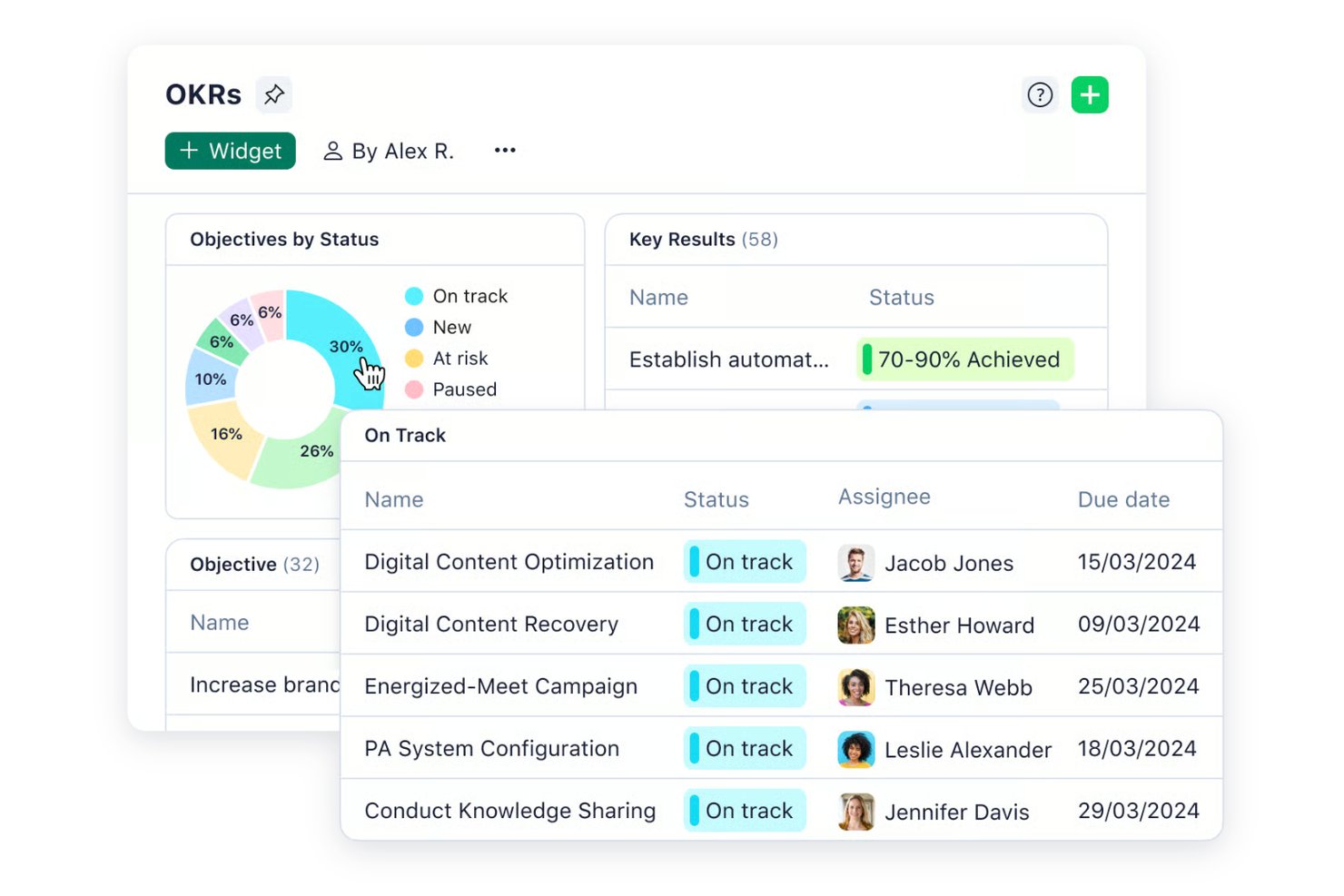
Wrike is a project management platform built for teams in fast-paced industries who need customizable workflows, advanced resource planning, and real-time collaboration to keep complex projects on track.
Who Is Wrike Best For?
Wrike is a strong fit for mid-size to enterprise teams managing multiple concurrent projects across cross-functional departments like marketing, product, and professional services.
Why I Picked Wrike
Wrike earns its spot on my shortlist because it handles the kind of project complexity that most tools start to buckle under. I particularly like the cross-project portfolio management view, which lets my team track dependencies and workloads across multiple large initiatives at once—without jumping between separate tools. Resource bookings let me reserve capacity by team member or job role and estimate hours against actual availability, so I can catch overallocation before it becomes a problem. The effort management feature also helps when scoping tasks, since I can flag how demanding a piece of work is before assigning it, which makes forecasting delivery timelines much more accurate at scale.
Wrike Key Features
- Custom project views: Toggle between Gantt, Kanban, Board, Calendar, and Chart views to visualize project progress in the format that works best for your team.
- Scrum boards: Manage Agile sprints with shared Scrum boards, backlog prioritization, and real-time progress tracking.
- Custom request forms: Build dynamic intake forms that automatically generate tasks, projects, and workflows when submitted.
- Proofing and approvals: Mark up and approve 30+ file types, including video and HTML, directly within tasks.
Wrike Integrations
Integrations include Microsoft Teams, Salesforce, Google Drive, Adobe Creative Cloud, Zoom, Power BI, Tableau, QuickBooks, Miro, and Microsoft SharePoint.
Pros and Cons
Pros:
- Right-click context menus allow you to do more with fewer clicks
- AI features are available in all plans at no extra cost
- Worldclass onboarding through video walkthroughs
Cons:
- 2FA is locked behind the enterprise plan
- Some integrations require higher-tier plans or a paid add-on
New Product Updates from Wrike

Wrike Redesigns Workspace Search With New Filters
Wrike introduces a redesigned Workspace Search interface with recent search shortcuts, item type and location filters, and parent-task context. These updates help users find relevant work items and navigate search results efficiently. For more information, visit Wrike’s official site.
 .
Best for customizable dashboards
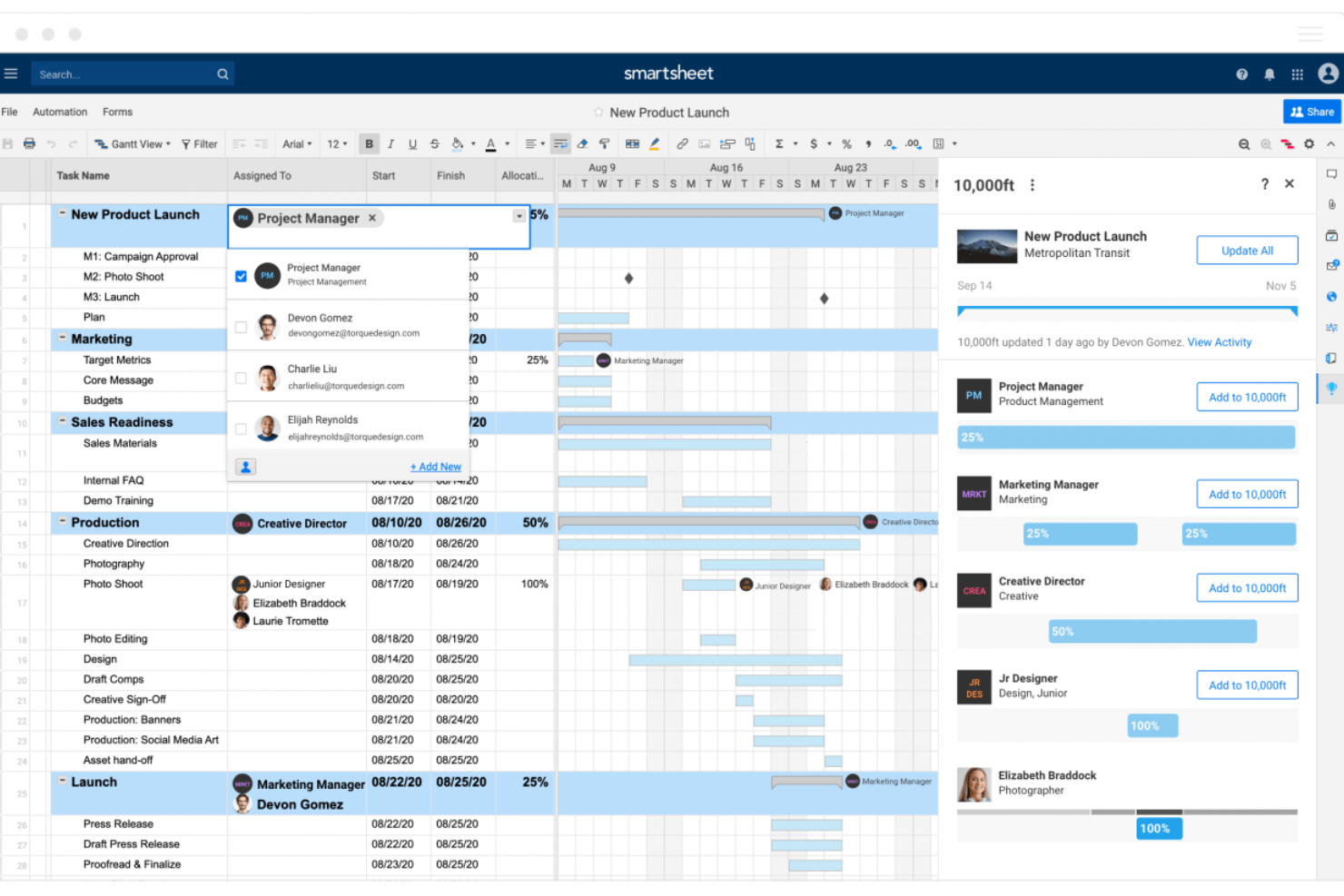
Smartsheet is a project management platform built for teams who need flexible planning, real-time collaboration, and visibility across complex projects, making it popular with organizations in tech, marketing, and operations looking to manage work at scale.
Who Is Smartsheet Best For?
Smartsheet is a strong fit for mid-size to enterprise teams in project management, operations, and IT who need to coordinate work across multiple departments or workstreams.
Why I Picked Smartsheet
I picked Smartsheet as one of the best because of how much control it gives you over dashboard design and data presentation. You can build dashboards from scratch using a drag-and-drop widget system—pulling in metric, chart, report, and web content widgets, then resizing and repositioning them on a grid. I like that you can apply custom hex color codes to individual widgets, set dashboard-wide themes, and even create and export custom themes to share across your organization. That level of visual consistency matters when you're presenting project status to executives or stakeholders who need to read a dashboard at a glance. The automatic 10-minute refresh on published dashboards keeps stakeholder data current without manual updates.
Smartsheet Key Features
- Gantt chart view: Visualize project timelines, set dependencies between tasks, and adjust schedules by dragging and dropping bars directly on the chart.
- Automated workflows: Set up no-code automation rules to trigger alerts, approval requests, or row updates based on conditions you define in your sheets.
- Resource management: View team capacity across projects, allocate work by role or individual, and track time logged against planned hours.
- Baseline tracking: Capture a snapshot of your original project plan and compare it against current progress to measure schedule and budget variance.
Smartsheet Integrations
Integrations include Adobe, AWS, Box, DocuSign, Dropbox, Google, Power BI, SAP, Jira, and Microsoft.
Pros and Cons
Pros:
- Facilitates collaborative project management
- Allows for automation of tasks
- Can tailor the tool to specific project management needs
Cons:
- Not ideal for simpler project management needs
- Lacks built-in time tracking
New Product Updates from Smartsheet

Smartsheet Adds Non-Plan User Management in Admin Center
Smartsheet adds a Non plan users tab to the Seat types and true-up page in Admin Center. This lets system admins review non-plan users and add them to the plan or remove them from the organization in one place. For more information, visit Smartsheet’s official site.
 .
Best for agency projects and budgeting
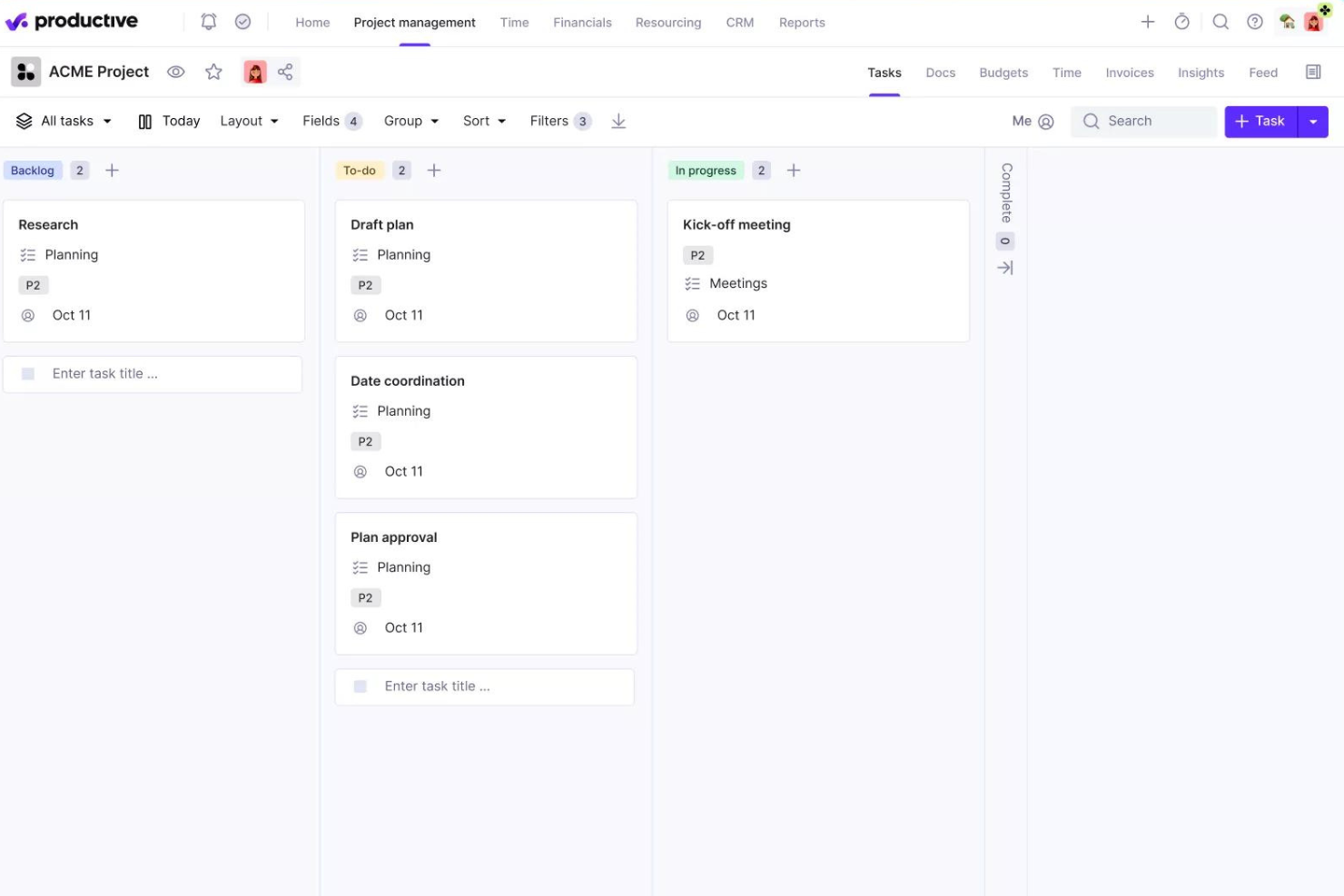
Productive is a project management platform built for agencies and service businesses that need to manage projects, budgets, resources, and profitability in one place.
Who Is Productive Best For?
Productive is a strong fit for digital agencies, creative studios, and consulting firms that need to track project delivery and financial performance together.
Why I Picked Productive
Productive earns its spot on my shortlist because it connects project delivery and financial performance in a way most project management tools simply don't. I love that every hour my team logs against a project updates the budget in real time—so I can see profitability without waiting on a monthly finance report. The budget overrun alerts are useful; I can set custom thresholds so the team is notified before a project burns through its budget, not after. For agency work, the ability to split large projects into separate budget phases helps manage long-running client retainers.
Productive Key Features
- Multiple project views: Switch between Gantt, Kanban board, timeline, calendar, list, and table views depending on how your team prefers to work.
- Resource scheduling: See team capacity, balance workloads, and manage time off requests directly within the resource planner.
- Project templates: Duplicate full project setups—including tasks, subtasks, descriptions, and assignees—to spin up new client projects faster.
- Automated workflows: Trigger actions like creating invoices or sending Slack messages based on project activity, without manual follow-up.
Productive Integrations
Integrations include Jira, HubSpot, Xero, Google Calendar, Sage, Gmail, Microsoft Outlook, Slack, BugHerd, and QuickBooks.
Pros and Cons
Pros:
- Integrated financial management and reporting
- User-friendly interface that simplifies task management
- Robust resource planning and tracking
Cons:
- Initial setup can be time-consuming
- Could have more integrations
New Product Updates from Productive
Productive Adds Email and Calendar Integrations for Agents
Productive adds Gmail, Outlook, Google Calendar, and Outlook Calendar connectors for its AI agents. These integrations let agents manage emails and create calendar events directly within Productive. For more information, visit Productive’s official site.
 .
Runn
Best for project forecasting

Runn is a real-time resource and project management tool designed to help teams plan, track, and forecast their projects efficiently.
Why I picked Runn: I like its real-time project forecasting capabilities. You can anticipate future capacity for your entire company, specific teams, or individual members, allowing you to plan ahead with confidence. This foresight helps in identifying potential bottlenecks and ensures that your team isn't overbooked, leading to more balanced workloads and timely project deliveries.
Runn's ability to manage tentative projects also stood out to me. This feature lets you plan out potential projects and see how they might impact your workload and financials. By comparing different scenarios, you can make informed decisions about which projects to pursue, ensuring that your resources are optimally utilized without overcommitting.
Runn Standout Features & Integrations
Features include the capacity to set custom work hours for each team member, accommodating flexible schedules and part-time roles. Runn also allows you to manage time off and holidays, preventing scheduling conflicts. Additionally, you can tag your team with specific skills, locations, or other attributes, making it easier to find the right person for each task.
Integrations include ADP Workforce Now, AlexisHR, BambooHR, CharlieHR, HiBob, Workday, Clockify, Harvest, and Jira.
Pros and Cons
Pros:
- Users can customize dashboards
- Good project forecasting capabilities
- Provides a high-level view of project timelines and phases
Cons:
- Lacks advanced automation features
- Could offer more robust task management features

Best with AI-powered resource optimization
monday AI Workspace is a configurable, AI-native work management platform that spans project planning, task tracking, resource allocation, and workflow automation across a broad library of customizable boards, views, and templates.
Who Is monday AI Workspace Best For?
monday AI Workspace suits cross-functional teams at mid-size to enterprise companies that manage multiple concurrent projects across departments like marketing, product, IT, and operations.
Why I Picked monday AI Workspace
monday AI Workspace earns its spot on my shortlist because of how it handles resource allocation at the AI level. I use the workload view to see capacity across my team in real time, and monday's AI surfaces assignment recommendations based on project context, not just who has open calendar slots. I also rely on its AI-powered risk detection to catch dependency conflicts before they turn into missed deadlines.
monday AI Workspace Key Features
- Custom board templates: Choose from over 200 templates for specialized workflows in project management, CRM, marketing, and operations.
- Portfolio-level dashboards: Build cross-project, real-time dashboards with 80+ customizable widgets for tracking progress and KPIs.
- Integrated workdocs: Create and share collaborative documents directly connected to project boards and tasks for ongoing documentation.
- Multi-view project boards: Switch between Kanban, Gantt, Timeline, Calendar, and Table views to visualize work however your team prefers.
monday AI Workspace Integrations
monday AI Workspace offers hundreds of native integrations through its built-in integrations and marketplace, including Slack, Salesforce, HubSpot, Google Drive, Zoom, Microsoft Teams, Jira, GitHub, Trello, and Dropbox. It also supports Zapier and provides an API for custom integrations.
Pros and Cons
Pros:
- Board templates suit specialized workflows by department
- Workload view visualizes team capacity by project
- AI automatically flags project risks in real time
Cons:
- Portfolio dashboards require higher-tier plans
- Subtasks limited to one layer deep
New Product Updates from monday AI Workspace
monday AI Workspace Adds Human Approval Routing
monday AI Workspace adds a human-in-the-loop approval block to AI Workflows, sending approval requests and routing workflow paths based on responses. For more information, visit monday AI Workspace's official site.
 .

Celoxis
Best for built-in PPM with live BI-grade reporting
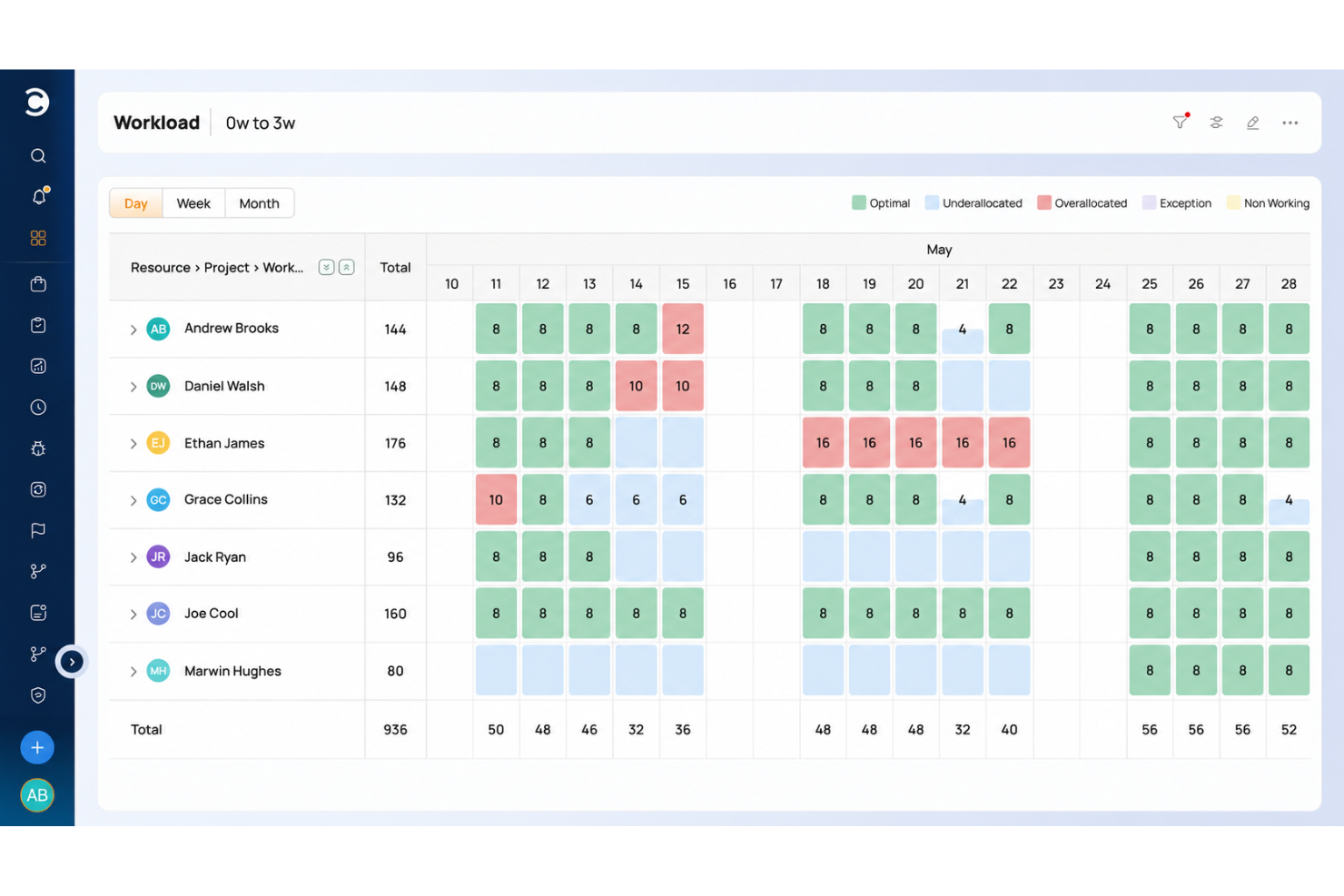
Celoxis is a project and portfolio management platform with interactive Gantt scheduling, cross-project resource and capacity planning, time and budget tracking, and live BI-grade reporting across projects and portfolios.
Who Is Celoxis Best For?
Celoxis is a strong fit for project managers and team leads who need portfolio-level control with built-in PPM, resource planning, and live BI-grade reporting across multiple concurrent projects.
Why I Picked Celoxis
I picked Celoxis as one of the best because it handles built-in PPM and live BI-grade reporting without needing a separate analytics layer. I love how the interactive Gantt connects directly to portfolio-level dashboards, so when a task slips, the impact shows up in earned-value metrics like CPI and SPI right away. The Resource Load view also lets me compare proposed work against active projects before committing capacity.
Celoxis Key Features
- Built-in risk and issue tracking: Log, monitor, and manage risks, issues, change requests, and bugs using built-in RAID log apps tied directly to your projects.
- Client portal: Give external stakeholders access to permitted projects, tasks, discussions, and reports through a branded, permission-controlled portal.
- Timesheet approvals: Configure multi-level approval chains for submitted time, with reminders for missing entries and policies to limit hours to task allocations.
- Scrum support: Set up product backlogs, sprint tasks, user stories, and Story Points alongside burndown reports within the same platform as your Gantt-based projects.
Celoxis Integrations
Celoxis offers 400+ app connections, including native integrations with Microsoft Project, Jira, Azure DevOps, Google Drive, Salesforce, QuickBooks Online, and Harvest. It also supports a REST API and Zapier.
Pros and Cons
Pros:
- Offers a portfolio-level view with real-time dashboards
- Highly customizable and flexible for scaling organizations
- Advanced reporting and analytics, including AI forecasting
Cons:
- No mobile app available
- May not be suitable for small teams or organizations with fewer than 5 employees
Hive
Best for collaborative project management

Hive is a project management platform built for teams in fast-paced industries who need flexible task tracking, real-time collaboration, and customizable workflows to keep projects moving and everyone aligned.
Who Is Hive Best For?
Hive is a good fit for mid-sized teams in marketing, operations, and creative industries who need a central workspace to manage projects and collaborate in real time.
Why I Picked Hive
Hive is one of my top picks because I love how it keeps collaboration woven into the actual work, not bolted on as an afterthought. My team uses Hive Notes to co-edit meeting docs in real time, then convert action items into tracked tasks without switching context. I also rely on the proofing and approvals feature—marking up files and routing them for sign-off directly inside a project card eliminates many back-and-forth emails. The native in-app chat tied to specific action cards means conversations stay attached to the work they're about, so nothing gets lost.
Hive Key Features
- Multiple project views: Switch between Kanban, Gantt, timeline, calendar, and portfolio views to match how your team tracks work.
- Resourcing: Assign team members to projects and visualize their availability across the full project lifecycle.
- Workflow automation: Build custom automated workflows to handle repeatable tasks like status updates, handoffs, and reminders.
- Form intakes: Collect incoming work requests through shareable forms that feed directly into your Hive projects.
Hive Integrations
Integrations include Google Drive, Google Calendar, Dropbox, QuickBooks, Zoom, Microsoft OneDrive, Microsoft Teams, Outlook Calendar, Jira, and Slack.
Pros and Cons
Pros:
- Easy to integrate with other tools
- Great all-in-one option for SMBs
- Excellent built-in communication features
Cons:
- Mobile version limited in functionality
- Reporting functions could be expanded
Copper
Best for agencies streamlining sales to delivery
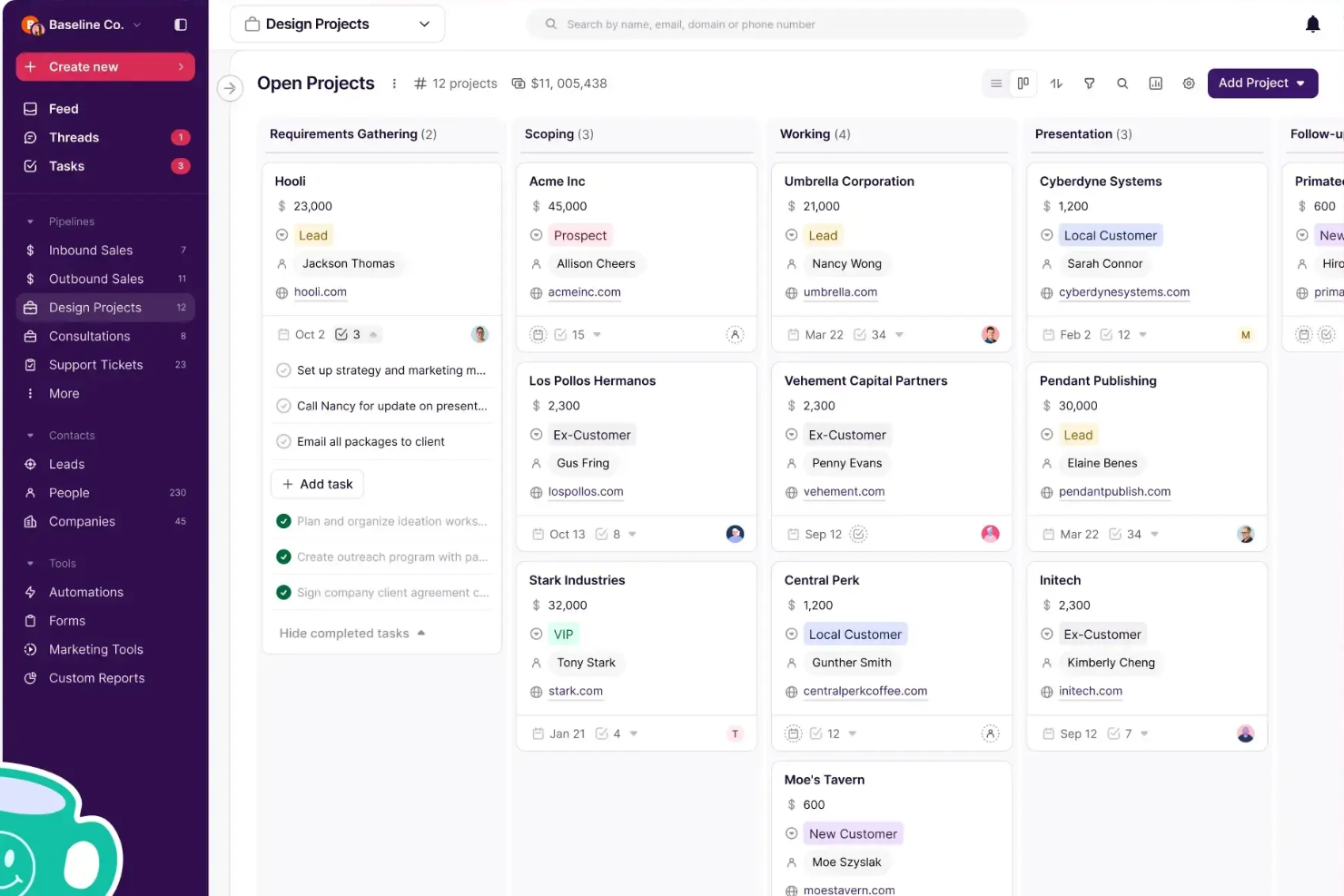
Copper is a CRM platform designed for small to midsize businesses that want to manage client relationships and sales activities alongside project tasks, helping teams keep customer data and project progress connected in one place.
Who Is Copper Best For?
Copper is a strong fit for agencies and service-based businesses that need to manage client relationships and project delivery within a single platform.
Why I Picked Copper
I picked Copper as one of the best because of how it handles the sales-to-delivery handoff that trips up so many agencies. When a deal closes, you can duplicate it directly into a project pipeline—no handoff doc, no re-entering client details, no briefing a separate tool. The client context your sales team built up just carries over. I also like the pipeline automations, which let you trigger task creation or send emails automatically as a project moves through stages, so nothing gets dropped between kickoff and delivery. For agencies running both new business and active client work, having those two workflows in one place—with a shared activity feed your whole team can see—makes a real operational difference.
Copper Key Features
- Contact and relationship tracking: Store and organize all client contact details, communication history, and relationship context in a single record.
- Custom reporting: Build custom reports to track team activity, revenue projections, and client trends across your pipeline.
- Email series and automation: Set up automated email sequences that trigger based on pipeline stage changes or form submissions.
- Mobile app: Log calls and SMS automatically from your phone so client interactions are captured without manual data entry.
Copper Integrations
Integrations include Gmail, Google Calendar, Google Drive, Mailchimp, Google Sheets, LinkedIn, RingCentral, DocuSign, QuickBooks, and Dropbox.
Pros and Cons
Pros:
- Integrates CRM and project management
- Chrome extension brings tools into Gmail, Calendar, LinkedIn, and more
- Ideal for Google Workspace-based client teams
Cons:
- Does not connect to Microsoft 365, Outlook, or other email platforms
- Could offer more robust project management features, like resourcing
Ziggu
Best for client portal integration
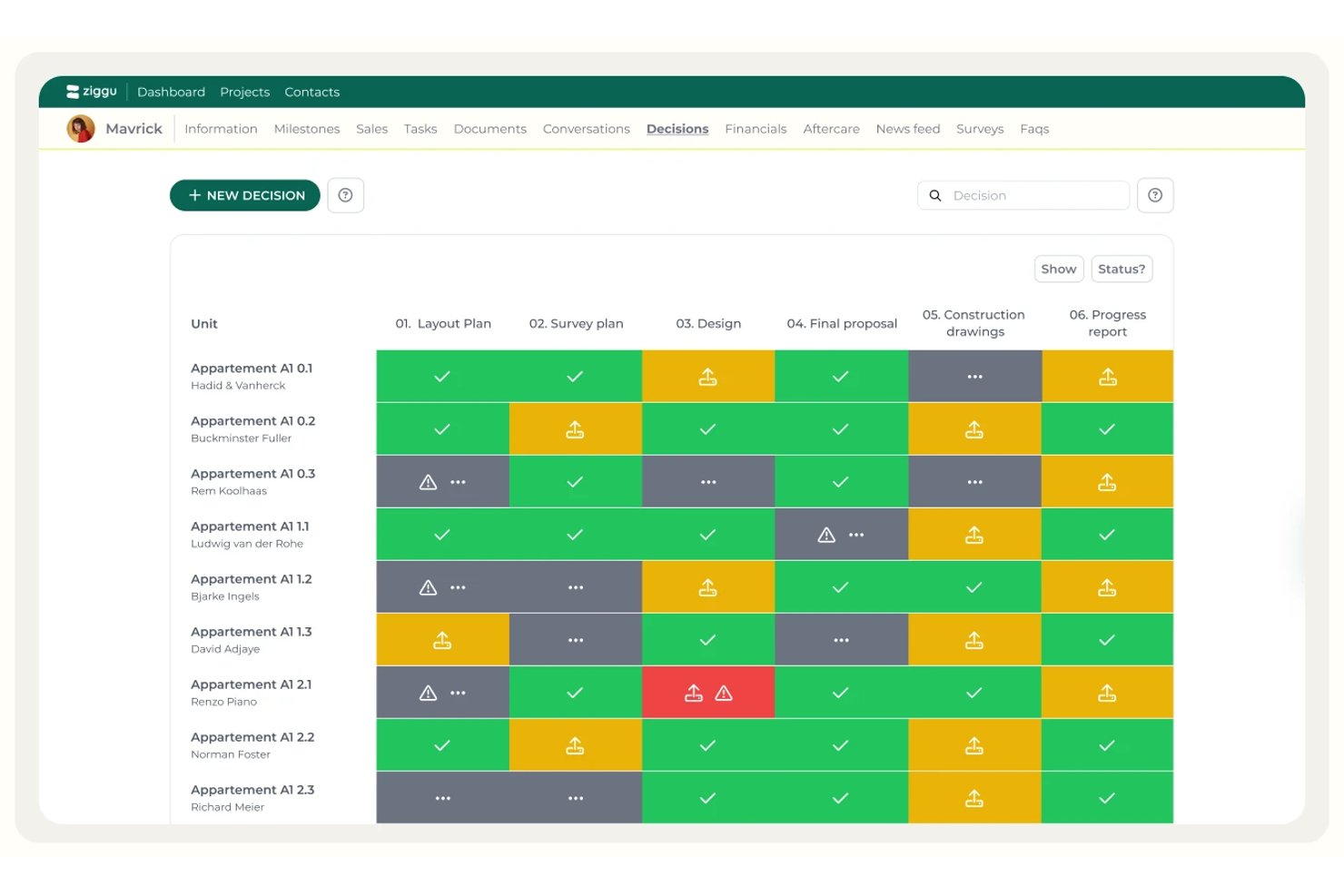
Ziggu is a client portal and project coordination platform built for construction and property development teams, combining milestone-based planning, task management, document sharing, and client approvals in one place.
Who Is Ziggu Best For?
Ziggu is built for construction and property development teams that need a structured client portal to manage approvals, documents, and decisions across multiple active projects.
Why I Picked Ziggu
I picked Ziggu as one of the best because of how it handles client portal integration in construction and property development projects. I love the Decisions & Approvals module specifically: you upload multiple proposals, clients compare and sign off digitally, and every approval gets a timestamped audit trail automatically. The milestone-driven workflow templates are equally impressive, auto-releasing tasks and documents to the right parties the moment a project phase activates.
Ziggu Key Features
- Branded client portal: Clients get a secure, personalized portal to track project progress, view documents, and communicate with your team without email.
- Conversations inbox: Per-project communication threads with read receipts, internal private notes, and status indicators keep client and team exchanges organized.
- Milestone-triggered workflow templates: Reusable project templates automatically release tasks, messages, and documents to the right parties when a milestone is activated.
- Option lists: Clients select from priced finishes or add-ons directly in their portal, with financial impact updated in real time.
Ziggu Integrations
Ziggu offers 13+ integrations, including Microsoft SharePoint, Google Drive, Dropbox, Salesforce, Power BI, Archisnapper, and LetsBuild. Its public REST API supports custom integrations.
Pros and Cons
Pros:
- Milestone templates automate repetitive project workflows
- Decisions and approvals provide timestamped audit trails
- Branded client portal centralizes client communication
Cons:
- Lacks resource and workload management features
- No Gantt, Kanban, or calendar project views
Best for integration with Zoho Suite
Zoho Projects is a cloud-based project management platform for teams and businesses needing to organize tasks, track progress, and collaborate on complex projects.
Who Is Zoho Projects Best For?
Zoho Projects is a great fit for small to mid-sized businesses already using Zoho tools that need project management built into their existing workflows.
Why I Picked Zoho Projects
I picked Zoho Projects as one of the best because of how naturally it fits into a broader Zoho ecosystem. My team uses Zoho CRM alongside Projects, and the two-way sync means that when a deal closes in CRM, we can spin up a project immediately without re-entering any data. I also like the Zoho Books and Invoice integration—time logs from Projects feed directly into invoices, so billing clients based on actual hours tracked is a one-click process. The integration with Zoho People is another feature I rely on, since it pulls in approved leave requests automatically and prevents me from assigning tasks to someone who's out of office.
Zoho Projects Key Features
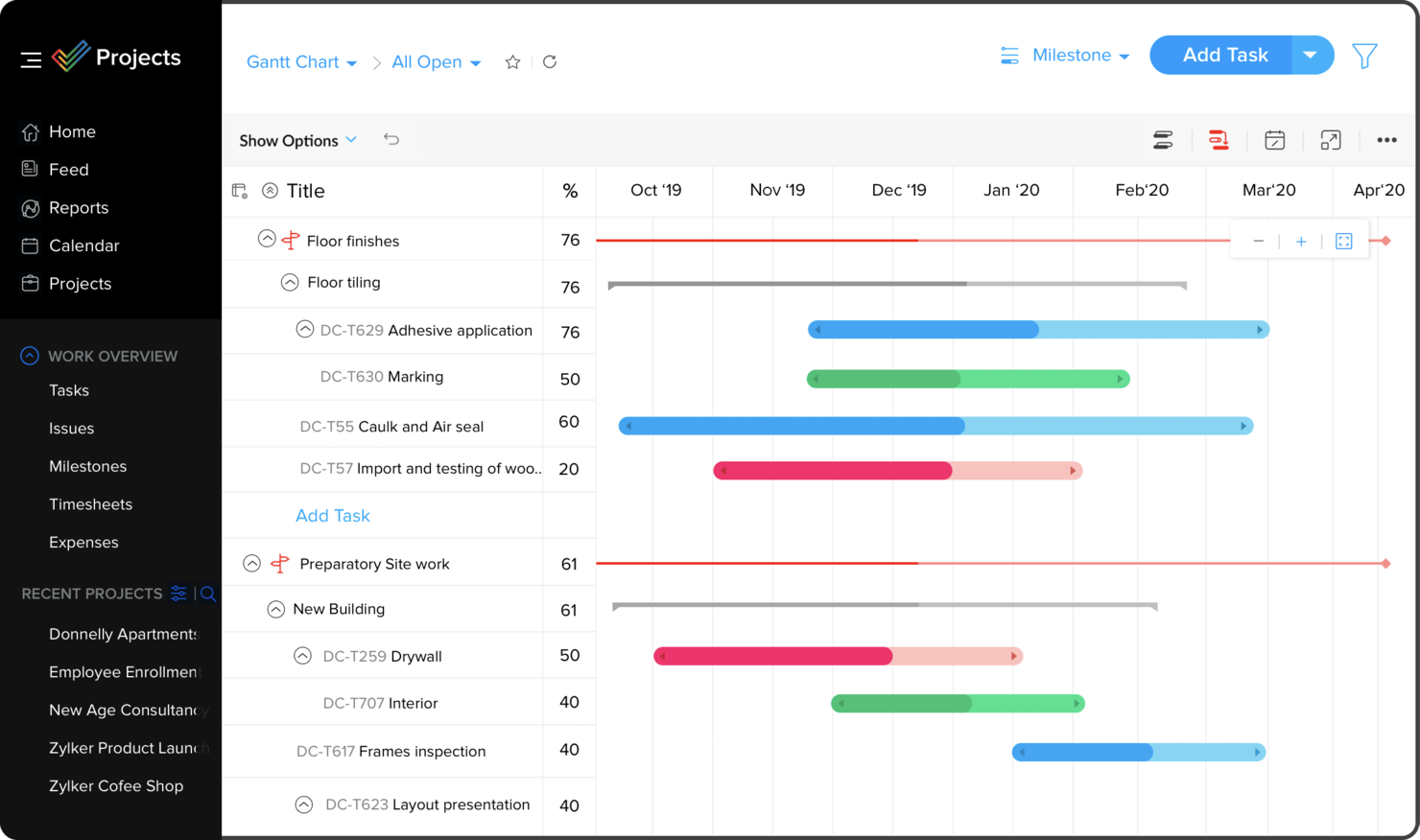
- Gantt chart: Visualize project timelines, set task dependencies, and reschedule tasks directly from the chart view.
- Blueprint workflow automation: Design step-by-step task workflows that automatically update fields, assign users, and trigger alerts as statuses change.
- Resource management: View each team member's workload in real time and reassign tasks when someone is over- or under-allocated.
- Project baseline tracking: Capture a snapshot of your project plan at any point and compare it against actual progress to spot schedule deviations early.
Zoho Projects Integrations
Integrations include Zoho CRM, Zoho Desk, Zoho People, Zoho Books, Zoho Analytics, Google Calendar, Microsoft Teams, Dropbox, GitHub, and Slack.
Pros and Cons
Pros:
- Time-track multiple tasks at once
- Easy workflow automations
- Unlimited number of projects
Cons:
- Lack of file type export options
- Does not integrate with Quickbooks
New Product Updates from Zoho Projects
Zoho Projects Adds CodeX Scripts for Custom Modules
Zoho Projects now supports CodeX Scripts for custom modules, enabling conditional logic and rules for creating, updating, and deleting records. For more information, visit Zoho Projects' official site.
 .
Other Project Management Software
Here are some additional project management software options that didn’t make it onto my shortlist, but are still worth checking out:
- Quire
For task breakdown
- ClickUp
For replacing multiple separate tools
- Resource Guru
For preventing over-allocation
- Quickbase
For platform versatility
- Bubble PPM
For portfolio management
- Microsoft Project
For teams using Microsoft 365
- FigJam
For creative collaboration
- Rocketlane
Client portals for sharing insights
- Dock
For customer collaboration management
- Plaky
For cost-effective project management
- MeisterTask
For simple project management
- Nifty
For milestone tracking
- Kintone
For custom applications
- Forecast
For early detection of project budget risks
- Backlog
For software developers
- Workzone
For comprehensive project visibility
- ProofHub
For organizing via board and table views
- Shortcut
For uniting planning and development
- Teamwork.com
For remote teams
- awork
UI for usability & intuitiveness
- Jira
For cross-team project tracking
- Adobe Workfront
For customizable project templates
- Bonsai Agency Software
For end-to-end agency projects
- Confluence
For software managers
- Nutcache
For advanced time tracking
- Basecamp
For centralized project docs
- FunctionFox
For creatives
- Deltek Replicon Time
For intelligent project time capture
- Polaris PSA By Replicon
For real-time project insights
- Planview AdaptiveWork
For enterprise resource planning


Related PM Software Guides
Here are some more specific guides to different types of PM solutions based on common industries, business scenarios, and a few of the most common additional requirements:
Industry-specific:
Common business needs:
What is Project Management Software?
Project management software is a digital tool that helps users plan, organize, assign, and track work to complete projects more efficiently.
It lets users schedule tasks, set deadlines, allocate resources, manage budgets, and communicate efficiently. From basic task tracking to complex, multi-phase projects. Web based project management software centralizes information and automates routines to enhance coordination, accountability, and execution across industries.
How I Evaluate Project Management Software
I split my evaluation into three parts, giving the most weight to core functionality: assign tasks, track deadlines, and spot blocked work. Next, I look for differentiators such as portfolio visibility or automation rules. Finally, I consider what sits beyond features, including onboarding, support, and pricing value.
Core Functionality (Table Stakes For This List)
When I'm selecting tools for my list, I score each one on a scale from 0 (does not offer the functionality) to 5 (excels in this area) for each core functionality listed below. I then convert the total into a percentage to help assess each tool's overall fit, with extra weight on any functionalities I’ve deemed essential.
- Task & Project Tracking (Essential): I look for task assignments, statuses, due dates, and dependencies, such as linking design approval to an engineering handoff.
- Scheduling & Timelines (Essential): I assess whether calendar or Gantt views make milestone dates and dependencies visible, and let teams adjust plans when delivery dates shift.
- Team Collaboration: I check for project-linked comments, mentions, notifications, and file sharing that keep decisions and handoffs attached to the work.
- Resource & Workload Management: I look for workload views that show who owns tasks across projects and help spot over-allocation before deadlines slip.
- Reporting & Progress Tracking: I evaluate dashboards and reports for clear views of project status, overdue work, milestones, and progress across workstreams.
Once I have a list of tools that meet the criteria, I consider what sets each platform apart.
Differentiating Factors (What Sets Vendors Apart)
Here's how I compare and contrast different vendors:
Standout Features
I look for automation engines that go beyond simple notifications. The best ones let you trigger task reassignments or status changes based on conditions—like auto-escalating a blocked task when a dependency misses its due date. Portfolio-level dashboards matter just as much, because project managers juggling multiple workstreams need a single view to compare progress and risk across projects without opening each one. I also evaluate native time tracking tied directly to tasks, since it feeds into budget and profitability reporting without requiring a separate tool.
Beyond Features
I evaluate whether a tool scales from a small team to an enterprise rollout without forcing a costly plan jump just to unlock admin controls or multiple workspaces. Tech stack connectivity matters just as much—I check for two-way sync with tools like Slack, Jira, and Google Workspace, since one-way pushes create data silos fast. I also look at onboarding support, especially migration paths from legacy tools and dedicated success resources for multi-team deployments.
How to Choose Project Management Software
To be honest, most PM tools fortunately cover the basics: tasks, deadlines, comments and some kind of timeline. The differences show up in how well a tool fits the way your team works.
I go through this in more detail in my guide on choosing PM tools, but here's a few of the most common scenarios and where I'd point you:
- Complex, multi-team projects. If you’re coordinating dependencies across departments or managing a portfolio, you need strong timeline views and cross-project reporting. Wrike, Smartsheet and Celoxis are built for this.
- Agency and client work. If budgets, billable hours and profitability matter as much as deadlines, look for time tracking tied to tasks and budgets. Productive does this well, and Copper connects the sales handoff to delivery.
- Resource-heavy planning. If your biggest problem is knowing who’s available next month, prioritize capacity and forecasting views. Runn and monday AI Workspace lead here.
- Lighter, collaborative work. If your team mostly needs to share tasks, notes and approvals in one place, a simpler tool (Hive is a good example) will be easier to adopt and it'll work just fine for your purposes. I know some teams who use Notion in this case, as well.
Check these before you commit:
- Test your real workflow. Set up one actual project during the trial, including a date change, and see how much rework the tool makes you do.
- Try the reporting you’ll actually need. Build the status update you send stakeholders, and see how long it takes...if it takes more than a few minutes, it won’t get used.
- Check client and guest access if you do agency work. If clients or contractors need visibility, make sure you can share part of a project without exposing everything.
- Confirm security basics. Look for encryption in transit and at rest, and certifications such as ISO 27001 or SOC 2. If you work with EU data, ask where your data is hosted. I've also found that some vendors let you choose the location where it's hosted—be sure to ask.
Features
Here are the PM software features I look for, and what each one actually does for your team. AI is now built into many of them rather than sold or positioned as a separate thing, so I’ve noted where it genuinely helps.
- Task management: Create tasks, assign owners, set due dates and track status. Subtasks and dependencies let you break big work into steps and make sure things happen in the right order. Many tools can now turn meeting notes or a project brief into a starter task list, which saves a lot of setup time.
- Gantt charts and timelines: A visual schedule showing every task across a calendar. The good ones adjust everything downstream when one date moves, so you’re not fixing a whole plan by hand. Some now flag tasks at risk of slipping before they actually do.
- Collaboration: Comments, @mentions and file sharing attached directly to tasks, so conversations stay with the work instead of getting lost in email or Slack. I also find AI thread summaries handy for catching up on a busy project quickly.
- Workload management: Shows each person’s assigned work against their available time. It’s the feature I check first, because it’s the easiest way to spot an overloaded teammate before a deadline slips. AI is starting to suggest who should take on new work based on capacity.
- Reporting and dashboards: Track progress, overdue work and milestones, often across several projects at once. I like tools where I can ask a plain question like “what’s behind schedule?” and get an answer, instead of building a report from scratch.
- Time tracking: Logs hours against tasks or projects. It’s a must if you bill clients or need to see whether a project is staying on budget.
- Portfolio views: A single view across all your projects, comparing progress, risk and resourcing. It’s mainly useful for PMOs and leadership juggling many projects at once.
- Client access: Lets clients or contractors see or approve their part of a project without access to your whole workspace. It cuts down on status emails and keeps internal discussion private.
Costs & Pricing
Most paid plans cost $7–$25 per user per month, so there's really not a wide range in price compared to other business SaaS. Costs largely vary based on team size, but add-ons and storage can also typically add to the price. This table shows what you can expect:
Plan Comparison Table for PM Software
| Plan Type | Average Price | Common Features |
|---|---|---|
| Free | $0 | Task management, basic reporting, limited user access, limited storage |
| Basic | $7 - $15 per user/month | Enhanced task management, project templates, file sharing, basic integrations, all features of Free plan |
| Intermediate | $20 - $30 per user/month | Advanced reporting, customizable dashboards, more users and storage, additional integrations, all features of Basic plan |
| Advanced | $30+ per user/month | Resource management, advanced security, premium support, API access, customizable features, all features of Intermediate plan |
Benefits
Implementing project management software tools can provide several benefits for your team and your business. Here are a few you can look forward to:
- Enhanced Collaboration: Project management tools foster teamwork by offering a central platform for communication, file sharing, and updates. This streamlines communication and keeps everyone aligned.
- Improved Project Planning: Strong planning features—like scheduling, resource allocation, and milestone tracking—help users build realistic, achievable project plans.
- Better Resource Management: Users can monitor availability, manage workloads, and avoid over-allocation to ensure efficient use of people and materials.
- Enhanced Risk Management: Built-in tools for risk assessment, tracking, and response planning help teams minimize potential project disruptions.
- Data-Driven Decision-Making: Real-time data and analytics support informed decisions by tracking metrics, spotting trends, and making timely adjustments.
Trends in Project Management Software
In my research, I sourced countless product updates, press releases, and release logs from different project management software vendors. Here are some of the emerging trends I’m keeping an eye on:
- AI-Powered Resource Forecasting: More tools now use AI to predict resource needs, which helps teams allocate staff and budgets more accurately. Workload balancing and demand forecasting are becoming standard to boost efficiency and avoid burnout.
- Hybrid Work Adaptability: Platforms are adding support for both remote project management and in-office project management, including async communication, virtual workspaces, and adaptable workflows.
- Scenario Planning for Risk Management: Advanced tools now let users model outcomes based on variables like budget shifts or delays. This helps teams spot risks and adjust plans early, which is ideal for complex timelines or supply chain issues.
- Embedded Financial Tracking: More platforms now include financial tracking within project workflows. This allows teams to manage budgets, expenses, and profits across multi-project, cost-sensitive businesses without relying on separate accounting tools.
- Sustainability Metrics: Some tools now offer dashboards with carbon tracking and sustainability analytics. These help teams measure energy use, waste, and emissions to meet CSR and environmental goals.
Project Management Software FAQs
Here are some of the frequently asked questions I receive about project management software.
How can I get my team to adopt new project management software?
Involve your team early in the selection process and explain the benefits clearly. Offer hands-on training and assign a “champion” to answer questions. Start with a core group, gather feedback, and refine your approach before a full rollout. Celebrating quick wins—like time saved or better collaboration—encourages ongoing use.
What mistakes should I avoid when choosing project management software?
Don’t pick a tool just because it’s popular—focus on your team’s needs and workflows. Avoid underestimating setup and training time, and don’t ignore your team’s input during evaluation. Skipping integration checks or neglecting to review security features can lead to adoption issues or data risks down the line.
Should I pick project management software based on my methodology?
Yes, it’s best to select software that supports your preferred methodology, like Agile, Scrum, or Waterfall. Some tools are designed for specific approaches, while others are more flexible. Make sure the platform can handle your team’s process, terminology, and reporting needs.
How do I roll out new project management software for my team?
Start by setting clear goals and outlining your team’s workflow needs. Pick a software that matches those requirements. Next, import data or set up new projects, and train your team using built-in guides or tutorials. Assign roles, set permissions, and configure integrations with other tools your team uses. Monitor adoption and gather feedback to adjust settings and workflows for a smoother rollout.
How do I connect project management software with my other tools?
Most project management software connects with popular apps like Slack, Google Drive, and Microsoft Teams using built-in integrations or third-party connectors like Zapier. You’ll usually link your accounts in settings, then set rules for how tasks or files sync between systems. This helps automate workflows and keeps your team working in one place.
Can I migrate data from one project management tool to another?
Yes, most leading project management software offers data import features, letting you bring over tasks, users, attachments, and project histories. Check for CSV import options, direct integrations, or dedicated migration tools provided by the vendor. Some companies also offer onboarding support or services to help you transfer data without losing important information.
How do I scale project management software as my team grows?
Look for platforms with customizable permissions, advanced user roles, and the ability to manage multiple projects or portfolios. Make sure the software supports increased storage, robust reporting, and integrations your team will need as it grows. Review pricing tiers and add-ons, since costs often rise with more users or advanced features.