

10 Best Project Management Software Picked For 2026

10 Best Project Management Software Shortlist


Project management software helps your team plan work, assign tasks, track deadlines and report progress in one place. Most paid plans cost $7–$25 per user per month, and once your team actually uses it, checking a project’s status takes a glance at a dashboard rather than a round of Slack messages.
I’ve managed large-scale agency projects for 20 years and used many different PM tools, and I know the tricky part is that most of them look identical on a feature list, but they’re often built for different kinds of work. Some are designed for complex projects with detailed timelines and resource planning, while others are better for lightweight task tracking across a busy team.
To help you choose, I used, tested, and compared 40+ tools, evaluating their task tracking, timeline views, team collaboration, workload management and reporting. Here are my top picks, with an explanation of who each product is best suited for.
Why Trust Our Software Recommendations
Our team has been testing and reviewing software since 2012. As project managers ourselves, we know how difficult—and important—it is to choose the right software.
For this guide, we evaluated tools using hands-on testing and independent research, scoring tools using our selection criteria. We also draw on insights from industry thought leaders and practicing project management experts.
Our reviews reflect our human editorial judgment, not a sales pitch.
Expert reviewers:
Video Walkthrough of Project Management Tools
Check out our video on the top project management tools:

Project Management Tools Comparison Table
Score legend (out of 5)
- Excellent 4.5–5
- Good 4–4.4
- Average 3–3.9
- Below average 2–2.9
- Poor 1–1.9
| Tool | Starting Price | Website | |||||||
|---|---|---|---|---|---|---|---|---|---|
| Best for cross-functional enterprise delivery | 4.5 out of 5 | 5 | 4 | 4 | 4 | 5 | 5 | $10/user/month Free plan + 14-day free trial + demo available | Book Demo |
| Best for spreadsheet-style project planning | 4.5 out of 5 | 5 | 4 | 4 | 4 | 5 | 5 | $12/user/month 30-day free trial available | Website |
| Best for agency projects and budgeting | — | 4 | 3 | 5 | 5 | — | 4 | $10/user/month 14-day free trial + demo available | Book Demo |
| Best for capacity and resource planning | — | 2 | 1 | 4 | 5 | — | 3 | $7/user/month 30-day free trial available | Book Demo |
| Best for building custom workflows without code | — | 5 | 4 | 5 | 4 | — | 4 | $9/user/month Free plan + 14-day trial available | Book Demo |
| Best for portfolio management with built-in reporting | — | 5 | 3 | 5 | 5 | — | 5 | $10/user/month 14-day free trial + free demo available | Website |
| Best for running tasks, chat and email in one place | 4.0 out of 5 | 4 | 4 | 4 | 3 | 5 | 4 | $5/user/month Free plan + 14-day free trial + demo available | Website |
| Best for agencies that want CRM and projects in one | — | 3 | 3 | 3 | 1 | — | 1 | $29/user/month 14-day free trial + demo available | Website |
| Best for preventing over-allocation | — | 2 | — | 4 | 5 | — | 4 | $5/user/month Free trial available | Website |
| Best for construction teams sharing progress w/clients | — | 2 | 4 | 2 | — | 3 | 1 | €45/month 14-day free trial + free demo available | Website |


Best Project Management Software Reviews
Here’s my in-depth review and analysis of the best project management software. I’ll walk you through pros and cons, features and functionality, to help guide you to a better understanding of each tool’s capabilities and suitability for your projects.
Wrike
Best for cross-functional enterprise delivery
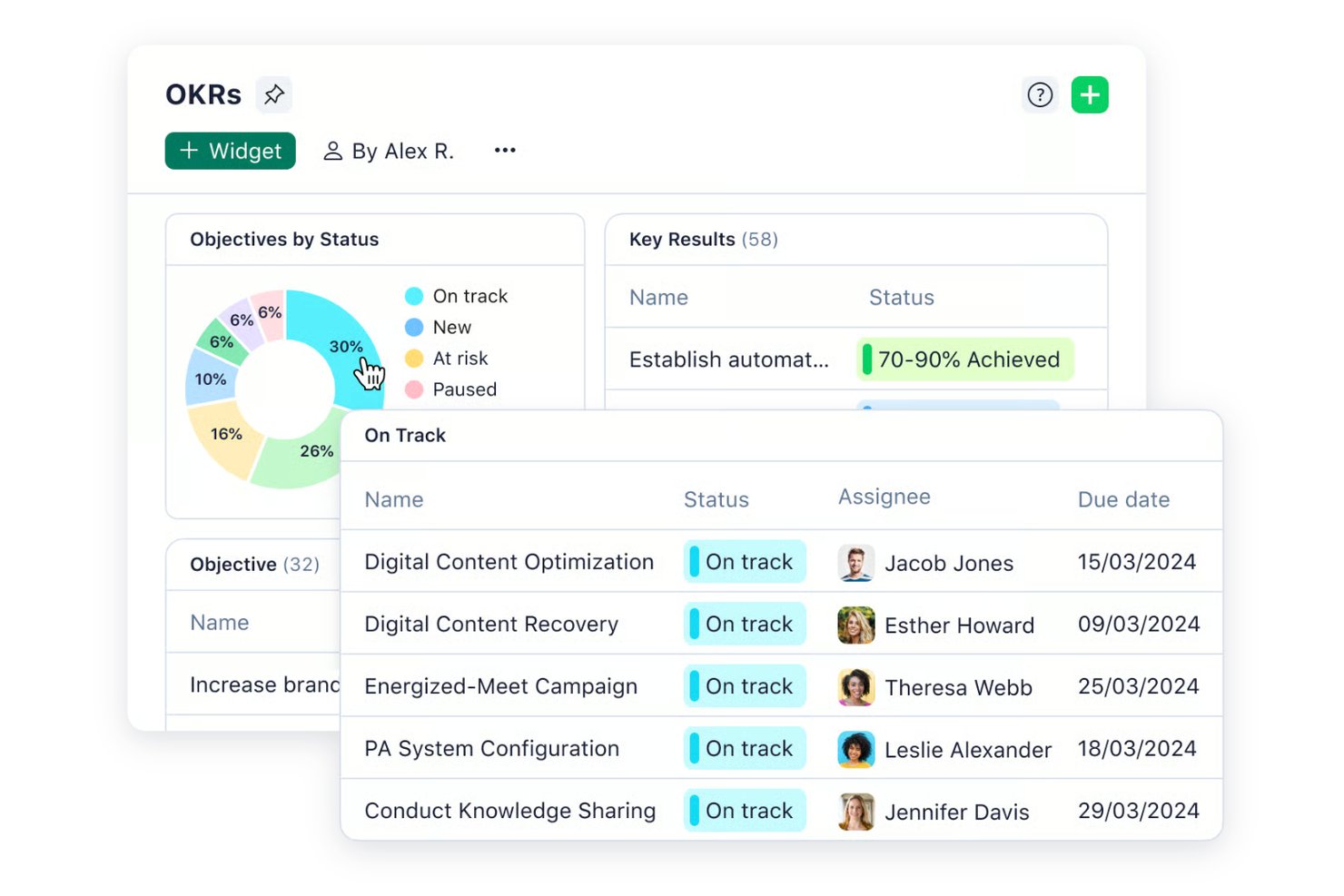
Wrike is a project management platform built for teams in fast-paced industries who need customizable workflows, advanced resource planning, and real-time collaboration to keep complex projects on track.
Who Is Wrike Best For?
Wrike is a strong fit for mid-size to enterprise teams managing multiple concurrent projects across cross-functional departments like marketing, product, and professional services.
Why I Picked Wrike
Wrike earns its spot on my shortlist because it handles the kind of project complexity that most tools start to buckle under. I particularly like the cross-project portfolio management view, which lets my team track dependencies and workloads across multiple large initiatives at once—without jumping between separate tools. Resource bookings let me reserve capacity by team member or job role and estimate hours against actual availability, so I can catch overallocation before it becomes a problem. The effort management feature also helps when scoping tasks, since I can flag how demanding a piece of work is before assigning it, which makes forecasting delivery timelines much more accurate at scale.
Wrike Key Features
- Custom project views: Toggle between Gantt, Kanban, Board, Calendar, and Chart views to visualize project progress in the format that works best for your team.
- Scrum boards: Manage Agile sprints with shared Scrum boards, backlog prioritization, and real-time progress tracking.
- Custom request forms: Build dynamic intake forms that automatically generate tasks, projects, and workflows when submitted.
- Proofing and approvals: Mark up and approve 30+ file types, including video and HTML, directly within tasks.
Wrike Integrations
Integrations include Microsoft Teams, Salesforce, Google Drive, Adobe Creative Cloud, Zoom, Power BI, Tableau, QuickBooks, Miro, and Microsoft SharePoint.
Pros and Cons
Pros:
- Right-click context menus allow you to do more with fewer clicks
- AI features are available in all plans at no extra cost
- Worldclass onboarding through video walkthroughs
Cons:
- 2FA is locked behind the enterprise plan
- Some integrations require higher-tier plans or a paid add-on
New Product Updates from Wrike

Wrike Adds Advanced Filters to Chart View
Wrike introduces new default filters in Chart view, including relative dates, exclusion conditions, multiple filters per field, and status group filtering. These updates help teams refine project data and reporting. For more information, visit Wrike’s official site.
Best for spreadsheet-style project planning
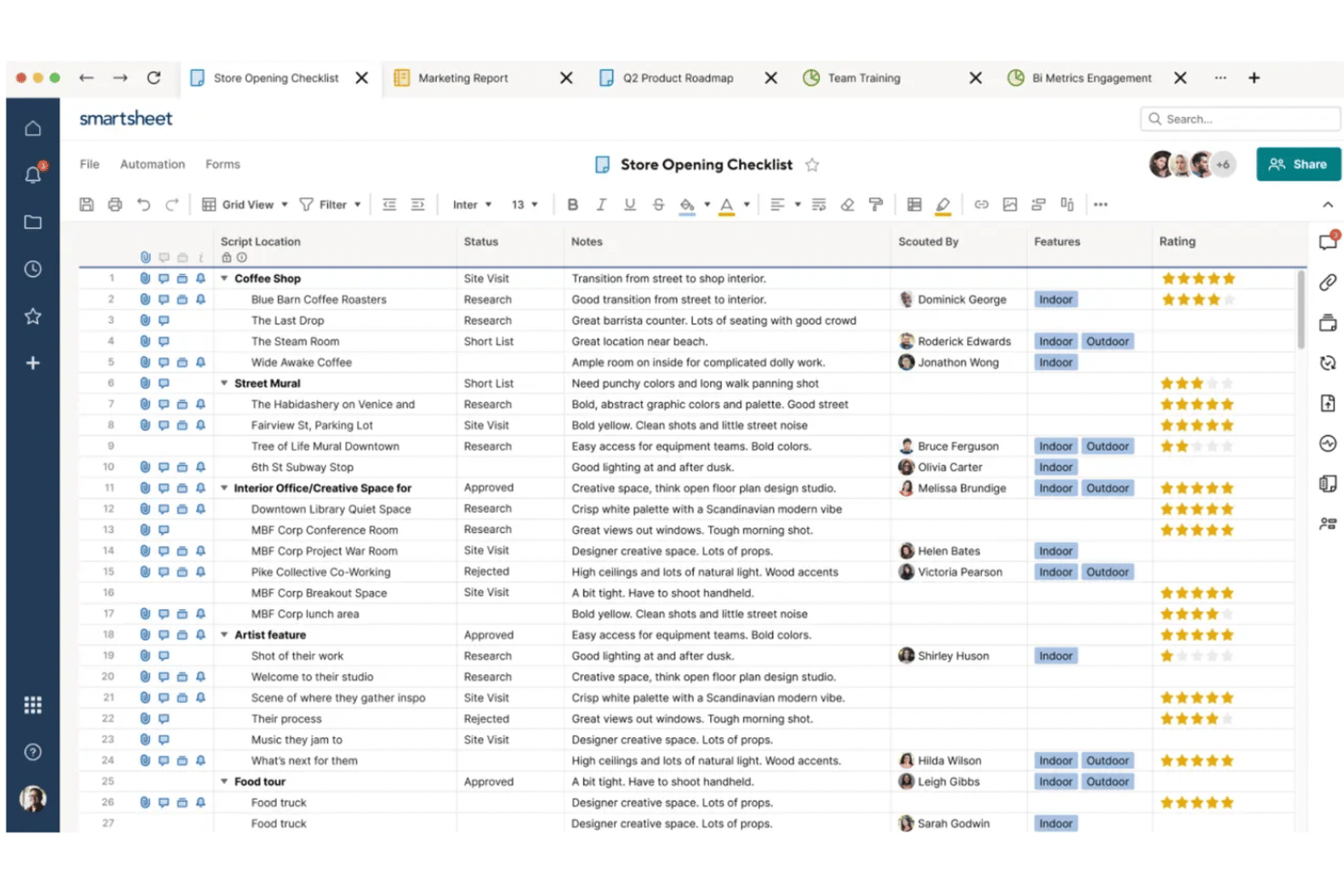
Smartsheet is a spreadsheet-style work management platform that combines project planning, task tracking, workflow automation, and cross-team reporting in a single, grid-based interface.
Who Is Smartsheet Best For?
Smartsheet fits project managers and operations teams who need portfolio-level visibility and want the structure of a spreadsheet with the power of automated workflows behind it.
Why I Picked Smartsheet
I picked Smartsheet as one of the best because its grid-based interface gives project managers the familiarity of a spreadsheet with the structure of a real project management tool underneath. I especially like how Gantt views, dependency tracking, and critical path mapping sit natively inside the same sheet you're already working in, so there's no context-switching. The workload tracking view also makes it easy to spot over-allocation before it becomes a problem.
Smartsheet Key Features
- Workflow automation: Set up no-code, condition-based workflows to automatically send alerts, assign tasks, request approvals, and update rows without manual follow-up.
- Portfolio management: Roll up multiple related projects into a centralized portfolio view to track health, status, and priorities across your entire program.
- Proofing: Collect and manage stakeholder feedback directly on images and documents, with comments pinned to specific content and version history preserved.
- AI-powered project setup: Generate full project workspaces and content using AI, so you can move from brief to structured plan without building everything from scratch.
Smartsheet Integrations
Smartsheet offers over 175 integrations, including Jira Software, Microsoft Teams, Slack, Power BI, Salesforce, ServiceNow, and Tableau. It provides a REST API, SDKs, and an MCP Server for custom connectivity, plus Zapier.
Pros and Cons
Pros:
- Automated approvals reduce manual follow-up
- Gantt charts map dependencies and milestones
- Customizable dashboards consolidate project status
Cons:
- Report formatting limits dashboard flexibility
- Complex formulas take time to configure
New Product Updates from Smartsheet

Smartsheet Adds Claude Sheets Export Integration
Smartsheet introduces Send to Smartsheet in Claude Sheets (beta), allowing users to transfer AI-generated plans into Smartsheet with rows, dates, numbers, and dropdowns preserved. This helps teams turn AI-generated plans into collaborative workflows. For more information, visit Smartsheet’s official site.
 .
Best for agency projects and budgeting
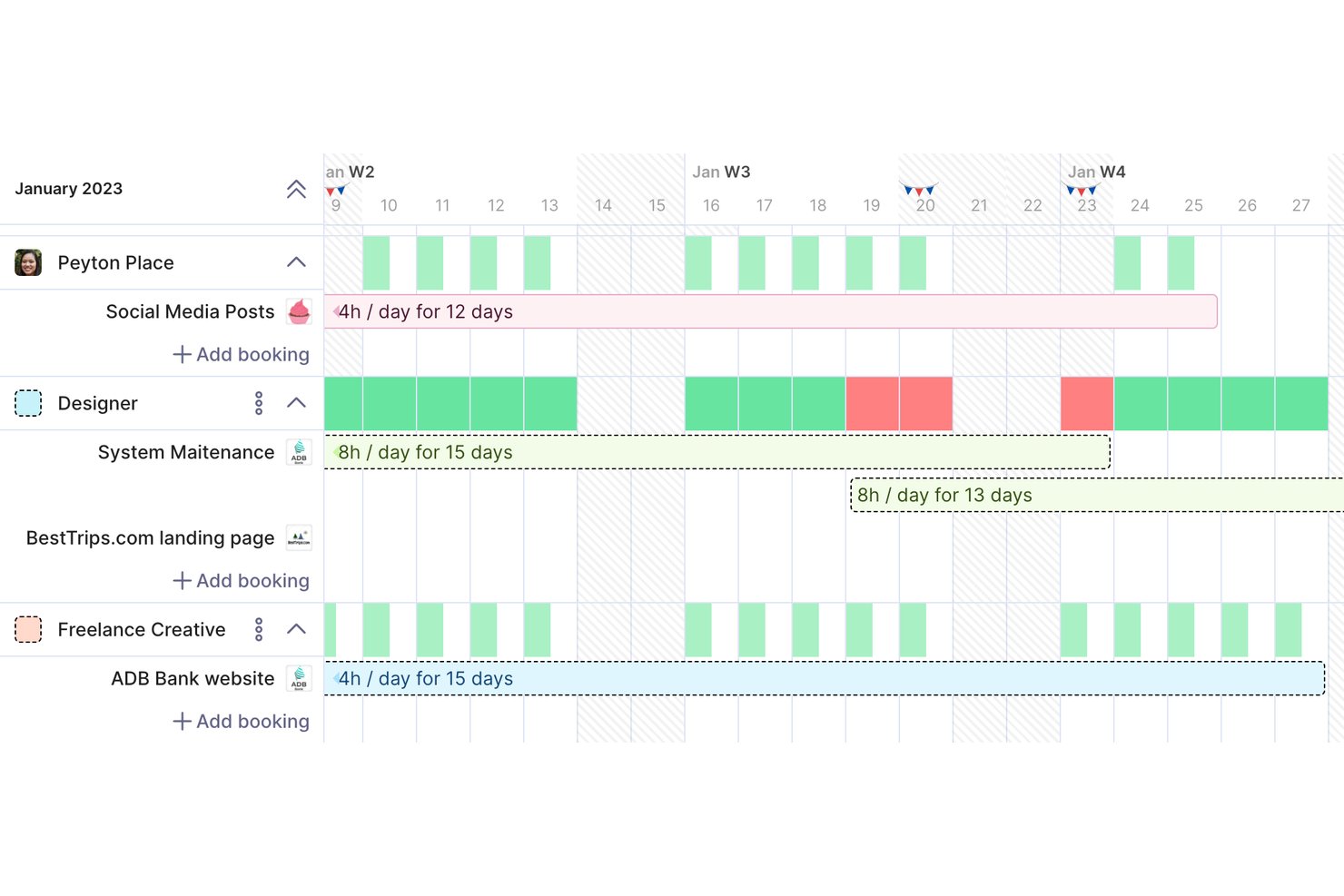
Productive is a project management platform built for agencies and service businesses that need to manage projects, budgets, resources, and profitability in one place.
Who Is Productive Best For?
Productive is a strong fit for digital agencies, creative studios, and consulting firms that need to track project delivery and financial performance together.
Why I Picked Productive
Productive earns its spot on my shortlist because it connects project delivery and financial performance in a way most project management tools simply don't. I love that every hour my team logs against a project updates the budget in real time—so I can see profitability without waiting on a monthly finance report. The budget overrun alerts are useful; I can set custom thresholds so the team is notified before a project burns through its budget, not after. For agency work, the ability to split large projects into separate budget phases helps manage long-running client retainers.
Productive Key Features
- Multiple project views: Switch between Gantt, Kanban board, timeline, calendar, list, and table views depending on how your team prefers to work.
- Resource scheduling: See team capacity, balance workloads, and manage time off requests directly within the resource planner.
- Project templates: Duplicate full project setups—including tasks, subtasks, descriptions, and assignees—to spin up new client projects faster.
- Automated workflows: Trigger actions like creating invoices or sending Slack messages based on project activity, without manual follow-up.
Productive Integrations
Integrations include Jira, HubSpot, Xero, Google Calendar, Sage, Gmail, Microsoft Outlook, Slack, BugHerd, and QuickBooks.
Pros and Cons
Pros:
- Integrated financial management and reporting
- User-friendly interface that simplifies task management
- Robust resource planning and tracking
Cons:
- Initial setup can be time-consuming
- Could have more integrations
New Product Updates from Productive
Productive Adds Email and Calendar Integrations for Agents
Productive adds Gmail, Outlook, Google Calendar, and Outlook Calendar connectors for its AI agents. These integrations let agents manage emails and create calendar events directly within Productive. For more information, visit Productive’s official site.
Runn
Best for capacity and resource planning
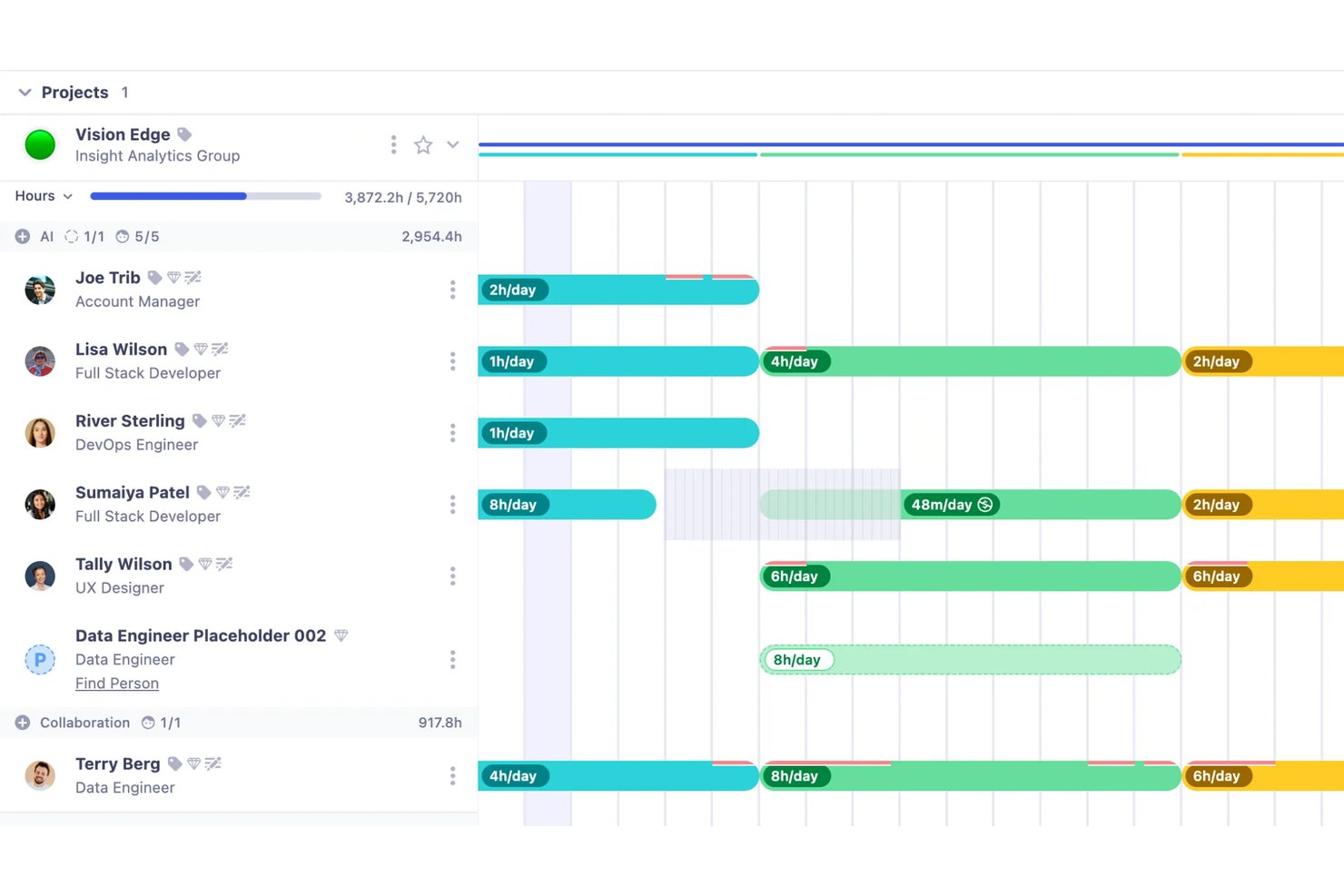
Runn is a resource management and capacity planning tool that covers project scheduling, financial forecasting, utilization tracking, and workforce planning across teams and projects.
Who Is Runn Best For?
Runn is a strong fit for operations managers and team leads who need clear visibility into who's available, what capacity exists, and how resources are allocated across multiple projects.
Why I Picked Runn
I picked Runn as one of the best because it handles capacity and resource planning at a level most project management tools can't match. I love how the capacity charts give you a live view of team availability and workload across every active project, so you're not guessing when you commit to new work. The scenario planning feature lets me toggle tentative projects on and off to see exactly how a potential new engagement affects existing team capacity before anyone says yes to a client.
Runn Key Features
- Project budgets and rate cards: Set billing rates and budget limits per project to track costs, revenue, and margins from the start.
- Phases and milestones: Break projects into defined stages with milestones to organize timelines and monitor delivery progress.
- Timesheets: Log daily or weekly hours against projects and compare actuals to scheduled time to track variance.
- Planned-versus-actual tracking: Review the difference between forecasted and recorded hours to adjust resourcing decisions and improve future estimates.
Runn Integrations
Runn offers marketplace integrations with Jira, Harvest, and Clockify, plus connections to HR tools such as BambooHR and Workday. It also provides a REST API for custom integrations and supports Zapier.
Pros and Cons
Pros:
- Budget and actuals reporting flags variance
- Scenario planning tests tentative project demand
- Cross-project capacity charts reveal workload gaps
Cons:
- No in-app discussion threads for teams
- No subtasks or dependency-based task tracking
Best for building custom workflows without code
monday AI Workspace is a project management platform that combines customizable boards, timeline and Gantt scheduling, no-code workflow automation, and AI-powered planning, risk analysis, and reporting across projects and portfolios.
Who Is monday AI Workspace Best For?
monday AI Workspace suits cross-functional teams that need a flexible project hub they can shape to their processes without relying on developers or IT.
Why I Picked monday AI Workspace
I like monday AI Workspace because it's the most flexible project hub I've seen for teams that need custom workflows but can't afford to loop in a developer every time a process changes. It's useful how you can describe a project in plain language and have AI generate a structured board with tasks, owners, milestones, and dependencies already mapped out. The no-code automation builder then handles the repetitive handoffs, like status updates, notifications, and task creation, so your team stays focused on actual project work rather than admin.
monday AI Workspace Key Features
- WorkDocs: Create collaborative documents directly inside your workspace and convert content into live board items without leaving the platform.
- Risk Analyzer: An AI agent that scans project schedules, dependencies, and workloads to flag risks and suggest timeline or ownership adjustments.
- Custom dashboards: Combine data from multiple boards into a single configurable dashboard to monitor live progress across projects and portfolios.
- Time tracking: Log time spent on individual tasks directly within boards to support effort reporting and project billing.
monday AI Workspace Integrations
monday AI Workspace offers 850+ integrations and apps, including native integrations with Slack, Trello, Box, Salesforce, and GitHub. Its GraphQL API supports custom integrations.
Pros and Cons
Pros:
- Automations reduce repetitive status-chasing
- AI drafts plans with owners and dependencies
- Board dashboards clarify cross-project ownership
Cons:
- Large boards can load slowly
- Complex schedules need substantial setup
New Product Updates from monday AI Workspace
monday AI Workspace Adds Human Approval Routing
monday AI Workspace adds a human-in-the-loop approval block to AI Workflows, sending approval requests and routing workflow paths based on responses. For more information, visit monday AI Workspace's official site.

Celoxis
Best for portfolio management with built-in reporting
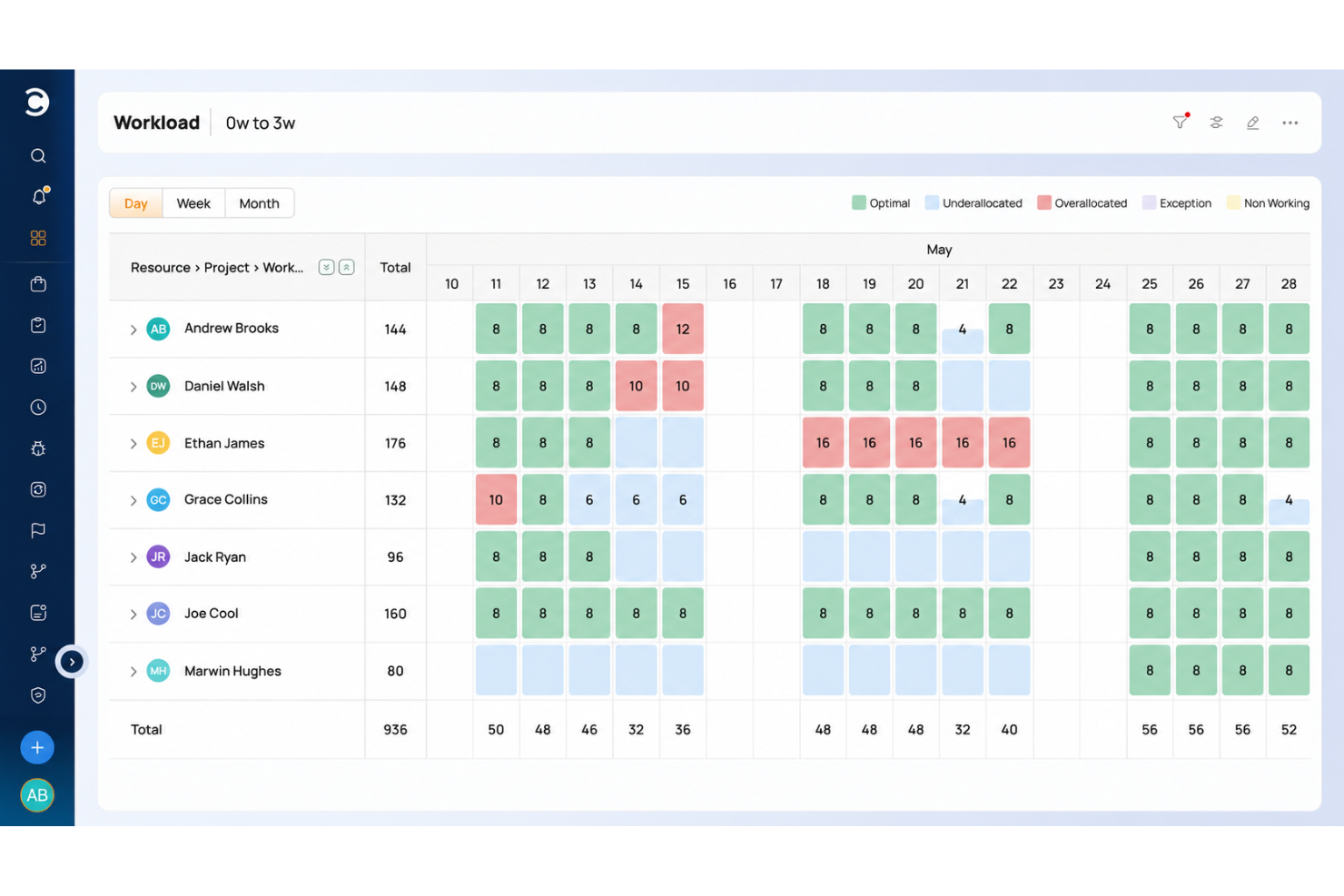
Celoxis is a project and portfolio management platform that brings together Gantt scheduling, resource capacity planning, financial tracking, and BI-grade reporting across your entire project portfolio.
Who Is Celoxis Best For?
Celoxis suits operations managers and IT project directors who need to manage multiple projects at once and want portfolio visibility, resource capacity data, and financial reporting in a single platform.
Why I Picked Celoxis
Celoxis earns its spot on my shortlist because of how well it handles portfolio-level visibility alongside genuinely useful built-in reporting. I love that you can build customizable BI-grade dashboards that pull together project status, resource utilization, and financial data across your entire portfolio in one view. The critical-path Gantt scheduling and cross-project capacity planning mean I can see exactly where bottlenecks are forming before they become problems.
Celoxis Key Features
- Critical-path Gantt scheduling: Interactive Gantt charts with automatic scheduling, four dependency types, and lead/lag settings that recalculate downstream dates across linked projects.
- Resource capacity planning: Cross-project workload and capacity views with job roles, work calendars, and overload alerts so you can spot and resolve conflicts before they hit delivery.
- Project financial tracking: Track labor and material costs, project budgets, and planned versus actual spend at the task and portfolio level, with profitability monitoring built in.
- Client portal: A customizable, branded portal that gives external stakeholders access to permitted projects and tasks without needing a full project management license.
Celoxis Integrations
Celoxis has 21 integrations configured inside the platform, including Jira, Microsoft Project, Microsoft Excel, Google Drive, Salesforce, QuickBooks Online, Slack, GitHub, and Azure DevOps. It also supports REST API integrations and Zapier.
Pros and Cons
Pros:
- Cross-project workload alerts reveal resource conflicts
- Linked-project Gantt charts recalculate downstream schedules
- Portfolio dashboards unite status, costs, and capacity
Cons:
- Mobile app limited for complex planning
- Dashboard and workflow setup takes time
Hive
Best for running tasks, chat and email in one place
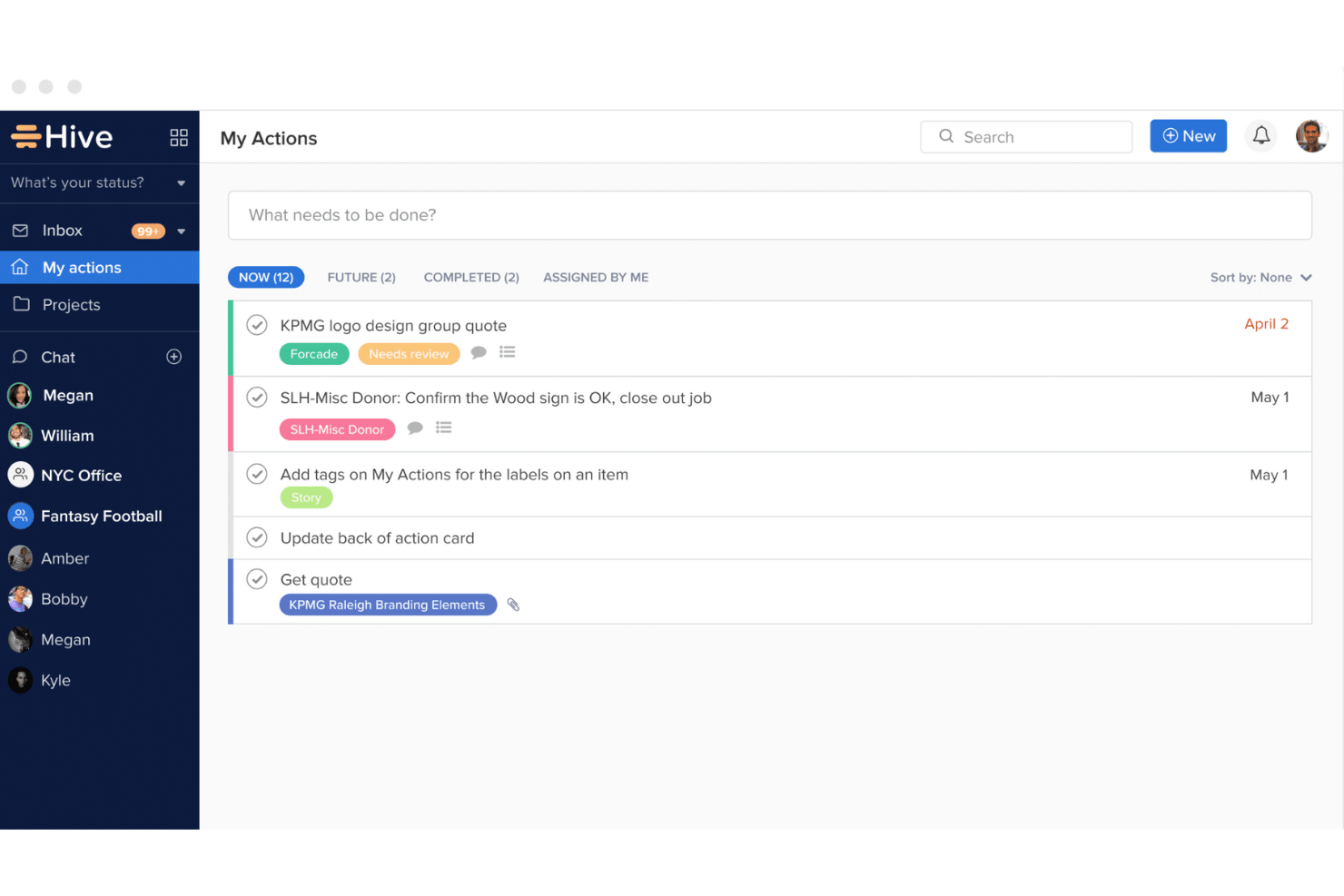
Hive is a project management platform that brings tasks, native chat, email, collaborative notes, proofing, and workflow automation into a single workspace.
Who Is Hive Best For?
Hive is a strong fit for project managers and team leads who want tasks, chat, and email consolidated in a single workspace rather than spread across multiple tools.
Why I Picked Hive
I picked Hive as one of the best because it genuinely consolidates tasks, chat, and email into a single workspace rather than just linking them loosely. I can open an email thread in Hive Mail, turn it into an action card, and loop in teammates via native chat without leaving the app. Hive Notes adds another layer by letting my team co-edit meeting documents directly alongside the relevant project, so context never gets lost across separate tools.
Hive Key Features
- Portfolio view: See all your projects in one grid with status, owners, custom fields, and milestones alongside each other.
- Workflow automation: Set up triggers and actions to automate repeatable tasks and move work between connected apps.
- Time tracking: Log time directly on action cards and roll it into timesheets for billing or reporting.
- Multiple project views: Switch between list, board, Gantt, calendar, and timeline views to suit how your team works.
Hive Integrations
Hive offers over 1,000 integrations, including native connections with Jira, Slack, GitHub, Google Drive, Google Calendar, Microsoft Teams, Zoom, and QuickBooks. Its REST API supports custom integrations.
Pros and Cons
Pros:
- Workload views help balance assignments
- Portfolio views clarify cross-project ownership
- Keeps tasks, notes, chat, approvals together
Cons:
- Larger projects can trigger lag and glitches
- Mobile app offers fewer task-management capabilities
Copper
Best for agencies that want CRM and projects in one
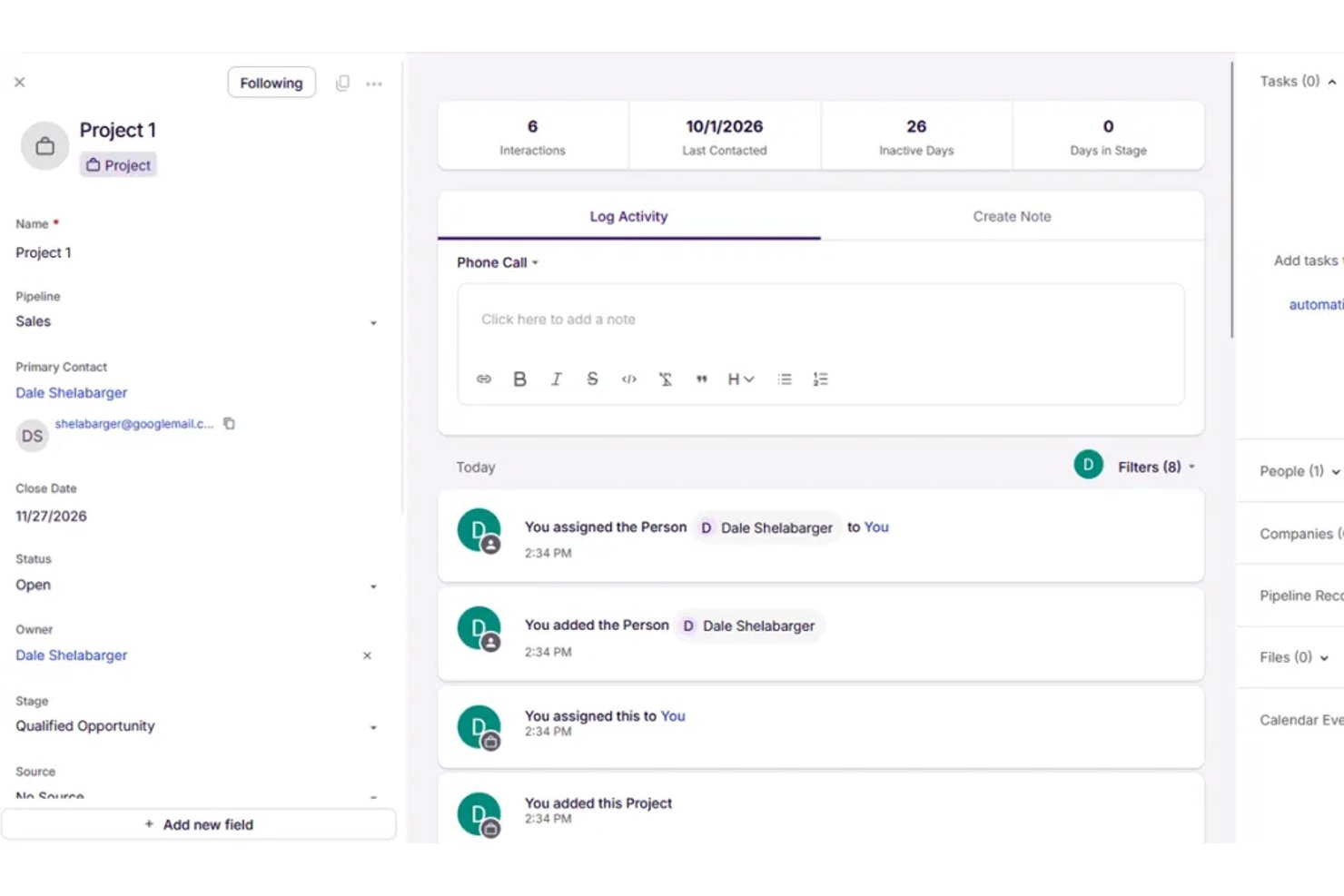
Copper is a CRM platform that layers project pipelines, task management, and client communication tracking on top of its core relationship management features, making it a hybrid tool for teams that run both sales and delivery workflows.
Who Is Copper Best For?
Copper is a strong fit for client-service agencies that run sales and project delivery inside a single Google Workspace environment.
Why I Picked Copper
It's not a standard PM tool like Wrike or Clickup, but I've included Copper in my top picks because it bridges sales and delivery in a single workspace, which can be useful in service delivery scenarios. When a deal closes, you can roll it straight into a project pipeline without re-entering a single field, keeping client context intact from first pitch to final deliverable. I also like that project automations can trigger tasks as work moves through stages, so your delivery workflow runs alongside your CRM without any manual handoffs.
Copper Key Features
- Task and subtask creation: Break project work into tasks and smaller subtasks, each with an assignable owner and due date.
- Google Workspace integration: Work with Copper directly inside Gmail, Google Calendar, and Google Drive without switching between apps.
- Kanban and list views: Switch between board and list views to manage project pipeline records across stages.
- Workflow automation: Set up automated triggers that create tasks, update records, or move projects through stages based on defined conditions.
Copper Integrations
Copper documents seven native integrations, including Gmail, Google Calendar, Google Drive, Google Sheets, and Looker Studio. It also offers a REST API, webhooks, and Zapier.
Pros and Cons
Pros:
- Automates task creation as projects change stages
- Assigns tasks, subtasks, owners, and due dates
- Carries closed deals into project pipelines
Cons:
- Tasks don’t appear on shared calendars
- No workload or capacity planning views

Best for preventing over-allocation
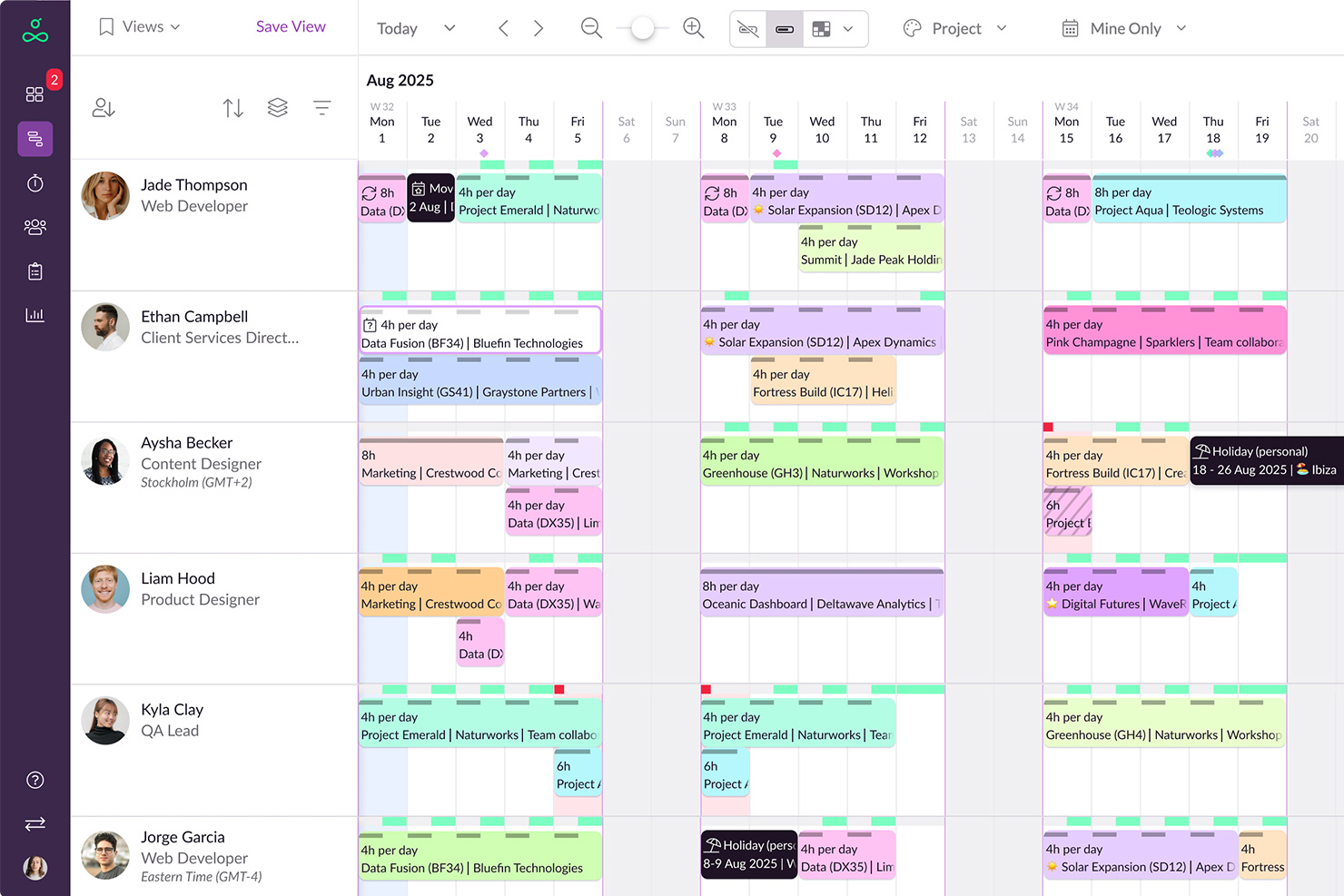
Resource Guru is a resource management platform designed for project managers and teams who need to balance workloads, track availability, and schedule people or equipment without the risk of double-booking or confusion.
Who Is Resource Guru Best For?
Resource Guru is a strong fit for agencies, consultancies, and professional services teams that manage multiple projects and need clear visibility into who's available and when.
Why I Picked Resource Guru
Resource Guru earns its spot on my shortlist because of how well it handles the over-allocation problem that quietly derails so many projects. I particularly like the clash management system—when a booking conflicts with someone's existing schedule, Resource Guru flags it immediately and offers a waiting list for unresolved bookings rather than just letting the conflict sit. The availability heatmap is another feature I rely on heavily; it color-codes each team member's workload so I can see at a glance who's at capacity, who's approaching burnout territory, and who has room for more work. I also use the approval workflows to protect high-demand team members from getting double-booked across competing projects.
Resource Guru Key Features
- Drag-and-drop scheduling: Move and resize bookings directly on the schedule to adjust assignments without re-entering data.
- Leave and time-off management: Log vacation, sick days, and public holidays so they're reflected in availability calculations.
- Utilization reports: Track billable vs. non-billable time across individuals or teams over any date range.
- Custom fields and filters: Tag resources by skill, department, or location and filter the schedule to surface the right people quickly.
Resource Guru Integrations
Integrations include Outlook Calendar, Google Calendar, Jira, Asana, Slack, Microsoft Teams, Google Sheets, Salesforce, Workday, and Basecamp.
Pros and Cons
Pros:
- Comprehensive reporting features
- Good leave management system
- Offers flexibility in managing different types of resources
Cons:
- Could offer more native integrations
- Approval workflows are limited to higher-tier plans
New Product Updates from Resource Guru

Resource Guru Adds More Control Over Calendar Sync
Resource Guru adds more control over Google and Outlook Calendar sync, including source calendar selection and destination calendar options. These updates help users manage external events and Resource Guru bookings with less clutter. For more information, visit Resource Guru’s official site.
 .
Ziggu
Best for construction teams sharing progress w/clients
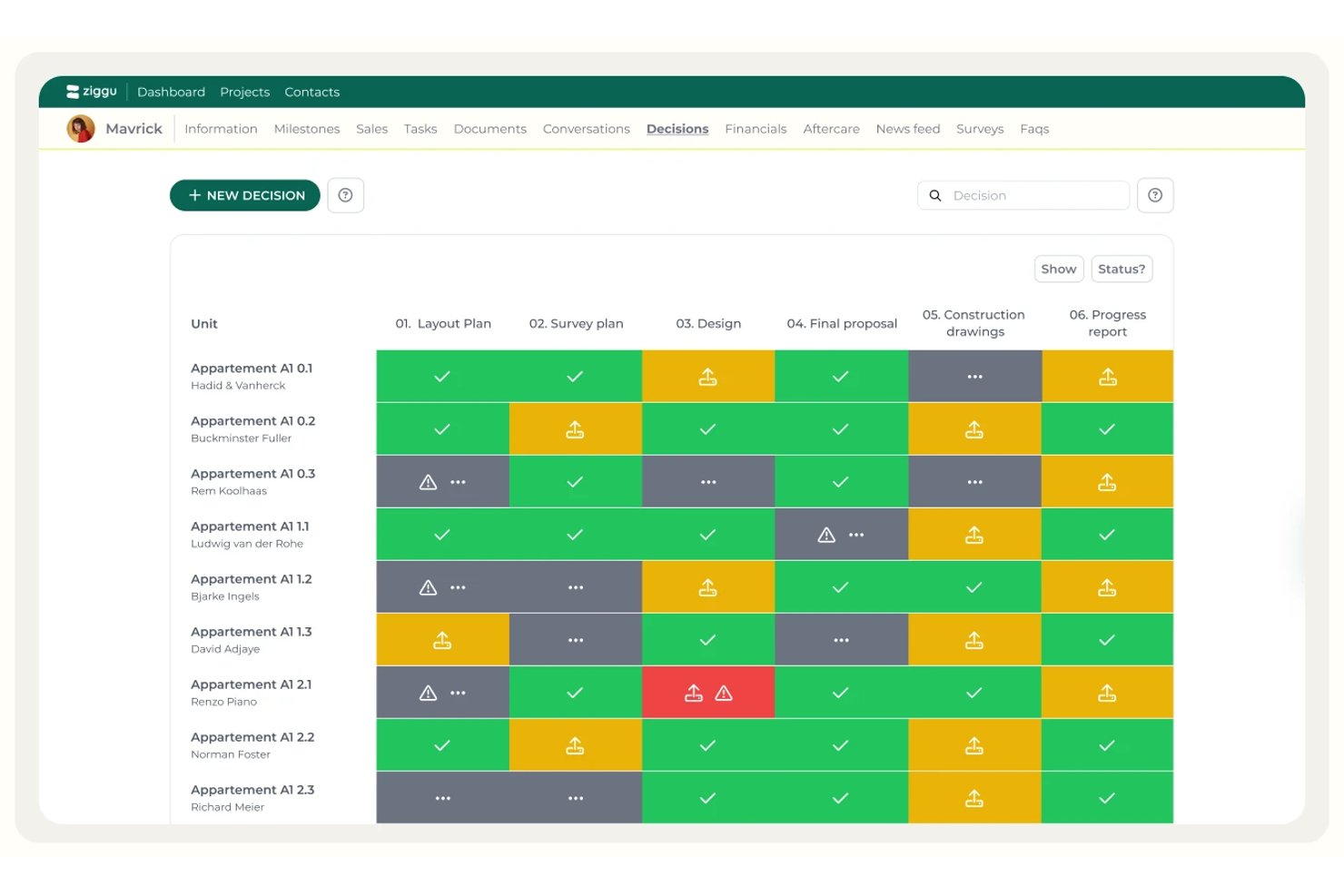
Ziggu is a client portal and project management platform built for project-based businesses, combining milestone tracking, structured client communications, document sharing, decision workflows, and task assignment in one place.
Who Is Ziggu Best For?
Ziggu fits construction and property development teams that need a structured way to keep clients informed and involved throughout a project.
Why I Picked Ziggu
I picked Ziggu as one of the best options for construction teams that need to keep clients in the loop at every project phase. I love how milestone-based workflows let you attach tasks, decisions, and messages to each phase, so clients see exactly where their project stands without you sending manual updates. The structured client portal also lets buyers review and approve decisions with e-signatures, keeping a clear approval record throughout the build.
Ziggu Key Features
- Reusable project journeys: Build a project timeline once and apply it as a template across multiple projects.
- Partner portal: Invite external partners and suppliers to collaborate, view project details, or upload proposals.
- Issue and snag tracking: Log site issues with photos and notes, assign responsibilities, and let clients confirm resolution.
- CRM integrations: Connect HubSpot, Salesforce, Dynamics 365, Zoho, Teamleader, or Whise to create Ziggu projects directly from your CRM.
Ziggu Integrations
Ziggu has documented integrations with HubSpot, Salesforce, Dynamics 365, Zoho, Teamleader, Whise, SharePoint, Nextcloud, Exact Online, and Power BI. It also provides REST API, webhooks, and MCP access for custom connections.
Pros and Cons
Pros:
- Approval records clarify client decisions
- Milestones keep clients informed
- Centralizes client and supplier conversations
Cons:
- No timeline chart or calendar view
- No workload or capacity planning
Other Project Management Software
Here are some additional project management software options that didn’t make it onto my shortlist, but are still worth checking out:
- Zoho Projects
For full-featured PM on a small-team budget
- Quire
For task breakdown
- Quickbase
For platform versatility
- Bubble PPM
For portfolio management
- Asana
For visual project tracking
- Basecamp
For centralized project docs
- Jira
For cross-team project tracking
- Adobe Workfront
For customizable project templates
- Planview AdaptiveWork
For enterprise resource planning
- Forecast
For early detection of project budget risks
- ProjectManager
For real-time project tracking and insights
- MeisterTask
For simple project management
- Easy Projects
For project profitability tracking
- Trello
For syncing work across boards
- Accelo
For real-time project profitability tracking
- ClickUp
For replacing multiple separate tools
- Nifty
For milestone tracking
- VOGSY
For automating project budget calculations
- Teamhood
For agile agency project management
- Tempo Portfolio Manager
For complex projects
- Deltek Replicon Time
For intelligent project time capture
- Kintone
For custom applications
- Notion
For linking projects to team knowledge
- Workzone
For comprehensive project visibility
- Project.co
For client-facing projects
- FigJam
For creative collaboration
- Bonsai Agency Software
For end-to-end agency projects
- Visor
For spreadsheet-based management
- Height
For startups that need to build products faster
- Kytes
For agentic AI project automation


Related PM Software Guides
Here are some more specific guides to different types of PM solutions based on common industries, business scenarios, and a few of the most common additional requirements:
Industry-specific:
Common business needs:
What is Project Management Software?
Project management software is a digital tool that helps users plan, organize, assign, and track work to complete projects more efficiently.
It lets users schedule tasks, set deadlines, allocate resources, manage budgets, and communicate efficiently. From basic task tracking to complex, multi-phase projects. Web based project management software centralizes information and automates routines to enhance coordination, accountability, and execution across industries.
How I Evaluate Project Management Software
I split my evaluation into three parts, giving the most weight to core functionality: assign tasks, track deadlines, and spot blocked work. Next, I look for differentiators such as portfolio visibility or automation rules. Finally, I consider what sits beyond features, including onboarding, support, and pricing value.
Core Functionality (Table Stakes For This List)
When I'm selecting tools for my list, I score each one on a scale from 0 (does not offer the functionality) to 5 (excels in this area) for each core functionality listed below. I then convert the total into a percentage to help assess each tool's overall fit, with extra weight on any functionalities I’ve deemed essential.
- Task & Project Tracking (Essential): I look for task assignments, statuses, due dates, and dependencies, such as linking design approval to an engineering handoff.
- Scheduling & Timelines (Essential): I assess whether calendar or Gantt views make milestone dates and dependencies visible, and let teams adjust plans when delivery dates shift.
- Team Collaboration: I check for project-linked comments, mentions, notifications, and file sharing that keep decisions and handoffs attached to the work.
- Resource & Workload Management: I look for workload views that show who owns tasks across projects and help spot over-allocation before deadlines slip.
- Reporting & Progress Tracking: I evaluate dashboards and reports for clear views of project status, overdue work, milestones, and progress across workstreams.
Once I have a list of tools that meet the criteria, I consider what sets each platform apart.
Differentiating Factors (What Sets Vendors Apart)
Here's how I compare and contrast different vendors:
Standout Features
I look for automation engines that go beyond simple notifications. The best ones let you trigger task reassignments or status changes based on conditions—like auto-escalating a blocked task when a dependency misses its due date. Portfolio-level dashboards matter just as much, because project managers juggling multiple workstreams need a single view to compare progress and risk across projects without opening each one. I also evaluate native time tracking tied directly to tasks, since it feeds into budget and profitability reporting without requiring a separate tool.
Beyond Features
I evaluate whether a tool scales from a small team to an enterprise rollout without forcing a costly plan jump just to unlock admin controls or multiple workspaces. Tech stack connectivity matters just as much—I check for two-way sync with tools like Slack, Jira, and Google Workspace, since one-way pushes create data silos fast. I also look at onboarding support, especially migration paths from legacy tools and dedicated success resources for multi-team deployments.
How to Choose Project Management Software
To be honest, most PM tools fortunately cover the basics: tasks, deadlines, comments and some kind of timeline. The differences show up in how well a tool fits the way your team works.
I go through this in more detail in my guide on choosing PM tools, but here's a few of the most common scenarios and where I'd point you:
- Complex, multi-team projects. If you’re coordinating dependencies across departments or managing a portfolio, you need strong timeline views and cross-project reporting. Wrike, Smartsheet and Celoxis are built for this.
- Agency and client work. If budgets, billable hours and profitability matter as much as deadlines, look for time tracking tied to tasks and budgets. Productive does this well, and Copper connects the sales handoff to delivery.
- Resource-heavy planning. If your biggest problem is knowing who’s available next month, prioritize capacity and forecasting views. Runn and monday AI Workspace lead here.
- Lighter, collaborative work. If your team mostly needs to share tasks, notes and approvals in one place, a simpler tool (Hive is a good example) will be easier to adopt and it'll work just fine for your purposes. I know some teams who use Notion in this case, as well.
Check these before you commit:
- Test your real workflow. Set up one actual project during the trial, including a date change, and see how much rework the tool makes you do.
- Try the reporting you’ll actually need. Build the status update you send stakeholders, and see how long it takes...if it takes more than a few minutes, it won’t get used.
- Check client and guest access if you do agency work. If clients or contractors need visibility, make sure you can share part of a project without exposing everything.
- Confirm security basics. Look for encryption in transit and at rest, and certifications such as ISO 27001 or SOC 2. If you work with EU data, ask where your data is hosted. I've also found that some vendors let you choose the location where it's hosted—be sure to ask.
Features
Here are the PM software features I look for, and what each one actually does for your team. AI is now built into many of them rather than sold or positioned as a separate thing, so I’ve noted where it genuinely helps.
- Task management: Create tasks, assign owners, set due dates and track status. Subtasks and dependencies let you break big work into steps and make sure things happen in the right order. Many tools can now turn meeting notes or a project brief into a starter task list, which saves a lot of setup time.
- Gantt charts and timelines: A visual schedule showing every task across a calendar. The good ones adjust everything downstream when one date moves, so you’re not fixing a whole plan by hand. Some now flag tasks at risk of slipping before they actually do.
- Collaboration: Comments, @mentions and file sharing attached directly to tasks, so conversations stay with the work instead of getting lost in email or Slack. I also find AI thread summaries handy for catching up on a busy project quickly.
- Workload management: Shows each person’s assigned work against their available time. It’s the feature I check first, because it’s the easiest way to spot an overloaded teammate before a deadline slips. AI is starting to suggest who should take on new work based on capacity.
- Reporting and dashboards: Track progress, overdue work and milestones, often across several projects at once. I like tools where I can ask a plain question like “what’s behind schedule?” and get an answer, instead of building a report from scratch.
- Time tracking: Logs hours against tasks or projects. It’s a must if you bill clients or need to see whether a project is staying on budget.
- Portfolio views: A single view across all your projects, comparing progress, risk and resourcing. It’s mainly useful for PMOs and leadership juggling many projects at once.
- Client access: Lets clients or contractors see or approve their part of a project without access to your whole workspace. It cuts down on status emails and keeps internal discussion private.
Costs & Pricing
Most paid plans cost $7–$25 per user per month, so there's really not a wide range in price compared to other business SaaS. Costs largely vary based on team size, but add-ons and storage can also typically add to the price. This table shows what you can expect:
Plan Comparison Table for PM Software
| Plan Type | Average Price | Common Features |
|---|---|---|
| Free | $0 | Task management, basic reporting, limited user access, limited storage |
| Basic | $7 - $15 per user/month | Enhanced task management, project templates, file sharing, basic integrations, all features of Free plan |
| Intermediate | $20 - $30 per user/month | Advanced reporting, customizable dashboards, more users and storage, additional integrations, all features of Basic plan |
| Advanced | $30+ per user/month | Resource management, advanced security, premium support, API access, customizable features, all features of Intermediate plan |
Benefits
Implementing project management software tools can provide several benefits for your team and your business. Here are a few you can look forward to:
- Enhanced Collaboration: Project management tools foster teamwork by offering a central platform for communication, file sharing, and updates. This streamlines communication and keeps everyone aligned.
- Improved Project Planning: Strong planning features—like scheduling, resource allocation, and milestone tracking—help users build realistic, achievable project plans.
- Better Resource Management: Users can monitor availability, manage workloads, and avoid over-allocation to ensure efficient use of people and materials.
- Enhanced Risk Management: Built-in tools for risk assessment, tracking, and response planning help teams minimize potential project disruptions.
- Data-Driven Decision-Making: Real-time data and analytics support informed decisions by tracking metrics, spotting trends, and making timely adjustments.
Trends in Project Management Software
In my research, I sourced countless product updates, press releases, and release logs from different project management software vendors. Here are some of the emerging trends I’m keeping an eye on:
- AI-Powered Resource Forecasting: More tools now use AI to predict resource needs, which helps teams allocate staff and budgets more accurately. Workload balancing and demand forecasting are becoming standard to boost efficiency and avoid burnout.
- Hybrid Work Adaptability: Platforms are adding support for both remote project management and in-office project management, including async communication, virtual workspaces, and adaptable workflows.
- Scenario Planning for Risk Management: Advanced tools now let users model outcomes based on variables like budget shifts or delays. This helps teams spot risks and adjust plans early, which is ideal for complex timelines or supply chain issues.
- Embedded Financial Tracking: More platforms now include financial tracking within project workflows. This allows teams to manage budgets, expenses, and profits across multi-project, cost-sensitive businesses without relying on separate accounting tools.
- Sustainability Metrics: Some tools now offer dashboards with carbon tracking and sustainability analytics. These help teams measure energy use, waste, and emissions to meet CSR and environmental goals.
Project Management Software FAQs
Here are some of the frequently asked questions I receive about project management software.
How can I get my team to adopt new project management software?
Involve your team early in the selection process and explain the benefits clearly. Offer hands-on training and assign a “champion” to answer questions. Start with a core group, gather feedback, and refine your approach before a full rollout. Celebrating quick wins—like time saved or better collaboration—encourages ongoing use.
What mistakes should I avoid when choosing project management software?
Don’t pick a tool just because it’s popular—focus on your team’s needs and workflows. Avoid underestimating setup and training time, and don’t ignore your team’s input during evaluation. Skipping integration checks or neglecting to review security features can lead to adoption issues or data risks down the line.
Should I pick project management software based on my methodology?
Yes, it’s best to select software that supports your preferred methodology, like Agile, Scrum, or Waterfall. Some tools are designed for specific approaches, while others are more flexible. Make sure the platform can handle your team’s process, terminology, and reporting needs.
How do I roll out new project management software for my team?
Start by setting clear goals and outlining your team’s workflow needs. Pick a software that matches those requirements. Next, import data or set up new projects, and train your team using built-in guides or tutorials. Assign roles, set permissions, and configure integrations with other tools your team uses. Monitor adoption and gather feedback to adjust settings and workflows for a smoother rollout.
How do I connect project management software with my other tools?
Most project management software connects with popular apps like Slack, Google Drive, and Microsoft Teams using built-in integrations or third-party connectors like Zapier. You’ll usually link your accounts in settings, then set rules for how tasks or files sync between systems. This helps automate workflows and keeps your team working in one place.
Can I migrate data from one project management tool to another?
Yes, most leading project management software offers data import features, letting you bring over tasks, users, attachments, and project histories. Check for CSV import options, direct integrations, or dedicated migration tools provided by the vendor. Some companies also offer onboarding support or services to help you transfer data without losing important information.
How do I scale project management software as my team grows?
Look for platforms with customizable permissions, advanced user roles, and the ability to manage multiple projects or portfolios. Make sure the software supports increased storage, robust reporting, and integrations your team will need as it grows. Review pricing tiers and add-ons, since costs often rise with more users or advanced features.