

10 Best Free Construction Project Management Software Picks for 2026

Best Free Construction Project Management Software Shortlist


Free construction project management software can help you manage tasks, timelines, and teams without adding another software expense. Fortunately, that’s where free construction project management software can help. Whether you’re a small firm or growing quickly, these tools can provide more structure without adding another expense.
In this list, I’ve reviewed the best free tools available. I focused on what actually works for construction teams in the field, scheduling, communication, file sharing, and ease of use, to make sure you can find the best fit for your team's unique needs.
Why Trust Our Software Recommendations
Our team has been testing and reviewing software since 2012. As project managers ourselves, we know how difficult—and important—it is to choose the right software.
For this guide, we evaluated tools using hands-on testing and independent research, scoring tools using our selection criteria. We also draw on insights from industry thought leaders and practicing project management experts.
Our reviews reflect our human editorial judgment, not a sales pitch.
Expert reviewers:
Free Construction Project Management Software Comparison Table
This comparison table summarizes pricing details for my top free construction project management software selections:
| Tool | Best For | Trial Info | Price | ||
|---|---|---|---|---|---|
| 1 | Best for construction management templates | Free plan available; 14-day free trial | From $9/user/month (billed annually) | Website | |
| 2 | Best for Agile workflows | 14-day free trial | From $10/user/month (billed annually) | Website | |
| 3 | Best for interactive Gantt charts | 14-day free trial | From $7/user/month (billed annually) | Website | |
| 4 | Best for an intuitive user interface | Free plan + 15-day free trial available | Pricing upon request | Website | |
| 5 | Best for creating customizable workspaces | Free plan available | From $7/user/month (billed annually) | Website | |
| 6 | Best for all-in-one team chat and file sharing | Free plan available | From $12/user/month (billed annually) | Website | |
| 7 | Best for sharing updates with clients and subs | Free plan available; 14-day free trial | From $9.99/user/month (billed annually) | Website | |
| 8 | Best with GPS time cards and crew scheduling | 30-day free trial | From $49/month (billed annually) | Website | |
| 9 | Best for field punch lists and offline logs | Free plan available | From $39/user/month (billed annually) | Website | |
| 10 | Best for estimate-linked schedule and cost tracking | Free plan available | From $79/month | Website |


Best Free Construction Project Management Software Reviews
Below are my detailed summaries of the best free construction project management software that made it onto my shortlist. My reviews offer a detailed look at the key features, pros & cons, integrations, and ideal use cases of each tool to help you find the best one for you. While some of these tools offer a completely free version, others offer a free trial period. I’ve added a note about what’s free in each of my reviews.
Best for construction management templates
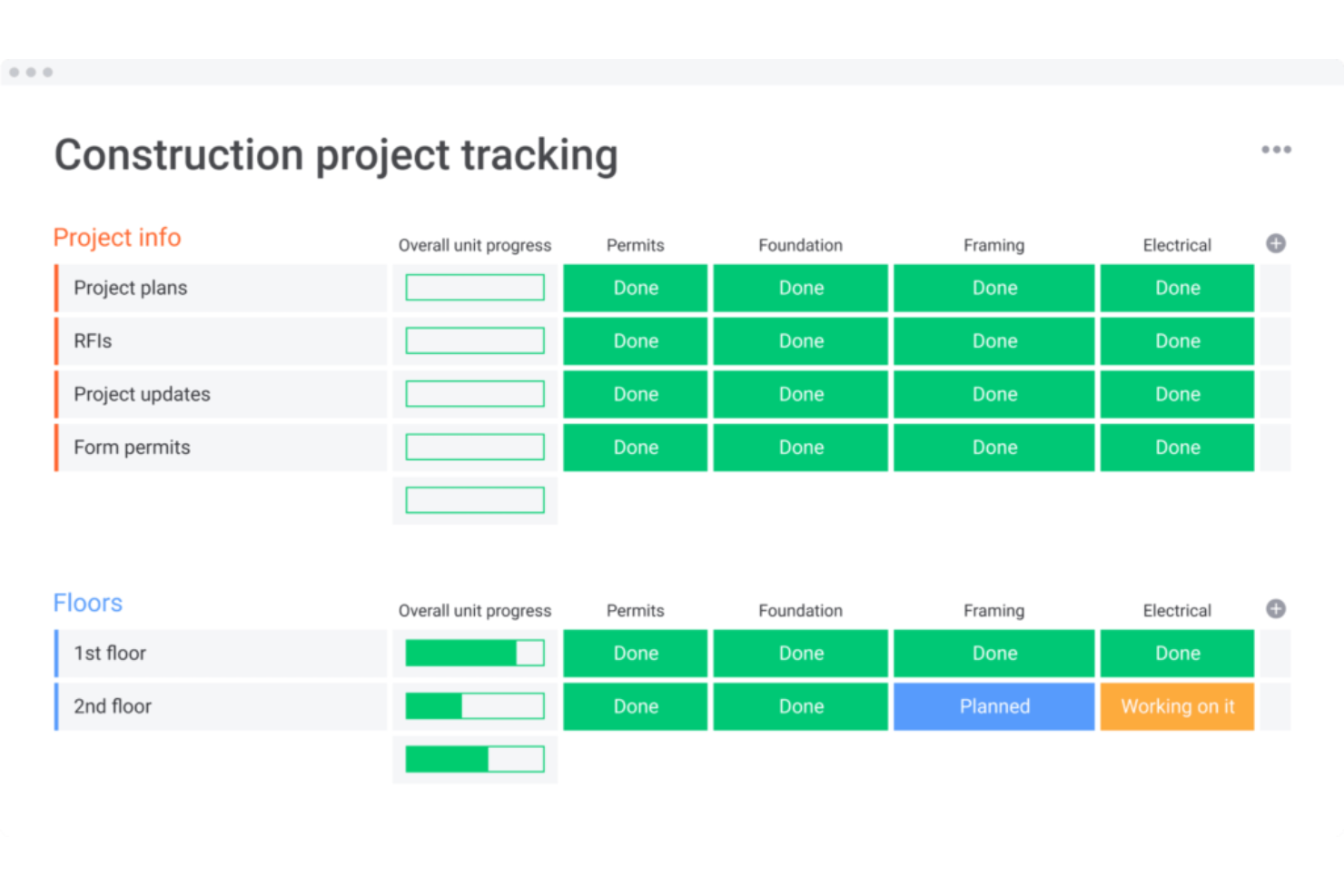
monday AI Workspace is a general-purpose project management platform that brings AI-assisted scheduling, task tracking, document management, and team collaboration to construction workflows through customizable boards and templates.
Who Is monday AI Workspace Best For?
It's a strong fit for small construction teams and independent general contractors who want a flexible, customizable platform over a rigid, construction-native tool.
Why I Picked monday AI Workspace
I picked monday AI Workspace because its construction template library is one of the most practical I've seen for GCs who need to build project workflows from scratch. Templates span every phase, from pre-construction drawings and RFIs through submittals, purchase orders, and budget tracking columns, so there's no blank-canvas guessing. I like that these templates are available on the free plan, and that each one is fully customizable by project type, trade, or stakeholder.
monday AI Workspace Key Features
- AI-powered project scheduling: Lets you plan timelines and spot risks with automated recommendations for task assignment and milestones.
- Mobile app with offline mode: Allows field teams to access documents, communicate, and update tasks even without internet connectivity.
- Customizable daily log boards: Enables tracking of daily jobsite progress with photo uploads and checklists tailored to your workflow.
- Budget tracking columns: Lets you monitor estimated versus actual costs directly in your task boards using customizable columns.
monday AI Workspace Integrations
monday AI Workspace offers hundreds of integrations through its built-in integrations and marketplace, including Slack, Google Workspace, Microsoft 365, Salesforce, DocuSign, Dropbox, HubSpot, Jira, Trello, and Zoom. It also supports Zapier and provides an API for custom integrations.
What's Free?
monday AI Workspace offers a free-forever plan limited to 2 seats, with up to 3 boards, 200+ templates, and access to the iOS and Android apps. Automations, integrations, and advanced reporting are gated behind paid plans, and the 2-seat cap makes it impractical for teams larger than a solo contractor or two-person crew.
Pros and Cons
Pros:
- AI assists with task scheduling and dependencies
- Boards adapt to any construction workflow
- Extensive library of construction-specific templates
Cons:
- Not purpose-built for construction workflows
- Two-seat cap limits real team use
New Product Updates from monday AI Workspace
monday AI Workspace Adds Human Approval Routing
monday AI Workspace adds a human-in-the-loop approval block to AI Workflows, sending approval requests and routing workflow paths based on responses. For more information, visit monday AI Workspace's official site.
Wrike
Best for Agile workflows
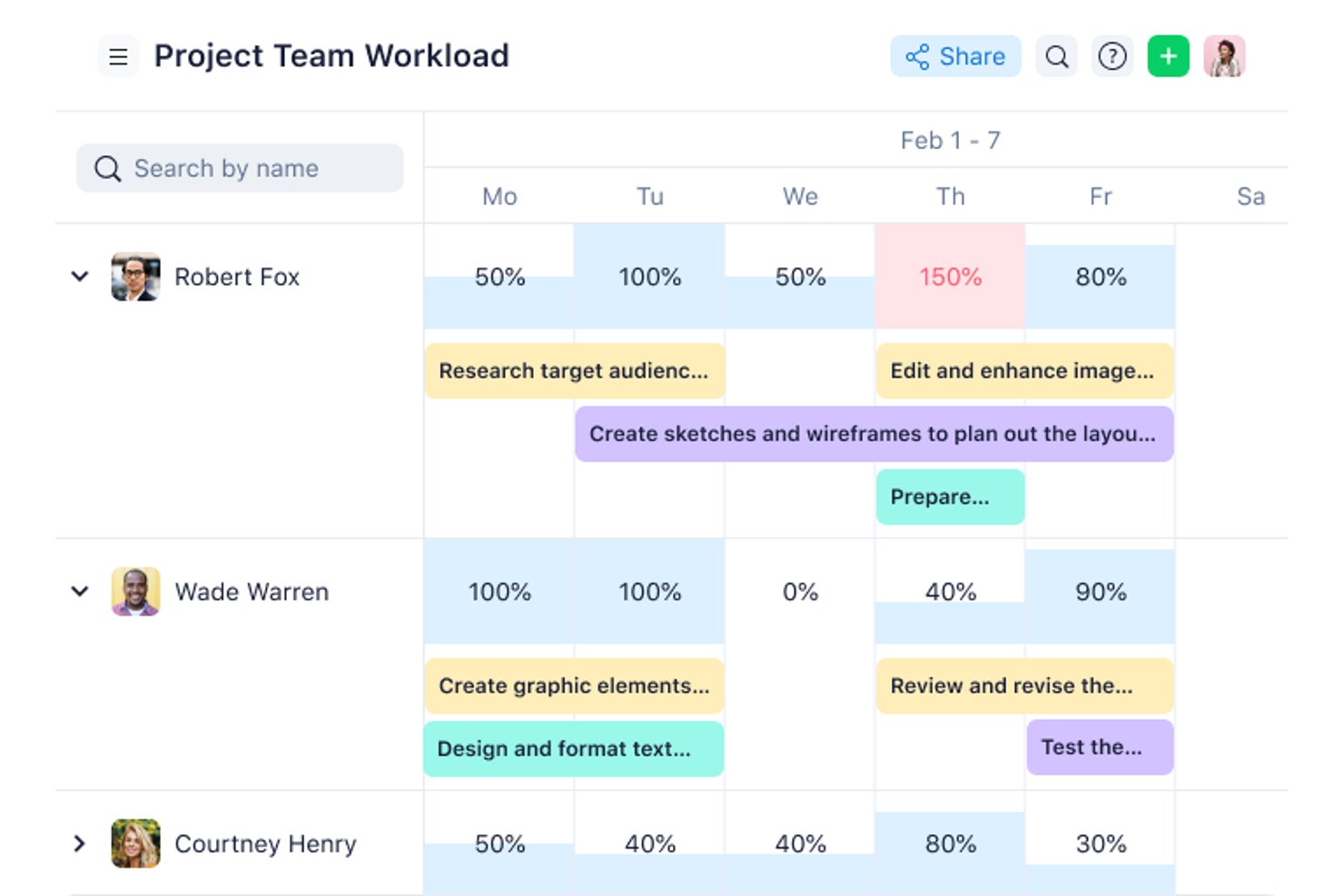
Wrike is a project management platform for construction teams that brings together task management, Gantt charts, document sharing, and real-time collaboration in one workspace.
Who Is Wrike Best For?
Wrike is a good fit for mid-size to large construction teams that need a flexible platform to manage multiple projects and coordinate across departments.
Why I Picked Wrike
I picked Wrike as one of the best because of how well it handles Agile workflows on construction projects where scope and priorities shift constantly. Wrike's Scrum boards let my team manage backlogs, run sprints, and track progress in real time without switching tools. I also like that you can toggle between Kanban boards and Gantt charts depending on the phase of a project. That flexibility means my team can run Agile sprints during planning and switch to a timeline view when coordinating with subcontractors or tracking phase deadlines.
Wrike Key Features
- Custom request forms: Build dynamic intake forms that automatically generate tasks, assign owners, and trigger workflows when a new project or change order comes in.
- Resource bookings: Reserve time from specific team members or job roles and check their availability before assigning them to a project phase.
- Wrike document editor: Attach files directly to tasks and edit them in the platform without downloading, keeping submittals and project documents version-controlled.
- User activity reports: Pull on-demand audit logs that show exactly who modified a task or document and when, useful for accountability across subcontractor teams.
Wrike Integrations
Wrike offers hundreds of integrations via its marketplace and built-in connectors, including tools like Google Workspace, Microsoft 365, Salesforce, Slack, Box, Dropbox, GitHub, Jira, and Adobe Creative Cloud. It also supports Zapier and provides an API for custom integrations.
What's Free?
Wrike offers a free-forever plan for small teams with up to 5 users. The free plan includes basic task management but limits access to advanced features, integrations, and reporting tools.
Pros and Cons
Pros:
- Dynamic intake request forms
- Built-in file proofing features
- Flexible custom workflow options
Cons:
- Expensive higher-tier plans
- Steep initial learning curve
New Product Updates from Wrike
Wrike Adds Klaxoon MCP Integration
Wrike’s Klaxoon MCP integration is now generally available, enabling AI agents to navigate between Wrike tasks and attached whiteboards, read task context, and manage whiteboard attachments via API. For more information, visit Wrike's official site.
GanttPRO
Best for interactive Gantt charts
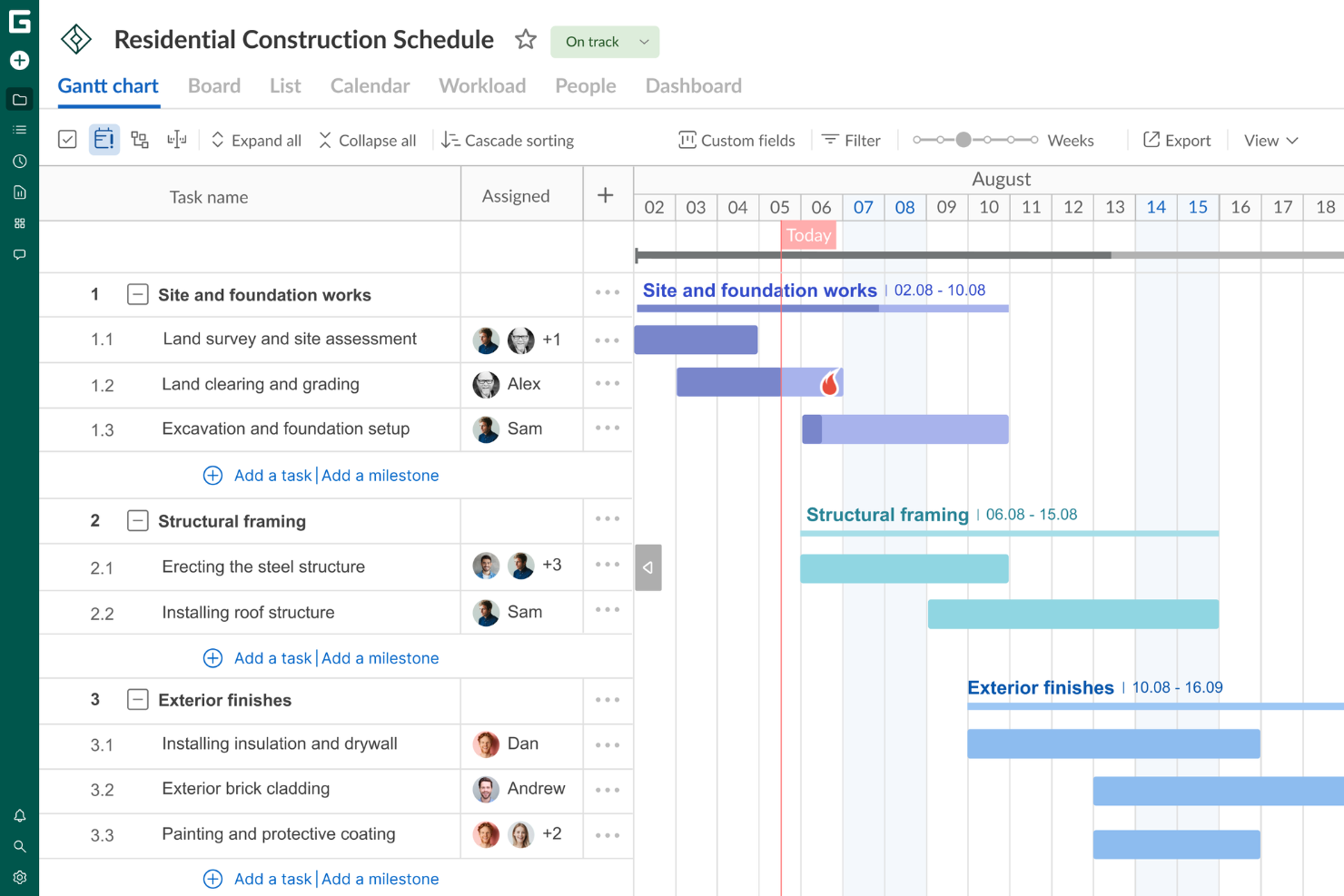
GanttPRO is a construction project management platform that centers on visual project scheduling, task management, resource allocation, and team collaboration using interactive Gantt charts.
Who Is GanttPRO Best For?
GanttPRO is a good fit for project managers and construction teams who need a visual, timeline-driven approach to scheduling and tracking work across multiple projects.
Why I Picked GanttPRO
GanttPRO is on my shortlist because its interactive Gantt charts handle the multi-phase scheduling that construction projects demand. I like that you can set task dependencies and let the auto-scheduling feature recalculate timelines automatically when dates shift—something that happens constantly on construction sites. I also use the critical path feature to instantly see which tasks could push back a project's completion date if they slip. The baseline comparison lets me track actual progress against the original plan, which is exactly what you need when reporting to stakeholders mid-build.
GanttPRO Key Features
- Board view: Switch between Gantt chart, Kanban-style board, and list view to manage tasks in the format that fits each phase of a construction project.
- Workload management: See each team member's task load across projects and reassign work directly from the workload view to avoid over-allocation.
- Time logs: Log actual hours spent on tasks and milestones, with comments, so you can track labor time against your project schedule.
- Portfolio view: Monitor multiple construction projects simultaneously from a single view to track progress across all active workstreams.
GanttPRO Integrations
GanttPRO offers native integrations with Jira Cloud, Google Drive, and Slack. An API is available for custom integrations.
What's Free?
GanttPRO offers a 14-day free trial with access to all features. After the trial, a paid subscription is required, and there is no free-forever plan.
Pros and Cons
Pros:
- Interactive Gantt charts enhance project visualization and planning.
- Task dependencies allow for clear project sequencing.
- Kanban-style board view provides flexible task management.
Cons:
- Limited native integrations with other software tools.
- While reporting tools are present, it lacks more advanced options for complex forecasting.

Best for an intuitive user interface
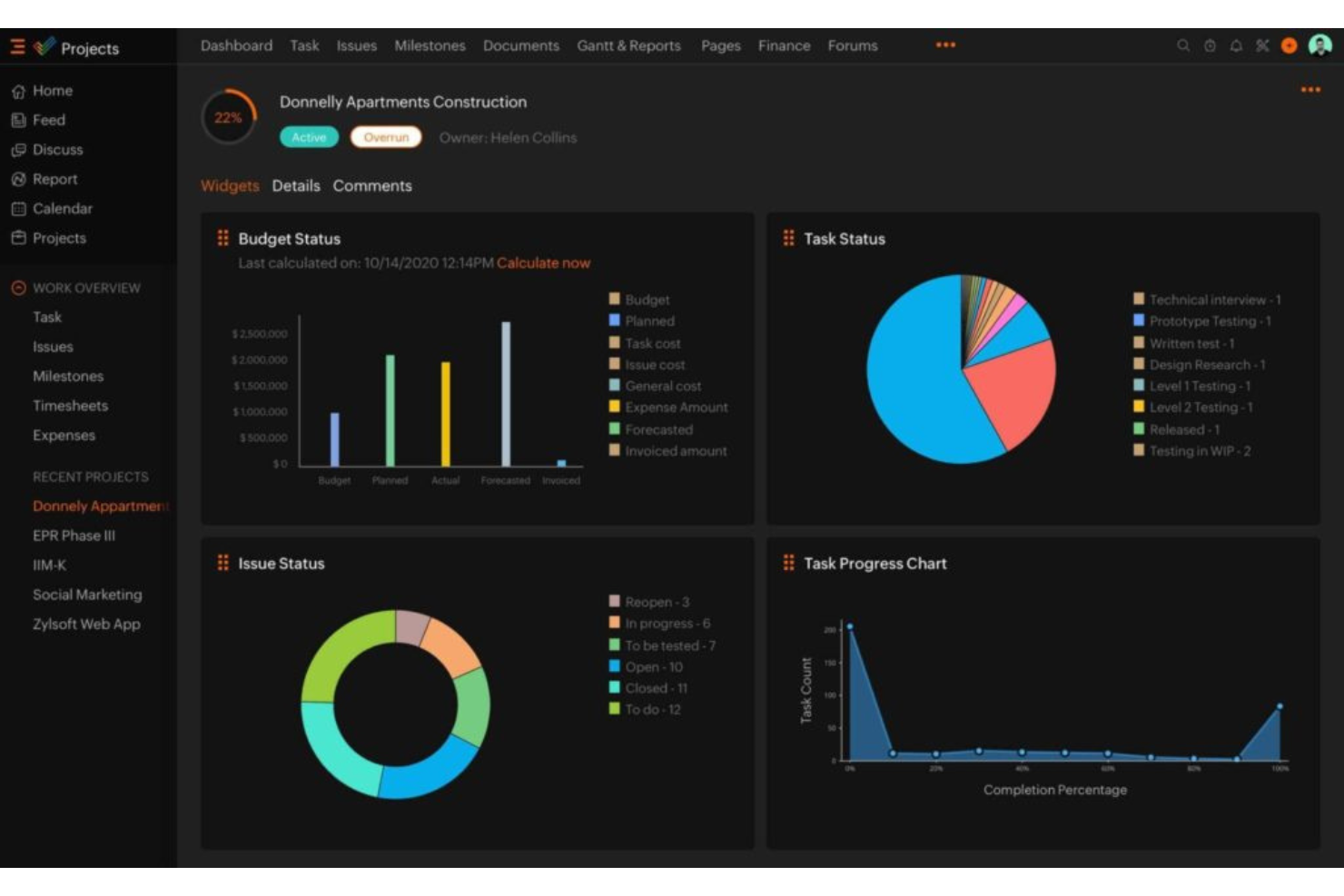
Zoho Projects is a cloud-based construction project management platform that covers task management, Gantt charts, time tracking, document sharing, and team collaboration.
Who Is Zoho Projects Best For?
Zoho Projects is a good fit for small to mid-sized construction teams that need a straightforward project management tool without a steep learning curve.
Why I Picked Zoho Projects
Zoho Projects is one of my top picks because I like that construction teams can get up and running with minimal setup and without a long onboarding process. The interface uses a clean, left-panel navigation that keeps milestones, task lists, Gantt charts, and timesheets all within one or two clicks. I particularly like the Kanban board view, which lets site managers drag tasks across status columns as work progresses on the ground. The Blueprint feature also stands out here—it lets you map out a task workflow visually, so every handoff between subcontractors or trades follows a defined process without anyone needing to chase updates manually.
Zoho Projects Key Features
- Issue tracking: Log bugs or site issues, assign them to team members, and monitor resolution progress within the same platform as your tasks.
- Project baseline: Set a baseline at any point in a project to compare planned vs. actual progress and catch schedule deviations early.
- Resource management: View each team member's workload before assigning tasks, and redistribute work when someone is over- or under-allocated.
- Budget forecasting: Track planned vs. actual project costs in real time and forecast total spend based on current completion percentage.
Zoho Projects Integrations
Zoho Projects offers 30+ native integrations, including Zoho CRM, Zoho Analytics, Zoho Desk, Zoho Invoice, Google Calendar, Google Drive, Microsoft Teams, Slack, Dropbox, GitHub, and Zapier. An API is available for custom integrations.
What's Free?
Zoho Projects offers a free-forever plan for up to 3 users and 2 projects. The free plan has limited storage and does not include features like Gantt charts, resource management, or most integrations.
Pros and Cons
Pros:
- Seamless Zoho ecosystem integration
- Built-in time tracking tools
- Highly affordable pricing plans
Cons:
- Limited third-party app integrations
- Restricted free plan features
New Product Updates from Zoho Projects
Zoho Projects Adds CodeX Scripts for Custom Modules
Zoho Projects now supports CodeX Scripts for custom modules, enabling conditional logic and rules for creating, updating, and deleting records. For more information, visit Zoho Projects' official site.
 .
.
ClickUp
Best for creating customizable workspaces
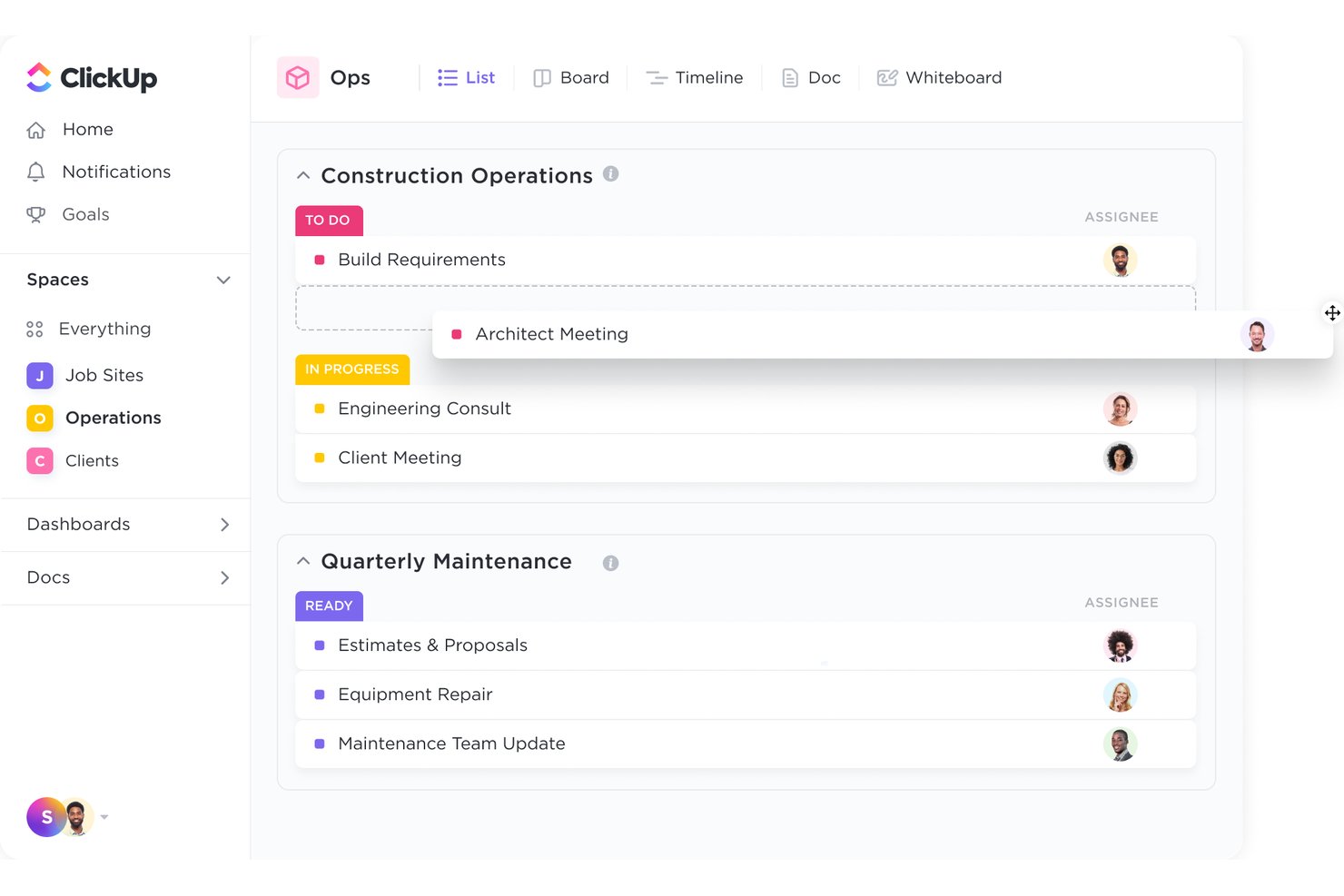
ClickUp is a general-purpose project management platform that adapts to construction workflows through customizable task views, Gantt charts, collaborative Docs, time tracking, and built-in tools for managing RFIs, submittals, and contractor coordination.
Who Is ClickUp Best For?
ClickUp is a strong fit for small to mid-sized construction firms and independent builders who need a flexible, configurable platform without the cost of specialized construction software.
Why I Picked ClickUp
ClickUp earns its spot on my shortlist because no other free tool lets you configure your workspace around how construction actually flows. I build custom statuses for each project phase (Pre-Construction, Active Build, Punch List, Closeout) and use custom field formulas to calculate material estimates directly within tasks. The pre-built Construction Management Template gives my team a ready-made structure for RFIs, milestone scheduling, and subcontractor coordination from day one.
ClickUp Key Features
- Gantt chart scheduling: Allows you to plan and visualize project phases with dependencies and milestones.
- Custom forms for RFIs and approvals: Lets your team create request forms and approval workflows tailored to construction needs.
- Centralized document management: Stores blueprints, contracts, and drawings with folder organization and file sharing.
- Mobile app access: Provides real-time updates and task assignments on both iOS and Android devices.
ClickUp Integrations
ClickUp offers native integrations with Google Drive, Slack, GitHub, Zoom, Microsoft Teams, Dropbox, OneDrive, and Outlook. It also connects with Zapier and provides an API for custom integrations.
What's Free?
ClickUp offers a free forever plan that supports unlimited users and unlimited tasks, making it accessible for small construction teams. Key restrictions include 100MB of storage, limited Gantt chart uses, and limited dashboard widgets, with several advanced features like time tracking reporting and custom field formulas gated behind paid plans.
Pros and Cons
Pros:
- Pre-built construction project templates available
- Highly configurable workflows for construction phases
- Unlimited users on the free forever plan
Cons:
- Gantt chart access is limited on the free tier
- No purpose-built construction-specific reporting tools
New Product Updates from ClickUp
ClickUp Adds Meetings Hub, Super Agent Templates, and ZoomInfo Integration
ClickUp adds a searchable Meetings Hub, new ways to clone and template Super Agents, and a ZoomInfo integration through the App Center. These updates improve meeting retrieval, agent reuse, and access to sales intelligence. For more information, visit ClickUp’s official site.

Lark
Best for all-in-one team chat and file sharing
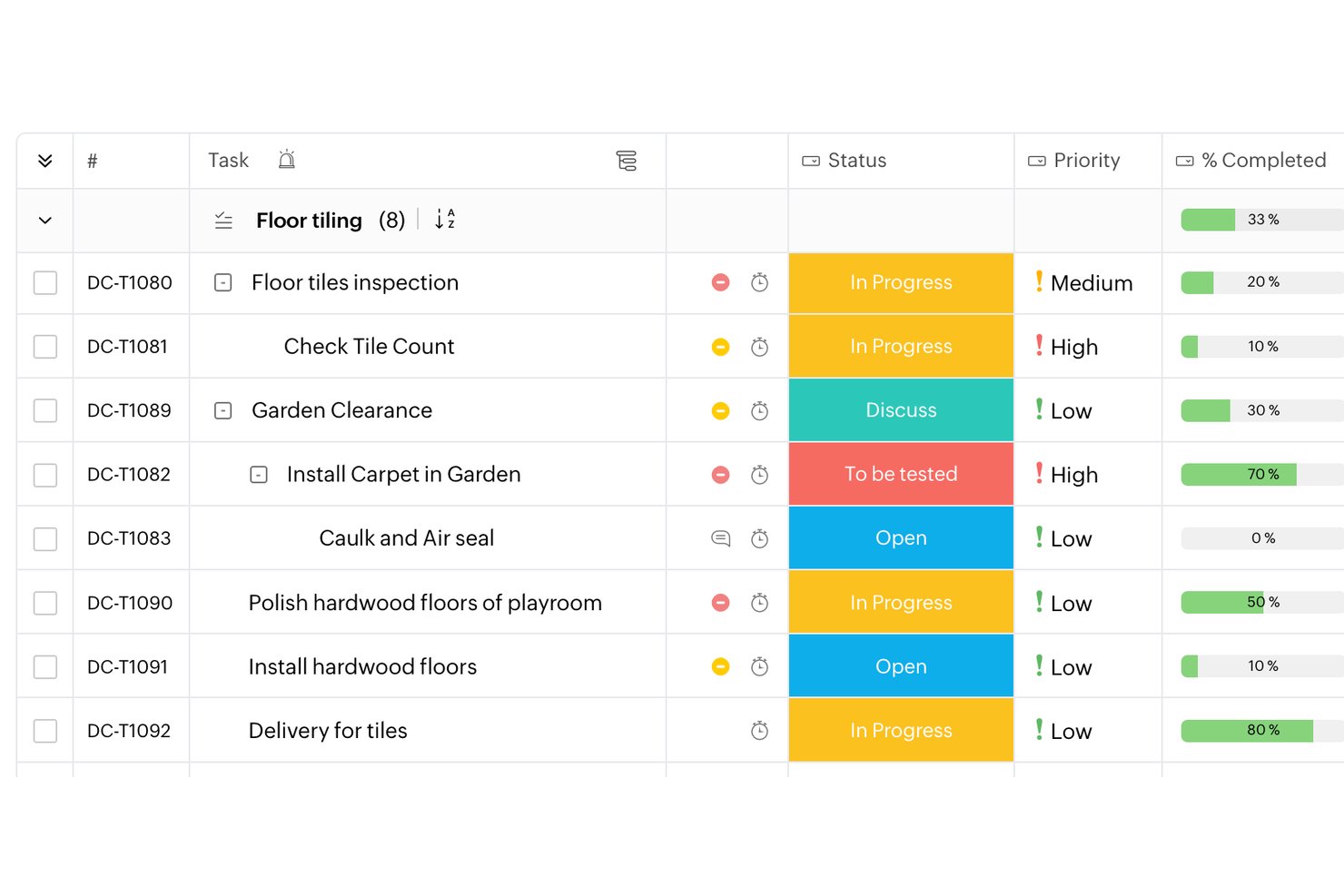
Lark is a free project management option for construction teams, combining task tracking and customizable workflows with team chat, collaborative documents, and file sharing in one workspace.
Who Is Lark Best For?
Lark fits small construction firms looking for a flexible workspace to coordinate office and field teams across active projects.
Why I Picked Lark
I picked Lark, Best for all-in-one team chat and file sharing, because construction teams can keep field updates beside shared project documents. A foreman can post a site update in chat, while task tracking and customizable workflows help the office team assign and follow up on the next action.
Lark Key Features
- Shared calendar: Schedule project milestones, site visits, and team events on shared calendars.
- Video meetings: Meet with project participants using video calls and screen sharing.
- Meeting minutes: Capture and organize meeting notes and recordings in Lark Minutes.
- Lark Base: Build structured tables and forms to record site inspections or material details.
Lark Integrations
Lark AnyCross connects Lark with external apps, including Salesforce, and supports workflow automation. Lark also offers open APIs for custom integrations.
What's Free?
Lark’s Starter plan is free indefinitely and supports up to 20 members, with 100 GB of total storage and 1,000 Base automation runs per month.
Pros and Cons
Pros:
- Base forms capture inspection and material details
- Shared calendars coordinate milestones and site visits
- Site updates stay beside shared project files
Cons:
- No built-in job costing or bid management
- No construction-specific drawing or submittal controls
Best for sharing updates with clients and subs
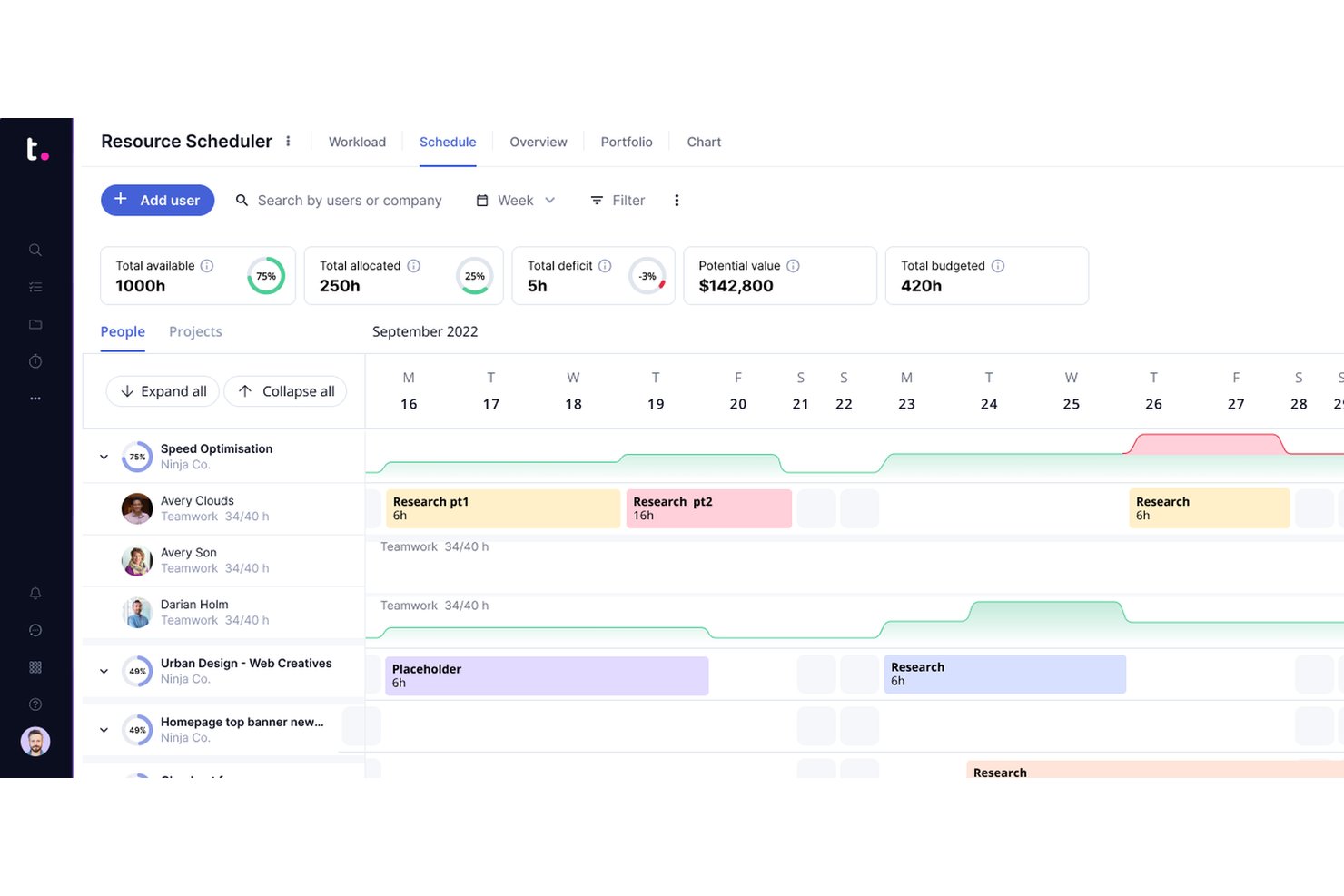
Teamwork.com is a project management platform for construction teams that need task tracking, Gantt charts, time tracking, document management, and built-in collaboration tools.
Who Is Teamwork.com Best For?
Teamwork.com is a strong fit for construction project managers who need to coordinate across internal teams, external contractors, and clients from a single platform.
Why I Picked Teamwork.com
Teamwork.com earns its spot on my shortlist because of how well it handles client and stakeholder visibility on construction projects. The Client Users feature lets you add unlimited clients to your projects at no extra cost, with granular permission controls that determine exactly what they can see and do. I find the Clients view especially useful—it rolls up cross-project metrics like budget health, billable time, and project status into a single dashboard, so you're never scrambling to pull together a progress report before a client call. The Proofs feature also cuts down on the back-and-forth approval cycles that slow down construction deliverables, giving clients a structured way to leave feedback and sign off on work.
Teamwork.com Key Features
- Gantt charts: Visualize project timelines, set task dependencies, and track what's due and when across construction phases.
- Milestone tracking: Set checkpoints within a project so your team and clients always know what's expected and by when.
- Budget tracking: Create project-specific budgets, monitor hours and spend in real time, and get alerts when costs approach set thresholds.
- Workload and capacity management: View your team's day-to-day capacity, spot scheduling conflicts, and reassign tasks to keep delivery on track.
Teamwork.com Integrations
Teamwork.com offers native integrations with Slack, Google Drive, Dropbox, Microsoft Teams, HubSpot, QuickBooks, Xero, and Harvest. It also connects with Zapier and provides an API for custom integrations.
What's Free?
Teamwork.com offers a free-forever plan for up to 5 users and 2 projects. The free plan has limited features and restricts access to advanced project templates, time tracking, and some integrations.
Pros and Cons
Pros:
- Integrated client proofing tools
- Built-in time tracking
- Unlimited free client users
Cons:
- Learning curve for newcomers
- Paid plans require user minimums
Best with GPS time cards and crew scheduling
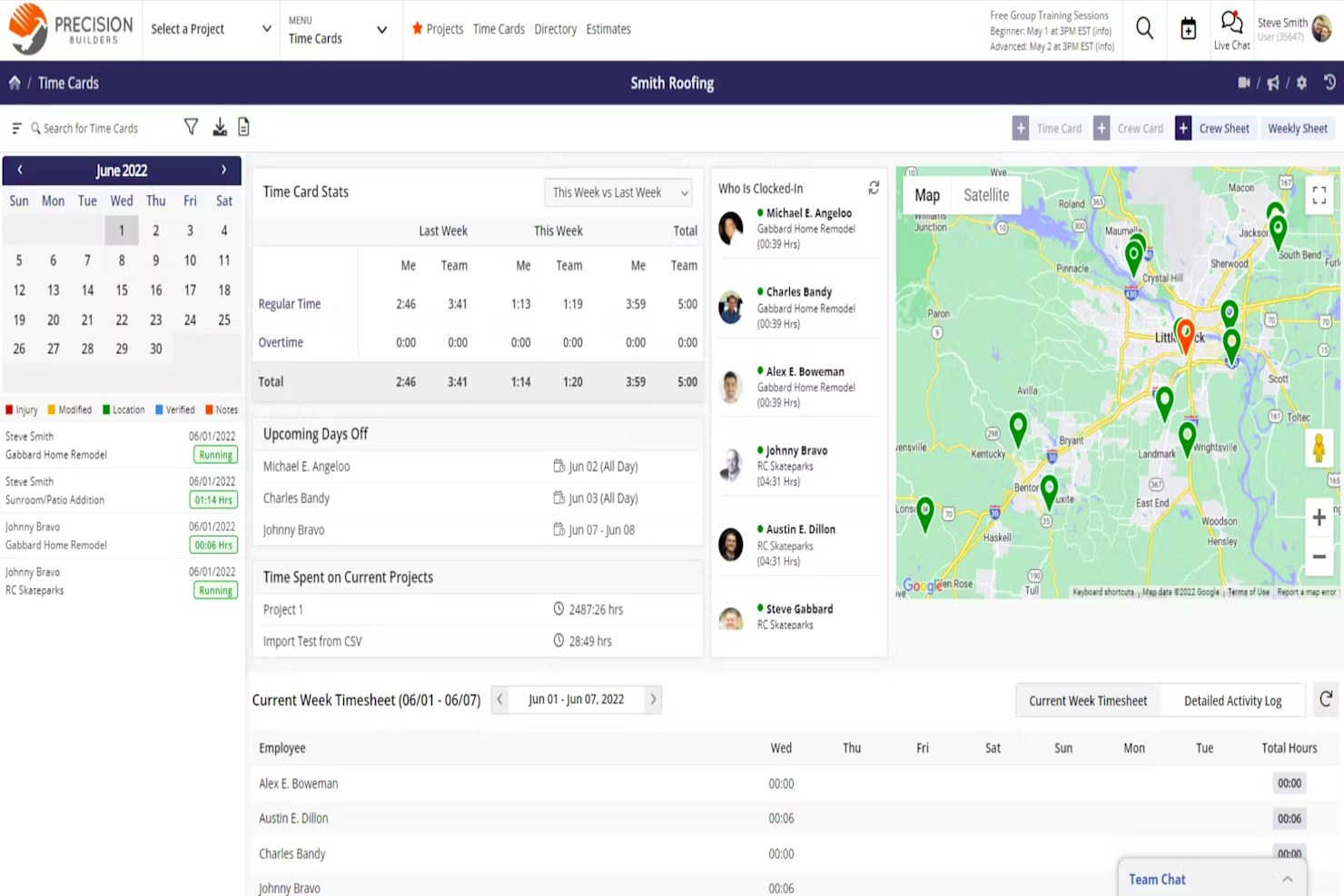
Contractor Foreman is construction project management software with tools for managing schedules, estimates, project documents, daily logs, and job costs.
Who Is Contractor Foreman Best For?
Contractor Foreman suits construction contractors coordinating field crews across active jobsites; it’s Best with GPS time cards and crew scheduling.
Why I Picked Contractor Foreman
I picked Contractor Foreman for Best Free Construction Project Management Software because it’s Best with GPS time cards and crew scheduling. I like how field crews can record time by jobsite while managers coordinate assignments across active projects. Daily logs help keep a record of site activity alongside the schedule.
Contractor Foreman Key Features
- Estimates: Create estimates with material and labor pricing, markups, and client approval.
- Document management: Store and organize project documents in one place.
- Change orders: Record and manage changes to project scope.
- Invoicing: Create invoices with retainage and AIA-style billing options.
Contractor Foreman Integrations
Contractor Foreman lists integrations with QuickBooks Online and QuickBooks Desktop for Windows, Google Calendar, and Stripe. Zapier is also listed.
What’s Free?
Contractor Foreman offers a 30-day free trial, not a free-forever plan. Paid plans start at $49/month, billed annually.
Pros and Cons
Pros:
- Daily logs record activity alongside schedules
- Crew scheduling coordinates assignments across active projects
- GPS time cards connect labor to jobsites
Cons:
- 30-day trial limits evaluation time
- No free-forever plan for ongoing projects

Best for field punch lists and offline logs
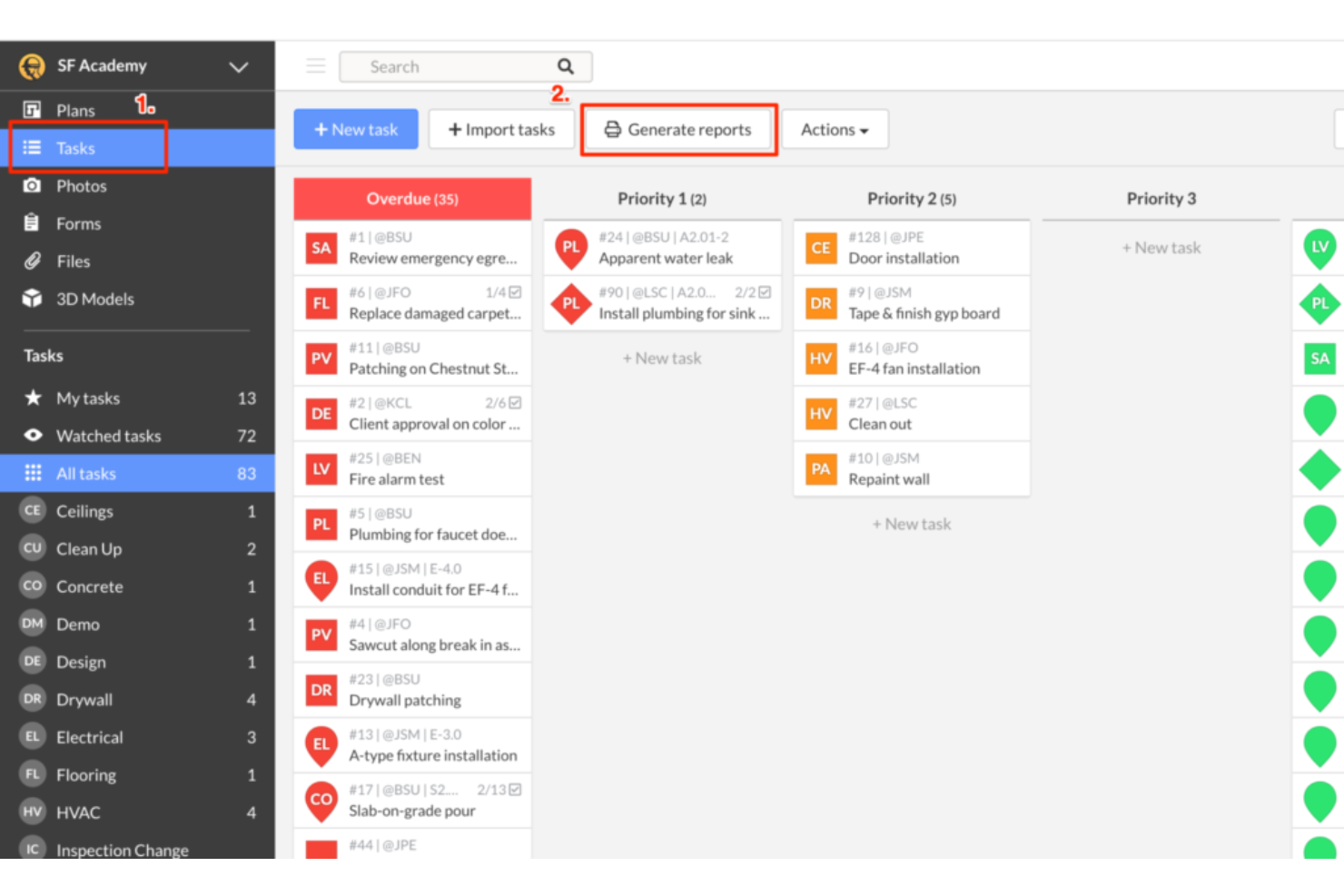
Fieldwire is construction project management software with a free plan that connects construction drawings with field tasks, forms, punch lists, and RFIs.
Who Is Fieldwire Best For?
Fieldwire is a good fit for construction site supervisors and forepersons coordinating crews and monitoring work across active job sites.
Why I Picked Fieldwire
I picked Fieldwire for job site management because it ties field work to construction drawings. I use plan-linked tasks to show crews exactly where work needs attention, then track punch list items and RFIs against the project plans. That keeps site updates connected to the drawings crews rely on.
Fieldwire Key Features
- Forms: Create and complete digital forms for inspections, safety checks, and other site records.
- Plan version control: Upload revised sheets and keep previous versions available for reference.
- File storage: Store project documents alongside site information for team access.
- Reports: Generate reports from project data to review and share site activity.
Fieldwire Integrations
Integrations include Microsoft SharePoint and Google Drive for syncing plans and files, plus Microsoft Power BI for task and form analytics. Fieldwire also offers a REST API for custom integrations; API access requires a managed account.
What's Free?
Fieldwire offers a free-forever Basic plan for up to five users, three projects, and 100 sheets. It includes core features such as plan viewing, task management, files, photos, and checklists, while reports, integrations, custom forms, and RFIs require a paid plan.
Pros and Cons
Pros:
- Photos and checklists support site documentation
- Plan viewing and task management included
- Drawing-linked tasks pinpoint field work
Cons:
- Reports and RFIs require paid plans
- Free plan caps teams at five users

Methvin
Best for estimate-linked schedule and cost tracking
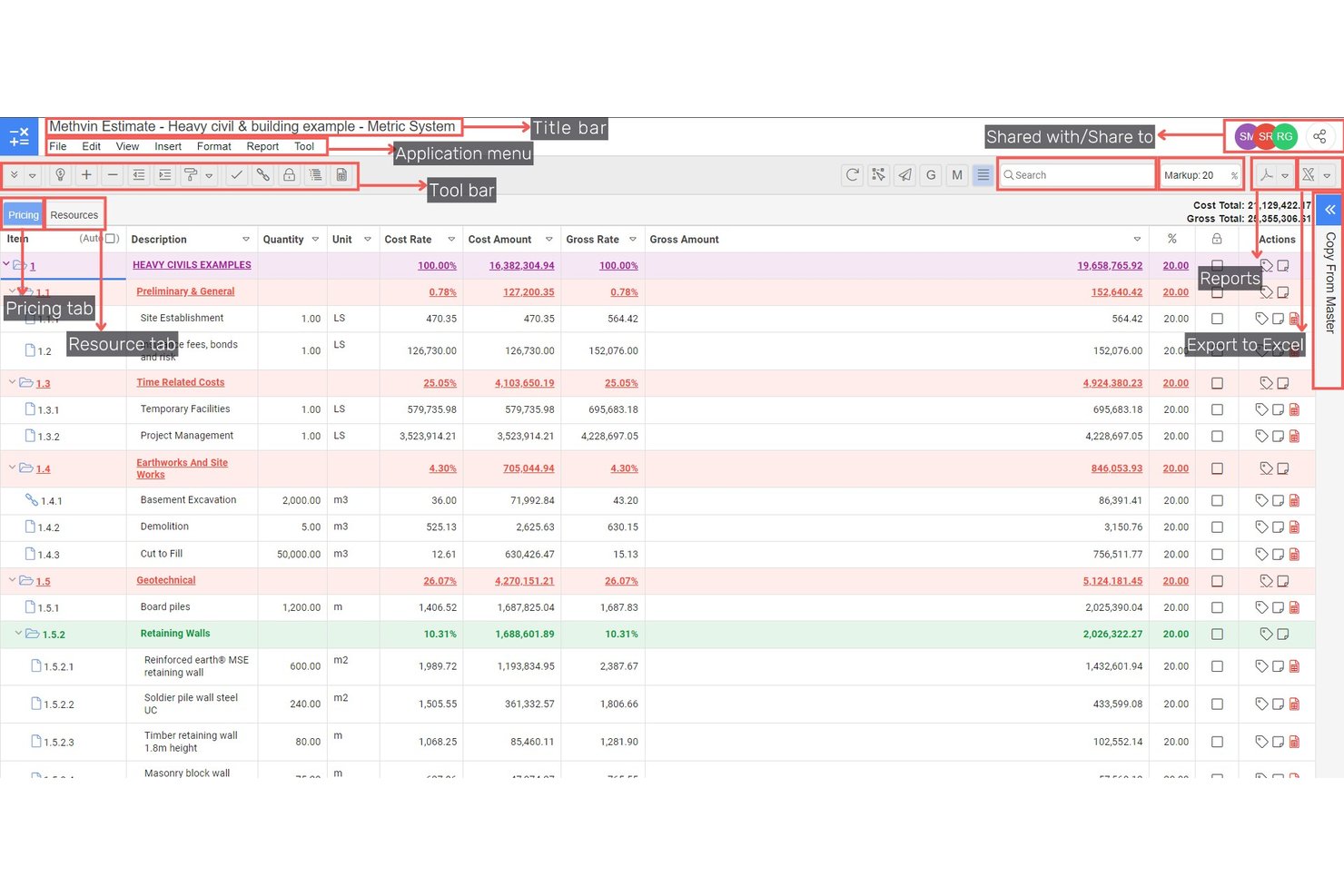
Methvin is construction project management software with estimating, digital takeoffs, tendering, project scheduling, and job cost tracking.
Who Is Methvin Best For?
Methvin suits construction estimators and project managers who need to coordinate bid preparation with project delivery.
Why I Picked Methvin
I picked Methvin because it connects construction estimating with project delivery. Its digital takeoffs, scheduling, and job-cost tracking support an estimate-linked view of planned work and costs as a job progresses.
Methvin Key Features
- Multi-view task register: Track tasks in board, timeline, calendar, progress, and file views.
- Role-based access: Set project access for team members and external collaborators.
- Task-linked correspondence: Keep comments and construction communications attached to related tasks.
- Task document attachments: Add drawings, submittals, and specifications to tasks or work packages.
Methvin Integrations
Methvin lists integrations with Xero, Wave, SAP, Oracle JDE, Aconex, and Basecamp. Its Business plan includes API access for Xero, SAP, and Oracle JDE.
What’s Free?
Methvin has a free-forever Starter plan, which includes Project Management (PMIS) for unlimited users and one free app. Shared apps are read-only, and the Estimating, Job Costing, and BIM apps are limited to five projects each.
Pros and Cons
Pros:
- Tasks offer board, timeline, and calendar views
- Unlimited users can access core PMIS
- Connects estimates with schedules and job costs
Cons:
- Five-project caps constrain estimating and job costing
- Shared apps are read-only
Other Free Construction Project Management Software
Here are some additional free construction project management software options that didn’t make it onto my shortlist, but are still worth checking out:
- Quire
For nested task breakdown
- Jira
For adapting agile workflows to build phases
- ProjectManager
For Gantt-driven schedule tracking
- OpenProject
For self-hosted open-source scheduling
- Notion
For flexible solo contractor workspaces


How I Evaluate Free Construction Project Management Software
I evaluate free construction project management software based on two things: whether the free plan is practical for real construction work and whether the platform provides the core tools needed to coordinate projects between the office and job site.
Core Functionality (Table Stakes For This List)
When I'm selecting tools for my list, I rank each one on a scale from 0 (does not offer the functionality) to 5 (excels in this area) for each core functionality listed below. Then, I calculate the tool's total score as a percentage. Each tool needs to achieve a minimum total score of 65% to be considered for inclusion.
- Free Plan Availability: I verify that the software offers an ongoing free plan rather than only a time-limited trial. I also consider limits on users, active projects, storage, and features to determine how practical the free version is for construction teams.
- Project Scheduling & Task Management: I look for tools that can organize construction phases, tasks, deadlines, dependencies, and milestones so teams can see what needs to happen next and where delays may affect the schedule.
- Document & Plan Management: Construction teams need access to drawings, RFIs, permits, photos, and other project files. I assess how well each tool stores, organizes, shares, and updates project documentation.
- Field & Office Collaboration: I evaluate mobile access, project updates, comments, notifications, and role-based access to determine how effectively field crews, project managers, subcontractors, and other stakeholders can coordinate.
- Budget & Cost Tracking: I look for tools that help teams monitor estimates, budgets, labor, expenses, change orders, or other project costs, while accounting for which financial features are actually included in the free plan.
- Progress & Site Reporting: I assess tools for daily logs, photos, status updates, issue tracking, punch lists, and other features that help teams document progress and identify problems on the job site.
Once I have a list of tools that meet these criteria, I consider what sets each platform apart.
Differentiating Factors (What Sets Vendors Apart)
Here's how I compare and contrast different vendors:
Standout Features
Punch list management is a big differentiator—tools that let you tag deficiencies with photos and assign corrections by trade save real time during closeout. I also look for subcontractor portals that give subs access to schedules and documents without eating into your user count. Safety and compliance forms matter too, especially pre-built inspection templates and incident reports that keep jobsite documentation consistent across crews.
Beyond Features
Mobile and offline functionality is a major factor—crews on remote jobsites need to log data without cell service, so I evaluate whether an app syncs reliably when connectivity returns. Integration with accounting tools like QuickBooks or Xero also matters, since construction PMs need job costs flowing into financials without manual re-entry. I also consider whether a platform is purpose-built for construction or a general PM tool adapted for the industry, which shapes how well it handles trade-specific workflows.
How to Choose Free Construction Project Management Software
The best free construction project management software depends on the size of your crew, the number of active projects you manage, and which construction workflows you need the software to support. Free plans can have significant limits, so compare what you can actually use before committing to a platform.
| Factor | What to Consider |
|---|---|
| Free Plan Limitations | Check the maximum number of users, projects, and storage included. Make sure the free tier can support your current crew and active jobs without requiring an immediate upgrade. |
| Construction Workflows | Look for features that match how you run projects, such as scheduling, daily logs, drawings, RFIs, punch lists, change orders, and progress tracking. |
| Field Access | Consider what crews can do from a phone or tablet, including viewing plans, updating tasks, uploading photos, and recording job site progress. Offline access can also matter on sites with unreliable connectivity. |
| Scheduling & Dependencies | Determine whether the free plan supports the level of scheduling you need. Basic task dates may be enough for smaller jobs, while more complex projects may require dependencies, milestones, or Gantt charts. |
| Document Management | Check how drawings, permits, photos, contracts, and other project files are stored and shared, as well as any storage limits on the free plan. |
| Cost Tracking | If you need to monitor project costs, check whether budgeting, estimating, time tracking, or job costing is included for free or reserved for paid plans. |
| Collaboration & Permissions | Consider whether you can add subcontractors, clients, or field crews and control what each person can view or edit without exceeding the free user limit. |
| Upgrade Requirements | Identify which features would eventually require a paid plan and what that upgrade would cost. This can help you avoid choosing a free tool that you'll quickly outgrow. |
Before choosing a tool, compare its free-plan limits against the way your team actually manages construction projects. A smaller team may only need task tracking, schedules, and document sharing, while contractors managing multiple jobs may need more advanced scheduling, cost tracking, field reporting, and subcontractor coordination.
What Is Free Construction Project Management Software?
Free construction project management software helps contractors and construction teams plan, coordinate, and track projects without requiring a paid subscription. These tools offer an ongoing free plan, although they typically limit the number of users, projects, storage, or advanced features available.
Construction teams can use free project management software to manage tasks and schedules, share project documents, coordinate between the field and office, and track job progress. Some platforms also include construction-specific capabilities such as daily logs, drawings, RFIs, punch lists, estimating, or cost tracking.
How Does Free Construction Project Management Software Help?
Free construction project management software gives smaller teams a central place to manage project information that might otherwise be spread across spreadsheets, emails, paper documents, and separate communication tools. It can also provide a more accessible alternative to specialized construction project management software for teams that do not need advanced features.
For example, task management and scheduling can help project managers coordinate upcoming work, while document sharing gives field teams access to current plans and project files. Mobile tools can also help crews record progress, upload photos, and communicate updates from the job site. Teams that need more specialized field coordination may also benefit from construction time tracking software to record hours and connect labor data with project work.
Free plans usually have limitations, so they tend to work best for smaller contractors, individual project managers, or teams with relatively simple project requirements. As the number of projects, users, or construction workflows grows, features such as advanced scheduling, job costing, reporting, and subcontractor management may require a paid plan. Teams comparing options can also review broader free project management software to see how general-purpose tools compare with construction-focused platforms.
Features of Free Construction Project Management Software
Let’s go over the features commonly found in construction project management software, and which ones are usually included in free vs. paid plans.
Typically Free Construction Project Management Software Features
- Task management: Lets you assign tasks, set deadlines, and track progress so nothing slips through the cracks.
- Document sharing: Allows you to upload and access permits, drawings, and plans from one place.
- Basic scheduling: Helps you assign dates, organize project phases, and track upcoming construction tasks. Dependencies, critical path tools, and advanced Gantt scheduling may require a paid plan.
- Team messaging: Offers simple ways to communicate with your crew directly in the platform.
- Limited project management: Free plans typically support a limited number of active projects, users, or both, although exact limits vary by platform.
- Mobile app access: Gives field teams a way to view tasks or updates from their phones or tablets.
- Activity logs: Shows a running list of changes or updates so everyone stays in the loop.
Typically Paid Construction Project Management Software Features
- Multi-project management: Lets you manage several jobs at once with separate schedules, tasks, and files.
- Time and labor tracking: Tracks crew hours by project, task, or job site and can help teams compare labor costs against project budgets.
- Budget and cost tracking: Allows you to estimate construction costs, track spending, and compare actual costs to budget.
- Gantt chart views: Offers visual timelines to help plan dependencies and spot delays early.
- Advanced reporting: Creates custom reports for project status, budget use, and team productivity.
- Custom user permissions: Lets you control what different users or roles can see and do.
- Client or subcontractor portals: Gives external collaborators limited access to relevant project info.
Benefits of Free Construction Project Management Software
Free construction project management software can give contractors and smaller teams a more structured way to manage jobs without adding another software subscription. Depending on the features included in the free plan, key benefits can include:
- Centralized project information: Keep tasks, schedules, drawings, photos, and other project information in one place instead of spreading it across spreadsheets, emails, and paper records.
- Better field and office coordination: Give project managers and field teams access to the same task updates, schedules, documents, and project status information.
- Clearer project scheduling: Organize construction phases, deadlines, and assigned work so teams can see what is happening now and what needs to happen next.
- More consistent progress tracking: Use task updates, activity logs, photos, and daily reports to document work completed on the job site and identify delays.
- Easier document access: Store and share plans, permits, project files, and other documentation so teams can access current information when they need it.
- Lower software costs: Manage core construction project workflows without paying for software upfront, which can make free plans practical for smaller contractors and teams.
- Opportunity to evaluate before upgrading: Use the free version to determine whether the platform fits your construction workflows before moving to a paid plan with higher limits or more advanced features.
Costs and Pricing of Free Construction Project Management Software
Free construction project management software costs $0 to start, but free plans typically limit the number of users, active projects, storage, or advanced features available. As your team or project requirements grow, you may need to upgrade to a paid plan for capabilities such as advanced scheduling, cost tracking, reporting, integrations, or additional users.
The table below shows typical pricing tiers and the types of features you may find at each level.
Plan Comparison Table for Construction Project Management Software
| Plan Type | Average Price | Common Features |
|---|---|---|
| Free Plan | $0 | Task management, document sharing, basic scheduling, team messaging, and one project. |
| Personal Plan | $5–$15/user/month | Multiple projects, mobile access, basic reports, calendar view, and limited integrations. |
| Business Plan | $20–$40/user/month | Time tracking, budget tools, Gantt charts, advanced reports, and user permissions. |
| Enterprise Plan | $50–$100/user/month | Custom roles, audit logs, client portals, advanced security, and dedicated support. |
Free Construction Project Management Software FAQs
Here are answers to common questions about free construction project management software.