
20 Best Project Planning Tools for Teams in 2026

10 Best Project Planning Tools Shortlist
Here's my pick of the 10 best software from the 20 tools reviewed.


Project planning tools help you build, schedule, and track your project timelines, organize tasks, and assign responsibilities throughout your team. Without them, it's hard to allocate resources, coordinate tasks, or anticipate roadblocks that could derail delivery. But how do you pick a tool from so many out there?
Well, I’ve tested a wide range of project planning tools, from simple timeline builders to robust platforms with Gantt charts, resource forecasts, and portfolio-level tracking.
Below, you’ll find my top picks based on that testing. Each tool offers a unique combination of features designed to support effective project planning, whether you’re managing a single project or juggling a full portfolio.
Table of Contents
Why You Can Trust Us
The Best Project Planning Tools Comparison Chart
Here’s a quick recap on everything we just discussed. Use it to see all the options side by side.
| Tool | Best For | Trial Info | Price | ||
|---|---|---|---|---|---|
| 1 | Best for Google Workspace users | Free plan available | From $9/seat/month (billed annually) | Website | |
| 2 | Best collaborative project planning tool | Free plan + free demo + 14-day free trial available | From $10/user/month (billed annually) | Website | |
| 3 | Best for a single scheduling view | Free 30-day trial available | From $4.16/user/month | Website | |
| 4 | Best for planning project financials | Free 14-day trial available + free demo available | From $19.90/user/month (billed annually) | Website | |
| 5 | Best for team scalability | Free plan + free demo available + 15-day free trial | From $4/user/month (billed annually) | Website | |
| 6 | Best for agency project and resource planning | 14-day free trial available | From $10/user/month (billed annually) | Website | |
| 7 | Best for team collaboration and communication | Free plan + free demo available | From $7/user/month (billed annually) | Website | |
| 8 | Best for people-centric project planning | Free demo available | Pricing upon request | Website | |
| 9 | Best for automating billing in project teams | Free plan available | $14/user/month | Website | |
| 10 | Best for dynamic work management | 30-day free trial | From $35/user/month (billed annually, min 20 users) | Website |


-

Insightful
Visit WebsiteThis is an aggregated rating for this tool including ratings from Crozdesk users and ratings from other sites.4.8 -
Accelo
Visit WebsiteThis is an aggregated rating for this tool including ratings from Crozdesk users and ratings from other sites.4.4 -
Forecast
Visit WebsiteThis is an aggregated rating for this tool including ratings from Crozdesk users and ratings from other sites.4.6


Best Project Planning Tool Reviews
Here’s a brief description of each of the project planning tools. If you get stuck, you can always get free advice on which software is best for you.

Monday.com is a versatile work management platform aimed at creative teams to help streamline task and project management. It offers features that support various business functions, including process management and team collaboration.
Why I picked Monday.com: It's designed to cater to creative teams with its easy-to-use dashboards and collaborative docs. The platform offers hyper-customization, allowing you to tailor everything from custom fields to white-labeling. Over 200 pre-built automation recipes are available to automate routine tasks without coding. Its real-time dashboards enhance decision-making by providing a clear project overview, making it ideal for teams looking for flexibility in managing their creative projects.
Standout Features & Integrations
Features include timeline and workload views that can help project managers allocate resources effectively and identify potential bottlenecks in real time. Additionally, the platform provides project baselines that allow teams to compare planned versus actual progress and quickly identify areas that need adjustment to stay on track.
Integrations include Slack, Google Workspace, Microsoft Teams, Zoom, Trello, Jira, Dropbox, HubSpot, Salesforce, and Zendesk.
Pros and Cons
Pros:
- Intuitive interface for creative workflows
- Simple code-free automations
- Integrated proofing for file comments
- Forms within projects as views
- Easy to connect with other tools
Cons:
- Complex initial setup for projects
- Views like Calendar don’t auto-update
- Outdated UI in training videos
- Subtask columns need customization
- Gantt view not effective for planning
New Product Updates from monday.com

monday.com Enhances Governance With AI Spend and Activity Logs
monday.com introduces AI governance with user limits and scheduled cleaning activity logs. These updates help teams control AI usage costs and maintain better visibility into system actions for compliance. For more information, visit monday.com’s official site.

Wrike is a project planning tool that is suitable for teams of five or more. Wrike includes tools for predicting and preventing delays, visualizing deadlines, and monitoring project progress in real-time. The tool is also highly configurable, and allows users to customize workflows, dashboards, reports, and request forms.
Users can switch between Kanban boards, interactive drag-and-drop Gantt charts, and traditional workload views to understand priorities. Project planning tools include task lists, subtasks, schedules, file sharing, and real-time communication and collaboration.
Wrike also offers a robust mobile application that allows users to update team members or upload files and photos. You can easily switch between calendars, dashboards, and task lists and keep an eye on notifications and messages. Wrike has a dedicated help center with interactive training, videos, a ‘Getting Started’ guide, and a thriving community.
Wrike offers a host of pre-built templates that make project planning more efficient, including a phased project template, which can help break a complex project into manageable chunks, as well as a simple project scheduling template. Real-time reporting helps project managers allocate resources and adjust workloads.
Wrike integrates with over 400 apps, including the most popular file management software from Microsoft, Google, and Dropbox.
New Product Updates from Wrike

Streamlining Workspaces with New Updates
Wrike announces custom space templates, AI Agents in Wrike Labs, and a new Guage widget to improve project management. For more information, visit Wrike's official site.


Resource Guru is a resource management and scheduling platform designed to help you coordinate people, equipment, and meeting rooms from one central tool. It offers a clear view of team availability and workloads so you can plan projects effectively and prevent over-allocation.
Why I picked Resource Guru: I like how Resource Guru brings all resource types—whether people, meeting spaces, or equipment—into a single scheduling view. This makes it easier to keep projects on track without overburdening your team. Its leave management feature helps you account for absences automatically, so you can make informed adjustments when capacity changes. I also appreciate its project forecasting reports, which give you visibility into future resource needs and help anticipate bottlenecks before they impact delivery.
Standout Features & Integrations
Features include capacity planning to balance workloads across teams, real-time updates to keep everyone informed of schedule changes, and conflict resolution tools to spot and fix booking clashes quickly. The drag-and-drop interface makes reassigning resources simple, while customizable reports let you tailor insights to your planning needs.
Integrations include Google Calendar, Microsoft Outlook Calendar, Apple Calendar, Calendly, Fantastical, Slack, Salesforce, Microsoft Teams, and Google Sheets.
Pros and Cons
Pros:
- Timesheets are pre-filled based on schedule
- You can reassign tasks from one resource to another simply by dragging
- You can create allocations for multiple people at once
- Effective clash management system
Cons:
- Allocations glitch sometimes (double check who it’s assigning it to)
- Insufficient pre-built integrations
- No financial-related features like budgets and expenses
New Product Updates from Resource Guru

Resource Guru Launches Asana Integration
Resource Guru now integrates with Asana to enhance task scheduling by providing insights into availability and skills. For more information, visit Resource Guru's official site.
 .
.

Scoro is a comprehensive business management software aimed at small to medium-sized enterprises. It integrates project management, billing, and CRM functions to streamline operations and improve efficiency.
Why I picked Scoro: It's designed for business management, combining project management with financial tools. The software offers a unified dashboard, giving you a holistic view of your business activities. With automated billing and invoicing, your team can manage finances without hassle. The real-time KPI tracking ensures you stay on top of business performance, making it a go-to for teams needing efficiency in operations.
Standout Features & Integrations
Features include an advanced project timeline view that enables users to visualize task dependencies and resource allocation across projects. The software also offers detailed budget planning tools that align financial goals with project milestones. Furthermore, Scoro’s workload optimization feature dynamically balances team capacity to prevent over- or under-utilization while keeping projects on track.
Integrations include Xero, QuickBooks, Slack, Dropbox, Google Calendar, Microsoft 365, Zapier, Mailchimp, HubSpot, and Salesforce.
Pros and Cons
Pros:
- Customizable dashboards for personalization
- Comprehensive reporting features
- Real-time KPI tracking available
- Automated billing and invoicing
- Unified dashboard for business insights
Cons:
- May not suit very small businesses
- Limited offline functionality
- Learning curve for advanced features
- Requires consistent data input
- Can be complex to set up initially
New Product Updates from Scoro

Scoro Introduces Subtasks for More Granular Work Planning
Scoro introduces subtasks and improved price list deletion warnings, enabling teams to break down work into smaller units for detailed planning while protecting pricing data from accidental changes. For more information, visit Scoro’s official site.


Zoho Projects is an online project management solution that focuses on easy and effective planning, tracking, and collaboration. You can manage both simple and complex projects by splitting work items into milestones, tasklists, tasks and subtasks and viewing them as Kanban boards.
Why I picked Zoho Projects: It lets you plan and schedule work with Gantt charts that have a drag and drop interface. You can set up baselines, compare multiple baselines, identify critical tasks, and create dependencies right from the Gantt chart. Zoho Projects comes with a workload allocation feature that lets you manage tasks and resources as well.
Your team can track project progress closely with numerous dashboards, charts and reports, communication tools, and collaborative documents. Zoho Projects also provides numerous features such as time tracking, budgeting, issue tracking, portfolio management, and automation capabilities.
Zoho Projects Standout Features & Integrations
Features include advanced dependency management with four types of task dependencies (F-to-S, S-to-S, F-to-F, S-to-F) for precise scheduling and planning. Additionally, Zoho Projects' in-built SLA tracking for tasks ensures deadlines are met by automatically monitoring response times and escalating delays to keep projects on track.
Integrations include tools such as Google Drive, Google Calendar, Slack, Github, Bitbucket, and Dropbox. Access even more integrations through Zapier.
Pros and Cons
Pros:
- The in-tool private chats let you coordinate communication better using only the tool
- It integrates well with other Zoho suite products
- Offers a comprehensive feature set for a relatively low price
Cons:
- Has some features that seem unnecessary, like ‘Email Alias’
- Does not have many pre-built integrations outside of Zoho’s suite of apps

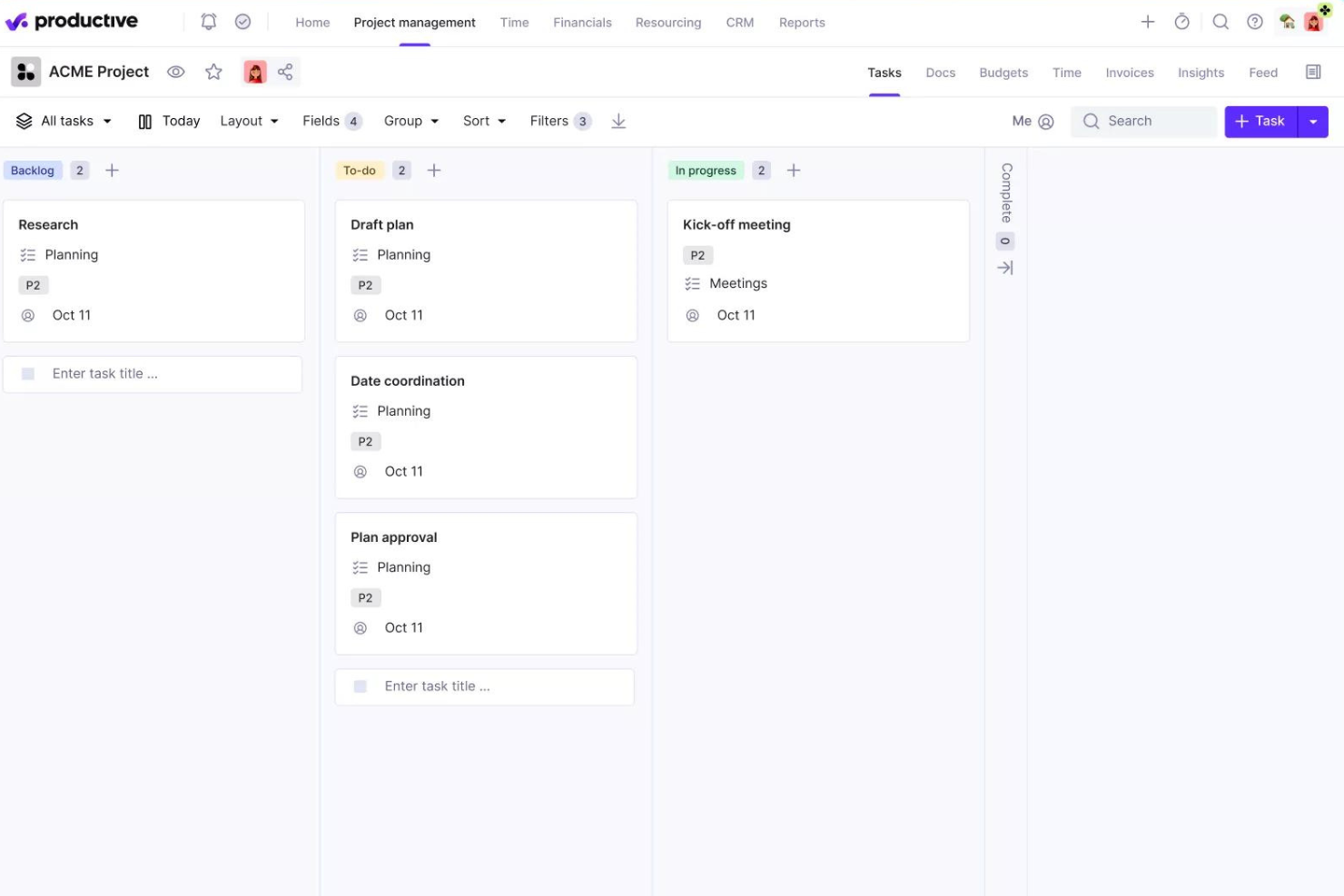
Productive is an all-in-one project management and profitability tracking tool designed for agencies and service-based businesses. It helps teams manage projects, track time, and evaluate financial performance to ensure profitability.
Why I picked Productive: It's tailored for agencies looking to maximize profitability, offering features like time tracking and billing. The platform provides detailed financial insights, helping your team make informed decisions. Customizable dashboards allow you to monitor key performance indicators specific to your business. Productive's resource planning feature ensures your team is optimally utilized, aligning with its focus on agency profitability.
Standout Features & Integrations
Features include phase-based project planning that allows teams to break projects into stages with defined timelines and deliverables. The platform's real-time profitability tracker also integrates with project plans to provide instant insights into whether projects are staying within budget and generating expected returns. Additionally, Productive offers a collaborative task prioritization feature that helps teams to dynamically adjust workloads and focus on high-impact tasks as projects evolve.
Integrations include Slack, Google Calendar, QuickBooks, Xero, Zapier, Jira, Trello, Asana, HubSpot, and Microsoft Teams.
Pros and Cons
Pros:
- Strong client management features
- Supports comprehensive project budgeting
- Effective resource planning tools
- Customizable dashboards for KPIs
- Detailed financial insights available
Cons:
- May be too detailed for simple projects
- Requires consistent data input
- Limited offline capabilities
- Learning curve for new users
- Initial setup can be complex
New Product Updates from Productive

Productive Introduces Resource Request Feature
Productive introduces a resource request feature that helps teams request and allocate resources more efficiently. For more information, visit Productive's official site.
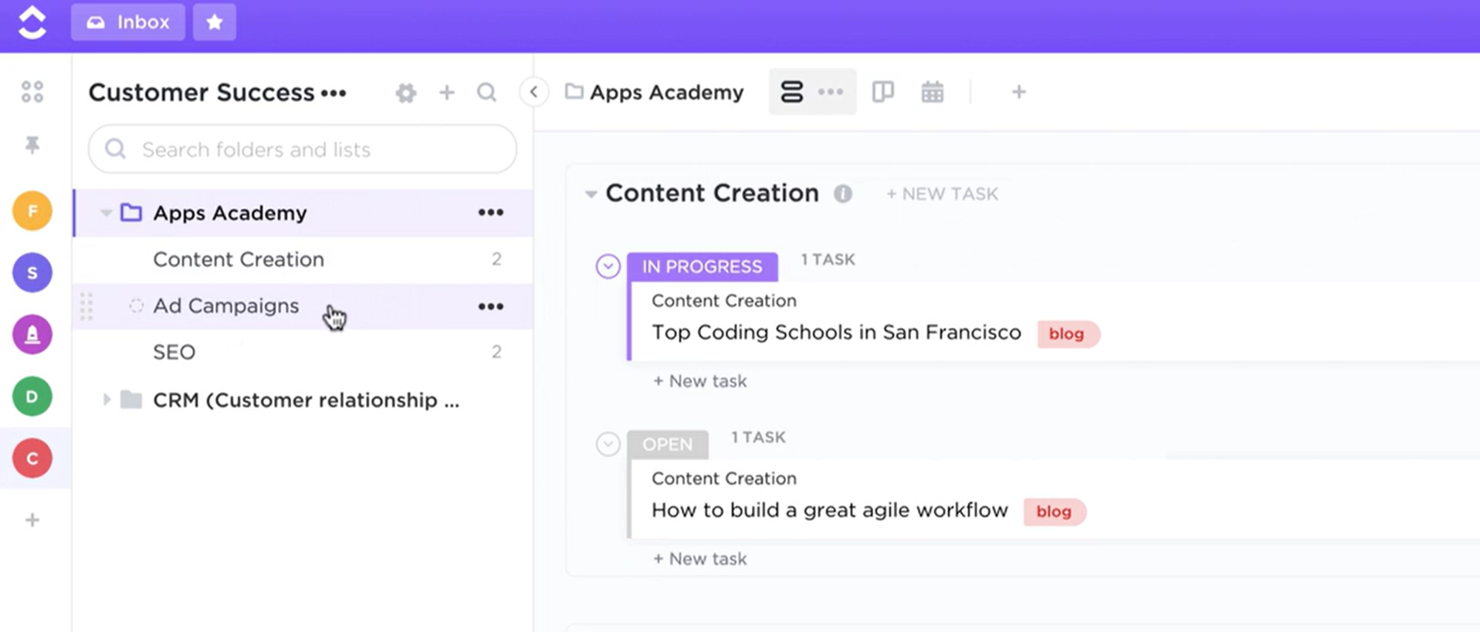
ClickUp is a workplace management platform where teams can plan projects, assign tasks, track progress, and manage resources. Projects can be arranged in either a calendar or board view, and internal teams and departments can also be organized in the system to facilitate cross-functional project planning. Users can add checklists and subtasks to project tasks, and can filter, sort, and rearrange their task list to their liking. Templates are available to create new tasks or reproduce repeating tasks.
The software also has communication and collaboration tools for both internal team members and guests. Users can upload and share files, comment on documents and tasks, assign comments, and use the live chat function to stay updated on project progress. Whiteboards can also be created for creative brainstorming, wireframing, and developing workflows.
ClickUp integrates with Slack, the Google Suite, Dropbox, and other common workplace tools. A free plan is available, and paid plans start from $9/user/month.
New Product Updates from ClickUp

ClickUp Enhances Task Management and Introduces AI Notetaker
ClickUp introduces an AI Notetaker for meetings and improves task type management in views. These updates help teams capture meeting insights automatically and organize work more efficiently. For more information, visit ClickUp’s official site.

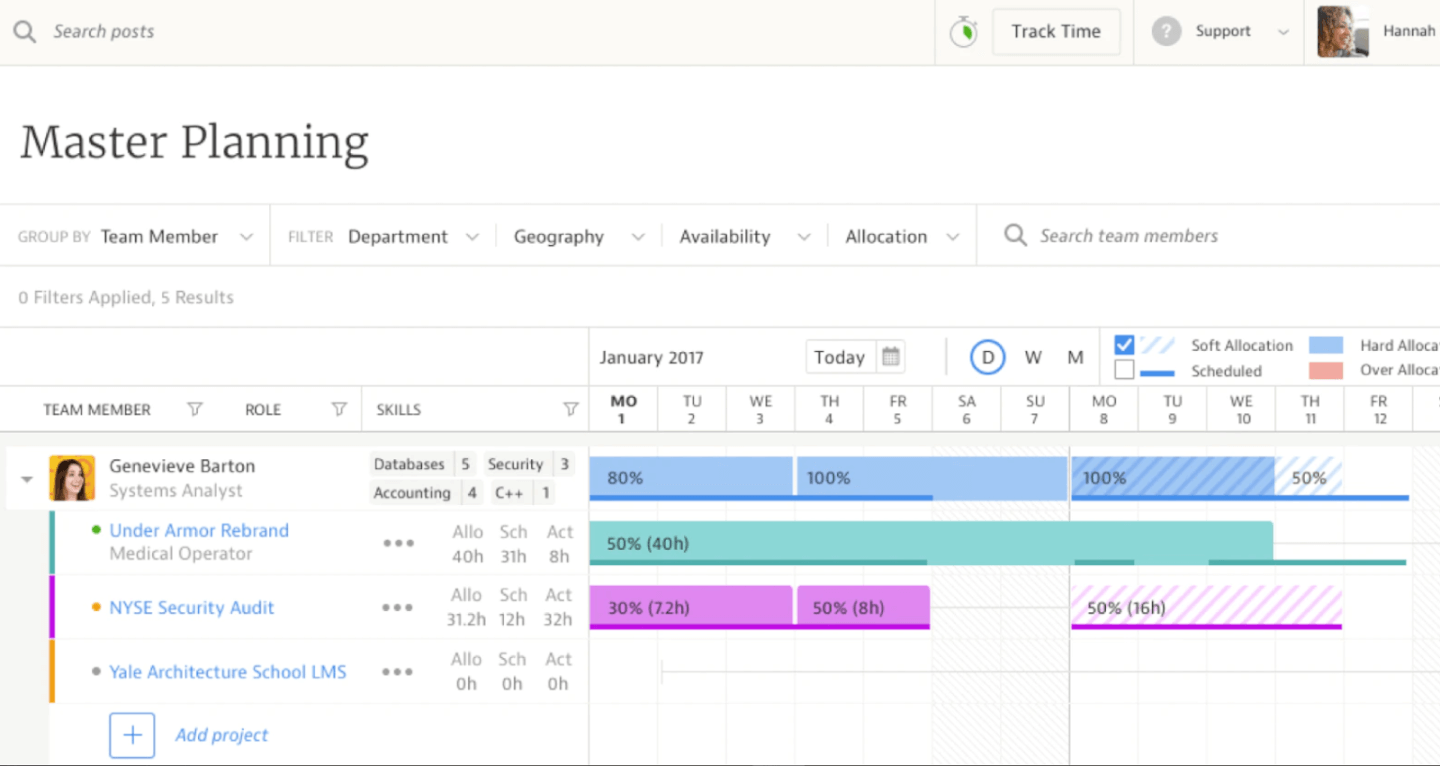
Kantata is a project planning software built for consultants, agencies, and professional services firms. It helps you connect every stage of project delivery—planning, resourcing, execution, and reporting—while keeping your team’s skills, availability, and well-being at the center of each decision.
Why I picked Kantata: I like that Kantata emphasizes people-centric project and resource planning, giving project managers a clear view of team capacity and demand. Its forecasting tools make it easy to see where gaps may occur, while its skill-matching capabilities ensure the right people are assigned to the right tasks. Real-time insights into utilization and project health help leaders adjust quickly, keeping delivery on schedule without overloading the team.
Standout Features & Integrations
Features include scenario planning to test different resourcing options before committing, detailed skills inventories for aligning talent with project needs, and personalized dashboards to track workloads and progress. Kantata also supports collaboration through task boards, time tracking, and feedback tools, making it easier to keep both teams and clients aligned.
Integrations include Salesforce, Slack, QuickBooks, Google Workspace, Microsoft 365, Jira, Asana, HubSpot, Dropbox, and Trello.
Pros and Cons
Pros:
- Business intelligence tools
- Advanced resource management
- Tailored for professional services
Cons:
- May be overkill for small teams
- Limited customization options
New Product Updates from Kantata
Kantata Integrates E-Invoicing With Avalara
Kantata introduces integrated e-invoicing through its partnership with Avalara, enabling compliant, automated invoicing across regions. For more information, visit Kantata's official site.
 .
.

VOGSY is an all-in-one platform designed to manage people, projects, and finances across global teams. By integrating CRM and ERP functionalities, it simplifies international project tracking and financial management.
Why I Picked VOGSY: I picked VOGSY for its ability to create a single source of truth for project data, ensuring teams work from consistent, accurate information. Its resource planning helps allocate the right people to the right projects, while automated billing schedules reduce admin work. I also like its revenue forecasting, which uses resource plans to give a clearer financial outlook and support smarter decisions.
Standout Features & Integrations
Features include integrated billing schedules that ensure you never miss out on cash flow, document tracking with Drive integrations to keep all project-related files organized, and revenue forecasting based on resource planning rather than guesswork. These features collectively enhance the overall project planning and execution process, making VOGSY a reliable choice for managing complex projects.
Integrations include Jira, Salesforce, QuickBooks, Deltek, Xero, Sage, Certinia, Oracle Netsuite, Exact, PHC-GO, Tally, Wave, ABSS, and Omie.
Pros and Cons
Pros:
- Real-time global financial overview
- Fast setup and onboarding
- Robust resource planning tools
Cons:
- Limited mobile functionality
- Basic customization options feel restrictive
New Product Updates from VOGSY
VOGSY Enhances Cost Tracking and Reporting
VOGSY introduces enhanced cost tracking for external resources and reporting improvements. These updates provide more accurate financial visibility and improved project performance insights. For more information, visit VOGSY’s official site.
 .
.

Quickbase is a low-code platform designed for businesses seeking custom workflow solutions. It caters mainly to teams that need to build tailored applications for project management, CRM, and operational processes without extensive coding.
Why I picked Quickbase: It's ideal for custom workflows, offering low-code development to create unique apps tailored to your team's needs. The drag-and-drop interface makes building and modifying applications straightforward. Quickbase also allows you to automate processes, reducing manual work and errors. Its real-time data management features ensure you have up-to-date insights into your business operations, which is crucial for decision-making.
Standout Features & Integrations
Features include a dynamic form builder that lets you capture and manage data easily. The software also supports comprehensive reporting tools for monitoring and analyzing business performance. Moreover, role-based access controls ensure data security and compliance within your organization.
Integrations include Salesforce, Google Workspace, Microsoft 365, Slack, QuickBooks, Box, Dropbox, Zendesk, HubSpot, and DocuSign.
Pros and Cons
Pros:
- Role-based access controls
- Comprehensive reporting capabilities
- Supports dynamic form creation
- Real-time data management tools
- Custom workflows with low-code development
Cons:
- May need technical support
- Limited offline capabilities
- Requires regular data input
- Learning curve for new users
- Initial setup can be complex
Other Project Planning Tools
Here are a few more that didn’t make the top list. If you need additional suggestions for handy project planning tools, check these out.
- Miro
For collaborative brainstorming
- Nifty
For project communication
- Kintone
For building custom project workflows
- Teamwork.com
For real-time metrics
- Birdview
For professional services
- Confluence
For project planning templates
- Office Timeline
For PowerPoint Gantt charts
- Nutcache
Time tracker with a planner
- GoodDay
For team productivity
- Ravetree
For all-in-one work management


Related Project Management Software Reviews
If you still haven't found what you're looking for here, check out these other related tools that we've tested and evaluated:
- Project Management Software
- Resource Management Software
- Workflow Automation Software
- Time Tracking Software
- Task Management Software
- Project Scheduling Software
- Project Management Software For Small Business.
- Risk Management Software
- Capacity Planning Software
- Time Blocking App
Selection Criteria for Project Planning Tools
Selecting the right project planning tools requires a meticulous evaluation of functionalities that align with specific use cases critical to the buyer's needs. Through personal trials and extensive research, I've identified key criteria that I believe are essential when choosing project planning tools. These criteria are tailored to enhance the organization, scheduling, and management of tasks, resources, and timelines effectively, and are weighted to reflect their importance to my overall evaluation.
Core Project Planning Tool Functionality (25% of total weighting score): To be considered for inclusion on my list of the best project planning tools, the solution had to support the ability to fulfill common use cases, including:
- Task and project tracking to ensure progress is measurable and visible
- Resource management to optimize the allocation and utilization of resources
- Collaboration features for seamless communication among team members
- Integration with other tools to streamline workflows and data exchange
- Reporting and analytics for informed decision-making and project insights
Additional Standout Features (25% of total weighting score): In a crowded marketplace, additional standout features distinguish superior project planning tools from average ones. This criterion assesses the presence of innovative and unique functionalities that enhance project planning beyond the basics, such as:
- Tools that offer unique functionalities, such as AI-driven analytics for project forecasting
- Innovative collaboration tools, like real-time document editing and in-app messaging, which enhance team synergy
- Advanced resource allocation features, including skill-based assignments and conflict resolution
- Customizable dashboards and reports that provide insights tailored to specific project or organizational needs
- Automation of routine tasks, freeing up team members to focus on more strategic activities
Usability (10% of total weighting score): Usability directly impacts the adoption and effectiveness of a project planning tool within an organization. This evaluation focuses on the tool's user interface, ease of navigation, and the overall user experience, ensuring that the tool is accessible to users of all skill levels. For this assessment, I look for:
- Intuitive design that requires minimal training for new users
- Drag-and-drop interfaces for scheduling and task management, enhancing ease of use
- Clear, concise, and customizable dashboard views that provide immediate access to critical project information
- Mobile compatibility, ensuring accessibility and functionality across various devices
Onboarding (10% of total weighting score): A smooth onboarding process is crucial for quick adoption and realization of the tool's value. This criterion examines the availability and quality of training resources, templates, and support mechanisms that facilitate easy integration of the tool into daily project management activities. This section of the evaluation assesses:
- Comprehensive training materials, such as videos, webinars, and tutorials, that cater to users with different levels of expertise
- Pre-designed templates that accelerate the project setup process
- Interactive product tours and chatbots that offer immediate assistance during the learning phase
- Community forums or support groups that enable users to share tips and best practices
Customer Support (10% of total weighting score): Effective customer support is vital for resolving issues and ensuring continuous productivity. This evaluation looks at the responsiveness, availability, and helpfulness of the support team, as well as the depth of self-help resources provided by the tool. I consider:
- Responsive support teams available through multiple channels, including live chat, email, and phone
- In-depth knowledge bases that provide answers to frequently asked questions and guides for troubleshooting
- Regular updates and maintenance, ensuring the tool remains compatible with evolving project needs
Value For Money (10% of total weighting score): Value for money assesses whether the tool's pricing is commensurate with its features, capabilities, and the benefits it brings to an organization. This criterion evaluates pricing transparency, flexibility, and the overall return on investment offered by the tool. I evaluate:
- Pricing models that offer flexibility based on the size of the team, project complexity, and required features
- Free trials or demo versions that allow users to assess the tool's suitability before committing financially
- Transparent pricing without hidden fees, ensuring businesses can budget effectively for their project management needs
Customer Reviews (10% of total weighting score): Customer reviews offer invaluable insights into a tool's performance in real-world scenarios. This evaluation considers user feedback on various aspects of the tool, including functionality, usability, and customer support, to gauge overall satisfaction and effectiveness. It also looks for:
- High satisfaction rates indicating that the tool meets or exceeds user expectations
- Positive feedback on specific features, usability, and customer support
- Case studies or success stories that highlight the tool's impact on project outcomes and organizational efficiency
By referencing these criteria, potential buyers can make informed decisions that align with their specific project management needs, ensuring they select a project planning tool that both addresses their immediate problems and supports their long-term success.
How To Choose Project Planning Tools
With so many different project planning solutions available, it can be challenging to make decisions on what project planning tool is going to be the best fit for your needs.
As you're shortlisting, trialing, and selecting project planning tools, consider the following:
- What problem are you trying to solve - Start by identifying the product planning software feature gap you're trying to fill to clarify the features and functionality the product planning tool needs to provide.
- Who will need to use it - To evaluate cost and requirements, consider who'll be using the software and how many licenses you'll need. You'll need to evaluate if it'll just be the project management professionals, or the whole organization that will require access. When that's clear, it's worth considering if you're prioritizing ease of use for all, or speed for your product planning tool power users.
- What other tools it needs to work with - Clarify what tools you're replacing, what tools are staying, and the tools you'll need to integrate with, such as accounting, CRM or HR software. You'll need to decide if the tools will need to integrate together, or alternatively, if you can replace multiple tools with one consolidated product planning tool.
- What outcomes are important - Consider the result that the software needs to deliver to be considered a success. Consider what capability you want to gain, or what you want to improve, and how you will be measuring success. For example, an outcome could be the ability to get greater visibility into performance. You could compare product planning tool features until you’re blue in the face, but if you aren’t thinking about the outcomes you want to drive, you could be wasting a lot of valuable time.
- How it would work within your organization - Consider the software selection alongside your workflows and delivery methodology. Evaluate what's working well, and the areas that are causing issues that need to be addressed. Remember every business is different — don’t assume that because a tool is popular that it'll work in your organization.
Trends In Project Planning Tools For 2025
In 2024, project planning tools are adapting in response to shifting priorities in project management, placing emphasis on efficiency, collaboration, and adaptability. Below are several key trends I have observed in project planning tools, each pointing towards the broader goals of facilitating better organization, scheduling, and management of tasks, resources, and timelines.
- Emphasis on Security and Compliance: With increasing concerns about data privacy and security, there's a significant uptrend in features designed to enhance the security posture of project planning tools. This includes advanced encryption, role-based access control, and compliance with global standards such as GDPR. Tools are prioritizing the protection of project data and user information, reflecting the critical nature of security in today’s digital project management environment.
- Sustainability and Eco-Friendly Features: An emerging trend is the integration of features that help project teams consider the environmental impact of their projects. This includes carbon footprint calculators and sustainability reporting tools. Such features are becoming more sought after, indicating a shift towards more socially responsible project management practices.
- Increased Use of Natural Language Processing (NLP): Tools are beginning to leverage NLP for more intuitive user interactions, such as chatbots for task management or voice commands for navigating planner software. This trend highlights the industry’s move towards making project planning tools more accessible and easier to use, reducing the learning curve for new users.
- Augmented Reality (AR) for Project Visualization: Following VR's footsteps, AR is starting to make its mark in project planning tools, offering real-world overlays for project plans and site work. This trend points towards a future where project planning and real-world execution are more tightly integrated, allowing for enhanced visualization and understanding of projects before physical work begins.
- Focus on Mental Health and Wellbeing: Recognizing the stress and burnout associated with project management, some tools are introducing features aimed at promoting mental health and wellbeing. This includes reminders to take breaks, integration with wellness apps, and analytics to identify overwork patterns among team members. This trend signifies a holistic approach to project management, where the wellbeing of the team is considered alongside project outcomes.
These trends illustrate the evolving landscape of project planning tools, driven by the need for more collaborative, integrated, and flexible solutions. As technology advances, so too do the expectations and requirements of project management professionals, guiding the development of tools that are not only responsive to current needs but also anticipate future challenges in project management.
What are Project Planning Tools?
Project planning tools are software that helps you define, schedule, and manage tasks, timelines, and resources across a project. With features such as task assignments, deadline reminders, and collaborative workspaces, these tools help ensure that all team members are aligned and informed.
It’s used by project managers, team leads, and operations professionals to visualize workflows, allocate workloads, and track dependencies. These tools solve common planning issues like unrealistic timelines, missed deadlines, or poor visibility across teams.
Features of Project Planning Tools
Project planning tools are essential for the streamlined execution of projects, ensuring that tasks are completed on time, resources are allocated efficiently, and project goals are met within the set timelines. The right tool can significantly impact the success of a project by providing the necessary framework for project managers and teams to stay organized and focused. Here, I highlight the ten most important features to look for when selecting the right project planning tool for your needs.
1. Task Management: This feature allows for the creation, assignment, and tracking of tasks. Task management is crucial, as it helps in breaking down the project into manageable units, making it easier to monitor progress and ensure that every component is addressed.
2. Resource Allocation: This enables the assignment of resources to specific tasks. Effective resource management and workload capacity planning ensures that each task has the necessary personnel and materials, optimizing productivity and preventing resource overuse or underutilization.
3. Multiple project views: This feature offers various ways to oversee your projects, tasks, and milestones, like Gantt charts, Kanban boards, calendar views, table views, and list views, ensuring that users can view and organize their project timelines in a way that makes the most sense to them.
4. Collaboration Tools: These facilitate communication and cooperation among team members. Team collaboration tools are essential for ensuring all team members can easily share information, updates, and feedback, thus enhancing teamwork and project coherence.
5. Time Tracking: This feature records the amount of time spent on tasks. Time tracking is important for monitoring productivity, estimating task durations more accurately, and managing the project schedule effectively.
6. Budget Management: Budget management tools help track project expenses and compare them against the allocated budget. This feature is crucial for ensuring the project remains financially viable, allowing for immediate corrective action if budget overruns are detected.
7. Reporting and Analytics: This offers insights into the project's performance through data analysis. Reporting and analytics are essential for identifying trends, forecasting potential issues, leveraging people data, and making informed decisions based on the project's current status.
8. Document Sharing and Management: This facilitates the centralized storage, sharing, and management of project documents. Efficient document management ensures that all team members have access to the necessary information and documentation, streamlining communication and reducing errors.
9. Risk Management: Risk management tools help identify, assess, and mitigate potential risks to the project. This feature is important for proactive planning, allowing teams to address potential issues before they impact the project adversely.
10. Integration Capabilities: The ability to integrate with other tools and software, such as a Google Calendar integration, ensures that scheduling, task deadlines, and milestones are automatically synchronized across platforms. Integration capabilities are essential for ensuring the project planning tool works seamlessly with other systems, enhancing functionality and reducing the need for multiple, disjointed tools.
Choosing the right project planning tool, equipped with these features, can empower project managers and their teams to tackle complex projects with greater confidence and efficiency. Ultimately, the aim is to streamline project delivery, reduce overheads, and achieve the set objectives with precision, making the selection of a project planning tool with these features a critical decision for any project manager.
Benefits of Project Planning Tools
Project planning tools offer a plethora of benefits that streamline processes, foster collaboration, and ensure the successful completion of projects within budget and time constraints. For potential buyers of project plan software, understanding these benefits is crucial in making an informed decision that aligns with their project management needs. Here are five primary benefits of project planning tools:
1. Enhanced Collaboration: Project planning tools centralize communication, making it easier for teams to work together. This benefit leads to improved coordination among team members, regardless of their location, ensuring that everyone is on the same page and significantly reducing misunderstandings and delays.
2. Improved Time Management: With features like Gantt charts and time tracking, these tools provide a clear overview of project timelines and individual responsibilities. Improved time management means projects are more likely to be completed on schedule, allowing businesses to meet their deadlines and avoid the costs associated with delays.
3. Increased Productivity: By automating routine tasks and organizing project information, project planning tools free up team members to focus on more critical aspects of their work. Increased productivity results from the efficient allocation of resources and tasks, leading to quicker project turnaround times and higher quality outcomes.
4. Better Resource Allocation: These tools offer visibility into all aspects of project management, including resource allocation. Better resource allocation ensures that every project component has the necessary tools and personnel, maximizing the use of available resources and minimizing wastage.
5. Enhanced Decision Making: With built-in reporting and analytics, project planning tools provide valuable insights into project performance. Enhanced decision making is facilitated by real-time data, allowing managers to make informed adjustments to project plans, resource allocation, and timelines to ensure project success.
Tools for project planning are more than just software; they are a catalyst for transforming the way projects are managed. For individuals and organizations, selecting a project planning tool that offers these benefits can be a game-changer, paving the way for successful project outcomes and organizational growth.
Costs & Pricing for Project Planning Tools
Project planning tools can vary widely in functionality, scalability, and—most importantly for many users—price. These tools are designed to cater to a range of needs, from small projects requiring basic task management, to complex initiatives that demand extensive resource planning and collaboration features. However, most plans generally fall into similar categories.
Moreover, while it might seem that the only relevant prices are those attached to your chosen plans software, it's also a good idea to understand pricing trends across the market. This can help ensure that you don't pay for features you don't need or overpay for common features.
To help you make an informed decision, we've broken down the typical plan options and pricing for project planning software:
Plan Comparison Table for Project Planning Tools
| Plan Type | Average Price | Common Features |
|---|---|---|
| Free | $0 | Basic task management, Limited users, Limited projects, Basic collaboration tools |
| Entry-Level | $5-10 per user/month | Enhanced task management, More users, Unlimited projects, Integration capabilities, Basic reporting |
| Mid-Range | $10-25 per user/month | All Entry-Level features, Advanced reporting, Resource management, Increased storage, Enhanced security |
| Premium | $25-50 per user/month | All Mid-Range features, Customizable dashboards, Advanced integration options, Priority support |
| Enterprise | Custom Pricing | All Premium features, Unlimited users and projects, Personalized onboarding, Advanced security features |
When considering which plan to choose, it is important to evaluate the specific needs of your teams and projects against the features and limitations of each plan. It is often a good idea to start out with a free plan, which is generally suitable for those just starting out or managing very small teams, and scale up your plan as necessary.
Moreover, when initially choosing a plan, it's important to consider both your immediate needs and potential future requirements to ensure that website planning tool can scale with your project.
Common stages where your company may want to upgrade their pricing plan include:
- Increased Project Volume: When the company begins managing a larger number of projects simultaneously, the current pricing tier might not support the higher volume efficiently.
- Need for Advanced Features: As the complexity and scope of projects increase, the company might require advanced features such as risk management, dependency tracking, and advanced scheduling options.
- Team Collaboration and Communication: When collaboration and communication needs grow due to larger or more dispersed teams, a higher pricing tier is often the best choice for enhanced collaboration tools.
- Resource Management Requirements: As the company scales, managing resources (both human and material) becomes more critical. Higher pricing tiers usually offer more sophisticated resource management features.
- Enhanced Security and Compliance: For companies handling sensitive data or working in regulated industries, upgrading to a higher pricing tier can provide enhanced security features and compliance tools.
Finding the right balance of functionality and cost can be difficult, but putting in the work to do so will help ensure your project planning tool supports your objectives without unnecessary expenditure.
Project Planning Tools Frequently Asked Questions
Find answers to common questions other people ask about this topic.
What is project planning?
Project planning is the second phase of the project life cycle and the one where you define all the work to be done and create the roadmap that you will follow for the remainder of the project.
This phase is critical to the success of the project because you will think about the tasks to be done, if you have the right resources to finish it on time, and if the budget will allow it. When project planning, expect to create a:
- Project plan
- Resource plan
- Financial plan
- Communication plan
Then, depending on the project, you might need other deliverables like a procurement plan and risk assessment.
What is project planning software used for?
Project planning software is used to define and prioritize tasks, track progress, and help streamline the work needed to deliver a project on time.
Additionally, thanks to the flexibility provided by scheduling software, it can be used to:
- Schedule a series of tasks in a Gantt chart that follow a chronological order
- Handle projects that require simultaneous execution of tasks
- Schedule a series of sprints in agile projects
What are some helpful project management organizational tools?
There are a ton of tools out there that can be used for project planning, from project management apps and software to more analog solutions. In fact, some of the best project management tools come in the form of a pen and paper. Here are a few organizational tools that can support your project planning:
- Templates: Creating project templates to help you outline different types of projects or specific tasks can be a huge time-saver. You won’t have to start from scratch every time you’re planning a new project, and you can easily use them for recurring tasks.
- Automation: Whether it’s using a workflow management software or setting up smart notifications, automation can be a big help in project execution. It can help your team stay up to date on project progress and move things along more smoothly.
- Checklists: These come in handy for breaking down tasks into specific subtasks as well as creating a daily to-do list for team members. Checklists are an excellent way to track projects and ensure important steps don’t get missed.
- Risk management plans: It’s important to know how your team will mitigate risks and issues before they arise. In software development and small business management alike, navigating uncertain territory is easier when you have a plan in place.
How do I measure the ROI of a product planning tool?
Adding a product planning tool to your tech stack means investing in software that will make your project team more productive. Having a place where people can collaborate in real time, exchange messages, and follow the progress of tasks and projects translates into better deliveries.
However, to make sure the investment is worth it, consider the following steps to calculate ROI:
- Calculate the total cost of acquiring and implementing the project planning software, including any licensing fees, hardware or infrastructure costs, and employee training expenses.
- Determine the net gain from the investment, which can include cost savings, increased revenue, or any other financial benefits directly attributed to the software. Subtract the total cost of the investment from this net gain.
- Divide the result by the cost of the investment, and multiply by 100 to express the ROI as a percentage.
How can I test out a new project planning tool?
To test out a new project planning tool, follow these steps to ensure it fits your team’s needs:
- Sign Up: Start by signing up for the project management planning tool via its website. Many online planning tools offer free trials, allowing you to explore features before committing.
- Onboarding: Most IT planning tools provide onboarding guides or tutorials. Utilize these to familiarize yourself with the interface and key features of the planning software solution.
- Create Projects and Tasks: Set up a high-level project plan by creating a project and breaking it into tasks. Then, test the project planning board to manage your work visually.
- Evaluate Unique Features: Note any unique features such as time tracking and AI-powered tools, which are often integrated into project management planning tools. If you’re testing for a solution to execute a software development project plan, ensure the tool handles milestones and task dependencies effectively.
By following these steps, you’ll be able to see how the project plan tool aligns with your specific projects planning needs.
What are some common challenges in project planning?
Effective project planning is crucial for the success of any project, yet it often comes with its own set of challenges. Here are some common issues encountered during the planning phase:
- Signup and Onboarding: Many project planning tools require a detailed signup process. Consequently, ensuring that team members are effectively onboarded can be time-consuming, which may delay project initiation.
- Creating Projects and Tasks: Setting up a clear software project plan is essential, but miscommunication can lead to poorly defined tasks. This can cause confusion and hinder progress in planning projects.
- Evaluation of Unique Features: Different planner tools offer various features like time tracking and AI capabilities. Determining which features best fit the needs of the project can be challenging, particularly when comparing multiple software planning options.
- Integration with Existing Systems: New planning software tools need to integrate seamlessly with existing systems. This can be a hurdle in IT project planning, as compatibility issues can disrupt workflows.
- Resource Allocation: Effectively utilizing resources is critical to project success. Without proper equipment planning software, teams may struggle to allocate resources efficiently, impacting the overall timeline.
- Adaptability to Change: Projects often evolve, requiring adjustments to the initial software development plan. Ensuring that your plan tools can adapt to changes is vital for ongoing success.
What are some criteria for evaluating free project planning software?
When selecting free project planning software, it’s essential to consider various criteria to ensure it meets your team’s needs. Here are some key factors to evaluate:
- Signup Process: A straightforward signup process is critical to starting things off on the right foot. Look for the best planning tools that offer easy registration without excessive requirements.
- Onboarding Experience: Effective onboarding helps teams quickly adapt to new technology. Evaluate how user-friendly the planning software solution is and whether it provides tutorials or support for new users.
- Creating Projects and Tasks: Assess how easily you can create and manage projects. The software should facilitate simple project planning and allow for efficient task assignment within your IT project plan.
- Unique Features: Consider features like time tracking and AI capabilities. These can enhance productivity and are essential for teams that require detailed analytics on project progress.
- Collaboration Tools: Check if the team planning tools encourage collaboration among team members, such as shared calendars or communication channels.
- Integration Options: The ability to integrate with existing systems is vital to successfully implementing a new planning software project. Look for site planning software that can connect seamlessly with other tools you use.
- Customization: Evaluate whether the software allows for customization to fit specific project needs, making it more adaptable for diverse plan projects.
- User Feedback and Support: Research user reviews and assess the level of community or official support available, which can be crucial for troubleshooting and maximizing the software’s potential.
Security and Data Privacy within Project Planning Tools
Data security and privacy are of great importance in software project planning tools. They often contain sensitive and confidential information about the organization, its employees, clients, and projects.
Therefore, improper security measures mean this data can be vulnerable to unauthorized access, theft, or breaches, potentially leading to significant financial and reputational damage.
Here are some of the security features you can expect to see:
- Compliance with European standards: With GDPR came a revolution in how SaaS companies handle data privacy for their customers. The common theme is for these companies to work with the hosting services of massive companies, like Amazon, and have servers in different parts of the world.
- Data encryption: Data encryption to keep your information hidden from 3rd parties. This encryption is normally in transit and at rest. This means your information is protected while being sent or simply stored.
- Security certifications: Expect the vendor to be certified in ISO 27001, SOC2 Type I, Type II, CSA STAR, and similar.
Some vendors will be more transparent than others when displaying their security and data privacy information, but they all have it. If you cannot see that right away, ask for clarification during your demo call.
What's Next?
If you're in the process of researching project planning tools, connect with a SoftwareSelect advisor for free recommendations.
You fill out a form and have a quick chat where they get into the specifics of your needs. Then you'll get a shortlist of software to review. They'll even support you through the entire buying process, including price negotiations.