

10 Best Teamwork Alternative Tools for Projects in 2026

Best Teamwork Alternatives Shortlist


The best Teamwork alternatives provide more flexible reporting and dashboards for monitoring progress, additional metrics, options for bulk editing, and more functionality in the mobile app. With the right alternative to Teamwork, you can better track projects, manage timelines, and build a collaborative environment for your team.
I’ve used my experience in project management and 3+ years of testing software to review dozens of Teamwork alternatives so you can find the right tool to help you and your team collaborate on project work across departments, manage workloads and resources, and organize project portfolios across your organization. Below, I cover strengths and key differences, pros and cons, and ideal use cases for each tool.
What are Teamwork Alternatives?
Teamwork alternatives are project management software and collaboration tools that offer comparable features to Teamwork, but may also include more reporting and analytics features, more flexibility and customizability, and file storage features. They might also offer a more functional mobile app, or be better suited for big organizations with large project portfolios.
Alternatives to Teamwork will also typically include the standard project management and collaboration features like resource management, timeline management, and project planning.
Why Trust Our Software Recommendations
Our team has been testing and reviewing software since 2012. As project managers ourselves, we know how difficult—and important—it is to choose the right software.
For this guide, we evaluated tools using hands-on testing and independent research, scoring tools using our selection criteria. We also draw on insights from industry thought leaders and practicing project management experts.
Our reviews reflect our human editorial judgment, not a sales pitch.
Expert reviewers:
Teamwork Alternatives Comparison Table
This comparison table summarizes pricing details for my top Teamwork alternative selections:
| Tool | Best For | Trial Info | Price | ||
|---|---|---|---|---|---|
| 1 | Best for comprehensive agency project management | 14-day free trial + free demo available | From $10/user/month (billed annually) | Website | |
| 2 | Best for managing client billing within projects | Free demo available | Pricing upon request | Website | |
| 3 | Best for breaking down large projects | 15-day free trial + free plan + free demo available | From $4/user/month (billed annually) | Website | |
| 4 | Best for extensive workflow and dashboard customization | Free plan + 14-day free trial + free demo available | From $10/user/month (billed annually) | Website | |
| 5 | Best for agency quote-to-cash project tracking | 14-day free trial | From $19.90/user/month (billed annually) | Website | |
| 6 | Best for interactive Gantt charts | 14-day free trial | From $7/user/month (billed annually) | Website | |
| 7 | Best for client onboarding management | 14-day free trial + free demo available | From $19/user/month (billed annually) | Website | |
| 8 | Best for advanced customizable project management | Free plan + free demo available | From $9/user/month (billed annually) | Website | |
| 9 | Best for uniting teams, goals, and processes | Free plan available; 14-day free trial | From $16/user/month | Website | |
| 10 | Best for unlimited storage | Free plan available | From $1.49/user/month (billed annually) | Website |


Best Teamwork Alternative Reviews
In this section, I will provide an in-depth analysis and overview of each of the Teamwork alternatives. I will walk through the pros and cons of each tool, their features, and their best use cases.

Best for comprehensive agency project management

Productive is an end-to-end management platform specifically designed for agencies. Its features include project management, sales CRM, resource planning, and financial tracking. The platform aims to provide a real-time overview of business operations, ensuring agencies can manage their projects and resources efficiently while maintaining profitability.
Why it's a good Teamwork alternative:
While both platforms share similarities in project management, task assignments, and time tracking, Productive goes a step further with its emphasis on financial management and profitability. Key features such as real-time profitability reporting, detailed budgeting, and integrated accounting tools enable agencies to track their financial health closely and predict future revenue. Additionally, Productive's integrated sales CRM helps manage the sales pipeline, track leads, and forecast revenue, providing a more comprehensive solution for managing both projects and sales compared to Teamwork.
Standout features & integrations:
Features include resource scheduling, Gantt charts, employee cost rates, company overhead cost tracking, multiple subsidiaries and currencies support, expense tracking, time and expense approvals, project templates, task progress tracking, multiple sales pipelines, workload management, and real-time notifications.
Integrations include Jira, Slack, QuickBooks, Xero, Trello, Zapier, Google Drive, Sage, BambooHR, Gusto, and HubSpot.
Pros and Cons
Pros:
- Intuitive user interface
- Good financial management capabilities
- Robust resource planning features
Cons:
- Initial setup can take some time
- Could use more integrations
New Product Updates from Productive
Productive Adds Voice Dictation, Slack Connector, Proposals, and Overtime
Productive adds voice dictation, a Slack Connector, proposal controls, and overtime tracking. These updates support faster AI interactions, client proposals, and time management. For more information, visit Productive’s official site.
Accelo
Best for managing client billing within projects

Accelo is a professional services automation platform that combines project management, automated time tracking, resource scheduling, client communication, and invoicing in a single system.
Who Is Accelo Best For?
Accelo is a strong fit for agencies, consulting firms, and IT service providers that manage multiple client engagements and need project delivery tied directly to billing.
Why I Picked Accelo
Accelo is one of my top picks because I love how it connects project work directly to client invoices without any manual re-entry. When my team logs time against a task, that data flows straight into project financials, where budget tracking, margin visibility, and invoicing are all updated in real time. I also rely on the automated invoicing and payment status alerts to catch outstanding balances before they become a cash flow issue.
Accelo Key Features
- Resource scheduling: Assign team members to project tasks based on availability and capacity across active client engagements.
- Client portal: Give clients a dedicated space to view project status, approve work, and access shared communications.
- Scope creep management: Flag and track work that exceeds the original project scope, with cost impact captured automatically.
- Retainer management: Set up and manage recurring client retainers alongside fixed-fee projects within the same platform.
Accelo Integrations
Accelo offers 30+ native integrations, including Salesforce, HubSpot, Jira, QuickBooks, Xero, Sage Intacct, Google Workspace, Slack, GitHub, and GitLab, with native integrations across the Microsoft ecosystem including Microsoft 365, MS Teams, and Microsoft Entra. It also connects with Zapier and provides a RESTful API for custom integrations.
Pros and Cons
Pros:
- AI-predicted project completion dates update live
- Supports retainers, tickets, and fixed-fee projects
- Email threads attach to specific client projects
Cons:
- Past work history is difficult to aggregate
- Dense screens can overwhelm newer users
New Product Updates from Accelo
Accelo Adds Quote Designer and Pipeline Management
Accelo adds Quote Designer, enhanced pipeline views, and quote tracking with version history. This helps teams create proposals and manage opportunities from scoped work. For more information, visit Accelo’s official site.

Best for breaking down large projects
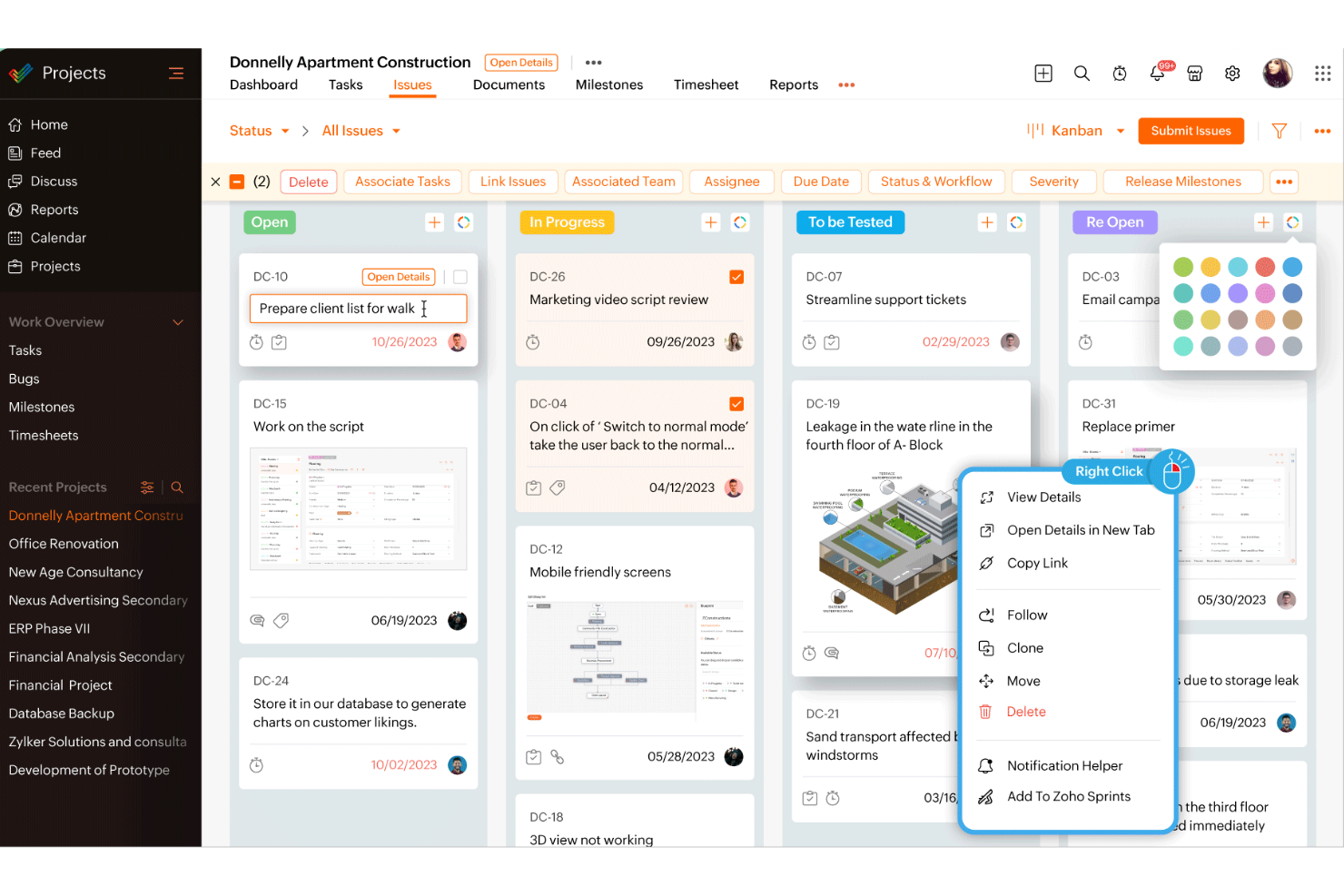
Zoho Projects is a project management tool designed to enhance teamwork and collaboration across various industries.
Why it's a good Teamwork alternative:
I picked Zoho Projects because it offers robust task management features that allow you to break down large projects into manageable tasks. This makes it easier for your team to focus on specific deliverables and track progress. The platform also includes time tracking capabilities, which help you monitor how much time your team spends on each task, leading to better project planning and resource allocation. Zoho Projects also has automation features that let you automate routine tasks using a user-friendly drag-and-drop interface.
Standout features & integrations:
Features include issue tracking, which helps you identify and resolve project-related problems quickly, ensuring your team stays on track. The platform also offers team collaboration tools, such as forums and chat, to facilitate communication and idea sharing among team members.
Integrations include Google Calendar, Microsoft Teams, Jira, Basecamp, Dropbox, GitHub, Zendesk, and a range of Zoho Apps.
Pros and Cons
Pros:
- Customizable workflows and fields to fit various business needs
- Integration with other Zoho apps enhances functionality
- Comprehensive feature set including time tracking and billing
Cons:
- Limited native third-party integrations outside the Zoho ecosystem
- Mobile app functionality is not as robust as the desktop version
New Product Updates from Zoho Projects
Zoho Projects Adds CodeX Scripts for Custom Modules
Zoho Projects now supports CodeX Scripts for custom modules, enabling conditional logic and rules for creating, updating, and deleting records. For more information, visit Zoho Projects' official site.
 .
.
Wrike
Best for extensive workflow and dashboard customization
Wrike is a project management and work management platform designed to help teams collaborate and manage tasks efficiently. It allows teams to manage their projects from start to finish, including planning, execution, and reporting. Wrike's platform is designed to accommodate different team sizes and project complexities.
Why it's a good Teamwork alternative:
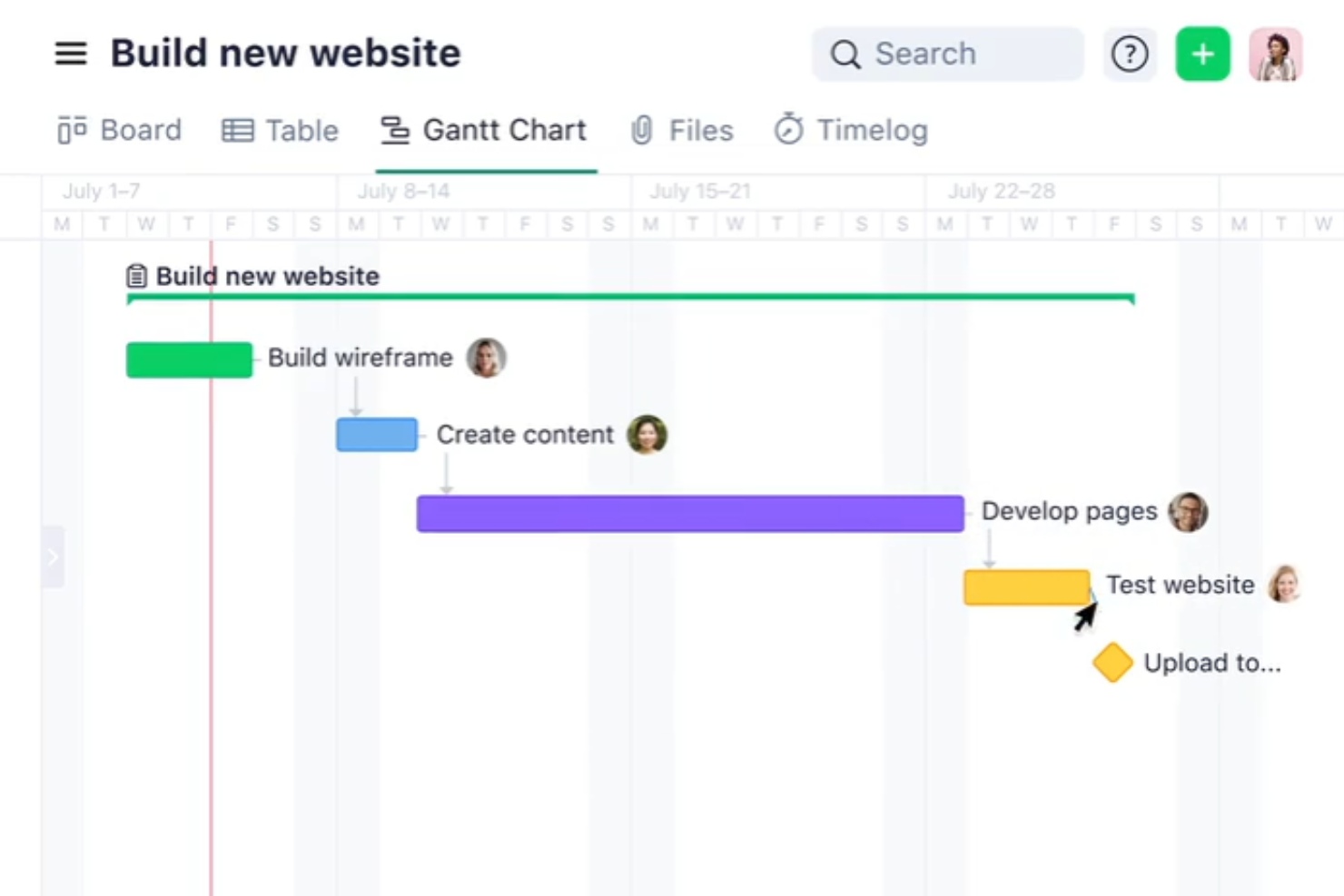
Wrike is a strong alternative to Teamwork because of its extensive customization and flexibility options, which cater to diverse and complex project needs. While both platforms offer robust project management and collaboration tools, Wrike stands out with its ability to tailor workflows, dashboards, and reporting features to specific project requirements. You can create custom workflows that align with your unique processes and view project plans using Gantt charts, Kanban boards, or lists. You can even design personalized dashboards to visualize key metrics and generate detailed, custom reports for in-depth analysis.
Standout features & integrations:
Features include real-time reporting, workload views, approval workflows, time tracking, task prioritization, budget tracking, customizable dashboards, automated workflows, Gantt charts, Kanban boards, resource allocation tools, project templates, and collaborative tools.
Integrations include Slack, Microsoft, Google, Adobe, Salesforce, Zoom, Tableau, MS Teams, OneDrive, GitHub, Gmail, Dropbox, Okta, OneLogin, HubSpot, Jira, and NetSuite.
Pros and Cons
Pros:
- Good reporting and analytics for projects
- Automated workflows, including approvals
- Highly customizable platform
Cons:
- Custom fields and workflows are unavailable on the free plan
- Learning curve when learning to customize the platform
New Product Updates from Wrike

Wrike Adds Quick Search to Table View
Wrike adds Quick Search to Table View with full-table search across titles, descriptions, and fields, plus highlighted matches. This helps users find tasks faster in large tables. For more information, visit Wrike’s official site.
Scoro
Best for agency quote-to-cash project tracking
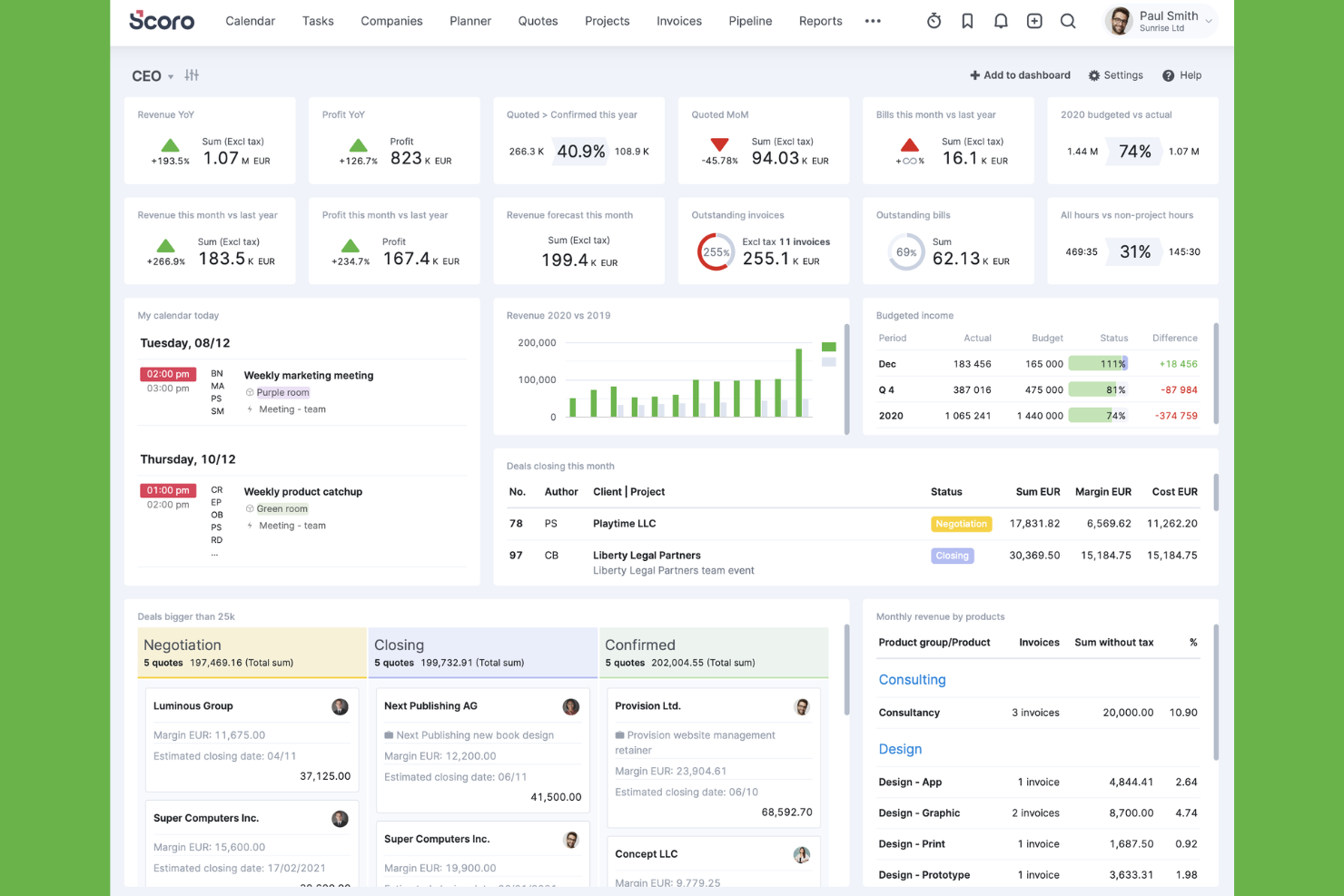
Scoro is a professional services automation (PSA) platform that combines project management, resource planning, time tracking, quoting, and invoicing into a single end-to-end system built for agencies and client-services teams.
Who Is Scoro Best For?
Scoro is a strong fit for agencies and professional services firms that need to manage the full project lifecycle—from quoting to invoicing—in a single platform.
Why I Picked Scoro
Scoro earns its spot on my shortlist because it covers the entire quote-to-cash lifecycle in a single platform, which is something Teamwork simply can't match. I love how you can generate tasks directly from an approved quote, track budget burn in real time, and trigger an invoice without ever leaving the tool. The three-tier revenue model (Earned, Recognized, and Forecasted) gives agency leaders a financial picture that most project management tools don't come close to offering.
Scoro Key Features
- Live utilization heatmaps: Visualize team availability and workload in real time across roles and individuals to spot over- or under-allocation at a glance.
- Triggers and actions automations: Set rule-based automations to handle task assignments, status updates, and alert notifications automatically on Growth plans and above.
- Customer portal: Give clients access to real-time project information, quote approvals, and task-level comments through a permission-controlled external portal.
- ELI AI assistant: Query project and financial data, generate reports, and automate tasks using natural language commands built directly into the platform.
Scoro Integrations
Scoro offers native integrations with QuickBooks, Xero, Sage Intacct, Stripe, Salesforce, Slack, Google Workspace, Microsoft 365, BambooHR, Dropbox, and Google Drive. It also provides an open REST API, Scoro MCP, and Zapier support.
Pros and Cons
Pros:
- Portfolio analytics highlight project and client health
- Tracks budget burn and profit in real time
- Consolidates quoting, delivery, and invoicing workflows
Cons:
- No built-in chat or creative proofing
- Customer Portal costs extra to enable clients
New Product Updates from Scoro

Scoro Adds Time Mobile App and ELI Improvements
Scoro adds the Scoro Time mobile app for iOS/Android to track time anywhere and expands ELI with attachments, smarter filtering, and trigger-based actions. For more information, visit Scoro's official site.
GanttPRO
Best for interactive Gantt charts
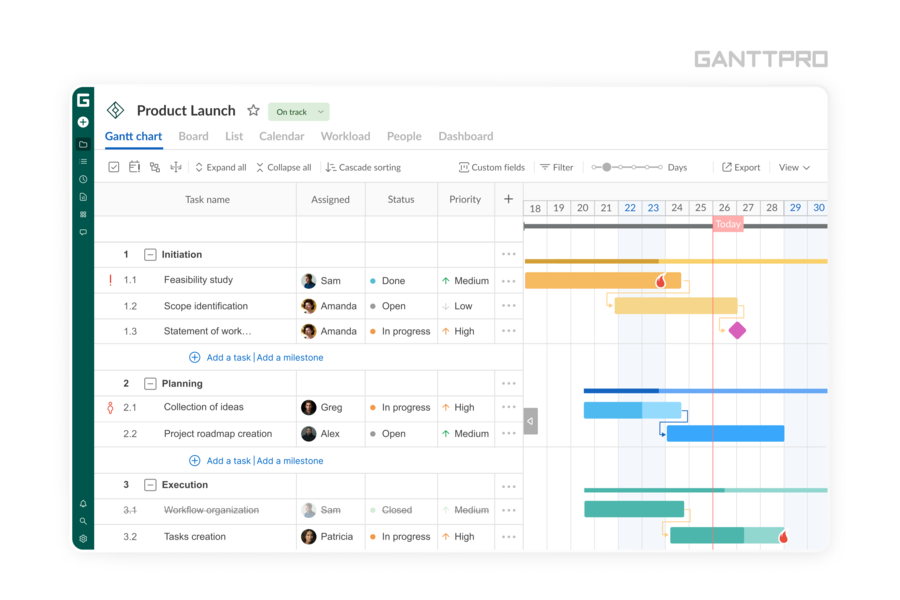
GanttPRO is an online project management tool that caters to industries like construction, IT, marketing, and consulting. It is particularly appealing to project managers and teams seeking to enhance collaboration and visibility in their projects.
Why I Picked GanttPRO
I picked GanttPRO for its exceptional use of interactive Gantt charts, which provide a clear visual representation of project timelines and dependencies. This feature is crucial for teams looking to align on project objectives without confusion. Additionally, GanttPRO's workload management allows you to allocate resources effectively, ensuring balanced workloads across your team. Task relations, another useful feature, enable you to define dependencies and sequences, making it easier to track progress and adjust plans as needed.
GanttPRO Key Features
In addition to its standout features, GanttPRO offers several other capabilities that make it a great Teamwork alternative:
- Board View: This feature allows your team to visualize tasks in a Kanban-style board, providing flexibility in task management.
- Time Logs: You can track the time spent on each task, which is valuable for monitoring productivity and managing project costs.
- Notifications: Stay informed with real-time updates and alerts, ensuring that your team is always aware of important changes or deadlines.
- Reporting Capabilities: Generate detailed reports to gain insights into project performance and make data-driven decisions.
GanttPRO Integrations
Integrations include Jira, Google Drive, Slack, and Microsoft Teams. An API is also available for custom integrations.
Pros and Cons
Pros:
- Kanban-style board view provides flexible task management.
- Task dependencies allow for clear project sequencing.
- Interactive Gantt charts enhance project visualization and planning.
Cons:
- Limited native integrations with other software tools.
- While reporting tools are present, it lacks more advanced options for complex forecasting.
Best for client onboarding management

Rocketlane is a professional services automation platform that combines project management, document collaboration, and client-facing portals to support teams managing external delivery work.
Who Is Rocketlane Best For?
Rocketlane is a strong fit for professional services and customer success teams that manage structured, client-facing project delivery.
Why I Picked Rocketlane
I picked Rocketlane as one of the best because of how purpose-built it is for client onboarding management. Where tools like Teamwork handle general project work, Rocketlane gives you a white-labeled client portal that guides customers through onboarding tasks without requiring them to log in. I also like the reusable onboarding templates, which let you standardize the experience across every new client without rebuilding from scratch each time. On top of that, automated task reminders keep clients accountable without your team having to chase anyone manually.
Rocketlane Key Features
- Gantt timeline view: Visualize project schedules, task dependencies, and milestones across the full project lifecycle.
- Time tracking: Log hours directly against tasks and projects, with timesheet views for tracking team-level effort.
- Resource management: Monitor team capacity and workload across active projects to identify bottlenecks before they happen.
- Project health dashboards: Get a real-time snapshot of project status, budget consumption, and task completion across your portfolio.
Rocketlane Integrations
Rocketlane offers native integrations with Slack, Salesforce, Jira, HubSpot, Google Calendar, and Outlook Calendar. It also connects with Zapier and Workato for additional workflow automation. An API is available for custom integrations.
Pros and Cons
Pros:
- Resource utilization tracking informs staffing decisions
- Internal and customer-facing notes stay separate
- Client portal gives real-time project visibility
Cons:
- Switching between multiple projects feels slow
- Reporting lacks advanced filtering options
New Product Updates from Rocketlane

Rocketlane Introduces Governance and Workforce Agents
Rocketlane introduces Governance Agents and Workforce Agents to automate delivery processes and recurring tasks. These updates help teams enforce rules and streamline project execution. For more information, visit Rocketlane’s official site.
 .
.
ClickUp
Best for advanced customizable project management
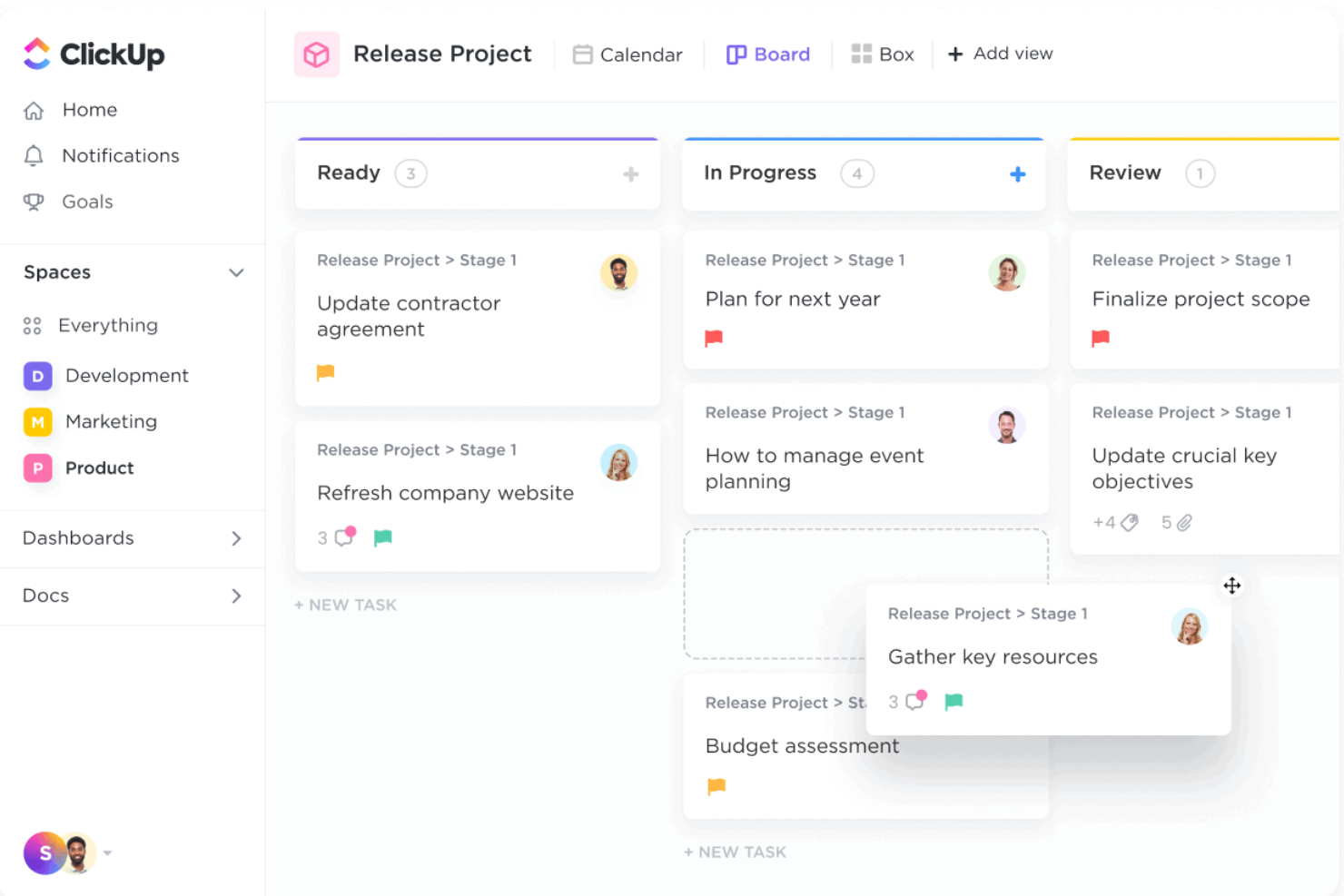
ClickUp offers a comprehensive platform where users can manage tasks, projects, and workflows all in one place. With a broad range of features, ClickUp is tailored to support various types of teams, from small startups to large enterprises, by providing tools for task management, goal setting, time tracking, and more.
Why it's a good Teamwork alternative:
As an alternative to Teamwork, ClickUp offers a high degree of customization and advanced project management capabilities. While both tools offer robust task management and time tracking, ClickUp allows for more detailed and personalized workflow configurations. Users can create custom fields, statuses, and views to match their specific needs, which is a step beyond the more structured approach of Teamwork. Additionally, ClickUp's advanced features like OKR tracking, automation, and custom dashboards provide users with a more dynamic and adaptable toolset for managing complex projects.
Standout features & integrations:
Features include task dependencies, recurring tasks, time estimates, time tracking, workload management, Gantt charts, mind maps, docs and wikis, goal tracking, custom templates, sprint management, and email integration.
Integrations include Slack, Google Workspace, Microsoft Teams, Trello, Asana, Jira, Zapier, GitHub, Bitbucket, Dropbox, OneDrive, Zoom, Figma, InVision, Outlook, and Salesforce.
Pros and Cons
Pros:
- Visually appealing user interface
- Good for managing complex projects
- Offers a free plan with many features
Cons:
- Hierarchical structure can be confusing
- Extensive customization may be complex for some users
New Product Updates from ClickUp
ClickUp Adds Meetings Hub, Super Agent Templates, and ZoomInfo Integration
ClickUp adds a searchable Meetings Hub, new ways to clone and template Super Agents, and a ZoomInfo integration through the App Center. These updates improve meeting retrieval, agent reuse, and access to sales intelligence. For more information, visit ClickUp’s official site.
Nifty
Best for uniting teams, goals, and processes

Nifty is a project management tool designed to streamline team collaboration by integrating project goals, tasks, and communication into a single platform. It offers features such as task management, milestone tracking, and team collaboration tools, making it the best choice for teams looking to centralize their workflows.
Why it's a good Teamwork alternative:
Nifty effectively combines various project management and collaboration tools into one cohesive app. Its ability to unite teams, align goals, and manage processes efficiently make it a strong alternative for teams needing an all-in-one solution.
Standout Features:
Features include milestone tracking, task management processes, Kanban views, collaborative documents, time tracking, and project reporting.
Integrations include Google Drive, Slack, Zoom, and GitHub.
Pros and Cons
Pros:
- Strong integration option
- Effective milestone and task tracking
- Comprehensive project management features
Cons:
- Limited customization for advanced features
- Learning curve for new users

Freedcamp
Best for unlimited storage

Freedcamp is a versatile project management and collaboration tool designed to help teams organize, manage tasks, and communicate effectively.
Why it's a good Teamwork alternative:
Freedcamp provides robust project management features with the significant advantage of unlimited storage at no cost. Unlike other tools that impose storage limitations or charge extra for additional space, Freedcamp stands out for its cost-efficiency and extensive functionality. Additionally, its user-friendly interface and extensive integration options make it suitable for teams of all sizes looking for a flexible and cost-effective project management solution.
Standout features & integrations:
Features include task management, time tracking, file sharing, team communication tools, project templates, calendar view, Kanban boards, Gantt charts, milestone tracking, issue tracking, custom fields, notifications, and mobile app access.
Integrations include Google Drive, Zapier, Slack, Dropbox, and Google Calendar.
Pros and Cons
Pros:
- Integrates with popular tools like Google Drive and Dropbox
- Comprehensive feature set for project management
- Unlimited storage
Cons:
- Limited customization options for task views
- User interface can be complex for beginners
Other Teamwork Alternatives
Below is a list of additional Teamwork alternatives that I shortlisted. While they didn’t make the top 10, they’re still valuable and worth further research.
- Workzone
For real-time project visibility
- Process Street
For project management workflow templates
- ProofHub
For all-in-one project management
- Microsoft Teams
For Microsoft integrations
- Bonsai Agency Software
For centralized client and project management
- Taskworld
For integrated chat and analytics
- Podio
For workflow automation
- Bitrix24
For CRM business management
- Redmine
For open-source project management
- Ravetree
For flexible project methodologies


Related Project Management Software Reviews
If you still haven't found what you're looking for here, check out these other related tools that we've tested and evaluated:
- Project Management Software
- Resource Management Software
- Workflow Automation Software
- Time Tracking Software
- Task Management Software
- Collaboration Tools
- Gantt Chart Maker
- Productivity Tools
- Project Tracking Software
- Project Scheduling Software
How I Evaluate Teamwork Alternatives
I look at Teamwork alternatives in two layers: the core features a tool must have—task management, time tracking, client access—and the differentiators that separate the best options.
Core Functionality (Table Stakes For This List)
When I'm selecting tools for my list, I rank each one on a scale from 0 (does not offer the functionality) to 5 (excels in this area) for each core functionality listed below. Then, I calculate the tool's total score into a percentage. Each tool needs to achieve a minimum total score of 75% to be considered for inclusion.
- Task & Project Management: I look for structured task hierarchies, dependencies, and milestones—things like mapping a website redesign across phases with subtasks under each deliverable.
- Multiple Project Views: Each tool should offer at least list, board, Gantt, and calendar views so teams can switch between planning a sprint backlog and reviewing a monthly timeline.
- Time Tracking & Billing: Billable vs. non-billable tagging matters here, along with budget tracking per project—essential when your team logs hours across multiple client retainers.
- Client & Guest Collaboration: I evaluate whether external stakeholders can access projects with permission controls, like giving a client comment-only access to a deliverables board.
- Resource & Workload Management: Tools should surface capacity at a glance so a PM can spot an overloaded designer and redistribute tasks before deadlines slip.
- Team Collaboration Tools: I check for in-context communication features like threaded comments, @mentions, file sharing, and proofing tied directly to tasks rather than siloed in separate apps.
Once I have a list of tools that meet this criteria, I consider what sets each platform apart.
Differentiating Factors (What Sets Vendors Apart)
Here's how I compare and contrast different vendors:
Standout Features
Automation rules are a big differentiator—I look for tools that let you auto-assign tasks, trigger status changes, and send notifications based on conditions, which saves hours on repetitive project setup. Proofing and approval workflows also matter, especially for creative teams routing design files through multiple review rounds. I evaluate reporting dashboards for cross-project profitability tracking, since agency leaders need to see which accounts are eating into margins without exporting data to a spreadsheet.
Beyond Features
Integrations matter a lot when switching from Teamwork. I check whether each tool connects natively to accounting platforms like QuickBooks or Xero, since billable-hours workflows break down without that link. Pricing transparency is another key factor—I evaluate whether mid-tier plans include time tracking and client access or gate them behind enterprise pricing. I also consider onboarding support, particularly migration assistance, because moving active projects with task histories and logged hours to a new platform is where most transitions stall.
Why Look for a Teamwork Alternative
Teamwork is a valuable project management software with advanced features and integrations. However, it might not be the right fit for every team. Typically, you may be looking for an alternative to Teamwork if you:
- Need a lower cost option: Teamwork offers plans from $11/user/month, but if you’re a small business or need more seats, you may fare better with a cheaper solution.
- Want a more intuitive interface: Although Teamwork has a rather user-friendly interface, it may become more complicated with larger projects, leading you to find an alternative.
- Seek further customization options: Customized views and templates are more important than most realize for streamlining processes, making a solution with these features valuable.
- Need better integration: Teamwork integrates with several tools, but if it doesn’t connect well with your current stack, you may need an alternative solution.
- Desire more customer support: For those times you just can’t seem to find the answer, you want a software that provides dedicated customer support.
Ultimately, finding the right tool can enhance team productivity, streamline project execution, and contribute to overall business success. By reviewing alternatives, you can ensure that your chosen software fits your specific requirements, driving overall team efficiency and collaboration.
Ket Features of Teamwork Alternatives
Here are some key features of Teamwork that your alternative software should be able to replicate or improve upon in order to be a good fit:
- Task Management: Your chosen software must allow you to easily create, assign, and track tasks. Make sure to set deadlines, prioritize tasks, and monitor progress to keep various projects on track.
- Time Tracking: With your software, you should be able to track billable hours and generate reports to analyze how time is spent across different activities.
- Gantt Charts: With Gantt charts, you can plan and schedule tasks, adjust timelines, and manage project progress with a clear and detailed overview.
- Milestones: The right Teamwork alternative will enable you to define important points in the project dashboard and monitor their achievement to stay aligned with overall objectives.
- File Sharing: Top Teamwork alternatives help leaders ensure all team members have the necessary files and information at their fingertips.
- Team Collaboration: A good software enhances teamwork and streamlines communication to keep everyone informed and engaged.
- Project Templates: With your Teamwork alternative, you should be able to customize templates to fit your specific needs and start new projects quickly.
- Reporting: Using the right alternative software lets you easily track metrics, analyze data, and present findings to stakeholders.
- Integrations: Make sure your chosen solution can connect with other tools like Slack, Google Drive, and more to streamline workflows and enhance productivity.
- Mobile App: A valuable software alternative will help you stay connected, update recurring tasks, and collaborate with your team from anywhere, ensuring continuous project progress.
When evaluating Teamwork alternatives, it's essential to compare their key features to ensure they meet your project management needs. Whether you prioritize intuitive interfaces, advanced collaboration tools, or detailed reporting capabilities, there's a solution out there that fits your team's unique requirements.