

10 Best AI Project Management Office Software in 2026

AI Project Management Office Software Shortlist


AI project management office software uses artificial intelligence to automate planning, resource allocation, reporting, and decision-making for PMOs. These AI project management tools come with advanced AI capabilities that help teams manage complexity, reduce manual work, and deliver better outcomes. They support activities like brainstorming, identifying potential risks, and enabling more informed decisions with real-time insights. Many platforms also include advanced features designed to handle large portfolios while maintaining a relatively manageable learning curve. In this guide, you’ll find the top AI-powered PMO platforms, what makes each one unique, and how they can help you deliver projects with more confidence in 2026.
Why Trust Our Software Recommendations
Our team has been testing and reviewing software since 2012. As project managers ourselves, we know how difficult—and important—it is to choose the right software.
For this guide, we evaluated tools using hands-on testing and independent research, scoring tools using our selection criteria. We also draw on insights from industry thought leaders and practicing project management experts.
Our reviews reflect our human editorial judgment, not a sales pitch.
Expert reviewers:
AI Project Management Office Software Comparison Table
This comparison table summarizes pricing details for my top AI project management office software selections:
| Tool | Best For | Trial Info | Price | ||
|---|---|---|---|---|---|
| 1 | Best with intuitive AI-powered team adoption | Free plan + 14-day free trial available | From $9/user/month (billed annually) | Website | |
| 2 | Best for project and portfolio insights | 14-day free trial + free demo available | From $10/user/month (billed annually) | Website | |
| 3 | Best for AI resource planning | Free demo available | Pricing upon request | Website | |
| 4 | Best for all-in-one task management | Free plan available | From $7/user/month (billed annually) | Website | |
| 5 | Best for services project intelligence | Free demo available | Pricing upon request | Website | |
| 6 | Best for spreadsheet-style project tracking | 30-day free trial + free demo available | From $9/user/month (billed annually) | Website | |
| 7 | Best for collaborative project automation | 14-day free trial + free plan + free demo available | From $5/user/month (billed annually) | Website | |
| 8 | Best for customizable PMO workflows | Free plan + 14-day free trial + free demo available | From $10/user/month (billed annually) | Website | |
| 9 | Best for end-to-end project management | 15-day free trial + free plan + free demo available | From $4/user/month (billed annually) | Website | |
| 10 | Best for multi-project resource optimization | 30-day free trial + free demo available | From €22.5/month (billed annually) | Website |


AI Project Management Office Software Reviews
Below are my detailed summaries of the AI project management office software that made it onto my shortlist. My reviews offer a detailed look at the features, best use cases, and integrations of each platform to help you find the best one for you.
Best with intuitive AI-powered team adoption
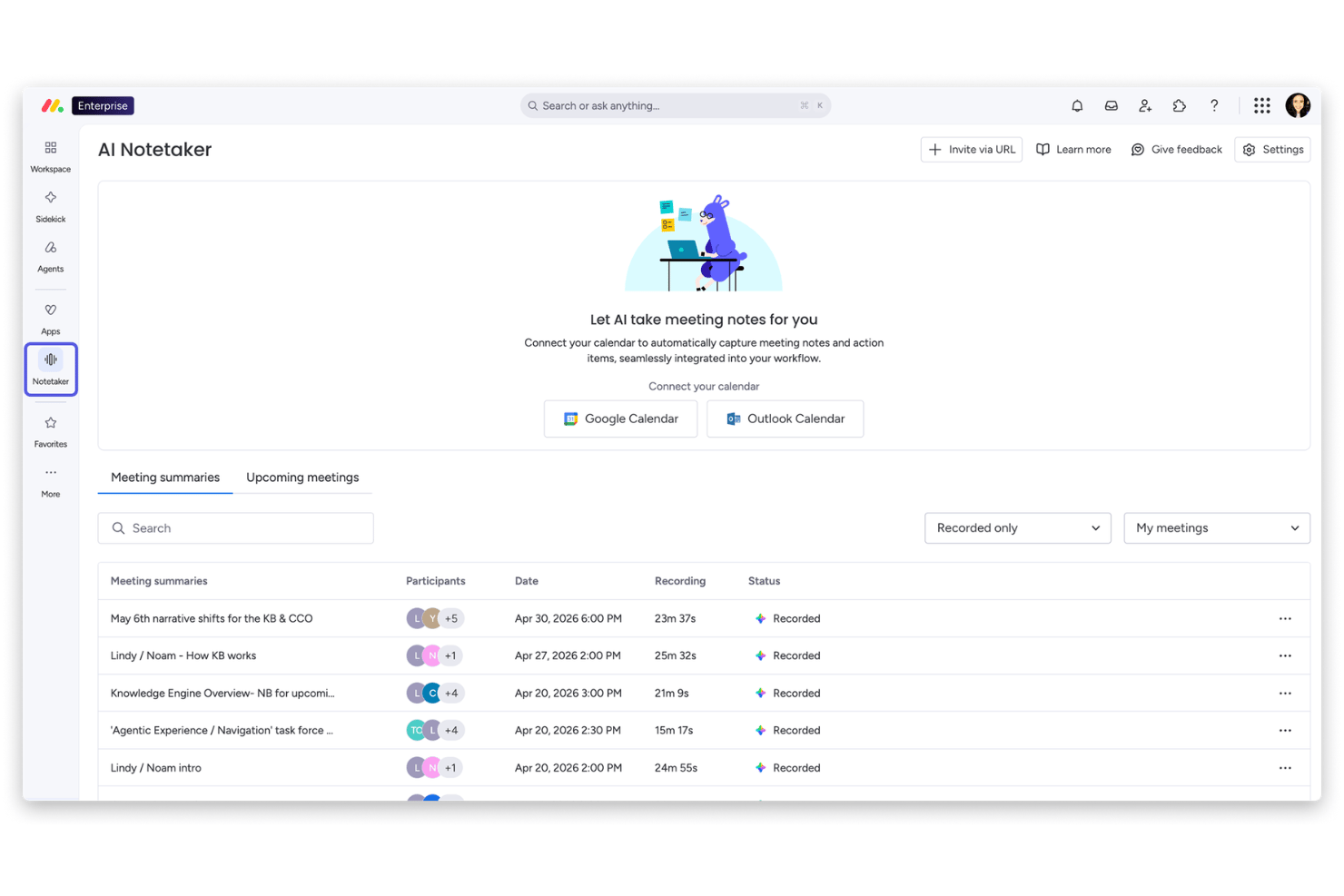
monday AI Workspace is a Work OS platform that combines AI-assisted project planning, portfolio dashboards, workflow automation, and cross-team collaboration tools in a single, highly configurable workspace.
Who Is monday AI Workspace Best For?
It's a strong fit for mid-market and enterprise teams that manage multiple concurrent projects across product, engineering, and business functions.
Why I Picked monday AI Workspace
monday AI Workspace earns its spot on my shortlist because of how naturally its AI features embed into the way teams already work. I particularly like the Sidekick AI assistant, which surfaces context and suggests automations based on actual usage patterns rather than requiring manual configuration. The AI Columns and Agent Workforce let my team automate repetitive status updates and handoffs without writing a single rule from scratch.
monday AI Workspace Key Features
- AI meeting notetaker: Automatically transcribes and summarizes meetings, extracting key action items and decisions into project records.
- Portfolio dashboards: Aggregates real-time data across multiple projects, giving clear visibility into portfolio status and trends.
- Custom workflow builder: Lets you design and automate multi-step project workflows using a visual, no-code interface.
- Risk detection algorithms: Surfaces potential risks and project blockers using AI that scans activity and status updates across your portfolio.
monday AI Workspace Integrations
monday.com offers hundreds of native integrations through its built-in connectors and marketplace, including Slack, Gmail, Outlook, Google Workspace, Salesforce, Jira, GitHub, Microsoft Teams, Dropbox, and Zoom. It also supports Zapier and provides an API for custom integrations.
Pros and Cons
Pros:
- Portfolio dashboards refresh with real-time data
- Meeting notetaker syncs actions into project records
- AI Sidekick suggests automations from team patterns
Cons:
- No AI-driven project prioritization scoring
- Limited portfolio-level resource optimization features
New Product Updates from monday AI Workspace
monday AI Workspace Adds Human Approval Routing
monday AI Workspace adds a human-in-the-loop approval block to AI Workflows, sending approval requests and routing workflow paths based on responses. For more information, visit monday AI Workspace's official site.

Celoxis
Best for project and portfolio insights
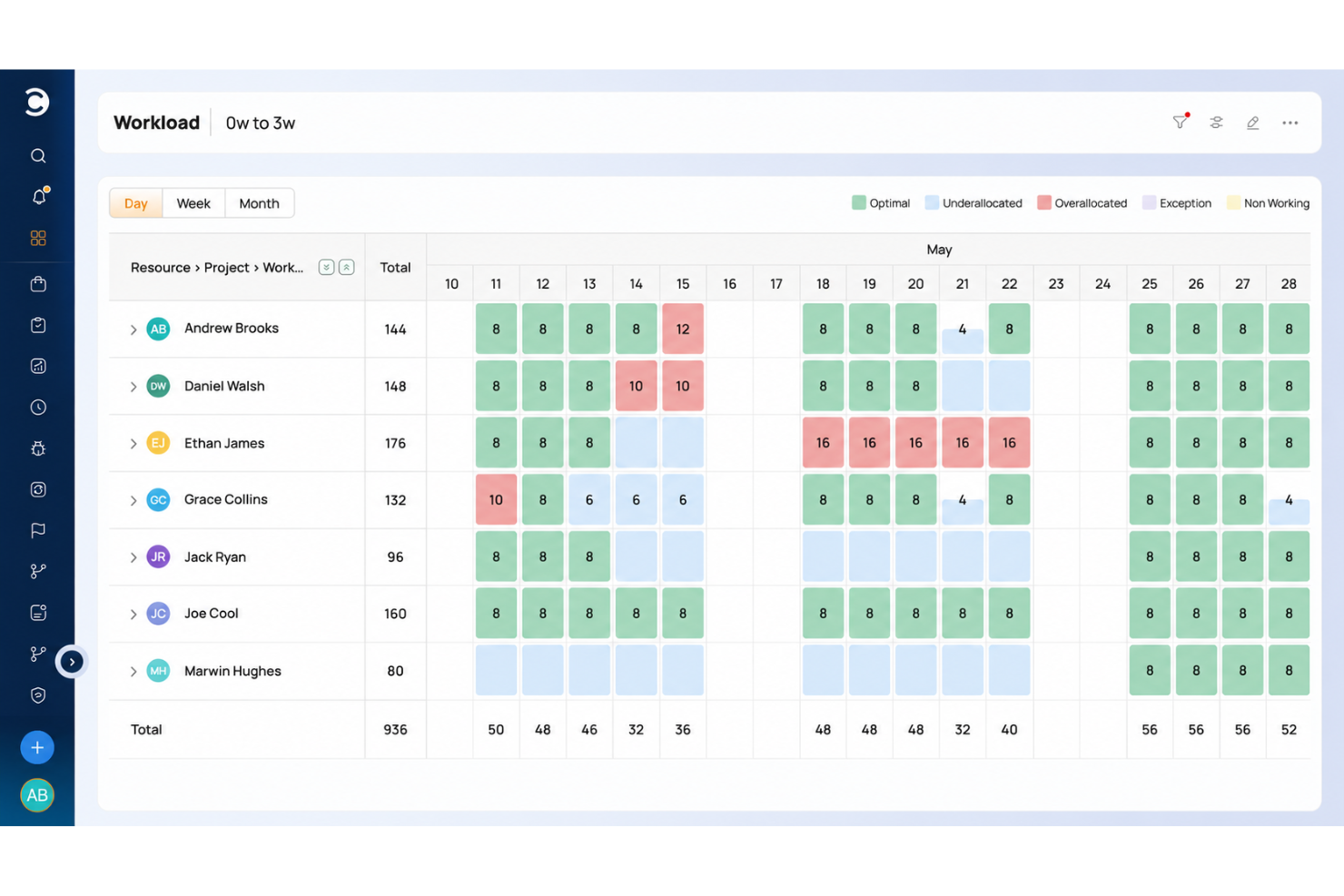
Celoxis is a project portfolio management platform for PMOs and enterprise teams that combines AI-powered project tracking, advanced analytics, resource management, and workflow automation.
Who Is Celoxis Best For?
PMOs and enterprise project managers who need AI-driven portfolio management and advanced analytics for complex, multi-project environments.
Why I Picked Celoxis
I picked Celoxis as one of the best because its AI-powered project portfolio management helps me prioritize and balance resources across multiple projects. I use its advanced analytics to generate real-time portfolio health reports and spot project risks early. My team relies on customizable dashboards to track KPIs and visualize dependencies at scale.
Celoxis Key Features
- Interactive Gantt charts: Plan, schedule, and update project timelines with drag-and-drop controls.
- Timesheet management: Log billable and non-billable hours directly within the platform.
- Custom workflow automation: Build and automate approval processes and task flows.
- Client portal: Give external stakeholders access to project updates and deliverables.
Celoxis Integrations
Celoxis offers native integrations with Jira, Salesforce, Microsoft Project, Google Drive, Excel, Outlook, Slack, QuickBooks, and Trello. An API is available for custom integrations.
Pros and Cons
Pros:
- Advanced reporting with real-time dashboards
- Built-in client portal for external collaboration
- Portfolio-level resource and capacity planning
Cons:
- Limited agile board and sprint features
- No built-in AI chat or assistant

Forecast
Best for AI resource planning
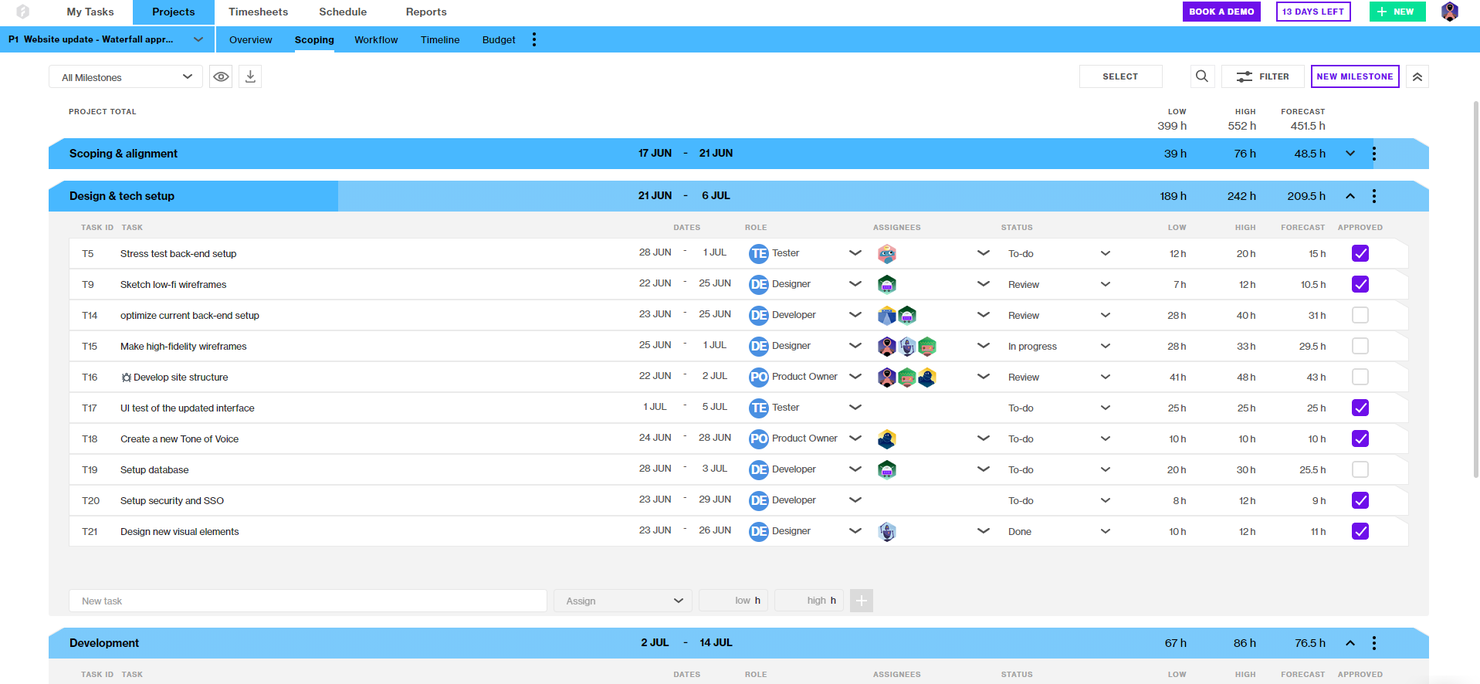
Forecast is an AI-powered project and resource management platform that brings together project planning, resource allocation, time tracking, and financial management for teams managing complex project portfolios.
Who Is Forecast Best For?
Project managers and operations leads at mid-sized to large professional services firms who need unified project, resource, and financial management.
Why I Picked Forecast
I picked Forecast as one of the best because I rely on its AI-powered resource, project, and financial management to keep my project office running smoothly. I use Forecast’s auto-scheduling and workload balancing to optimize team assignments across multiple projects. The built-in financial tracking lets me monitor budgets and margins in real time without switching tools.
Forecast Key Features
- Kanban boards: Visualize and manage project tasks with customizable Kanban workflows.
- Retainer management: Track and manage recurring client retainers within project portfolios.
- Project timeline view: See project phases, milestones, and dependencies in a single timeline.
- Custom permission settings: Control user access and visibility for sensitive project data.
Forecast Integrations
Forecast offers native integrations with Jira Cloud, Trello, Azure DevOps, GitHub, GitLab, Salesforce, HubSpot, Slack, QuickBooks, and Xero. It also connects with Zapier and provides an API for custom integrations.
Pros and Cons
Pros:
- Resource heatmaps show team workload visually
- Built-in financials link budgets to projects
- AI auto-scheduling predicts project timelines
Cons:
- No native time tracking for individual tasks
- No built-in document management system

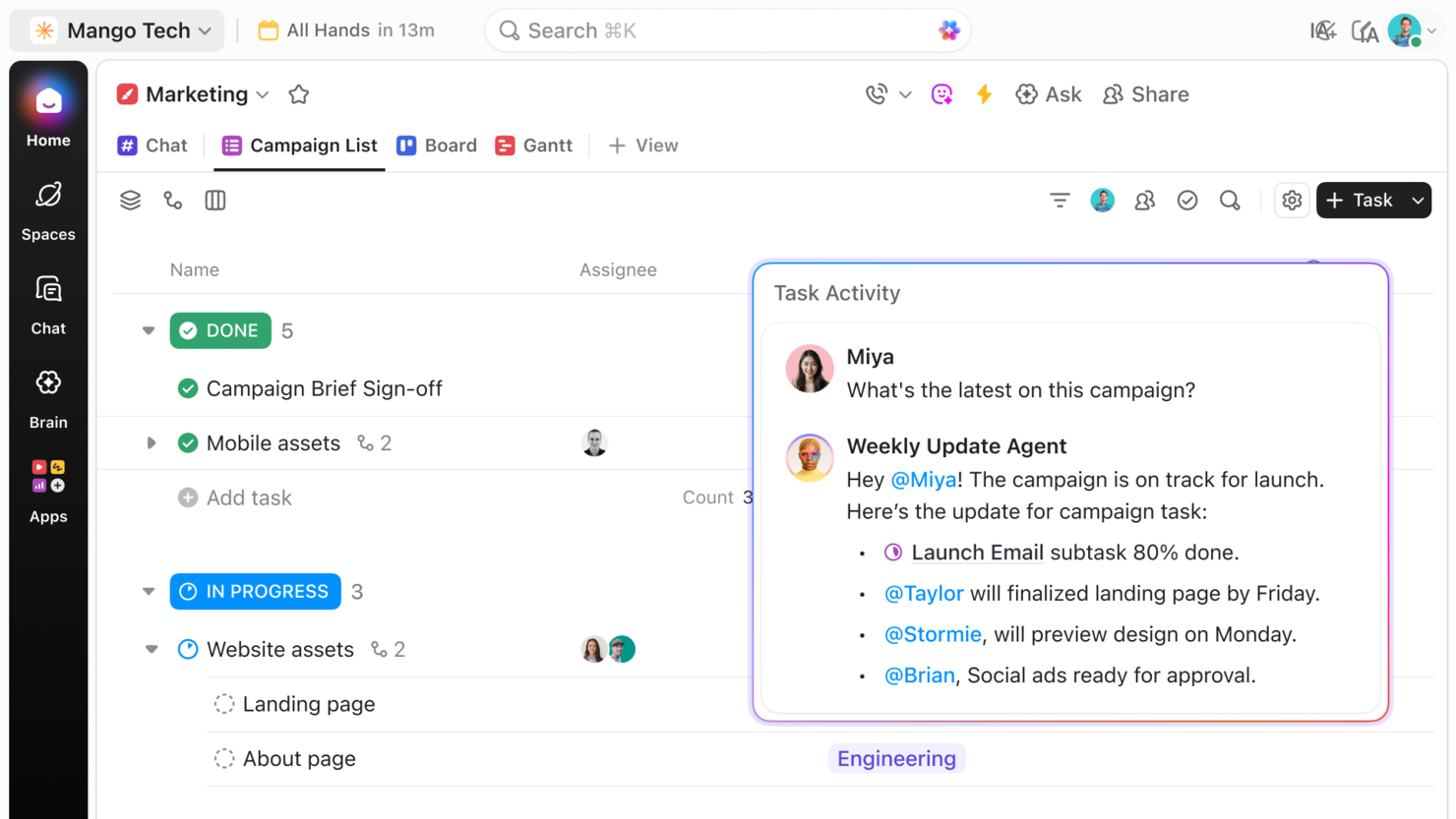
ClickUp is an AI-powered project management platform for teams and PMOs that combines task management, workflow automation, document collaboration, and customizable dashboards.
Who Is ClickUp Best For?
Cross-functional teams and PMOs at mid-sized to large tech companies that need AI-driven project management and workflow automation.
Why I Picked ClickUp
I picked ClickUp as one of the best because its AI-powered project management features let me automate task creation, summarize project updates, and generate action items directly from meeting notes. My team uses ClickUp’s customizable dashboards to track project health and dependencies across multiple workstreams. I rely on its AI writing assistant to draft project documentation and status reports quickly.
ClickUp Key Features
- Whiteboards: Collaborate visually on project plans and workflows in real time.
- Goal tracking: Set, track, and update project goals within your workspace.
- Custom fields: Add tailored data fields to tasks, lists, or projects for advanced tracking.
- Workload view: Monitor team capacity and balance assignments across projects.
ClickUp Integrations
ClickUp offers 50+ native integrations, including Slack, GitHub, GitLab, Google Drive, Dropbox, Microsoft Teams, Zoom, Outlook, HubSpot, and Zendesk. It connects with Zapier and provides an API for custom integrations.
Pros and Cons
Pros:
- Supports complex workflow automation rules
- Advanced goal tracking and OKR features
- Built-in whiteboards for visual collaboration
Cons:
- Portfolio reporting is limited for large PMOs
- AI features require higher-tier plans

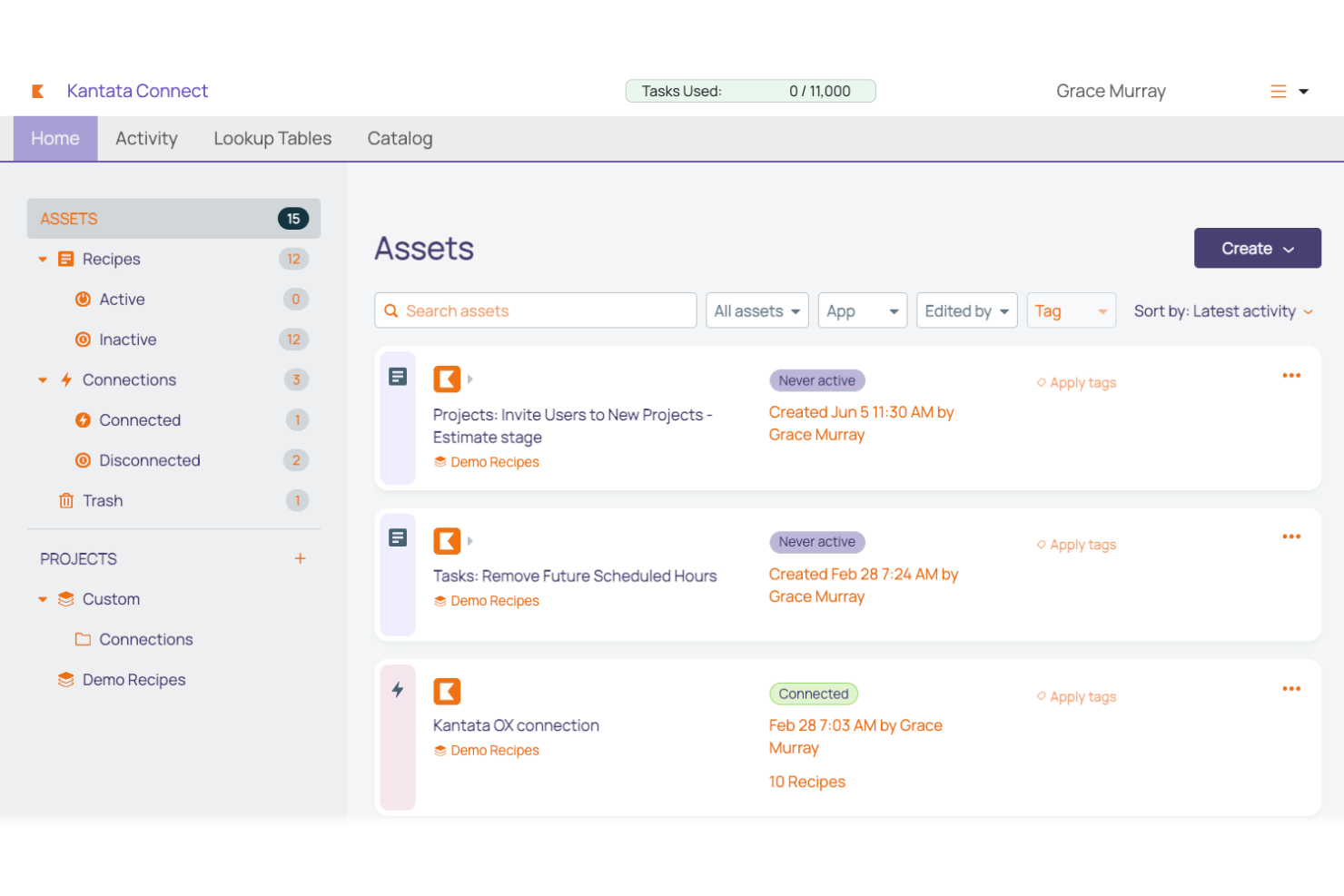
Kantata is a professional services automation platform for project management offices that combines resource management, project accounting, time tracking, and project collaboration in one system.
Who Is Kantata Best For?
Project managers and operations leaders at large professional services firms who need advanced project delivery and resource management.
Why I Picked Kantata
I picked Kantata because I need a platform that’s purpose-built for professional services project delivery at scale. I use its resource forecasting and project accounting to manage complex client portfolios. My team relies on its advanced utilization tracking and margin analysis to keep projects profitable and on schedule.
Kantata Key Features
- Project workspace: Centralizes project files, discussions, and updates in one place.
- Role-based permissions: Controls access to sensitive project and financial data.
- Time and expense tracking: Lets users log billable hours and expenses directly in the platform.
- Custom dashboards: Allow teams to build tailored views for project metrics and KPIs.
Kantata Integrations
Kantata offers native integrations with Salesforce, HubSpot, Expensify, Jira, BambooHR, and Concur. An API is available for custom integrations, and over 1,200 prebuilt connectors are supported through middleware like MuleSoft and Workato.
Pros and Cons
Pros:
- Resource heatmaps visualize team workload
- Retainer management for recurring client work
- Portfolio dashboards for multi-project visibility
Cons:
- Reporting exports have format restrictions
- Limited project template customization options
Best for spreadsheet-style project tracking
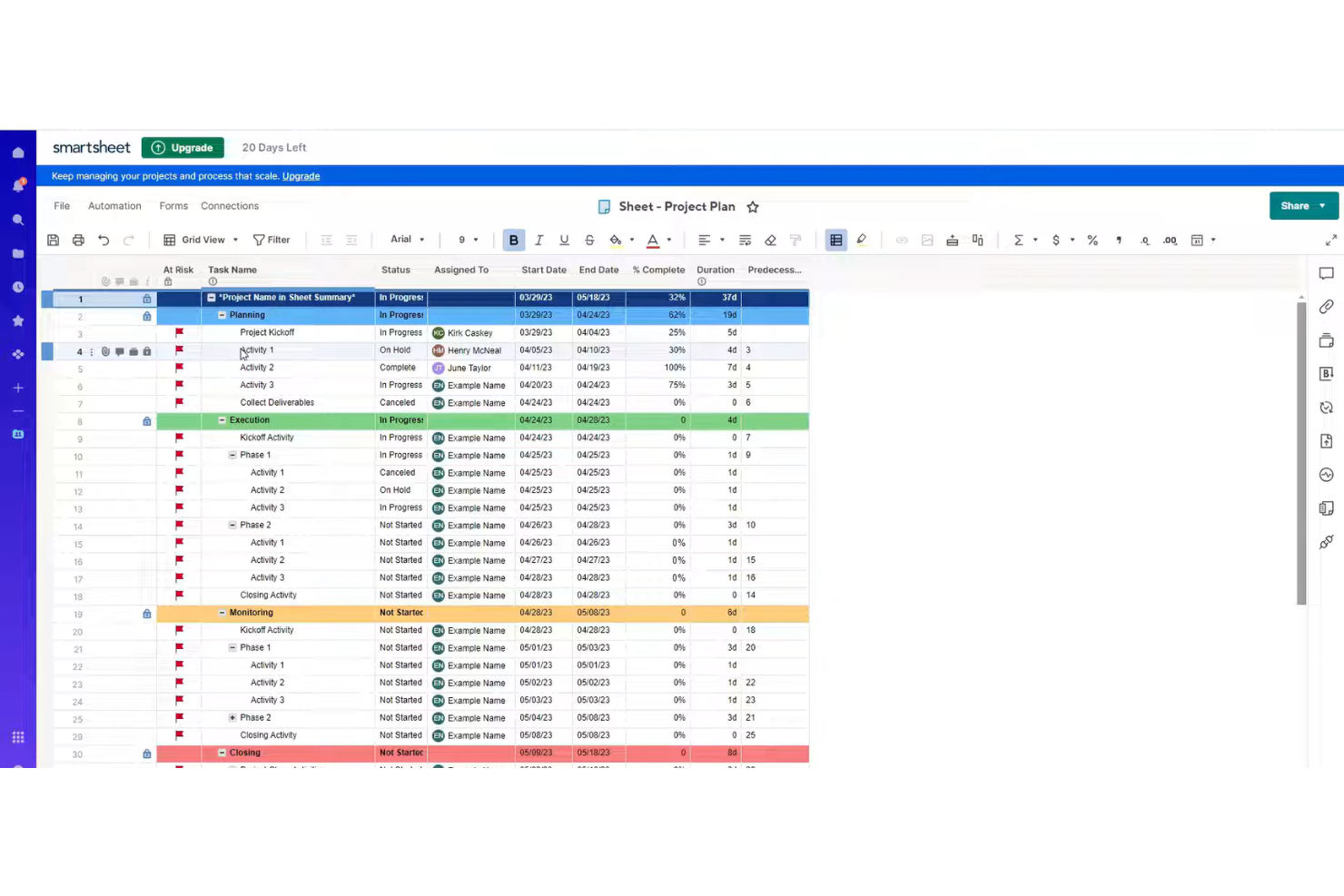
Smartsheet is a project and work management platform that combines spreadsheet-style task tracking, workflow automation, resource management, and reporting for teams managing complex project portfolios.
Who Is Smartsheet Best For?
Project managers and teams at mid-sized to large organizations who need flexible, spreadsheet-inspired project management with automation and integrations.
Why I Picked Smartsheet
I picked Smartsheet as one of the best because I rely on its spreadsheet-inspired interface to quickly build custom project plans and automate repetitive workflows. My team uses built-in automation rules and conditional formatting to manage approvals and status updates across complex projects. I also like how Smartsheet’s integrations and flexible templates let us adapt our workspace as project requirements shift.
Smartsheet Key Features
- Resource management: Allocate, track, and adjust team workloads in real time.
- Gantt chart view: Visualize project timelines and dependencies with interactive Gantt charts.
- Cell-level commenting: Add context and discussion directly to individual cells in project sheets.
- Automated reminders: Set up time-based or condition-based reminders for tasks and deadlines.
Smartsheet Integrations
Smartsheet offers native integrations with Google Workspace, Microsoft 365, Slack, Salesforce, Jira, DocuSign, Box, Dropbox, Tableau, and Zapier. An API is available for custom integrations.
Pros and Cons
Pros:
- Resource management with allocation and workload views
- Built-in automation for repetitive project tasks
- Spreadsheet-style interface supports rapid project setup
Cons:
- Gantt charts lack advanced dependency controls
- Limited AI-driven project forecasting features
New Product Updates from Smartsheet
Smartsheet Adds Column Duplication Without Data
Smartsheet now lets you duplicate columns in table view without copying cell data, while retaining column properties like type, formatting, validation, and dropdown/contact options. For more information, visit Smartsheet's official site.
Hive
Best for collaborative project automation

Hive is a project management and team collaboration platform that brings together AI-powered task automation, project tracking, time management, and document sharing in one workspace.
Who Is Hive Best For?
Fast-moving teams in marketing, operations, or creative agencies that need AI-driven project management and collaboration.
Why I Picked Hive
I picked Hive as one of the best because I use its AI-powered project management tools to automate repetitive tasks and generate project summaries in real time. My team relies on its AI assistant to draft emails, create action cards, and suggest next steps directly in our workspace. I also like how Hive’s flexible project views let us switch between Gantt, Kanban, and calendar layouts without losing context.
Hive Key Features
- In-app chat: Message teammates directly within project workspaces.
- Time tracking: Log hours and monitor time spent on tasks.
- Proofing and approvals: Review and approve documents, images, and videos in one place.
- Forms: Collect project requests and feedback through customizable forms.
Hive Integrations
Hive offers native integrations with Google Drive, Google Calendar, Dropbox, QuickBooks, Zoom, Microsoft OneDrive, and Microsoft Teams. It also connects with Zapier and provides an API for custom integrations.
Pros and Cons
Pros:
- Multiple project views including Gantt and Kanban
- Built-in proofing for creative asset review
- AI assistant generates action cards and summaries
Cons:
- Gantt chart can lag with large projects
- AI features limited to selected workflows
Wrike
Best for customizable PMO workflows
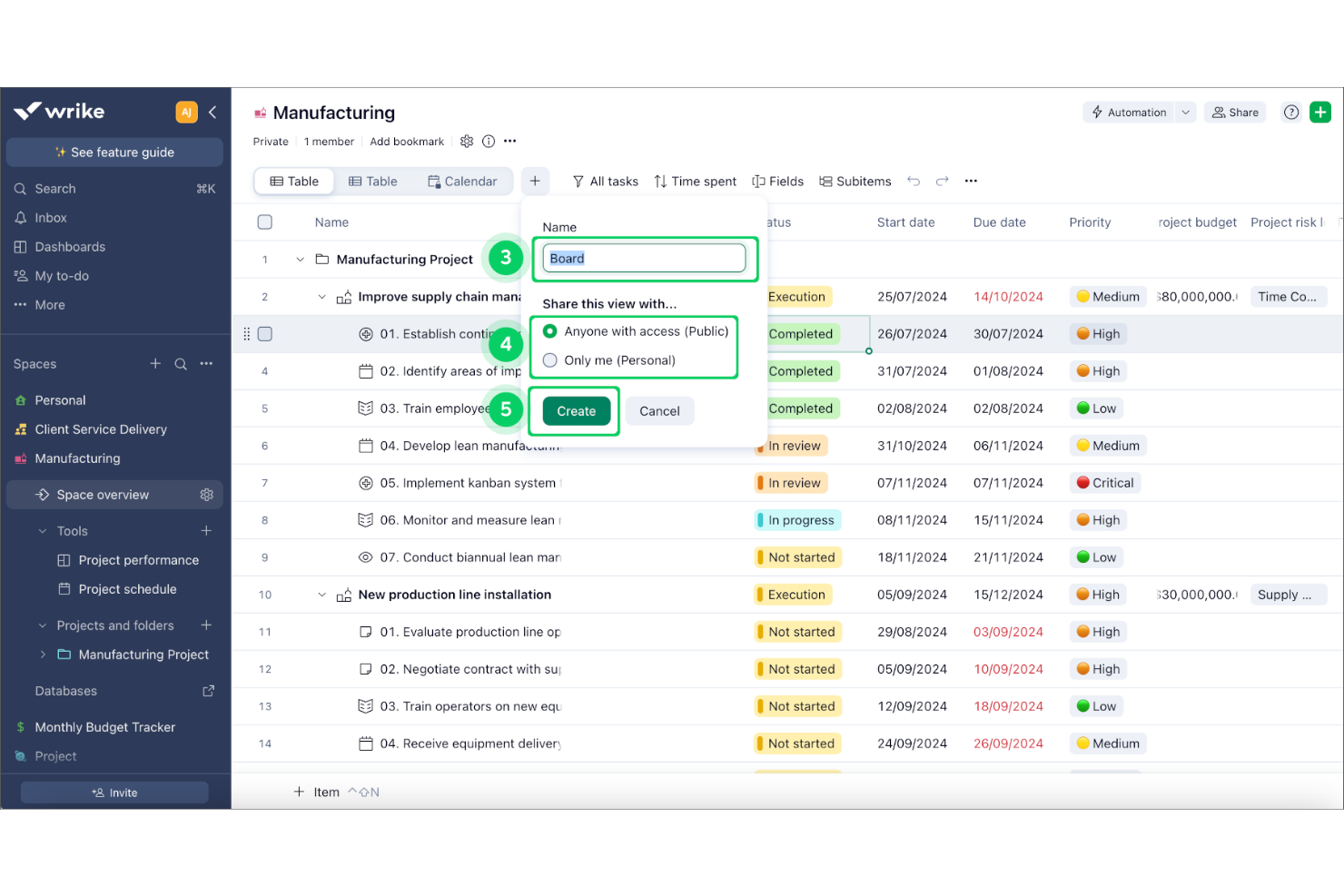
Wrike is an AI-powered project management office software platform that combines project planning, workflow automation, resource management, and advanced analytics for teams managing complex workstreams.
Who Is Wrike Best For?
Project management offices at mid-sized to large enterprises coordinating cross-functional teams and complex projects.
Why I Picked Wrike
I picked Wrike as one of the best because its AI work management platform gives me automated risk prediction and smart task prioritization for complex project portfolios. I use its workflow automation to reduce manual updates and keep cross-team work moving. My team relies on Wrike’s analytics to surface project health insights and spot blockers before they escalate.
Wrike Key Features
- Custom request forms: Capture project intake and automate task creation with configurable forms.
- Blueprints: Standardize recurring projects and processes using reusable templates.
- Resource management dashboard: Visualize team workloads and allocate resources across projects.
- Document proofing: Review, comment, and approve files directly within tasks.
Wrike Integrations
Wrike offers hundreds of native integrations through its built-in integrations and marketplace, including Google Workspace, Dropbox, GitHub, Adobe Creative Cloud, and Zoom. It also supports Zapier and provides an API for custom integrations.
Pros and Cons
Pros:
- Custom request forms for project intake
- Automated workflow and task assignment options
- AI-driven project risk prediction and insights
Cons:
- Notification system can overwhelm large teams
- Automation setup can be complex for PMOs
New Product Updates from Wrike

Wrike Adds Quick Search to Table View
Wrike adds Quick Search to Table View with full-table search across titles, descriptions, and fields, plus highlighted matches. This helps users find tasks faster in large tables. For more information, visit Wrike’s official site.

Best for end-to-end project management
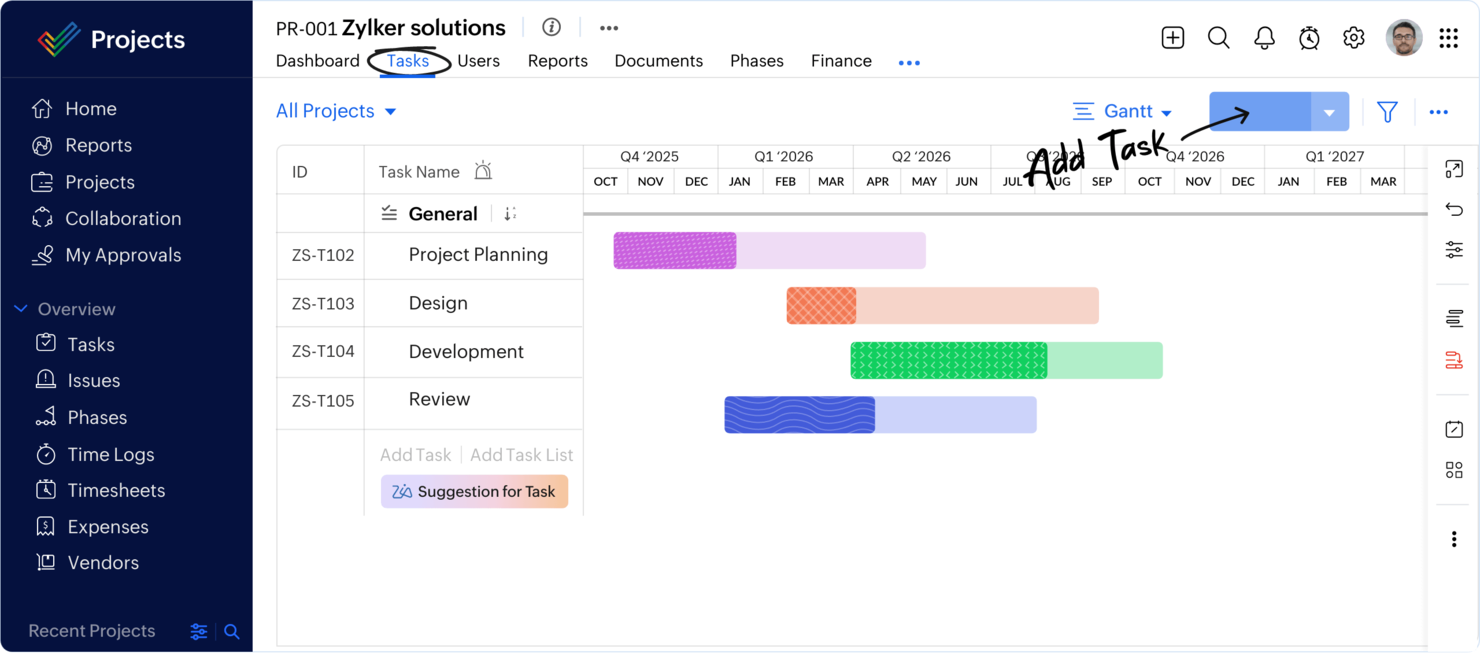
Zoho Projects is a cloud-based project management platform for PMOs and teams that combines task management, workflow automation, AI-powered project tracking, and built-in time tracking.
Who Is Zoho Projects Best For?
Project managers and PMOs at small to mid-sized businesses who need AI-driven project management and workflow automation.
Why I Picked Zoho Projects
I picked Zoho Projects as one of the best because its AI-powered project management features help me automate routine updates and predict project delays. My team uses workflow automation to streamline approvals and recurring tasks. I also rely on built-in time tracking to monitor project hours without leaving the platform.
Zoho Projects Key Features
- Blueprint workflow builder: Design and automate custom project workflows visually.
- Gantt charts: Plan, schedule, and track project timelines with drag-and-drop adjustments.
- Issue tracking: Log, assign, and resolve project issues within dedicated modules.
- Document management: Store, share, and collaborate on project files directly in the platform.
Zoho Projects Integrations
Zoho Projects offers native integrations with Slack, Microsoft Teams, Google Drive, Dropbox, GitHub, Bitbucket, Zoho CRM, Zoho Desk, and Zapier. An API is available for custom integrations.
Pros and Cons
Pros:
- Gantt charts with critical path analysis
- Built-in issue tracking and bug logging
- AI assistant predicts project delays and risks
Cons:
- Resource allocation lacks advanced forecasting
- No built-in portfolio management module
New Product Updates from Zoho Projects
Zoho Projects Adds CodeX Scripts for Custom Modules
Zoho Projects now supports CodeX Scripts for custom modules, enabling conditional logic and rules for creating, updating, and deleting records. For more information, visit Zoho Projects' official site.
 .
.
Epicflow
Best for multi-project resource optimization

Epicflow is an AI-powered project and resource management platform designed for multi-project environments, offering features for workload balancing, scenario simulation, and advanced analytics.
Who Is Epicflow Best For?
Project and resource managers at mid-sized to large organizations running multiple, concurrent projects across complex teams.
Why I Picked Epicflow
I picked Epicflow because I need AI-driven resource management that can handle dozens of overlapping projects without manual juggling. I use its pipeline view to see real-time project flow and spot bottlenecks before they hit. My team relies on its scenario simulation to test resource allocation changes and predict project outcomes with data-driven accuracy.
Epicflow Key Features
- Task prioritization engine: Automatically ranks tasks based on project constraints and dependencies.
- Integration with MS Project and Jira: Syncs data from existing project management tools for unified oversight.
- Historical data analytics: Analyzes past project performance to inform future planning.
- Customizable dashboards: Lets users tailor visualizations for workload, progress, and resource allocation.
Epicflow Integrations
Epicflow offers native integrations with Microsoft Project, Jira Software, Oracle Primavera, and HRM systems. An API is available for custom integrations with other project or resource management tools.
Pros and Cons
Pros:
- Real-time workload and bottleneck visualization
- Scenario simulation for project planning
- AI-driven resource allocation across projects
Cons:
- Reporting customization options are somewhat restricted
- Limited AI features beyond resource management
Other AI Project Management Office Software
Here are some additional AI project management office software options that didn’t make it onto my shortlist, but are still worth checking out:
- Planview
For scalable portfolio planning
- Planisware
For enterprise portfolio management
- Teamwork.com
For client project management
- Microsoft Project
For enterprise project scheduling
- Airtable
For database-driven workflows
- Taskade
For AI workflow automation
- Project Insight
For centralized project management
- Notion
For all-in-one project workspaces
- ProjectLibre
For free project scheduling
- Asana
For cross-functional work management
- Trello
For visual project boards
- Jira
For agile software development
- Allex.ai
For AI project planning
- Prism PPM
For agile portfolio management
- Plane
For open-source project management


How I Evaluate AI Project Management Office Software
Every tool on this list needs to deliver AI that actually moves the needle for PMO teams—think auto-generated portfolio roll-ups or risk forecasts that flag trouble before a sponsor asks. I split my evaluation into core functionality every PMO platform must have to qualify and differentiating factors that separate good options from great fits.
Core Functionality (Table Stakes For This List)
When I'm selecting tools for my list, I rank each one on a scale from 0 (does not offer the functionality) to 5 (excels in this area) for each core functionality listed below. Then, I calculate the tool's total score into a percentage. Each tool needs to achieve a minimum total score of 65% to be considered for inclusion.
- AI-Driven Portfolio Analytics: I look for AI that surfaces portfolio-wide health insights—like flagging a cluster of projects trending over budget—rather than just static dashboards.
- Predictive Risk Forecasting: The tool should predict risks like schedule slippage or resource bottlenecks early, not just log them after a PM raises a flag in a standup.
- Intelligent Resource Optimization: I evaluate whether the AI recommends staffing adjustments across projects based on skills, availability, and priority shifts.
- Automated Status Reporting: I check whether the platform generates AI-written executive summaries and roll-ups instead of requiring PMs to manually compile weekly updates.
- AI Governance & Prioritization: Project intake scoring matters here—I look for AI that ranks incoming requests against strategic goals so the PMO can fund the right work.
- Conversational AI Assistant: A solid AI copilot lets PMO leads ask natural language questions like "which programs are at risk this quarter?" and get an actionable answer.
Once I have a list of tools that meet the criteria, I consider what sets each platform apart.
Differentiating Factors (What Sets Vendors Apart)
Here's how I compare and contrast different vendors:
Standout Features
Scenario planning is a big differentiator—I look for tools that let PMO leaders model what happens if a key program gets delayed or a budget gets cut mid-quarter. Custom AI agents also stand out when they let teams automate governance rituals like stage-gate reviews without developer support. I evaluate whether a platform tracks benefits realization too, tying delivered projects back to the business outcomes they promised in the original case.
Beyond Features
Integration depth matters a lot here. A PMO platform that can't pull live data from Jira, Smartsheet, or your ERP is just another silo. I also evaluate AI data policies closely—whether the vendor trains models on your portfolio data, offers data residency controls, and provides explainability for AI recommendations. Implementation timelines are worth checking too, especially how long it takes for the AI to learn your portfolio patterns and start delivering useful forecasts rather than generic outputs.
How to Choose AI Project Management Office Software
It’s easy to get bogged down in long feature lists and complex pricing structures. To help you stay focused as you work through your unique software selection process, here’s a checklist of factors to keep in mind:
| Factor | What to Consider |
|---|---|
| Scalability | Will the software handle your team’s growth, more projects, or increased data without slowing down or requiring costly upgrades? |
| Integrations | Does it connect natively with your existing tools like Slack, Jira, or Google Workspace, or will you need workarounds or custom builds? |
| Customizability | Can you tailor workflows, fields, and dashboards to match your team’s processes, or are you locked into rigid templates? |
| Ease of use | Will your team adopt it quickly, or will the interface and navigation slow down daily work and require extra training? |
| Implementation and onboarding | How long will it take to get up and running, and what resources or support will you need for data migration and user training? |
| Cost | Are the pricing tiers clear, and do they align with your budget as your needs change? Watch for hidden fees or required add-ons. |
| Security safeguards | Does the platform offer encryption, access controls, and compliance with standards like GDPR or SOC 2 to protect your data? |
| Support availability | Can you reach support when you need it, and are there SLAs or dedicated contacts for urgent issues or onboarding help? |
What Is AI Project Management Office Software?
AI project management office software is an AI project management software platform that uses artificial intelligence to help teams plan, track, and manage projects more efficiently. These tools often include AI agents that automate workflows, analyze data, and surface insights that support better outcomes. They act as powerful productivity tools, helping teams use AI to reduce manual work, improve collaboration, and adapt to changing priorities. In many cases, these platforms are especially valuable for startups and growing teams that need scalable, efficient project management solutions.
Features of AI Project Management Office Software
When selecting AI project management office software, keep an eye out for the following key features:
- AI task automation: Automates repetitive project tasks like assigning work, sending reminders, and updating statuses based on project rules or triggers.
- Predictive analytics: Uses historical and real-time data to forecast project risks, resource bottlenecks, and delivery timelines so you can take action early.
- Natural language processing: Lets you create tasks, update projects, or generate reports using plain language commands or chat interfaces.
- Automated reporting: Generates project summaries, dashboards, and progress updates without manual input, saving time and reducing reporting errors.
- Resource management: Tracks team availability, allocates resources, and suggests optimal assignments based on workload and project needs.
- Collaboration tools: Provides built-in chat, comments, and file sharing so teams can communicate and work together without switching platforms.
- Integration capabilities: Connects with other business tools like calendars, document storage, and communication apps to centralize project information.
- Customizable workflows: Allows you to design and adjust project stages, approval processes, and task dependencies to fit your team’s way of working.
- Time tracking: Monitors how much time is spent on tasks and projects, helping with billing, resource planning, and performance analysis.
- Automated approvals: Routes documents, tasks, or requests to the right stakeholders for review and sign-off, reducing delays and manual follow-ups.
Benefits of AI Project Management Office Software
Implementing AI project management office software provides several benefits for your team and your business. Here are a few you can look forward to:
- Faster project delivery: Automated task assignments and status updates help keep projects on track and reduce manual delays.
- Improved decision-making: Predictive analytics and real-time dashboards give you insights to identify risks and adjust plans proactively.
- Better resource allocation: AI-driven resource management ensures the right people are assigned to the right tasks based on availability and workload.
- Improved collaboration: Built-in chat, comments, and file sharing keep everyone connected and reduce the need for scattered communication tools.
- Reduced administrative workload: Automated reporting and approvals minimize time spent on repetitive tasks, freeing up your team for higher-value work.
- Greater visibility: Centralized project data and customizable dashboards make it easy to monitor progress and share updates with stakeholders.
- Scalability for growing teams: Flexible workflows and integration capabilities support your team as project volume and complexity increase.
Costs and Pricing of AI Project Management Office Software
Selecting AI project management office software requires an understanding of the various pricing models and plans available. Costs vary based on features, team size, add-ons, and more. The table below summarizes common plans, their average prices, and typical features included in AI project management office software solutions:
Plan Comparison Table for AI Project Management Office Software
| Plan Type | Average Price | Common Features |
|---|---|---|
| Free Plan | $0 | Basic task management, limited AI features, basic integrations, and limited storage. |
| Personal Plan | $5-$15/user/month | Task automation, calendar sync, basic reporting, and email support. |
| Business Plan | $15-$35/user/month | Advanced AI tools, project templates, time tracking, resource management, and priority support. |
| Enterprise Plan | $35-$60/user/month | Custom workflows, advanced security, API access, dedicated onboarding, and compliance features. |
AI Project Management Office Software FAQs
Here are some answers to common questions about AI project management office software:
How does AI improve project management office software?
AI improves project management office software by automating repetitive tasks, analyzing project data for trends, and providing actionable insights. This helps teams save time, spot risks early, and make better decisions throughout the project lifecycle.
Can AI project management office software integrate with my existing tools?
Yes, most AI project management office software can integrate with popular tools like Slack, Google Workspace, and Jira. Always check the integration options to ensure the software fits into your current workflow without extra manual work.
Is AI project management office software suitable for small teams?
Yes, many solutions offer flexible plans and features that work well for small teams. Look for platforms with simple onboarding, affordable pricing, and scalable features so you can grow without switching tools.
What security features should I expect from AI project management office software?
You should expect features like data encryption, user access controls, and compliance with standards such as GDPR or SOC 2. These safeguards help protect sensitive project information and ensure your organization meets regulatory requirements.
How long does it take to implement an AI project management office software?
Implementation time varies, but most cloud-based solutions can be set up in a few days to a couple of weeks. Factors like data migration, user training, and workflow customization can affect the timeline, so plan accordingly.