

10 beste alternative verktøy til Zoho Projects for prosjektledelse i 2026

Beste alternativer til Zoho Projects – kortliste


Jeg forstår det – det å finne det riktige verktøyet kan utgjøre hele forskjellen når det gjelder å holde teamet ditt organisert og effektivt. Faktorer som spesifikke bruksområder, budsjett og personlige preferanser kan ha fått deg til å se etter alternativer til Zoho Projects. Det er imidlertid vanskelig å vite hvilke som er de beste.
I denne artikkelen deler jeg mine beste anbefalinger for alternativer til Zoho Projects. Jeg har testet og gjennomgått hvert av dem for å hjelpe deg med å finne det som passer best for teamet ditt. La oss utforske alternativer som kan passe bedre med forretningsmålene dine og gjøre prosjektstyringen enklere.
Hva er Zoho Projects?
Zoho Projects er en skybasert programvare for prosjektstyring utviklet for virksomheter av alle størrelser. Den legger til rette for prosjektplanlegging, oppfølging og samarbeid. Programvaren brukes av prosjektledere, team og interessenter for å administrere arbeid og nå prosjektmål på en effektiv måte. Den tilbyr verktøy for oppgavehåndtering, tidsregistrering og dokumentdeling, og integreres med andre Zoho-applikasjoner for å dekke behovene i en rekke bransjer.
Hvorfor du kan stole på våre programvareanbefalinger
Teamet vårt har testet og anmeldt programvare siden 2012. Vi er selv prosjektledere, så vi vet hvor vanskelig og hvor viktig det er å velge riktig programvare.
I denne guiden har vi vurdert verktøyene gjennom praktisk testing og uavhengig research og gitt dem poeng ut fra våre utvelgelseskriterier. Vi bygger også på innsikt fra ledende eksperter i bransjen og erfarne prosjektledere.
Anmeldelsene våre bygger på vår egen redaksjonelle vurdering. De er ikke et salgsargument.
Ekspertanmeldere:
Sammenligningstabell for alternativer til Zoho Projects
Denne sammenligningstabellen oppsummerer prisopplysningene for mine beste alternativer til Zoho Projects innen programvare for prosjektstyring:
| Tool | Best For | Trial Info | Price | ||
|---|---|---|---|---|---|
| 1 | Best for workflow automation | Free plan + 14-day free trial + free demo available | From $10/user/month (billed annually) | Website | |
| 2 | Best for hierarchical task breakdown | Free plan + 30-day free trial available | From $7.65/user/month (billed annually) | Website | |
| 3 | Best for project automation | Free plan + 14-day free trial available | From $10/user/month (billed annually) | Website | |
| 4 | Best for client work management | Free plan + 14-day trial + demo available | From $9.99/user/month (billed annually) | Website | |
| 5 | Best for Agile software development | Free plan + 7-day free trial available | From $8.48/user/month | Website | |
| 6 | Best for flexible project methodologies | Free demo available | From $39/user/month | Website | |
| 7 | Best for integrated workspace | Free plan + trial available | From $10/user/month | Website | |
| 8 | Best for task management | Free plan available | From $10.99/user/month (billed annually) | Website | |
| 9 | Best for workflow customization | Free plan + 14-day trial available | From $9/user/month (billed annually) | Website | |
| 10 | Best for linking projects to existing tools | Free plan + free trial + free demo available | From $12/user/month | Website |


Anmeldelser av de beste alternativene til Zoho Projects
I denne delen går jeg gjennom fordeler og ulemper ved hvert av disse alternativene. Jeg ser på funksjonene og de beste bruksområdene for å hjelpe deg med å ta en informert beslutning og finne det riktige verktøyet for behovene dine.

Wrike
Best for workflow automation
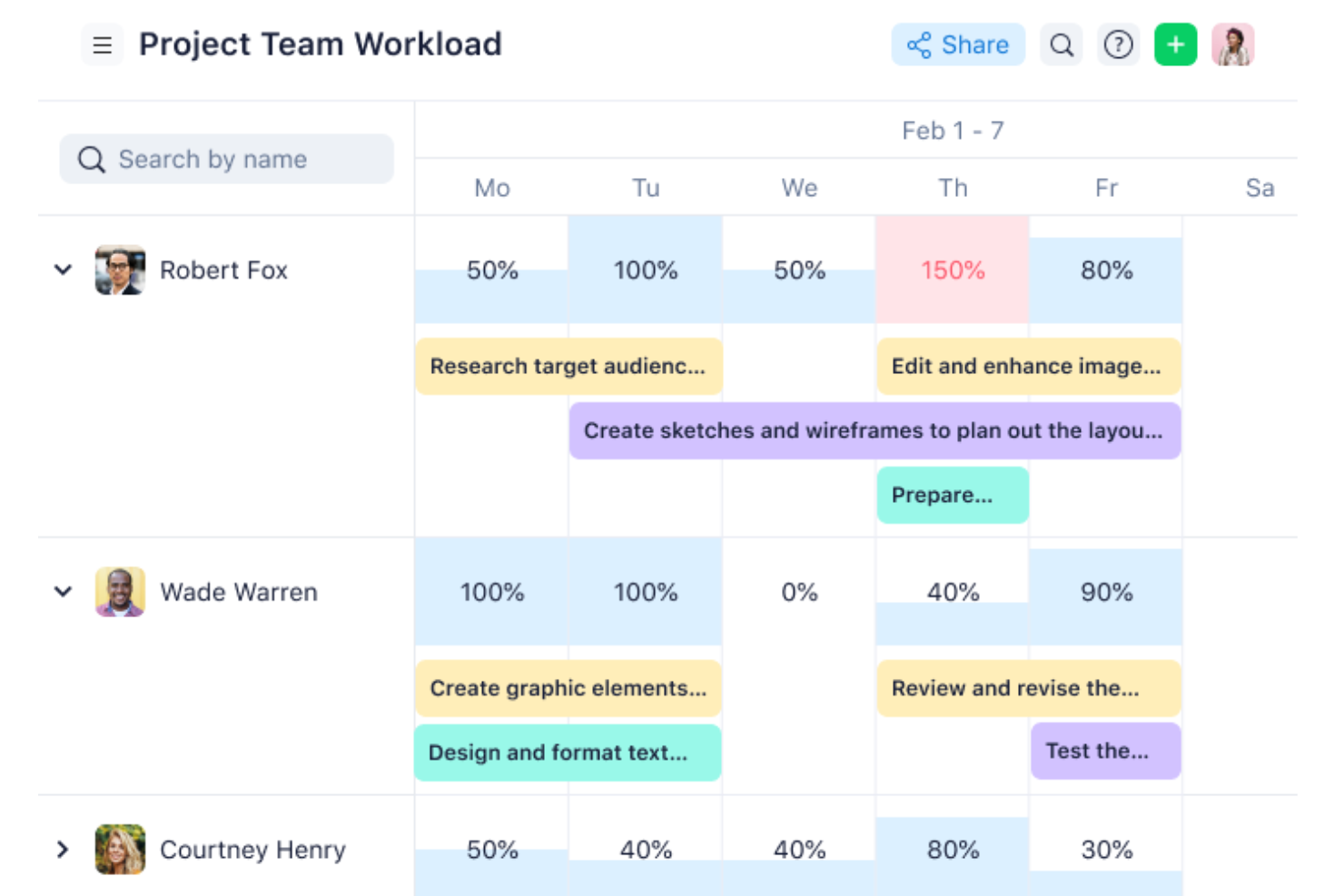
Wrike is a work management platform that combines task tracking, Gantt-based project planning, workload management, workflow automation, and real-time reporting across projects and teams.
Who Is Wrike Best For?
Wrike suits mid-sized teams that need to manage complex, cross-functional projects and want to automate repetitive workflow steps without building everything from scratch.
Why I Picked Wrike
I've included Wrike in my top picks because its workflow automation is genuinely one of the most configurable I've seen: you can set triggers that automatically reassign tasks, update statuses, and sync related work across projects without writing a single rule from scratch. I particularly like how automations pair with dynamic request forms to route incoming work directly into the right project structure. Time tracking is available from the Business plan, and workload charts show capacity by day, week, or month so you can catch overallocation before it becomes a problem.
Wrike Key Features
- Guest approvals: Route files to external reviewers who can comment, approve, or request changes without needing a Wrike account.
- Custom request forms: Collect incoming work requests with structured fields and automatically route them to the right project or team.
- Cross-tagging: Link tasks across multiple spaces, folders, and projects so teams share visibility without duplicating work items.
- Resource bookings: Reserve specific team members or job roles and estimate the hours and availability needed for upcoming project work.
Wrike Integrations
Wrike offers 400+ pre-built native integrations, including Jira, Slack, Microsoft, Google, Salesforce, HubSpot, and NetSuite. It also provides an open REST API and Wrike Integrate for custom integrations, data synchronization, and workflow automation.
Pros and Cons
Pros:
- Workload charts expose team overload
- Gantt dependencies clarify project timelines
- Automations route recurring work requests
Cons:
- Budgeting and invoicing need finance tools
- Workflow setup takes time to configure
New Product Updates from Wrike

Wrike Redesigns AI Agent Builder
Wrike redesigns its AI Agent Builder with a side-by-side setup, Scopes, sentence-style triggers and actions, and clearer filters. These changes make it easier to configure, test, and manage agent behavior. For more information, visit Wrike’s official site.

Quire
Best for hierarchical task breakdown
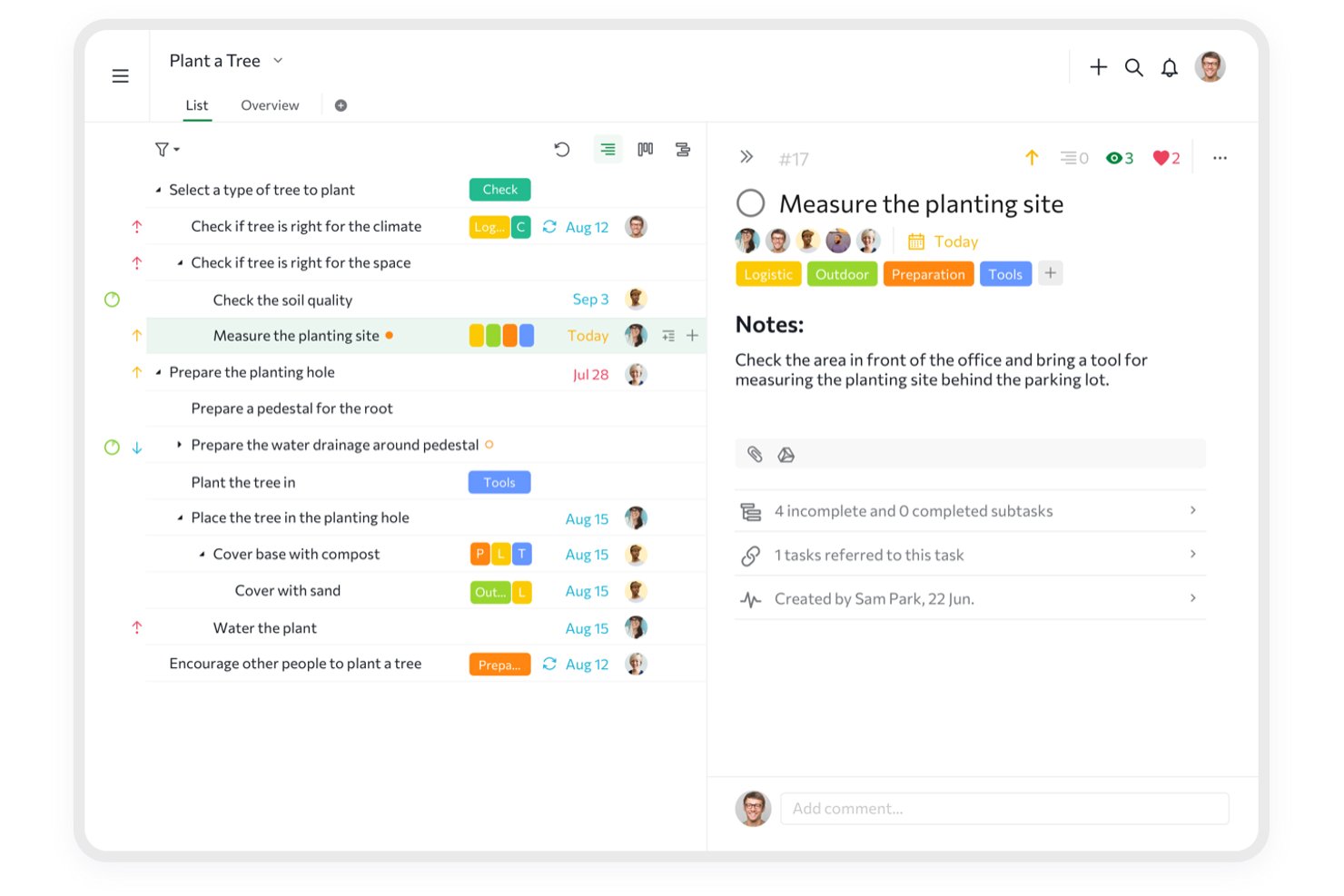
Quire is a project and task management platform that brings together hierarchical task organization, multiple project views (Kanban, timeline, calendar, and table), team collaboration tools, time tracking, and cross-project reporting.
Who Is Quire Best For?
Quire suits small teams and growing businesses that need to break complex projects into deeply nested tasks without paying for features they won't use.
Why I Picked Quire
I picked Quire as one of the best because of how it handles task breakdown, specifically through unlimited subtask nesting. When I'm managing a complex deliverable, I can split it into as many layers as the work actually requires, rather than forcing everything into a flat list. The Peekaboo feature is genuinely useful here too: I can tuck tasks away until they're actionable, which keeps the view clean without losing anything. Paired with dependency tracking in Timeline view, blocked work surfaces immediately with a red line.
Quire Key Features
- Kanban board view: Visualize and move tasks through workflow stages using a drag-and-drop board layout.
- Project chat channels: Communicate with your team directly inside a project without switching to an external messaging tool.
- External teams: Grant clients or contractors access to only the tasks assigned to them, keeping the rest of your project private.
- Time tracking and reports: Log time spent on tasks and review time reports across projects to monitor where hours are going.
Quire Integrations
Quire offers native integrations with Dropbox, Google Drive, Google Calendar, Microsoft Teams, Microsoft OneDrive, and Slack, plus marketplace integrations for GitHub and Zapier. It also provides an API and Quire MCP for custom connections.
Pros and Cons
Pros:
- Workload dashboards surface overdue tasks and trends
- Timeline dependencies expose blocked work visually
- Deep task nesting keeps complex work organized
Cons:
- Mobile users cannot set task dependencies
- Reporting offers limited analytical depth
New Product Updates from Quire
Quire Adds Custom Field Locking and Comment Reaction API Support
Quire adds custom field locking and API support for reading and setting emoji reactions on comments. These updates give teams more control over field data and expand comment interaction options for developers. For more information, visit Quire’s official site.
 .
Nifty
Best for project automation
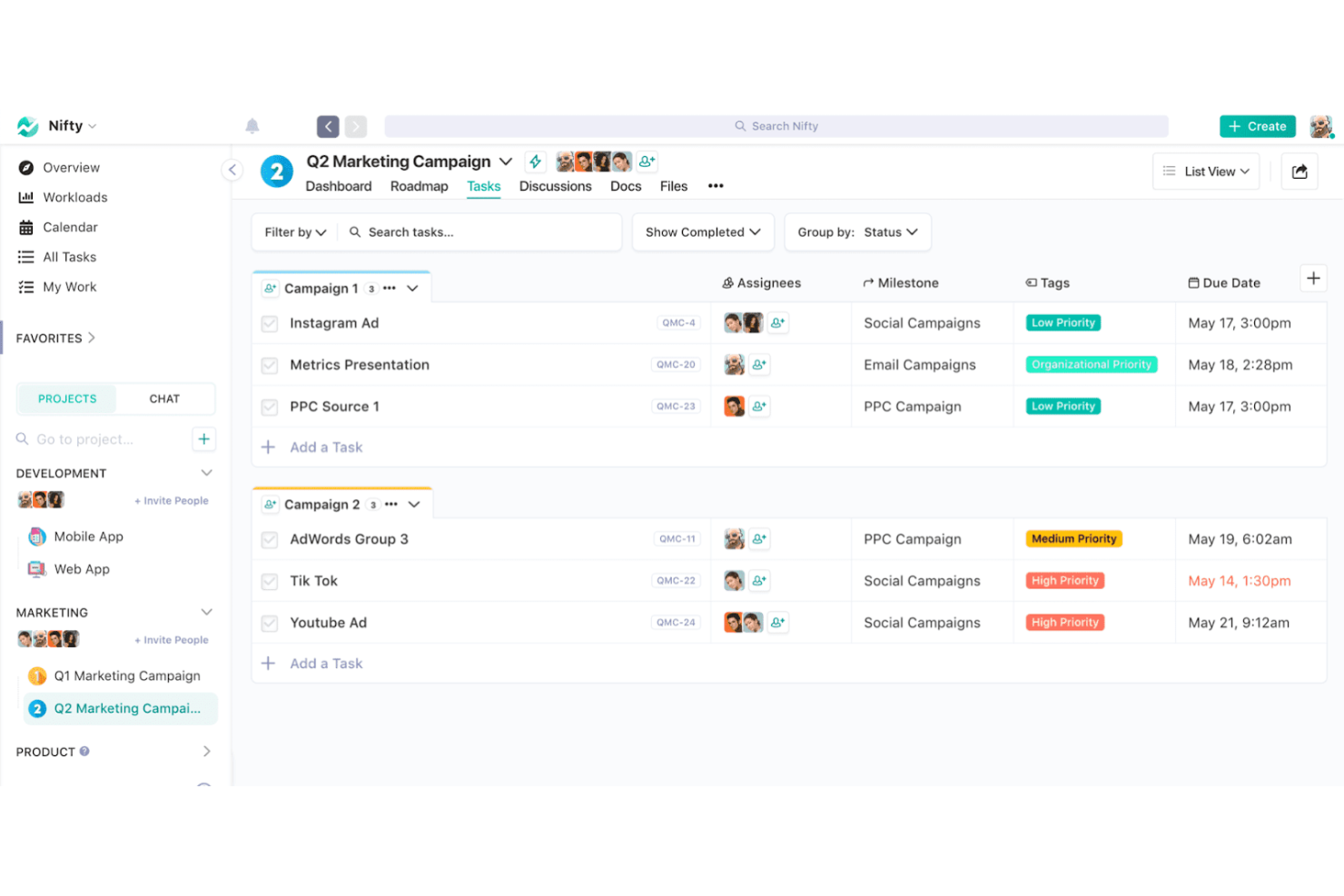
Nifty is a project management platform that brings tasks, milestones, timelines, workload tracking, docs, and team collaboration together in one workspace, with built-in workflow automation and AI-assisted project creation.
Who Is Nifty Best For?
Nifty is a strong fit for small teams that want tasks, milestones, timelines, and client collaboration in one place without paying for tools they'll rarely use.
Why I Picked Nifty
I've included Nifty in my top picks because its built-in workflow automation sets it apart from Zoho Projects in a meaningful way. Nifty's if/then automation rules handle status updates, task handoffs, and reminders automatically, and its Orbit AI can generate a fully structured project from a single description, complete with tasks, owners, and due dates. I also like that milestone-based progress rolls up in real time across projects, so nothing slips through without a trigger to act on it.
Nifty Key Features
- Cross-project overviews: View task status, progress, and activity across multiple projects from a single dashboard.
- Guest and client access: Invite clients to individual projects so they can comment on tasks, join discussions, and upload files.
- Time tracking and reporting: Log time on tasks and subtasks, then export project- or workspace-level reports as CSV or PDF.
- Custom fields: Add custom fields to tasks on Pro and higher plans to capture the specific data your team needs.
Nifty Integrations
Nifty offers native integrations with Slack, Zoom, Webex, GitHub, Google Drive and Calendar, Microsoft Suite, Harvest, Miro, and Typeform. It also provides REST API access, webhooks, and 2,000+ integrations through Zapier.
Pros and Cons
Pros:
- Connects client discussions and files to projects
- Generates project plans from brief descriptions
- Automates task handoffs, updates, and reminders
Cons:
- Workload planning requires an eligible plan or add-on
- Advanced reporting falls short for some reviewers
Best for client work management
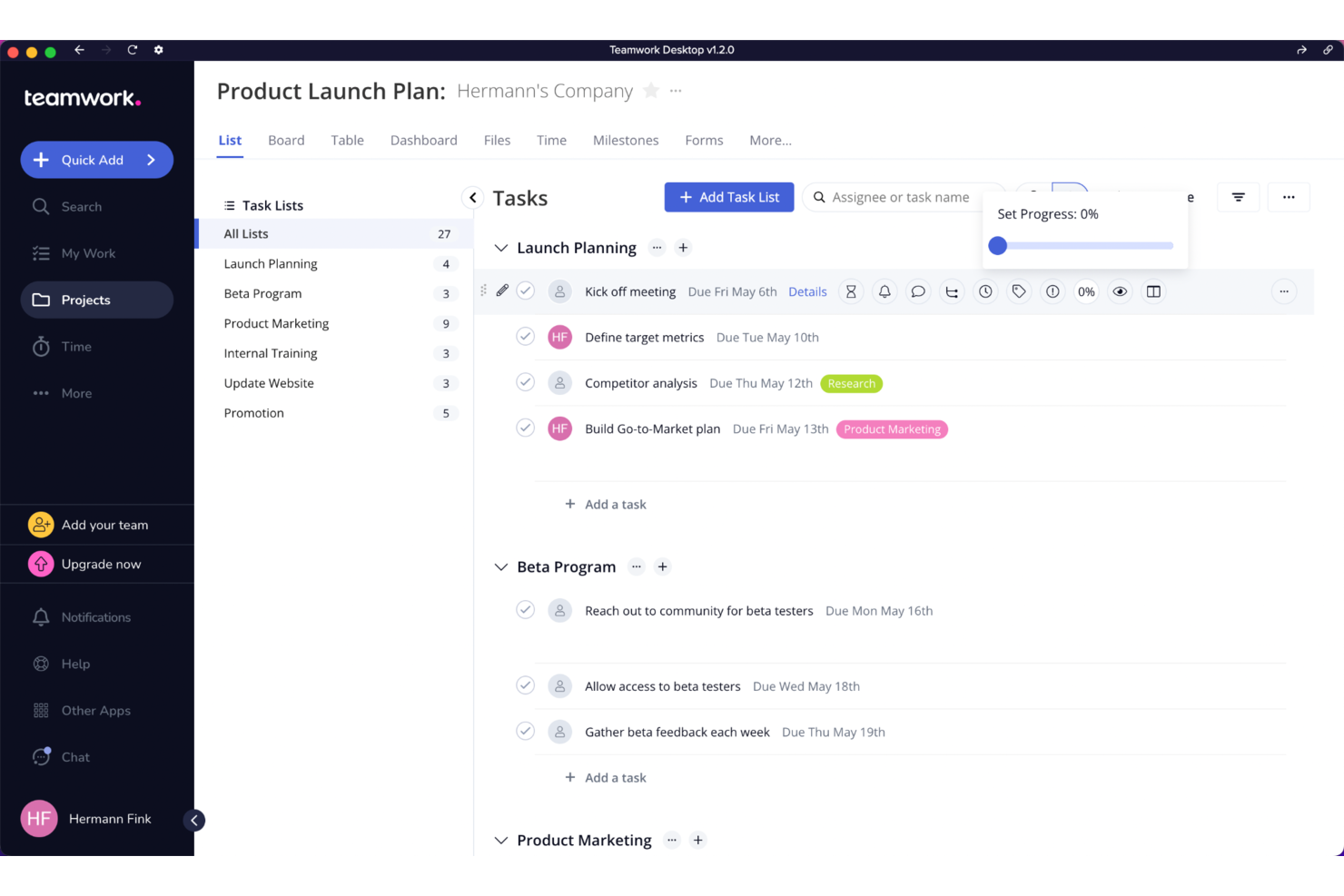
Teamwork.com is a project management platform built around client work, combining task tracking, Gantt and board views, resource planning, time tracking, budget management, and client collaboration tools in one place.
Who Is Teamwork.com Best For?
Teamwork.com is a strong fit for project managers and operations leads at agencies or service teams who need to track client work, budgets, and billable time in one place.
Why I Picked Teamwork.com
Teamwork.com earns its spot on my shortlist because it's purpose-built for client work in a way most project management tools simply aren't. I particularly like how it combines time tracking, project budgets, and client billing into a single workflow, so you can log billable hours against a project and generate an invoice without ever leaving the platform. The client portal access lets external stakeholders view project status and approve deliverables directly, which keeps feedback loops tight without adding unnecessary back-and-forth.
Teamwork.com Key Features
- Workload Planner: Visualizes each team member's day-to-day capacity and flags resourcing risks so you can reassign work before deadlines slip.
- Intake forms: Collects client requests and feedback through a structured form that converts submissions directly into project tasks.
- Proofs: Manages the full review and approval cycle for deliverables, from initial upload through client revisions to final sign-off.
- Project portfolios: Groups multiple projects into a single portfolio view so you can track progress, health, and milestones across all active work at once.
Teamwork.com Integrations
Teamwork.com offers 150+ integrations, including native Slack, Microsoft Teams, Google Calendar, Dropbox, QuickBooks Online, Xero, HubSpot, Salesforce, NetSuite, and Microsoft Project connections. It also provides an API on every plan, with webhooks from Basics upward.
Pros and Cons
Pros:
- Portfolio views reveal progress across client projects
- Billable time connects directly to project budgets
- Client approvals stay tied to deliverables
Cons:
- Frequent notifications can bury important updates
- Gantt planning can feel clumsy for complex schedules

Jira
Best for Agile software development
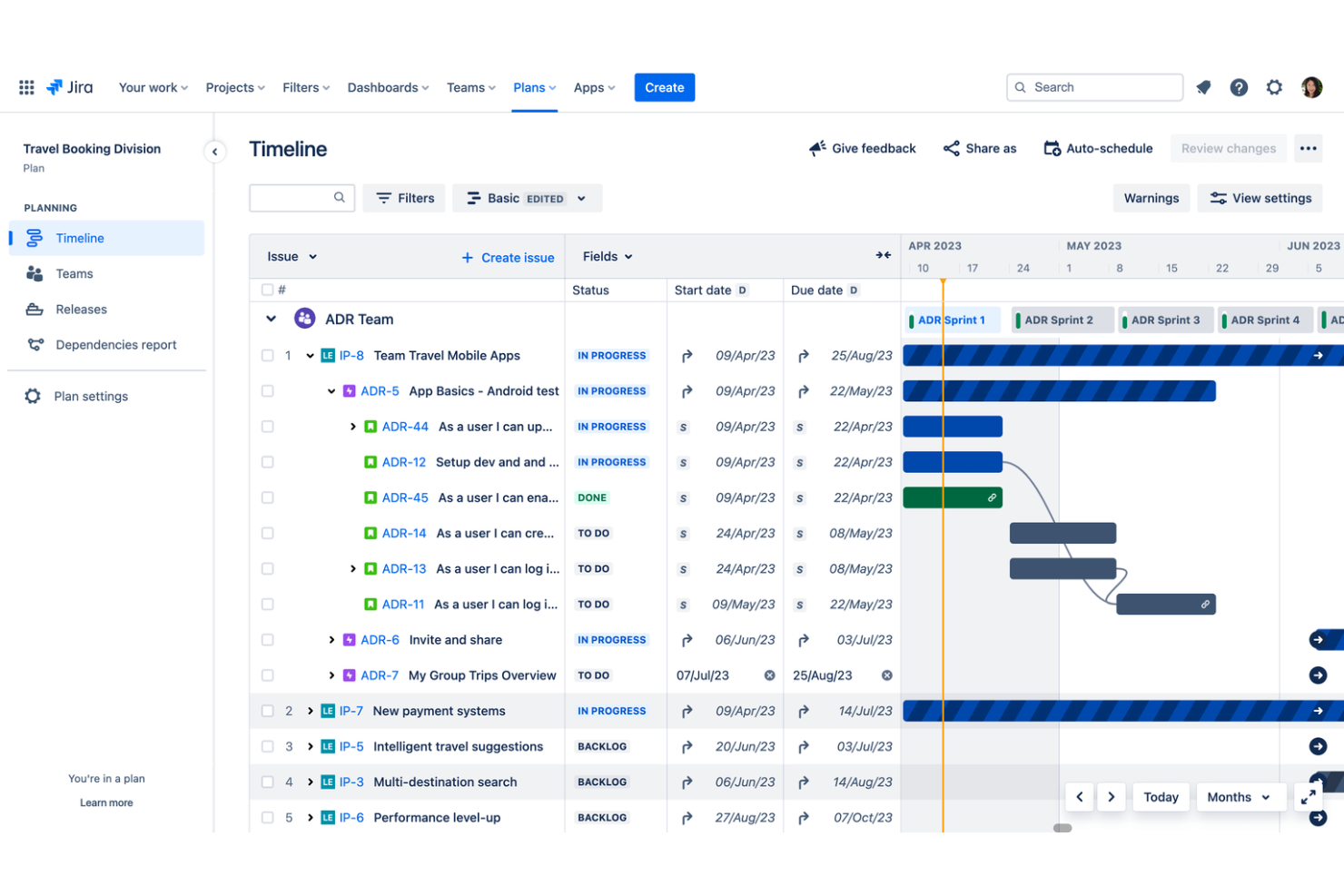
Jira is Atlassian's project and work management platform built around Agile workflows, offering task tracking, sprint planning, customizable boards, roadmaps, dependency management, and reporting across teams.
Who Is Jira Best For?
Jira is a strong fit for software and product teams that run Agile workflows and need deep sprint planning, backlog management, and dev-tool integrations in one place.
Why I Picked Jira
Jira earns its spot as one of the best on my shortlist because it's built from the ground up for Agile software development, with sprint planning, backlog management, and Scrum and Kanban boards that go far deeper than what Zoho Projects offers. I love how the timeline view connects directly to your backlog, so dependency tracking isn't a separate workflow but part of how you plan sprints. Burndown, velocity, and cumulative flow reports are baked in, so my team can surface delivery patterns without building custom views from scratch.
Jira Key Features
- No-code automation: Build rules to trigger actions automatically across one or multiple spaces without writing any code.
- Guest access: Invite external collaborators to a specific Jira space to view and edit work items, comment, and participate in boards.
- Custom fields: Add fields to work items to capture workflow-specific data, including currency-formatted numbers and formula calculations.
- Rovo AI agents: Assign work to AI agents, review their activity alongside your team's work, and use natural language to create automation rules and build custom agents.
Jira Integrations
Jira offers 3,000+ Marketplace integrations, including Slack, Confluence, Trello, Bitbucket, GitHub, Figma, Gmail, Google, Microsoft, and Zoom. Its REST API v3 supports custom integrations.
Pros and Cons
Pros:
- Configurable workflows fit engineering teams
- Burndown and velocity clarify delivery
- Deep sprint and backlog planning
Cons:
- Executive reporting needs dashboard configuration
- Nontechnical projects inherit Agile overhead

Ravetree
Best for flexible project methodologies
Ravetree is a work management platform that combines project tracking, resource planning, time and expense logging, billing, and client portals in one place.
Who Is Ravetree Best For?
Ravetree is a strong fit for agencies and professional-services teams that need to manage projects, track budgets, and bill clients from a single platform.
Why I Picked Ravetree
Ravetree earns its spot on my shortlist because it genuinely supports both traditional and Agile project workflows without forcing you to choose one or the other. I love that you can manage sprints and Kanban boards in one project while running Gantt-based timelines with finish-to-start dependencies in another. The custom work-item types let my team define its own fields and workflows per project type, which makes switching methodologies feel natural rather than like a workaround.
Ravetree Key Features
- Client portal: Give clients real-time access to project status updates, shared files, and request submission forms directly within Ravetree.
- Budget and expense tracking: Log expenses against custom categories, add percentage markups to billable items, and view profitability and estimated-versus-actual figures per project.
- Retainer management: Automate recurring invoices, generate projects from retainer templates, and track earned versus unearned revenue across all active retainers.
- Resource utilization views: See capacity in hours and percentages across individuals, teams, and departments, filtered by work role, skill, office, or department.
Ravetree Integrations
Ravetree offers native integrations with Google Calendar, Outlook Calendar, Google Drive, HubSpot, QuickBooks, Xero, Stripe, and GitHub. Its REST OpenAPI supports custom integrations.
Pros and Cons
Pros:
- Share project updates through client portals
- Track budgets alongside billable project work
- Switch between Agile and Gantt workflows
Cons:
- Resource-planning views can feel dense
- Mobile functionality trails the desktop experience
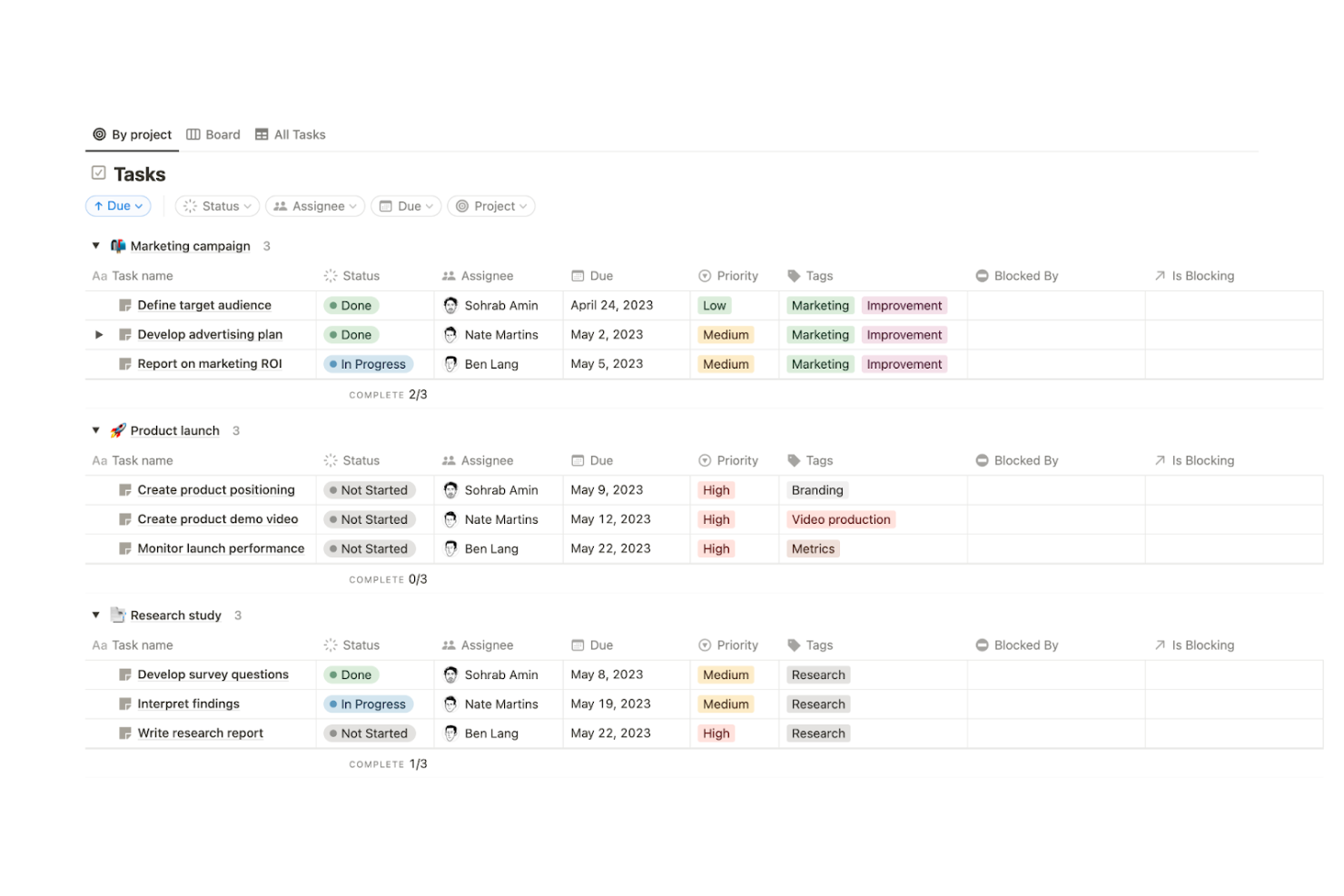
Notion is an all-in-one workspace platform that combines project databases, task tracking, wikis, and real-time document collaboration in a single connected environment.
Who Is Notion Best For?
Notion works best for teams that want project tracking and documentation living in the same place, rather than juggling separate tools for each.
Why I Picked Notion
I've included Notion in my top picks because it's the only tool on this list where your project databases and team documentation genuinely live in the same place. I like that you can link a project record directly to its spec doc, meeting notes, or decision log without switching apps. The connected database setup also lets you build cross-project dashboards with live charts, so you're not manually pulling status updates from scattered sources.
Notion Key Features
- Real-time co-editing: Multiple team members can edit project documents and pages simultaneously, with active collaborators visible on screen.
- Database automations: Automate task workflows, bug reports, and database entries to trigger actions based on status changes or other conditions.
- Subtasks and dependencies: Break tasks into subtasks assigned to different team members and link dependencies directly in timeline view.
- Project forms: Collect intake requests through customizable forms that feed responses directly into project databases to start tasks and workflows.
Notion Integrations
Notion offers documented integrations with Slack, Google Drive, GitHub, Figma, Jira, Linear, Microsoft Teams, and Notion Calendar connections. Its public API and webhooks support custom connections, while synced Jira and GitHub databases are read-only.
Pros and Cons
Pros:
- Teams edit plans together in real time
- Views adapt to changing team workflows
- Project context stays beside tasks
Cons:
- Workload views don’t forecast team capacity
- Advanced execution needs dedicated PM tooling
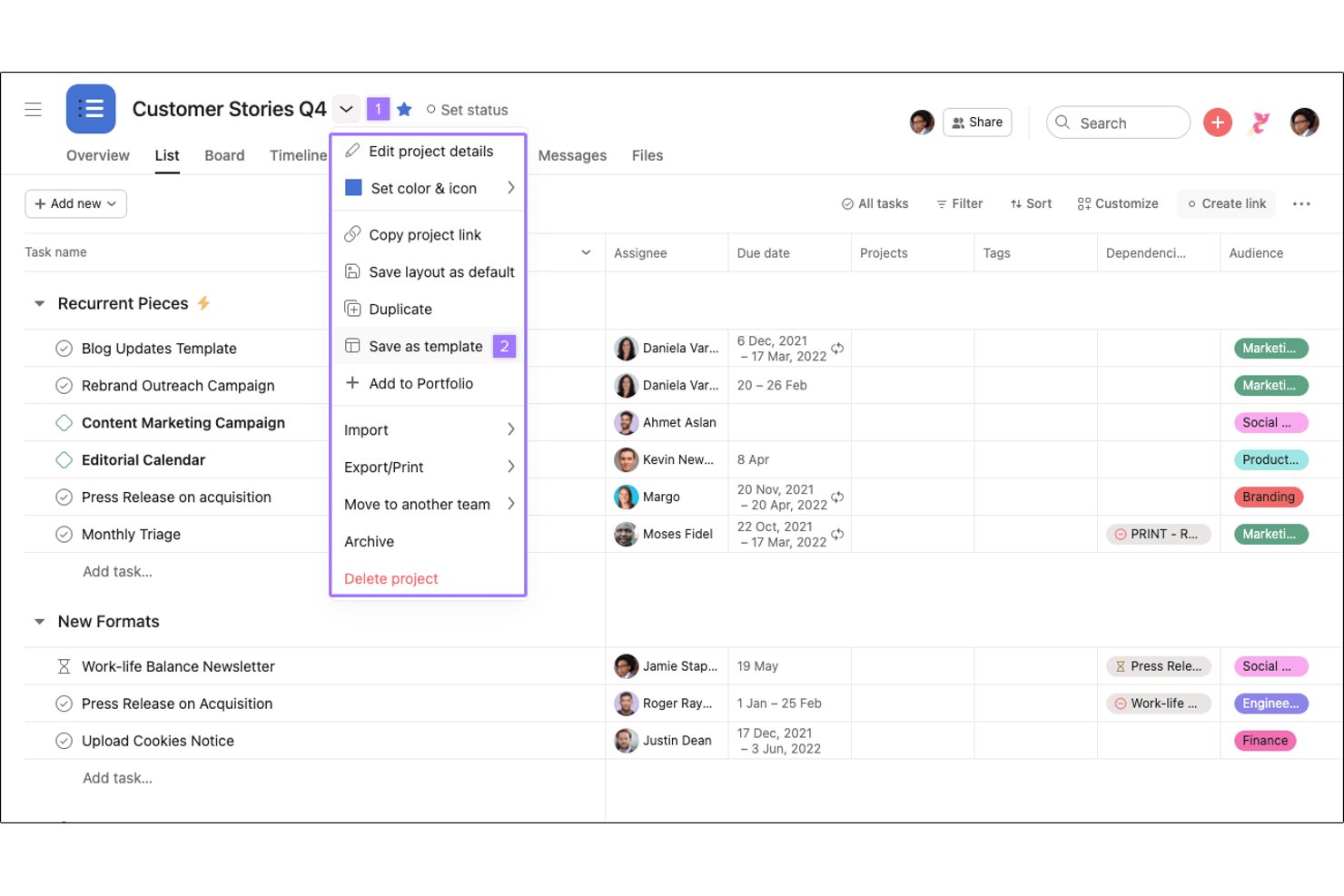
Asana is a work management platform that covers task tracking, project planning, workflow automation, and cross-functional team coordination across multiple views including lists, boards, timelines, and Gantt charts.
Who Is Asana Best For?
Asana works well for cross-functional teams that need a structured way to manage tasks, coordinate handoffs, and track project progress across multiple workstreams.
Why I Picked Asana
Asana earns its spot on my shortlist because task management is where it genuinely excels. I love how every task can carry an owner, due date, dependencies, and milestone markers, so nothing falls through the cracks across workstreams. In practice, my team can switch between list, board, timeline, and Gantt views on the same project without rebuilding anything, which makes it easy to track progress at whatever level of detail a given meeting or stakeholder requires.
Asana Key Features
- Workflow automation rules: Triggers and actions automate routine task updates, assignments, and handoffs without manual intervention.
- Custom fields and templates: Reusable project templates and up to 150 custom fields per project standardize how work is structured across teams.
- Goals and portfolio tracking: Portfolios group related projects and link them to team or company objectives to surface progress at a glance.
- 270+ app integrations: Native connectors span communication, storage, CRM, and developer tools, with a REST API and MCP server for custom connections.
Asana Integrations
Asana offers 270+ integrations, including Jira, Slack, Google Drive, Microsoft 365, Salesforce, HubSpot, GitHub, Tableau, and Power BI. It also provides a REST API, webhooks, client libraries, app components, and an MCP server for custom integrations.
Pros and Cons
Pros:
- Task-linked discussions keep project context together
- Multiple planning views expose schedule slippage
- Task ownership and dependencies clarify handoffs
Cons:
- Detailed analytics remain limited for reporting needs
- Per-seat charges grow as teams expand

Best for workflow customization
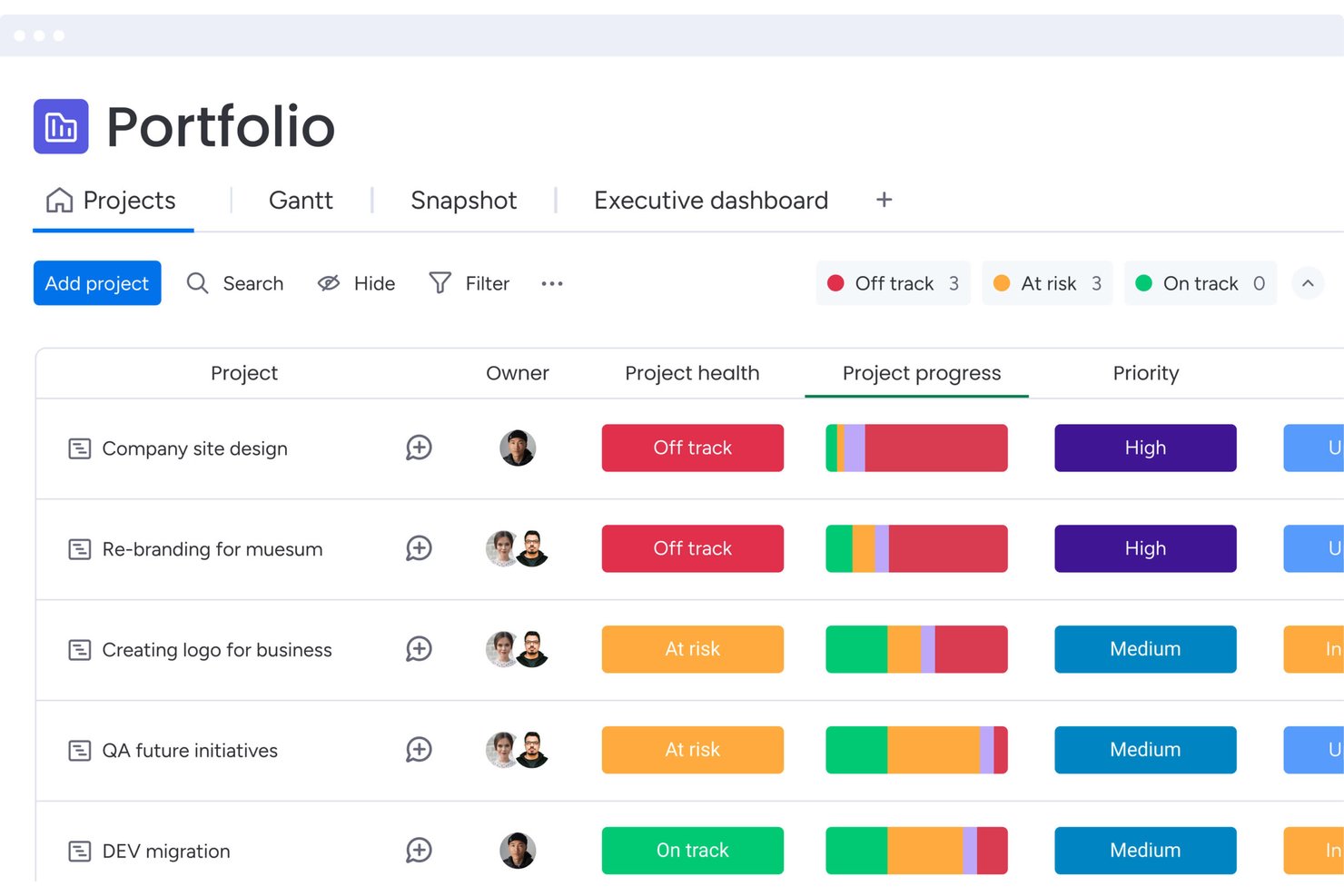
monday work management is a project and work management platform that lets teams track tasks, plan timelines, automate workflows, and report on progress across projects—all on customizable boards with 850+ integrations.
Who Is monday AI Workspace Best For?
monday work management is a strong fit for project managers who need to shape their own workflows rather than adapt to a rigid system.
Why I Picked monday AI Workspace
monday work management earns its spot on my shortlist because no other tool gives you the same level of control over how your workflows actually behave. I love that you can build a project intake pipeline with custom approval routing, then automatically spin up a dedicated project board from a template the moment a request is approved. The AI-powered project planner agent can map out dependencies and assign owners without manual setup, which is something I haven't seen done as cleanly elsewhere.
monday AI Workspace Key Features
- Customizable board automations: Set up code-free automations to handle notifications, task assignments, status updates, and handoffs between workflow stages.
- Workload widget: View team members' capacity across one or multiple boards, with drill-down to individual tasks and support for custom work schedules.
- Shareable boards: Invite external collaborators to specific project boards without giving them access to your full monday.com account.
- 850+ integrations: Connect monday work management to tools like Slack, Jira, GitHub, Salesforce, and QuickBooks through native integrations or the GraphQL/MCP API.
monday AI Workspace Integrations
monday AI Workspace offers 850+ integrations and apps, including native integrations with Jira, GitHub, Slack, Google Drive, Salesforce, QuickBooks, HubSpot, and Microsoft Teams. GraphQL, SDK, and MCP APIs support custom connections.
Pros and Cons
Pros:
- Dashboards keep project status visible across teams
- Custom boards adapt to changing delivery processes
- Approval workflows turn requests into project boards
Cons:
- Resource leveling still requires manual adjustments
- Gantt view may not suit project planning
New Product Updates from monday AI Workspace
monday AI Workspace Adds Human Approval Routing
monday AI Workspace adds a human-in-the-loop approval block to AI Workflows, sending approval requests and routing workflow paths based on responses. For more information, visit monday AI Workspace's official site.
ClickUp
Best for linking projects to existing tools
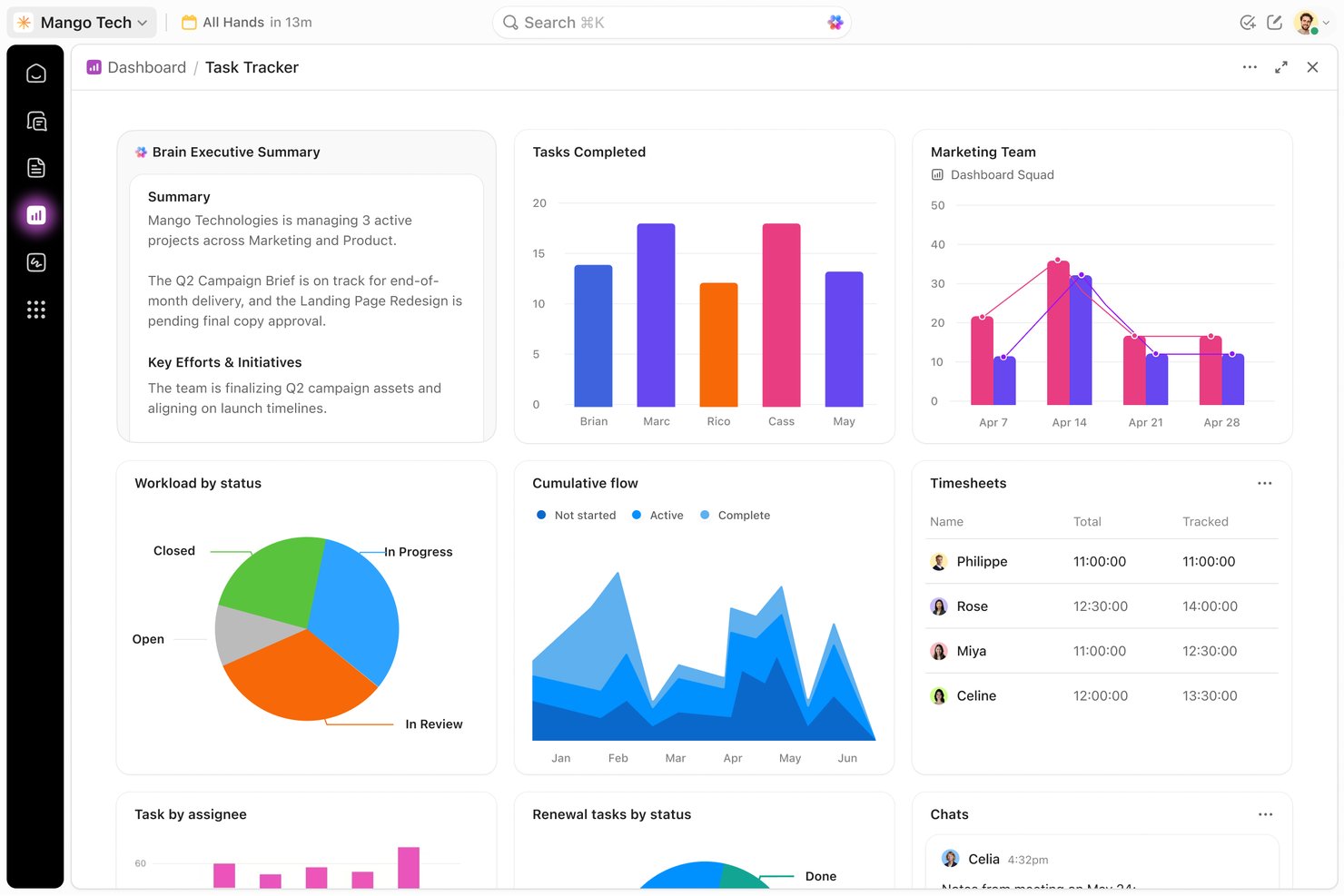
ClickUp is a project management platform that unifies tasks, Gantt charts, timelines, workload views, Docs, and team chat alongside automations and 1,000+ integrations in a single workspace.
Who Is ClickUp Best For?
ClickUp suits cross-functional project teams that want tasks, docs, chat, and reporting in one place without juggling multiple tools.
Why I Picked ClickUp
ClickUp earns its spot on my shortlist because it genuinely replaces a stack of tools rather than just matching Zoho Projects feature-for-feature. I like that tasks, Docs, Chat, and Gantt charts all live in one workspace, so my team can move from planning to execution without switching context. The Workload view is what really sets it apart: I can see who's over capacity across multiple projects and reassign work directly from the same screen.
ClickUp Key Features
- Collaborative Docs: Create and edit documents alongside tasks, with live cursors, inline comments, threaded feedback, and version history all in one workspace.
- Workflow automations: Trigger status changes, task assignments, and notifications automatically when set conditions are met, reducing manual follow-up.
- Custom dashboards: Build reports combining charts, time tracking, workload data, and task cards, then share them with stakeholders using granular permissions.
- 1,000+ integrations: Connect ClickUp to tools like Slack, GitHub, HubSpot, and Google Drive through native integrations, Zapier, webhooks, or the public API.
ClickUp Integrations
ClickUp offers 1,000+ integrations, including Slack, GitHub, HubSpot, Google Drive, Microsoft Teams, Google Calendar, and Zoom. It also provides a public API, webhooks, MCP, OAuth, and Zapier for custom connectivity.
Pros and Cons
Pros:
- Dashboards surface cross-project ownership and progress
- Docs, chat, and tasks share project context
- Multiple planning views keep deadlines visible
Cons:
- Large boards and reports can lag
- Workspace setup takes upfront configuration
New Product Updates from ClickUp
ClickUp Adds Meetings Hub, Super Agent Templates, and ZoomInfo Integration
ClickUp adds a searchable Meetings Hub, new ways to clone and template Super Agents, and a ZoomInfo integration through the App Center. These updates improve meeting retrieval, agent reuse, and access to sales intelligence. For more information, visit ClickUp’s official site.
Andre alternativer til Zoho Projects
Nedenfor finner du en liste over ytterligere programvare for prosjektstyring som ikke kom med på min topp 10-liste over alternativer til Zoho Projects, men som likevel er verdt å undersøke:
- Smartsheet
For spreadsheet-like interface
- Celoxis
For advanced project analytics
- Paymo
For project budget and profit oversight
- ProofHub
For centralized project control
- Scoro
For professional service automation
- Microsoft Project
For Microsoft 365-native project scheduling
- Hive
For AI-assisted project planning
- Zoho Sprints
For Scrum teams leaving Zoho Projects
- GoodDay
For Agile teams wanting deep customization
- TeamGantt
For Gantt-first visual scheduling


Relaterte anmeldelser av verktøy for prosjektstyring
Hvis du fortsatt ikke har funnet det du leter etter her, kan du ta en titt på disse andre anmeldelsene av verktøy for prosjektstyring som vi har samlet for deg:
- Verktøy for å lage Gantt-diagrammer
- Produktivitetsverktøy
- Programvare for prosjektsporing
- Programvare for prosjektplanlegging
How I Evaluate Zoho Projects Alternatives
I split my evaluation into three parts, giving core needs the most weight: assign tasks, track deadlines, and plan work on boards or timelines. Next, I compare differentiators such as client approval portals and capacity forecasts. Finally, I consider beyond-feature factors, including migration help, onboarding, support, and pricing as teams grow.
Core Functionality (Table Stakes For This List)
When I'm selecting tools for my list, I score each one on a scale from 0 (does not offer the functionality) to 5 (excels in this area) for each core functionality listed below. I then convert the total into a percentage to help assess each tool's overall fit, with extra weight on any functionalities I’ve deemed essential.
- Task & Project Tracking (Essential): I look for task owners, statuses, due dates, dependencies, and milestones that support delivery across multiple projects.
- Visual Planning Views (Essential): I check for interactive boards, timelines, or calendars that help teams plan work and adjust schedules as priorities shift.
- Team Collaboration: I evaluate whether comments, files, and notifications stay connected to project tasks and decisions.
- Resource & Workload: I look for cross-project capacity views that help project managers spot overloaded team members and rebalance assignments.
- Reporting & Insights: I assess whether dashboards show project status, deadlines, and progress clearly enough to guide delivery decisions.
- Third-Party Integrations: I check for connections to tools teams use for communication, file storage, calendars, or billing.
Once I have a list of tools that meet the criteria, I consider what sets each platform apart.
Differentiating Factors (What Sets Vendors Apart)
Here's how I compare and contrast different vendors:
Standout Features
I look for client portal access that lets external stakeholders review deliverables and leave approvals without a full license. This matters when you're running multiple client projects and need feedback loops that don't rely on forwarded emails. I also evaluate resource forecasting—specifically whether a tool flags over-allocation across projects before it becomes a scheduling problem. Budget and financial tracking is another differentiator; I check whether time entries tie directly to project budgets so you can monitor margins on client work without toggling to a separate system.
Beyond Features
I check whether a tool locks essential features like automation or time tracking behind expensive tiers, since that changes the real cost as your team scales. Migration support matters too—I look for import wizards or dedicated specialists that move tasks, files, and timelines from Zoho Projects without data loss. I also evaluate open API access and two-way sync with tools like Slack and Google Workspace, which helps teams avoid trading one vendor lock-in for another.
Hvorfor se etter et alternativ til Zoho Projects?
Det kan hende du ser etter et alternativ til Zoho Projects hvis du er bekymret for:
- Kostnad: Selv om funksjonene er omfattende, opplever du at de går utover dine nåværende behov, og at prisstrukturen til Zoho Projects overstiger budsjettet ditt.
- Funksjonssett: Fokuset i funksjonene som tilbys av Zoho Projects dekker ikke de spesifikke behovene til teamet eller prosjektet ditt.
- Brukeropplevelse: Du eller teamet ditt opplever at grensesnittet i Zoho Projects er lite intuitivt eller tungvint.
- Integrasjonsmuligheter: Du trenger bedre integrasjon med bestemte verktøy, eksisterende arbeidsflyter og andre tjenester som ikke støttes godt nok av Zoho Projects.
- Kundestøtte: Læringskurven er for bratt, du trenger et høyere nivå av kundestøtte, eller du har hatt en dårlig opplevelse.
Uansett om årsakene ovenfor samsvarer med din spesifikke erfaring, skader det aldri å se seg om etter alternativer.
Programvarealternativer til Zoho Projects kan tilby andre funksjoner, bedre valuta for pengene eller ganske enkelt et bedre verktøy basert på dine spesifikke behov innen prosjektstyring. Du kan finne en løsning som ikke bare oppfyller de spesifikke kravene dine, men som også sparer deg for timevis med tid og energi som ellers ville gått med til å navigere i rigide og lite fleksible brukergrensesnitt, kompliserte oppsett eller ineffektive arbeidsflyter.
De viktigste funksjonene i Zoho Projects
Her er noen av de viktigste funksjonene i Zoho Projects, slik at du kan sammenligne hva alternative løsninger tilbyr:
- Oppgavehåndtering: Lar deg opprette, tildele og følge opp oppgaver, slik at teamet ditt holder seg organisert og i rute.
- Tidsregistrering: Hjelper deg med å overvåke tiden som brukes på oppgaver og prosjekter, noe som forbedrer faktureringsnøyaktigheten og produktiviteten.
- Dokumenthåndtering: Samler alle prosjektrelaterte dokumenter og vedlegg på ett sted, slik at teamet ditt enkelt kan få tilgang til filer og samarbeide om dem.
- Gantt-diagrammer: Gir en visuell tidslinje for prosjektplanlegging, slik at du effektivt kan planlegge og følge prosjektets fremdrift.
- Kanban-tavler: Gir en visuell måte å håndtere oppgaver og arbeidsflyter på, slik at du enkelt kan se statusen for hver oppgave med et øyekast.
- Milepæler: Lar deg sette viktige milepæler i prosjektet for å følge fremdriften og sikre at kritiske oppgaver fullføres i tide.
- Tilpassede arbeidsflyter: Lar deg opprette skreddersydde arbeidsflyter som passer teamets unike prosesser og krav.
- Zoho Zia: En KI-drevet assistent som bidrar til å automatisere oppgaver og gir innsikt som forbedrer prosjektstyringen.
- Samarbeidsverktøy: Inkluderer diskusjonsfora og chatfunksjoner som legger til rette for kommunikasjon og samarbeid i teamet.
- Ressursstyring: Hjelper deg med å fordele og administrere ressurser effektivt, slik at de utnyttes optimalt på tvers av prosjekter. Dette er dessverre en funksjon som ikke er vanlig i all programvare. Derfor kan det hende du må utforske programvare for ressursstyring som kan supplere alternativet du velger.