

I 10 migliori software di gestione delle risorse ingegneristiche per il 2026

Elenco dei migliori software per la gestione delle risorse ingegneristiche


Scegliere il software giusto per la gestione delle risorse ingegneristiche può essere difficile, vista la vasta gamma di opzioni disponibili. L'obiettivo è semplificare i progetti di ingegneria, allocare le risorse in modo efficace e migliorare la produttività, ma individuare lo strumento migliore può essere complicato.
Tuttavia, non c'è motivo di preoccuparsi. Grazie alla mia vasta esperienza con diversi strumenti digitali per la gestione dei progetti, posso aiutarti a scegliere lo strumento più adatto alle tue esigenze. Ecco la mia selezione dei migliori software per la gestione delle risorse ingegneristiche.
Perché fidarsi dei nostri consigli sui software
Il nostro team testa e recensisce software dal 2012. In quanto project manager noi stessi, sappiamo quanto sia difficile — e importante — scegliere il software giusto.
Per questa guida, abbiamo valutato gli strumenti attraverso test pratici e ricerche indipendenti, assegnando un punteggio agli strumenti in base ai nostri criteri di selezione. Ci basiamo inoltre sulle competenze di leader di pensiero del settore e di professionisti attivi nella gestione dei progetti.
Le nostre recensioni riflettono il nostro giudizio editoriale umano, non un discorso di vendita.
Revisori esperti:
Riepilogo dei migliori software per la gestione delle risorse ingegneristiche
Abbiamo analizzato i prezzi e la disponibilità di prove gratuite e versioni demo, così puoi effettuare un confronto fianco a fianco molto più semplice.
| Tool | Best For | Trial Info | Price | ||
|---|---|---|---|---|---|
| 1 | Ideale per la pianificazione delle risorse in tempo reale | Prova gratuita disponibile | Da $7/utente/mese (fatturazione annuale) | Website | |
| 2 | Ideale per prenotazioni avanzate delle risorse | Prova gratuita di 14 giorni + demo gratuita disponibile | Da $19,90/utente/mese (fatturazione annuale) | Website | |
| 3 | Ideale per workflow di progetto focalizzati sul cliente | Demo gratuita disponibile | Prezzi su richiesta | Website | |
| 4 | Ideale per l'allocazione di risorse configurabile in base alle competenze | Demo gratuita disponibile | Prezzo su richiesta | Website | |
| 5 | Ideale per la pianificazione progetti guidata dall'IA | Prova gratuita di 14 giorni + piano gratuito disponibile | Da $10/utente/mese (fatturato annualmente) | Website | |
| 6 | Ideale per la gestione di team remoti | Prova gratuita di 14 giorni | Da $5/utente/mese | Website | |
| 7 | Ideale per la gestione delle risorse in aziende orientate ai progetti | Prova gratuita di 30 giorni | Da $9,50/utente/mese (fatturato annualmente) | Website | |
| 8 | Ideale per la gestione centralizzata delle risorse | Prova gratuita di 14 giorni | Da $5/utente/mese (fatturazione annuale) | Website | |
| 9 | Ideale per l'automazione delle operazioni di servizio | Demo gratuita disponibile | Prezzi su richiesta | Website | |
| 10 | Ideale per la programmazione del team e la disponibilità | Prova gratuita di 30 giorni | Da $5/utente/mese (fatturazione annuale) | Website |


Recensioni dei migliori software per la gestione delle risorse ingegneristiche
Scopri valutazioni e riepiloghi dettagliati dei migliori software per la gestione delle risorse ingegneristiche oggi disponibili.

Runn
Ideale per la pianificazione delle risorse in tempo reale

Runn è una piattaforma per la gestione delle risorse e la previsione dei progetti che combina pianificazione della capacità, programmazione dei carichi di lavoro, allocazione basata sulle competenze e monitoraggio finanziario per team che lavorano per progetto.
Per Chi è Ideale Runn?
Runn è particolarmente adatto a project manager e responsabili delle risorse in aziende di servizi professionali, agenzie software e società di consulenza ingegneristica che gestiscono più progetti contemporaneamente.
Perché Ho Scelto Runn
I grafici e i diagrammi di Runn si aggiornano in tempo reale mentre modifichi i programmi, quindi il mio team lavora sempre con dati aggiornati sulla capacità anziché con uno snapshot della settimana precedente. Mi piace soprattutto la vista heatmap, che mostra a colpo d'occhio la disponibilità e l'utilizzo di tutti, così posso individuare facilmente le lacune o gli ingegneri sovraccarichi senza dover controllare uno a uno tutti i programmi. Inoltre, Runn mi permette di filtrare le persone per ruolo, competenza e team quando effettuo assegnazioni, il che rende rapido trovare l’ingegnere giusto per un progetto quando i requisiti cambiano.
Caratteristiche Principali di Runn
- Timesheet: Registra le ore effettive lavorate e confrontale con le allocazioni pianificate nei vari progetti.
- Gestione finanziaria dei progetti: Monitora budget, costi e ricavi rispetto ai piani di progetto man mano che le allocazioni cambiano.
- Assegnazione di placeholder: Assegna ruoli senza nome ai prossimi progetti per simulare la capacità prima di confermare le assunzioni.
- Gestione delle assenze: Registra ferie e festività in modo che i programmi riflettano la reale disponibilità del team.
Pros and Cons
Pros:
- Aggiornamenti in tempo reale su risorse e monitoraggio dei progetti
- Capacità di previsione
- Interfaccia intuitiva per la programmazione e le modifiche
Cons:
- Potrebbe essere complesso per team piccoli o progetti semplici
- Opzioni di personalizzazione limitate per report e dashboard

Scoro
Ideale per prenotazioni avanzate delle risorse

Scoro è una piattaforma di gestione del lavoro creata per i team di servizi professionali che combina pianificazione delle risorse, previsione della capacità, programmazione dei progetti, tracciamento del tempo e gestione finanziaria in un unico sistema.
Per chi è ideale Scoro?
Scoro è particolarmente adatto per le aziende di servizi professionali di medie dimensioni—società di consulenza, agenzie di ingegneria e fornitori di servizi IT—che hanno bisogno di gestire persone, progetti e budget in un unico posto.
Perché ho scelto Scoro
Ho incluso Scoro tra le mie scelte migliori perché il suo sistema di prenotazione delle risorse va ben oltre un semplice calendario di programmazione. Apprezzo particolarmente la funzione di prenotazione provvisoria, che mi permette di riservare capacità ingegneristica per progetti potenziali prima che vengano confermati—e quando il lavoro viene approvato, posso convertire facilmente quelle prenotazioni provvisorie in definitive senza dover ricostruire il piano. Ogni prenotazione è collegata direttamente al livello finanziario di Scoro, così posso vedere in tempo reale come una decisione sul personale influisce sui margini di progetto e sul consumo del budget—non solo sulla disponibilità in calendario.
Funzionalità principali di Scoro
- Heatmap di utilizzo: Visualizza dati sulla capacità dell'intero team codificati per colore per individuare rapidamente ingegneri sovraccarichi o sottoimpiegati.
- Assegnazione basata sulle competenze: Filtra e assegna risorse ai task in base a competenze o ruoli specifici, così che le persone giuste lavorino sui progetti giusti.
- Confronto tra ore registrate e stimate: Confronta le ore registrate con le stime pianificate a livello di attività e di progetto per individuare tempestivamente possibili sforamenti di ambito.
- Pianificazione su timeline drag-and-drop: Modifica compiti e scadenze dei progetti direttamente su una timeline visiva senza dover ricostruire da zero il piano.
Pros and Cons
Pros:
- Integra molteplici processi aziendali in un'unica piattaforma
- Offre strumenti avanzati di gestione progetti e finanze
- Dashboard in tempo reale personalizzabile
Cons:
- La complessità delle opzioni di personalizzazione
- L'app mobile offre meno funzionalità rispetto alla versione web
New Product Updates from Scoro

Scoro Adds Time Mobile App and ELI Improvements
Scoro adds the Scoro Time mobile app for iOS/Android to track time anywhere and expands ELI with attachments, smarter filtering, and trigger-based actions. For more information, visit Scoro's official site.

Accelo
Ideale per workflow di progetto focalizzati sul cliente

Accelo è una piattaforma PSA basata sull'intelligenza artificiale che unifica la gestione delle risorse, il monitoraggio dei progetti, il CRM, il rilevamento dei tempi e la fatturazione per i team di servizi professionali.
Per chi è più adatto Accelo?
Accelo è particolarmente indicato per aziende di ingegneria e servizi professionali di medie dimensioni che desiderano gestire risorse, progetti e fatturazione clienti in un'unica soluzione.
Perché ho scelto Accelo
Ho inserito Accelo tra le mie prime scelte perché adoro come collega ogni fase del lavoro con il cliente in un flusso unico: dal preventivo iniziale, passando per la consegna del progetto, fino alla fatturazione finale. Il mio team utilizza Accelo per monitorare in tempo reale il rispetto del budget rispetto all’ambito di progetto, così individuiamo eventuali lacune di fatturazione prima che diventino perdite. Il portale clienti è particolarmente utile: i clienti possono verificare lo stato del progetto e approvare i lavori direttamente, riducendo lo scambio di email e mantenendo la consegna nei tempi.
Funzionalità principali di Accelo
- Pianificazione delle risorse assistita dall’IA: Assegna progetti agli ingegneri in base a competenze, disponibilità e carico di lavoro attuale.
- Registrazione automatica delle ore lavorate: Registra in modo automatico ore fatturabili e non fatturabili mano a mano che il lavoro avanza, riducendo l’inserimento manuale dei tempi.
- Monitoraggio di milestone e dipendenze: Permette di mappare le fasi del progetto, impostare dipendenze tra attività e monitorare i progressi rispetto alle scadenze.
- Report sul tasso di utilizzo: Mostra i tassi di utilizzo di singoli e team così da individuare carenze di capacità prima che abbiano impatto sulle consegne.
Integrazioni di Accelo
Accelo offre oltre 30 integrazioni native, tra cui Jira, GitHub, GitLab, Azure DevOps, Slack, Google Workspace, Microsoft 365, Salesforce, QuickBooks e Xero. È inoltre compatibile con Zapier e fornisce un’API RESTful per integrazioni personalizzate.
Pros and Cons
Pros:
- Il passaggio dalle vendite al progetto preserva obiettivi e budget
- L’intelligenza artificiale segnala espansioni non autorizzate dell’ambito prima di sforare il budget
- La registrazione automatica del tempo riduce le ore fatturabili mancate
Cons:
- I filtri dei report risultano rigidi per esigenze personalizzate
- L’app mobile manca di alcune funzionalità fondamentali presenti su desktop


Retain è una piattaforma di pianificazione delle risorse e della capacità che consente alle organizzazioni di monitorare le competenze, gestire la disponibilità, prevedere l'utilizzo e assegnare le persone a progetti e reparti.
Per chi è ideale Retain?
Retain è particolarmente adatto a società di servizi professionali di medie e grandi dimensioni che devono gestire grandi organici qualificati su più progetti contemporaneamente.
Perché ho scelto Retain
Ho incluso Retain tra le mie migliori scelte perché il suo sistema di allocazione delle risorse basato sulle competenze è davvero configurabile in modi che la maggior parte degli strumenti non offre. Utilizza la tassonomia Skills+, alimentata da Lightcast, che fornisce accesso a oltre 30.000 competenze di settore mappabili direttamente sui membri del team. Da qui, l'abbinamento tramite AI per l'idoneità seleziona gli ingegneri più adatti a una prenotazione in base a questi profili di competenza e migliora nel tempo.
Funzionalità principali di Retain
- Pianificazione di scenari: Modella più allocazioni di risorse future affiancate al programma attivo prima di impegnarti con un piano.
- Compilazione automatica dei timesheet: I timesheet si popolano in base al lavoro prenotato, così gli ingegneri registrano il tempo senza dover ricominciare da zero ogni settimana.
- Dashboard di utilizzo: Visualizza i tassi di utilizzo in tempo reale dell'intero team, suddivisi per individuo, ruolo o reparto.
- Monitoraggio straordinari: Controlla le ore di straordinario e segnala problemi di capacità prima che impattino un progetto.
Integrazioni di Retain
Retain offre integrazioni tecnologicamente agnostiche che collegano i dati di pianificazione delle risorse tra sistemi HR, CRM e finanza. Le integrazioni includono BambooHR, Microsoft Dynamics 365, Oracle, Oracle NetSuite OpenAir, Salesforce, SAP, SugarCRM, Workday e Aderant.
Pros and Cons
Pros:
- Gestisce la pianificazione su più progetti per team numerosi
- Solide funzionalità di previsione della domanda e panoramica della capacità
- Tag delle competenze configurabili per l'abbinamento degli ingegneri
Cons:
- A volte le funzionalità di reportistica richiedono soluzioni alternative
- Nessun monitoraggio integrato delle ore per le attività
Wrike
Ideale per la pianificazione progetti guidata dall'IA

Wrike è una piattaforma di gestione progetti e risorse che combina pianificazione dei carichi di lavoro, monitoraggio della capacità, diagrammi di Gantt, bacheche Kanban e strumenti basati sull'intelligenza artificiale per aiutare i team di ingegneria a gestire risorse e consegne su progetti complessi e trasversali.
Per chi è Wrike?
Wrike è particolarmente adatto per team di ingegneria di medie e grandi dimensioni che necessitano di una visibilità centralizzata sull'allocazione delle risorse tra più progetti contemporanei.
Perché ho scelto Wrike
Ho incluso Wrike tra le mie scelte principali per l'efficacia con cui Wrike Copilot gestisce le parti della pianificazione dei progetti che solitamente richiedono molto tempo a un responsabile tecnico. Posso chiedere a Copilot di esaminare i progetti attivi per individuare rischi, evidenziare le attività prioritarie e identificare ciò che rischia di slittare—il tutto senza dover analizzare manualmente le liste di attività. Apprezzo anche la funzionalità di insight IA, che genera widget per dashboard utilizzando il linguaggio naturale e mette in evidenza tendenze e rischi dai propri dati di progetto. Per i team di ingegneria che gestiscono diversi flussi di lavoro, questo tipo di segnalazione automatica aiuta a mettere in risalto i problemi più rilevanti.
Funzionalità principali di Wrike
- Grafici dei carichi di lavoro: Visualizza le attività pianificate e lo sforzo di ciascun membro del team su una timeline, con riassegnazione tramite drag-and-drop integrata.
- Ruoli lavorativi: Assegna i compiti a specifici tipi di ruolo e pianifica la capacità futura in base alla domanda di ruoli sui progetti in arrivo.
- Timesheet: Registra ore fatturabili e non fatturabili direttamente sui compiti, con la possibilità di bloccare le registrazioni di tempo inviate.
- Report sull'utilizzo del team: Monitora quanto viene utilizzata la capacità del team e quale percentuale delle ore registrate è fatturabile.
Pros and Cons
Pros:
- Numerose integrazioni disponibili
- Dashboard altamente personalizzabili
- Gestione dei task robusta
Cons:
- Le funzionalità avanzate di pianificazione risorse sono disponibili solo nei piani di fascia alta
- La personalizzazione della piattaforma può essere complicata
New Product Updates from Wrike

Wrike Adds Quick Search to Table View
Wrike adds Quick Search to Table View with full-table search across titles, descriptions, and fields, plus highlighted matches. This helps users find tasks faster in large tables. For more information, visit Wrike’s official site.

Ideale per la gestione di team remoti

Hubstaff Tasks è uno strumento di gestione progetti agile progettato attorno alla pianificazione degli sprint, alle board Kanban, agli stand-up automatizzati e alle viste cronologiche, con monitoraggio del tempo integrato a livello di attività.
Per chi è ideale Hubstaff Tasks?
Hubstaff Tasks è ideale per team di ingegneria distribuiti che necessitano di una gestione agile dei progetti con monitoraggio del tempo integrato attraverso più fusi orari.
Perché ho scelto Hubstaff Tasks
Ho incluso Hubstaff Tasks tra le mie scelte migliori perché è uno dei pochi strumenti di gestione progetti agile che unisce la gestione di sprint e attività con funzionalità di comunicazione asincrona integrate, progettate specificamente per team distribuiti. Gli stand-up automatizzati chiedono agli ingegneri di inviare aggiornamenti di stato giornalieri o settimanali senza dover programmare nemmeno una riunione—qualcosa che trovo davvero utile quando il mio team è distribuito in più fusi orari. Mi piace anche la vista Cronologia (Timeline), che mostra su cosa sta lavorando attivamente ogni persona così posso individuare eventuali colli di bottiglia prima che blocchino uno sprint.
Funzionalità chiave di Hubstaff Tasks
- Board Kanban: Visualizza e gestisci il lavoro ingegneristico tra colonne personalizzabili con gestione delle schede tramite trascinamento.
- Epic: Organizza attività correlate sotto epic di alto livello per monitorare l’avanzamento di flussi di lavoro ingegneristici più ampi.
- Template di progetto: Avvia nuovi progetti utilizzando template predefiniti realizzati per comuni flussi di lavoro agile.
- Etichette attività: Tagga e filtra le attività per tipo, priorità o team per mantenere backlog estesi organizzati e facilmente ricercabili.
Pros and Cons
Pros:
- Monitoraggio del tempo integrato con le attività di gestione progetto
- Strumenti come le board Kanban rendono la piattaforma ideale per i team remoti
- La funzionalità di stand-up automatizzati migliora il coordinamento quotidiano del team
Cons:
- Focalizzazione principale sulle metodologie Agile, che potrebbero non adattarsi a tutti gli stili di gestione progetti
- Potrebbe essere necessario integrare altri strumenti per una gestione aziendale completa

Ideale per la gestione delle risorse in aziende orientate ai progetti

Silverbucket è una piattaforma dedicata alla pianificazione delle risorse per organizzazioni orientate ai progetti, che copre la pianificazione della capacità, il monitoraggio dell'utilizzo, la gestione delle competenze, la pianificazione di scenari e la previsione a livello di portafoglio per studi di ingegneria, architettura e consulenza IT.
Per chi è ideale Silverbucket?
Silverbucket è particolarmente indicato per studi di ingegneria, architettura e consulenza IT di medie dimensioni che devono gestire l'allocazione delle risorse su molteplici progetti clienti in simultanea.
Perché ho scelto Silverbucket
Silverbucket è progettato specificamente per affrontare le sfide di gestione delle risorse che incontrano le aziende orientate ai progetti: assegnare le persone giuste al lavoro giusto in un portafoglio in continuo movimento. Apprezzo la possibilità di pianificare scenari per modellare l'impatto del portafoglio prima che un contratto venga firmato, così posso vedere se sarà necessario assumere o riequilibrare mesi prima. Il monitoraggio delle competenze è inoltre una caratteristica di spicco, che mi permette di abbinare anzianità e competenze all'economia del progetto piuttosto che semplicemente coprire le posizioni vacanti.
Funzionalità principali di Silverbucket
- Monitoraggio dell'utilizzo: Visualizza in tempo reale i tassi di utilizzo dell'intero team per identificare ingegneri sovraccarichi o sotto-impiegati prima che ciò influisca sulla consegna.
- Report ore pianificate vs. effettive: Confronta le ore previste con quelle registrate a livello di progetto per individuare rapidamente eventuali scostamenti dal budget.
- Suggerimenti automatici basati su AI per l'allocazione delle risorse: Ricevi suggerimenti automatici per coprire le esigenze di risorse aperte in base alla disponibilità e all'idoneità al progetto.
- Pianificazione delle risorse basata sui ruoli: Permette di allocare per ruolo prima di confermare le singole persone, supportando la pianificazione dei progetti nelle fasi iniziali.
Pros and Cons
Pros:
- Supporta una visione dell'utilizzo delle risorse attraverso i progetti
- Personalizzabile sulle esigenze specifiche dello studio
- Strumenti grafici per la pianificazione e la previsione delle risorse
Cons:
- Potrebbe essere necessaria l'integrazione con altri strumenti per una gestione completa del progetto
- Le informazioni sui prezzi non sono trasparenti

Ideale per la gestione centralizzata delle risorse

eResource Scheduler è una piattaforma di gestione e pianificazione delle risorse che copre l'assegnazione delle risorse, la pianificazione della capacità, la programmazione basata sulle competenze, il monitoraggio dei timesheet e la reportistica finanziaria tra progetti e team.
Per chi è ideale eResource Scheduler?
eResource Scheduler è adatto a medie e grandi aziende di ingegneria e servizi professionali che gestiscono complesse esigenze di risorse multi-progetto su team distribuiti.
Perché ho scelto eResource Scheduler
eResource Scheduler si guadagna un posto tra i migliori della mia lista grazie al modo in cui gestisce la visibilità centralizzata delle risorse in ampi ambienti ingegneristici multi-dipartimentali. Mi piace che ogni risorsa, indipendentemente dal team o dalla sede, sia disponibile in un unico pool con dati sulla disponibilità e l'utilizzo in tempo reale. La funzione di condivisione delle risorse tra team è particolarmente utile: impedisce la doppia prenotazione quando più project manager attingono dallo stesso talento. Trovo anche la corrispondenza basata sulle competenze davvero pratica, consentendomi di filtrare per certificazioni e livelli di competenza prima di assegnare qualcuno.
Caratteristiche principali di eResource Scheduler
- Pianificatore drag-and-drop: Crea e modifica assegnazioni di progetto su una timeline visiva con modifica di massa, prenotazioni ricorrenti e clonazione delle prenotazioni.
- Monitoraggio dei timesheet: Registra le ore effettive rispetto alle prenotazioni pianificate per confrontare lo sforzo previsto con il tempo reale impiegato per risorsa o progetto.
- Report di pianificazione della capacità: Visualizza dati prospettici su disponibilità e domanda per individuare lacune di risorse prima che impattino sulla consegna dei progetti.
- Workflow di richiesta risorse: Invia, revisiona e approva richieste di risorse tramite un processo strutturato per gestire l'allocazione tra i project manager.
Pros and Cons
Pros:
- Report dettagliati sull'utilizzo per una gestione strategica
- Rilevamento efficace dei conflitti per prevenire la sovrapposizione delle risorse
- Interfaccia di pianificazione flessibile drag-and-drop
Cons:
- La configurazione iniziale può richiedere tempo
- Principalmente adatto a grandi organizzazioni, può risultare troppo complesso per team piccoli


Accelo è una piattaforma di automazione dei servizi professionali (PSA) alimentata da intelligenza artificiale, progettata per studi di ingegneria e altre aziende di servizi, con funzionalità che spaziano dalla gestione delle risorse, consegna dei progetti, gestione dei clienti, monitoraggio finanziario e business intelligence.
Per chi è ideale Accelo?
Accelo è particolarmente adatto a studi di ingegneria e società di servizi professionali di piccole e medie dimensioni che gestiscono contemporaneamente diversi progetti per i clienti.
Perché ho scelto Accelo
Ho incluso Accelo tra le mie scelte migliori per il modo in cui collega in modo stretto la pianificazione delle risorse al flusso di lavoro più ampio relativo alla fornitura dei servizi. La maggior parte degli strumenti di gestione delle risorse si limita alla pianificazione, ma il controllo dei flussi di lavoro e la rilevazione dei ritardi di Accelo mette in evidenza le criticità nei progetti attivi prima che queste causino il mancato rispetto delle scadenze. Apprezzo anche la funzione di assegnazione del personale guidata dall’intelligenza artificiale, che abbina il lavoro ai membri del team in base alla disponibilità in tempo reale e alle competenze specifiche invece che sull’istinto. Questa combinazione di individuazione proattiva dei colli di bottiglia e assegnazione intelligente delle risorse la rende davvero utile per i team di ingegneria che gestiscono più progetti per clienti diversi allo stesso tempo.
Caratteristiche principali di Accelo
- Mappe di calore per utilizzo: Visualizza il carico di lavoro del team sui diversi progetti tramite una mappa codificata a colori per individuare a colpo d’occhio sovraccarichi o sotto utilizzi.
- Previsione della capacità: Pianificazione anticipata con programmazione di placeholder basati sui ruoli che tiene conto della domanda futura anche prima che l’organico sia confermato.
- Registrazione automatica delle ore: Registra automaticamente le ore fatturabili e non fatturabili da email, task e attività di calendario senza inserimenti manuali.
- Dashboard di reportistica BI: Monitora la redditività dei progetti, i costi delle risorse e le prestazioni della consegna attraverso report di business intelligence configurabili.
Pros and Cons
Pros:
- CRM centralizzato e gestione avanzata delle relazioni con i clienti
- Monitoraggio dei progetti e gestione del budget in tempo reale
- Integrazione delle operazioni di servizio
Cons:
- Principalmente vantaggioso per aziende orientate ai servizi, meno adatto ad altri tipi di realtà
- Costo per utente più elevato rispetto ad alcune alternative

Ideale per la programmazione del team e la disponibilità
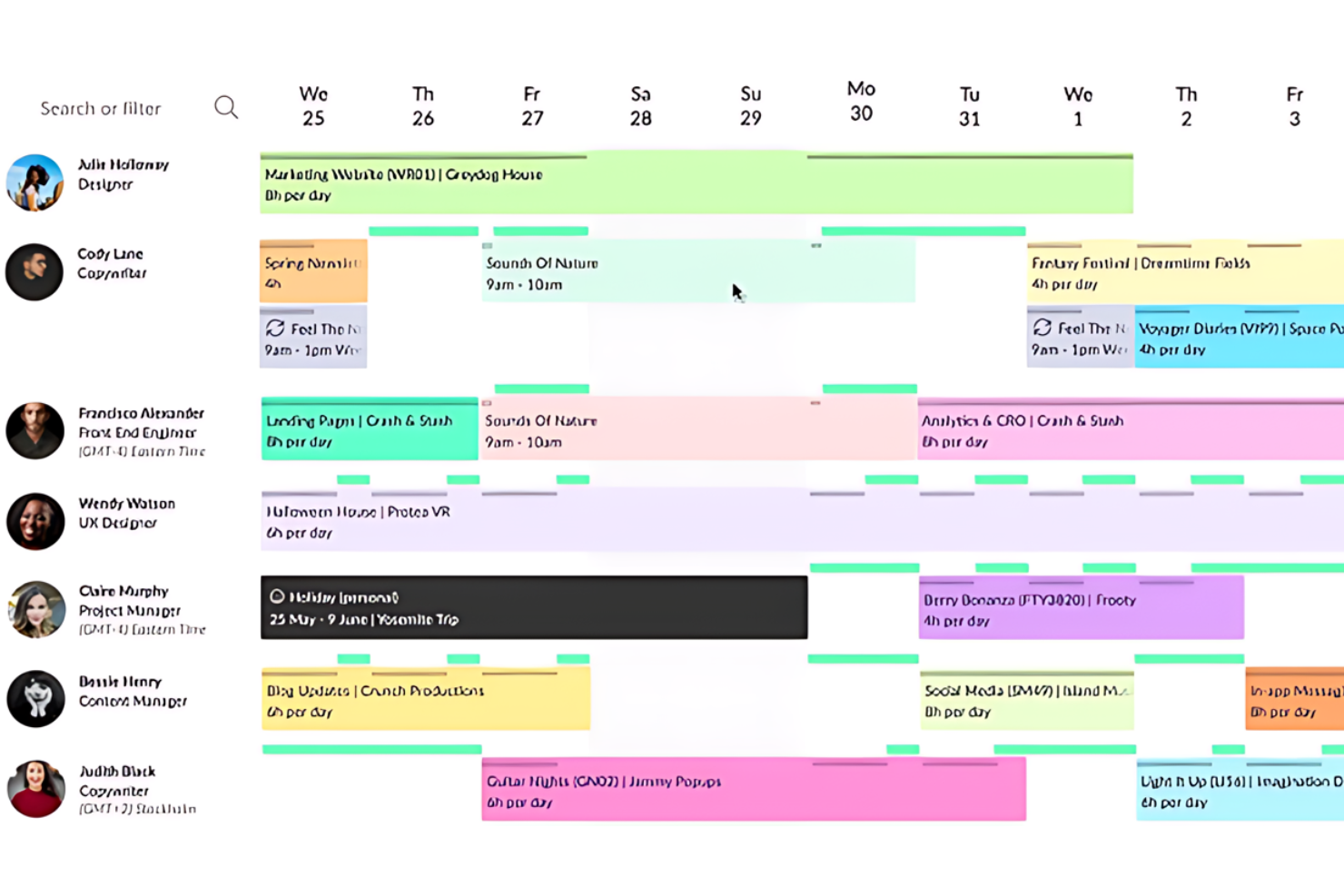
Resource Guru è una piattaforma dedicata alla gestione delle risorse, con strumenti di programmazione, pianificazione della capacità, gestione delle assenze, fogli ore e reportistica di progetto costruiti specificamente per gestire persone e carichi di lavoro su più progetti.
Per chi è ideale Resource Guru?
Resource Guru è adatto a project manager e responsabili delle risorse in agenzie di medie dimensioni, società di consulenza e team tecnologici che necessitano di una visibilità chiara su chi è disponibile e quando.
Perché ho scelto Resource Guru
Ho scelto Resource Guru tra i migliori perché le sue funzionalità di pianificazione sono realmente basate sulla disponibilità effettiva e non solo sugli slot di calendario. Mi piace il fatto che si sincronizzi con i calendari esterni e tenga conto di fusi orari, giorni di malattia e finestre di disponibilità personalizzate prima di confermare una prenotazione. Il sistema di gestione dei conflitti è particolarmente utile: quando due progetti competono per lo stesso ingegnere, Resource Guru segnala immediatamente il conflitto e mantiene le prenotazioni non risolte in una lista d'attesa. È anche possibile assegnare ai membri del team campi di competenze personalizzati e poi filtrare il calendario per trovare la persona giusta per uno sprint senza dover passare per i fogli di calcolo.
Funzionalità principali di Resource Guru
- Report di utilizzo: Visualizza i tassi di utilizzo individuali e di squadra in un determinato periodo per individuare rapidamente ingegneri sovraccarichi o sotto-utilizzati.
- Fogli ore: Registra e confronta le ore pianificate con quelle effettivamente lavorate per tracciare l'utilizzo del tempo sui progetti.
- Gestione delle assenze: Registra e monitora ferie, giorni di malattia e altre assenze direttamente sulla piattaforma affinché siano automaticamente riflessi nella pianificazione.
- Budget di ore di progetto: Imposta budget di ore per progetto e monitora l'uso in tempo reale per prevenire l'aumento incontrollato dello scopo prima che diventi un problema.
Pros and Cons
Pros:
- Funzionalità di reportistica dettagliate
- Sistema efficace per la gestione delle assenze
- Interfaccia calendario intuitiva con drag-and-drop
Cons:
- Alcune funzionalità risultano confuse per alcuni utenti
- Attualmente non esiste un'app mobile
New Product Updates from Resource Guru

Resource Guru Adds Flexible Total Hours Bookings
Resource Guru adds Total Hours bookings, letting teams allocate a fixed number of hours across a date range based on actual availability. The update helps schedules adapt automatically as bookings, leave, and availability change. For more information, visit Resource Guru’s official site.
 .
.Recensioni di altri software per la gestione delle risorse ingegneristiche
Di seguito trovi un elenco di altri software per la gestione delle risorse ingegneristiche che abbiamo selezionato, ma che non sono rientrati nella lista principale.
- Productive
Ideale per monitorare la redditività delle agenzie
- Celoxis
Ideale per analisi avanzate dei progetti
- ProWorkflow
Ideale per una visualizzazione chiara delle linee temporali dei progetti
- GoodDay
Ideale per la gestione delle risorse e del carico di lavoro
- Saviom
Ideale per l’ottimizzazione delle risorse aziendali
- Hub Planner by Milient
Ideale per bilanciare più progetti d'ingegneria


Recensioni correlate sui software per la gestione dei progetti
Se non hai ancora trovato quello che cerchi, dai un'occhiata a questi strumenti correlati per la gestione dei progetti che abbiamo testato e recensito.
- Software per la gestione dei progetti
- Software per la gestione delle risorse
- Software per l'automazione dei flussi di lavoro
- Software per la gestione delle attività
- Software per la gestione delle risorse di inventario
- Strumenti di collaborazione
- Strumento per la creazione di diagrammi di Gantt
Come Valuto il Software di Gestione delle Risorse di Ingegneria
Divido la mia valutazione tra criteri di base—come allocazione basata sulle competenze e previsione della capacità produttiva—e fattori di differenziazione che separano gli strumenti davvero raccomandabili da quelli che semplicemente finiscono nella lista.
Funzionalità di Base (Requisiti Fondamentali per Questa Lista)
Quando seleziono gli strumenti per la mia lista, valuto ciascuno su una scala da 0 (non offre la funzionalità) a 5 (eccelle in questo ambito) per ogni funzionalità di base elencata qui sotto. Poi, trasformo il punteggio totale dello strumento in una percentuale. Ogni strumento deve raggiungere un punteggio totale minimo del 65% per essere considerato per l'inclusione.
- Monitoraggio delle Competenze di Ingegneria: Controllo se uno strumento consente di etichettare gli ingegneri per linguaggio, framework o certificazione e poi filtrare per quelle competenze quando si assegna personale a un nuovo sprint o progetto.
- Pianificazione e Previsione della Capacità: È importante poter confrontare la domanda di progetto in arrivo con le ore di lavoro disponibili degli ingegneri—cerco timeline visive che mostrino in anticipo le aree in cui i team saranno sotto pressione.
- Allocazione e Pianificazione delle Risorse: Valuto come ogni strumento gestisce l'assegnazione degli ingegneri al lavoro, sia tramite pianificazione drag-and-drop, ripartizione tra squad, o avvisi di conflitto quando qualcuno è doppio prenotato.
- Monitoraggio e Reporting dell'Utilizzo: I buoni strumenti suddividono l'utilizzo in ore fatturabili, non fatturabili e tempo in panchina, così i manager possono individuare ingegneri sottoutilizzati o segnali di rischio burnout prima che si verifichino.
- Viste di Progetto e Timeline: Cerco diagrammi di Gantt o visualizzazioni roadmap che colleghino direttamente i traguardi e le dipendenze ai piani delle risorse, in modo da capire come uno slittamento nella scadenza influenza il carico di lavoro del team.
- Integrazioni con Strumenti di Ingegneria: Le piattaforme che si sincronizzano con strumenti come Jira, GitHub o Azure DevOps importano i dati di progetto in tempo reale nel piano risorse, e valuto la profondità di queste connessioni oltre ai semplici import unidirezionali.
Una volta che ho una lista di strumenti che soddisfano questi criteri, considero cosa distingue ciascuna piattaforma.
Fattori di Differenziazione (Cosa Distingue i Fornitori)
Ecco come confronto e metto a paragone i diversi fornitori:
Funzionalità Distintive
La pianificazione degli scenari per me è un grande elemento di differenziazione. Cerco strumenti che permettano di modellare "cosa succede se perdiamo due ingegneri senior backend il mese prossimo" senza intaccare i dati reali. Anche la visibilità finanziaria è importante—quando uno strumento collega le allocazioni ai costi e alle tariffe, i responsabili dell'ingegneria possono prendere decisioni di assegnazione avendo a mente l'impatto sui margini. Valuto anche la presenza di rilevazione ore integrata o di integrazioni strette con i timesheet, poiché confrontare le ore pianificate con quelle effettivamente lavorate permette di migliorare l'accuratezza delle previsioni nel tempo.
Oltre le Funzionalità
Valuto se una piattaforma si adatta alla struttura del team dell'acquirente. Uno strumento pensato per organizzazioni di ingegneria a matrice, dove gli sviluppatori distribuiscono il tempo fra più squad, funziona in modo molto diverso rispetto a uno progettato per il lavoro su progetto in stile agenzia. Anche il prezzo è importante—verifico se i fornitori offrono licenze viewer a basso costo in modo che gli ingegneri possano vedere i propri incarichi senza gonfiare il conto. Per i team enterprise, guardo anche il livello di sicurezza, in particolare la conformità SOC 2 Type II, i controlli di accesso basati sui ruoli e il supporto SSO, perché i piani delle risorse spesso contengono dati sensibili sul personale.
Come scegliere il software per la gestione delle risorse ingegneristiche
Tieni presenti i seguenti aspetti mentre affronti il tuo specifico processo di selezione del software.
- Scalabilità: I progetti di ingegneria possono variare notevolmente in termini di dimensioni e complessità, così come il software di gestione delle risorse. Scegli una soluzione in grado di crescere insieme alla tua azienda e di gestire un numero crescente di progetti e risorse.
- Capacità di integrazione: Il software dovrebbe funzionare bene con gli strumenti già in uso. L'integrazione con sistemi esistenti come ERP, CRM o strumenti CAD garantisce un flusso fluido dei dati tra le diverse aree dell'azienda.
- Dati in tempo reale: Avere accesso a informazioni aggiornate è importante per prendere decisioni consapevoli. Il software giusto offrirà informazioni in tempo reale sull'allocazione, la disponibilità e l'utilizzo delle risorse. Questo è particolarmente importante nell'ingegneria, dove le tempistiche dei progetti e le esigenze relative alle risorse possono cambiare rapidamente.
- Personalizzazione: Ogni azienda di ingegneria ha processi ed esigenze unici. Il software scelto dovrebbe essere personalizzabile per adattarsi ai flussi di lavoro e ai requisiti di reportistica specifici.
- Interfaccia intuitiva: Il software dovrebbe essere facile da usare per tutti i membri della squadra, indipendentemente dal loro livello di competenza tecnica. Un'interfaccia intuitiva garantisce che i membri della squadra possano imparare rapidamente a utilizzare il software, aspetto essenziale per mantenere la produttività.
Tendenze nel software di gestione delle risorse per l'ingegneria
Queste sono alcune tendenze che ho notato nella tecnologia dei software di gestione delle risorse per l'ingegneria. Ho consultato aggiornamenti dei prodotti, comunicati stampa e registri delle versioni per estrarre le informazioni più importanti.
- Integrazione dell'intelligenza artificiale e dell'apprendimento automatico: L'intelligenza artificiale e l'apprendimento automatico sono sempre più integrati nei software di gestione delle risorse per l'ingegneria. Questa tendenza alla gestione delle risorse tramite l'IA trasforma le previsioni dei progetti, ottimizza l'allocazione delle risorse e prevede persino i rischi di progetto prima che diventino evidenti, aiutando le squadre a gestire in modo più efficiente carichi di lavoro complessi.
- Funzionalità avanzate di collaborazione in tempo reale: Con la continua diffusione del lavoro da remoto, cresce la domanda di funzionalità che supportino la collaborazione in tempo reale tra località geografiche diverse. I software di gestione delle risorse per l'ingegneria e l'informatica si concentrano sempre più sul miglioramento delle funzioni di messaggistica, della condivisione dei documenti e degli aggiornamenti in tempo reale all'interno delle tempistiche dei progetti.
- Attenzione all'ottimizzazione per dispositivi mobili: Con una forza lavoro sempre più mobile, è in aumento lo sviluppo di soluzioni ottimizzate per dispositivi mobili che consentano di gestire le risorse ovunque ci si trovi. Questa tendenza risponde alla necessità di un'accessibilità costante, ad esempio quando si lavora alla gestione delle risorse per un progetto di costruzione, senza compromettere le funzionalità disponibili nelle versioni per computer.
- Funzionalità per la sostenibilità e la riduzione dei costi: Si presta sempre maggiore attenzione alle funzionalità che promuovono la sostenibilità e la gestione dei costi, rispondendo direttamente alla spinta globale verso pratiche aziendali più ecologiche. Ciò include funzionalità per un migliore monitoraggio dell'utilizzo delle risorse, la riduzione degli sprechi nei processi di progetto e strumenti per una gestione più efficiente del budget.
- Declino delle soluzioni a funzione singola: La tendenza si sta allontanando dagli strumenti a funzione singola per orientarsi verso soluzioni più integrate. Con la crescente complessità della gestione digitale dei progetti, diminuisce la domanda di strumenti che offrano una sola funzionalità.
I progressi nei software di gestione delle risorse per l'ingegneria stanno favorendo miglioramenti nell'efficienza dei progetti, nella collaborazione, nella sostenibilità e nell'integrazione degli strumenti.
Che cos'è il software di gestione delle risorse per l'ingegneria?
Il software di gestione delle risorse per l'ingegneria è progettato per aiutare le squadre di ingegneria e i responsabili di progetto ad allocare in modo efficiente personale, attrezzature e materiali.
Questo garantisce che i progetti vengano completati nei tempi e nei limiti di budget previsti, migliorando così la produttività complessiva e l'efficienza dei costi. Il software di gestione delle risorse include funzionalità come la pianificazione, l'allocazione delle risorse e il monitoraggio dell'utilizzo. Offre visibilità sulla disponibilità delle risorse e sulle esigenze dei progetti, supportando decisioni consapevoli e un'esecuzione efficace dei progetti.
Inoltre, il software spesso si integra con altri strumenti di gestione dei progetti di ingegneria, consentendo di supervisionare i progetti. Nel settore del petrolio e del gas, dove le squadre lavorano in siti remoti e gestiscono infrastrutture vaste e ad alto rischio, il software di gestione delle risorse è essenziale per coordinare il personale, le attrezzature e la conformità normativa. Grazie agli aggiornamenti e alle analisi in tempo reale, aiuta le squadre ad anticipare i colli di bottiglia e ad adeguare i piani, garantendo flussi di lavoro più fluidi e un migliore utilizzo delle risorse.
Funzionalità del software di gestione delle risorse per l'ingegneria
Quando scegli un software di gestione delle risorse per l'ingegneria, considera le funzionalità che sosterranno il successo del progetto e un'allocazione efficiente delle risorse. Il software giusto può fare la differenza nei risultati del progetto, quindi cerca le seguenti funzionalità.
- Pianificazione delle risorse: Questa funzione consente di pianificare e assegnare le risorse a vari progetti.
- Monitoraggio del tempo: Un monitoraggio accurato è fondamentale per la fatturazione e per comprendere il tempo dedicato a specifiche attività.
- Monitoraggio delle competenze: Osservare le competenze e le capacità della forza lavoro consente di abbinarle meglio alle esigenze del progetto.
- Pianificazione della capacità: Questa funzione aiuta a prevedere il fabbisogno di risorse sulla base dei progetti attuali e futuri.
- Integrazione con la gestione dei progetti: L'integrazione con gli strumenti di gestione dei progetti è necessaria per ottenere una visione completa dei progetti e delle risorse.
- Analisi in tempo reale: L'accesso ai dati e alle informazioni sull'utilizzo delle risorse in tempo reale migliora il processo decisionale.
- Gestione finanziaria: Questa funzione fornisce informazioni sugli aspetti economici della gestione delle risorse, come il monitoraggio dei costi e la definizione del budget.
- Strumenti di collaborazione: Una comunicazione efficace è fondamentale nei progetti di ingegneria e gli strumenti di collaborazione la facilitano.
- Report personalizzabili: La possibilità di generare report personalizzati aiuta a presentare dati rilevanti agli stakeholder.
- Interfaccia intuitiva: Un'interfaccia semplice riduce la curva di apprendimento e aumenta i tassi di adozione.
- Previsioni: Prevedere le tendenze o le esigenze future sulla base dei dati attuali e storici.
- Pannelli di controllo: Le interfacce che mostrano gli indicatori chiave di prestazione e le metriche in una vista consolidata semplificano i processi.
- Automazione: L'utilizzo della tecnologia per eseguire attività senza intervento umano accelera i flussi di lavoro.
- Pianificazione delle risorse: Pianificare quando e come verranno utilizzate le risorse nel tempo rende efficienti i processi.
- Diagrammi di Gantt: Le rappresentazioni visive dei programmi di progetto, che mostrano le date di inizio e fine degli elementi, facilitano la pianificazione.
- Fogli presenze: I registri del tempo che ogni membro del team dedica alle varie attività aiutano nella gestione del tempo dei dipendenti.
- Notifiche: Gli avvisi che informano gli utenti su eventi importanti o aggiornamenti mantengono gli stakeholder aggiornati.
- Gestione del portafoglio: Gestire progetti o investimenti per raggiungere obiettivi strategici aiuta l'organizzazione.
- Pianificazione dei progetti: Pianificare la sequenza delle attività e le relative tempistiche in un progetto aiuta a mantenere le attività in linea con i programmi.
- Modelli: Strutture o formati predefiniti che possono essere utilizzati come punto di partenza per nuovi documenti o progetti possono far risparmiare tempo.
- Fatturazione: Creare e inviare ai clienti fatture per i servizi prestati aiuta a mantenere il flusso di cassa.
- Applicazioni mobili: I software progettati per dispositivi mobili come smartphone e tablet aiutano a completare le transazioni aziendali in mobilità.
- Collaborazione del team: Le funzioni che consentono ai membri del team di lavorare insieme in modo più efficace rendono i dipendenti più produttivi.
Vantaggi dei software per la gestione delle risorse ingegneristiche
I software per la gestione delle risorse ingegneristiche aiutano a migliorare l'assegnazione delle risorse, il monitoraggio dei progetti e la produttività. Ecco cinque vantaggi chiave che queste soluzioni software offrono agli utenti e alle organizzazioni.
- Migliore assegnazione delle risorse: I software per la gestione delle risorse ingegneristiche consentono di monitorare e assegnare le risorse con precisione. Questo porta a un utilizzo più efficiente delle risorse e a una riduzione dei tempi di inattività.
- Maggiore visibilità e controllo: Gli utenti ottengono una panoramica di tutte le risorse e i progetti, consentendo di prendere decisioni migliori e di esercitare un maggiore controllo sul processo ingegneristico. Questa visibilità aiuta a identificare i potenziali colli di bottiglia e ad affrontarli in modo proattivo.
- Migliore collaborazione e comunicazione: Il software di gestione dei progetti migliora la comunicazione tra i membri del team fornendo una piattaforma centralizzata per la condivisione delle informazioni. In questo modo tutti sono sempre aggiornati.
- Previsioni e pianificazione accurate: Il software fornisce dati dettagliati sull'utilizzo delle risorse e sulle tempistiche dei progetti. Questo aiuta le organizzazioni ad anticipare le esigenze e a prepararsi di conseguenza, evitando la ricerca affannosa di risorse all'ultimo momento.
- Maggiore produttività ed efficienza: Automatizzando molte delle attività di routine associate alla gestione delle risorse, il software consente ai team di concentrarsi sugli aspetti fondamentali dei loro progetti. Questo può portare a una maggiore produttività ed efficienza all'interno dell'organizzazione.
L'adozione di software per la gestione delle risorse ingegneristiche può aumentare la produttività e la redditività, rendendolo un investimento potenzialmente vantaggioso.
Costi e prezzi dei software per la gestione delle risorse ingegneristiche
Quando scegli un software per la gestione delle risorse ingegneristiche, valuta i piani disponibili e i relativi costi. Di seguito è riportata una panoramica dettagliata delle opzioni di piano più comuni, dei prezzi medi e delle funzionalità principali per aiutarti a trovare una soluzione adatta alle tue esigenze e al tuo budget.
Tabella comparativa dei piani per il software di gestione delle risorse ingegneristiche
| Tipo di piano | Prezzo medio | Funzionalità comuni |
| Gratuito | $0 | Accesso alle funzionalità di base, utenti limitati, supporto della community, pianificazione di base delle risorse |
| Base | $5 - $15/ utente/mese | Gestione di base delle risorse, alcune funzionalità di reportistica, supporto via e-mail, limiti sul numero di utenti |
| Professionale | $20 - $50/ utente/mese | Pianificazione avanzata delle risorse, collaborazione in tempo reale, reportistica completa, supporto prioritario |
| Enterprise | Prezzo personalizzato | Creazione di funzionalità personalizzabili, utenti illimitati, supporto dedicato, sicurezza avanzata, analisi approfondite |
Ogni piano è pensato per team di dimensioni e progetti con complessità diverse. Scegli un piano che offra le funzionalità necessarie senza costi aggiuntivi.
Domande frequenti sul software di gestione delle risorse ingegneristiche
Ecco alcune delle domande frequenti che mi vengono poste sul software di gestione delle risorse ingegneristiche.
In che modo il software di gestione delle risorse ingegneristiche migliora la consegna dei progetti?
Il software di gestione delle risorse ingegneristiche semplifica la pianificazione e l’esecuzione dei progetti fornendo strumenti per l’allocazione delle risorse, la pianificazione e la gestione della capacità. Garantisce che le risorse giuste siano disponibili al momento giusto, riducendo i ritardi e aumentando l’efficienza nella consegna dei progetti.
Il software di gestione delle risorse ingegneristiche può integrarsi con altri sistemi aziendali?
Sì, la maggior parte dei moderni software di gestione delle risorse ingegneristiche può integrarsi con diversi sistemi aziendali, come ERP, CRM, software di contabilità e altri strumenti di gestione dei progetti. L’integrazione consente il flusso dei dati e migliora la visibilità su tutte le operazioni aziendali.
Il software di gestione delle risorse ingegneristiche è adatto alle piccole aziende?
Certamente. Sebbene sia vantaggioso per le grandi organizzazioni che gestiscono numerosi progetti su larga scala, anche le piccole aziende e i consulenti indipendenti possono sfruttarlo per ottimizzare l’utilizzo delle risorse, migliorare il monitoraggio dei progetti e perfezionare la reportistica per i clienti, diventando così più competitivi.
In che modo il software di gestione delle risorse ingegneristiche gestisce i conflitti tra risorse?
La maggior parte dei software include algoritmi di rilevamento dei conflitti che avvisano i responsabili quando le risorse sono prenotate per più attività contemporaneamente o quando si verificano conflitti di pianificazione. Ciò consente di apportare tempestivamente modifiche all’allocazione delle risorse e garantisce un’esecuzione fluida dei progetti.
Quali funzionalità di reportistica offre il software di gestione delle risorse ingegneristiche?
In genere offre un’ampia gamma di funzionalità di reportistica, dai report di base sull’utilizzo delle risorse e sullo stato dei progetti fino alle analisi finanziarie e delle prestazioni avanzate. I dashboard personalizzabili consentono ai responsabili di concentrarsi sulle metriche più importanti per i loro specifici progetti e obiettivi aziendali.
Come si calcola il ROI quando si implementa un software di gestione delle risorse ingegneristiche?
Il ROI può essere calcolato confrontando i costi risparmiati grazie a una gestione più efficiente delle risorse, alla riduzione dei tempi di inattività e alla semplificazione delle operazioni con il costo del software. Anche i miglioramenti nei tempi di consegna dei progetti e la riduzione degli sforamenti dei costi contribuiscono al ROI.
Qual è il prossimo passo?
Vuoi entrare in contatto con altri responsabili di progetto digitali per condividere risorse e buone pratiche?
Iscriviti alla nostra community per accedere a oltre 100 modelli, campioni ed esempi e per entrare in contatto su Slack con centinaia di altri responsabili di progetto digitali.