

10 Looker Studio Alternatives for Data Dashboards in 2026

Best Looker Studio Alternatives Shortlist


If you’re managing projects, you know the pressure of making data-driven decisions. In those tough situations, Looker Studio might not always fit your needs, especially if you’re dealing with specific industry requirements or need better integration with existing tools.
In my experience, the right Software-as-a-Service Business Intelligence (SaaS BI) tool can ease your workload by offering tailored solutions. It’s about finding what works best for you and your team.
In this article, I’ll share my top picks for Looker Studio alternatives. I’ve tested and reviewed each one to help you find a tool that aligns with your business needs. You’ll get insights into features, usability, and unique advantages, making your decision smoother.
What Is Looker Studio?
Looker Studio is a business intelligence tool that helps organizations turn data into actionable insights. It’s generally used by data analysts, business managers, and IT professionals who need to analyze large datasets and make informed decisions. You and your team can benefit from its data visualization, collaborative dashboards, and real-time analytics features, which help with making data-driven decisions and improving collaboration. Overall, Looker Studio offers a valuable BI platform for transforming complex, powerful data into clear, actionable insights.
Looker Studio Alternatives Comparison Table
This comparison table summarizes pricing details for my top Looker Studio alternatives.
| Tool | Best For | Trial Info | Price | ||
|---|---|---|---|---|---|
| 1 | Best for flexible data governance controls | Free plan available | From $29/month | Website | |
| 2 | Best for visual storytelling | 14-day free trial | Pricing upon request | Website | |
| 3 | Best for AI-powered data integration | 30-day free trial | From $300/month (billed annually) | Website | |
| 4 | Best for enterprise planning | Free demo available | Pricing upon request | Website | |
| 5 | Best for Microsoft integration | 30-day free trial | From $14/user/month (billed annually) | Website | |
| 6 | Best for open-source flexibility | 14-day free trial + free plan available | From $100/month | Website | |
| 7 | Best for embedded analytics | 7-day free trial + free demo available | Pricing upon request | Website | |
| 8 | Best for AI-driven insights | 14-day free trial + free demo available | From $25/user/month (billed annually) | Website | |
| 9 | Best for AI-enabled interactive dashboards | 30-day free trial + free demo available | Pricing upon request | Website | |
| 10 | Best for no-code solutions | Free trial available | Pricing upon request | Website |
Why Trust Our Software Recommendations
Our team has been testing and reviewing software since 2012. As project managers ourselves, we know how difficult—and important—it is to choose the right software.
For this guide, we evaluated tools using hands-on testing and independent research, scoring tools using our selection criteria. We also draw on insights from industry thought leaders and practicing project management experts.
Our reviews reflect our human editorial judgment, not a sales pitch.
Expert reviewers:
Best Looker Studio Alternatives Reviews
Below are my detailed summaries of the best Looker Studio alternatives that made it onto my shortlist. My reviews offer a detailed look at the key features, pros and cons, native integrations, and ideal use cases of each tool to help you find the best one for you.

Signara
Best for flexible data governance controls
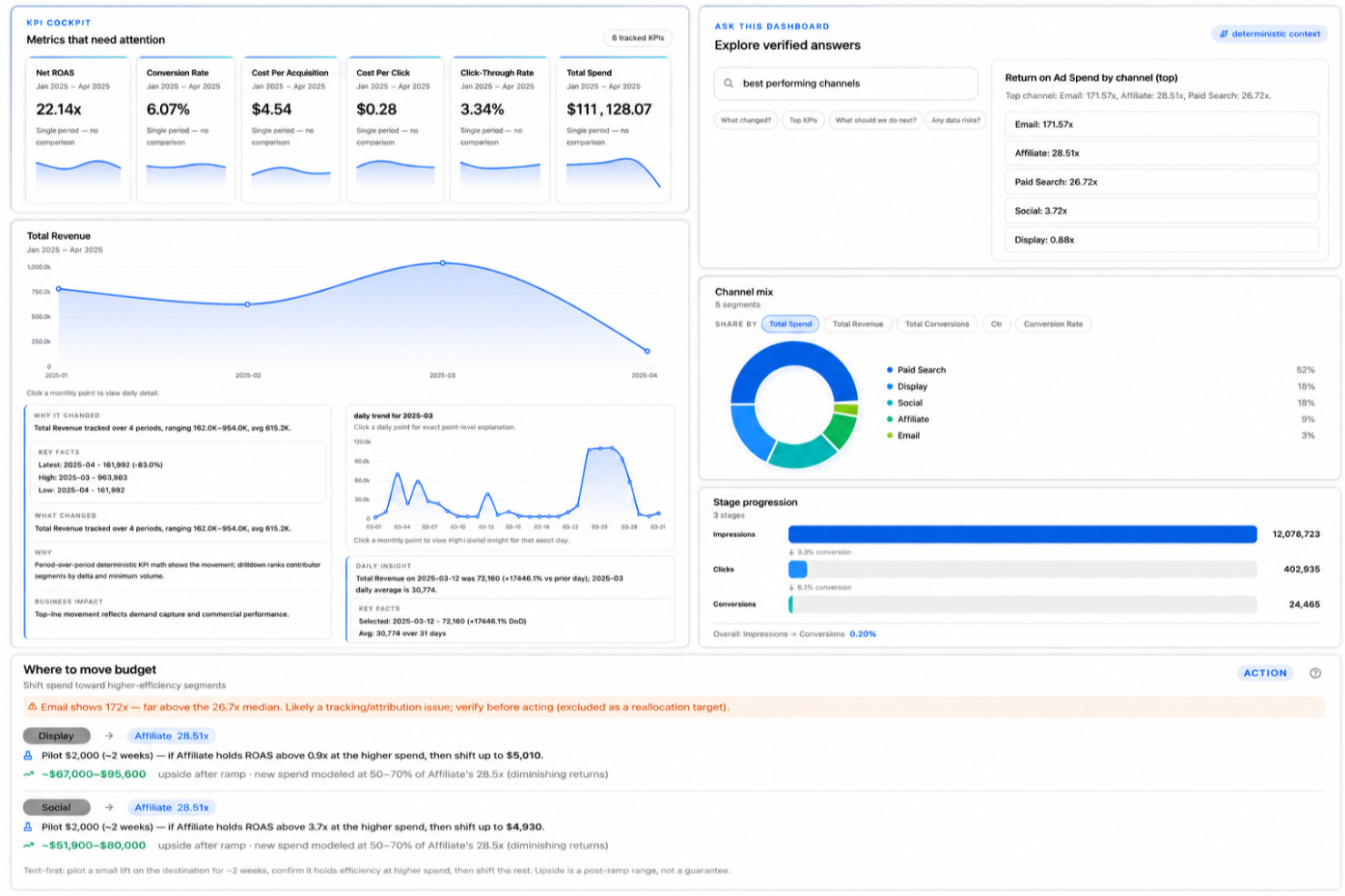
Signara is an AI-powered automated analytics platform for marketing teams that generates dashboards, KPI reports, AI-driven narratives, insights, and recommendations using a deterministic calculation engine connected to sources like HubSpot, BigQuery, Snowflake, and Google Sheets.
Who Is Signara Best For?
Signara is a good fit for marketing teams and agencies that need automated reporting across multiple data sources without building reports manually.
Why I Picked Signara
Signara earns its spot on my shortlist because of how seriously it handles data governance without making you configure anything complex. Raw business data is never stored server-side. It's processed in-memory to generate the report, then discarded, which means there's no lingering exposure after a session ends. I also like that account data is isolated at the infrastructure level, so no cross-tenant access is possible. For teams that need auditability, every KPI traces back to a locked, deterministic formula rather than an AI estimate.
Signara Key Features
- Read-only data queries: Signara connects to your data sources with read-only access, so the tool can never modify or write back to your underlying datasets.
- AI-generated insights and recommendations: Signara identifies KPI changes, highlights trends, and recommends actions based on connected data.
- Ask-the-dashboard analytics: Users can ask questions about dashboard data in natural language and receive answers without building custom reports.
- Schema mapping and field detection: When you connect a data source, Signara automatically maps your schema and identifies relevant fields, removing the need for manual configuration.
Signara Integrations
Integrations include HubSpot, Excel, Google Sheets, Snowflake, BigQuery, PostgreSQL, Databricks, and MySQL.
Pros and Cons
Pros:
- Automated reports without analyst setup
- Driver analysis pinpoints metric shifts
- AI narratives auto-explain KPI changes
Cons:
- No custom visualization or chart builder
- Limited native data source connectors

Tableau
Best for visual storytelling

Tableau is a data visualization tool designed for business intelligence and analytics. Data analysts and business professionals primarily use it to create interactive and shareable dashboards.
Why Tableau is a good Looker Studio alternative: Tableau excels in visual storytelling, making it ideal for users who need to present data in an engaging way. You can also dynamically explore data and uncover insights quickly. Tableau’s focus on intuitive design helps you communicate your data’s story effectively.
Standout Features and Integrations:
Features include a drag-and-drop interface that simplifies the process of creating visualizations. Additionally, Tableau’s real-time analysis tools enable your team to make insights as soon as your data is ready. You also get interactive dashboards that let users explore data and gain insights on the fly.
Integrations include Salesforce, Google Analytics, Microsoft Excel, Amazon Redshift, Google BigQuery, Microsoft SQL Server, Oracle, SAP HANA, Dropbox, Box, and more.
Pros and Cons
Pros:
- Engaging storytelling capabilities
- Intuitive drag-and-drop interface
- Advanced visualization features
Cons:
- Complex data preparation process
- Weak data modeling

Qlik
Best for AI-powered data integration
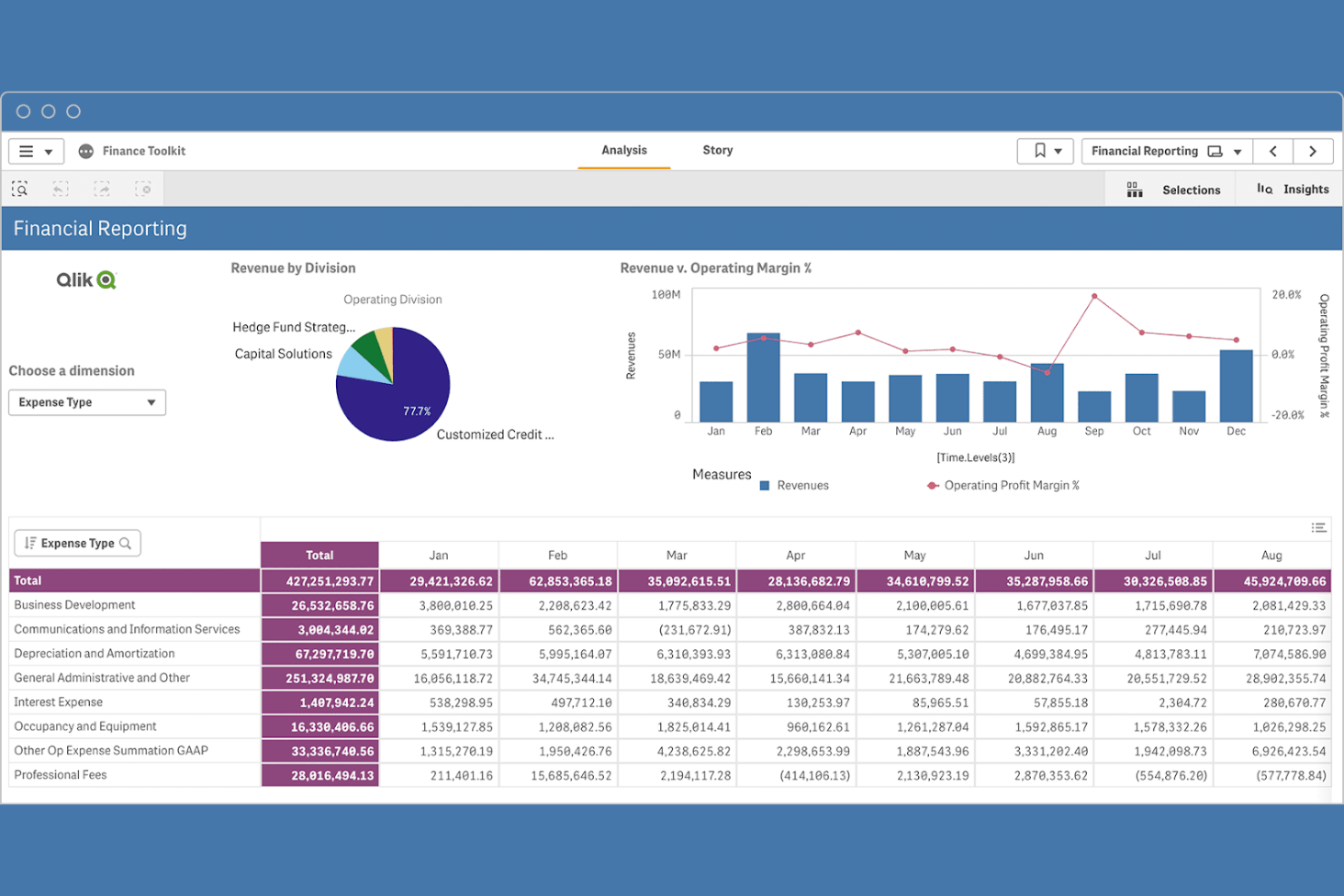
Qlik is a data analytics platform designed for creating interactive visualizations and dashboards. Business users and data teams use it to explore and analyze data.
Why Qlik is a good Looker Studio alternative: Qlik offers strong data integration capabilities, making it ideal for teams that need to connect multiple data sources. You can also build customized dashboards that help uncover insights. The platform’s AI-powered analytics capabilities support both guided and self-service analysis.
Standout Features and Integrations:
Features include an associative data engine that helps you see connections in your data. In addition, its self-service analytics empower your team to make data-driven decisions without relying on IT. The platform supports both cloud and on-premises deployment, offering flexibility for your business needs.
Integrations include Microsoft Office and more.
Pros and Cons
Pros:
- Customizable dashboards
- Flexible deployment options
- Supports self-service analytics
Cons:
- Fragile extensions
- Specific scripting language for data preparation

Best for enterprise planning
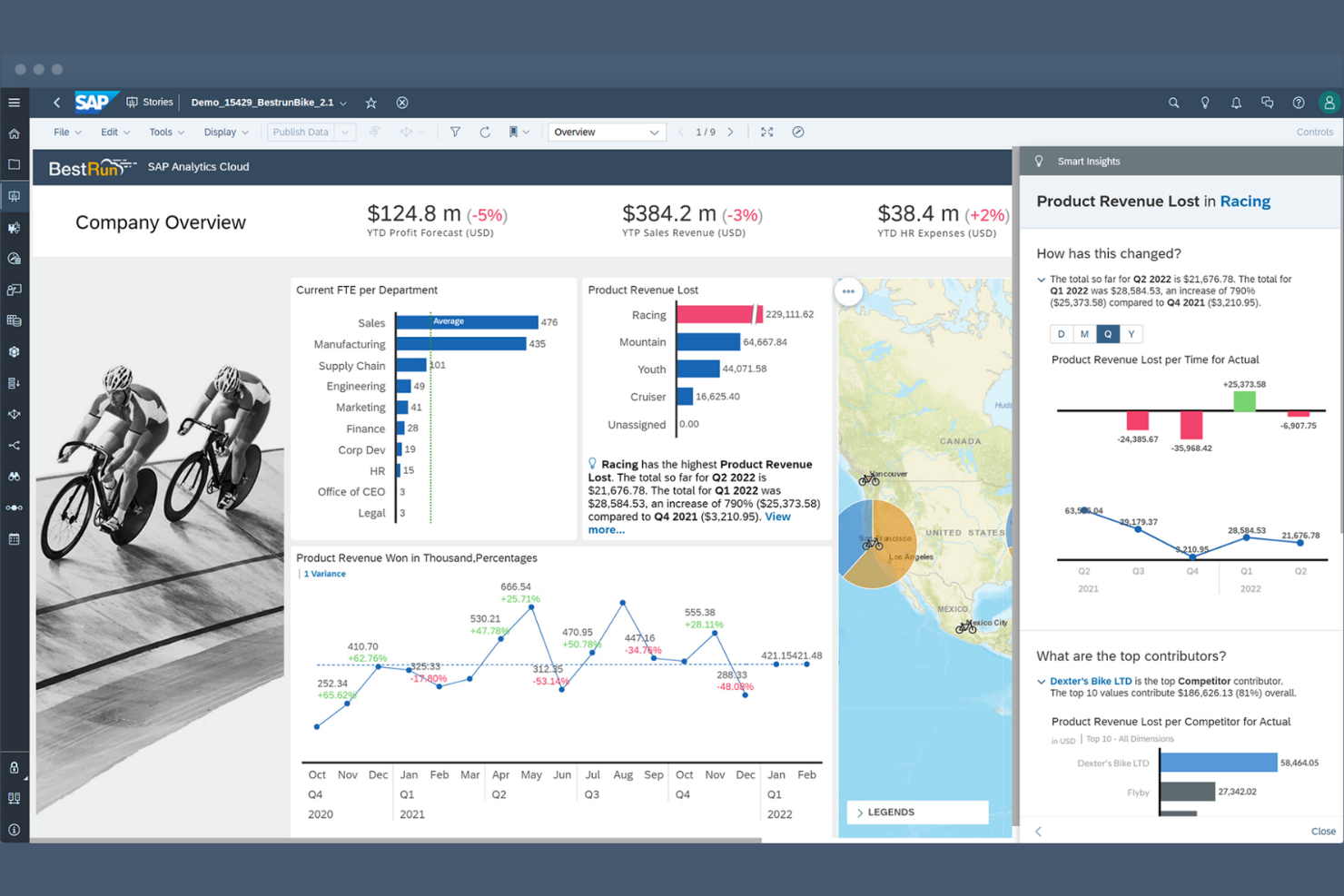
SAP Analytics Cloud (SAC) is a next-generation cloud solution that unifies business intelligence, augmented analytics, and collaborative planning in a single interface. Unlike traditional tools that only show the past, SAC is designed to help leadership teams model the future through integrated "what-if" scenarios and financial forecasting.
Why SAP Analytics Cloud is a good Looker Studio alternative: SAC moves beyond simple dashboards by allowing users to act on data—enabling teams to perform budgeting, forecasting, and predictive modeling directly within their reports. It is the gold standard for organizations that need a "single source of truth" across their SAP and non-SAP data landscapes.
Standout Features and Integrations:
Features include Integrated Planning & Analysis (xP&A), which allows you to combine financial, operational, and HR planning to create unified enterprise budgets. Its Augmented Analytics capabilities use "Smart Discovery" and "Smart Predict" to automatically identify key business drivers and forecast future trends using machine learning. Additionally, Live Data Connection enables you to connect directly to SAP S/4HANA, BW/4HANA, and Datasphere without moving data, providing real-time security and compliance.
Integrations include S/4HANA, SuccessFactors, Ariba, Google BigQuery, Salesforce, Snowflake, Microsoft Outlook, OData, and more.
Pros and Cons
Pros:
- Fully merges BI and financial planning
- Secure via live connection
- Built-in AI tools that don't require training
Cons:
- SAP ecosystem lock-in
- Performance lags
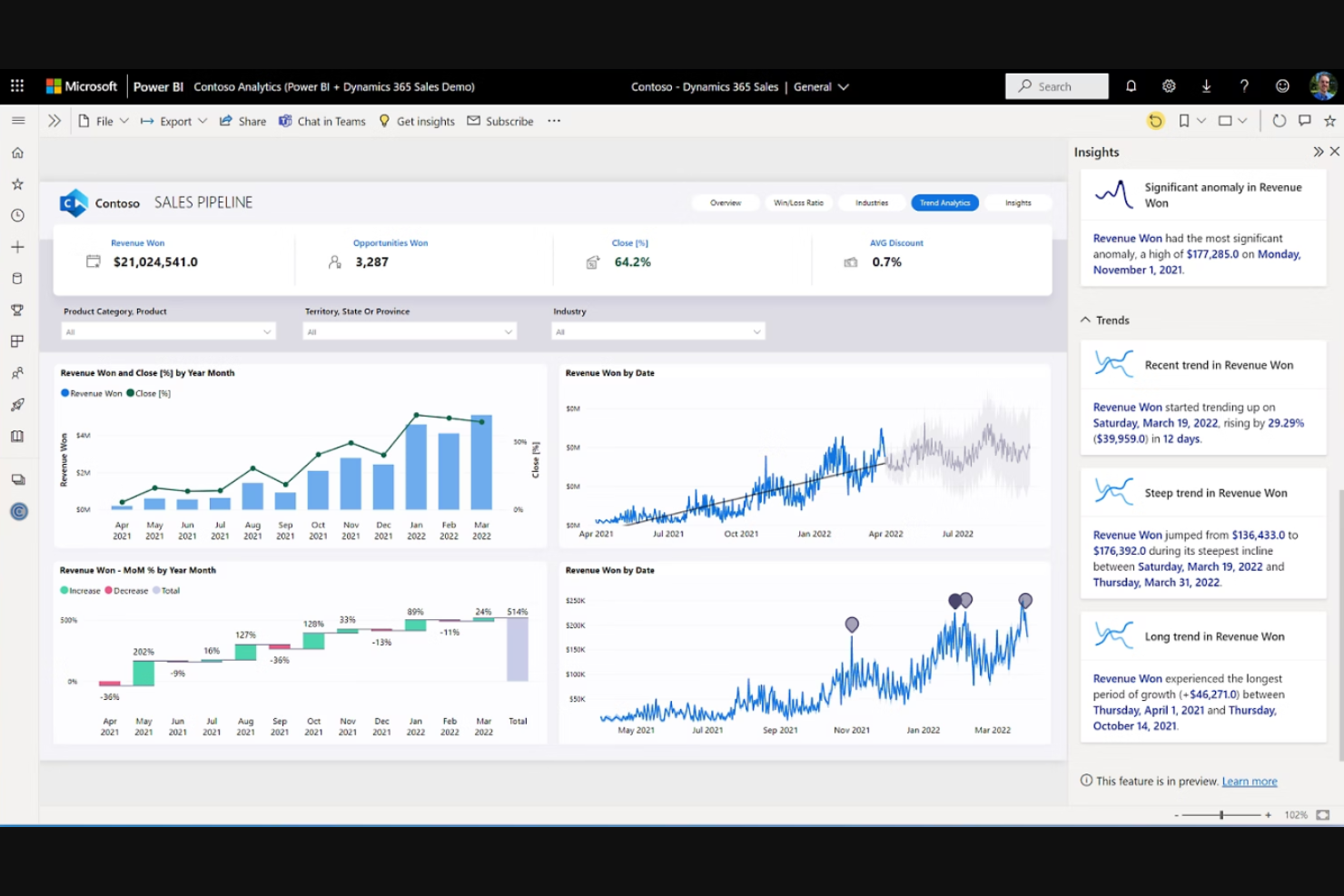
Microsoft Power BI is a business analytics service that provides interactive visualizations and business intelligence capabilities. Business analysts and IT professionals mainly use it to build dashboards, graphs, and reports.
Why Microsoft Power BI is a good Looker Studio alternative: Microsoft Power BI’s integration with Microsoft products makes it ideal for teams already using Microsoft services. You can also readily connect it to various data sources, including spreadsheets, and share insights across your organization. This makes it a suitable choice for large or small businesses looking for a familiar and integrated data solution.
Standout Features and Integrations:
Features include data visualization tools that help you create in-depth reports. Additionally, real-time analytics allow your team to access up-to-date data insights. The user-friendly interface also makes it easy for team members to adopt and use.
Integrations include Microsoft Dynamics 365, SharePoint, Google Analytics, GitHub, and more.
Pros and Cons
Pros:
- Wide data source connectivity
- Real-time data analytics
- Easy Microsoft ecosystem integration
Cons:
- Rigid table interactivity
- Windows dependency

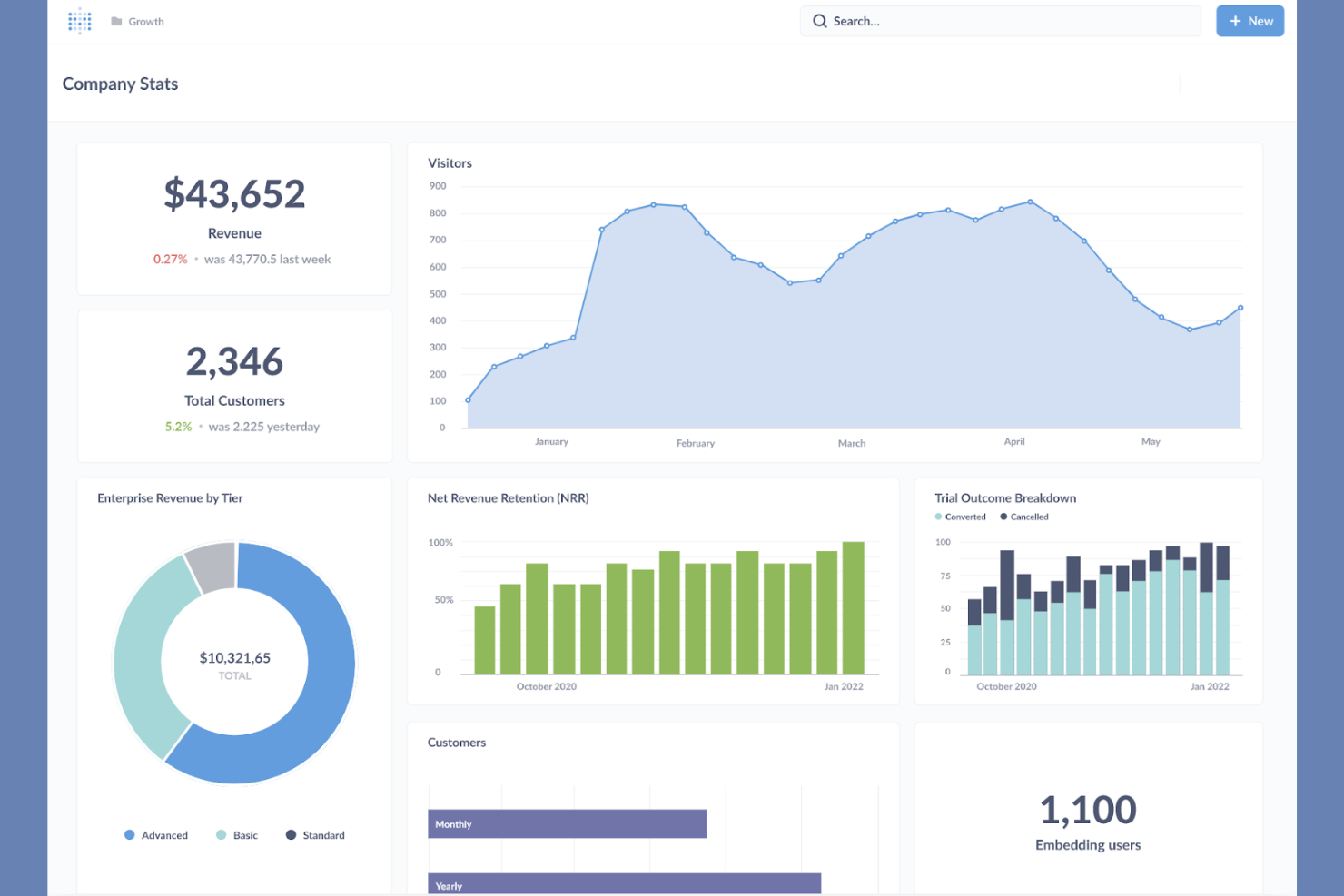
Metabase is an open-source business intelligence tool designed for simple data analysis and visualization. Data analysts, startups, and businesses use Metabase to create reports and dashboards without the need for complex coding.
Why Metabase is a good Looker Studio alternative: Metabase offers open-source flexibility, which is perfect for teams seeking customizable solutions. Its intuitive interface lets you create queries and visualizations, and you can set up dashboards to share insights across your organization. The platform supports self-service analytics, allowing your team to explore data independently.
Standout Features and Integrations:
Features include custom dashboard layouts that let you tailor data presentations to your needs. Additionally, the query builder helps you create data questions without SQL knowledge. Metabase can also schedule and share reports using email or Slack to help your team stay up to date on the latest insights.
Integrations include MySQL, DuckDB, Databricks, Google BigQuery, and more.
Pros and Cons
Pros:
- Supports self-service analytics
- Intuitive interface
- Open-source flexibility
Cons:
- No built-in ESL
- Weak enterprise governance


Sisense is a business intelligence software that specializes in data analytics and visualization. It’s used by data analysts and developers to create interactive dashboards and reports.
Why Sisense is a good Looker Studio alternative: Sisense offers strong capabilities in embedded analytics, allowing you to integrate analytics into your applications. The platform supports complex data modeling and offers flexibility in deployment. These features make it suitable for businesses looking to increase their applications with analytics.
Standout Features and Integrations:
Features include In-Chip technology that accelerates data processing. Additionally, its advanced data modeling tools let your team handle complex datasets efficiently. The platform also supports cloud, on-premises, and hybrid deployment formats.
Integrations include Google Maps, Microsoft Excel, and more.
Pros and Cons
Pros:
- Flexible deployment options
- Fast data processing
- Strong embedded analytics
Cons:
- Documentation gaps
- Not a "plug-and-play" tool


ThoughtSpot is an analytics platform designed to perform searches on and provide insights into large datasets. Data analysts and business professionals who need quick access to data insights use this software.
Why ThoughtSpot is a good Looker Studio alternative: ThoughtSpot’s AI-powered insights make it ideal for teams looking to leverage advanced analytics. Furthermore, you can uncover insights without needing extensive technical skills, and the platform’s user-friendly interface supports easy data exploration and visualization.
Standout Features and Integrations:
Features include a natural language search functionality that lets your team query data intuitively. You also get automated insights that help you discover trends and anomalies. The platform’s scalable architecture supports large datasets and complex queries.
Integrations include Google Cloud, VitaraCharts, Snowflake, Fivetran, and more.
Pros and Cons
Pros:
- Cost-effective and scalable architecture
- Natural language search
- AI-driven insights
Cons:
- Heavy setup required
- Designed for search, not layout design

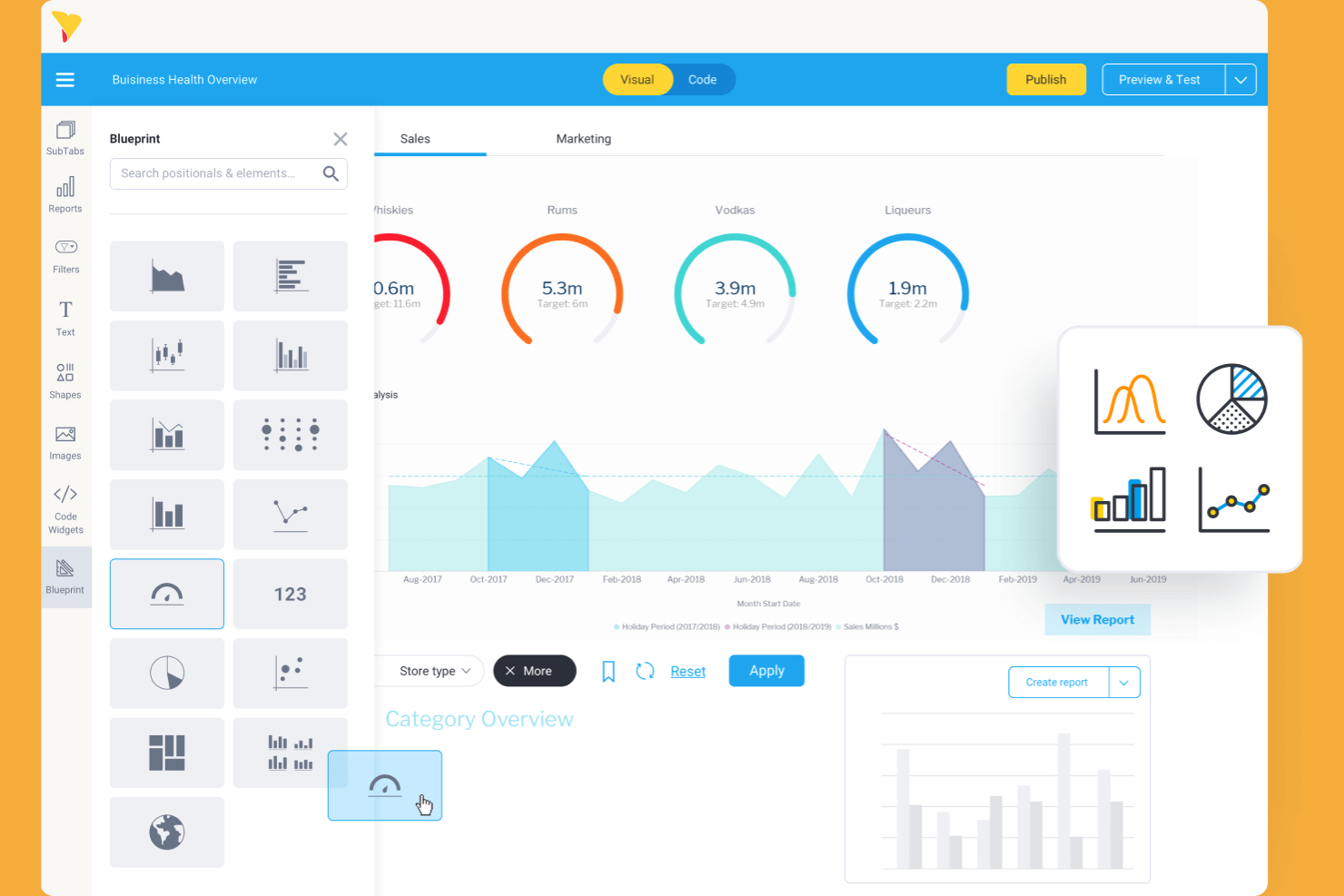
Yellowfin is a business intelligence and analytics platform that provides data visualization and data transformation tools. Business professionals and data analysts utilize it to find actionable insights from their data.
Why Yellowfin is a good Looker Studio alternative: Yellowfin focuses on interactive dashboards with AI features, helping your team quickly identify and act on insights. The platform’s flexibility supports a range of business needs and use cases.
Standout Features and Integrations:
Features include storytelling capabilities that let you build narratives around your data. Yellowfin also has collaboration tools that enable your team to discuss insights directly within the platform.
Integrations include Salesforce, Google Analytics, and more.
Pros and Cons
Pros:
- Collaborative tools
- Storytelling capabilities
- Interactive dashboards
Cons:
- Difficulty processing complex, multi-layered dashboards
- Authoring or editing complex reports on a mobile device can be difficult


Grow is a business intelligence platform that helps teams visualize data and track performance metrics. Small- and medium-sized businesses use this tool to make data-driven decisions.
Why Grow is a good Looker Studio alternative: Grow offers no-code workflows, making it ideal for teams that want to create dashboards without programming skills. Its intuitive interface also allows you to efficiently build and customize dashboards.
Standout Features and Integrations:
Features include real-time data tracking that helps your team stay updated with the latest metrics. The drag-and-drop interface simplifies dashboard creation and customization. Its data blending capabilities let you combine data from multiple sources for a holistic view.
Integrations include HubSpot, Google Sheets, QuickBooks, Salesforce, Shopify, Zendesk, and more.
Pros and Cons
Pros:
- Data blending capabilities
- Real-time data tracking
- No-code solutions
Cons:
- Complex cleaning may still require SQL
- Limited metric types
Other Looker Studio Alternatives
Here are some additional Looker Studio alternatives that didn’t make it onto my shortlist but are still worth checking out:
- Zoho Analytics
For end-to-end BI and analytics
- Strategy
For enterprise analytics
- KNIME
For open-source analytics


How I Evaluate Looker Studio Alternatives
I split my evaluation into two layers: the baseline connectors and dashboarding a tool needs to handle Jira or Asana data, and the differentiators that set the best options apart for PMO teams.
Core Functionality (Table Stakes For This List)
When I'm selecting tools for my list, I rank each one on a scale from 0 (does not offer the functionality) to 5 (excels in this area) for each core functionality listed below. Then, I calculate the tool's total score into a percentage. Each tool needs to achieve a minimum total score of 65% to be considered for inclusion.
- Multi-Source PM Data Connectors: I check whether a tool connects natively to platforms like Jira, Asana, monday.com, and Smartsheet, plus databases and spreadsheets.
- Interactive Dashboarding: Each tool needs a drag-and-drop builder with cross-filtering and drill-downs so PMO leads can explore sprint data or budget status on their own.
- Custom Visualizations & Charts: Beyond bar and line charts, I look for PM-relevant visuals like burndown charts, timeline views, heatmaps, and KPI scorecards.
- Data Blending & Transformation: Joining Jira velocity data with Smartsheet resource plans in a single view matters, so I evaluate each tool's ability to blend and calculate across sources.
- Sharing, Scheduling & Embedding: I look at how easily you can share live dashboards with stakeholders via scheduled emails, permissioned links, or embedded views in a PM workspace.
- Real-Time / Refreshable Data: Stale data kills stakeholder trust, so I evaluate whether each tool supports live connections or frequent scheduled refreshes to keep project metrics current.
Once I have a list of tools that meet this criteria, I consider what sets each platform apart.
Differentiating Factors (What Sets Vendors Apart)
Here's how I compare and contrast different vendors:
Standout Features
Prebuilt PM templates matter a lot here. When a tool ships with ready-made dashboards for Jira sprints or Asana workloads, your PMO can start reporting in hours instead of building from scratch. I also evaluate cross-portfolio roll-ups. Program managers overseeing multiple delivery streams need weighted metrics that aggregate upward across teams and business units. Two-way write-back is another feature I look for, since updating a task status directly from a dashboard saves context-switching between your BI layer and your PM tool.
Beyond Features
Pricing structure is one of the first things I evaluate. Some tools charge per editor while giving viewers free access, which works well for PMOs that need dozens of stakeholders consuming dashboards but only a few people building them. Implementation speed also matters. I look at whether a vendor offers PM-specific onboarding resources and a learning curve that fits non-technical project managers. For enterprise teams, governance is a big differentiator. Row-level security, SSO, and audit logging determine whether a tool can handle confidential program data across business units.
Why Look for a Looker Studio Alternative?
While Looker Studio is a good business intelligence tool, there are a number of reasons why some users seek out alternative solutions. You might want to look for a Looker Studio alternative for the following reasons:
- You need better data visualization options
- Your team requires smoother integration with existing tools
- You’re seeking more affordable pricing plans
- Your organization demands improved data privacy
- You need a tool that supports larger datasets
- Your team wants improved mobile accessibility
If any of these sound like you, you’ve come to the right place. My list contains several BI Tools options that are better suited for teams facing these challenges with Looker Studio and looking for alternative solutions.
Looker Studio Key Features
Here are some of the key features of Looker Studio to help you contrast and compare what alternative solutions offer:
- User-friendly interface: An intuitive design with drag-and-drop functionality helps your team quickly create reports.
- Report templates: Customizable templates allow you to visualize data for your specific needs.
- Data connectors: Over 800 connectors make it simple for you to integrate with various data sources without coding.
- API access: Automation and management through the API lets you handle assets within Google Workspace or Cloud Identity.
- Report embedding: Embedding reports in web pages or intranets helps improve sharing and collaboration across your organization.
- Real-time data updating: Keep your dashboards and reports current with automatic refreshing.
- Custom metrics: Create specific metrics to meet your team’s reporting needs.
- Calculated fields: Add new insights by creating fields from existing data without altering the source data.
- Data blending: Combine data from different sources to provide a detailed view of business metrics.
- Interactive dashboards: Engage with your data through interactive elements that allow you to filter for deeper insights.