

10 Best Bynder Alternative Tools for Digital Assets in 2026

Best Bynder Alternatives Shortlist


The best Bynder alternatives are more intuitive to navigate, better fit your asset creation and distribution workflows, and are more aligned with your budget, especially if you're a smaller organization. With the right alternative to Bynder, you'll find your tools better support your workflows and make it easier to find and use your marketing and digital assets efficiently and effectively.
I've used my experience running an agency and 3+ years of testing software to review a variety of Bynder alternatives and determine the best options to help you better store and secure your digital assets. In my reviews below, I highlight strengths and key differences, pros and cons, and ideal use cases.
What are Bynder Alternatives?
Bynder alternatives are digital asset management tools that offer comparable features to Bynder, potentially at a lower price point or with a more intuitive interface. These tools serve as centralized repositories for all digital files, and facilitate easy access, sharing, and management of brand assets such as logos and images.
Bynder alternatives might be more tailored for your specific field or industry, and let you organize content and maintain consistency across channels. They make it easier for your team to work together, keep track of assets, and protect your brand's look and feel.
Bynder Alternatives Comparison Table
Compare pricing and other information about each of my picks for the best alternatives to Bynder below:
Score legend (out of 5)
- Excellent 4.5–5
- Good 4–4.4
- Average 3–3.9
- Below average 2–2.9
- Poor 1–1.9
| Tool | Starting Price | Website | |||||||
|---|---|---|---|---|---|---|---|---|---|
| Best for version control | 4.0 out of 5 | 5 | 5 | 3 | 4 | 3 | 4 | $100/month 7-day free trial + free demo available | Website |
| Best for teams migrating from Bynder | 4.0 out of 5 | 4 | 4 | 4 | 4 | 3 | 5 | Pricing upon request Free trial + demo available | Website |
| Best for digital asset sharing | 3.5 out of 5 | 4 | 4 | 3 | 4 | 2 | 4 | $29/month 30-day free trial available | Website |
| Best for AI answers from brand guidelines | 4.0 out of 5 | 3 | 4 | 5 | 4 | 4 | 4 | Pricing upon request Free demo available | Website |
| Best for unlimited end-user access | 4.0 out of 5 | 3 | 4 | 5 | 4 | 4 | 4 | Pricing upon request Free demo available | Website |
| Best for managing production media archives | 4.2 out of 5 | 3 | 4 | 4 | 5 | 4 | 5 | Pricing upon request Free demo available | Website |
| Best for product launch content readiness | 4.0 out of 5 | 3 | 4 | 4 | 4 | 5 | 4 | Pricing upon request Free plan + free trial + free demo available | Website |
| Best for keeping assets in existing storage | 3.8 out of 5 | 3 | 5 | 4 | 4 | 3 | 4 | $119/month 14-day free trial + free demo available | Website |
| Best for Drupal-based content operations | 4.2 out of 5 | 3 | 4 | 4 | 5 | 4 | 5 | Pricing upon request Free demo available | Website |
| Best for planning a staged DAM migration | 4.0 out of 5 | 3 | 4 | 4 | 5 | 4 | 4 | $89/month Free plan available | Website |
Why Trust Our Software Recommendations
Our team has been testing and reviewing software since 2012. As project managers ourselves, we know how difficult—and important—it is to choose the right software.
For this guide, we evaluated tools using hands-on testing and independent research, scoring tools using our selection criteria. We also draw on insights from industry thought leaders and practicing project management experts.
Our reviews reflect our human editorial judgment, not a sales pitch.
Expert reviewers:
Best Bynder Alternatives Reviews
Here are my detailed summaries of each Bynder alternative. I cover reasons they stand out, unique features, and integrations to help simplify your decision-making process.

Pics.io
Best for version control
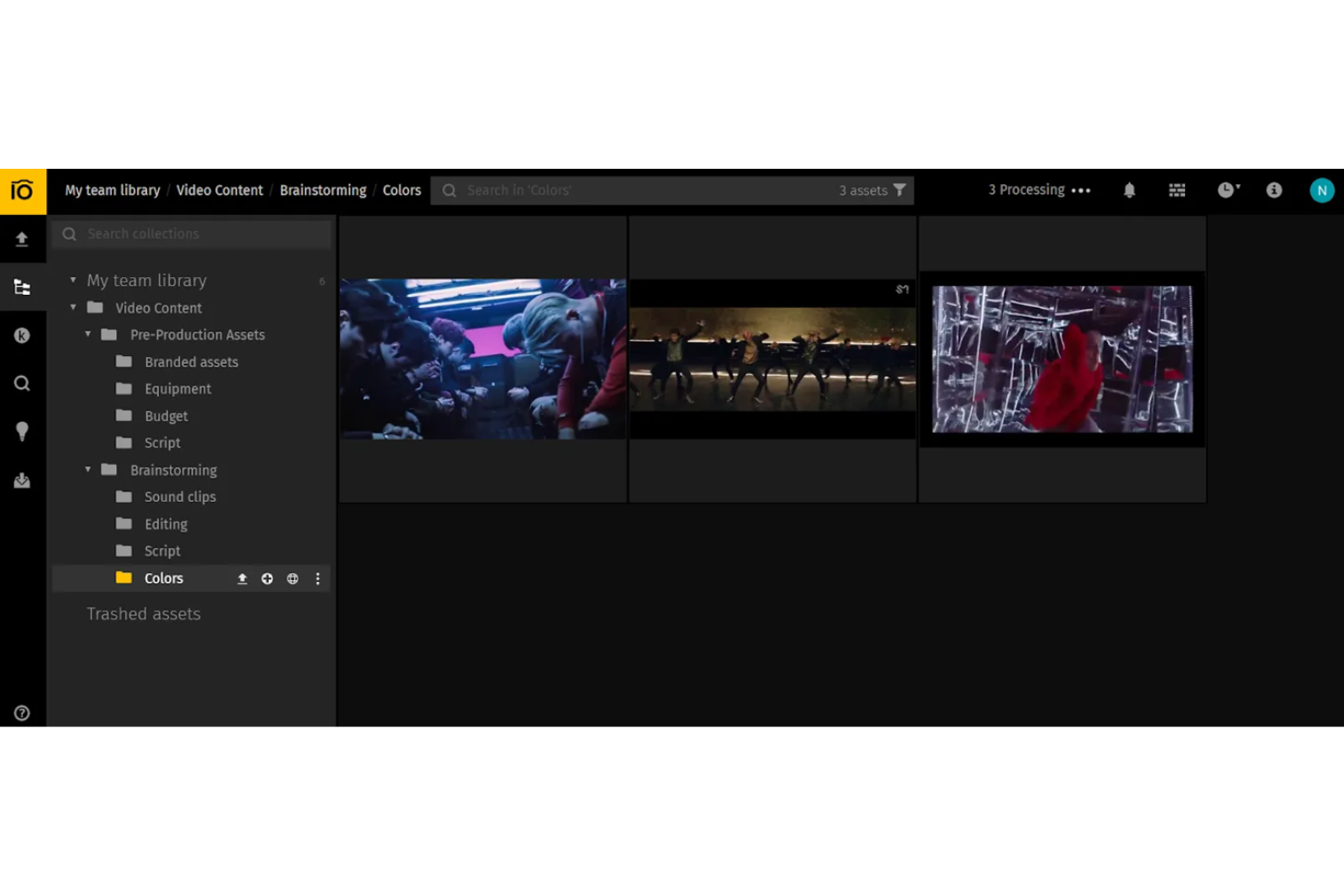
Pics.io is a digital asset management platform that lets marketing, brand, and creative teams organize, search, and share large asset libraries—using storage they may already have, like Google Drive or Amazon S3.
Who Is Pics.io Best For?
Pics.io is a strong fit for creative and marketing teams that already use Google Drive or Amazon S3 and need proper version tracking layered on top of their existing storage.
Why I Picked Pics.io
I picked Pics.io as one of the best Bynder alternatives because its version control is genuinely best-in-class: you can compare two revisions side by side, roll back to any earlier version, and set a specific revision as the approved current file. I particularly like that sharing links stay stable, so external partners always see the latest approved asset without needing a new URL. Revision approvals are logged in the Activity panel and audit trail, so there's a clear record of who approved what and when.
Pics.io Key Features
- AI-powered search: Use natural language, visual patterns, face recognition, and OCR to find assets across your library.
- Upload inboxes: Collect files from external contributors via a link, without requiring them to log in, while enforcing required metadata fields.
- Branded sharing portals: Publish password-protected or public websites from any collection, with options for visitor downloading, commenting, and file search.
- Adobe Creative Cloud plugin: Search the Pics.io library and place assets directly into Photoshop, Illustrator, InDesign, After Effects, and Premiere Pro.
Pics.io Integrations
Pics.io offers native integrations with Google Drive, Amazon S3, Adobe Creative Cloud, Google Sheets, Slack, and Zoho CRM. It also provides a REST API and Zapier connectivity for custom integrations.
Pros and Cons
Pros:
- Search across metadata, images, and document text
- Existing share links show approved updates
- Compare, approve, and restore asset revisions
Cons:
- Reviewers report unreliable AI-generated tags
- Sequential approval stages aren’t documented
New Product Updates from Pics.io
Pics.io Expands MCP Access to Asset Keywords and Metadata
Pics.io expands its MCP capabilities to give AI agents access to asset and library keywords, custom fields, and metadata. This update helps agents deliver accurate and relevant results. For more information, visit Pics.io’s official site.
 .

Best for teams migrating from Bynder
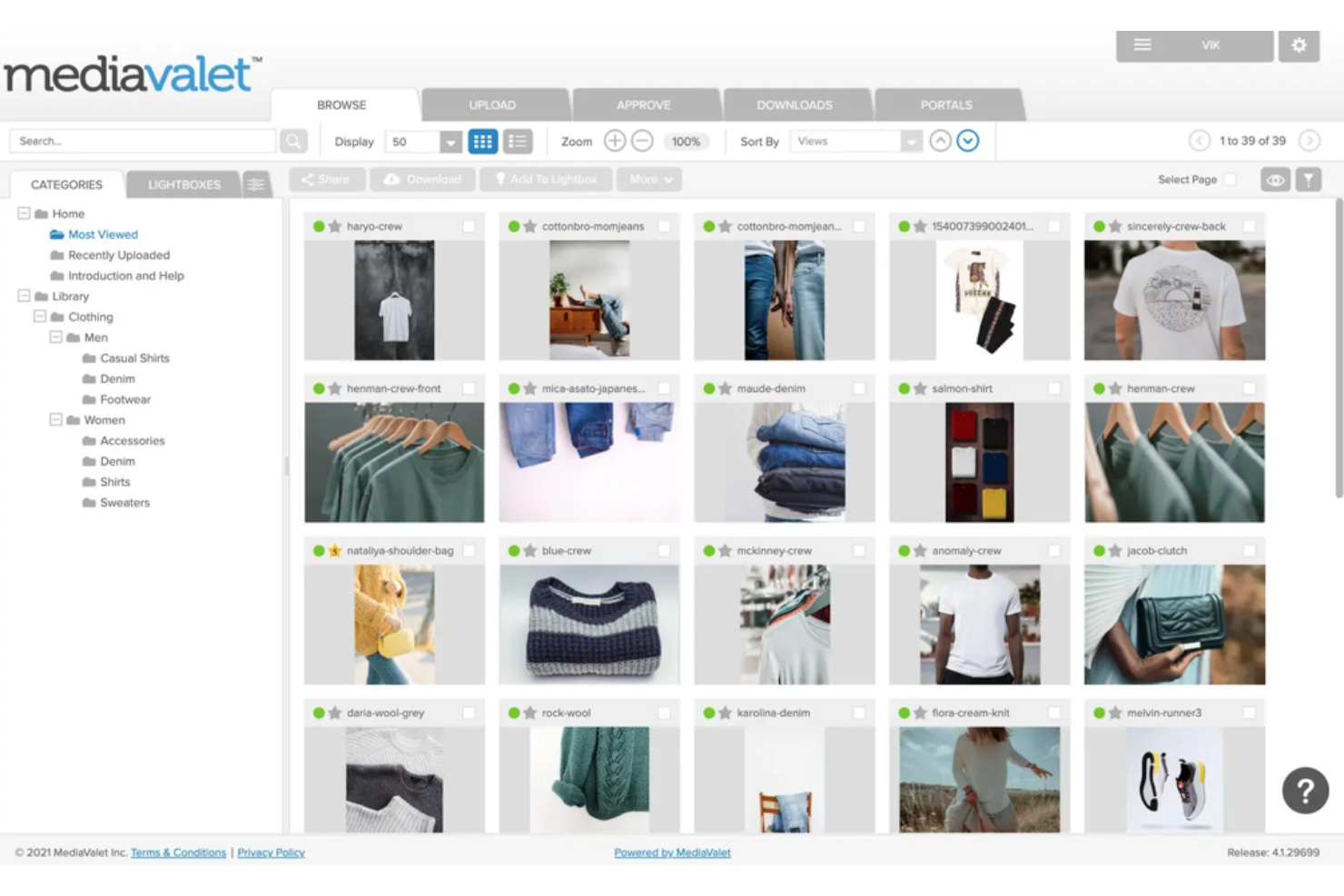
MediaValet is a digital asset management platform built for marketing and creative teams that need a centralized, searchable library with granular permissions, AI-powered tagging, branded portals, and structured creative review workflows.
Who Is MediaValet Best For?
MediaValet is a strong fit for marketing and creative teams at mid-to-large organizations that need a structured migration path away from their current DAM and want enterprise-grade access controls from day one.
Why I Picked MediaValet
I've included MediaValet in my top picks because it's the only DAM on this list built with an explicit, structured migration path away from Bynder, complete with a documented audit process, metadata mapping, and a 12-week onboarding timeline. I appreciate that it preserves your existing taxonomy during migration and can enhance it with AI auto-tagging, so you're not starting from scratch post-switch. The granular, role-based permissions (down to the category and action level) mean your access controls survive the transition intact, too.
MediaValet Key Features
- AI-powered auto-tagging: Automatically applies tags and metadata to assets, including video transcription, topic detection, and face recognition.
- Granular custom permissions: Administrators can configure access down to the category and action level, covering uploads, downloads, approvals, CDN generation, and portal access.
- Branded Experience Portals: Publish curated, custom-branded asset portals with auto-updating sections linked to categories or collections for internal or external audiences.
- RESTful API: A JSON-based API with OAuth 2 and Basic authentication supports CRUD operations and bidirectional syncing through the Unify integration framework.
MediaValet Integrations
MediaValet offers native integrations with Adobe Creative Cloud, Asana, monday.com, Wrike, WordPress, Contentful, Salesforce Sales Cloud, and the Microsoft ecosystem. Unify supports bidirectional asset and metadata syncing, while the RESTful JSON API supports OAuth 2 and CRUD operations for custom integrations.
Pros and Cons
Pros:
- AI tagging aids asset discovery
- Granular permissions govern categories and actions
- Structured Bynder migration preserves taxonomy
Cons:
- Large video files may stall playback
- Search can miss expected assets

Filecamp
Best for digital asset sharing
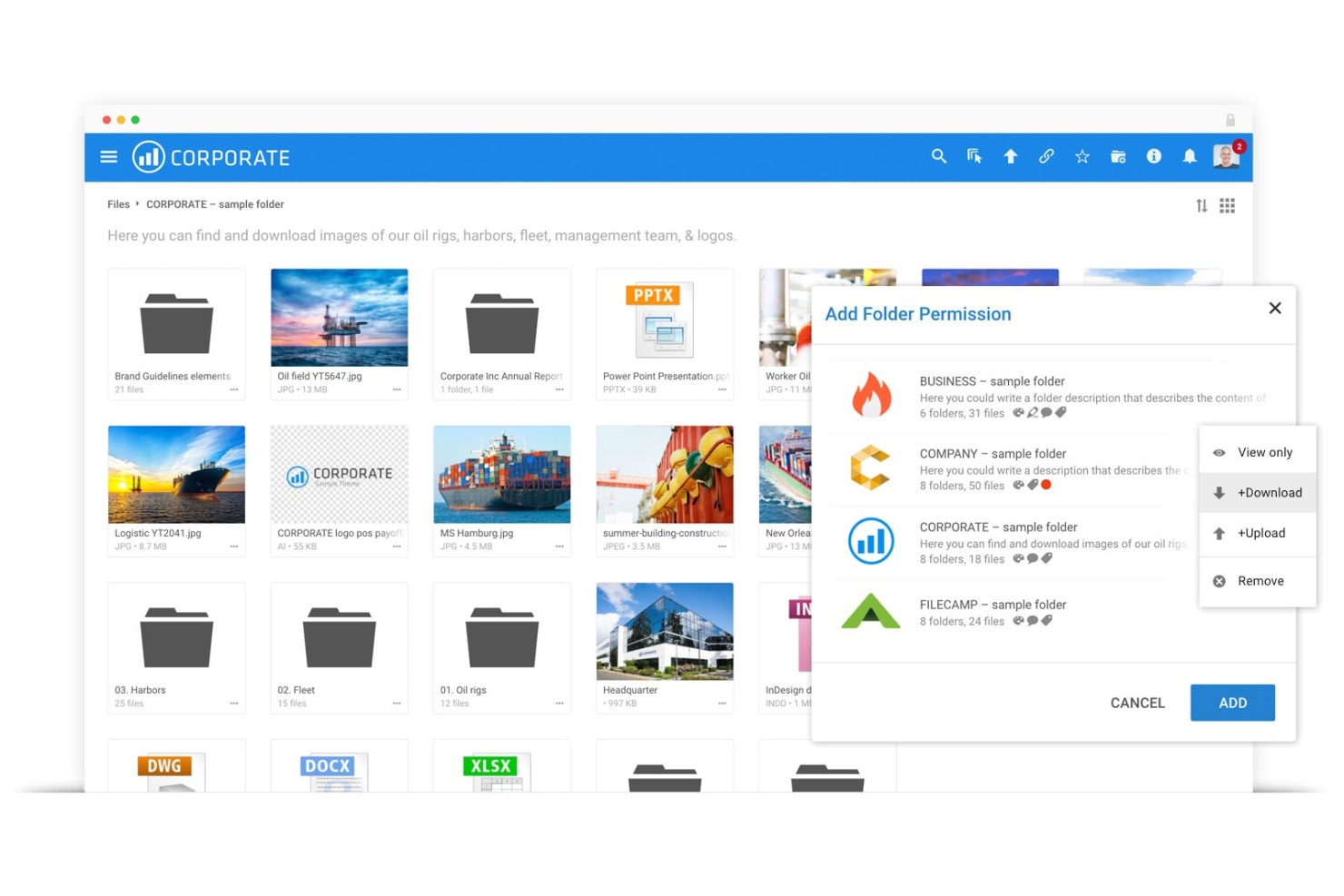
Filecamp is a cloud-based digital asset management platform built for marketing and creative teams that need a simple, affordable way to store, organize, and distribute brand assets without the complexity of enterprise DAM tools.
Who Is Filecamp Best For?
Filecamp is a great fit for small-to-midsize marketing and creative teams that need a simple, branded way to store and share digital assets with clients and partners.
Why I Picked Filecamp
I picked Filecamp as one of the best Bynder alternatives because it makes digital asset sharing genuinely frictionless. I love how collection links let you share curated sets of files with view-only or download access, complete with vanity URLs and expiration dates, so external partners always land on a branded, controlled experience. AI auto-tagging keeps shared libraries organized without manual overhead, so the right assets are actually findable when clients or agencies need them.
Filecamp Key Features
- Custom branding: Customize your portal with company logos, colors, and background images to create a branded experience for clients and partners.
- Granular access control: Assign role- and folder-level permissions so each user sees only the assets they're meant to access.
- Online proofing: Review and annotate files directly in the browser using comments, markers, and approval labels tied to specific file versions.
- Asset expiration: Set expiration dates on files individually or in bulk, with expired assets automatically moved to Trash when configured.
Filecamp Integrations
Filecamp doesn't have any native integrations. It currently offers no public REST API for custom integrations.
Pros and Cons
Pros:
- Users praise responsive email support
- Reviewers value link-based file sharing
- Clients can receive branded asset portals
Cons:
- Moving files between folders feels tedious
- Tagged assets can be hard to find
New Product Updates from Filecamp
Filecamp Adds Analytics, AI Thumbnails, and CDN Embed Links
Filecamp adds Analytics, AI-powered thumbnails, and CDN-backed Embed links. These updates give teams more visibility into asset usage, improve thumbnail presentation, and make embedded images easier to manage. For more information, visit Filecamp’s official site.
 .

Frontify
Best for AI answers from brand guidelines
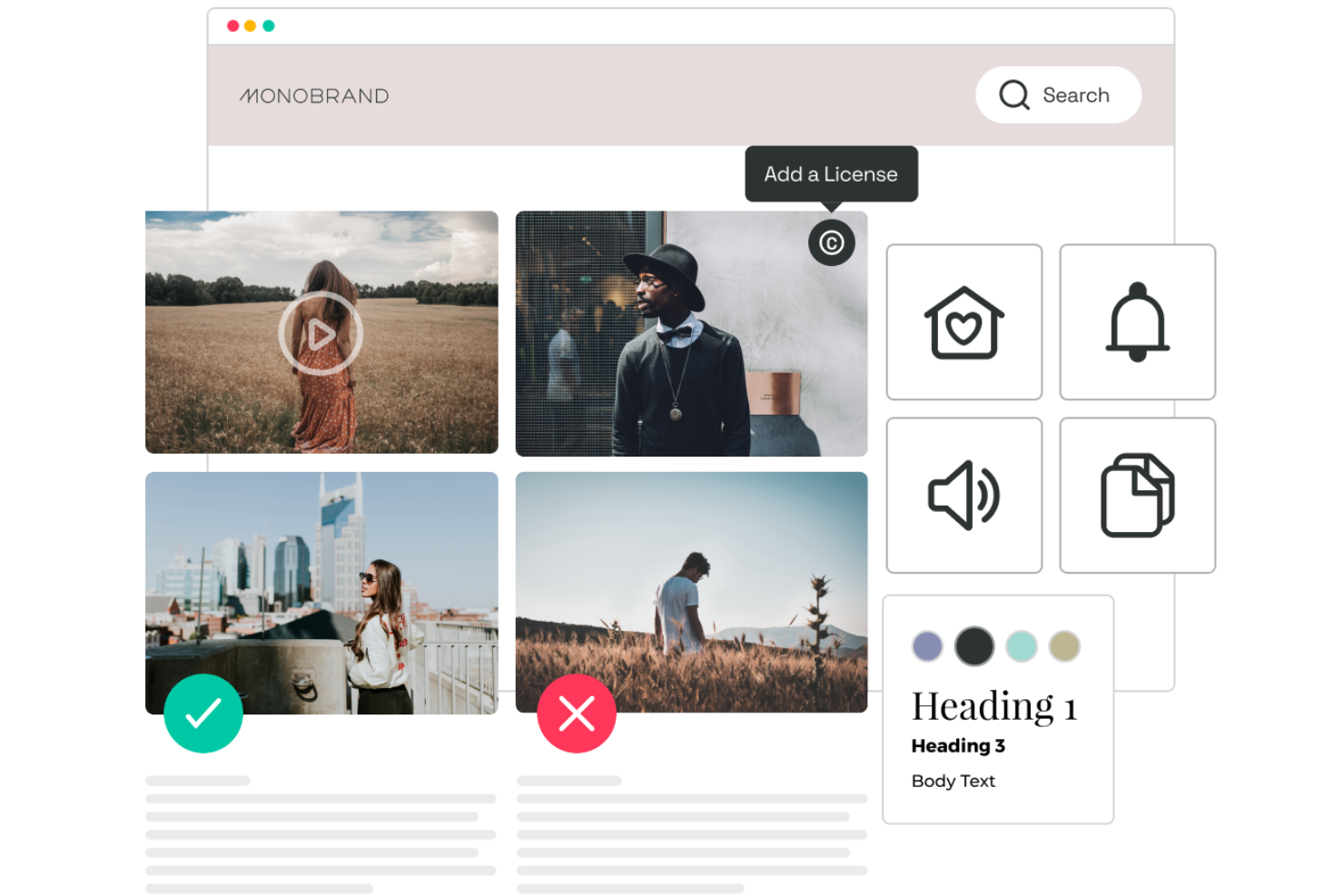
Frontify is a brand management platform that unifies digital asset management, brand guidelines, and templates in one place—making it a strong fit for brand teams that need to centralize assets, enforce consistency across markets, and give partners controlled access to approved materials.
Who Is Frontify Best For?
Frontify is a strong fit for brand teams at mid-size to enterprise companies that need to manage guidelines, assets, and templates across multiple markets or regions from one place.
Why I Picked Frontify
I picked Frontify as one of the best because its Brand Assistant is unlike anything I've seen in a competing DAM: you can ask it a natural-language question like "What font do we use in APAC campaign headers?" and it pulls the answer directly from your live brand guidelines, with a link to the relevant section. That means my team isn't digging through PDFs or pinging the brand team for answers. I also love that those guidelines are structured so AI tools can read them, which makes the whole system genuinely smarter the more complete your guidelines are.
Frontify Key Features
- Automated Bynder migration: Transfers asset files, titles, descriptions, creators, tags, and custom metadata from Bynder directly into Frontify, with a post-migration report and one-month error window.
- Multi-brand portal management: Supports centrally managed, audience-specific hubs organized across multiple brands, markets, and regions from a single instance.
- Configurable approval workflows: Lets you assign reviewers, set deadlines, and choose resolution rules such as unanimous, majority, or first-responder approval for each asset request.
- AI auto-tagging: Automatically generates metadata tags and flags duplicate assets across media, logo, icon, and document libraries to keep your asset library organized at scale.
Frontify Integrations
Frontify lists integrations with Adobe Link, Figma, Contentful, Webflow, WordPress, Asana, Jira Cloud, and Slack. It also supports GraphQL, webhooks, Brand SDK, Creative API, and an MCP server for custom connectivity.
Pros and Cons
Pros:
- Approval rules support multi-stage brand reviews
- Reviewers value centralized assets and guidance
- AI answers link directly to brand guidelines
Cons:
- Revisions require manual uploads for each version
- Reviewers report search struggles in large libraries
Canto
Best for unlimited end-user access
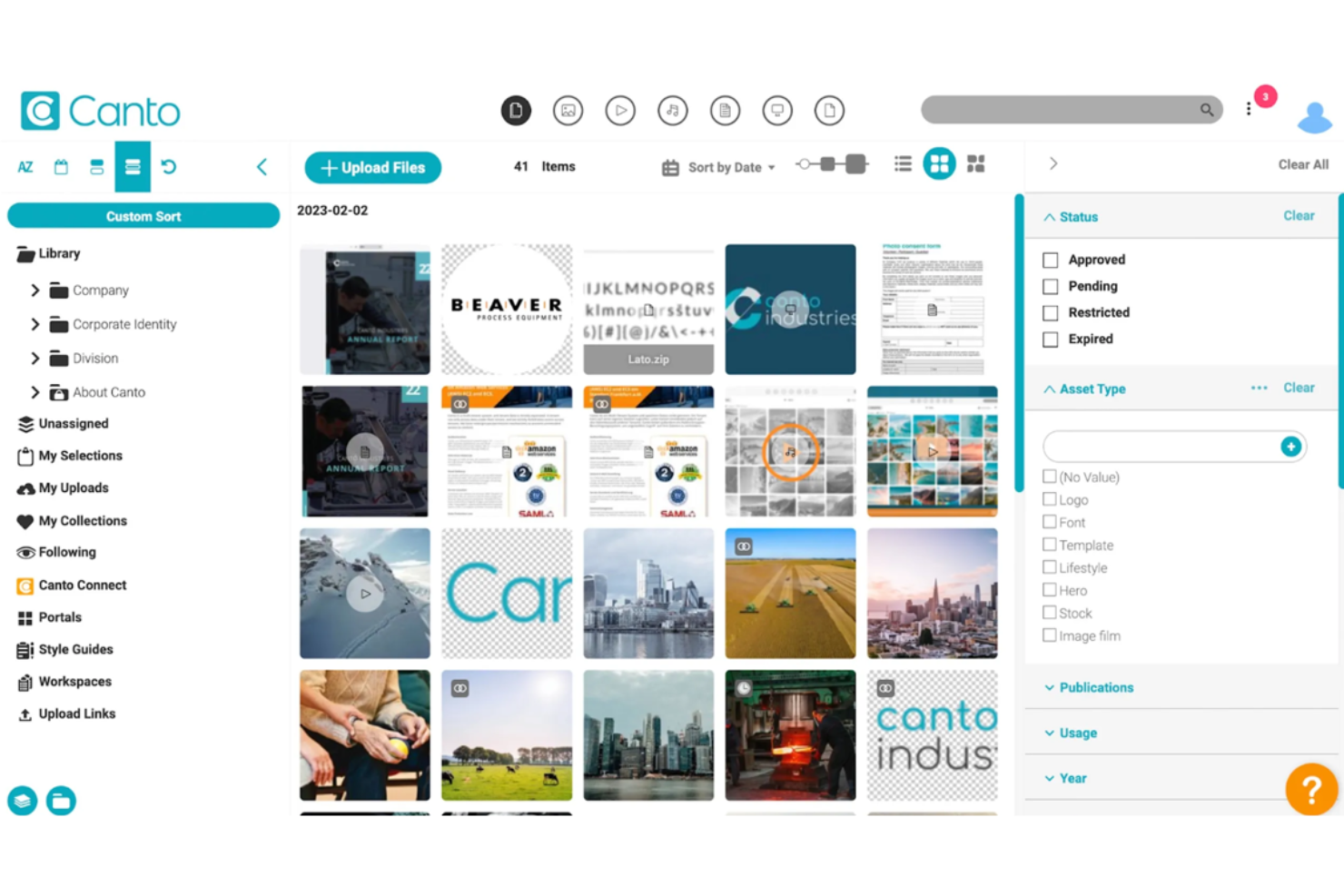
Canto is an AI-powered digital asset management platform built for brand, creative, and marketing teams who need a central library to organize, search, approve, and distribute assets across channels.
Who Is Canto Best For?
Canto is a strong fit for brand and creative teams that need a central asset library with broad internal distribution—where many people need to access approved assets but only a few manage them.
Why I Picked Canto
I picked Canto as one of the best Bynder alternatives because of how it handles end-user access: every plan starts with unlimited end users, so your whole organization can browse, download, and share from a central library without seat-count anxiety. I especially like the unlimited branded Portals included at the base tier, which let you serve curated asset collections to different teams, regions, or external partners simultaneously. Pair that with Style Guides for brand colors, fonts, and messaging, and you've got a solid self-service setup that keeps everyone working from approved assets.
Canto Key Features
- AI Visual Search: Find photos and videos using natural-language descriptions, visual similarity, or metadata—even for assets that haven't been tagged.
- Approval Hub with proofing: Run multi-step review workflows with named stages, assigned reviewers, and built-in markup tools for creative feedback.
- Digital rights management and expiration controls: Set expiration dates on approved assets so files automatically become inaccessible after a defined date and time.
- Audit trail: Track version histories, file downloads, and user activity across the library with detailed reporting.
Canto Integrations
Canto offers native integrations with Adobe Photoshop, Canva, and WordPress, plus a REST API for custom connections. It also supports Zapier.
Pros and Cons
Pros:
- Metadata filters help teams find assets
- Curated portals support external asset sharing
- Unlimited end-user access eases broad distribution
Cons:
- DAM migrations can take months
- Search relevance can falter in large libraries

Best for managing production media archives

Orange Logic is an enterprise DAM and media asset management platform built for teams managing large-scale content libraries, complex rights, and multi-brand governance across creative, marketing, and production workflows.
Who Is Orange Logic Best For?
Orange Logic is a strong fit for enterprise teams managing large-scale media archives across production, broadcast, and rights-intensive creative operations.
Why I Picked Orange Logic
I picked Orange Logic as one of the best Bynder alternatives because of how well it handles large-scale production media archives, especially for teams managing video, audio, and high-volume image libraries. Its MAM and DAM capabilities share one content foundation, so archive search, metadata, and governance extend across cloud, on-premises, and archive storage without fragmenting your library. I also appreciate the granular rights management, which lets you apply territory, channel, expiration, and talent rights directly to assets.
Orange Logic Key Features
- Visual workflow builder: Configure multi-stage review, approval, and publishing workflows with drag-and-drop stages, conditions, decisions, and execution logs.
- Builder and Spaces: Create branded portals, partner hubs, and campaign sites with no-code content blocks that display live DAM assets while preserving their permissions.
- AI-powered asset enrichment: Automatically tag, transcribe, and classify assets as they enter the platform using AI-driven metadata and semantic discovery.
- Enterprise-grade security controls: Protect content with AES-256 encryption, SSO, MFA, audit logging, and compliance coverage across GDPR, HIPAA, SOC 2 Type 2, and ISO 27001.
Orange Logic Integrations
Orange Logic offers marketplace integrations with Adobe InDesign, Adobe Premiere, Adobe Illustrator, Adobe Lightroom, Figma, Slack, Dropbox, Microsoft SharePoint, Contentstack, and Salesforce Marketing Cloud. REST APIs, webhooks, SDKs, and MCP support custom integrations.
Pros and Cons
Pros:
- Granular permissions govern partner access
- Flexible metadata and search filters
- Handles very large photo and video archives
Cons:
- Implementations can take longer than expected
- Administrators need time to master configuration


CELUM is an enterprise DAM platform built for brand managers, creative teams, and digital asset managers who need to organize large asset libraries, enforce brand consistency, and run structured creative review and approval workflows.
Who Is CELUM Best For?
CELUM is a strong fit for enterprise brand and creative teams managing large asset libraries across multiple brands or product lines.
Why I Picked CELUM
I picked CELUM as one of the best because it's the only DAM on this list with a dedicated Product Content Studio built around tracking content readiness for launches. I love that you can flag exactly which product assets are missing or incomplete before go-live, using asset placeholders that hold metadata while content is still in production. Its visual review and approval workflows, with Kanban task boards and configurable stage transitions, keep launch prep moving without chasing down feedback in email threads.
CELUM Key Features
- AI content tagging: Automatically tag images and videos, translate tags into multiple languages, and extract text from images or speech from videos as searchable metadata.
- Multilingual taxonomy and metadata: Configure multilingual taxonomies and apply bulk metadata changes across large asset collections in a single step.
- Tailored audience frontends: Build responsive portals with curated content, audience-specific access controls, and download options for different user groups.
- Brand-safe content templates: Let users create ads, images, and PDFs from pre-approved templates imported from Adobe Illustrator or Photoshop or built directly in CELUM.
CELUM Integrations
CELUM lists 100+ marketplace integrations, including Adobe Creative Suite, Figma, Asana, Google Workspace, Microsoft 365, SharePoint Online, Akeneo, SAP Commerce Cloud, and WordPress. Its REST API, UI API, and embeddable widgets support custom integrations.
Pros and Cons
Pros:
- Multilingual AI tagging improves asset discovery
- Review workflows keep approvals and feedback organized
- Launch placeholders expose missing product content
Cons:
- Bulk imports and exports can run slowly
- Large libraries can hinder asset findability

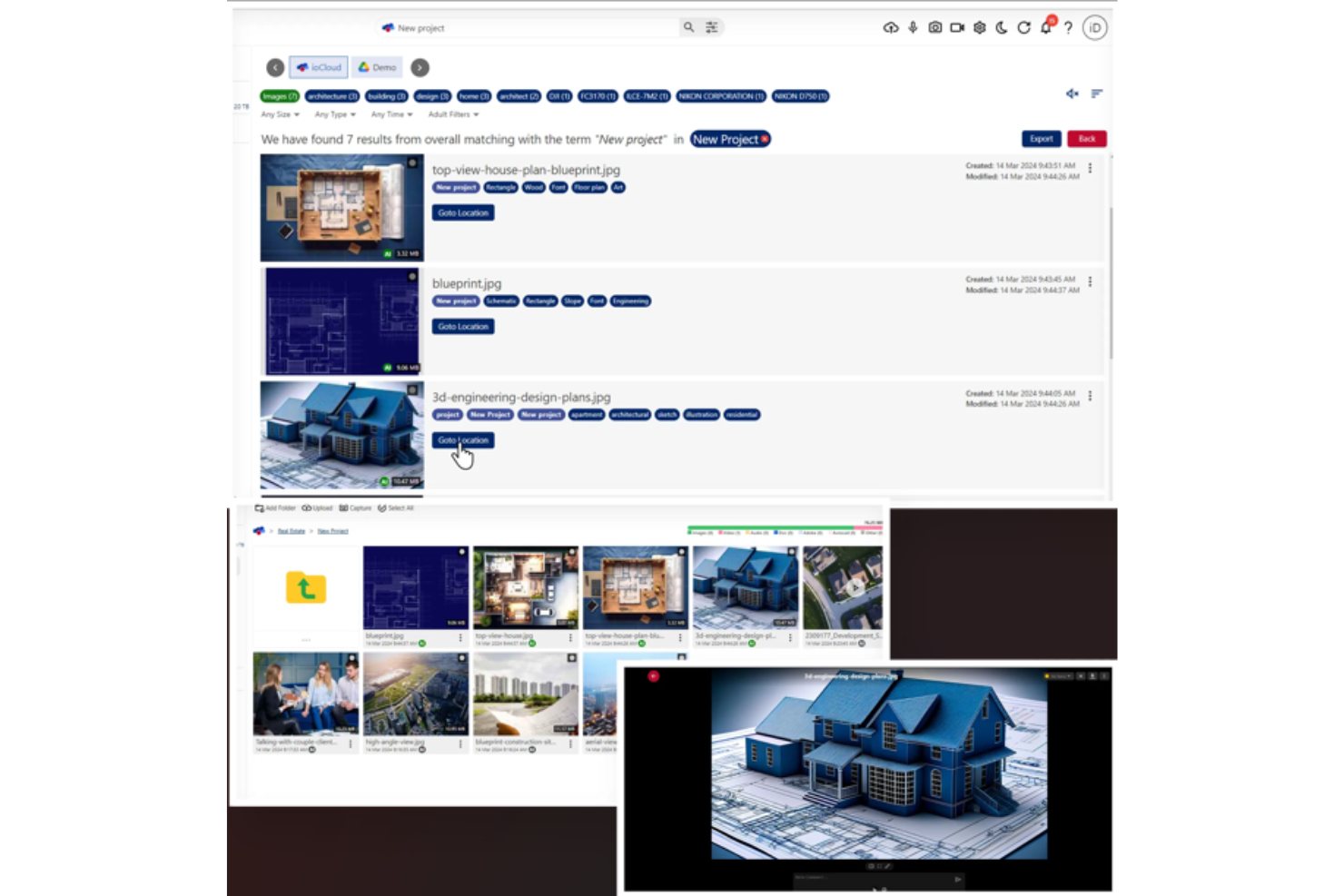
ioMoVo is an AI-powered digital asset management platform that helps marketing and creative teams find, govern, and share content across cloud drives and repositories, with approval routing and branded partner portals.
Who Is ioMoVo Best For?
ioMoVo fits marketing operations and brand teams at mid-size to enterprise companies that need governed asset search and partner sharing without moving files out of existing cloud drives.
Why I Picked ioMoVo
I picked ioMoVo because it lets my team keep files in Google Drive, SharePoint, or Dropbox instead of migrating them. ioHub indexes assets in place, so a Bynder replacement doesn't start with a big move. ioGallery then shows everything in one library, filterable by campaign or region. I also like that ioPilot search respects each person's permissions.
ioMoVo Key Features
- Approval chains: Route assets through sequential review steps assigned to roles or individuals, with audit trails.
- Branded portals: Build no-code partner portals with watermarking, expiring links, and external uploads.
- Adobe and Avid plugins: Search, import, and publish assets from Photoshop, Premiere Pro, and Media Composer.
- Bring-your-own AI models: Connect your own Claude, Gemini, or ChatGPT keys, or self-hosted models, for ioPilot.
ioMoVo Integrations
ioMoVo offers 40+ integrations, including native Adobe Creative Cloud, Avid Media Composer, and Microsoft 365 connections, plus marketplace integrations with SharePoint, Google Drive, Dropbox, Box, Amazon S3, and SFTP. REST, MCP, and A2A interfaces support custom connectivity.
Pros and Cons
Pros:
- Branded portals govern external partner sharing
- AI search spans disconnected asset repositories
- Indexes assets without forcing migration
Cons:
- Visual workflow builder remains on the roadmap
- No dedicated Bynder import path is documented
Best for Drupal-based content operations
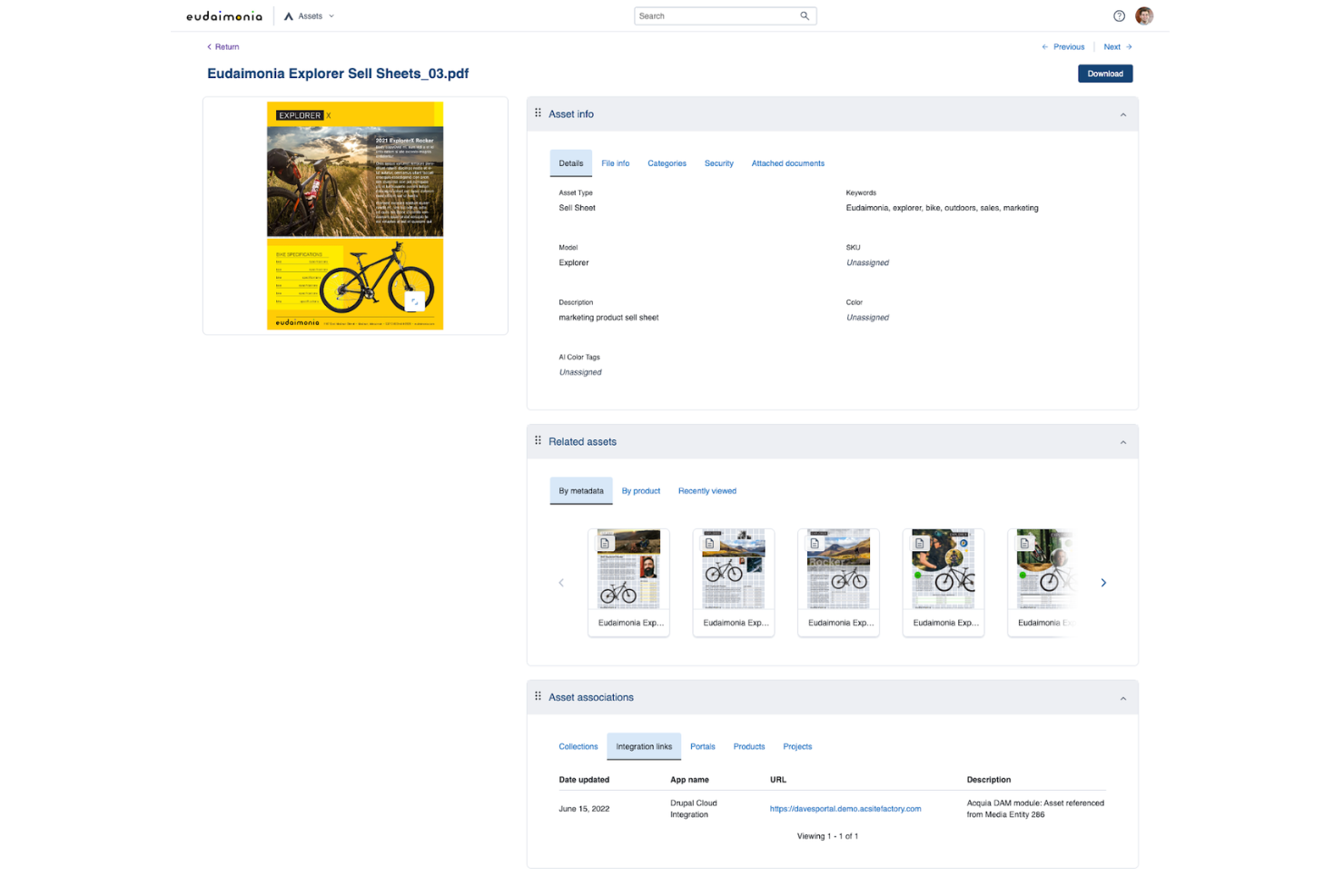
Acquia DAM (formerly Widen) is a cloud-based digital asset management platform built for marketing, brand, and creative teams that need a centralized, governed library for organizing, distributing, and maintaining brand consistency across assets at scale.
Who Is Acquia DAM Best For?
Acquia DAM is a strong fit for mid-size to enterprise marketing and brand teams running Drupal-based web operations who need governed, centralized asset management tightly integrated with their CMS.
Why I Picked Acquia DAM (Widen)
Acquia DAM earns its spot on my shortlist because of how tightly it integrates with Drupal-based content operations. I particularly like that the native Drupal connector syncs assets automatically, always targeting the latest finalized version so published pages stay current without manual intervention. The granular role and asset group permissions, supporting over 150 roles per site, let my team govern exactly who can access, download, or distribute assets across regions.
Acquia DAM Key Features
- AI auto-tagging: Applies AI-generated keywords to image files automatically, with a configurable confidence threshold from 0 to 100.
- Natural language search: Lets users search the asset library using plain-language queries, including across AI tags, video transcripts, and custom metadata fields.
- Branded portals: Creates curated, shareable asset collections on branded webpages with public, access-code, or registered-user access controls.
- Asset lifecycle management: Sets release and expiration dates, archives assets, and applies rights and usage rules that travel with each asset.
Acquia DAM Integrations
The directory lists 98 integrations, including native Drupal, Adobe Workfront, and Asana connections, plus marketplace integrations for Adobe Creative Cloud, Adobe Commerce, Akeneo, and Hootsuite. Acquia DAM also offers REST API, webhooks, and an open-source TypeScript SDK for custom integrations.
Pros and Cons
Pros:
- Metadata schemas support tailored asset taxonomies
- Portals simplify sharing approved assets externally
- Drupal sync targets latest finalized assets
Cons:
- Upload workflow can feel slow at scale
- Search precision depends on metadata hygiene

Cloudinary
Best for planning a staged DAM migration
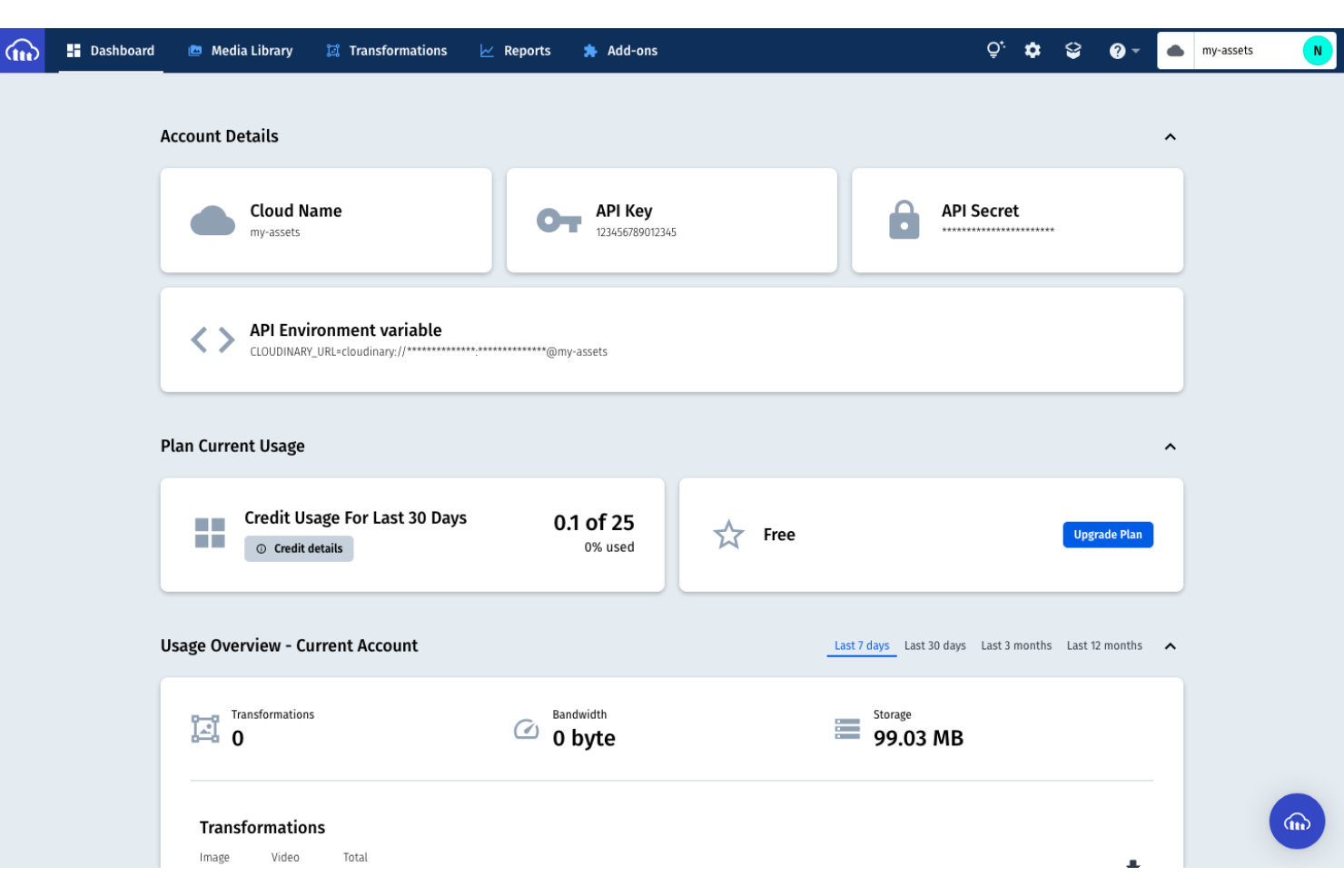
Cloudinary is a media-focused DAM built for teams that need AI-powered asset organization, creative tool integrations, and flexible delivery pipelines—making it a strong fit for marketing and creative operations teams managing high volumes of visual content across channels.
Who Is Cloudinary Best For?
Cloudinary is a strong fit for marketing and creative operations teams at mid-size to enterprise companies that manage high volumes of visual media across multiple channels and need a media-first DAM with deep API access.
Why I Picked Cloudinary
I picked Cloudinary as one of the best Bynder alternatives because it's purpose-built for teams planning a staged DAM migration. I appreciate how its CLI and Upload API let you map your existing taxonomy and metadata before moving assets in controlled batches, so nothing gets lost in transit. The Taxonomy Agent (Beta) can then rebuild and maintain your metadata structure inside Cloudinary as you go, keeping assets findable throughout the transition.
Cloudinary Key Features
- Creative Approval flows: Configure multi-stage review workflows with named stages, assigned reviewers, annotations, and external reviewer access via direct email link.
- Cloudinary Portals: Build custom-branded, curated media portals for internal teams or external partners with controlled access, asset search, and brand-guidelines pages.
- Adobe Creative Cloud Connector: Access and place approved Cloudinary assets directly inside Photoshop, InDesign, Illustrator, Premiere Pro, and After Effects.
- Granular roles and permissions: Assign global, folder, and collection-level roles to users, groups, and API keys to control asset access across the organization.
Cloudinary Integrations
Cloudinary lists integrations with Adobe Creative Cloud, Figma, Contentful, WordPress, Shopify, Salesforce, HubSpot, Akeneo, Contentstack, and SAP. Its API-first platform also provides REST APIs, SDKs, and webhooks for custom connections.
Pros and Cons
Pros:
- Phased migration preserves mapped metadata
- Bulk tagging aids asset discovery
- Centralizes large visual libraries
Cons:
- Enterprise-gated approvals limit smaller teams
- Older assets can evade exact searches
New Product Updates from Cloudinary

Cloudinary Integrates with Klaviyo for Personalized Email Visuals
Cloudinary integrates with Klaviyo to generate personalized images and GIFs from customer and event data. This reduces manual design work for email campaigns. For more information, visit Cloudinary’s official site.
 .
Other Bynder Alternatives To Consider
Here are some additional Bynder alternatives to check out if you didn’t find what you were looking for above.
- Optimizely
For tying assets to CMS and A/B tests
- Brandfolder
For keeping embedded creative current
- Asset Bank
For collecting partner uploads
- IntelligenceBank
For AI marketing content risk reviews
- Kontainer DAM
For EU hosting and ISAE 3402 certification
- Papirfly
For permission-based brand self-service
- Air
For AI-powered content search
- Aprimo
For governed AI content production
- Censhare
For choosing AI models and hosting
- Lytho
For tying asset approvals to campaigns
- Adobe Experience Manager Assets
For adaptive image and video delivery
- Dash
For timestamped video review and edits
- Sparkfive
For tracking partner asset engagement
- PhotoShelter for Brands
For live-event content distribution
- Brault
For planning creative work beside assets
- Playbook
For Figma-based asset handoffs
- Pickit Enterprise
For on-brand PowerPoint presentations


Related Project Management Reviews
If you still haven't found what you're looking for here, check out these other project management tool reviews we've curated for you:
- Gantt Chart Maker
- Productivity Tools
- Project Tracking Software
- Project Scheduling Software
- Project Management Software
- Resource Management Software
How I Evaluate Bynder Alternatives
I split my evaluation into three parts. First, core functionality: any alternative needs to store and organize diverse asset types in a structured repository and support custom metadata with reliable search—this carries the most weight. Second, I look for standout features like AI auto-tagging and dynamic templating. Third, I consider onboarding support and pricing flexibility.
Core Functionality (Table Stakes For This List)
When I'm selecting tools for my list, I score each one on a scale from 0 (does not offer the functionality) to 5 (excels in this area) for each core functionality listed below. I then convert the total into a percentage to help assess each tool's overall fit, with extra weight on any functionalities I’ve deemed essential.
- Asset Storage (Essential): I look for a shared library that can organize varied files, so teams can retrieve approved campaign images, videos, and documents in one place.
- Metadata & Search (Essential): I check for custom tags and filters that help teams find the right asset by campaign, channel, format, or approval status.
- Brand Portal: I consider whether teams can share curated asset collections and brand guidelines with colleagues, agencies, or other partners.
- Access & Permissions: I evaluate whether admins can set roles and control who can view, edit, or distribute assets across teams and external partners.
- Version Control: I look for clear revision history and rollback options, so teams can distinguish the latest approved creative from outdated files.
- Creative Approval: I assess whether reviewers can comment, annotate, and follow approval steps before an asset moves into publication.
Once I have a list of tools that meet the criteria, I consider what sets each platform apart.
Differentiating Factors (What Sets Vendors Apart)
Here's how I compare and contrast different vendors:
Standout Features
AI auto-tagging is the first thing I evaluate. When a team uploads hundreds of campaign assets in a single batch, manual tagging becomes a bottleneck. I look for image recognition that generates accurate, consistent metadata on ingest. Dynamic templating is equally important—I check whether a single approved master file can be auto-resized for social, email, and display without a designer reworking each format. I also evaluate usage rights tracking, since an expired model release on a live ad is a legal problem I've seen catch teams off guard.
Beyond Features
I check whether vendors offer white-glove onboarding or migration tooling, since moving thousands of assets and custom metadata schemas from a legacy DAM can stall a rollout for weeks. Pricing flexibility matters just as much—I look for transparent tiers or usage-based models that don't penalize teams for adding freelancers or external reviewers mid-project. I also evaluate how well the platform connects to project management, CMS, and social publishing tools already in the stack, because a DAM that lives outside your delivery workflow creates more problems than it solves.
Why Look for a Bynder Alternative
You might be looking for an alternative to Bynder if you have:
- Cost concerns: Bynder's pricing may be beyond your budget.
- Feature requirements: You may need specific features that Bynder does not offer.
- User experience needs: You crave an intuitive user interface or a better user experience.
- Integration needs: The integration capabilities don’t align with your existing tech stack.
- Customer support needs: You’ve found yourself needing more responsive or comprehensive customer support.
Bynder Key Features
Here are some of the key features of Bynder, to help you contrast and compare what alternative solutions offer:
- Digital asset management: Easily upload and organize files with drag-and-drop functionality, and use AI-assisted search to find what you need quickly.
- Asset workflow: Improve your creative processes from initial briefing to final approval with collaboration tools for both internal and external stakeholders.
- Content workflow: Use AI-assisted content creation tools and manage your content calendar with features for collaboration and approval workflows.
- Studio features: Design and create templates to maintain consistent branding, and adapt your content for various formats and sizes.
- Print brand templates: Manage and edit InDesign templates easily, and export your print-ready files in multiple formats.
- Bynder analytics: Gain insights into user and content activity to make data-driven decisions, with reporting capabilities for easy distribution.
- Login & authentication: Enjoy secure access with support for Google SSO and group directory mapping.