

10 Best AI Hot Desk Booking Software in 2026

Best AI Hot Desk Booking Software Shortlist


AI hot desk booking software uses artificial intelligence to automate and optimize how your team reserves desks and manages workspace availability. If you’re searching for smarter ways to handle flexible seating, reduce booking conflicts, and keep hybrid teams connected, you’re in the right place.
In this guide, you’ll find the top AI-powered desk booking platforms, each chosen for features that help you adapt to changing schedules and workspace needs. Get ready to compare your best options and find the right fit for your team’s workflow.
Why Trust Our Software Recommendations
Our team has been testing and reviewing software since 2012. As project managers ourselves, we know how difficult—and important—it is to choose the right software.
For this guide, we evaluated tools using hands-on testing and independent research, scoring tools using our selection criteria. We also draw on insights from industry thought leaders and practicing project management experts.
Our reviews reflect our human editorial judgment, not a sales pitch.
Expert reviewers:
AI Hot Desk Booking Software Comparison Table
This comparison table summarizes pricing details for my top AI hot desk booking software selections:
| Tool | Best For | Trial Info | Price | ||
|---|---|---|---|---|---|
| 1 | Best for delegated booking for teams and executives | Free demo available | From $3000/year | Website | |
| 2 | Best for neighborhood-based seating | 7-day free trial + free demo available | From $1.79/user/month (billed annually) | Website | |
| 3 | Best for filtering desks by amenities | Free demo available | From $99/month | Website | |
| 4 | Best for Microsoft Teams integration | 30-day free trial + free demo available | From $13.50/month (billed annually) | Website | |
| 5 | Best for booking directly within Slack | Free trial + free demo available | From $2.50/user/month (billed annually) | Website | |
| 6 | Best for customizable user permissions | 30-day free trial available | From €1.59/resource/month (billed annually) | Website | |
| 7 | Best for workspace analytics | Free demo available | Pricing upon request | Website | |
| 8 | Best with automated desk assignments | Free demo available | Pricing upon request | Website | |
| 9 | Best for real-time floorplan views | Free demo available | Pricing upon request | Website | |
| 10 | Best for device management | Free plan + 90-day free trial available | From $49/desk/year (billed annually) | Website |
Best AI Hot Desk Booking Software Reviews
Below are my detailed summaries of the AI hot desk booking software that made it onto my shortlist. My reviews offer a detailed look at the features, best use cases, and integrations of each platform to help you find the best one for you.
Tactic
Best for delegated booking for teams and executives
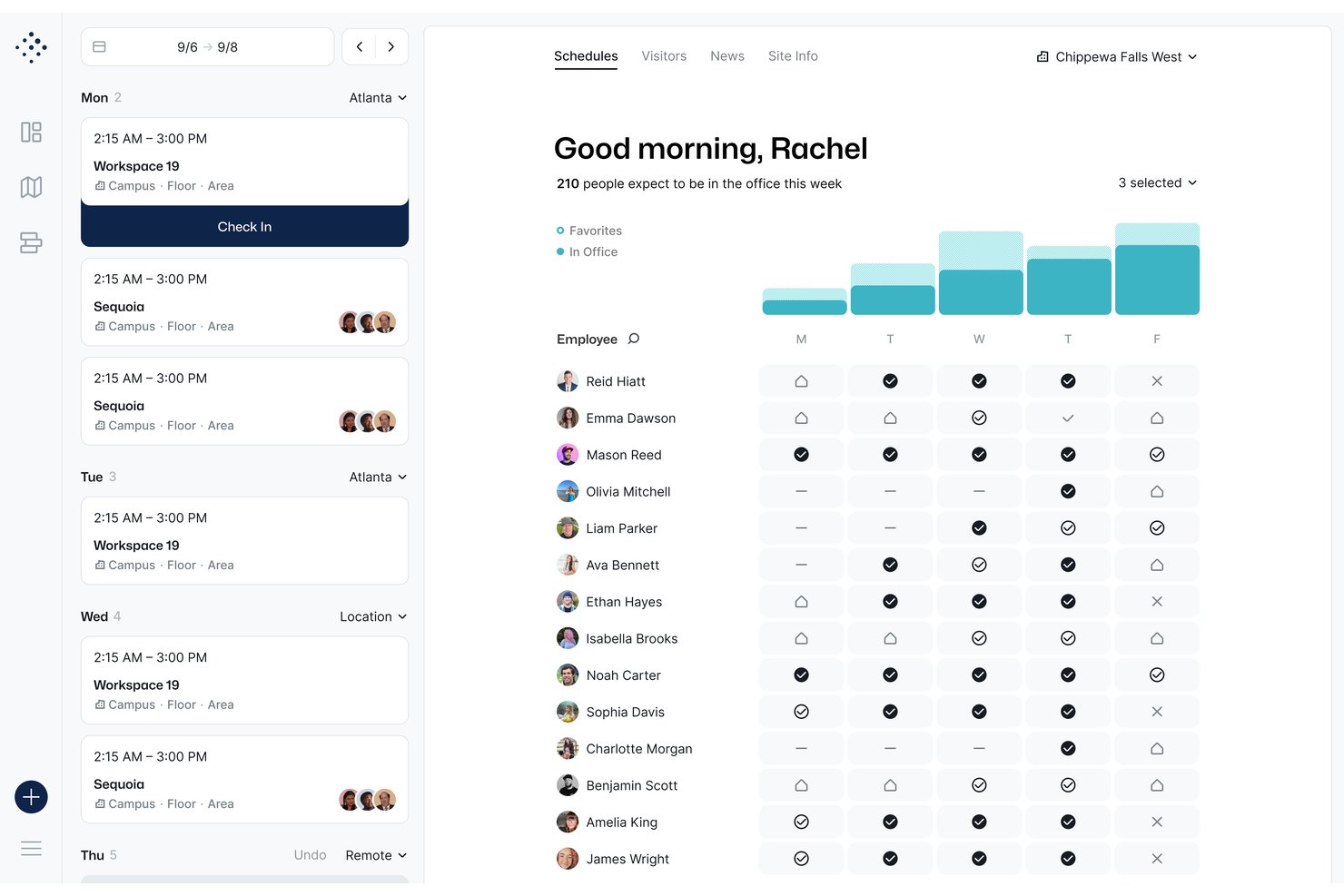
Tactic is a modular AI hot desk booking platform that combines interactive floor plan booking, delegated reservations, team neighborhood coordination, and workplace utilization analytics across hybrid office environments.
Who Is Tactic Best For?
Tactic is a strong fit for mid-size to enterprise organizations running hybrid work programs where admins, EAs, or team leads need to manage desk reservations on behalf of others.
Why I Picked Tactic
I've included Tactic in my top picks because its delegated booking feature is genuinely rare in this space. Admins and EAs can reserve desks for any team member, including executives, directly from the platform. Tactic's Tessa AI adds another layer, letting anyone book a desk with a natural-language request like "standing desk near my team tomorrow." Team neighborhoods keep project groups physically co-located during sprint cycles without manual coordination.
Tactic Key Features
- Interactive floor plan booking: Users can reserve desks, rooms, or resources directly from real-time office maps with visual filters and multi-location support.
- Office insights dashboard: Utilization analytics provide occupancy, booking patterns, and no-show tracking for workspace planning.
- Calendar integrations: Two-way sync with Google Calendar and Outlook brings desk reservations into existing scheduling workflows.
- Custom resource management: Book and manage office assets like parking spaces, lockers, phone booths, or equipment alongside desks and rooms.
Tactic Integrations
Tactic offers native integrations with Google Calendar, Outlook, Slack, Microsoft Teams, Zoom, Microsoft 365, and provides an API for custom integrations.
Pros and Cons
Pros:
- Team neighborhood clustering for project co-location
- Natural language desk booking via Tessa AI
- Delegated booking for admins and executives
Cons:
- Mobile app experience reported as inconsistent
- Analytics depth lags behind enterprise-focused competitors
Best for neighborhood-based seating
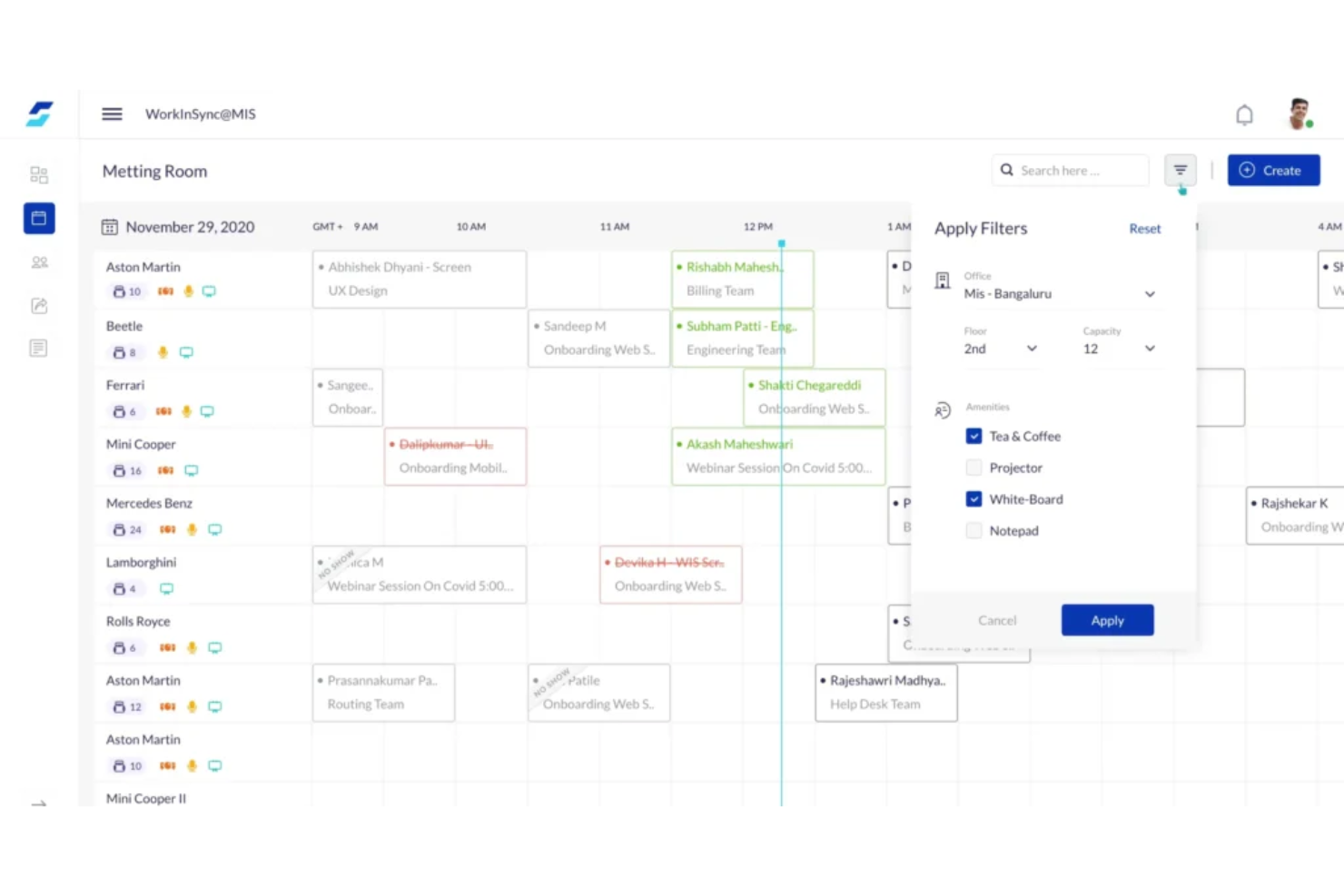
WorkInSync is a workplace management platform for AI-powered desk booking, space scheduling, visitor management, and employee experience tools designed for flexible office environments.
Who Is WorkInSync Best For?
Large organizations and enterprises managing flexible seating across multiple office locations.
Why I Picked WorkInSync
I picked WorkInSync as one of the best because I can set up neighborhood-based seating zones and assign teams to specific areas, which helps manage large, flexible offices. I like that I can automate desk allocation rules and use the interactive floor plan to visualize seat availability. My team uses the mobile app to book desks and coordinate in-office schedules on the go.
WorkInSync Key Features
- Contactless check-in: Employees can check in using QR codes or mobile devices.
- Real-time occupancy dashboard: View live data on desk and space usage across locations.
- Visitor management system: Register, track, and manage office visitors from a single interface.
- Automated health screening: Collect and verify employee health declarations before entry.
WorkInSync Integrations
WorkInSync offers native integrations with Microsoft Teams, Outlook, Google Workspace, Slack, Okta, and Active Directory.
Pros and Cons
Pros:
- Includes automated health screening workflows
- Built-in sanitization status tracking toggle
- Integrated employee commute shuttle tracking
Cons:
- No automatic WiFi-based check-in feature
- Lacks native desktop task reminders
YAROOMS
Best for filtering desks by amenities
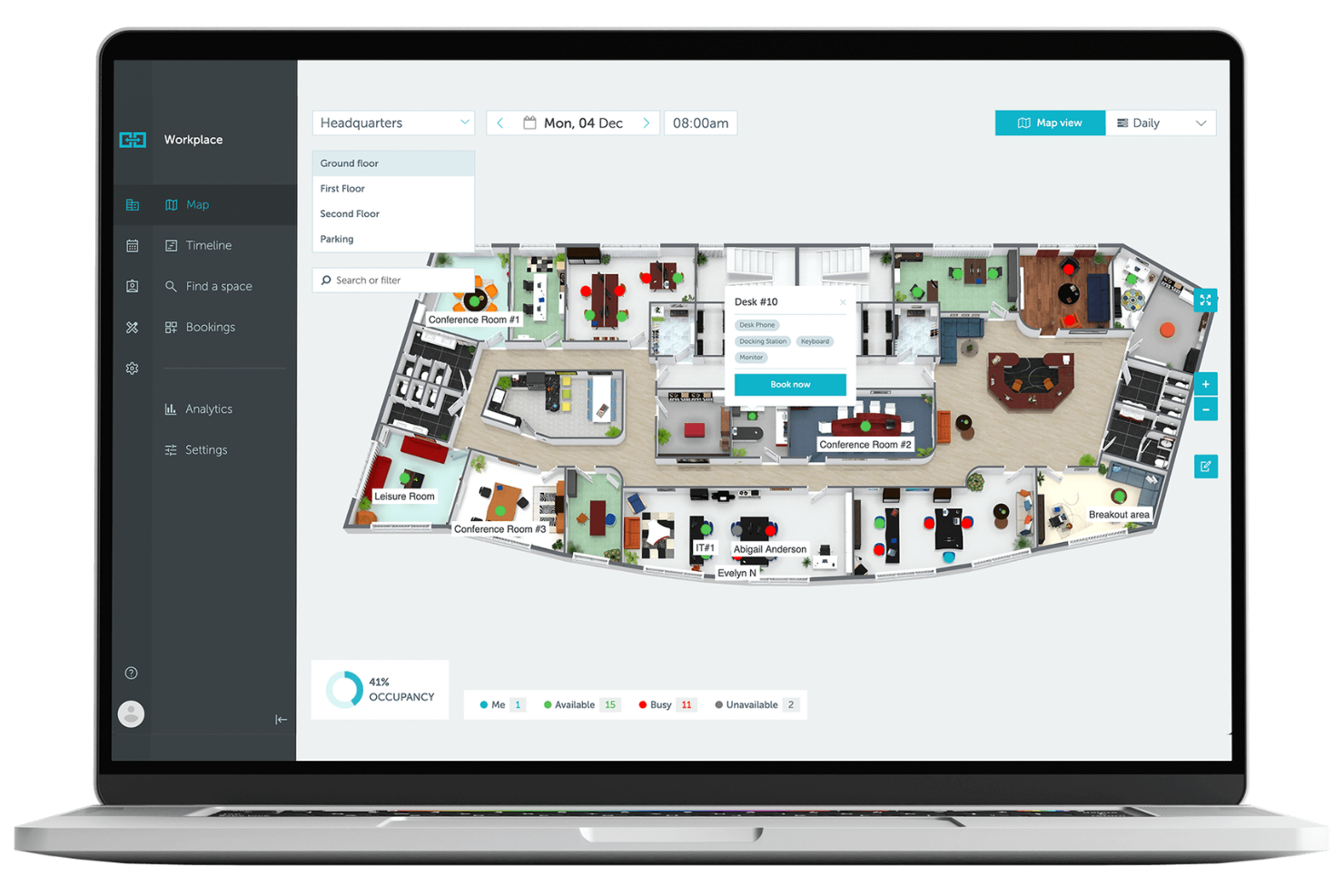
YAROOMS is a workspace management platform for AI-powered desk booking that lets teams reserve desks, manage office resources, set booking policies, and view real-time availability across locations.
Who Is YAROOMS Best For?
Facility managers and workplace teams at mid-size and enterprise organizations who need advanced desk filtering and resource management.
Why I Picked YAROOMS
I picked YAROOMS as one of the best because I can filter available desks by amenities like monitors, standing desks, or proximity to windows. My team uses the visual floor plan to quickly spot and reserve workspaces that match our preferences. I also like that I can set booking rules based on department or user group, which helps us manage shared resources more efficiently.
YAROOMS Key Features
- Mobile booking app: Reserve desks and manage bookings from your phone.
- Outlook and Google Calendar sync: Automatically sync desk reservations with your calendar.
- Contactless QR code check-in: Check in to your reserved desk using a QR code.
- Real-time occupancy dashboard: Monitor workspace usage and desk availability live.
YAROOMS Integrations
YAROOMS offers native integrations with Microsoft 365, Google Workspace, Okta, Azure Active Directory, and Zapier.
Pros and Cons
Pros:
- Offers CO2 and occupancy sensor integrations
- Supports recurring bookings for hybrid schedules
- Offers amenity-based desk filtering
Cons:
- Floorplan visuals are less interactive
- No AI-powered desk assignment
Best for Microsoft Teams integration
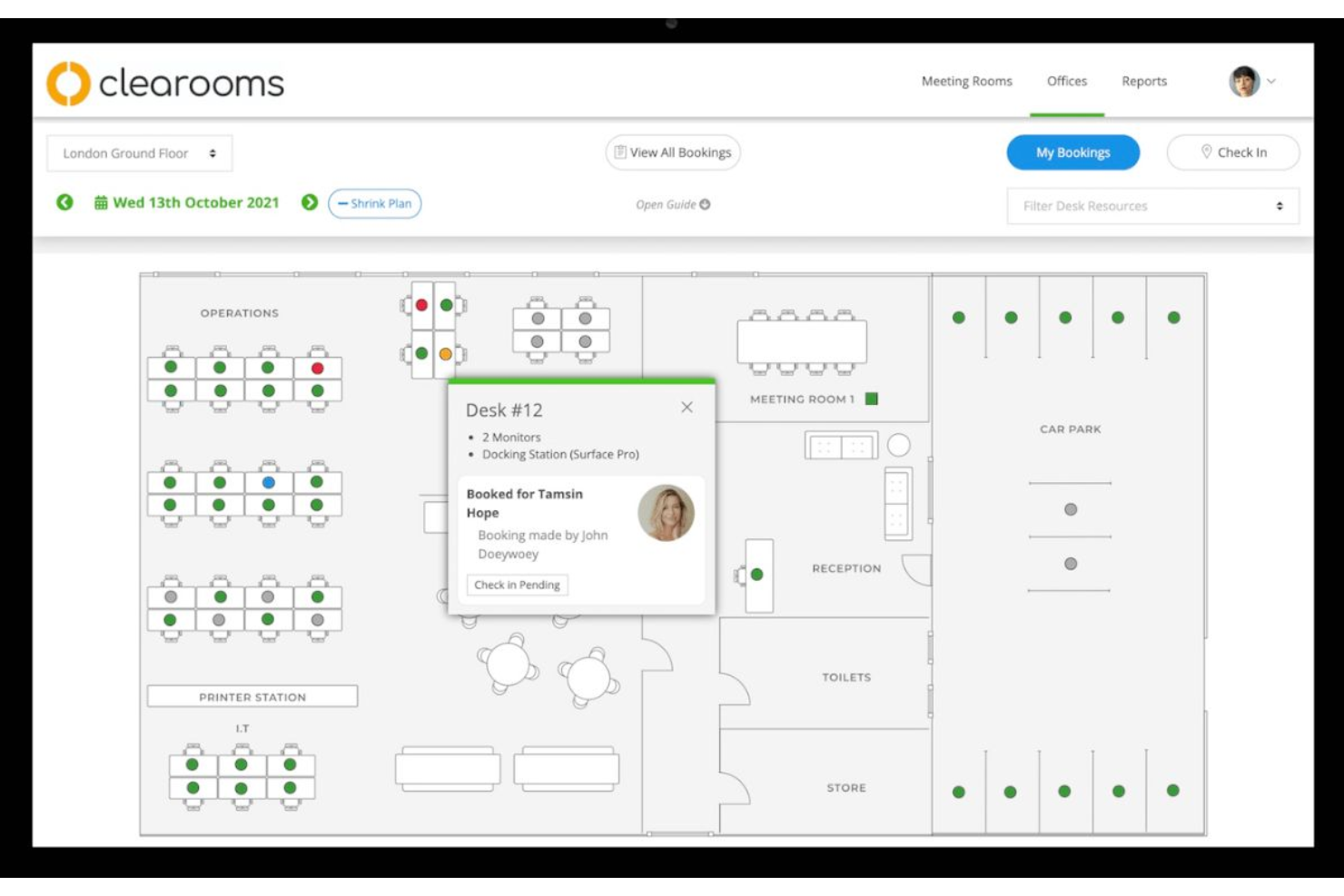
Clearooms is a desk and meeting room booking platform designed for organizations that want to manage workspace reservations, interactive floor plans, and resource scheduling in one system.
Who Is Clearooms Best For?
IT and facilities teams at Microsoft-centric organizations that need to coordinate desk and meeting room bookings.
Why I Picked Clearooms
I picked Clearooms as one of the best because I can book desks and meeting rooms directly from Microsoft Teams, which keeps my team’s workflow in one place. I like that I can sync bookings with Outlook calendars and use interactive floor plans to find available spaces. My team also relies on the QR code check-in feature to manage attendance and avoid no-shows.
Clearooms Key Features
- Capacity management: Set and enforce workspace occupancy limits for desks and rooms.
- Desk release automation: Automatically frees up unused desks after a set period.
- Visitor management: Register and track guests entering the workspace.
- Custom booking rules: Configure booking permissions and restrictions by user or group.
Clearooms Integrations
Clearooms has native integrations across the Microsoft ecosystem, including Microsoft Teams, Microsoft 365, and Outlook. An API is available for custom integrations.
Pros and Cons
Pros:
- Hardware agnostic room console support
- Built-in parking space management
- Pricing based on desk count
Cons:
- Limited advanced AI occupancy forecasting
- Floor plan drafts require 48-hour turnaround

Officely
Best for booking directly within Slack
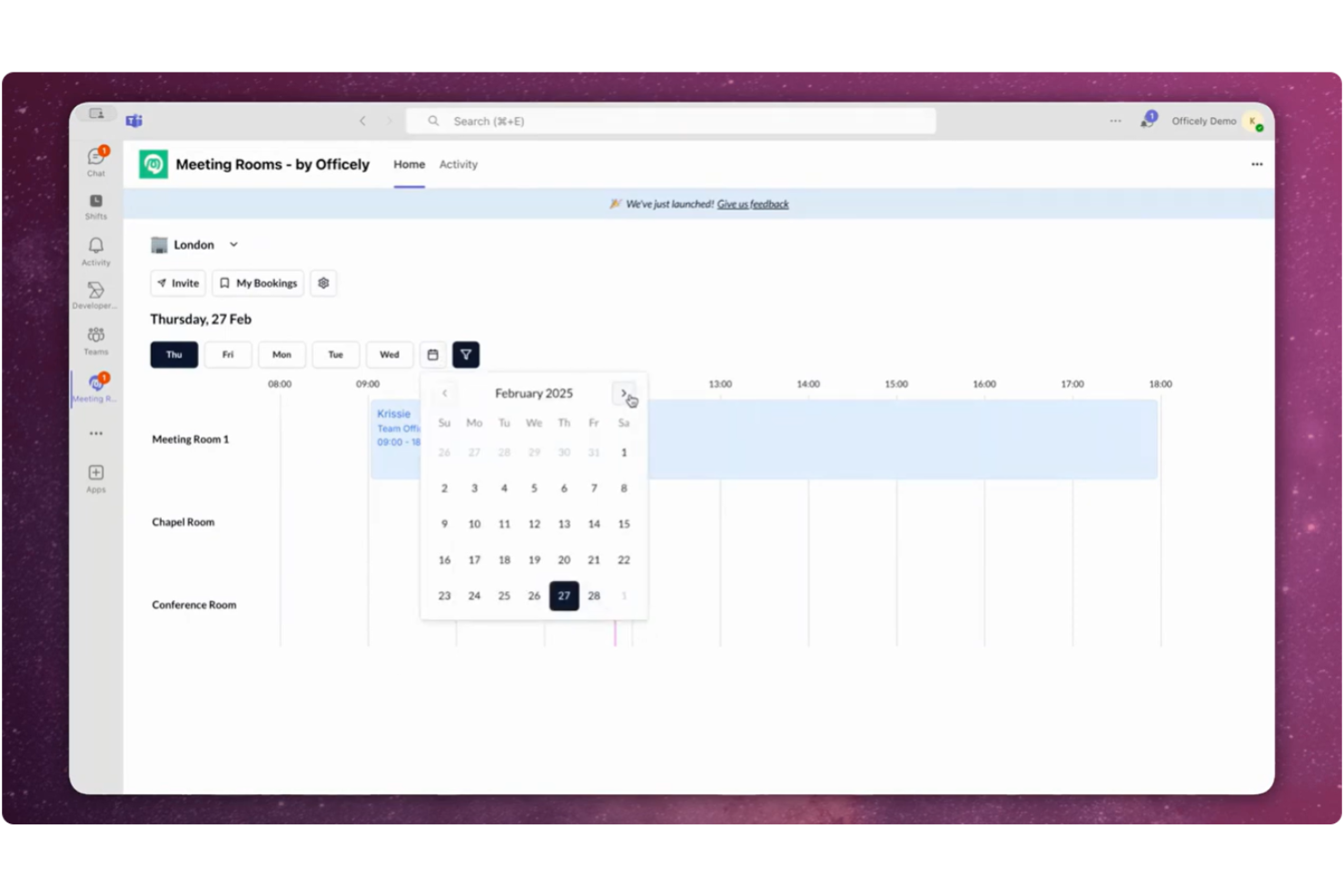
Officely is a desk booking software solution that lets teams manage workspace reservations, office schedules, and desk assignments directly from within Slack.
Who Is Officely Best For?
Hybrid teams that already use Slack as their main communication and collaboration platform.
Why I Picked Officely
I picked Officely as one of the best because I can book desks, set office schedules, and manage team attendance directly inside Slack without switching apps. I like that I can automate desk assignments and send reminders to my team through Slack channels. My team uses the daily check-in prompts to coordinate who’s coming in and keep everyone updated in real time.
Officely Key Features
- Interactive office map: View and select available desks on a visual floor plan.
- COVID-19 health screening: Collect health declarations before team members book a desk.
- Team neighborhood zones: Assign specific desk areas to different teams or departments.
- Visitor management: Register and track guests coming into the office.
Officely Integrations
Officely offers a native integration with Slack, Google Calendar, BambooHR, Deel, and more.
Pros and Cons
Pros:
- Team-specific desk assignment zones
- Personalized office day recommendations
- Direct Slack integration for booking desks
Cons:
- Limited employee engagement reporting
- Visitor management is basic and manual

Flexopus
Best for customizable user permissions
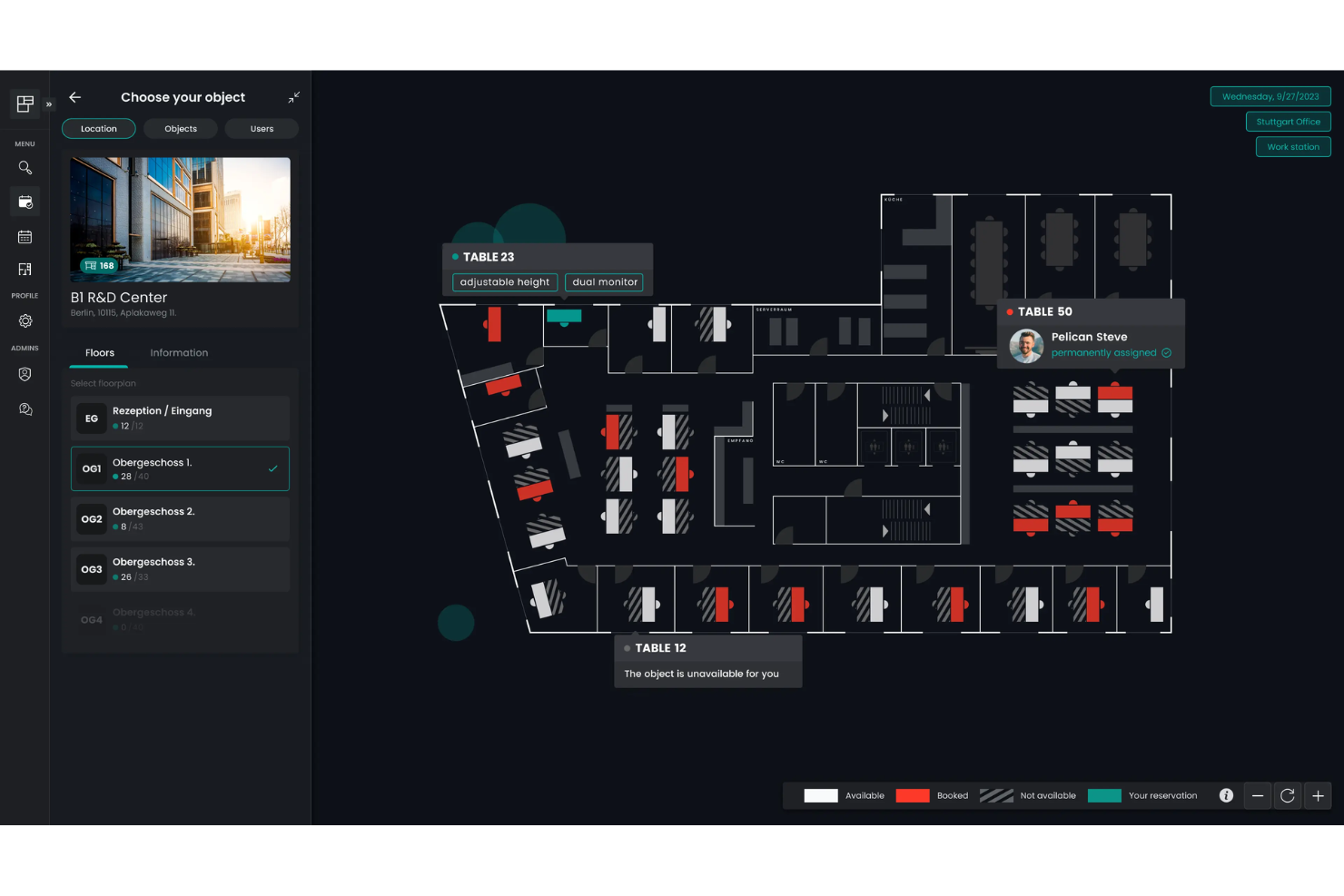
Flexopus is a desk-sharing and AI hot desk booking platform that offers interactive floor plans, booking management, visitor registration, and advanced permission controls for flexible workspace environments.
Who Is Flexopus Best For?
Facility managers and IT teams at mid-sized and large organizations who need granular control over workspace access and booking permissions.
Why I Picked Flexopus
I picked Flexopus as one of the best because I can set up detailed user roles and permissions for different teams, departments, or locations. I like that I can restrict or grant booking access based on user groups, which helps my team manage sensitive or high-demand spaces. My team uses its audit logs to track who books which desks and when, so we always have a clear record of workspace usage.
Flexopus Key Features
- Interactive floor plans: Users can view and select available desks on a digital office map.
- QR code desk check-in: Employees check in to their reserved desks using QR codes.
- Visitor management: Register and track external guests entering the workspace.
- Recurring bookings: Set up repeating desk reservations for regular schedules.
Flexopus Integrations
Flexopus offers native integrations with Microsoft Teams, Google Calendar, Webex, Personio, and Okta, and provides a REST API for custom integrations.
Pros and Cons
Pros:
- Integrated IT asset service requests
- Data hosting exclusively in Germany
- Resource-based pricing without user limits
Cons:
- Requires manual floor plan image uploads
- Admin dashboard lacks mobile optimization

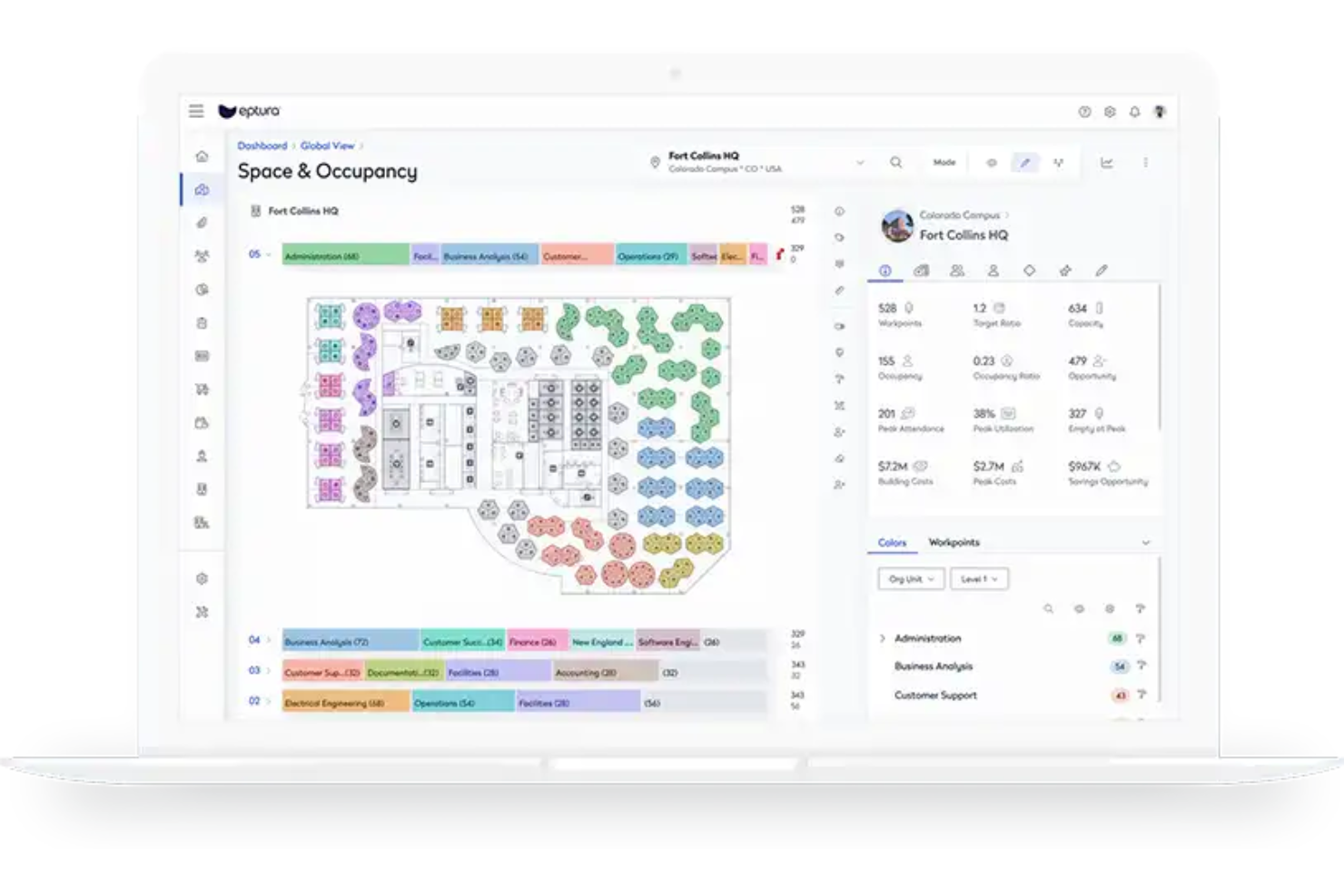
Eptura Engage is a workplace management platform for AI-powered desk booking, space reservations, visitor management, and workplace analytics designed for flexible office environments.
Who Is Eptura Engage Best For?
Facility managers and workplace teams at large enterprises seeking advanced workspace analytics and desk booking.
Why I Picked Eptura Engage
I picked Eptura Engage as one of the best because I can access granular workspace analytics that show real-time and historical desk usage patterns. I like that I can visualize occupancy trends and space utilization through customizable dashboards. My team uses its AI-driven booking engine to optimize desk assignments and monitor how different areas of the office are used over time.
Eptura Engage Key Features
- Mobile desk booking app: Reserve desks and spaces directly from a mobile device.
- Visitor management system: Register and track guests entering the workplace.
- Interactive floor plans: View and select available desks on a digital office map.
- Automated check-in and check-out: Enable touchless entry and exit for employees and visitors.
Eptura Engage Integrations
Eptura Engage offers native integrations with Microsoft 365, Google Workspace, Okta, and Slack.
Pros and Cons
Pros:
- Integrated asset service request portal
- Interactive kiosk for walk-up bookings
- Badge swipe access control integration
Cons:
- No public pricing for smaller teams
- Minimum contract for enterprise-level features

Robin is an AI-powered desk booking platform designed for hybrid workplaces, offering automated desk assignments, interactive floor plans, and real-time availability management.
Who Is Robin Best For?
Facilities managers and workplace teams at mid-size to large organizations looking to automate desk assignments and manage flexible seating.
Why I Picked Robin
I picked Robin as one of the best because its AI-driven desk assignment engine automatically allocates desks based on team preferences and booking patterns. I like how the platform visualizes real-time desk availability on interactive floor plans, making it easy to manage dynamic seating. My team is able to set up recurring desk assignments and quickly adapt to changing schedules without manual intervention.
Robin Key Features
- Visitor management: Register guests and track visitor flow directly within the platform.
- Desk check-in via mobile app: Enable users to check in to their reserved desks using a mobile device.
- Analytics dashboard: Access workspace usage data and booking trends in real time.
- Neighborhoods and zones: Group desks into neighborhoods or zones for team-based seating arrangements.
Robin Integrations
Robin offers native integrations with Microsoft Outlook, Microsoft Teams, Google Workspace, Slack, Zoom, Okta, and Rippling.
Pros and Cons
Pros:
- Mobile app supports on-the-go desk check-in
- Interactive floor plans for real-time booking
- Automated desk assignments based on usage patterns
Cons:
- No built-in wayfinding for large offices
- Visitor management requires higher-tier plans
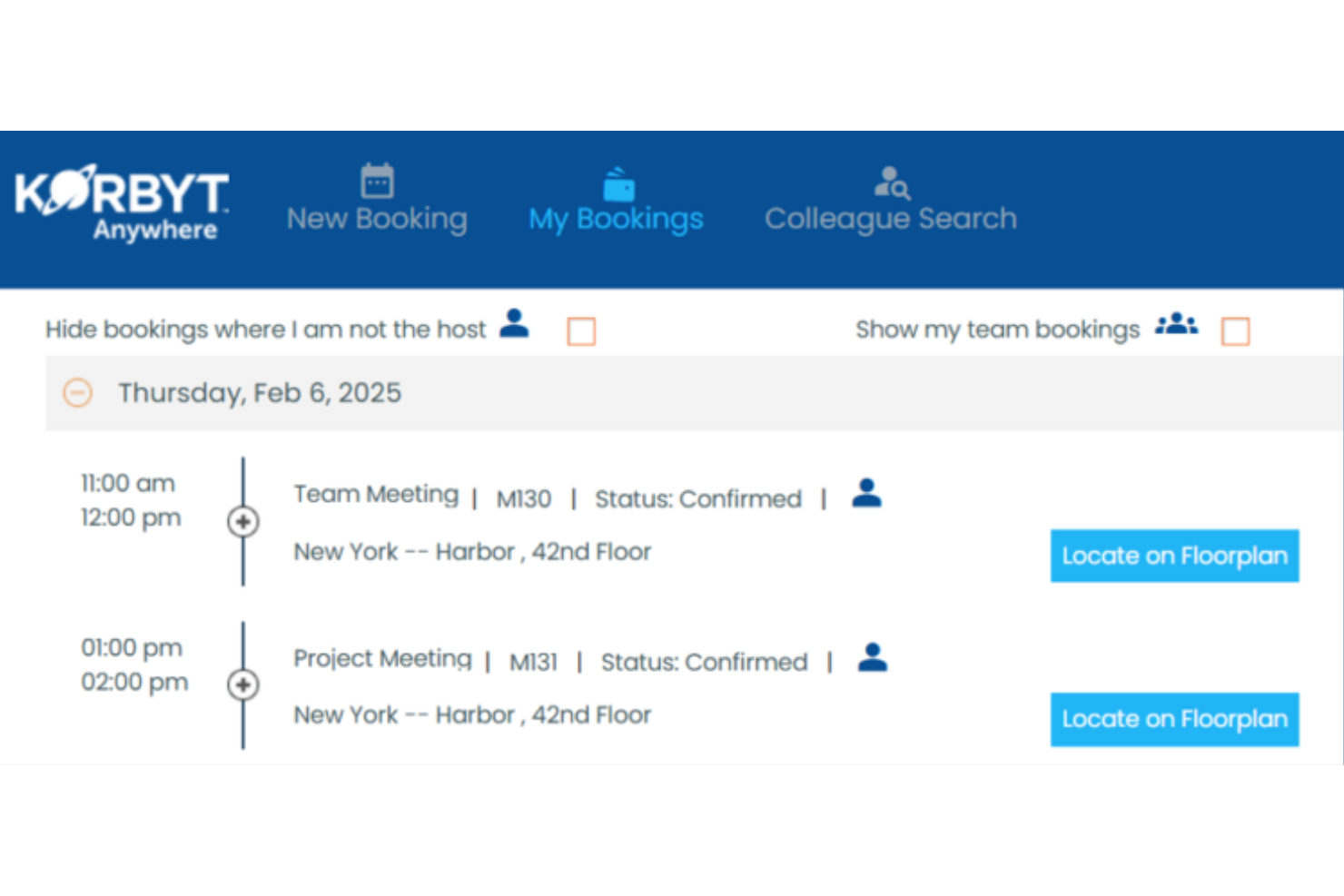
Korbyt is a workplace experience platform for AI-powered desk booking that combines interactive floorplan mapping, workspace reservations, occupancy analytics, and visitor management.
Who Is Korbyt Best For?
Facility and workplace managers at large enterprises who need real-time visibility into desk and space usage.
Why I Picked Korbyt
I picked Korbyt as one of the best because I can see real-time floorplan views that update as desks are booked or released, which helps my team quickly spot available spaces. I like using the interactive map to filter by amenities and location, so I can match people to the right workspace. I also rely on the occupancy heatmaps to monitor usage patterns throughout the day.
Korbyt Key Features
- AI-powered desk assignment: Uses algorithms to suggest optimal desk assignments based on preferences and availability.
- Mobile booking app: Lets users reserve desks and manage bookings from their smartphones.
- Visitor management integration: Coordinates guest check-ins and workspace access.
- Automated cleaning notifications: Triggers cleaning requests after desk usage for hygiene compliance.
Korbyt Integrations
Integrations include Dropbox, Microsoft 365, Outlook, Salesforce, and more.
Pros and Cons
Pros:
- Offers occupancy analytics for optimization
- Supports multi-location and multi-floor management
- Interactive maps make desk selection visual
Cons:
- Advanced analytics require higher-tier plans
- Limited calendar integration options

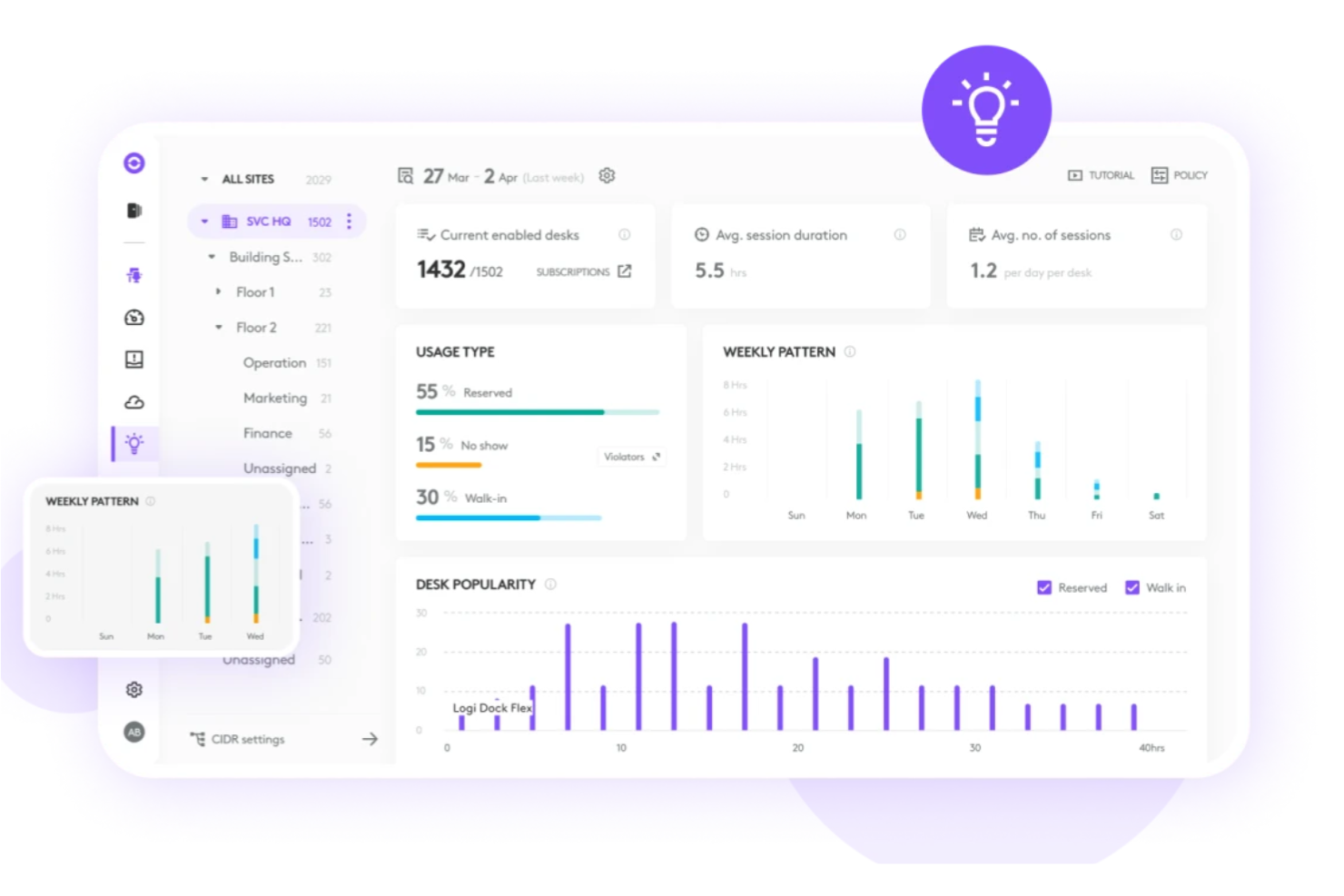
Logitech Desk Booking is a workspace management platform for booking desks, managing devices, monitoring occupancy, and analyzing workspace usage across hybrid office environments.
Who Is Logitech Desk Booking Best For?
IT and facilities teams at mid-size and large organizations managing hybrid workspaces and connected devices.
Why I Picked Logitech Desk Booking
I picked Logitech Desk Booking as one of the best because I can manage both workspace reservations and connected devices from a single dashboard. I like how the platform provides detailed workspace analytics, letting my team monitor occupancy and device usage trends. My team is able to automate desk assignments and proactively address device issues using real-time data from Logitech Sync.
Logitech Desk Booking Key Features
- QR code desk check-in: Users scan a QR code to confirm their desk reservation on arrival.
- Interactive floor plan view: Visualize and select available desks directly from a digital office map.
- Single sign-on (SSO) support: Employees log in securely using their existing company credentials.
- Admin role management: Assign different access levels and permissions to workspace administrators.
Logitech Desk Booking Integrations
Logitech Desk Booking offers native integrations with Microsoft 365, Google Workspace, Azure AD, Okta, and ServiceNow.
Pros and Cons
Pros:
- QR code check-in for contactless desk access
- Real-time occupancy data for each workspace
- Device health monitoring built into the platform
Cons:
- Analytics export options are restricted
- Limited branding customization
Other AI Hot Desk Booking Software
Here are some additional AI hot desk booking software options that didn’t make it onto my shortlist, but are still worth checking out:
- OfficeSpace
With badge integration for check-in
- Eden
For hourly desk reservations
- anny
With interactive 3D office maps
- Skedda
For self-service desk scheduling rules
- Envoy
With visitor management integration
- deskbird
For booking via mobile and web apps
- Kadence
For automated recurring desk reservations
- Archie
For analytics on workspace utilization
- DeskFlex
With room and desk booking in one platform
- HybridHero
For occupancy insights by department


How I Evaluate AI Hot Desk Booking Software
I look for platforms where AI goes beyond a marketing label—it should suggest desks based on project teams, predict space demand from upcoming schedules, or flag underused capacity. I split my evaluation into core functionality every tool needs to qualify and the differentiating factors that separate a good fit from a great one.
Core Functionality (Table Stakes For This List)
When I'm selecting tools for my list, I rank each one on a scale from 0 (does not offer the functionality) to 5 (excels in this area) for each core functionality listed below. Then, I calculate the tool's total score into a percentage. Each tool needs to achieve a minimum total score of 55% to be considered for inclusion.
- AI-Driven Desk Recommendations: I evaluate whether the AI goes beyond simple filters to actually suggest desks based on factors like team proximity, past booking habits, or project assignments.
- Hot Desk Booking Engine: The booking flow should cover search, reservation, modification, and cancellation across locations, including support for recurring bookings and check-in/out.
- Interactive Floor Plans: I look for real-time visual maps where users can spot open desks, filter by amenities, and book directly from the floor plan rather than scrolling through a list.
- Team & Project Co-location: This matters when sprint teams or cross-functional squads need to sit together. I check whether the tool supports group bookings tied to a project or team.
- AI Utilization Analytics: Dashboards should surface AI-generated insights on occupancy trends and space demand, not just raw booking counts that require manual interpretation.
- Calendar & PM Integrations: I look at how well the tool syncs with Google Calendar, Outlook, and project management platforms like Jira or Asana to keep desk bookings aligned with team schedules.
Once I have a list of tools that meet the criteria, I consider what sets each platform apart.
Differentiating Factors (What Sets Vendors Apart)
Here's how I compare and contrast different vendors:
Standout Features
AI neighborhood planning is a big differentiator—I look for tools that auto-cluster project squads into shared zones based on collaboration patterns. Scenario modeling also matters for PMO leads forecasting space needs against upcoming project pipelines. Predictive no-show detection adds real value too, freeing up desks in real time so sprint teams waiting for space can grab open seats without manual coordination.
Beyond Features
Integration depth matters a lot here. I evaluate how well a platform connects with project management tools like Jira or Asana and identity providers like Okta or Azure AD for seamless user provisioning. Scalability is another key factor—if your teams span multiple offices and time zones, the tool needs to handle that under a single tenant. I also consider implementation support, especially floor plan digitization and change management resources that help drive adoption across teams.
How to Choose AI Hot Desk Booking Software
It’s easy to get bogged down in long feature lists and complex pricing structures. To help you stay focused as you work through your unique software selection process, here’s a checklist of factors to keep in mind:
| Factor | What to Consider |
| Scalability | Will the software handle your current and future office size, locations, and user growth? |
| Integrations | Does it connect natively with your calendar, identity provider, and collaboration tools? |
| Customizability | Can you tailor booking rules, permissions, and workspace layouts to match your policies? |
| Ease of use | Will your team adopt it quickly, or will training and support be needed for everyday tasks? |
| Implementation and onboarding | How long will setup take, and what resources or support does the vendor provide for migration? |
| Cost | Are pricing tiers clear, and do they align with your usage patterns and budget constraints? |
| Security safeguards | Does the tool offer SSO, data encryption, and compliance with your organization’s security needs? |
| Support availability | What support channels are offered, and are response times acceptable for your business hours? |
What Is AI Hot Desk Booking Software?
AI hot desk booking software is a digital platform that uses artificial intelligence to help organizations manage flexible desk reservations in shared workspaces. It automates desk assignments, tracks real-time availability, and adapts to changing occupancy patterns. These tools support hybrid work models by making it easy for employees to find, book, and check into desks based on their needs and preferences.
Features of AI Hot Desk Booking Software
When selecting AI hot desk booking software, keep an eye out for the following key features:
- AI-powered desk assignment: Uses algorithms to recommend or automatically assign desks based on user preferences, team proximity, or booking history.
- Real-time availability tracking: Shows up-to-date desk status so users can see which workspaces are open or reserved at any moment.
- Interactive floor plans: Lets users view and select desks visually on a digital map that mirrors the actual office layout.
- Automated booking rules: Allows admins to set policies for who can book, when, and for how long, supporting flexible or fixed schedules.
- Calendar integration: Syncs with tools like Google Calendar or Microsoft Outlook to align desk bookings with meetings and work schedules.
- QR code check-in: Enables users to confirm their reservation and occupancy by scanning a QR code at the desk.
- Analytics and reporting: Provides insights into desk usage, occupancy trends, and booking patterns to inform workspace planning.
- Single sign-on (SSO): Supports secure authentication by connecting with your organization’s identity provider.
- Mobile app access: Lets users book, modify, or cancel reservations from their smartphones for on-the-go flexibility.
- Visitor management integration: Coordinates desk bookings with guest check-ins to manage workspace access for visitors.
Benefits of AI Hot Desk Booking Software
Implementing AI hot desk booking software provides several benefits for your team and your business. Here are a few you can look forward to:
- Optimized workspace utilization: AI-driven recommendations and real-time tracking help ensure desks are used efficiently and reduce wasted space.
- Simplified desk management: Automated booking rules and interactive floor plans make it easy for admins and employees to manage reservations.
- Improved employee experience: Quick booking, mobile access, and personalized desk assignments support flexible work and boost satisfaction.
- Data-driven decision making: Analytics and reporting features provide actionable insights for workspace planning and cost control.
- Enhanced security and compliance: Single sign-on and access controls help protect sensitive data and support organizational security policies.
- Integration with workflows: Calendar and visitor management integrations align desk bookings with meetings and guest access.
- Faster onboarding and adoption: Intuitive interfaces and guided onboarding resources help teams get up and running with minimal disruption.
Costs and Pricing of AI Hot Desk Booking Software
Selecting AI hot desk booking software requires an understanding of the various pricing models and plans available. Pricing ranges from free hot desk booking tools to paid plans that scale based on features, team size, add-ons, and more. The table below summarizes common plans, their average prices, and typical features included in AI hot desk booking software solutions:
Plan Comparison Table for AI Hot Desk Booking Software
| Plan Type | Average Price | Common Features |
| Free Plan | $0 | Basic desk booking, limited users, simple floor plan, and email support. |
| Personal Plan | $5-$10/user/month | Desk booking, mobile app access, calendar integration, and basic analytics. |
| Business Plan | $10-$25/user/month | Advanced booking rules, interactive floor plans, SSO, reporting, integrations, and admin controls. |
| Enterprise Plan | $25-$50/user/month | Custom workflows, API access, advanced analytics, dedicated support, onboarding assistance, and compliance tools. |
AI Hot Desk Booking Software FAQs
Here are some answers to common questions about AI hot desk booking software:
How does AI improve hot desk booking software?
AI improves the modern desk booking system by automating desk assignments, predicting demand, and recommending optimal seating based on user preferences and team needs. By using an AI assistant to handle logistics, organizations can eliminate the guesswork associated with office capacity, reducing manual work and ensuring better workspace utilization.
AI also supports desk hoteling strategies, allowing for a more dynamic and efficient use of available space.
Can AI hot desk booking software integrate with our existing tools?
Yes, most AI hot desk booking software can integrate with popular tools like Google Workspace, Microsoft 365, Slack, and identity providers. These integrations help sync a desk booking solution with employee calendars and digital signage throughout the office. Such connectivity ensures that whether an employee is at a permanent desk or a flexible station, their location and availability are updated in real time across all collaboration platforms.
Is AI hot desk booking software secure?
Yes, reputable AI hot desk booking software prioritizes data protection by implementing single sign-on, encryption, and strict GDPR compliance. To maintain a secure user experience, these tools offer access controls that ensure only authorized personnel can view or modify floor plans. Always review a vendor’s security documentation to ensure it meets your organization’s requirements.
What kind of analytics can I expect from these platforms?
You can expect detailed analytics on occupancy rates, booking trends, and peak usage times. These insights are invaluable for real estate optimization, helping you make informed decisions about office layout and capacity planning. By understanding how the office is used on-site, you can better align your physical space with actual workplace needs and future investments.
How long does it take to implement AI hot desk booking software?
Implementation typically takes anywhere from a few days to a few weeks. Most providers offer a user-friendly onboarding process with templates to help you map out your office quickly. The timeline often depends on the complexity of your room scheduling requirements and how many departments are transitioning to the new system.
Can employees book desks from their mobile devices?
Yes, most AI hot desk booking software offers mobile apps or responsive web interfaces, allowing employees to book, modify, or cancel reservations from their smartphones or tablets. This supports flexible, on-the-go desk management.