

2026’da İş Birliği İçin En İyi 10 Mural Alternatifi Aracı

En İyi Mural Alternatifleri Kısa Listesi


Mural, görsel projeler için daha iş birliğine dayalı bir yazılıma ihtiyaç duyan ekipler için değerli bir araçtır. Ancak her ekip için doğru seçim olmayabilir. Gerçek zamanlı iş birliğini geliştirmek, tasarım odaklı düşünme atölyelerini iyileştirmek veya yalnızca ekibinizin kendine özgü iş akışına daha iyi uyan bir araç bulmak istiyorsanız değerlendirmeye değer çok sayıda alternatif bulunur.
En iyi Mural alternatiflerini bulmanıza yardımcı olmak için fiyatlandırma, artılar ve eksiler ile genel etkinlik gibi unsurları dikkate alarak çeşitli yazılımları araştırdım ve inceledim. Ayrıntılı incelemelerim sayesinde ekibinizde yaratıcılığı ve verimliliği destekleyecek ideal aracı bulabilir ve iş hayatında başarıya ulaşabilirsiniz.
Mural nedir?
Mural, sanal beyaz tahta kullanımı aracılığıyla ekip yaratıcılığını ve üretkenliğini artırmak üzere tasarlanmış, görsel iş birliğine yönelik dijital bir çalışma alanıdır. Kullanıcıların fiziksel konumlarından bağımsız olarak diyagramlar, akış şemaları ve yapışkan notlar gibi görsel içerikleri gerçek zamanlı olarak oluşturmasına, paylaşmasına ve bunlar üzerinde iş birliği yapmasına olanak tanır.
Neden Mural alternatifi kullanmalısınız?
Mural, uzaktan iş birliği ve tasarım için değerli bir araç olsa da ekibinizin ihtiyaçlarına tam olarak uymayabilir. Aşağıdaki konularda endişeleriniz varsa Mural'a alternatif arıyor olabilirsiniz:
- Maliyet: Mural'ın fiyatlandırma yapısı, ekibinizin veya kuruluşunuzun bütçe kısıtlarını aşabilir ve bu da onu maliyet konusunda hassas işletmeler için daha az uygulanabilir bir seçenek hâline getirebilir.
- Özellikler: Mural, gelişmiş veri analizi veya özelleştirilebilir şablonlar gibi iş akışlarınız için gerekli bazı temel özellikleri içermiyorsa proje ihtiyaçlarınızı tam olarak karşılamayabilir.
- Kullanıcı arayüzü: Mural'ın kullanıcı arayüzünü piyasadaki diğer iş birliği araçlarına kıyasla daha az sezgisel veya görsel açıdan daha az çekici bulabilirsiniz.
- Entegrasyon: Mural, proje yönetimi yazılımları veya CRM sistemleri gibi her gün kullandığınız diğer araçlarla sorunsuz bir şekilde entegre olmayabilir ve bu da iş akışınızda verimsizliklere yol açabilir.
- Performans: Mural'da yavaş yükleme süreleri veya yoğun etkileşimler sırasında oluşan hatalar gibi performans sorunlarıyla karşılaşırsanız bu durum ekibinizin iş birliği çabalarını önemli ölçüde sekteye uğratabilir.
Mural alternatifleri, özel ihtiyaçlarınız ve tercihlerinizle uyumlu benzersiz özellikler, daha iyi entegrasyon ve geliştirilmiş performans sunabilir. Ayrıca bütçe dostu seçenekler ve iş akışınıza daha uygun olabilecek farklı kullanıcı arayüzleri de sağlayabilirler.
Why Trust Our Software Recommendations
Our team has been testing and reviewing software since 2012. As project managers ourselves, we know how difficult—and important—it is to choose the right software.
For this guide, we evaluated tools using hands-on testing and independent research, scoring tools using our selection criteria. We also draw on insights from industry thought leaders and practicing project management experts.
Our reviews reflect our human editorial judgment, not a sales pitch.
Expert reviewers:
Mural Alternatifleri Karşılaştırma Tablosu
Score legend (out of 5)
- Excellent 4.5–5
- Good 4–4.4
- Average 3–3.9
- Below average 2–2.9
- Poor 1–1.9
| Tool | Starting Price | Website | |||||||
|---|---|---|---|---|---|---|---|---|---|
| Best for collaborative interface design | 3.8 out of 5 | 4 | 4 | 4 | 4 | 4 | 3 | $3/user/month Free plan available | Website |
| Best for bringing Miro boards into team plans | 2.3 out of 5 | 1 | 2 | 3 | 1 | 3 | 4 | $12/user/month Free plan + free trial available | Website |
| Best for unified communication | — | — | 2 | 1 | — | 4 | 3 | $45/month 14-day free trial + free demo available | Website |
| Best for organizing creative projects visually | — | 4 | 4 | 3 | — | 3 | 2 | $9.99/user/month Free plan + free trial + free demo available | Website |
| Best for a remote-friendly team workspace | 3.3 out of 5 | 3 | 3 | 4 | 3 | 3 | 4 | $5.78/user/month Free plan + 7-day trial available | Website |
| Best for keeping boards in Microsoft 365 | 3.0 out of 5 | 3 | 3 | 4 | 2 | 3 | 3 | Pricing upon request Free plan available | Website |
| Best for seamless collaboration and productivity | — | — | 2 | 2 | — | 2 | 3 | €10/user/month 14-day free trial + demo available | Website |
| Best for visual workspace for innovation | 4.0 out of 5 | 4 | 4 | 4 | 4 | 3 | 5 | $8/user/month Free plan + 14-day free trial + free demo available | Book Demo |
| Best for enterprise work management and automation | — | 1 | 2 | 3 | — | 3 | 4 | $9/user/month 30-day free trial + demo available | Book Demo |
| Best for real-time brainstorming and collaboration | 3.8 out of 5 | 4 | 4 | 4 | 4 | 3 | 4 | $9/user/month Free plan + 7-day trial + demo available | Website |
En İyi Mural Alternatifleri İncelemeleri
Aşağıda her bir Mural alternatifinin kapsamlı bir analizini ve genel değerlendirmesini sunacağım. Her aracın artılarını ve eksilerini, özelliklerini ve en uygun kullanım alanlarını açıklayacağım.
Figma
Best for collaborative interface design
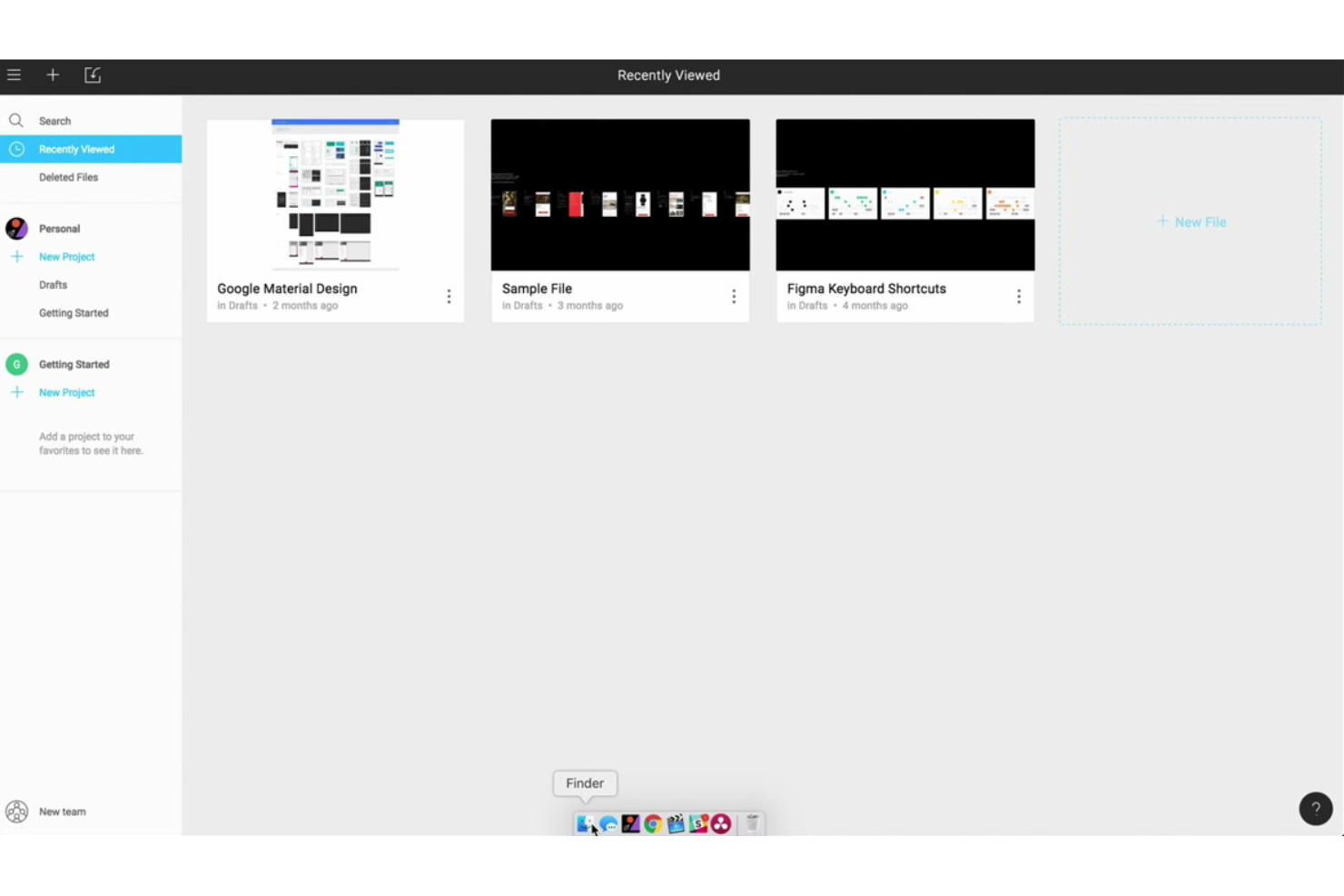
FigJam is Figma's dedicated online whiteboard that brings together sticky notes, voting, diagramming, agile workflows, and AI-assisted summarization for real-time and async team collaboration.
Who Is FigJam Best For?
FigJam is a natural fit for product and design teams who already live in Figma and want their brainstorming, planning, and retrospectives in the same ecosystem.
Why I Picked Figma
FigJam earns its spot on my shortlist because it's the only whiteboard tool that lives inside the same canvas where your design work actually happens. I love how teams can move from a sticky-note brainstorm directly into a Figma Design file without switching apps, which keeps sprint planning and interface work in one continuous workflow. FigJam's AI can also sort sticky clusters into themes and generate flowcharts or Gantt charts from a prompt, which I've found genuinely cuts down on post-session cleanup time.
FigJam Key Features
- Voting sessions: Facilitators set a prompt and vote limit, and participants cast votes on sticky notes that stay hidden until the session ends.
- Spotlight mode: Guides all participants to follow the facilitator's cursor and focus on the same content in real time.
- Agile workflow templates: Ready-made boards for sprint planning, retrospectives, Kanban boards, and Gantt charts support common agile ceremonies.
- Open sessions: Paid plan users can invite external contributors without a Figma account to collaborate on a board for up to 24 hours.
Figma Integrations
FigJam offers documented native integrations with Jira, Asana, GitHub, Slack, Zoom, Google Workspace, Notion Custom Agents, and Mixpanel. It also works with Microsoft Teams channels and meetings and provides a REST API and webhooks for custom integrations.
Pros and Cons
Pros:
- Voting and templates support remote workshops
- AI groups sticky notes into themes
- Moves brainstorms directly into design work
Cons:
- Offline collaboration and phone editing remain limited
- Dense boards become hard to navigate
Coda
Best for bringing Miro boards into team plans
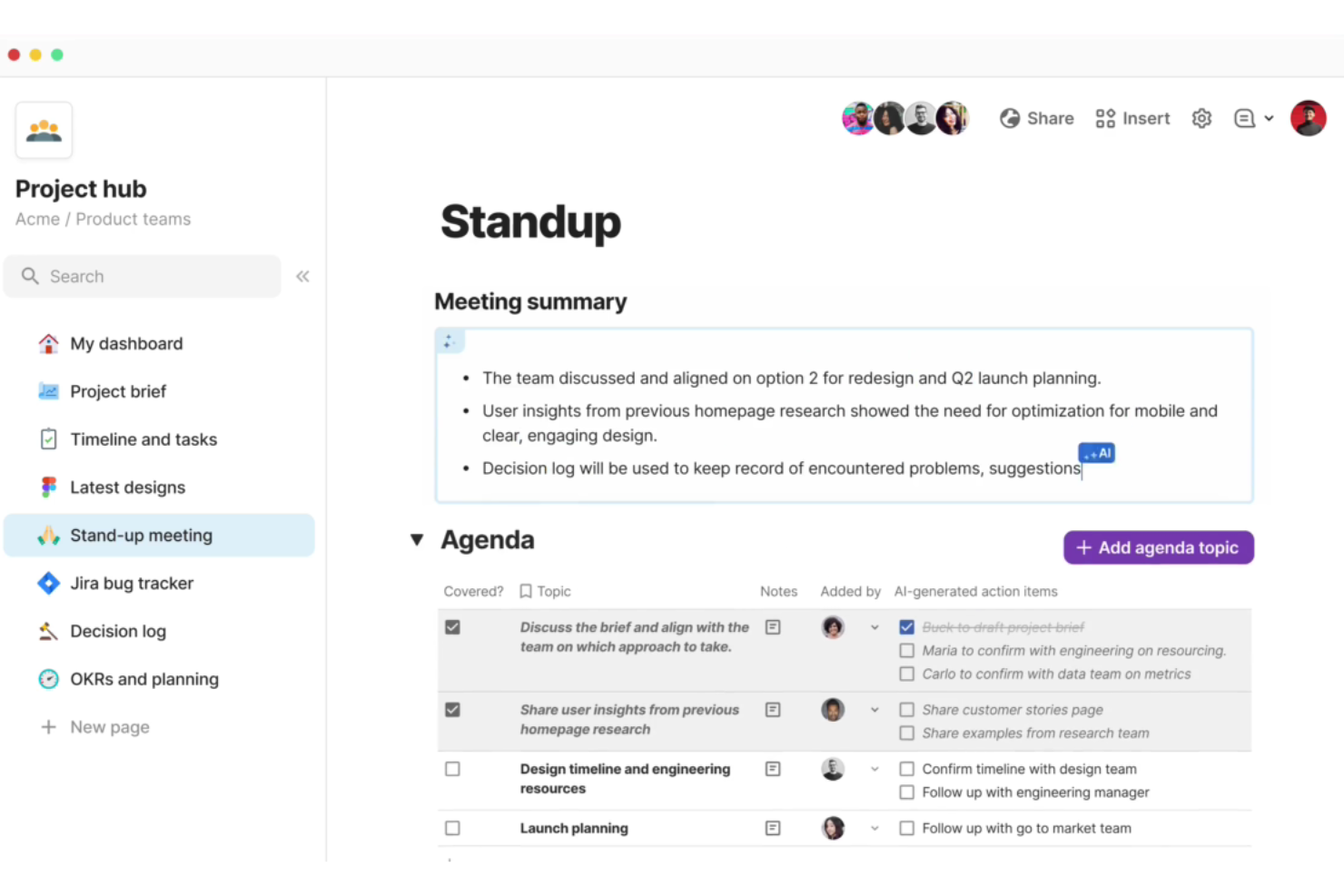
Coda is a collaborative workspace platform that combines documents, databases, project trackers, and an AI assistant into a single shared environment for teams.
Who Is Coda Best For?
Coda suits teams that want to consolidate project tracking, knowledge management, and AI-assisted writing into one workspace instead of juggling separate tools.
Why I Picked Coda
I picked Coda as one of the best because it pulls documents, databases, project trackers, and an AI assistant into a single workspace, so teams stop bouncing between tools mid-project. I especially like how Docs AI lets you build trackers and dashboards from a plain-language prompt, turning a rough ask into a structured project view in seconds. Pair that with two-way sync to Jira, Slack, and GitHub, and your team's source of truth actually stays current.
Coda Key Features
- Packs integration library: Connect Docs to 800+ external tools, including Jira, GitHub, Slack, and Salesforce, using pre-built Packs that support two-way data sync.
- Cross-doc sync: Pull data from other Docs into a single workspace view and take actions across documents without leaving your current doc.
- Automated workflows: Set up rule-based automations that trigger actions, send notifications, or update records based on changes in your document data.
- Role-based permissions: Control access at the folder, doc, and page level, with options to lock pages and restrict editing to specific team members.
Coda Integrations
Coda offers 800+ integrations through Packs, including marketplace integrations with Miro, Figma, Zoom, Jira, Slack, Microsoft Teams, and Google Drive. It also provides REST and MCP APIs for custom integrations.
Pros and Cons
Pros:
- AI summarizes documents and surfaces action items
- Custom workflows carry workshop decisions into project tracking
- Teams co-edit notes and project trackers live
Cons:
- No built-in timers, grouping, or facilitator controls
- No freeform canvas for sticky-note brainstorming

ProofHub
Best for unified communication
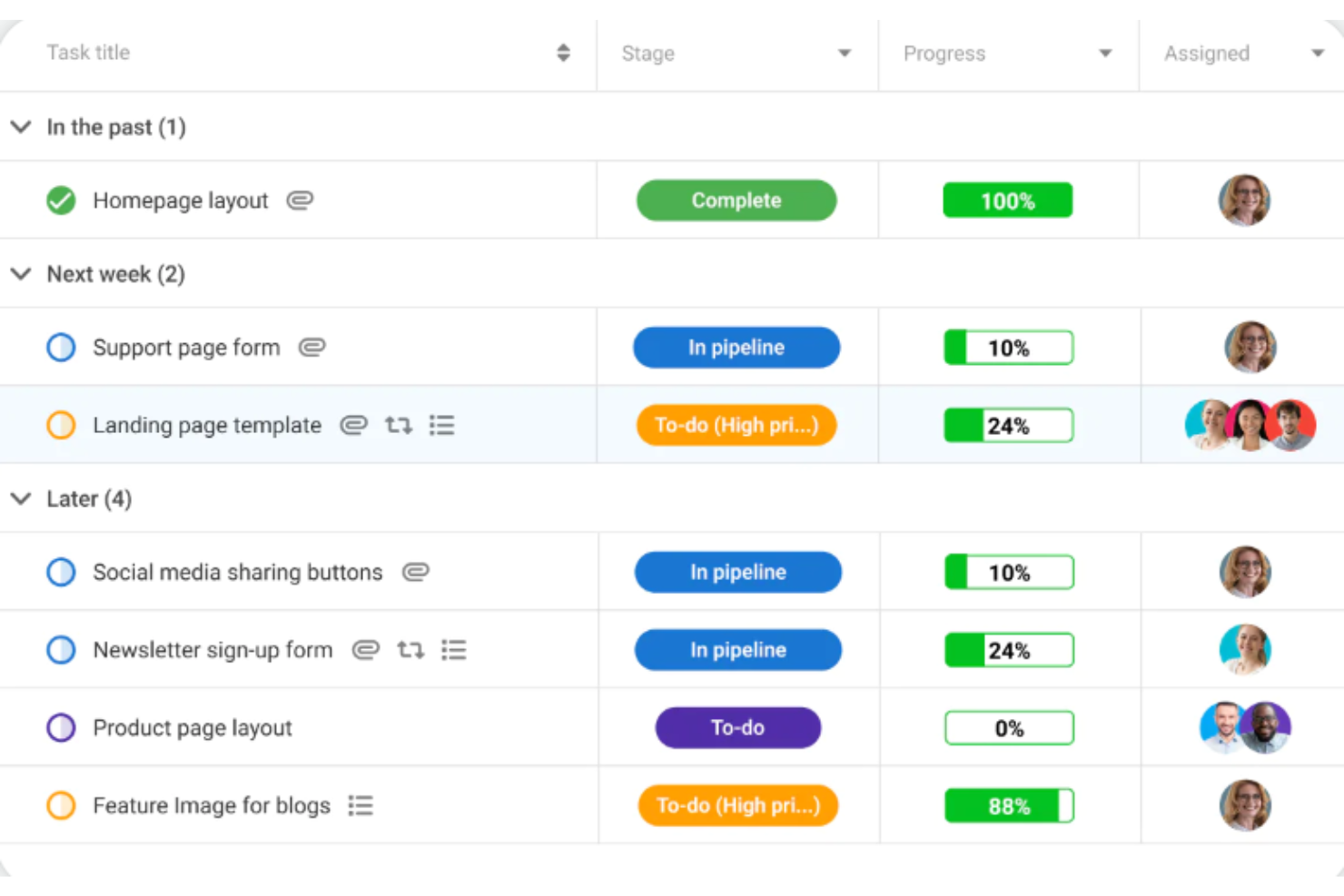
ProofHub is a project management and team collaboration platform that centralizes tasks, discussions, file proofing, time tracking, and reporting in one place.
Who Is ProofHub Best For?
ProofHub suits remote team managers who need tasks, files, discussions, and time tracking in one place.
Why I Picked ProofHub
I've included ProofHub in my top picks because it pulls tasks, discussions, file proofing, and time tracking into a single account, which cuts down on the context-switching that fragments remote team communication. I particularly like the proofing and review tools: you can annotate design files, leave markup feedback, and approve work without leaving the platform. Notes let teams build shared wikis and capture meeting minutes in one place, keeping project context accessible to everyone.
ProofHub Key Features
- Gantt chart view: Visualize project schedules, set task dependencies, and track deadlines across your team's work.
- Time tracking: Log time manually or via timers, set estimates on tasks, and pull time reports across projects.
- Custom roles and permissions: Define access levels per user, controlling what each person can view, add, or manage across projects and sections.
- Forms: Collect work requests or tickets through customizable forms that feed directly into your project tasks.
ProofHub Integrations
ProofHub offers native integrations with Slack, Google Calendar, Dropbox, Box, OneDrive, and iCal, plus FreshBooks and QuickBooks. It also provides a REST API for custom integrations.
Pros and Cons
Pros:
- Tracks decisions through tasks and milestones
- Annotates design files for consolidated feedback
- Keeps project discussions beside assigned work
Cons:
- No voting, timers, or retrospective tools
- No freeform canvas for visual brainstorming
Milanote
Best for organizing creative projects visually
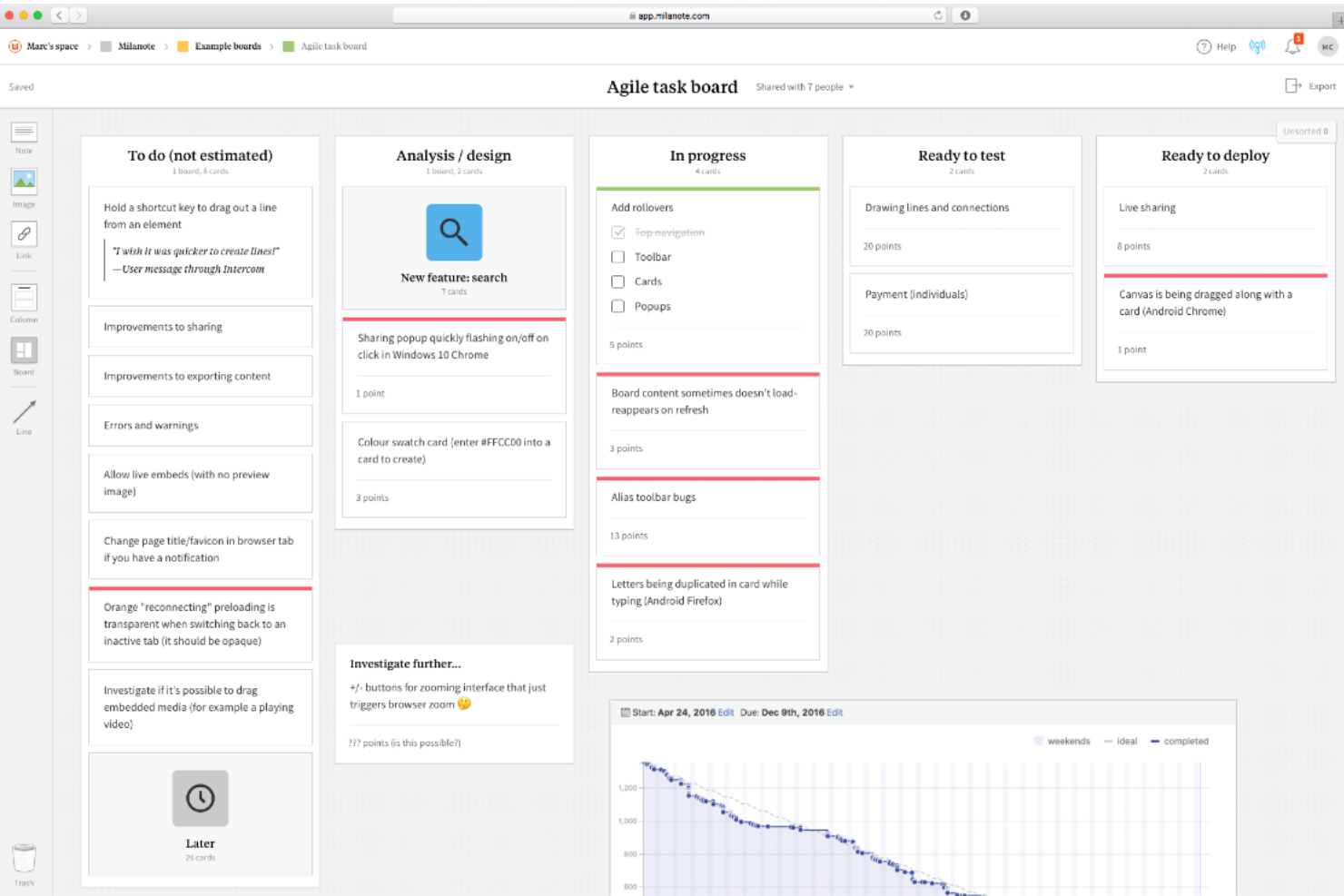
Milanote is a visual workspace tool that lets teams arrange notes, images, links, files, and tasks on an infinite canvas for creative project organization, moodboarding, mind mapping, and collaborative brainstorming.
Who Is Milanote Best For?
Milanote is a strong fit for UX designers, creative directors, and content teams who need a flexible visual workspace to organize project materials, moodboards, and user-journey maps.
Why I Picked Milanote
I picked Milanote as one of the best because it's purpose-built for visual creative organization in a way most whiteboard tools aren't. I love how you can pull moodboard images, sketches, notes, links, and files onto a single infinite canvas and arrange them freely, which makes it genuinely useful for UX journey mapping or creative project planning. The 100-plus templates, including user-persona and user-flow diagrams, give my team a real head start on structuring visual work collaboratively.
Milanote Key Features
- Real-time multi-user boards: Multiple teammates can work on the same board simultaneously, with everyone's activity visible as it happens.
- @mention comments and reactions: Comment cards support threaded replies, @mentions that trigger notifications, and emoji reactions attached to any card on the board.
- Custom and shareable templates: Build your own templates from any board, reuse them across projects, and share them as editable or read-only links.
- Web Clipper: Save text, images, videos, and links from any website directly to a Milanote board via a Chrome extension.
Milanote Integrations
Milanote has one documented native integration, Pexels, for searching and adding professional photos to boards. No API or broader third-party integration ecosystem is documented, so connectivity is more limited than in many Mural alternatives.
Pros and Cons
Pros:
- UX journey-map templates support design workshops
- Real-time boards support distributed brainstorming
- Flexible canvas mixes notes, images, and tasks
Cons:
- Mobile boards require internet access
- No timers, voting, or facilitator controls
Best for a remote-friendly team workspace
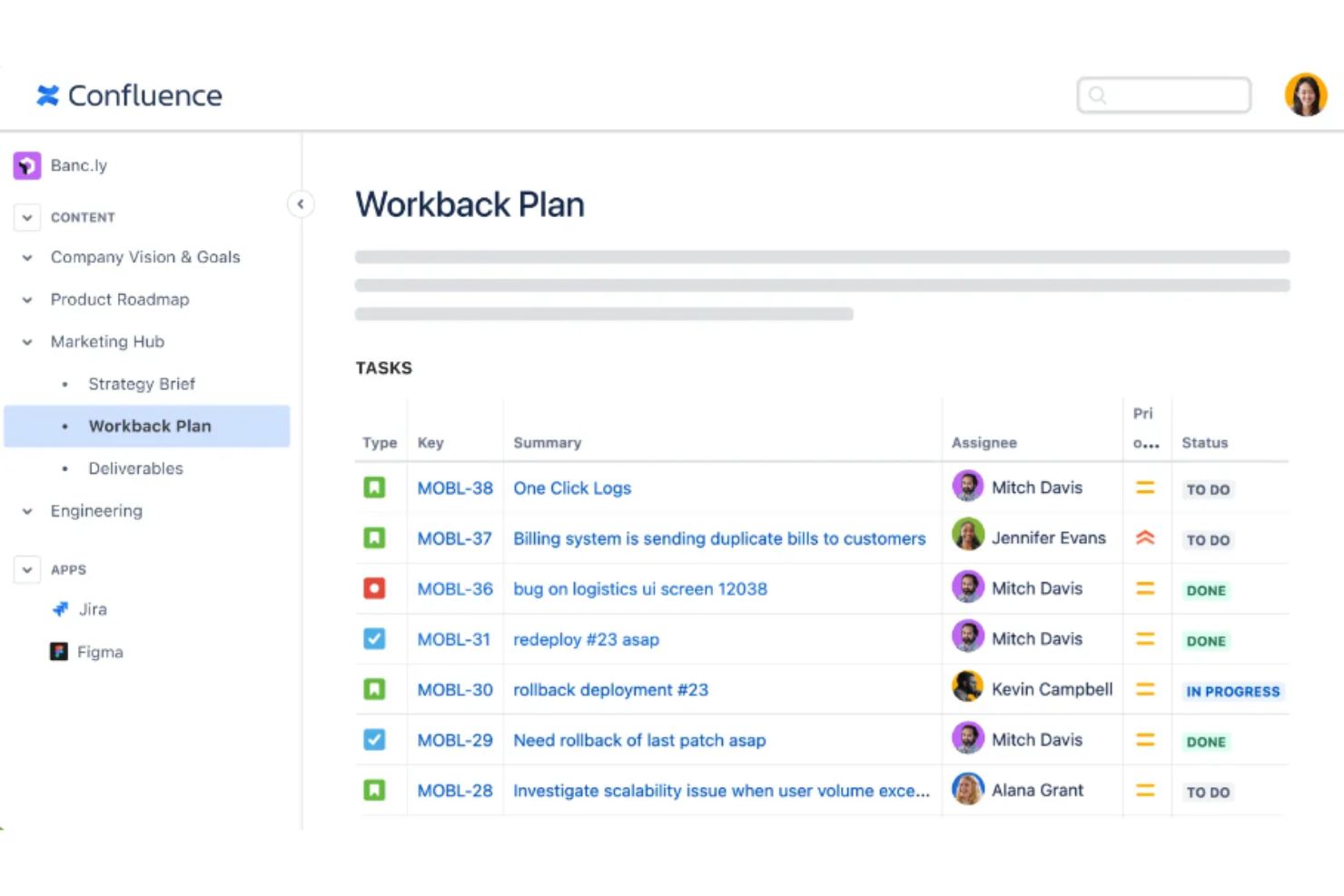
Confluence is a team workspace platform from Atlassian that combines wiki-style documentation, databases, and whiteboards for real-time and async collaboration across distributed teams.
Who Is Confluence Best For?
Confluence is a strong fit for teams already using Jira who want whiteboarding and documentation in one connected workspace.
Why I Picked Confluence
I've included Confluence in my top picks because it's the only tool on this list that doubles as a full team workspace, making it a natural fit if your team already lives in Jira. I love that whiteboards connect directly to your Jira backlog: sticky notes convert into linked issues in a click, and smart connectors build relationships between work items right on the canvas. Rovo's AI can also group stickies and summarize an entire board into a Confluence page, which turns async brainstorming sessions into documented decisions without extra steps.
Confluence Key Features
- Shared countdown timer: A collaborative timer with start, pause, stop, and add-time controls that all whiteboard participants can see during sessions.
- Canvas-placed comments: Comments can be anchored to specific locations on the whiteboard canvas, with reply threads and notifications built in.
- Whiteboard voting sessions: Anyone on the board can launch a vote with anonymous voting options and configurable vote allowances per person.
- Mural board import: Existing Mural boards can be imported as editable Confluence whiteboards directly from Mural or via a ZIP of exported PDFs.
Confluence Integrations
Confluence has native integrations with Jira, Jira Service Management, and Loom, plus Rovo connections to Slack, Trello, Google Drive, and Microsoft Teams. It supports over 1,000 marketplace apps and REST and GraphQL APIs for custom integrations.
Pros and Cons
Pros:
- Mural boards can import as editable canvases
- Templates support repeatable planning sessions
- Shared editing keeps workshop notes current
Cons:
- Voting offers no facilitator-only controls
- Whiteboards lack offline editing

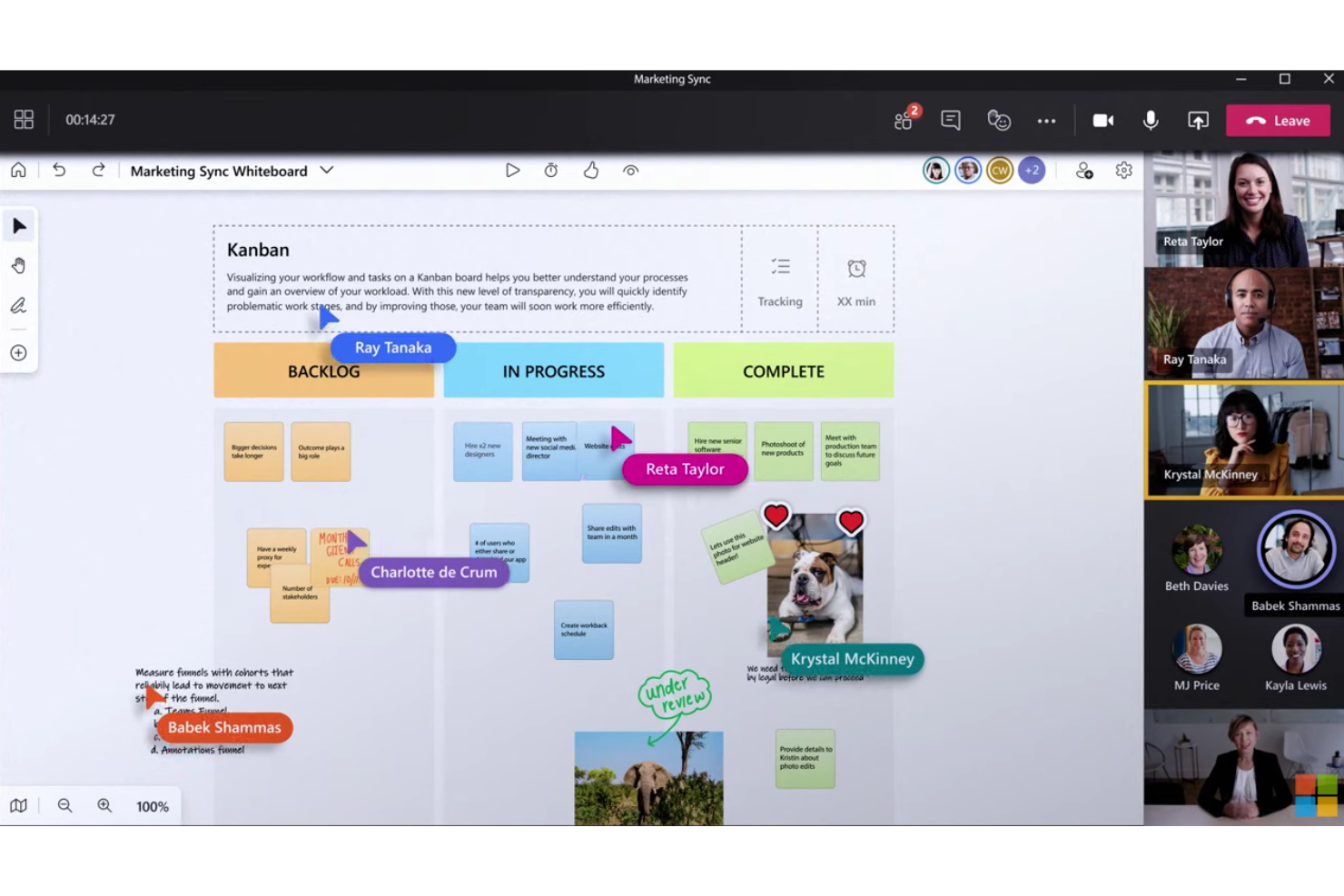
Microsoft Whiteboard is a digital collaboration canvas built into Microsoft 365 that supports sticky notes, freeform drawing, collaborative diagramming, templates, and real-time co-editing across web, desktop, and mobile.
Who Is Microsoft Whiteboard Best For?
Microsoft Whiteboard is a natural fit for teams already embedded in the Microsoft 365 ecosystem who want a free, no-friction whiteboarding tool without adding another platform.
Why I Picked Microsoft Whiteboard
Microsoft Whiteboard earns its spot on my list because it's the only tool here that lives natively inside Microsoft 365, making it a zero-friction choice if your team already runs on Teams. I particularly like how boards started in a Teams meeting persist after the call ends, so your retrospective sticky notes or sprint diagrams don't disappear. Copilot can also summarize board content into a bullet-point Loop component on the canvas, which saves real time when you're wrapping up a workshop.
Microsoft Whiteboard Key Features
- Reaction stickers: Participants can place emoji reactions directly on the board to vote on ideas or give lightweight feedback during live sessions.
- Notes Grid: Automatically arranges sticky notes into a structured grid, making it easy to group and compare related ideas.
- Collaborative diagrams: Teams can build diagrams together using shapes, lines, text, and ink directly on the canvas.
- Granular access controls: Board owners can assign editing or read-only access to individual invitees, with a toggle to lock boards after a Teams meeting ends.
Microsoft Whiteboard Integrations
Microsoft Whiteboard offers native integrations across the Microsoft ecosystem, including Microsoft Teams, OneDrive for Business, Office.com, and SharePoint. No API or third-party integration marketplace is clearly documented.
Pros and Cons
Pros:
- Notes Grid organizes related ideas
- Templates cover retrospectives and workshops
- Live cursors support collaborative idea-building
Cons:
- Large boards can lag and become hard to navigate
- No built-in timer or structured voting

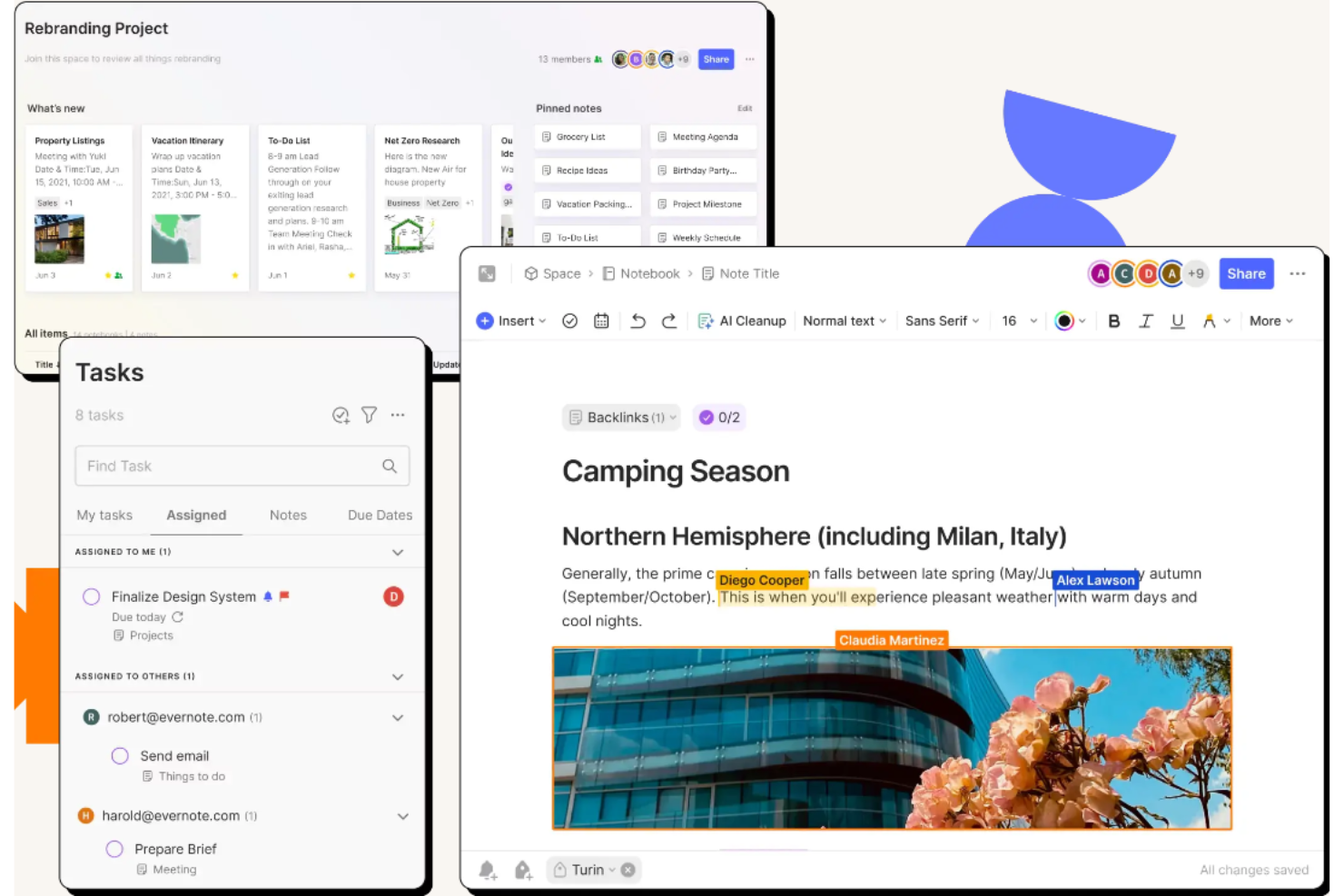
Evernote Teams is a note-taking and team collaboration platform that centers on shared notebooks, spaces, task management, and AI-assisted meeting notes rather than visual canvases or whiteboarding.
Who Is Evernote Teams Best For?
Evernote Teams suits knowledge workers and distributed teams who need a shared space to capture, organize, and reference information across projects.
Why I Picked Evernote Teams
I've included Evernote Teams in my top picks because it takes a different angle from visual whiteboarding tools, centering on shared notebooks and spaces where distributed teams capture, organize, and reference project knowledge together. I particularly like how AI Meeting Notes records and transcribes conversations directly inside Evernote, keeping decisions and action items alongside the notes they belong to. Shared spaces let the whole team contribute to project briefs, status updates, and task lists simultaneously, without bouncing between separate apps.
Evernote Teams Key Features
- AI Meeting Notes: Records, transcribes, and summarizes in-person or remote conversations directly inside Evernote, with support for over 50 languages.
- Threaded comments: Lets team members add and reply to comments on notes, with notifications sent to the note owner and prior thread contributors.
- Calendar integration: Connects Google Calendar and Outlook to sync schedules, create linked meeting notes in one click, and trigger pre- or post-meeting reminders.
- Granular space permissions: Controls notebook and space access with view, edit, or edit-and-invite settings, managed through a central admin console.
Evernote Teams Integrations
Evernote Teams integrates with Google Calendar, Outlook Calendar, Google Drive, Gmail, Slack, and Microsoft Outlook Email. It also offers an API for custom integrations.
Pros and Cons
Pros:
- Meeting transcripts capture decisions beyond sessions
- Searchable project knowledge stays easy to retrieve
- Shared notes keep workshop decisions together
Cons:
- No voting, timers, or facilitation controls
- No visual canvas for live brainstorming
Miro
Best for visual workspace for innovation
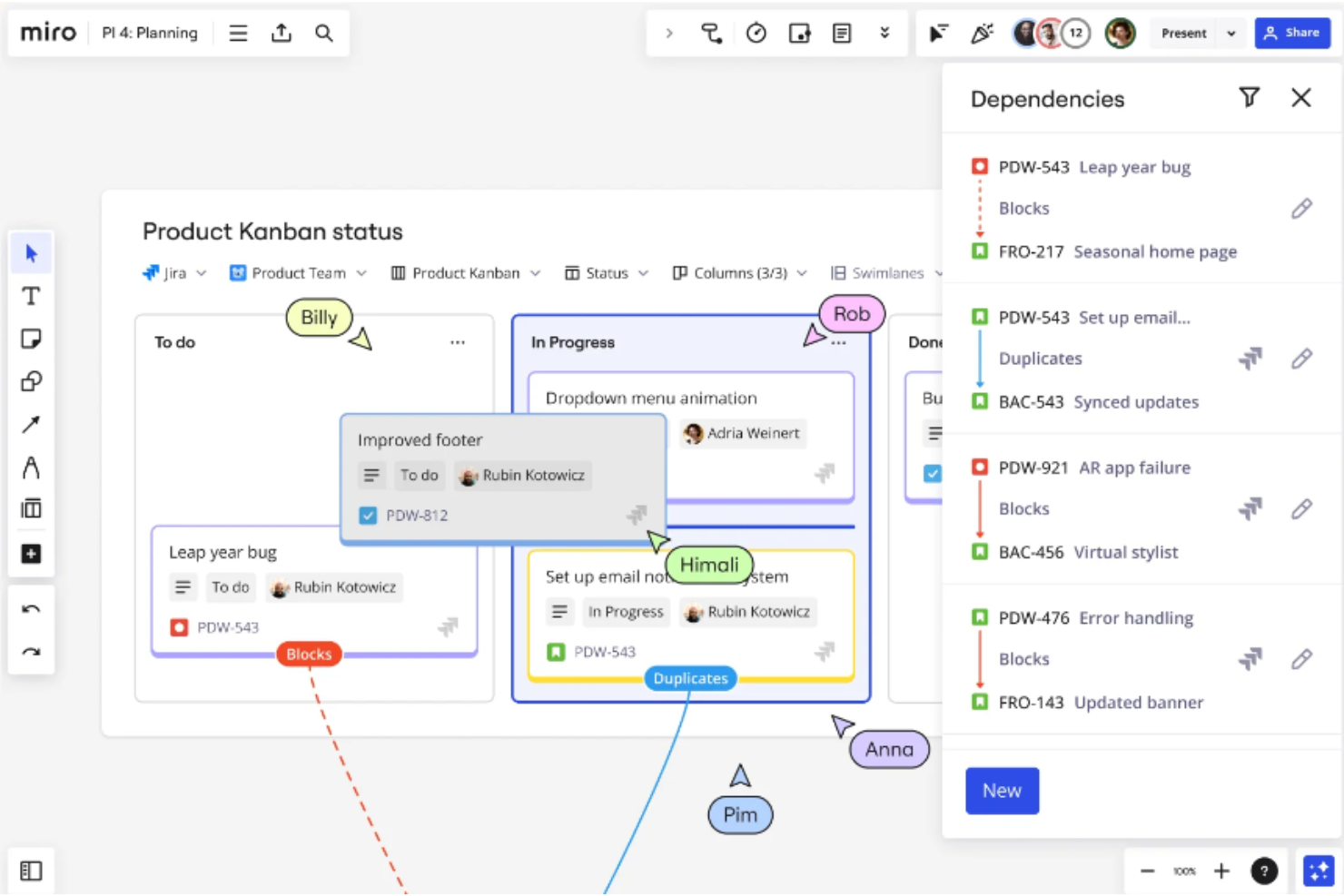
Miro is a visual collaboration platform that combines an infinite canvas, real-time co-editing, workshop facilitation tools, diagramming, and AI-assisted synthesis for distributed teams.
Who Is Miro Best For?
Miro is a strong fit for cross-functional teams in tech that need one shared space for brainstorming, diagramming, sprint planning, and async collaboration.
Why I Picked Miro
Miro earns its spot as one of the best on my shortlist because it's purpose-built as a visual workspace for innovation, giving cross-functional teams a single canvas where brainstorming, diagramming, and sprint facilitation all happen together. I particularly like the Estimation app, which lets agile teams run multiplayer pointing sessions with Fibonacci or T-shirt sizing directly on the board. Miro's AI can also cluster sticky notes by theme and synthesize retrospective input automatically, which cuts down significantly on post-session cleanup.
Miro Key Features
- Real-time video calls on canvas: Host video calls with up to 25 participants directly on your Miro board, with screen sharing, recording, and live transcription to a board Doc.
- MCP server connectivity: Connect your Miro boards to external AI tools like Claude, ChatGPT, and GitHub Copilot so those tools can read board context and create content on the canvas.
- Engage activities: Run mobile-friendly polls, 2×2 matrices, and scale activities to collect structured input from participants during live sessions.
- Diagramming shape libraries: Access shapes for BPMN, UML, AWS, Azure, ERD, Kubernetes, and Google Cloud diagrams, with support for importing existing diagrams from Visio, Lucidchart, and draw.io.
Miro Integrations
Miro offers 250+ apps and integrations, including native Jira, Azure DevOps, Asana, Slack, Microsoft Teams, Google Meet, Google Drive, and Confluence connections, plus marketplace integrations for Notion and monday.com. REST APIs, Web SDKs, and an MCP server support custom connectivity.
Pros and Cons
Pros:
- Canvas combines diagrams and workshop artifacts
- Agile estimation supports anonymous multiplayer voting
- AI clusters retrospective notes automatically
Cons:
- Facilitators get fewer session guardrails than Mural
- Crowded boards can slow navigation
New Product Updates from Miro
Miro Adds Japan Data Residency for Enterprise Customers
Miro has introduced Japan data residency for enterprise customers, offering in-region storage for production data, backups, and metadata, plus in-region compute infrastructure. For more information, visit Miro's official site.
 .
Best for enterprise work management and automation
Smartsheet is an AI-powered work management platform that combines project tracking, portfolio oversight, workflow automation, and real-time collaboration across grid, Gantt, card, and calendar views.
Who Is Smartsheet Best For?
Smartsheet is a strong fit for enterprise teams that need structured work management, portfolio oversight, and automated workflows across large, cross-functional programs.
Why I Picked Smartsheet
I've included Smartsheet in my top picks because it's the strongest option here for teams that need serious enterprise work management alongside their visual collaboration stack. Where it really shines is portfolio oversight and automation: you can auto-create project plans when conditions are met, track budgets and resource workloads across programs, and run unlimited automated workflows on Business and above. Its two-way Miro sync also means sticky-note ideas from whiteboard sessions flow directly into structured Smartsheet rows, keeping creative work connected to execution.
Smartsheet Key Features
- Agile Backlog and Sprint Planning template: A pre-built solution for backlog prioritization, story-point assignment, sprint planning, and capacity monitoring.
- Automated workflow builder: Triggers actions like row moves, approval requests, and notifications based on conditions you set in each sheet.
- Real-time dashboards: Consolidate project status, resource workloads, and portfolio metrics into live, widget-based dashboards shared across teams.
- @mention comments: Tag collaborators directly in sheet comments to surface feedback and keep conversations tied to specific tasks.
Smartsheet Integrations
Smartsheet lists over 175 integrations, including two-way Miro sync, Microsoft Teams, Slack, Lucidspark, Adobe Creative Cloud, and Jira Software. Its REST API, client SDKs, and MCP server support custom integrations on Business, Enterprise, and Advanced Work Management plans.
Pros and Cons
Pros:
- Dashboards give remote teams shared progress visibility
- Familiar grids clarify project status quickly
- Automated workflows turn ideas into tracked tasks
Cons:
- No built-in voting or workshop timers
- No native canvas for visual brainstorming
New Product Updates from Smartsheet

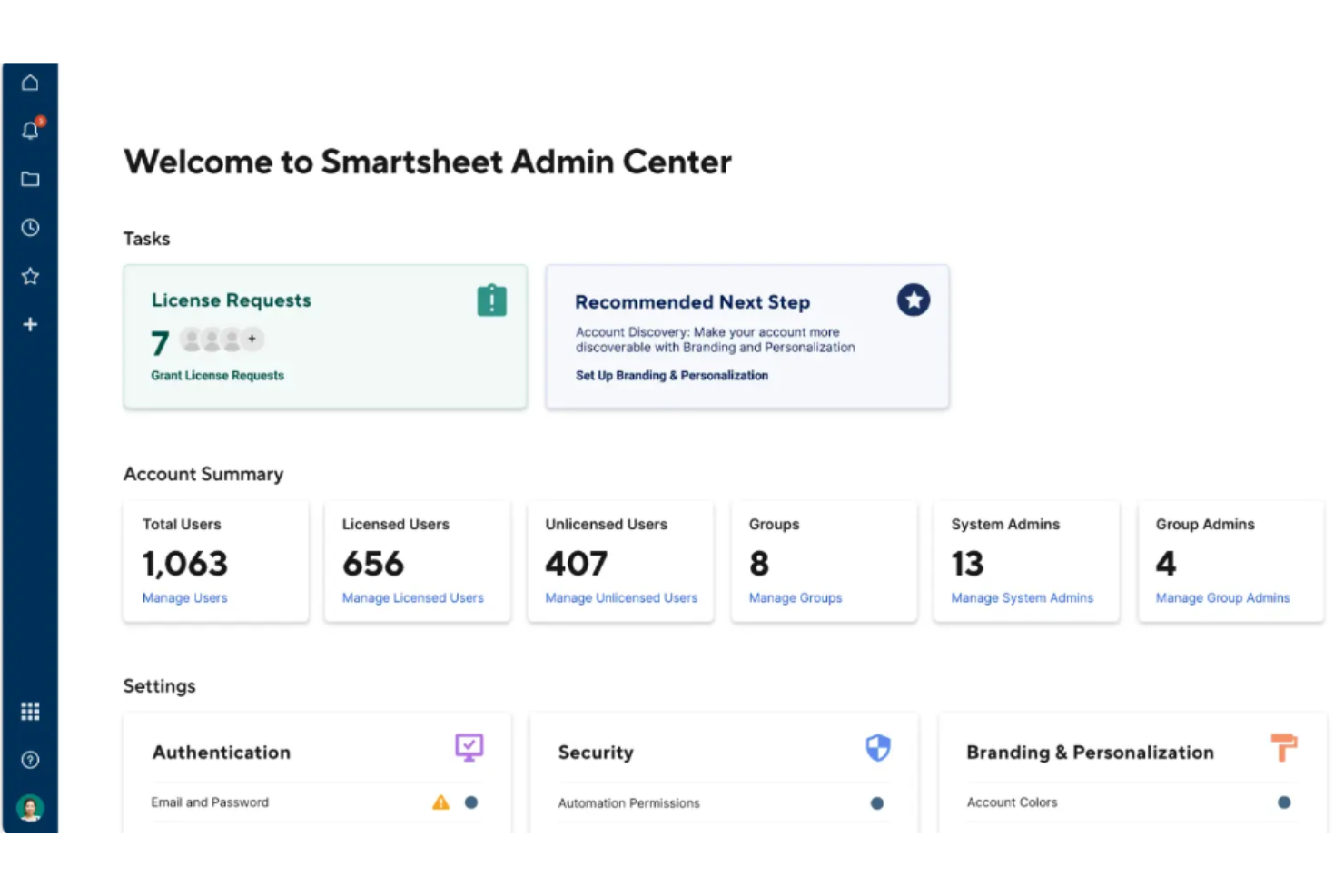
Smartsheet Adds Non-Plan User Management in Admin Center
Smartsheet adds a Non plan users tab to the Seat types and true-up page in Admin Center. This lets system admins review non-plan users and add them to the plan or remove them from the organization in one place. For more information, visit Smartsheet’s official site.
 .

Lucidspark
Best for real-time brainstorming and collaboration
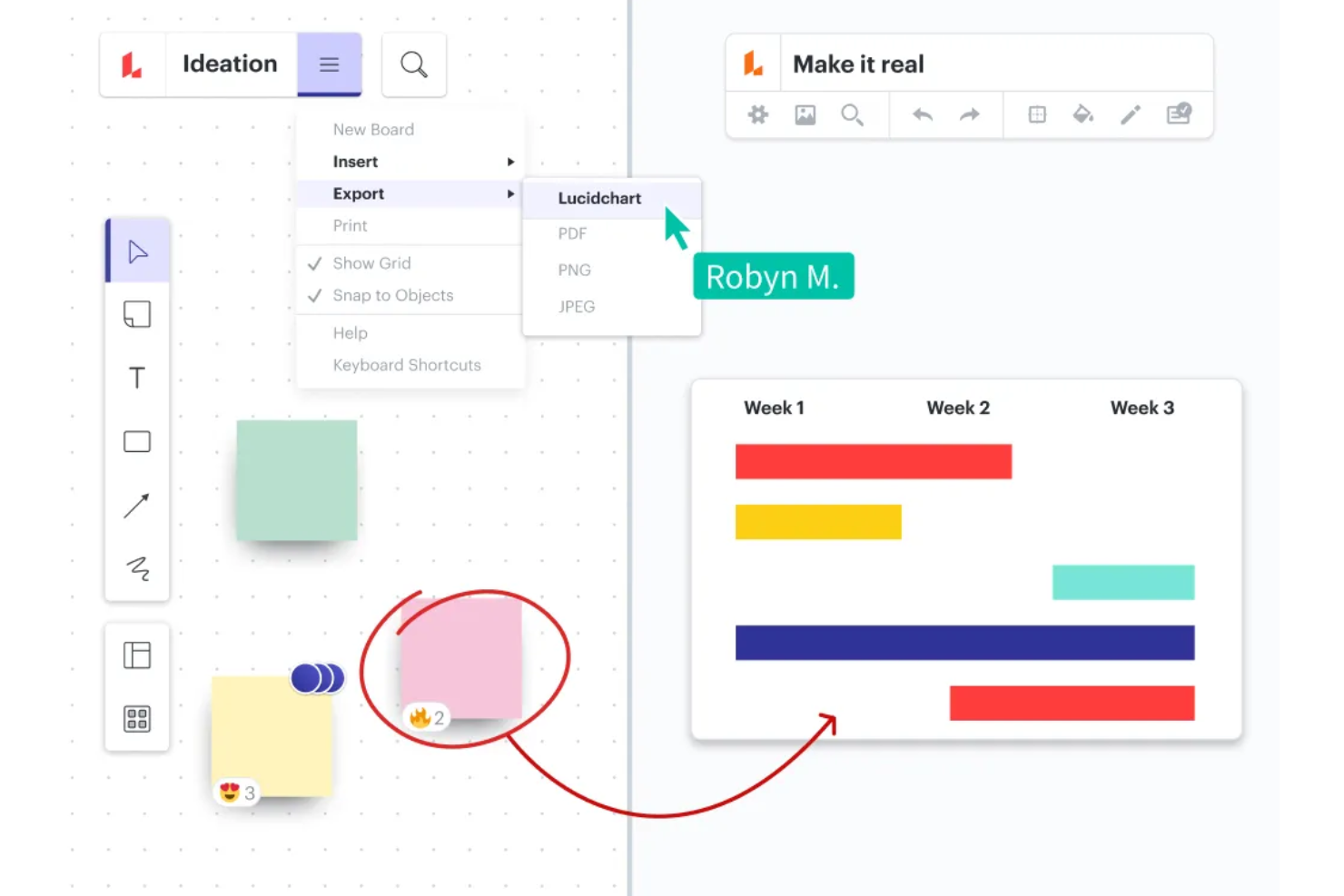
Lucidspark is a virtual whiteboard built for team ideation, offering an infinite canvas, real-time co-editing, sticky notes, mind maps, AI-assisted idea sorting, and agile facilitation tools like voting, timers, and team estimation.
Who Is Lucidspark Best For?
Lucidspark is a strong fit for agile teams and remote team managers who need a dedicated space for live brainstorming, sprint facilitation, and collaborative ideation.
Why I Picked Lucidspark
Lucidspark earns its spot on my shortlist because its AI-assisted idea sorting sets it apart when brainstorming sessions generate too many sticky notes to wrangle manually. I've found the AI grouping feature genuinely useful: it identifies themes across a board and clusters notes into labeled Containers without you having to drag a single card. The built-in Facilitator Tools, including live voting, a timer, and "Take the lead," make it easy to run structured retrospectives or sprint planning sessions with a distributed team in real time.
Lucidspark Key Features
- Real-time co-editing with collaborator cursors: Multiple users can edit the same board simultaneously, with live cursors showing where each person is working.
- Lucid Cards with Jira and Azure DevOps integration: Teams can convert sticky notes and ideas into tracked tasks that sync directly with Jira or Azure DevOps.
- CSV and TXT import for sticky notes: Users can upload CSV or TXT files to bulk-create sticky notes on the canvas from existing data or spreadsheets.
- Threaded comments with task assignment: Collaborators can leave comments on any shape or canvas area, reply in threads, and assign comments as actionable tasks to specific team members.
Lucidspark Integrations
Lucidspark offers more than 100 integrations, including Lucidchart, Slack, Google Drive, Jira, Azure DevOps, and Zoom. Its API supports custom integrations, while the marketplace lists 113 integration results.
Pros and Cons
Pros:
- Templates cover retrospectives and sprint planning
- Facilitator controls structure agile workshops
- AI groups sticky notes into themes
Cons:
- Comments and tasks disappear from exports
- Large boards can slow with many collaborators
Diğer Mural Alternatifleri
Aşağıda kısa listeye aldığım ek Mural alternatiflerinin bir listesi yer alıyor. En iyi 10 araç arasına girememiş olsalar da hâlâ değerliler ve daha fazla araştırılmayı hak ediyorlar.
- GoodDay
For workflow automation
- Basecamp
For team communication
- Wrike
For detailed task tracking and reporting
- Zoho Projects
For integrated project tools and apps
- monday AI Workspace
For customizable workflows
- Trello
For enhanced productivity
- Airtable
For building custom business apps without code
- Jira Service Management
For Agile project management
- ClickUp
For all-in-one project management
- Asana
For campaign workflows


İlgili Proje Yönetimi Yazılımı İncelemeleri
Aradığınızı burada hâlâ bulamadıysanız test edip değerlendirdiğimiz, konuyla ilgili diğer araçlara göz atın:
- Proje Yönetimi Yazılımı
- Kaynak Yönetimi Yazılımı
- İş Akışı Otomasyonu Yazılımı
- Zaman Takibi Yazılımı
- Görev Yönetimi Yazılımı
- İş Birliği Araçları
- Gantt Şeması Oluşturucu
- Verimlilik Araçları
- Proje Takibi Yazılımı
- Proje Planlama Yazılımı
How I Evaluate Mural Alternatives
I split my evaluation into baseline criteria—like real-time collaboration and facilitation tools—and differentiators that separate a good whiteboard from the right one for your team.
Core Functionality (Table Stakes For This List)
When I'm selecting tools for my list, I rank each one on a scale from 0 (does not offer the functionality) to 5 (excels in this area) for each core functionality listed below. Then, I calculate the tool's total score into a percentage. Each tool needs to achieve a minimum total score of 65% to be considered for inclusion.
- Infinite Digital Whiteboard: I look for an unbounded canvas that stays responsive when you're zooming through a sprint planning board covered in hundreds of sticky notes and connector lines.
- Real-Time Multi-User Collaboration: Live cursors, presence indicators, and simultaneous editing matter—especially when a distributed team of 15+ is mapping dependencies together mid-workshop.
- Sticky Notes & Templates: A strong template library for retros, Kanban boards, and story maps saves hours of setup. I check whether teams can create and share custom templates across workspaces.
- Facilitation & Workshop Tools: Features like timers, voting, and private mode turn a blank canvas into a structured session. I evaluate how well each tool supports a facilitator running a live retrospective or prioritization exercise.
- Project Management Integrations: Connecting whiteboard outputs to tools like Jira, Asana, or Monday is where real value shows up. I look for native integrations and two-way sync, not just one-directional embeds.
- Diagramming & Visual Frameworks: Flowcharts, mind maps, and user story maps should be easy to build with shape libraries and smart connectors—not cobbled together from basic rectangles.
Once I have a list of tools that meet this criteria, I consider what sets each platform apart.
Differentiating Factors (What Sets Vendors Apart)
Here's how I compare and contrast different vendors:
Standout Features
AI-generated sticky note clusters and board summaries can cut hours off post-workshop synthesis—I check whether a tool offers this natively or through third-party add-ons. Async collaboration is another differentiator I evaluate closely. When your team spans multiple time zones, voice notes and threaded video comments keep a retro moving without scheduling another call. I also look at voting and prioritization features like dot voting and impact/effort matrices, which turn brainstorming outputs into actionable, ranked backlogs.
Beyond Features
Pricing structure matters here. Some tools charge per editor while others charge per seat regardless of role—this shifts costs significantly when you have 50 facilitators but 200 view-only stakeholders. I also evaluate security certifications like SOC 2 and ISO 27001, especially for teams handling sensitive product roadmaps or client data. Board performance is another factor I watch closely. A canvas that lags when 30 people join a PI planning session defeats the purpose of real-time collaboration.
Mural Alternatiflerinde Aranması Gereken Temel Özellikler
Alternatif yazılımınızın size uygun olması için Mural'ın aşağıdaki temel özelliklerini tekrarlayabilmesi veya geliştirebilmesi gerekir:
- Yapışkan Notlar & Metin: Yapışkan notlar ve metin kutuları, beyin fırtınası oturumları sırasında fikirler ile yapılacakları eklemek için vazgeçilmezdir. Farklı temalara veya önceliklere uyacak şekilde renkleri ve boyutları özelleştirilebilir. Bu esneklik, katılımcıların iş birliğine dayalı bir ortamda düşüncelerini etkili bir şekilde ifade etmelerini ve düzenlemelerini sağlar.
- Sonsuz & Yeniden Boyutlandırılabilir Tuval: Sonsuz ve yeniden boyutlandırılabilir bir tuval, fikirleri kısıtlama olmadan genişletmek için gereken alanı sağladığından hayati önem taşır; küçük ekiplerden büyük ölçekli iş birliği çalışmalarına kadar her ihtiyaca uyum sağlar. Bu uyarlanabilirlik, tüm ilgili bilgilerin ve fikirlerin tek bir geniş çalışma alanında yakalanıp incelenebilmesini garanti eder.
- Esnek İzinler: İş birliğine dayalı bir araçta esnek izinlerin uygulanması, içeriği kimlerin görüntüleyebileceğini veya düzenleyebileceğini yönetmek açısından önemlidir. Böylece hassas bilgiler kontrol altında tutulurken iş birliği de teşvik edilir. Yalnızca görüntüleme, düzenleme ve kolaylaştırıcı rolleri gibi ayarlar, katkıların yönetilmesine ve iş birliği sürecinin bütünlüğünün korunmasına yardımcı olur.
- Haritalama & Diyagram Oluşturma: Haritalama ve diyagram oluşturma araçları; iş akışlarını, süreçleri veya organizasyon yapılarını görsel olarak temsil etmek, karmaşık bilgilerin anlaşılmasını ve paylaşılmasını kolaylaştırmak için hayati önem taşır. Bu özellikler, ekiplerin iletişimi ve planlamayı geliştiren net ve uygulanabilir görselleştirmeler oluşturmasına olanak tanır.
- İkonlar, GIF'ler & Görseller: Noun Project, GIPHY ve Unsplash gibi kaynaklarla entegrasyon, iş birliklerinin görsel etkisini artırarak kullanıcıların fikirlerini daha dinamik ve ilgi çekici bir şekilde ifade etmelerini sağlar. Bu görsel öğeler, dijital bir çalışma alanında dikkat çekmeye ve mesajları daha etkili bir şekilde aktarmaya yardımcı olur.
- Özel Şablonlar: Özel şablonlar, kuruluşların süreçleri ve iş akışlarını standartlaştırmasına olanak tanıyarak projeler genelinde zaman kazandırır ve tutarlılık sağlar. Bu özellik, yeni projelerin veya toplantıların hızlı bir şekilde kurulmasına yardımcı olur ve tüm ekip üyelerinin kuruluşun yöntemleriyle aynı doğrultuda olmasını güvence altına alır.
- Kolaylaştırma Araçları: Zamanlayıcılar, katılımcıları çağırma ve özel mod gibi kolaylaştırma araçları, etkili ve verimli toplantılar yürütmek için gereklidir. Bu araçlar zamanı yönetmeye, katılımcıların sürece dahil olmasını sağlamaya ve iş birliği oturumları sırasında odağı korumaya yardımcı olarak hedeflere sorunsuz bir şekilde ulaşılmasını sağlar.
- Yorum Yapma & Metin Sohbeti: Yorum yapma ve metin sohbeti özellikleri, iş birliğine dayalı bir platformda sürekli iletişim kurulmasını sağlar. Ekip üyeleri geri bildirim bırakabilir, noktaları netleştirebilir ve fikirleri eş zamanlı olmayan şekilde tartışabilir. Bu sürekli etkileşim, herkesin sürece dahil olmasını ve bilgilendirilmesini sağlayarak iş birliği sürecini geliştirir.
- Entegrasyonlar: Mevcut verimlilik araçlarıyla entegre olabilme, farklı platformlar arasındaki geçişlerin sorunsuz olmasını ve kesintilerin en aza indirilmesini sağlayarak iş akışlarını geliştirmek açısından kritik öneme sahiptir. Bu bağlantı, iş birliğine dayalı ortamda tanıdık araçlardan yararlanarak daha düzenli ve verimli bir çalışma sürecini destekler. Confluence gibi dokümantasyon platformlarına alternatif arayan ekipler için Notion, Slite veya Coda gibi araçlarla entegrasyon, kullanıcıların iş birliğine dayalı panoları daha geniş bilgi yönetimi ekosistemlerine yerleştirmesine olanak tanır.
- Güvenlik: Hassas verileri korumak ve kullanıcılar arasındaki güveni sürdürmek için güçlü güvenlik önlemlerinin alınmasını sağlamak büyük önem taşır. Sağlam güvenlik protokolleri, bilgileri yetkisiz erişimden ve dijital tehditlerden korur; bu da herhangi bir ortak çalışma aracında gizlilik ve uyumluluk standartlarını korumak açısından önemlidir.