

PERT vs. CPM: Pros, Cons, and Key Differences

PERT (program evaluation and review technique) and CPM (critical path method) are project scheduling frameworks, but PERT is probabilistic and designed for uncertainty, while CPM is deterministic and built for precision and control. Both are supported by most common project management software that you'll encounter.
Picking the wrong one can cost you time, budget, and credibility. This article breaks down the pros, cons, and differences between PERT and CPM, so you can make the right call for your project.
What Is PERT?
PERT is a project management technique that uses probabilistic time estimates to help teams plan, schedule, and coordinate tasks under uncertain conditions. The primary function of PERT is to build realistic project timelines by factoring in best-case, worst-case, and most likely task durations.

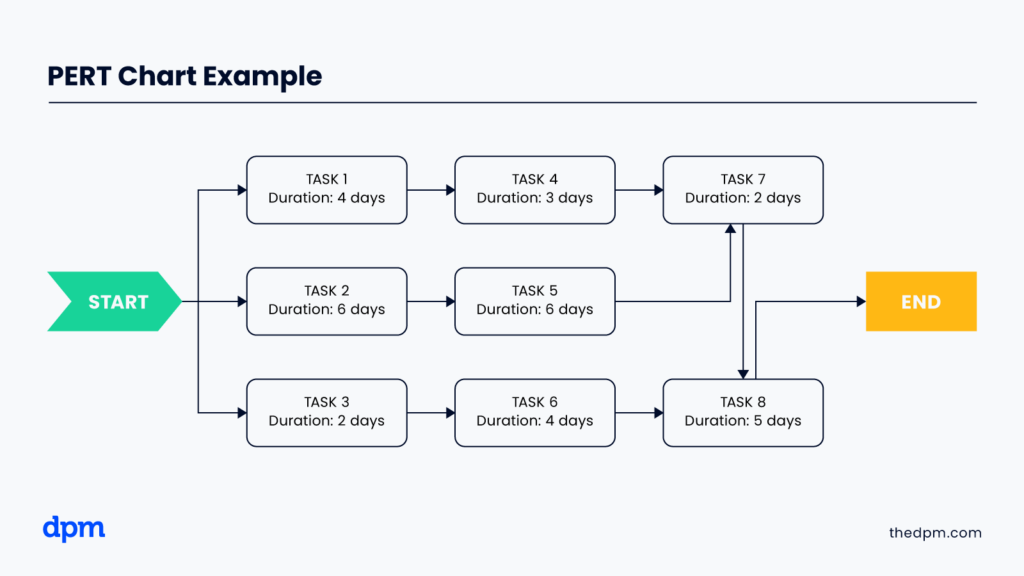
At its core, PERT features a network diagram that shows task dependencies and uses three-point estimates for each project activity. This helps you spot uncertainties early, improve risk management, and plan proactively, which makes PERT useful for unique or first-time projects.
In larger systems, I’ve found PERT helps align multidisciplinary teams, supports scenario planning, and gives you a structured way to communicate uncertainty to stakeholders.

What Is CPM?
CPM is a project management method that uses fixed time estimates to identify the sequence of critical tasks that determine a project’s minimum completion time. The purpose of the critical path method is to help teams set clear schedules, pinpoint important deadlines, and keep projects on track by focusing on tasks that can’t slip without delaying delivery.
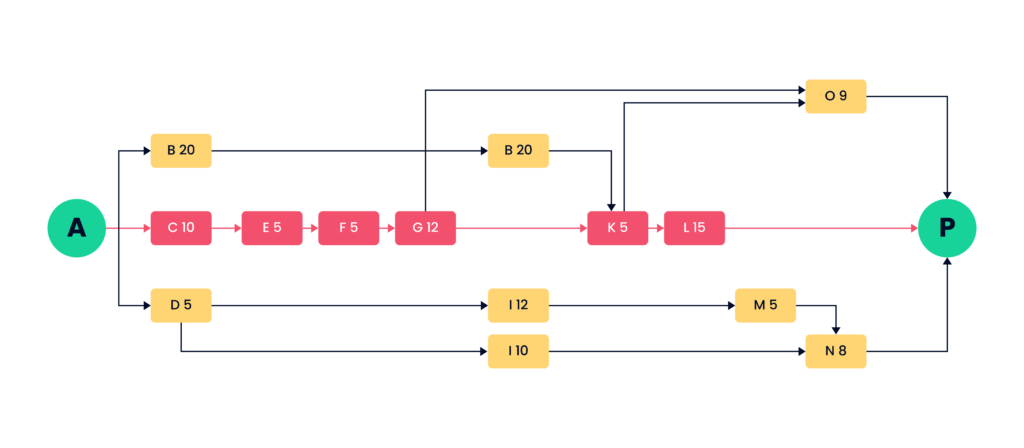
CPM builds a visual network diagram that outlines each project task, their dependencies, and the critical path, plus calculates float for non-critical tasks.
I’ve relied on CPM to quickly spot bottlenecks, optimize resource allocation, and document timelines for tight, deadline-driven work. CPM offers the control and visibility that complex, high-stakes projects demand.
Differences Between PERT and CPM
The most important difference is that PERT uses flexible, probabilistic estimates to manage uncertainty, while CPM relies on fixed durations to control and optimize predictable project schedules.
Use this table to compare how PERT and CPM approach time estimates, project types, flexibility, and cost management:
| Differences | PERT | CPM |
|---|---|---|
| Time Estimation | Uses optimistic, pessimistic, and most likely estimates for each activity. | Uses fixed, deterministic time estimates for each activity. |
| Optimization Focus | Focuses mainly on time calculations and uncertainty. | Focuses on deadline control and integrates time-cost optimization. |
| Project Suitability | Best for new, complex, or uncertain projects like R&D or product development. | Best for repetitive, predictable projects with known activity durations, like construction. |
| Flexibility and Adaptability | Flexible. Easily adapts to changing requirements or evolving project scopes. | Rigid. Works best when the plan and requirements are already well-defined and stable. |
Pros & Cons of PERT
Use this table to weigh PERT’s biggest advantages against its challenges:
| PERT Pros | PERT Cons |
|---|---|
| Handles uncertainty with three-point estimates for each task. | Can be time-consuming to develop and update network diagrams. |
| Helps teams plan new or unclear projects with less risk. | Depends heavily on accurate estimation, which can be difficult. |
| Reveals hidden dependencies before they disrupt your timeline. | May feel too complex for straightforward, routine projects. |
| Encourages proactive risk management and scenario planning. | Results can be too optimistic or pessimistic if data is poor. |
Pros & Cons of CPM
Use this table to see where CPM excels and where you might hit roadblocks:
| CPM Pros | CPM Cons |
|---|---|
| Sets clear timelines and critical deadlines for projects. | Struggles with projects involving high uncertainty. |
| Identifies the critical path, preventing schedule slippage. | Fixed time estimates don’t account for unexpected delays. |
| Offers strong visibility into resource and task priorities. | Updating the schedule can be labor-intensive for big changes. |
| Supports cost scheduling and optimization alongside timing. | Not ideal for projects without established, repeatable tasks. |
How to Choose Between PERT and CPM
So how do you decide if PERT or CPM is the best choice for your needs? Here are some factors to consider as you weigh your options:
- Project Predictability: Use PERT if you’re dealing with lots of unknowns or unique projects, and CPM if your tasks and durations are well defined.
- Flexibility Needs: Choose PERT when requirements can evolve or scope may change; pick CPM for more stable, repeatable work.
- Time vs. Cost Focus: Go with PERT if time estimation and scenario planning are your top priorities. Opt for CPM if you need strict schedule control and want to balance time with costs.
- Team Experience: Lean on PERT when your team is comfortable handling ambiguity and estimation; CPM fits teams that follow set processes and detailed schedules.
- Stakeholder Expectations: Communicate upstream. If stakeholders need risk analysis and what-if options, PERT’s your tool. If they want predictable delivery on a fixed project timeline, choose CPM.
When To Use PERT vs CPM
Use this overview to understand the key situations where each method shines:
| When to Use PERT | When to Use CPM |
|---|---|
| Kicking off R&D projects with uncertain discovery phases. | Managing office construction or renovation with clear, repeatable steps. |
| Planning software builds where task times are unknown or likely to change. | Running product rollouts with strict launch dates and predefined activities. |
| Launching new product designs where no past data exists. | Overseeing annual IT system upgrades with mature, well-documented processes. |
| Coordinating multi-team workstreams where dependencies and timelines are unclear. | Delivering client projects where every task and dependency is already scoped. |
| Estimating completion dates for one-off, high-risk initiatives with little precedent. | Tracking regulatory compliance efforts with fixed milestones and timelines. |
What's Next?
If you want to sharpen your ability to apply frameworks like PERT and CPM to real-world projects, DPM membership gives you access to proven templates, mini courses, and a peer community of digital project leaders who can help you put these methods into practice.



