

PMO leader discusses how to prevent AI from creating faster chaos instead of better execution
Discover how AI is transforming project delivery by reducing manual work, strengthening PMO governance, and helping leaders make faster, better-informed decisions.

Hussain Bandukwala
Founder and CEO of Parwaaz Consulting

AI Impact: AI is shifting project delivery from task coordination to decision support and prioritization roles.
Practical AI: Reducing manual work around projects with AI gives more focus to strategic leadership activities.
AI Integration: Embedding AI in existing workflows accelerates tasks, enhancing project delivery efficiency.
Human Skills: AI highlights the importance of human judgment, relationship management, and leadership in projects.
Governance Importance: Shared governance and decision strategies prevent chaos when integrating AI into project management.
Hussain Bandukwala has more than 20 years of project management experience and has led startups as COO and CPO. He's a 2x Global PMO Influencer finalist and a LinkedIn Learning instructor.
Currently, Hussain is the founder and CEO of Parwaaz Consulting, where he helps organizations improve execution through stronger PMOs, portfolio governance, delivery leadership, and operational transformation.
We spoke with him about how AI is reshaping project delivery, why governance matters more than ever, and what PMOs and delivery leaders must do to stay relevant. Here's what he had to say.

Bridging PMO leadership, delivery excellence, and AI
I’m the founder and CEO of Parwaaz Consulting, a boutique advisory firm that helps organizations improve execution through stronger PMOs, portfolio governance, delivery leadership, and AI enablement. For over 20 years, I’ve worked with Fortune 500s, PE-backed firms, startups, and growing mid-market organizations across industries, including healthcare, logistics, financial services, retail, and technology.
Today, I help leaders prioritize the right initiatives, improve delivery execution, strengthen PMO capabilities, and scale operations without unnecessary bureaucracy. That ranges from PMO transformations and portfolio prioritization to AI opportunity sprints, governance, tool adoption, and capability building.
Before launching Parwaaz Consulting, I worked in consulting and delivery leadership roles with firms like BearingPoint and Diamond Management & Technology Consultants. I’ve also been a startup cofounder and COO, which gave me a practical perspective on execution and growth. I’m currently a LinkedIn Learning instructor with 160,000+ learners globally, and a 2x Global PMO Influencer finalist. Gartner and Capterra have featured my thought leadership in PMOs, delivery, and AI enablement.
How AI is redefining project delivery
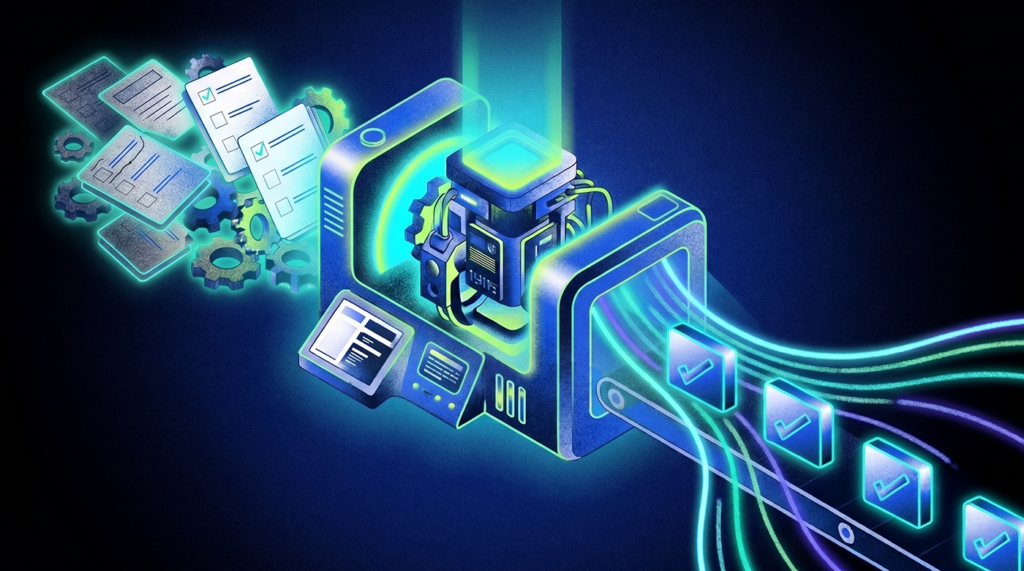
AI has significantly changed both how I personally operate and how project delivery is evolving more broadly. A few years ago, most teams were still using AI experimentally. Today, I’m seeing organizations move from curiosity to operationalization. The conversation is no longer just “What is AI?” It's “Where does AI create measurable value, how do we govern it responsibly, and how do we get adoption?”
In my own role, I spend far less time on administrative and synthesis-heavy work than I used to. Tasks like first-draft documentation, meeting summaries, brainstorming structures, stakeholder communication drafts, workshop preparation, reporting narratives, and research acceleration are now heavily AI-assisted. That has created significant efficiency gains, especially across PMO advisory, training development, and portfolio analysis work.
What’s getting more of my attention now are the higher-value leadership and strategic activities that AI cannot independently own. For example:
- Helping leaders identify which AI use cases are worth pursuing versus chasing hype
- Designing governance and oversight models that enable speed without creating bureaucracy
- Improving organizational adoption and driving behavioral change around AI-enabled ways of working
- Reframing PMOs from reporting functions into decision-support and prioritization engines
- Helping teams strengthen judgment, communication, prioritization, and stakeholder alignment in an AI-enabled environment
More broadly, project delivery itself is shifting in a few major ways. First, execution cycles are accelerating because teams can produce outputs faster. Second, the volume of initiatives is increasing because AI lowers the barrier to experimentation. Third, leaders are expecting faster decision-making and clearer ROI visibility from delivery teams. As a result, PMOs and delivery leaders increasingly play a more strategic role around prioritization, governance, adoption, and business value realization, not just project tracking.
AI also forces project leaders to evolve. The best project professionals going forward will not simply be task coordinators. They’ll need to become stronger facilitators, business thinkers, communicators, and change leaders who know how to combine human judgment with AI-enabled execution.

Why practical AI beats full automation in delivery
Currently, my focus is more on practical AI enablement and workflow acceleration than on autonomous orchestration. That said, I am experimenting selectively in areas like meeting summarization, action extraction, draft reporting, workflow automation, and reducing coordination overhead between collaboration tools and delivery systems. Tools like Make.com and AI-enabled capabilities inside modern PPM platforms are making some of this increasingly accessible.
I've found that the biggest value is not necessarily replacing project delivery activities, but reducing the manual friction around them. At the same time, organizations still need strong human oversight because delivery environments involve too much nuance, prioritization, stakeholder management, and contextual judgment to fully automate effectively today.
How AI integration accelerates daily project workflows
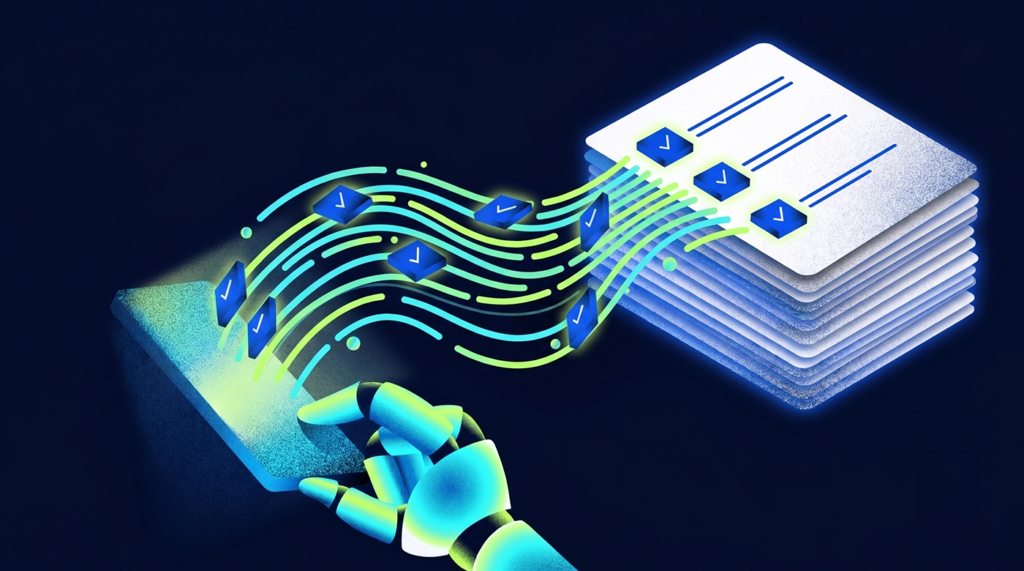
I facilitated an AI-at-work opportunity sprint where we helped teams map their daily responsibilities to practical AI-supported workflows. Instead of discussing AI theoretically, we focused on real tasks people already performed and identified where AI could reduce friction.
For example, we helped consultants use AI to summarize lengthy RFPs, extract risks and deliverables, generate leadership-ready briefing decks, draft stakeholder communications, and organize follow-up tasks across tools like Word, PowerPoint, Outlook, Teams, and Planner.
Teams started seeing AI less as a “chatbot” and more as a workflow accelerator embedded into daily workflows.
Why humans must focus on relationships and judgment
AI can best support delivery work that is repetitive, coordination-heavy, and synthesis-heavy.
For example:
- Status reporting and executive summaries
- Meeting notes, action items, and follow-up tracking
- Initial project plans, RAID logs, and documentation drafts
- Portfolio analysis and prioritization support
- Resource and capacity visibility
- Workflow automation across tools
- Knowledge retrieval and cross-project insights
Organizations implement this using tools such as Microsoft Copilot, ChatGPT, AI-enabled PPM platforms, workflow automation tools, and integrations layered into existing delivery ecosystems instead of massive standalone AI programs. Often, the biggest wins come from relatively low-lift use cases that save large teams time every week.
However, areas still requiring a human touch are judgment-heavy and relationship-heavy work. These include:
- Executive stakeholder management
- Navigating organizational politics
- Conflict resolution
- Prioritization tradeoff discussions
- Leading change and gaining buy-in
- Coaching teams through ambiguity
- Making decisions with incomplete information
AI can support those areas with insights and structure, but it still cannot replace trust, influence, leadership presence, or contextual judgment. In fact, I argue that those human skills are becoming even more important as AI automates more of delivery's administrative side.
How AI elevates leadership conversations
When used properly, AI can also improve the quality of leadership conversations.
For example, teams can now quickly synthesize project updates, risks, meeting notes, and stakeholder feedback into concise summaries instead of spending hours manually preparing status reports. This frees leaders and PMOs to spend more time discussing tradeoffs, priorities, dependencies, and business impact rather than just gathering information.
Conversations are shifting from “What’s the status?” to “What decision do we need to make, and what are the downstream impacts?” This has meaningfully changed how delivery discussions happen.
Conversations are shifting from “What’s the status?” to “What decision do we need to make, and what are the downstream impacts?”

A real-world example of complexity in AI
Here's an example of the complexities that can arise when implementing AI in the workplace. This particular organization had a strong interest in AI, but like many firms, it struggled with three simultaneous issues:
- Too many disconnected ideas
- No consistent intake or prioritization model
- Teams experimenting independently without governance or measurable outcomes
This risked scattered pilots, duplicated effort, and growing skepticism from leadership because no one could clearly articulate value. We approached it as both a delivery and operating model challenge, not just a technology exercise.
First, we built a lightweight AI opportunity sprint process. We ran structured workshops across functions to identify pain points, repetitive workflows, reporting bottlenecks, coordination gaps, and decision-making friction. Instead of asking “Where can we use AI?”, we asked teams:
- Where are people losing time every week?
- Where is work highly repetitive?
- Where are delays caused by manual coordination or information gathering?
- Where are leaders waiting too long for insights or status visibility?
From there, we created a standardized intake and scoring process to evaluate AI initiatives alongside non-AI initiatives, preventing them from becoming separate innovation side projects.
For tooling, we intentionally kept the setup practical and lightweight:
- Microsoft Copilot and ChatGPT for workflow acceleration and content synthesis
- Existing collaboration tools like Microsoft Teams for workshops and prioritization sessions
- Structured intake templates and scoring sheets
- Simple dashboards and prioritization trackers
- PMO governance checkpoints embedded into existing portfolio reviews rather than creating parallel governance structures
A key lesson was that complexity did not come from the AI tools themselves, but from coordination, ownership, expectations, and adoption.
A messy part of the engagement was that many leaders initially overestimated AI readiness. Teams wanted advanced automation, but their underlying processes were still inconsistent or undocumented. In several cases, we paused AI discussions to first stabilize workflows, clarify ownership, or improve data quality. This was one of the biggest success factors. We treated AI readiness as an operational maturity discussion, not just a technology deployment.
We also introduced a lightweight governance and oversight model with clear intake checkpoints, decision rights, escalation paths, and role accountability. The goal was to enable speed without creating bureaucracy.
The initial sprint and prioritization work took a few weeks, followed by phased enablement and adoption support. The heavier lift was not technical configuration, but stakeholder alignment, change enablement, and helping teams redesign how work flowed.
The results were meaningful:
- Leadership gained a much clearer view of where AI could realistically create value.
- Teams moved from random experimentation to structured execution.
- We identified several low-lift use cases that reduced manual administrative effort and reporting overhead.
- AI conversations were tied to measurable business outcomes rather than hype.
- The PMO evolved into a coordination, prioritization, and governance function for AI-enabled delivery.
Most interestingly, the organizations that succeeded were not necessarily the most technically advanced. They combined practical governance, operational discipline, and strong change leadership with AI-enabled execution.
How to build an AI-enabled delivery stack
My delivery tech stack has evolved significantly over the past 6–12 months as AI moved from experimentation to day-to-day execution support.
The AI tools I use most actively today include:
- OpenAI ChatGPT for synthesis, executive communication, workshop refinement, frameworks ideation, prioritization support, and structured thinking
- Anthropic Claude for longer-form analysis, writing refinement, and deeper contextual reasoning
- Gamma for rapidly building presentation structures, visual storytelling, and executive-ready drafts
- Canva for visual communication, training collateral, diagrams, and lightweight content design
The biggest impact of these tools is speed, synthesis, and accelerated first drafts. They significantly reduce administrative and formatting overhead, allowing more time for strategic thinking, stakeholder engagement, prioritization, and decision-making.
Why AI should be embedded within a team's current work stack
What feels surprisingly underrated right now is not a single AI tool, but AI's direct integration into the everyday work stack that people already use — especially within the Microsoft ecosystem.
For many teams, real-time savings come from small workflow accelerations happening continuously throughout the day. These include summarizing Teams meetings, drafting follow-up emails in Outlook, extracting action items, generating first drafts in Word, building presentation outlines in PowerPoint, or organizing tasks into Planner without constantly switching contexts.
Individually, these may only save a few minutes at a time. But across delivery teams operating all day, every day, the cumulative impact is significant. I’m seeing teams reduce administrative overhead, improve response times, and shift more time from coordination work to actual decision-making and execution.
The biggest impact also comes when organizations stop treating AI as a separate destination and instead embed it naturally into existing workflows people are already comfortable with.
How AI-enabled PPM platforms are changing project management
I’m seeing organizations move away from heavily process-driven project management toward lighter, more adaptive delivery systems focused on visibility, prioritization, faster decision-making, and AI-assisted execution.
In practice, that means less time manually compiling reports and chasing updates, and more time interacting directly with delivery data in real time through AI-enabled tools.
For example, with newer AI-enabled PPM platforms like Celoxis, leaders can now use natural language prompts to quickly surface insights that previously required significant manual analysis. Instead of digging through dashboards and spreadsheets, someone can start the day by asking:
- “Which three projects should I be most concerned about today?”
- “What risks are driving schedule slippage?”
- “Which initiatives are over capacity?”
- “What corrective actions should we consider?”
Within minutes, the platform can identify problem areas, summarize contributing issues, recommend actions, and help teams move directly into decision-making and execution.
That shift is changing project delivery from a largely administrative exercise into a much more dynamic, insight-driven, and action-oriented environment.
How AI redefines core project delivery rituals
I'm seeing a major shift with delivery rituals: They now center less around “creating artifacts” and more around accelerating decisions.
For example, scope discussions used to involve long requirement workshops, followed by days or weeks of manual documentation refinement. Now, AI can rapidly synthesize discussions, generate draft requirements, surface ambiguities, and even identify conflicting assumptions in near real time. As a result, teams spend less energy documenting what was said and more energy debating whether the work makes strategic sense.
Similarly, execution management is becoming far more conversational and insight-driven. Instead of PMs manually pulling together status information before a steering meeting, leaders increasingly interact with delivery systems using natural language to instantly identify risks, dependencies, delays, or resource bottlenecks. That changes the role of delivery leadership from “information collector” to “decision facilitator.”
Teams spend less energy documenting what was said and more energy debating whether the work makes strategic sense…That changes the role of delivery leadership from “information collector” to “decision facilitator.”
I'm also seeing validation rituals evolve. Teams no longer just validate whether requirements were completed. They increasingly validate whether AI-generated outputs are accurate, biased, complete, or contextually appropriate. Quality assurance is expanding beyond systems and into judgment itself.
The rituals are not disappearing. They are shifting upward toward alignment, prioritization, interpretation, and decision quality.
Why shared AI governance prevents chaotic execution
One question I wish more people asked is, “How do we prevent AI from creating faster chaos instead of better execution?”
Organizations need to spend far more time defining decision rights, ownership, prioritization rules, and success metrics before scaling AI broadly. Right now, many teams are optimizing individual productivity without thinking enough about enterprise coordination.
If every department starts deploying AI independently with different workflows, prompts, governance models, and priorities, organizations risk creating fragmented execution at a much faster speed.
The firms that succeed will likely create shared operating principles around how they introduce, govern, measure, and integrate AI across the organization, not just how individual teams use tools.
Honestly, this is one reason the CAIO (Chief AI Officer) role may become far more prevalent over the next few years: organizations need someone responsible not just for AI technology decisions, but for enterprise-wide orchestration, prioritization, governance, and adoption.
How AI is changing the future of PMOs

Within five years, many PMOs will either evolve into enterprise AI transformation and orchestration functions or become irrelevant.
AI will heavily automate and embed traditional PM work, including status reporting, manual coordination, updates, RAID management, and administrative tracking, directly into operational workflows and collaboration tools.
The PMOs that survive will shift from managing projects to managing enterprise prioritization, AI execution, governance, and organizational alignment. They’ll help identify and prioritize AI opportunities, drive adoption across functions like Finance, HR, Legal, and Operations, and help organizations transition into AI-first operating models.
The biggest risk won’t be a lack of AI adoption. It’ll be organizations automating chaos faster than they improve clarity, leadership, and decision-making.
Why leaders must view AI as an operational shift
Don’t treat AI as a side experiment or a technology initiative that only IT owns. Treat it as an operational and leadership shift.
My advice is:
- Start small, but start now.
- Focus on practical workflow pain points, not hype.
- Build AI habits into everyday work instead of forcing massive transformation overnight.
- Strengthen judgment, communication, prioritization, and stakeholder leadership as those skills become more valuable, not less.
- Don’t automate broken processes blindly.
- Learn enough about AI to lead the conversation confidently, even if you’re not deeply technical.
Most importantly, don’t underestimate how quickly expectations are changing. The delivery leaders who learn how to combine AI acceleration with strong human leadership will have a major advantage over the next few years.
Follow along
Keep up with Hussain's work on LinkedIn or subscribe to The PMO Playbook. And check out Parwaaz Consulting.
More expert interviews to come on The Digital Project Manager!

