

10 beste ProWorkflow-alternativer for prosjekter i 2026

Beste alternativer til ProWorkflow – kortliste


ProWorkflow er et prosjektstyringsverktøy som hjelper team med å administrere oppgaver, registrere tid og samarbeide effektivt. Selv om programvaren er populær, er den imidlertid ikke nødvendigvis riktig for teamet ditt av flere ulike grunner.
I denne gjennomgangen ser vi nærmere på de beste alternativene til ProWorkflow og sammenligner funksjoner, priser og brukervennlighet for å hjelpe deg med å ta en informert beslutning. Enten du ser etter avanserte tilpasningsmuligheter, bedre samarbeidsverktøy eller en rimeligere løsning, tilbyr disse alternativene ulike muligheter for forskjellige arbeidsflyter.
Hva er ProWorkflow?
ProWorkflow er en programvare for prosjektstyring og samarbeid om oppgaver, utviklet for å hjelpe bedrifter med å effektivisere prosjektplanlegging, tidsregistrering og teamsamarbeid. Den tilbyr verktøy for administrasjon av oppgaver, tidslinjer og ressurser, noe som gjør den ideell for byråer, frilansere og større virksomheter som trenger å holde orden og arbeide effektivt.
Hvorfor du kan stole på våre programvareanbefalinger
Teamet vårt har testet og anmeldt programvare siden 2012. Vi er selv prosjektledere, så vi vet hvor vanskelig og hvor viktig det er å velge riktig programvare.
I denne guiden har vi vurdert verktøyene gjennom praktisk testing og uavhengig research og gitt dem poeng ut fra våre utvelgelseskriterier. Vi bygger også på innsikt fra ledende eksperter i bransjen og erfarne prosjektledere.
Anmeldelsene våre bygger på vår egen redaksjonelle vurdering. De er ikke et salgsargument.
Ekspertanmeldere:
Sammenligningstabell for alternativer til ProWorkflow
| Tool | Best For | Trial Info | Price | ||
|---|---|---|---|---|---|
| 1 | Best for project and resource management | 14-day free trial | From $17/user/month | Website | |
| 2 | Best for project collaboration | 14-day free trial | Pricing upon request | Website | |
| 3 | Best for free project and task management | Free plan available | From $3.99/user/month (billed annually) | Website | |
| 4 | Best for no-code workflow automation | Free plan available | Pricing upon request | Website | |
| 5 | Best for all-in-one productivity | Free plan available | From $12/user/month | Website | |
| 6 | Best for checklist and SOP management | 14-day free trial; free demo available | Pricing upon request | Website | |
| 7 | Best for integration and automation | 30-day free trial | From $99/month | Website | |
| 8 | Best for traditional and agile workflows | Free trial available | From $29/user/month (billed annually) | Website | |
| 9 | Best for open-source ERP and CRM | Free plan available | From $38.90/user/month | Website | |
| 10 | Best for connecting work to goals | Free plan available | From $10.99/user/month (billed annually) | Website |


Anmeldelser av de beste alternativene til ProWorkflow
I denne analysen går jeg gjennom fordeler og ulemper ved hvert alternativ til ProWorkflow. Jeg tar for meg funksjonene og de beste bruksområdene for å hjelpe deg med å finne det riktige verktøyet for dine behov.

Scoro
Best for project and resource management
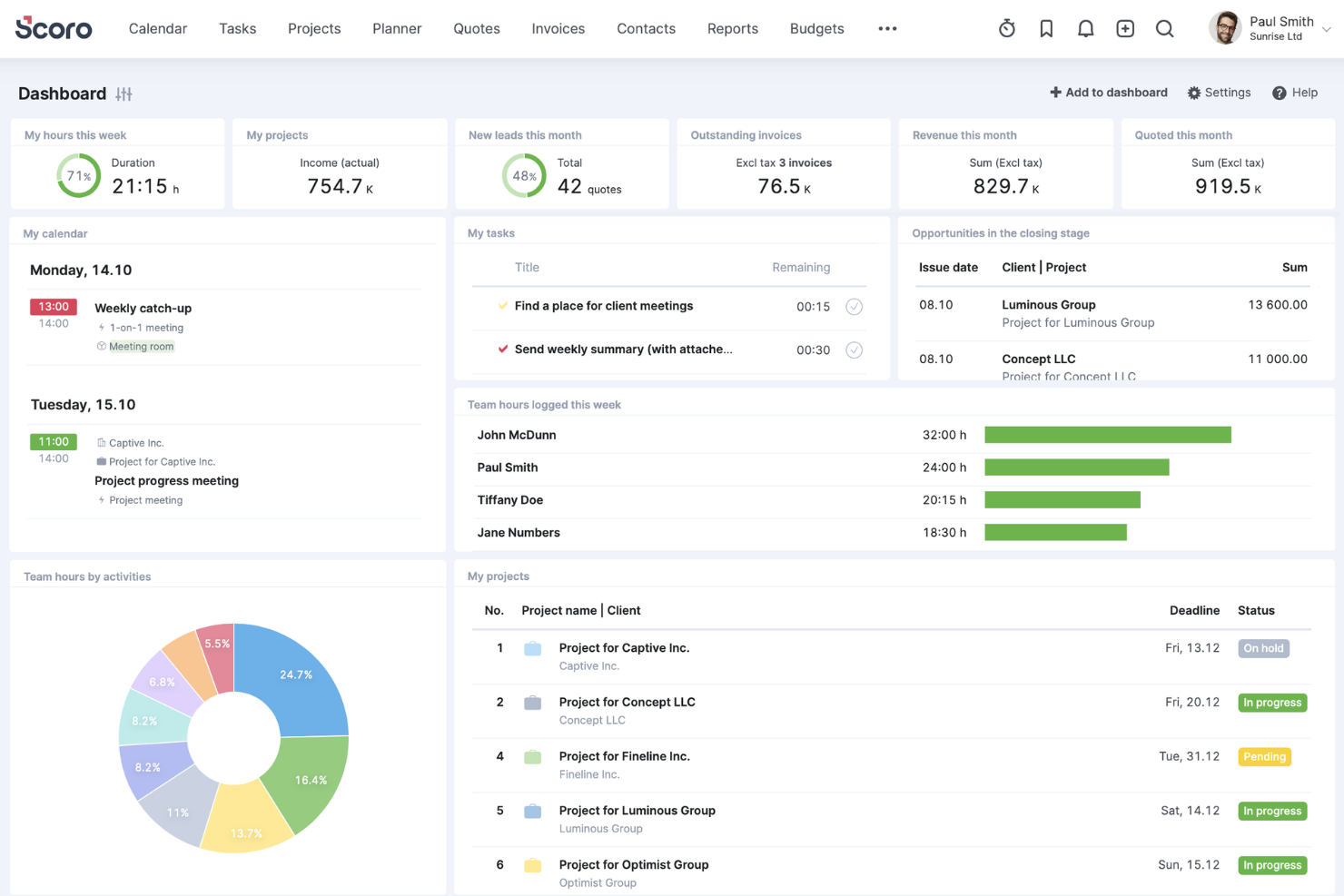
Scoro is a work management platform for professional services teams that connects project planning, time tracking, and business operations to help you coordinate delivery and keep work and finances visible.
Who Is Scoro Best For?
Scoro suits professional services teams that need to coordinate project delivery, staff capacity, time tracking, and financial operations in one workspace.
Why I Picked Scoro
Scoro earns my pick as a ProWorkflow alternative under “Best for project and resource management.” Its capacity view flags overloaded roles, while drag-and-drop scheduling helps rebalance assignments before deadlines slip. I also like that plan changes update task dependencies, and tracked time and costs connect delivery work to project budgets and margins.
Scoro Key Features
- Sales pipeline: Track opportunities as they move through your sales process.
- Client records: Store client details alongside related sales and project information.
- Estimates and quotes: Prepare estimates and quotes for proposed work.
- Client invoicing: Create and manage invoices for client work.
Scoro Integrations
Scoro’s integration marketplace lists connections with Jira, Slack, Google Calendar, Google Drive, Dropbox, Xero, QuickBooks, Sage Intacct, and HubSpot. Scoro also supports Zapier and provides an API for custom integrations.
Pros and Cons
Pros:
- Quotes, projects, and invoices share records
- Tracked time links delivery to project margins
- Real-time capacity planning prevents engineer overbooking
Cons:
- Custom management reports can take extra effort
- Mobile app handles timesheets better than tasks
New Product Updates from Scoro

Scoro Adds Time Mobile App and ELI Improvements
Scoro adds the Scoro Time mobile app for iOS/Android to track time anywhere and expands ELI with attachments, smarter filtering, and trigger-based actions. For more information, visit Scoro's official site.

Wrike
Best for project collaboration
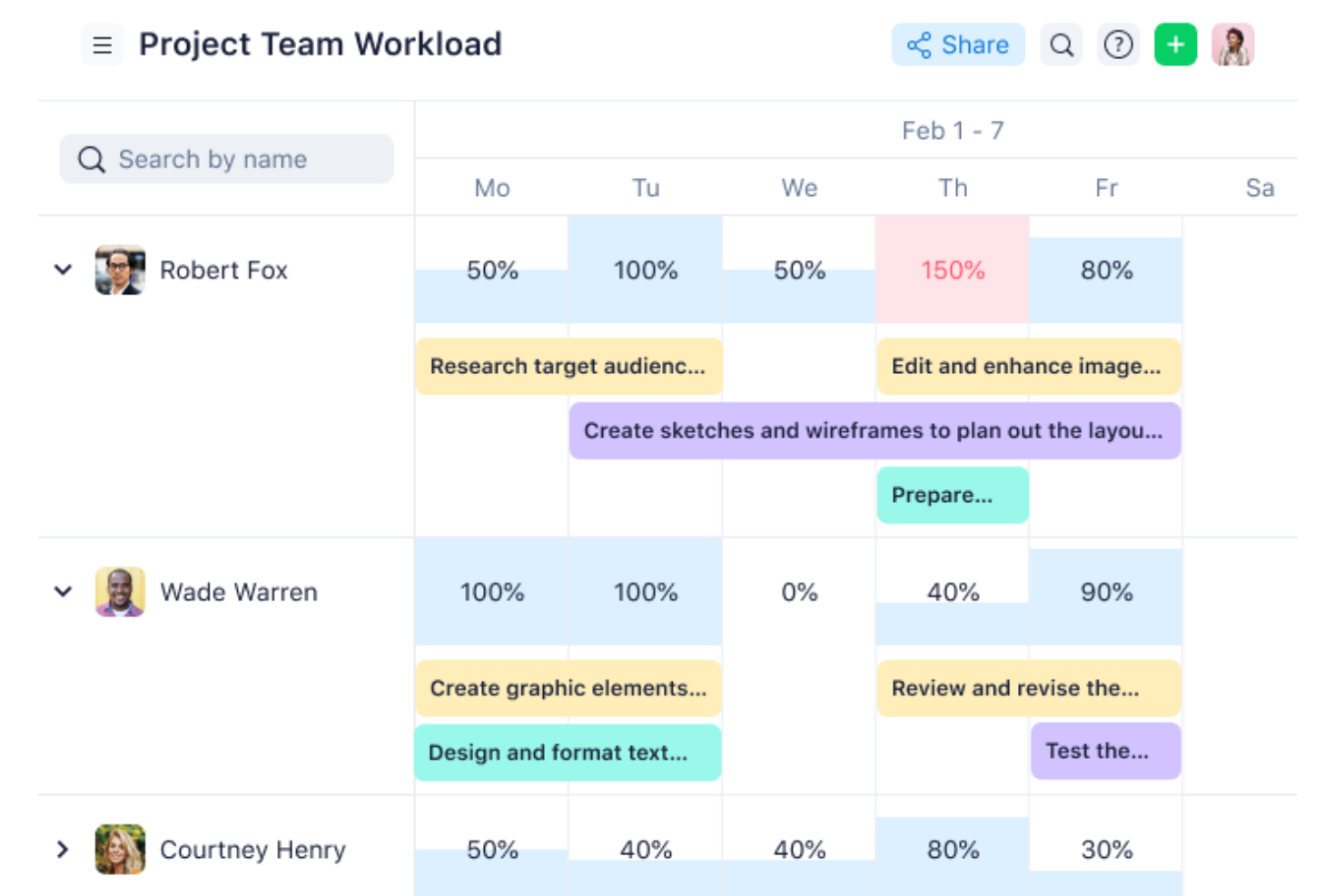
Wrike is a work management platform for cross-functional digital teams, bringing tasks, timelines, dependencies, and project discussions together to coordinate work as priorities change.
Who Is Wrike Best For?
Wrike suits project managers in tech and digital organizations who need to coordinate cross-functional contributors and keep project discussions connected to delivery work.
Why I Picked Wrike
I picked Wrike as a ProWorkflow alternative because its project collaboration keeps delivery details connected. I use tasks, timelines, and dependencies to coordinate cross-functional work, while project discussions stay linked to the work they concern. When priorities shift, that context helps my team adjust plans without losing track of handoffs.
Wrike Key Features
- Workflow automation: Set rules to trigger actions when work meets specified conditions.
- Time tracking: Log time against work items; available from the Business plan.
- Project budgeting: Track project budgets with Pinnacle.
- Integrations: Connect through 400+ pre-built native integrations, an open REST API, or Wrike Integrate.
Wrike Integrations
Wrike offers 400+ pre-built native integrations, including Salesforce, HubSpot, Bynder, Zoom, and Slack. It also provides an open REST API and Wrike Integrate.
Pros and Cons
Pros:
- Dashboards surface progress across workstreams
- Task discussions stay connected to delivery
- Dependencies clarify ownership across project handoffs
Cons:
- No native invoicing or billing
- Initial setup can feel complex
New Product Updates from Wrike

Wrike Redesigns AI Agent Builder
Wrike redesigns its AI Agent Builder with a side-by-side setup, Scopes, sentence-style triggers and actions, and clearer filters. These changes make it easier to configure, test, and manage agent behavior. For more information, visit Wrike’s official site.

Plaky
Best for free project and task management
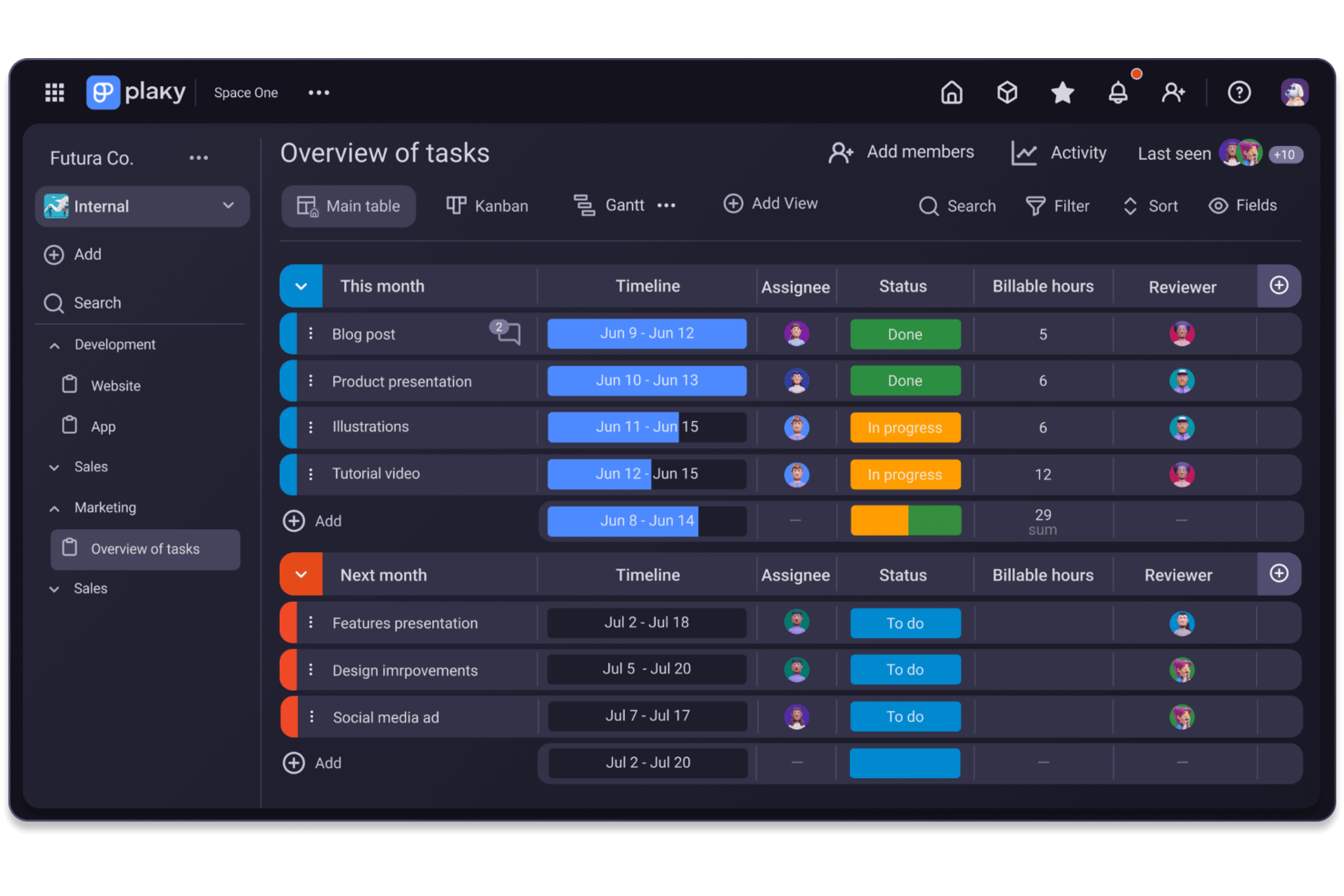
Plaky gives product and digital teams a board-based workspace to organize projects, assign tasks, and track progress, replacing scattered updates with a shared view of who’s doing what.
Who Is Plaky Best For?
Plaky suits small product and digital teams that need a free, shared workspace to assign tasks and track project progress.
Why I Picked Plaky
I picked Plaky as Best for free project and task management because its boards let me organize a product launch by task, owner, and status. I can add due dates and comments to tasks, keeping handoffs and progress visible without a more elaborate workflow setup.
Plaky Key Features
- Board automations: Trigger actions when board changes occur, add conditions, or schedule recurring tasks.
- Gantt view: Map tasks on a timeline and adjust them with drag-and-drop. Available on Pro and Enterprise.
- Dashboards: Combine data from multiple boards in one dashboard.
- Clockify integration: Track time on Plaky items and record billable project hours.
Plaky Integrations
Plaky has native integrations with Clockify for time tracking and Pumble for creating tasks and receiving project notifications. It also offers an API for custom integrations.
Pros and Cons
Pros:
- Unlimited collaborators support broad project participation
- Custom fields organize tasks around team workflows
- Boards make task status easy to scan
Cons:
- Reporting offers limited detail for project oversight
- No built-in time tracking for logged hours

Pipefy
Best for no-code workflow automation
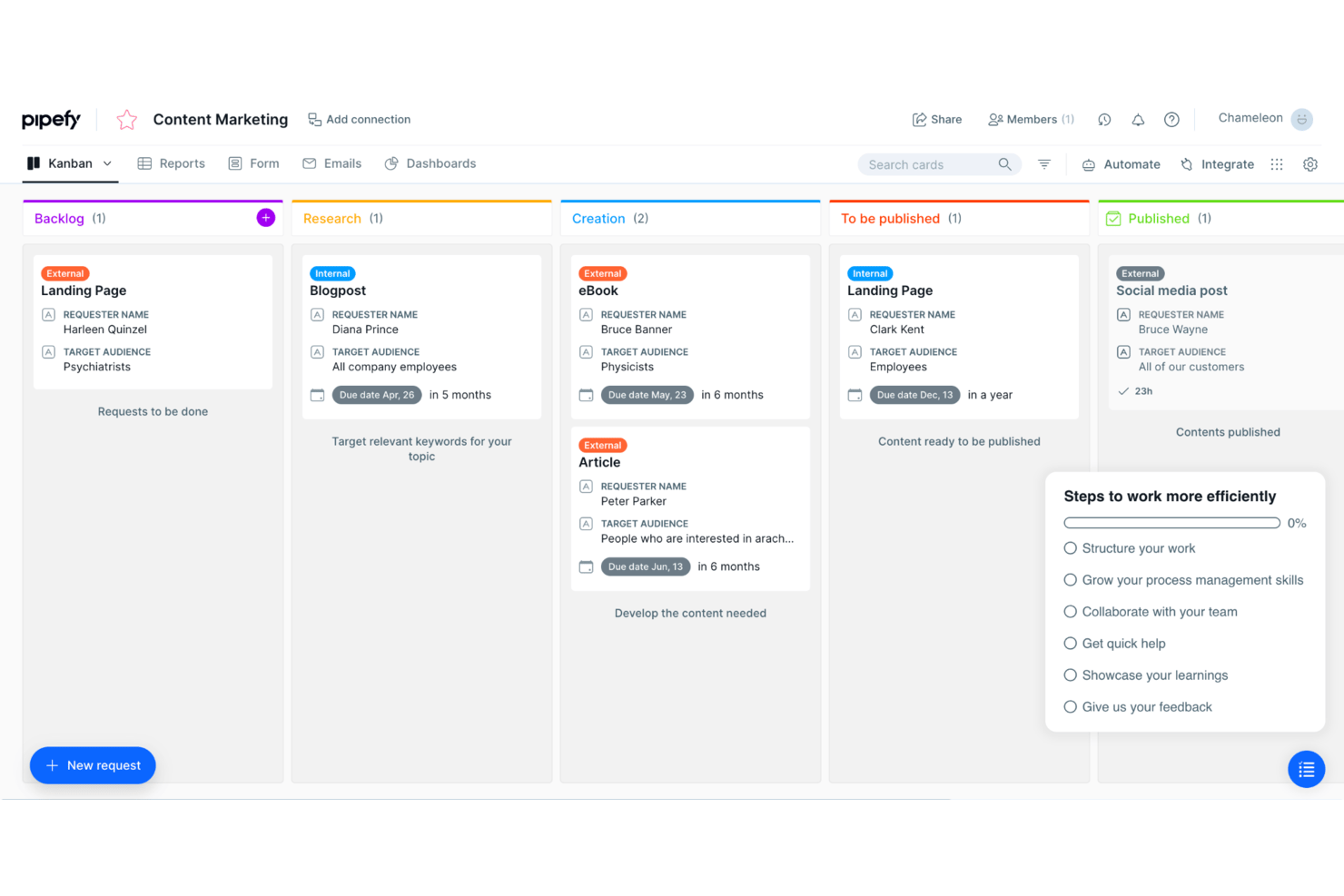
Pipefy gives operations, IT, and project teams a process management platform to organize requests, handoffs, and approvals in one place, improving visibility when work spans departments.
Who Is Pipefy Best For?
Pipefy suits business operations teams that need to build and adjust automated workflows without relying on developers.
Why I Picked Pipefy
I pick Pipefy as a ProWorkflow alternative because it’s Best for no-code workflow automation. I use its forms to capture requests, then organize work into configurable pipe phases with rules that assign tasks or route approvals. That fits processes like triaging IT requests without building a custom system.
Pipefy Key Features
- Self-service portals: Let employees or customers submit and track service requests.
- SLA tracking: Set deadlines and monitor process response times.
- Dashboards and reports: View process data and performance metrics.
- Integrations: Connect Pipefy with business systems through its Integration Hub.
Pipefy Integrations
Pipefy lists four native integrations: Slack, GitHub, Bitbucket, and Google Hangouts. It also supports Zapier, HTTP requests, API access, and custom integrations.
Pros and Cons
Pros:
- SLA tracking clarifies process response deadlines
- Automated handoffs reduce manual request tracking
- No-code forms route requests and approvals
Cons:
- Custom reporting requires extra configuration
- Fixed stages constrain shifting project workflows

ClickUp
Best for all-in-one productivity
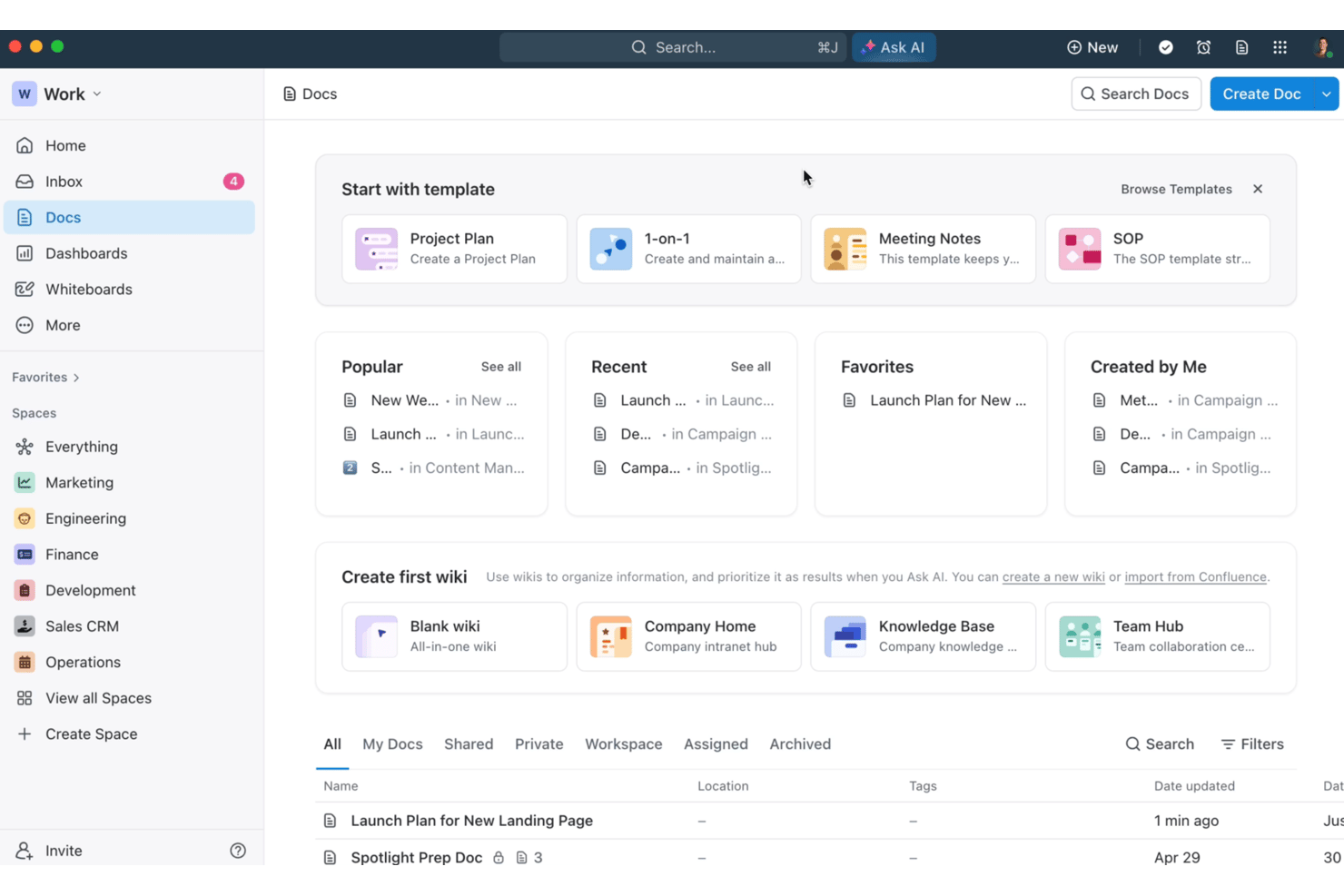
ClickUp is a work management platform for product, engineering, and operations teams that connects tasks, documents, goals, and communication to reduce tool switching and keep cross-functional projects visible.
Who Is ClickUp Best For?
Project managers coordinating product, engineering, and operations work can plan and track cross-functional delivery in ClickUp’s shared workspace.
Why I Picked ClickUp
I picked ClickUp as a ProWorkflow alternative because it fits “Best for all-in-one productivity.” I like how its task automations can update statuses or assign work when a task changes, while Docs keep decisions beside delivery tasks. My team can use both to coordinate a product launch without splitting action items and project notes across tools.
ClickUp Key Features
- Multiple views: Switch between List, Board, Calendar, and Gantt views.
- Custom fields: Add project-specific data to tasks, such as priority or effort.
- Dashboards: Build reports from cards that track project metrics and workload.
- Time tracking: Record time on tasks and review timesheets.
ClickUp Integrations
ClickUp offers native integrations with Slack, GitHub, GitLab, Bitbucket, Google Drive, Google Calendar, Microsoft Teams, Figma, and Zoom, and connects with Zapier. It also provides a public API for custom integrations.
Pros and Cons
Pros:
- Automations update statuses after task changes
- Dashboards show workload across project views
- Tasks, Docs, and goals share one workspace
Cons:
- Large lists can lag during updates
- Space and folder setup takes planning

Best for checklist and SOP management
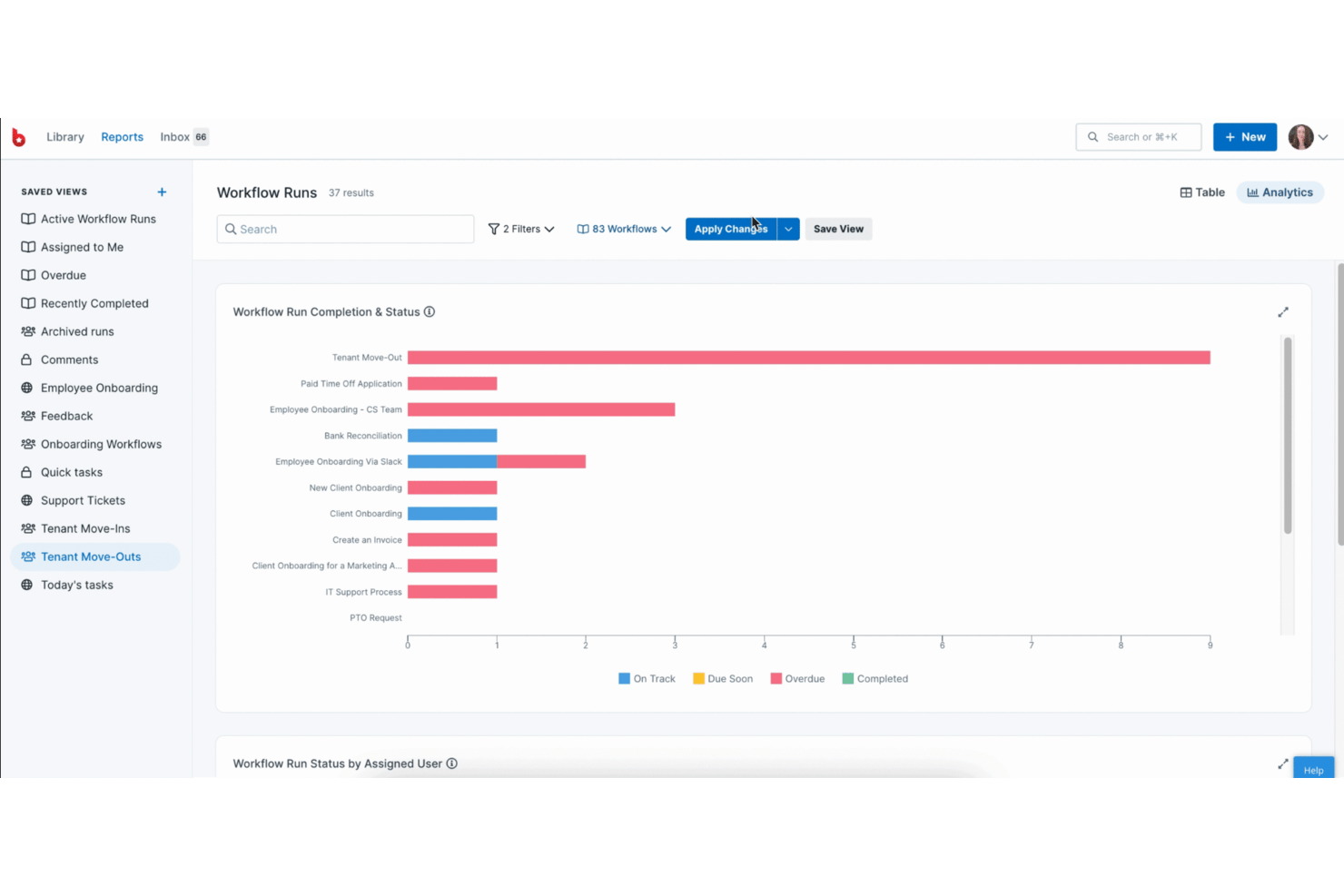
Process Street helps operations and project teams turn recurring work into trackable workflows, coordinate handoffs, and keep execution consistent across teams; it is Best for checklist and SOP management.
Who Is Process Street Best For?
Process Street suits operations managers who need to document standard procedures and assign recurring checklists across teams.
Why I Picked Process Street
I picked Process Street as a ProWorkflow alternative because it is Best for checklist and SOP management. I like its recurring workflow checklists, task assignments, and approval steps for turning a release SOP into trackable handoffs, with conditional logic to show only the steps that apply.
Process Street Key Features
- Custom forms: Build branded forms, surveys, and quizzes to collect structured information.
- Data Sets: Store reusable records and use saved views, linked dropdowns, and auto-fill.
- App integrations: Connect tools such as Slack, Jira, Salesforce, and Google Sheets.
- SOP pages: Create and share documentation with permissions and change tracking.
Process Street Integrations
Process Street offers native automations with Google Sheets, Slack, DocuSign, Salesforce, and Jira. It also provides an API and webhooks for custom integrations, plus Zapier.
Pros and Cons
Pros:
- Recurring SOPs reduce missed handoffs
- Approvals document ownership and audit trails
- Conditional checklists adapt to changing requirements
Cons:
- Task reassignment and deadline controls feel rigid
- Reporting offers limited sorting and grouping

Boomi
Best for integration and automation
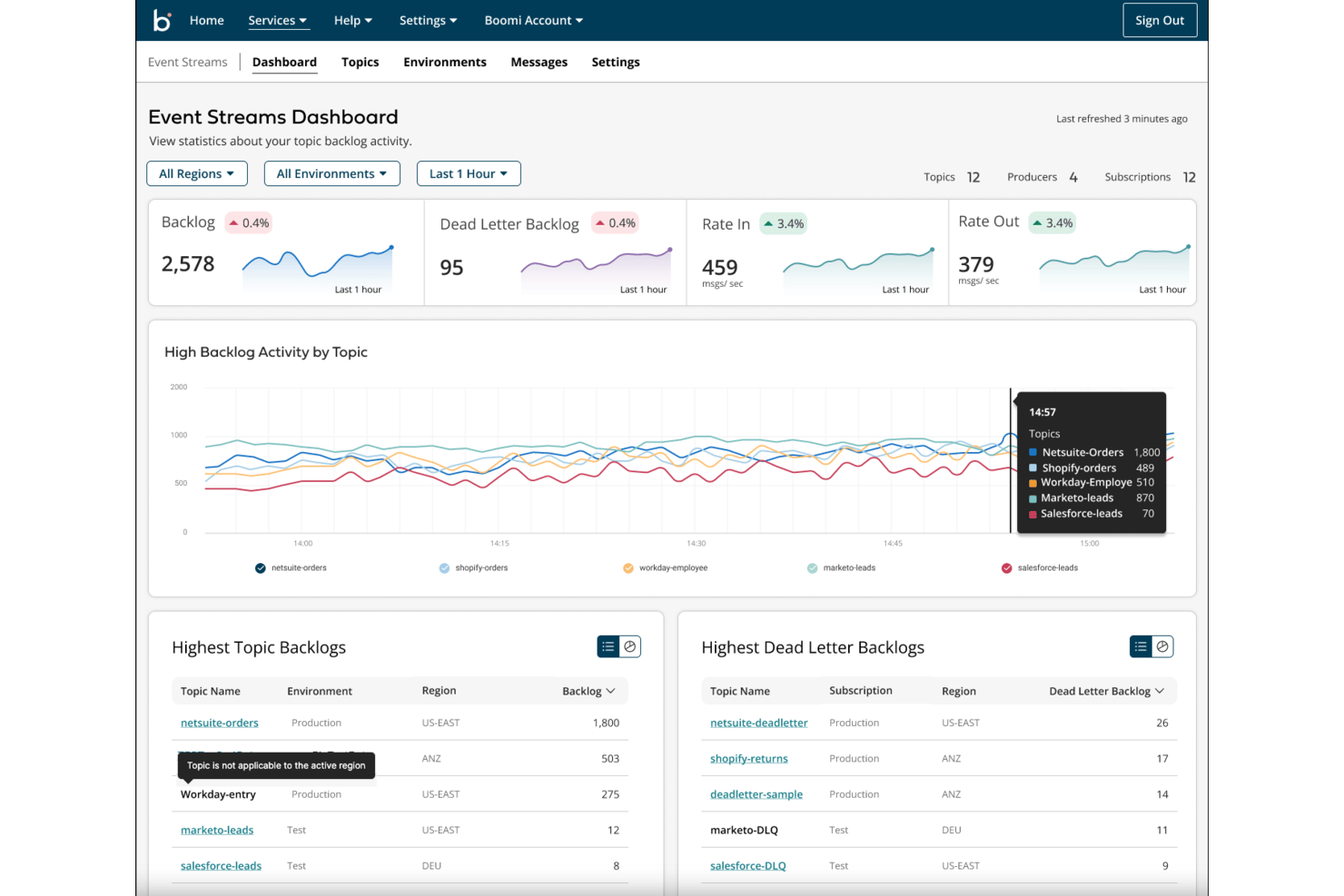
Boomi is a cloud-based integration platform that helps IT and operations teams connect applications, data, and processes to reduce manual handoffs and coordinate work across systems.
Who Is Boomi Best For?
Boomi fits integration architects and IT teams coordinating data flows and automating processes across complex application ecosystems.
Why I Picked Boomi
I picked Boomi as a ProWorkflow alternative for its focus on integration and automation across business systems, rather than project tracking alone. I like its visual, low-code integration design and 1,500+ prebuilt connectors; for example, a team can sync Shopify orders with NetSuite finance records and trigger downstream processes. AI-guided mapping helps translate fields between those systems.
Boomi Key Features
- Master data hub: Creates verified golden records with matching and validation rules.
- Event delivery modes: Supports FIFO, publish-subscribe, REST API, and queuing.
- API lifecycle controls: Lets teams catalog, secure, govern, and monitor APIs.
- B2B/EDI management: Manages electronic data interchange with trading partners.
Boomi Integrations
Boomi offers 1,000+ prebuilt connectors for systems including NetSuite, Salesforce, SAP, Amazon, and Google Sheets. You can build custom connectors with the Connector SDK or OpenAPI support.
Pros and Cons
Pros:
- Hybrid deployment supports cloud and on-premises execution
- Reusable components reduce duplicated workflow logic
- Visual low-code flows automate repeatable processes
Cons:
- Complex flows complicate debugging and log review
- No native project plans or task tracking

Ravetree
Best for traditional and agile workflows
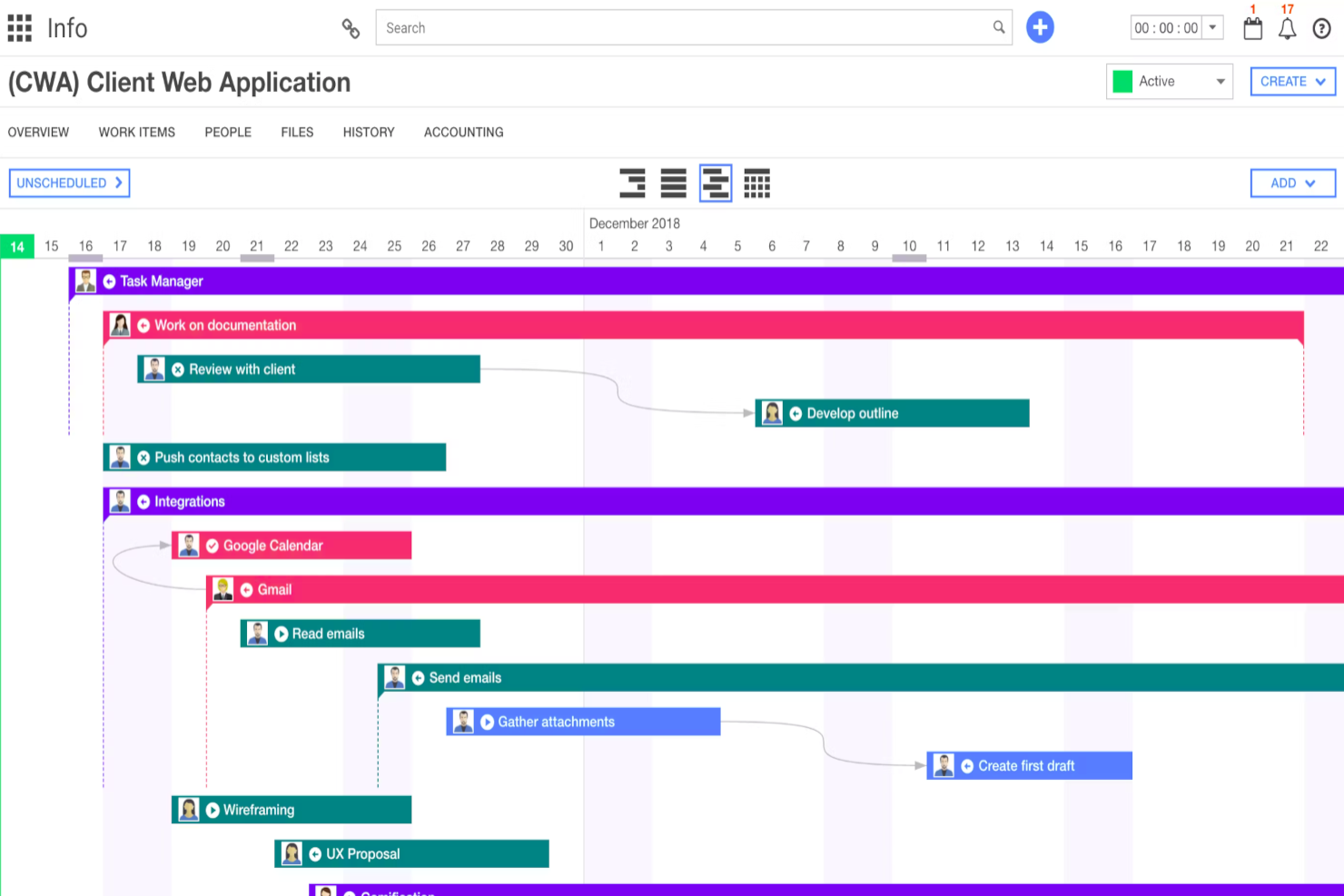
Ravetree is a work management platform for project-based teams that brings project plans, tasks, and collaboration together, helping you coordinate delivery and keep work visible across teams.
Who Is Ravetree Best For?
Ravetree suits project managers who need to coordinate teams across traditional project plans and agile workflows.
Why I Picked Ravetree
I picked Ravetree as a ProWorkflow alternative because it supports traditional plans and agile delivery. Gantt charts map dependencies and timelines, while Kanban boards and customizable sprints organize epics and user stories. That combination fits its “Best for traditional and agile workflows” distinction.
Ravetree Key Features
- Time tracking: Log and edit hours against projects, tasks, clients, and retainers.
- Resource planning: View team capacity and assign unscheduled tasks by person or work role.
- Request forms and approvals: Create custom request forms and route submissions through approval steps.
- Client portals: Let clients view project updates, submit requests, and approve files.
Ravetree Integrations
Ravetree lists 15 integrations, including Google Drive, Google Calendar, Outlook Calendar, Gmail, Exchange, QuickBooks, Xero, HubSpot, Dropbox, Box, Stripe, and GitHub. It also offers an Open API for custom integrations.
Pros and Cons
Pros:
- Shares progress and files through client portals
- Links time tracking with project budgets
- Combines agile boards with Gantt dependencies
Cons:
- Project-to-work-item transitions can confuse organization
- Dated interface can feel behind competitors

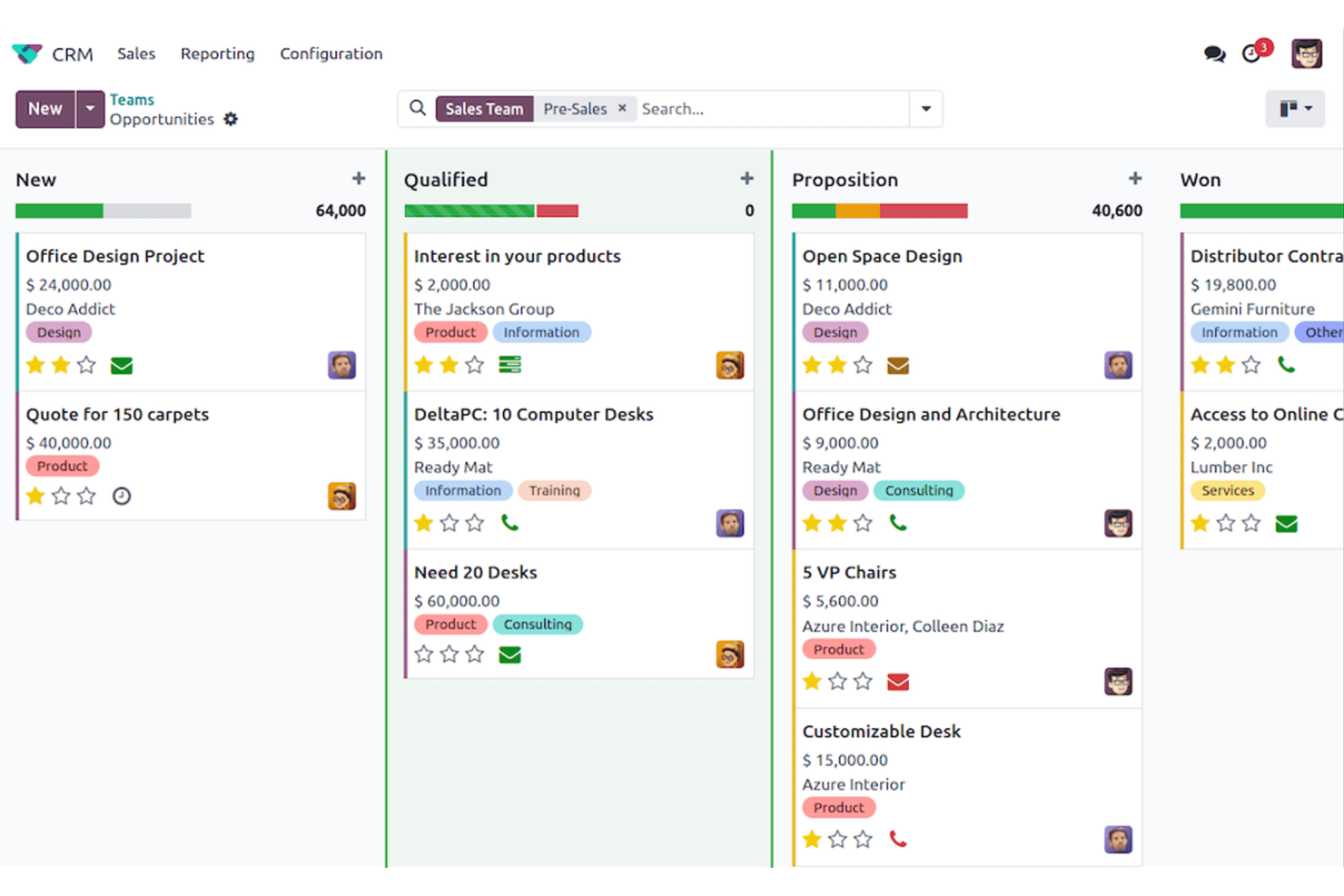
Odoo brings sales, inventory, accounting, and project apps into one platform, helping growing teams connect workflows and reduce handoffs across departments.
Who Is Odoo Best For?
Odoo suits operations and finance teams at growing businesses that want an open-source ERP and CRM to manage core business processes.
Why I Picked Odoo
I picked Odoo as a ProWorkflow alternative because its open-source ERP and CRM connect sales work with operations. CRM opportunities can move into sales orders, while inventory and accounting apps support fulfillment and invoicing. I like this setup when project teams need sales commitments and operational records to stay aligned.
Odoo Key Features
- Automation rules: Trigger actions when records change or meet specified conditions.
- Studio customization: Add fields and adjust app views without writing code.
- Approval requests: Set required approvers, track request stages, and attach supporting documents.
- Timesheets: Log and validate working time across projects and employees.
Odoo Integrations
Odoo supports two-way calendar sync with Google Calendar and Microsoft Outlook Calendar, plus a Gmail plugin. It also offers an external API for custom integrations on the Custom plan.
Pros and Cons
Pros:
- Modular open-source apps cover broader business operations
- Carries sales commitments into operational workflows
- Tracks project hours against costs and profitability
Cons:
- Workflow setup can require technical expertise
- Project planning trails dedicated project management tools
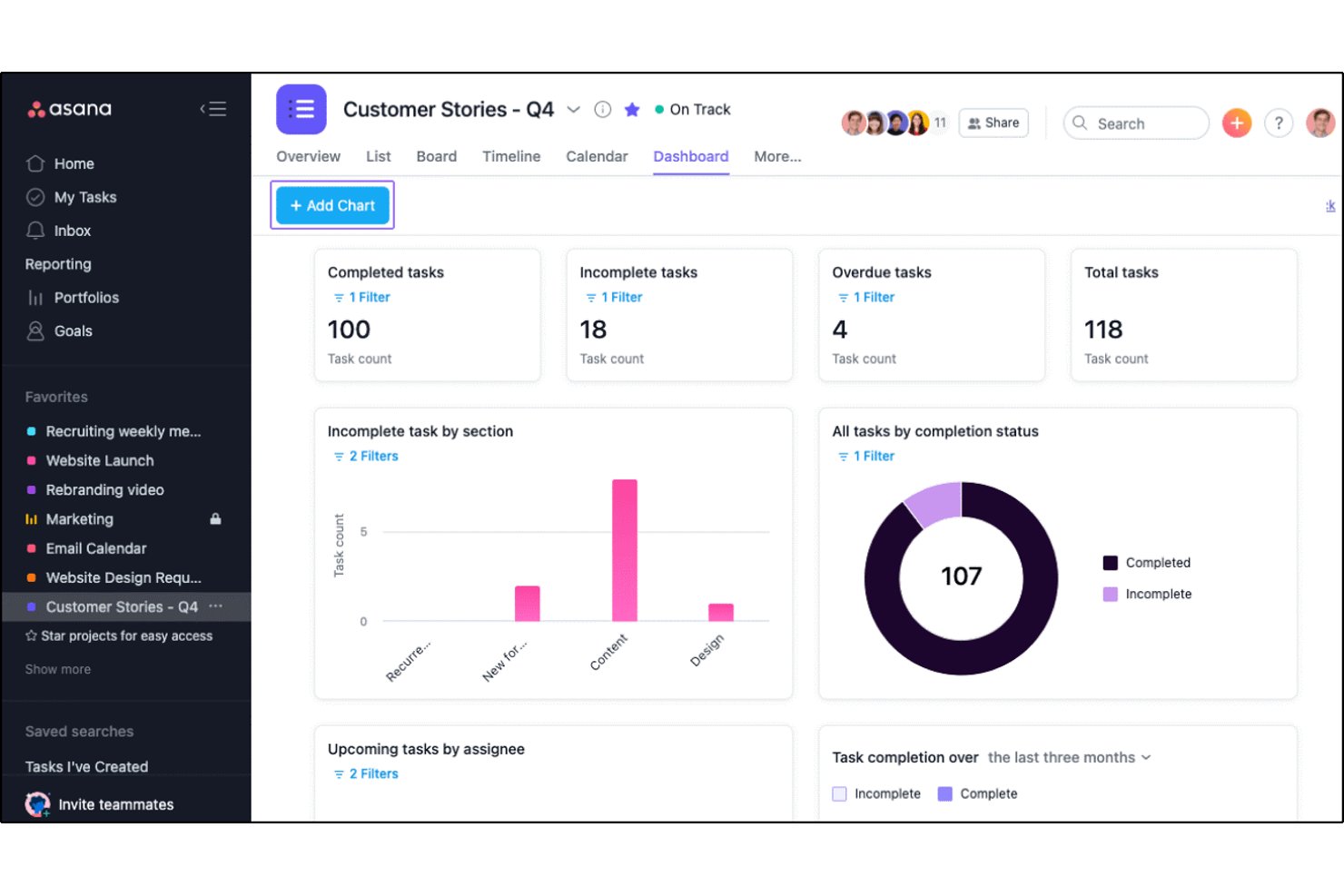
For product, engineering, and marketing teams replacing spreadsheet-led coordination, Asana is a work management platform for organizing projects, assigning tasks, and automating routine handoffs.
Who Is Asana Best For?
Asana suits project and operations leaders who need to connect cross-functional workstreams with company objectives.
Why I Picked Asana
As a ProWorkflow alternative, I picked Asana for how its goals connect company objectives to the projects and tasks meant to advance them, so I can trace a product launch from execution to outcome. Portfolios roll up project status, while rules can automate routine task handoffs when work changes state.
Asana Key Features
- Project views: Switch between list, board, timeline, and calendar layouts.
- Forms: Collect project requests with forms that create tasks in a project.
- Custom fields: Add structured details such as priority, status, or effort to tasks.
- Workload view: Review task assignments across a team to see who has capacity.
Asana Integrations
Asana lists integrations with Slack, Microsoft Teams, Google Drive, Jira Cloud, GitHub, GitLab, Azure DevOps, and Google Sheets. It connects with Zapier and provides an API for custom integrations.
Pros and Cons
Pros:
- Forms and rules organize repeatable project intake
- Portfolios surface status across multiple projects
- Links project work directly to company goals
Cons:
- Complex workspaces demand ongoing admin setup
- Advanced reporting needs consistent task data
Andre alternativer til ProWorkflow
Nedenfor finner du en liste over flere alternativer til ProWorkflow som jeg valgte ut. Selv om de ikke kom med blant de ti beste, er de fortsatt verdifulle og verdt å undersøke nærmere.


How I Evaluate ProWorkflow Alternatives
I look at two layers: baseline criteria—does the tool handle client projects, time tracking, and invoicing?—and differentiators that separate good options from the right fit for your team.
Core Functionality (Table Stakes For This List)
When I'm selecting tools for my list, I rank each one on a scale from 0 (does not offer the functionality) to 5 (excels in this area) for each core functionality listed below. Then, I calculate the tool's total score into a percentage. Each tool needs to achieve a minimum total score of 65% to be considered for inclusion.
- Project & Task Management: I evaluate how each tool structures projects, tasks, subtasks, and dependencies—like mapping a multi-phase website redesign with handoffs between design and dev.
- Time Tracking: Each tool's ability to log billable and non-billable hours at the task level matters, whether through built-in timers or manual entry tied to specific client work.
- Client & Contact Management: I check whether client records are linked directly to their projects and contacts, so your team can pull up a full account history without switching tools.
- Team Collaboration: Tools earn higher marks when comments, file sharing, and @mentions live inside the project context rather than requiring a jump to email or a separate chat app.
- Reporting & Dashboards: I look at whether you can build reports across project status, team workload, and logged hours—the kind of views an operations manager needs for a weekly leadership update.
- Invoicing & Quoting: Converting tracked hours into a client invoice inside the same platform is a key ProWorkflow workflow, so I evaluate whether alternatives offer native quoting and billing or strong accounting integrations.
Once I have a list of tools that meet this criteria, I consider what sets each platform apart.
Differentiating Factors (What Sets Vendors Apart)
Here's how I compare and contrast different vendors:
Standout Features
A client portal can change how your agency shares progress with stakeholders—giving clients direct visibility into timelines and deliverables without endless status update emails. Budget tracking is another differentiator I look at closely, especially when it ties estimated hours to actuals so you can spot margin erosion mid-project. I also evaluate automation capabilities, like auto-assigning tasks when a project phase shifts or triggering notifications when time entries exceed a budget threshold.
Beyond Features
Integrations matter a lot when you're switching from ProWorkflow—your team likely relies on QuickBooks or Xero for billing, and Slack or Microsoft Teams for communication. I check whether each tool connects natively or requires a Zapier workaround. Pricing transparency is another factor I evaluate, particularly whether per-seat costs stay predictable as your team scales from five to fifty. I also consider onboarding support, since migrating active client projects, contacts, and time data mid-engagement is one of the riskiest parts of switching platforms.
Hvorfor se etter et alternativ til ProWorkflow?
Selv om ProWorkflow er et nyttig verktøy, finnes det mange grunner til at du kan begynne å lete etter en alternativ løsning, blant annet:
- Kostnad: Hvis prisene for ProWorkflow ikke passer med budsjettet ditt, kan du trenge et rimeligere alternativ uten å gå på kompromiss med viktige funksjoner. Ved å velge en kostnadseffektiv løsning kan du holde utgiftene under kontroll og samtidig dekke behovene dine innen prosjektstyring.
- Brukergrensesnitt: Noen ganger kan brukergrensesnittet i en programvare føles komplisert eller tungvint. Hvis dette gjelder ProWorkflow, kan en mer brukervennlig plattform øke produktiviteten og redusere læringskurven for teamet ditt.
- Tilpasning: ProWorkflow tilbyr kanskje ikke det nivået av tilpasning som den unike arbeidsflyten din krever. Derfor kan du ha behov for et verktøy som gir større fleksibilitet til å tilpasse funksjonene til de spesifikke prosessene dine.
- Integrasjon: Hvis du er avhengig av andre verktøy som ikke integreres sømløst med ProWorkflow, kan du trenge et alternativ med bedre integrasjonsmuligheter. Effektiv programvarekompatibilitet kan spare tid og forbedre den samlede effektiviteten i teamet.
- Kundestøtte: Hvis ProWorkflows kundestøtte ikke innfrir forventningene dine, kan du være på utkikk etter et alternativ med mer responsiv og kompetent hjelp. Bedre kundestøtte kan sikre at eventuelle problemer løses raskt og effektivt.
Alternativer til ProWorkflow kan tilby rimeligere priser, en mer intuitiv brukeropplevelse, større tilpasningsmuligheter, bedre integrasjonsfunksjoner og bedre kundestøtte. Disse alternativene kan passe bedre med dine spesifikke behov og preferanser, slik at du får en mer effektiv og tilfredsstillende prosjektstyringsopplevelse.
Viktige funksjoner i alternativer til ProWorkflow
Her er noen viktige funksjoner i ProWorkflow som den alternative programvaren bør kunne gjenskape eller forbedre for å passe godt.
- Prosjektstyring: Hold teamet og hele virksomheten på rett spor og innenfor budsjettet med alle prosjektdetaljer, all kommunikasjon, alle filer og all fakturering samlet på ett sted.
- Oppgavestyring: Forenkle gjøremålslisten og forbedre oppgavefunksjonaliteten med brukertillatelser og visuell oppgavestyring.
- Fjernarbeid: Oppnå gode resultater når du jobber hjemmefra ved å holde oversikten, kommunisere og samarbeide effektivt.
- Tidsregistrering: Registrer tiden som brukes på oppgaver og prosjekter for å sikre nøyaktig fakturering og produktivitetsanalyse.
- Fakturabehandling: Administrer kundefakturering effektivt med innebygde verktøy for å opprette og sende fakturaer.
- Tilbudsbehandling: Opprett og administrer tilbud til kunder direkte i plattformen.
- Rapportering: Få tilgang til avansert innsikt i arbeidsbelastning, resultater og nøkkeltall på tvers av prosjekter, oppgaver, tid, team og kunder.
- Ressursstyring: Fordel og administrer ressurser effektivt for å sikre at prosjektet lykkes.
- Datasikkerhet: Sikre dataene dine med robuste tiltak for databeskyttelse.
- Integrasjoner: Koble til verktøyene du allerede bruker, fra regnskapsprogramvare (du kan også bruke prosjektstyringsprogramvare for regnskapsførere) til dokumenthåndtering og lagring, eller koble enhver arbeidsflyt til Zapier.