What 12 Project Management Leaders Actually Think About PM Frameworks in 2026

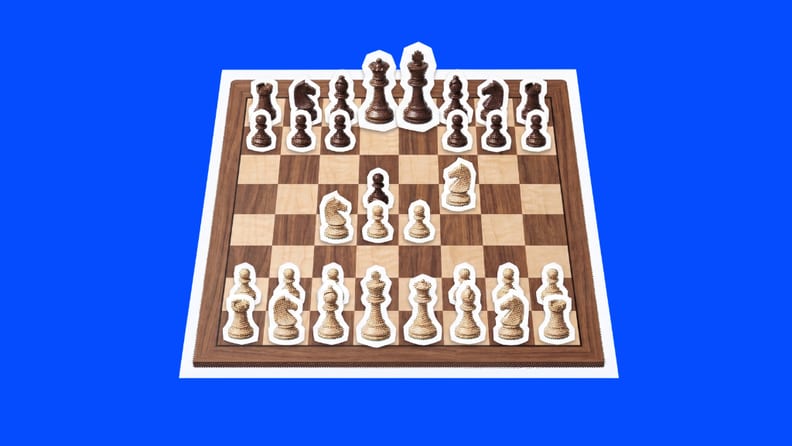
Framework Debate: There's no single 'best' project management framework; the right one depends on specific needs.
Agile Default: Agile remains a practical option but may need hybrid adaptations for optimal results.
Governance Focus: Effective governance is more crucial than framework choice for project success, experts argue.
Hybrid Models: Flexible hybrid frameworks tailored to project needs are gaining popularity across industries.
AI Influence: AI is reshaping Agile practices, emphasizing the need for adaptability over strict methodologies.
The debate over project management frameworks has never been more complicated. With AI reshaping how teams execute work and economic pressure demanding leaner, faster delivery, the framework debate — including whether to use one at all — has never felt more urgent.
Should teams double down on Agile? Abandon Waterfall entirely? Invest in SAFe? The answer, as the project management and operations leaders we spoke to make clear, is rarely that simple. Here's what they're actually saying in 2026.
There's No Single "Best" Framework — And That's the Point
Before diving into what works, it's worth dismantling the premise of the question, "What is the best framework in 2026?" itself. Several experts pushed back hard on the idea that any one framework could be universally declared the winner.

"We allowed a lot of people to force us into this black and white thinking," says Oliver F. Lehmann, Project Business Trainer at Oliver F. Lehmann Project Business Training. "Waterfall means extreme long planning, Agile means extreme short planning. Between extreme long-term planning and extreme short-term planning, there is a lot of space for things in between. There is no such thing as a best practice in project management."
Alena Prezhentsova, Project Management Officer at MuseGroup, puts it even more directly: "There is no single 'best' framework — the right model depends on the type of work and business goal, not on blind loyalty to a methodology or framework. The real shift is from framework-first thinking to outcome-first thinking: choosing the delivery model that helps the team deliver value fastest with the right level of control."
Hanna Klimushka, Founder of Wow PM Course, brings it down to the team level: "The best framework is the one your team actually understands and uses — not the one that looks impressive." It's a simple point, but one that cuts through a lot of noise. The most sophisticated framework in the world doesn't survive contact with a team that doesn't buy into it.
The best framework is the one your team actually understands and uses – not the one that looks impressive.


Agile Is Still the Practical Default — But It Needs Help
For many teams in 2026, Agile project management remains the sensible starting point — not because it's perfect, but because it's built for exactly the kind of volatility that defines the current moment.
"There's no single answer since the right framework depends on org size, team structure, and what you're actually trying to ship," says Katie Case Moore, Director of Production at Five and Done. "That said, anything in the Agile family is still the most practical default for most teams. It keeps delivery iterative and tolerates change without exploding scope. Agile also doesn't require you to know everything upfront, which matters a lot when AI is shifting on a monthly or even daily basis."
Anything in the Agile family is still the most practical default for most teams. It keeps delivery iterative and tolerates change without exploding scope.

Case Moore's team works with enterprise clients, including Toyota, Hagerty, and Warner Bros., running everything from traditional Agile to modified Kanban approaches. When a client came in mid-iteration needing a completely different direction, the flexibility of their framework meant they could reprioritize without throwing out code or losing momentum.
But Agile alone isn't enough. Jeremiah Hammon, Leadership and Project Manager Trainer at Project Revolution, argues for a more deliberate hybrid: "The number one most successful high-performing engine of the world is the Scrum Framework... accompanied by those predictive milestones. So, hybrid project management. That's what we all need to do."
Ryan Gilbreath, Technical Project Manager at RTS Labs, describes what this looks like day-to-day for most tech teams: "I use something between Waterfall and Agile. It's not very true to the books as far as the Scrum Framework." That blend — sometimes called "Wagile" — is less a methodology than a reality check: real teams adapt, borrow, and improvise.
I use something between Waterfall and Agile. It's not very true to the books as far as the Scrum Framework.
The Real Gap Isn't the Framework — It's Governance
One of the most focused perspectives in this conversation comes from Cosmina Buiga, Fractional PMO Lead, who argues that framework selection is largely a distraction from the actual problem.
"Framework selection is the wrong obsession for 2026," she says. "With AI absorbing the scheduling, status-reporting, and documentation layer of delivery, what's left — and what's actually failing teams — is the human complexity: dependency conflicts, decision rights gaps, vendor accountability, and organizational resistance. What works now is an adaptive, governance-first hybrid where you choose the execution that fits your team's reality. Still, you invest equally in the governance layer that holds it together. AI handles the coordination noise; governance handles the decisions that coordination noise was hiding. The framework without the governance is just vocabulary."
AI handles the coordination noise; governance handles the decisions that coordination noise was hiding. The framework without the governance is just vocabulary.

Buiga's experience backs this up. She stepped into a $20M+ digital transformation program where the team was running Agile in name only — no dependency management, no escalation path, no resource accountability across 120+ global resources. By keeping the iterative delivery cadence but building a formal PMO layer on top, on-time delivery moved from under 50% to over 80% within 60 days. Not by changing the framework, but by giving it a spine.
Hybrid and Flow-Based Models Are Winning on the Ground
Across industries, practitioners are converging on flexible hybrid approaches — less ideological, more tailored to the actual shape of their work.
Klimushka's own teams are a good example of this in practice. When they stopped forcing sprint structures where they didn't fit and moved to weekly flow-based checkpoints instead, the shift was immediate: "It felt like finally exhaling — less time explaining the process, more time actually doing the work." What she keeps coming back to is a simple hybrid: Kanban to see what's moving and what's stuck, plus lightweight Agile rhythms to stay aligned — a process that bends with you rather than breaks when priorities shift.
Sebastian Buckeridge, Founder and CEO of Studio Monday, takes a slightly different approach — one with more structure, not less. "For small and mid-size teams, a fixed-scope sprint model built on Kanban principles is the most durable approach right now. It forces clarity on what is actually in scope before work begins, which matters more than ever when AI tools are accelerating execution, and the bottleneck has shifted from doing the work to defining it correctly." His video production studio runs every project on a fixed 14-day sprint with defined deliverables and a guaranteed delivery date agreed at kickoff — and he's found it changes how clients engage with the process, not just how his team operates.
For small and mid-size teams, a fixed-scope sprint model built on Kanban principles is the most durable approach right now.

Prezhentsova applies the same outcome-first logic at the individual product level, using different models depending on the type of work: a Scrumban-style setup for mature products that need predictable delivery with flexibility, a Kanban-style flow for open-source products where work arrives continuously through community contributions, and Lean experimentation for new AI initiatives where validating hypotheses quickly matters more than scaling delivery. "I don't think frameworks themselves are outdated, but rigid implementations are," she says.
I don't think frameworks themselves are outdated, but rigid implementations are.
AI Is Changing What Agile Is Even For
Perhaps the most thought-provoking thread in this conversation is what AI means for the future of Agile itself — not just how teams use it, but whether some of its foundational assumptions still hold.
Roman Pichler, Founder and Product Management Expert, puts it plainly: "Some aspects of Agile ways of working will just no longer be relevant or as relevant for many products. Others are becoming increasingly important. What organizations want to achieve by using AI is, in many cases, very similar to what the intention of Agile frameworks like Scrum has been — to accelerate development. So some of the ceremonies that you get in Agile frameworks aren't needed anymore. But I think what doesn't change is collaboration."
Some aspects of Agile ways of working will just no longer be relevant or as relevant for many products. Others are becoming increasingly important.

Markus Kopko, CPMAI Lead Coach, goes further, questioning whether "Agile" is even the right frame anymore. "Especially nowadays, where we are living in that AI era where things are changing so fast that you almost cannot catch it, you really need to develop being Agile not only in doing things, but also in how you think and how you make decisions. I'm not a big fan of the term Agile, to be honest. I always try to say: You need to become adaptive."
The distinction matters. Being adaptive isn't a methodology — it's a capability. And in a landscape where AI is handling more of the coordination, documentation, and status-reporting work that frameworks were partly designed to manage, that capability may be worth more than any certification or process map.
What's Actually Outdated
There's a broad consensus on at least one thing: pure Waterfall, applied to fast-moving digital work, has run out of road.
"Waterfall is essentially unusable for any team where priorities shift faster than a six-week planning cycle — which is most teams in 2026," says Buckeridge. Case Moore agrees: "The assumption that you can define requirements fully upfront, lock them, then deliver against a fixed spec months later doesn't hold up when business conditions move as fast as they do now."
Waterfall is essentially unusable for any team where priorities shift faster than a six-week planning cycle — which is most teams in 2026
But Waterfall isn't the only framework drawing scrutiny. Buiga takes aim at two others: rigid Scrum applied to enterprise transformation programs — "calling everything a backlog and claiming the methodology doesn't require a schedule is how large programs fail quietly until they fail loudly" — and SAFe implementations running at a fraction of their design intent, which she argues are often worse than a well-governed hybrid.
More broadly, the experts we spoke to are skeptical of any framework deployed as doctrine rather than tool. Christina Sookram, Founder of CNS Project Consulting Inc., puts it well: "Every time PMI comes out with a new framework, it seems to get more abstract. But, you have to take it, apply it, and pick out the stuff that applies to your organization." Too many ceremonies, too much velocity tracking, too much energy spent managing the process rather than solving actual problems — these are the warning signs that a framework has stopped serving the team and started serving itself.
Reframing Frameworks
The clearest takeaway from this conversation isn't a framework recommendation — it's a reframe. The most effective teams in 2026 aren't loyal to a framework; they're clear on their outcomes, honest about their constraints, and willing to tailor their approach accordingly. The framework is the vehicle, not the destination. What matters is whether your team understands it, your governance structure can support it, and your delivery model can survive the next time everything changes — which, in 2026, won't be long.
Want more insights like these? Sign up for a free DPM account to hear from more experts like these.