

How to Define and Track Project Milestones: Tips & Examples

What Is A Project Milestone?
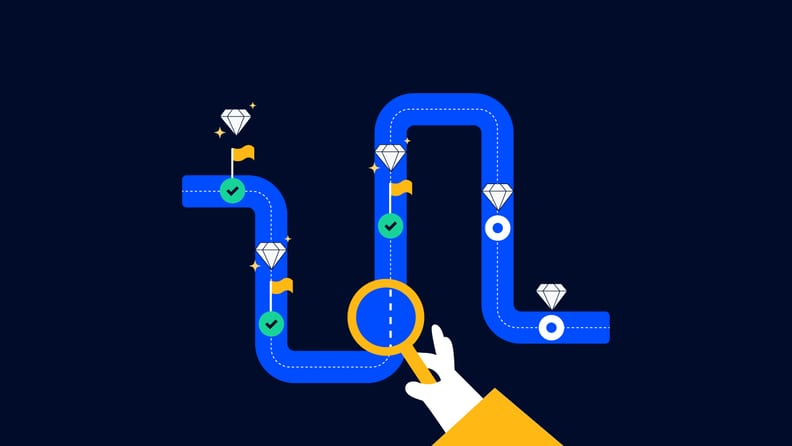
A project milestone is a marker in a project schedule that signals a significant event or major accomplishment. divide a into a set of smaller, manageable goals. They represent the inflection points or checkpoints in a . Often, these milestones are tracked using project management software.
Since milestones are the important events you want to achieve during a , each has an end date. A without an end date is not a goal. It’s a wish.
Milestones are not meant to occur at regularly scheduled, specific points in the . For example, they’re not meant to occur on a monthly cadence. Nor do they need to be attached to a presentation to senior managers that require the to continue to justify the .

Milestones vs. Deliverables & Goals
Though often conflated with one another, milestones, deliverables, and goals each serve a distinct purpose in tracking progress, measuring success, and defining outcomes within a project.
Milestones vs. Deliverables
While project milestones mark phases, stages, or major decision making points in a project, deliverables are the tangible items that are created during each phase.
Due dates of deliverables often coincide with the timing of milestones. For example, a website launch is the culmination of the work completed during the development and testing phases of a project.
Depending on how you've broken down the work in your project, you might end up with many smaller deliverables that make up bigger ones (like design approval, in the aforementioned website launch). These smaller deliverables might not necessarily coincide with a specific project milestone.
Milestones vs. Goals
Project goals define the broader outcomes a project is intended to achieve, while milestones represent the measurable checkpoints used to track progress toward those goals.
For example, a project goal might be improving customer onboarding efficiency, while a milestone could be completing the rollout of a new onboarding portal by a specific date.
Why are Project Milestones Important?
Project milestones help teams measure progress, stay aligned on priorities, and maintain visibility throughout the project lifecycle. By breaking larger projects into smaller checkpoints, milestones make complex work feel more manageable while helping teams identify delays and risks before they escalate.
However, milestones should not be inflexible. The reason projects have milestones is to make teams execute more effectively and to manage the expectations of senior leaders.
Project Visibility
Milestones provide a high-level view of project progress, making it easier for teams and stakeholders to understand where the project stands at any given time. Instead of tracking every individual task, milestones highlight the major achievements and phases that move the project forward.
Accountability
Clear milestones create shared accountability across teams by defining what needs to be completed and when. They help project managers assign ownership, track deadlines, and ensure teams stay focused on delivering meaningful progress.
Stakeholder Alignment
Milestones help keep stakeholders informed and aligned throughout the project lifecycle. They create natural checkpoints for approvals, reviews, and progress updates, reducing confusion and helping everyone stay focused on the same objectives.

Schedule Control
Tracking milestones makes it easier to identify schedule risks early and adjust timelines when needed. If one milestone slips, project managers can quickly assess the downstream impact on dependencies, resources, and delivery dates before delays compound.
Motivation & Progress Tracking
Large projects can feel overwhelming without visible signs of progress. Milestones give teams achievable targets to work toward and create opportunities to celebrate progress along the way, helping maintain momentum throughout the project lifecycle.
Benefits Of Using Project Milestones
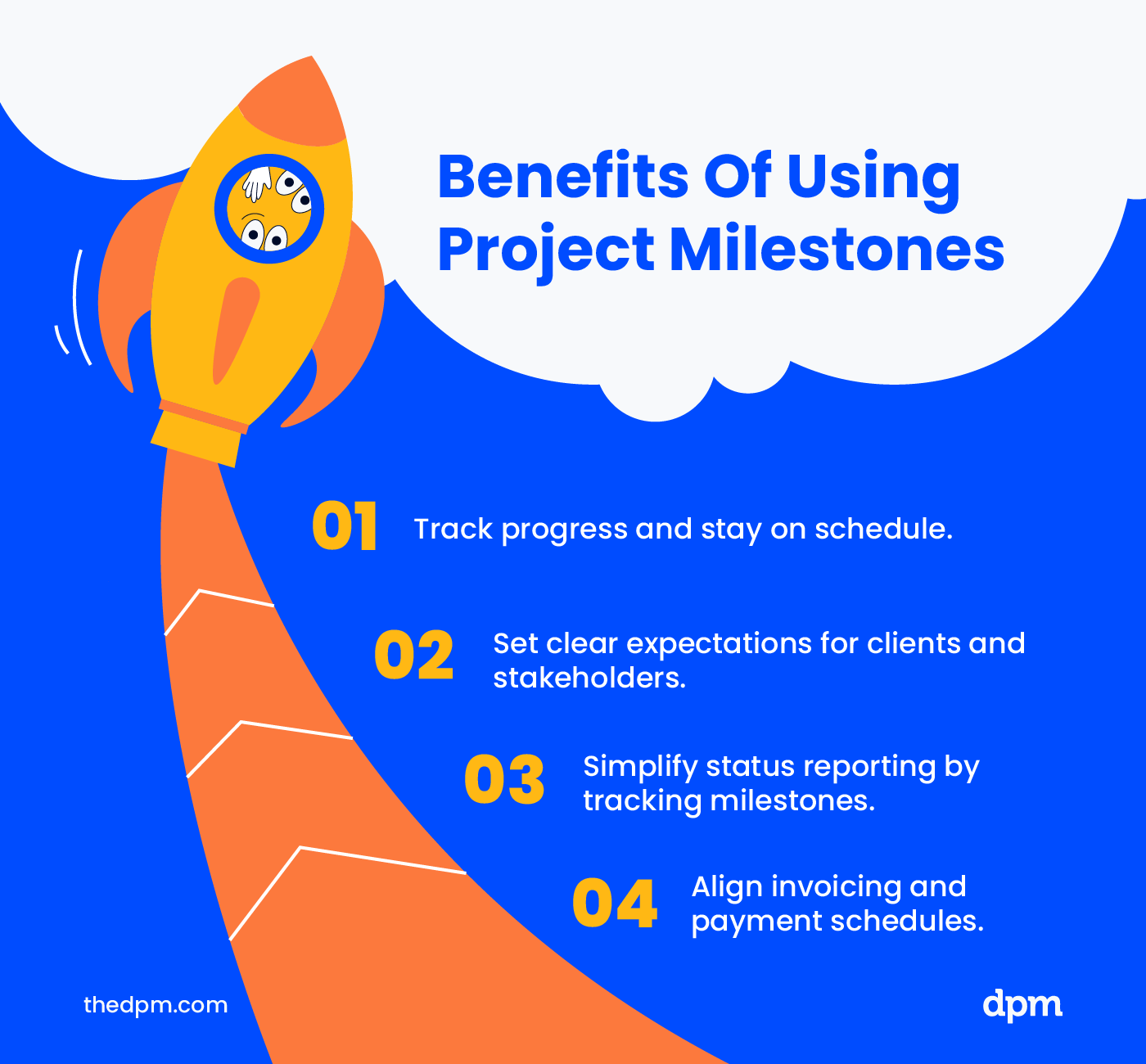
Here are a few of the major benefits of using project milestones.
- Tracking progress: Project managers can use them to track progress. For example, if you've used up 50% of your budget, but you've only hit, say, 1 out of 3 milestones, you might be tracking behind schedule (project scheduling software can help you keep track of this automatically).
- Setting clear expectations: They help set up expectations with clients and internal stakeholders about workflows, how often they can expect communication, and what work will be completed when.
- Better status reporting: Project managers can use them for status reporting purposes (ex. was the milestone achieved or not).
- Alignment with invoicing: They can be aligned with invoicing and payment schedules, so clients know in advance when they will be invoiced and any freelancers know when they will be paid.
Considerations For Planning & Setting Milestones
The key to setting the right milestones is experience in and tracking.
For , first define the ‘s goals. Understand the ‘s business objectives and how they fit in with the overall company strategy. Set the project scope. Create a rough estimate of the project's length and size.
Then consider the two most important factors in and setting milestones: risk reduction and dependencies.
1. Milestone Planning To Reduce Risk
Digital product development is the reduction of risk over time. When planning your project timeline and milestones, first ask: What are the riskiest decisions you will need to make to execute this project?
- Is the risk in the market?
- Is the risk in the technology (because it’s either new to your company or new to the world?)
- Is the risk in the relationships involved (for example, in the management of development partners?)
- Is the risk in the fact that the project has such complex dependencies that the critical path is long and torturous?
There can be other risks as well, including operational or support risks. In any case, the decisions made through asking this should be recorded in a decision log if you want to have a better-aligned team. Define the risks as much as possible and use risk reduction over time as the operating principle to guide you in building a and the key milestones.
Milestone Example: Game Developer Creates B2B App
Suppose your company is a game developer and your marketing has discovered a new opportunity to use your gaming platform to create a new app that corporate HR departments can use to test new applicants.
The technology is similar to what you’ve designed before, but this new product means entry into a brand new market. It’s a B2B app and not a consumer product. And the new app’s purpose is not entertainment—it’s in the business apps and services space.
The technology risk is low, but the market risk is high.
What you need is access to customers for your HR app and an iterative approach where you can roll-out prototypes to potential customers.
Think through the steps required to develop these prototypes and get them in the hands of customers. Where will you find the best candidates for testing? Who do you need to be involved on your side? When in the should this happen?
Remember, the purpose of this exercise is to reduce the market risk, and the earlier the better. When you think you will have reduced risk to acceptable levels, that’s where to place a —at this inflection point in the .
2. Milestone Planning To Manage Dependencies
In addition to risk reduction, also consider the key dependencies. You may use the to define each critical and how they—and the people who will do them—will interact over time.
The goal is to find the longest path to the next and then try to shorten it. Note the inflection points where key individuals or groups come together to accomplish a goal that propels your forward. That’s where to place a .
In our HR app example, think about who needs to be on the to test (iteratively) the new app’s product-market fit. Consider when they need to be there, and what their other constraints are. Think about the key deliverables that these groups will need to create along the way.
Map these key dependencies. When they come together to satisfy the need to reduce market risk, accomplishing a key goal along your path to the summit, that’s where you want your .
A milestone planning pitfall to avoid:
Don’t start with a project date that comes from senior management, and then reason backward from the due date of the end of the to create the and key milestones. Planning your timeline and milestones should be bottom-up, not top-down.
Agree on a timeframe and launch date by consensus between the team and senior management. The people who are doing the work should make the plan.
How To Track Project Milestones
After you’ve mapped the and planned your , you need to track them. They should be visible to all stakeholders, including senior management. Management needs some confirmation that the is moving forward as planned, especially if the requires minor course corrections along the way.
Teams should publish their list of which includes the goals, decisions, or accomplishments associated with each of them. You could input this information into your , milestone chart, , project charter, or .
It can be as simple as a table with three columns that includes the date; the name; and the deliverables, goals or accomplishments associated with each. Send this table to the cloud. Do not email it, but keep it as a shared, public document.
Management by Exception
The team should only report to senior management where there are exceptions, ie. when it perceives that it is not going to hit a by the scheduled date, or when it is not going to achieve the deliverables or goals for a certain project .
This management by exception approach means that 1) your milestones are stated clearly and visible to each stakeholder; 2) there are no status meetings (if you’re working to plan, why waste time making and delivering a slide presentation to that effect?); and 3) only report to senior management when the plan begins to go off course.
Examples of Project Milestones
We advise that a typical digital development project should have three major milestones, with perhaps between four and six minor milestones leading up to each . The three major milestones define the following:
1. Concept Fit
The demonstrates that time-to-revenue is foreseeable and that the revenue potential is sufficiently large. The shows that the proposed fits with the overall company strategy. This proof-of-concept is achieved when the has a defined and fully-funded .
2. Product/Market Fit
By this , the dev has shown that the product under development is the best solution for the market. They have identified use cases, and have tested prototypes with users to confirm fit with the intended market.
The has calculated accurately the costs and defined the product’s profit potential. The has achieved this when there is a workable prototype, at least for internal purposes.
3. Development and Market Launch
To achieve this , the needs to develop an MVP that is prepared to encounter actual users, that justifies the time and resources invested, and that it’s worth the potential risk to the company’s reputation.
The achieves this when it creates a series of iterations of its product prototype in collaboration with customers. The will also have achieved this when it assesses the digital product’s UI, quality, feature set, and support capability.
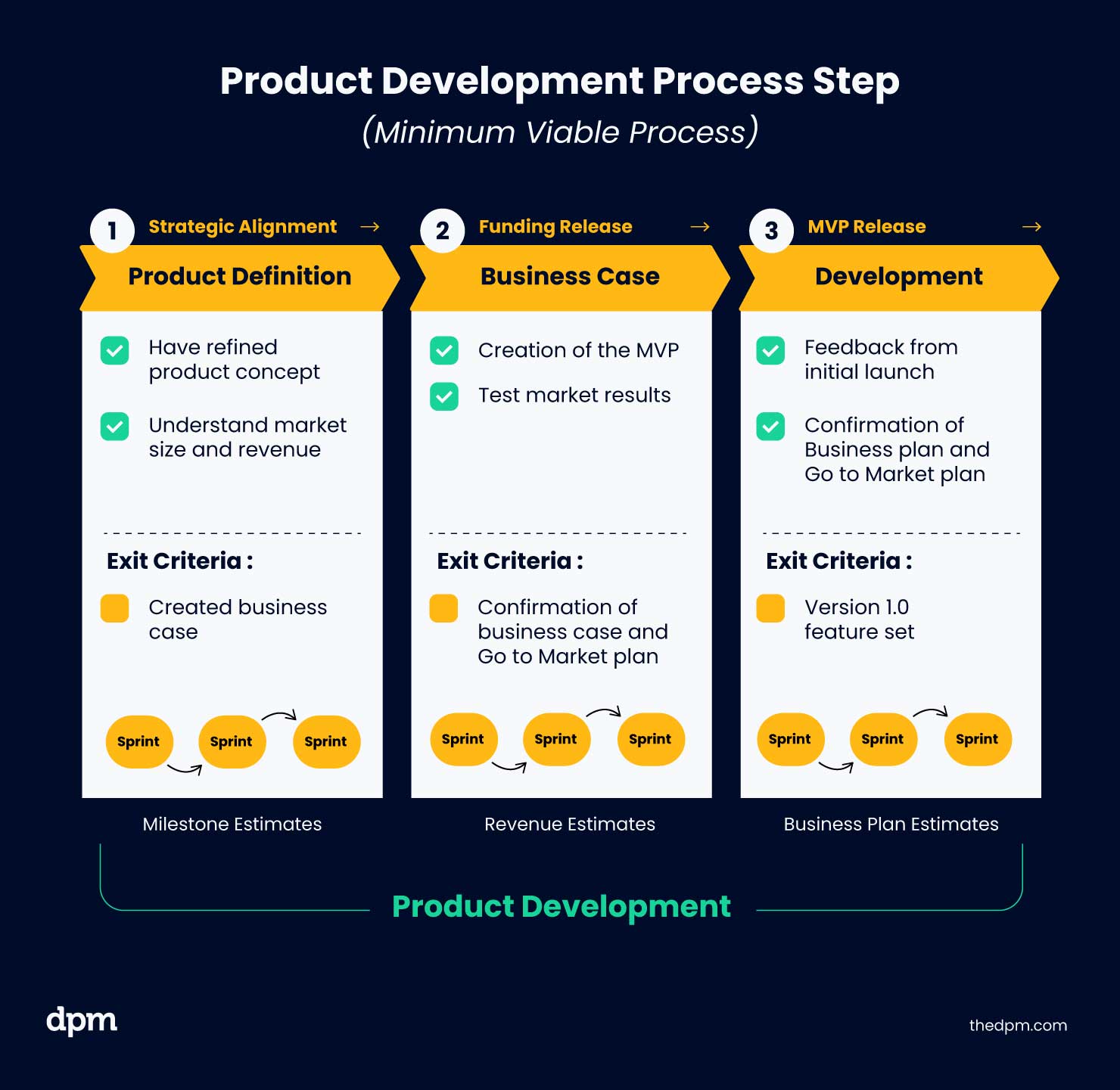
A three step product development process. Think of each project phase as a product release. The development team ties exit criteria to a sprint. This Minimum Viable Process is a hybrid approach that combines the best elements of phases and gates processes with agile methodologies.
Examples of Common Project Milestone Inflection Points
The first of the major milestones above answers the question “Why this product?” The second answers the question “What is the product and how will we achieve our goals?” The third answers the question “When will we be ready to release it to the world?”
Within each of these milestones, arrange four to six minor milestones that are inflection points that will lead you to each of the three major milestones. For example, leading up to the each of the three major milestones we’ve defined above, create minor milestones for each of these activities:
Concept Fit
- Project has an experienced, entrepreneurial leader
- Product idea fits with the corporate vision
- The technology is feasible
- Project has the right staff and resources
- Product has sufficient commercial potential
Product Market Fit
- The technology has been fully vetted
- Use cases have been defined
- The project has an estimated cost of development
- The commercial potential has been quantified and confirmed
- User feedback has been collected and understood
Development and Market Launch
- Minimum Viable Product developed
- Business plan written and confirmed
- Market research complete
- Customer support infrastructure built
- Salesforce trained
Other examples of minor milestones for digital projects:
- Product definition complete
- Proof of technology feasibility
- Prototype complete
- UI accepted
- Management signed-off on UI
- Testing
- User feedback (iterative)
- Readiness to scale (ex. localization)
Project Milestone Best Practices
Well-planned milestones help teams stay focused, aligned, and aware of project progress without getting lost in day-to-day task management. Following a few milestone best practices can make projects easier to manage while reducing confusion, delays, and unnecessary rework.
Keep Milestones Realistic
Milestones should reflect meaningful and achievable checkpoints within the project timeline. Setting overly ambitious milestones can create unnecessary pressure on teams and lead to missed deadlines that weaken confidence in the project plan.
Focus on Major Checkpoints
Not every task or deliverable needs to become a milestone. Milestones work best when they represent major accomplishments, approvals, transitions, or decision points that significantly move the project forward.
Review Milestones Regularly
Projects evolve over time, and milestones should be reviewed regularly to ensure they still reflect the realities of the project. Consistent milestone reviews help teams identify delays early and adjust timelines before small issues become larger problems.
Communicate Milestone Changes Clearly
When milestone dates or priorities shift, stakeholders and team members need visibility into what changed and why. Clear communication helps maintain alignment, reduce confusion, and prevent downstream dependencies from being affected unexpectedly.
Stay Flexible as Projects Evolve
Milestones should create structure, but they shouldn’t make projects rigid. Priorities, timelines, and business needs can change throughout a project lifecycle, so teams should be prepared to adapt milestones when necessary while still maintaining visibility into overall progre
Key Takeaways For Project Milestones
Here’s a summary of the main takeaways from this article:
1. The purpose of planning a timeline and a set of milestones is for the team to do their jobs better.
Management needs to be able to rely on the team, and the team needs accountability, but the milestones aren’t for project managers or senior managers.
2. Typical milestones are signposts to ensure that the team reaches the right goals at the right time.
Also, milestones are not a good substitute for good project management. They are the result of managing projects with foresight, with an eye on reducing risks and managing key dependencies so the project team can work smoothly without bottlenecks.
3. For digital product development, have three major milestones that correlate with major business goals.
Use milestones to define the concept, confirm the fit between the product and the market, and then develop and launch. Have about four to six minor milestones leading up to each of these three.
4. Above all, have only as many milestones as you need to propel the project forward.
Many companies have too much process. Milestones involve major events and important dates, so don’t get bogged down with trying to keep track of too many smaller milestones. You need just enough process to achieve your goals. Think Goldilocks: not too much, not too little.
What's Next?
Want to connect with other digital project managers to share resources and best practices? Join our membership community and get access to 100+ templates, samples, and examples, and connect with 100s of other digital project managers in Slack.



