Recensione di GQueues: spiegazione di vantaggi, svantaggi, funzionalità e prezzi



When your team already lives in Google Workspace, adding another disconnected tool can create more friction than it solves. The right project management platform should fit naturally into that ecosystem while keeping tasks, schedules, and collaboration easy to manage.
GQueues is a task management software, helping teams manage tasks, schedules, and collaboration directly within Google Workspace. If you need project management software to organize projects, automate scheduling, and keep your team in sync, GQueues stands out with its direct syncing and task management simplicity.
In this review, I’ll cover GQueues’s core features, real-world use cases, pricing structure, and where it shines—or falls short—compared to other options.
GQueues Evaluation Summary
- From $3/user/month (billed annually)
- 14-day free trial
Perché fidarsi dei nostri consigli sui software
Il nostro team testa e recensisce software dal 2012. In quanto project manager noi stessi, sappiamo quanto sia difficile — e importante — scegliere il software giusto.
Per questa guida, abbiamo valutato gli strumenti attraverso test pratici e ricerche indipendenti, assegnando un punteggio agli strumenti in base ai nostri criteri di selezione. Ci basiamo inoltre sulle competenze di leader di pensiero del settore e di professionisti attivi nella gestione dei progetti.
Le nostre recensioni riflettono il nostro giudizio editoriale umano, non un discorso di vendita.
Revisori esperti:
GQueues Overview
If you’re judging task management software on how smoothly it meshes with Google Workspace, GQueues stands out for its intuitive interface and direct two-way calendar syncing. Gmail, Drive, and Docs are wired in just as tightly, and switching them on takes a click rather than an implementation project. I think its pricing is fair for small teams, and onboarding feels quick, especially if you already use Google tools. While it’s not as feature-dense as some alternatives, and advanced workflow automation is not its strong suit, it excels in simplicity, functionality, and responsive support. I’d suggest selecting GQueues if you want calendar-driven task management without an overwhelming learning curve, especially for education, non-profits, or lean teams who already live in Google’s ecosystem.
pros
-
Syncs tasks and due dates directly to Google Calendar
-
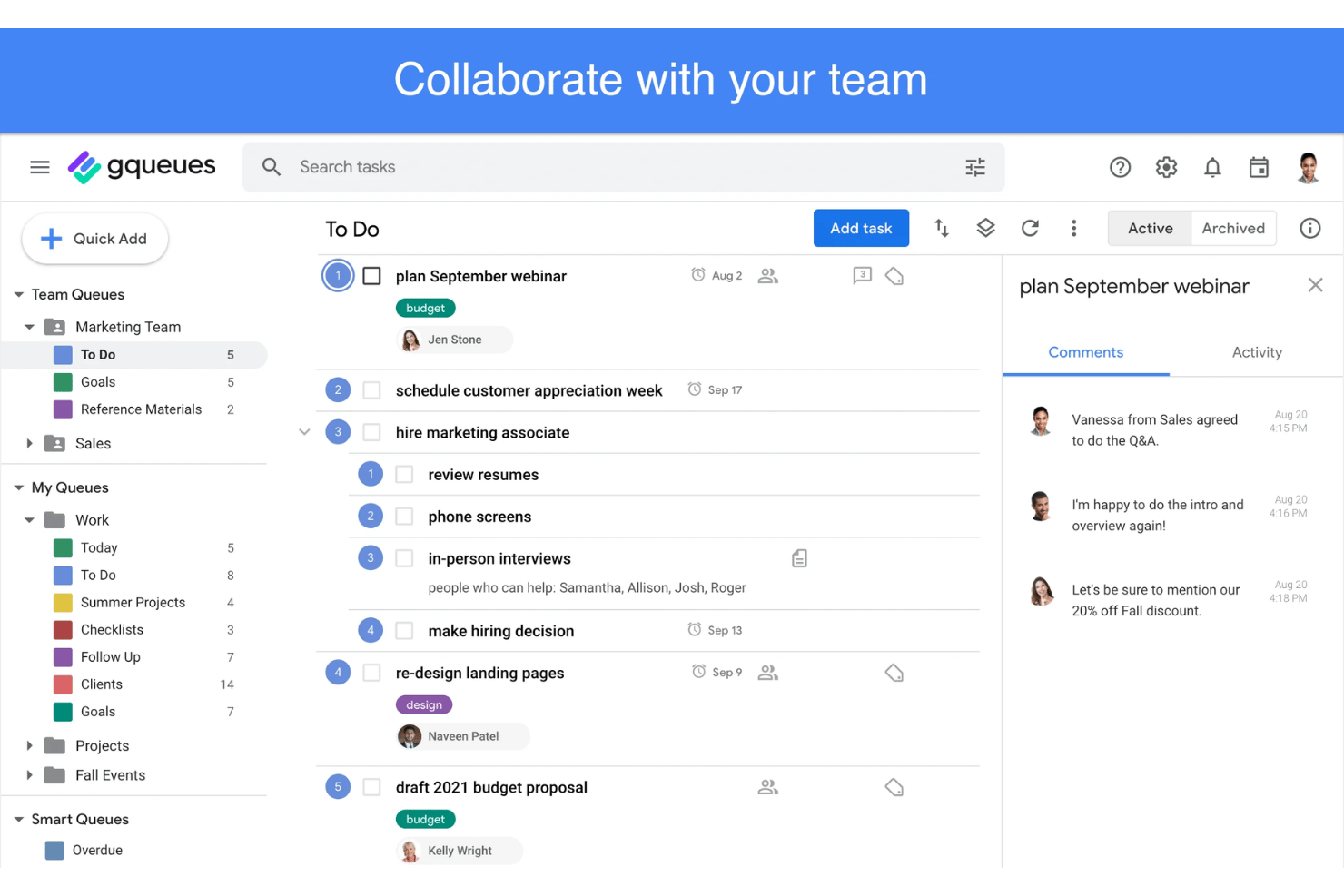
Lets users assign and collaborate on shared lists
-
Offers built-in email task creation from Gmail
cons
-
Lacks built-in time tracking or workload management tools
-
Doesn’t offer Gantt chart or timeline views
-
Loses integration depth for teams outside the Google ecosystem
-

Celoxis
Visit WebsiteThis rating combines scores from multiple user review sites to reflect overall customer sentiment about the product.4.5 -
Smartsheet
Visit WebsiteThis rating combines scores from multiple user review sites to reflect overall customer sentiment about the product.4.5 -
Accelo
Visit WebsiteThis rating combines scores from multiple user review sites to reflect overall customer sentiment about the product.4.4




La nostra metodologia di recensione
Come testiamo e valutiamo gli strumenti
Abbiamo passato anni a costruire, perfezionare e migliorare il nostro sistema di test e valutazione dei software. Il nostro schema è progettato per cogliere tutte le sfumature della scelta di un software e ciò che rende uno strumento efficace, ponendo l’accento sugli aspetti critici del processo decisionale. Qui sotto puoi vedere esattamente come funziona il nostro test e la nostra valutazione su sette criteri. Questo ci consente di offrire una valutazione imparziale del software basata su funzionalità fondamentali, caratteristiche distintive, facilità d’uso, onboarding, assistenza clienti, integrazioni, recensioni dei clienti e rapporto qualità-prezzo.
Funzionalità principali (25% della valutazione finale)
Il punto di partenza della nostra valutazione è sempre la funzionalità principale dello strumento. Ha le funzioni e le caratteristiche di base che un utente si aspetterebbe di trovare? Alcune di queste funzionalità sono limitate ai piani premium? In sostanza, ci aspettiamo che uno strumento sia all’altezza delle capacità di base dei suoi concorrenti.
Caratteristiche distintive (25% della valutazione finale)
Successivamente valutiamo le funzioni distintive, non comuni, che vanno oltre la semplice funzionalità di base normalmente presente in strumenti simili. Un punteggio elevato riflette funzionalità specializzate o uniche che rendono il prodotto più rapido, efficiente o che offrono un valore aggiunto all’utente. Valutiamo anche la facilità d’integrazione con altri strumenti comunemente presenti nel tech stack per ampliare la funzionalità e l’utilità del software. Gli strumenti che offrono molte integrazioni native, connessioni di terze parti e accesso API per creare integrazioni personalizzate ottengono il punteggio più alto.
Facilità d’uso (10% della valutazione finale)
Consideriamo quanto sia semplice e rapido eseguire le attività definite dalla funzionalità principale tramite lo strumento. Gli strumenti con un punteggio elevato sono ben progettati, intuitivi, offrono app mobili, propongono modelli e rendono semplici anche le attività più complesse.
Onboarding (10% della valutazione finale)
Sappiamo quanto sia importante che il team adotti rapidamente una nuova piattaforma, quindi valutiamo quanto sia facile imparare e utilizzare uno strumento con poca formazione. Valutiamo quanto velocemente un membro del team possa iniziare a utilizzare lo strumento senza esperienza. Le soluzioni con un punteggio alto indicano che è richiesto poco o nessun supporto.
Supporto clienti (10% della valutazione finale)
Recensiamo la rapidità e semplicità nel trovare aiuto tramite telefono, chat live o knowledge base. Gli strumenti e le aziende che forniscono supporto in tempo reale ottengono i punteggi migliori, mentre i chatbot i più bassi.
Recensioni dei clienti (10% della valutazione finale)
Oltre ai nostri test e valutazioni, consideriamo il net promoter score dei clienti attuali e passati. Valutiamo la loro probabilità, qualora fosse possibile, di scegliere nuovamente lo strumento per le sue funzionalità di base. Un software con un punteggio elevato riflette un alto net promoter score da clienti attuali o passati.
Rapporto qualità-prezzo (10% della valutazione finale)
Infine, prendendo in considerazione tutti gli altri criteri, analizziamo il prezzo medio dei piani base confrontandolo con le funzionalità principali e valutando il valore degli altri criteri. I software che offrono di più, spendendo meno, ottengono punteggi più alti.
Core Features
Task List Organization
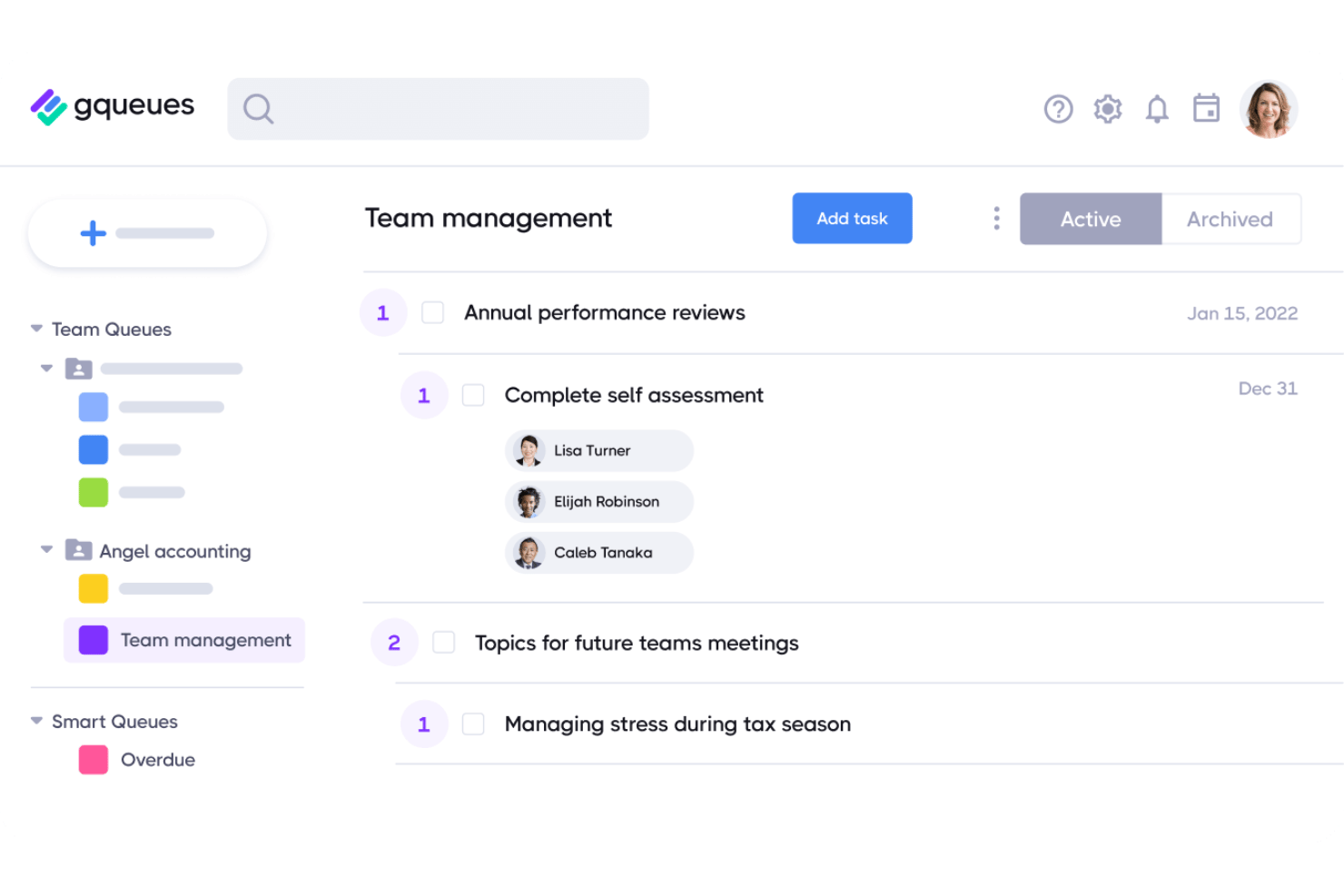
Create queues, sublists, and sections to break down projects, nesting subtasks as deeply as the work requires. Drag and drop moves or reorders anything.
List, Calendar, and Board Views
View the same queues as a to-do list, a calendar, or a Kanban-style board, so individuals can plan their own work while the team tracks status visually.
Two-Way Google Calendar Sync
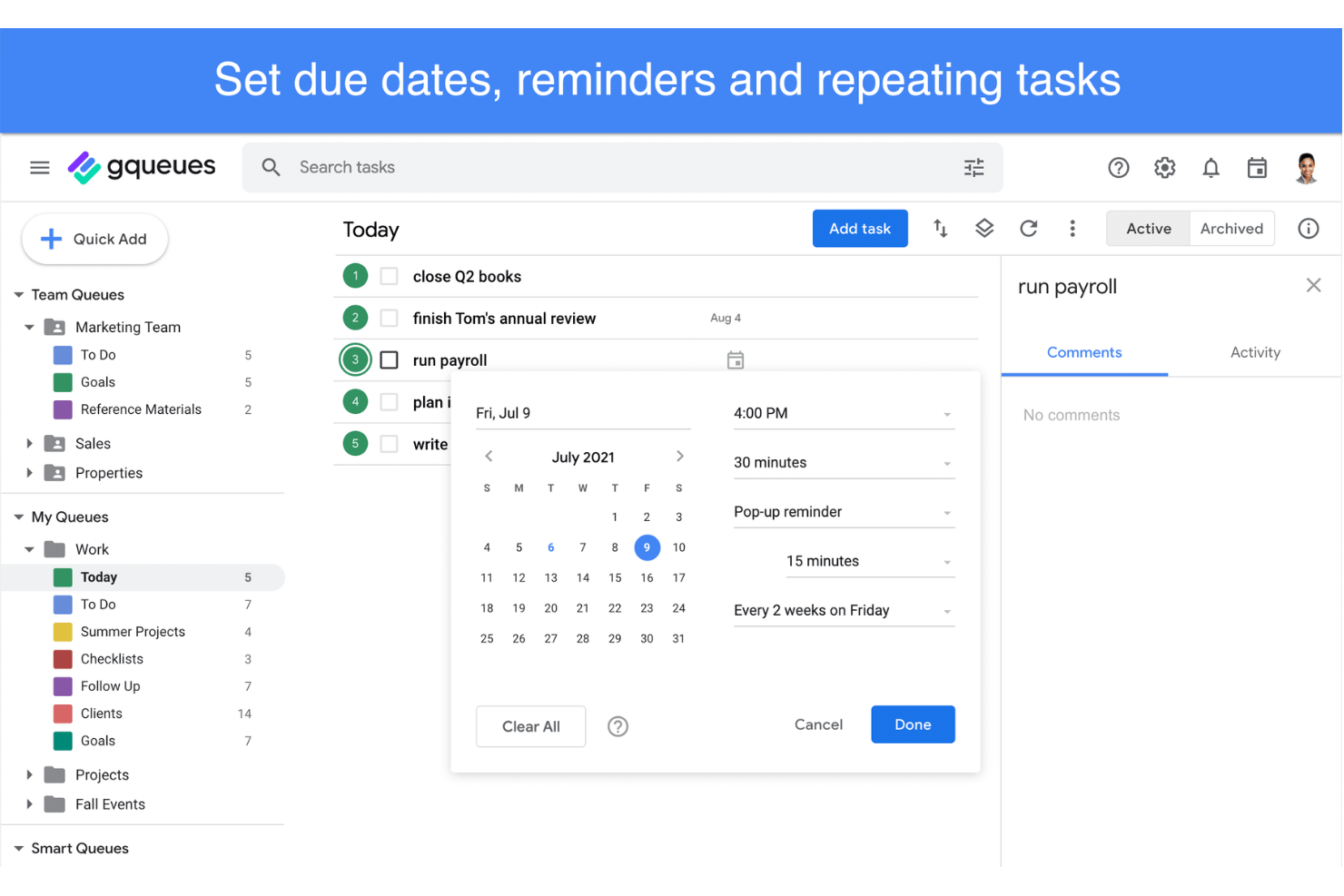
Tasks with due dates appear on your Google Calendar automatically, and edits flow both ways instantly. You can complete tasks from the calendar itself, or split projects across separate calendars.
Assignments and Shared Queues
Assign tasks to team members and collaborate in shared queues organized by team, project, or client. Everyone sees updates and completions in real time.
Attachments and Comments
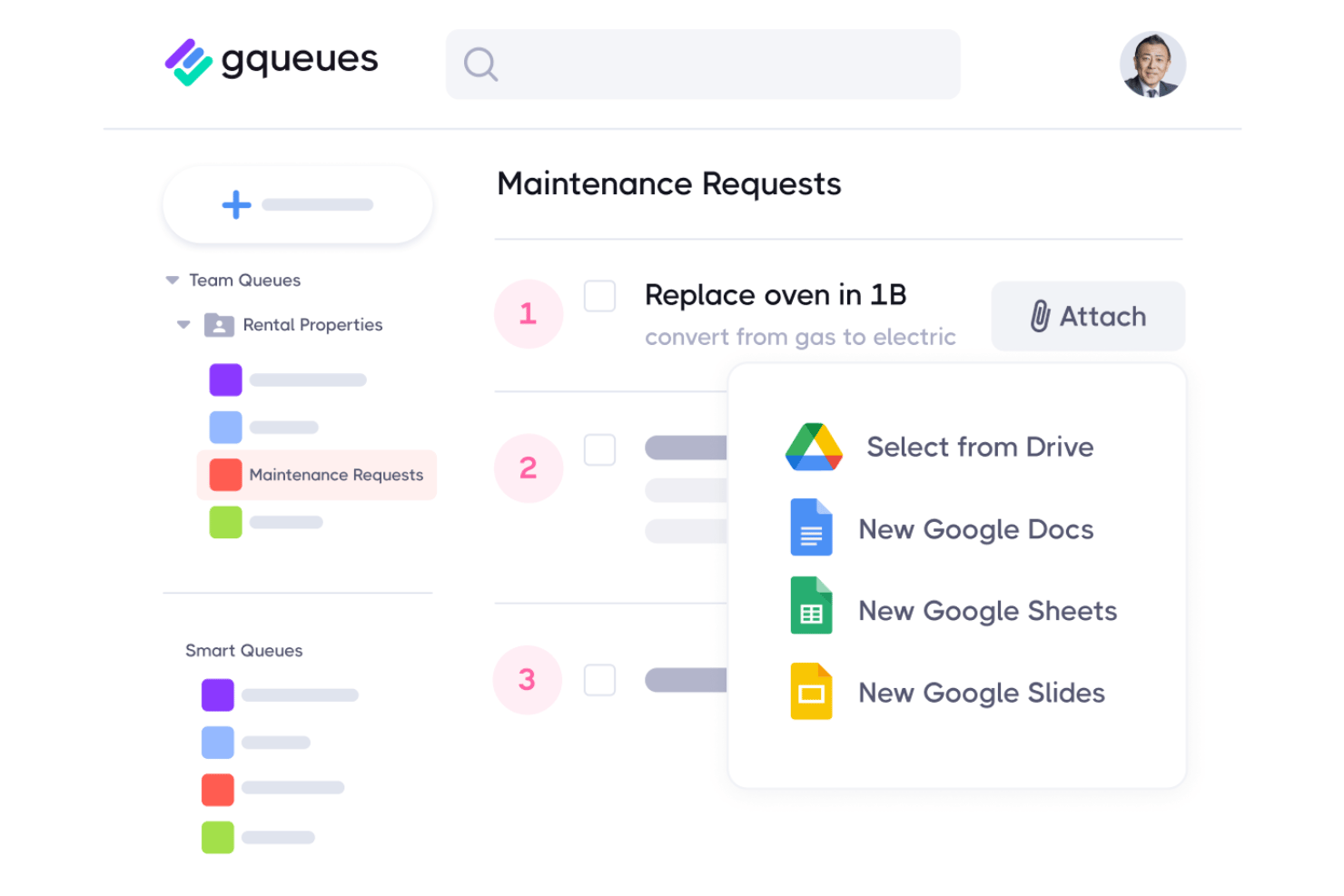
Attach Drive files, links, or images to tasks, or create a Google Doc from one and share it instantly. Permissions update on their own, so nobody waits on access, and comments keep discussion on the task.
Recurring Task Scheduling
Set tasks to repeat daily, weekly, monthly, or on a custom schedule. Reminders arrive by email and calendar so routine operations stay visible.
Email-to-Task Creation
A Gmail add-on turns emails into actionable tasks without leaving the inbox, carrying the message content and a link across so context survives.
Ease of Use
GQueues is probably one of the most user-friendly project management options with Google Calendar integration, thanks to its clean interface and straightforward task workflows. It borrows Google’s own visual conventions, so anyone comfortable in Workspace finds their way around immediately. Users often highlight the drag-and-drop list management and simple task assignment as strengths, while built-in keyboard shortcuts, bulk actions, and a Chrome extension for capturing ideas make day-to-day project handling fast and intuitive. You don’t need much onboarding, and if you use Google Workspace you’ll adapt quickly.
Integrations
GQueues integrates with Google Calendar, Google Drive, Gmail, Google Contacts, Google Cloud, and Google Workspace login.
GQueues offers a public API, giving teams more flexibility to connect the platform with other tools and build custom integrations.
GQueues Specs
- API
- Batch Permissions & Access
- Budgeting
- Calendar Management
- Collaboration Support
- Contact Management
- Contact Sharing
- Customer Management
- Dashboard
- Dashboards
- Data Export
- Data Import
- Data Visualization
- Dependency Tracking
- Document Sharing
- Expense Tracking
- External Integrations
- File Sharing
- Gantt Charts
- Kanban Boards
- Multi-User
- Notifications
- Project Management
- Resource Management
- Scheduling
- Task Scheduling/Tracking
- Third-Party Plugins/Add-Ons
- Time Management
- Travel Management
- Workflow Management