


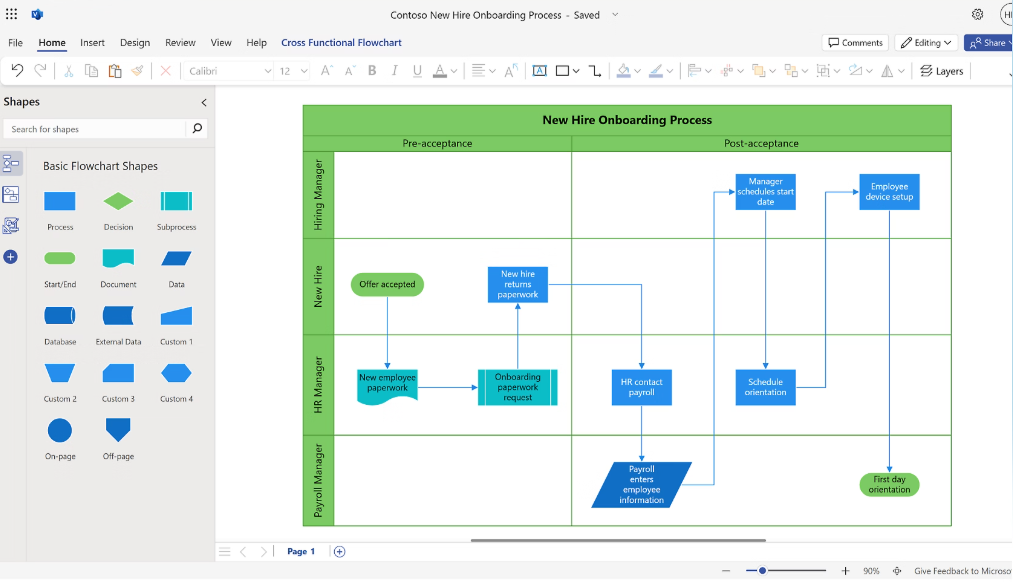
Microsoft Visio is a flowchart software for teams that need to create technical diagrams, process maps, network charts, and org charts at scale. It's worth considering if your organization is already deep in the Microsoft 365 ecosystem—Visio integrates directly with Teams, SharePoint, and Excel in ways that Lucidchart simply can't match natively. I'd lean toward it when your diagramming needs go beyond basic flows into IT infrastructure, data architecture, or cross-functional process documentation that needs to live inside Microsoft's environment.
Visio Evaluation Summary
- From $5/user/month (billed annually)
- 30-day free trial available
Why You Can Trust Us
We’ve been testing and reviewing project management software since 2012. As project managers ourselves, we know how critical and difficult it is to make the right decision when selecting software.
We invest in deep research to help our audience make better software purchasing decisions. We’ve tested more than 2,000 tools for different project management use cases and written over 1,000 comprehensive software reviews. Learn how we stay transparent & our software review methodology.
Visio Overview
In my opinion, Visio is a solid choice for those needing sophisticated flowchart and diagram solutions. Its integration with Microsoft products and wide range of features make it ideal for IT departments and project managers. While it excels in feature depth and professional diagram creation, it can be pricey and has a learning curve. Compared to simpler tools like Lucidchart or draw.io, Visio offers more advanced capabilities but may not be as intuitive for new users. Consider Visio if your team values detailed diagramming and already uses Microsoft products extensively.
pros
-
You can create detailed and professional-looking diagrams.
-
It offers a wide range of templates and shapes.
-
Your team benefits from its compatibility with Microsoft products.
cons
-
It has a steep learning curve for new users.
-
You might find the interface outdated compared to competitors.
-
It requires significant system resources for optimal performance.
-

Celoxis
Visit WebsiteThis rating combines scores from multiple user review sites to reflect overall customer sentiment about the product.4.5 -
Smartsheet
Visit WebsiteThis rating combines scores from multiple user review sites to reflect overall customer sentiment about the product.4.5 -
Accelo
Visit WebsiteThis rating combines scores from multiple user review sites to reflect overall customer sentiment about the product.4.4




Our Review Methodology
How We Test & Score Tools
We’ve spent years building, refining, and improving our software testing and scoring system. The rubric is designed to capture the nuances of software selection and what makes a tool effective, focusing on critical aspects of the decision-making process.
Below, you can see exactly how our testing and scoring works across seven criteria. It allows us to provide an unbiased evaluation of the software based on core functionality, standout features, ease of use, onboarding, customer support, integrations, customer reviews, and value for money.
Core Functionality (25% of final scoring)
The starting point of our evaluation is always the core functionality of the tool. Does it have the basic features and functions that a user would expect to see? Are any of those core features locked to higher-tiered pricing plans? At its core, we expect a tool to stand up against the baseline capabilities of its competitors.
Standout Features (25% of final scoring)
Next, we evaluate uncommon standout features that go above and beyond the core functionality typically found in tools of its kind. A high score reflects specialized or unique features that make the product faster, more efficient, or offer additional value to the user.
We also evaluate how easy it is to integrate with other tools typically found in the tech stack to expand the functionality and utility of the software. Tools offering plentiful native integrations, 3rd party connections, and API access to build custom integrations score best.
Ease of Use (10% of final scoring)
We consider how quick and easy it is to execute the tasks defined in the core functionality using the tool. High scoring software is well designed, intuitive to use, offers mobile apps, provides templates, and makes relatively complex tasks seem simple.
Onboarding (10% of final scoring)
We know how important rapid team adoption is for a new platform, so we evaluate how easy it is to learn and use a tool with minimal training. We evaluate how quickly a team member can get set up and start using the tool with no experience. High scoring solutions indicate little or no support is required.
Customer Support (10% of final scoring)
We review how quick and easy it is to get unstuck and find help by phone, live chat, or knowledge base. Tools and companies that provide real-time support score best, while chatbots score worst.
Customer Reviews (10% of final scoring)
Beyond our own testing and evaluation, we consider the net promoter score from current and past customers. We review their likelihood, given the option, to choose the tool again for the core functionality. A high scoring software reflects a high net promoter score from current or past customers.
Value for Money (10% of final scoring)
Lastly, in consideration of all the other criteria, we review the average price of entry level plans against the core features and consider the value of the other evaluation criteria. Software that delivers more, for less, will score higher.
Core Features
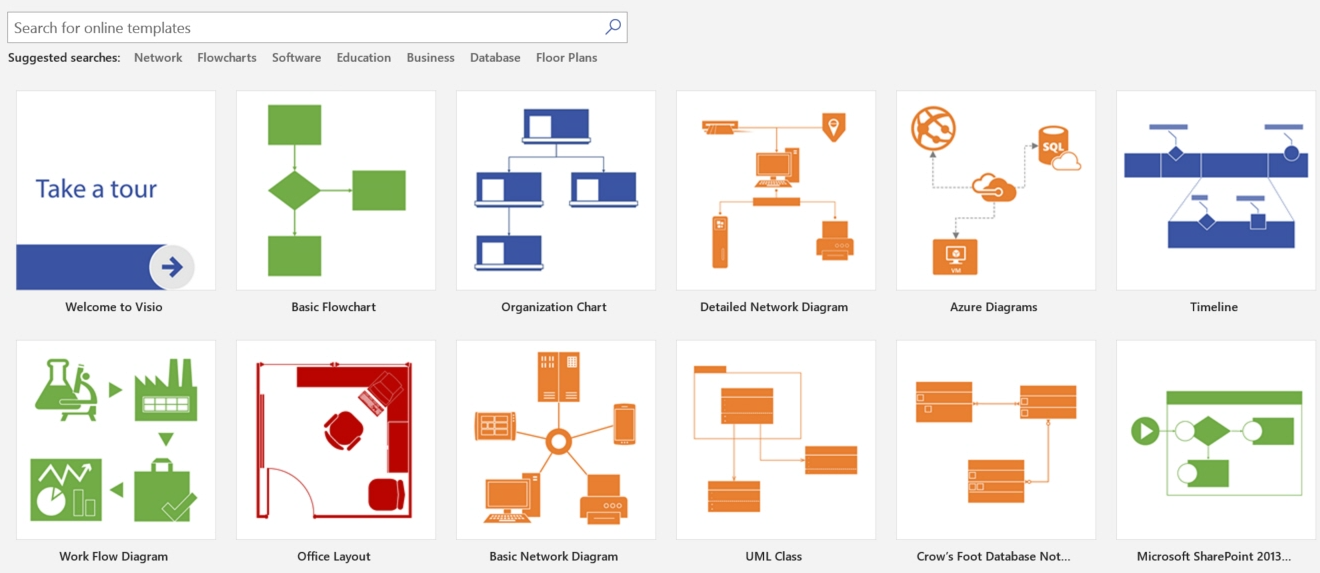
Diagram Templates: Visio offers a wide range of templates for flowcharts, org charts, network diagrams, and more. Your team can quickly start projects with these ready-made layouts.
Shape Library: With an extensive collection of shapes and stencils, you can create detailed and precise diagrams. This feature helps you visually represent complex processes effectively.
Drag-and-Drop Interface: You can easily move and place elements using Visio's intuitive drag-and-drop function. It simplifies the design process for faster workflow creation.
Layer Management: Visio allows you to organize diagrams into layers for better clarity. It’s great for managing complex diagrams with multiple elements.
Collaboration Tools: Your team can work together in real-time, making Visio ideal for collaborative projects like mind maps and floor plans. It supports comments and feedback directly on diagrams.
Data Linking: You can link diagrams to real-time data sources for dynamic updates. This feature is useful for creating live dashboards and reports.
Ease of Use
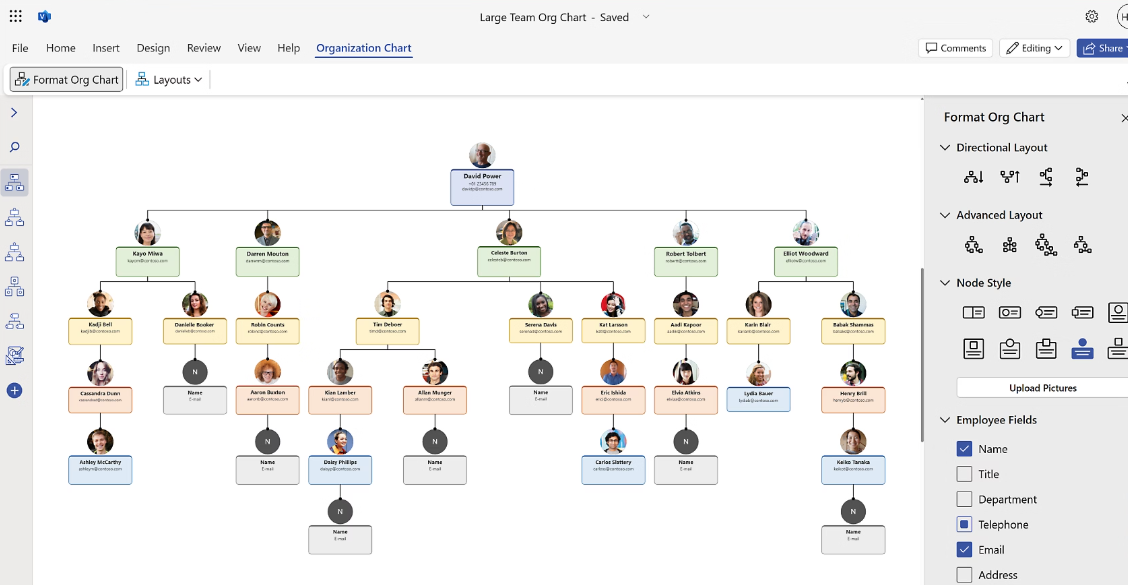
Visio can be challenging for beginner users due to its complex interface and steep learning curve. While it offers powerful tools and extensive features, you might find it less intuitive compared to simpler flowchart software. The advanced functionalities require some training to fully leverage. However, once your team gets the hang of it, Visio's precision and detailed capabilities become invaluable for complex diagramming tasks. If you're familiar with Microsoft products, the transition might be smoother.
Integrations
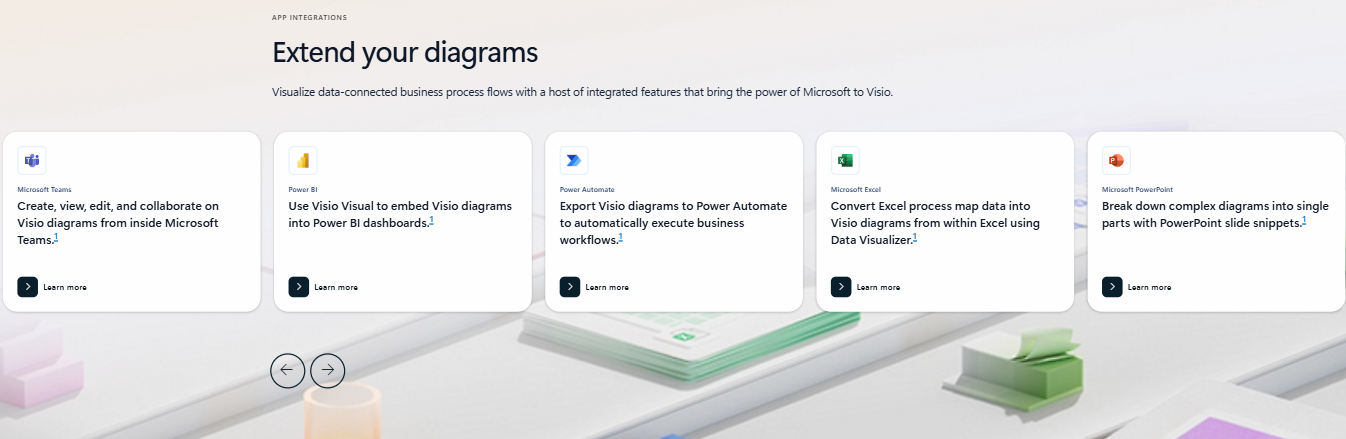
Visio integrates with Microsoft Teams, Power BI, Power Automate, Microsoft Excel, Microsoft PowerPoint, Microsoft Word, OneDrive for Business, and Microsoft Azure.
Visio also offers an API for custom integrations and connects with third-party integration tools.
Visio Specs
- 2-Factor Authentication
- 360 Degree Feedback
- API
- Application Tracking
- Attendance Tracking
- Batch Permissions & Access
- Compliance Tracking
- Dashboard
- Data Export
- Data Import
- Data Visualization
- Employee Database
- Employee Engagement
- Employee Incentive Management
- Employee Onboarding
- Employee Training
- Expense Tracking
- External Integrations
- Feedback Management
- Multi-User
- Notifications
- Payroll
- Performance Appraisal
- Scheduling
- Time Management
- Timesheets
- Travel Management
- Vacation & Absence Calendar