

10 Best ClickTime Alternative Tools for Time Tracking in 2026

Best ClickTime Alternative Shortlist


If you're finding that ClickTime isn't the right project management and time tracking tool for your team, there are lots of ClickTime alternatives available that can help you with timesheets, project budgeting, and project reporting.
ClickTime might be missing advanced analytics or specific integrations that you need to fulfill your use case, so I've tested and reviewed dozens of alternatives to ClickTime to help you find a replacement. Here are my recommendations for the best ClickTime alternatives.
What Is ClickTime?
ClickTime is a time-tracking and workforce management software that businesses and organizations can use to monitor employee hours, manage project costs, and improve workforce productivity.
Common users include project managers, HR professionals, and finance teams that need to track time for billing, payroll, and project management purposes. The software provides insights into employee work habits and project progress to help you make informed decisions and allocate resources efficiently.
Why Trust Our Software Recommendations
Our team has been testing and reviewing software since 2012. As project managers ourselves, we know how difficult—and important—it is to choose the right software.
For this guide, we evaluated tools using hands-on testing and independent research, scoring tools using our selection criteria. We also draw on insights from industry thought leaders and practicing project management experts.
Our reviews reflect our human editorial judgment, not a sales pitch.
Expert reviewers:
ClickTime Alternatives Comparison Table
This comparison table summarizes pricing details for my top ClickTime alternative selections:
| Tool | Best For | Trial Info | Price | ||
|---|---|---|---|---|---|
| 1 | Best for flexible time tracking | Free plan + 30-day free trial + free demo available | From $5/user/month (billed annually) | Website | |
| 2 | Best for profitability tracking across client projects | 30-day free trial + free plan available | From $9/user/month (billed annually) | Website | |
| 3 | Best for cross-platform time tracking | Free plan + 7-day free trial available | From $4.99/user/month | Website | |
| 4 | Best for team time tracking | Free plan + 14-day free trial + free demo available | From $4/user/month (billed annually) | Website | |
| 5 | Best for automatic time tracking | 14-day free trial + free plan + free demo available | From $3.99/user/month (billed annually) | Website | |
| 6 | Best for project cost accounting | Free demo available | From $13/user/month | Website | |
| 7 | Best for GovCon compliance and project billing | Not available | Pricing upon request | Website | |
| 8 | Best for professional services billing and utilization | 14-day free trial | From $10/user/month (billed annually) | Website | |
| 9 | Best for GPS and remote workforce tracking | 14-day free trial | From $10/user/month (billed annually) | Website | |
| 10 | Best for budget management | Free demo available | From $20/user/month | Website |


Best ClickTime Alternatives Reviews
Here’s my detailed analysis of each of the top ClickTime alternatives. Each overview covers the strengths and weaknesses, key features, and ideal scenarios for using these tools.

actiTIME
Best for flexible time tracking
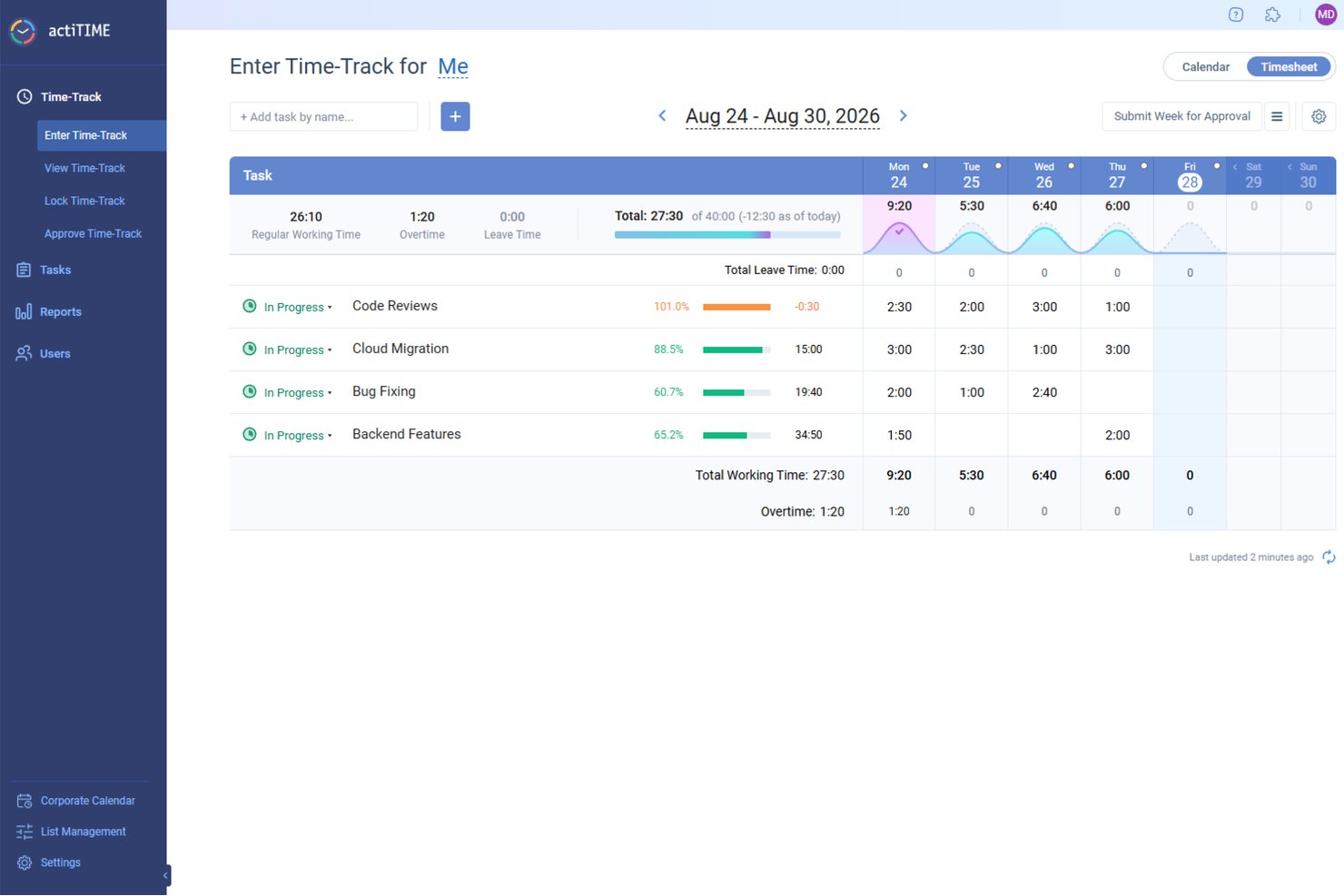
actiTIME is a time-tracking software designed to aid project management and financial oversight across various industries.
Why it's a good ClickTime alternative:
actiTIME is a practical alternative to ClickTime because it offers features that cater to diverse time tracking and project management needs. You can access flexible time tracking methods, including web timesheets, calendar views, and mobile apps, which support accurate payroll processing and billing. The tool's reporting capabilities also provide templates for performance analysis, overtime monitoring, and project profitability assessment, aiding in better resource allocation and budgeting.
Standout features and integrations:
Features include overtime calculation, which helps ensure fair compensation for remote employees working extra hours. Timesheet locking prevents employees from modifying past time entries once a deadline has passed, keeping time records accurate and reliable. Additionally, leave tracking allows remote workers to request time off directly in the system.
Integrations include QuickBooks, Zapier, actiPLANS, GitHub, Salesforce, Jira, Trello, Outlook, Evernote, Todoist, and Bamboo HR.
Pros and Cons
Pros:
- Status updates help managers monitor remote teams
- Multiple ways to track time
- Provides detailed reporting tools
Cons:
- No built-in payroll feature
- No GPS tracking for more detailed monitoring
New Product Updates from actiTIME

actiTIME Visual Hour Indicator and Time-Track Report Redesign
actiTIME adds a wave-style hour indicator to the Timesheet and Calendar views and refreshes the Time-Track report for smoother navigation and clearer visuals. For more information, visit actiTIME's official site.
Beebole
Best for profitability tracking across client projects
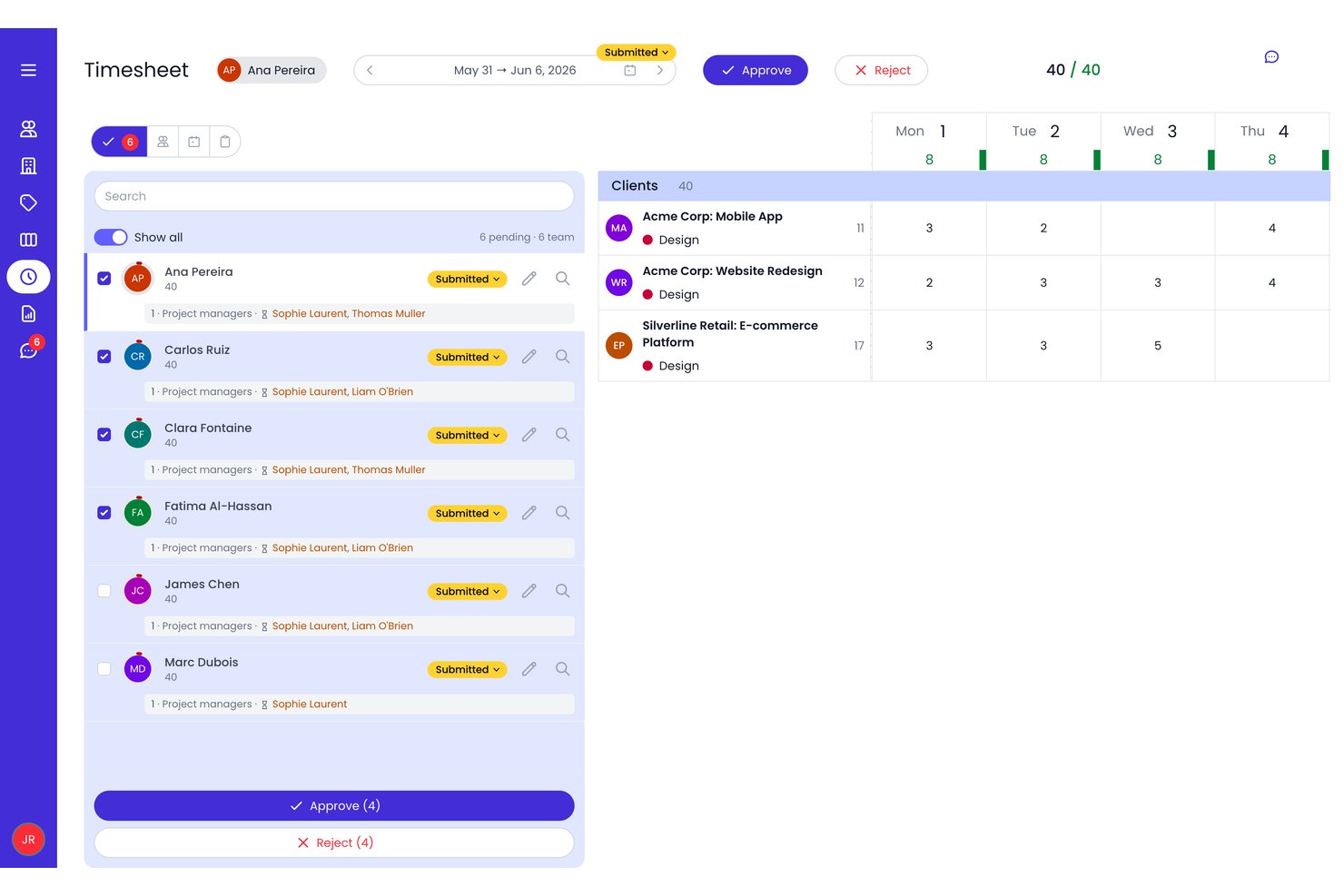
Beebole is a time tracking and project financials platform that combines billable and non-billable hour logging, multi-level budget management, resource capacity planning, and customizable profitability reporting across client projects.
Who Is Beebole Best For?
Beebole is a strong fit for agencies and consulting firms that need to track billable hours, manage multi-level project budgets, and monitor profitability across a client portfolio.
Why I Picked Beebole
Beebole earns its spot on my shortlist because of how precisely it layers billing and cost rates across every level of a client project. I like that you can set separate bill rates and cost rates at the person, task, or subproject level, which means margin reporting reflects reality rather than averages. Real-time budget vs. actual tracking with overrun alerts makes it easy to catch a project trending over before it eats into profit.
Beebole Key Features
- AI-suggested time entries: Beebole uses past logging patterns and activity data to suggest time entries, while calendar events can be imported separately to help populate timesheets.
- Skill-tagged resource planning: Assign and filter bookings by skill tags across Gantt, Staffing, and Kanban views, with availability calculated against real PTO and work schedules.
- Multi-level timesheet approvals: Configure approval workflows across multiple management levels, with automated reminders, period locking, and a full audit trail of every change.
- Google Sheets and Excel live data push: Link a spreadsheet to a saved Beebole report using the Google Sheets add-on or Excel add-in, then refresh the report data from within the spreadsheet.
Beebole Integrations
Beebole offers native integrations with Google Calendar, Outlook Calendar, Google Sheets, Excel, Asana, Linear, monday.com, QuickBooks Online, Xero, and BambooHR. Its open API and webhooks support custom connections; Jira is listed as coming soon.
Pros and Cons
Pros:
- Skill-tagged resource planning with live availability
- Real-time budget vs. actuals with alerts
- Tracks profitability at every project level
Cons:
- Advanced budgeting requires top tier plan
- No native client invoicing capabilities

Clockify
Best for cross-platform time tracking

Clockify is a time-tracking and project-management tool. It stands out as the best option for unlimited users and projects, offering scalability without additional costs.
Why it's a good ClickTime alternative:
I selected Clockify because it gives digital project managers continuous visibility into team bandwidth and logged hours across every major operating system. With dedicated apps for web, desktop, and mobile, your distributed project team can maintain accurate timesheets whether they work in an office or on the go. Its real-time activity dashboards, offline tracking support, and flexible rate settings make it easy to align daily tasks directly with client deliverables and project estimates.
Standout features and integrations:
Features include a timer, timesheet, kiosk, calendar, and auto tracker. The tool also provides detailed reporting tools, project management capabilities, and team management features. It caters to various industries and use cases, making it versatile for different business needs.
Integrations include Asana, Trello, Notion, QuickBooks, Google Calendar, Outlook, Slack, GitHub, GitLab, Basecamp, ClickUp, and Zendesk.
Pros and Cons
Pros:
- Flexible billing options with annual and monthly plans
- Free plan available with essential features
- Native apps for mobile and desktop
Cons:
- No offline mode for the web version
- Limited customization options for reports on the free plan

My Hours
Best for team time tracking

My Hours is cloud-based time-tracking software designed for team collaboration. It's best for team time tracking because it offers a suite of features for efficiently managing multiple users and projects.
Why it's a good ClickTime alternative:
I chose My Hours for the list because it provides tools for teams to track time, manage tasks, and monitor budgets. Its focus on team functionality makes it a good alternative to ClickTime, especially for those who require collaborative time-tracking capabilities.
Standout features and integrations:
Features include budget alerts, task budgets, and the ability to assign tasks to team members, which are essential for managing team projects and ensuring profitability. The tool also supports billable rate settings per project or team member, simplifying the billing process.
Integrations include QuickBooks, Zapier, Trello, Asana, Slack, Jira, GitHub, Basecamp, Todoist, and Google Calendar.
Pros and Cons
Pros:
- Priority support for Pro users
- Budget tracking and alerts
- Comprehensive team management features
Cons:
- Some users report occasional software glitches
- Limited to 5 users on the free plan

TimeCamp
Best for automatic time tracking

TimeCamp is a versatile time-tracking tool that simplifies recording work hours. It is best for automatic time tracking because it captures time spent on tasks without manual input.
Why it's a good ClickTime alternative:
I chose TimeCamp for the list because of its automatic time-tracking capabilities, which make it a strong alternative to ClickTime. Its ability to run quietly in the background, capturing every minute spent on tasks, allows users to focus on their work without the distraction of manual time entries.
Standout features and integrations:
Features include its time-tracking functionality, which is noteworthy as it enables users to track time without manual intervention. The tool also provides detailed reports essential for analyzing productivity and managing project budgets effectively.
Integrations include Trello, Asana, Jira, QuickBooks, Google Calendar, Slack, Xero, Microsoft Teams, Todoist, and Salesforce.
Pros and Cons
Pros:
- Integrates with a wide range of popular tools
- Detailed reporting for productivity analysis
- Automatic time tracking reduces manual effort
Cons:
- Some users may find the interface less intuitive than competitors
- Limited customization options for reports

Journyx
Best for project cost accounting
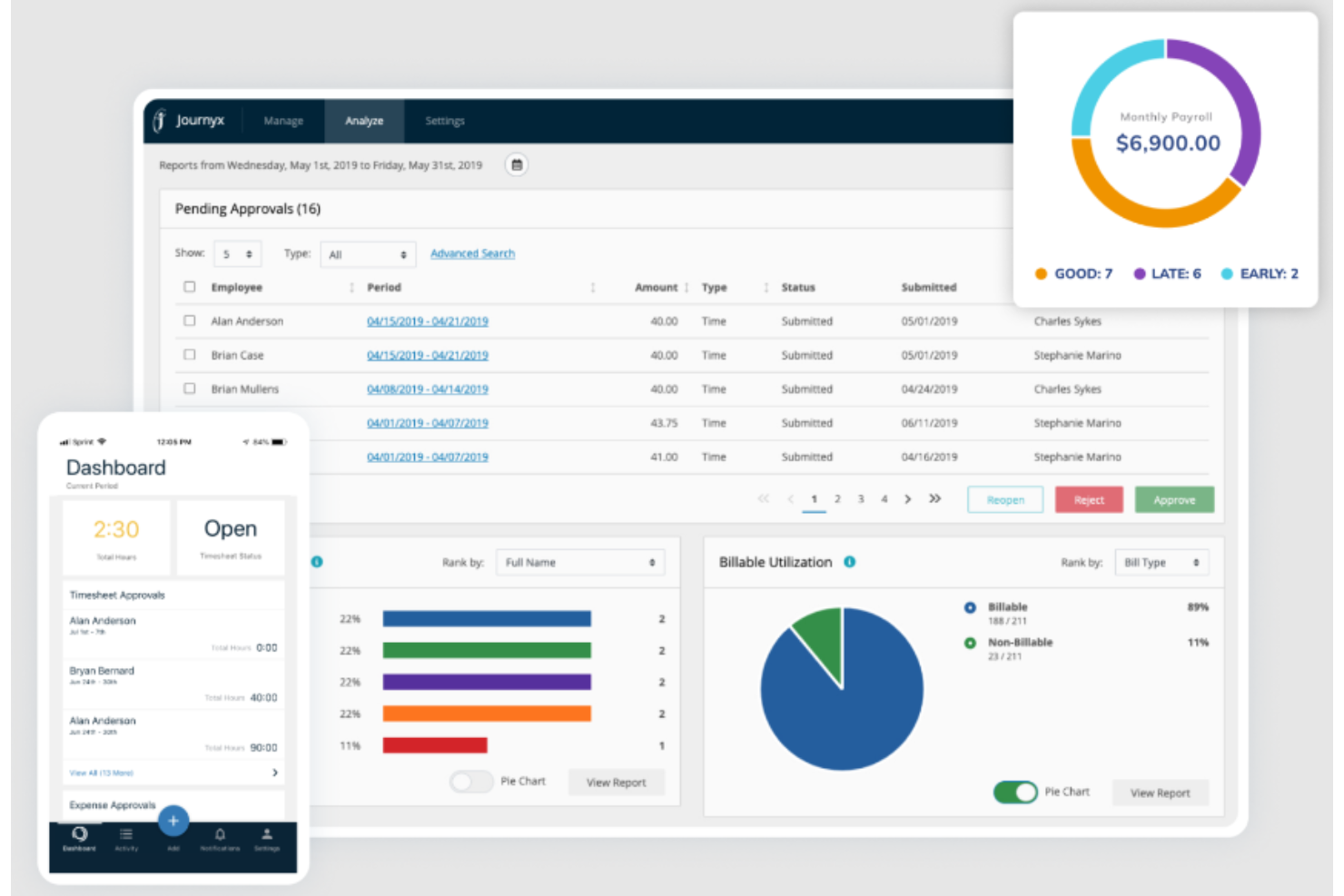
Journyx is a project time tracking solution that combines timesheet management, multi-level approval workflows, resource capacity planning, and rate-based billing and payroll reporting.
Who Is Journyx Best For?
Journyx fits teams that need to tie billable hours directly to project costs, making it a strong choice for project-driven organizations managing rate-based billing and payroll reporting.
Why I Picked Journyx
I picked Journyx as one of the best because it handles project cost accounting in a way most time tracking tools simply don't. I particularly like how rate policies can be set at the user, project, or project-activity level, so bill rates and pay rates calculate automatically against logged hours. The Scheduled Project Status Reports then show cost-to-date alongside actual versus scheduled hours, giving you a real-time read on where a project stands financially before invoices go out.
Journyx Key Features
- Multi-level approval workflows: Configurable approval chains pull department and function data from ERP, HR, or payroll systems to route timesheets automatically.
- DCAA-compliant timekeeping tools: Daily email reminders, an audit log viewer, configurable printable timesheet reports, and data validation support government contract timekeeping requirements.
- Mobile time and expense entry: Employees can log time, record reimbursable expenses, and submit for approval directly from iOS or Android devices.
- Scheduled Project Status Reports: Reports display actual versus scheduled hours alongside cost-to-date, giving you a financial and timeline snapshot across active projects.
Journyx Integrations
Journyx offers native integrations with ADP, Paychex, Microsoft Project, Microsoft Dynamics 365 Business Central, and Microsoft Dynamics 365 Finance & Operations. It also supports REST, SOAP, and Reportlink APIs for custom connections, plus Zapier.
Pros and Cons
Pros:
- DCAA audit tools support contract timekeeping
- Resource views help managers plan workload
- Project reports clarify costs and billing
Cons:
- Reporting experiences vary across users
- Timesheet corrections can require manager rejection

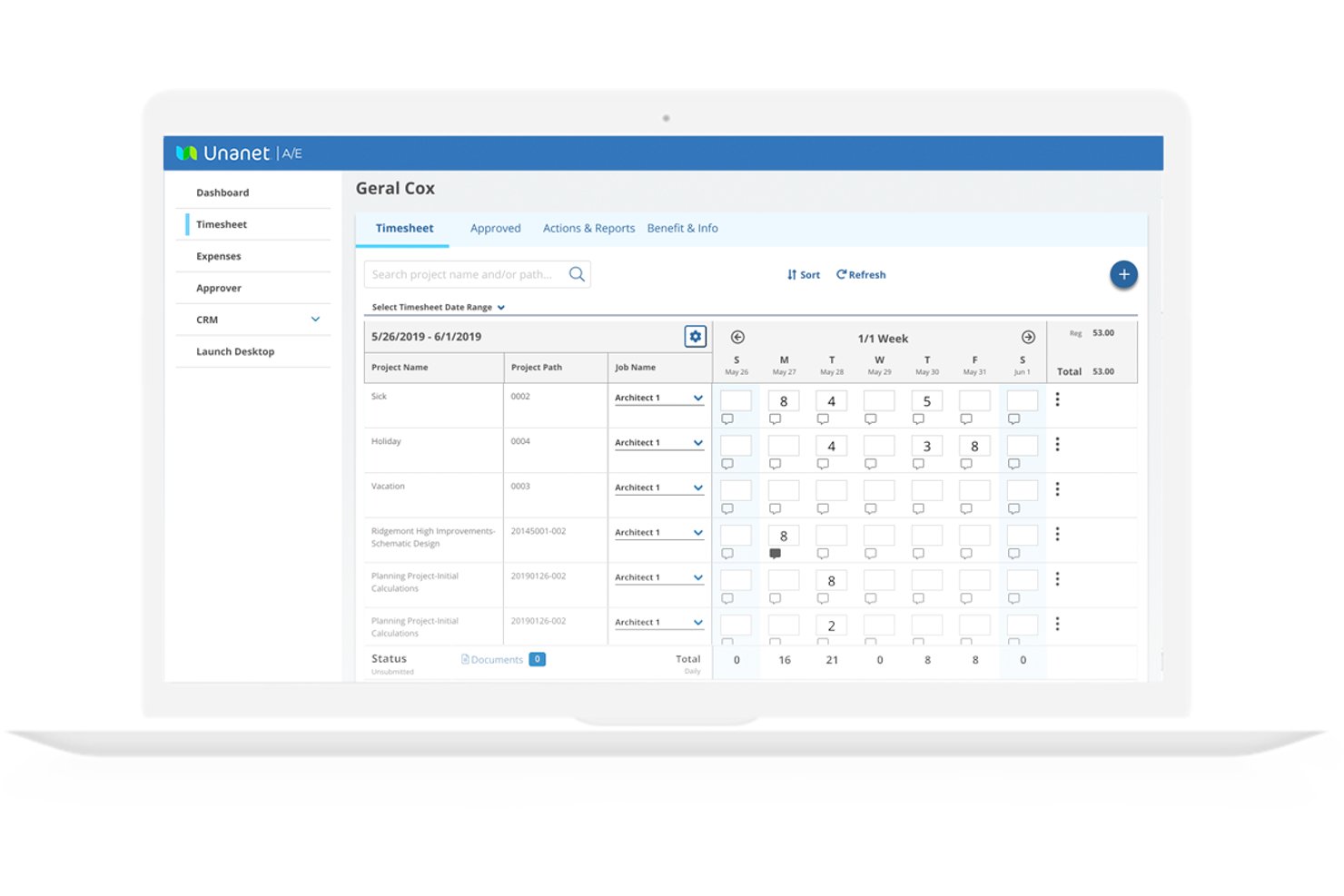
Unanet ERP GovCon is a project-based ERP platform built for government contractors that connects time and expense tracking, project accounting, contract management, resource planning, and compliance reporting in one system.
Who Is Unanet Best For?
Unanet ERP GovCon is a strong fit for government contractors who need time tracking, project billing, and DCAA compliance managed in one system.
Why I Picked Unanet
I picked Unanet as one of the best because it's purpose-built for government contractors who need DCAA-compliant timekeeping and project billing in one place. I love that it blocks advance time entry on government projects, maintains a full change history, and generates floor-check reports automatically. Contract funding alerts notify your team when burn hits a set threshold, like 75% of funded value, so you're never caught off guard mid-performance period.
Unanet Key Features
- Mobile time and expense capture: Employees can log time and submit expenses with receipt photos from iOS or Android, including offline with automatic upload on reconnect.
- Scenario-based resource planning: Teams can build multiple resource plan sets, lock a baseline, and compare alternative staffing scenarios before a contract award.
- Multi-contract-type billing: The system handles time-and-materials, firm-fixed-price, cost-plus, and hybrid contracts with billing and revenue recognition built in.
- 100+ pre-built integrations: Unanet Connect links to payroll systems like ADP, Paychex, and Workday, plus accounting tools like QuickBooks, with bi-directional data sync.
Unanet Integrations
Unanet Connect offers 100+ pre-built integrations, including ADP, Paychex, Workday, UKG, Salesforce, and HubSpot, with bi-directional employee-information sync for payroll providers. Enterprise-grade APIs support custom connectivity.
Pros and Cons
Pros:
- Dashboards show project costs and profitability
- DCAA controls support compliant timekeeping
- Project-linked time helps reduce spreadsheet errors
Cons:
- Setup can require administrator or support help
- Reports can be difficult to tailor
Best for professional services billing and utilization
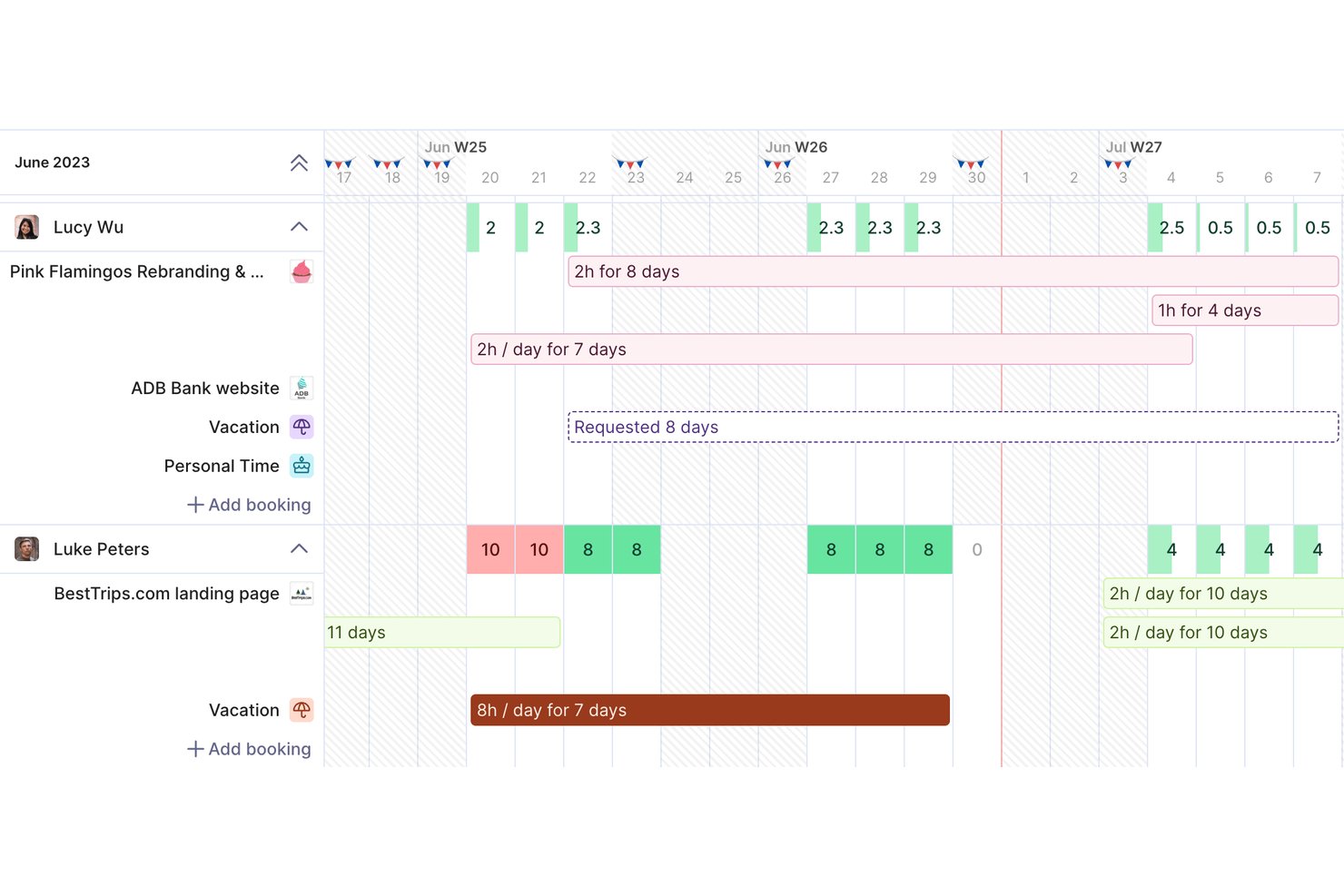
Productive is a professional services automation platform that combines time tracking, resource planning, project budgeting, invoicing, and financial reporting in one place.
Who Is Productive Best For?
Productive is a strong fit for agencies and consulting firms that need to connect resource planning, project delivery, and client billing in a single platform.
Why I Picked Productive
I picked Productive as one of the best because it's the only tool on this list that ties time entries directly to project budgets, profitability, and invoicing in a single workflow. When a team member logs hours against a budget, those hours immediately update cost tracking and budget alerts, so I can see at a glance whether a retainer or fixed-price engagement is on track. I especially like the Scenario Builder, which lets me model resource and budget scenarios before committing to a deal.
Productive Key Features
- Multi-approver timesheet workflows: Assign multiple approvers to time entries, choosing between requiring all approvers or just one to finalize approval.
- AI-assisted time entry: Use AI to match calendar events to projects and services, helping team members fill timesheets faster.
- Expense and purchase order management: Record and categorize expenses, track approval and payment status, and link purchase orders directly to project budgets.
- 50+ agency report templates: Access a library of pre-built report templates covering utilization, profitability, and project financials.
Productive Integrations
Productive offers native integrations with QuickBooks, Xero, NetSuite, Sage, Jira, Google Calendar, Slack, Personio, and BambooHR. It provides a JSON:API, webhooks, and connections to over 1,000 apps through Zapier.
Pros and Cons
Pros:
- Agency reports clarify utilization and margins
- Makes team capacity visible across projects
- Connects tracked hours to project profitability
Cons:
- Workload view misses uneven daily allocations
- Past-date timer entries require manual logging
New Product Updates from Productive
Productive Adds Voice Dictation, Slack Connector, Proposals, and Overtime
Productive adds voice dictation, a Slack Connector, proposal controls, and overtime tracking. These updates support faster AI interactions, client proposals, and time management. For more information, visit Productive’s official site.

Hubstaff
Best for GPS and remote workforce tracking

Hubstaff is a time-tracking and workforce management tool. It's best for GPS and remote workforce tracking due to its location-based services and tools for managing distributed teams.
Why it's a good ClickTime alternative:
I chose Hubstaff for the list because of its remote team features, including GPS tracking, which is essential for businesses with a mobile workforce. Its ability to provide detailed insights into team productivity makes it a standout ClickTime alternative.
Standout features and integrations:
Features include tracking, project cost management, workforce optimization, and employee scheduling. It also provides solutions for work order management, online invoicing, and payroll tracking, which are important for efficient business operations.
Integrations include Active Collab, Asana, Breeze, ClickUp, GitHub, GitLab, Insightly, LiquidPlanner, Mavenlink, Paymo, PivotalTracker, Podio, Redbooth, Redmine, Teamwork Projects, Trello, Unfuddle, Wrike, Zoho Projects, Slack, Zendesk, Salesforce, and QuickBooks.
Pros and Cons
Pros:
- Free 14-day trial available
- Over 30 integrations with other software
- Comprehensive-time tracking and project management features
Cons:
- GPS tracking may not be necessary for all businesses
- Limited offline features

BigTime
Best for budget management
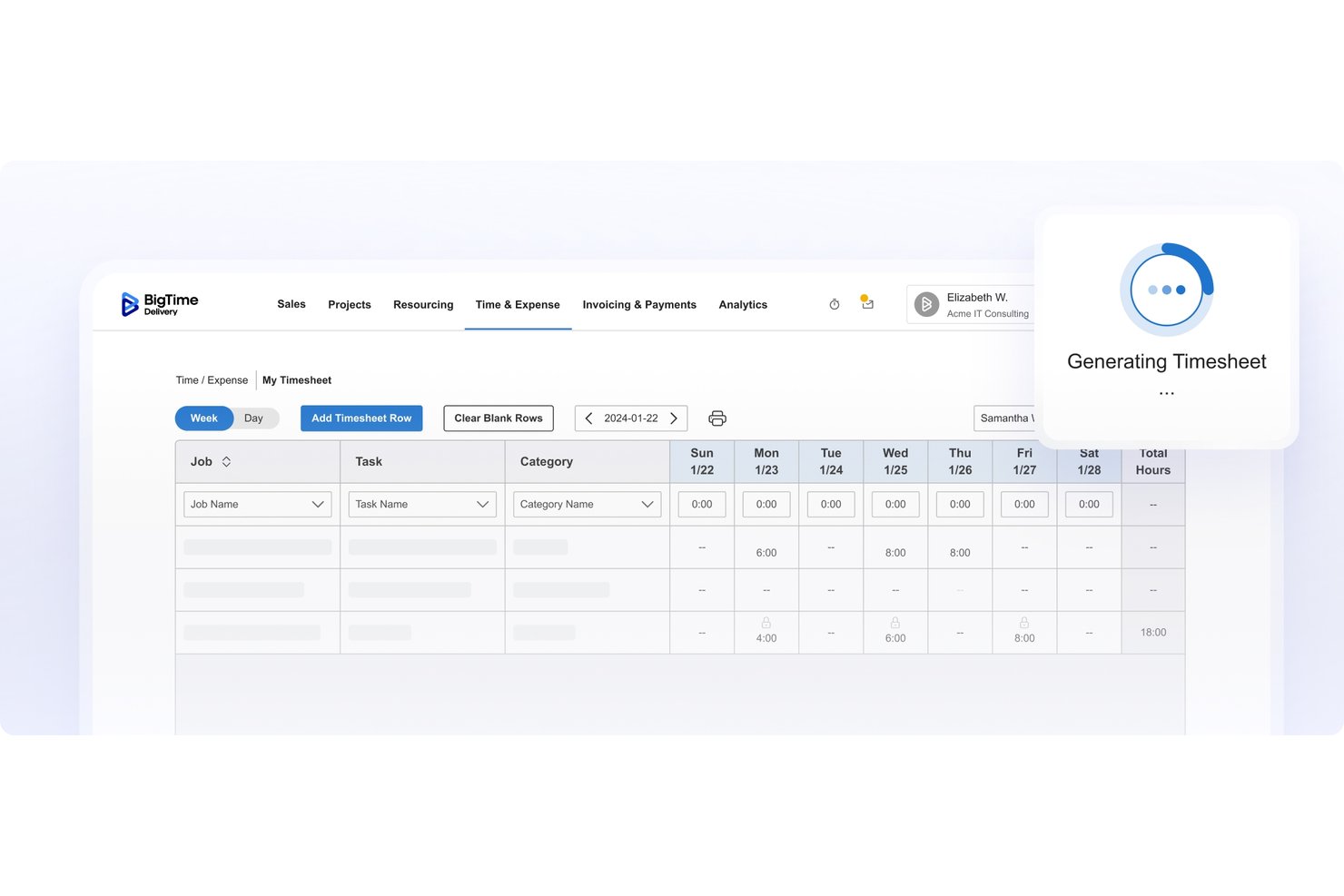
BigTime is a professional services automation (PSA) platform that covers time tracking, resource management, project budgeting, and billing and invoicing in a single system.
Who Is BigTime Best For?
BigTime is a strong fit for professional services firms—consultancies, agencies, and similar businesses—that need to track billable hours and manage project budgets in one place.
Why I Picked BigTime
I picked BigTime as one of the best because it connects project budgeting directly to how your team tracks time and bills clients. I love that you can set financial alerts that fire when burn rate, unbilled hours, or margin cross a threshold you define, so budget issues surface before they become problems. Scenario-based resource planning also lets you model allocations and project profitability before committing anyone to a project.
BigTime Key Features
- Role-based rate cards: Apply different billing rates by staffer, project role, or labor code, and reuse rate cards across multiple projects.
- Timesheet approval routing: Configure approval workflows by project team, manager, department, or team role, with bulk approve/reject actions available.
- Multi-currency invoicing: Invoice clients in multiple currencies, available on the Premier plan for firms working across international markets.
- Native accounting integrations: Connect directly with QuickBooks, Sage Intacct, and Lacerte to sync time, expenses, invoices, and client data.
BigTime Integrations
BigTime offers native integrations with QuickBooks Online and Desktop, Sage Intacct, Lacerte, Salesforce, HubSpot, Jira, and Google Calendar. Its REST-based API supports custom integrations with read/write access using XML or JSON.
Pros and Cons
Pros:
- Project time entries feed client billing
- Scenario planning forecasts staffing profitability
- Budget-to-actual project visibility
Cons:
- Invoice calculations sometimes need checking
- Custom reports can take effort to configure
Other ClickTime Alternatives
Below is a list of additional ClickTime alternatives that I shortlisted but which did not make it to the top list. It’s worth checking them out if you didn’t find what you’re looking for above.
- Accelo
For end-to-end consulting engagement ops
- Kantata
For resource planning in services firms
- Toggl
For ease of use and flexibility
- Paymo
For small team workflows
- Avaza
For project collaboration
- Insightful
For productivity insights
- Monitask
With integrated productivity monitoring
- Deltek Replicon Time
For AI-powered time tracking
- Harvest
For integrated invoicing and time tracking
- TimeSolv
For legal professionals


Related Project Management Software
If you still haven't found what you're looking for, check out these related project management tools we've tested and reviewed.
- Project Management Software
- Resource Management Software
- Workflow Automation Software
- Task Management Software
- Collaboration Tools
- Gantt Chart Maker
How I Evaluate ClickTime Alternatives
I split my evaluation into three parts, giving the most weight to core needs: log project time, approve timesheets, and see billable costs. Next, I look for differentiators such as role-based rate cards. Finally, I consider factors beyond features, including onboarding, support, and pricing value.
Core Functionality (Table Stakes For This List)
When I'm selecting tools for my list, I score each one on a scale from 0 (does not offer the functionality) to 5 (excels in this area) for each core functionality listed below. I then convert the total into a percentage to help assess each tool's overall fit, with extra weight on any functionalities I’ve deemed essential.
- Time Tracking (Essential): I look for manual entry and timers tied to projects or tasks, so teams can record client work and internal effort accurately.
- Timesheet Approvals (Essential): I check for submission, manager approval, and status tracking, especially when project leads need to resolve missing or rejected hours before billing.
- Reporting & Analytics: I assess whether reports show hours, utilization, and project costs, with filters that help identify budget risks or uneven workloads.
- Billing Support: I look for billable and non-billable time labels and exports that let teams prepare client invoices from approved project hours.
- Third-Party Integrations: I check for connections to payroll, accounting, or project tools that reduce duplicate entry when time data moves between systems.
- Resource & Capacity Tracking: I evaluate employee and team workload views to spot over-allocation and availability before assigning upcoming project work.
Once I have a list of tools that meet the criteria, I consider what sets each platform apart.
Differentiating Factors (What Sets Vendors Apart)
Here's how I compare and contrast different vendors:
Standout Features
Budget alerts that fire when a project nears its hour or cost cap are a must—I've seen too many overruns caught only at invoice time. I also look for role-based rate cards that auto-apply different bill and cost rates by seniority or project type, since manually adjusting rates across a large team invites errors. Scenario-based resource planning rounds things out: before committing staff to a new engagement, I want to model options and see the margin impact upfront.
Beyond Features
I check whether a tool fits billable-hour business models—retainer, fixed-fee, and time-and-materials structures—since generic task trackers rarely handle the client/project/task hierarchies agencies and consultancies need. Integration depth with your finance stack matters just as much; native syncs with platforms like QuickBooks, Xero, or NetSuite prevent manual re-entry of approved hours into accounting or payroll. I also evaluate how easily distributed or on-site teams can adopt the tool, because mobile and offline time entry directly affects timesheet compliance and billing accuracy.
Why Look for a ClickTime Alternative?
You might be looking for an alternative to ClickTime if you experience any of the following.
- Cost concerns: You find ClickTime's pricing model too expensive for your budget.
- Feature set: The features offered by ClickTime do not fully meet your project management needs.
- User experience: You or your team find ClickTime's interface unintuitive or difficult to navigate.
- Integration capabilities: You need a tool that integrates more effectively with other software you use.
- Customer support: You are not satisfied with the level of customer support provided by ClickTime.
ClickTime Key Features
Here are some of the key features of ClickTime to help you contrast and compare what alternative solutions offer:
- Online timesheets: Capture essential data and promote accurate reporting
- Quick time entry: Lets team members easily and quickly log hours, with features to duplicate previous entries
- Customization: Offers customizable timesheets with various levels of detail and unique submission periods
- Track billable & non-billable hours: Allows you to mark work as billable or non-billable
- Stopwatch: Provides a precise time tracking tool with automatic tracking and reminders for users
- Overtime tracking: Automatically records overtime, who worked extra, and the costs involved
- Employee expense tracking: Simplifies the process for tracking and reimbursing employee expenses
- Time-off management: Helps manage time off with custom leave types and approval processes
- Resource planning: Helps assign project hours and manage employee availability
- Project cost estimation: Offers features for predicting project costs using employee rates and historical data
- Jira compatibility: You might need a project management tool compatible with Jira for better issue and task tracking