

10 Brandfolder Alternative Tools for Digital Assets in 2026

Best Brandfolder Alternatives Shortlist


The best Brandfolder alternatives are more intuitive to use so you can better store, manage, and distribute marketing materials and digital assets, and they might come at a lower cost that better fits smaller teams and organizations. With the right alternative to Brandfolder, you'll find your digital asset management tool supports your workflows and helps you find and use assets more efficiently and effectively.
I’ve used my experience in marketing and 3+ years of testing software to review dozens of tools and curate my list of the best Brandfolder alternatives. Each of my recommendations will help you organize your digital assets in a single, accessible place and keep them secure, shareable, and discoverable. Below, I cover strengths and key differences, pros and cons, and ideal use cases for each tool.
What are Brandfolder Alternatives?
Brandfolder alternatives are digital asset management tools that offer comparable features to Brandfolder, but at a lower price point or with a more intuitive interface. This includes collaboration, distribution, version control, metadata, and search in a central repository for digital asset and brand materials (e.g. logos, images, and videos).
These tools also might offer additional features that Brandfolder doesn't, such as document comparison, social media monitoring, or a dedicated mobile app.
Why Trust Our Software Recommendations
Our team has been testing and reviewing software since 2012. As project managers ourselves, we know how difficult—and important—it is to choose the right software.
For this guide, we evaluated tools using hands-on testing and independent research, scoring tools using our selection criteria. We also draw on insights from industry thought leaders and practicing project management experts.
Our reviews reflect our human editorial judgment, not a sales pitch.
Expert reviewers:
Brandfolder Alternatives Comparison Table
Use this comparison table to compare pricing and key specs for my top Brandfolder alternatives.
| Tool | Best For | Trial Info | Price | ||
|---|---|---|---|---|---|
| 1 | Best for centralized brand governance | Free demo available | Pricing upon request | Website | |
| 2 | Best for automated tagging and metadata control | Free plan available | From $99/month | Website | |
| 3 | Best for AI-powered visual asset organization | 30-day free trial available | From $250/month (billed annually) | Website | |
| 4 | Best for advanced asset management | Free demo available | Pricing upon request | Website | |
| 5 | Best for smart search capabilities | Free plan available | From $10/month (billed annually) | Website | |
| 6 | Best for online proofing tools | 30-day free trial | From $29/month | Website | |
| 7 | Best for developing brand strategy | Free demo available | Pricing upon request | Website | |
| 8 | Best for managing marketing resources | Free demo available | Pricing upon request | Website | |
| 9 | Best for brand asset kits | Free trial available | From $80/month (billed annually) | Website | |
| 10 | Best for integrating and managing office workflows | 30-day free trial available | From $5.40/user/month (billed annually) | Website |

Best Brandfolder Alternatives Reviews
Here are my detailed reviews of each alternative to Brandfolder. I cover the advantages and disadvantages of each tool, features, and use cases.

Papirfly
Best for centralized brand governance

Papirfly is a brand management platform that combines digital asset management, templated content creation, brand governance controls, and multi-channel campaign tools in a single system.
Who Is Papirfly Best For?
Papirfly is a strong fit for enterprise marketing teams managing brand consistency across multiple regions, markets, or business units.
Why I Picked Papirfly
I picked Papirfly as one of the best Brandfolder alternatives because its brand governance features go deeper than simple asset storage. Where Brandfolder focuses primarily on asset organization and sharing, Papirfly lets you embed brand rules directly into the content creation process itself. Locked templates prevent teams from using off-brand fonts, colors, or layouts, and customizable approval workflows mean nothing goes live without the right sign-off. I also think the combination of a centralized DAM with role-based access controls and a brand portal in a single system makes it easier to enforce consistent standards across large, distributed teams without creating bottlenecks.
Papirfly Key Features
- AI-powered metadata tagging: Automatically tags uploaded assets so teams can search and retrieve files without manual categorization.
- Asset versioning and expiration: Tracks version history on assets and lets you set expiration dates to keep outdated materials from circulating.
- Multi-language template localization: Adapts master templates across languages and regional formats without rebuilding designs from scratch.
- Campaign analytics and reporting: Tracks asset usage and campaign performance data directly within the platform.
Papirfly Integrations
Papirfly offers a large catalog of integrations across its DAM platform, with some built by Papirfly and others partner-supported. These include Adobe Creative Cloud, Figma, Salesforce, Shopify, Hootsuite, Canva, Jira, Dropbox, and integrations across the Microsoft ecosystem, including Microsoft 365 and SharePoint. An API is available for custom integrations.
Pros and Cons
Pros:
- Locked templates prevent brand element misuse
- Multi-language and regional content localization
- Non-designers can produce on-brand assets independently
Cons:
- No mobile app available
- Adding new formats may require extra costs
New Product Updates from Papirfly

Papirfly Point Adds Brand Assistant Admin Controls
Papirfly now lets admins configure Brand Assistant directly in Point, including enabling the assistant, accepting AI terms, tuning conversation style, and managing knowledge sources and documents. For more information, visit Papirfly's official site.
 .
.
Best for automated tagging and metadata control
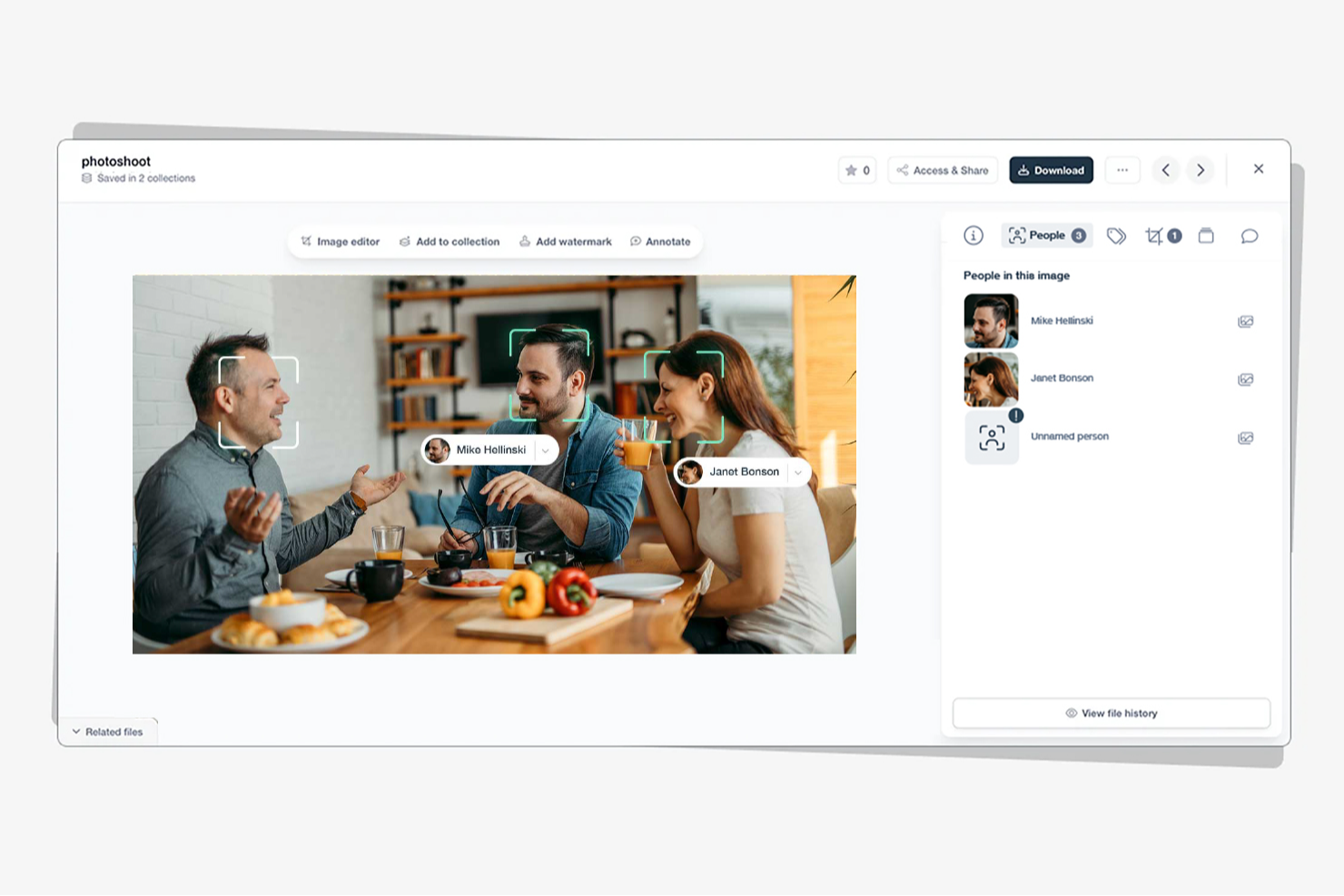
Stockpress is a digital asset management platform designed to help teams of all sizes organize, find, collaborate on, and share digital files within a single shared workspace. It supports various file types, including photos, videos, documents, and cloud projects, ensuring all your assets are centralized and accessible.
Why Stockpress is a good Brandfolder alternative: It offers an AI-powered tagging system, which automatically assigns relevant tags to your files, making search and retrieval easier. Additionally, Stockpress offers flexible metadata mapping, allowing you to tailor tags according to your specific needs. Stockpress also offers unlimited user access on all plans, whether internal or external collaborators.
Stockpress Standout Features & Integrations
Features include customizable share links, which let you control who can access specific files and set expiration dates for added security. The platform also offers link tracking and reporting, providing insights into how your shared assets are being used.
Integrations include Google Drive, Dropbox, Box, Adobe Photoshop, Slack, Mailchimp, Okta, Webflow, Klaviyo, Adobe Illustrator, Adobe InDesign, and Canva.
Pros and Cons
Pros:
- Robust security features for safe file sharing
- Efficient search functionality with AI tagging
- Unlimited users without additional costs
Cons:
- Initial setup may require time to organize existing assets
- Limited offline access
Best for AI-powered visual asset organization

Tagbox.io is a digital asset management platform built for teams that rely on AI-powered tagging, visual search, and asset deduplication to organize large media libraries.
Who Is Tagbox.io Best For?
Tagbox.io is a strong fit for marketing and creative teams managing large volumes of visual content who want automated organization and search capabilities beyond manual folder structures.
Why I Picked Tagbox.io
I picked Tagbox.io because its AI-driven tagging reduces the manual effort required to maintain large asset libraries. The platform automatically detects objects, scenes, and visual attributes, allowing teams to build searchable collections without extensive metadata entry. Its tag governance tools also help maintain consistency across thousands of files, preventing taxonomy sprawl over time.
Tagbox.io Key Features
- AI-powered visual tagging: Automatically detect objects, scenes, and visual elements across images.
- Duplicate detection: Identify and remove duplicate or near-duplicate assets from large libraries.
- Advanced search filters: Combine keyword search with tags, collections, and metadata filters.
- Shareable collections: Create controlled-access asset collections for teams and external collaborators.
Tagbox.io Integrations
Connect Tagbox.io through Tagbox Desktop (drag-and-drop into any app), Zapier, Make, and a REST API. Custom workflows are available for Enterprise.
Pros and Cons
Pros:
- Flexible sharing and permission controls
- Duplicate detection reduces library clutter
- Strong AI-based visual tagging capabilities
Cons:
- Bulk uploads and processing can be slow with large files
- Limited native integrations compared to enterprise DAM competitors

Bynder
Best for advanced asset management

Bynder is a cloud-based digital asset management (DAM) platform designed to help teams store, organize, and distribute their digital content. It serves as a centralized hub where you can manage various media assets, ensuring easy access and brand consistency across all channels.
Why Bynder is a good Brandfolder alternative: Bynder offers advanced digital asset management capabilities, which include customizable workflows and enhanced collaboration features. This lets your team create and manage assets in a way that fits your specific needs. The platform's analytics and reporting tools also allow you to track asset performance easily, helping you understand which assets are most effective and why, giving you insights to improve future projects.
Bynder Standout Features & Integrations:
Features include content workflows, which let your team create, review, and approve structured content. The studio feature empowers your team to scale and automate digital content creation, making it easier to produce high-quality materials quickly. Additionally, Bynder AI enhances asset discovery and management.
Integrations include Salesforce, Salsify, Sanity, SAP Commerce Cloud, Sprout Social, SharePoint, Asana, Adobe Creative Cloud, Contentful, and Contentstack.
Pros and Cons
Pros:
- Ability to approve assets
- Robust analytics and reporting
- Efficient search functionality allows quick access to assets
Cons:
- Limited customization options for certain functionalities
- Time-consuming initial setup

Air
Best for smart search capabilities

Air is a creative operations platform tailored for marketing and creative teams. It centralizes asset management, feedback, and approvals within a visual workspace, enhancing collaboration and automating repetitive tasks.
Why Air is a good Brandfolder alternative: I like Air for its AI-powered smart search and flexible organizational structure. The platform utilizes image recognition and smart tag keywords, allowing your team to locate assets quickly without sifting through endless folders. Additionally, Air's board and sub-board system enables assets to reside in multiple locations without duplication, facilitating efficient organization and reducing storage waste.
Air Standout Features & Integrations:
Features include dynamic feedback tools that centralize comments and approvals directly on assets and version control, which ensures all creative iterations are stored in one place. Additionally, the Kanban-style workflow management allows your team to track project progress visually, enhancing task management.
Integrations include Airtable, Zapier, HubSpot, Slack, Tally, Alfred, ClickUp, Google Sheets, Microsoft Excel, Canva, Adobe Premiere Pro, Salesforce, Trello, Figma, Wrike, Shopify, Amazon S3, and Google Drive.
Pros and Cons
Pros:
- Efficient search functionality with AI-powered tagging
- Good for approval and feedback features
- Facilitates easy sharing of visual assets
Cons:
- Free version has limited storage
- Not ideal for those with non-visual assets
New Product Updates from Air

Air Showcases Introduces Custom Branding, Content Blocks, and Sub-Pages
Air Showcases now support custom branding, content blocks, sub-pages, and saved default layout settings, plus more control over removing items and branding options for Enterprise. For more information, visit Air's official site.

Filecamp
Best for online proofing tools
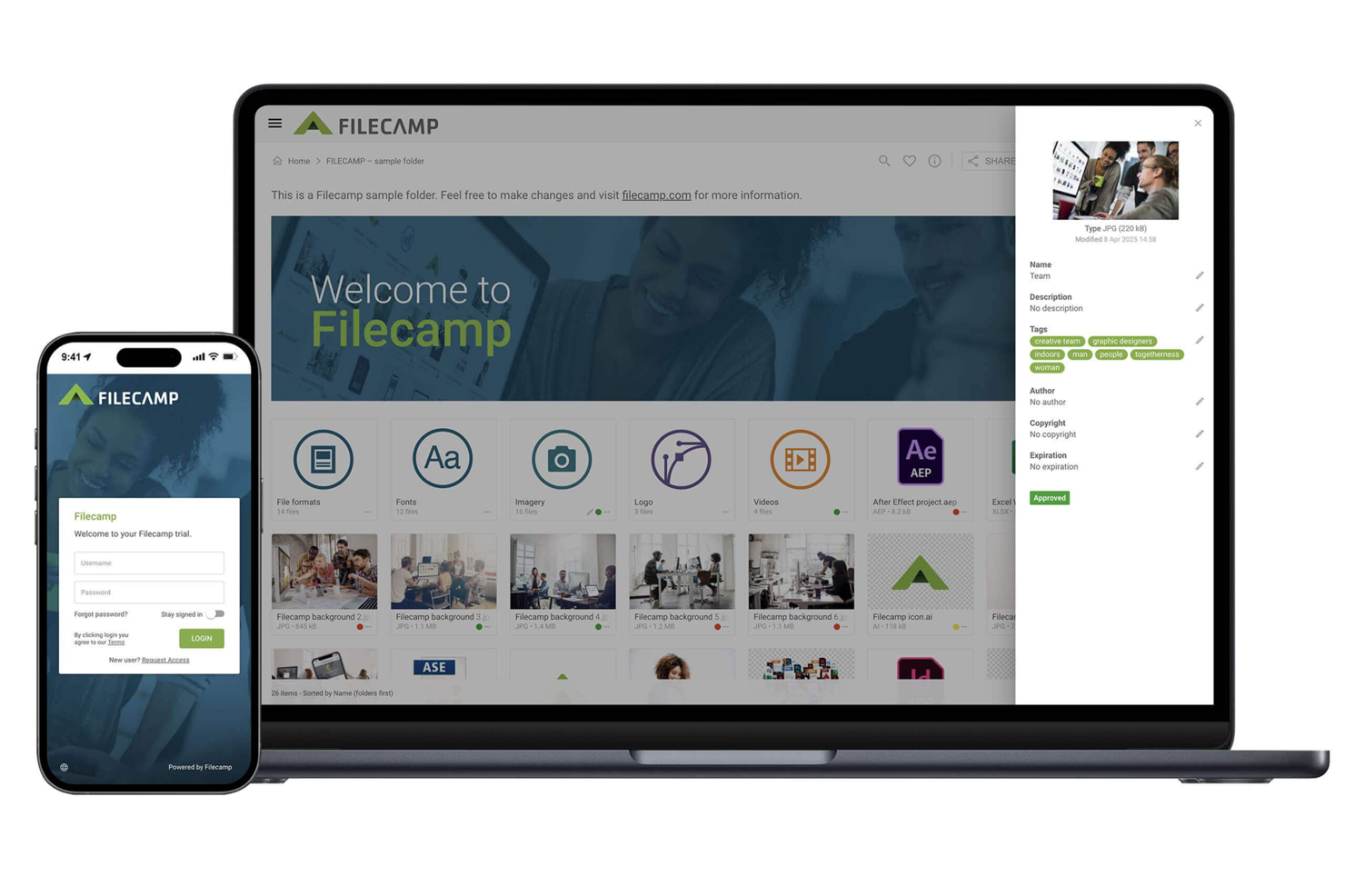
Filecamp is the go-to solution for businesses seeking a versatile and cost-effective alternative to Brandfolder. Tailored for industries ranging from advertising to architecture, it allows your team to manage and organize digital assets seamlessly. Whether you're a freelancer or part of a large organization, Filecamp addresses the need for efficient asset management without the hefty price tag, making it ideal for marketing teams working under tight deadlines.
Why I Picked Filecamp
I picked Filecamp as a top contender among Brandfolder alternatives because of its emphasis on unlimited user access across all pricing plans. This feature is particularly beneficial for teams that require collaboration without the burden of additional user fees. Filecamp also offers robust online proofing tools, which streamline feedback loops and enhance productivity. The platform's version control ensures that your team always has access to the latest asset iterations, reducing errors and confusion in collaborative environments.
Filecamp Key Features
In addition to its standout features, I also found other functionalities that enhance its appeal as a Brandfolder alternative.
- Granular Access Control: This feature allows you to define specific access rights for different users, ensuring sensitive assets are only seen by the right people.
- Custom Branding: You can personalize the platform with your company's logo and colours, providing a cohesive brand experience for your clients and team.
- Flexible Download Options: Users can choose between various file formats and sizes during download, catering to specific project needs.
- Secure Data Hosting: Filecamp offers secure data storage on Google Cloud, ensuring your digital assets are protected against unauthorized access.
Filecamp Integrations
Integrations include Adobe Illustrator, Adobe InDesign, Adobe Photoshop, PitchPerfect, Google Analytics, Google Apps, InMotionNow, Microsoft Active Directory, and API access for custom integrations.
Pros and Cons
Pros:
- Granular access control permissions settings
- Online proofing with version control
- Unlimited users across all plans
Cons:
- No phone support available currently
- Limited native integrations availability today
New Product Updates from Filecamp
Filecamp Adds Analytics, AI Thumbnails, and CDN Embed Links
Filecamp adds Analytics, AI-powered thumbnails, and CDN-backed Embed links. These updates give teams more visibility into asset usage, improve thumbnail presentation, and make embedded images easier to manage. For more information, visit Filecamp’s official site.
 .
.
Frontify
Best for developing brand strategy

Frontify is a brand-building platform that simplifies the organization of brand assets. It is best for developing brand strategy due to its complete tools for maintaining brand consistency while allowing flexibility for brand evolution.
Why Frontify is a good Brandfolder alternative: I chose Frontify for the list because it offers a user-friendly digital asset management (DAM) system and customizable portals to help with brand collaboration and engagement. Its ability to provide a scalable and fair pricing model makes it a standout alternative to Brandfolder.
Frontify Standout Features & Integrations
Features include brand management, convenient single sign-on, enterprise-grade security, and solid analytics. The platform also offers enhanced customization options and digital and print templates, which help maintain brand consistency across various mediums.
Integrations include Jira, Wrike, Vimeo, Contentful, Zapier, Hubspot, Salesforce, Figma, Sketch, Slack, Intercom, and YouTube.
Pros and Cons
Pros:
- Supports a multi-brand universe within the platform
- Provides a scalable solution for brand asset management
- Offers a free trial to explore its features
Cons:
- It’s difficult to link content between projects
- User experience may be limited with the free plan

Best for managing marketing resources

IntelligenceBank is a digital platform designed for marketing asset management and compliance. It effectively manages digital assets and marketing resources due to its complete suite of tools tailored for marketers and creatives.
Why it's a good Brandfolder alternative: I selected IntelligenceBank for this list because it provides specific tools for marketing compliance and digital asset management that are particularly useful for regulated industries. Its emphasis on compliance and approval workflows makes it a standout alternative to Brandfolder.
Standout features & integrations:
Features include digital asset management, customizable metadata fields, powerful search capabilities, and automated workflow approvals. These functionalities ensure that assets are easily accessible and controlled.
Integrations include Adobe Creative Cloud, Salesforce, WordPress, Slack, Trello, Zapier, Microsoft 365, Google Drive, Dropbox, and Asana.
Pros and Cons
Pros:
- Customizable interface and metadata capabilities
- Strong focus on compliance and security
- Tailored features for marketing teams
Cons:
- Steeper learning curve due to advanced features
- Maybe over-complex for small teams

Lingo
Best for brand asset kits
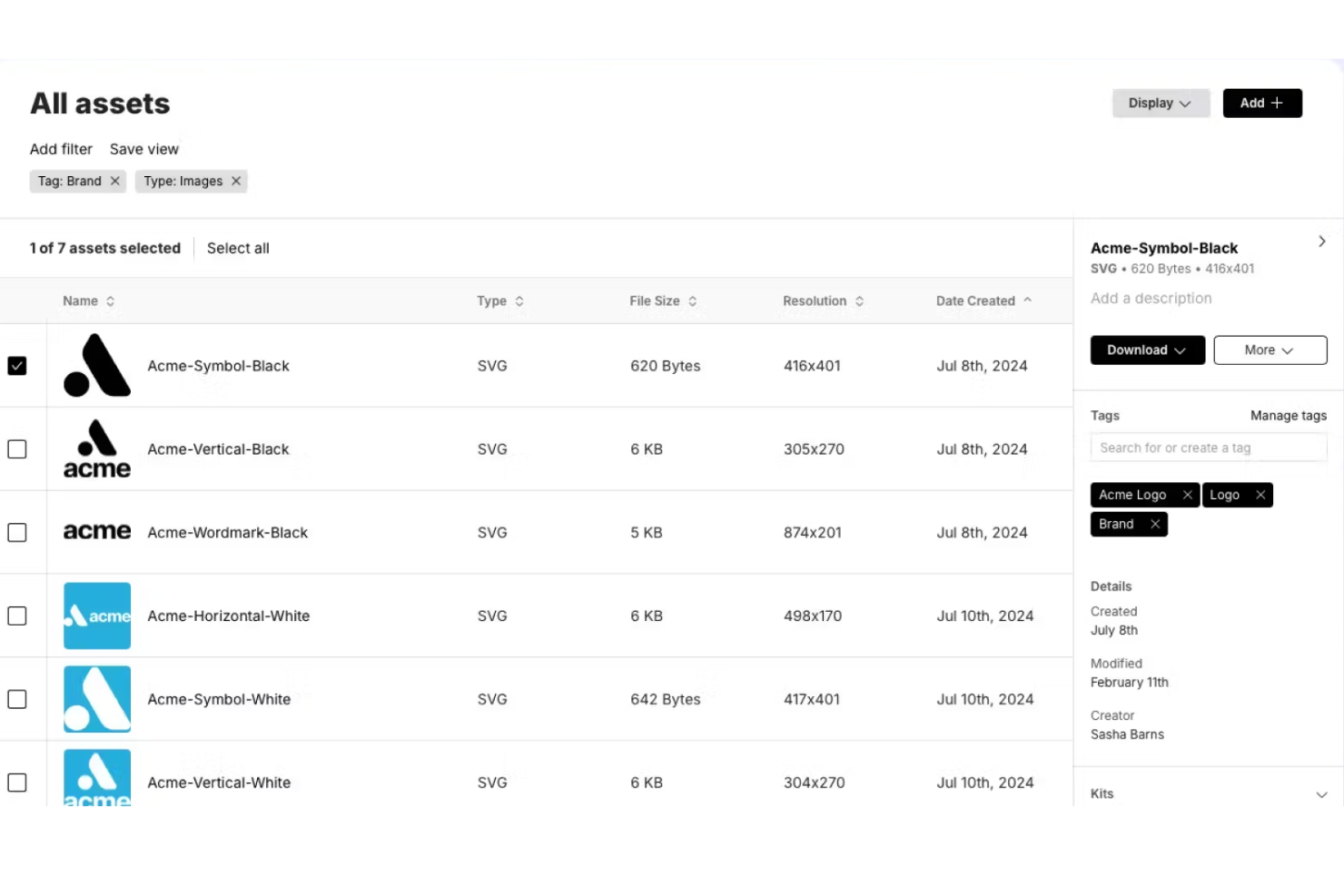
Lingo is a cloud-based brand asset management and digital asset management (DAM) platform that puts your logos, images, templates, videos and guidelines into one centralized library. It ties each asset to its context—how it should be used, where it lives, and who can access it—so you and your team keep things on-brand.
Why Lingo is a good Brandfolder alternative: Unlike some DAMs that focus purely on storage and sharing, Lingo emphasizes the bundled asset kits approach: you can create asset kits that combine files with usage instructions, guidelines and permissions so non-designers can serve themselves without constant creative team input. It also supports automatic file conversion and export presets, meaning when someone in your team or an external partner needs a PNG instead of an SVG, or a specific size, the system handles it rather than your designers recreating it.
Standout features & integrations:
Features include AI-enhanced search, which means once you upload an image or asset, it gets tagged and becomes visually searchable (color, object, style), so your team doesn’t waste time hunting manually. They also include direct links to assets, so if you update a source file in Lingo, everywhere downstream that link is used gets the updated version—so outdated materials get fewer chances to slip through.
Integrations include Figma, Dropbox, and Google Drive. You can also use the Lingo API to build your own connections.
Pros and Cons
Pros:
- Unlimited kits support flexible asset grouping
- AI search removes need for manual tagging
- Automatic file conversions save production time
Cons:
- Fewer enterprise-scale integrations available
- Lacks complex approval workflow tools

Best for integrating and managing office workflows

Microsoft SharePoint offers document management and storage systems designed primarily for business use. It integrates and manages office workflows, making it an essential tool for businesses seeking a unified approach to document and process management.
Why it's a good Brandfolder alternative: I chose Microsoft SharePoint for this list because it offers solid capabilities in managing content across an organization. Its widespread adoption in various industries and deep integration capabilities with other enterprise tools make it stand out as a good Brandfolder alternative.
Standout features & integrations:
Features include secure document management, automated workflow creation, and real-time collaboration. These features support a wide range of business processes, enhancing organizational productivity and communication.
Integrations include Microsoft SharePoint integrates with Microsoft Teams, Power Platform (Power Apps, Power Automate, Power BI), Adobe Sign, and Office 365 applications.
Pros and Cons
Pros:
- Flexible for various business sizes and needs
- Solid security features for enterprise use
- Complete integration with Microsoft products
Cons:
- May require substantial training for end-users
- High dependency on other Microsoft products for full functionality
Other Brandfolder Alternatives
Here are some additional Brandfolder alternatives to check out if you didn’t find what you’re looking for above.
- Aprimo
For optimizing marketing operations
- Adobe Bridge
For creative asset organization
- Nuxeo
For scalable content management
- Lytho
For creative team operations
- ioMoVo
For AI-enhanced brand asset management
- Infomaze DAM
For performance efficiency solutions
- Miro
For product-led growth strategy
- Cloudinary
For AI-powered media workflows
- Pics.io
For digital agencies' asset management
- Acquia DAM (Widen)
For real-time asset transformations


Related Project Management Software Reviews
If you still haven't found what you're looking for, check out these related project management tools we've tested and reviewed.
- Project Management Software
- Resource Management Software
- Workflow Automation Software
- Task Management Software
- Collaboration Tools
- Gantt Chart Maker
How I Evaluate Brandfolder Alternatives
I evaluate Brandfolder alternatives in two layers: baseline capabilities like DAM, structured approvals, and version control, then differentiators that separate the best fits for creative ops teams.
Core Functionality (Table Stakes For This List)
When I'm selecting tools for my list, I rank each one on a scale from 0 (does not offer the functionality) to 5 (excels in this area) for each core functionality listed below. Then, I calculate the tool's total score into a percentage. Each tool needs to achieve a minimum total score of 65% to be considered for inclusion.
- Digital Asset Management: I look for a central asset library with metadata tagging, folder structures, and filtered search so teams can find the right logo variant or campaign file in seconds.
- Project & Workflow Management: Each tool should let you assign tasks, set deadlines, and visualize work across views like Kanban or Gantt to keep creative projects moving.
- Review & Approval Workflows: I evaluate how each platform handles proofing—whether you can annotate directly on a design file and route it through multi-stage sign-offs before launch.
- Version Control: Tracking iterations matters when a campaign asset goes through five rounds of feedback, so I check for automatic versioning, rollback, and side-by-side comparison.
- Permissions & Access Controls: The tool should support role-based permissions and guest access, especially for agencies sharing deliverables with external clients or stakeholders.
- Integrations & Sharing: I check for native connections to creative tools like Adobe Creative Cloud and Figma, plus branded portals or share links for distributing approved assets externally.
Once I have a list of tools that meet this criteria, I consider what sets each platform apart.
Differentiating Factors (What Sets Vendors Apart)
Here's how I compare and contrast different vendors:
Standout Features
Creative request intake forms are a big differentiator. I look for tools that let you build structured briefs feeding directly into project queues, so nothing gets lost in a Slack thread. A built-in brand guidelines portal also adds real value when external partners need self-serve access to approved logos, fonts, and usage rules. I evaluate reporting dashboards that track approval cycle times and asset usage too, since marketing PMs often need to show leadership where bottlenecks live.
Beyond Features
Pricing structure matters here because some platforms charge per user while others price by storage or asset volume, and the right model depends on whether your team is ten people or a hundred. I also consider migration support, since moving thousands of assets out of Brandfolder with metadata intact is a real project in itself. Security and compliance round out my evaluation—teams in regulated industries should look for SOC 2 and SSO support, especially when external collaborators access sensitive brand materials.
Why Look for Brandfolder Alternatives?
You might be looking for an alternative to Brandfolder if you have the following.
- Cost concerns: Brandfolder's pricing is beyond your budget.
- Feature set: You seek specific features that Brandfolder does not offer.
- User experience: You prefer a more intuitive or different user interface.
- Integration needs: You require better compatibility with your existing tech stack.
- Customer support: You want more responsive or complete customer service.
Brandfolder Key Features
Here are some of the key features of Brandfolder, to help you contrast and compare what alternative solutions offer:
- Creative workflow: Improves creative processes to minimize delays and boost collaboration among your team.
- Brand intelligence: Uses AI to tag and analyze your brand assets so the team can understand and utilize them effectively.
- Integrations: Connects with various marketing technologies, so your team can use assets smoothly across different platforms.
- Content automation: Offers customizable templates that save time for your creative teams and allow for consistent and efficient content creation.
- Portals: Provides curated content experiences that are tailored to meet the specific needs of your users or team.
- API: Supports custom integrations, which gives your developers the flexibility to connect Brandfolder with other tools.
- Brandguide: Keeps brand guidelines accessible and up-to-date for everyone on your team.
- Smart CDN: Allows you to embed assets across the web, so they are easily accessible and up to date.
- Version control: Tracks the history and edits of assets and allows your team to revert to previous versions if needed.
- Digital rights management: Manages asset usage rights and permissions, so assets are used correctly and legally.