


Asana vs. Basecamp: Comparison & Expert Reviews For 2026



Asana helps your team coordinate tasks and projects efficiently, while Basecamp offers a straightforward approach to managing projects and communication in one place. Compared to each other, Asana is more feature-rich, whereas Basecamp emphasizes simplicity and ease of use.
In this article, we'll compare the tools, their features, pros and cons, and pricing, helping you decide which project management software best suits your team's needs.
Asana vs. Basecamp: An Overview
Asana

Basecamp


Why Trust Our Software Recommendations
Our team has been testing and reviewing software since 2012. As project managers ourselves, we know how difficult—and important—it is to choose the right software.
For this guide, we evaluated tools using hands-on testing and independent research, scoring tools using our selection criteria. We also draw on insights from industry thought leaders and practicing project management experts.
Our reviews reflect our human editorial judgment, not a sales pitch.
Expert reviewers:
Asana vs. Basecamp Pricing Comparison
| Asana | Basecamp | |
|---|---|---|
| Free Trial | Free plan available | 30-day free trial + free demo available |
| Pricing | From $10.99/user/month (billed annually) | From $15/user/month |
Asana vs. Basecamp Pricing & Hidden Costs
Asana pricing is based on a tiered subscription model with options for different team sizes, and users might encounter additional costs for premium integrations or advanced features. Basecamp pricing offers a flat-rate subscription, which includes all features, but larger teams may need to consider the cost per user if they require additional services. To select the tool with the right pricing, evaluate your team's size, the features you need, and any potential growth, ensuring that the pricing model aligns with your project's scale and requirements.
Asana vs. Basecamp Feature Comparison
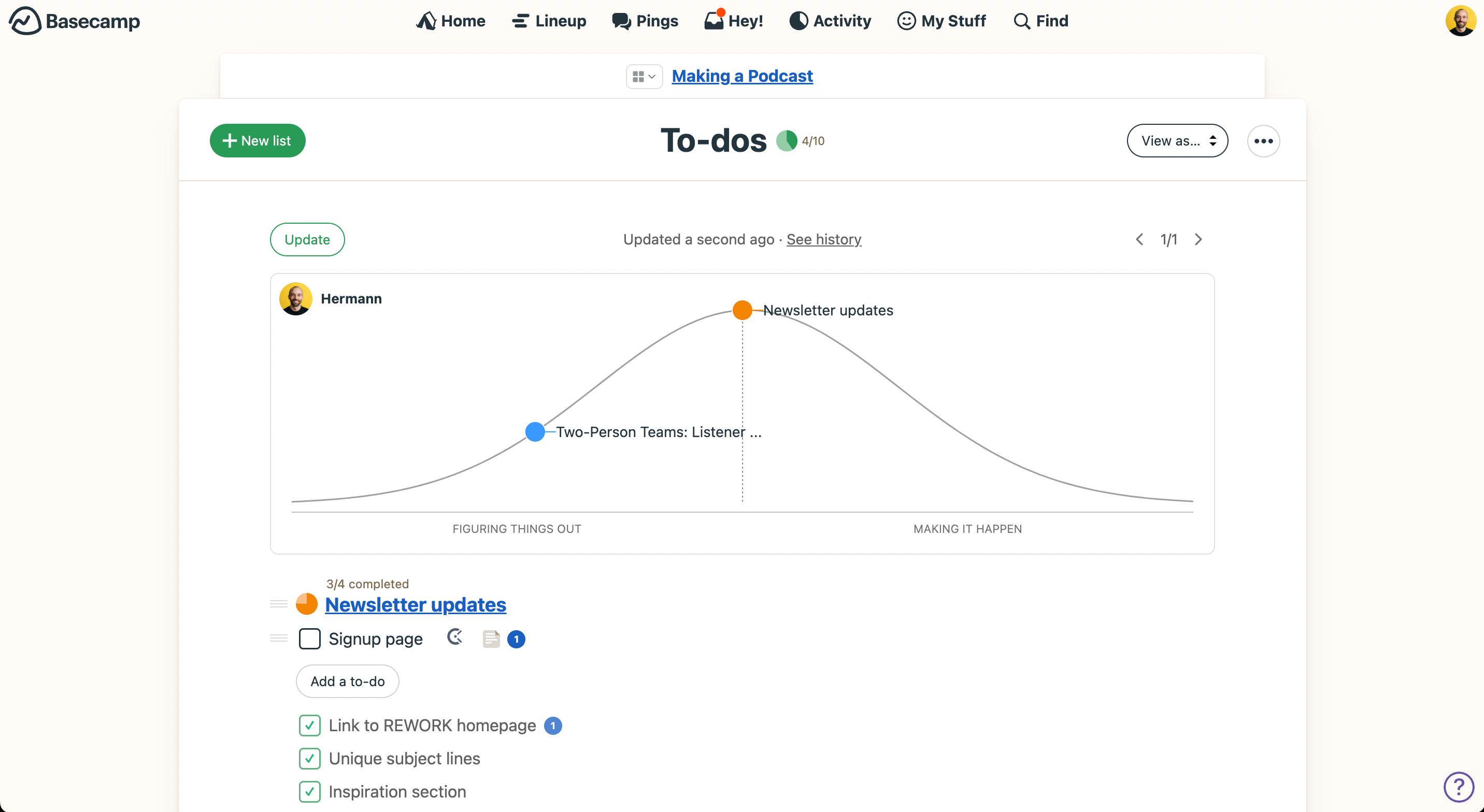
With Asana’s task management, you can streamline project planning and execution using its Gantt view, which is invaluable for visualizing timelines and managing dependencies in complex projects. Basecamp’s to-do lists and message boards are great for teams that need a centralized communication hub, simplifying project tracking and reducing the need for multiple external tools. While Asana excels at detailed task management, Basecamp offers a more straightforward approach to project visibility and team collaboration.
| Asana | Basecamp | |
|---|---|---|
| API | ||
| Batch Permissions & Access | ||
| Budgeting | ||
| Calendar Management | ||
| Collaboration Support | ||
| Contact Management | ||
| Contact Sharing | ||
| Customer Management | ||
| Dashboard | ||
| Dashboards | ||
| Data Export | ||
| Data Import | ||
| Data Visualization | ||
| Dependency Tracking | ||
| Document Sharing | ||
| Expense Tracking | ||
| External Integrations | ||
| File Sharing | ||
| Gantt Charts | ||
| Kanban Boards | ||
| Multi-User | ||
| Notifications | ||
| Project Management | ||
| Resource Management | ||
| Scheduling | ||
| Task Scheduling/Tracking | ||
| Third-Party Plugins/Add-Ons | ||
| Time Management | ||
| Travel Management | ||
| Workflow Management |
Asana vs. Basecamp Integrations
| Integration | Asana | Basecamp |
|---|---|---|
| Slack | ✅ | ✅ |
| Google Workspace | ✅ | ✅ |
| Microsoft Teams | ✅ | ❌ |
| Salesforce | ✅ | ✅ |
| Adobe Creative Cloud | ❌ | ✅ |
| Dropbox | ✅ | ❌ |
| HubSpot | ❌ | ✅ |
| Zoom | ✅ | ✅ |
| API | ✅ | ✅ |
| Zapier | ✅ | ✅ |
Asana's integration with Microsoft Teams lets you coordinate tasks and conversations seamlessly, which is perfect for project managers who rely on Teams for daily communication. Basecamp's integration with Adobe Creative Cloud is great for creative teams needing to manage design projects and share files efficiently. While Asana enhances collaboration through communication tools, Basecamp supports creative workflows with its design suite integration.
Asana vs. Basecamp Security, Compliance & Reliability
| Factor | Asana | Basecamp |
|---|---|---|
| Data Encryption | Asana uses AES-256 encryption for data at rest to protect your information. | Basecamp secures data at rest using AES-256 encryption for robust protection. |
| Regulatory Compliance | Asana complies with GDPR and CCPA, ensuring your data privacy rights. | Basecamp adheres to GDPR regulations, safeguarding your personal data. |
| Uptime Reliability | Asana offers a 99.9% uptime SLA for enterprise users, ensuring reliability. | Basecamp maintains consistent uptime with real-time status updates. |
Asana offers more robust compliance options compared to Basecamp, making it a better choice for teams with stringent regulatory needs. To evaluate security and compliance features, assess each tool's encryption standards, regulatory alignments, and uptime guarantees to ensure your team's data is protected and accessible.
Asana vs. Basecamp Ease of Use
| Factor | Asana | Basecamp |
|---|---|---|
| User Interface | Asana offers a clean, intuitive interface with drag-and-drop functionality for easy task management. | Basecamp provides a straightforward, clutter-free interface that simplifies navigation. |
| Onboarding Experience | Asana provides guided tutorials and templates to help your team get started quickly. | Basecamp offers minimal onboarding with a focus on immediate usability. |
| Setup | Asana's setup involves customizable project templates to suit various workflows. | Basecamp's setup is quick and simple, with a focus on immediate project creation. |
Asana's detailed interface makes it great for managing complex projects, but it can be overwhelming for new users. Basecamp is easier to grasp quickly, making it ideal for teams that want to dive into projects without a steep learning curve.
Asana vs Basecamp: Pros & Cons
Asana
- You can easily track tasks and deadlines using Asana's intuitive interface.
- Asana's collaboration tools help your team communicate effectively in real-time.
- There are extensive customization options so you can tailor workflows and views to your specific needs.
- The reporting capabilities are somewhat basic, which may not satisfy teams needing detailed analytics.
- It can feel overwhelming if your team is small or your projects are simple.
- You might find the notification system a bit excessive or distracting.
Basecamp
- With automatic check-ins, you can keep everyone updated without lengthy meetings.
- Basecamp's message board keeps your team communication clear and organized.
- You can easily get your team onboard with its intuitive interface.
- The tool is missing a built-in time tracking feature for tasks.
- Basecamp's simplicity might not meet the needs of complex project workflows.
- You might find the lack of advanced reporting tools limiting.
Best Use Cases for Asana and Basecamp
Asana
- Creative agencies You can manage creative workflows and client projects with Asana’s visual boards and timeline features.
- Tech startups You can coordinate product development and team tasks using Asana’s real-time updates and goal-setting tools.
- Marketing teams You can plan campaigns and track progress with Asana’s clear timelines and task comments.
- Nonprofits Asana lets you manage volunteer tasks, events, and fundraising efforts with clear task assignments and timelines.
- Remote teams You can collaborate effectively with Asana’s real-time updates and communication features.
- Event planners You can organize events easily with Asana’s task management and timeline visualization features.
Basecamp
- Small businesses You'll benefit from Basecamp's straightforward design and ease of use, which are ideal for managing projects without the complexity of more robust software.
- Creative agencies Its visual communication tools and message boards support creative brainstorming and project discussions.
- Remote teams Basecamp's centralized platform keeps remote team members connected and aligned on tasks and goals.
- Startups Quick onboarding and straightforward features help startups get organized fast without a learning curve.
- Non-profits Basecamp allows non-profit teams to focus on their mission by simplifying project tracking and communication.
- Freelancers Freelancers can manage their client projects efficiently with Basecamp’s task management and client communication tools.
Who Should Use Asana, and Who Should Use Basecamp?
In my opinion, Asana is best for teams that need detailed project tracking and thrive in complex workflows, making it ideal for industries like tech and marketing. If your team values extensive task management features and has the time to learn a more intricate system, Asana is the way to go. From my perspective, Basecamp suits smaller teams or those in creative fields that prioritize straightforward communication and collaboration. If you want a tool that's easy to adopt and use right away without much fuss, Basecamp is the better choice.
Differences Between Asana and Basecamp
| Asana | Basecamp | |
|---|---|---|
| Automation | Asana includes automation for recurring tasks and workflows. | Basecamp lacks advanced automation features, focusing on simplicity. |
| Onboarding | Asana provides guided tutorials and templates for new users. | Basecamp emphasizes immediate usability with minimal onboarding. |
| Pricing | Asana uses a tiered subscription model with different feature sets. | Basecamp offers a flat-rate subscription with all features included. |
| Task Management | Asana offers detailed task management with subtasks and dependencies. | Basecamp uses simple to-do lists for task management. |
| User Interface | Asana has a complex interface with customizable views like Gantt charts. | Basecamp provides a straightforward, minimalistic interface. |
| Read Asana ReviewOpens new window | Read Basecamp ReviewOpens new window |
Similarities Between Asana and Basecamp
| Cloud-Based Access | Asana and Basecamp are cloud-based, allowing your team to access projects from anywhere with an internet connection. |
|---|---|
| Collaboration | Both Asana and Basecamp offer tools for team collaboration, like message boards and comment threads. |
| Integrations | Each platform supports integrations with popular tools like Slack and Google Workspace, enhancing their utility. |
| Mobile Apps | Both provide mobile apps, letting you manage tasks and projects on the go, keeping your work flexible. |
| User Permissions | They offer user permission settings, giving you control over who can access and edit project information. |
| Read Asana ReviewOpens new window Read Basecamp ReviewOpens new window | |