

Adobe Experience Manager Review: Pros, Cons, Features and Pricing


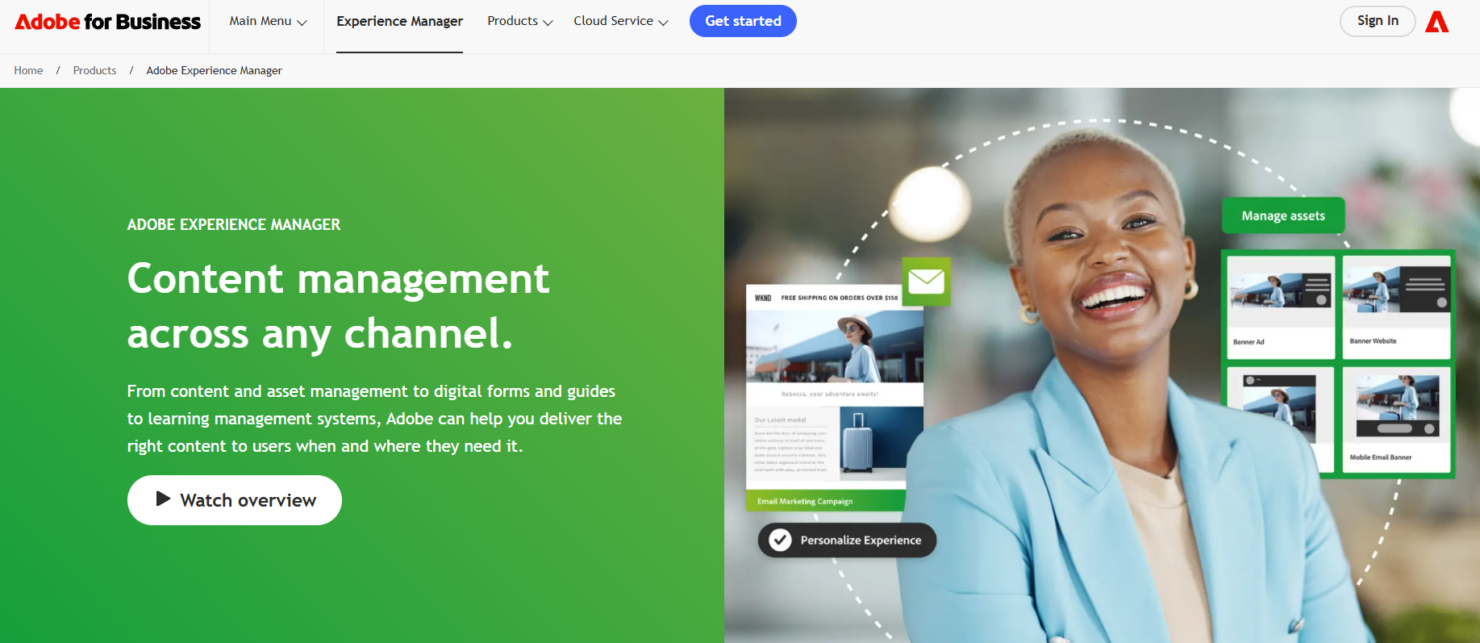
Adobe Experience Manager is a cloud digital asset management software that helps you organize, store, and manage digital content. It's perfect for marketing teams in large enterprises, creative agencies, and media companies needing seamless content management and consistent multi-channel digital experiences. Adobe Experience Manager delivers efficient asset handling and integration for enhanced team productivity.
Adobe Experience Manager addresses collaboration issues and content chaos for marketing and creative teams. In this article, I'll cover Adobe Experience Manager's features, pros and cons, use cases, and pricing, so you can decide if this software aligns with your organizational needs and goals.
Adobe Experience Manager Evaluation Summary
- Pricing upon request
- Free demo available
Why You Can Trust Us
Adobe Experience Manager Overview
In my opinion, Adobe Experience Manager excels in content management and integration capabilities, making it a strong contender among digital asset management (DAM) tools. Its intuitive interface and extensive features cater well to large enterprises and creative agencies seeking robust management solutions. However, the pricing might deter smaller businesses. The onboarding could be smoother, but customer support is commendable. Compared to competitors, Adobe stands out with its seamless Adobe ecosystem integration, though some may find its cost and complexity a barrier. If your team needs a feature-rich, enterprise-grade solution, it’s a worthwhile consideration.
pros
-
It provides excellent customer support to assist your team when needed.
-
The user interface is intuitive and user-friendly for your work.
-
It offers powerful content management tools for your team's creative projects.
cons
-
Some users find the software's complexity overwhelming for everyday tasks.
-
It may require more time for onboarding compared to other options.
-
The learning curve can be steep for your team initially.
-

Insightful
Visit WebsiteThis is an aggregated rating for this tool including ratings from Crozdesk users and ratings from other sites.4.8 -
Accelo
Visit WebsiteThis is an aggregated rating for this tool including ratings from Crozdesk users and ratings from other sites.4.4 -
Wrike
Visit WebsiteThis is an aggregated rating for this tool including ratings from Crozdesk users and ratings from other sites.4.2





Our Review Methodology
How We Test & Score Tools
We’ve spent years building, refining, and improving our software testing and scoring system. The rubric is designed to capture the nuances of software selection and what makes a tool effective, focusing on critical aspects of the decision-making process.
Below, you can see exactly how our testing and scoring works across seven criteria. It allows us to provide an unbiased evaluation of the software based on core functionality, standout features, ease of use, onboarding, customer support, integrations, customer reviews, and value for money.
Core Functionality (25% of final scoring)
The starting point of our evaluation is always the core functionality of the tool. Does it have the basic features and functions that a user would expect to see? Are any of those core features locked to higher-tiered pricing plans? At its core, we expect a tool to stand up against the baseline capabilities of its competitors.
Standout Features (25% of final scoring)
Next, we evaluate uncommon standout features that go above and beyond the core functionality typically found in tools of its kind. A high score reflects specialized or unique features that make the product faster, more efficient, or offer additional value to the user.
We also evaluate how easy it is to integrate with other tools typically found in the tech stack to expand the functionality and utility of the software. Tools offering plentiful native integrations, 3rd party connections, and API access to build custom integrations score best.
Ease of Use (10% of final scoring)
We consider how quick and easy it is to execute the tasks defined in the core functionality using the tool. High scoring software is well designed, intuitive to use, offers mobile apps, provides templates, and makes relatively complex tasks seem simple.
Onboarding (10% of final scoring)
We know how important rapid team adoption is for a new platform, so we evaluate how easy it is to learn and use a tool with minimal training. We evaluate how quickly a team member can get set up and start using the tool with no experience. High scoring solutions indicate little or no support is required.
Customer Support (10% of final scoring)
We review how quick and easy it is to get unstuck and find help by phone, live chat, or knowledge base. Tools and companies that provide real-time support score best, while chatbots score worst.
Customer Reviews (10% of final scoring)
Beyond our own testing and evaluation, we consider the net promoter score from current and past customers. We review their likelihood, given the option, to choose the tool again for the core functionality. A high scoring software reflects a high net promoter score from current or past customers.
Value for Money (10% of final scoring)
Lastly, in consideration of all the other criteria, we review the average price of entry level plans against the core features and consider the value of the other evaluation criteria. Software that delivers more, for less, will score higher.
Core Features
Content Management
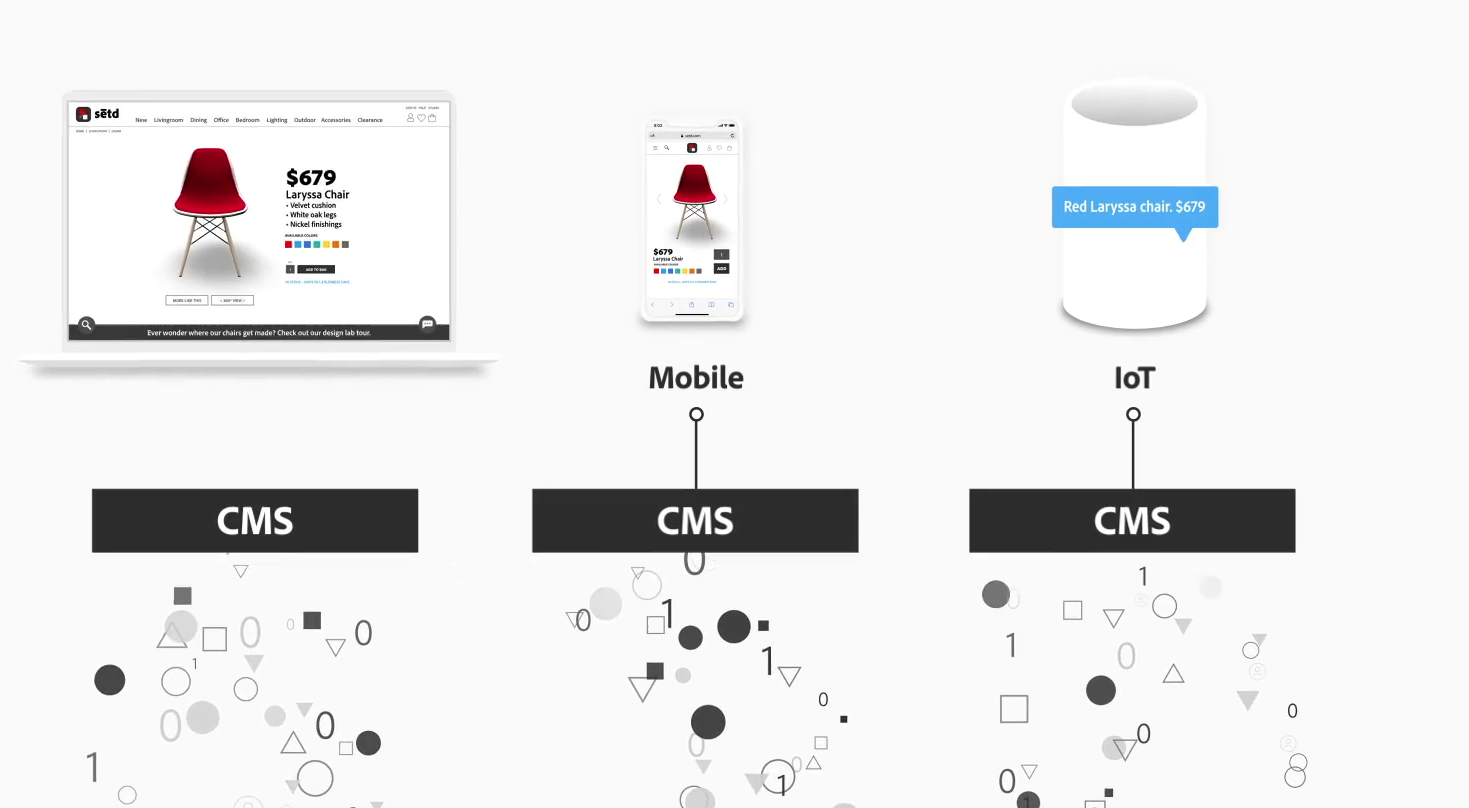
Adobe Experience Manager offers tools to organize, store, and manage your digital assets. You can easily update and distribute web content using reusable templates across various platforms.
Version Control
You can track and manage different versions of your assets, ensuring you always have the latest updates. This feature prevents content mishaps.
Metadata Management
Adobe Experience Manager allows you to add metadata to your assets, making it easier to search and categorize them. This speeds up your content retrieval.
Collaboration Tools
Your team can collaborate in real-time, enhancing productivity and ensuring everyone stays on the same page. It supports seamless teamwork.
Digital Rights Management
It helps you manage the access controls and permissions for your digital content, protecting your assets from unauthorized use. This ensures compliance and security.
Ease of Use
Adobe Experience Manager's interface is intuitive, making it easier for your team to manage digital assets efficiently from a centralized dashboard. While some users mention a learning curve, its user-friendly design helps you quickly adapt to its features. The real-time collaboration tools enhance your team's productivity, allowing everyone to stay aligned on projects. Compared to other solutions, it offers a smoother experience in navigating and managing content, though initial training might be needed for your team to fully leverage its capabilities.
Integrations
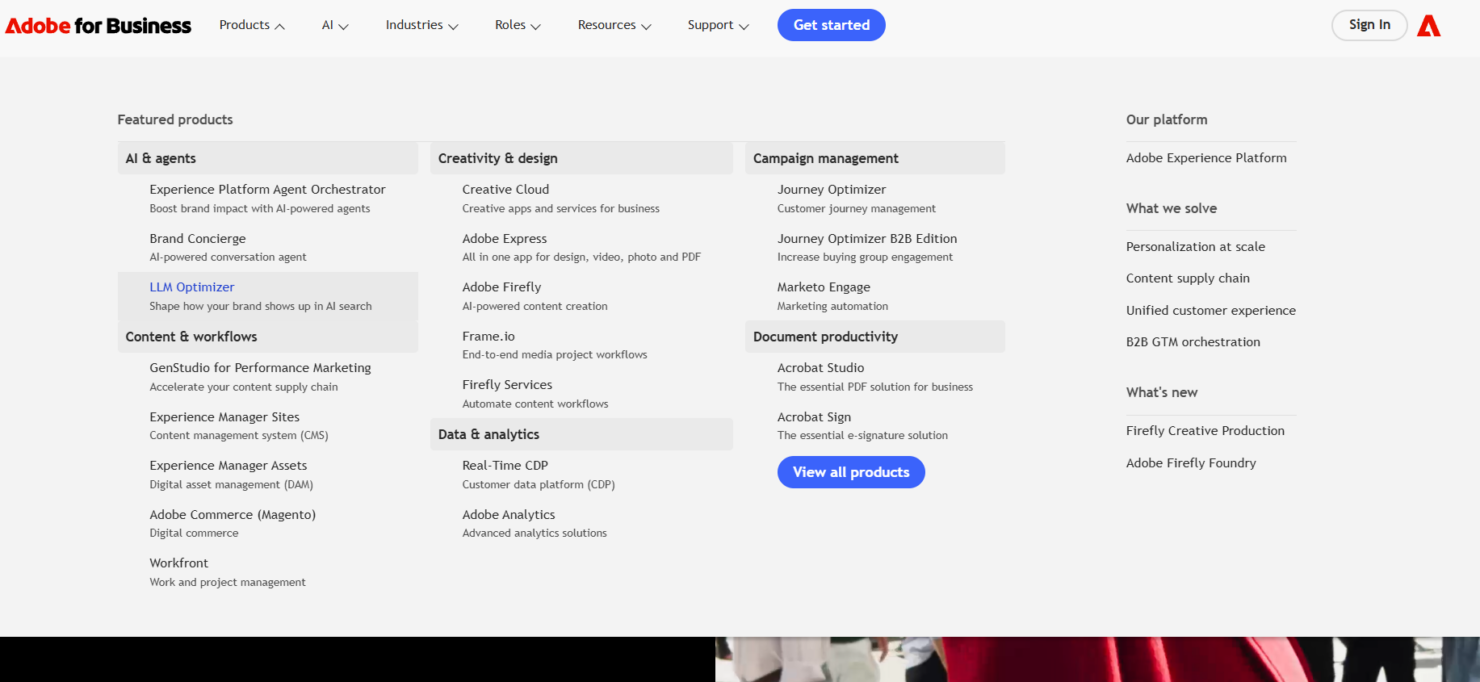
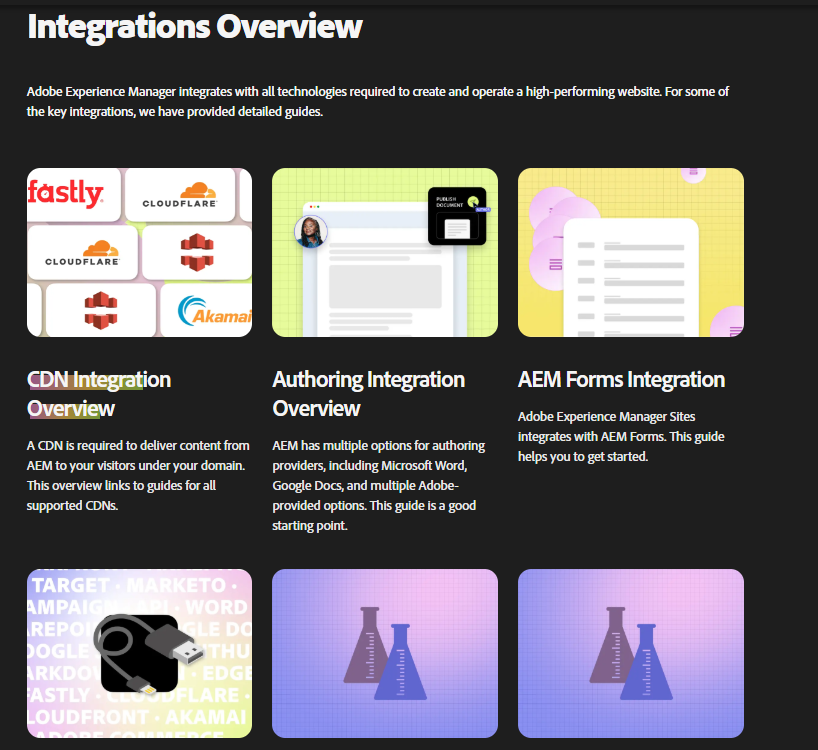
Adobe Experience Manager integrates with Amazon SNS, BrightEdge Content Optimizer, ExactTarget, Facebook Connect, Generic Analytics Snippet, Microsoft Translator, Pushwoosh, Salesforce, Twitter, Adobe Creative Cloud integrations, Adobe Analytics, Adobe Express integration, Frame.io, and YouTube.
Adobe Experience Manager also has an API and connects with third-party integration tools.
Adobe Experience Manager Specs
- Access Management
- API
- Asset Tagging
- Automatic Transcription
- Batch Permissions & Access
- Brand Asset Creation
- Brand Management
- Dashboards
- Database Search
- Document Comparison
- Document Sharing
- Downloading
- External Integrations
- File Format Conversion
- File Sharing
- File Transfer
- History/Version Control
- Keyword Tracking
- Materials Library
- Metadata Management
- Multi-User
- Product Catalog
- Reports
- Review Monitoring
- Template Designer


