


TickTick Review: Pros, Cons, Features & Pricing



TickTick is a task management software for individuals and small teams who need to organize tasks across personal projects and work responsibilities in one place. If you've looked at Todoist but want more built-in features—like a Pomodoro timer, habit tracker, and native calendar view—without paying more to get them, TickTick is worth a close look.
TickTick Evaluation Summary

- From $49.99/year (billed annually)
- Free plan available
Why Trust Our Software Recommendations
Our team has been testing and reviewing software since 2012. As project managers ourselves, we know how difficult—and important—it is to choose the right software.
For this guide, we evaluated tools using hands-on testing and independent research, scoring tools using our selection criteria. We also draw on insights from industry thought leaders and practicing project management experts.
Our reviews reflect our human editorial judgment, not a sales pitch.
Expert reviewers:
TickTick Overview
In my opinion, TickTick is a solid choice for task management, particularly for small teams and individuals who need a straightforward tool. Its clean interface and intuitive design make it easy for users to jump right in and manage their tasks effectively. While it may not have as many integrations as some competitors, its focus on core task management functions ensures reliability. TickTick is best suited for those who value simplicity and efficiency over complex features.
pros
-
Its intuitive design allows you to organize tasks easily.
-
It offers effective time tracking to keep you on schedule.
-
Your productivity gets a boost with its simple task prioritization.
cons
-
Some users find the customization options limited for advanced needs.
-
You might notice fewer integrations compared to other tools.
-
Its mobile app can sometimes lag in performance.
Is TickTick Right For Your Needs?
Who Would be a Good Fit for TickTick?
TickTick suits freelancers, small teams, and individuals who juggle multiple projects or personal goals. You’ll find it especially useful if you prefer visual planning through calendars, lists, and Kanban boards. Its reminders, focus timer, and habit-tracking tools make it a great fit for anyone who values organization and personal productivity in daily workflows.
-
Freelancers
TickTick helps you manage diverse projects with its easy-to-navigate task lists.
-
Small Businesses
Your team can stay on top of tasks with its intuitive design and prioritization features.
-
Marketing Departments
You can efficiently track time and deadlines, ensuring campaigns run smoothly.
-
Project Managers
It keeps your projects organized with clear task tracking and scheduling.
-
Education Professionals
Teachers and administrators can benefit from its simple task management for planning and grading.
-
Remote Teams
Your team can collaborate effectively with TickTick's focus on task clarity and time management.
Who Would be a Bad Fit for TickTick?
TickTick may not be ideal for large enterprises or teams that need complex project management tools. If your work involves heavy reporting, multiple dependencies, or cross-department coordination, you’ll likely find TickTick’s simplicity limiting. It’s best suited for individuals and small groups rather than large-scale operations.
-
Enterprise Projects
Lacks advanced project tracking, dependencies, and reporting needed at scale.
-
Engineering Teams
Doesn’t support technical workflows like issue tracking or sprint management.
-
Agencies
Limited analytics and client reporting make it less effective for large projects.
-
HR Departments
Not built for applicant tracking or workforce scheduling workflows.
-
Finance Teams
Missing forecasting and data visualization tools needed for financial planning.
-
IT Operations
No automation or integration depth for complex ticketing or workflow systems.
Our Review Methodology
How We Test & Score Tools
We’ve spent years building, refining, and improving our software testing and scoring system. The rubric is designed to capture the nuances of software selection and what makes a tool effective, focusing on critical aspects of the decision-making process.
Below, you can see exactly how our testing and scoring works across seven criteria. It allows us to provide an unbiased evaluation of the software based on core functionality, standout features, ease of use, onboarding, customer support, integrations, customer reviews, and value for money.
Core Functionality (25% of final scoring)
The starting point of our evaluation is always the core functionality of the tool. Does it have the basic features and functions that a user would expect to see? Are any of those core features locked to higher-tiered pricing plans? At its core, we expect a tool to stand up against the baseline capabilities of its competitors.
Standout Features (25% of final scoring)
Next, we evaluate uncommon standout features that go above and beyond the core functionality typically found in tools of its kind. A high score reflects specialized or unique features that make the product faster, more efficient, or offer additional value to the user.
We also evaluate how easy it is to integrate with other tools typically found in the tech stack to expand the functionality and utility of the software. Tools offering plentiful native integrations, 3rd party connections, and API access to build custom integrations score best.
Ease of Use (10% of final scoring)
We consider how quick and easy it is to execute the tasks defined in the core functionality using the tool. High scoring software is well designed, intuitive to use, offers mobile apps, provides templates, and makes relatively complex tasks seem simple.
Onboarding (10% of final scoring)
We know how important rapid team adoption is for a new platform, so we evaluate how easy it is to learn and use a tool with minimal training. We evaluate how quickly a team member can get set up and start using the tool with no experience. High scoring solutions indicate little or no support is required.
Customer Support (10% of final scoring)
We review how quick and easy it is to get unstuck and find help by phone, live chat, or knowledge base. Tools and companies that provide real-time support score best, while chatbots score worst.
Customer Reviews (10% of final scoring)
Beyond our own testing and evaluation, we consider the net promoter score from current and past customers. We review their likelihood, given the option, to choose the tool again for the core functionality. A high scoring software reflects a high net promoter score from current or past customers.
Value for Money (10% of final scoring)
Lastly, in consideration of all the other criteria, we review the average price of entry level plans against the core features and consider the value of the other evaluation criteria. Software that delivers more, for less, will score higher.
Core Features
Task Lists
You can create and manage tasks easily with TickTick’s straightforward lists. They help you stay organized and on top of your daily to-dos.
Calendar View
This feature allows you to see your tasks in a calendar format, making it easy to plan your week. Drag and drop tasks to reschedule them quickly.
Time Tracking
Keep track of how long tasks take with built-in timers. This helps you manage your time better and boost productivity.
Priority Levels
Assign priority levels to your tasks to focus on what matters most. This ensures you’re always working on the most critical items.
Reminders
Set reminders for tasks so you don't miss deadlines. They keep you alert and on schedule with timely notifications.
Recurring Tasks
Easily set tasks to repeat daily, weekly, or monthly. This feature saves time by automating regular tasks.

Standout Features
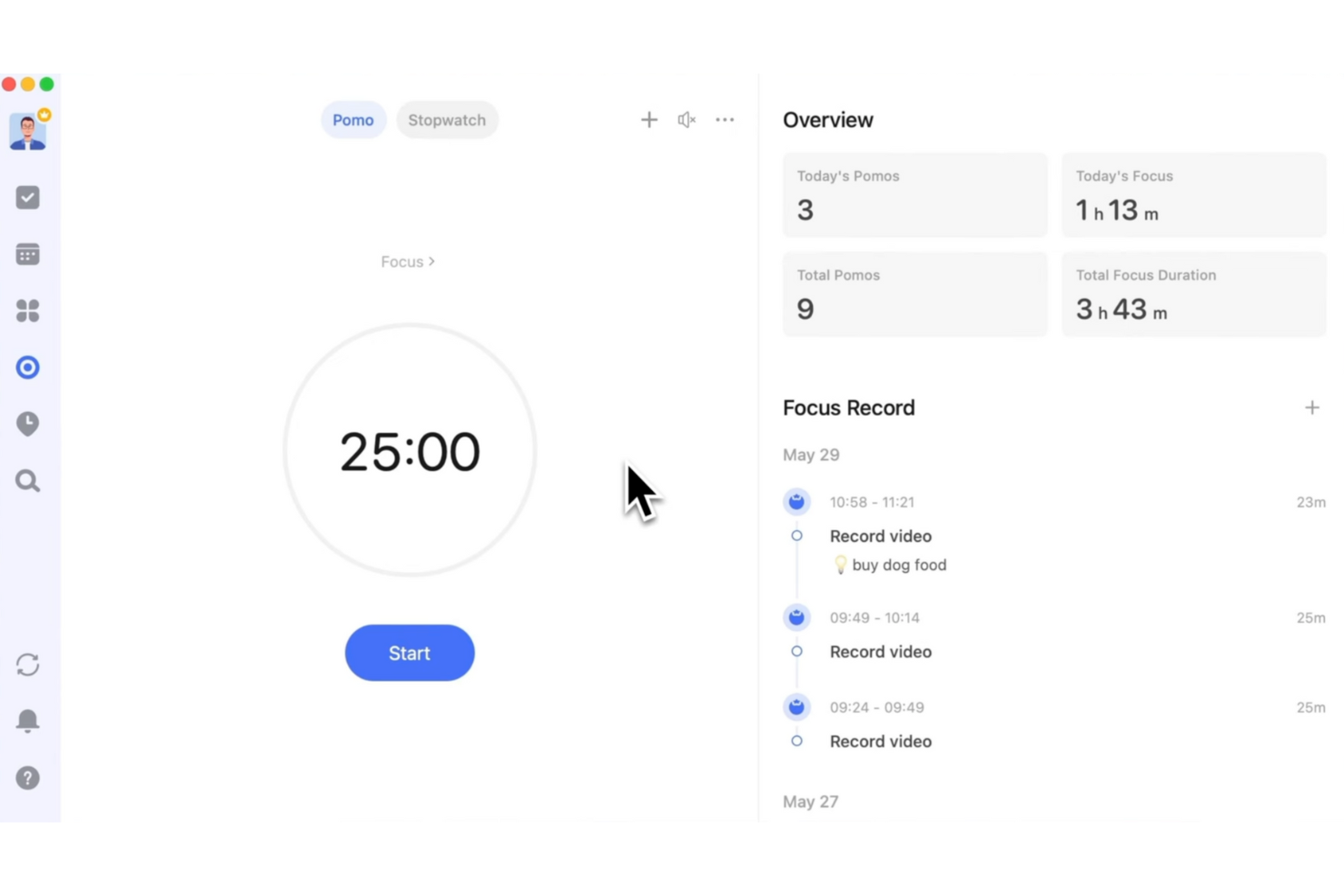
Pomodoro Timer
TickTick includes a Pomodoro timer to help you work in focused bursts. This feature is great for boosting concentration and managing work intervals.
Habit Tracker
You can build and track habits alongside your tasks. This unique feature supports personal growth by helping you maintain daily routines.
Ease of Use
TickTick is user-friendly, making it a breeze for you and your team to dive into task management. Its clean interface and intuitive design let you organize tasks without fuss. With features like drag-and-drop scheduling and clear task lists, you'll find it easy to manage your workload. The straightforward setup requires minimal onboarding, so you can start boosting productivity right away. Users appreciate its simplicity, which makes handling daily tasks efficient and stress-free.

Onboarding
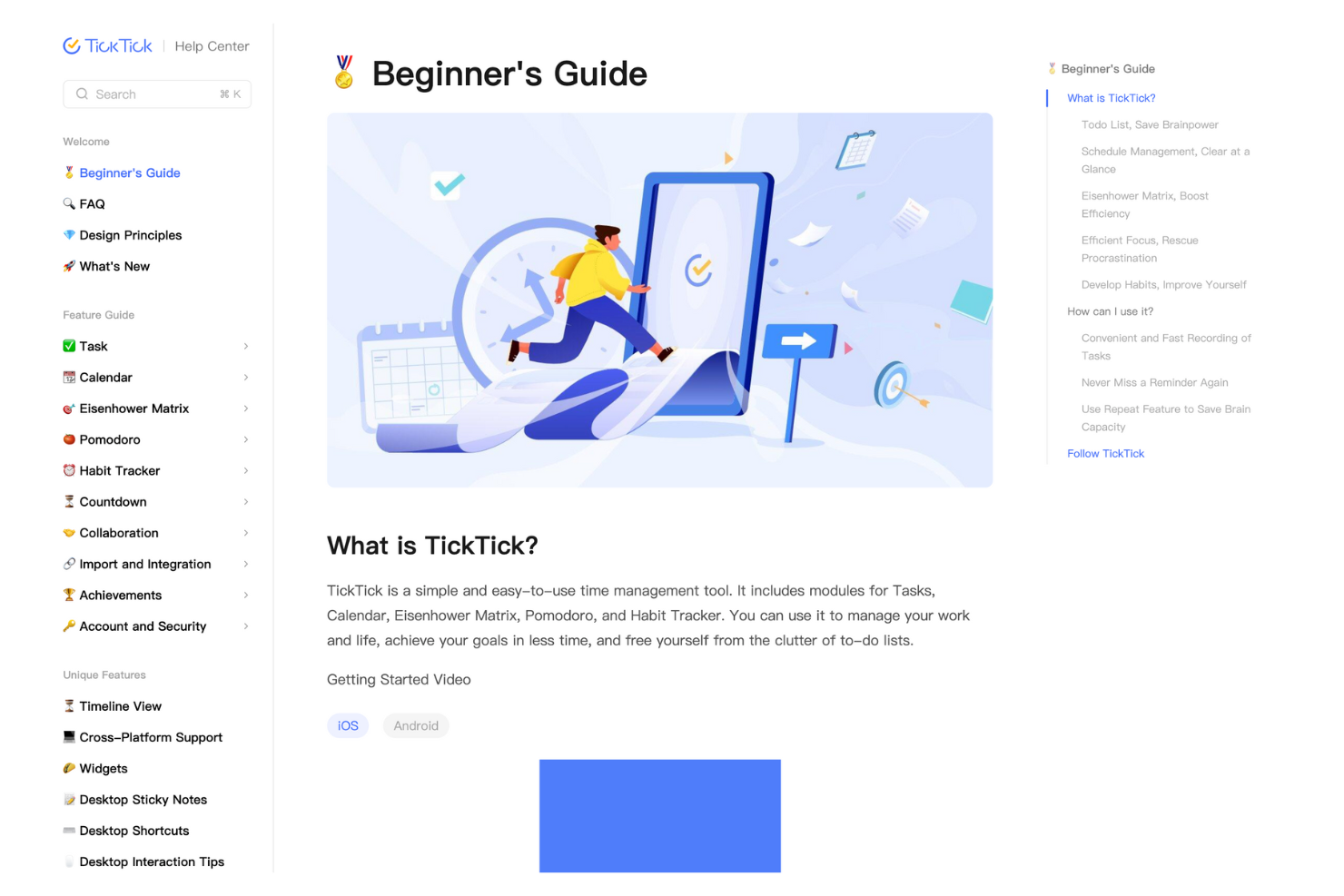
TickTick offers a smooth onboarding experience with minimal setup required, making it easy for you and your team to get started quickly. The platform provides clear guides and tutorials to help you navigate its features efficiently. While some users might desire more personalized onboarding support, the available resources are generally sufficient to get you up and running. You'll find the transition to using TickTick straightforward, allowing you to focus on managing your tasks effectively.
Customer Support
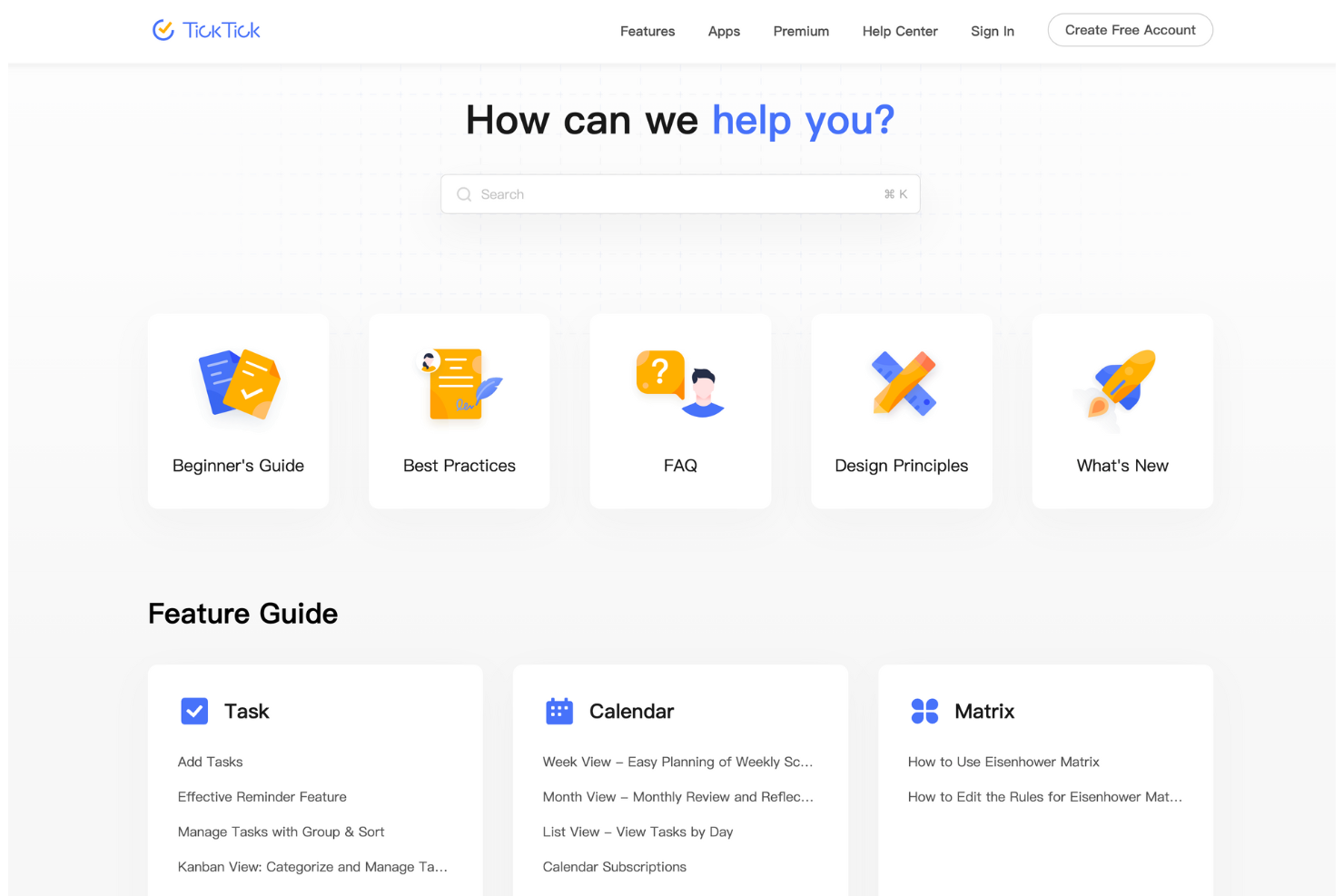
TickTick provides reliable customer support, ensuring you get help when needed. Users appreciate the responsive email support and comprehensive help center that addresses common questions. While live chat or phone support might enhance the experience, the existing resources are generally effective for resolving issues. You'll find the assistance you need to navigate any challenges, allowing you to focus on your task management without unnecessary interruptions.
Value for Money
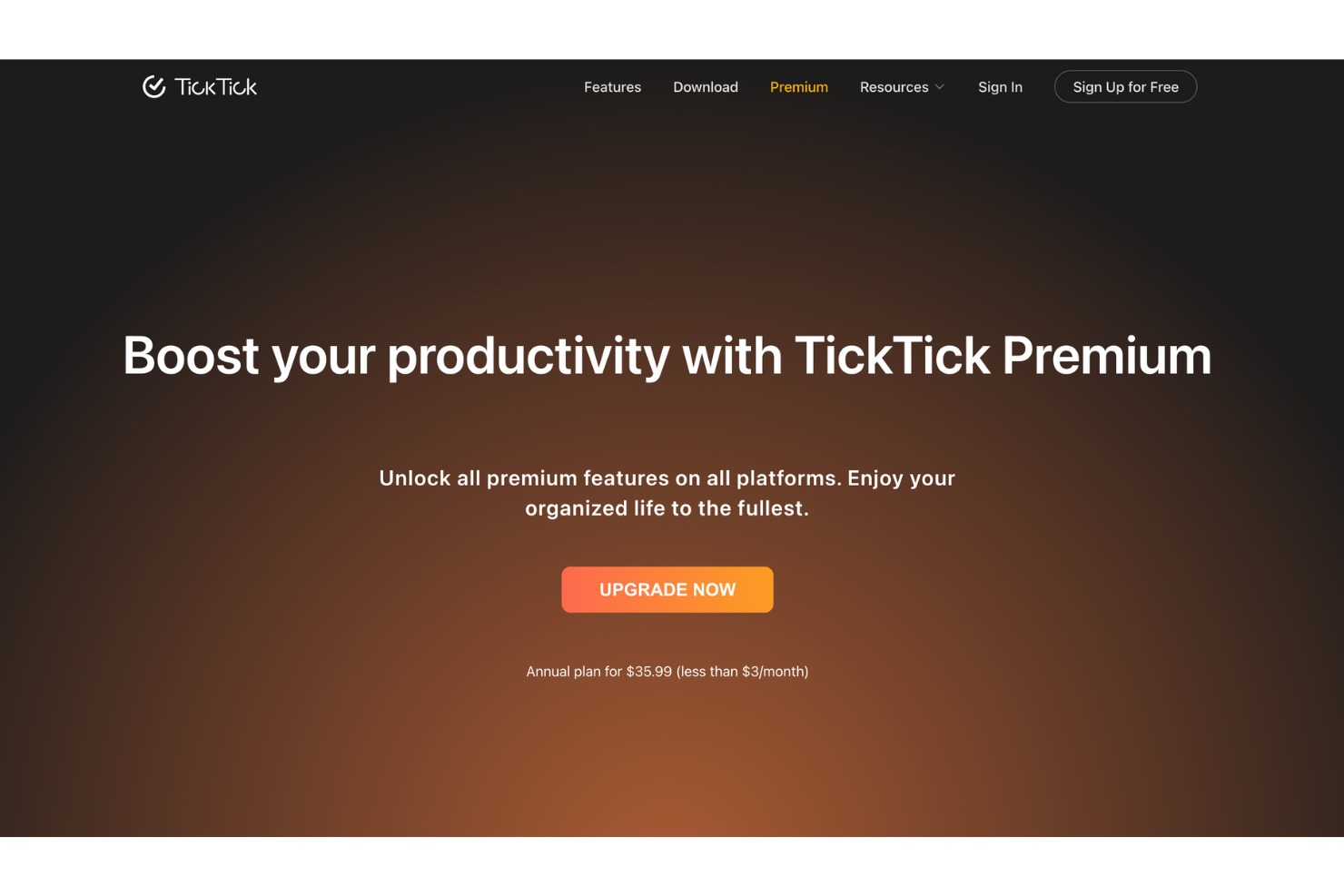
TickTick pricing offers impressive features for its cost, balancing task management, habit tracking, and calendar views in one app. Users like how the Premium plan enhances productivity with smart lists, reminders, and integrations without being expensive.
- Free: Basic task lists, reminders, and cross-platform sync.
- Premium: Adds calendar integration, advanced filters, smart lists, and productivity stats.
TickTick Specs
- API
- Calendar Management
- Collaboration Support
- Dashboards
- Data Export
- Data Import
- External Integrations
- File Sharing
- Gantt Charts
- Kanban Boards
- Mobile App
- Multi-User
- Notifications
- Prioritization
- Project Management
- Status Notifications
- Task Scheduling/Tracking
- Time Management
TickTick FAQs
How does TickTick ensure data security and compliance?
Can I use TickTick offline?
How customizable is TickTick?
Is TickTick suitable for large teams?
Does TickTick support collaboration?
How reliable is TickTick's syncing across devices?
Can I import tasks from other tools into TickTick?
What kind of support does TickTick provide to users?
TickTick Company Overview & History
TickTick is developed by Appest Limited and was officially launched in 2013, building on the earlier GTasks app. The company operates globally with dual presence in the U.S. and China and serves millions of users across platforms. While it’s best known for its cross-device to-do, habit & calendar integration features, the firm remains privately held and largely self-funded, so public financials are limited.
TickTick Major Milestones
- 2010: Appest team begins work on the predecessor app GTasks.
- 2013: TickTick officially launches on iOS, Android and web.
- 2016: TickTick expands to Mac and Windows desktop versions.
- 2020: TickTick adds built-in Pomodoro timer, calendar views and habit-tracking features.
What's Next?
Want to connect with other digital project managers to share resources and best practices? Join our membership community and get access to 100+ templates, samples, and examples and connect with 100s of other digital project managers in Slack.