


Quip is a document collaboration tools solution designed to enhance team communication and productivity. It best serves agile teams in tech startups, marketing departments, and remote work environments by offering real-time collaboration and seamless document sharing. Quip provides a user-friendly platform for teams to collaborate efficiently and effectively.
Quip addresses the challenges of disjointed communication and inefficient collaboration for tech teams and creative departments. In this article, I'll cover Quip's features, pros and cons, use cases, pricing, and more so you can decide if this software aligns with your collaboration and productivity goals.
Quip Evaluation Summary
- From $10/user/month (billed annually)
- Not available
Why You Can Trust Us
We’ve been testing and reviewing project management software since 2012. As project managers ourselves, we know how critical and difficult it is to make the right decision when selecting software.
We invest in deep research to help our audience make better software purchasing decisions. We’ve tested more than 2,000 tools for different project management use cases and written over 1,000 comprehensive software reviews. Learn how we stay transparent & our software review methodology.
Quip Overview
In my opinion, Quip stands out as a solid document collaboration tool with its intuitive interface and seamless integration capabilities. It excels in real-time editing and collaboration, making it an ideal choice for tech-savvy teams and remote work environments. However, its customer support can be a bit slow, which might affect teams needing quick resolutions. Compared to other tools like Google Docs or Microsoft Word, Quip's ease of use and value for money make it a strong contender. It's best suited for teams that prioritize efficient collaboration and integration with existing tech stacks. If you're choosing a tool for a dynamic and interactive work environment, Quip should be on your list.
pros
-
Quip offers real-time collaboration that keeps your team in sync.
-
Its user-friendly interface makes it easy for your team to adopt.
-
Quip's document sharing is seamless and efficient for your work.
cons
-
Customer support can be slow, affecting your team's response time.
-
It lacks some advanced features found in other tools, which may limit your options.
-
Quip's offline access can be unreliable for your team.
-

Accelo
Visit WebsiteThis is an aggregated rating for this tool including ratings from Crozdesk users and ratings from other sites.4.4 -
Wrike
Visit WebsiteThis is an aggregated rating for this tool including ratings from Crozdesk users and ratings from other sites.4.2 -
monday.com
Visit WebsiteThis is an aggregated rating for this tool including ratings from Crozdesk users and ratings from other sites.4.6




Our Review Methodology
How We Test & Score Tools
We’ve spent years building, refining, and improving our software testing and scoring system. The rubric is designed to capture the nuances of software selection and what makes a tool effective, focusing on critical aspects of the decision-making process.
Below, you can see exactly how our testing and scoring works across seven criteria. It allows us to provide an unbiased evaluation of the software based on core functionality, standout features, ease of use, onboarding, customer support, integrations, customer reviews, and value for money.
Core Functionality (25% of final scoring)
The starting point of our evaluation is always the core functionality of the tool. Does it have the basic features and functions that a user would expect to see? Are any of those core features locked to higher-tiered pricing plans? At its core, we expect a tool to stand up against the baseline capabilities of its competitors.
Standout Features (25% of final scoring)
Next, we evaluate uncommon standout features that go above and beyond the core functionality typically found in tools of its kind. A high score reflects specialized or unique features that make the product faster, more efficient, or offer additional value to the user.
We also evaluate how easy it is to integrate with other tools typically found in the tech stack to expand the functionality and utility of the software. Tools offering plentiful native integrations, 3rd party connections, and API access to build custom integrations score best.
Ease of Use (10% of final scoring)
We consider how quick and easy it is to execute the tasks defined in the core functionality using the tool. High scoring software is well designed, intuitive to use, offers mobile apps, provides templates, and makes relatively complex tasks seem simple.
Onboarding (10% of final scoring)
We know how important rapid team adoption is for a new platform, so we evaluate how easy it is to learn and use a tool with minimal training. We evaluate how quickly a team member can get set up and start using the tool with no experience. High scoring solutions indicate little or no support is required.
Customer Support (10% of final scoring)
We review how quick and easy it is to get unstuck and find help by phone, live chat, or knowledge base. Tools and companies that provide real-time support score best, while chatbots score worst.
Customer Reviews (10% of final scoring)
Beyond our own testing and evaluation, we consider the net promoter score from current and past customers. We review their likelihood, given the option, to choose the tool again for the core functionality. A high scoring software reflects a high net promoter score from current or past customers.
Value for Money (10% of final scoring)
Lastly, in consideration of all the other criteria, we review the average price of entry level plans against the core features and consider the value of the other evaluation criteria. Software that delivers more, for less, will score higher.
Core Features
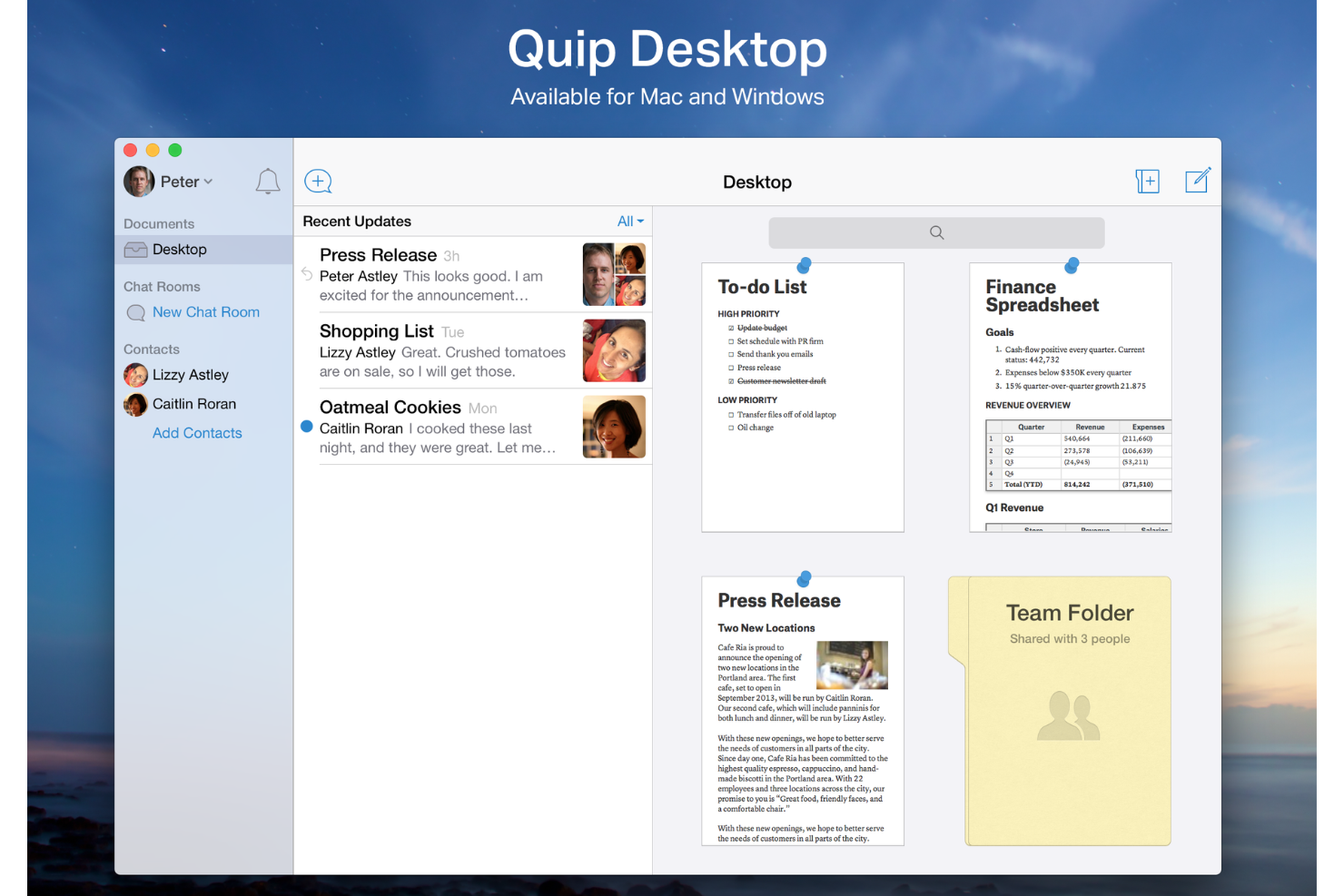
Real-Time Collaboration: Quip lets your team work together simultaneously on documents, ensuring everyone stays updated. This feature boosts productivity by reducing version conflicts.
Document Sharing: You can easily share documents in various file formats with your team, making collaboration smooth and efficient. It's straightforward and keeps everyone in the loop.
Task Management: Quip integrates tasks directly into your documents, helping your team stay organized. It simplifies project tracking and accountability.
Chat and Messaging: Quip's built-in chat feature and live notifications allow you to discuss changes and ideas without leaving the document. This keeps communication centralized and efficient.
Templates: Quip offers a variety of templates to jumpstart your projects. They save you time and ensure consistency across documents.
Mobile Access: Quip's mobile app keeps your team connected and productive on the go. It's handy for remote work and quick updates.
Ease of Use
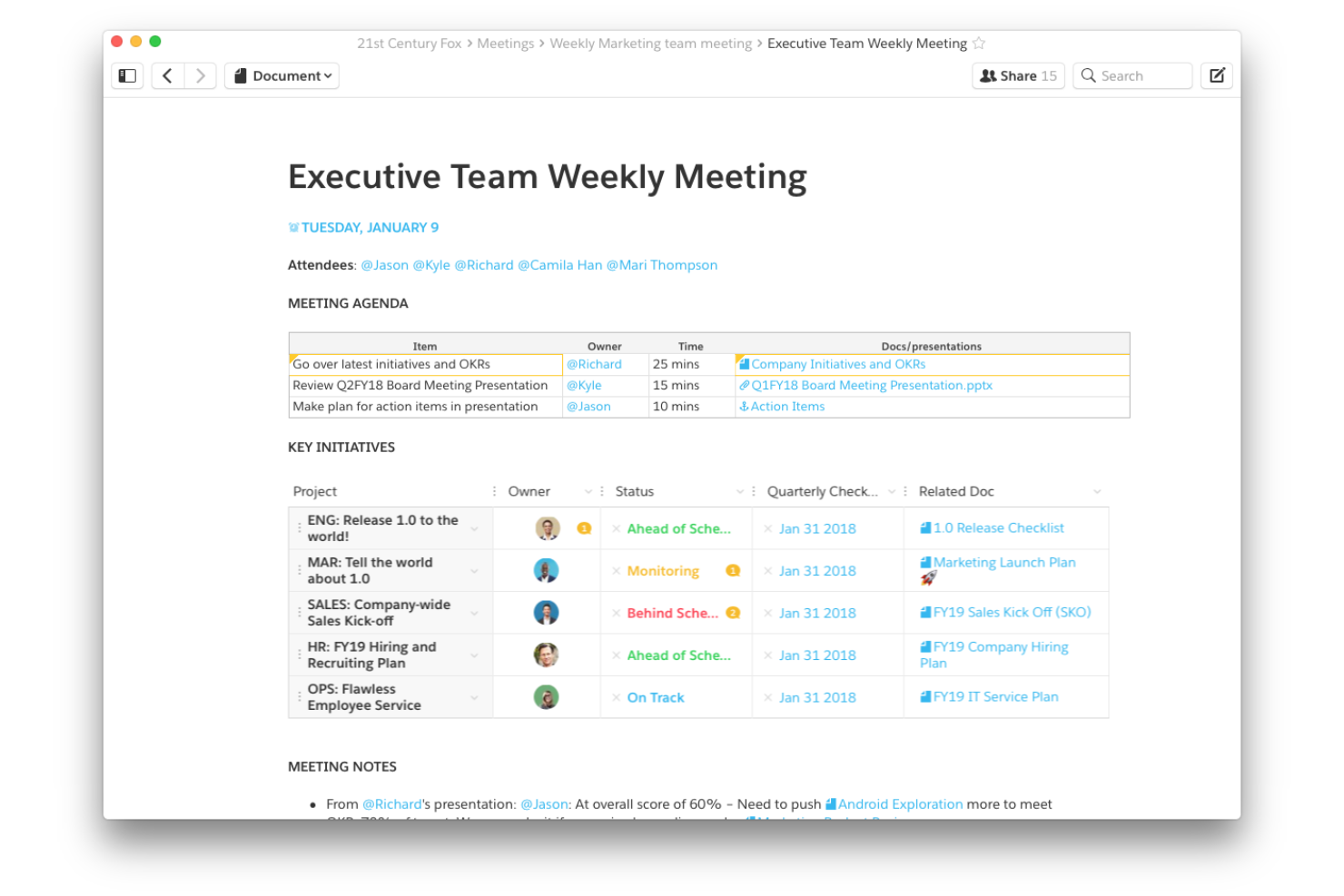
Quip's user-friendly interface makes it a breeze for your team to start collaborating. Its intuitive design and straightforward navigation mean you won't waste time figuring out how things work. Features like real-time collaboration and integrated chat keep everything in one place, simplifying your workflow. Compared to other tools, Quip's simplicity and accessibility stand out, allowing your team to focus on productivity rather than technical hurdles.
Integrations
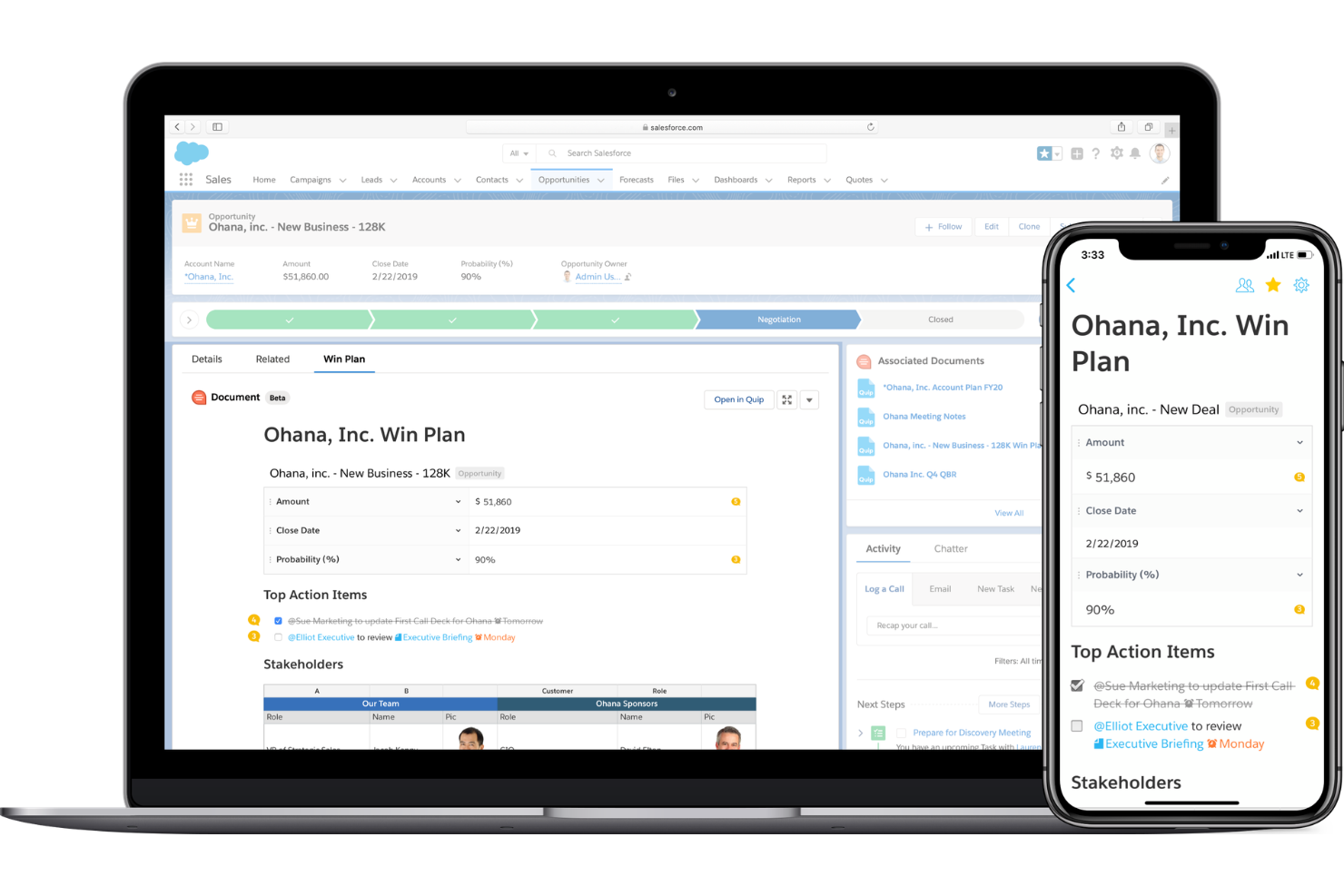
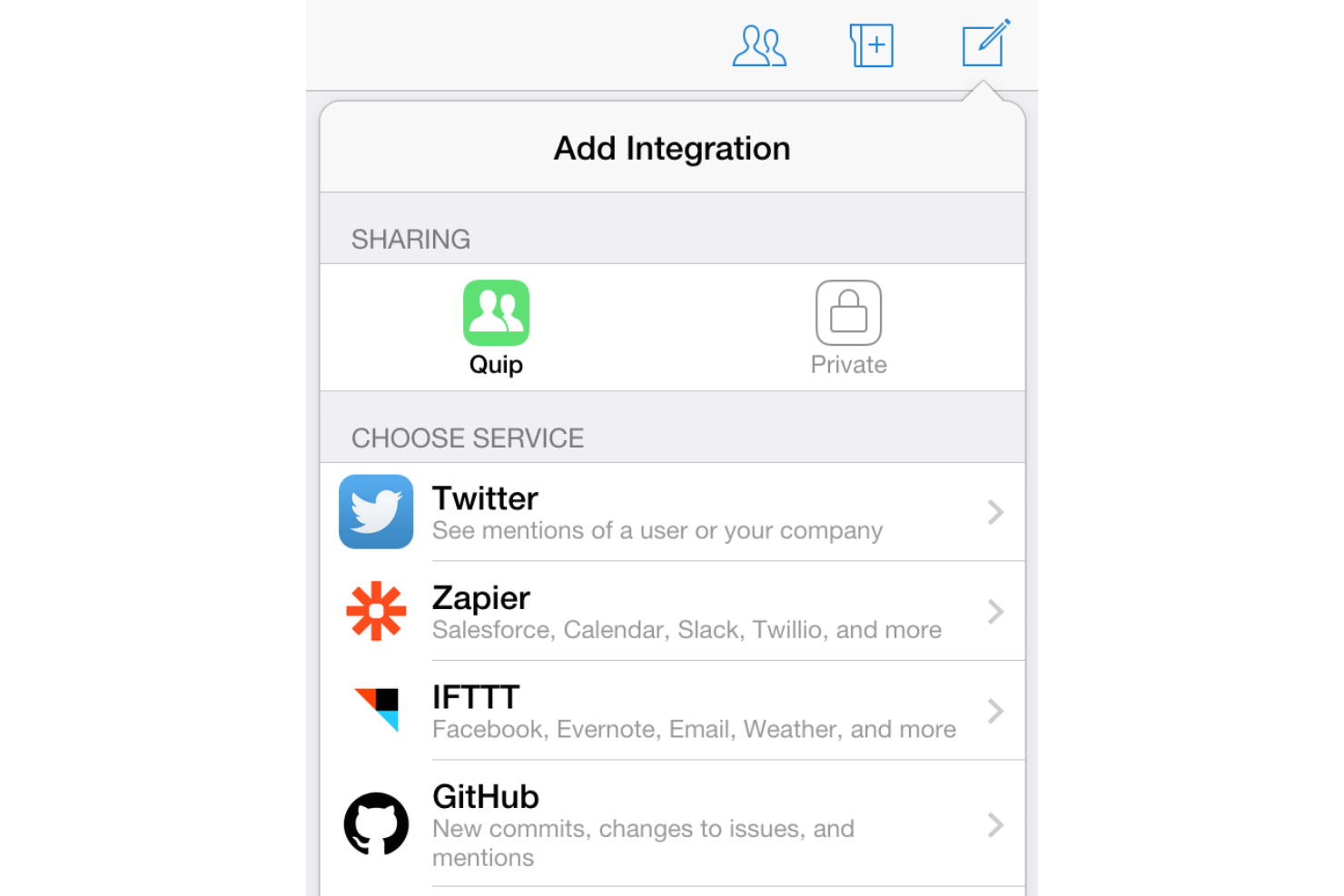
Quip integrates deeply with Salesforce and supports collaboration with tools like Slack, Google Workspace, Dropbox, Box, and Zendesk.
Quip also offers an API for building custom integrations and extending Quip workflows with third-party systems.
Quip Specs
- A/B Testing
- API
- Automated Testing
- Browser Compatibility Testing
- Bug Tracking
- Calendar Management
- CI/CD Integration
- Dashboard
- Data Export
- Data Import
- Data Visualization
- Developer Tools
- External Integrations
- History/Version Control
- Manual Testing
- Multi-User
- Notifications
- Performance Testing
- Regression Testing
- Scheduling
- Status Notifications
- Third-Party Plugins/Add-Ons


