


CosmoLex Review: Pros, Cons, Features and Pricing



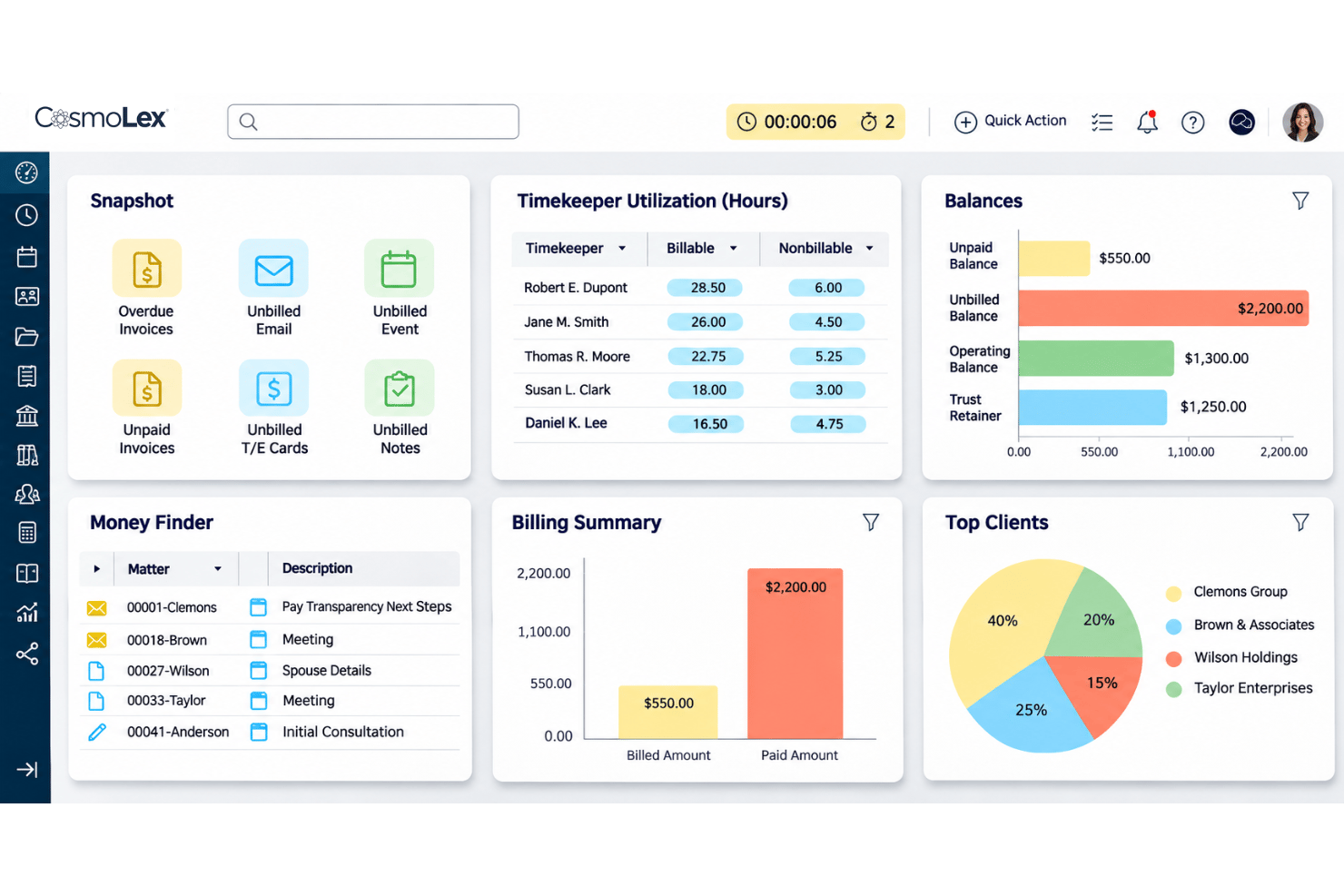
CosmoLex is cloud-based legal project management software for law firms, combining matter management, time tracking, billing, and built-in trust and firm accounting. If you want those practice and financial workflows in one system, CosmoLex is a stronger fit than Clio, which may require a separate accounting subscription.
CosmoLex Evaluation Summary
- From $49/user/month
- 10-day free trial + free demo available
Why Trust Our Software Recommendations
Our team has been testing and reviewing software since 2012. As project managers ourselves, we know how difficult—and important—it is to choose the right software.
For this guide, we evaluated tools using hands-on testing and independent research, scoring tools using our selection criteria. We also draw on insights from industry thought leaders and practicing project management experts.
Our reviews reflect our human editorial judgment, not a sales pitch.
Expert reviewers:
CosmoLex Overview
CosmoLex is a strong choice if you’re selecting legal project management software that combines matters, billing, and trust accounting. I’d favor it over task-focused tools when you want examples like time capture, automated invoicing, and three-way trust reconciliation in one system. Per-user pricing is quote-based and can feel expensive, while integrations are useful but narrower than broad business platforms. The interface is generally approachable, and live onboarding, training, and phone, chat, and email support help smaller firms get started. Choose it if unified legal and financial workflows matter more than low cost or extensive integrations.
pros
-
Built-in trust and firm accounting includes one-click three-way reconciliation.
-
Matter-linked tasks, time entries, and expenses feed into invoicing.
-
Client portal supports matter-specific document uploads, billing, and messaging.
cons
-
Users say per-user pricing feels expensive for small firms.
-
Some users report glitchy updates, slowdowns, and harder invoicing.
-
Users report limited litigation docketing and deadline-management tools.
-

Smartsheet
Visit WebsiteThis rating combines scores from multiple user review sites to reflect overall customer sentiment about the product.4.4 -
Celoxis
Visit WebsiteThis rating combines scores from multiple user review sites to reflect overall customer sentiment about the product.4.5 -
Accelo
Visit WebsiteThis rating combines scores from multiple user review sites to reflect overall customer sentiment about the product.4.4




Our Review Methodology
How We Test & Score Tools
We’ve spent years building, refining, and improving our software testing and scoring system. The rubric is designed to capture the nuances of software selection and what makes a tool effective, focusing on critical aspects of the decision-making process.
Below, you can see exactly how our testing and scoring works across seven criteria. It allows us to provide an unbiased evaluation of the software based on core functionality, standout features, ease of use, onboarding, customer support, integrations, customer reviews, and value for money.
Core Functionality (25% of final scoring)
The starting point of our evaluation is always the core functionality of the tool. Does it have the basic features and functions that a user would expect to see? Are any of those core features locked to higher-tiered pricing plans? At its core, we expect a tool to stand up against the baseline capabilities of its competitors.
Standout Features (25% of final scoring)
Next, we evaluate uncommon standout features that go above and beyond the core functionality typically found in tools of its kind. A high score reflects specialized or unique features that make the product faster, more efficient, or offer additional value to the user.
We also evaluate how easy it is to integrate with other tools typically found in the tech stack to expand the functionality and utility of the software. Tools offering plentiful native integrations, 3rd party connections, and API access to build custom integrations score best.
Ease of Use (10% of final scoring)
We consider how quick and easy it is to execute the tasks defined in the core functionality using the tool. High scoring software is well designed, intuitive to use, offers mobile apps, provides templates, and makes relatively complex tasks seem simple.
Onboarding (10% of final scoring)
We know how important rapid team adoption is for a new platform, so we evaluate how easy it is to learn and use a tool with minimal training. We evaluate how quickly a team member can get set up and start using the tool with no experience. High scoring solutions indicate little or no support is required.
Customer Support (10% of final scoring)
We review how quick and easy it is to get unstuck and find help by phone, live chat, or knowledge base. Tools and companies that provide real-time support score best, while chatbots score worst.
Customer Reviews (10% of final scoring)
Beyond our own testing and evaluation, we consider the net promoter score from current and past customers. We review their likelihood, given the option, to choose the tool again for the core functionality. A high scoring software reflects a high net promoter score from current or past customers.
Value for Money (10% of final scoring)
Lastly, in consideration of all the other criteria, we review the average price of entry level plans against the core features and consider the value of the other evaluation criteria. Software that delivers more, for less, will score higher.
Core Features
Matter Management
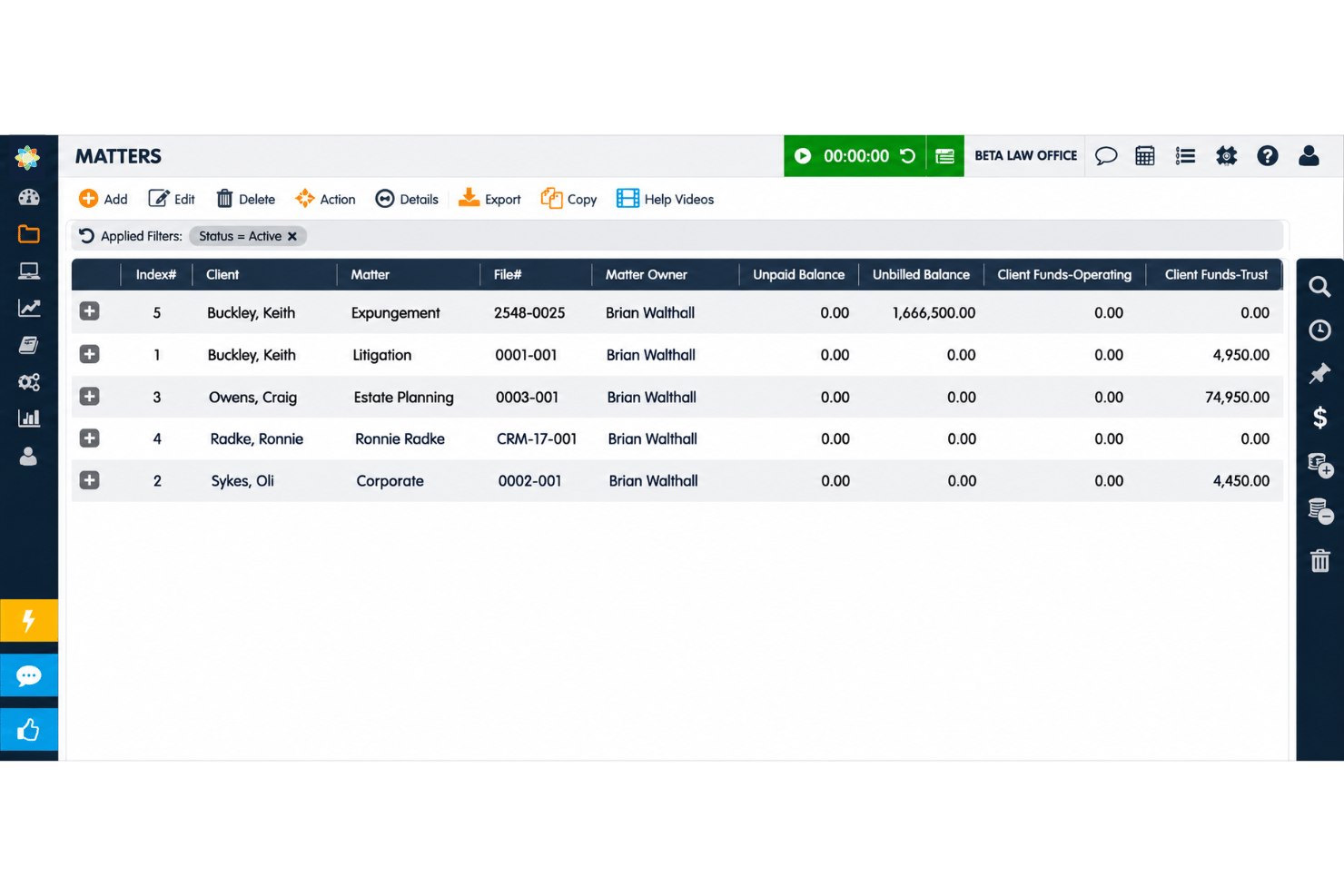
CosmoLex organizes emails, tasks, events, documents, billable items, and transactions around each client matter. That shared record gives your team one place to check case activity and related financial details.
Calendar And Task Management
Create matter-linked calendar entries and tasks, then use custom workflows to load repeatable steps into matters. Timecards attach to tasks and events, helping staff capture work while they manage deadlines and follow-ups.
Time And Expense Tracking
Start and stop timers against specific matters, enter time manually, or record expenses as they occur. Matter-linked entries feed into billing, so you can review unbilled calls, work, and costs before preparing invoices.
Billing And Payments
Generate invoices from matter-linked time and expenses, then accept online payments through the client portal. Batch invoicing and past-due reminders help firms handle billing follow-up across multiple matters.
Trust And Firm Accounting
CosmoLex combines trust and business accounting, with separate trust and operating accounts and automatic posting of billing data to the general ledger. One-click three-way trust reconciliation reports help you compare bank, trust ledger, and client balances.
Client Portal
Clients can upload matter documents, message your firm, and view or pay invoices through a secure portal. Uploads go to the related matter, and portal conversations are logged in its record.
Ease of Use
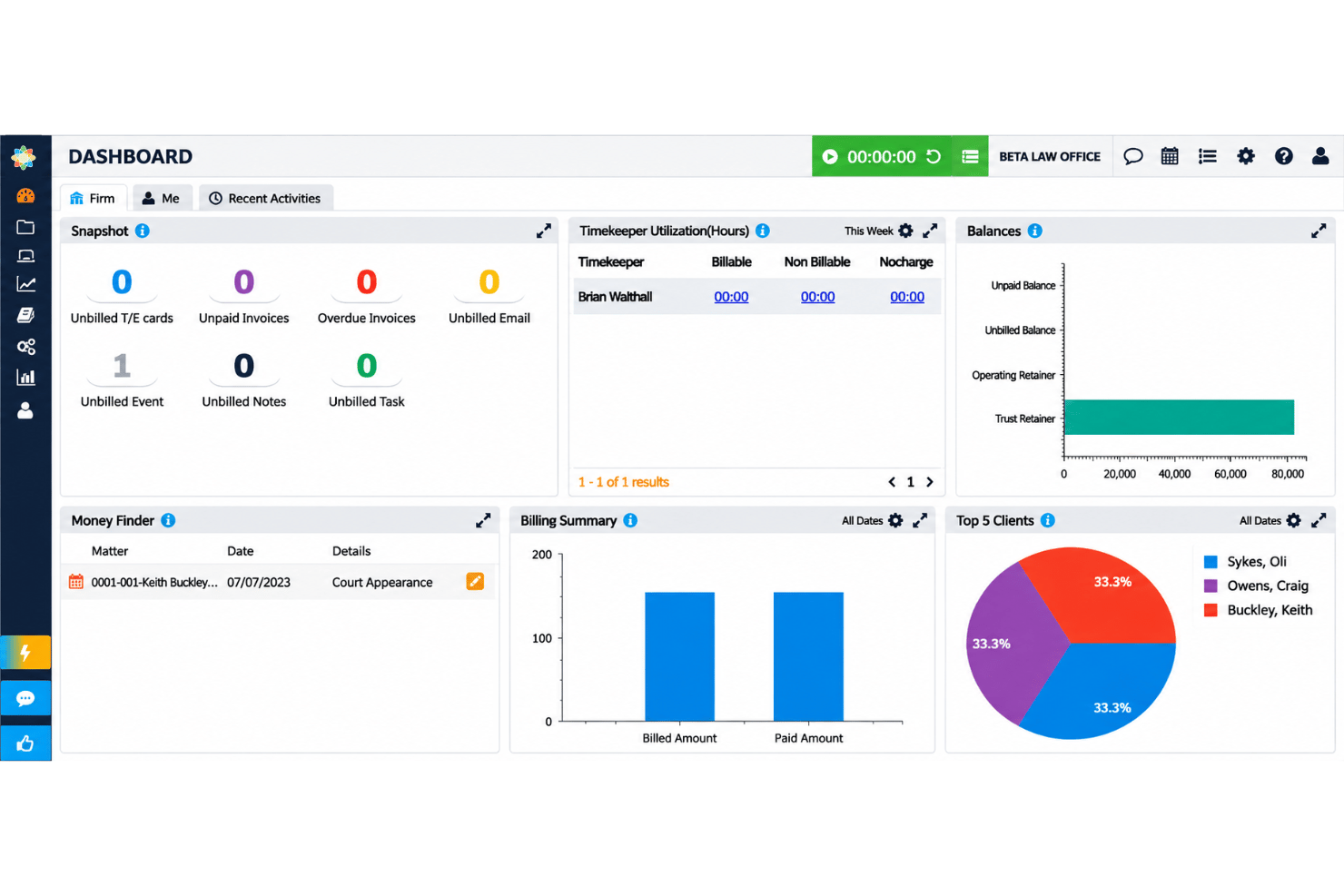
CosmoLex is fairly approachable for a legal platform, especially if you want matters, tasks, time entries, billing, and trust accounting in one place. Matter-linked records keep related work together, and built-in three-way reconciliation avoids switching between separate tools. However, users report occasional glitches, slowdowns, and invoicing that can be harder to manage. I’d call its day-to-day usability good, but not consistently smooth.
Integrations
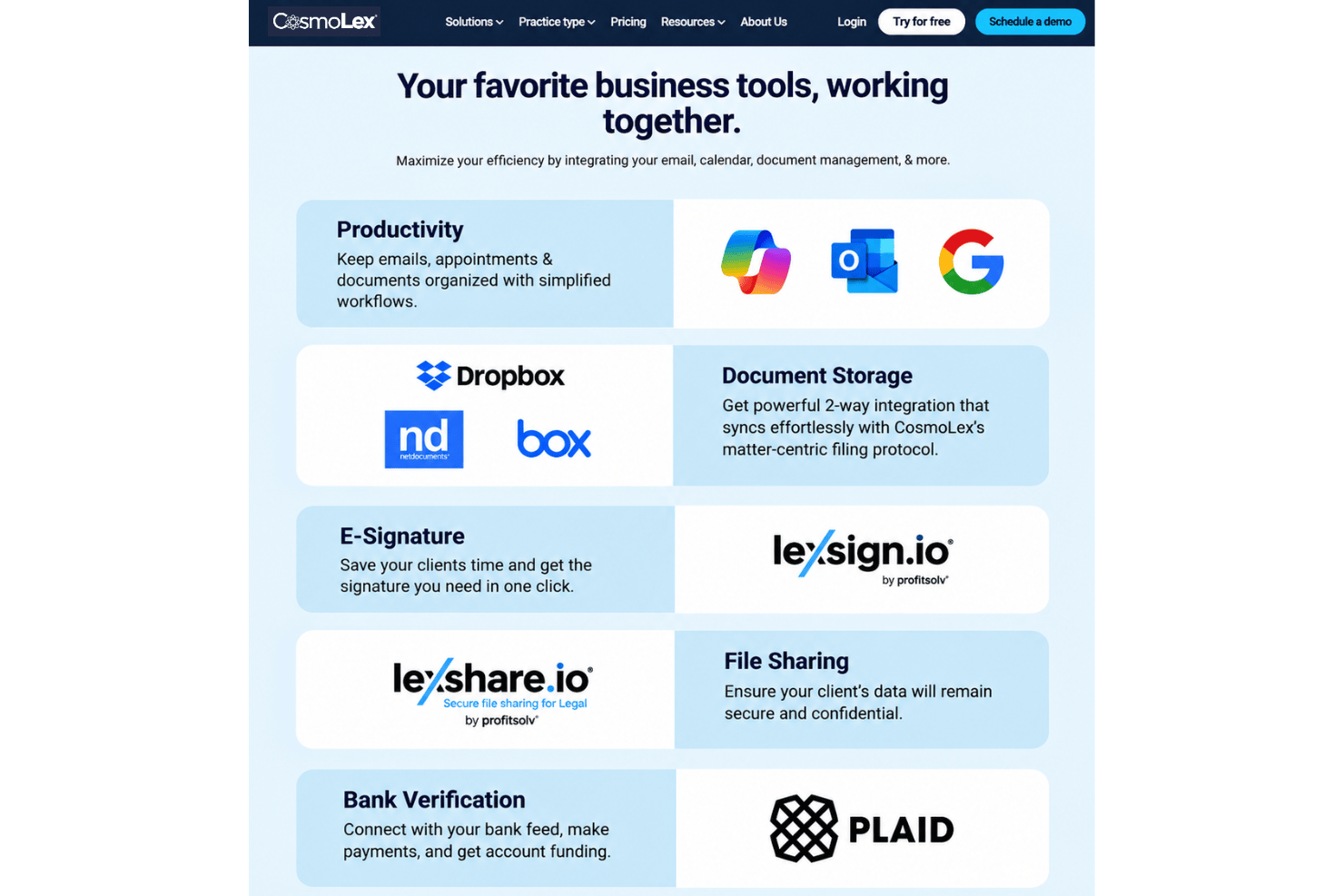
CosmoLex integrates with Gmail, Outlook, Box, Dropbox, Google Drive, OneDrive, NetDocuments, and Google Calendar, among others.
It also offers a plan-dependent open API for custom integrations.
CosmoLex Specs
- 2-Factor Authentication
- API
- Approval Workflows
- Audit Trail
- Calendar Management
- Compliance Tracking
- Contract Management
- Custom Reports
- Customer Management
- Data Export
- Data Import
- Document Management
- External Integrations
- Multi-User
- NDA Management
- Notifications
- Policy Management
- Scheduling
- Workflow Management


