


Recensione di Lucidspark: Pro, Contro, Caratteristiche e Panoramica dei Prezzi



Great ideas surface the same way dreams do; unbidden, half-formed, dredged up from somewhere beneath the meeting's surface before scattering again into the noise. A good mindmapping tool is what lets that latent material coalesce into something tangible.
Lucidspark is a virtual whiteboard and mind mapping software designed to help your team capture, organize, and act on ideas visually. If you’re tired of sticky notes or scattered whiteboards, Lucidspark brings clarity with interactive boards, real-time collaboration, and drag-and-drop mapping tools. For project managers juggling shifting requirements, cross-team feedback, and tight deadlines, Lucidspark stands out with flexible frameworks and robust integration options.
In this review, I’ll break down Lucidspark’s features, use cases, pros and cons, and pricing—so you can see how it stacks up to other mind mapping software on the market.
Lucidspark Evaluation Summary
- From $9/month (billed annually)
- Free plan available
Perché fidarsi dei nostri consigli sui software
Il nostro team testa e recensisce software dal 2012. In quanto project manager noi stessi, sappiamo quanto sia difficile — e importante — scegliere il software giusto.
Per questa guida, abbiamo valutato gli strumenti attraverso test pratici e ricerche indipendenti, assegnando un punteggio agli strumenti in base ai nostri criteri di selezione. Ci basiamo inoltre sulle competenze di leader di pensiero del settore e di professionisti attivi nella gestione dei progetti.
Le nostre recensioni riflettono il nostro giudizio editoriale umano, non un discorso di vendita.
Revisori esperti:
Lucidspark Overview
When judging Lucidspark as a mind mapping software, I think its intuitive interface, strong integrations, and collaborative features make it a top pick, especially for remote teams and tech-centric projects. Pricing feels reasonable for the collaborative value delivered, and onboarding is straightforward. While the deepest data and documentation features live elsewhere in the Lucid Suite, I’d choose Lucidspark if you prioritize easy setup, real-time editing, and a clean drag-and-drop canvas. It’s best for fast-moving teams needing flexible brainstorming that ties directly into project workflows.
pros
-
Real-time collaboration allows multiple users to edit together
-
Sticky notes and freehand drawing support flexible brainstorming
-
Templates help quickly visualize complex ideas and workflows
cons
-
Offline access is limited to select features
-
Polished diagrams and process maps mean hopping over to Lucidchart
-
Mobile app suits reviewing and commenting, not heavy board-building
-

Celoxis
Visit WebsiteThis rating combines scores from multiple user review sites to reflect overall customer sentiment about the product.4.5 -
Smartsheet
Visit WebsiteThis rating combines scores from multiple user review sites to reflect overall customer sentiment about the product.4.5 -
Accelo
Visit WebsiteThis rating combines scores from multiple user review sites to reflect overall customer sentiment about the product.4.4




La nostra metodologia di recensione
Come testiamo e valutiamo gli strumenti
Abbiamo passato anni a costruire, perfezionare e migliorare il nostro sistema di test e valutazione dei software. Il nostro schema è progettato per cogliere tutte le sfumature della scelta di un software e ciò che rende uno strumento efficace, ponendo l’accento sugli aspetti critici del processo decisionale. Qui sotto puoi vedere esattamente come funziona il nostro test e la nostra valutazione su sette criteri. Questo ci consente di offrire una valutazione imparziale del software basata su funzionalità fondamentali, caratteristiche distintive, facilità d’uso, onboarding, assistenza clienti, integrazioni, recensioni dei clienti e rapporto qualità-prezzo.
Funzionalità principali (25% della valutazione finale)
Il punto di partenza della nostra valutazione è sempre la funzionalità principale dello strumento. Ha le funzioni e le caratteristiche di base che un utente si aspetterebbe di trovare? Alcune di queste funzionalità sono limitate ai piani premium? In sostanza, ci aspettiamo che uno strumento sia all’altezza delle capacità di base dei suoi concorrenti.
Caratteristiche distintive (25% della valutazione finale)
Successivamente valutiamo le funzioni distintive, non comuni, che vanno oltre la semplice funzionalità di base normalmente presente in strumenti simili. Un punteggio elevato riflette funzionalità specializzate o uniche che rendono il prodotto più rapido, efficiente o che offrono un valore aggiunto all’utente. Valutiamo anche la facilità d’integrazione con altri strumenti comunemente presenti nel tech stack per ampliare la funzionalità e l’utilità del software. Gli strumenti che offrono molte integrazioni native, connessioni di terze parti e accesso API per creare integrazioni personalizzate ottengono il punteggio più alto.
Facilità d’uso (10% della valutazione finale)
Consideriamo quanto sia semplice e rapido eseguire le attività definite dalla funzionalità principale tramite lo strumento. Gli strumenti con un punteggio elevato sono ben progettati, intuitivi, offrono app mobili, propongono modelli e rendono semplici anche le attività più complesse.
Onboarding (10% della valutazione finale)
Sappiamo quanto sia importante che il team adotti rapidamente una nuova piattaforma, quindi valutiamo quanto sia facile imparare e utilizzare uno strumento con poca formazione. Valutiamo quanto velocemente un membro del team possa iniziare a utilizzare lo strumento senza esperienza. Le soluzioni con un punteggio alto indicano che è richiesto poco o nessun supporto.
Supporto clienti (10% della valutazione finale)
Recensiamo la rapidità e semplicità nel trovare aiuto tramite telefono, chat live o knowledge base. Gli strumenti e le aziende che forniscono supporto in tempo reale ottengono i punteggi migliori, mentre i chatbot i più bassi.
Recensioni dei clienti (10% della valutazione finale)
Oltre ai nostri test e valutazioni, consideriamo il net promoter score dei clienti attuali e passati. Valutiamo la loro probabilità, qualora fosse possibile, di scegliere nuovamente lo strumento per le sue funzionalità di base. Un software con un punteggio elevato riflette un alto net promoter score da clienti attuali o passati.
Rapporto qualità-prezzo (10% della valutazione finale)
Infine, prendendo in considerazione tutti gli altri criteri, analizziamo il prezzo medio dei piani base confrontandolo con le funzionalità principali e valutando il valore degli altri criteri. I software che offrono di più, spendendo meno, ottengono punteggi più alti.
Core Features
Real-Time Collaborative Editing
Multiple users can edit a mind map at once, seeing changes live. This removes confusion and keeps everyone aligned during brainstorming sessions.
Freehand Drawing and Diagramming
Sketch freeform shapes, arrows, and annotations directly on the canvas. This lets you capture ideas the way you’d use a physical whiteboard.
Sticky Notes and Commenting
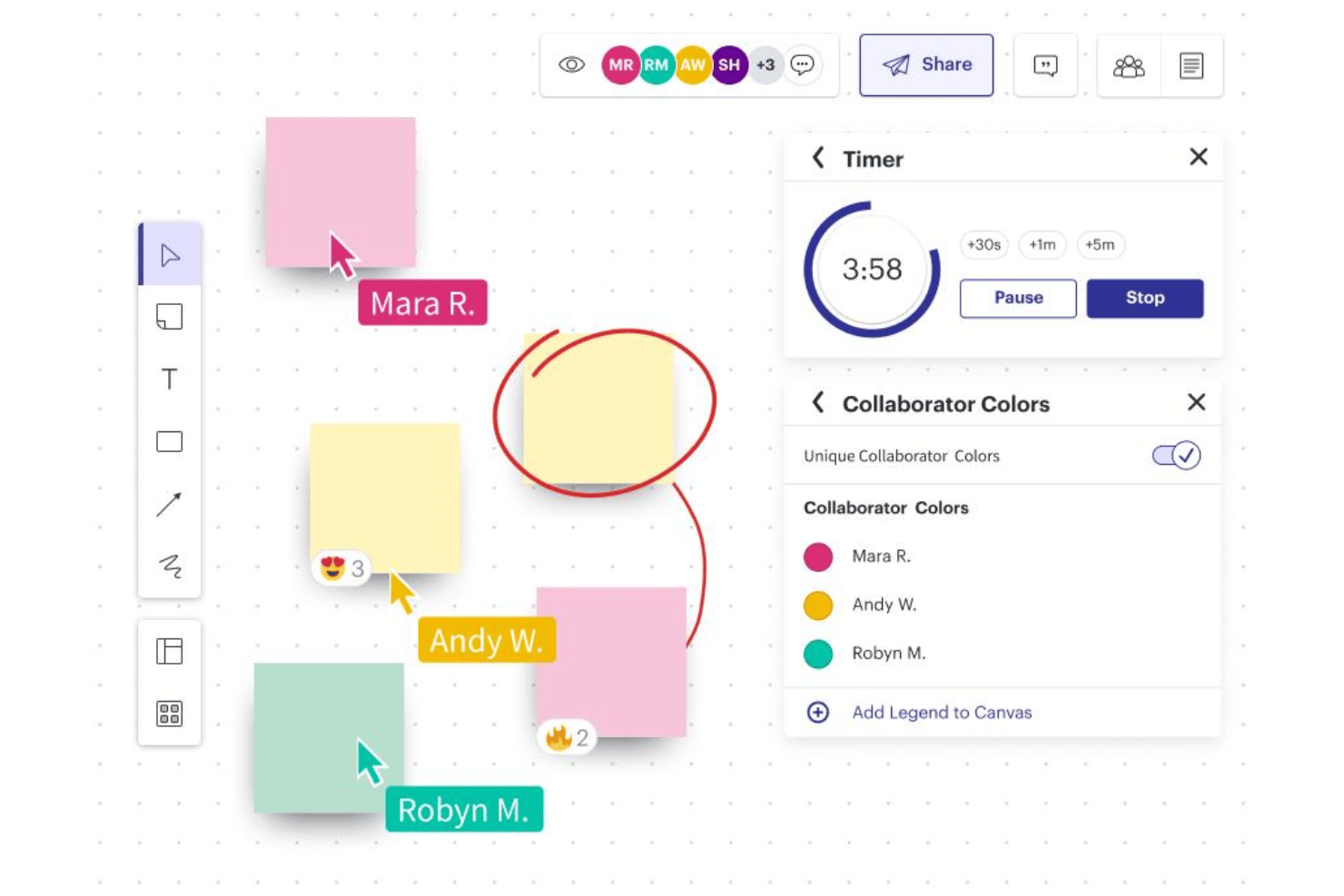
Add color-coded sticky notes and leave comments anywhere on your board. This feature makes it simple to capture and organize feedback from your team.
Templates for Brainstorming and Mapping
Start with pre-built templates for mind maps, sprint planning, or project frameworks. Templates save time and provide structure for your sessions.
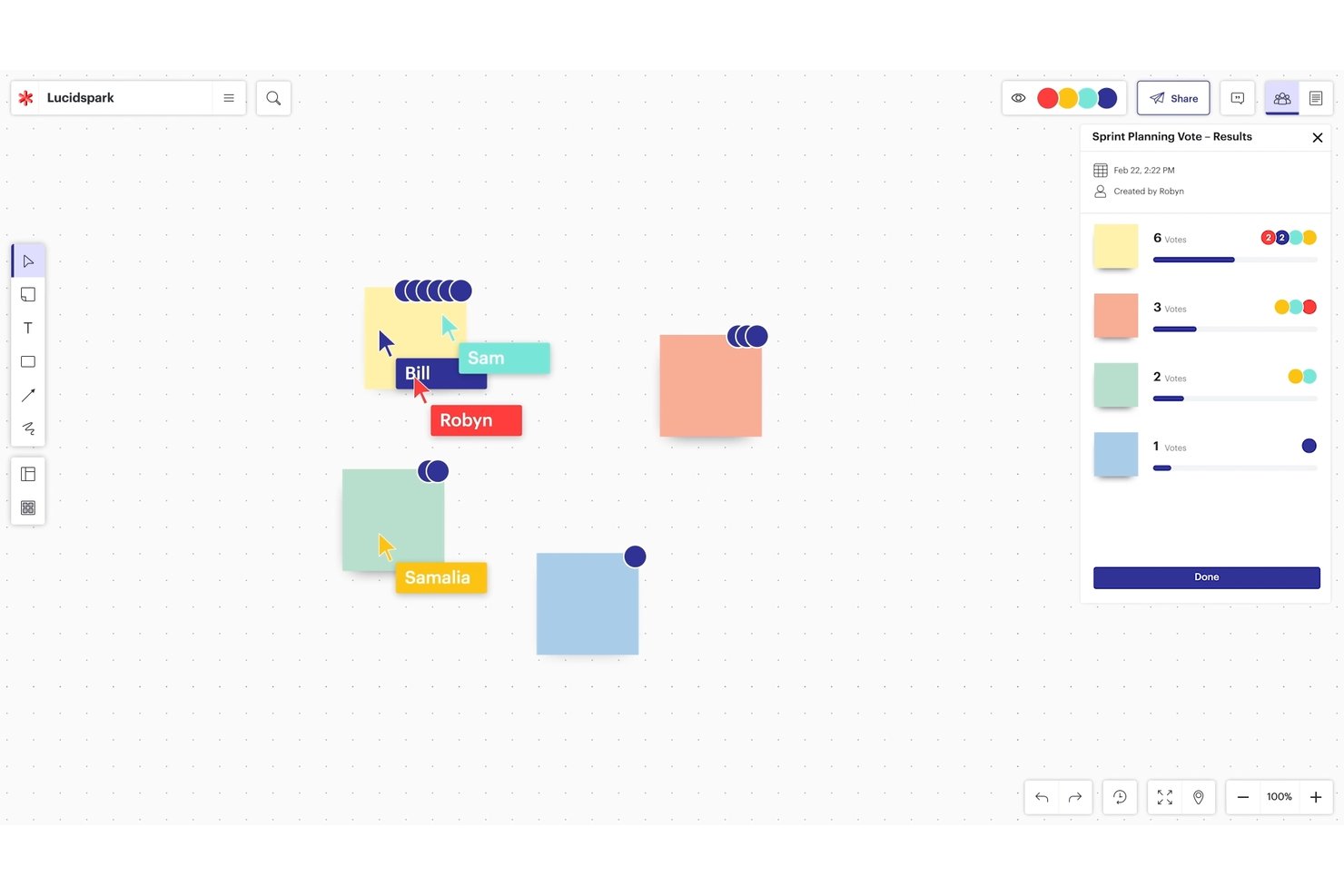
Voting and Reaction Tools
You can upvote ideas or add emoji reactions to content in real time. This helps teams make decisions quickly and visually.
Infinite Canvas
Maps, diagrams, and notes can expand without space constraints. Teams can keep adding items as discussions evolve, without running out of room.
Ease of Use
Lucidspark feels user-friendly from the start, thanks to its drag-and-drop canvas, clear menus, and pre-made templates. I think users appreciate how easy it is to invite collaborators, add sticky notes, and organize complex maps without clutter. Workshop tools like voting, facilitator controls, and breakout boards make remote sessions flow naturally, reducing friction even for first-time users.
Integrations
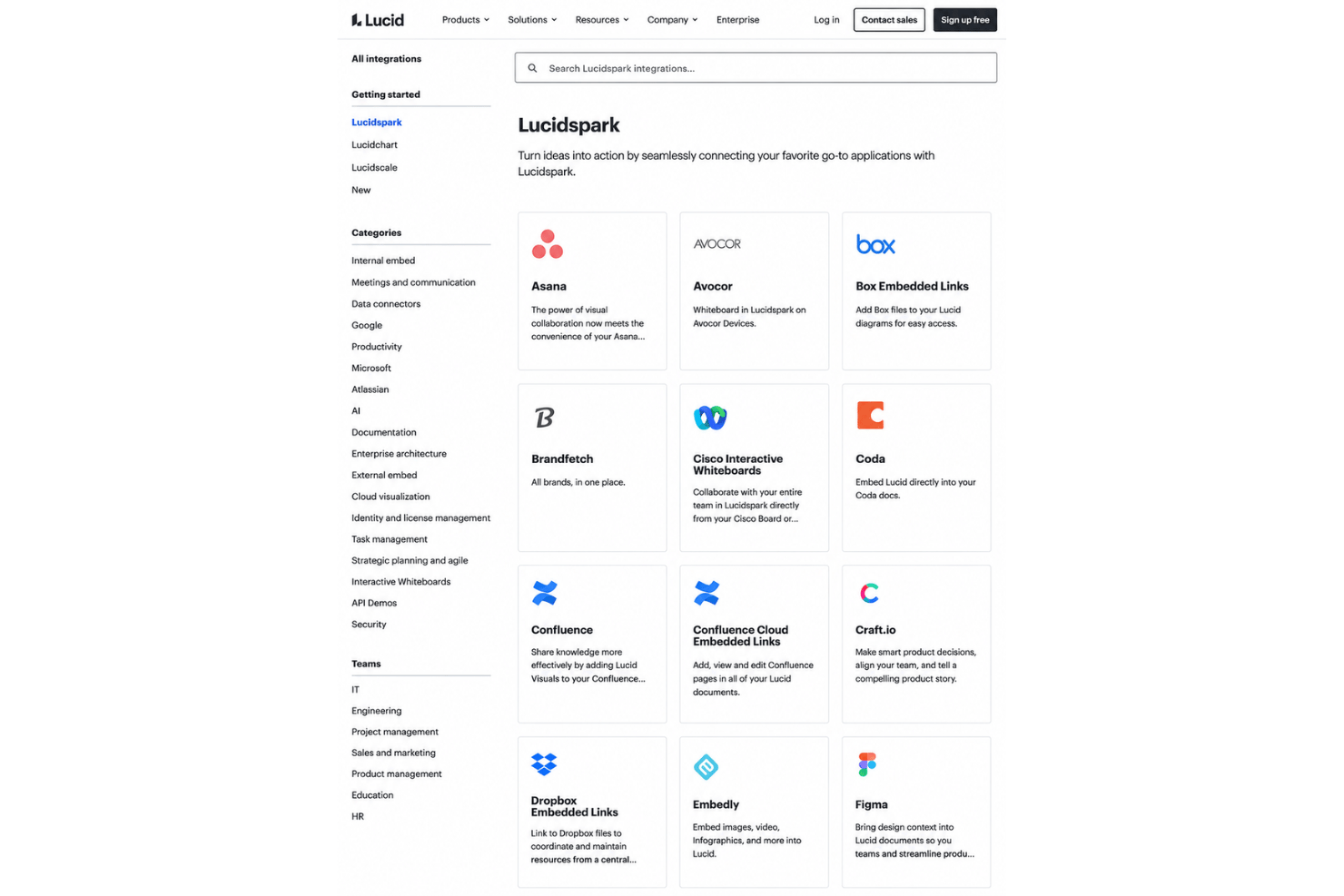
Lucidspark integrates with Lucidchart, Slack, Microsoft Teams, Google Drive, Google Calendar, Google Meet, Zoom, Webex, Jira, Confluence, and Asana, among the 100+ options in Lucid’s integrations marketplace.
It also offers an API, and the Lucid MCP server connects boards to AI tools like ChatGPT, Claude, and Microsoft Copilot.
Lucidspark Specs
- API
- Campaign Management
- Collaboration Support
- Custom Reports
- Data Export
- Data Import
- Document Management
- Email Integration
- External Integrations
- Feedback Management
- Multi-User
- Notifications
- Project Management
- Review Moderation
- Workflow Management


