10 meilleurs logiciels de gestion de projets marketing pour 2026

10 Sélection des meilleurs logiciels de gestion de projets marketing


Les meilleurs logiciels de gestion de projets marketing vous aident à livrer vos campagnes et vos projets dans les délais, en respectant le budget et le périmètre prévus. Sans cet outil, vous serez confronté à des problèmes de communication avec vos clients, à des échéances manquées et à un manque de clarté concernant la responsabilité des tâches, autant de facteurs pouvant entraîner l'échec du projet.
J'ai utilisé mes 15 années d'expérience en marketing et en gestion de projets pour évaluer plus de 25 outils de gestion de projets marketing. Découvrez ci-dessous mon analyse de chaque outil, de ses fonctionnalités clés et de ses cas d'utilisation. Je vous aiderai à trouver l'outil adapté pour améliorer la visibilité, la responsabilisation et la collaboration sur vos projets marketing, ainsi que pour suivre la charge de travail de l'équipe, le temps et le budget utilisés, et le retour sur investissement du projet.
Pourquoi faire confiance à nos recommandations de logiciels
Notre équipe teste et évalue des logiciels depuis 2012. En tant que chefs de projet nous-mêmes, nous savons à quel point il est difficile — et important — de choisir le bon logiciel.
Pour ce guide, nous avons évalué les outils grâce à des tests pratiques et une recherche indépendante, en notant les outils selon nos critères de sélection. Nous nous appuyons également sur les enseignements de leaders d’opinion du secteur et de professionnels de la gestion de projet en activité.
Nos avis reflètent notre jugement éditorial humain, et non un argumentaire de vente.
Réviseurs experts:
Tableau comparatif des logiciels de gestion de projets marketing
Ce tableau comparatif récapitule les détails tarifaires de ma sélection des meilleurs logiciels de gestion de projets marketing :
| Tool | Best For | Trial Info | Price | ||
|---|---|---|---|---|---|
|
1
|
Meilleure solution de bout en bout |
Essai gratuit de 14 jours |
À partir de 8 $/utilisateur/mois | Website | |
|
2
|
Idéal pour les agences et les services professionnels |
Essai gratuit de 14 jours |
À partir de 12,50 $/utilisateur/mois | Website | |
|
3
|
Idéal pour le suivi des performances financières |
Essai gratuit de 14 jours + démo gratuite disponible |
À partir de $19.90/utilisateur/mois (facturation annuelle) | Website | |
|
4
|
Idéal pour les organisations en croissance |
Essai gratuit de 14 jours |
À partir de $9.80/utilisateur/mois | Website | |
|
5
|
Idéal pour les flux de travail marketing propulsés par l’IA |
Démo gratuite |
À partir de 20$/utilisateur/mois | Website | |
|
6
|
Idéal pour la gestion complète du cycle de vie des services |
Démo gratuite disponible |
Tarification sur demande | Website | |
|
7
|
Idéal pour les objectifs et jalons de campagne |
Essai gratuit de 15 jours + plan gratuit + démo gratuite disponible |
À partir de 4 $/utilisateur/mois (facturé annuellement) | Website | |
|
8
|
Idéal pour les solopreneurs et le marketing des petites entreprises |
Essai gratuit de 14 jours disponible |
À partir de 29 $/mois | Website | |
|
9
|
Idéal pour les automatisations sans code |
Essai gratuit de 30 jours |
À partir de 35 $/utilisateur/mois (facturé annuellement) | Website | |
|
10
|
Idéal pour la collaboration visuelle |
Plan gratuit disponible |
À partir de $8/utilisateur/mois | Website |


Avis sur les meilleurs logiciels de gestion de projets marketing
Voici mes avis sur les meilleurs logiciels de gestion de projets pour agences marketing que j’ai utilisés.
Meilleure solution de bout en bout
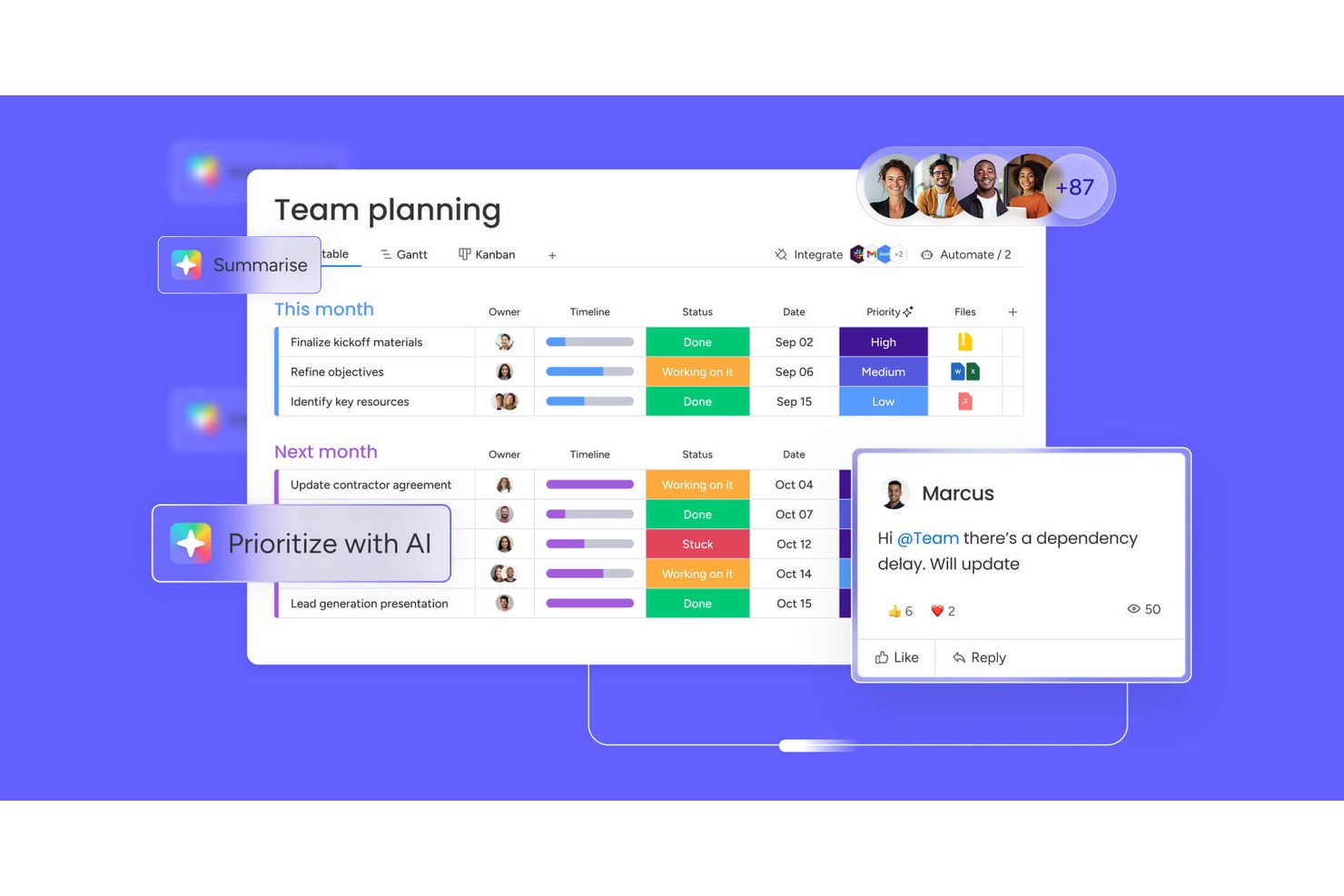
monday AI Workspace est une plateforme de gestion du travail configurable qui combine la planification de campagnes, des workflows alimentés par l’IA, la gestion des ressources et le reporting inter-équipes sur les projets et portefeuilles marketing.
À qui s’adresse monday AI Workspace ?
Cet outil convient parfaitement aux équipes marketing du mid-market aux grandes entreprises, ainsi qu’aux agences internes gérant plusieurs campagnes simultanées avec de nombreux intervenants transversaux.
Pourquoi j’ai choisi monday AI Workspace
monday AI Workspace figure dans ma sélection car c’est l’une des rares plateformes où je peux gérer une campagne du brief initial jusqu’au lancement sans changer d’outil. J’apprécie particulièrement le générateur de workflows IA, qui me permet d’enchaîner des agents et des automatisations pour que des tâches telles que la collecte des briefs et les mises à jour aux parties prenantes se réalisent sans intervention manuelle. Le bloc d’approbation humaine rend ceci concret : je peux intégrer des étapes d’approbation directement au workflow, qui passe automatiquement à l’étape suivante une fois la validation obtenue.
Fonctionnalités clés de monday AI Workspace
- Multiples vues de planification : Basculez aisément entre les modes Gantt, Kanban, calendrier, chronologie et tableau pour une planification avancée des campagnes.
- Formulaires de collecte personnalisables : Capturez, orientez et triez automatiquement les briefs créatifs et demandes marketing au sein de votre espace de travail.
- Planification de la charge et des capacités : Visualisez et attribuez les ressources de l’équipe selon la disponibilité et le rôle, sur plusieurs projets en simultané.
- Intégrations natives avec la stack marketing : Connectez-vous directement avec des outils comme Adobe Creative Cloud, HubSpot, Salesforce et Google Ads afin de centraliser actifs et activités de vos campagnes.
Intégrations de monday AI Workspace
monday AI Workspace propose des centaines d’intégrations natives, dont Slack, Google Workspace, Microsoft 365, Salesforce, Jira, GitHub, Zoom, Dropbox, HubSpot et Zendesk. Il prend également en charge Zapier et dispose d’une API pour les intégrations personnalisées.
Pros and Cons
Pros:
- La rédaction assistée par IA accélère le lancement des campagnes
- Les formulaires de demande automatisent l’orientation des briefs créatifs
- La vue portefeuille multi-campagnes améliore la visibilité des projets multiples
Cons:
- Les outils de validation natifs sont moins performants que les alternatives dédiées
- La complexité de configuration des automatisations augmente avec la taille des campagnes
New Product Updates from monday AI Workspace
monday AI Workspace Adds Human Approval Routing
monday AI Workspace adds a human-in-the-loop approval block to AI Workflows, sending approval requests and routing workflow paths based on responses. For more information, visit monday AI Workspace's official site.

Idéal pour les agences et les services professionnels
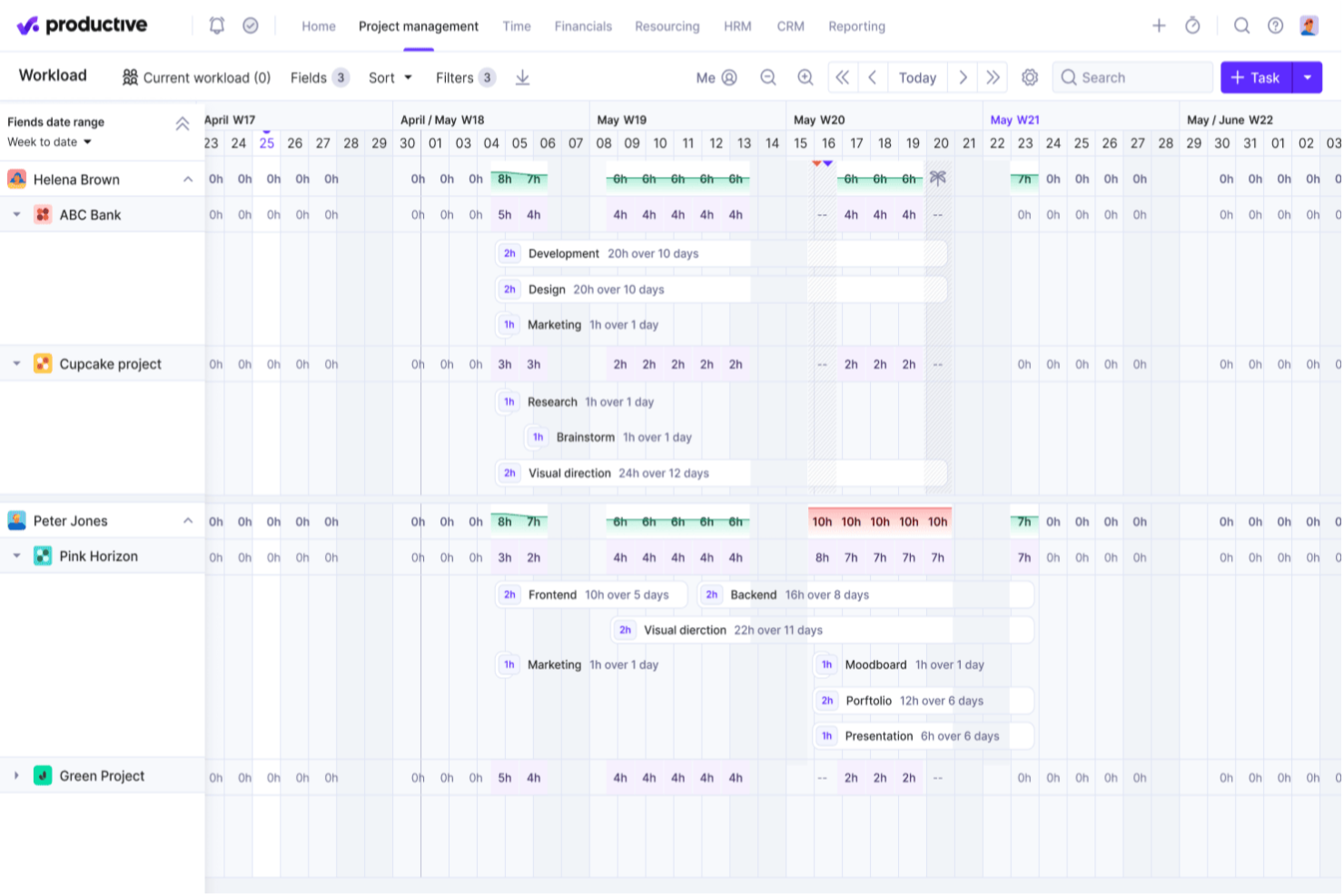
Productive est un logiciel de gestion d'agence complet qui vous offre les outils et les données nécessaires pour que votre agence ou société de services professionnels fonctionne parfaitement.
Danyon Togia, fondateur de l'agence SEO Expert SEO, affirme que Productive a été un excellent choix pour son équipe. 'Utiliser Productive, c'était comme enfin avoir ma facture d'internet, d'électricité et de gaz avec un seul fournisseur,' dit-il. Cela a vraiment fait la différence : 'Avoir tout réuni dans un seul système signifiait moins de jonglage, plus de concentration et un flux de travail plus fluide sur chaque projet pour moi et mon équipe,' ajoute-t-il.
Pourquoi j'ai choisi Productive
Productive offre une gestion des clients et prospects dans le pipeline commercial, ce qui permet également de gérer le flux des affaires et d'organiser les ventes. Les fonctions de planification des ressources, de suivi du temps et de collaboration sur les tâches vous aident à garantir que le travail est accompli dans les délais, à facturer les clients avec précision et à assurer la cohésion de l'équipe. Vous bénéficiez également de rapports utiles sur la rentabilité et les coûts pour faciliter la gestion financière, ainsi que de rapports en temps réel sur les marges, l'utilisation et l'historique individuel des employés ou des sous-traitants dans l'entreprise ainsi que des rapports de salaires.
Fonctionnalités clés de Productive
Productive propose également plusieurs fonctionnalités qui peuvent vous aider, vous et votre équipe, à améliorer vos processus de gestion de projets marketing.
- Gestion des tâches : Vous pouvez fluidifier l'attribution et le suivi des tâches afin que votre équipe reste alignée sur les objectifs du projet.
- Portail client : Cet espace dédié permet aux clients de consulter l'avancement des projets et de collaborer, ce qui améliore la transparence et la communication.
- Tableaux de bord personnalisés : Cette fonctionnalité vous permet de créer des vues personnalisées des données projets et de vous concentrer sur les indicateurs les plus importants.
- Analyses pilotées par l'IA : Les fonctionnalités d'intelligence artificielle offrent des analyses prédictives et des informations utiles pour aider à une prise de décision proactive.
Intégrations de Productive
Les intégrations incluent Xero, QuickBooks, HubSpot, Jira, Slack, Zapier, Google Calendar et Sage.
Pros and Cons
Pros:
- Aligne la livraison et le suivi financier
- Permet de simuler des ajustements de staffing ou de budget
- Signale les projets en dépassement de budget
Cons:
- La profondeur des rapports nécessite une configuration
- Courbe d'apprentissage abrupte pour exploiter toutes les fonctionnalités
New Product Updates from Productive
Productive Adds Voice Dictation, Slack Connector, Proposals, and Overtime
Productive adds voice dictation, a Slack Connector, proposal controls, and overtime tracking. These updates support faster AI interactions, client proposals, and time management. For more information, visit Productive’s official site.

Scoro
Idéal pour le suivi des performances financières
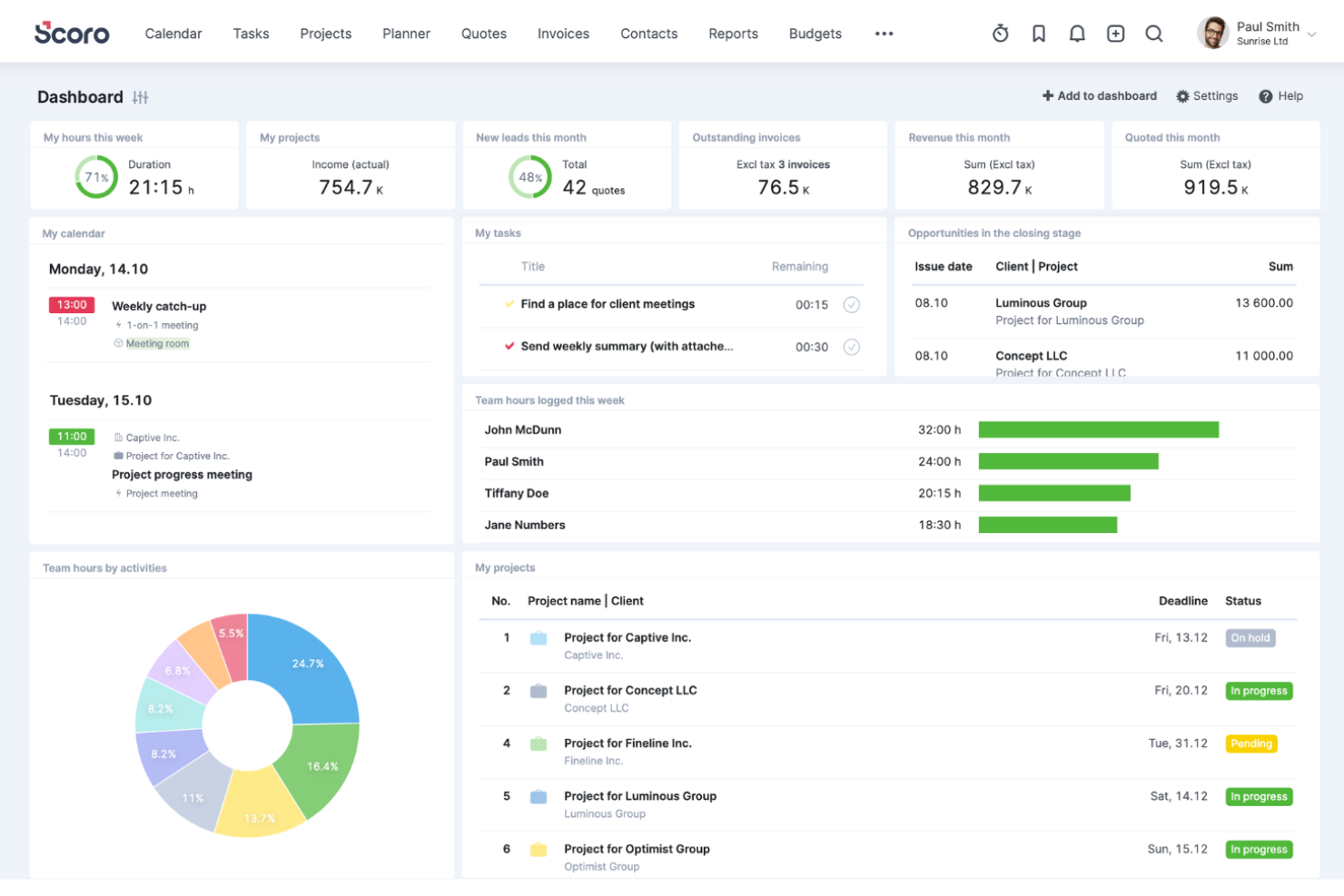
Scoro est un logiciel de gestion du travail complet conçu pour différents services professionnels, comme le marketing. Il dispose d'une suite d'outils pour soutenir la réalisation de projets marketing, de la conception à la facturation.
Pourquoi j'ai choisi Scoro
La plateforme est une solution de gestion de projet tout-en-un qui offre contrôle et visibilité sur chaque aspect de votre projet marketing, comme les devis et la facturation, les pipelines de vente, les comptes clients, la planification des ressources, les échéanciers et l'attribution des tâches. J'ai apprécié que Scoro propose un tableau de bord centralisé et intuitif qui donne une vue d'ensemble de toutes les activités marketing, permettant aux équipes de suivre chaque campagne du début à la mise en œuvre.
De plus, Scoro offre des outils d'analyse approfondie et des capacités de reporting en temps réel. Les responsables marketing peuvent utiliser ces outils pour évaluer les performances des campagnes par rapport aux indicateurs clés et ajuster les stratégies en temps réel.
Fonctionnalités clés de Scoro
Scoro propose une variété d'autres outils qui peuvent encore améliorer les processus de gestion de projets marketing de votre équipe.
- Rapports et analyses : Suivez et analysez la rentabilité au niveau du client, du service, de l'équipe ou du projet avec des insights sur la performance et les finances de l'agence.
- Automatisation et facturation : Automatisez les tâches répétitives et la facturation de vos contrats pour aider votre agence à être payée plus rapidement et à rester rentable.
- Outils de collaboration : Favorisez la communication entre les membres de l'équipe grâce à des fils de discussion et commentaires pour garder tout le monde connecté.
- Gestion du temps et du calendrier : Utilisez des minuteurs intégrés et un calendrier unifié pour gérer le suivi du temps, les réunions et les échéances.
Intégrations de Scoro
Les intégrations incluent Google Calendar, HubSpot, Jira, Slack, Xero, QuickBooks, Zendesk, WooCommerce, Asana, Dropbox, PayPal, Expensify, Stripe, Mailchimp, Sage Intacct, Microsoft Exchange et plus encore. Vous pouvez également connecter d'autres applications via son intégration Zapier.
Pros and Cons
Pros:
- Liaison directe des devis aux plans de projet
- Combine la gestion financière et les opérations de projet
- Prise en charge multi-devises et multi-entités
Cons:
- L'interface peut paraître encombrée en utilisation poussée
- La personnalisation des modèles peut être limitée
New Product Updates from Scoro

Scoro Adds Time Mobile App and ELI Improvements
Scoro adds the Scoro Time mobile app for iOS/Android to track time anywhere and expands ELI with attachments, smarter filtering, and trigger-based actions. For more information, visit Scoro's official site.
Wrike
Idéal pour les organisations en croissance
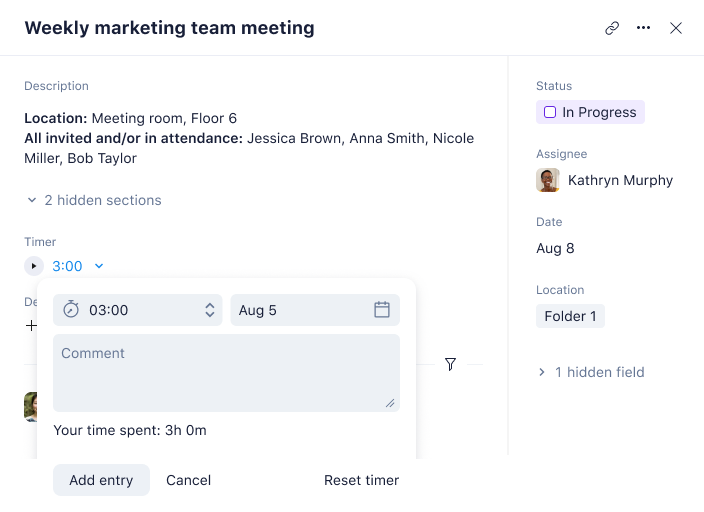
Wrike est une plateforme de gestion de projets marketing primée, conçue pour améliorer les processus de gestion de projets marketing, augmenter la productivité et stimuler le retour sur investissement.
J'ai discuté avec Nicola Leiper, Directrice et Responsable de la gestion de projets chez Espresso Translations, de l'expérience de son équipe avec Wrike. 'Wrike a sauvé mon plus gros contrat client lorsque notre projet pharmaceutique a déraillé', explique-t-elle. 'Nous étions confrontés à des délais de conformité médicale et à des questions réglementaires qui bloquaient tout. J'ai conçu un workflow dans Wrike et j'ai pu clairement voir où le problème allait se propager ; en quelques minutes, toute notre équipe était en meilleure position', dit-elle, faisant allusion à quelques ajustements rapides de ressources et à une résolution efficace des problèmes.
Pourquoi j'ai choisi Wrike
La plateforme est hautement configurable et évolutive, et vous pouvez personnaliser les workflows, tableaux de bord, rapports et formulaires de demande pour maximiser vos efforts. Wrike vous permet de passer des tableaux Kanban aux diagrammes de Gantt interactifs par glisser-déposer, ainsi qu'aux vues charge de travail pour visualiser les priorités.
Elle propose également le suivi du temps et des dépenses, la gestion des tâches et des projets, l'annotation visuelle, des modèles pour les tâches marketing courantes, la création de rapports, ainsi que la gestion et l’allocation des ressources. Wrike est particulièrement idéal pour la collaboration sur la conception et le contenu grâce à son interface très visuelle et à la possibilité de communiquer directement au sein des tâches.
Il est même possible de créer des workflows de demande et d'approbation, et les membres de l'équipe peuvent éditer et gérer les fichiers et documents au même endroit.
Principales fonctionnalités de Wrike
Wrike propose plusieurs autres fonctionnalités précieuses pour la gestion de projets marketing.
- Gestion des ressources : Cette fonctionnalité vous aide à équilibrer les charges de travail et à garantir la réalisation des projets dans les délais, sans surcharger les membres de l'équipe.
- Calendriers marketing : Ils offrent une visibilité globale sur les plannings de production de contenu et les échéances de campagnes afin d'assurer l’alignement entre les équipes et les projets.
- Tableaux de bord : Vous pouvez suivre visuellement la performance de vos campagnes et événements et obtenir des analyses pour prendre des décisions éclairées.
- Relecture collaborative : Vous et votre équipe pouvez revoir et approuver les supports numériques en un même endroit, ce qui permet de faciliter les retours et les modifications.
Intégrations Wrike
Wrike propose plus de 400 intégrations natives prêtes à l’emploi, dont les logiciels de gestion de fichiers les plus populaires de Microsoft, Google et Dropbox, ainsi que des logiciels de vente et marketing comme Salesforce et Marketo, et des applications créatives d’Adobe.
Pros and Cons
Pros:
- Gère des workflows complexes à mesure que les équipes se développent
- Agents IA pour automatiser les tâches routinières
- Outils puissants de relecture et d’évaluation des supports
Cons:
- La richesse fonctionnelle peut dérouter les petites équipes
- Certaines fonctionnalités réservées aux modules complémentaires
New Product Updates from Wrike
Wrike Adds Klaxoon MCP Integration
Wrike’s Klaxoon MCP integration is now generally available, enabling AI agents to navigate between Wrike tasks and attached whiteboards, read task context, and manage whiteboard attachments via API. For more information, visit Wrike's official site.

Idéal pour les flux de travail marketing propulsés par l’IA
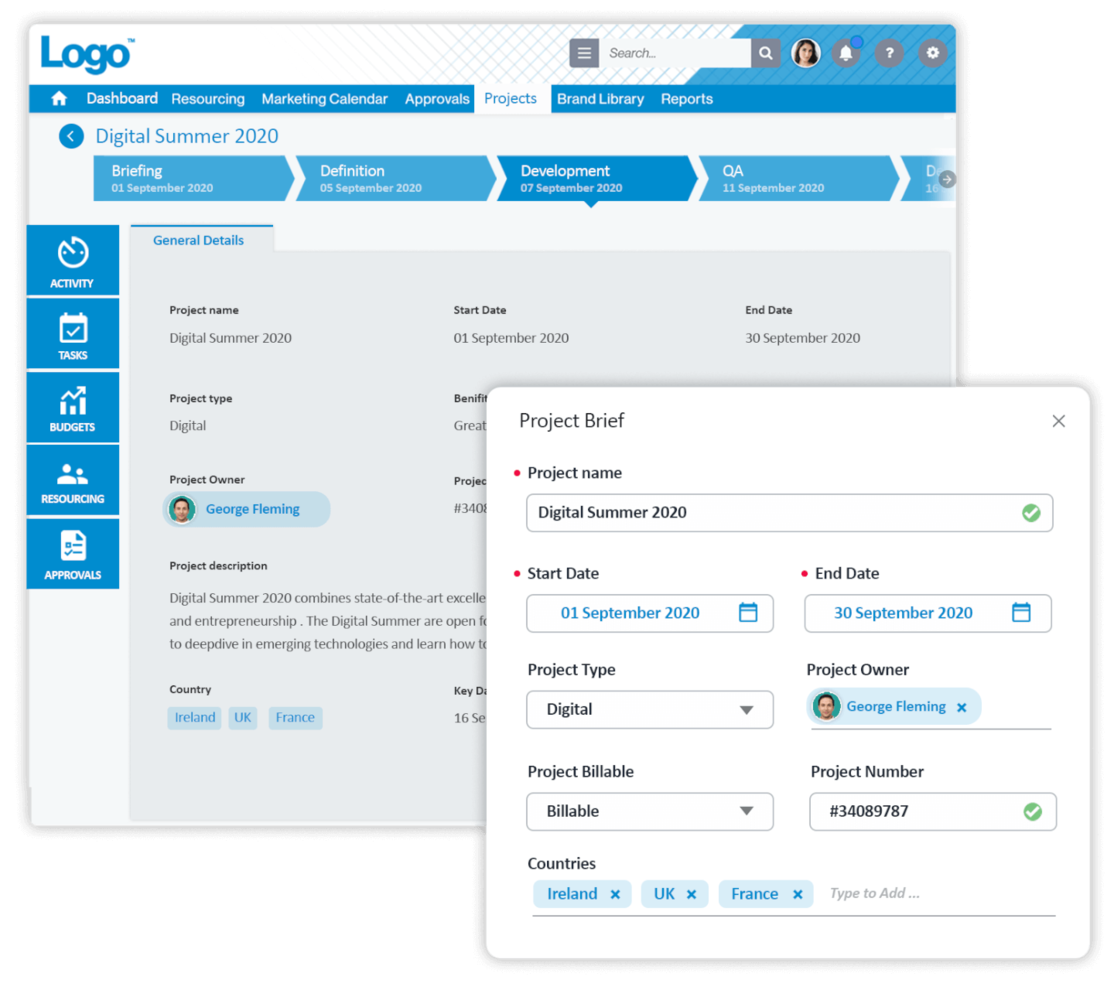
Screendragon est un logiciel de gestion de projets marketing hautement configurable, utilisé et apprécié par des entreprises du Fortune 500 et des agences mondiales comme Kellogg’s, BP, le Comité International Olympique et McCann World Group.
J'ai récemment discuté avec Gal Cohen, dont l'équipe utilise Screendragon pour leurs projets de réparation et d'installation de portes. 'Cela a regroupé toutes les communications, tâches et échéances sur une seule plateforme, ce qui a considérablement accru la capacité de mon équipe,' dit-il. 'La possibilité d’avoir tout sous un même toit a grandement facilité l’organisation et permis de respecter les délais requis,' explique-t-il.
Pourquoi j'ai choisi Screendragon
Ses flux de travail marketing, améliorés par l'IA, utilisent l’automatisation pour éliminer les tâches répétitives, accélérer les validations et simplifier les processus complexes. Cela libère les équipes créatives et marketing qui peuvent se concentrer sur des tâches à plus forte valeur ajoutée, tout en maintenant les projets sur la bonne voie. En plus de ses capacités d’automatisation, Screendragon propose une interface visuelle intuitive et une fonctionnalité robuste de bout en bout. Les équipes bénéficient également d’options de personnalisation flexibles telles que l’UX personnalisée, des formulaires intelligents sur mesure, des tableaux de bord personnalisés et des niveaux d’autorisation avancés—ce qui en fait une solution parfaitement adaptée aux grandes organisations mondiales.
En outre, la gestion des tâches apporte encore plus de flexibilité grâce à des tableaux Kanban visuels, des diagrammes de Gantt interactifs et des affichages en liste parmi les options d’interface.
Fonctionnalités clés de Screendragon
Screendragon propose également de nombreuses autres fonctionnalités pour la gestion de projets marketing, adaptées aux besoins de votre équipe.
- Tableaux de bord personnalisables : Ils vous permettent de personnaliser vos rapports et de garder les indicateurs importants et les statuts des projets en priorité.
- Formulaires dynamiques : Grâce à cette fonctionnalité, vous pouvez créer et modifier des formulaires pour collecter des données spécifiques à chaque projet, et facilement recueillir et analyser les informations selon les demandes de votre équipe.
- Prédiction des ressources par IA : Cette fonctionnalité vous aide à prévoir et à allouer efficacement les ressources, tout en minimisant le risque de sous-utilisation ou de surcharge de vos collaborateurs.
- Bibliothèque de modèles : Vous avez accès à plus de 100 modèles et exemples qui donnent à votre équipe un avantage de départ sur les projets, aident à maintenir la cohérence et font gagner du temps lors de la configuration.
Intégrations de Screendragon
Les intégrations incluent les principaux systèmes ERP tels que SAP et PeopleSoft. Il offre des milliers d’intégrations avec des applications populaires via Zapier comme Jira, Trello, Slack, Box, Google Drive, Office 365 et Microsoft Dynamics. Il dispose également d’une API ouverte qui vous permet de configurer des intégrations personnalisées avec n’importe quel système.
Pros and Cons
Pros:
- Automatise la répartition de la charge de travail au sein de l’équipe
- Renforce la gouvernance via des pistes d’audit
- Relie les révisions créatives aux flux de projet
Cons:
- La configuration et l’implémentation nécessitent une planification approfondie
- Certains modules peuvent être excessifs pour les petites équipes
New Product Updates from Screendragon
Screendragon Unveils New AI Hub
Screendragon introduced AI Hub, a new capability that lets teams build and manage AI agents directly within workflows. The update helps marketing teams automate tasks, maintain governance controls, and scale AI-driven operations more efficiently. For more information, visit Screendragon's official site.

Kantata
Idéal pour la gestion complète du cycle de vie des services
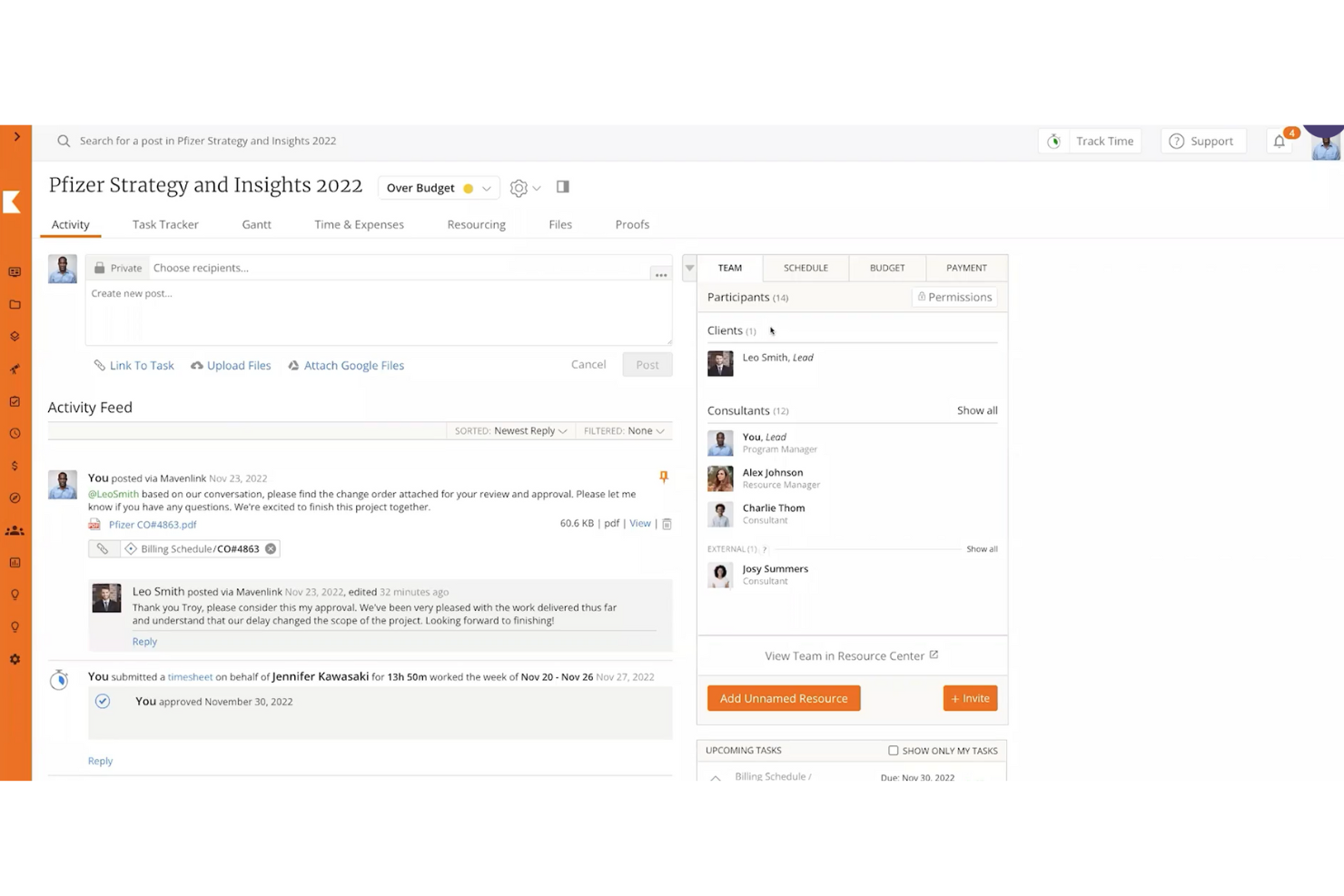
Kantata est une solution de gestion du travail conçue pour répondre aux besoins des agences et des équipes de services professionnels. Elle vous aide à centraliser campagnes, projets clients et ressources afin que votre équipe puisse livrer dans les délais, dans le respect du budget et à grande échelle.
J'ai récemment discuté avec Cal Singh, responsable marketing et partenariats chez Equipment Finance Canada, à propos de l'utilisation de Kantata par son équipe. 'Nous avons spécifiquement utilisé Kantata pour garder tous les volets d'un projet marketing organisés au même endroit', explique-t-il. Cela a eu un impact positif sur les projets et le moral de l'équipe : 'Nous pouvons visualiser ensemble les tâches, les délais et la charge de travail de l'équipe, ce qui rend la gestion des campagnes et des partenariats (et celle de notre niveau de stress) claire et maîtrisable', précise-t-il.
Pourquoi j'ai choisi Kantata
Kantata m'a séduit car il réunit projets, ressources et finances dans un système unique, prend en charge tout le cycle de vie des projets et offre une vue claire sur la rentabilité et la performance.
Ses outils de planification des ressources centrés sur les personnes garantissent aussi que vos designers, rédacteurs et chefs de projet sont affectés efficacement, selon leurs compétences et disponibilités, ce qui réduit l'épuisement professionnel et améliore les résultats. Grâce à une visibilité en temps réel sur l'avancement des campagnes, la consommation du budget et la santé du portefeuille, ainsi qu’à des tableaux de bord d’intelligence d’affaires intégrés, votre équipe peut suivre la productivité et la satisfaction client tout en restant collaborative.
Fonctionnalités clés de Kantata
Kantata propose plusieurs fonctionnalités supplémentaires adaptées à la gestion de projets marketing
- Modèles de projets : Simplifiez la mise en place de vos projets grâce à des modèles personnalisables conçus pour diverses activités marketing, maintenez la cohérence et gagnez du temps.
- Gestion des tâches : Organisez et hiérarchisez facilement les tâches afin de donner une orientation claire à votre équipe et d'améliorer la productivité globale.
- Outils de collaboration : Améliorez la communication entre membres de l'équipe et clients et instaurez un environnement collaboratif propice à la réussite des projets.
- Rapports et analyses : Accédez à des rapports et analyses détaillés pour suivre la performance des projets, ajuster facilement vos stratégies et atteindre vos objectifs.
Intégrations de Kantata
Les intégrations incluent Slack, Sage, Quickbooks, Expensify, BambooHR, NetSuite, Jira, Salesforce, Xero et Google Workspace.
Pros and Cons
Pros:
- Détecte les risques de projet en amont
- Unifie la planification, la livraison et la finance
- Prise en charge de plusieurs devises et entités
Cons:
- La mise en place peut nécessiter une assistance externe
- La complexité de la personnalisation peut augmenter à grande échelle
New Product Updates from Kantata

Kantata Adds Access Group Change History
Kantata adds Access Groups History, letting account administrators track changes to group details, membership, and permissions in Recent History. The update also makes these events available through the Subscribed Events API for broader monitoring. For more information, visit Kantata’s official site.
 .
.
Idéal pour les objectifs et jalons de campagne
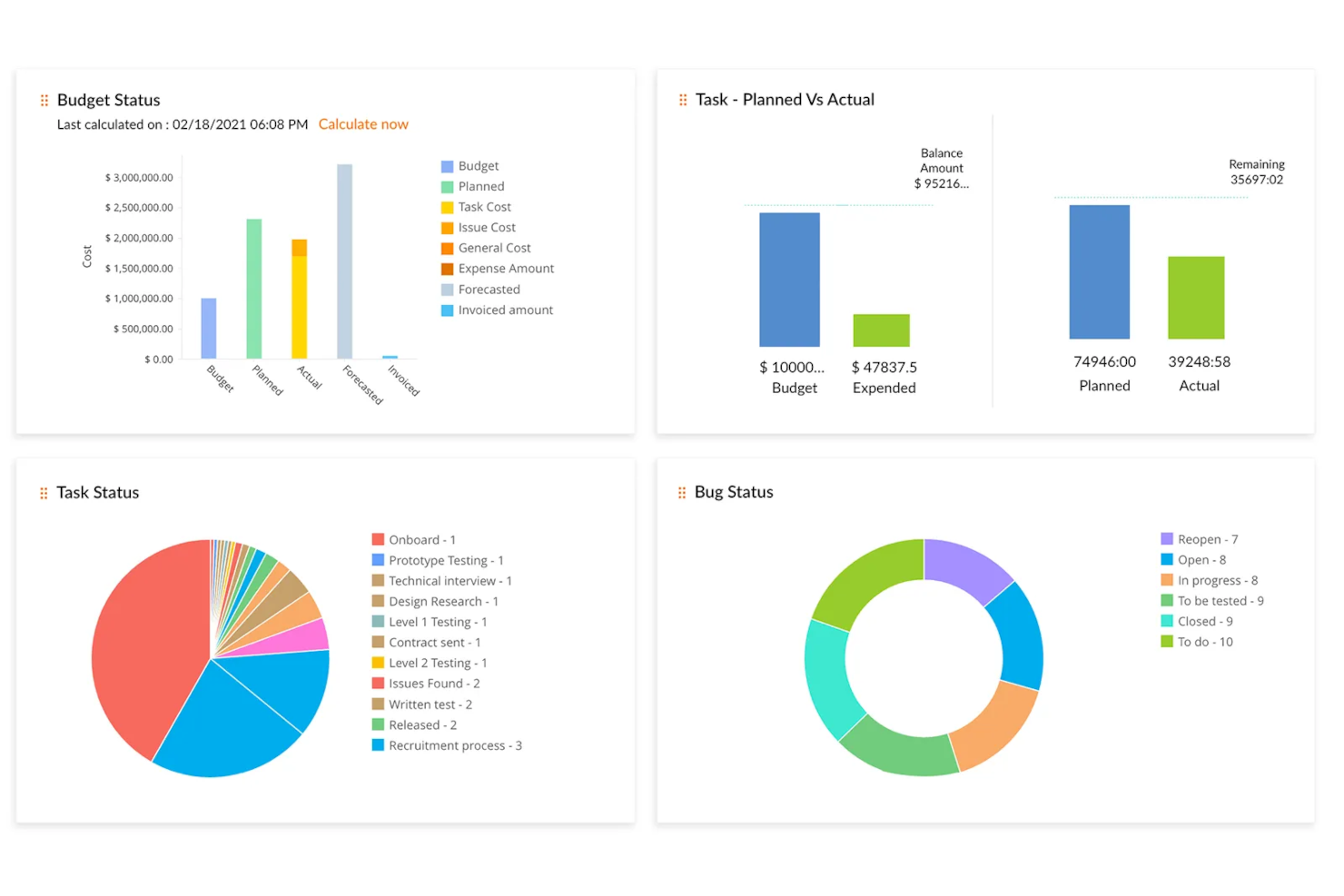
Zoho Projects est une plateforme de gestion de projet basée sur le cloud, particulièrement adaptée aux équipes marketing. Elle propose des fonctionnalités personnalisables telles que des vues individuelles, des champs de projet personnalisés, des modèles de projet et un tableau de bord de reporting.
J'ai discuté avec Martin Cox, Directeur de l'agence Postino, de la façon dont lui et son équipe utilisent cet outil. 'Le logiciel lui-même est fabuleux—il est complet, bien conçu et extrêmement performant en tant que solution de gestion de projet', dit-il. Il mentionne une courbe d'apprentissage abrupte, mais affirme que c'est un excellent outil 'si vous parvenez à passer outre'.
Pourquoi j'ai choisi Zoho Projects
Les équipes marketing peuvent diviser leurs campagnes en projets plus petits, tâches et sous-tâches, qui peuvent être définis et attribués aux membres appropriés de l'équipe. Les jalons et objectifs aident les membres à voir la vue d'ensemble et à suivre la progression ainsi que l'impact de leurs grandes initiatives. Les utilisateurs peuvent créer des workflows visuels grâce à la fonctionnalité Blueprints en glisser-déposer, qui peuvent ensuite être sauvegardés et réutilisés pour de futurs projets.
Les fonctionnalités proposées couvrent la planification, la programmation, la budgétisation et le reporting des projets. Les équipes marketing peuvent ainsi garder leurs projets et campagnes dans les limites du budget, suivre leur avancement, et analyser le temps de chaque membre de l'équipe. La collaboration documentaire permet de facilement organiser les fichiers, travailler dessus, gérer les versions, ajouter des notes et accéder à l'historique des révisions. Le tableau de bord offre des capacités de reporting prédéfinies ou personnalisées, permettant aux utilisateurs de suivre les KPIs les plus importants pour eux.
Principales fonctionnalités de Zoho Projects
Zoho Projects propose plusieurs autres fonctionnalités qui répondent aux besoins spécifiques des équipes marketing.
- Intégrations : Zoho Projects se connecte facilement à d'autres applications Zoho comme le CRM et les outils d'analyse, ce qui améliore votre processus global de gestion de projet.
- Stockage cloud : Les documents sont centralisés pour un accès et une organisation facilités, garantissant une collaboration d'équipe efficace et sans désordre.
- Vues et tableaux de bord personnalisés : Personnalisez votre espace de travail pour une gestion optimale des tâches et obtenez une vue d'ensemble adaptée au flux de travail de votre équipe.
- Tâches récurrentes : Planifiez facilement vos activités marketing récurrentes, automatisez les tâches répétitives et libérez du temps pour des initiatives plus stratégiques.
Intégrations de Zoho Projects
Les intégrations incluent Box, Dropbox, GitHub, Google Workspace, Microsoft Teams, Slack et Zendesk.
Pros and Cons
Pros:
- Visibilité des jalons intégrée dans les plans de projet
- Transitions de tâches automatisées via des règles Blueprints
- Aperçus intégrés sur la charge de travail des ressources
Cons:
- Certaines fonctionnalités avancées requièrent des forfaits supérieurs
- Les fonctionnalités IA peuvent nécessiter une configuration ou un paramétrage
New Product Updates from Zoho Projects
Zoho Projects Adds CodeX Scripts for Custom Modules
Zoho Projects now supports CodeX Scripts for custom modules, enabling conditional logic and rules for creating, updating, and deleting records. For more information, visit Zoho Projects' official site.
 .
.
Enji
Idéal pour les solopreneurs et le marketing des petites entreprises
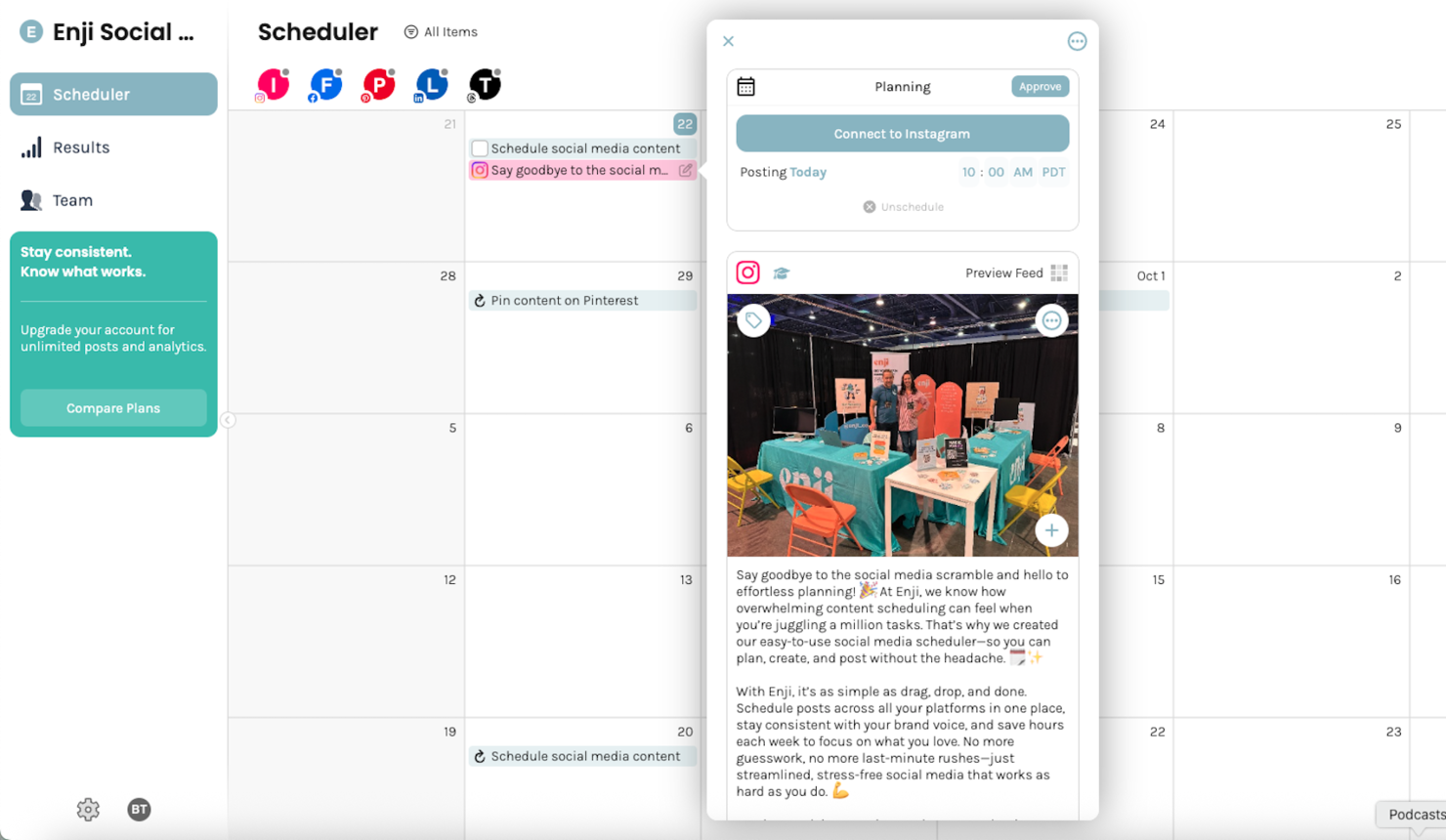
Enji est une plateforme de gestion de projets marketing conçue pour les équipes souhaitant planifier, programmer, organiser et exécuter des campagnes, des contenus et des flux de travail marketing à l’aide de calendriers dédiés, de modèles et de processus guidés.
À qui s’adresse Enji ?
Enji convient parfaitement aux petites équipes marketing et aux freelances qui recherchent une solution structurée pour planifier et gérer des campagnes sans configuration complexe.
Pourquoi j’ai choisi Enji
Enji se démarque par ses calendriers de contenu marketing intégrés et ses workflows guidés de planification de campagnes. Lorsqu’un utilisateur crée une stratégie marketing dans Enji, la plateforme génère automatiquement des tâches et des échéanciers liés aux objectifs de la campagne, réduisant ainsi le besoin de construire les workflows manuellement. Le calendrier regroupe tâches marketing, planification de contenu, gestion de campagnes et programmation sociale dans une seule vue, avec des filtres selon les types d’activités. Les utilisateurs peuvent rédiger du contenu, programmer des publications, gérer des tâches et suivre l’avancement des campagnes directement dans l’interface du calendrier. Enji inclut également des tableaux de bord KPI qui consolident les données de performances marketing pour un reporting et une analyse continus.
Principales fonctionnalités d’Enji
- Rédaction de contenu par IA : Enji utilise l’intelligence artificielle pour générer des idées de contenu et rédiger des publications adaptées à chaque canal, dans le ton de votre marque.
- Programmation et publication sur les réseaux sociaux : Connectez vos comptes sociaux, et Enji publie automatiquement les posts programmés sur des plateformes comme Instagram, Pinterest, LinkedIn et TikTok.
- Tableau de bord de suivi des KPI : Enji regroupe les analyses des réseaux sociaux et de votre site web afin que vous puissiez suivre les performances sans changer d’onglet.
- Gestion de la marque : Stockez la voix de votre marque, vos éléments visuels et les informations clés de votre entreprise au même endroit, afin d’assurer la cohérence des contenus à travers toutes les campagnes.
Intégrations d’Enji
Enji ne liste pas publiquement ses intégrations.
Pros and Cons
Pros:
- Suggestions générées par IA pour idées et posts de contenu
- Paramétrage du profil de marque pour garder la cohérence du message
- Programmation native pour les principaux réseaux sociaux incluse
Cons:
- Le téléversement en masse de publications n'est pas actuellement pris en charge
- Les modèles de campagne ne sont pas spécifiques à un secteur d’activité

Idéal pour les automatisations sans code
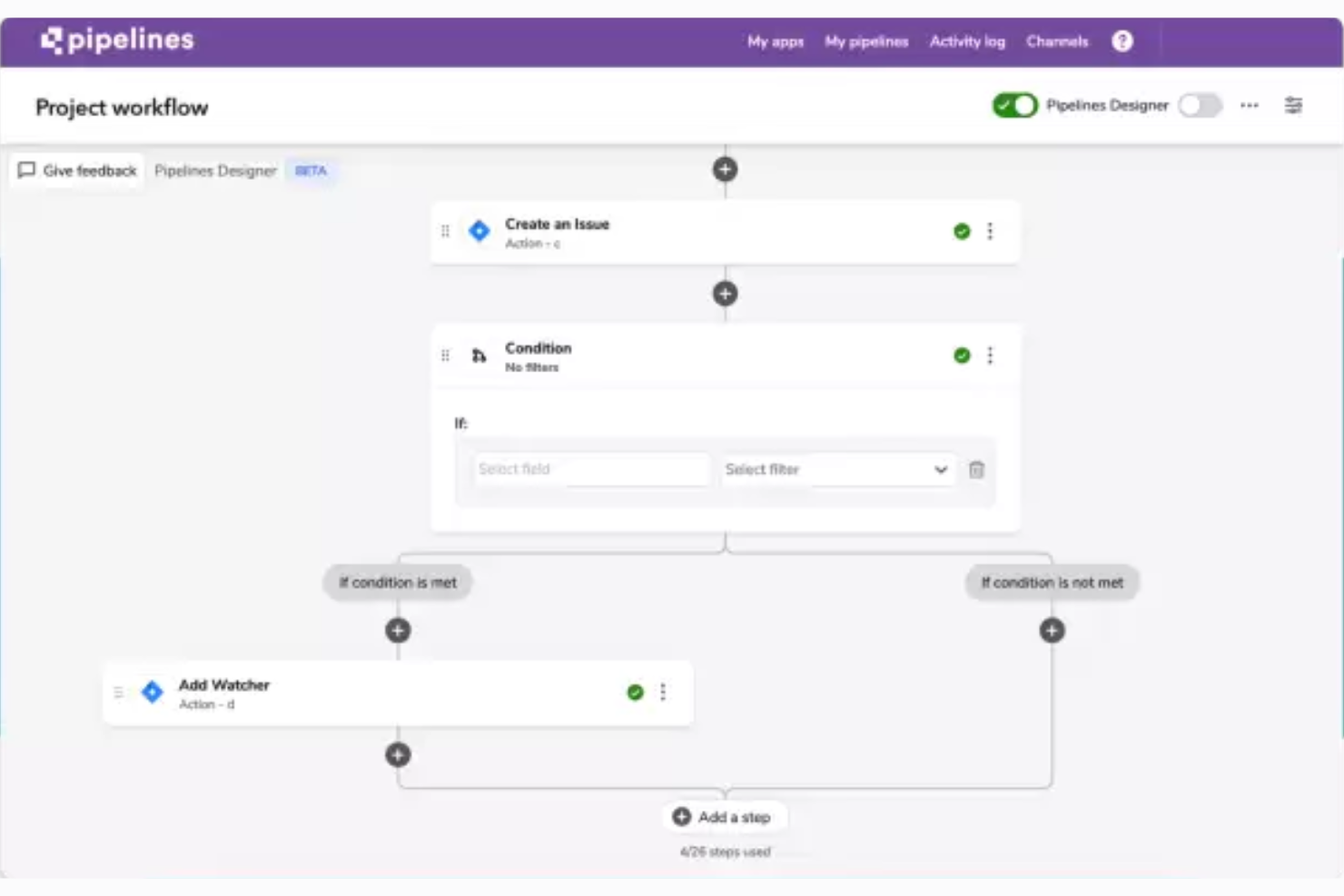
QuickBase est un outil de gestion des flux de travail de projet qui vous aide à créer des applications métier personnalisées pour faciliter divers processus clés en entreprise.
Jensen Savage, qui utilise Quickbase en tant que PDG de l'agence marketing Savage Growth Partners, explique que 'Quickbase est hautement personnalisable, ce qui est particulièrement utile si vous gérez des projets complexes ou si vous devez collaborer entre différents départements ou équipes.'
Pourquoi j'ai choisi Quickbase
Ce logiciel est polyvalent et facile à utiliser, ce qui le rend adapté à pratiquement tous les contextes professionnels. Vous pouvez utiliser le générateur sans code pour concevoir des applications, des intégrations et des automatisations qui soutiendront le travail de votre équipe marketing. Cela vous permet à la fois de réduire les charges de travail manuelles et d'assurer la cohérence de vos processus.
Lorsque vous créez un flux de travail personnalisé ou une automatisation sans code dans le logiciel, vous pouvez fixer des règles claires et de bonnes pratiques pour la gestion de tâches spécifiques. Cela aide votre équipe à instaurer des processus communs auxquels chacun pourra facilement se conformer. Ceci est particulièrement précieux si vous travaillez sur un portefeuille de projets ou dans le cadre d'une agence.
Fonctionnalités clés de Quickbase
Quickbase propose plusieurs autres fonctionnalités visant à répondre aux besoins de vos équipes marketing.
- Gestion des ressources : Cette fonctionnalité permet à votre équipe d'allouer et de suivre efficacement les ressources, afin de maintenir une utilisation optimale et de limiter les goulets d'étranglement lors des campagnes marketing.
- Supervision des tâches : Vous pouvez attribuer, suivre et gérer les tâches de vos projets marketing pour garantir l'alignement et le respect des délais par tous les membres.
- Stockage de documents : Quickbase propose un emplacement centralisé pour stocker et accéder aux documents importants de vos projets, ce qui facilite la collaboration et assure à tous de disposer des informations les plus récentes.
- Suivi du budget : Vous pouvez surveiller de près votre budget marketing grâce au suivi budgétaire fourni par Quickbase, qui vous permet de maîtriser les coûts et d'allouer les fonds là où ils sont les plus nécessaires.
Intégrations Quickbase
Les intégrations comprennent Outlook, Microsoft Teams, Google Workspace, Slack, Box, Dropbox, OneDrive, Trello, Asana, Jira, Zendesk et Docusign.
Pros and Cons
Pros:
- Les tableaux de bord réagissent en temps réel
- Prend en charge la logique conditionnelle et les embranchements dans les pipelines
- Permet de créer des workflows complexes sans code
Cons:
- L'interface peut sembler moins moderne que celle de certains concurrents
- Courbe d'apprentissage élevée pour les workflows avancés
Miro
Idéal pour la collaboration visuelle
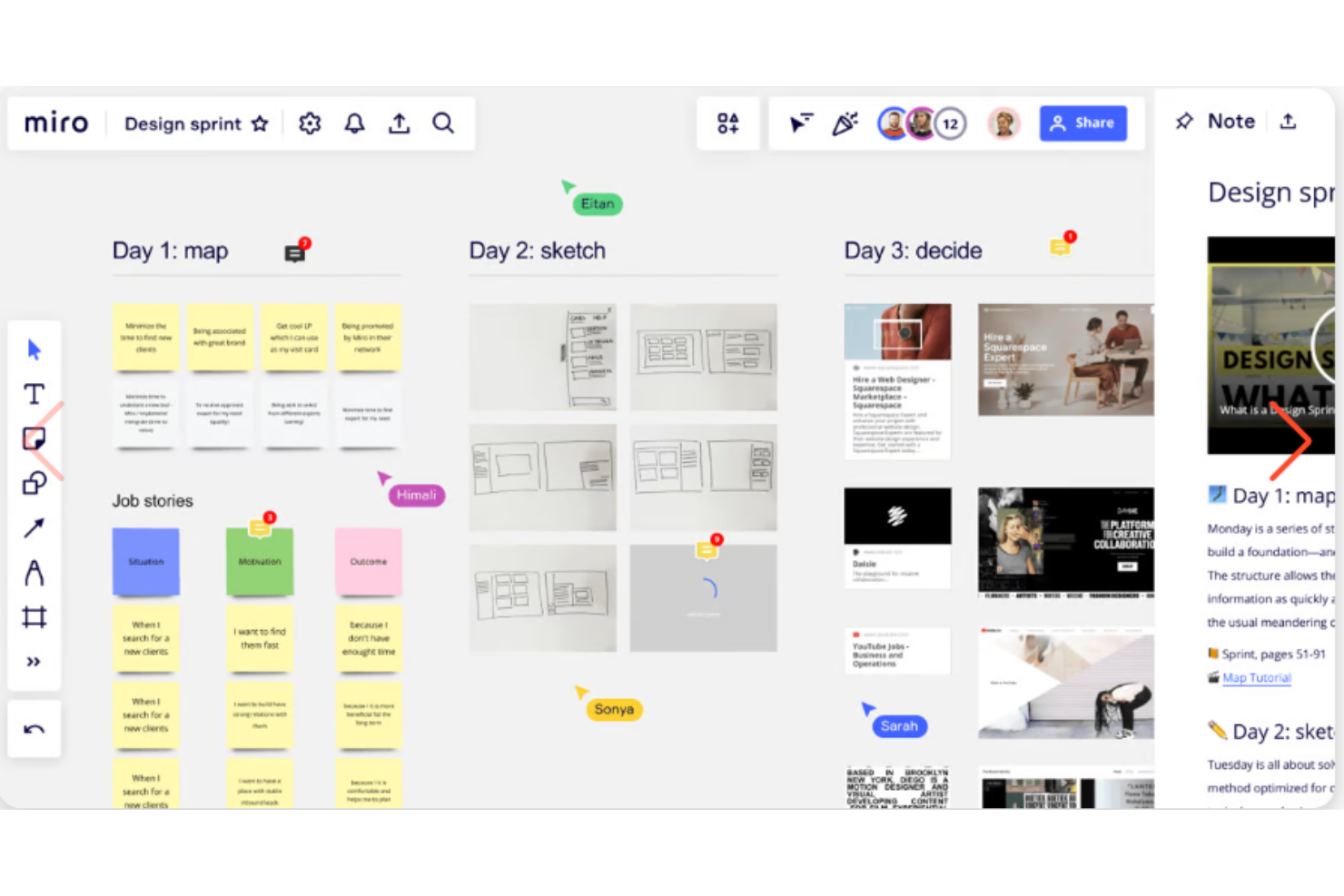
Miro est une plateforme de collaboration visuelle conçue pour soutenir une variété d'activités d'équipe telles que la gestion de projet, le brainstorming et la planification stratégique.
Mircea Dima, fondateur, PDG et CTO d'AlgoCademy, utilise Miro dans le cadre de son processus de planification. 'Ses tableaux graphiques ont aidé à rendre les séances de brainstorming et l'exploration de campagnes plus interactives au sein de mon équipe', dit-il. 'Nous avons pu cartographier l'expérience client et relier les ressources aux activités...', poursuit-il.
Pourquoi j'ai choisi Miro
Miro est un outil de gestion de projet collaboratif qui offre un espace de travail partagé pour la collaboration en temps réel, permettant aux utilisateurs de suivre la progression du projet et les jalons grâce à des fonctionnalités telles que des diagrammes de Gantt, des tableaux Kanban et des frises chronologiques. Ses vastes capacités de tableau blanc numérique permettent également aux équipes de représenter visuellement des stratégies, des campagnes et des plannings de projets en toute simplicité, favorisant la collaboration créative aussi bien pour les équipes à distance qu'en présentiel.
De plus, Miro propose des modèles et des outils pour réaliser des analyses SWOT, des rétrospectives et l'élaboration de stratégies, faisant de la plateforme un espace de travail complet pour la créativité, la collaboration et la productivité au sein de toutes les équipes et organisations. Ses fonctionnalités telles que les post-its, les modèles de personas utilisateurs et les cartes de parcours, conjuguées à une collaboration et une rétroaction en temps réel, font de Miro un atout inestimable pour les équipes marketing qui souhaitent accroître leur productivité et leur créativité dans la gestion de projets.
Fonctionnalités principales de Miro
Miro propose d'autres fonctionnalités qui peuvent contribuer à améliorer vos processus de gestion de projets marketing.
- Outils IA : L'outil Assist de Miro utilise l'IA pour automatiser des tâches comme la génération de diagrammes et la synthèse de recherches, afin que votre équipe puisse se concentrer sur la planification stratégique.
- Bibliothèque de modèles : Plus de 300 modèles personnalisables sont disponibles pour lancer rapidement des projets et les adapter à vos besoins spécifiques.
- Sécurité : Des mesures de sécurité de niveau entreprise, comme le chiffrement SSL et la conformité SOC-2 et RGPD, garantissent la protection de vos données.
- Suivi visuel de projets : Vous pouvez suivre l'avancement de vos projets grâce à des outils visuels qui aident votre équipe à rester coordonnée.
Intégrations Miro
Les intégrations incluent Google Drive, Slack, Jira, GitHub, Zoom, Azure DevOps, Asana, Trello, Dropbox et Microsoft Teams.
Pros and Cons
Pros:
- Permet de visualiser et de planifier côte à côte
- Prend en charge l'intégration et le mélange de types de médias
- Des modèles personnalisés accélèrent les tâches répétitives
Cons:
- Peu adapté en tant qu'outil complet de gestion des tâches
- Charge de travail supplémentaire pour les équipes peu coutumières des outils visuels
New Product Updates from Miro
Miro Adds Japan Data Residency for Enterprise Customers
Miro has introduced Japan data residency for enterprise customers, offering in-region storage for production data, backups, and metadata, plus in-region compute infrastructure. For more information, visit Miro's official site.
Autres logiciels de gestion de projets marketing
Si vous n’avez pas trouvé ce que vous cherchiez ci-dessus, voici quelques autres options fiables.
-
ClickUp
Meilleur plan gratuit robuste
-
Kintone
Idéal pour créer des applications marketing personnalisées
-
Workzone
Idéal pour la gestion des demandes, la relecture et les validations
-
Teamwork.com
Idéal pour la visibilité sur les projets
-
Adobe Workfront
Idéal pour les flux de travail de projet
-
Bonsai Agency Software
Idéal pour les projets d'agence de bout en bout
-
Basecamp
Idéal pour les tableaux de projet
-
Planview AdaptiveWork
Idéal pour le marketing digital
-
Function Point
Idéal pour la convivialité et l'expérience utilisateur
-
Ravetree
Idéal pour des opérations marketing tout-en-un
-
Workamajig Platinum
Idéal pour les équipes de toutes tailles
-
Height
Idéal pour la collaboration client
-
Hive
Idéal pour différentes vues de projet
-
Air
Idéal pour la recherche de ressources optimisée par l’IA
-
GoodDay
Idéal pour diverses méthodologies de gestion de projet
-
RoboHead
Idéal pour les fonctionnalités de collecte de retours


Découvrez notre vidéo sur les 5 meilleurs outils de gestion de projets marketing !


Avis connexes sur les logiciels de gestion de projets
Si vous n'avez toujours pas trouvé ce que vous cherchez ici, découvrez ces autres outils connexes que nous avons testés et évalués :
- Logiciels de gestion de projets
- Logiciels de gestion de projets de production vidéo
- Logiciels de gestion des ressources
- Logiciels d'automatisation des flux de travail
- Logiciels de suivi du temps
- Logiciels de gestion des tâches
- Outils de collaboration
- Logiciels de gestion de projets de relations publiques
- Logiciels de gestion de projets SEO
Comment j'évalue les logiciels de gestion de projet marketing
J'évalue les outils selon deux niveaux : les exigences de base telles que la planification de campagnes et la validation créative, et les facteurs différenciateurs qui distinguent une option d'une autre.
Fonctionnalités de base (Critères indispensables pour cette liste)
Lorsque je sélectionne les outils pour ma liste, j'attribue à chacun une note de 0 (ne propose pas la fonctionnalité) à 5 (excellent dans ce domaine) pour chaque fonctionnalité de base énumérée ci-dessous. Ensuite, je calcule le score total de l’outil en pourcentage. Chaque outil doit atteindre un score total minimum de 65% pour être pris en compte.
- Planification et programmation des campagnes : Je vérifie si vous pouvez planifier une campagne multicanale à travers des vues Gantt, calendrier et tableau, avec des dépendances et des jalons entre les tâches.
- Flux de travail créatif et validation : Le cycle de relecture est important — je recherche des annotations visuelles, la comparaison de versions et un circuit d’approbation structuré pour les ressources comme les publicités et les pages d’atterrissage.
- Gestion des ressources marketing : Équilibrer les charges de travail entre designers, rédacteurs et stratèges nécessite des vues de capacité, donc j’évalue la façon dont chaque outil met en avant les données d’utilisation.
- Gestion des ressources numériques : Les équipes gèrent des centaines de fichiers par campagne. Je recherche des bibliothèques d’actifs centralisées avec gestion de versions, étiquetage et droits d’accès, au-delà de simples pièces jointes.
- Intégrations au stack marketing : Un outil doit se connecter à vos applications créatives, CRM, MAP et plateformes sociales — des solutions comme Asana, monday.com et Wrike gèrent cela chacune à leur manière.
- Rapports marketing et tableaux de bord : J’évalue si les tableaux de bord vont au-delà du suivi des tâches terminées pour inclure l’état des délais, l’utilisation des équipes et les indicateurs de campagne, le tout en un même endroit.
Une fois la liste d’outils répondant aux critères établie, je m’intéresse à ce qui distingue chaque plateforme.
Facteurs différenciateurs (Ce qui différencie les éditeurs)
Voici comment je compare et distingue les différents éditeurs :
Fonctionnalités remarquables
L’automatisation des demandes est un véritable différenciateur. Lorsqu’un chef de produit soumet une demande de campagne via un formulaire structuré qui génère automatiquement les tâches et les assigne à la bonne équipe, cela réduit les allers-retours qui ralentissent les démarrages. J’évalue aussi les capacités d’IA — certains outils rédigent déjà des briefs ou synthétisent les fils de commentaires, ce qui fait réellement gagner du temps lors des cycles de validation. Les portails pour parties prenantes sont également cruciaux, en particulier pour les équipes qui reçoivent des demandes de la part des commerciaux ou des dirigeants qui ont besoin d’une visibilité sur les projets sans licence complète.
Au-delà des fonctionnalités
Je prends en compte l’adéquation de l’outil avec la structure spécifique de votre équipe marketing. Une équipe de contenu de cinq personnes n’a pas les mêmes besoins qu’une agence interne de 50 personnes pilotant plusieurs campagnes selon les marques. La rapidité de mise en œuvre est importante également — je recherche des modèles préconçus comme des guides de lancement de campagne ou des calendriers éditoriaux qui accélèrent la prise en main. La transparence des prix finalise mon évaluation, en particulier la gestion des rôles de relecteur et parties prenantes, car les équipes marketing comptent souvent bien plus de collaborateurs que d’utilisateurs titulaires d’une licence.
Comment choisir un logiciel de gestion de projets marketing
Lorsque vous établissez une liste restreinte, testez et sélectionnez un logiciel de gestion de projets marketing, tenez compte des éléments suivants :
- Quel problème cherchez-vous à résoudre ? Commencez par identifier la lacune fonctionnelle en matière de gestion de projets marketing que vous cherchez à combler, afin de déterminer les fonctionnalités et les capacités que le logiciel de gestion de projets marketing doit fournir.
- Qui devra l'utiliser ? Pour évaluer les coûts et les exigences, déterminez qui utilisera le logiciel et combien de licences seront nécessaires. Vous devrez déterminer si seule l'équipe marketing en aura besoin ou si toute l'organisation devra y accéder. Une fois ce point clarifié, il convient de déterminer si vous donnez la priorité à la facilité d'utilisation pour tous ou à la rapidité pour vos utilisateurs chevronnés.
- Avec quels autres outils doit-il fonctionner ? Déterminez quels outils vous remplacez, quels outils vous conservez et avec quels outils vous devrez l'intégrer, tels que des logiciels de comptabilité, de CRM ou de ressources humaines. Cela peut aller jusqu'à rechercher un logiciel de gestion de projets qui s'intègre à Salesforce ou simplement un logiciel de gestion de projets avec CRM de manière générale. Vous devrez décider si les outils doivent être intégrés les uns aux autres ou, à l'inverse, si vous pouvez remplacer plusieurs outils par un seul outil consolidé de gestion de projets marketing numériques.
- Quels résultats sont importants ? Tenez compte du résultat que le logiciel doit produire pour être considéré comme une réussite, des capacités que vous souhaitez acquérir, de ce que vous voulez améliorer et de la manière dont vous mesurerez la réussite. Par exemple, un résultat peut être la possibilité d'obtenir une meilleure visibilité sur les performances.
- Comment fonctionnerait-il au sein de votre organisation ? Examinez le choix du logiciel en parallèle de vos flux de travail et de votre méthodologie de réalisation. Évaluez ce qui fonctionne bien et les domaines qui posent problème. Chaque entreprise est différente — ne supposez pas qu'un outil fonctionnera dans votre organisation simplement parce qu'il est populaire.
Tendances des logiciels de gestion de projets marketing
Ces tendances témoignent non seulement du rythme rapide de l'innovation, mais mettent également en évidence les domaines dans lesquels les équipes marketing recherchent davantage de fonctionnalités et d'efficacité.
- Utilisation accrue de la réalité augmentée (AR) et de la réalité virtuelle (VR) : De plus en plus d'outils de gestion de projets marketing intègrent des technologies de réalité augmentée et de réalité virtuelle afin d'offrir des expériences immersives de planification et de visualisation. Cela marque une évolution vers des processus de planification plus engageants et expérientiels dans les logiciels de gestion de projets destinés aux agences marketing.
- Fonctionnalités de suivi de la durabilité : En parallèle de l'importance croissante accordée à la responsabilité sociale des entreprises, certains des meilleurs outils de gestion de projets marketing intègrent des fonctionnalités qui aident les équipes à suivre la durabilité de leurs campagnes. Cela comprend le suivi de l'empreinte carbone, de l'utilisation durable des ressources et de l'approvisionnement éthique. De plus en plus d'outils pour agences publicitaires fournissent des informations sur l'impact environnemental des activités marketing.
- La blockchain pour renforcer la sécurité et la transparence : Les plateformes de gestion de projets marketing proposent la technologie blockchain pour contribuer à la sécurité et à la transparence, notamment dans des domaines tels que la budgétisation et les dépenses. Grâce à la blockchain, ces outils de gestion de projets marketing peuvent fournir des registres infalsifiables des transactions et des modifications apportées aux projets, ce qui favorise la confiance entre les parties prenantes et protège les données marketing.
- Assistants IA personnalisés pour la planification marketing : De nombreux outils proposent désormais des assistants IA personnalisés pour la gestion de projets marketing. Ces assistants offrent des conseils personnalisés, automatisent la priorisation des tâches et fournissent des informations fondées sur l'analyse des données.
- Intégration avec les plateformes de commerce électronique : Alors que le commerce électronique continue de dominer le paysage de la vente au détail, les outils de gestion de projets marketing proposent de plus en plus d'intégrations directes avec les principales plateformes de commerce électronique. Cela vous permet de planifier, d'exécuter et de suivre en toute fluidité des campagnes directement liées aux canaux de vente en ligne. Cette évolution reflète le besoin croissant d'aligner étroitement les efforts marketing sur les résultats commerciaux.
Qu'est-ce qu'un logiciel de gestion de projets marketing ?
Un logiciel de gestion de projets marketing est un outil qui aide les équipes marketing à planifier, exécuter et suivre leurs projets et campagnes. Il combine des fonctionnalités de gestion de projets telles que l'attribution des tâches, l'affectation des ressources et le suivi de l'avancement avec des fonctionnalités utilisées par les équipes marketing, comme les calendriers marketing, les modèles de campagne et la gestion des ressources pour les supports marketing et de marque.
Les logiciels de gestion de projet sont un type de logiciels destinés aux agences marketing qui vous aident à mieux gérer les charges de travail, à respecter les délais et à atteindre vos objectifs marketing, ce qui permet de mener des campagnes plus réussies et ayant un impact significatif sur le public cible.
Fonctionnalités des logiciels de gestion de projets marketing
Lorsque vous choisissez un logiciel de gestion de projets marketing, soyez attentif aux fonctionnalités clés suivantes :
- Gestion des tâches : Vous pouvez organiser, attribuer et hiérarchiser les tâches afin que votre équipe sache ce qui doit être fait et quand. Cela aide chacun à rester sur la bonne voie et à respecter les délais.
- Outils de collaboration : Vous et votre équipe pouvez communiquer, partager des mises à jour et travailler ensemble sur des documents en temps réel, afin que chacun reste connecté et que les projets avancent sans difficulté.
- Allocation des ressources : Cela vous permet de surveiller et d’attribuer les ressources (par ex. les personnes, le temps ou les budgets), d’éviter les goulots d’étranglement et de tirer le meilleur parti des talents de votre équipe.
- Suivi du temps : Vous pouvez suivre le temps nécessaire à l’exécution des tâches et des projets, ce qui facilite la planification future et vous permet de voir où votre équipe peut travailler plus efficacement.
- Partage et stockage de fichiers : Cela vous permet de téléverser, de stocker et de partager les fichiers des projets afin que chacun puisse facilement accéder aux versions les plus récentes.
- Modèles de projets : Vous pouvez utiliser des modèles prêts à l’emploi pour lancer rapidement les projets, standardiser vos flux de travail et éviter de réinventer la roue à chaque fois.
- Calendrier et planification : Cela vous permet de centraliser les réunions, les échéances et les étapes clés dans un calendrier partagé afin que toute l’équipe puisse voir ce qui est à venir et planifier en conséquence.
- Suivi budgétaire : Vous pouvez surveiller les dépenses des projets et respecter le budget en enregistrant les coûts, en repérant rapidement les dépassements et en prenant des décisions avisées concernant les dépenses.
Fonctionnalités d’IA courantes des logiciels de gestion de projets marketing
Au-delà des fonctionnalités standard des logiciels de gestion de projets marketing énumérées ci-dessus, bon nombre de ces solutions intègrent des fonctionnalités d’IA telles que :
- Hiérarchisation automatisée des tâches : Vous pouvez utiliser l’IA pour analyser les délais, la charge de travail et les dépendances, puis hiérarchiser automatiquement les tâches afin de garder les travaux importants au premier plan.
- Délais prévisionnels des projets : Cela vous permet d’utiliser l’IA pour prévoir les dates d’achèvement en examinant les performances passées et l’avancement actuel, afin de définir des attentes réalistes.
- Optimisation intelligente des ressources : Cet outil d’IA peut étudier les compétences, la disponibilité et l’activité passée de votre équipe afin de recommander la meilleure allocation des ressources pour chaque projet.
- Suggestion et optimisation de contenu : Cette fonctionnalité d’IA peut recommander des titres, des mots-clés ou des éléments de design pour les campagnes marketing en fonction des tendances ou de ce qui a déjà démontré son efficacité.
- Rapports automatisés : Vous pouvez utiliser l’IA pour regrouper les indicateurs clés et compiler des rapports faciles à comprendre qui fournissent instantanément des informations sur l’état du projet.
Avantages des logiciels de gestion de projets marketing
Ci-dessous, je présente cinq avantages principaux que les meilleurs logiciels de gestion marketing offrent aux utilisateurs et aux organisations :
- Collaboration améliorée : Les membres de l’équipe peuvent communiquer et collaborer en temps réel. En utilisant un outil de gestion de projet pour le marketing, vous éliminez les obstacles à la communication et permettez à chacun d’être sur la même longueur d’onde et de travailler ensemble, quel que soit son emplacement physique.
- Productivité accrue : L’automatisation et la rationalisation des processus libèrent du temps pour que les membres de l’équipe puissent se concentrer sur des tâches plus stratégiques et créatives, ce qui augmente la productivité et l’efficacité globales au sein de l’organisation.
- Meilleure visibilité sur les projets : Grâce aux tableaux de bord et aux fonctionnalités de création de rapports en temps réel, les parties prenantes bénéficient d’une vue d’ensemble complète de l’avancement des projets. Cela vous permet de prendre rapidement des décisions éclairées, d’ajuster les stratégies au besoin et de vous assurer que les projets sont en bonne voie pour respecter les délais et atteindre les objectifs.
- Meilleure gestion des ressources : Les logiciels vous permettent de mieux allouer et suivre les ressources, notamment les budgets, le temps et le personnel. Une gestion efficace des ressources aide les organisations à optimiser leur utilisation, à réduire le gaspillage et à s’assurer que les projets sont réalisés dans les limites budgétaires.
- Évolutivité : Les logiciels de gestion de projets marketing peuvent évoluer avec votre entreprise et prendre en charge davantage d’utilisateurs, de projets et de complexité au fil du temps. Cela vous permet de continuer à utiliser le système à mesure que votre entreprise se développe et d’éviter des changements ou des mises à niveau de logiciels coûteux et chronophages.
Coûts et tarifs des logiciels de gestion de projets marketing
Voici un aperçu des options de forfait courantes pour vous aider à prendre une décision éclairée :
Tableau comparatif des forfaits des logiciels de gestion de projets marketing
| Type de forfait | Prix moyen | Fonctionnalités courantes |
|---|---|---|
| Gratuit | $0 | Accès pour un nombre limité d’utilisateurs, fonctionnalités de base de gestion de projets, espace de stockage limité, assistance communautaire |
| Basique | $10-20 par utilisateur/mois | Accès pour davantage d’utilisateurs, outils de gestion de projets améliorés, intégrations avec d’autres outils, fonctionnalités de base de création de rapports, assistance par e-mail |
| Professionnel | $20-50 par utilisateur/mois | Fonctionnalités avancées de gestion de projets, tableaux de bord et rapports personnalisables, outils de collaboration, assistance prioritaire, espace de stockage accru |
| Entreprise | Tarification personnalisée | Personnalisable pour s’adapter à la taille et aux besoins de l’organisation, fonctionnalités de sécurité avancées, responsable de compte dédié, intégration et formation continue, stockage et intégrations illimités |
Questions fréquemment posées sur les logiciels de gestion de projets marketing
Trouvez les réponses aux questions fréquemment posées sur ce sujet.
Comment les logiciels de gestion de projets marketing peuvent-ils aider mon équipe à mieux collaborer ?
Les logiciels de gestion de projets marketing aident votre équipe à collaborer en centralisant les communications, les fichiers et les retours dans une seule plateforme. Vous pouvez attribuer des tâches, partager des mises à jour et donner votre avis sur les éléments créatifs sans devoir constamment passer d’une application à l’autre. Les notifications et les calendriers partagés permettent à tout le monde de rester aligné et réduisent les malentendus.
La plupart des outils proposent des fonctionnalités telles que les fils de commentaires, les flux de validation et la gestion des versions de documents, afin que votre équipe puisse travailler efficacement ensemble, même si elle est à distance.
Les outils de gestion de projets marketing peuvent-ils s’intégrer à d’autres plateformes marketing (comme les CRM, les outils de messagerie électronique et les systèmes DAM) ?
Oui, la plupart des outils de gestion de projets marketing peuvent s’intégrer aux plateformes courantes telles que les CRM, les outils de marketing par e-mail et les systèmes de gestion des ressources numériques. Cela vous permet de synchroniser les contacts, d’automatiser la création de tâches en fonction de vos plans de campagnes marketing et d’accéder aux éléments créatifs sans quitter le tableau de bord de votre projet.
Avant de choisir un outil, consultez sa liste d’intégrations. Vous pouvez également utiliser des outils comme Zapier pour créer des intégrations personnalisées si aucune connexion directe n’est disponible.
Quelle est la meilleure façon d’intégrer mon équipe marketing à un nouveau logiciel de gestion de projets ?
Pour intégrer votre équipe au nouveau logiciel, commencez par proposer une courte session de formation ou une présentation vidéo des fonctionnalités que votre équipe utilisera le plus. Configurez ensemble votre premier projet réel afin que les membres de l’équipe voient l’outil en action. Attribuez des tâches simples et encouragez les questions.
Partagez des guides ou des fiches pratiques à consulter. Une assistance continue et la mise en avant des réussites, comme des retours plus rapides ou des échéances claires, peuvent encourager votre équipe à adopter la nouvelle plateforme.
Comment suivre les performances des campagnes et les échéances à l’aide d’un logiciel de gestion de projets marketing ?
Vous pouvez utiliser les fonctionnalités des logiciels de gestion de projets marketing, telles que les tableaux de bord de projets, les calendriers et les rapports personnalisables, pour suivre vos campagnes marketing du début à la fin.
Définissez des étapes clés et des échéances claires pour chaque phase. De nombreux outils vous permettent d’associer directement des KPI ou des indicateurs aux projets afin de suivre les performances en temps réel. Les rappels automatisés et les barres de progression vous aident à repérer rapidement les retards potentiels.
Quels outils de gestion de projets marketing conviennent aux équipes à distance ou distribuées ?
De nombreux outils de gestion de projets marketing sont conçus pour les équipes à distance et distribuées. Recherchez des fonctionnalités telles que la discussion en temps réel, l’intégration vidéo, le partage de fichiers et l’accès infonuagique depuis n’importe quel appareil. Les outils proposant la gestion des fuseaux horaires, la communication asynchrone et des applications mobiles facilitent également la connexion et la productivité des équipes à distance.
Dans quelle mesure mes données marketing sont-elles sécurisées lorsque j’utilise un logiciel de gestion de projets ?
La plupart des plateformes réputées de gestion de projets marketing proposent des fonctionnalités de sécurité robustes telles que le chiffrement des données, les autorisations basées sur les rôles et les sauvegardes régulières. Choisissez des outils disposant de certifications de conformité pertinentes pour votre secteur (par exemple, le RGPD ou SOC 2). Consultez la politique de confidentialité des données du fournisseur et renseignez-vous sur les options de journaux d’audit ou d’authentification unique, qui sont très utiles pour protéger vos données marketing.