Les 10 meilleurs logiciels de gestion des ressources en 2026 (plus de 10 testés)

10 Sélection des meilleurs logiciels de gestion des ressources


Les logiciels de gestion des ressources vous aident à gérer votre équipe de projet et les autres ressources afin d'optimiser le temps et le taux d'utilisation de votre équipe, et de terminer les projets dans les délais et le budget prévus. Sans l'outil adéquat, vous vous heurterez à des contraintes budgétaires, à des conflits de planification et à un manque de visibilité sur les personnes qui travaillent sur chaque tâche et sur le moment où elles le font.
Au cours de mes années d'expérience en gestion de projet, j'ai vu tout ce qui pouvait mal tourner dans la gestion des ressources. Les outils de gestion des ressources réduisent le temps et les efforts nécessaires pour résoudre ces problèmes. C'est pourquoi voici ma sélection des meilleurs logiciels de gestion des ressources. J'ai examiné chacun d'entre eux et évalué sa capacité à répondre aux difficultés courantes liées à la gestion des ressources, afin que vous puissiez trouver la solution adaptée à vos projets et à vos équipes.
Pourquoi faire confiance à nos recommandations de logiciels
Notre équipe teste et évalue des logiciels depuis 2012. En tant que chefs de projet nous-mêmes, nous savons à quel point il est difficile — et important — de choisir le bon logiciel.
Pour ce guide, nous avons évalué les outils grâce à des tests pratiques et une recherche indépendante, en notant les outils selon nos critères de sélection. Nous nous appuyons également sur les enseignements de leaders d’opinion du secteur et de professionnels de la gestion de projet en activité.
Nos avis reflètent notre jugement éditorial humain, et non un argumentaire de vente.
Réviseurs experts:
Tableau comparatif des logiciels et outils de gestion des ressources
Comparez les tarifs et les caractéristiques de chaque outil de ma sélection ci-dessous.
| Tool | Best For | Trial Info | Price | ||
|---|---|---|---|---|---|
| 1 | Idéal pour la gestion des ressources avec visibilité financière | Essai gratuit de 30 jours | À partir de $7.50/utilisateur/mois | Website | |
| 2 | Idéal pour la planification des ressources et la gestion de la capacité | Essai gratuit de 30 jours | Tarifs disponibles sur demande | Website | |
| 3 | Idéal pour les organisations complexes multi-départements | Démo gratuite disponible | Tarif sur demande | Website | |
| 4 | La meilleure planification des ressources et la prévision de capacité | Essai gratuit de 14 jours | À partir de $12/utilisateur/mois | Website | |
| 5 | Idéal pour prévoir l’utilisation des équipes | Essai gratuit de 14 jours + démo gratuite disponible | À partir de $17/utilisateur/mois (facturé annuellement) | Website | |
| 6 | Idéal pour une gestion des ressources centrée sur les personnes | Démonstration gratuite disponible | Tarification personnalisée disponible sur demande | Website | |
| 7 | Idéal pour la planification en temps réel de la capacité des équipes | Essai gratuit de 14 jours | À partir de $10/utilisateur/mois | Website | |
| 8 | Idéal pour la planification de la capacité à faible coût par utilisateur | Forfait gratuit disponible | À partir de $9.50/licence/mois (facturé annuellement) | Website | |
| 9 | Idéal pour la montée en charge | Essai gratuit de 14 jours | À partir de $9.80/utilisateur/mois | Website | |
| 10 | Idéal pour visualiser les ressources grâce aux cartes thermiques | Essai gratuit de 30 jours | À partir de 3 $/utilisateur/mois | Website |


Avis sur les meilleurs logiciels de gestion des ressources
Vous trouverez ci-dessous ma sélection des meilleurs logiciels et outils de gestion des ressources. J’ai fourni un résumé détaillé de chacun d’entre eux, avec notamment des captures d’écran, leurs fonctionnalités phares, leurs intégrations, ainsi que certains avantages et inconvénients.

Idéal pour la gestion des ressources avec visibilité financière
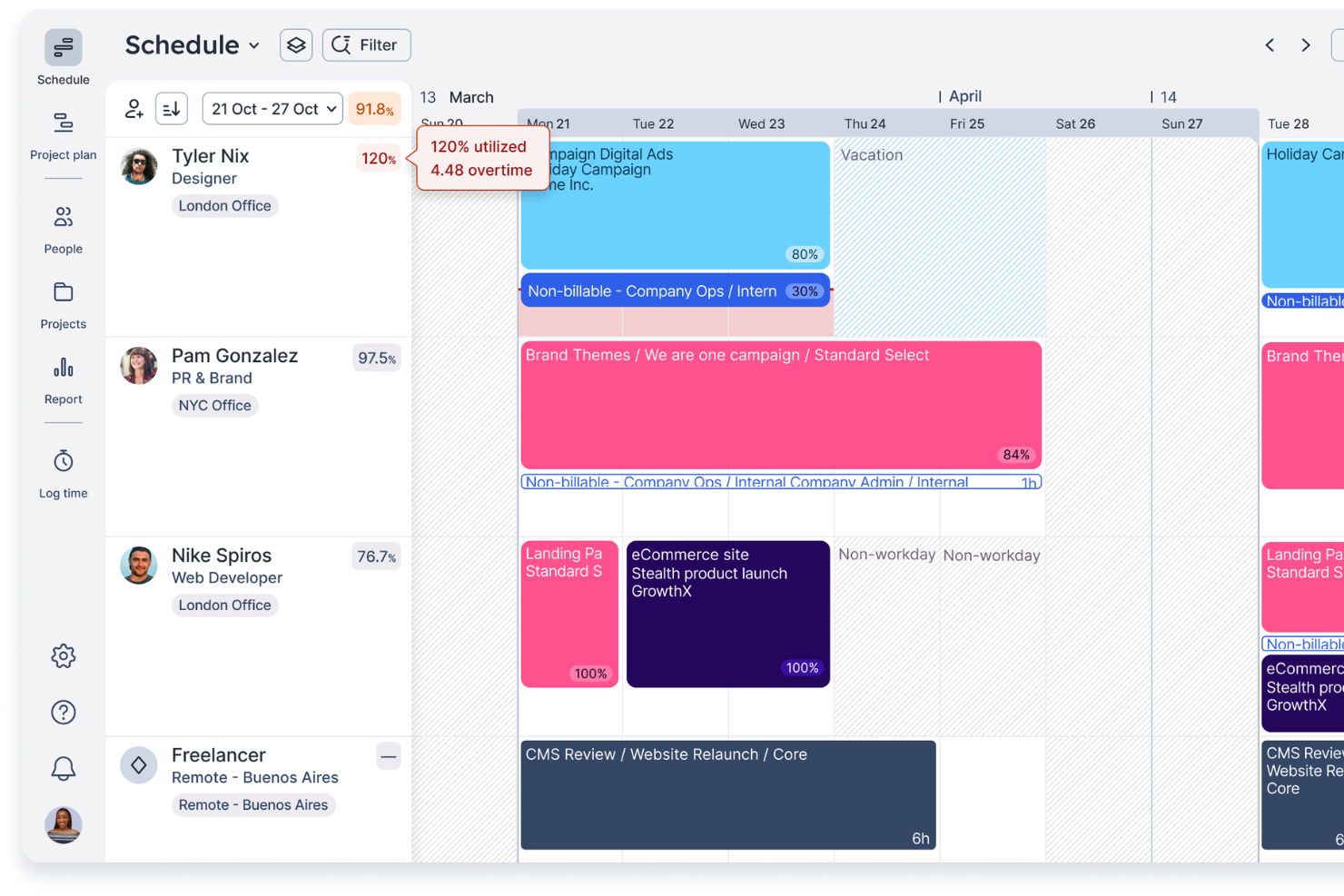
Float.com est un logiciel de gestion des ressources qui aide les équipes de services professionnels à allouer, planifier et rendre compte du travail client afin d'améliorer leur rentabilité. Vous obtenez le contexte et les données dont vous avez besoin pour associer les bonnes personnes aux bons projets lors de la gestion des ressources client.
Pourquoi j'ai choisi Float.com
J'ai choisi Float pour sa planification rapide, visuelle et ses analyses de livraison. Vous pouvez visualiser d'un coup d'œil le taux d'utilisation, les coûts et les taux facturables lors de la planification du travail. Les allocations par glisser-déposer colorées, les raccourcis clavier et les vues en heures ou en pourcentage rendent la planification des ressources intuitive. Float signale également les conflits comme les surallocations, les travaux provisoires ou les absences. Float aide les équipes à prévoir la capacité et à suivre l'impact sur le chiffre d'affaires, les coûts et les marges des décisions d'allocation des ressources, tout en offrant une visibilité sur l'exécution des projets et l'utilisation de l'équipe.
Principales fonctionnalités de Float.com
En plus de sa planification visuelle exceptionnelle et du suivi de capacité en temps réel, Float propose plusieurs autres fonctionnalités pour faciliter la gestion des ressources.
- Suivi du temps : Votre équipe peut enregistrer ses heures directement dans la plateforme, ce qui offre des informations précises sur le temps consacré à chaque tâche et aide à améliorer les estimations de projet.
- Prévision de projet : Les outils de prévision de Float vous permettent d'anticiper les délais et les budgets des projets, pour une meilleure compréhension des besoins futurs en ressources et des résultats financiers possibles.
- Suivi des rôles et compétences : Les rôles, compétences et disponibilités des membres de l'équipe sont enregistrés dans Float et mis à jour en temps réel.
- Informations financières : Gérez les budgets des projets, suivez les marges, prévoyez le chiffre d'affaires et bénéficiez d'une visibilité sur l'impact financier des décisions d'allocation des ressources.
Intégrations Float.com
Les intégrations incluent Google Calendar, Outlook Calendar, Slack, Jira, Asana, Teamwork et Trello. Float dispose également d'une application Zapier qui se connecte à une bibliothèque de plus de 1 000 applications comme vos systèmes de gestion de projet favoris ou votre CRM.
Pros and Cons
Pros:
- Application mobile iOS et Android
- Contexte et données solides pour la gestion des ressources
- Chat IA 24/7 avec assistance humaine en semaine
Cons:
- Le suivi du temps nécessite un abonnement supérieur
- La mise à jour de la liste du personnel prend du temps
New Product Updates from Float.com

Float Adds Rate Cards and Multi-Currency Billing
Float introduced centralized rate cards to standardize bill rates across projects and added multi-currency support to bill clients consistently across regions. For more information, visit Float's official site.

Saviom
Idéal pour la planification des ressources et la gestion de la capacité
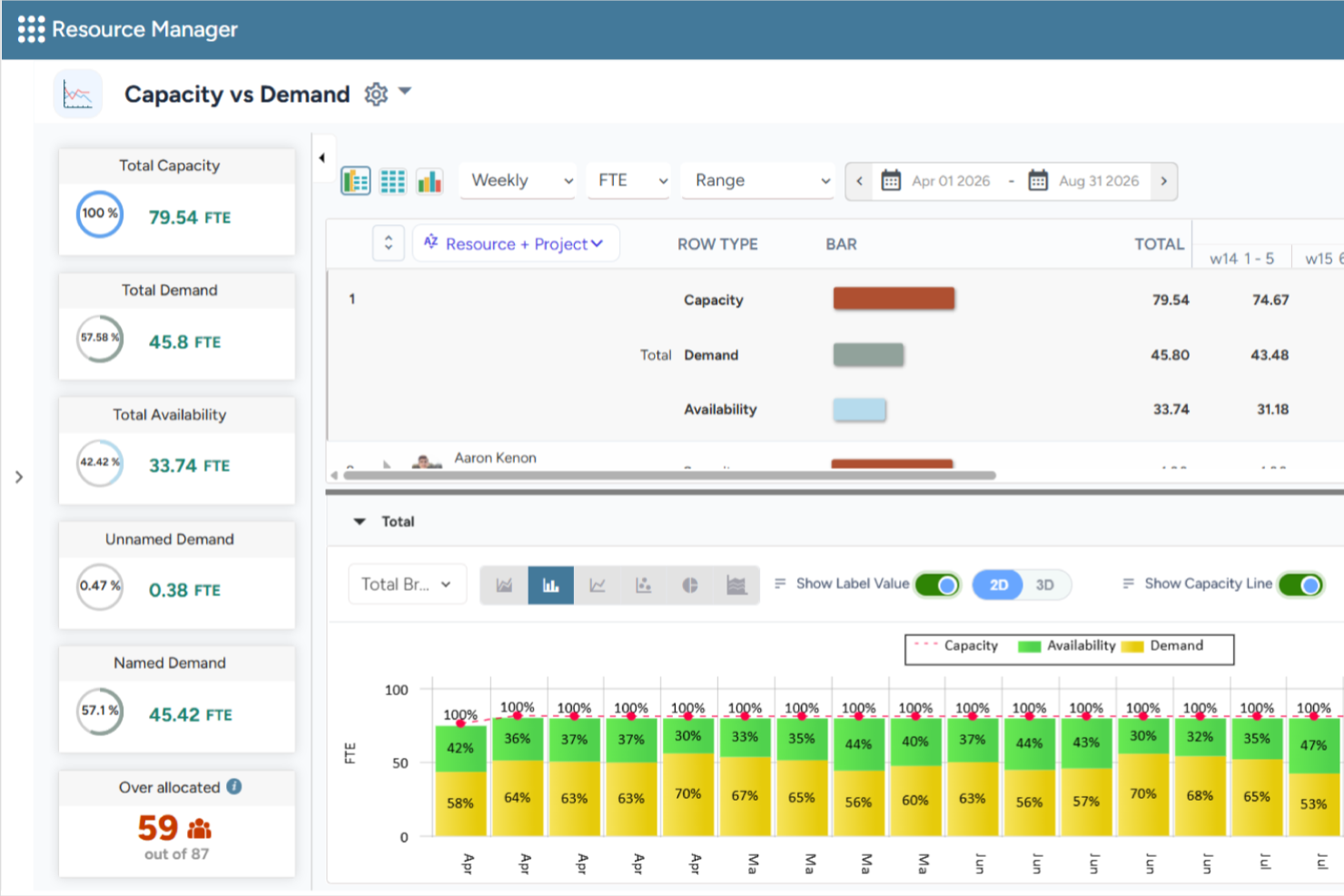
Saviom est un logiciel de gestion des ressources configurable et évolutif conçu pour relever les défis liés à la gestion des ressources dans tous les secteurs. Il permet d’aligner la capacité en ressources sur la demande changeante des projets actuels et futurs en préparation. La plateforme aide également les organisations à anticiper la demande en ressources, à optimiser l’utilisation, et à soutenir la planification à long terme des effectifs au sein de portefeuilles de projets complexes.
Pourquoi j’ai choisi Saviom
J’ai choisi Saviom pour sa suite de fonctionnalités avancées telles que la planification multidimensionnelle, la gestion de la capacité, l’optimisation en temps réel, la planification des talents, la gestion du temps et les rapports d’intelligence économique. Son architecture logicielle configurable peut être adaptée et dimensionnée selon les besoins spécifiques de l’entreprise. Les tableaux de bord par rôle permettent également aux différentes parties prenantes d’accélérer la prise de décision à travers divers services. J’apprécie aussi la possibilité de modéliser des scénarios, permettant aux équipes de comparer différents plans de ressources avant de les modifier, ainsi que les outils de planification financière qui aident à anticiper les coûts de ressources et à appuyer les décisions en matière de dotation.
Fonctionnalités clés de Saviom
Outre les capacités de planification et d’anticipation, Saviom propose plusieurs autres fonctionnalités très utiles pour la gestion des ressources.
- Planification de la capacité en ressources : Prévoir la demande future en ressources, la comparer avec la capacité disponible et identifier les pénuries potentielles ou les surplus avant qu’ils n’affectent la livraison des projets.
- Modélisation de scénarios : Comparer plusieurs scénarios d’affectation d’équipes ou de projets avant de mettre à jour les plans de ressources en production.
- Planification des talents : Anticiper de manière proactive les pénuries de compétences, prévoir la demande, maintenir un inventaire des compétences à jour et garantir la préparation des équipes pour les projets actuels et à venir.
- Rapports, analyses et tableaux de bord : Accéder à des rapports d’intelligence économique personnalisables et en temps réel, offrant une visibilité sur l’utilisation des ressources, leur disponibilité, et les indicateurs clés liés aux effectifs.
Intégrations de Saviom
Des intégrations sont disponibles avec les applications professionnelles les plus courantes, bien que des exemples spécifiques ne soient pas mentionnés.
Pros and Cons
Pros:
- Prévisions et planification de capacité multidimensionnelles
- Gestion des ressources hautement configurable et personnalisable
- Rapports, analyses et tableaux de bord flexibles en temps réel
Cons:
- Moins adapté aux petites entreprises
- L’étendue des fonctionnalités implique une courbe d’apprentissage importante
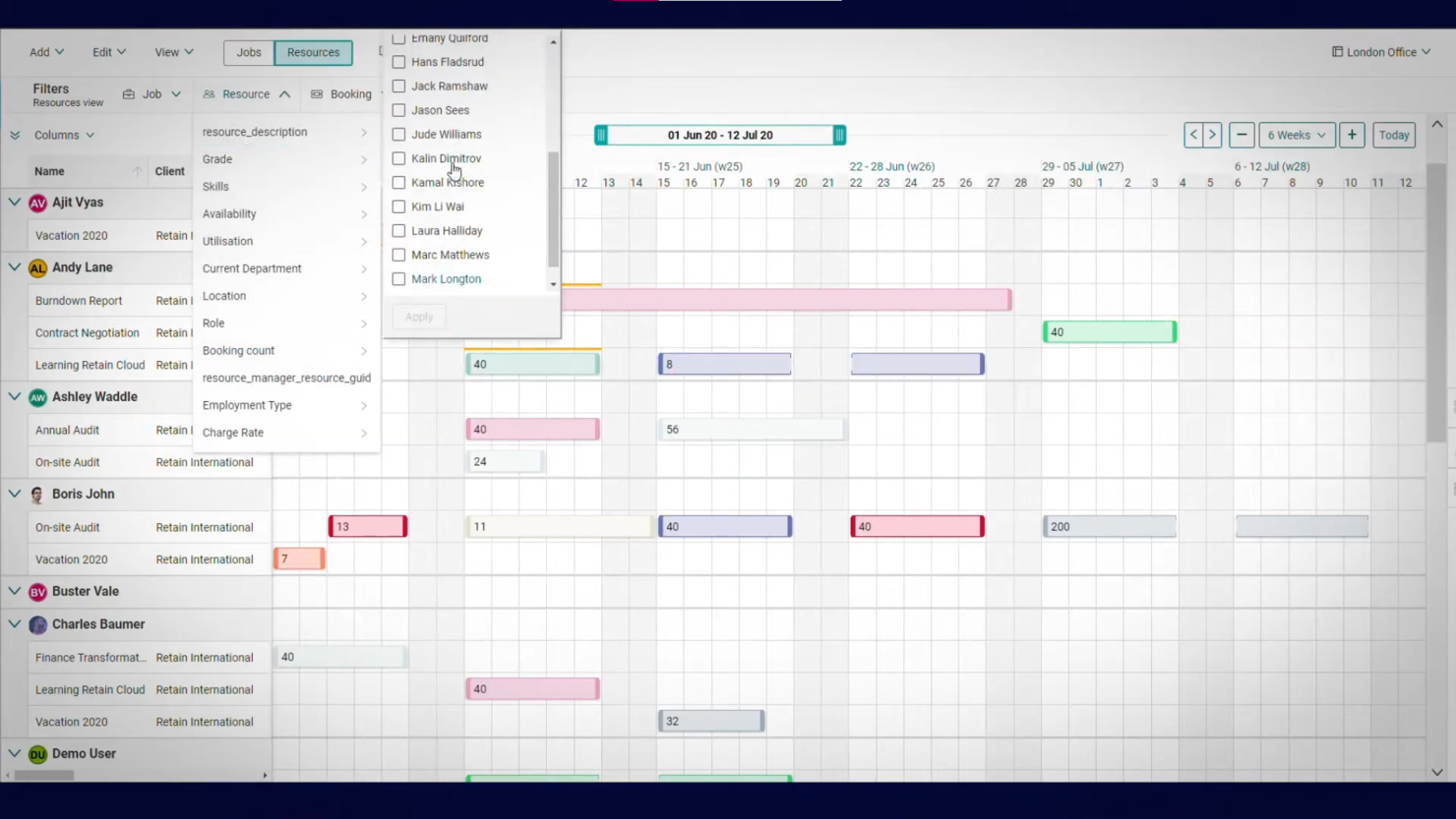
La prévision de la demande est essentielle pour la planification, et c'est dans ce domaine que Retain International se distingue. Le tableau de bord de prévision vous montre comment la disponibilité des ressources évoluera au fil du temps. Vous pouvez utiliser ces informations pour allouer les ressources là où elles sont le plus nécessaires.
Pourquoi j'ai choisi Retain : J'apprécie la facilité d'utilisation du logiciel. Les différentes fonctionnalités sont simples à naviguer, et les vues de reporting et de prévision facilitent l'obtention d'informations utiles.
Il existe des versions auto-hébergées et cloud du logiciel. Si vous choisissez la première option, vous devrez héberger le logiciel sur votre propre serveur. Mais une fois qu'il est configuré, vous pouvez tout de même accéder à l'outil de n'importe où via le web ou les applications Android et iOS.
Fonctionnalités marquantes et intégrations de Retain
Fonctionnalités : un tableau de bord de prévision sophistiqué qui non seulement visualise la disponibilité future des ressources, mais intègre également la planification de scénarios, permettant aux gestionnaires de modéliser et de se préparer à de potentiels changements de demande. Son système de gestion des congés est aussi parfaitement intégré à la planification des ressources afin de garantir des calculs de capacité précis et d'éviter les pénuries inattendues.
Intégrations : elles ne sont pas listées publiquement sur leur site mais semblent disponibles selon leur grille tarifaire.

La meilleure planification des ressources et la prévision de capacité
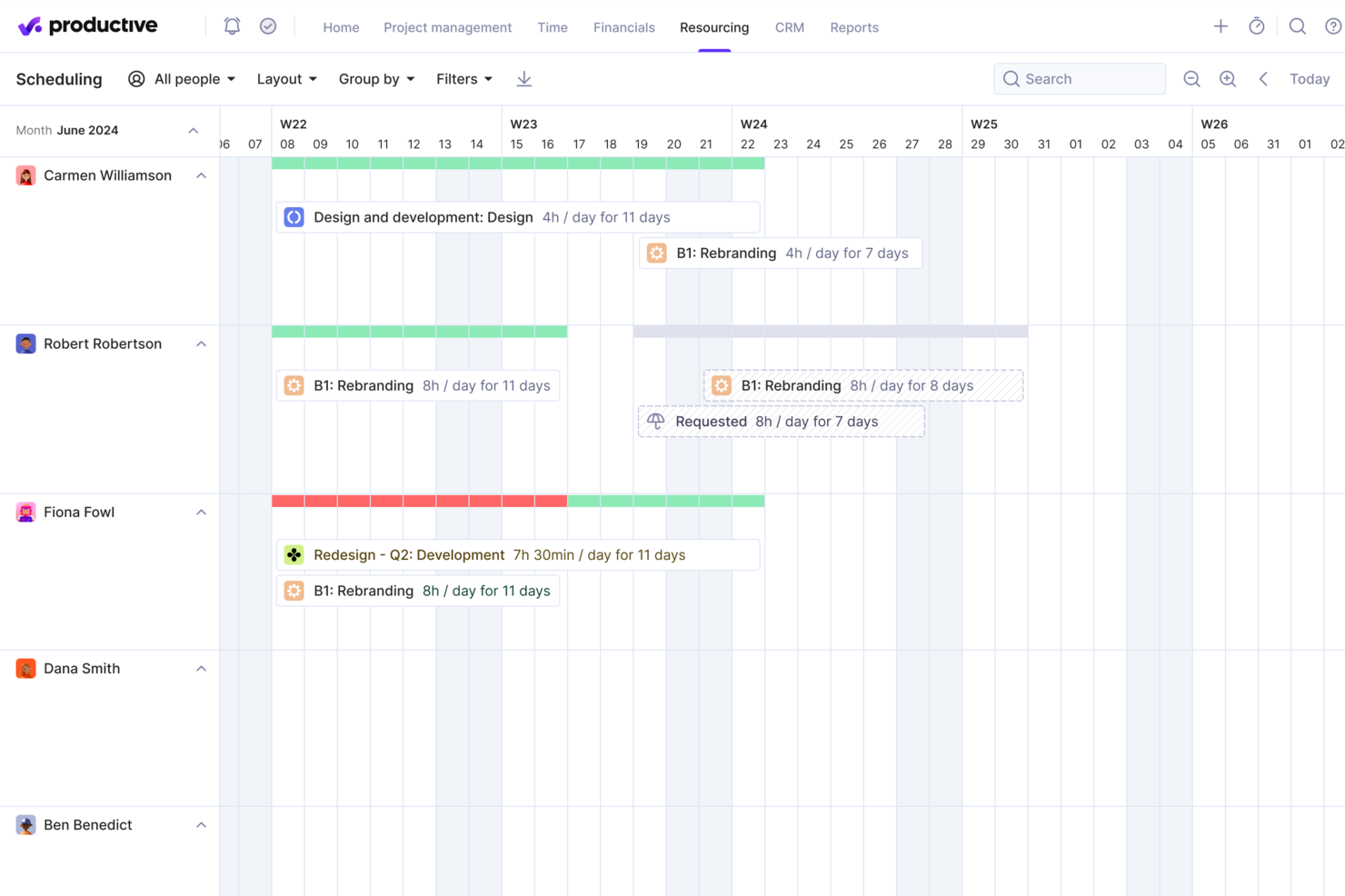
Productive est une plateforme polyvalente qui propose des outils pour simplifier la planification et la collaboration d’équipe au sein des agences. Elle aide les entreprises à gérer plusieurs flux de travail et permet un suivi ainsi qu’une allocation efficace des ressources sur l’ensemble des projets. La plateforme s’adresse également aux équipes des secteurs de services qui ont besoin de précision dans la planification des ressources et la livraison des projets.
Pourquoi j’ai choisi Productive
Productive fournit des outils de prévision avancés qui aident votre agence à planifier et à répartir les ressources de façon optimale. Sa fonction de planification des capacités vous permet de surveiller la charge de travail et la disponibilité de l’équipe, vous aidant ainsi à prendre de meilleures décisions pour les projets à venir.
De plus, le suivi du temps et les indicateurs de rentabilité de la plateforme vous offrent une vision claire de l’utilisation des ressources. Vous pouvez également ajuster les plannings et réaffecter les membres de l’équipe à la volée pour maintenir la productivité et l’équilibre.
Fonctionnalités clés de Productive
D’autres fonctions font aussi de Productive un excellent choix pour la gestion des ressources.
- Suivi du temps : Cette fonctionnalité permet à votre équipe d’enregistrer ses heures de travail directement dans le système et d’obtenir des données précises pour la facturation et l’analyse.
- Gestion de budget : Vous pouvez gérer les budgets de projet facilement, suivre les dépenses et les revenus, et garder une vue d’ensemble financière.
- Facturation : Il est possible de créer et d’envoyer des factures directement depuis la plateforme, ce qui simplifie le processus de facturation de vos projets.
- Gestion des tâches : Cette fonction vous aide à organiser les tâches avec des échéances et des priorités, et à garder votre équipe alignée sur les objectifs du projet.
Intégrations de Productive
Les intégrations incluent Slack, QuickBooks Online, Xero, Zapier, HubSpot, Jira, Microsoft Teams, Google Workspace, Asana et Trello.
Pros and Cons
Pros:
- La gestion du temps intégrée permet la facturation de plusieurs entités
- Beaucoup d’étiquettes personnalisées au choix
- Mise en place collaborative des tâches très facile
Cons:
- Les fonctions de facturation et de devis sont limitées
- L’application mobile pourrait être plus rapide et réactive
New Product Updates from Productive
Productive Adds Voice Dictation, Slack Connector, Proposals, and Overtime
Productive adds voice dictation, a Slack Connector, proposal controls, and overtime tracking. These updates support faster AI interactions, client proposals, and time management. For more information, visit Productive’s official site.

Scoro
Idéal pour prévoir l’utilisation des équipes
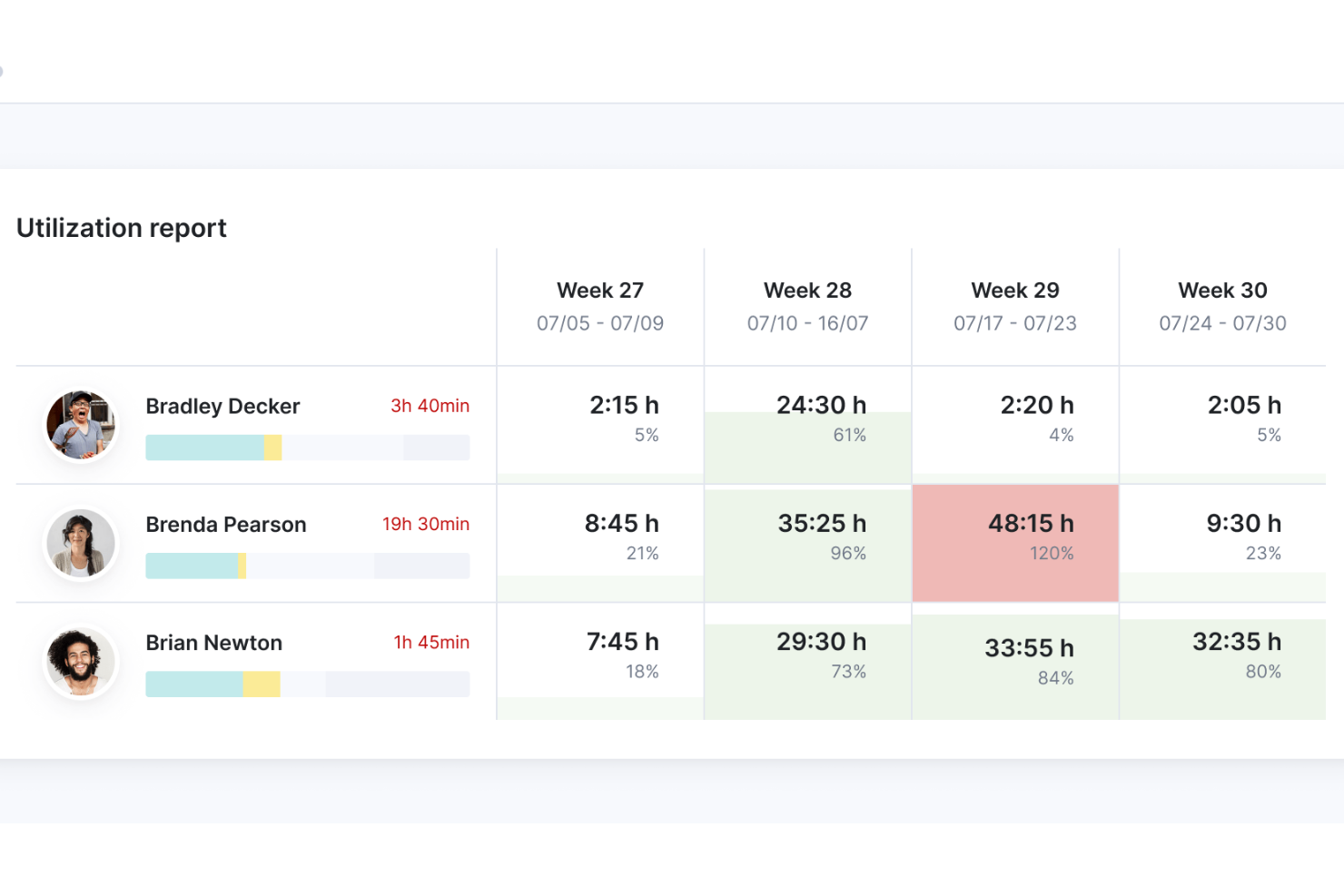
Scoro est un logiciel de gestion des ressources qui fournit une suite d’outils pour aider les entreprises à gérer leurs projets, leurs finances et leurs ressources au sein d’un même système.
Pourquoi j’ai choisi Scoro
J’apprécie les fonctionnalités robustes de la plateforme, qui permettent aux utilisateurs de planifier et de hiérarchiser le travail, de répartir les tâches à l’aide d’un planificateur par glisser-déposer ou d’un tableau de tâches Kanban, et de gérer le temps grâce aux calendriers partagés, aux feuilles de temps et à un outil intégré de suivi du temps. Scoro permet également de surveiller les heures facturables et non facturables et garantit la responsabilisation concernant le temps consacré au travail pour les clients.
En outre, la plateforme dispose d’outils complets de prévision qui permettent aux responsables d’obtenir une vision plus claire des niveaux de capacité actuels, des pénuries, des échéances, ainsi que des événements et congés planifiés. Cette visibilité permet d’éviter la sous-utilisation ou la surcharge du personnel, ce qui favorise un meilleur équilibre de la charge de travail et une plus grande satisfaction des employés.
Principales fonctionnalités de Scoro
Scoro propose plusieurs autres fonctionnalités qui répondent à vos besoins complets en matière de gestion des ressources.
- Gestion des tâches : Attribuez et hiérarchisez les tâches en fonction des compétences et des disponibilités de l’équipe afin de vous assurer que les bonnes personnes travaillent sur les bons projets.
- Suivi des projets : Suivez l’avancement des projets en temps réel pour maîtriser les échéances et les budgets.
- Rapports et analyses : Générez des rapports détaillés pour suivre l’utilisation des ressources et les performances des projets.
- Outils de collaboration : Centralisez la communication de l’équipe et le partage de fichiers afin de réduire les échanges d’e-mails.
Intégrations de Scoro
Les intégrations comprennent HubSpot, Google Calendar, Microsoft Exchange, Xero, QuickBooks, Sage Intacct, Expensify, Stripe, Jira, Slack, Asana, Dropbox, PayPal et Zapier.
Pros and Cons
Pros:
- Factures automatisées
- Vue complète de l’utilisation de l’équipe
- Les analyses optimisées par l’IA facilitent la prise de décision
Cons:
- Courbe d’apprentissage pour les nouveaux utilisateurs
- Prise en charge limitée des langues autres que l’anglais
New Product Updates from Scoro

Scoro Adds Time Mobile App and ELI Improvements
Scoro adds the Scoro Time mobile app for iOS/Android to track time anywhere and expands ELI with attachments, smarter filtering, and trigger-based actions. For more information, visit Scoro's official site.

Kantata
Idéal pour une gestion des ressources centrée sur les personnes
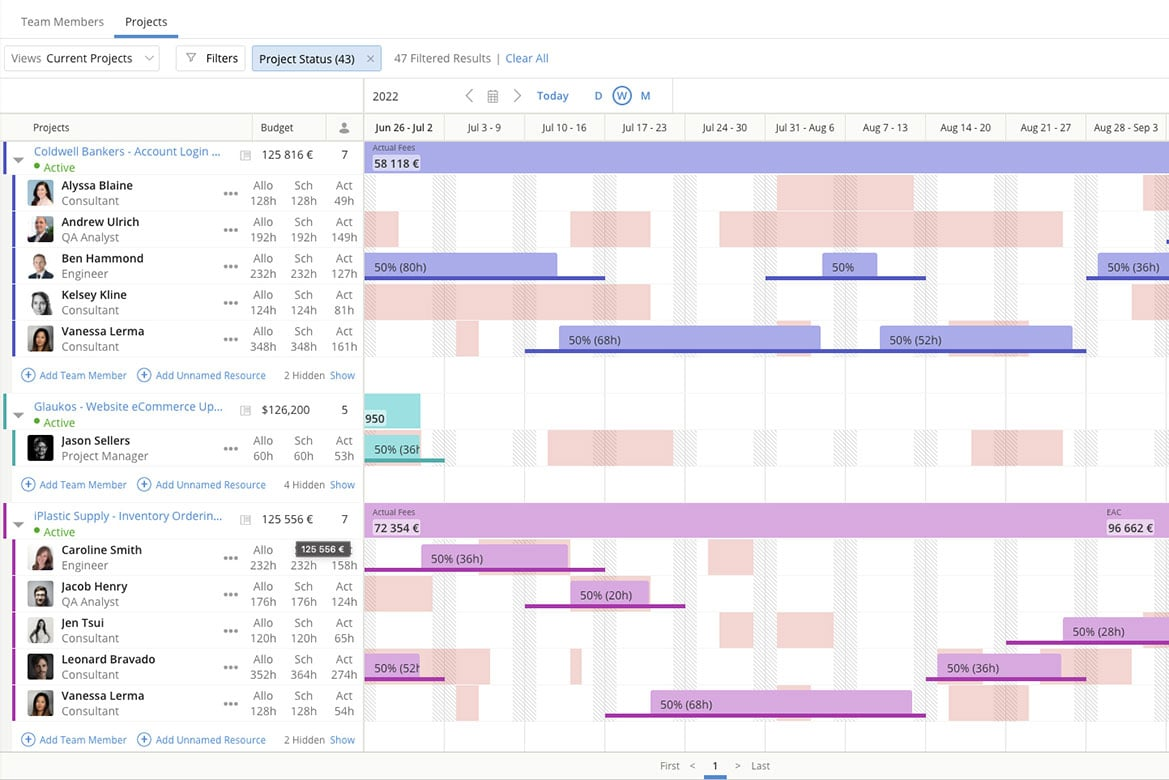
Kantata est une plateforme de gestion des ressources conçue pour les équipes de services professionnels et les agences. Contrairement aux outils génériques, elle unifie la gestion des ressources, les finances et la réalisation des projets, tout en plaçant les personnes au cœur des décisions d'affectation.
J'ai récemment parlé avec Daniel Vasilevski, le directeur et propriétaire de Pro Electrical, de la manière dont il utilise Kantata avec son équipe. Il utilise cet outil grâce au 'tableau de bord de planification des ressources qui affiche la disponibilité de tous les membres de l'équipe pour différents travaux dans une seule interface', explique-t-il. 'Pendant un chantier important...une tempête soudaine a déclenché 8 interventions urgentes dans différentes banlieues', raconte-t-il. 'Grâce au tableau de bord de planification des ressources...je pouvais voir où se trouvait chacun de mes 14 électriciens et en réaffecter 4...sans faire dérailler le projet', explique-t-il. Cela a eu des avantages majeurs : 'Cela...a réduit le temps d'attente des clients de...plus d'une journée à moins de quatre heures. Cela a également permis d'économiser près de $3,500 en heures supplémentaires, puisque la charge de travail était répartie équitablement', affirme-t-il.
Pourquoi j'ai choisi Kantata
Ce qui me plaît chez Kantata, c'est la façon dont son module de gestion des ressources aide les dirigeants à prendre des décisions d'affectation qui accordent autant d'importance aux personnes qu'aux besoins des projets. La plateforme offre une visibilité en temps réel sur la capacité et le taux d'utilisation, ce qui permet d'équilibrer les charges de travail et de s'assurer que les bons membres de l'équipe sont affectés aux bonnes tâches. Sa planification des ressources fondée sur les compétences facilite également l'identification des lacunes, l'adéquation des talents avec la demande et la création de possibilités d'évolution pour les employés. Cette approche centrée sur les personnes optimise non seulement l'efficacité, mais favorise également l'engagement de l'équipe à long terme.
Principales fonctionnalités de Kantata
Kantata offre plusieurs autres fonctionnalités qui en font un outil précieux pour la gestion des ressources.
- Suivi du temps consacré aux projets : cette fonctionnalité permet à votre équipe de suivre précisément le temps et les ressources afin que vous puissiez ajuster les plans de projet en connaissance de cause.
- Outils de collaboration d'équipe : ces outils contribuent à améliorer la communication entre les membres de l'équipe, la coordination et les résultats des projets.
- Outils de veille stratégique : vous bénéficiez d'analyses et de rapports en temps réel afin d'identifier les tendances et de prendre des décisions fondées sur les données.
- Outils de planification visuelle des projets : cette fonctionnalité offre des représentations visuelles des tâches et des échéances afin d'améliorer la compréhension et l'implication de votre équipe.
Intégrations de Kantata
Les intégrations incluent Salesforce, SAP, Jira, Xero, BambooHR, Slack, Workday, QuickBooks, HubSpot et NetSuite.
Pros and Cons
Pros:
- Gestion des ressources entièrement intégrée à la planification principale
- Bonnes fonctionnalités de création de rapports pour les données sur les ressources
- Gestion facile de la capacité
Cons:
- La création de rapports personnalisés peut être difficile sans formation
- Les fonctionnalités avancées sont disponibles uniquement dans les forfaits Premier et Enterprise
New Product Updates from Kantata

Kantata Adds Access Group Change History
Kantata adds Access Groups History, letting account administrators track changes to group details, membership, and permissions in Recent History. The update also makes these events available through the Subscribed Events API for broader monitoring. For more information, visit Kantata’s official site.
 .
.
Runn
Idéal pour la planification en temps réel de la capacité des équipes
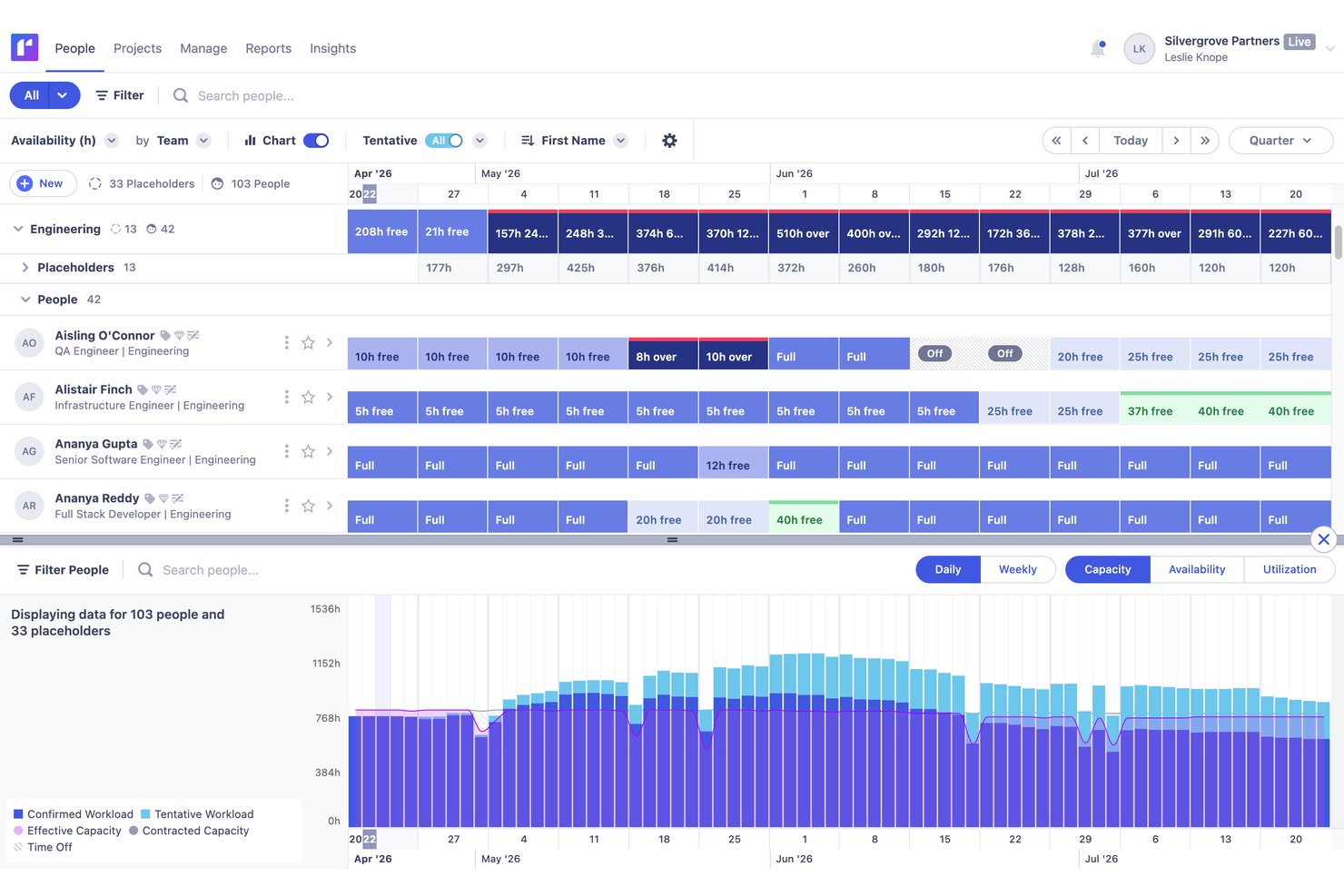
Runn est une plateforme de gestion des ressources conçue spécifiquement pour la planification visuelle, la planification des capacités en temps réel, le suivi de l'utilisation et les prévisions financières des équipes travaillant sur des projets.
À qui Runn convient-il le mieux ?
Runn convient particulièrement aux équipes travaillant sur des projets, notamment dans les services professionnels, les agences et les bureaux de gestion de projets, qui ont besoin d'un outil dédié à la planification visuelle et à la planification des capacités en temps réel.
Pourquoi j'ai choisi Runn
Runn figure dans ma sélection parce qu'il est conçu spécifiquement pour la planification des capacités en temps réel, d'une manière que les outils de gestion de projets plus généralistes ne permettent tout simplement pas. J'apprécie particulièrement la façon dont les graphiques de capacité de Runn mettent en évidence la surallocation et la sous-allocation dès que vous modifiez un planning, ce qui vous évite de travailler à partir de données obsolètes. SmartMatch AI est également très utile dans ce contexte : il recommande les personnes les plus adaptées en fonction de leurs compétences et de leurs disponibilités en temps réel, au lieu de vous obliger à comparer manuellement les profils.
Fonctionnalités clés de Runn
- Planification de scénarios : Créez et comparez un nombre illimité de scénarios hypothétiques de dotation en personnel et de projets afin d'évaluer l'impact des changements avant de vous engager sur un plan.
- Feuilles de temps natives : Saisissez le temps quotidiennement ou hebdomadairement, suivez les heures facturables et non facturables, puis comparez le temps planifié au temps réellement consacré afin d'affiner vos prévisions futures.
- Prévisions financières : Reliez les allocations de ressources aux budgets, aux grilles tarifaires et aux projections de marge, avec la prise en charge des modèles de facturation au forfait et en régie.
- Ressources fictives : Ajoutez à votre planning les futures recrues dont le nom n'est pas encore défini afin que les prévisions de capacité reflètent les plans de recrutement réels, et pas uniquement votre équipe actuelle.
Intégrations de Runn
Runn répertorie plus de 13 intégrations de SIRH, notamment BambooHR, Workday, HiBob, Gusto et ADP Workforce Now, ainsi que des intégrations avec Harvest, Clockify et Jira. La plateforme prend également en charge les intégrations personnalisées via son API publique et Zapier.
Pros and Cons
Pros:
- Visibilité en temps réel sur la capacité par rapport à la demande
- Planification illimitée de scénarios pour modéliser les ressources
- Mise en correspondance des ressources par IA selon leurs compétences
Cons:
- Aucune application mobile native disponible
- Contrôles des autorisations limités pour les organisations complexes

Teamhood
Idéal pour la planification de la capacité à faible coût par utilisateur
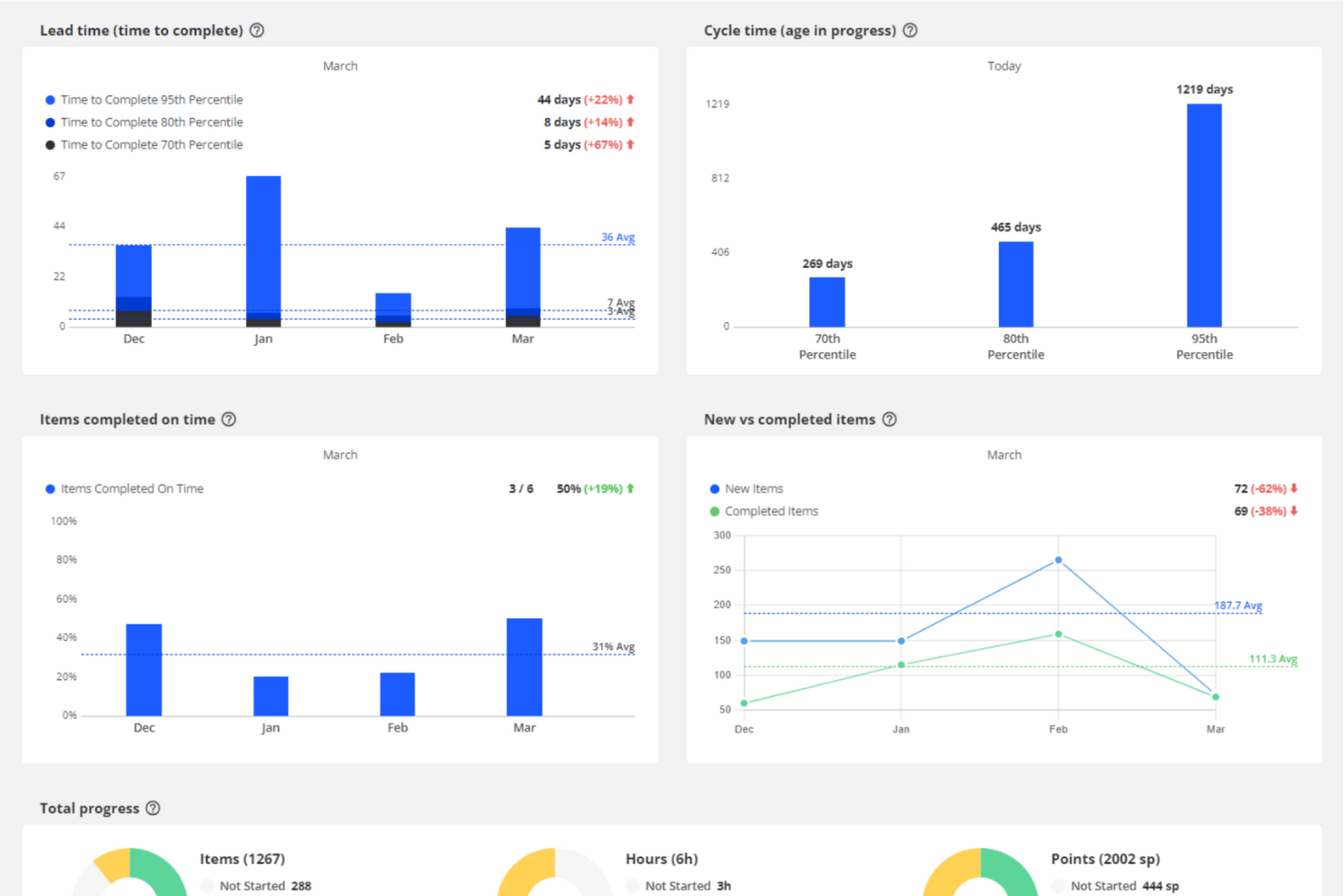
Teamhood est une plateforme de gestion de projets et de ressources qui combine la planification de la capacité, la planification visuelle, l'équilibrage de la charge de travail et le suivi du temps sur plusieurs projets simultanément.
À qui Teamhood convient-il le mieux ?
Teamhood convient aux responsables des opérations et aux chefs d'équipe de petites et moyennes entreprises qui gèrent plusieurs projets simultanément et ont besoin d'une planification solide de la capacité sans payer de tarifs élevés par utilisateur.
Pourquoi j'ai choisi Teamhood
J'ai inclus Teamhood dans mes meilleurs choix parce qu'il propose de véritables fonctionnalités de planification de la capacité dans un seul forfait à $6/utilisateur/mois, alors que la plupart des concurrents réservent ces fonctionnalités à des niveaux coûtant trois fois plus cher. J'apprécie la façon dont la vue de planification affiche chaque projet au même endroit, regroupé par personne, avec des indicateurs rouges de surcharge qui signalent immédiatement quelles personnes dépassent leur capacité sur plusieurs flux de travail simultanés. Les heures réservées permettent de conserver de la capacité pour un projet à venir avant même que ses tâches n'existent, ce qui constitue un avantage pratique lorsqu'on doit gérer un portefeuille de travaux qui se chevauchent.
Fonctionnalités clés de Teamhood
- Dépendances Gantt avec comparaison à la référence : Définissez des dépendances entre les tâches qui replanifient automatiquement les tâches ultérieures, puis comparez la chronologie actuelle à une référence enregistrée afin de suivre les écarts de planning.
- Heures réservées : Bloquez de la capacité pour les projets à venir avant même que des tâches n'existent, afin de réserver du temps pour les travaux encore en attente dans le portefeuille.
- Page personnelle : Chaque membre de l'équipe dispose d'une vue de son travail ouvert sur l'ensemble des projets, de ses congés et de ses heures planifiées sur quatre semaines comparées à sa capacité.
- Rôles personnalisés et autorisations détaillées : Attribuez des autorisations jusqu'à des actions spécifiques liées à la capacité, avec un accès contrôlé par vue dans l'espace de travail.
Intégrations de Teamhood
Teamhood Classic propose cinq intégrations natives documentées : Google Calendar, Outlook Calendar, Slack, Microsoft Teams et Azure DevOps. Le nouveau Teamhood inclut une API REST et des webhooks, tandis que Classic prend en charge Zapier.
Pros and Cons
Pros:
- La planification interprojets révèle les conflits de capacité
- Les heures réservées protègent la capacité des projets à venir
- Une planification détaillée s'adapte aux congés
Cons:
- Aucune mise en correspondance des ressources basée sur les compétences
- Les prévisions ne proposent ni projections du portefeuille ni projections historiques
Wrike
Idéal pour la montée en charge
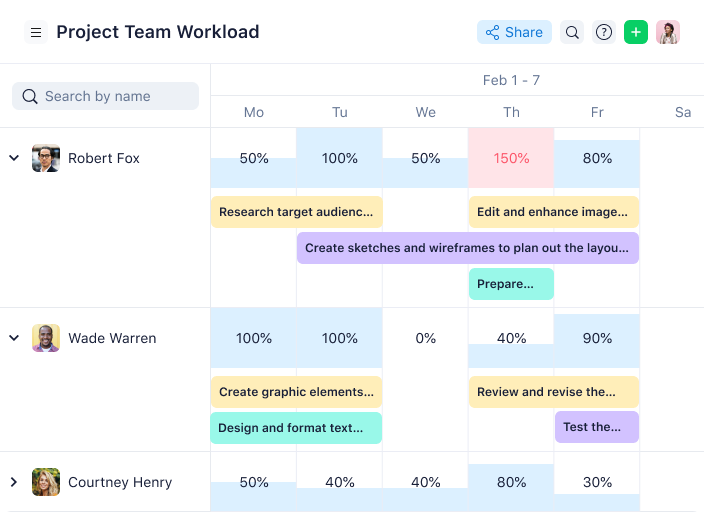
Wrike est un logiciel de gestion des ressources primé, utilisé par plus de 20 000 organisations à travers le monde. Il convient aux équipes de cinq membres jusqu'à un nombre illimité de collaborateurs, ce qui le rend facilement évolutif. Il est hautement configurable et vous permet de personnaliser les flux de travail, tableaux de bord, rapports, formulaires de demande et bien plus encore.
Selon Danilo Coviello, fondateur d'Espresso Translations, Wrike s'est avéré utile pour la gestion de plusieurs projets dans son agence de traduction : « Nous gérions 15 projets en même temps et nous étions toujours préoccupés par l’allocation des capacités. Les délais qui pouvaient être compromis par des goulots d'étranglement sont désormais repérés par moi… les retards de projets ont été réduits de 40 % parce que je détecte les surcharges à l’avance. »
Pourquoi j'ai choisi Wrike
Wrike s'est hissé dans ce classement grâce à son interface et sa navigation par espaces, dossiers et tâches distincts. Cela le rend aussi utile pour les petites que pour les grandes structures, et il peut évoluer avec la croissance de votre entreprise. Vous pouvez basculer rapidement entre l'écran d'accueil, les feuilles de temps, les tableaux de bord, les calendriers, les rapports et un flux pour les notifications et messages. J’apprécie également son solide système de demandes et d'approbations, qui permet de standardiser les demandes de travail entrantes et de suivre efficacement les processus de validation.
En outre, le Datahub de la plateforme centralise et consolide les données issues de multiples sources pour permettre aux équipes de prendre des décisions plus éclairées, fondées sur les données. Les feuilles de temps permettent aussi de suivre facilement les heures de travail des employés et la répartition du temps sur les projets, ce qui vous aide à optimiser l'utilisation des ressources et à facturer avec précision.
Fonctionnalités clés de Wrike
Wrike propose plusieurs autres fonctionnalités pour améliorer votre gestion d’équipe et des ressources.
- Suivi du temps : Cette option vous permet de surveiller le temps passé par votre équipe sur les tâches, d’obtenir des informations sur la productivité et de mieux gérer les échéances.
- Modèles de projet : Grâce à des modèles de projet personnalisables, vous pouvez rationaliser vos workflows et créer rapidement de nouveaux projets avec des structures prédéfinies adaptées à vos besoins spécifiques.
- Relecture collaborative : Cet outil permet aux membres de l'équipe de relire et annoter des documents ou des maquettes directement dans Wrike, favorisant la communication et accélérant le processus d’approbation.
- Rapports en temps réel : Vous pouvez générer des rapports en temps réel qui offrent une vue claire de l’avancement des projets et de la répartition des ressources, pour une meilleure prise de décision et une planification stratégique.
Intégrations Wrike
Plus de 400 intégrations natives sont disponibles, notamment avec les logiciels de gestion de fichiers les plus populaires de Microsoft, Google et Dropbox, ainsi que les outils de vente et marketing tels que Salesforce et Marketo.
Pros and Cons
Pros:
- La création de tableaux de bord personnalisés est parfaite pour un suivi avancé des ressources
- Bonne variété de vues de tableau de bord pour différents types d’utilisateurs
- Les demandes et validations de ressources sont faciles et bien organisées
Cons:
- Aucune fonction de suivi du temps dans la version gratuite
- Les meilleurs outils de gestion de ressources sont réservés aux forfaits supérieurs
New Product Updates from Wrike

Wrike Adds Quick Search to Table View
Wrike adds Quick Search to Table View with full-table search across titles, descriptions, and fields, plus highlighted matches. This helps users find tasks faster in large tables. For more information, visit Wrike’s official site.

Idéal pour visualiser les ressources grâce aux cartes thermiques
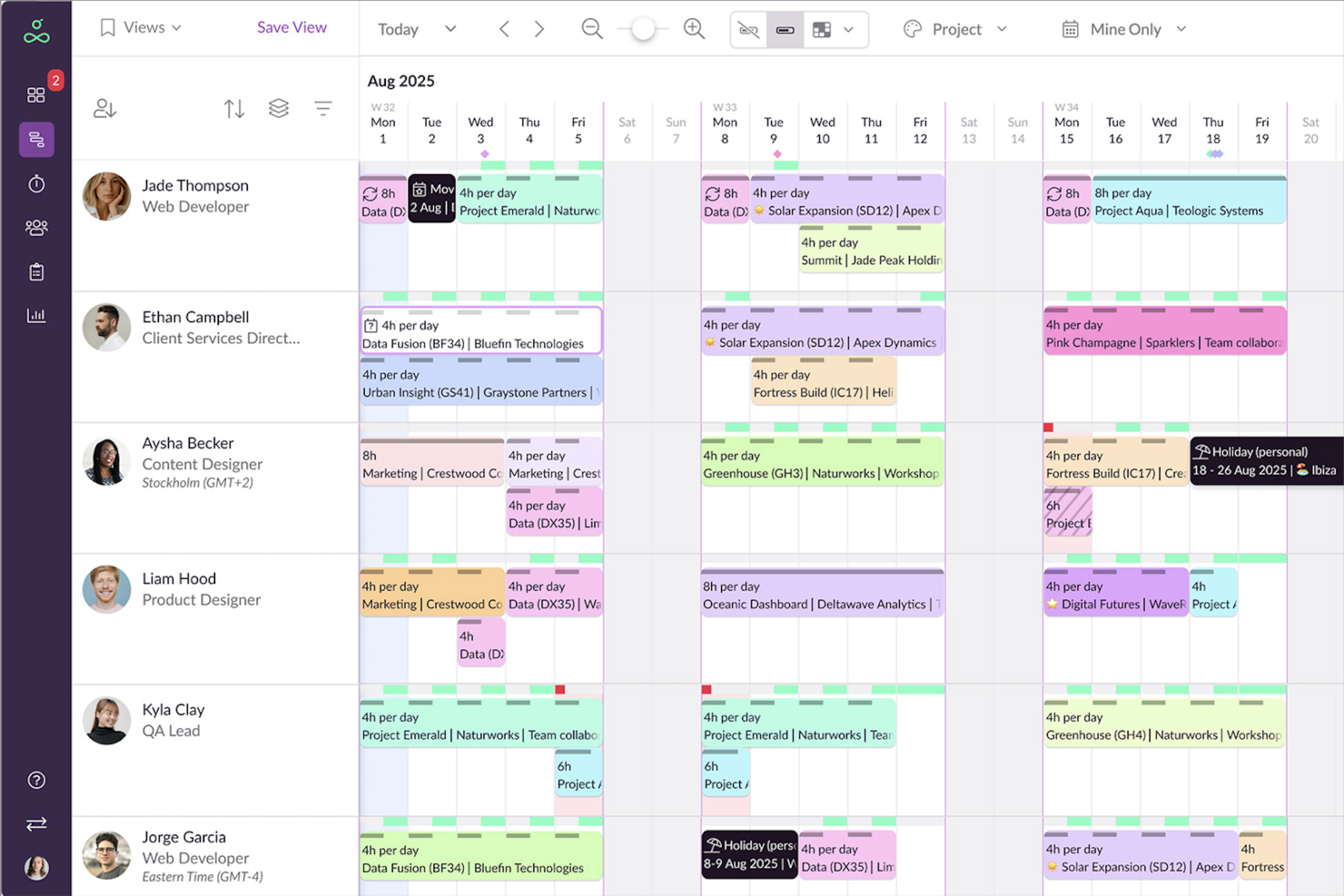
Resource Guru est un logiciel de gestion des ressources conçu pour aider les équipes à planifier, organiser et suivre le temps consacré aux projets et aux ressources. Il s’adresse à des secteurs tels que les agences, la construction, l’ingénierie et l’informatique, en proposant une plateforme centralisée pour coordonner les personnes, les équipements et les espaces de réunion.
J’ai récemment échangé avec Trond Nyland, PDG et propriétaire de Todus.no AS, au sujet de son utilisation de Resource Guru 'pour attribuer des tâches à plusieurs projets de commerce électronique et d’immobilier.' Selon lui, 'ce qui m’a marqué, c’est la facilité avec laquelle on pouvait voir d’un coup d’œil qui était disponible.' Cela a apporté plusieurs avantages à son équipe. 'Cela nous a aidés à respecter les délais sans imposer trop de pression à l’équipe', explique-t-il.
Pourquoi j’ai choisi Resource Guru
J’ai choisi Resource Guru pour son équilibre entre flexibilité et précision dans la planification. La plateforme gère les personnes, les équipements et les salles de réunion dans une vue unique, ce qui facilite la planification entre différents types de ressources sans avoir à jongler avec plusieurs outils. Les champs personnalisés et les filtres avancés vous permettent d’adapter la configuration afin de refléter les compétences, les lieux ou d’autres caractéristiques, tandis que les flux de validation et les fonctionnalités de gestion des conflits réduisent le risque de double réservation ou de demandes négligées.
Ce qui distingue vraiment Resource Guru à mes yeux, c’est l’importance accordée à la visibilité. Les vues en carte thermique offrent une lecture instantanée des disponibilités, ce qui permet de voir d’un coup d’œil où la capacité est limitée ou sous-utilisée. Les tableaux de bord personnalisés et les e-mails récapitulatifs quotidiens présentent les bonnes informations à chaque membre de l’équipe, afin que vous puissiez prendre rapidement des décisions éclairées concernant l’affectation des ressources sans vous noyer dans les données.
Principales fonctionnalités de Resource Guru
En plus de la planification des ressources et du suivi du temps, Resource Guru propose plusieurs autres fonctionnalités qui peuvent améliorer l’efficacité de la gestion des ressources.
- Vue calendrier: Cette fonctionnalité offre une vue d’ensemble visuelle de tous les projets et tâches planifiés, afin que vous puissiez rapidement évaluer la disponibilité de l’équipe et le calendrier des projets.
- Champs personnalisés: Vous pouvez adapter Resource Guru à vos besoins spécifiques en ajoutant des champs personnalisés pour classer et gérer les ressources selon vos propres critères.
- Rapports de projet: Obtenez des informations sur les performances des projets grâce à des rapports détaillés qui vous aident à analyser l’utilisation des ressources et l’avancement des projets.
- Gestion des congés: Vous pouvez facilement gérer et suivre les absences des membres de l’équipe et planifier en conséquence sans perturber les flux de travail des projets.
Intégrations de Resource Guru
Les intégrations comprennent Google Sheets, Jira Software, Smartsheet, Asana, monday.com, Basecamp, Microsoft Outlook, Clockify, Google Calendar, Slack, Microsoft Teams et Teamwork.
Pros and Cons
Pros:
- E-mails récapitulatifs quotidiens sur les ressources
- Outils complets de création de rapports sur l’utilisation des ressources
- Cartes thermiques pour obtenir rapidement des informations sur la capacité
Cons:
- Impossible de trier les ressources par niveau d’expérience
- Profondeur des rapports limitée par rapport aux outils d’entreprise plus complets
New Product Updates from Resource Guru

Resource Guru Adds More Control Over Calendar Sync
Resource Guru adds more control over Google and Outlook Calendar sync, including source calendar selection and destination calendar options. These updates help users manage external events and Resource Guru bookings with less clutter. For more information, visit Resource Guru’s official site.
 .
.Autres avis sur les logiciels de gestion des ressources
Si vous n’avez pas trouvé ce que vous cherchiez ci-dessus, voici quelques autres outils logiciels qui pourraient vous convenir.
- monday AI Workspace
Idéal pour une planification simple de la charge de travail
- Microsoft Project
Idéal pour les utilisateurs de Microsoft
- Rocketlane
Idéal pour une collaboration unifiée avec les clients
- ClickUp
Meilleure vue de charge de travail pour évaluer la capacité de l’équipe
- Forecast
Idéal pour l’optimisation des ressources pilotée par l’IA
- Anaplan
Idéal pour la planification de scénarios
- Meisterplan
Idéal pour l’allocation des ressources basée sur les rôles
- ActiveCollab
Idéal pour la facturation intégrée
- Bonsai Agency Software
Idéal pour l'optimisation de la charge de travail
- Birdview
Idéal pour simuler la charge des ressources
- Schedule It
Idéal pour planifier des horaires de travail
- Planview AdaptiveWork
Meilleur outil de gestion des ressources de niveau entreprise
- elapseit
Idéal pour ses fonctionnalités allant du lancement de projet à la facturation
- Polaris PSA By Replicon
Idéal pour une combinaison de fonctionnalités PSA et PPM
- Adobe Workfront
Idéal pour l’allocation stratégique des ressources
- PSOhub
Meilleure gestion des ressources intégrée aux CRM
- ProjectManager
Idéal pour la surveillance des ressources via des tableaux de bord de projet
- Parallax
Idéal pour la gestion prédictive des ressources
- Planview Vantage
Idéal pour le niveau PMO
- Mosaic
Idéal pour la planification de capacité et la prévision des effectifs
- Apache OFBiz
Idéal pour la planification des ressources orientée commerce
- Silverbucket
Idéal pour le travail basé sur les projets
- eResource Scheduler
Meilleur module financier intégré


Présentation vidéo des outils de gestion des ressources
Découvrez notre vidéo sur les logiciels de gestion des ressources !


Avis connexes sur les logiciels de gestion des ressources
Si vous n'avez toujours pas trouvé ce que vous cherchez ici, découvrez ces autres outils connexes que nous avons testés et évalués :
- Logiciels d’automatisation des flux de travail
- Logiciels de suivi du temps
- Logiciels de gestion des tâches
- Outils de collaboration
- Créateur de diagrammes de Gantt
- Logiciels de gestion des ressources multimédias
- Outils de productivité
- Logiciels de planification des ressources
- Logiciels gratuits de gestion des ressources
- Logiciels de gestion des ressources marketing
- Logiciels de réservation des ressources
- Logiciels de gestion des ressources pour agences
- Logiciels de gestion des ressources à code source ouvert
- Logiciels en ligne de planification des ressources
- Outils de gestion des ressources d’inventaire
Comment j’évalue les logiciels de gestion des ressources
Je divise l’évaluation en trois parties, la fonctionnalité principale étant la plus importante : affecter des personnes à différents projets et afficher la capacité par rapport aux engagements. Ensuite, je recherche des fonctionnalités distinctives, comme la planification de scénarios pour comparer les plans de dotation. Enfin, je prends en compte l’intégration, l’assistance, les intégrations, la sécurité et les tarifs.
Fonctionnalités essentielles (critères incontournables pour cette liste)
Lorsque je sélectionne des outils pour ma liste, j’évalue chacun d’eux sur une échelle de 0 (n’offre pas la fonctionnalité) à 5 (excelle dans ce domaine) pour chacune des fonctionnalités essentielles indiquées ci-dessous. Je convertis ensuite le total en pourcentage afin d’évaluer l’adéquation globale de chaque outil, en accordant un poids supplémentaire à toute fonctionnalité que j’ai jugée essentielle.
- Planification et allocation des ressources (essentiel) : Je recherche des calendriers ou des chronologies permettant d’affecter des personnes à des projets, des rôles et des tâches sur des périodes de réalisation qui se chevauchent.
- Capacité et disponibilité (essentiel) : Je vérifie si les équipes peuvent comparer les heures disponibles au travail engagé et repérer les prochaines surallocations.
- Gestion de la charge de travail : J’évalue les vues d’équipe, les cartes thermiques et les outils de réaffectation permettant d’équilibrer les charges de travail entre plusieurs projets simultanés.
- Suivi de l’utilisation : Je recherche des rapports comparant les prévisions aux résultats réels, notamment sur l’utilisation de l’équipe et des projets, ainsi que sur l’utilisation facturable ou non facturable.
- Prévisions et planification de la demande : J’évalue les prévisions qui utilisent les plans de projet, le portefeuille commercial ou les données historiques pour révéler les futurs déficits de personnel.
- Correspondance fondée sur les compétences et les rôles : Je vérifie si les responsables peuvent filtrer ou mettre en correspondance les personnes selon leurs compétences, leurs rôles, leur expérience et leur disponibilité.
Une fois que j’ai établi une liste d’outils répondant aux critères, j’examine ce qui distingue chaque plateforme.
Facteurs de différenciation (ce qui distingue les fournisseurs)
Voici comment je compare les différents fournisseurs :
Fonctionnalités distinctives
Je commence par la modélisation de scénarios. Je vérifie si un outil me permet de créer côte à côte des plans de dotation hypothétiques avant de confirmer les affectations — ce qui est utile lorsqu’un nouveau projet arrive et que je dois voir comment le retrait d’une personne d’un engagement affecte trois autres projets. J’évalue également les rapports financiers et de marge, en vérifiant notamment si les coûts des ressources et les taux de facturation sont intégrés aux budgets de projet en temps réel, afin de repérer l’érosion de la marge en cours de réalisation plutôt qu’après coup. La visibilité sur le temps sans affectation est également importante : je recherche des tableaux de bord qui mettent en évidence les membres de l’équipe sous-utilisés afin de pouvoir réaffecter les talents avant que les périodes d’inactivité ne deviennent un problème de coûts.
Au-delà des fonctionnalités
Je vérifie dans quelle mesure chaque outil se connecte aux systèmes de gestion de projet, financiers et RH qu’une équipe utilise déjà. Une plateforme comme Resource Guru ou Kantata, qui se synchronise avec votre environnement existant, permet d’économiser des heures de saisie de données en double. J’évalue également l’assistance à l’intégration, car la migration des inventaires de compétences, des taux de coût et des règles de disponibilité vers un nouvel outil est le point où la plupart des déploiements prennent du retard. Enfin, j’examine si les rapports sont suffisamment configurables pour différents publics : un directeur de bureau de gestion de projets a besoin de vues de l’utilisation au niveau du portefeuille, tandis qu’un responsable des opérations souhaite une ventilation de la marge par projet qu’il puisse partager avec un client.
Comment choisir un logiciel de gestion des ressources
Il est facile de se perdre dans de longues listes de fonctionnalités et des structures tarifaires complexes. Pour vous aider à rester concentré tout au long de votre processus de sélection de logiciel, voici une liste de facteurs à garder à l’esprit :
| Facteur | Points à prendre en compte |
|---|---|
| Évolutivité | Assurez-vous que le logiciel peut évoluer avec votre équipe. Recherchez des solutions capables de gérer un nombre croissant de ressources, d’utilisateurs et de projets sans compromettre les performances ni la facilité d’utilisation. |
| Intégrations | Vérifiez que le logiciel s’intègre parfaitement aux outils que votre équipe utilise déjà, comme les plateformes de gestion de projet, les CRM ou les logiciels de comptabilité. |
| Personnalisation | Choisissez un logiciel qui vous permet d’adapter vos flux de travail, vos autorisations et vos rapports aux besoins spécifiques de votre équipe et aux exigences de votre secteur. |
| Facilité d’utilisation | Optez pour une plateforme dotée d’une interface intuitive et d’une courbe d’apprentissage minimale afin que votre équipe puisse l’adopter rapidement sans frustration. |
| Budget | Assurez-vous que le prix correspond à votre budget logiciel. Prenez en compte l’ensemble des coûts, notamment les frais d’abonnement, les modules complémentaires et les éventuels coûts liés à l’évolution des besoins. |
| Mesures de sécurité | Privilégiez les logiciels dotés de fonctionnalités de sécurité robustes, telles que le chiffrement, les contrôles d’accès et les mises à jour régulières, afin de protéger les données sensibles de votre équipe. |
| Options d’assistance | Recherchez un service client fiable accessible par des canaux tels que le chat, l’e-mail ou le téléphone, ainsi qu’une base de connaissances ou un forum communautaire pour obtenir de l’aide en libre-service. |
| Outils de reporting | Évaluez si le logiciel propose des fonctionnalités de reporting détaillées pour vous aider à analyser l’utilisation des ressources et à améliorer l’efficacité au fil du temps. |
Il convient de souligner pourquoi les intégrations sont particulièrement importantes :
Ces outils présentent toujours certaines limitations. Il arrive que vous ayez des exigences indispensables auxquelles le logiciel ne peut pas répondre nativement, et c’est à ce moment-là que l’on commence à chercher des intégrations ou des solutions de contournement.

Tendances des logiciels de gestion des ressources
Dans le cadre de mes recherches, j’ai consulté d’innombrables mises à jour de produits, communiqués de presse et journaux de versions provenant de différents éditeurs de logiciels de gestion des ressources. Voici quelques-unes des tendances émergentes que je surveille :
- Allocation des ressources pilotée par l’IA : les outils logiciels intègrent des fonctionnalités d’IA capables de prévoir les besoins en personnel et d’affecter les ressources en fonction des compétences, des disponibilités et des priorités des projets. Cela aide les équipes à éviter la surallocation, la sous-utilisation et les goulots d’étranglement dans les projets complexes.
- Planification et modélisation de scénarios : les fonctionnalités permettant de tester des scénarios hypothétiques deviennent courantes. Ces outils vous permettent de gérer les risques et d’ajuster rapidement les plans, ainsi que de visualiser l’impact de changements tels que le déplacement des échéances ou la réaffectation des ressources, sans perturber les projets en cours.
- Cartographie des compétences et suivi du développement : les plateformes intègrent des fonctionnalités permettant de cartographier les compétences des membres de l’équipe et de suivre leur évolution au fil du temps. Vous pourrez ainsi vous assurer que les bonnes personnes sont affectées aux bonnes tâches et soutenir le développement professionnel de l’équipe.
- Visibilité en temps réel de la charge de travail : les tableaux de bord en temps réel peuvent fournir une visibilité instantanée sur la charge de travail et la capacité des équipes, tout en remplaçant les rapports statiques. Vous pouvez rapidement identifier les déséquilibres et ajuster les affectations afin de maintenir le bon déroulement des projets.
- Suivi du développement durable et de l’environnement : les outils de gestion des ressources commencent à proposer des fonctionnalités de suivi des indicateurs de développement durable. Cela peut aider votre entreprise à réduire le gaspillage et à améliorer son impact environnemental.
Qu’est-ce qu’un logiciel de gestion des ressources ?
Un logiciel de gestion des ressources est un outil qui vous aide à affecter, planifier et optimiser les ressources (telles que le personnel, l’équipement et les matériaux) afin de soutenir les objectifs des projets. Son objectif principal est de garantir que les bonnes ressources sont disponibles au bon moment, dans les bonnes quantités et aux bons endroits, afin d’accomplir les tâches du projet dans le respect du budget et du calendrier.
Si vous dirigez des équipes spécialisées, vous pouvez avoir besoin d’une variante, comme un logiciel de gestion des ressources d’ingénierie, pour gérer le personnel technique, les outils et les échéances dans le cadre de projets de développement de produits ou de construction.
Fonctionnalités des logiciels de gestion des ressources
Lorsque vous choisissez un logiciel de gestion des ressources, soyez attentif aux fonctionnalités clés suivantes :
- Planification des ressources : affectez rapidement des personnes, des actifs ou des plages horaires à différents projets, afin que les membres de l’équipe travaillent sur les bons éléments au bon moment.
- Planification de la capacité : visualisez d’un coup d’œil la quantité de travail que votre équipe peut gérer, aidez-la à éviter l’épuisement professionnel en vous assurant que les charges de travail sont réalistes et repérez les situations dans lesquelles des membres de l’équipe sont sous-utilisés.
- Suivi des projets : surveillez facilement les ressources affectées à chaque projet, l’avancement du travail et le respect des échéances, afin d’éviter les mauvaises surprises par la suite.
- Visualisation du calendrier : les diagrammes de Gantt, les calendriers et autres calendriers visuels vous aident à repérer les conflits, les chevauchements et les disponibilités des membres de l’équipe.
- Rapports d’utilisation : vérifiez instantanément le niveau d’occupation de vos ressources, assurez-vous que personne n’est surchargé ou sous-utilisé et rééquilibrez les charges de travail pour éviter l’épuisement professionnel.
- Suivi des compétences : tenez à jour l’inventaire des compétences et des certifications de votre équipe et affectez les personnes aux projets en fonction de leur expertise réelle, et pas seulement de leur disponibilité.
- Gestion du budget : suivez les dépenses par rapport aux budgets des projets ou des ressources, maîtrisez les coûts et justifiez chaque ressource en toute confiance.
- Suivi du temps : enregistrez les heures consacrées aux tâches ou aux projets, comparez l’effort réel aux estimations et facturez facilement les clients tout en prévoyant les futurs projets.
- Gestion des autorisations : définissez qui peut consulter, modifier ou approuver les affectations de ressources afin de protéger les informations sensibles et d’empêcher les modifications accidentelles.
Fonctionnalités d’IA courantes des logiciels de gestion des ressources
Au-delà des fonctionnalités standard des logiciels de gestion des ressources répertoriées ci-dessus, bon nombre de ces solutions intègrent des fonctionnalités d’IA telles que :
- Allocation automatisée des ressources : l’IA analyse les exigences des projets, les échéances et la disponibilité du personnel afin de suggérer ou d’affecter automatiquement les ressources les mieux adaptées et de réduire les approximations manuelles.
- Prévision prédictive de la capacité : grâce aux données historiques, l’IA prédit les périodes au cours desquelles vos ressources pourraient être insuffisantes ou excédentaires, afin que vous puissiez ajuster les recrutements ou les affectations avant que des problèmes ne surviennent.
- Détection intelligente des conflits : l’IA repère les conflits potentiels de planification ou les suraffectations avant qu’ils ne deviennent problématiques et envoie des alertes préventives pour vous permettre d’anticiper les difficultés.
- Correspondance intelligente des compétences : l’IA examine les profils de votre équipe et associe automatiquement les bons talents à chaque projet ou tâche.
- Rapports automatisés : les rapports générés par l’IA rassemblent les données d’utilisation, de capacité et de coûts, afin que vous puissiez facilement interpréter vos données de ressources.
Avantages des logiciels de gestion des ressources
Voici cinq avantages principaux de l’utilisation d’un logiciel de planification des ressources :
- Allocation efficace des ressources : en fournissant des informations sur la disponibilité et la charge de travail des ressources, les logiciels de planification des ressources vous aident à vous assurer que les ressources sont affectées de manière optimale, à réduire les goulots d’étranglement et à maximiser la productivité.
- Visibilité en temps réel : grâce aux mises à jour en temps réel de l’allocation des ressources et de l’avancement des projets, vous bénéficiez d’une meilleure visibilité sur les échéances des projets et l’utilisation des ressources. Cela vous permet de prendre des décisions éclairées et de procéder à des ajustements préventifs.
- Amélioration de la planification et des prévisions : les programmes d’allocation des ressources facilitent la planification et les prévisions précises en analysant les données historiques et les tendances liées aux ressources, ce qui vous aide à anticiper les besoins futurs en ressources et à les affecter efficacement.
- Amélioration de la collaboration et de la communication : en centralisant les informations relatives aux ressources et en permettant la collaboration entre les membres de l’équipe, le logiciel favorise une meilleure communication, coordination et adéquation des ressources avec les objectifs du projet. Cela conduit également à de meilleurs résultats pour les projets.
- Optimisation des performances des projets : les logiciels d’utilisation des ressources vous aident à optimiser les performances des projets en veillant à ce que les bonnes ressources soient disponibles au bon moment, en réduisant les retards et en accélérant la livraison des projets tout en améliorant leur qualité.
Coûts et tarifs des logiciels de gestion des ressources
Vous trouverez ci-dessous une présentation des types courants de forfaits de logiciels de gestion des ressources, de leurs prix moyens et des fonctionnalités généralement incluses, afin de vous aider à déterminer le type de forfait qui vous convient :
| Type de forfait | Prix moyen | Fonctionnalités courantes |
|---|---|---|
| Gratuit | $0 | Planification de base des ressources, nombre limité de projets, rapports de base |
| Basique | $10 - $20/utilisateur/mois | Planification améliorée, suivi du temps, analyses de base |
| Professionnel | $20 - $40/utilisateur/mois | Planification avancée des ressources, collaboration en temps réel, suite complète de gestion de projets |
| Entreprise | Tarification personnalisée | Intégrations personnalisées, fonctionnalités de sécurité avancées, intégration et assistance personnalisées |
Vous pouvez toujours mettre à niveau votre forfait si nécessaire. Voici les situations courantes dans lesquelles votre entreprise peut souhaiter mettre à niveau son forfait tarifaire :
- Augmentation de la taille de l’équipe : lorsque l’équipe dépasse les limites du forfait actuel, vous pouvez avoir besoin de licences utilisateur ou de postes supplémentaires.
- Complexité accrue des projets : lorsque les projets deviennent plus complexes, vous avez besoin de fonctionnalités avancées telles que des rapports et des analyses améliorés.
- Besoin d’une meilleure assistance : vous pouvez avoir besoin de niveaux supérieurs d’assistance client, comme une assistance 24 h/24 et 7 j/7 ou des responsables de compte dédiés, afin de garantir le bon fonctionnement des opérations et de résoudre rapidement les problèmes.
- Besoin de davantage de stockage : lorsque la capacité de stockage de votre forfait actuel devient insuffisante à mesure que vous créez des fichiers de projet, des documents et des données, vous devez passer à un forfait offrant davantage de stockage.
- Intégrations et personnalisation : lorsque vous avez besoin de davantage d’intégrations avec d’autres logiciels ou d’options de personnalisation uniquement disponibles dans les forfaits supérieurs, vous devez effectuer une mise à niveau.
Foire aux questions sur les logiciels de gestion des ressources
Trouvez les réponses aux questions fréquentes sur la gestion des ressources et les logiciels de gestion des ressources.
Puis-je continuer à utiliser des feuilles de calcul pour la gestion des ressources ?
Non, vous ne devriez pas utiliser de feuilles de calcul pour la gestion des ressources, car cela rend le suivi des ressources lent, manuel et sujet aux erreurs. Les outils dédiés de gestion des ressources vous aident à surveiller les charges de travail, à gagner en visibilité et à gérer les changements. Ces plateformes peuvent également automatiser des processus comme l’affectation des ressources, afficher les disponibilités en un coup d’œil et simplifier les rapports pour vous et votre équipe.
Jira peut-il être utilisé pour la gestion des ressources et quelles sont ses limites ?
Oui, vous pouvez suivre les tâches et les affectations dans Jira, mais ses fonctionnalités de gestion des ressources sont limitées. Il ne propose pas de vues intégrées de l’utilisation ou de la capacité, et vous devrez utiliser des extensions ou des intégrations pour une planification plus avancée. Un outil spécialisé de gestion des ressources est beaucoup plus efficace.
Comment ces logiciels facilitent-ils la collaboration entre les équipes à distance ?
Les outils de gestion des ressources offrent à chacun une vue claire de qui fait quoi et à quel moment. Cela est particulièrement utile pour le travail à distance. Des fonctionnalités comme les calendriers partagés, les mises à jour en temps réel et la communication centralisée contribuent à réduire la confusion et à maintenir la coordination des équipes réparties. Les membres de l’équipe peuvent facilement se transmettre le travail et suivre l’avancement.
Existe-t-il des options tarifaires flexibles ou des réductions pour les organisations à but non lucratif ?
Oui, certains fournisseurs de logiciels de gestion des ressources proposent des réductions pour les organisations à but non lucratif ou des niveaux tarifaires spéciaux. Consultez les sites web des fournisseurs ou contactez directement le service commercial pour savoir si vous êtes éligible et faire une demande au nom de votre organisation.
Quelles intégrations dois-je rechercher dans un logiciel de gestion des ressources ?
Recherchez des intégrations avec les outils que vous utilisez déjà, comme les logiciels de gestion de projet (par exemple, Asana, Trello), les calendriers, les plateformes de communication (par exemple, Slack, Microsoft Teams) et les logiciels de gestion des ressources humaines ou de suivi du temps. Les intégrations peuvent vous faire gagner du temps, réduire les mises à jour manuelles et vous offrir une vue globale de la disponibilité des ressources.
Comment un logiciel de gestion des ressources aide-t-il à prévenir l'épuisement professionnel de l'équipe ?
Ces outils vous permettent de suivre les charges de travail afin de repérer lorsqu’une personne risque l’épuisement professionnel ou a trop de travail à gérer. Vous pouvez voir l’affectation des ressources entre les projets, gérer les congés et équilibrer les affectations. L’accès aux données en temps réel vous aide à redistribuer les tâches et à favoriser de meilleures habitudes de travail pour votre équipe.
Quelles sont les erreurs les plus courantes lors de la mise en œuvre d'un logiciel de gestion des ressources ?
Parmi les erreurs courantes à éviter lors de la mise en œuvre d’un logiciel de gestion des ressources figurent l’absence de formation de l’équipe, la non-personnalisation des paramètres et le fait de ne pas tenir les données relatives aux ressources à jour. De plus, ne pas impliquer toutes les parties prenantes clés peut entraîner une faible adoption. Mettez en place une intégration claire, attribuez les responsabilités et mettez régulièrement les données à jour pour tirer le meilleur parti de votre outil.
Cela vaut-il la peine d'investir dans des fonctionnalités d'IA pour un logiciel de gestion des ressources ?
Oui, il vaut la peine d’investir dans des fonctionnalités d’IA pour un logiciel de gestion des ressources. Les fonctionnalités optimisées par l’IA peuvent automatiser la planification, prévoir la demande et suggérer une affectation optimale des ressources. Si votre équipe gère une planification complexe ou des priorités changeantes, l’IA peut vous faire gagner du temps et améliorer la précision. Assurez-vous qu’elle s’accorde avec vos flux de travail et votre cas d’utilisation, plutôt que de l’utiliser simplement parce qu’elle est à la mode.