

Reseña de Wrike 2026: Principales Funciones, Opinión de Expertos y Video Demo



Wrike is a project management software that helps teams collaborate, plan, and manage projects effectively. It’s ideal for marketing departments, creative teams, and IT professionals who need to coordinate complex projects and streamline workflows. Wrike’s value lies in its ability to bring your team together, improve communication, and boost productivity.
Wrike Evaluation Summary
- From $10/user/month (billed annually)
- 14-day free trial
Por qué confiar en nuestras recomendaciones de software
Nuestro equipo lleva probando y evaluando software desde 2012. Como gestores de proyectos, sabemos lo difícil —y lo importante— que es elegir el software adecuado.
Para esta guía, evaluamos las herramientas mediante pruebas prácticas e investigación independiente, puntuando las herramientas según nuestros criterios de selección. También nos basamos en la experiencia de líderes de opinión del sector y de profesionales en activo de la gestión de proyectos.
Nuestras reseñas reflejan nuestro criterio editorial humano, no un discurso de ventas.
Revisores expertos:
Wrike Overview
Wrike excels with its robust features and user-friendly interface, making it ideal for large teams needing comprehensive project management solutions.
pros
-
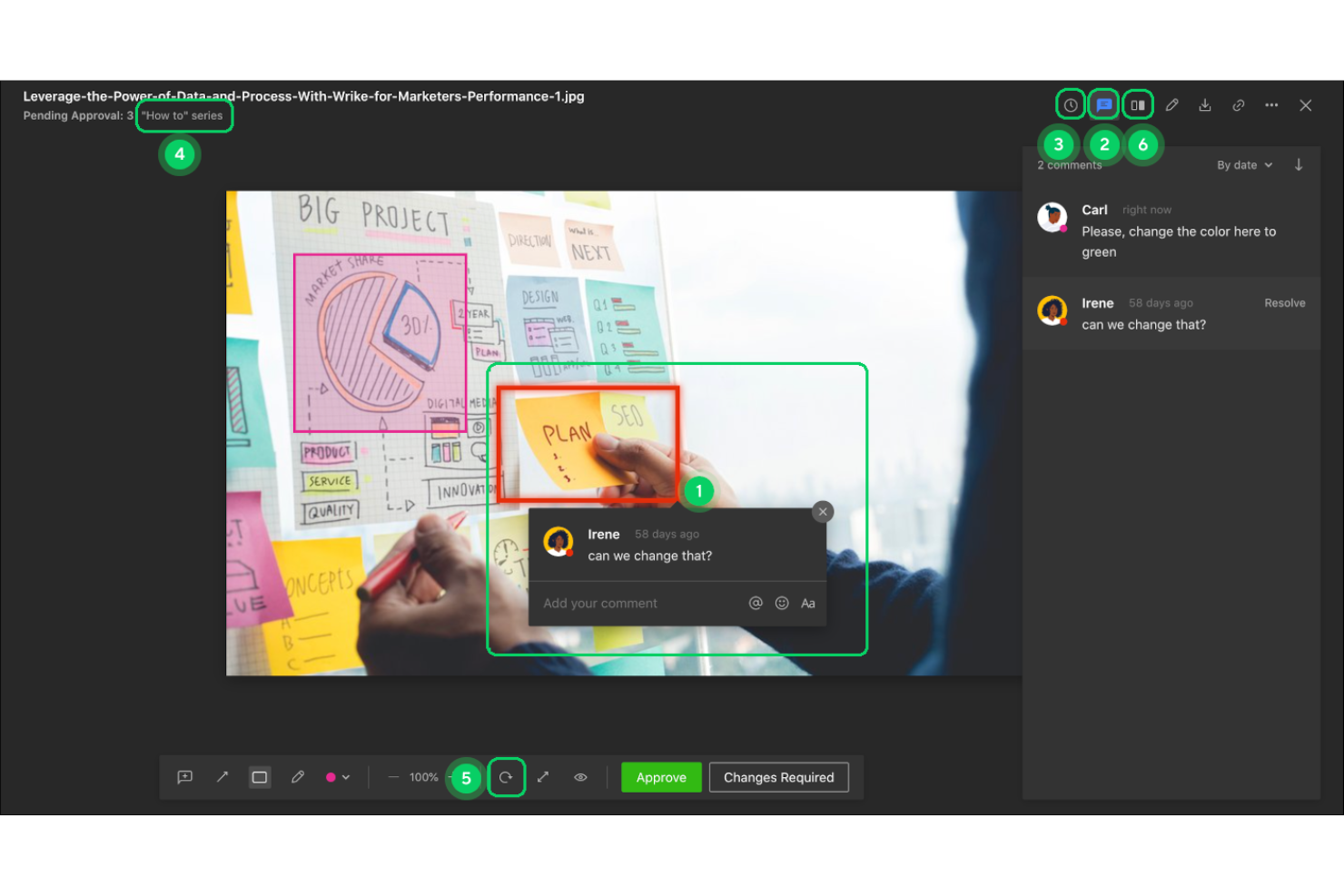
Wrike's proofing feature allows you to compare file versions dynamically.
-
The user-friendly interface ensures easy navigation for your team.
-
Wrike's AI features are available in all plans at no extra cost.
cons
-
It can be unclear where form responses are stored within the tool.
-
Some integrations require an additional cost, regardless of the plan.
-
Two-factor authentication is only available with the enterprise plan.
Is Wrike Right For Your Needs?
Who Would be a Good Fit for Wrike?
Marketing teams and creative agencies would thrive with Wrike’s project management capabilities. Its proofing feature lets you compare file versions efficiently, streamlining your creative approval processes. IT departments benefit from its user-friendly interface, which simplifies complex project coordination. Wrike’s AI features, included in all plans, enhance productivity without extra costs, making it ideal for those focused on efficiency. If your team values clear communication and dynamic collaboration, Wrike is a strong contender.
-
Marketing Teams
Wrike’s proofing feature helps you streamline creative approval processes with ease.
-
Creative Agencies
Wrike’s dynamic file version comparison keeps your creative projects on track.
-
IT Departments
Wrike’s user-friendly interface simplifies complex project coordination for your team.
-
Product Development
Wrike’s AI features boost your team’s productivity without extra costs.
-
Event Management
Wrike’s task scheduling ensures your events are planned and executed flawlessly.
-
Construction Projects
Wrike’s robust project tracking keeps your construction timelines and budgets in check.
Who Would be a Bad Fit for Wrike?
Small businesses or startups with limited budgets might find Wrike less suitable due to its additional costs for certain integrations and advanced features. Teams that require basic project management without the need for complex features may feel overwhelmed by Wrike’s robust capabilities. If your projects don’t involve extensive file comparisons or require high-level tracking, Wrike’s feature set might be more than you need, leading to unnecessary complexity for your team.
-
Small Startups
Wrike’s additional costs for integrations might strain your limited budget.
-
Basic Task Tracking
Wrike’s robust features can overwhelm if you only need simple task management.
-
Freelancers
Wrike’s comprehensive tools might be excessive for your solo projects.
-
Non-Technical Teams
Wrike’s advanced capabilities might intimidate if your team prefers simplicity.
-
Budget-Conscious Teams
Wrike’s extra costs for certain features may not align with your financial constraints.
-
Simple Projects
Wrike’s extensive feature set can be too complex for straightforward project needs.
Nuestra Metodología de Revisión
Cómo probamos y puntuamos las herramientas
Llevamos años construyendo, refinando y mejorando nuestro sistema de prueba y puntuación de software. La rúbrica está diseñada para capturar los matices de la selección de software y los factores que hacen efectivo a un sistema, centrándose en los aspectos críticos del proceso de toma de decisiones.
A continuación, puedes ver exactamente cómo funciona nuestro proceso de prueba y puntuación en base a siete criterios. Esto nos permite proporcionar una evaluación imparcial del software basada en la funcionalidad principal, características destacadas, facilidad de uso, incorporación, soporte al cliente, integraciones, opiniones de clientes y valor por el dinero.
Funcionalidad principal (25% de la puntuación final)
El punto de partida de nuestra evaluación es siempre la funcionalidad principal de la herramienta. ¿Cuenta con las funciones y características básicas que un usuario esperaría ver? ¿Alguna de estas funciones principales está limitada a planes de precios superiores? Esperamos que la herramienta se mantenga a la par de las capacidades básicas de sus competidores.
Características destacadas (25% de la puntuación final)
A continuación, evaluamos las características destacadas poco comunes que van más allá de la funcionalidad principal normalmente encontrada en este tipo de herramientas. Una puntuación alta refleja funciones únicas o especializadas que hacen que el producto sea más rápido, eficiente, o aporte valor extra al usuario.
También evaluamos la facilidad de integración con otras herramientas habitualmente presentes en el ecosistema tecnológico para ampliar la funcionalidad y utilidad del software. Las herramientas que ofrecen muchas integraciones nativas, conexiones de terceros y acceso por API para integrar soluciones personalizadas obtienen la mejor puntuación.
Facilidad de uso (10% de la puntuación final)
Consideramos cuán rápido y fácil es ejecutar las tareas fundamentales usando la herramienta. El software con alta puntuación está bien diseñado, es intuitivo, ofrece aplicaciones móviles, proporciona plantillas y hace que tareas relativamente complejas parezcan sencillas.
Incorporación (10% de la puntuación final)
Sabemos lo importante que es una adopción rápida para un nuevo sistema, así que evaluamos cuán sencillo es aprender a usar la herramienta con una capacitación mínima. Analizamos cuán rápido un miembro del equipo puede configurarse y comenzar a usar la herramienta sin experiencia previa. Las soluciones mejor puntuadas indican que se requiere poco o ningún soporte.
Soporte al cliente (10% de la puntuación final)
Revisamos la rapidez y facilidad para obtener ayuda por teléfono, chat en vivo o base de conocimientos. Las empresas que ofrecen soporte en tiempo real obtienen las mejores puntuaciones, mientras que los chatbots obtienen las peores.
Opiniones de clientes (10% de la puntuación final)
Además de nuestras propias pruebas y valoraciones, consideramos la puntuación neta del promotor de clientes actuales y anteriores. Revisamos la probabilidad de que, ante la opción, quisieran elegir la herramienta de nuevo por su funcionalidad central. Un software con una puntuación alta refleja una gran satisfacción de sus usuarios actuales o pasados.
Valor por el dinero (10% de la puntuación final)
Por último, tomando en cuenta todos los criterios mencionados, comparamos el precio promedio de los planes básicos respecto a las funciones principales y el valor aportado por los otros criterios. El software que entrega más por menos recibirá una puntuación superior.
Core Features
Custom Workflows
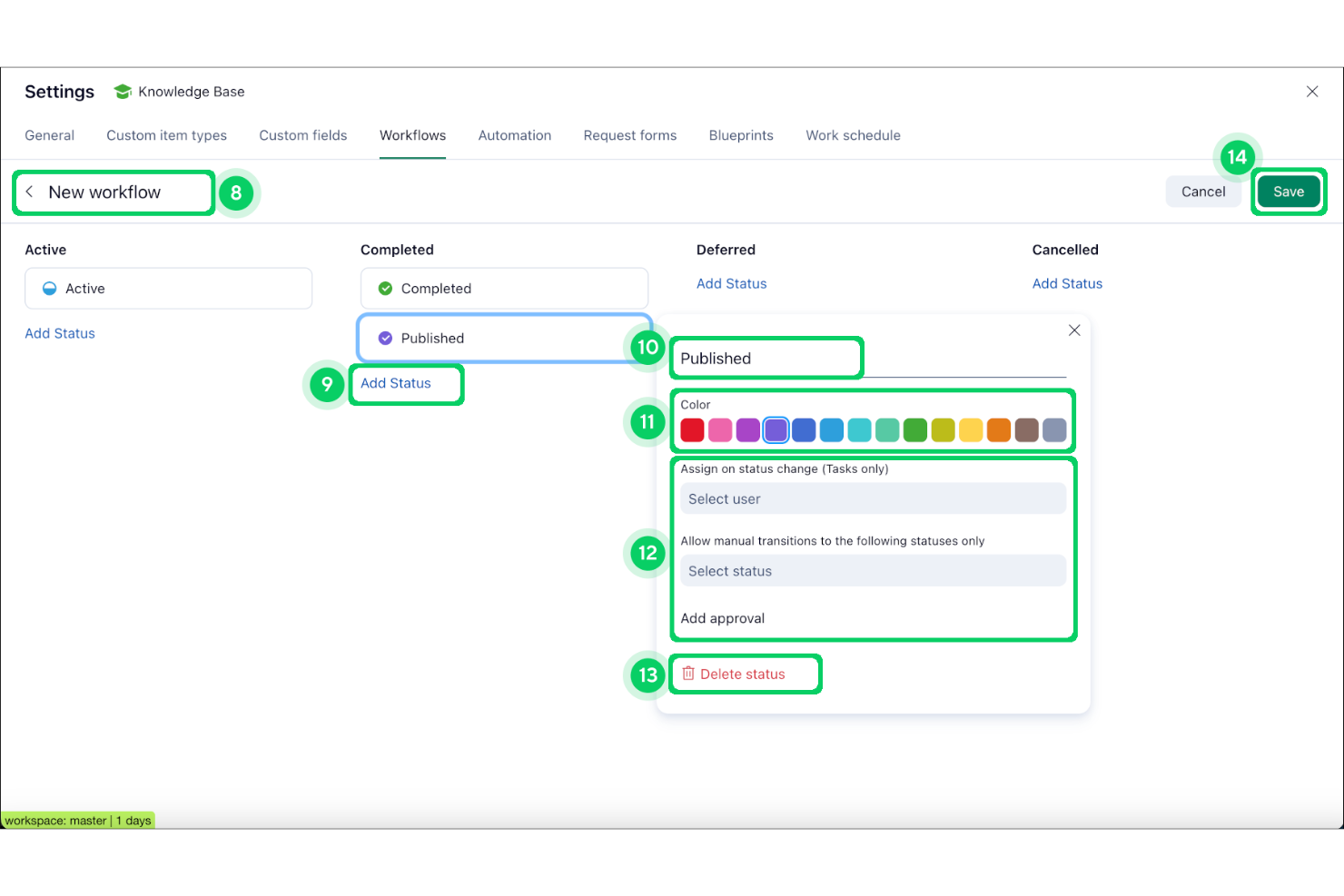
Design and automate multi-step processes tailored to your team’s needs. Trigger actions, assign tasks, due dates, and set approvals for any project type.
Task Dependencies
Link tasks to visualize and control project sequences. Prevent bottlenecks by ensuring work starts only when prerequisites are complete.
Dynamic Request Forms
Collect project requests with customizable forms that auto-route submissions. Standardize intake and reduce manual triage for new work.
Real-Time Collaboration
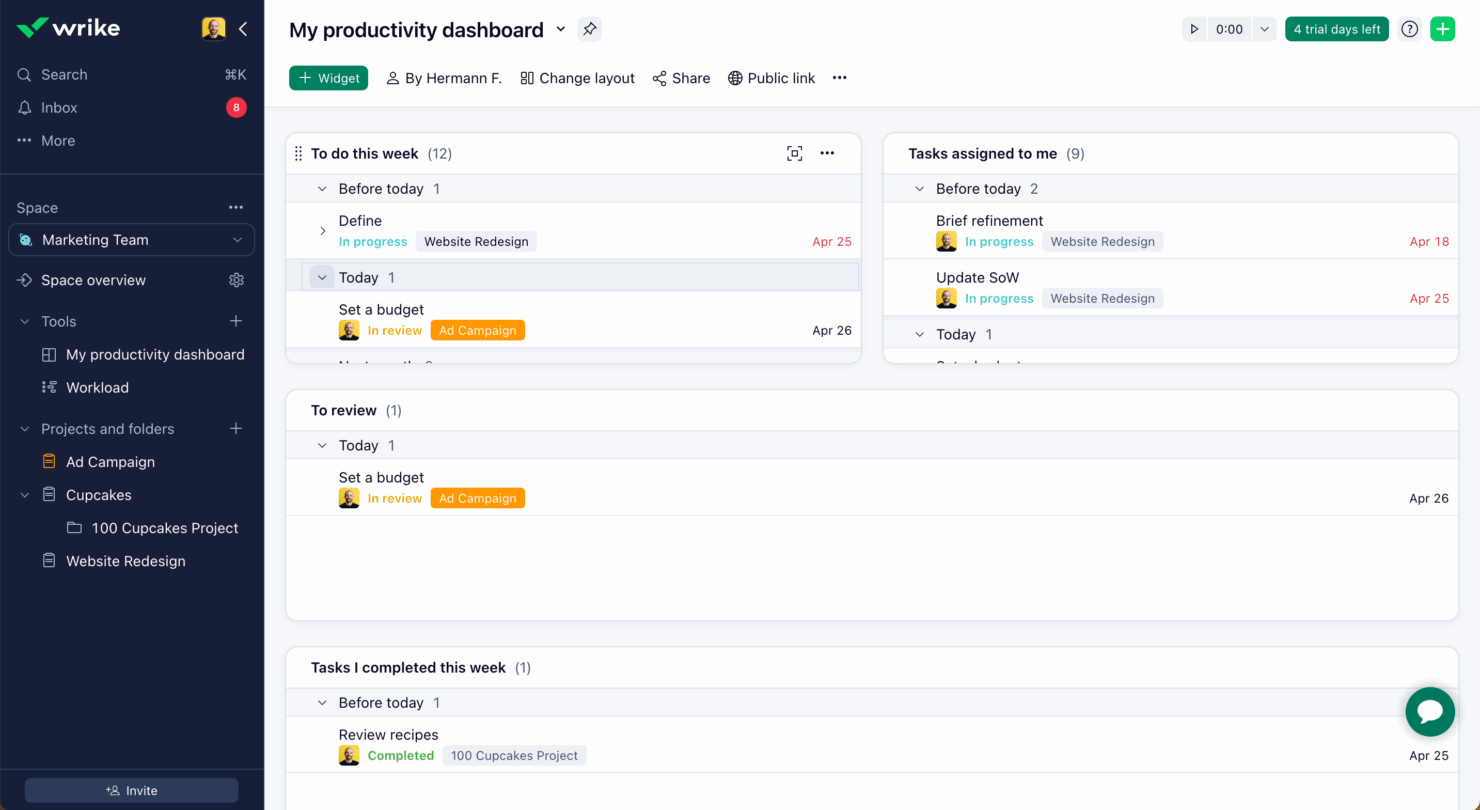
Comment, edit, and share files directly within tasks. Keep feedback and discussions centralized for easy reference.
Resource Management
Allocate team members, track workloads, and forecast capacity. Balance assignments to avoid overloading or underutilizing staff.
Advanced Reporting
Build interactive dashboards and export detailed analytics. Monitor project health, team performance, and deadlines in one place.
Standout Features
Proofing and Approval Tools
Wrike offers built-in markup and feedback tools for images, videos, and documents, allowing teams to review and approve assets without leaving the platform. This streamlines creative workflows.
Blueprints for Project Templates
Wrike’s Blueprints let you create reusable templates for projects, including pre-set assignees, timelines, and dependencies. This feature accelerates project setup and ensures consistency.
Ease of Use
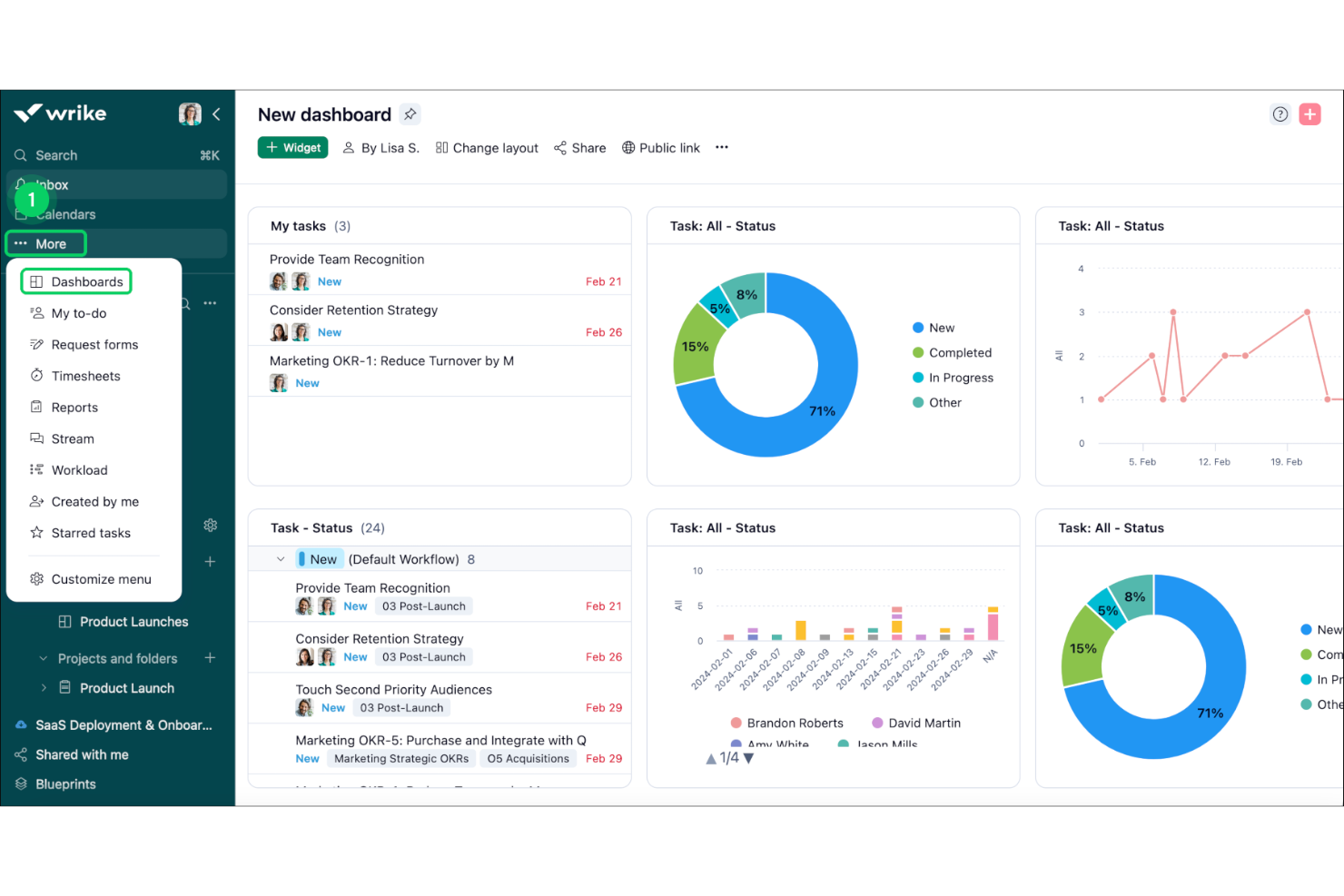
Wrike offers a user-friendly interface with a slight learning curve, making it approachable for most teams. Its drag-and-drop functionality and clear layout help you organize tasks efficiently within a shared workspace, including visual kanban boards and Gantt charts. However, some users find the extensive features overwhelming initially. Once you get the hang of it, the customizable workflows and dashboards make managing projects intuitive. It's a solid choice if you're ready to invest a bit of time to unlock its full potential.
Onboarding
Wrike's onboarding process is straightforward, with ample resources to help your team get started quickly. The platform provides tutorials, webinars, and support to guide you through setup and feature use. Some users mention the initial learning curve, but Wrike's comprehensive support eases the transition. The onboarding experience ensures your team can start leveraging its features effectively, reducing time to value and helping you integrate the tool into your workflow efficiently.
Customer Support
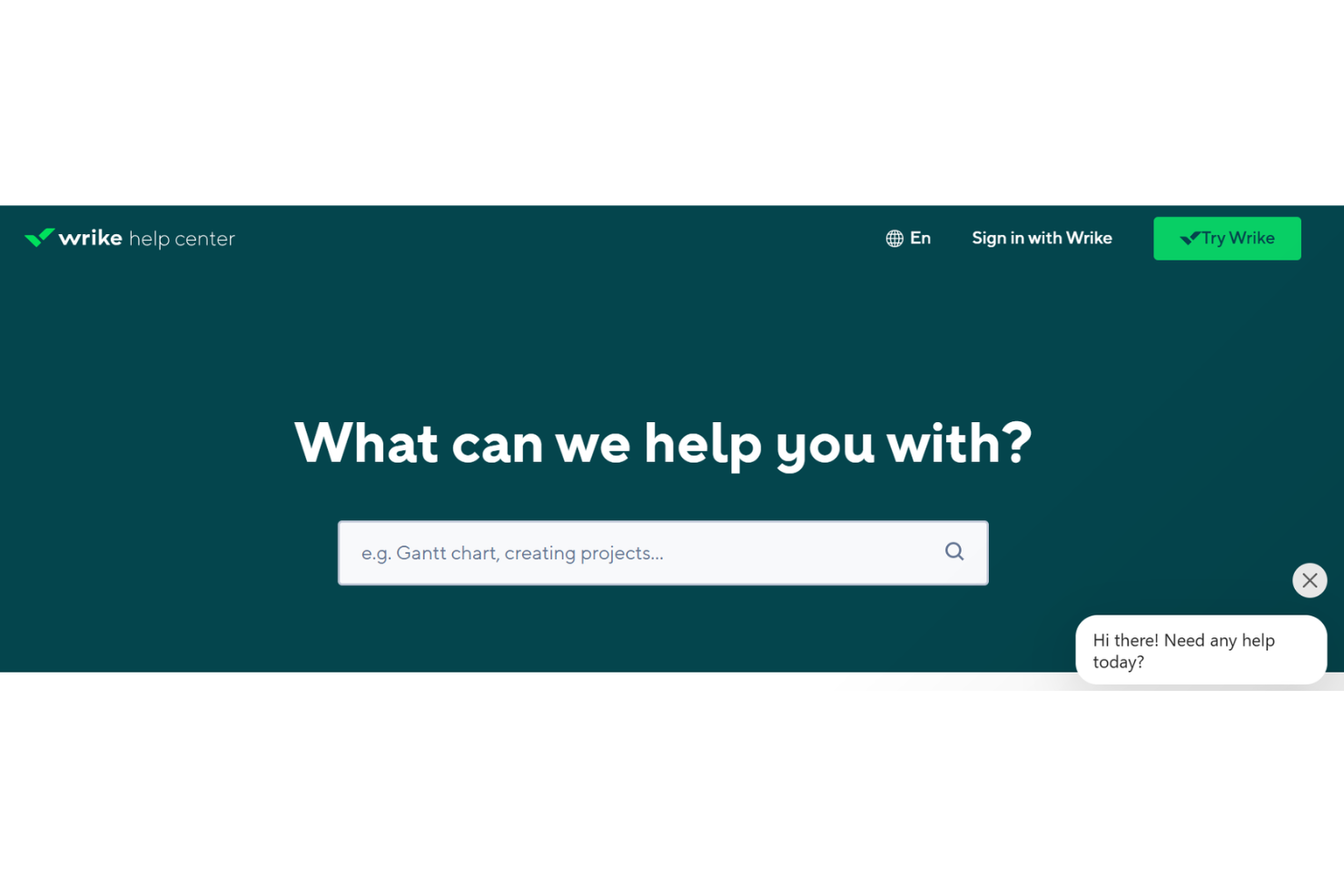
Wrike offers reliable customer support with various channels like chat, email, and phone to assist your team. Users appreciate the prompt and helpful responses, which ensure any issues are resolved quickly. The availability of extensive online resources, including a knowledge base and community forums, enhances user experience by providing additional support options. This comprehensive support system ensures you can maximize Wrike's capabilities and address any challenges effectively.
Integrations
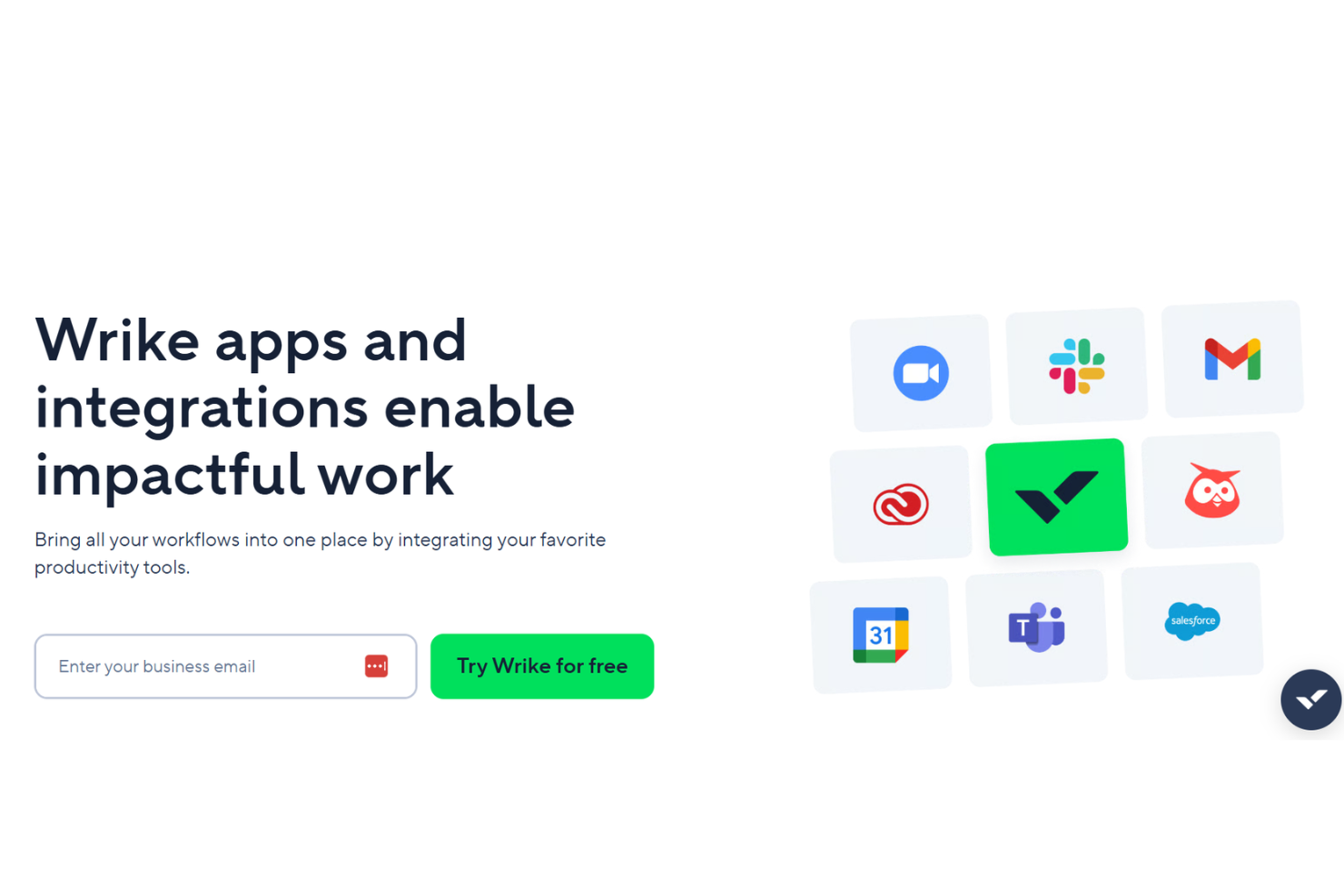
Wrike integrates with Microsoft Teams, Google Drive, Salesforce, Slack, Jira, Adobe Creative Cloud, Dropbox, Box, Outlook, and Zoom, among others.
Wrike also offers an open API and connects with third-party integration tools like Zapier for expanded connectivity.
Value for Money
Wrike’s pricing reflects its advanced feature set, with many users finding strong value in its customization, automation, and reporting tools, especially at higher tiers. However, smaller teams or those with basic needs may find the cost high for features they won’t use, and some advanced capabilities are only available on premium plans. A free plan and trial is available to test out the features before committing to a paid plan.
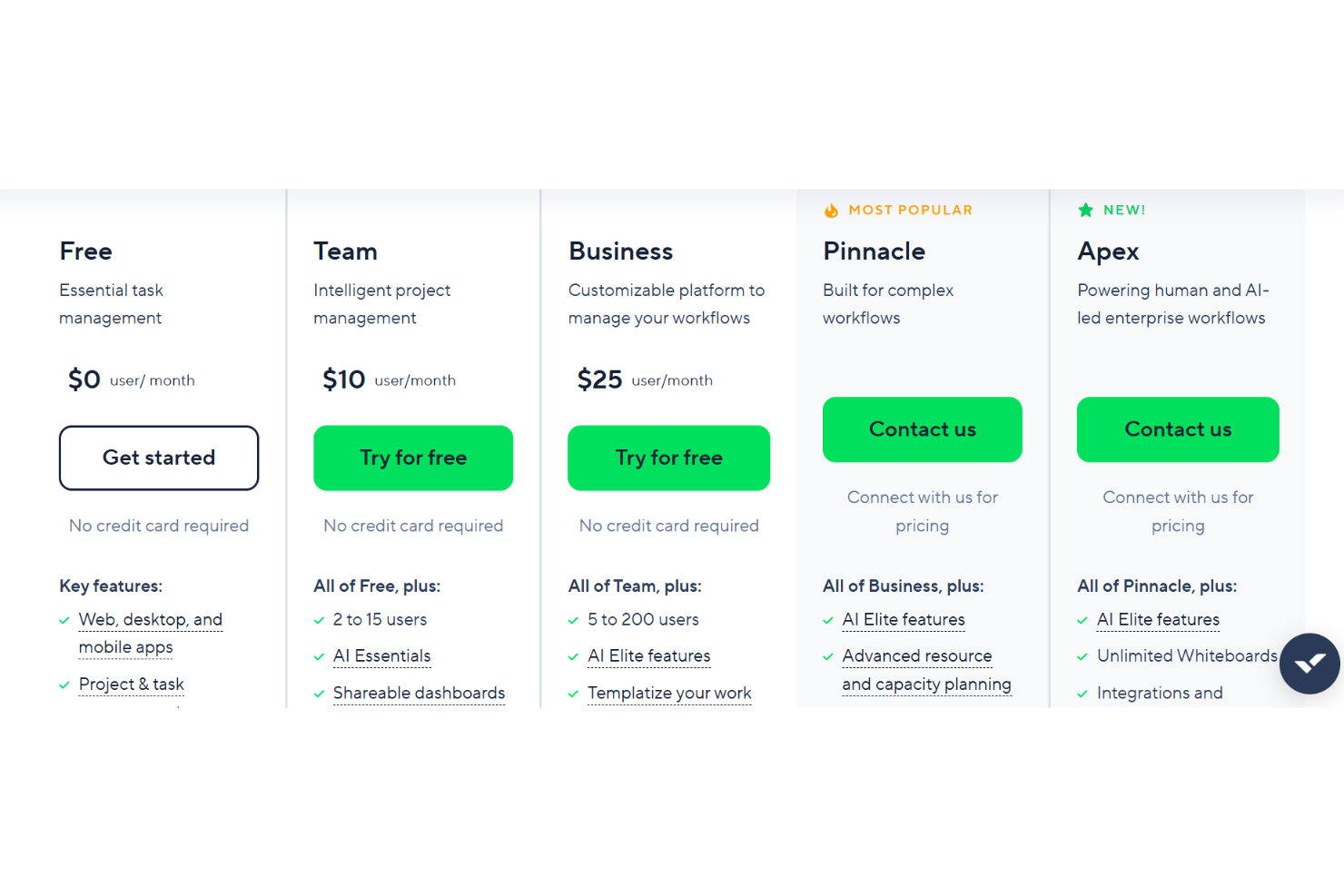
- Free: No cost. Basic task and project management for small teams.
- Team: Adds dashboards, interactive Gantt charts, and up to 25 users.
- Business: Includes custom workflows, advanced reporting, and resource management.
- Enterprise: Offers advanced security, permissions, and scalability for large organizations.
- Apex: Top-tier for enterprise workflows with AI-led automation, unlimited whiteboards, with deeper automation and integration capabilities through Wrike add-ons.
New Product Updates from Wrike

Wrike Adds Quick Search to Table View
Wrike’s Table View now includes Quick Search, making it easier to locate work items without manually scanning long tables. This improves navigation and speeds up everyday work by surfacing relevant results immediately, even in large datasets. Highlights include:
- Full-Table Search: Search across the entire Table View, including items not yet loaded.
- Multiple Fields: Find matches in task titles, descriptions, and other fields.
- Highlighted Matches: See matching keywords highlighted in item names for faster scanning.
Visit Wrike’s official site for more details.
 for more details.
Wrike Adds Cross-Project Dependencies in Gantt
Wrike adds project-to-project dependencies, milestones on project bars, predecessor delay details, dependency notifications, and API access in Gantt. These updates give teams clearer visibility into how project changes affect broader programme and portfolio timelines. Highlights include:
- Cross-Project Dependencies: Link projects directly in Gantt or from the item view.
- Milestone Visibility: Show project milestones directly on Gantt project bars.
- Delay Details: See which predecessor project caused a conflict and the estimated delay.
- Dependency Notifications: Notify teams when a direct predecessor project changes status.
- API Access: Use project dependency data in integrations and custom reporting.
Visit Wrike’s official site for more details.

Wrike Activity Reports Add Actor Type Details
Wrike has enhanced Activity Reports to improve audit clarity and admin oversight. You can now see not just what changed, but the type of actor that made the change, making it easier to trace sources and validate governance. Highlights include:
- Actor Type: Identifies whether changes came from the UI, Automation, Wrike Agents, API, or MCP.
- App Name: Shows the application involved in a change when available.
- Client ID: Adds client identification details for applicable activity.
- Actor Type Filters: Lets admins filter reports by the source of changes.
- Audit Visibility: Helps teams distinguish human, automated, API, and AI-driven activity.
Visit Wrike’s official site for more details.

Wrike Adds Custom Color Palettes for Dashboards
Wrike has introduced Dashboards Color Customization to help teams make dashboards clearer and more consistent at a glance. You can create custom color palettes and reuse them across dashboard widgets to match your team’s terminology and visual standards. Highlights include:
- Custom Color Palettes: Lets users build color palettes for individual dashboards.
- Widget-Wide Styling: Applies palette colors across dashboard widgets, workflow statuses, and custom fields.
- Color Controls: Supports HEX codes, eyedropper selection, and reusable color presets.
- Design Preview: Lets users preview dashboard colors in light and dark mode before saving.
- Widget Reset: Allows individual widgets to revert to default colors without changing the full dashboard.
- Dashboard-Level Scope: Keeps customization limited to the selected dashboard without changing account-wide colors.
Visit Wrike’s official site for more details.

Wrike AI Agents Create Full Blueprints and Formatted Items
Wrike AI Agents can create complete blueprint structures in one step and generate formatted descriptions with headings, lists, checkboxes, bold text, and highlights. These updates reduce manual setup for standardized workflows. Highlights include:
- Blueprint Creation: Creates parent items and subtasks from a selected blueprint in one step.
- Standardized Workflows: Launches predefined project structures automatically when triggered.
- Rich Descriptions: Generates formatted content with headings, bullets, checkboxes, bold text, and highlights.
- Formatting Preservation: Keeps rich formatting in execution logs and the testing playground.
Visit Wrike’s official site for more details.

Wrike Adds Successors Column for Task Dependencies
Wrike adds a Successors column to Table and Gantt views with direct dependency editing and bi-directional syncing with Predecessors. This gives teams a clearer way to manage downstream task relationships. Highlights include:
- Successors Column: Shows which downstream tasks depend on the current task.
- Direct Editing: Lets users add or edit dependencies using row numbers, dependency types, and lag duration.
- Bi-Directional Sync: Updates the Predecessors column automatically when successor relationships change.
- Table and Gantt Support: Makes the column available in both Table view and the Gantt chart table.
Visit Wrike’s official site for more details.

Wrike Adds Reference Lines and Custom Field Calculation Controls
Wrike lets users add reference lines to column, bar, line, and area charts, while calculated custom fields can now be computed per line or per group. These updates give teams more control over how targets, thresholds, and formula-based metrics appear in dashboards. Highlights include:
- Reference Lines: Adds target, threshold, or benchmark lines to supported Dashboard charts.
- Custom Labels: Lets users customize reference line labels and colors.
- Per-Line Calculations: Applies calculated field formulas to each row before summarizing results.
- Per-Group Calculations: Applies formulas after grouped values are totaled for metrics such as ROI.
Visit Wrike’s official site for more details.

Wrike Adds Organization-Wide AI Usage Tracking
Wrike gives Account Admins a dedicated AI Usage view to monitor AI Essentials and AI Elite activity across the organization, including monthly trends and breakdowns by user, feature, and Agent. Admins can also export the data to CSV for deeper reporting and analysis. Highlights include:
- AI Usage Trends: Tracks monthly AI usage across the organization.
- User Breakdown: Shows usage by individual users.
- Feature and Agent Breakdown: Separates usage by AI features and Agents.
- CSV Export: Exports usage data for further reporting and analysis.
Visit Wrike’s official site for more details.

Wrike Inbox Adds Search and Notification Filters
Wrike Inbox adds keyword search across all Inbox sections and filters for Approvals and @mentions. The update makes it easier to narrow notifications and manage only the results that match the current search. Highlights include:
- Inbox Search: Searches notifications across Incoming, Sent, and Archive.
- Approval Filters: Lets users filter Inbox activity to show approval-related notifications.
- @Mention Filters: Helps users focus on notifications where they were mentioned.
- Targeted Bulk Actions: Applies actions such as Mark as unread and Archive all only to matched search results.
Visit Wrike’s official site for more details.
Wrike AI Agents Add Dynamic Mentions, Teams Alerts, and New Templates
Wrike AI Agents add dynamic role-based @mentions, people-field actions, Teams group chat notifications, timed pauses, and new prebuilt agent templates. The updates give teams more flexibility to automate assignments, notifications, and time-dependent workflows. Highlights include:
- Dynamic @Mentions: Resolves authors, assignees, approvers, and followers into live @mentions at runtime.
- People Field Support: Lets agents read people-type custom fields and use those users for assignments or notifications.
- Teams Group Chats: Sends notifications directly to Microsoft Teams group chats with links back to Wrike items.
- Wait Before Acting: Lets agents pause for a specified time before executing actions.
- Prebuilt AI Agents: Adds Revision Tracker, Project Coordinator, and Missed Deadline agent templates.
Visit Wrike’s official site for more details.
Wrike Specs
- API
- Batch Permissions & Access
- Budgeting
- Calendar Management
- Collaboration Support
- Contact Management
- Contact Sharing
- Customer Management
- Dashboard
- Dashboards
- Data Export
- Data Import
- Data Visualization
- Dependency Tracking
- Document Sharing
- Expense Tracking
- External Integrations
- File Sharing
- Gantt Charts
- Kanban Boards
- Multi-User
- Notifications
- Project Management
- Resource Management
- Scheduling
- Task Scheduling/Tracking
- Third-Party Plugins/Add-Ons
- Time Management
- Travel Management
- Workflow Management
Wrike FAQs
How does Wrike handle data security and compliance?
Can I customize Wrike to fit my team’s workflow?
How does Wrike support remote teams?
What kind of training and resources does Wrike offer?
How do I manage user permissions in Wrike?
Does Wrike offer reporting and analytics?
How reliable is Wrike’s performance and uptime?
Can I integrate Wrike with other tools my team uses?
Wrike Company Overview & History
Wrike is a collaborative work management platform founded in 2006 by Andrew Filev. Headquartered in San Jose, California, Wrike has expanded its global presence with offices in cities such as Dallas, Dublin, Prague, Tokyo, and Melbourne. The company employs over 1,000 people and serves more than 20,000 organizations across 140 countries.
In 2018, Wrike received a majority investment from Vista Equity Partners, a firm specializing in software, data, and technology-enabled businesses. Subsequently, in 2021, Citrix Systems acquired Wrike for $2.25 billion, integrating it into its portfolio to enhance its collaborative work solutions. Following this, Citrix merged with TIBCO Software to form the Cloud Software Group.
Wrike is recognized for its strong workplace culture, having been named a "Best Place to Work" by the San Francisco Business Times and the Silicon Valley Business Journal. The company emphasizes diversity and inclusion through various employee resource groups, such as Wrike with Pride, Wrikers of Color, and Women of Wrike.
Wrike Major Milestones
- 2006: Wrike was founded by Andrew Filev and released its beta version.
- 2013: Launched Wrike Enterprise platform.
- 2015: Raised $15 million in Series B funding led by Scale Venture Partners.
- 2016: Opened EMEA headquarters in Dublin and launched "Wrike for Marketers."
- 2018: Received majority investment from Vista Equity Partners.
- 2021: Acquired by Citrix Systems for $2.25 billion.
- 2022: Citrix merged with TIBCO Software to form Cloud Software Group