

SysAid Test 2026: Vorteile, Nachteile, Funktionen & Preise



SysAid is an IT service management software that helps organizations efficiently manage their IT services and support. It's ideal for IT departments in medium to large enterprises, such as healthcare providers, educational institutions, and financial services, where streamlined operations and rapid response are crucial. SysAid offers value by simplifying complex IT processes, saving you time and helping your team focus on strategic tasks.
In this article, you'll learn about SysAid's features, pros and cons, best and worst use cases, and pricing. As a digital project manager, you'll appreciate how this tool can align with your goals and enhance your team's productivity.
SysAid Evaluation Summary

- From $89/agent/month
- Free trial available
Warum Sie unseren Software-Empfehlungen vertrauen können
Unser Team testet und bewertet Software seit 2012. Als Projektmanager wissen wir selbst, wie schwierig – und wichtig – es ist, die richtige Software auszuwählen.
Für diesen Leitfaden haben wir Tools mithilfe von praktischen Tests und unabhängiger Recherche bewertet und dabei unsere Bewertungskriterien angewendet. Zudem greifen wir auf Erkenntnisse von Branchenvordenkern und praktizierenden Projektmanagement-Experten zurück.
Unsere Bewertungen spiegeln unser menschliches redaktionelles Urteilsvermögen wider, keine Verkaufsstrategie.
Expertenprüfer:
SysAid Overview
In my opinion, SysAid is a solid choice for IT service management, especially for mid-sized to large enterprises. It offers robust features and reliable customer support, which can be a deciding factor for teams needing consistent assistance. While its pricing might be on the higher side for smaller businesses, the value it provides in terms of automation and workflow management makes it worthwhile. Compared to competitors, it excels in support and user experience but might lack some integration flexibility. It's best suited for environments that prioritize comprehensive service management over extensive third-party integrations.
pros
-
You can automate repetitive tasks, saving your team time.
-
Its user-friendly interface makes it easy for your team to navigate.
-
The robust customer support ensures you get help when you need it.
cons
-
You might find the onboarding process a bit overwhelming.
-
It may not offer as much flexibility in integrations as you'd like.
-
Some users report that the system can be slow with large data sets.
Is SysAid Right For Your Needs?
Who Would be a Good Fit for SysAid?
SysAid is ideal for IT departments in mid-sized to large enterprises where managing complex IT tasks efficiently is crucial. If your work involves frequent ticket management and automating repetitive tasks, you'll benefit from its robust automation features. Industries like healthcare, education, and finance, where compliance and quick response times are vital, will find its user-friendly interface and reliable customer support particularly useful.
-
Healthcare Providers
SysAid helps you manage IT support efficiently by automating ticketing and ensuring compliance.
-
Educational Institutions
You can streamline your IT operations and support staff and students with its intuitive interface.
-
Financial Services
SysAid offers robust security features to protect sensitive data while managing IT tasks.
-
Mid-Sized Enterprises
You’ll appreciate its automation capabilities to handle large volumes of IT requests seamlessly.
-
Mid-Sized Enterprises
You’ll appreciate its automation capabilities to handle large volumes of IT requests seamlessly
-
IT Support Teams
Your team can benefit from its efficient ticket management and reliable customer support.
-
Government Agencies
SysAid offers the compliance tools needed to meet strict regulatory requirements in public sectors.
Who Would be a Bad Fit for SysAid?
SysAid might not be the best fit for small startups or businesses with limited IT infrastructure, as its robust features and automation capabilities could be overwhelming and unnecessary for smaller teams. If your team doesn't need extensive IT management tools or if you prioritize extensive third-party integrations, you might find SysAid lacking in flexibility. Also, teams with limited budgets may find the cost prohibitive without fully utilizing its features.
-
Small Startups
Your team might find SysAid's extensive features excessive for minimal IT needs.
-
Freelancers
The platform's capabilities may be too complex and unnecessary for solo work.
-
Boutique Agencies
You may not benefit from its robust IT management features if your focus isn't IT-centric.
-
Non-IT Departments
If your work doesn't involve IT support, you'll likely find SysAid irrelevant.
-
Budget-Conscious Teams
The cost may not justify the investment if you don't need full-scale IT management.
-
Highly Mobile Teams
You might find the platform's focus on desktop management cumbersome for mobile-first operations.
Unsere Bewertungsmethodik
Wie wir Tools testen & bewerten
Wir haben jahrelang unser System zur Softwareüberprüfung und -bewertung aufgebaut, verfeinert und verbessert. Das Bewertungsschema wurde entwickelt, um die Feinheiten der Softwareauswahl und die Effektivität eines Tools einzufangen, wobei der Fokus auf den entscheidenden Aspekten des Entscheidungsprozesses liegt. Unten sehen Sie genau, wie unser Test- und Bewertungssystem über sieben Kriterien hinweg funktioniert. So können wir eine objektive Einschätzung der Software auf Grundlage von Kernfunktionen, herausragenden Merkmalen, Benutzerfreundlichkeit, Onboarding, Kundenservice, Integrationen, Kundenbewertungen und Preis-Leistungs-Verhältnis bieten.
Kernfunktionalität (25% der Gesamtbewertung)
Ausgangspunkt unserer Bewertung ist immer die Kernfunktionalität des Tools. Hat es die grundlegenden Funktionen, die ein Nutzer erwarten würde? Sind einige dieser Kernfunktionen nur in höherpreisigen Tarifen verfügbar? Wir erwarten, dass ein Tool mindestens den grundlegenden Leistungsumfang seiner Mitbewerber erfüllt.
Herausragende Funktionen (25% der Gesamtbewertung)
Anschließend bewerten wir außergewöhnliche Funktionen, die über die üblichen Kernfunktionen hinausgehen. Eine hohe Bewertung spiegelt spezialisierte oder einzigartige Eigenschaften wider, durch die das Produkt schneller, effizienter oder für den Nutzer besonders wertvoll wird. Wir bewerten auch, wie einfach sich das Tool in andere Tools integrieren lässt, die üblicherweise im Tech-Stack zu finden sind, um die Funktionalität zu erweitern. Lösungen mit vielen nativen Integrationen, Drittanbieter-Anbindungen und API-Zugang zur Erstellung individueller Verknüpfungen schneiden am besten ab.
Benutzerfreundlichkeit (10% der Gesamtbewertung)
Wir berücksichtigen, wie schnell und einfach sich die Aufgaben – basierend auf der Kernfunktionalität – mit dem Tool erledigen lassen. Eine hohe Bewertung erhalten Tools, die durchdacht gestaltet und intuitiv bedienbar sind, mobile Apps und Vorlagen bieten und sogar komplexe Aufgaben einfach erscheinen lassen.
Onboarding (10% der Gesamtbewertung)
Wir wissen, wie wichtig eine schnelle Einführung im Team ist, und bewerten deshalb, wie leicht ein Tool mit minimaler Schulung erlernt und genutzt werden kann. Wir prüfen, wie schnell neue Teammitglieder ohne Vorkenntnisse starten können. Lösungen, die wenig oder gar keine Unterstützung erfordern, erhalten die höchste Bewertung.
Kundenservice (10% der Gesamtbewertung)
Wir überprüfen, wie schnell und unkompliziert Hilfe per Telefon, Live-Chat oder Wissensdatenbank verfügbar ist. Tools und Unternehmen, die Echtzeit-Support bieten, schneiden am besten ab; Chatbots am schlechtesten.
Kundenbewertungen (10% der Gesamtbewertung)
Neben unseren eigenen Tests beziehen wir auch den Net Promoter Score aktueller und ehemaliger Nutzer ein. Wir prüfen die Wahrscheinlichkeit, mit der sie das Tool erneut für die Kernfunktionalitäten wählen würden. Ein hohes Ergebnis spiegelt einen hohen Net Promoter Score bei aktuellen oder früheren Kund:innen wider.
Preis-Leistungs-Verhältnis (10% der Gesamtbewertung)
Abschließend vergleichen wir – unter Berücksichtigung aller anderen Kriterien – den Durchschnittspreis der Einstiegstarife mit den Kernfunktionen und bewerten das Preis-Leistungs-Verhältnis. Software, die mehr Leistung für weniger Geld bietet, bekommt die höchsten Werte.
Core Features
Ticket Management
SysAid lets you track and manage IT issues efficiently, so your team can resolve them quickly. Its intuitive interface makes it easy to categorize and prioritize tickets.
Automation Rules
You can automate repetitive tasks with SysAid, helping your team save time and reduce errors. This feature allows you to set rules for ticket routing and escalation.
Knowledge Base
SysAid provides a centralized repository for storing solutions and best practices. Your team can access this information to solve issues faster.
Asset Management
With SysAid, you can track and manage IT assets, ensuring you know the status and location of your equipment. This helps in planning upgrades and replacements.
Self-Service Portal
Users can submit tickets and find solutions on their own using SysAid's portal. It empowers your team to solve minor issues without IT intervention.
Reporting and Analytics
SysAid offers robust reporting tools to analyze your IT service performance. You can use this data to make informed decisions and improve service quality.

Standout Features
Customizable Dashboards
SysAid lets you tailor dashboards to match your team's specific needs, so you can focus on the metrics that matter most. This flexibility enhances your team's productivity.
Remote Control
You can access and control devices remotely with SysAid, making it easier to troubleshoot issues without being on-site. This feature is invaluable for supporting remote or distributed teams.
Ease of Use
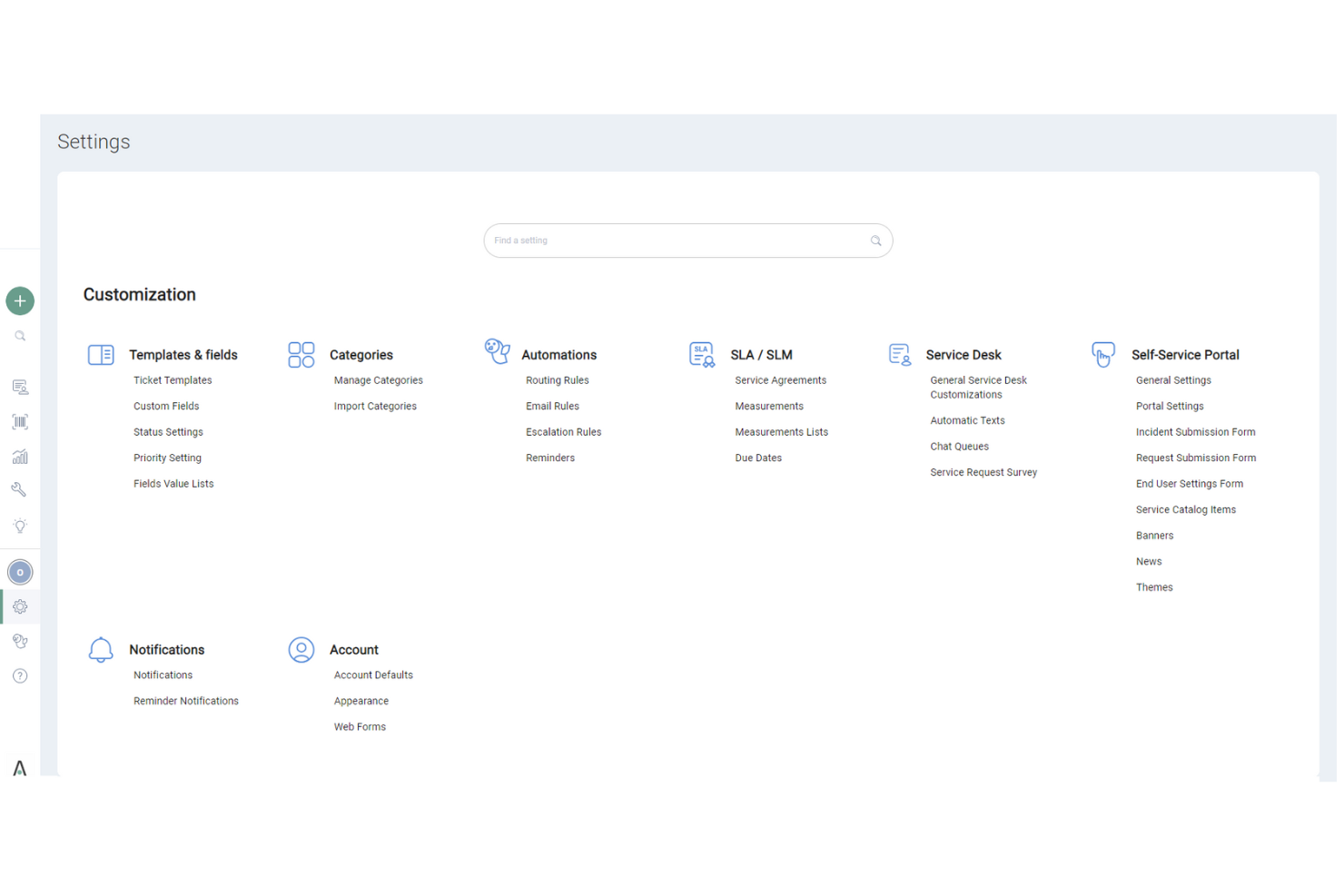
SysAid’s user interface might seem less intuitive compared to some other ITSM tools, which can be a hurdle for new users. While it offers comprehensive features, the learning curve can be steeper, especially if your team isn’t tech-savvy. However, once you get the hang of it, SysAid provides solid functionality that supports your IT processes efficiently. Users appreciate the robust asset and incident management, though initial navigation might require some patience and adaptation.

Onboarding
SysAid’s onboarding process is fairly straightforward, but it might take some time for your team to see full value. The platform offers helpful resources and responsive customer support to guide you through setup. However, the initial learning curve can be steep, especially if you’re unfamiliar with ITSM software. Users benefit from detailed documentation and training sessions that help ease the transition, though patience is required to fully leverage SysAid’s capabilities.
Customer Support
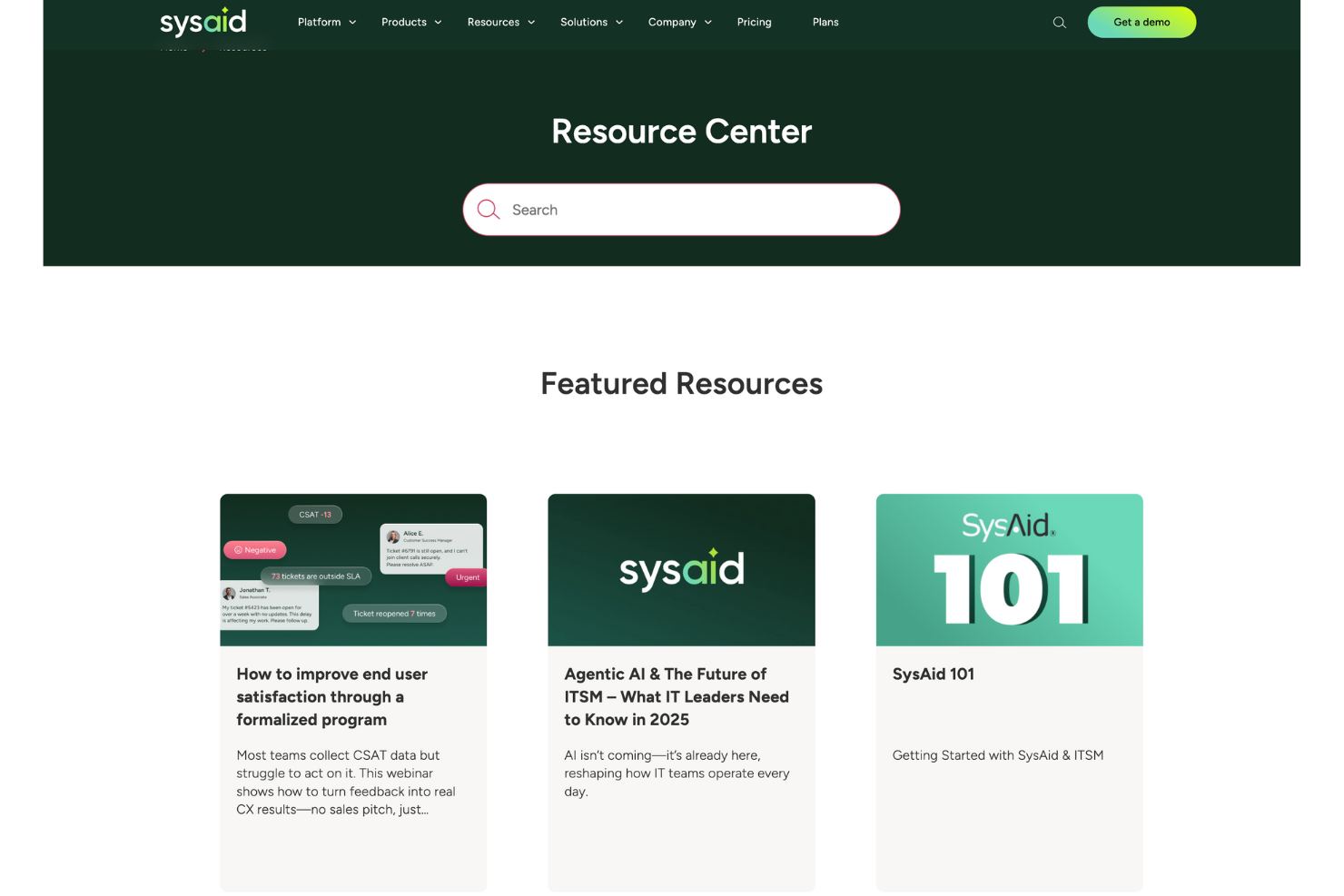
SysAid’s customer support is highly regarded for its responsiveness and effectiveness, ensuring your team gets timely assistance. Users appreciate the availability of multiple support channels, including live chat and email, which help resolve issues quickly. The support team is knowledgeable and provides clear guidance, making it easier for you to navigate any challenges. This level of support ensures that you can maintain smooth IT operations and address any concerns promptly.
Value for Money
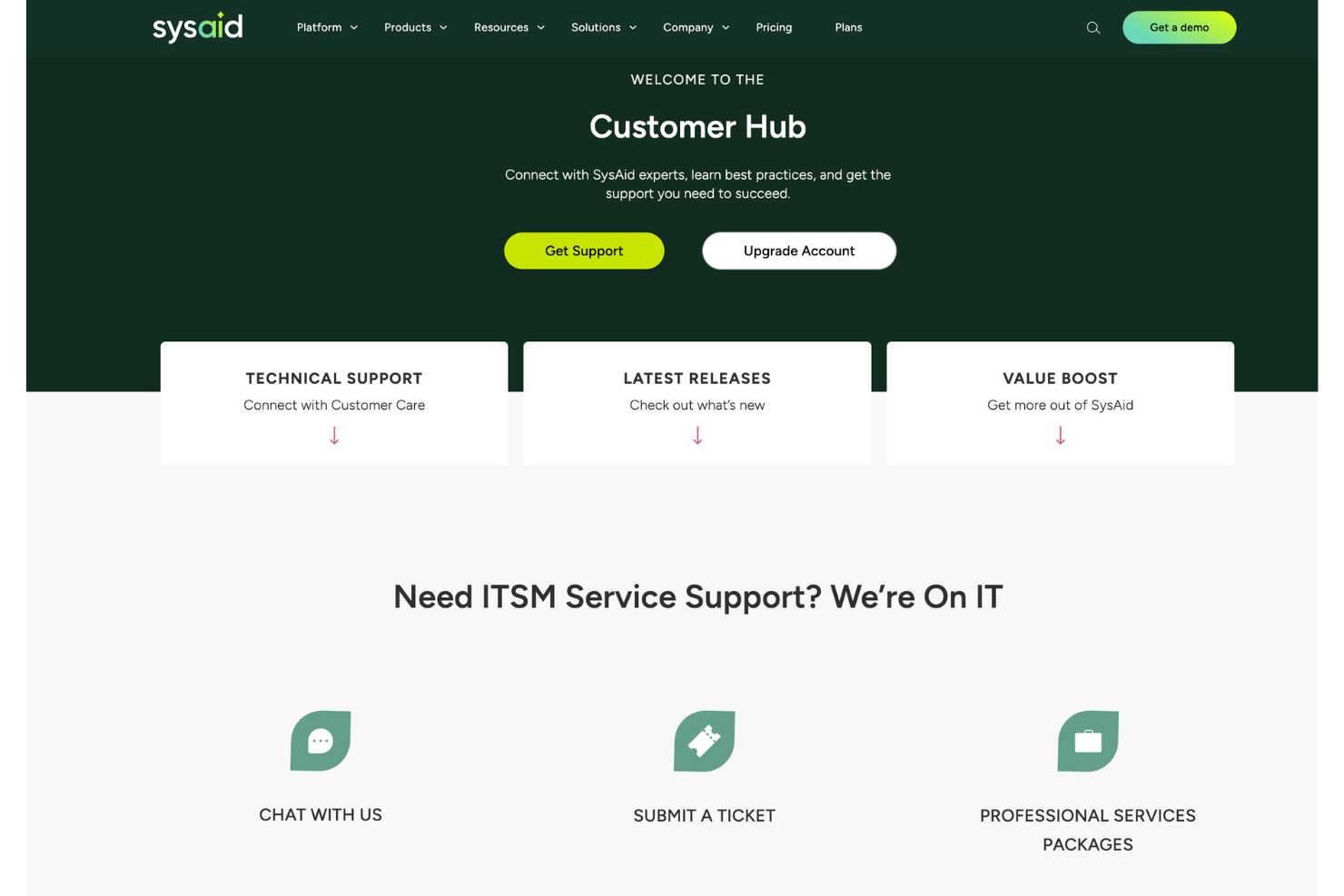
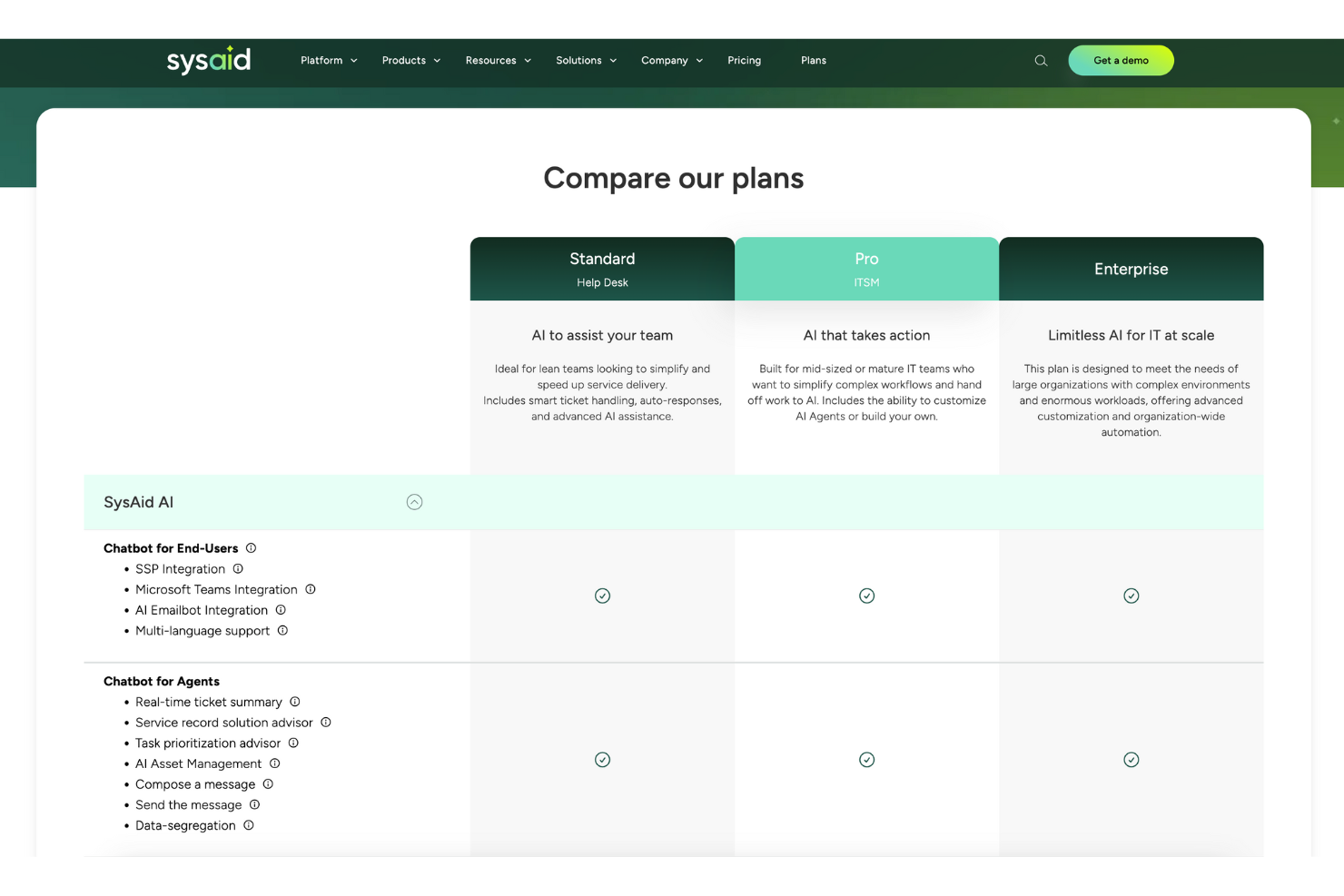
SysAid pricing feels fair because it balances robust ITSM tools with flexible plans. Users say it gives solid automation and reporting without overcomplicating budgets. The tiered model scales well, so you only pay for what your team actually needs.
- Standard: Core ITSM tools with ticketing and automation basics.
- Pro: Adds advanced automation, integrations, and more customization.
- Enterprise: Full suite with deeper analytics, service automation, and enterprise-grade support.
New Product Updates from SysAid

SysAid Adds Bulk Contract Import
SysAid’s License Manager Essentials now supports bulk contract creation, reducing manual entry and helping admins onboard contract data more quickly and consistently. The new CSV-based workflow adds validation to catch issues before contracts are created. Highlights include:
- Bulk CSV Contract Uploads: Admins can import multiple contracts at once using a CSV template.
- Contract Validation: Uploaded contract entries can be validated before creation to reduce setup errors.
- Faster Contract Setup: Teams can activate and manage contracts more efficiently with less manual work.
Visit SysAid's official site for more details.
 for more details.
SysAid Mobile App Adds AI Agents and CI Barcode Scanning
SysAid adds AI Agents, CI barcode scanning, and expanded asset management tools to its mobile app. The updates help IT teams handle service and asset management tasks more easily from mobile devices. Highlights include:
- CI Barcode Scanning: Teams can scan configuration items individually or in bulk directly from the mobile app.
- Mobile AI Agents: Users can access the same AI Agents available on SysAid desktop within the mobile app.
- Asset and CI Management: Teams can search, filter, and edit assets and configuration items directly from mobile.
Visit SysAid’s official site for more details.

SysAid Adds AI Agent Center and License Manager Chatbot Insights
SysAid adds a centralized AI Agent Center and expands the AI Chatbot with License Manager insights and AI agents. These updates help IT teams manage AI-powered workflows and access software and contract information more efficiently. Highlights include:
- AI Agent Center: Admins can manage, test, and monitor specialized AI agents across areas like security, asset management, and access control.
- License Manager AI Insights: The AI capabilities now extend into License Manager workflows, enabling teams to surface contract and SaaS intelligence while supporting broader automated asset and license management processes.
- Prebuilt AI Agents: Teams can use AI agents to analyze software usage, activity, and cost insights more quickly.
Visit SysAid’s official site for more details.
SysAid Specs
- 2-Factor Authentication
- Analytics
- Anti-Virus
- API
- Batch Permissions & Access
- Bug Tracking
- Call Integration
- Chat
- Contact Management
- CRM Integration
- Customer Management
- Data Export
- Data Import
- Email Integration
- Escalation Management
- External Integrations
- Incident Management
- Instant Chat Integration
- Knowledge Base
- Malware Protection
- Multi-User
- Notifications
- Organization Management
- Password & Access Management
- Project Management
- Real-time Alerts
- SAP Integration
- Self-service Portal
- Social Media Integration
- Support Forum
- Ticket Management
- Workflow Management
SysAid FAQs
How does SysAid handle data security and compliance?
Can SysAid support remote teams effectively?
How customizable is SysAid for different business needs?
What kind of training and resources are available for new users?
Can I integrate SysAid with other tools my team uses?
How does SysAid improve IT service delivery?
Is SysAid scalable for growing businesses?
What support options are available if my team encounters issues?
SysAid Company Overview & History
SysAid Technologies, founded in 2002 by Israel Lifshitz, is an Israeli company headquartered in Airport City, near Tel Aviv. Specializing in IT Service Management software, SysAid is a privately owned company led by CEO Sarah Lahav. Its primary product, SysAid, is used by over 100,000 organizations globally, including notable sectors like healthcare, retail, and education. The company has expanded internationally with offices in Sydney and Brazil.
SysAid Major Milestones
- 2002: Founded by Israel Lifshitz.
- 2010: Opened an office in Sydney, Australia.
- 2012: Expanded with an office in Brazil.
Wie geht es weiter?
Möchten Sie sich mit anderen digitalen Projektmanager:innen austauschen, um Ressourcen und Best Practices zu teilen? Treten Sie unserer Community bei und erhalten Sie Zugang zu über 100 Vorlagen, Mustern und Beispielen – und vernetzen Sie sich in Slack mit Hunderten anderen digitalen Projektmanager:innen.