

monday service Review: Pros, Cons, Features & Pricing


monday service is a service portal and project management software that helps you organize, track, and manage tickets, requests, and other inquiries. It best serves IT, operations, customer support, and marketing teams that thrive on teamwork and need custom workflows. monday service helps improve team alignment and productivity with its intuitive design and flexibility.
I’ve tested and evaluated monday service in detail using my years of experience in project management. Here’s my detailed review of its key features, pros and cons, best and worst use cases, and pricing to help you find out whether monday service is the right tool for your needs.
monday service Evaluation Summary
- From $9/seat/month (billed annually)
- 14-day free trial
Why You Can Trust Us
We’ve been testing and reviewing project management software since 2012. As project managers ourselves, we know how critical and difficult it is to make the right decision when selecting software.
We invest in deep research to help our audience make better software purchasing decisions. We’ve tested more than 2,000 tools for different project management use cases and written over 1,000 comprehensive software reviews. Learn how we stay transparent & our software review methodology.
monday service Overview
In my opinion, monday service is a solid choice for teams that need customizable and visually engaging ticketing and project management tools. Its standout integrations and automation capabilities make it a strong contender, although its onboarding could be smoother.
It's best suited for tech-savvy operations, IT, and marketing teams that need flexibility and the ability to set up integrations with a CRM, project management software, or HR software. monday service might not be the best fit for those who prefer a more straightforward setup, but if you're looking for a tool that can adapt to your team's needs, this tool is worth considering.
pros
-
You can customize ticket workflows to fit your team's needs.
-
Its visual interface helps your team easily track completed tickets.
-
Automation features save your team members time on repetitive tasks.
cons
-
You might find the onboarding process a bit complex.
-
Some users feel the interface can be overwhelming at first.
-
Customer support response times may not always meet your expectations.
Is monday service Right For Your Needs?
Who Would be a Good Fit for monday service?
monday service works well for teams that need to manage tasks, requests, and workflows in one place, especially those in HR, IT, customer support, or marketing. The visual boards, automations, and templates help your team stay on track and prevent tickets from slipping through the cracks. If your work involves repeatable processes or cross-team handoffs, monday service is the right match for your needs.
-
IT support teams
Track incoming requests, assign tickets, and set up automation rules to speed up resolution times.
-
Operations departments
Map out processes, manage internal requests, and create clear ownership across teams.
-
Customer support teams
Keep track of issues, follow-ups, and feedback loops in one place with simple status updates and task assignments.
-
HR teams
monday service offers templates to manage employee requests without spreadsheets or email chains.
-
Marketing departments
Plan campaigns, manage deadlines, and collaborate with designers and writers using visual workflows.
-
Legal teams
Track contract reviews, approvals, and legal requests with boards that give you transparency and accountability.
Who Would be a Bad Fit for monday service?
monday service probably isn’t for you if your team doesn’t handle internal service requests or if your workflows don’t need structure or tracking. If you’re in a role where most work happens in email, spreadsheets, or informal chats—and that’s working fine—you likely won’t get much out of it. Teams that don’t need to manage recurring requests, automate responses, or centralize communication might find it more complex than helpful.
-
Creative freelancers
If you work solo and don’t manage incoming requests or tickets, you won’t benefit from monday service’s request intake tools.
-
Manual labor crews
You’re not dealing with digital workflows, so centralized ticketing and automation features won’t apply to your daily work.
-
Executive teams
You probably don’t need detailed ticket or task-level tracking if you’re focused on strategy and high-level planning.
-
External consultants
If you don’t handle internal requests or support tickets, monday service won’t give you the kind of tracking you need.
-
Retail floor teams
Your work isn’t structured around digital requests, so service boards and intake forms won’t add value.
-
One-person departments
If you’re not managing handoffs, incoming requests, or task queues, the platform may be more than you need.
Our Review Methodology
How We Test & Score Tools
We’ve spent years building, refining, and improving our software testing and scoring system. The rubric is designed to capture the nuances of software selection and what makes a tool effective, focusing on critical aspects of the decision-making process.
Below, you can see exactly how our testing and scoring works across seven criteria. It allows us to provide an unbiased evaluation of the software based on core functionality, standout features, ease of use, onboarding, customer support, integrations, customer reviews, and value for money.
Core Functionality (25% of final scoring)
The starting point of our evaluation is always the core functionality of the tool. Does it have the basic features and functions that a user would expect to see? Are any of those core features locked to higher-tiered pricing plans? At its core, we expect a tool to stand up against the baseline capabilities of its competitors.
Standout Features (25% of final scoring)
Next, we evaluate uncommon standout features that go above and beyond the core functionality typically found in tools of its kind. A high score reflects specialized or unique features that make the product faster, more efficient, or offer additional value to the user.
We also evaluate how easy it is to integrate with other tools typically found in the tech stack to expand the functionality and utility of the software. Tools offering plentiful native integrations, 3rd party connections, and API access to build custom integrations score best.
Ease of Use (10% of final scoring)
We consider how quick and easy it is to execute the tasks defined in the core functionality using the tool. High scoring software is well designed, intuitive to use, offers mobile apps, provides templates, and makes relatively complex tasks seem simple.
Onboarding (10% of final scoring)
We know how important rapid team adoption is for a new platform, so we evaluate how easy it is to learn and use a tool with minimal training. We evaluate how quickly a team member can get set up and start using the tool with no experience. High scoring solutions indicate little or no support is required.
Customer Support (10% of final scoring)
We review how quick and easy it is to get unstuck and find help by phone, live chat, or knowledge base. Tools and companies that provide real-time support score best, while chatbots score worst.
Customer Reviews (10% of final scoring)
Beyond our own testing and evaluation, we consider the net promoter score from current and past customers. We review their likelihood, given the option, to choose the tool again for the core functionality. A high scoring software reflects a high net promoter score from current or past customers.
Value for Money (10% of final scoring)
Lastly, in consideration of all the other criteria, we review the average price of entry level plans against the core features and consider the value of the other evaluation criteria. Software that delivers more, for less, will score higher.
Core Features
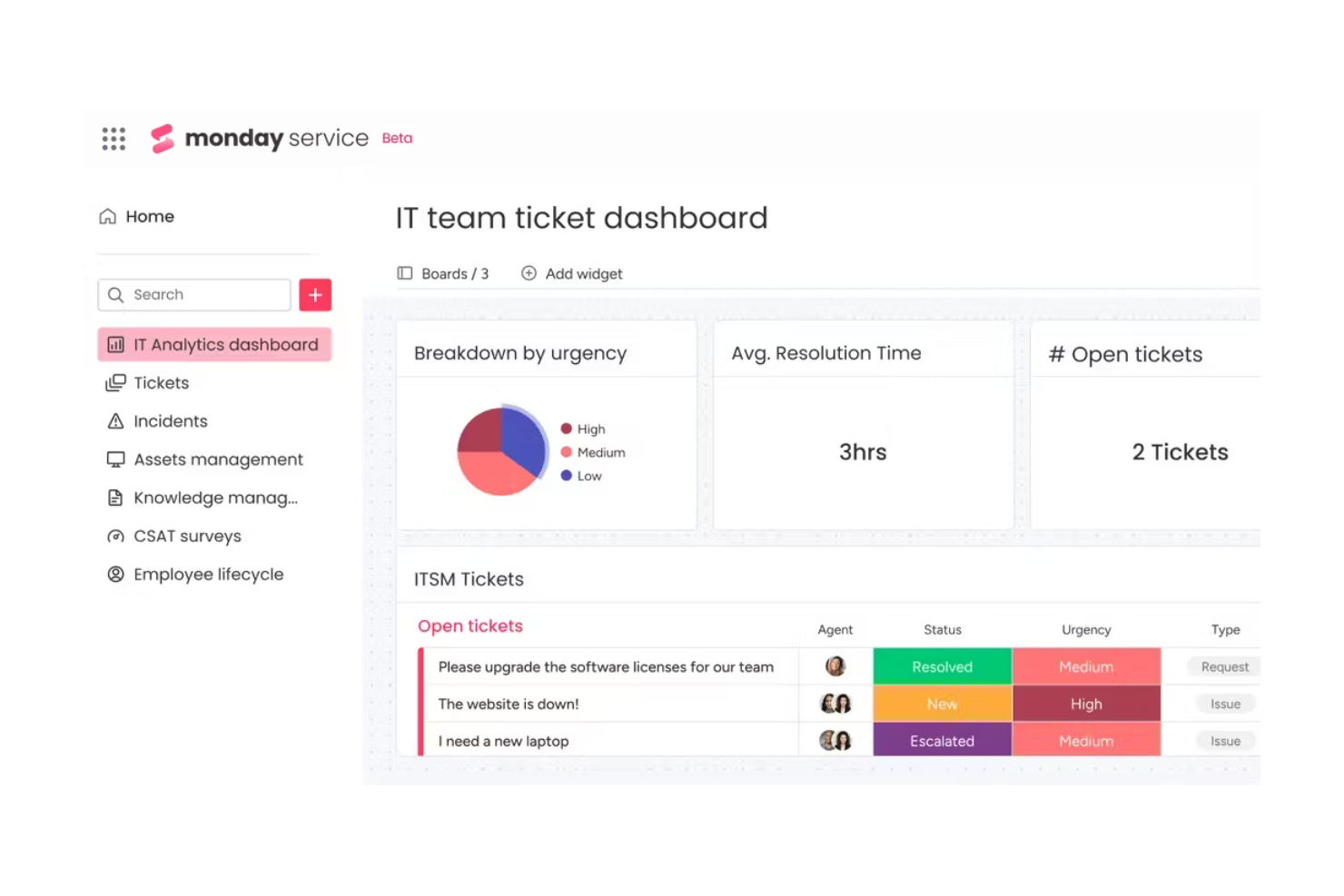
Ticket Management: You can centralize incoming requests with custom forms that auto-populate your boards. Your team gets a clear view of what’s been submitted, what’s in progress, and what’s done.
AI features: You can use AI tools to generate summaries, predict ticket categories, and suggest next steps. This helps reduce manual effort and speeds up resolution times.
Integrations with Third-Party Tools: You can connect monday service with apps like Slack, Gmail, Microsoft Teams, and more. This extends your workflows and brings monday service into your existing ecosystem.
Analytics: Use built-in analytics to measure team performance, track request trends, and identify bottlenecks. These insights help you optimize workflows and make informed decisions.
Task Management: Assign owners, set deadlines, and break down each ticket into subtasks. You always know who’s doing what and when it’s due.
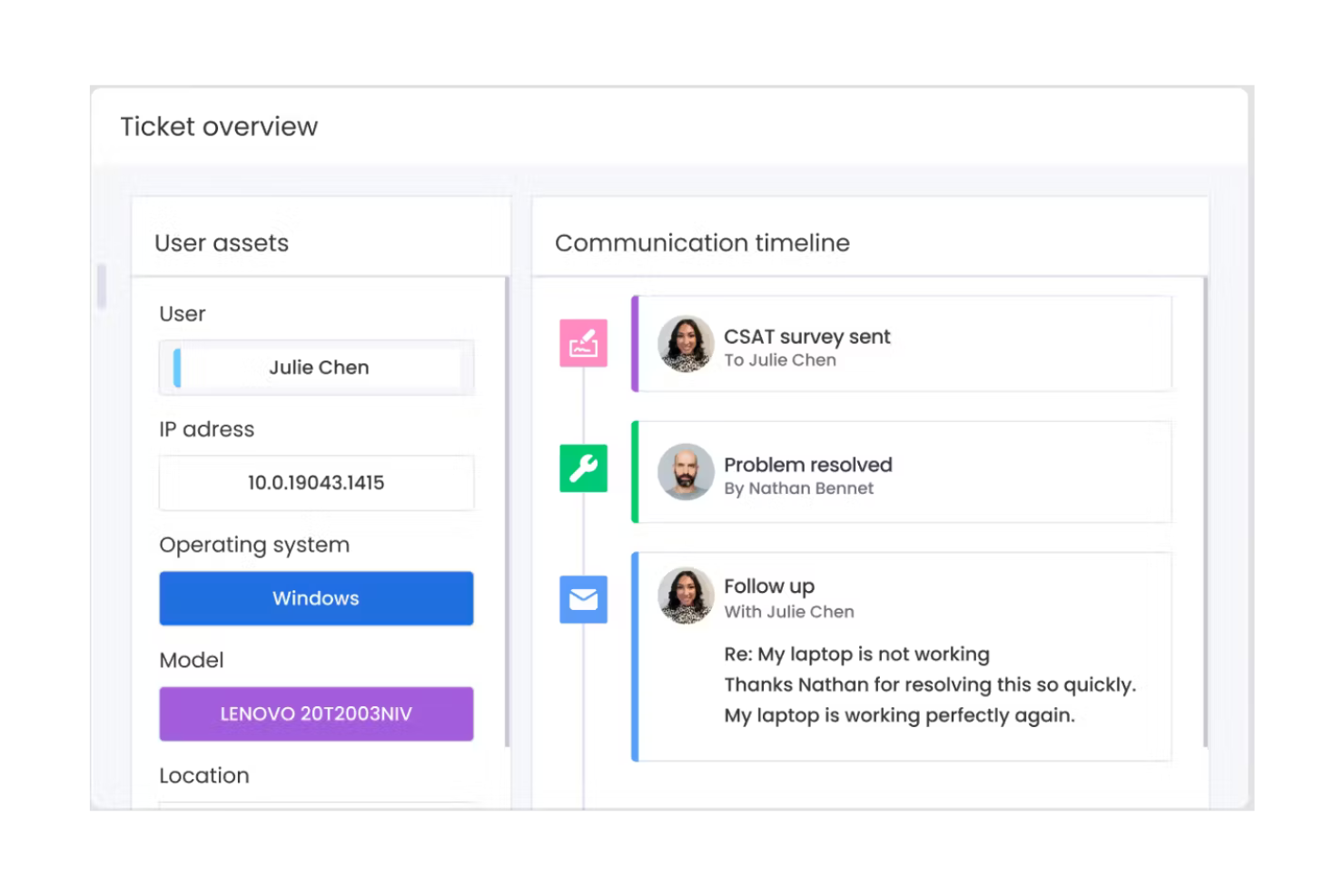
Internal Team Collaboration: Your team can comment, tag each other, and attach files directly to tickets. This keeps all updates in one place without requiring you to switch tools.
Standout Features
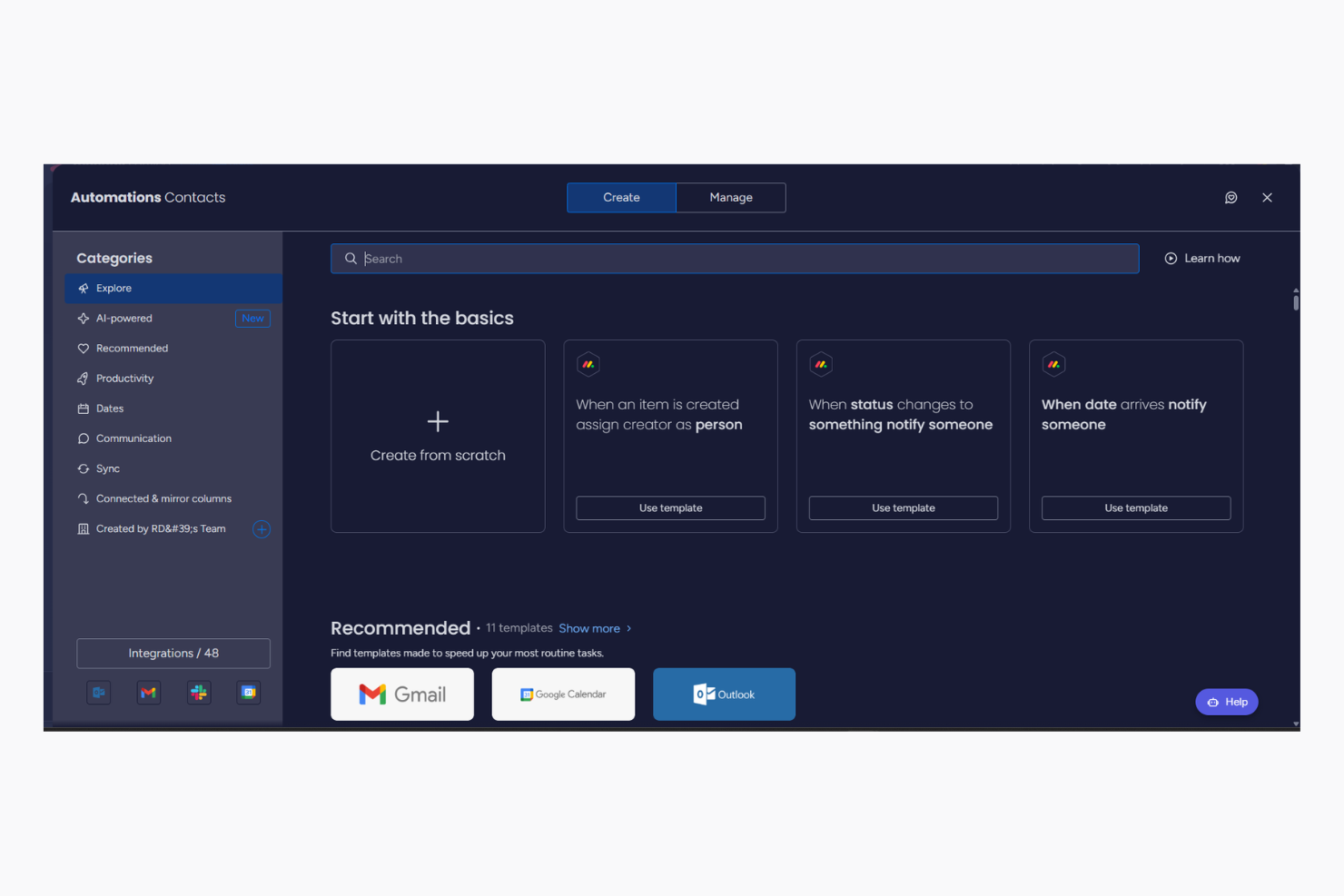
Custom Workflows: You can build workflows that reflect how your team operates using custom statuses, automations, and fields. This helps you tailor the platform to your specific processes across departments.
Templates Library: monday service offers pre-built templates for IT, HR, and operations that let you get started quickly. These templates can also be customized to match your workflows.
Ease of Use
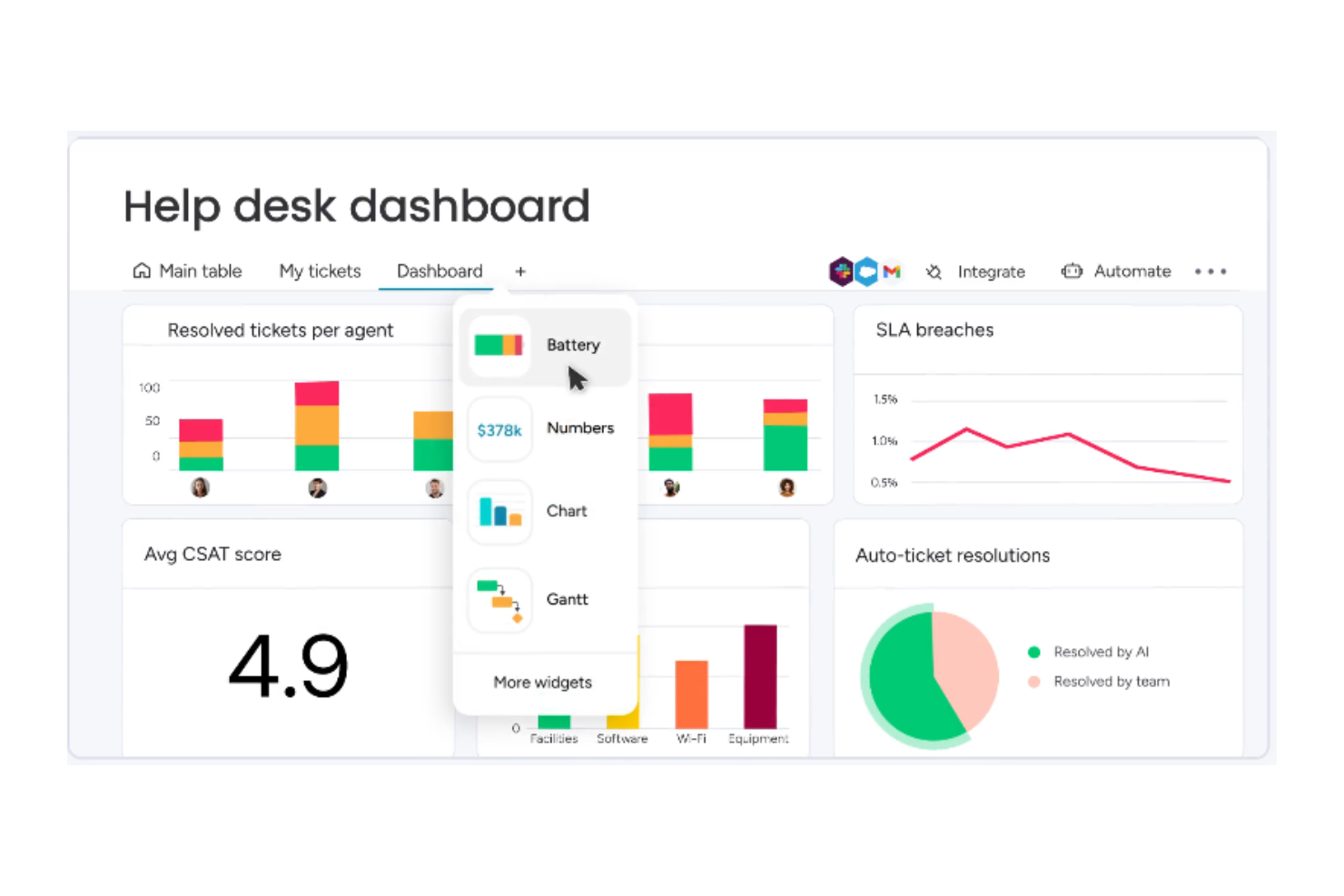
monday service offers an user-friendly interface that simplifies ticket and task management, though it might feel overwhelming at first. Its drag-and-drop functionality and visual layout make it easy to organize tickets and requests, but the initial setup requires some learning. Once you get familiar with its features, you’ll find it a powerful tool for managing workflows. Its customization options also let you tailor the platform to fit your team's specific needs.
Onboarding
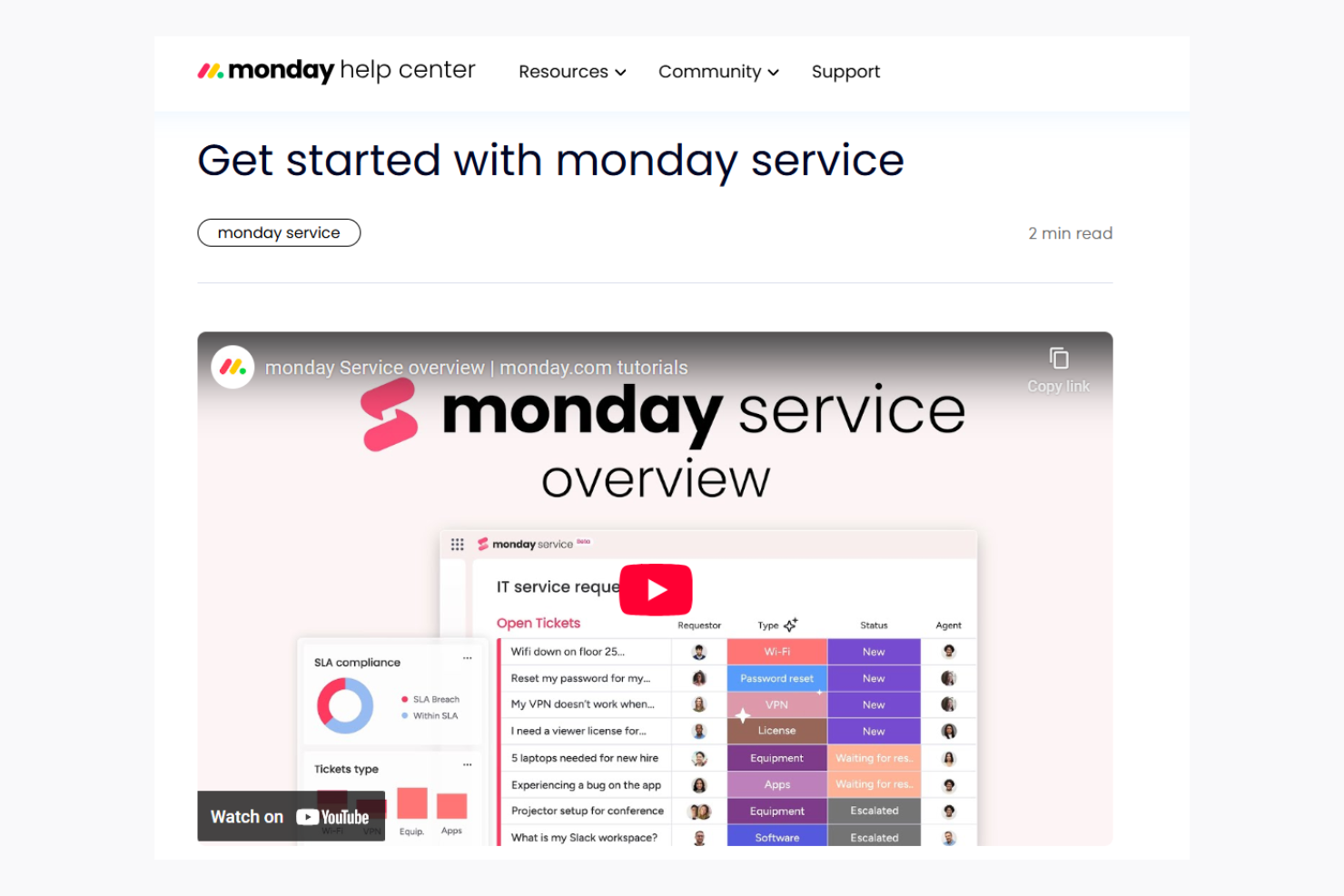
monday service's onboarding can be a bit daunting due to its extensive feature set, which might extend the time it takes for your team to see value. While it offers tutorials and guides, some users feel more personalized support could ease the transition. However, once your team navigates the initial learning curve, the platform's customization and flexibility mean you can tailor it fully to your specific needs and workflows and get the most out of it.
Customer Support
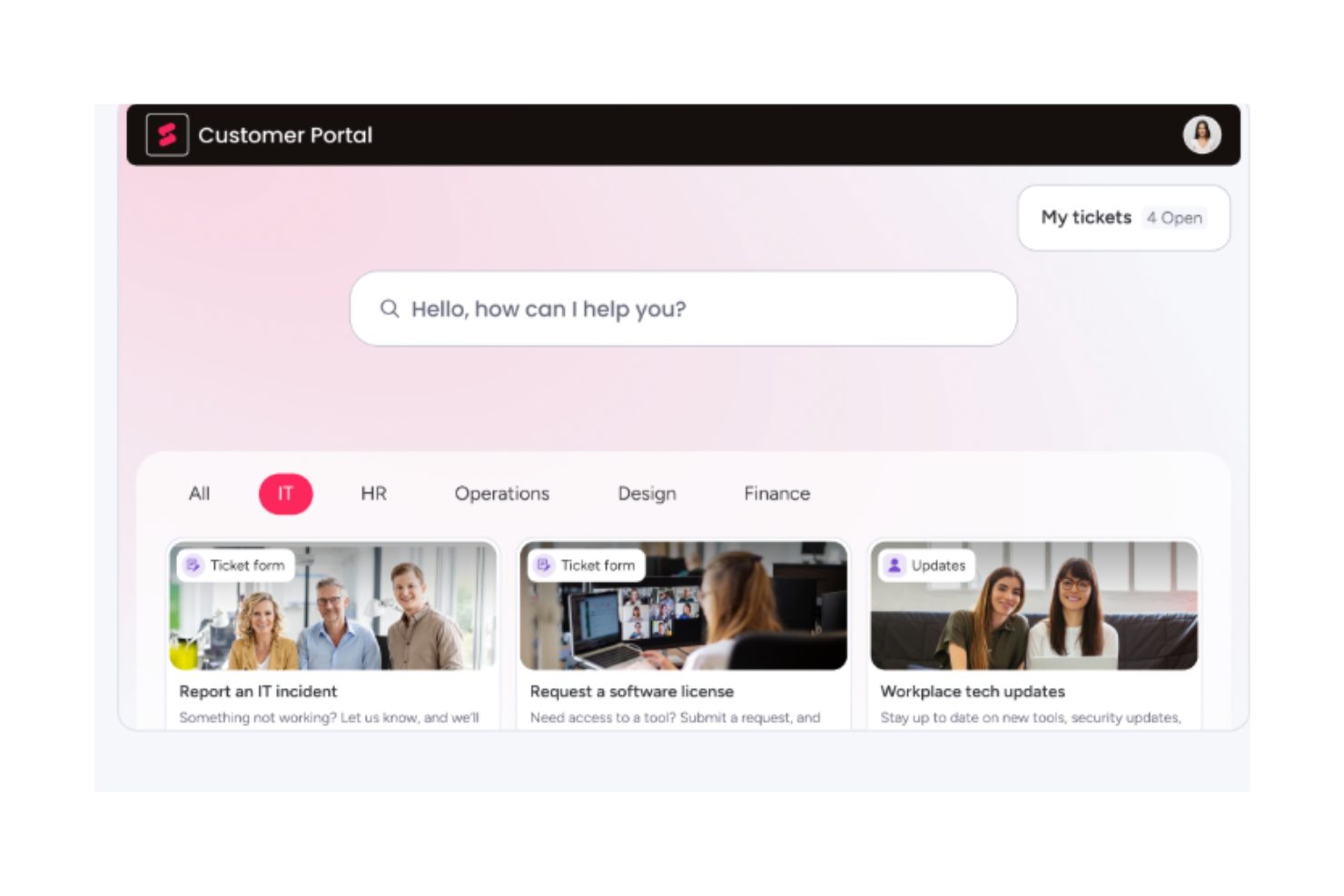
monday service offers decent customer support with multiple channels like email and chat, though response times can vary. Some users feel the need for more immediate assistance, especially during onboarding or complex task setups. The tutorials and help center provide valuable guidance, but getting direct support is more difficult. If your team requires frequent help, you might find the support adequate but not exceptional in terms of speed.
Value for Money
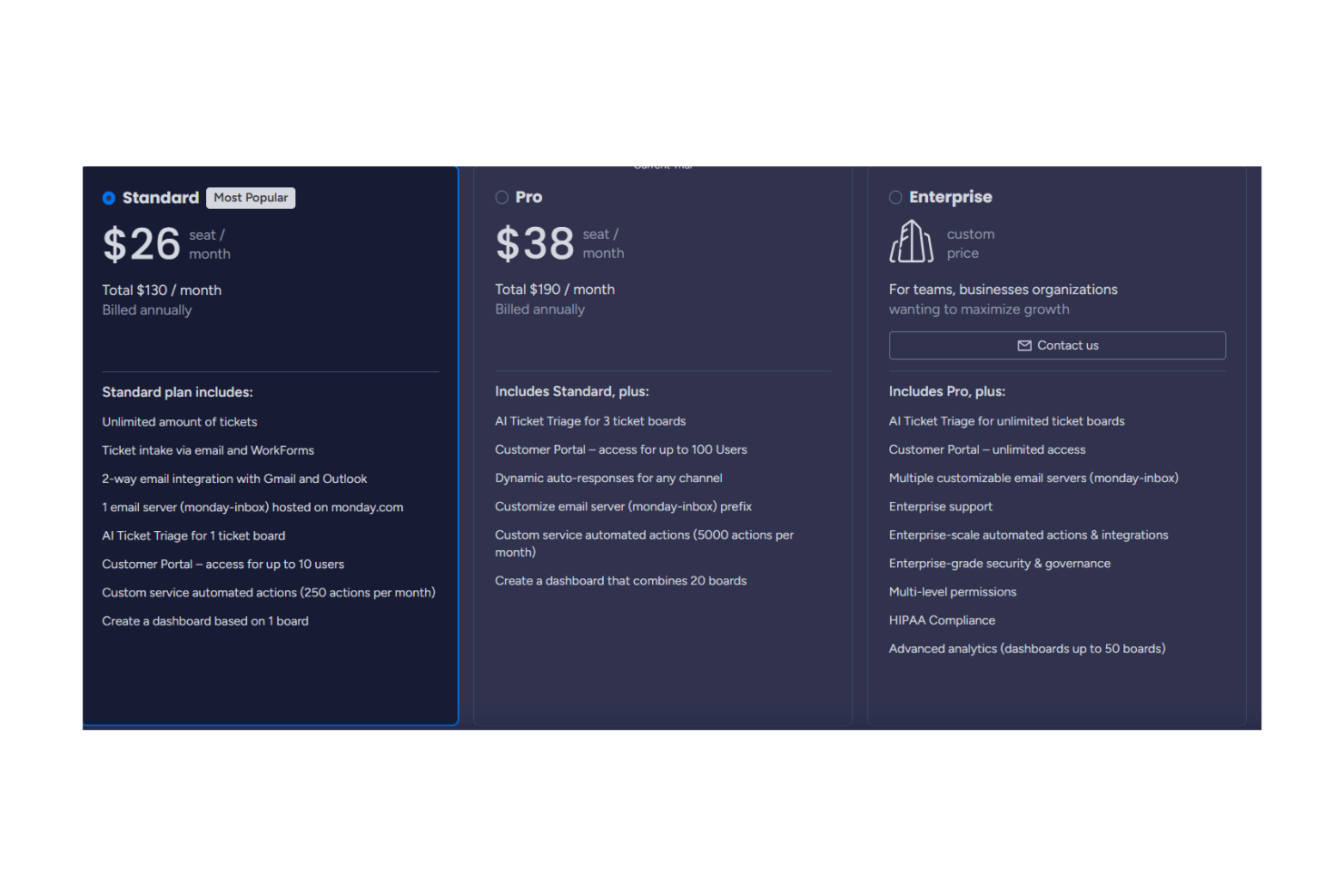
monday service’s pricing offers reasonable value with tiered plans that cater to different team sizes and needs. While some users feel it's a bit pricey, the features and customization options justify the cost for teams that can fully utilize them. With various plans, you can choose what best fits your team’s requirements and budget.
- Standard: Unlimited tickets, ticket intake via forms, and limited automations.
- Pro: Adds a customer portal, auto-responses, and additional automations
- Enterprise: Adds enterprise-level support and more advanced security and compliance features.
monday service Specs
- Analytics
- API
- Call Integration
- Chat
- Contact Management
- CRM Integration
- Customer Management
- Dashboard
- Data Export
- Data Import
- Data Visualization
- Email Integration
- External Integrations
- Instant Chat Integration
- Knowledge Base
- Lead Management
- Lead Scoring
- Multi-User
- Notifications
- Real-time Alerts
- Scheduling
- Self-service Portal
- Social Media Integration
- Support Forum
- Ticket Management
- Workflow Management
monday service FAQs
How does monday service handle data security and compliance?
Can I customize workflows in monday service?
What kind of support can I expect from monday service?
Is monday service suitable for remote teams?
Can I use monday service for agile project management?
Does monday service offer mobile access?
How scalable is monday service for growing teams?
monday service Company Overview & History
monday service is a product of monday.com, which is headquartered in Tel Aviv, Israel and well-known as a versatile work management platform. The company also provides CRM and development products. The company went public in June 2021, and in 2024, it reported significant revenue growth that reflects its expanding market presence.
monday service Major Milestones
- 2012: Founded as dapulse.
- 2014: monday.com core product is commercially launched.
- 2017: Rebranded to monday.com.
- 2019: Raised $150 million, valued at $1.9 billion.
- 2021: Went public on June 10.
- 2024: monday service is released as a separate product in January.
What's Next?
Want to connect with other digital project managers to share resources and best practices? Join our membership community and get access to 100+ templates, samples, and examples, and connect with 100s of other digital project managers in Slack.