


Ariso AI vs. Asana: Comparison and Expert Reviews for 2026



You want project management software that makes life easier—not harder. Maybe you’re juggling shifting deadlines, frustrated by siloed teamwork, or digging through disorganized updates just to get clarity. When choosing between Ariso AI and Asana, you need to know which tool truly matches your workflow, collaboration style, and daily reality. Both sit in a crowded field of work management platforms alongside ClickUp, monday.com, Notion, and Todoist—but this comparison stays on the two in the title.
In this article, I’ll show you how these two solutions compare. I’ll cover pros and cons, use cases, pricing, security, and usability. Whether you’re a solo lead or running a formal PMO, you’ll find clear guidance on which one fits your needs, plus helpful links for learning more about project management software.
Ariso AI vs. Asana: An Overview
Ariso AI
Asana

Why Trust Our Software Recommendations
Our team has been testing and reviewing software since 2012. As project managers ourselves, we know how difficult—and important—it is to choose the right software.
For this guide, we evaluated tools using hands-on testing and independent research, scoring tools using our selection criteria. We also draw on insights from industry thought leaders and practicing project management experts.
Our reviews reflect our human editorial judgment, not a sales pitch.
Expert reviewers:
Ariso AI vs. Asana Pricing Comparison
| Ariso AI | Asana | |
|---|---|---|
| Free Trial | Free demo available | Free plan available |
| Pricing | From $1/day | From $10.99/user/month (billed annually) |
Ariso AI vs. Asana Pricing & Hidden Costs
Ariso uses a low flat-rate pricing for individual users at $1 per day, with no publicly disclosed usage limits; organizations that need team-wide management, shared intelligence, and administrative features move to custom pricing. Asana offers subscription-based plans with incremental features by tier and add-ons available for specialized needs, beginning with a Starter plan before its Advanced and Enterprise steps. With both tools, you may find extra charges for premium integrations, API access, and expanded support, so it’s easy to underestimate your total costs.
To pick the right option, map out your must-have features, likely team growth, and the workflows that matter most to you. Ask vendors for demo access and a clear breakdown of what’s included versus what’s paywalled—time tracking and resource allocation are two lines that often sit behind an upgrade. I’d recommend modeling a typical use case or project scenario with support and integration requirements—this often exposes hidden costs before you commit.
Ariso AI vs. Asana Feature Comparison
| Ariso AI | Asana | |
|---|---|---|
| API | ||
| Calendar Management | ||
| Dashboard | ||
| Data Export | ||
| Data Import | ||
| Data Visualization | ||
| External Integrations | ||
| Multi-User | ||
| Notifications | ||
| Scheduling | ||
| Workflow Management |
Ariso AI vs. Asana Integrations
| Integration | Ariso AI | Asana |
|---|---|---|
| Slack | ✅ | ✅ |
| Microsoft Teams | ✅ | ✅ |
| Google Drive | ✅ | ✅ |
| Jira | ✅ | ✅ |
| Salesforce | ✅ | ✅ |
| Zoom | ✅ | ✅ |
| Trello | ❌ | ✅ |
| HubSpot | ✅ | ❌ |
| GitHub | ✅ | ✅ |
| Zendesk | ❌ | ✅ |
| API | ✅ | ✅ |
| Zapier | ✅ | ✅ |
Both Ariso AI and Asana cover most key integrations for collaboration, communication, and file management, but Asana, as the older tool, wins out for range, especially when you need direct connections with tools like Trello and Zendesk. Thanks to built-in API and Zapier support on both, most teams will find integration won’t hold them back, but Asana’s library is just broader for cross-functional teams. If your stack already leans on Airtable or Linear, check each vendor’s native list before you assume a connector exists.
Ariso AI vs. Asana Security, Compliance & Reliability
| Factor | Ariso AI | Asana |
|---|---|---|
| Data Encryption | Uses per-user end-to-end encryption for data in transit and at rest. | Encrypts all data in transit and at rest with advanced protocols. |
| Regulatory Compliance | Offers GDPR and SOC 2 compliance for data handling. | Holds certifications including GDPR, SOC 2 Type II, and more. |
| Uptime Guarantee | Promises 99.9% uptime backed by SLAs from AWS (where it's hosted). | Delivers 99.9% uptime with transparent status monitoring. |
| Access Controls | Provides SSO, role-based permissions, and detailed activity logs. | Features SSO, granular admin controls, and audit logs. |
| Incident Response | Maintains a dedicated response team with clear breach protocols. | Has rapid-response protocols and ongoing security reviews. |
Both Ariso AI and Asana meet enterprise requirements on security and regulatory fronts. Asana has a wider certification list which builds extra trust with regulated industries, but Ariso is clearly in tune with what an AI-centric platform requires. I find Asana’s transparency and longstanding track record give it an edge, but Ariso AI’s focused controls and incident readiness are great for teams prioritizing direct oversight.
Ariso AI Vs. Asana Ease of Use
| Factor | Ariso AI | Asana |
|---|---|---|
| User Interface | Modern, intuitive dashboards with AI guidance for new users. | Clean layout with simple navigation and clear visual cues. |
| Onboarding | Offers an interactive self-serve experience for small teams and personalized attention for larger teams. | Step-by-step prompts and templates speed up onboarding for teams. |
| Customization | Drag-and-drop elements with flexible workflow configurations. | Highly customizable views, rules, and task fields for any approach. |
| Mobile Experience | Mobile app supports full feature set with helpful notifications. | Mobile apps for iOS and Android deliver seamless cross-device access. |
| Support Resources | Live chat, searchable knowledge base, and AI chatbot assistance. | Extensive help center, live chat, and robust community forums. |
Both platforms are easy to pick up, but Asana’s clarity and maturity make it especially user-friendly right out of the box. Ariso AI impressed me with its helpful onboarding and the simple fact that the tool gets better and easier to use the more Ari learns your specific context. I believe Ariso AI can be the easier tool to use over time.
Ariso AI vs Asana: Pros & Cons
Ariso AI
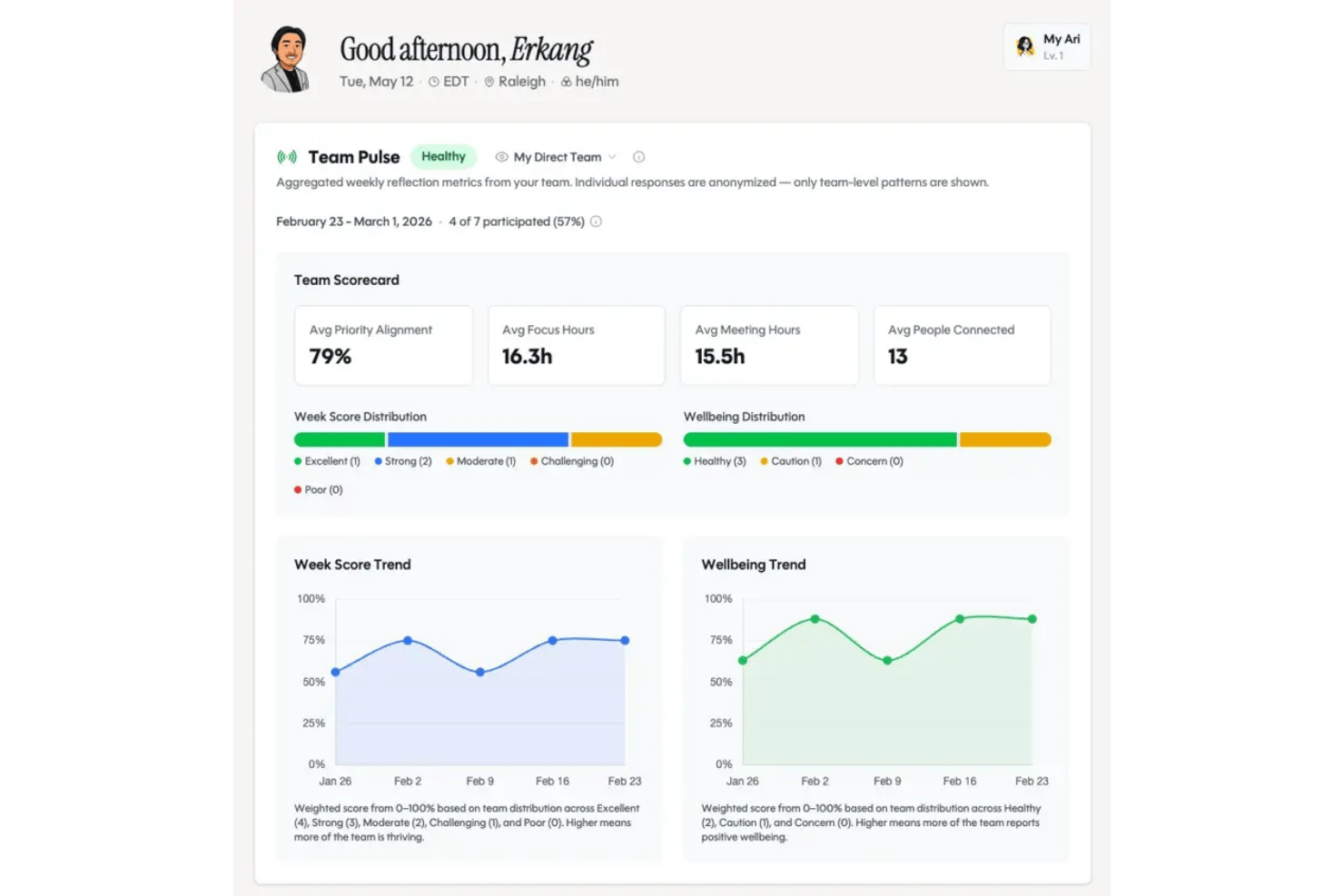
- Ari (AI agent) surfaces risks from real-time project activity
- Automatic status updates eliminate manual progress reporting
- Centralizes communication, knowledge, and project data in one hub
- Takes time to reach full value, as Ari needs to learn the context of your team’s projects.
- Requires broad team adoption for best results.
- Replacing or supplementing existing tools may require dedicated work and process changes.
Asana
- You can easily track tasks and deadlines using Asana's intuitive interface.
- Asana's collaboration tools help your team communicate effectively in real-time.
- There are extensive customization options so you can tailor workflows and views to your specific needs.
- The reporting capabilities are somewhat basic, which may not satisfy teams needing detailed analytics.
- It can feel overwhelming if your team is small or your projects are simple.
- You might find the notification system a bit excessive or distracting.
Best Use Cases for Ariso AI and Asana
Ariso AI
- Technology Teams Ariso AI works well for technology teams because it provides a shared execution layer where employees and AI agents can collaborate using the same project context while people retain control over decisions and accountability.
- Marketing Agencies Marketing teams can use automations and AI-powered reporting to coordinate campaigns, manage deadlines, and keep clients in the loop.
- Consulting Teams Ariso AI is a good choice for consulting teams because it can capture the context created across client conversations and meetings and translate it into projects, responsibilities, decisions, and next steps.
- Remote Teams Built-in chat, cross-tool integrations, and real-time notifications make it easier for globally distributed teams to coordinate without silos.
- IT Departments With native integrations to development tools, Ariso AI helps IT teams track tickets, PRs, and project requests in one streamlined platform.
- Data-Driven Enterprises Advanced reporting, workflow analytics, and customizable dashboards let enterprises keep tabs on KPIs and company goals across large projects.
Asana
- Creative agencies You can manage creative workflows and client projects with Asana’s visual boards and timeline features.
- Tech startups You can coordinate product development and team tasks using Asana’s real-time updates and goal-setting tools.
- Marketing teams You can plan campaigns and track progress with Asana’s clear timelines and task comments.
- Nonprofits Asana lets you manage volunteer tasks, events, and fundraising efforts with clear task assignments and timelines.
- Remote teams You can collaborate effectively with Asana’s real-time updates and communication features.
- Event planners You can organize events easily with Asana’s task management and timeline visualization features.
Who Should Use Ariso AI, And Who Should Use Asana?
Ariso AI is a great fit for tech-forward teams who want hands-off automation, predictive project insights, and cutting-edge AI tools built as an underlying execution layer. Asana suits a broader range—especially cross-functional, fast-growing teams and organizations that value customization, proven reliability, and ultra-smooth onboarding. For sprint planning and tracking milestones inside a formal PMO, Asana’s maturity is hard to argue with.
Therefore, if you want to experiment and innovate using AI as a true assistant, pick Ariso AI; if you need a trusted, scalable standard tool, Asana is probably your best bet. Both shine, but each caters to very different project management cultures.
Differences Between Ariso AI and Asana
| Ariso AI | Asana | |
|---|---|---|
| AI Automation | Built-in AI automates project planning and risk forecasts, and proactively surfaces risks. | Automation is rule-based and user-configurable, but not AI-driven. |
| Customization | Workflow flexibility powered by drag-and-drop and AI suggestions. | Extensive task, project, and reporting customization at every tier. |
| Integration Depth | Still with a growing integration library, it connects with essentials and a few unique CRM and dev tools. | Expansive integration library that reaches across industries and use cases. |
| Pricing Approach | Custom pricing model based on features and AI access. | Subscription plans priced by user count and extra add-on features. |
| User Experience | Modern, AI-guided dashboards tailored for tech-savvy users. | Clean, intuitive UI aimed at broad adoption and quick onboarding. |
| Visit Ariso AIOpens new window | Read Asana ReviewOpens new window |
Similarities Between Ariso AI and Asana
| Collaboration | Enable team communication with mentions, shared boards, and file sharing—keeping projects moving together. |
|---|---|
| Mobile Accessibility | Offer robust mobile apps for iOS and Android so teams can manage work on the go with full feature access. |
| Security Standards | Adhere to industry-leading security practices with encryption, SSO, and compliance frameworks like GDPR and SOC 2. |
| Task Management | Both tools let you create, assign, prioritize, and track tasks with deadlines, attachments, and comments. |
| Workflow Templates | Provide pre-built and customizable project templates to help teams kick off recurring workflows faster. |
| Visit Ariso AIOpens new window Read Asana ReviewOpens new window | |