


Ariso AI Review: Pros, Cons, Features and Pricing Overview



Ariso AI is a project management software built around an AI agent, called Ari, that connects strategy, projects, people, and knowledge into one system by pulling context from the chat, email, ticketing, and docs tools your team already uses. I'd consider it if you're running cross-functional work and want status updates, risk flags, and follow-ups generated from real activity instead of chasing standups and self-reported progress. Compared to a traditional tracker, where you still do the admin work of updating tickets and writing status reports, Ariso keeps project data current on its own and surfaces drift before it hits the launch date.
Ariso AI Evaluation Summary
- From $1/day
- Free demo available
Why Trust Our Software Recommendations
Our team has been testing and reviewing software since 2012. As project managers ourselves, we know how difficult—and important—it is to choose the right software.
For this guide, we evaluated tools using hands-on testing and independent research, scoring tools using our selection criteria. We also draw on insights from industry thought leaders and practicing project management experts.
Our reviews reflect our human editorial judgment, not a sales pitch.
Expert reviewers:
Ariso AI Overview
I think Ariso AI stands out for teams that want updates and risk callouts pulled from actual project activity, not just manual task completion. If you're choosing a tool for AI-driven visibility and deep integrations, Ariso feels modern and proactive, especially because its a tool that uses AI as an underlying execution layer instead of just a chatbot. Ariso's Ari tries to surface items, whether risks or post meeting checklists, that keep your team collaborating and making decisions without missing a beat. Pricing is reasonable for the features, and onboarding is quicker than most. If you've been trying to assemble a personal work OS out of a notes app and a task list, this is the managed version—AI agents doing the stitching, and stakeholders staying in the loop without a weekly status meeting. I'd judge its biggest gaps as limited customization and fewer workflow templates. It's best if you want project management that adapts to your real collaboration, and have the patience to let it learn the way your team works.
pros
-
Ari (AI agent) surfaces risks from real-time project activity
-
Automatic status updates eliminate manual progress reporting
-
Centralizes communication, knowledge, and project data in one hub
cons
-
Takes time to reach full value, as Ari needs to learn the context of your team’s projects.
-
Requires broad team adoption for best results.
-
Replacing or supplementing existing tools may require dedicated work and process changes.
Is Ariso AI Right For Your Needs?
Who Would be a Good Fit for Ariso AI?
Ariso AI is a strong choice for tech-forward teams, digital agencies, and departments that depend on fast collaboration, automations, and actionable insights. Teams that want AI-driven support in managing complex projects, integrating with popular tools, and leveraging advanced analytics will find it especially valuable. If you run OKRs and want project work visibly tied to them, Ari functions more like a virtual chief of staff than another dashboard. The platform suits organizations needing to coordinate remote work, automate repetitive tasks, and centralize communications for increased project visibility.
-
Technology Teams
Ariso AI works well for technology teams because it provides a shared execution layer where employees and AI agents can collaborate using the same project context while people retain control over decisions and accountability.
-
Marketing Agencies
Marketing teams can use automations and AI-powered reporting to coordinate campaigns, manage deadlines, and keep clients in the loop.
-
Consulting Teams
Ariso AI is a good choice for consulting teams because it can capture the context created across client conversations and meetings and translate it into projects, responsibilities, decisions, and next steps.
-
Remote Teams
Built-in chat, cross-tool integrations, and real-time notifications make it easier for globally distributed teams to coordinate without silos.
-
IT Departments
With native integrations to development tools, Ariso AI helps IT teams track tickets, PRs, and project requests in one streamlined platform.
-
Data-Driven Enterprises
Advanced reporting, workflow analytics, and customizable dashboards let enterprises keep tabs on KPIs and company goals across large projects.
Who Would be a Bad Fit for Ariso AI?
Ariso AI isn’t ideal for organizations with highly regulated, niche processes or those that need heavy industry customization. If your work depends on legacy integrations, on-premises hosting, zero-trust architecture mandates, or ultra-specialized tools not supported by Ariso AI, you should look elsewhere. Teams with simple project needs also might not get full value from its feature set or pricing model.
-
Construction Firms
Construction companies with field-specific compliance, offline-capable mobile apps, or jobsite resource tracking will find Ariso AI lacks industry modules.
-
Legal Teams
Legal departments needing granular document management, e-discovery, or tight regulatory guardrails may find Ariso AI’s features too general.
-
Healthcare Providers
Regulated medical environments often require compliance with healthcare privacy rules and integrations with EMR systems, which Ariso AI doesn’t provide.
-
Financial Services
Banks and insurers often need advanced audit controls and jurisdiction-based data hosting that aren’t core Ariso AI capabilities.
-
Government Agencies
Government workflows sometimes call for air-gapped deployments and in-depth approval chains that Ariso AI doesn’t handle natively.
-
Solo Professionals
Freelancers or solo consultants needing only basic task tracking may find the platform’s AI features and integrations more complex than necessary.
Our Review Methodology
How We Test & Score Tools
We’ve spent years building, refining, and improving our software testing and scoring system. The rubric is designed to capture the nuances of software selection and what makes a tool effective, focusing on critical aspects of the decision-making process.
Below, you can see exactly how our testing and scoring works across seven criteria. It allows us to provide an unbiased evaluation of the software based on core functionality, standout features, ease of use, onboarding, customer support, integrations, customer reviews, and value for money.
Core Functionality (25% of final scoring)
The starting point of our evaluation is always the core functionality of the tool. Does it have the basic features and functions that a user would expect to see? Are any of those core features locked to higher-tiered pricing plans? At its core, we expect a tool to stand up against the baseline capabilities of its competitors.
Standout Features (25% of final scoring)
Next, we evaluate uncommon standout features that go above and beyond the core functionality typically found in tools of its kind. A high score reflects specialized or unique features that make the product faster, more efficient, or offer additional value to the user.
We also evaluate how easy it is to integrate with other tools typically found in the tech stack to expand the functionality and utility of the software. Tools offering plentiful native integrations, 3rd party connections, and API access to build custom integrations score best.
Ease of Use (10% of final scoring)
We consider how quick and easy it is to execute the tasks defined in the core functionality using the tool. High scoring software is well designed, intuitive to use, offers mobile apps, provides templates, and makes relatively complex tasks seem simple.
Onboarding (10% of final scoring)
We know how important rapid team adoption is for a new platform, so we evaluate how easy it is to learn and use a tool with minimal training. We evaluate how quickly a team member can get set up and start using the tool with no experience. High scoring solutions indicate little or no support is required.
Customer Support (10% of final scoring)
We review how quick and easy it is to get unstuck and find help by phone, live chat, or knowledge base. Tools and companies that provide real-time support score best, while chatbots score worst.
Customer Reviews (10% of final scoring)
Beyond our own testing and evaluation, we consider the net promoter score from current and past customers. We review their likelihood, given the option, to choose the tool again for the core functionality. A high scoring software reflects a high net promoter score from current or past customers.
Value for Money (10% of final scoring)
Lastly, in consideration of all the other criteria, we review the average price of entry level plans against the core features and consider the value of the other evaluation criteria. Software that delivers more, for less, will score higher.
Core Features
AI Status Updates
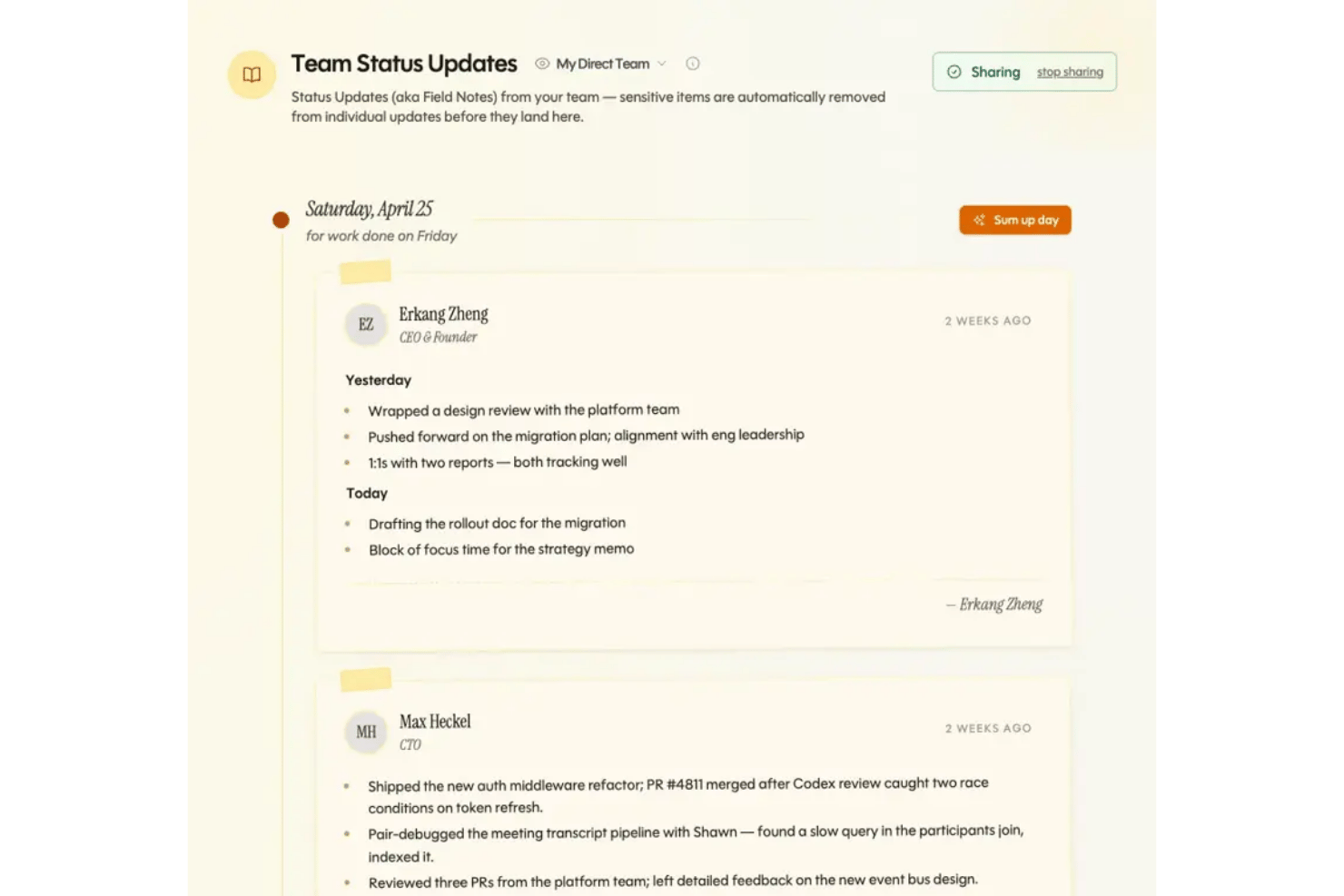
Ariso AI automatically generates project status updates from activity and messages. You always see real-time project health without extra effort.
Risk Insights and Alerts
Ari helps surface overdue commitments, unresolved decisions, risks, dependencies, and missing ownership before they become blockers. This lets you get early warnings based on actual work, and before they become a problem.
Knowledge Hub
Ari links conversations, attachments, and notes into one searchable source. Therefore, teams spend less time tracking down files or answers.
Cross-Project Timeline
View multiple projects and milestones in one timeline view. It’s easier to spot dependencies and impacts across your programs.
Auto-Generated Action Items
Within Ariso AI, Ari captures the context behind the work, helping your team turn discussions and decisions into projects, tasks, owners, and next steps.
Project Pulse Dashboard
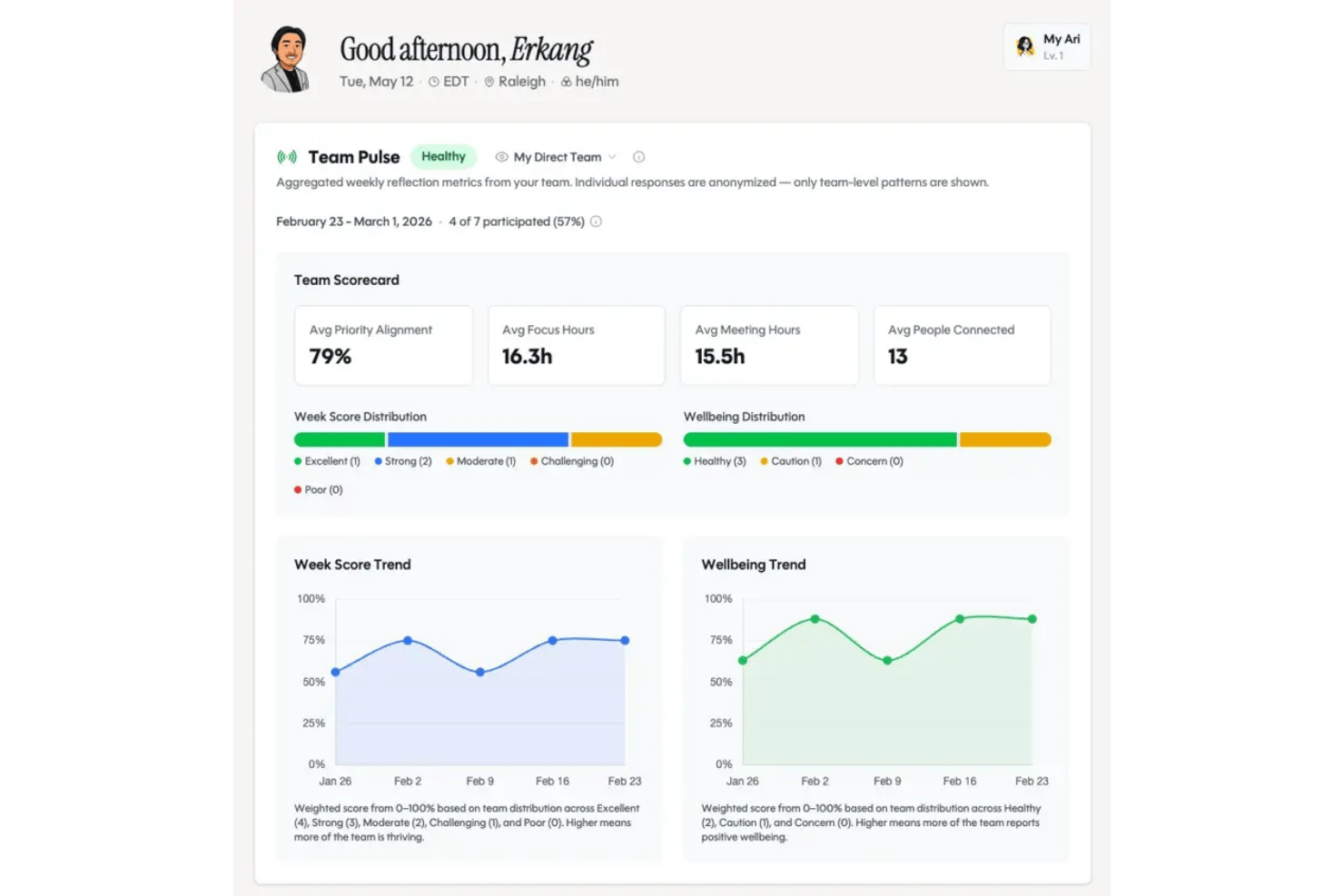
Track team mood, engagement, and progress stats in one dashboard. People management gets easier as Ari learns your work patterns, surfaces commitments, risks, gaps, and relevant context so team leads can manage more effectively.
Standout Features
Conversational Project Assistant
Ari by Ariso answers questions about any project, task, or decision with full context, instantly, without needing you to dig through updates or pinging teammates.
Automated Meeting Summaries
Structured meeting summaries with decision logs and task assignments, generated from call transcripts. You never lose track of what was decided or who owns it.
Ease of Use
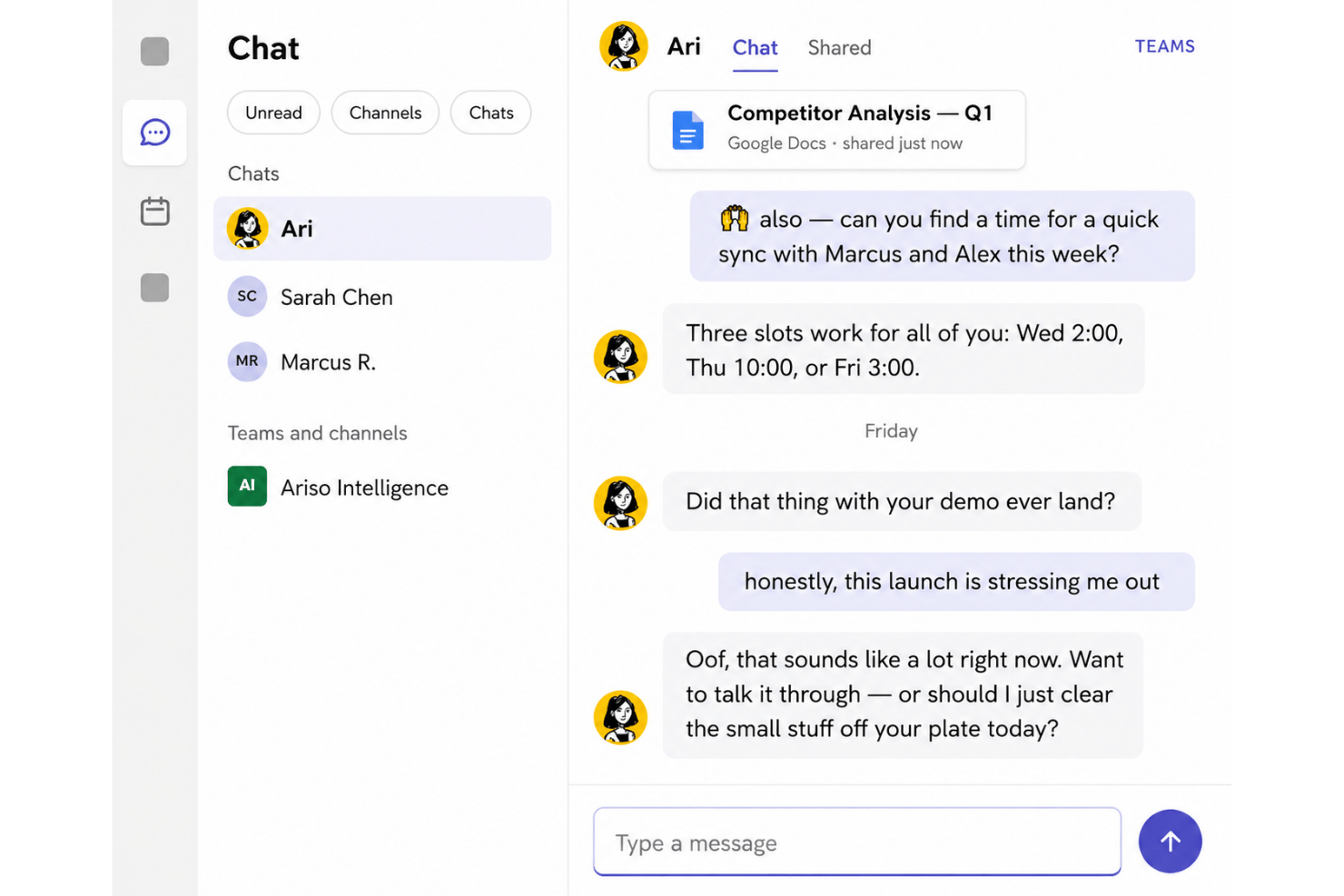
Ariso AI feels more intuitive than most traditional project management software because of Ari. This agent behaves less like a database you feed and more like a copilot that already knows what happened this week. It connects preparation, live meeting context, decisions, action items, and follow-up. So, instead of losing commitments in notes or chat threads, teams can carry them directly into the project workflow.
I think this saves a ton of admin time, especially for teams working across many projects or tools.
Onboarding
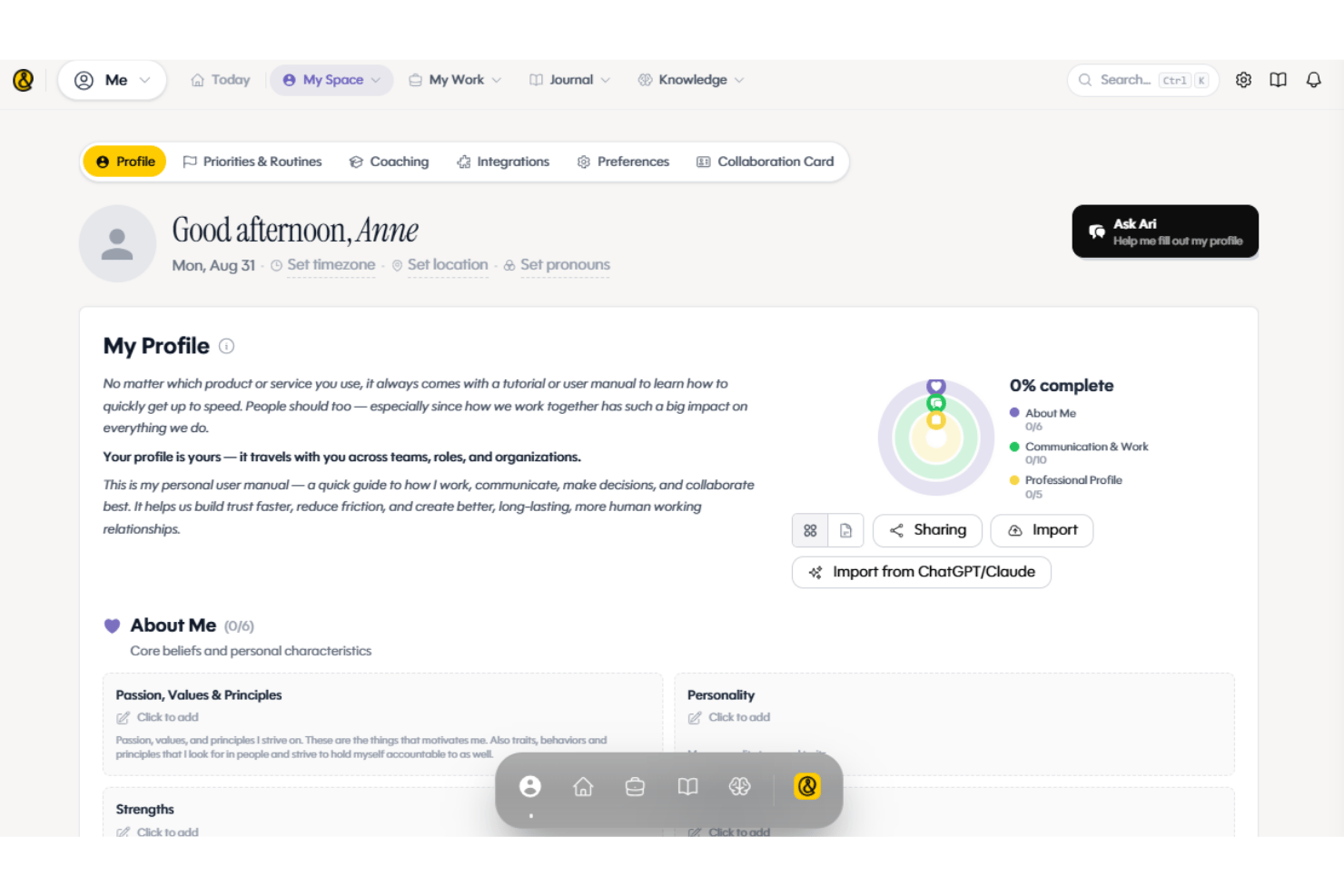
Ariso AI offers a relatively lightweight onboarding experience, with the level of support depending on your team size. Individuals and small teams can get started through self-service setup, primarily by connecting Ari to the tools they already use. Larger or cross-functional teams receive more hands-on guidance, including working sessions to identify priority use cases, configure Ari around existing workflows, and create a practical rollout plan.
Most teams can complete onboarding within a week. The initial product setup takes about an hour, followed by roughly four hours of collaborative planning around use cases, ROI, and adoption. Technical complexity is low, and standard onboarding typically doesn’t require engineering support. Ariso AI can also assist with organizing or migrating relevant project information as part of implementation.
Customer Support
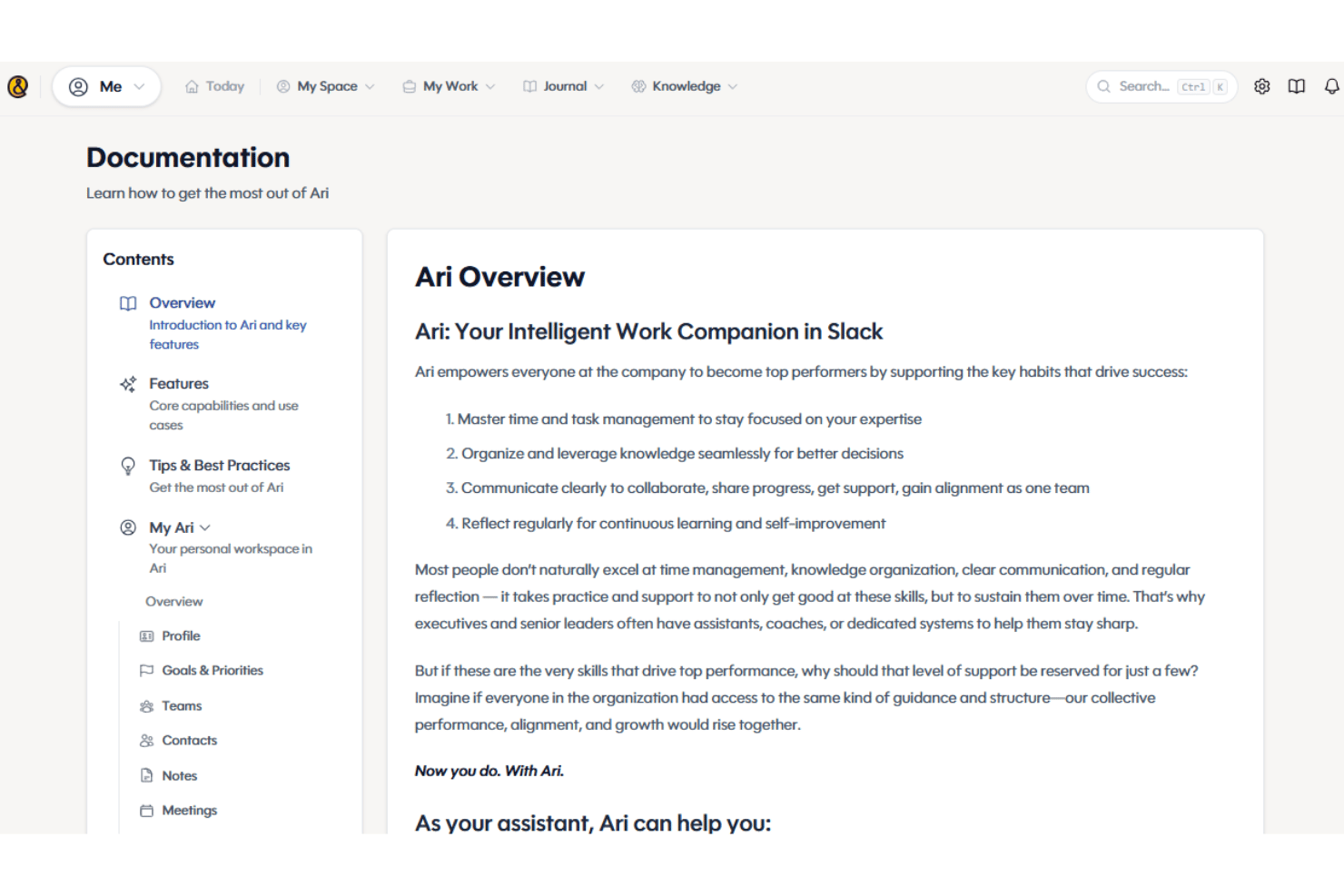
Ariso AI’s customer support stands out because live chat is available directly in the app, and responses are fast and knowledgeable. Reviewers often note how support team members offer helpful troubleshooting, not just canned answers. I think the combination of in-app help, solid documentation, and prompt follow-ups creates a reassuring safety net for busy project teams.
Integrations
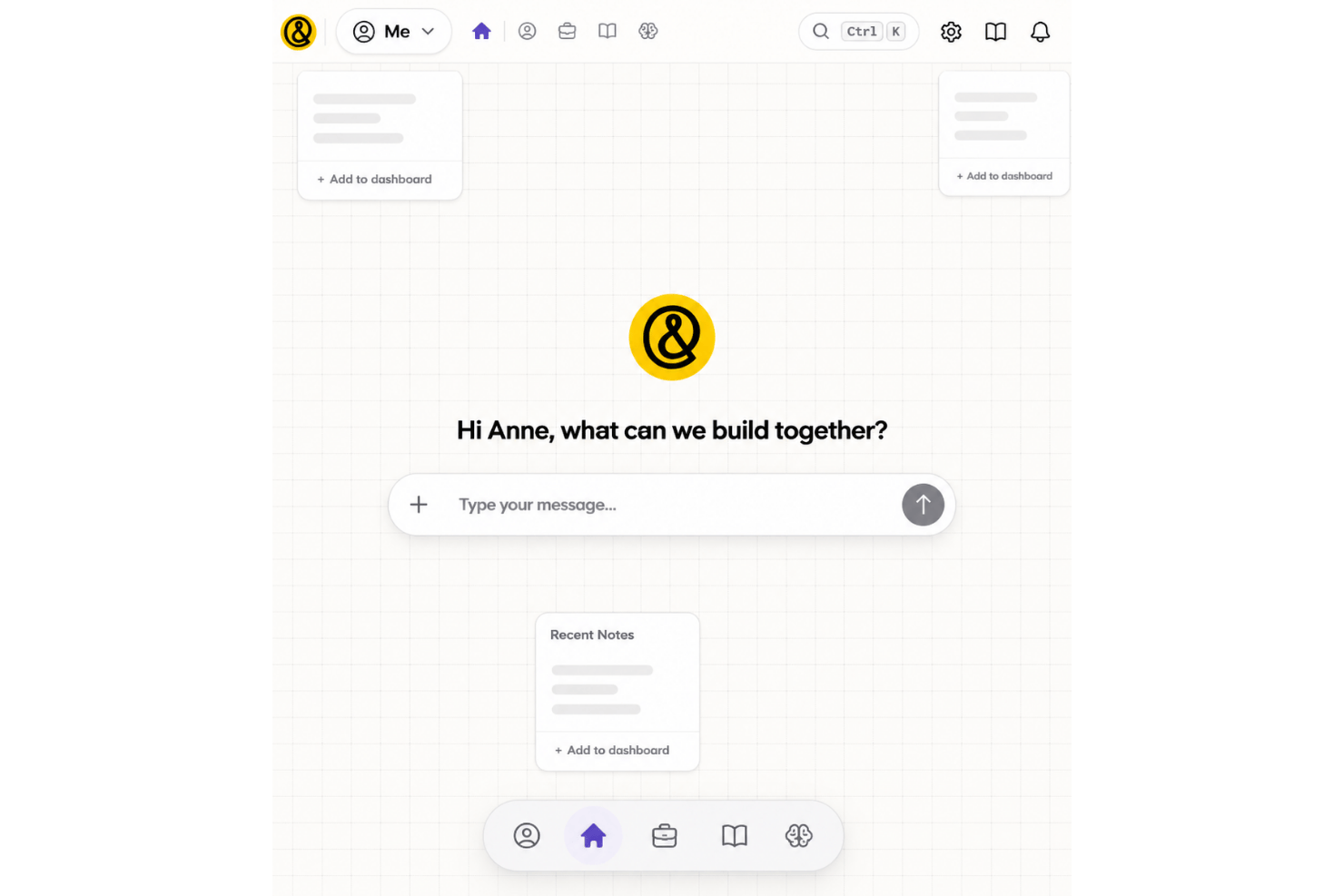
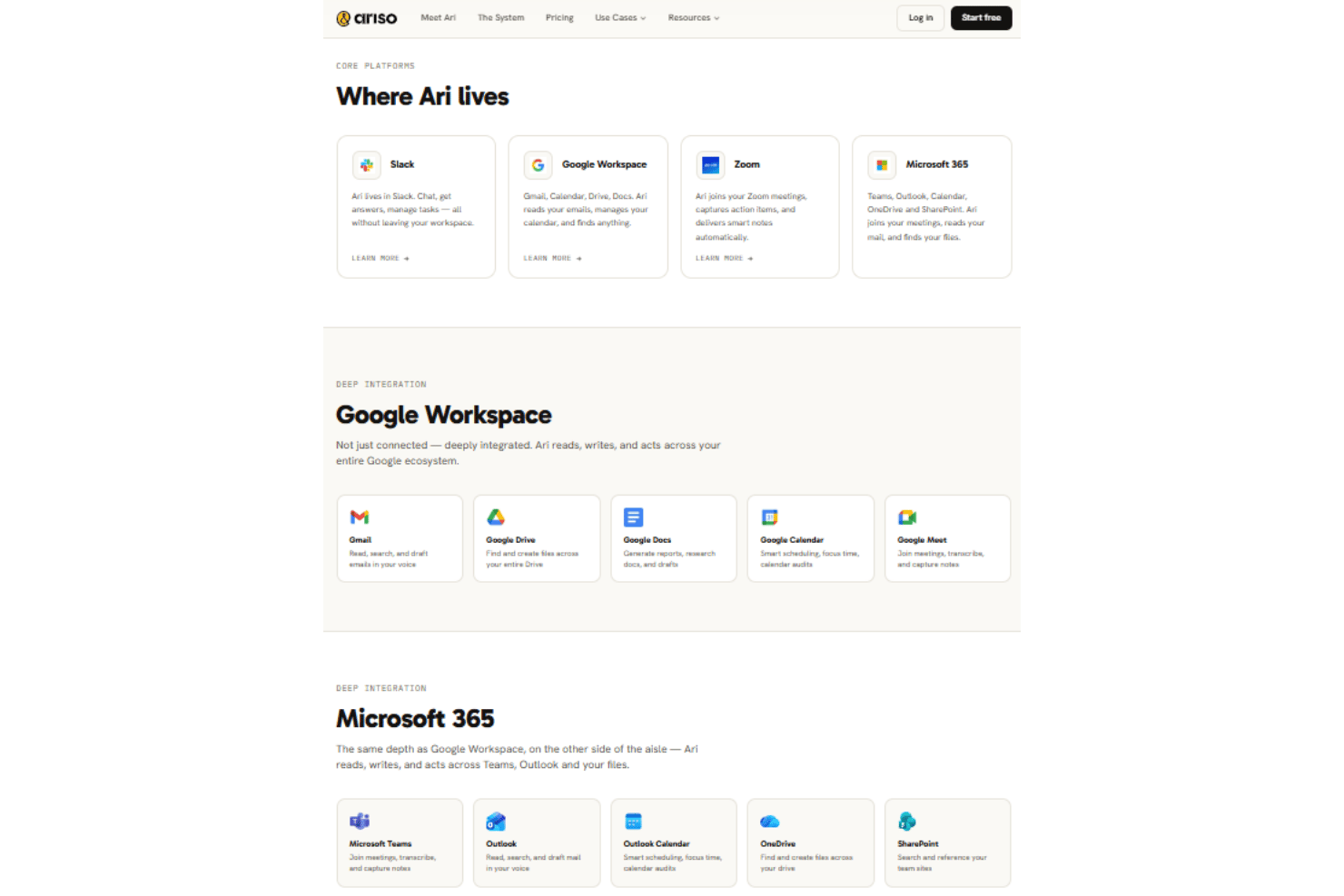
Ariso AI integrates with Slack, Google Workspace, Microsoft 365, Zoom, Notion, Jira, Asana, GitHub, ChatGPT, and Claude, among others. Ariso AI also offers over 150 additional integrations, and you can connect via API or through third-party integration tools for even more flexibility.
Value for Money
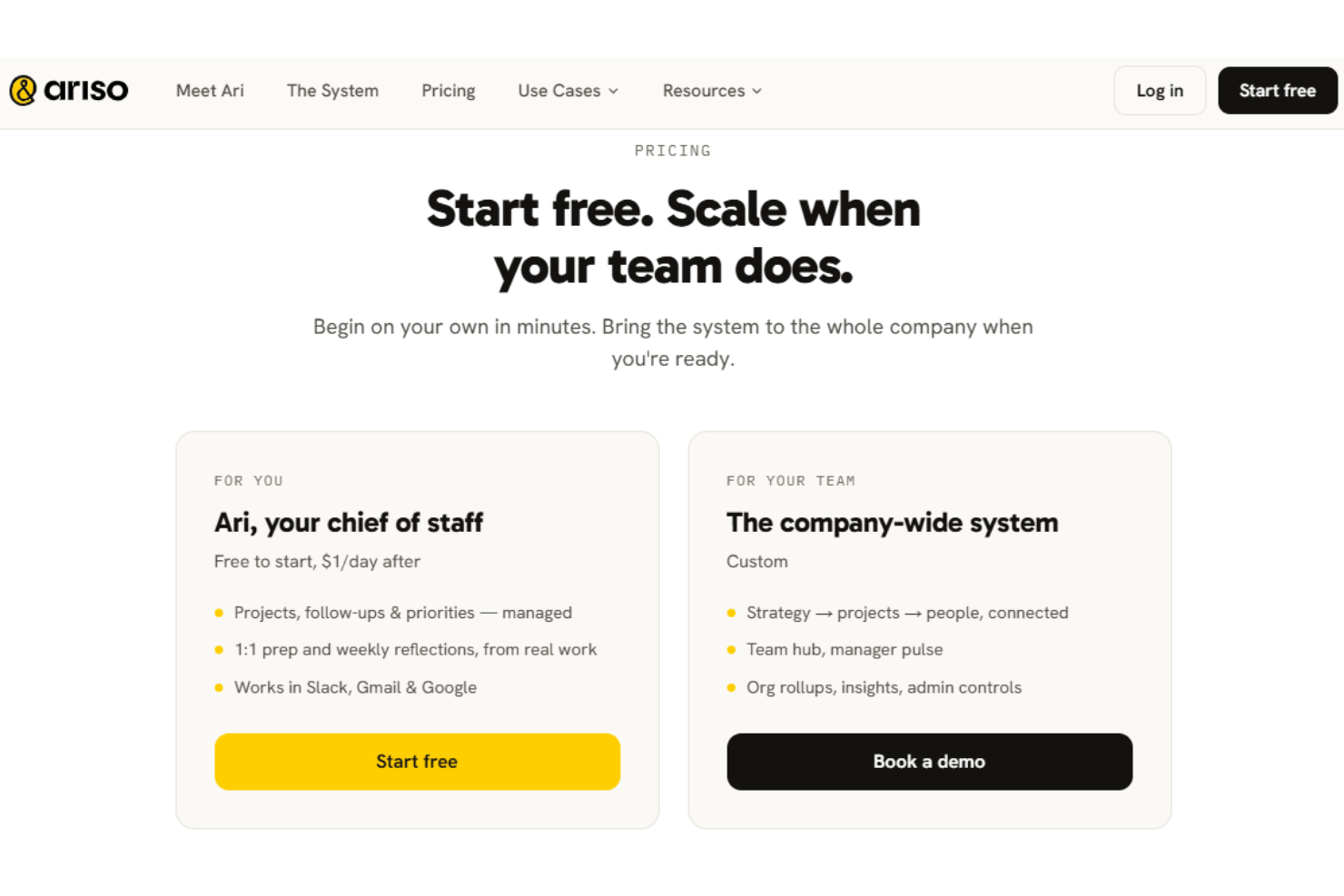
Ariso AI uses a free-to-start model for its individual Ari experience, with pricing listed at $1 per day after the free period; this includes project and priority management, follow-up tracking, 1:1 preparation, weekly reflections, and integrations with Slack, Gmail, and Google Workspace tools.
For broader company deployments, Ariso does not currently publish fixed team or enterprise tiers on its website and instead needs you to book a demo, where pricing is customized to your usage and team size.
Ariso AI Specs
- A/B Testing
- AI Integration
- Analytics
- API
- Calendar Management
- Comparative Reporting
- Custom Reports
- Dashboard
- Data Export
- Data Import
- Data Mining
- Data Visualization
- External Integrations
- Forecasting
- Historical Data Analysis
- Multi-User
- Notifications
- Process Reporting
- Real-time Alerts
- Scenario Planning
- Scheduling
- Sentiment Analysis
- SEO
- Time Series Modeling
- Workflow Management
Ariso AI FAQs
What onboarding resources does Ariso AI provide for new teams?
Can you customize workflows and project templates in Ariso AI?
How does Ariso AI handle data security and compliance?
Can project managers track project health and KPIs within Ariso AI?
Is there a mobile app for Ariso AI?
Ariso AI Company Overview & History
Ariso AI is a technology company focused on AI-driven project management solutions, headquartered in San Francisco, CA. The platform is built by a tight-knit team of engineers, designers, and product experts dedicated to making work simpler and more connected. Its bet is that AI agents, rather than more dashboards, are what finally make strategy execution legible. Ariso AI is an independent company and does not list other owned products or major affiliations. Their platform is used by distributed teams across technology, marketing, and professional services.
Ariso AI Major Milestones
- 2022: Company founded in San Francisco
- 2023: Ariso AI platform officially launched to the public
- 2024: Secured Series A funding round and expanded integration marketplace
- 2025: Recognized as a top AI-first project management solution by several industry publications