

Why Public Speaking Is Becoming a Career Multiplier for Project Leaders


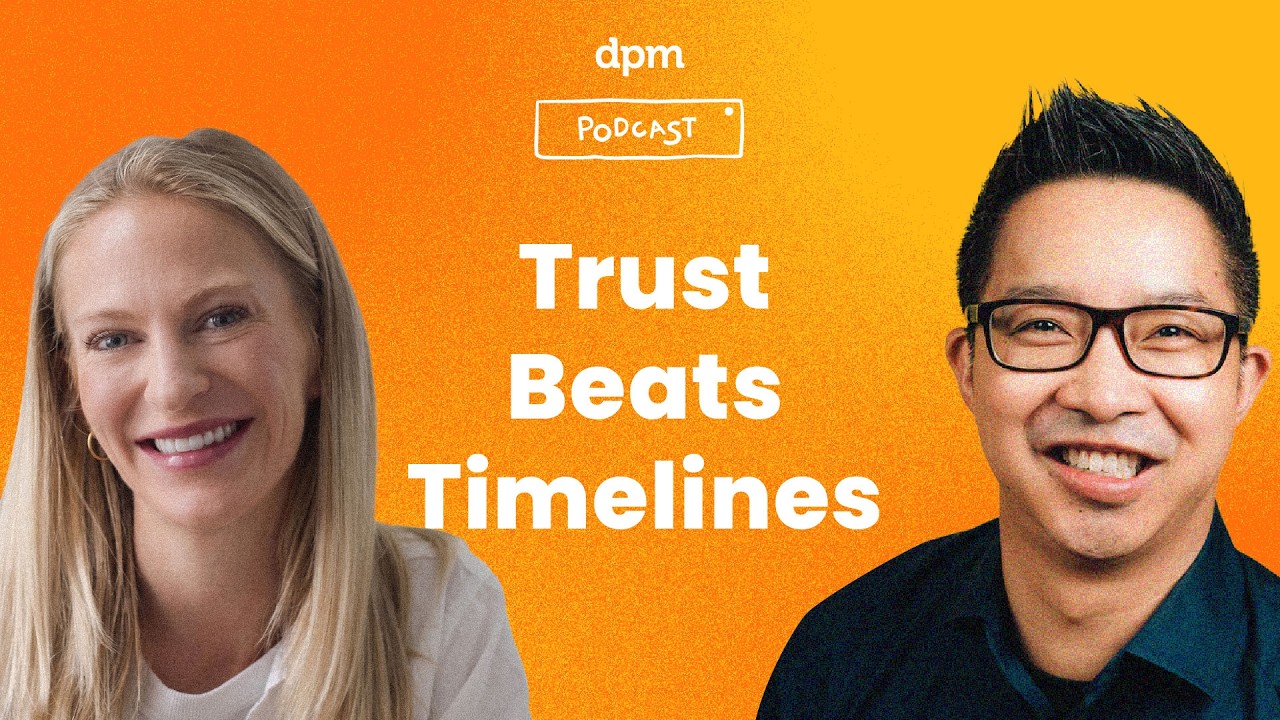
Public speaking is often framed as a stage skill—but for project leaders, it’s really a leadership skill. In this episode, Galen Low sits down with fractional PM, consultant, and award-winning Toastmaster Megan Cotterman to explore how communication, audience awareness, active listening, and adaptability show up in the everyday realities of project work. From project kickoffs and stakeholder updates to difficult conversations and team alignment, they unpack why strong communication is becoming even more valuable in an AI-powered world.
They also dive into practical ways introverted and ambiverted project managers can build confidence, develop resilience, and strengthen their ability to think on their feet—without becoming the loudest person in the room.

What You’ll Learn
- Why public speaking is about leadership—not performance
- How communication skills directly impact trust, alignment, and project momentum
- The role of audience awareness in effective project leadership
- Why active listening is as important as speaking
- How introverted PMs can build confidence in group settings
- The connection between public speaking, resilience, and professional growth
- How AI may increase—not decrease—the value of human communication skills
- Why concise, purposeful communication is becoming a competitive advantage
Key Takeaways
- Public speaking extends far beyond the stage. Every kickoff, stakeholder update, team discussion, or difficult conversation is an opportunity to lead through communication.
- Know when a meeting should be a meeting. Strong communicators understand when written communication is enough—and when real-time discussion is needed to create alignment.
- Project kickoffs are about buy-in, not information transfer. The goal isn’t just sharing the plan; it’s building shared understanding, trust, and momentum.
- Bad news requires clarity and empathy. Delivering difficult updates confidently and transparently helps preserve trust, even when the message isn’t welcome.
- Active listening creates better outcomes. The ability to adjust your message based on how people react is often more valuable than delivering a perfect script.
- You don’t need all the answers. Sometimes the strongest response is, “Let me think through that and get back to you.”
- Confidence comes from repetition. Like any project management skill, communication improves through deliberate practice and exposure.
- Growth lives outside your comfort zone. Public speaking develops resilience—the same resilience needed to navigate ambiguity, change, and leadership challenges.
- AI raises the bar on human skills. As information becomes easier to generate, the ability to communicate clearly, build trust, and create connection becomes more valuable.
- A landed message doesn’t need repeating. Effective communicators know when the point has been made and when it’s time to move forward.
Chapters
- 00:00 — Why Public Speaking Matters
- 04:09 — Beyond the Stage
- 06:20 — Communication in Action
- 11:07 — The Kickoff Advantage
- 15:38 — Tough Stakeholder Conversations
- 18:31 — Thinking on Your Feet
- 19:46 — Building Confidence
- 22:05 — Impromptu Speaking Tips
- 24:10 — You Don’t Need All the Answers
- 25:39 — Introverts Can Lead, Too
- 28:36 — A Toastmasters Primer
- 31:15 — The Hidden Benefits
- 34:57 — AI and Human Skills
- 39:23 — Speaking Up Early
- 42:46 — Where to Find Megan
Meet Our Guest

Megan Cotterman is the Lead Consultant at Managed By Megan, where she helps organizations strengthen project delivery, streamline operations, and build high-performing teams through practical project management and leadership strategies. A certified Project Management Professional (PMP), Megan brings extensive experience leading cross-functional initiatives, improving organizational processes, and helping businesses turn complex goals into achievable outcomes. Known for her collaborative and people-centered approach, she is passionate about empowering teams with the tools, systems, and confidence they need to execute successfully and drive lasting results.
Resources from this episode:
- Join the Digital Project Manager Community
- Subscribe to the newsletter to get our latest articles and podcasts
- Connect with Megan on LinkedIn
- Visit Managed By Megan
Related articles and podcasts:
Galen Low: These days, it's en vogue to say that project managers are leaders who need to be the bold voices in the room, saying the quiet parts loud and running headlong into tough conversations. And so, public speaking skills seem like a no-brainer, but the reality is that a lot of us are actually introverts.
I myself was someone who was terrified about even answering the phone, let alone running a meeting or giving a talk. And honestly, it's taken me my entire career to overcome that discomfort. Not the discomfort of standing on a stage or in front of a PowerPoint, but the discomfort of being able to react to a group of people's questions or expectations in real time.
The discomfort of knowing when to turn a directionless email chain into a team meeting. The discomfort of figuring out how to make a message land in an accurate and empathetic way, and the discomfort of facing down a scary challenge and accepting it anyways. Is that all tied to public speaking skills?
My guest today would argue that it is. I've brought in a beloved member of our digital project management community who also happens to be an award-winning public speaker and toastmaster. Together, we're going to unpack how public speaking skills translate to the role of the project leader, how to go about developing those skills when you're absolutely allergic to the idea of public speaking, and whether being a good public speaker will even matter as we start working more closely with AI teammates than human ones.
Hope you enjoy the episode.
Welcome to the Digital Project Manager Podcast—the show that helps delivery leaders work smarter, deliver smoother, and lead their teams with confidence in the age of AI. I'm Galen, and every week we dive into real-world strategies, emerging trends, proven frameworks, and the occasional war story from the project front lines. Whether you're steering massive transformation projects, wrangling AI workflows, or just trying to keep the chaos under control, you're in the right place. Let's get into it.
Okay. Today, we're talking about how public speaking skills might be the cheat code for unlocking strategic career opportunities for project leaders. We'll be unpacking some not so obvious project scenarios where public speaking skills can be the differentiating factor. We'll be detailing how AI can give you an assist in improving your communications, and we'll be exploring whether public speaking might have deeper benefits than just being a good talker.
With me today is Megan Cotterman, Fractional Project Manager and Consultant at Managed By Megan. Megan works at the intersection of execution and leadership to help growing businesses bring structure, leadership, and momentum to their operations through fractional project management, operations strategy, and team coaching.
She's also an award-winning public speaker and facilitator who openly shares her expertise in workflow optimization, people first project leadership, and navigating complex change, equipping leaders with the tools they need to make confident decisions.
Megan, thanks for hanging out with me today.
Megan Cotterman: Thanks for having me, Galen. Excited to be here.
Galen Low: I'm excited to dive in. It's a topic that's close to my heart. I say that multiple episodes, but this one also is that. Talking about public speaking, I do hope that we go down all sorts of rabbit holes. I know you and I can get there, and I think it'll be interesting for our listeners.
But just in case, here's the roadmap that I've planned out for us today. So to start us off, I wanted to just set the stage by hitting you with, like, a big, hairy question that my listeners want your take on, but then I'd like to, like, unpack that and just talk about three things. Firstly, I wanted to talk about why public speaking is becoming more relevant for project leaders and unpack some examples, project scenarios where public speaking skills can make a real difference.
And then I'd just like to get your take on how introverted and ambiverted PMs can improve their public speaking skills, especially when they never really thought public speaking was something they'd ever be good at or even interested in. And then lastly, I'd just like to get your take on the future of human collaboration and the role that public speaking may play in it.
How does that sound to you?
Megan Cotterman: Sounds great. Excited for it.
Galen Low: All right. So I wanted to start out with just, like, one big, hairy, audacious question that I think my listeners have top of mind when it comes to public speaking, and I'll just take a little running start at it. I'd say that, like, with everyone now busily typing into their LLMs like Claude and ChatGPT, and maybe even shunning direct communication in favor of things like Slack or Outlook messages, why is public speaking still important for the role of the project leader?
Megan Cotterman: I think with the rise of AI tools and people gravitating to more written communication, that actually makes public speaking all the more crucial and can help you stand out as a project leader. So if people are outside of project management, they probably think that we just create schedules and set meetings.
We've been referred to as admins. But real project managers know that project management is all about leadership, so creating momentum, alignment, and trust at every stage of the project. It's really hard to achieve that simply through Slack and email. And so when you hear public speaking, you probably envision yourself standing on a stage with a mic or Tony Robbins giving a TED Talk.
But it's really about understanding your audience, catering your message based on that, and communicating your ideas clearly and effectively, which is crucial in project leadership.
Galen Low: I love that. And actually, even as you're saying that, it dawns on me, I know I had framed that around typing into a chatbot or typing into a message and treating that like an abstraction away from public speaking.
But you're entirely right that public speaking isn't necessarily standing on stage holding a mic, Tony Robbins. Part of it is just, like, formulating your thoughts well. And I think it's actually really interesting, and maybe we can go there later, that idea that you said it's difficult to have that influential leadership through text, and that's where human interaction can become really useful, especially for a project leader.
But I'd love to unpack that later in terms of how does that translate into that Slack message, because I do think there's a right and wrong way to lead in any kind of communication, and I do think that comes down to public speaking skills as well. Maybe let's actually start unpacking that right now.
Like, you said that it's not necessarily-- public speaking is not necessarily standing on a stage talking to a big crowd of people, Britney Spears microphone and using your hand gestures and, being that motivational speaker. It's not necessarily that. So maybe let's unpack that a little bit.
Like, what are we really talking about here? And also, maybe, like, what are some examples of when these public speaking skills are important for a project leader?
Megan Cotterman: Yeah. So to harp that point home, it is not just standing on stage with a mic. I consider public speaking any time you're talking in front of groups of two or more.
I even consider this public speaking. It's using your voice to articulate a message, whatever it is you're trying to achieve. And so in project management, this could look like things like rallying a team that's losing steam. It's really hard to get that going via Slack or in an Asana comment. Sometimes there's project issues and things that need to be addressed that really warrant that group discussion.
Another example is navigating tension between stakeholders or team members. Again, gonna be really hard to get people all on the same page. People can misconstrue your words in a Slack message. And so those skills and being able to use your communication skills in those dynamics with groups and difficult project scenarios, that is going to transform your project over time if you can lead people with your public speaking in that way.
Galen Low: I like that also because, even coming back to what you said earlier, I think on the surface, we think of public speaking as, like, talking, speaking. I mean, it says it right there. Speaking in public, right? It's in the name. But some of the things you mentioned there, and tell me if I'm right or wrong about this, but that sort of knowing your audience, having the sense to know when to gather people in a group of two or more to make sure everyone's aligned, like, is also part of it.
Like, I think that in my early days, it was like, okay, like, even, like, I think you're a member of Toastmasters, and I haven't gone through the Toastmasters process, but even, like, in-- earlier in my career, I'm like, "Oh, that's just for, like, talking good," stage presence, standing behind a podium.
And it hadn't occurred to me that actually some of that understanding who your audience is, is the, like, spidey sense you need to understand when to initiate these skills, and that's, like, sort of part of it.
Megan Cotterman: Definitely. And when I was more green in my project management career, I might just feel like calling a meeting, and then you get people on there, and they're thinking, "Why am I here?
What are we trying to achieve?" And so it's being really smart about when you're calling those meetings, why, and what you're trying to accomplish with that group setting. And I think that can help your team just feel like, okay, Megan's not just calling meetings left and right for the sake of having meetings, but having a really purposeful discussion based on where you're at in the project, and being able to understand what actually is better in written communication, letting teams do what they need to do, and when does it warrant that group rallying conversation where you will be putting your communication skills to the test.
Galen Low: I really like that. It's just like choosing your channel or forum, knowing when that meeting should've been an email and that email should've been a meeting. And actually, like, even what you're saying about, like, I know I'm the one who framed it around this, like, everyone's typing and what about public speaking?
But, like, now that I'm thinking about it, you leading in a Slack chat with two or more people Also still leverages those skills, and if you notice that, like you said it's hard to maybe motivate people in a certain way or maybe resolve a problem in real time a certain way, and you're almost going from one public speaking mechanism to another, knowing that one is gonna be more effective.
Just like you might... i've seen speakers on stage, right? They're giving their keynote, and they're like, "This isn't quite resonating. I'm gonna go walk amongst the crowd. I'm gonna, like, get people interacting," and, like, choosing a different path to make your message land. I mean, I guess I should say you're helping me see it.
That's also public speaking, even though I kinda just, like... I framed it up at the top as, like, us typing into LLMs, us on Slack. In a way, it still leans on some of these public speaking skills. We'll get into it. But am I, am I picking up what you're putting down? Am I seeing this the right way?
Megan Cotterman: Yes, absolutely.
I think a large part of public speaking is not just what you're saying out loud, but to your point, what does my audience need to hear from me, and what channel does that best serve? Public speaking transcends everything that we do. It's not just the Britney Spears with the mic.
Galen Low: I mean, I think that's like we think of it that way.
Again, maybe from the outside or, when I was greener about it this notion that performance is one way, right? It's like you plan what you're gonna do, and then you do it on stage, and people watch you, and, like, that's the end versus is it actually resonating? Are we saying something or doing something that is going to capture our audience and make them understand or engage them in a way that they're going to, participate at the end of the day?
I know we talked about a few different examples. You've touched on a few in terms of teams that are stuck or, different scenarios. Could we, like, maybe go through-- We've been talking about, like, these public speaking skills. We're unpacking them a little. Could we maybe just go into an example of, when a certain situation on a project could go wrong and what might be at stake without public speaking as a skill?
Megan Cotterman: Yeah. So I can just refer to myself before I started to develop these communication skills and get really strong with public speaking is perhaps a project kickoff. So that's where you're setting the tone for the meeting and trying to get everybody aligned from day one. And when I was more green in project management, I might have a tendency to just read off the bullet points, have everything prepared, not be ready for that ad hoc impromptu questioning and speaking, and not really feeling confident in speaking off the cuff in those settings.
And going back to the understanding your audience, if you go into that kickoff and you just simply read off the script and say, "Is everyone good?" And everyone's like, "Yeah," but if you're understanding your audience, you might be able to pick up on clues, whether you're virtual or in person. If people have their cameras on, you can see a really confused look on Jim's face, and you can feel confident in your communication skills to say, "Hey, Jim, I see some confusion on your face.
What's on your mind right now? Are you seeing anything that I'm not?" Bringing some just recognition that you don't have all the answers, but you are willing to be a sounding board if people have good ideas or they're thinking of things that you might not be. To answer your question, I think a project kickoff is a really great example of if you don't have those strong, adaptable communication skills, you may miss things.
Three weeks later, someone is like, "Hey, why didn't we get this?" And you think, "Oh, why wasn't this addressed in the meeting?" So it's just learning to understand your audience and ask the right questions in those meetings.
Galen Low: That very much resonates with me because, early in my career, maybe not that early, right?
Like maybe later on too, kickoff meetings, we I don't know, like on paper, it's like information transfer, right? We're like transmitting information from my brain into the team's brain, and then off we go. And then you have these, these moments of like, someone asks a question and we're like, "Oh yeah, weren't you in the kickoff?"
And blah, blah, blah. But I really like your point about it's not just transmitting information to the people's brains. Like, that's one of the ones where, sure, it might help somebody if they hear it, but also it could just be, an email. Versus the true purpose, in my opinion, of a project kickoff meeting is to get everyone aligned, get the questions out there, address where there are gaps or where there's ambiguity, and fundamentally getting everyone, like, on board with, probably the, the remaining ambiguity, right?
It's like- Yes. ... we're all going on this mission. We don't have all the answers. We have some of the answers. Let's talk about it. And when we leave this room or when we leave this, Zoom call or whatever, my sort of purpose is to give people the motivation and energy and inspiration to cut through the next layer of ambiguity, not because we have all the right answers, but because now we're in this together.
We've got our mission briefing. In my head, I'm like, Top Gun mission briefing, not even the most recent Top Gun, like Top Gun from the 90s. But it's like, we're sitting there, we're getting the information. That's important. But also we also have to understand how we're going to work together, what the goal is, and like, just be inspired to gel together as a team.
And I'm like, if I don't hit that in a kickoff meeting, like that can be a calamity because, if we go and we're just like, "Here's the plan, here's the timeline. Bye," I haven't achieved my goals. I haven't engaged them. I haven't understood my audience. I haven't read them. And it became very one way instead of participatory, which, in my mind, public speaking is participatory.
It's not one person on stage throwing information. It could be somebody in a meeting with two people, like engaging that audience and driving a bit of dialogue and fostering understanding.
Megan Cotterman: Yeah, I love what you said about getting everyone on board and just, like, some excitement for the project. That's changing your tone of voice and how you show up to a meeting.
So that kickoff, you wanna have more of that stage presence, more of that Tony Robbins that we talk about, where everybody's going on this unchartered mission, and we might not have all the answers, but if they can feel that you are there for them, you are ready to conquer any challenge, then you're gonna have a lot more momentum and trust behind your team versus if you're like, "Okay, so the first due date is this, and then the next due date is that."
It, it's gonna be a completely different dynamic with your team.
Galen Low: I entirely agree. Gosh, now that I'm like, popping the hood on it, there's many areas I can think of in a project where this is useful. Also, coming back to that whole idea y- y- that we started with, which is, like, sometimes project managers are seen as admins.
Sometimes we see ourselves as admins, and therefore, sometimes we think our job is to transmit information in a meeting situation and then, like, stand back. Kickoffs are a good one. Are there any other ones that, like, jump to mind?
Megan Cotterman: Definitely navigating a difficult update to a stakeholder.
Galen Low: Ah, yeah.
Megan Cotterman: So earlier in my career, and still to this day, it's never fun in project management to deliver bad news, but if you can be confident in what you're saying and have empathy for the person on the other side, if whether it's a, we need more budget, or we're not gonna meet this deadline that we initially anticipated, if you waver or soften your message You might just find yourself in hotter water down the road because it didn't really land, or you were just tiptoeing around the subject.
So if you can be direct in that communication, honest, empathetic, transparent, the person on the other side will hopefully be a little bit more amenable, and you can work together to find the resolution that you're looking for.
Galen Low: I love that about the empathy side of a stakeholder update where you're delivering bad news because I definitely can relate in terms of I'd be in my head.
I'm thinking about me most of the time prepping for that. I'll be like, "Oh, poor me, I have to deliver this, terrible message. What am I gonna do with myself?" And then it took me a while to remember that, yeah, the person I'm delivering this news to also needs to deliver this bad news to someone else probably.
Yes. Right? Like, usually we're interfacing with someone, like a peer or, someone who's more mid-level, not usually, but sometimes, but not usually the person, with all of the decision-making control over budget and scope, not always a sort of CEO founder type or what have you. And I like that empathy of even just...
And even if it is, I guess, right? Delivering that message in an empathetic way, knowing that, yes, they are gonna have a reaction to it. No, it's not gonna be fun, but also, how can we help drive the conversation forward and help them, grasp it and continue to be productive about it rather than just mic drop this bad news and then, like, walk away.
I said this to someone the other day. I was like, sometimes these moments that are the most stressful moments in a project, the most difficult conversations when things have gone wrong, things haven't gone to plan, like, it still is an opportunity to, like, build trust with somebody and, like, develop that relationship."
It's how you react to some of the things that go wrong that really shows your leadership, and you can use that to convey or at least I don't know, inspire confidence in the person receiving it, right? Not like, "Oh, wow, you really messed this up." But it's like, okay, this happened. You have a plan. I have some choice in it.
You've addressed me in an empathetic way, knowing that I need to go and tell my boss that, all of this is hitting the fan. It's funny. It's like one of those skills that some you might pick up along the way just organically, but it's also one of the things that I don't think a lot of people draw a straight line to public speaking and going, "Oh, that's how I can learn that."
And I think that's really interesting, the sort of, empathy bit. I know empathy gets a bad rap as a word, but, it is literally, let me consider how you're feeling about this message I'm delivering to you.
Megan Cotterman: And another thing I wanna touch on with that is two things with public speaking: active listening and being able to think on your feet.
So when you're going into that difficult situation and you're like, "I'm delivering bad news. I'm gonna do the best I can with how I deliver this update, but I do not know how the person is going to react on the other side." And I think when we're in those tense situations, we have a tendency to just kinda try to think of our next words and what we're gonna say.
But if we can really pay attention to what the person is saying and take it in, and then deliver our message based on however they react, we don't know how it's gonna be, that's that communication skill and public speaking skill of thinking on your feet and adapting on the fly.
Galen Low: What is it? Because I, I, I, I guess I would consider myself someone who just picked this up along the way, by doing it wrong a lot and then, getting incrementally better at it, and maybe not even necessarily being great at it. But, like, when you look back in your training, but also your experience, like, what builds that confidence to be like, "You know what? These are the things that could happen, and I have to be fast on my feet and prepared to deal with this."
Like, how do you put yourself confidently in the right frame of mind to know that whatever somebody says in a group situation, you'll have a way to handle it?
Megan Cotterman: Well, I, I think this is a good opportunity to talk a little bit more about my public speaking journey and how I arrived at this place. So I have always been outgoing and had, quote, "strong communication skills", worked in customer service, customer-facing roles.
And then in 2021, I pivoted to project management, and I thought my communication skills would serve me well. But I quickly learned the hard way that it's a whole different beast of communication skills based on what we talked about here today. Just thinking on your feet, difficult news, group settings.
And I would find myself really, really nervous any time I was in those kickoffs, like we mentioned, or trying to navigate client relationships in front of people. So at that time, I decided I wanna succeed in project management. This is something I'm gonna have to get better at. I didn't wanna just keep learning through the job.
I wanted to find a way to hone this outside of work so I wouldn't show up nervous and not confident in myself. So at that time, I decided to join Toastmasters, which is an international public speaking organization where you can practice public speaking in a safe environment. We do something called Table Topics, and you're asked a question completely at random.
You don't know what it's gonna be. I'm actually competing tomorrow in a Table Topics contest on a stage. I have to give an impromptu speech about who knows what. And so it's that practice of responding that has translated into work where it's life. We genuinely cannot control how other people react to us.
We can only control how we react to them. And so it's just having that confidence, that skill, that muscle that's been developed over time to know that I don't know what the person's gonna say on the other side, but I've done this enough times that I'm gonna survive, and I'll figure it out when I get there.
Galen Low: I'm excited for you. It sounds terrifying, and the people who tell me this about Toastmasters, I have this sort of like conflict in my head between seems like a pretty safe space versus, oh my gosh, like present s- a five-minute talk on a topic that you've only known about for 30 seconds is like, it freaks me out.
I'm like, that sounds very high pressure. That sounds very much like something I would, dread, but also like, like not succeed at. Do you have any tricks? Like, if someone were to actually have to do that, they weren't a Toastmaster sort of member, and they're like, "Oh, listen, in this meeting, do you think you could talk to this thing? The meeting is in four minutes." Where do you start?
Megan Cotterman: I would start with rapid fire, what do they wanna talk about? What are we trying to accomplish? And then it's gathering your thoughts, and this is something you can practice outside of work. It doesn't even have to be in Toastmasters. But even before today, I practiced aloud what I wanted to talk to you about, because the more you can get your brain and mouth to sync up, the easier time that you'll have.
So if you only have five minutes to prepare for the next meeting, genuinely sit by yourself in your room and practice aloud what you wanna say, because it'll be a lot easier when you're actually in the setting to communicate.
Galen Low: I actually really like that, because sometimes I do that with the podcast. Peek behind the curtain here.
But also, there's something you said there, which is like, what are we trying to achieve? And then in combination with saying some of the things out loud, earlier I was saying, yeah, public speaking, sometimes that early stage is like, okay, well, what are my lines? Memorize the script and deliver them, versus understanding where we're trying to go and navigating that, and knowing sort of like, okay, well, if we have to get to this point, we're trying to make people understand that it's gonna be a, a bit of a change request.
It might cost a bit more time and money if we wanna add these 17 features. That's the main thing. Someone might have a question along the way, and where we're trying to go is still, yes, like, change requires more resources or what have you thematically. And then I like the saying the thing out loud because, when I'm not as well prepared for something, there's a little portion of my brain, a little cog, maybe 25% of my brain function is going like, "What are the words?
Or what are the exact words that I need to be saying?" And to, like, free that up, to be like, okay, well, I, I've said the words out loud before, and it just alleviates that, strain on your brain capacity. At least that's the way I see it, to be like, okay, now I can focus on delivering the message and listening and engaging this group to get towards our purpose.
And I hadn't really thought of it that way as like, okay, because I've thought of it and, spent that time with it, then I don't have that nagging voice in the back of my head that's saying, "Oh, you're gonna say the wrong thing," or, "You're gonna, like... Make sure you pick the perfect words."
That's dealt with already.
Megan Cotterman: And I also think it's important as a project manager to not feel the need to have an answer or a response for everything. So in those settings where you're caught off guard and asked to speak about something, if you genuinely don't know, it can be detrimental to the project if you say something wrong just to say something.
So I think it's having the confidence to say, "I hear what you're saying. I hear that question. Let me think through it a little bit and report back to you." That will build way more trust with your stakeholders than just saying something just out of nervousness or just wanting to appease people.
Galen Low: Honestly, that's such a good point, and I've been a project manager, and I've been in sales, so I've seen it from both sides and heard it from both sides.
And I do think that, yeah, even to this day, some people in my network, I think they think that public speaking or even my brand of public speaking is like snake oil salesperson, selling sand on a beach, and that it's like this silver-tongued manipulative skill where because you're a good public speaker, you can just brush away and make everyone happy with all this bad news.
You can make up the answers, and that's how you're gonna be a leader. I'm glad you called that out because that's absolutely not it, and I've seen it backfire, and it's backfired on me many times where, yeah, being a good speaker versus not having the answer, there is a right answer there, right? It's like you still don't have the answer.
Yes. Yes. You can be really good at talking. You can be really good at active listening, but if you actually don't know what the answer is, making it up probably isn't the right thing either, and probably doesn't achieve the goal.
Megan Cotterman: Correct. Yes.
Galen Low: I wonder if we can circle back on it, because I think we have similar journeys in our public speaking paths.
And I, when I'm looking at my LinkedIn feed and, like, all across social media, I guess, there's a lot of posts about how project managers need to be, like, vocal, and they need to take charge. And then meanwhile, a lot of project managers in our community, they're actually introverts. And you mentioned about your journey that this is something you had to build.
It wasn't something that came naturally to you, and ditto for me. But, as we're saying all of this, do you think that the quieter, more introverted project leaders are now doomed to fail as our role shifts into needing more of these communication skills, these public speaking skills? And maybe to not be so doom and gloom about it, like, if someone is interested in developing their public speaking skills as maybe someone who identifies as being introverted or ambiverted, what's the first step they can take towards improving their communication skills in the direction of some of the public speaking skills that we're talking about?
Megan Cotterman: Yeah, I definitely don't think introverted or more quieter project managers are doomed to fail, because I don't think successful project managers are necessarily the loudest ones in the room. I think a very good first step is to take an honest look at where your pitfalls are and where your strengths are in communication.
Ask your peers. Ask your boss. None of us are perfect. We all have areas where we can grow. And so you might feel really confident with the written word and be really great at writing things or feel really good in those smaller group settings, but then it, when you're in that larger conversation, that's when you might feel a little bit tense or not so sure of yourself.
So I think start with where your true weaknesses are and then develop from there. So it could be those group settings, and you can go to an improv class, go to Toastmasters. The more you can put yourself outside of your comfort zone and just try, you build the resilience of trying and failing, trying, failing, learning, and realizing that you're gonna be okay, and you're gonna be better for it on the other side.
So it's all starts with recognizing where your weaknesses are and what is the next step in addressing those weaknesses.
Galen Low: I like that because it, it requires introspection and a bit of active listening, so even by gathering feedback about yourself, you're already leaps and bounds ahead of where you were like, understanding where you are at, but also talking to people, listening to people, and receiving that feedback and making a plan.
And then I like what you mentioned. Improv has come up a lot in our community, and I think it's, again, it's one of those things that's like, it makes sense. It sounds fun. It also sounds terrifying. And then you mentioned Toastmasters. Maybe I'll go, a little bit of on a tangent here, but, like, I'm curious.
Even for my own curiosity, as someone who's never gone to Toastmasters thing, like, what was your first Toastmasters meeting like? How you walk through the door, you're like, "I need to, like, get good at this. I wanna practice." Were you freaked out? Were you terrified? And then how did it go? What did you, like, do in that first meeting?
Megan Cotterman: Yes, I was terrified because, again, I was... felt strong in smaller group settings, but speaking in front of groups of people, people that I don't really know, I just had a lot of fear of being judged. And I remember just my body language and my nervous system was through the roof. So it is normal to be scared.
Public speaking is uncomfortable. But I would just go anyway because I would always just think to myself, "What is the worst that's gonna happen here?" It might be uncomfortable. I- my face might be red. I might go home and just be like, "I can't believe I said that," but then we live to see another day. And so if you can just take the little bit of the ego out of it and realize that if you do fail, it's not the end of the world, and I would much rather fail in an improv class and in Toastmasters than in a project management setting.
Galen Low: That's fair. Yeah. There's, like, not as much career-limiting aspects to it if you're just doing this with an improv group or at, at your Toastmasters group. Is there something that makes it safe practice? 'Cause, I think I'm hearing this, and I'm like, "Yeah, that makes sense. What's the worst that could happen?
I'm not on the job." But is the culture baked in that it is safe? Like, or people are like, "Wow, she really messed that one up. Good job, Megan. Yay."
Megan Cotterman: So I'm in South Tampa Toastmasters, and we call ourselves, like, the AA of public speaking. We are such a supportive group, where we rally for each other.
Like, if someone's s- a ball of nerves and you can see they're so stressed, after they're done, we're like, "Yes, you did it." And we're, we're really, really supportive, and we call ourselves a safe place to fail. So if you're interested in joining Toastmasters, there's all these different clubs. You can kinda shop around before you commit to one.
But generally, as a whole, any time I talk to a Toastmaster that's in a different club, it's a very supportive environment where everybody is there for very similar reasons. We all wanna develop our public speaking skills. We all feel a little bit awkward. No one wants to be that person that fell on their face.
So even if you do, we're all encouraging each other to just get better and better and better, however long that takes.
Galen Low: I love that. And I love that, yes, that is the purpose. The purpose is that everyone is there to improve and support one another. Thank you for sating my curiosity because I've never really done any of that, not improv, not Toastmasters.
Yeah. I think it demystifies it a little bit. I wonder if I could take it in a bit of a different direction, because I think we've been circling around this this whole time, but I'm wondering, in your opinion, does public speaking actually go beyond, like, speaking? Like, in other words, like, what are some of the fringe or indirect benefits of becoming a better public speaker that, like, isn't about talking to groups of people?
Megan Cotterman: Definitely. So I would say that just through my work with Toastmasters and being more conscious about developing public speaking as a skill, it's transcended all areas of my life. So talking about falling on your face, embarrassing yourself, whatever it may be, it's given me way more resilience to embrace challenges and a lot more confidence in myself.
So having gone to those meetings in those earlier days when I was a nervous wreck and just doing it anyway, that is the muscle that I've built over time. So when you asked if I would come on this podcast, I was a little bit nervous, but I thought, another new challenge. I can take it on. I will be okay.
And that's a resilience that I have built through public speaking and Toastmasters. Another shift as we talked about earlier, is understanding your audience, and this doesn't just go with work. It makes you better in relationships, friendships, with your family. Being able to listen to your audience and just more emotional intelligence, I would say, in how you communicate with people around you.
Galen Low: I never thought about the resilience thing. You said it earlier. It's like anything could happen, right? You're on stage, doing the Tony Robbins thing. You've got your Britney Spears mic, and there's a crowd of 500 people, and anything could happen And guess what? In that meeting with three people, anything could happen.
And as you're preparing for life and your career and, growing as a human, anything can happen. And what you said just there just, it really stuck. Here's a challenge, let's tackle it. It might help me in my growth, and it might be really uncomfortable, and it's scary, but let's do it anyways because, I've gotten practice dealing with the idea that anything could happen.
I've never thought of it that way. Public speaking obviously a really good example of anything could happen, but when you shrink that down, you can point that lens anywhere, and that's just a life skill. That's crazy. I hadn't thought about that.
Megan Cotterman: Yes, and w- I feel like I'm getting part mindset, part public speaking here, but genuinely, the best things happen on the other side of your comfort zone.
So whether that's public speaking, doing a podcast, you're never gonna grow as an individual if you don't take those challenges and just try something new. If you fail, you just get back up and try something else again or try the same thing again.
Galen Low: I love that, and I think that's, like, where the practice comes in.
You could argue that some of the stuff you do at work is practice for the rest of your life as well. Although I do appreciate the sort of, like, safe space, external context to be practicing, not necessarily, making mistakes on the job all the time.
Megan Cotterman: Yes. Yeah, it depends on where you are in your public speaking journey.
I feel like I ask people in Toastmasters and in work if I seem really nervous, and they said, "Oh, you didn't seem that nervous," but it's internal. You can feel if you are confident in a certain setting or not, and I really wanted to overcome that just tension that I would feel in those group settings. But you can learn it on the fly.
It, it just depends on where you are in your public speaking journey.
Galen Low: That's a really good call-out, too, for, if you're from the outside someone might say, "Wow, that person probably isn't worried about a thing. They're so good at this that, they, they don't feel uncomfortable at all." Whereas internally you might be dealing with that, and actually, that's part of the journey as well, which is, yes, maybe masking it.
Yes, maybe managing it as well. It might not ever go away. Speaking as someone who, I mean, I've got a podcast, right? Like, like, and I still f- you know, I have this, like, nervousness all the time. I think it's a really good call-out to be like, well, actually, sometimes it's part of it.
It doesn't make you a bad public speaker, and not everyone you see out there who you consider a good speaker is not tearing themselves up inside in some way, shape, or form as they're doing that. And yeah, the truth lies somewhere in between. It's still a skill, and it's still a journey that you will benefit from wherever you're at along the way.
Megan Cotterman: Yes. I love that you said that, that if you look at someone and you're a little bit intimidated by their public speaking, everybody gets nervous. I still get nervous, but the difference is just learning to sit with those nerves and not let them overtake you and affect you in your day-to-day project management career or outside.
And just the more you do it, the better and more comfortable you get over time, even if you still get nervous.
Galen Low: I love that. Like, yeah, don't let it limit your growth.
Megan Cotterman: Exactly.
Galen Low: I wonder if we could round out by maybe just talking a bit about the future. We're talking about public speaking and how it can help a professional grow now.
You start today. But like looking out into the future, like, how do you think public speaking in the working world will change and evolve, maybe even as AI forces us all to like level up and, like people are saying AI's gonna allow us to be more strategic. How can public speaking maybe help drive the human side of collaboration at a faster pace?
Megan Cotterman: I know that what I've seen in the world and the internet and what I read online is that people are really craving that human connection. As technology is advancing, people are using AI. People really wanna work with someone that they resonate with, that's engaging. And so if you can develop those interpersonal skills, it's really gonna help you stand out in a world of automation and everything is based in technology.
Another way that I think that public speaking as a skill will transform over time is that information moves really, really fast. And so it's gonna be very important that you can take in information and then regurgitate it or clearly articulate it, complex ideas, quickly and efficiently. Something that I've learned through Toastmasters is we are actually timed on our speeches, and so it gives you a level of awareness on how long you're talking, and now I have zero patience for people that talk, talk.
Like, you're in a meeting, and they're spending 10 minutes on one question. And I think that people are gonna be even more called to just get to the point because we have to keep it moving.
Galen Low: Actually, that really resonates 'cause, I mean, I'm thinking about, like, the vision for AI is we all are able to work and move faster, and communication efficiency is part of that.
And yeah, what you just said there, it's like you have to be aware of how long you're talking. And I think in tandem with that, you have to know when your message has actually landed, and that might take a lot less time than you think, and then we can, move on, and that's actually efficient communication.
And I, I think what you said, and thank you for being so honest about it, but I think a lot of people are in that boat where they're like, "Yeah, like right now it's my pet peeve that when people are taking too much time over-explaining." Time is money. We're, we're being asked and expected to move really fast, and here we are in these meetings.
And I think that's probably why a lot of people hate meetings because, some people aren't communicating efficiently in those meetings. And then the other side, which I think comes back to where you started, which is, like, not cold, sterile, efficient information transfer, but how can we be more efficient at inspiring people, listening to people, getting on the same page?
It's like the alignment piece, and it is very human. It's not the sort of response you get from your LLM. This is actually trying to get people collaborating and on the same page, and there's a certain efficiency that comes with listening well, communicating well, delivering a message, understanding the purpose of why we're gathering even, and knowing whether or not we got there.
That, I think, is A, it's strategic in and of itself, and B, I think it lines up better with What we expect from our AI future, other than whatever agents and robots enslaving us and going about doing our jobs while we sit on the sidelines, there is gonna be this period of time definitely where it is both.
We need to level up both. We need the technology to progress, and we also need to keep up as humans in the human stuff, like communicating.
Megan Cotterman: Yes. And to your point about people just being sick of meetings, people are just talking too long, I think if everyone, project managers, anyone in the world could learn to understand when your message has landed and sit in the silence and move along, we would all be happy workers.
Galen Low: I love that.
Megan Cotterman: Slight shade. I'm not calling anyone out specifically.
Galen Low: Jim. Yes.
Megan Cotterman: Oh, man.
Galen Low: Awesome. Thanks so much for this. Just for fun, do you have a question that you wanna ask me?
Megan Cotterman: Galen, I would love to know, can you think of a moment in your project management career where your public speaking skills genuinely saved the day?
Galen Low: Ooh, good one. Okay, so this is like an early career story. So if you go back to baby Galen, like I was the person who was afraid to answer the phone because of that thing you said. Anything could happen. There's a human on the other end of that line, and anything could happen. They could ask anything, and that's terrifying, and I never wanna do that.
And early in my project management career, I was that person. And so I would sit quietly on the sidelines during a meeting. And I remember we were in this meeting, and I was working for a small agency, so my boss was also the CEO. Great talker, he's got it all under wraps. I think it was... may have been a kickoff meeting, to be honest with you.
30 people in the room, and a question came up about something very project managementy, like a timeline thing. And my boss is very gracious. He's like, he's trying to answer it. He probably doesn't know the answer, but he's doing his thing. And I'm like, "I know the answer. I know the answer," but I'm terrified.
There's 30 people in the room. I'm just like this, like quiet, a wallflower project manager. Like, I don't wanna speak up at all. And at the time, that was like my greatest fear. But I have the answer. And so I'm like, "I better just say something." And that was that moment where I was like, "Okay, challenge yourself and push yourself through this discomfort and just say it.
Like, blurt it out. Doesn't matter. Like, it's important because this is why we're here. They, they need the answer." And actually, it went way better than I thought. And it wasn't that I had the skills, it was just that, I think I pushed myself into that moment. And my boss came to me and he complimented me later.
He's like, "Wow, like you spoke up in a meeting." At the time, that was like something that was not common for me. But what it helped me realize was that, yeah, sometimes, like, what are we here for? We're here to communicate an idea. We're here to share information, but we're also here to get aligned.
And if I can help people get aligned, I'll probably be much better and much more effective at my job. And that actually started my journey, where I was like, "Okay, this is probably something I, I should work on." I was still that person, right? Who like was not ready to ask for help or do improv or, go to Toastmasters.
But it did kick off my journey of, gosh, like imagine if I hadn't said anything, and we just kinda waved our hands and no one really, felt aligned. And 30 people who were in that meeting would probably come back to us later and be like, "Yeah, we don't get it. It seems like the plan has changed."
We avoided that, and I was like, "That's worth it." It was worth the discomfort.
Megan Cotterman: Yeah. I can totally relate to it being a room of 30 people and you're like, "Do I say this or do I not?" But I like how you said two things. One, that it went better than you expected. Generally speaking, things are way worse in our head than what actually transpires.
And two, I like that you said that you had the answer. So we talked earlier in our conversation about speaking just to speak, and you don't necessarily have the right answer. You knew the answer, and that was the differentiator that gave you the confidence to speak up in that meeting. So that was a great early career story, and I think most project managers can relate to that first time where they pushed themselves outside of their comfort zone in that meeting, and what they said really resonated and made a difference.
Galen Low: Thank you for the trip down memory lane.
Megan Cotterman: Yes. It's fun to reminisce. It's great to, like, just reflect on how far you've come and how far we have to go.
Galen Low: And that's what it is, right? Like, it is about that growth as humans, as individuals. And not to zoom out too far from, like, our topic, but you know, it is, like you said, overcoming that discomfort and changing, usually for better, not for worse.
Megan Cotterman: Exactly.
Galen Low: Megan, thank you so much for spending the time with me today. I've had a lot of fun. I've learned a lot. We walked down memory lane. Thank you for, for that. For folks who are listening, where can people learn more about you?
Megan Cotterman: Thanks, Galen, for having me on. I had so much fun with you as well, and you can find me at managedbymeganpm.com or follow me on LinkedIn at Megan Cotterman.
Galen Low: Awesome. I will add those links to the show notes as well. So yeah, so Megan Cotterman. If you like what you heard today, reach out to her, and Megan, thanks again.
Megan Cotterman: Thanks, Galen. I'll talk to you soon.
Galen Low: All right, folks. That's it for today's episode of the Digital Project Manager Podcast. If you enjoyed this conversation, make sure to subscribe wherever you're listening.
And if you want more tactical insights, case studies, and playbooks, create a free account with us at thedigitalprojectmanager.com. Until next time, thanks for listening

