Kanbanchi Rezension: Vorteile, Nachteile, Funktionen und Preise erklärt



Kanbanchi is an agile tool built natively inside Google Workspace, giving teams Kanban boards, Gantt charts, and time tracking without leaving the Google ecosystem. It's worth considering if your team already runs on Google Drive, Docs, and Calendar and you want project visibility without managing a separate platform. I'd choose Kanbanchi over Trello if deep Google Workspace integration is non-negotiable—Kanbanchi lives directly inside your Google account, while Trello treats Google connectivity as a third-party add-on rather than a core feature.
Kanbanchi Evaluation Summary
- From $3.97/user/month (billed annually)
- Free demo available
Warum Sie unseren Software-Empfehlungen vertrauen können
Unser Team testet und bewertet Software seit 2012. Als Projektmanager wissen wir selbst, wie schwierig – und wichtig – es ist, die richtige Software auszuwählen.
Für diesen Leitfaden haben wir Tools mithilfe von praktischen Tests und unabhängiger Recherche bewertet und dabei unsere Bewertungskriterien angewendet. Zudem greifen wir auf Erkenntnisse von Branchenvordenkern und praktizierenden Projektmanagement-Experten zurück.
Unsere Bewertungen spiegeln unser menschliches redaktionelles Urteilsvermögen wider, keine Verkaufsstrategie.
Expertenprüfer:
Kanbanchi Overview
I think Kanbanchi stands out for teams already using Google Workspace, thanks to its deep integration, clean user interface, and intuitive kanban boards. While its features are less advanced than some competitors, its pricing is fair, the interface is simple, and onboarding is quick. If you’re choosing a tool for remote teams needing instant Google Drive syncing and minimal setup, Kanbanchi is a strong pick. Those needing advanced reporting or workflow automation may find it basic, but for straightforward, visual project tracking within Google’s ecosystem, I judge it among the easiest to adopt.
pros
-
Google Workspace integration streamlines file attachments and updates
-
Built-in Gantt chart for timeline and dependency tracking
-
Real-time collaboration with instant board changes for all users
cons
-
No built-in time tracking or workload management
-
Mobile app functionality is limited compared to desktop
-
Lacks advanced analytics and custom reporting features
-

Smartsheet
Visit WebsiteThis rating combines scores from multiple user review sites to reflect overall customer sentiment about the product.4.5 -
Celoxis
Visit WebsiteThis rating combines scores from multiple user review sites to reflect overall customer sentiment about the product.4.5 -
Accelo
Visit WebsiteThis rating combines scores from multiple user review sites to reflect overall customer sentiment about the product.4.4





Unsere Bewertungsmethodik
Wie wir Tools testen & bewerten
Wir haben jahrelang unser System zur Softwareüberprüfung und -bewertung aufgebaut, verfeinert und verbessert. Das Bewertungsschema wurde entwickelt, um die Feinheiten der Softwareauswahl und die Effektivität eines Tools einzufangen, wobei der Fokus auf den entscheidenden Aspekten des Entscheidungsprozesses liegt. Unten sehen Sie genau, wie unser Test- und Bewertungssystem über sieben Kriterien hinweg funktioniert. So können wir eine objektive Einschätzung der Software auf Grundlage von Kernfunktionen, herausragenden Merkmalen, Benutzerfreundlichkeit, Onboarding, Kundenservice, Integrationen, Kundenbewertungen und Preis-Leistungs-Verhältnis bieten.
Kernfunktionalität (25% der Gesamtbewertung)
Ausgangspunkt unserer Bewertung ist immer die Kernfunktionalität des Tools. Hat es die grundlegenden Funktionen, die ein Nutzer erwarten würde? Sind einige dieser Kernfunktionen nur in höherpreisigen Tarifen verfügbar? Wir erwarten, dass ein Tool mindestens den grundlegenden Leistungsumfang seiner Mitbewerber erfüllt.
Herausragende Funktionen (25% der Gesamtbewertung)
Anschließend bewerten wir außergewöhnliche Funktionen, die über die üblichen Kernfunktionen hinausgehen. Eine hohe Bewertung spiegelt spezialisierte oder einzigartige Eigenschaften wider, durch die das Produkt schneller, effizienter oder für den Nutzer besonders wertvoll wird. Wir bewerten auch, wie einfach sich das Tool in andere Tools integrieren lässt, die üblicherweise im Tech-Stack zu finden sind, um die Funktionalität zu erweitern. Lösungen mit vielen nativen Integrationen, Drittanbieter-Anbindungen und API-Zugang zur Erstellung individueller Verknüpfungen schneiden am besten ab.
Benutzerfreundlichkeit (10% der Gesamtbewertung)
Wir berücksichtigen, wie schnell und einfach sich die Aufgaben – basierend auf der Kernfunktionalität – mit dem Tool erledigen lassen. Eine hohe Bewertung erhalten Tools, die durchdacht gestaltet und intuitiv bedienbar sind, mobile Apps und Vorlagen bieten und sogar komplexe Aufgaben einfach erscheinen lassen.
Onboarding (10% der Gesamtbewertung)
Wir wissen, wie wichtig eine schnelle Einführung im Team ist, und bewerten deshalb, wie leicht ein Tool mit minimaler Schulung erlernt und genutzt werden kann. Wir prüfen, wie schnell neue Teammitglieder ohne Vorkenntnisse starten können. Lösungen, die wenig oder gar keine Unterstützung erfordern, erhalten die höchste Bewertung.
Kundenservice (10% der Gesamtbewertung)
Wir überprüfen, wie schnell und unkompliziert Hilfe per Telefon, Live-Chat oder Wissensdatenbank verfügbar ist. Tools und Unternehmen, die Echtzeit-Support bieten, schneiden am besten ab; Chatbots am schlechtesten.
Kundenbewertungen (10% der Gesamtbewertung)
Neben unseren eigenen Tests beziehen wir auch den Net Promoter Score aktueller und ehemaliger Nutzer ein. Wir prüfen die Wahrscheinlichkeit, mit der sie das Tool erneut für die Kernfunktionalitäten wählen würden. Ein hohes Ergebnis spiegelt einen hohen Net Promoter Score bei aktuellen oder früheren Kund:innen wider.
Preis-Leistungs-Verhältnis (10% der Gesamtbewertung)
Abschließend vergleichen wir – unter Berücksichtigung aller anderen Kriterien – den Durchschnittspreis der Einstiegstarife mit den Kernfunktionen und bewerten das Preis-Leistungs-Verhältnis. Software, die mehr Leistung für weniger Geld bietet, bekommt die höchsten Werte.
Core Features
Kanban Boards
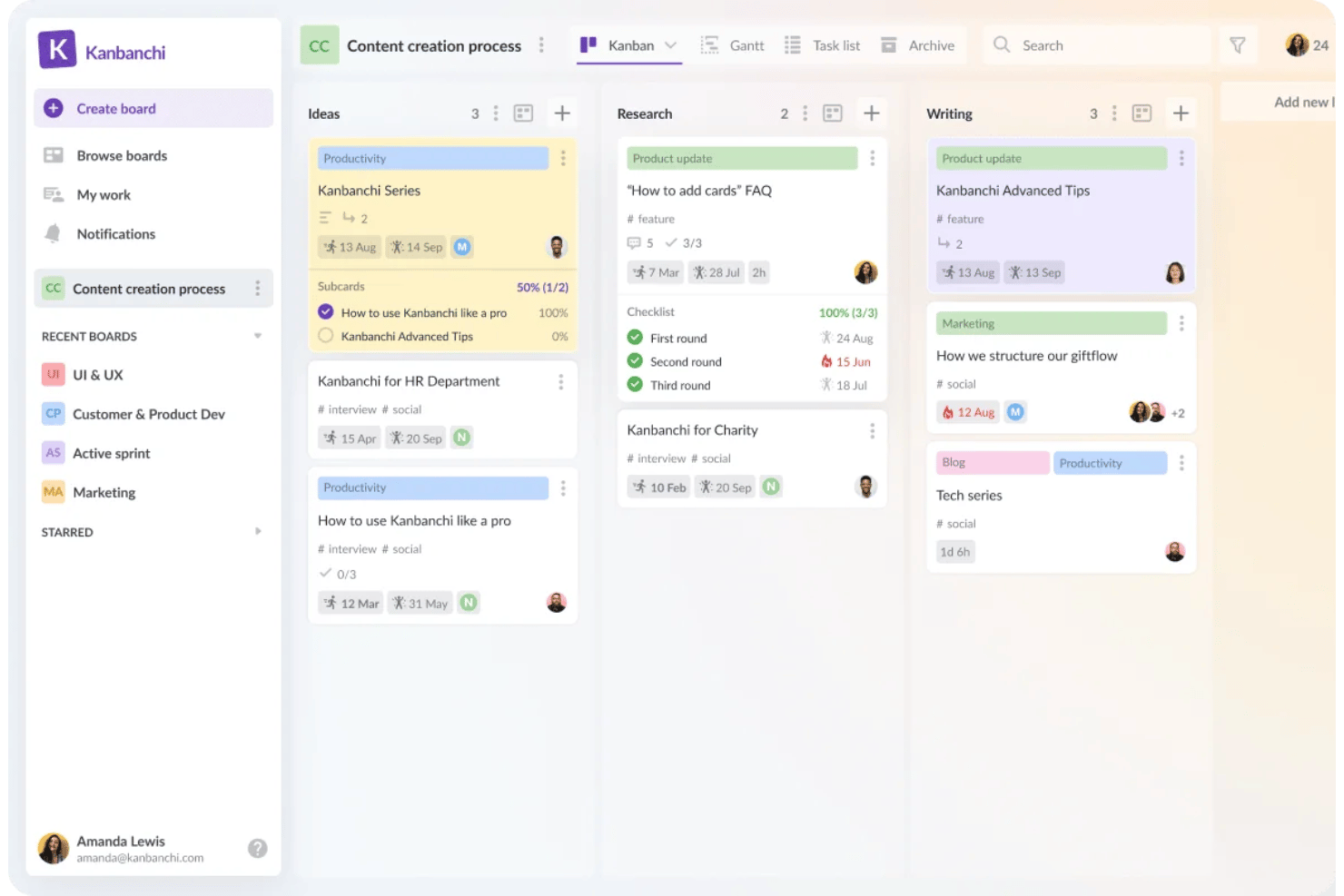
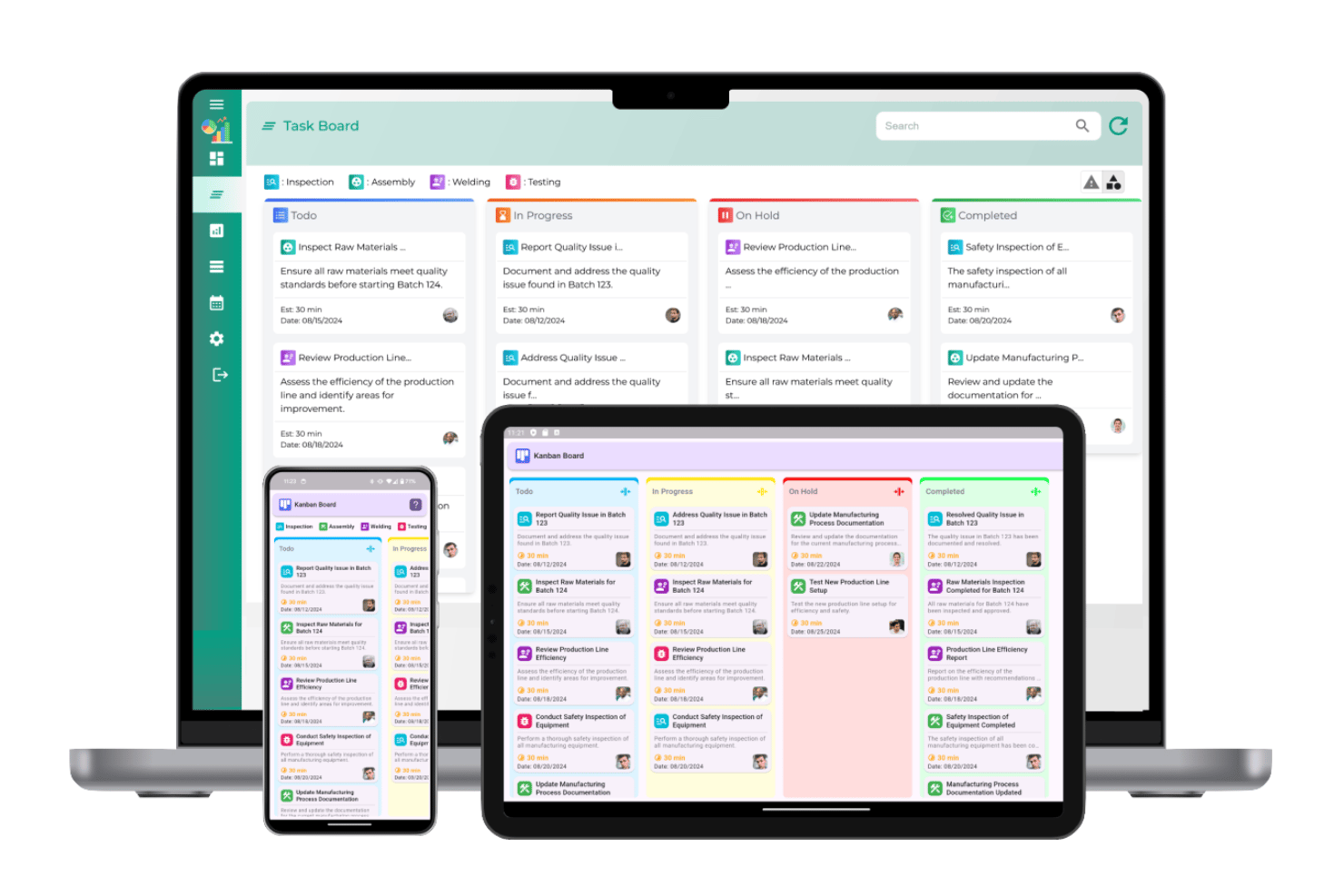
Visualize project tasks with drag-and-drop kanban cards. Teams can quickly shift priorities and keep everyone aligned.
Gantt Chart View
Track timelines, deadlines, and dependencies in a single timeline chart. Switching between kanban and Gantt views keeps planning flexible.
Card Task Lists
Create detailed checklists inside each card for step-by-step task management. Check off actions to keep progress visible at a glance.
Real-Time Collaboration
Board updates sync instantly across all users, ensuring everyone sees changes as they happen. This keeps distributed teams working from the same page.
Built-In Task Prioritization
Set task priority flags and notifications to highlight urgent work. This feature helps teams focus on what matters most as project needs shift.
Attachment and File Linking
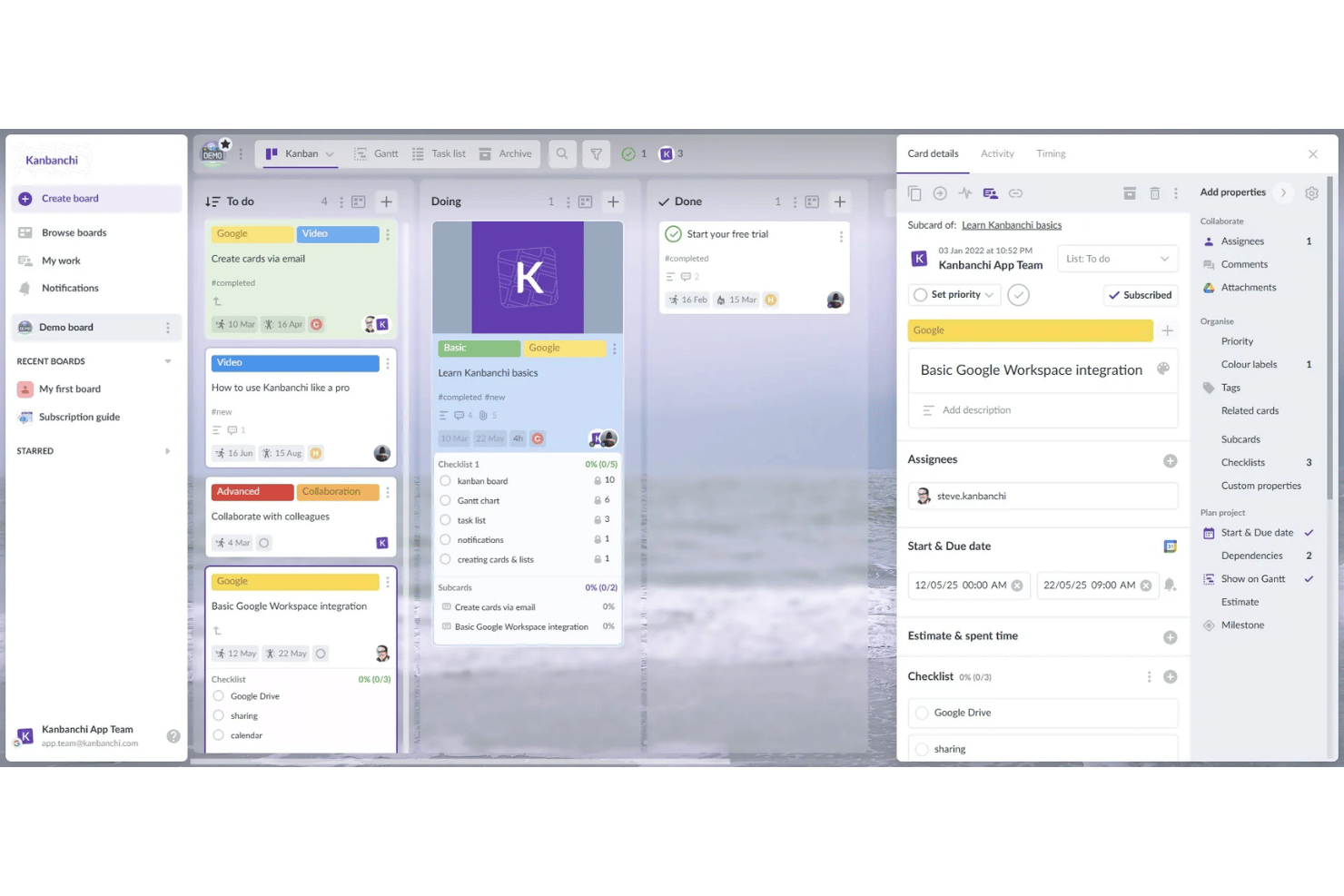
Add files, Google Docs, and links directly to cards for quick reference. Teams avoid hunting for scattered documentation during sprints.
Ease of Use
I find Kanbanchi very user-friendly, especially for teams already familiar with Google Workspace. Drag-and-drop task handling, clear board layouts, and built-in templates make onboarding quick without the need for a learning curve. Users often mention that working inside Google Drive feels intuitive, but some wish for more advanced configuration options or reporting tools.
Integrations
Kanbanchi integrates with Google Drive, Google Calendar, Gmail, Google Meet, Google Contacts, Google Sheets, Google Docs, Google Slides, Google Forms, and Google Classroom.
Kanbanchi does not provide a public API or connect with third-party integration tools outside the Google Workspace ecosystem.
Kanbanchi Specs
- API
- Batch Permissions & Access
- Budgeting
- Calendar Management
- Collaboration Support
- Contact Management
- Contact Sharing
- Customer Management
- Dashboard
- Dashboards
- Data Export
- Data Import
- Data Visualization
- Dependency Tracking
- Document Sharing
- Expense Tracking
- External Integrations
- File Sharing
- Gantt Charts
- Kanban Boards
- Multi-User
- Notifications
- Project Management
- Resource Management
- Scheduling
- Task Scheduling/Tracking
- Third-Party Plugins/Add-Ons
- Time Management
- Travel Management
- Workflow Management