

10 beste Zeiterfassungssoftware für Produktivität im Jahr 2026

10 Die besten Zeiterfassungsprogramme – Übersicht


Die beste Zeiterfassungssoftware hilft Ihnen dabei, Projektstunden zu überwachen, Kunden korrekt abzurechnen und die Produktivität Ihres Teams zu verwalten, ohne auf Tabellenkalkulationen angewiesen zu sein oder manuellen Zeiterfassungsbögen hinterherzulaufen. Wenn Sie mit uneinheitlichen Daten von Freelancern, Projekten mit Budgetüberschreitungen oder ungenauen Rechnungen aufgrund unzureichender Zeiterfassungstools zu kämpfen haben, ist es Zeit für ein Upgrade.
Mit 20 Jahren Erfahrung in der Umsetzung digitaler Projekte für Marken wie Sony, Land Rover und Unilever – und mehr als einem Jahrzehnt, in dem ich Zeiterfassungsplattformen teste – weiß ich, woran man ein zuverlässiges Tool erkennt. Die richtige Lösung sollte sich in Ihren Projektmanagement-Stack integrieren lassen, die Zeiterfassung in Echtzeit unterstützen und sowohl manuelle als auch automatisierte Erfassung ermöglichen.
Für diesen Leitfaden habe ich zahlreiche Tools getestet und 20 führende Plattformen ausgewählt, damit Sie die Zeiterfassungssoftware finden, die am besten zu Ihrem Arbeitsablauf passt und Ihr Unternehmensergebnis verbessert. Ich habe die Funktionen, Integrationen und Preise jedes Tools analysiert, um herauszufinden, wodurch es sich auszeichnet. So können Sie sicher das Tool auswählen, das optimal zu den Anforderungen Ihres Teams passt.
Warum Sie unseren Software-Empfehlungen vertrauen können
Unser Team testet und bewertet Software seit 2012. Als Projektmanager wissen wir selbst, wie schwierig – und wichtig – es ist, die richtige Software auszuwählen.
Für diesen Leitfaden haben wir Tools mithilfe von praktischen Tests und unabhängiger Recherche bewertet und dabei unsere Bewertungskriterien angewendet. Zudem greifen wir auf Erkenntnisse von Branchenvordenkern und praktizierenden Projektmanagement-Experten zurück.
Unsere Bewertungen spiegeln unser menschliches redaktionelles Urteilsvermögen wider, keine Verkaufsstrategie.
Expertenprüfer:
Technische Daten im direkten Vergleich
Diese Vergleichstabelle fasst die Preisinformationen meiner bevorzugten Zeiterfassungsprogramme zusammen und hilft Ihnen dabei, die beste Lösung für Ihr Budget und Ihre geschäftlichen Anforderungen zu finden.
| Tool | Best For | Trial Info | Price | ||
|---|---|---|---|---|---|
| 1 | Am besten geeignet zur Projektzeiterfassung | 14 Tage kostenloser Test | Ab $6/Nutzer/Monat | Website | |
| 2 | Am besten zur Vermeidung von Zeitdiebstahl | 14-tägige kostenlose Testphase verfügbar | Ab $24/Standort/Monat | Website | |
| 3 | Am besten für detaillierte Zeiterfassung | 14-tägige kostenlose Testphase + kostenlose Demo verfügbar | Ab $19.90/Benutzer/Monat (jährlich abgerechnet) | Website | |
| 4 | Am besten für verteilte Teams geeignet | 10 Tage kostenlos testen | Ab $4.99/Nutzer/Monat | Website | |
| 5 | Beste GPS-Zeiterfassung für mobile Teams | Kostenloser Plan verfügbar + 14-tägige kostenlose Testphase | Ab $29/Monat (jährlich abgerechnet) | Website | |
| 6 | Am besten geeignet für zeitorientierte Einblicke in die Rentabilität | 14-tägige kostenlose Testversion + kostenlose Demo verfügbar | Ab $10/Nutzer/Monat | Website | |
| 7 | Am besten für kleine Teams und Unternehmen geeignet | 30 Tage kostenlos testen | Ab $5/Nutzer/Monat | Website | |
| 8 | Am besten geeignet für Zeiterfassung über den gesamten Projektlebenszyklus | Kostenlose Demo verfügbar | Preise auf Anfrage | Website | |
| 9 | Am besten bei exakter Offline-Zeiterfassung | 14-tägige kostenlose Testphase + kostenlose Demo verfügbar | Ab $6.42/Benutzer/Monat (jährliche Abrechnung) | Website | |
| 10 | Am besten für anpassbare Dashboards | 30 Tage kostenlos testen. Keine Kreditkarte erforderlich. | Ab $5.99/Nutzer/Monat | Website |


Bewertungen der besten Zeiterfassungsprogramme
Hier finden Sie einen kurzen Überblick über die besten Zeiterfassungs-Apps, einschließlich Screenshots, herausragender Funktionen, verfügbarer Integrationen und mehr.

Am besten geeignet zur Projektzeiterfassung
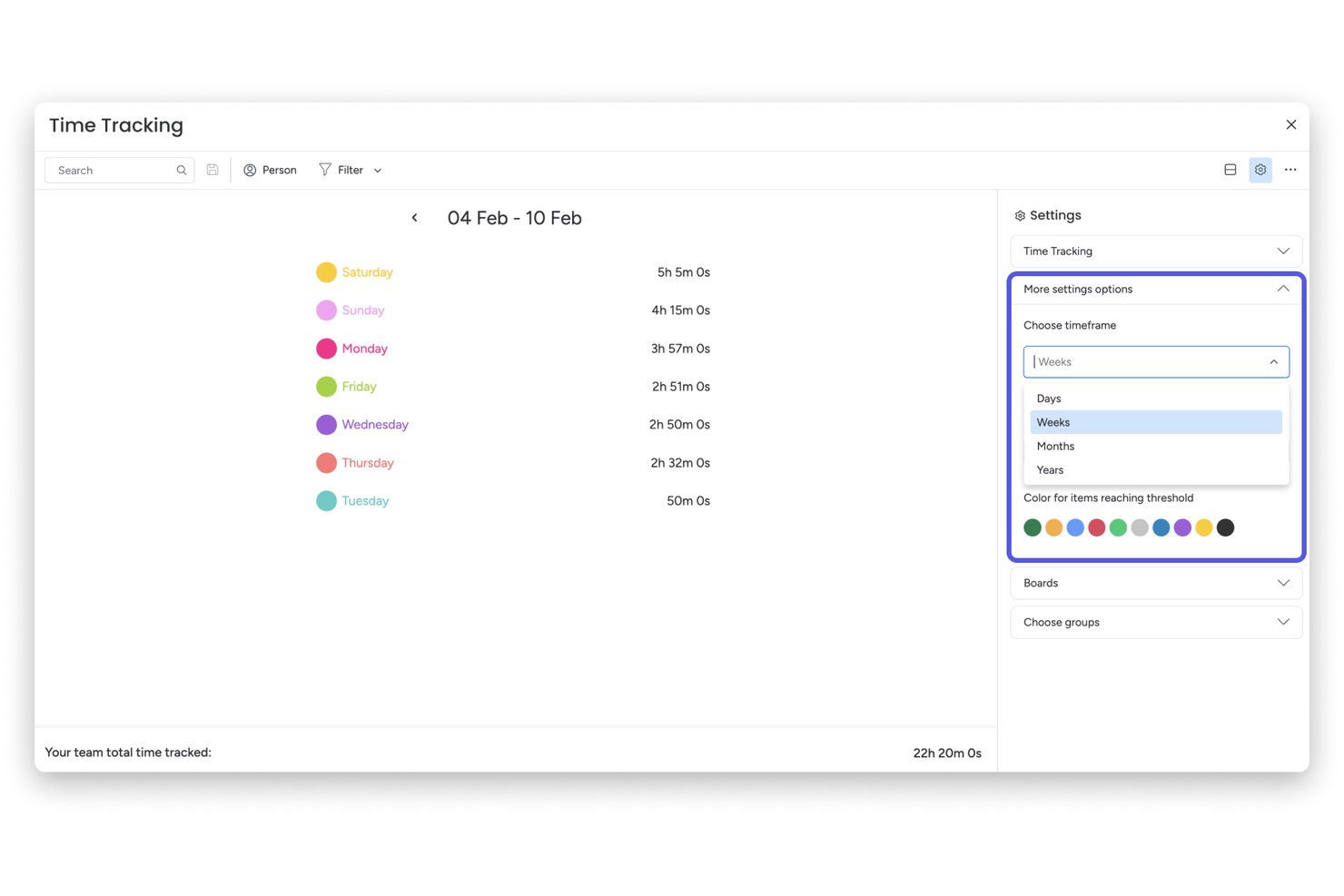
monday AI Workspace ist eine Projektmanagement-Plattform mit integrierter Zeiterfassung, die es Teams ermöglicht, Stunden für Aufgaben zu erfassen, Projektbudgets zu überwachen und die Auslastung über alle laufenden Projekte hinweg einzusehen.
Für wen ist monday AI Workspace am besten geeignet?
Es eignet sich besonders für Projektmanager und Leiter von Project Management Offices (PMO) in mittelständischen Unternehmen, die bereits mit monday.com arbeiten und Zeiterfassung direkt an ihre Projektboards koppeln möchten.
Warum ich monday AI Workspace ausgewählt habe
Ich habe monday AI Workspace gewählt, weil die direkte Integration der Zeiterfassung in die Projektboards so natürlich umgesetzt ist wie sonst nirgends. Mit der Time Tracking Column kann mein Team Timer direkt im jeweiligen Element starten und stoppen, in dem sie Aufgaben verwalten – so sind erfasste Stunden immer im realen Projektkontext hinterlegt. In Kombination mit dem Time Tracking Widget auf Dashboards kann ich aufwandsbezogene Kennzahlen und Burn-Rates über alle Projekte hinweg einsehen, ohne die Plattform verlassen zu müssen.
monday AI Workspace Hauptfunktionen
- Anpassbare Boards: Teams können Projektboards mit Spalten für Status, Verantwortliche, Prioritäten und individuelle Kennzahlen erstellen.
- Workload-Ansicht: Zeigt visuell die zugewiesenen Stunden jedes Teammitglieds über Projekte hinweg an, um Überlastungen oder ungenutzte Kapazitäten zu erkennen.
- Automatisierungen: Workflow-Automatisierungen für wiederkehrende Aktionen wie Statusänderungen oder Erinnerungen an die Zeiterfassung einrichten.
- Dashboards und Berichte: Projekt- und Zeitdaten in Dashboards mit Widgets für Budgetüberwachung, Auslastung und wichtige Kennzahlen zusammenführen.
monday AI Workspace Integrationen
monday AI Workspace bietet Hunderte von nativen Integrationen, darunter Slack, Google Workspace, Microsoft 365, Salesforce, Jira, GitHub, Zoom, Dropbox, HubSpot und Zendesk. Außerdem wird Zapier unterstützt und eine API für individuelle Integrationen bereitgestellt.
Pros and Cons
Pros:
- Zeiterfassung direkt an Projektaufgaben geknüpft
- Transparente Auslastung aller aktiven Projekte
- Zeitdaten werden in visuelle Dashboards überführt
Cons:
- Keine automatische Zeiterfassung im Hintergrund verfügbar
- Genehmigungs-Workflows weniger ausgereift als bei Spezialtools
New Product Updates from monday AI Workspace
monday AI Workspace Adds Human Approval Routing
monday AI Workspace adds a human-in-the-loop approval block to AI Workflows, sending approval requests and routing workflow paths based on responses. For more information, visit monday AI Workspace's official site.

Homebase
Am besten zur Vermeidung von Zeitdiebstahl
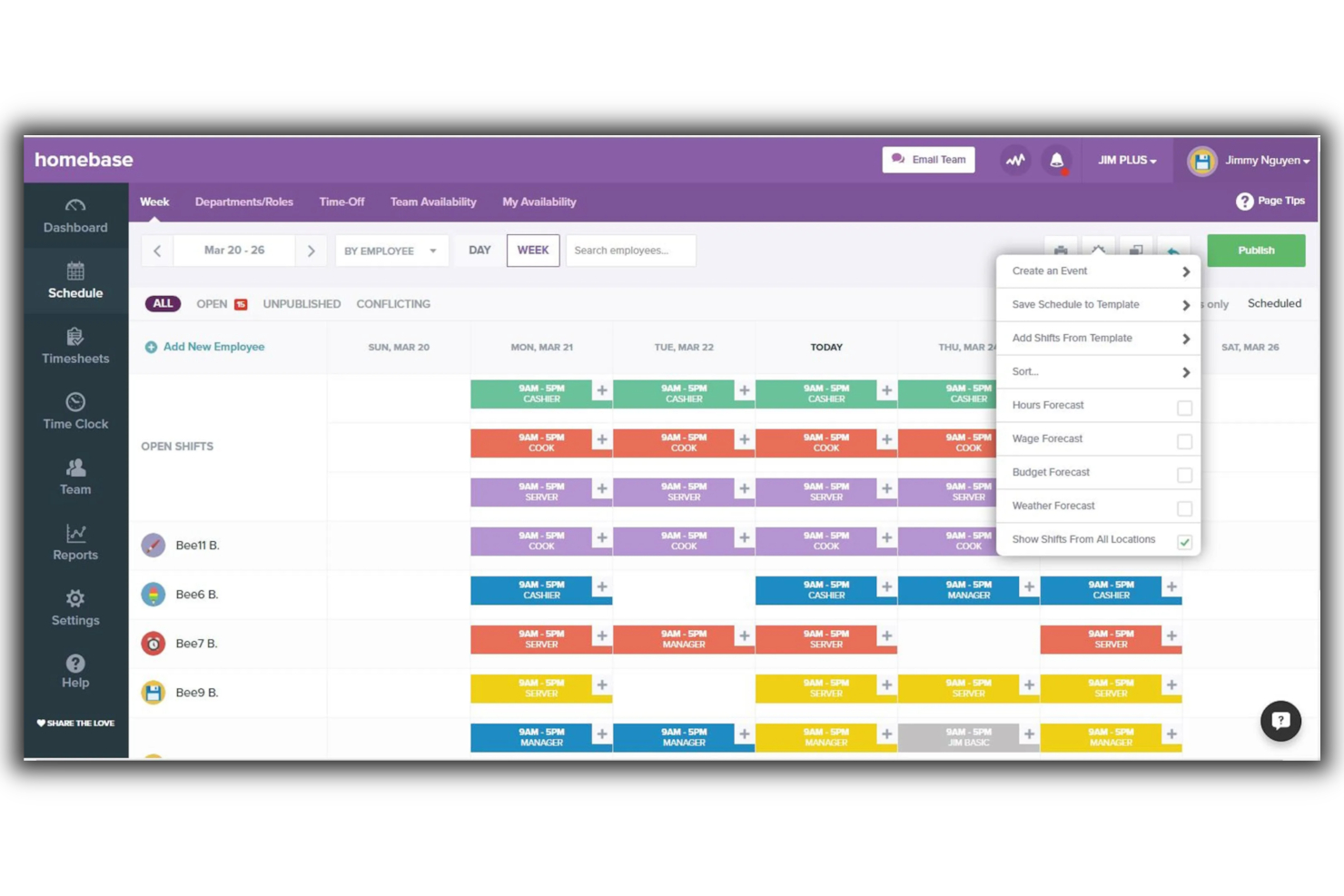
Homebase ist eine Zeiterfassungs- und Teammanagement-Plattform, die speziell für stundenbasierte Arbeitskräfte entwickelt wurde. Sie hilft Einzelhandels-, Gastronomie- und Dienstleistungsunternehmen, Arbeitsstunden zu erfassen, Dienstpläne zu verwalten und die Lohnabrechnung zu vereinfachen.
Für wen ist Homebase am besten geeignet?
Homebase ist besonders geeignet für kleine bis mittelgroße Unternehmen in stundenbasierten Branchen wie Gastronomie, Einzelhandel und Hotellerie.
Warum ich Homebase gewählt habe
Homebase hat es auf meine Auswahlliste geschafft, weil die Plattform gezielt Zeitdiebstahl in stundenbasierten Arbeitsumgebungen adressiert. Mir gefällt, dass die Stechuhr beim Ein- und Ausstempeln ein Foto des Mitarbeiters macht, sodass sofort überprüft werden kann, ob tatsächlich die richtige Person einstempelt und nicht ein Kollege das übernimmt. Diese Buddy-Punching-Prävention ist sogar in der kostenlosen Version enthalten, was selten ist. Darüber hinaus ermöglicht GPS-Tracking die Bestätigung, dass Außendienstmitarbeitende oder Mitarbeiter an entfernten Standorten tatsächlich vor Ort sind, wenn sie sich einstempeln – und nicht ganz woanders ihre Zeit erfassen.
Homebase Hauptfunktionen
- Automatisierte Stundenzettel: Homebase wandelt Ein- und Ausstempelzeiten automatisch in Stundenzettel um und kennzeichnet Unstimmigkeiten zur Überprüfung durch den Manager.
- Überstunden- und Pausenwarnungen: Es können Regeln für Überstunden und vorgeschriebene Pausen festgelegt werden, und Homebase informiert Manager, wenn Mitarbeitende diese Grenzen erreichen oder überschreiten.
- Lohnabrechnungsintegration: Exportieren Sie Stundenzettel-Daten direkt an Lohnanbieter, um manuelle Eingabe- und Rechenfehler zu reduzieren.
- Team-Messaging: Integrierte Nachrichtenfunktion ermöglicht es Managern, Schichtänderungen, Updates und Erinnerungen direkt über die Plattform zu kommunizieren.
Homebase Integrationen
Zu den Integrationen zählen Square, Toast, Clover, Shopify, QuickBooks, Gusto, ADP, Paychex, Heartland und Revel.
Pros and Cons
Pros:
- Foto-Stechuhr verhindert Buddy-Punching
- GPS-Tracking bestätigt Anwesenheit im Außendienst oder unterwegs
- Integriertes Team-Messaging für Schichtkoordination
Cons:
- Begrenzte Möglichkeiten zur Anpassung von Berichten
- Keine projektbasierte Zeiterfassung

Scoro
Am besten für detaillierte Zeiterfassung
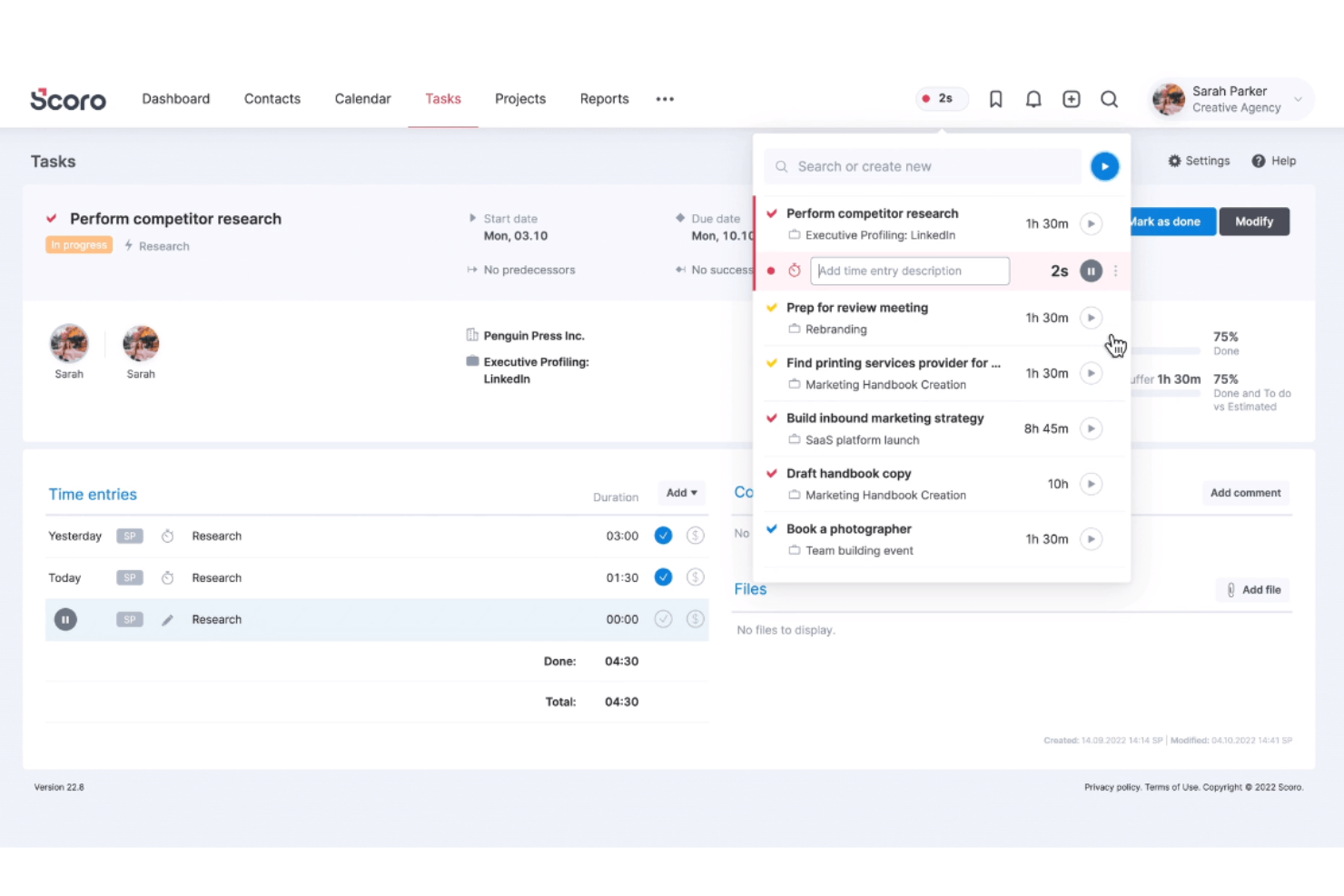
Scoro ist eine Arbeitsmanagement-Plattform, die für Teams aus dem Bereich professionelle Dienstleistungen und Agenturen entwickelt wurde, die Zeit erfassen, Projekte managen und Zeitdaten direkt mit der Abrechnung und Berichterstattung verknüpfen müssen.
Für wen ist Scoro am besten geeignet?
Scoro eignet sich besonders für Unternehmen aus dem Bereich professionelle Dienstleistungen—wie Beratungen, Agenturen und IT-Dienstleister—, die die Zeiterfassung mit Projektbudgets und Kundenabrechnung verknüpfen müssen.
Warum Scoro heraussticht
Scoro erfasst detaillierte Zeitdaten und nutzt diese für die Berichterstattung. Teams können Stunden auf drei Arten erfassen: über einen Echtzeit-Timer, nachträglich in einem Stundenzettel oder indem der Kalender Arbeitsberichte aus geplanten Terminen automatisch ausfüllt. Die Stundenzettel-Vorauffüllfunktion holt Einträge direkt von der persönlichen Aufgabenliste, sodass keine Unklarheit über die zu erfassende Arbeit besteht. Diese Zeitdaten fließen dann in die Abgrenzung zwischen abrechenbaren und nicht abrechenbaren Stunden ein, sodass Sie genau sehen können, wo Zeit auf Kunden, Projekte und Aktivitäten verteilt wird – und diese Erkenntnisse zur Verbesserung der Abrechnungsgenauigkeit nutzen können.
Scoro Hauptfunktionen
- Projektbudget-Überwachung: Überwachen Sie Budgets in Echtzeit im Vergleich zu erfassten Stunden und Ausgaben, um Projekte finanziell im Griff zu behalten.
- Rechnungsstellung aus Zeiterfassungen: Wandeln Sie erfasste Zeit ohne manuelle Dateneingabe direkt in Kundenrechnungen um.
- Auslastungsberichte: Sehen Sie teamweite Auslastungsquoten, um über- und unterbeanspruchte Ressourcen in laufenden Projekten zu identifizieren.
- Aufgaben- und Meilensteinmanagement: Strukturieren Sie Arbeit mit Aufgaben und Meilensteinen, inkl. Verantwortlichen, Fristen und Abhängigkeiten.
Scoro-Integrationen
Zu den Integrationen zählen Google Kalender, Microsoft 365, Xero, QuickBooks, Zapier, Dropbox, Slack, HubSpot und Exact.
Pros and Cons
Pros:
- Umfassende Projektmanagement-Funktionen
- Effektive Zeiterfassungsmöglichkeiten
- Leistungsstarke Berichte und Analysen
Cons:
- Bestimmte Zeiterfassungsfunktionen nur in höheren Tarifen verfügbar
- Die mobile App bietet nur eingeschränkte Funktionen
New Product Updates from Scoro

Scoro Adds Time Mobile App and ELI Improvements
Scoro adds the Scoro Time mobile app for iOS/Android to track time anywhere and expands ELI with attachments, smarter filtering, and trigger-based actions. For more information, visit Scoro's official site.

Monitask
Am besten für verteilte Teams geeignet
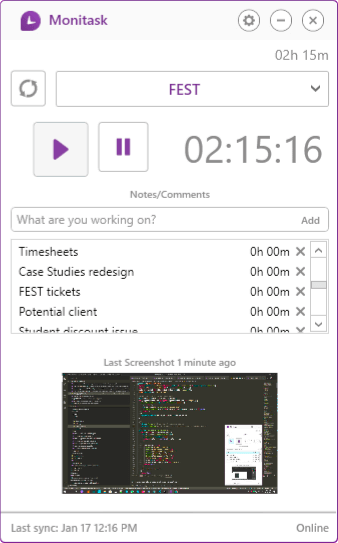
Monitask ist für Teams konzipiert, die an verschiedenen Standorten arbeiten und Einblick in die Produktivität im Homeoffice benötigen. Es ist besonders nützlich für verteilte Unternehmen, die Aktivitäten überwachen, Arbeitszeiten erfassen und Bildschirmfotos erstellen möchten, ohne Arbeitsabläufe zu stören. Das Tool hilft Managern, Anwesenheit und Engagement von Remote-Mitarbeitern, Freelancern oder hybriden Teams zu überprüfen.
Für wen ist Monitask am besten geeignet?
Teamleiter und Operationsmanager in verteilten Unternehmen, die Remote-Mitarbeiter koordinieren und einen strukturierten Überblick über die Arbeitsaktivitäten an verschiedenen Standorten wünschen.
Warum habe ich Monitask ausgewählt?
Bei der Verwaltung verteilter Teams ist es wichtig, Tools zu haben, die echten Einblick in Remote-Arbeit bieten. Ich habe Monitask gewählt, weil es automatisierte Zeiterfassung mit Aktivitätsüberwachung und regelmäßigen Bildschirmfotos kombiniert, was Managern hilft, die Produktivität an verschiedenen Standorten zu überprüfen. Die Plattform bietet außerdem Online-Stundenzettel, die in Echtzeit aktualisiert werden, wodurch die Überwachung von Anwesenheit und Arbeitszeit der Remote-Mitarbeiter erleichtert wird. Diese Funktionen machen Monitask zu einer ausgezeichneten Wahl für Unternehmen, die verteilte oder hybride Teams verwalten und unterstützen müssen.
Wichtige Funktionen von Monitask
Weitere Funktionen, die Monitask für die Zeiterfassung nützlich machen, sind:
- Überwachung der App- und Websitenutzung: Überwacht, welche Anwendungen und Websites Mitarbeiter während der erfassten Arbeitszeit nutzen.
- Erkennung von Leerlaufzeiten: Markiert inaktive Zeiträume, damit Manager unproduktive Zeiten erkennen können.
- Anpassbare Benutzerrollen: Ermöglicht Administratoren, unterschiedliche Berechtigungen für Manager, Teamleiter und Mitarbeiter festzulegen.
- Automatisierte Berichte: Erstellt ausführliche Berichte über gearbeitete Stunden, Aktivitätslevel und Projektzuweisungen.
Monitask-Integrationen
Native Integrationen sind nicht öffentlich aufgeführt.
Pros and Cons
Pros:
- Bildschirmfotos liefern einen visuellen Nachweis der Arbeit
- Website-Tracking zeigt digitale Aktivitäten
- Die Erkennung von Leerlaufzeiten markiert unproduktive Phasen
Cons:
- Kein GPS- oder Geolokalisierungs-Tracking verfügbar
- Keine mobile App für das Tracking unterwegs
Beste GPS-Zeiterfassung für mobile Teams
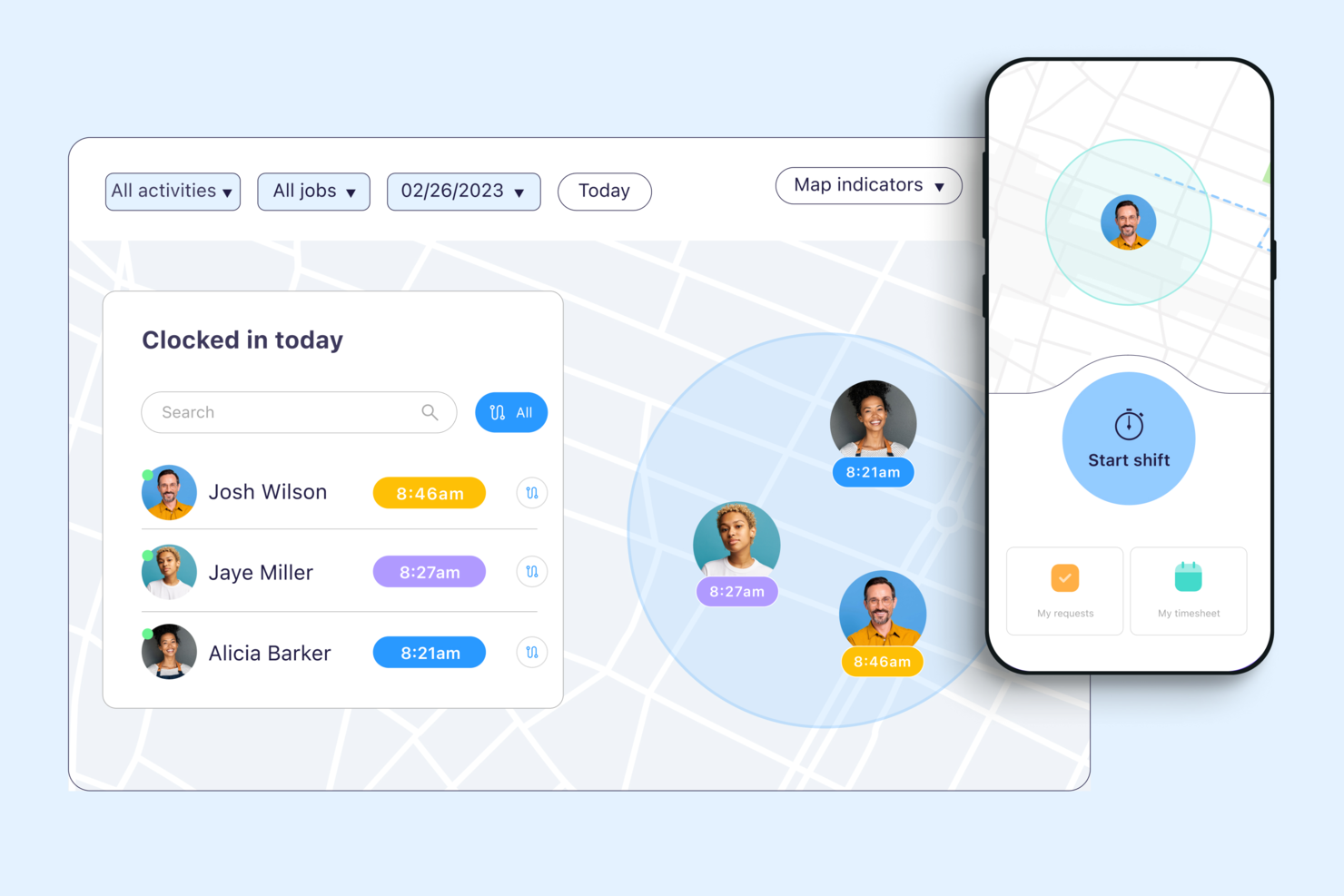
Connecteam ist eine Plattform für das Workforce-Management von Unternehmen mit Mitarbeitern ohne festen Schreibtisch oder mobilen Angestellten, die eine zuverlässige Zeiterfassung, Terminplanung und Teamkommunikation an einem Ort benötigen.
Für wen ist Connecteam am besten geeignet?
Connecteam eignet sich hervorragend für kleine bis mittelgroße Unternehmen in praxisorientierten Branchen wie Bauwesen, Einzelhandel und Gastgewerbe, die stunden- oder schichtbasierte Arbeitskräfte managen.
Warum ich Connecteam gewählt habe
Ich habe Connecteam als eines der besten Tools gewählt, weil seine GPS-Zeiterfassung auch unter realen Bedingungen im Außeneinsatz überzeugt. Besonders gefällt mir die Breadcrumbs-Funktion, die die Standortspur eines Mitarbeiters während der gesamten Schicht aufzeichnet – nicht nur beim Ein- und Ausstempeln. So können Sie, wenn Sie ein Team an mehreren Einsatzorten verwalten, genau nachvollziehen, wo sich jede Person wann aufgehalten hat, ohne auf Eigenangaben angewiesen zu sein. Die Geofencing-Funktion geht noch einen Schritt weiter, indem sie Mitarbeiter automatisch ausstempelt, wenn sie den festgelegten Arbeitsbereich verlassen – Zeitbetrug wird so ohne manuellen Eingriff von Vorgesetzten verhindert.
Connecteam Hauptfunktionen
- Stundenzettelverwaltung: Überprüfen, bearbeiten und genehmigen Sie Mitarbeiter-Stundenzettel direkt in der App, bevor Sie sie für die Lohnabrechnung exportieren.
- Schichtplanung: Erstellen und weisen Sie Schichten bestimmten Mitarbeitern oder Teams zu; Verfügbarkeit und Konflikte lassen sich einsehen.
- Überstundenverfolgung: Definieren Sie eigene Überstundenregeln, sodass das System Stunden, die über festgelegte Grenzen hinausgehen, automatisch markiert.
- Kioskbetrieb: Lassen Sie Mitarbeiter per PIN an einem gemeinsam genutzten Gerät stempeln – ideal für feste Einsatzorte ohne eigene Smartphones.
Connecteam Integrationen
Zu den Integrationen gehören QuickBooks, Gusto, Xero, ADP, Wix, Lightspeed, PrismHR, Square und BambooHR.
Pros and Cons
Pros:
- Vielfältige Stempelmethoden, darunter mobile App, Kioskbetrieb und NFC-Ausweise
- Mitarbeiterstandorte können getrackt und Geofence-Bereiche gesetzt werden
- Es lassen sich individuelle Regeln für Pausen, Überstunden und Lohnsätze festlegen
Cons:
- Push-Benachrichtigungen sind manchmal verzögert
- Das Zuweisen von Nutzerrollen und -berechtigungen kann unintuitiv sein
New Product Updates from Connecteam

Connecteam Expands Break and Timesheet Controls
Connecteam adds flexible break thresholds, personalized policies, auto-end options, a centralized exceptions report, and improved timesheet issue visibility to help teams manage breaks and timesheets more effectively. For more information, visit Connecteam’s official site.
 .
.
Am besten geeignet für zeitorientierte Einblicke in die Rentabilität
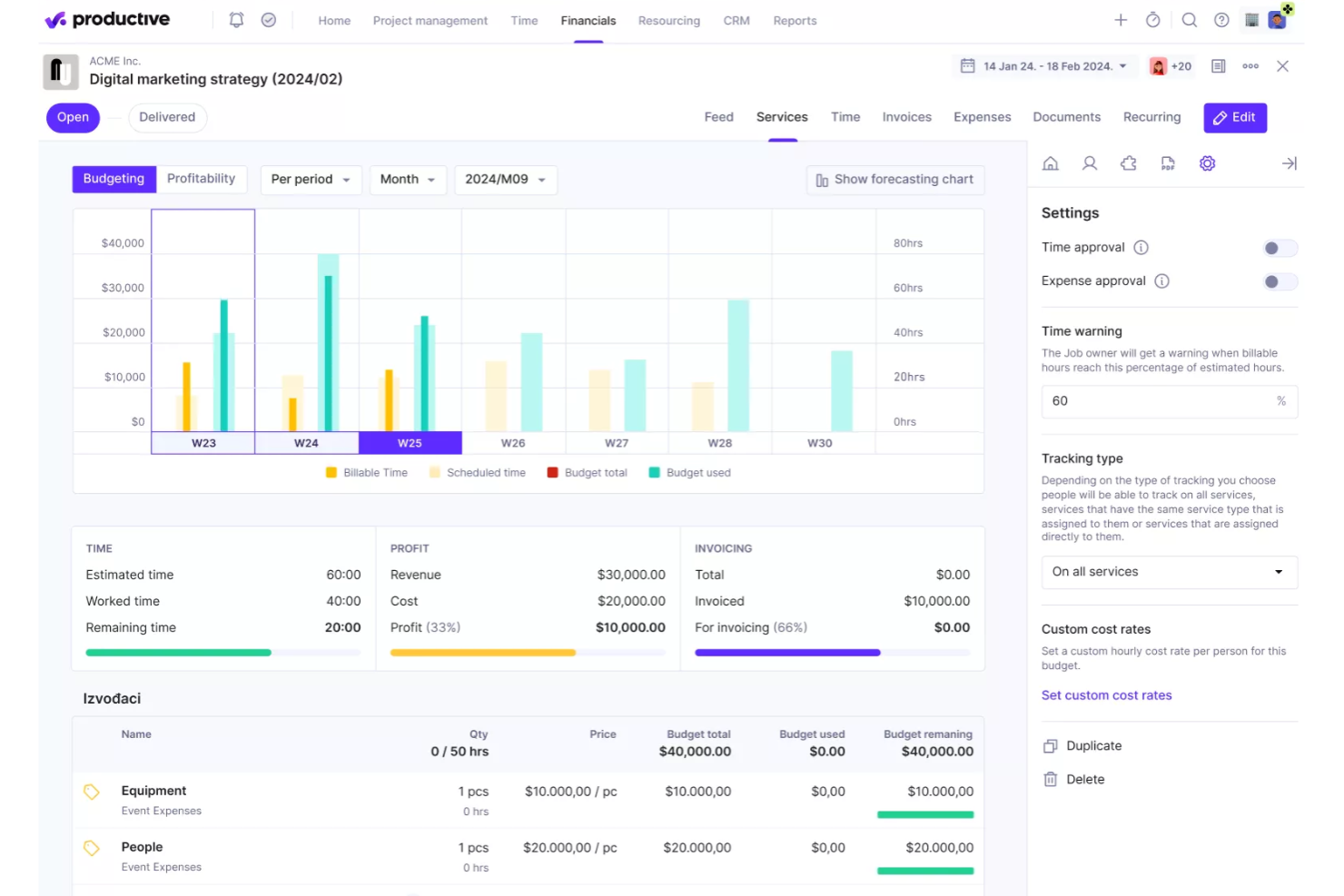
Productive ist eine Projektmanagement- und Zeiterfassungsplattform, die für Agenturen und Dienstleistungsunternehmen entwickelt wurde, die erfasste Stunden mit Projektbudgets, Ressourcenplanung und Rentabilität verknüpfen müssen.
Für wen ist Productive am besten geeignet?
Productive eignet sich besonders für Agenturen und professionelle Dienstleistungsfirmen, die ihre Kunden auf Stundenbasis abrechnen und Einblick in die Projektmargen benötigen.
Warum habe ich Productive ausgewählt?
Ich habe Productive als eines der besten Tools ausgewählt, weil es die Zeiterfassung direkt mit den Rentabilitätsdaten verknüpft. Jede Stunde, die Ihr Team für eine Dienstleistung erfasst—ob abrechenbar oder nicht—fließt direkt in die Budgetüberwachung und Margenauswertung ein, sodass Sie nicht auf einen Finanzbericht warten müssen, um den Projektstand zu kennen. Besonders gefällt mir der Arbeitskostenbericht, der die geleistete Zeit der abrechenbaren Zeit pro Ressource gegenüberstellt und einen klaren Überblick darüber gibt, wo Zeit verloren geht. Auch die KI-gestützte Berichtsebene ist wirklich nützlich—Sie können sie bitten, die Rentabilität pro Projekt oder die Auslastung pro Team anzuzeigen, ohne selbst einen einzigen benutzerdefinierten Bericht erstellen zu müssen.
Productive Hauptfunktionen
- Zeiterfassung mit Stundenzetteln: Erfasste Stunden können manuell oder mit einem Timer direkt Aufgaben, Projekten oder Dienstleistungen über eine zentrale Stundenzettel-Ansicht zugeordnet werden.
- Ressourcenplanung: Planen Sie Teammitglieder projektübergreifend mit einem visuellen Kapazitätsplaner, der Verfügbarkeit und Auslastung in Echtzeit anzeigt.
- Projektbudgetierung: Legen Sie Budgetgrenzen pro Projekt fest und überwachen Sie Ausgaben in Echtzeit, sobald Zeit und Kosten erfasst werden.
- Rechnungsstellung: Erstellen Sie Rechnungen direkt aus erfassten abrechenbaren Stunden und versenden Sie diese an Kunden, ohne die Plattform zu verlassen.
Productive Integrationen
Integrationen umfassen Jira, HubSpot, Xero, Google Kalender, Sage, Gmail, Microsoft Outlook, Slack, BugHerd und QuickBooks.
Pros and Cons
Pros:
- Anpassbares Dashboard und Reporting
- Leistungsstarke Ressourcenplanung
- Umfassende Funktionen für Finanzmanagement und Berichterstattung
Cons:
- Ersteinrichtung und Onboarding können zeitaufwendig sein
- Begrenzte Anzahl an Integrationen
New Product Updates from Productive

Productive Adds Agent Triggers, Teams Integration, and Time Controls
Productive adds automated agent triggers, broader AI file support, Microsoft Teams integration, Resource Planner improvements, and new time entry controls. These updates expand automation while improving scheduling, collaboration, and time tracking. For more information, visit Productive’s official site.

actiTIME
Am besten für kleine Teams und Unternehmen geeignet
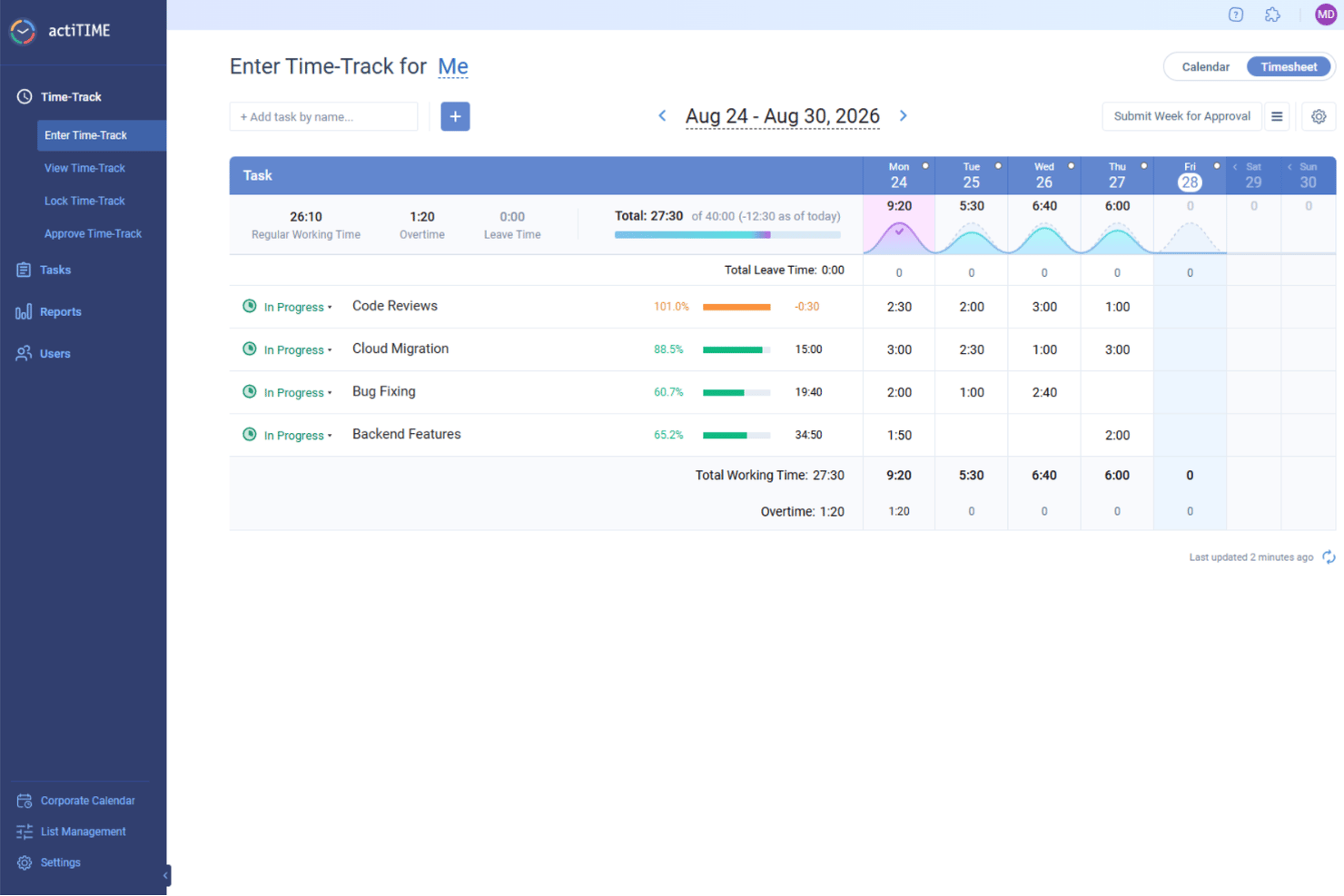
Wenn Sie nach einem Zeiterfassungstool suchen, das für kleine Teams und Unternehmen entwickelt wurde, ist actiTIME einen Blick wert. Es wurde für Teams konzipiert, die Arbeitsstunden erfassen, Aufgaben verwalten und Projektkosten überwachen müssen, ohne zusätzliche Komplexität. Die Plattform zeichnet sich durch eine einfache Einrichtung, flexible Berichte und integrierte Funktionen zur Urlaubsverwaltung aus.
Für wen eignet sich actiTIME am besten?
Teamleiter und Administratoren in kleinen Unternehmen, die eine unkomplizierte Zeiterfassung und Berichterstattung ohne komplexe Implementierung oder dedizierten System-Support benötigen.
Warum ich actiTIME ausgewählt habe
Für kleine Teams und Unternehmen bietet actiTIME eine fokussierte Auswahl an Zeiterfassungsfunktionen ohne unnötige Extras. Ich habe actiTIME ausgewählt, weil sich damit die Zeit nach Kunde, Projekt oder Aufgabe erfassen lässt und so leicht ersichtlich ist, wofür die Arbeitsstunden aufgewendet werden. Das Tool umfasst außerdem eine integrierte Urlaubsverwaltung, sodass sich Abwesenheiten und Urlaub zusammen mit der regulären Zeiterfassung verwalten lassen. Die Berichtsfunktionen helfen kleinen Teams, Projektkosten und Produktivität zu überwachen, ohne sich in unnötiger Komplexität zu verlieren.
Wichtige Funktionen von actiTIME
Weitere Funktionen, die actiTIME für kleine Teams nützlich machen, sind:
- Automatisierte Erinnerungen: Sendet Benachrichtigungen, um Nutzer daran zu erinnern, ihre Stundenzettel fristgerecht einzureichen.
- Anpassbare Abrechnungssätze: Ermöglicht die Festlegung unterschiedlicher Stundensätze für verschiedene Kunden oder Projekte.
- Mobile-App: Ermöglicht Nutzern, die Zeit zu erfassen und Aufgaben über ihre Smartphones zu verwalten.
- Integration mit QuickBooks: Synchronisiert Zeiterfassungsdaten direkt mit QuickBooks und optimiert so die Buchhaltung.
Integrationen von actiTIME
Zu den Integrationen gehören actiPLANS, Chrome-Erweiterung, QuickBooks und Zeiterfassungsassistent. Für benutzerdefinierte Integrationen ist außerdem eine API verfügbar.
Pros and Cons
Pros:
- Ermöglicht die Festlegung von Stundenbudgets und deren Überwachung
- Unterstützt feste und auf Anwesenheit basierende Urlaubsrichtlinien
- Bietet detaillierte Berichte und Datenanalysen
Cons:
- Es fehlen umfangreiche native Integrationen
- Es fehlen Funktionen wie Geofencing und Gesichtserkennung
New Product Updates from actiTIME

actiTIME Visual Hour Indicator and Time-Track Report Redesign
actiTIME adds a wave-style hour indicator to the Timesheet and Calendar views and refreshes the Time-Track report for smoother navigation and clearer visuals. For more information, visit actiTIME's official site.

Kantata
Am besten geeignet für Zeiterfassung über den gesamten Projektlebenszyklus
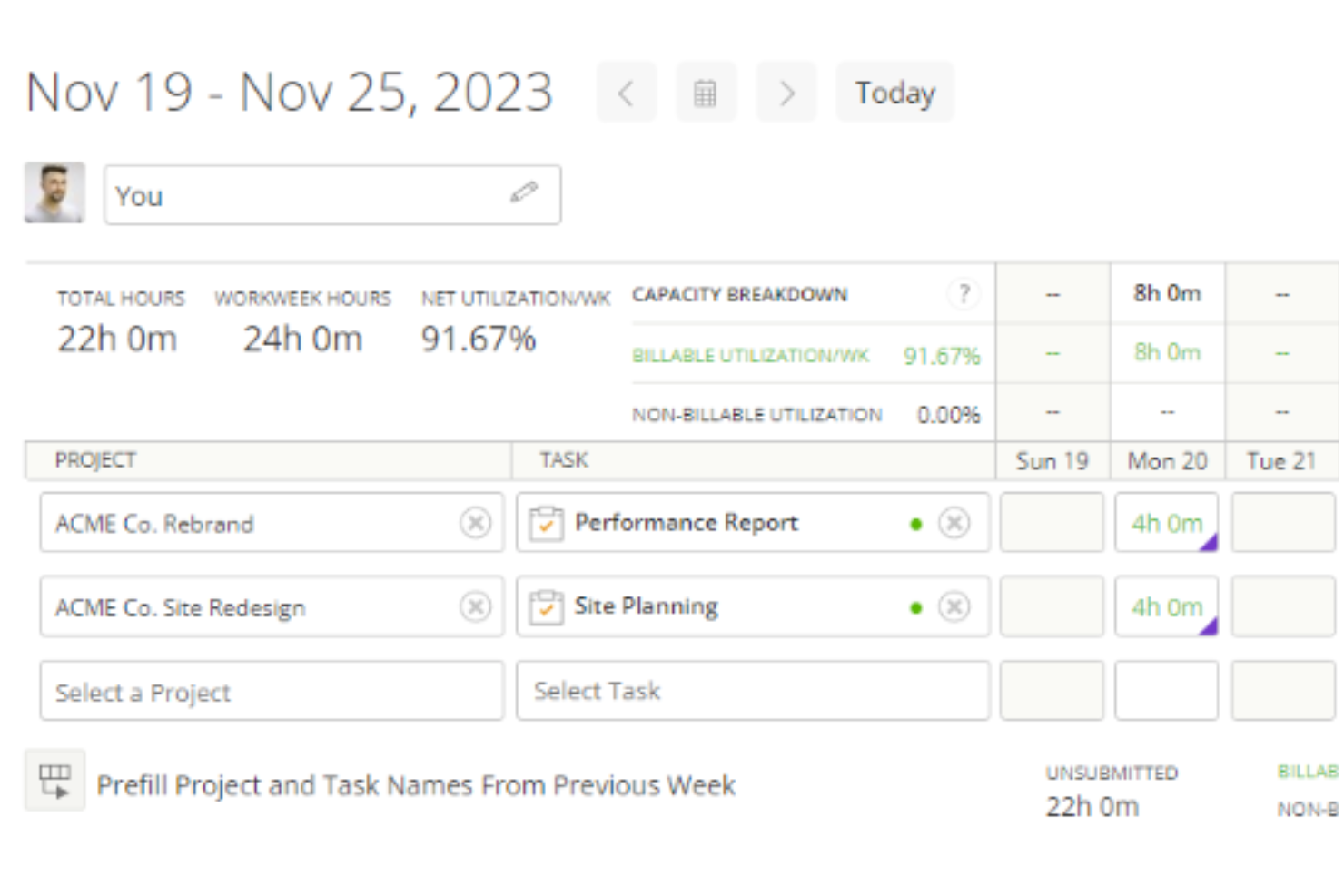
Kantata ist eine Plattform für Projekt- und Ressourcenmanagement, die sich an professionelle Dienstleistungsteams richtet, die Zeiten erfassen, Projekte verwalten und Ressourcen bei komplexen Kundenaufträgen optimieren müssen.
Für wen ist Kantata am besten geeignet?
Kantata eignet sich besonders für mittelgroße bis große professionelle Dienstleistungsunternehmen—wie Beratungs-, Marketing- und IT-Services-Firmen—die Zeit und Ressourcen über mehrere Kundenprojekte hinweg gleichzeitig verwalten müssen.
Warum ich Kantata ausgewählt habe
Ich habe Kantata als eines der besten Tools ausgewählt, weil es eines der wenigen Zeiterfassungstools ist, das Zeitdaten mit jeder anderen Phase der Projektabwicklung verbindet—von der ersten Planung bis zur Rechnungsstellung. Besonders schätze ich, dass die Zeiterfassung und Kostenerfassung kein isoliertes Modul sind, sondern direkt in das Finanzmanagement einfließen, sodass mein Team in Echtzeit sehen kann, wie erfasste Stunden die Projektmargen und das Budget beeinflussen. Kantata bietet zudem integrierte Arbeitsabläufe für Stundenzettel mit Automatisierungen, die den Abschluss von Abrechnungsperioden vereinfachen—etwas, das insbesondere Finanzteams bei mehreren parallelen Projekten zu schätzen wissen. Darüber hinaus sorgt die Business-Intelligence-Ebene dafür, dass Auslastungs- und Honorarkennzahlen über das gesamte Portfolio sichtbar werden, sodass Zeiterfassung ein Beitrag zu echten strategischen Entscheidungen wird und nicht nur eine Compliance-Pflicht darstellt.
Kantata – Schlüsselfunktionen
- Ressourcenmanagement: Weisen Sie Teamkapazitäten zu und passen Sie sie projektübergreifend mithilfe visueller Ressourcenplanungstools an, die die aktuelle Verfügbarkeit widerspiegeln.
- Projektprognosen: Modellieren Sie prognostizierte Kosten und Zeitpläne im Vergleich zu den Ist-Daten, um Kundenprojekte im Griff zu behalten, bevor Probleme entstehen.
- Rollenbasierte Berechtigungen: Steuern Sie, wer Projektinformationen sehen, eingeben oder freigeben darf, mit konfigurierbaren Zugriffsrechten für unterschiedliche Teams.
- Kunden- und Projektdashboards: Überwachen Sie Projektstatus, Meilensteine und Lieferfortschritte aus einer zentralen Ansicht für Ihr gesamtes Portfolio.
Kantata-Integrationen
Zu den Integrationen gehören Salesforce, NetSuite, Jira, Slack, HubSpot, QuickBooks, Xero, BambooHR, Google Drive und Microsoft Teams.
Pros and Cons
Pros:
- Nutzer können Zeiten per Timer, Stundenzettel oder direkt auf Aufgaben erfassen
- Zeiteinträge können vor der Rechnungsstellung überprüft und freigegeben werden
- Admins können Regeln wie erforderliche Notizen oder Aufgabenverknüpfungen durchsetzen
Cons:
- Die Konfiguration, wer Zeiten erfassen und freigeben darf, kann komplex sein
- Bestimmte Felder zur Zeiterfassung sind möglicherweise nicht vollständig anpassbar
New Product Updates from Kantata

Kantata Adds Access Group Change History
Kantata adds Access Groups History, letting account administrators track changes to group details, membership, and permissions in Recent History. The update also makes these events available through the Subscribed Events API for broader monitoring. For more information, visit Kantata’s official site.
 .
.
DeskTime
Am besten bei exakter Offline-Zeiterfassung
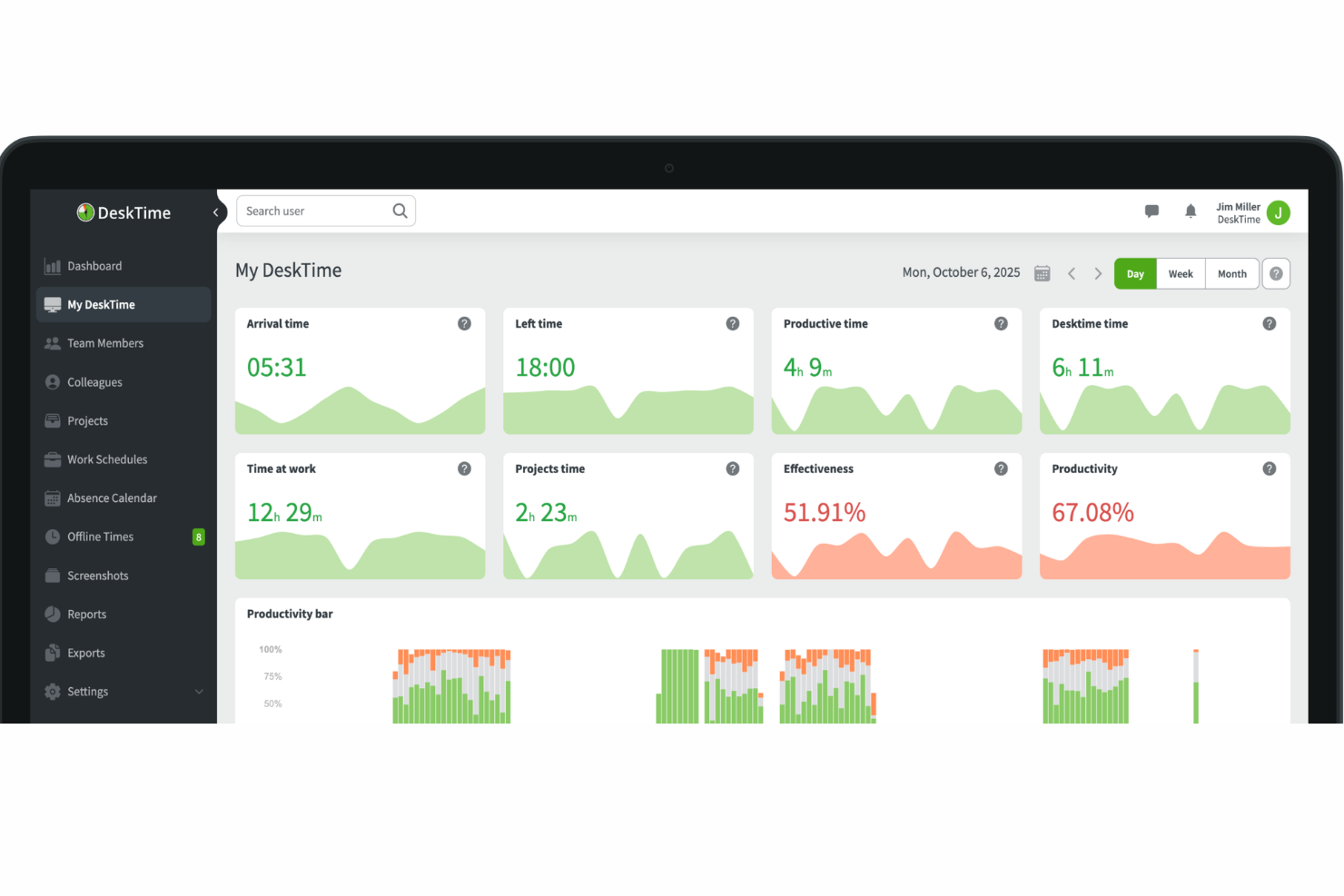
Mit automatischer Desktop-Überwachung und manueller Zeiterfassung ist DeskTime eine Zeiterfassungsplattform, die App-, URL- und Dokumentaktivitäten sowie Offline-Arbeit über Kalenderintegrationen und manuelle Eingaben erfasst.
Für wen ist DeskTime am besten geeignet?
DeskTime eignet sich gut für kleine bis mittelgroße Teams, die Einblick darin benötigen, wie Arbeitsstunden in verteilten oder hybriden Arbeitsumgebungen genutzt werden.
Warum ich DeskTime ausgewählt habe
Die Genauigkeit der Offline-Zeiterfassung ist eine Schwachstelle vieler Tools, aber DeskTime meistert dies besser als die meisten anderen. Mein Team kann Offline-Zeit manuell erfassen und nach Art (wie Besprechungen, Anrufe oder Reisen) kategorisieren, sodass diese Zeit nicht einfach aus dem Protokoll verschwindet. DeskTime synchronisiert sich zudem automatisch mit Google Calendar und Outlook, um Kalendereinträge automatisch zu übernehmen. Das bedeutet, dass geplante Meetings erfasst werden, ohne dass jemand daran denken muss, sie nachträglich zu protokollieren.
DeskTime Hauptfunktionen
- Pomodoro-Timer: Integrierter Intervalltimer, der Fokussitzungen mit kurzen Pausen abwechselt und diese automatisch innerhalb Ihrer erfassten Arbeitszeit protokolliert.
- Privatmodus: Ermöglicht den Nutzern, die automatische Erfassung während privater Tätigkeiten zu pausieren, sodass diese Intervalle aus den Produktivitätsberichten ausgeschlossen werden.
- Schichtplanung: Manager können die erwarteten Arbeitszeiten pro Mitarbeiter festlegen und diese mit der tatsächlich erfassten Zeit vergleichen.
- Abrechnungssätze: Ordnen Sie Teammitgliedern Stundensätze zu, sodass erfasste Projektzeit direkt in Kostenschätzungen umgerechnet werden kann.
DeskTime Integrationen
DeskTime bietet native Integrationen mit Google Calendar, Outlook Calendar, Jira, Asana, GitLab, Trello und Zapier. DeskTime stellt außerdem eine API zur Verfügung, um eigene Integrationen zu erstellen.
Pros and Cons
Pros:
- Erfasst App- und URL-Nutzung automatisch
- Kategorisiert Webseiten als produktiv oder unproduktiv
- Verschwimmt wahlweise Screenshots zum Schutz der Privatsphäre
Cons:
- Eingeschränkte Möglichkeiten zur mobilen Zeiterfassung
- Software-Einstellungen bieten wenig tiefgehende Anpassung
Beebole
Am besten für anpassbare Dashboards
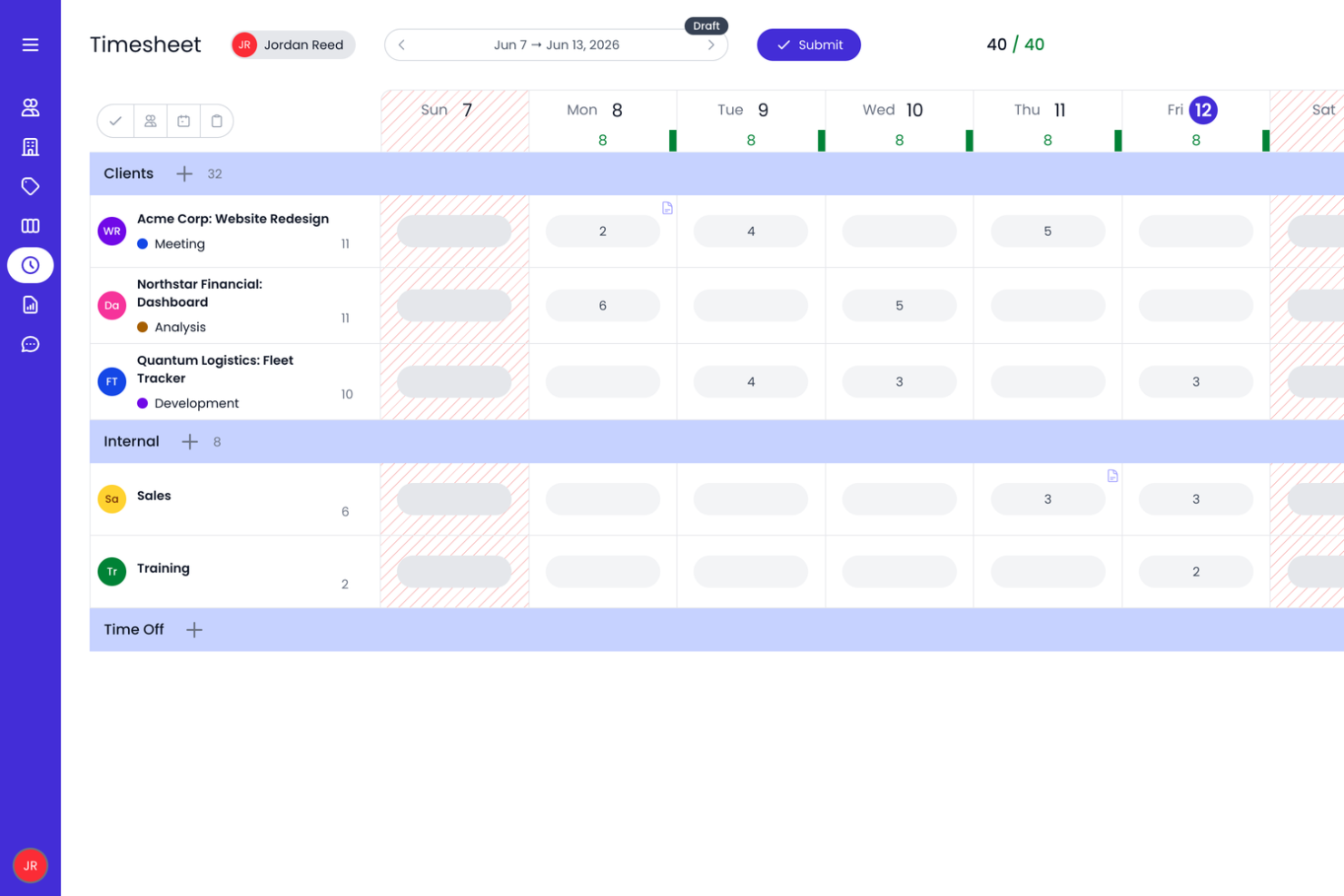
Beebole ist eine Zeiterfassungsplattform, die für Unternehmen entwickelt wurde, die Projektstunden überwachen, die Produktivität von Teams verwalten und detaillierte Berichte zur Unterstützung von Abrechnung und Ressourcenplanung erstellen müssen.
Für wen ist Beebole am besten geeignet?
Beebole eignet sich besonders für mittelgroße Unternehmen und Teams im Bereich professionelle Dienstleistungen, die eine flexible Zeiterfassung mit detaillierten Berichten auf Projekt- und Abteilungsebene benötigen.
Warum ich Beebole ausgewählt habe
Beebole hat es auf meine Auswahlliste geschafft, weil es sehr viel Kontrolle über deine Berichts-Dashboards bietet. Mir gefällt, dass du benutzerdefinierte Berichte direkt im Dashboard speichern kannst, sodass ich bei Bedarf in Echtzeit einen Überblick über Projektstunden, Abrechnungsstatus oder Budgetabweichungen habe – alles bereits im Dashboard. Mit dem KPI-Dashboard-Builder kannst du genau die Kennzahlen hervorheben, die für dein Team wichtig sind, sei es die Rentabilität von 50 Kundenprojekten zu verfolgen oder Überstunden nach Abteilung zu überwachen. Das Exportieren dieser Berichte nach Excel oder Google Sheets hält die Daten auch außerhalb des Tools verfügbar. Du kannst zudem Abrechnungs- und Kostensätze auf Personen-, Projekt- oder Aufgabenebene konfigurieren und Projektbudgets beim Erfassen der Zeit überwachen, was Teams zusätzliche Transparenz bei Projektkosten verschafft.
Wichtige Funktionen von Beebole
- Genehmigungsprozess für Stundenzettel: Manager können eingereichte Stundenzettel direkt in der Plattform überprüfen, genehmigen oder ablehnen, bevor sie für Lohnabrechnung oder Abrechnung gesperrt werden.
- Ressourcenplanung und Kapazitätsmanagement: Arbeit basierend auf Teamverfügbarkeit zuweisen und geplante mit geleisteten Stunden vergleichen.
- Projektbudget- und Rentabilitätsverfolgung: Abrechnungs-, Kosten- oder Stundenbudgets festlegen und die Projektausgaben bei Zeiterfassung überwachen.
- Abwesenheits- und Fehlzeitenverwaltung: Urlaub, Krankheitstage und andere Abwesenheiten zusammen mit Arbeitszeiten in einer einzigen Ansicht verfolgen.
Beebole-Integrationen
Integrationen umfassen Asana, BambooHR, Google Kalender, Outlook Kalender, Google Sheets, Excel, QuickBooks Online und eine offene API für individuelle Anbindungen.
Pros and Cons
Pros:
- Zeiterfassung über verschiedene Projekte und Aufgaben hinweg möglich
- Verschiedene Abrechnungssätze für Kunden, Projekte und Teammitglieder einstellbar
- Integrierte PTO-Tracking-Funktion
Cons:
- Hat keine integrierte Rechnungsstellung
- Kostenloser Plan ist auf 5 Nutzer begrenzt
- Factorial
Am besten geeignet für die Integration von Arbeitszeittabellen in die Lohnabrechnung
- Buddy Punch
E Stechuhr für GPS- und Bildverfolgung
- Resource Guru
Am besten geeignet für die Zeiterfassung mit Ressourcenplanung
- Insightful
Am besten geeignet für Remote-Überwachung von Teams
- Agendrix
Am besten geeignet für vielseitige Einstempel-Methoden
- Runn
Am besten für Echtzeit-Kapazitätsübersicht
- Clockify
Am besten für effiziente Zeiterfassung
- Traqq
Am besten geeignet für eine funktionsreiche kostenlose Version
- My Hours
Am besten für kleine Teams und Freiberufler
- TimeCamp
Am besten für automatische Zeiterfassung
- ClickUp
Am besten geeignet für das Tag für abrechenbare Zeit
- TMetric
Am besten für 7 Tage Aktivitätsverfolgungsspeicherung
- Bonsai Agency Software
E integrierte Zeit- und Ressourcenverwaltung
- Timesheets.com
Am besten für Buchhalter und Buchhaltungsfachkräfte geeignet
- Harvest
Am besten für umsetzbare Erkenntnisse
- FunctionFox
Am besten für Kreativteams und Agenturen
- Deltek Replicon Time
Am besten für intelligente Zeiterfassung
- ProjectManager
Am besten geeignet für Zeiterfassung in Echtzeit
- Ravetree
Am besten für die parallele Erfassung von Kosten und Zeit
- eResource Scheduler
Am besten geeignet für die Planung mit Zeiterfassung
- ExakTime
Am besten für Teams von Außendienstmitarbeitern
- Bill4time
Am besten geeignet für Berichtsfunktionen
- Actually
Einfache Zeiterfassung für projektbasierte Unternehmen
- Deel HR
Ideal, um Gehaltsabrechnungen synchron zu halten
- Toggl
Am besten für den Ausgleich der Arbeitslast
- Smartsheet
Am besten geeignet für mobile Zeiterfassung
- Apploye
Am besten für hybride Teams
- ClickTime
Am besten geeignet für anpassbare Stundenzettel
- Hubstaff
Am besten für verteilte Teams geeignet
- BigTime
Am besten für Rechnungsstellung und Abrechnung


Wie ich Zeiterfassungssoftware bewerte
Ich teile meine Bewertung in das, was ein Tool unbedingt können muss—Zeit auf Projekte buchen, Genehmigungen abwickeln und abrechenbare Stundensätze erfassen—und das, was es zur richtigen Wahl für Ihr spezielles Team oder Ihren Workflow macht.
Kernfunktionen (Grundvoraussetzungen für diese Liste)
Wenn ich Tools für meine Liste auswähle, bewerte ich jedes einzelne auf einer Skala von 0 (bietet die Funktionalität nicht) bis 5 (überragt in diesem Bereich) für jede unten aufgelistete Kernfunktion. Dann berechne ich die Gesamtpunktzahl des Tools in Prozent. Jedes Tool muss eine Mindestgesamtpunktzahl von 65% erreichen, um berücksichtigt zu werden.
- Projekt- & Aufgaben-Zeiterfassung: Ich prüfe, ob Sie Stunden für bestimmte Projekte, Aufgaben und Unteraufgaben erfassen können—per manueller Eingabe, laufender Timer oder Hintergrundverfolgung—damit während eines vollen Sprints nichts untergeht.
- Stundenzettel-Management: Ein solides Genehmigungs-Workflow ist hier entscheidend. Ich achte auf Funktionen für Einreichung, Überprüfung und Sperrung, die es einem PM oder Teamleiter ermöglichen, die Wochenstunden freizugeben, bevor sie zur Lohnabrechnung oder Fakturierung gelangen.
- Abrechenbare Stunden & Satzkonfiguration: Tools müssen abrechenbare und nicht abrechenbare Zeit unterscheiden und die Konfiguration von Sätzen auf Benutzer-, Rollen-, Projekt- oder Kundenebene unterstützen—die Art von Flexibilität, auf die Agenturen mit mehreren laufenden Verträgen täglich angewiesen sind.
- Budget- & Auslastungsverfolgung: Ich bewerte, wie gut ein Tool gebuchte Zeit mit Projektbudgets und Schätzungen verknüpft, die Burn-Rate, Überschreitungen und Auslastung pro Person sichtbar macht, sodass Sie Scope Creep erkennen, bevor er die Margen gefährdet.
- Berichtswesen & Analyse: Vorgefertigte Berichte sind ein Anfang, aber ich achte auf Filtermöglichkeiten nach Projekt, Kunde, Teammitglied und Zeitraum sowie Exportoptionen—denn Stakeholder und Finanzteams benötigen Daten fast immer in ihrem eigenen Format.
- PM-Tool-Integrationen: Egal, ob Ihr Team in Jira, Asana, Monday oder ClickUp arbeitet, bewerte ich die Tiefe jeder Integration—insbesondere den beidseitigen Abgleich, der gebuchte Zeiten ohne manuelle Nacherfassung zurück auf Aufgaben überträgt.
Sobald ich eine Liste von Tools habe, die die Kriterien erfüllen, prüfe ich, was jede Plattform besonders macht.
Unterscheidungsmerkmale (Was Anbieter abhebt)
So vergleiche und unterscheide ich verschiedene Anbieter:
Herausragende Funktionen
Ressourcen- und Kapazitätsplanung ist ein großer Pluspunkt—ich suche nach Tools, mit denen Sie sehen, wer verfügbar ist, und Arbeit basierend auf gebuchten Stunden und prognostizierter Auslastung zuteilen können, nicht auf Bauchgefühl. Automatische Zeiterfassung ist ebenfalls wichtig. Hintergrund-Erkennung oder Kalenderabgleich schließen Lücken, die manuelle Einträge hinterlassen, insbesondere an Tagen mit vielen Kontextwechseln. Für Agentur- und Beratungsteams schließt native Fakturierung die Lücke zwischen erfassten Stunden und Kundenabrechnung, ohne Daten in ein separates System exportieren zu müssen.
Mehr als nur Funktionen
Ich achte besonders auf Teamgröße und Passgenauigkeit für den Anwendungsfall. Ein Tool für Einzel-Freelancer ist für ein 50-köpfiges Beratungsunternehmen mit Retainern, Festpreisen und T&M-Verträgen nebeneinander nicht geeignet. Die Preisstruktur ist genauso wichtig—ich prüfe, ob sich die Kosten pro Nutzer bei wachsendem Team im Rahmen halten und ob eine kostenlose Stufe kleinen Teams einen umfassenden Test der Plattform ermöglicht. Für regulierte Branchen oder Regierungsauftragnehmer prüfe ich zudem auf DCAA-Konformität, SOC 2-Zertifizierung und rollenbasierte Zugriffssteuerungen.
So wählen Sie Zeiterfassungssoftware aus
Bei langen Funktionslisten und komplexen Preisstrukturen verliert man leicht den Überblick. Damit Sie sich bei der Auswahl Ihrer Software auf das Wesentliche konzentrieren können, finden Sie hier eine Checkliste mit Faktoren, die Sie berücksichtigen sollten:
| Faktor | Was zu beachten ist |
| Skalierbarkeit | Stellen Sie sicher, dass die Software mit dem Wachstum Ihres Teams Schritt halten kann. Achten Sie auf flexible Preise, eine unbegrenzte Anzahl von Nutzern und Funktionen, die große Teams unterstützen, wie rollenbasierte Berechtigungen und Berichte für Unternehmen. |
| Integrationen | Wählen Sie eine Lösung, die sich mit Ihren bestehenden Tools verbinden lässt, etwa mit Software für Lohnabrechnung, Rechnungsstellung, Projektmanagement und Personalwesen. Dadurch wird die manuelle Dateneingabe reduziert und ein reibungsloser Arbeitsablauf gewährleistet. |
| Anpassbarkeit | Die Anforderungen Ihres Teams sind einzigartig. Achten Sie auf anpassbare Berichte, veränderbare Zeiterfassungsregeln und konfigurierbare Berechtigungen, damit sich das Tool an Ihre Geschäftsprozesse anpassen lässt. |
| Benutzerfreundlichkeit | Ein komplexes System verlangsamt die Einführung. Entscheiden Sie sich für eine intuitive Benutzeroberfläche mit minimalem Einrichtungsaufwand, einfachen Möglichkeiten zur Zeiterfassung und einer benutzerfreundlichen mobilen App für die Erfassung unterwegs. |
| Budget | Vergleichen Sie Preisstufen, versteckte Gebühren und Optionen für kostenlose Testzeiträume. Berücksichtigen Sie, ob das Tool pro Nutzer, pro Funktion oder nach einem Pauschalmodell abgerechnet wird, das zu Ihrem Budget passt. |
| Sicherheitsvorkehrungen | Schützen Sie vertrauliche Zeitaufzeichnungen und Lohnabrechnungsdaten mit Funktionen wie Zwei-Faktor-Authentifizierung, rollenbasierten Zugriffskontrollen und verschlüsselter Datenspeicherung. |
| Mobiler Zugriff | Wenn Ihr Team remote oder vor Ort arbeitet, sollten Sie sicherstellen, dass die Software über eine leistungsfähige mobile App mit Offline-Erfassung, GPS-Funktionen und nahtloser Synchronisierung verfügt. |
| Berichte & Analysen | Achten Sie auf detaillierte Einblicke in Arbeitszeiten, Projektkosten und die Produktivität des Teams. Anpassbare Dashboards und automatisierte Berichte helfen Ihnen, datenbasierte Entscheidungen zu treffen. |
Trends bei Zeiterfassungssoftware 2026
Für meine Recherche habe ich zahlreiche Produktaktualisierungen, Pressemitteilungen und Versionsprotokolle verschiedener Anbieter von Zeiterfassungssoftware ausgewertet. Hier sind einige der aufkommenden Trends, die ich im Auge behalte:
- Mobile Apps und Geofencing: Mobile Apps zur Zeiterfassung im Projektmanagement werden zunehmend beliebter, insbesondere in Verbindung mit Geofencing-Technologie. Dies ermöglicht automatische Check-ins und eine standortbasierte Erfassung für eine genauere Zeiterfassung in unterschiedlichen Arbeitsumgebungen.
- Biometrische Identifizierung: Technologien wie Gesichtserkennung und biometrische Iriserkennung werden in modernen Zeiterfassungslösungen eingesetzt, um die Benutzerfreundlichkeit zu erhöhen und eine genauere Zeiterfassung zu ermöglichen.
- Erfassung des Energieaufwands: Dieses aufkommende Konzept misst die während der Arbeit aufgewendete mentale und körperliche Anstrengung und bietet dadurch über die einfache Zeiterfassung hinaus Einblicke in das Engagement und Wohlbefinden der Mitarbeitenden.
- Integration tragbarer Technologien: Tragbare Geräte wie Smartwatches können inzwischen Arbeitszeiten erfassen und gleichzeitig Aktivitäts- und Gesundheitsdaten überwachen, um das Wohlbefinden der Mitarbeitenden zu unterstützen.
- Fortschrittliche KI und Automatisierung: KI ist inzwischen eine gängige, sich schnell weiterentwickelnde Funktion in Software für Arbeitszeitnachweise. Sie wird häufig eingesetzt, um die Zeiterfassung zu automatisieren, die Genauigkeit zu verbessern und Nutzungsmuster bei der Arbeitszeit zu analysieren.
Was ist Zeiterfassungssoftware?
Zeiterfassungssoftware ist ein digitales Tool, das überwacht und aufzeichnet, wie viel Zeit Einzelpersonen oder Teams für Aufgaben, Projekte, Kunden oder Aktivitäten aufwenden.
Sie umfasst typischerweise Funktionen wie Timer, manuelle Zeiteingabe, Arbeitszeitnachweise, Berichte und Rechnungsstellung. Diese Tools helfen dabei, die Produktivität zu steigern, eine genaue Abrechnung sicherzustellen und Einblicke für eine bessere Planung und Ressourcennutzung zu liefern. Viele Zeiterfassungstools lassen sich außerdem in Tools für Projektmanagement, Lohnabrechnung und Zusammenarbeit integrieren, um Arbeitsabläufe zu optimieren und den Verwaltungsaufwand zu reduzieren.
Funktionen von Zeiterfassungssoftware
Achten Sie bei der Auswahl einer Zeiterfassungssoftware auf die folgenden wichtigen Funktionen:
- Automatische Zeiterfassung: Lassen Sie die Software Ihre Aktivitäten im Hintergrund erfassen, damit Sie sich nicht manuell ein- und ausstempeln müssen. So wird Ihre Arbeitszeit genau aufgezeichnet, selbst wenn Sie es einmal vergessen.
- Optionen zur manuellen Eingabe: Fügen Sie ganz einfach Zeiteinträge für offline erledigte Arbeiten hinzu oder passen Sie sie an, um fehlende Aufzeichnungen zu korrigieren. So entsprechen Ihre Aufzeichnungen stets der Realität.
- Kategorisierung von Projekten und Aufgaben: Organisieren Sie Ihre Zeit nach Kunde, Projekt oder Aufgabe, um genau zu sehen, wofür Sie Ihre Stunden aufwenden, und die Berichterstattung zu vereinfachen.
- Erfassung abrechenbarer und nicht abrechenbarer Zeiten: Unterscheiden Sie zwischen abrechenbaren und nicht abrechenbaren Stunden, um genauer abzurechnen und bessere Einblicke in die Nutzung Ihrer Zeit zu erhalten.
- Berichte und Analysen: Erstellen Sie detaillierte Berichte, um die Produktivität zu analysieren, Trends zu erkennen und fundierte Entscheidungen über Ihren Arbeitsablauf zu treffen.
- Integrationen mit anderen Tools: Synchronisieren Sie Ihre Zeiterfassungssoftware mit Apps für Projektmanagement, Buchhaltung oder Kalender, um Ihre Prozesse zu optimieren und doppelte Eingaben zu vermeiden.
- Erinnerungen und Benachrichtigungen: Richten Sie Benachrichtigungen ein, die Sie daran erinnern, Ihre Zeit zu erfassen oder Einträge vorzunehmen, damit nichts übersehen wird.
- Mobiler Zugriff: Erfassen Sie Ihre Arbeitszeit überall mit Ihrem Smartphone oder Tablet – ideal für verteilte Teams oder alle, die unterwegs sind.
Häufige KI-Funktionen in Zeiterfassungssoftware
Moderne Zeiterfassungssoftware umfasst häufig KI-gestützte Funktionen, die Ihren Arbeitsablauf noch reibungsloser gestalten:
- Automatisierte Aktivitätsklassifizierung: KI kann Ihre Aktivitäten analysieren und Aufgaben automatisch kategorisieren, wodurch die manuelle Sortierung reduziert und Zeit gespart wird.
- Smarte Vorschläge für Zeiteinträge: Auf Grundlage Ihrer Arbeitsmuster kann die KI Zeiteinträge vorschlagen oder Lücken ausfüllen. So können Sie Zeiterfassungsbögen schneller und genauer vervollständigen.
- Produktivitätseinblicke: KI-gestützte Analysen zeigen Trends auf, weisen auf mögliche Ablenkungen hin und geben personalisierte Empfehlungen zur Steigerung Ihrer Effizienz.
- Erkennung von Anomalien: Die Software kann ungewöhnliche Muster erkennen – etwa fehlende Einträge oder unregelmäßige Arbeitszeiten – und Sie auffordern, diese zu überprüfen, bevor sie zum Problem werden.
- Eingabe in natürlicher Sprache: Mit einigen Tools können Sie Zeit oder Aufgaben über einfache Textbefehle erfassen, wodurch der Prozess noch intuitiver wird.
Vorteile von Zeiterfassungssoftware
Die Einführung einer Zeiterfassungssoftware kann Ihrem Team und Ihrem Unternehmen mehrere Vorteile bieten. Hier sind einige davon:
- Höhere Genauigkeit: Erfasst die Arbeitszeit minutengenau und reduziert dadurch Fehler bei Lohnabrechnungen und Rechnungsstellung.
- Einfachere Projektabrechnung: Zeichnet die abrechenbare Zeit pro Kunde oder Projekt auf, sodass Sie ohne Schätzungen korrekt abrechnen können.
- Weniger Zeitverluste: Hilft dabei, nicht erfasste oder unproduktive Zeit zu erkennen, damit Ihnen keine abrechenbaren Stunden entgehen.
- Produktivere Teams: Zeigt, wofür Zeit aufgewendet wird, und hilft Teams, Ablenkungen zu reduzieren und sich auf die eigentliche Arbeit zu konzentrieren.
- Weniger Verwaltungsaufwand: Automatisiert Zeiterfassungsbögen, Genehmigungen und Berichte, sodass Manager weniger Zeit damit verbringen, Daten einzuholen.
- Mehr Verantwortlichkeit: Hält die Arbeitszeit fest und hilft so Teams im Homeoffice und im Außendienst, den Überblick zu behalten. Sehen Sie sich unsere Auswahl der besten Zeiterfassungssoftware für Teams mit Remote-Arbeit an.
- Bessere Kostenkontrolle: Erfasst die Personalkosten in Echtzeit, sodass Sie Budgets anpassen können, bevor sie aus dem Ruder laufen.
Kosten und Preise für Zeiterfassungssoftware
Bei der Auswahl einer Zeiterfassungssoftware müssen Sie die verschiedenen verfügbaren Preismodelle und Tarife verstehen. Die Kosten variieren in der Regel je nach Funktionen, Teamgröße, Zusatzoptionen und weiteren Faktoren. Die folgende Tabelle gibt einen Überblick über gängige Tarife, Durchschnittspreise und typische Funktionen von Zeiterfassungstools:
Vergleichstabelle für Tarife von Zeiterfassungssoftware
| Plantyp | Durchschnittlicher Preis | Häufige Funktionen |
|---|---|---|
| Basis-/Kostenloser Plan | Kostenlos | - Grundlegende Zeiterfassung - Einfache Berichtsfunktionen - Begrenzte Anzahl von Benutzern oder Projekten |
| Standardplan | $5 - $10 pro Benutzer/Monat | - Erweiterte Funktionen zur Zeiterfassung - Grundlegende Berichte und Analysen - Integration mit anderer Software - Eingeschränkte Unterstützung |
| Professioneller Plan | $10 - $20 pro Benutzer/Monat | - Erweiterte Berichte und Analysen - Vollständige Integration ins Projektmanagement - Erweiterte Supportoptionen - Zusätzliche Funktionen wie Rechnungsstellung, Terminplanung |
| Premium-/Unternehmensplan | $20+ pro Benutzer/Monat | - Anpassbare Funktionen - Erweiterte Sicherheitsoptionen - Bevorzugte Unterstützung - Umfassende Integrationen mit Geschäftssystemen |
Sobald Sie sich für eine Software entschieden haben, ist es sinnvoll, mit einer kostenlosen Testversion oder einem Basisplan zu beginnen, um zu sehen, wie gut sie Ihren Anforderungen entspricht, bevor Sie auf einen fortgeschritteneren Plan umsteigen.
Zu den Zeitpunkten, an denen Ihr Unternehmen möglicherweise seinen Tarif auf einen höheren Tarif umstellen möchte, gehören:
- Wachsende Teamgröße: Wenn die Anzahl der Mitarbeiter oder Teammitglieder zunimmt, können zusätzliche Benutzerlizenzen oder umfassendere Verwaltungsfunktionen erforderlich sein.
- Steigendes Projektvolumen: Wenn das Unternehmen beginnt, mehr Projekte gleichzeitig zu bearbeiten, benötigt es möglicherweise eine erweiterte Zeiterfassung und Berichterstattung.
- Erweiterte Anforderungen an die Berichterstattung: Mit dem Wachstum des Unternehmens werden möglicherweise detailliertere und anpassbare Berichte benötigt, um bessere Einblicke in die Zeitnutzung und Ressourcenverteilung zu erhalten.
- Integrationsanforderungen: Mit dem Wachstum des Unternehmens kann ein größerer Bedarf entstehen, die Zeiterfassungssoftware mit anderen Systemen wie Lohnabrechnung, Rechnungsstellung oder Projektmanagementplattformen zu integrieren.
- Erweiterte Funktionen und Automatisierung: Letztendlich benötigt das Unternehmen möglicherweise anspruchsvollere Funktionen wie automatische Zeiterfassung, erweiterte Analysen und Workflow-Automatisierung, um Effizienz und Genauigkeit zu verbessern.
Häufig gestellte Fragen zu Zeiterfassungssoftware
Finden Sie Antworten auf häufige Fragen zu diesem Thema.
Können Zeiterfassungstools in andere Projektmanagementsoftware integriert werden?
Ja, fast alle modernen Zeiterfassungstools lassen sich in beliebte Plattformen wie Asana, Trello, Jira und Slack integrieren. Integrationen ermöglichen die Synchronisierung von Aufgaben, die Automatisierung von Zeiteinträgen und die zentrale Erstellung von Berichten. Vergewissern Sie sich vor der Auswahl eines Tools, dass es eine direkte Integration unterstützt oder eine API für Ihren Projektmanagement-Workflow bereitstellt.
Was ist der Unterschied zwischen automatischer und manueller Zeiterfassung?
Automatische Zeiterfassungssoftware zeichnet Ihre Aktivitäten im Hintergrund auf, während Sie bei manuellen Tools Timer starten und stoppen oder Stunden eingeben müssen. Viele Projektmanager nutzen automatische Methoden für eine höhere Genauigkeit, doch die manuelle Erfassung kann hilfreich sein, um Offline- oder nicht digitale Arbeit zu protokollieren. Oft ist eine Kombination aus beiden Ansätzen am besten, damit Ihr Team seine Zeit unabhängig von der Arbeitsweise problemlos erfassen kann.
Bietet Zeiterfassungssoftware mobile Apps?
Ja, die meisten führenden Zeiterfassungsprogramme bieten mobile Apps für iOS und Android. Damit kann Ihr Team von jedem Ort aus Zeiten erfassen, auch offline. Sie sind daher für Außendienstmitarbeiter oder Remote-Teams unverzichtbar. Achten Sie darauf, dass die App Benachrichtigungen, GPS-Tracking und Timer-Funktionen bietet, um Mitarbeiter unterwegs zu unterstützen.
Ist es mit diesen Tools einfach, die Arbeitszeit von Auftragnehmern und Freiberuflern zu erfassen?
Ja, die meisten Zeiterfassungstools erleichtern die Verwaltung von Auftragnehmern und Freiberuflern. Sie können sie als Benutzer einladen, ihren Projektzugriff festlegen und ihre abrechenbaren Stunden getrennt von denen festangestellter Mitarbeiter erfassen. So erhalten Sie klare Berichte für Rechnungen und Projektbudgets, unabhängig davon, wer zu Ihrem Team gehört.
Wie skalierbar sind Zeiterfassungslösungen für wachsende Teams?
Die meisten führenden Zeiterfassungstools lassen sich problemlos an das Wachstum Ihres Teams anpassen. Achten Sie auf eine flexible Benutzerverwaltung, erschwingliche Preismodelle und Unterstützung für die gebündelte Einrichtung neuer Benutzer. Tarife für Unternehmen umfassen oft erweiterte Administrationskontrollen, API-Zugriff und individuellen Support, wenn Ihr Team die grundlegenden Funktionen überschreitet.
Wie kann Zeiterfassung beim Risikomanagement helfen?
Die Zeiterfassung hilft Ihnen, Projektverzögerungen, überlastete Teammitglieder und unerwartete Kosten frühzeitig zu erkennen. Durch die Auswertung realer Daten können Sie Engpässe beheben, Arbeitslasten neu verteilen und verpasste Fristen vermeiden. Zeiterfassung erleichtert es, Ihr Projekt im Zeitplan und innerhalb des Budgets zu halten.
Auf welche Berichtsfunktionen sollte ich bei einem Zeiterfassungstool achten?
\u003cp class=\u0022\u0022 data-start=\u002247\u0022 data-end=\u0022300\u0022\u003eProjektmanager verwenden in der Regel Berichte, die die Gesamtstunden pro Projekt, individuelle Stundenzettel, abrechenbare und nicht abrechenbare Zeit sowie die für jede Aufgabe oder jeden Kunden aufgewendete Zeit anzeigen. Diese Berichte helfen Ihnen, Überschreitungen zu erkennen, die Arbeit im Plan zu halten und bessere Entscheidungen zur Projektplanung oder Abrechnung zu treffen. In den meisten Tools können Sie diese Berichte für die Lohnabrechnung und Rechnungsstellung exportieren oder zeitgesteuert erstellen.\u003c/p\u003e
Wie gehen Zeiterfassungstools mit dem Datenschutz um?
\u003cp class=\u0022\u0022 data-start=\u002247\u0022 data-end=\u0022246\u0022\u003eDie meisten seriösen Zeiterfassungstools verwenden Verschlüsselung und sicheren Cloud-Speicher, um Ihre Daten zu schützen. Prüfen Sie, ob es Optionen zur Einschränkung des Benutzerzugriffs gibt, und lesen Sie die Datenschutzrichtlinie des Anbieters. Für sensible Projekte sollten Sie Plattformen mit Compliance-Zertifizierungen und klaren Standards für den Umgang mit Daten wählen.\u003c/p\u003e
Wie geht es weiter?
Wenn Sie über unsere Workshops, Tipps, Tricks und alles rund um DPM auf dem Laufenden bleiben möchten, abonnieren Sie den Newsletter der Insider-Mitgliedschaft. Wir senden Ihnen jede Woche interessante Informationen direkt in Ihren Posteingang.