

2026’da İncelenen En İyi 10 Petrol ve Gaz Proje Yönetimi Yazılımı

En İyi Petrol ve Gaz Proje Yönetimi Yazılımları Kısa Listesi


En iyi petrol ve gaz proje yönetimi yazılımı, karmaşık projeleri yönetmenize ve riski azaltmanıza, kaynakları düzenli tutmanıza ve proje yaşam döngüsü boyunca her şeyin programa uygun ilerlemesini sağlamanıza yardımcı olur. Doğru araç sayesinde gecikmeleri ve maliyetli iletişim hatalarını önleyebilir, etkili projeleri başarıyla teslim edebilirsiniz.
Proje yönetimindeki deneyimimi ve 3 yılı aşkın yazılım test etme tecrübemi kullanarak düzinelerce aracı inceledim ve en iyi petrol ve gaz proje yönetimi yazılımlarından oluşan listemi hazırladım. Ekibinizin ihtiyaçlarına gerçekten uyan ve projelerin sorunsuz ilerlemesini sağlayan yazılımı güvenle seçmenize yardımcı olacağım.
Why Trust Our Software Recommendations
Our team has been testing and reviewing software since 2012. As project managers ourselves, we know how difficult—and important—it is to choose the right software.
For this guide, we evaluated tools using hands-on testing and independent research, scoring tools using our selection criteria. We also draw on insights from industry thought leaders and practicing project management experts.
Our reviews reflect our human editorial judgment, not a sales pitch.
Expert reviewers:
Karşılaştırma Tablosu: Petrol ve Gaz Proje Yönetimi Yazılımı
Bu karşılaştırma tablosu, petrol ve gaz proje yönetimi yazılımı seçimlerim arasındaki en iyi seçeneklerin fiyatlandırma ayrıntılarını özetlemektedir.
| Tool | Starting Price | Website | |
|---|---|---|---|
| Best for real-time project visibility | 4.3 out of 5 | $10/user/month Free plan + 14-day trial + demo available | Book Demo |
| Best for balance in project management | 4.5 out of 5 | $10/user/month 14-day free trial | Website |
| Best for reserves and energy resources management | — | Pricing upon request Free demo available | Website |
| Best for complex project scheduling | 4.7 out of 5 | £679.99 one-time purchase Not available | Website |
| Best for construction collaboration | 4.5 out of 5 | Pricing upon request 14-day free trial for Procore Estimating + free demo available | Website |
| Best for secure data control | 4.5 out of 5 | Pricing upon request Free demo available | Website |
| Best for industry-specific solutions | 4.1 out of 5 | Pricing upon request Free demo available | Website |
| Best for cloud migration value | — | $125/user/month Free demo available | Website |
| Best for integrated project insight | — | Pricing upon request Free demo available | Website |
| Best for enterprise project performance | — | Pricing upon request Free demo available | Website |
En İyi Petrol ve Gaz Proje Yönetimi Yazılımı İncelemeleri
Kısa listeme giren en iyi petrol ve gaz proje yönetimi yazılımlarının ayrıntılı özetlerini aşağıda bulabilirsiniz. İncelemelerim, size en uygun seçeneği bulmanıza yardımcı olmak için her aracın temel özelliklerine, artılarına ve eksilerine, entegrasyonlarına ve ideal kullanım alanlarına ayrıntılı bir bakış sunuyor.
Wrike
Best for real-time project visibility

Wrike is a project management and work management tool designed to help teams collaborate and manage both projects and ongoing tasks.
Why I Picked Wrike:
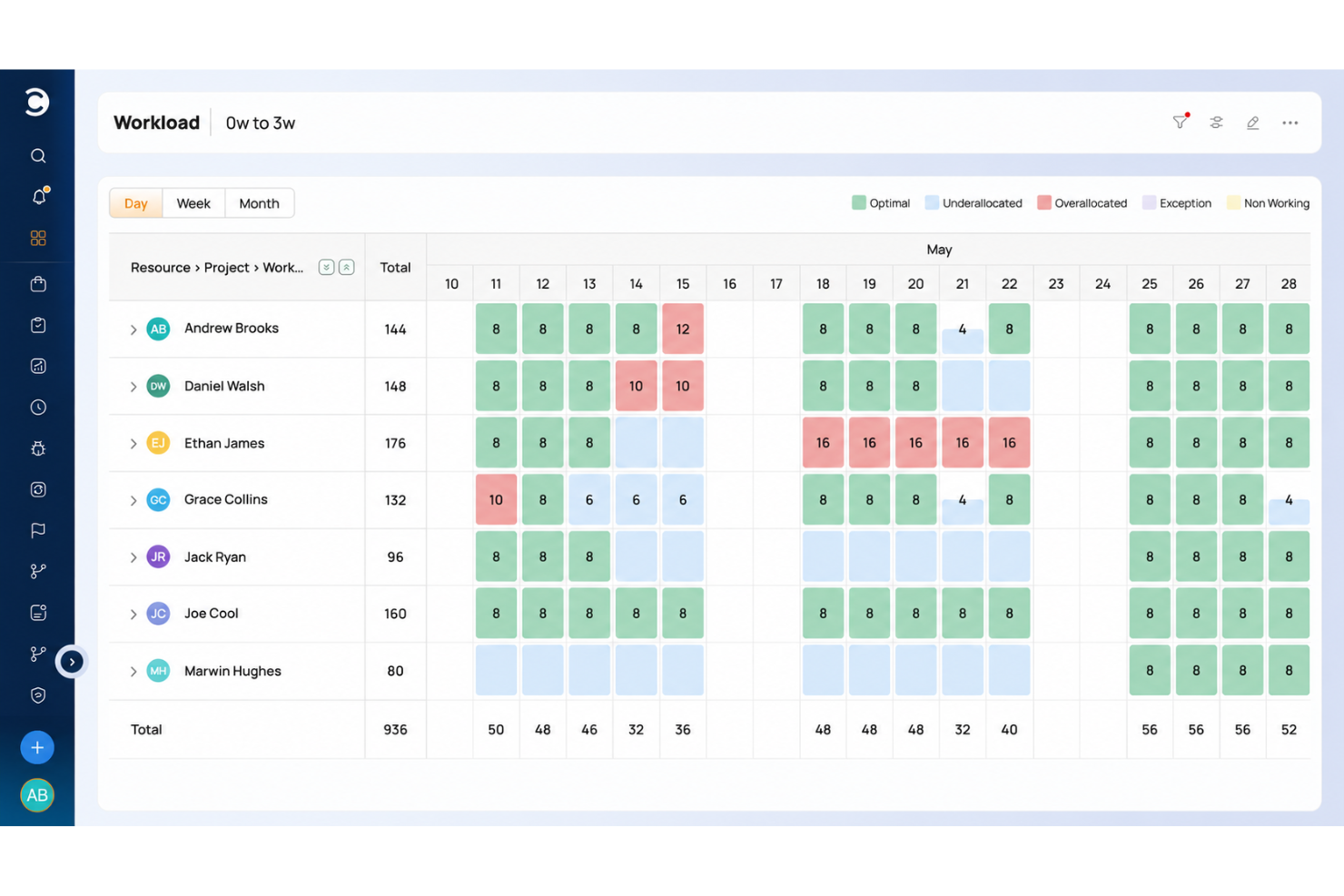
I chose Wrike as one of the best oil and gas project management software because it offers a comprehensive suite of features that cater to the complex needs of this industry. When comparing it to other project management tools, Wrike's real-time project visibility, automation capabilities, and customizable dashboards stand out. These features are crucial for managing the intricate and often large-scale projects typical in the oil and gas sector.
Standout features & integrations:
Wrike's project management software offers a wide range of useful features, including customizable dashboards that allow users to visualize tasks, processes, and analytics, and automation features that enable the definition and triggering of automated workflows to reduce manual efforts. Additionally, Wrike provides robust mobile and desktop applications, allowing users to manage tasks and collaborate with team members from anywhere.
Wrike integrates with Slack, Salesforce, Microsoft Teams, Adobe Creative Cloud, Google Drive, Dropbox, OneDrive, Box, SharePoint, Zoom, Jira, GitHub, GitLab, Zendesk, SurveyMonkey, Typeform, Google Forms, QuickBooks Online, HubSpot, and more.
Pros and Cons
Pros:
- Workflow automation
- Real-time project monitoring
- Customizable project templates
Cons:
- User interface could be more intuitive
- Learning curve for new users
New Product Updates from Wrike

Wrike Redesigns Workspace Search With New Filters
Wrike introduces a redesigned Workspace Search interface with recent search shortcuts, item type and location filters, and parent-task context. These updates help users find relevant work items and navigate search results efficiently. For more information, visit Wrike’s official site.
 .

Celoxis
Best for balance in project management
Celoxis is an all-in-one project management software designed to help teams plan, track, and manage their projects and portfolios.
Why I Picked Celoxis:
I chose Celoxis for this list because, unlike other project management tools, it is a complete solution that provides a unique combination of strong capabilities and user-friendly design. Celoxis, in my opinion, is the best solution for project management balancing because it combines enterprise-grade capabilities with a user-friendly interface at a competitive price range, making it accessible to teams of all sizes.
Standout features & integrations:
Celoxis excels with features such as project portfolio management, advanced scheduling, and dynamic dashboards and reports. It also provides robust resource management tools, including capacity planning and instant overload alerts.
Celoxis natively Integrates with JIRA, Azure DevOps, and over 400 other popular business applications.
Pros and Cons
Pros:
- Flexible pay-per-use pricing model with a minimum of 5 full-access users
- User-friendly interface with customizable workflows
- Comprehensive project and portfolio management features
Cons:
- Downgrades in plans are only allowed after the current plan expires
- Add-ons may increase the overall cost
- Annual billing may not be suitable for all budgets


iRIS PPM (Integrated Resources Information Solution) is a scalable, highly configurable solution designed for the Upstream Energy sector by Bubble®. Its focus is on maturation of projects’ Reserves and Energy Resources. However, due to its flexibility, it may also be configured to manage specific company activities e.g., mature asset decommissioning.
As well as providing tools to manage project teams’ activities, iRIS also facilitates real-time project visibility for executives considering capital allocation decisions. Its Portfolio Management module compares competing projects’ forecast production and value propositions, at various stages of project maturity. These include quantified assessments of commerciality risk and Reserves uncertainty, to promote fully informed decisions based on up-to-date data provided by project teams.
Why I picked iRIS PPM:
The iRIS solution is an intuitive Project and Portfolio Management (PPM) software that’s designed with its end-users in mind. It provides a range of customizable dashboards, reports, and tools to support both project delivery teams and executive decision-makers.
The iRIS solution is formulated using Industry Standard decision gates, based on key project lifecycle events. Importantly, although broadly similar, Bubble recognises that each company has unique project maturation processes. These are catered for by tailoring standard decision gates and other content in collaboration with clients during the solution’s deployment process.
By leveraging a modular and permissions-based platform, iRIS is easily modified to individual organizational needs, but can also grow and evolve as the company's needs change. The iRIS solution makes it easy for authorised users to see comprehensive portfolio information, or just views of specific project data that are relevant for their role. In-built notifications ensure that users in specific roles get the right Information at the right time, to promote proactive work and mitigate key project risks.
Standout Features & Integrations
Features include a range of project tracking tools to support on-time, on-budget, and high-quality delivery. At the portfolio level, chart-based or Gantt timeline views give an overview of project progress and risk, among other key indicators. Project dashboards enable effortless reporting of key details at the project level. These tracking and reporting features come in addition to all the functionality you’d expect of a full-featured Project and Portfolio Management system.
Integrations are a key feature of Bubble® PPM and the company’s managed configuration and maintenance service enables data to be shared between connected systems securely and automatically via a library of preconfigured applications, or through a workflow designer for more complex integrations.
Pros and Cons
Pros:
- Helps with risk management
- Centralized platform for managing multiple portfolios and projects
- Platform is tailored specifically for the energy sector
Cons:
- Could offer more integrations
- New users may find the interface and features complex
Best for complex project scheduling
Microsoft Project is equipped to manage complex oil and gas projects by handling crucial tasks like scheduling, resource allocation, and budgeting.
Why I Picked Microsoft Project:
I chose Microsoft Project for its comprehensive features tailored for managing large and complex projects, which are common in the oil and gas industry. Its ability to integrate seamlessly with other Microsoft tools provides a cohesive ecosystem, enhancing project coordination and data flow across platforms. I believe it's best for complex project scheduling because of its robust timeline creation capabilities that simplify the planning and execution of intricate project phases.
Standout features & integrations:
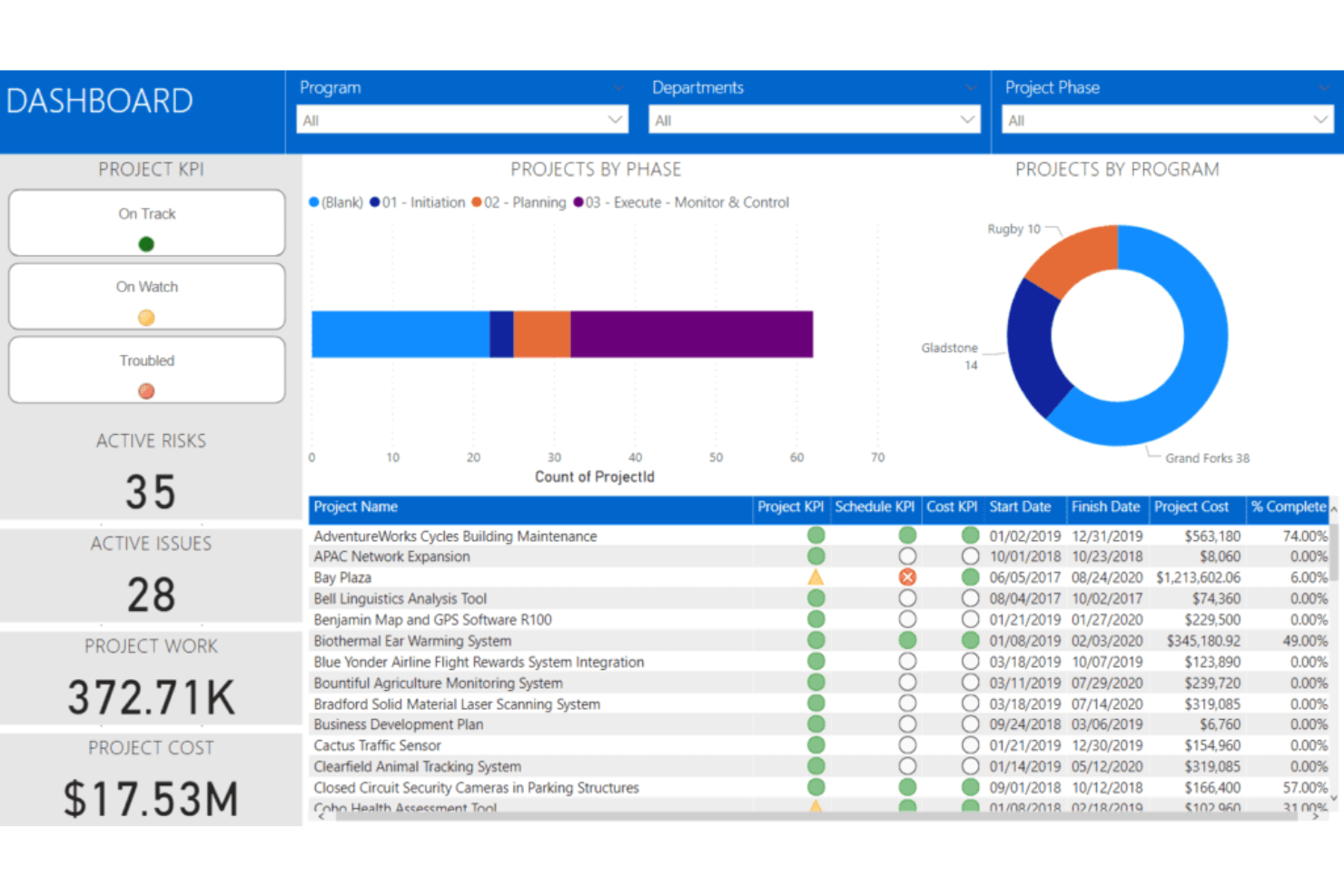
Microsoft Project's scheduling feature allows for detailed project timelines. It’s resource management tools help ensure that both human and material resources are utilized efficiently to reduce waste and optimize performance. Budget tracking within the software provides clear financial oversight, making it easier to keep projects within financial constraints.
As for integrations, Microsoft Project natively integrates with a range of Microsoft tools and services, including Microsoft Teams, OneDrive, SharePoint, Power BI, Azure DevOps, and Office 365. It also supports integration with third-party tools like SAP, Oracle, and Salesforce.
Pros and Cons
Pros:
- Provides strong tools for budget management
- Integrates well with other Microsoft applications
- Offers detailed project scheduling capabilities
Cons:
- Requires substantial training to utilize fully
- More expensive compared to some alternatives
- Can be complex and overwhelming for new users

Procore
Best for construction collaboration

Procore connects field and office teams in real-time, ensuring efficient communication and project tracking, which is essential for successful construction collaboration.
Why I Picked Procore:
I chose Procore for its platform that unites all stakeholders, offering unlimited access and support. Its management of over a million projects across 150 countries highlights its scalability and reliability. I think Procore is best for construction collaboration due to its mobile management features that connect field and office for real-time updates, crucial in construction.
Standout features & integrations:
Procore features include bid management, project financials, quality and safety tools, and design coordination, simplifying work from bidding to closeout. Its mobile project management tool enhances efficiency by enabling real-time connectivity between the field and the office.
Procore integrates natively with over 500 applications, including popular tools such as Autodesk, QuickBooks, Sage, Microsoft Project, Box, DocuSign, Google Drive, Oracle, PlanGrid, and Zoom.
Pros and Cons
Pros:
- Extensive library of on-demand training and resources
- 24/7 customer support with real-time access to Procore experts
- Used in over 1,000,000 projects across 150+ countries
Cons:
- As the pricing model is based on annual contracts, it may not be as flexible for short-term or smaller projects
- The vast number of features may require a learning curve for new user
- Specific pricing details are not readily available on the website

Aconex
Best for secure data control

Aconex enables complicated project management with solutions for document management, process control, and workflow automation, ensuring that large-scale projects run smoothly.
Why I Picked Aconex:
I selected Aconex for its robust approach to data security and its comprehensive project management capabilities. Its secure data control is unparalleled, providing peace of mind through a reliable audit trail and strict data protocols. I believe Aconex excels in secure data control, setting a high standard for data management and security in project management software.
Standout features & integrations:
Aconex features include a configurable process management engine and robust tools for communication and document management. It effectively handles model coordination, manages bids and tenders, and integrates cost control. The platform also promotes onsite collaboration and safety, ensuring a secure, permanent record of all project data.
Aconex integrates natively with Oracle Primavera Cloud, Oracle Textura Payment Management, Oracle Primavera Unifier, and other Oracle Construction and Engineering products.
Pros and Cons
Pros:
- End-to-end project lifecycle management
- Configurable process management for customized workflows
- Robust data security and ownership model
Cons:
- Mobile app experience may need improvement
- Complex permission management system
- Steep learning curve for new users

Deltek
Best for industry-specific solutions

Deltek aimed to enhance cost management, resource allocation, and project scheduling. It improves project oversight from beginning to end.
Why I Picked Deltek:
I chose Deltek because of its strong expertise in the oil and gas business, specifically its ability to handle complicated project deadlines and resource management difficulties that are common in this area. I feel it is the best option for enterprise cost controls because it provides extensive insights and controls that are critical for large-scale oil and gas projects, where cost efficiency is frequently a key success element.
Standout features & integrations:
Deltek's oil and gas project management software excels at giving real-time financial insights, allowing for more effective planning and cost control. It has powerful scheduling capabilities that can adapt to complex project timeframes, ensuring that deadlines are met effectively.
Deltek integrates with several widely used tools, including NetSuite, Sage, 1Password, Amazon Business, AngelList, BambooHR, Gmail, Microsoft platforms, QuickBooks, Slack, TravelPerk, Xero, Lyft, and SQUAVA.
Pros and Cons
Pros:
- Supports regulatory compliance and risk management
- Offers robust scheduling capabilities suitable for complex projects
- Delivers real-time financial insights for effective cost management
Cons:
- Limited customization options for specific industry needs
- Higher cost compared to some other project management tools
- May be complex to implement for smaller companies


Primavera P6 excels at scheduling, resource management, and project performance oversight, making it critical for meeting complex needs.
Why I Picked Primavera P6:
I chose Primavera P6 for its ability to handle the complexities of oil and gas projects. Its extensive features support large-scale cloud migrations, making it the best choice for organizations looking to move their project management to the cloud.
Standout features & integrations:
Primavera P6 excels with its flexible user interface, enterprise reporting, and team member interfaces for status updates. The tool also offers graphical analysis for resource and role utilization, aiding in effective project management.
Primavera P6 integrates with SAP for resource management, Indus PassPort for operational support, IBM/MRO Maximo for asset management, and its own Primavera Contract Management for enhanced document control.
Pros and Cons
Pros:
- Emphasis on resource and risk management
- Adaptable to various project sizes and complexities
- Comprehensive project, program, and portfolio management
Cons:
- Feature complexity may be excessive for smaller projects
- Potentially steep learning curve
- Pricing not transparent


SAP Project and Portfolio Management provides integrated project management capabilities for the oil and gas industry, enabling organizations to plan, execute, and monitor projects across the project lifecycle.
Why I Picked SAP Project and Portfolio Management:
I chose SAP Project and Portfolio Management for its ability to centralize project management processes and integrate key financial and logistical information. This integration sets it apart. SAP PPM is best for integrated project insight as it offers a single repository for managing projects company-wide - crucial for maintaining oversight and ensuring success.
Standout features & integrations:
Features of SAP PPM include flexible support for enterprise portfolio and project management processes, comprehensive project management from request to closure, early identification of project anomalies and risks, integration with enterprise information, and leveraging machine learning for accurate cost reporting and analysis.
SAP PPM integrates natively with SAP ERP, SAP Logistics, SAP HR, SAP CRM, SAP BW, SAP HANA, SAP Fiori, SAP Ariba, SAP SuccessFactors, and SAP Concur.
Pros and Cons
Pros:
- Machine learning for cost analysis
- Integration with finance and logistics
- Centralized project management
Cons:
- Potentially complex for smaller organizations
- May require additional SAP modules for full functionality
- Pricing information not readily available


EcoSys is recognized as the best for enterprise project performance due to its comprehensive capabilities that drive project success across the enterprise.
Why I Picked EcoSys:
I chose EcoSys because of its reliable platform, which provides a comprehensive approach to enterprise project management. Its ability to incorporate multiple areas of project management distinguishes it from other tools. EcoSys is the finest solution for Enterprise Project Performance because it delivers a company-wide understanding of what drives project performance and combines critical activities across the entire project and portfolio life cycle.
Standout features & integrations:
EcoSys supports governance and compliance, as well as improved variance analysis and performance monitoring. It standardizes processes across the project lifecycle and centralizes real-time statistics to improve oversight. Furthermore, the software boosts efficiency through automated reporting and uses past data to improve forecasting and decision-making.
EcoSys integrates with leading Enterprise Resource Planning (ERP) systems including SAP, Oracle E-Business Suite, PeopleSoft, JD Edwards, and Viewpoint, supporting extensive financial and resource management. It also links with project planning tools like Oracle Primavera P6 and Microsoft Project to improve project planning and control.
Pros and Cons
Pros:
- Offers predictability with built-in metrics and KPIs for improved decision-making
- Supports governance and compliance initiatives with multi-currency and language capabilities
- Comprehensive EPP platform integrating project portfolio management, project controls, and project management
Cons:
- The need for customization might involve additional costs or resources
- The platform's extensive features may require a learning curve for new users
- Pricing information is not transparently available online
Diğer Petrol ve Gaz Proje Yönetimi Yazılımları
Kısa listeme giremeyen ancak yine de incelemeye değer bazı ek petrol ve gaz proje yönetimi yazılımı seçenekleri şunlardır:
- AspenTech
For industry-specific optimization
- Petrofly
For oil & gas accounting
- GoodDay
For agile and Kanban methodologies
- Smartsheet
For spreadsheet-like interface
- Basecamp
For team collaboration
- Adobe Workfront
For enterprise services
- Kantata
For resource management
- monday AI Workspace
For workflow customization
- ClickUp
For an all-in-one platform
- InEight
For project certainty


How I Evaluate Oil and Gas Project Management Software
I split my evaluation into two layers: the baseline table stakes—like AFE tracking and rig scheduling—and the differentiators that separate the best tools from the rest.
Core Functionality (Table Stakes For This List)
When I'm selecting tools for my list, I rank each one on a scale from 0 (does not offer the functionality) to 5 (excels in this area) for each core functionality listed below. Then, I calculate the tool's total score into a percentage. Each tool needs to achieve a minimum total score of 55% to be considered for inclusion.
- AFE & Cost Control: I check whether a tool can handle the full AFE lifecycle, from initial estimates through supplements and partner approvals, with real-time variance tracking against CapEx budgets.
- Well & Rig Scheduling: Scheduling needs to go beyond basic Gantt charts. I look for tools that handle rig sequencing, pad-level dependencies, and multi-well campaign planning.
- HSE & Compliance Tracking: Every platform should support incident logging, permit tracking, and audit-ready documentation aligned with industry standards like API and IOGP guidelines.
- Contractor & EPC Coordination: I evaluate how each tool manages RFIs, submittals, change orders, and daily contractor reporting across operators and subcontractor tiers on capital projects.
- Field & Mobile Data Capture: Remote rig sites and offshore platforms demand offline-capable mobile apps. I look for GPS tagging, photo attachments, and field report sync once connectivity returns.
- Asset & Turnaround Planning: Tools should support shutdown, turnaround, and outage (STO) planning with scope definition, resource loading, and cost tracking tied to specific production assets.
Once I have a list of tools that meet the criteria, I consider what sets each platform apart.
Differentiating Factors (What Sets Vendors Apart)
Here's how I compare and contrast different vendors:
Standout Features
Joint venture billing is a major differentiator. On multi-partner assets, I look for tools that handle JIB calculations and non-op cost splits without forcing teams into spreadsheets. Risk and decision analytics also matter—Monte Carlo simulations for cost and schedule uncertainty help capital projects directors justify stage-gate decisions to leadership. GIS and spatial mapping rounds things out, especially for pipeline and facility projects where visualizing well pads and rights-of-way on a map beats sifting through static documents.
Beyond Features
I evaluate whether a vendor integrates with the oil and gas ERP and engineering tools teams already rely on, like SAP S/4HANA, Quorum, or Petrel. Deployment flexibility matters too—some operators require on-premise or hybrid hosting for data sovereignty, so I check what options each platform supports. Implementation expertise is another factor I weigh. A vendor with pre-built WBS templates and consultants who understand upstream and midstream workflows can cut months off onboarding compared to a general-purpose PM tool adapted after the fact.
Petrol ve Gaz Proje Yönetimi Yazılımı Nasıl Seçilir?
Uzun özellik listeleri ve karmaşık fiyatlandırma yapıları arasında kaybolmak kolaydır. Size özgü yazılım seçim sürecinizde ilerlerken odağınızı korumanıza yardımcı olmak için göz önünde bulundurmanız gereken faktörleri içeren bir kontrol listesi hazırladım:
| Faktör | Dikkat Edilmesi Gerekenler |
|---|---|
| Ölçeklenebilirlik | Operasyonlarınız büyüdükçe aracın büyük ve birden fazla aşamadan oluşan projeleri yönetebildiğinden emin olun. |
| Entegrasyonlar | GIS, ERP veya saha veri sistemleri gibi ekibinizin hâlihazırda kullandığı araçlarla bağlantı kurabilen yazılımları arayın. |
| Özelleştirilebilirlik | Kontrol panellerini, iş akışlarını ve izinleri proje yapınıza uyacak şekilde özelleştirmenize olanak tanıyan bir platform seçin. |
| Kullanım Kolaylığı | Arayüzün, saha ekiplerinin ve ofis çalışanlarının kapsamlı bir eğitim almadan hızlıca başlayabilmesi için kolay gezilebilir olması gerekir. |
| Bütçe | Fiyatın gerçekten ihtiyaç duyduğunuz özelliklerle uyumlu olduğundan emin olun. Kullanıcılar, depolama alanı veya destekle ilişkili ek maliyetlere dikkat edin. |
| Güvenlik Önlemleri | Platformun hassas proje ve finansal verileri erişim kontrolleri ve şifreleme gibi özelliklerle koruduğundan emin olun. |
| Mobil Erişim | Saha ekipleri ilerlemeyi güncelleyebilmeli, sorunları işaretleyebilmeli ve planları herhangi bir sahadan kontrol edebilmelidir. |
| Raporlama Araçları | Performansı, güvenliği ve uyumluluğu gerçek zamanlı olarak izlemenize yardımcı olan esnek raporlama özelliklerini arayın. |
Petrol ve Gaz Proje Yönetimi Yazılımı Trendleri
Araştırmam sırasında farklı petrol ve gaz proje yönetimi yazılımı tedarikçilerinin sayısız ürün güncellemesini, basın bültenini ve sürüm kaydını inceledim. Takip ettiğim yeni ortaya çıkan trendlerden bazıları şunlar:
- Sesten Metne Raporlama: Bazı tedarikçiler, saha raporlamasını kolaylaştırmak için ses yakalama araçları ekliyor. Bu sayede ekip üyeleri güncellemeleri veya güvenlik kontrollerini telefonlarına konuşarak aktarabiliyor ve sistem bunları daha sonra kayıtlı girdilere dönüştürüyor.
- Yapay Zekâ Destekli Risk Tahmini: Bazı araçlar artık gecikmeleri, bütçe aşımlarını veya kaynak eksikliklerini gerçekleşmeden önce işaretlemek için yapay zekâ kullanıyor. Örneğin tedarikçiler, geçmiş proje verilerine göre sorunları öne çıkaran tahmine dayalı analiz panoları ekliyor.
- Dijital İkiz Entegrasyonu: Bazı platformlar, kullanıcıların proje sonuçlarını simüle edebilmesini sağlamak için dijital ikiz teknolojisini desteklemeye başlıyor. Bu, ekiplerin tasarım, maliyet ve zamanlama değişikliklerinin gerçek dünyadaki sonuçları nasıl etkileyebileceğini daha net görmesini sağlıyor.
- Yerleşik ESG Takibi: Artık daha fazla yazılım aracı, ekiplerin çevresel, sosyal ve yönetişim (ESG) ölçütlerini takip etmesine yardımcı olan özellikler içeriyor. Bu, yeni düzenlemelere ve raporlama gerekliliklerine uyum sağlamada faydalı oluyor.
- Modüler İş Paketi Planlaması: Araçlar, geleneksel doğrusal proje yapıları yerine daha küçük ve modüler iş paketlerini destekleyecek şekilde gelişiyor. Bu, ekiplerin karmaşık projeleri esnek ve izlenebilir parçalara ayırmasına yardımcı oluyor.
Petrol ve Gaz Proje Yönetimi Yazılımı Nedir?
Petrol ve gaz proje yönetimi yazılımı, enerji sektöründeki büyük projeleri planlamanıza, düzenlemenize ve takip etmenize yardımcı olan bir araçtır. Proje yöneticileri, mühendisler ve operasyon ekipleri bu yazılımı sondaj, üretim ve altyapı çalışmalarını sorunsuz bir şekilde yürütmek için kullanır.
Yazılım, saha ekiplerini plan dahilinde tutmak ve beklenmedik durumları azaltmak için zamanlama, bütçeleme ve raporlama araçları sunar. Projeler ilerlerken riskleri yönetmenin, bütçeleri kontrol etmenin ve sağlam kararlar almanın pratik bir yoludur.
Petrol ve Gaz Proje Yönetimi Yazılımının Özellikleri
Petrol ve gaz proje yönetimi yazılımı seçerken aşağıdaki temel özelliklere dikkat edin:
- Proje zamanlaması: Zaman çizelgelerini oluşturmanıza, görevleri atamanıza ve birden fazla ekip ile aşama genelindeki son tarihleri takip etmenize olanak tanır.
- Maliyet takibi: Bütçeleri izlemenize, harcamaları kaydetmenize ve aşımları erkenden fark etmenize yardımcı olur.
- Kaynak yönetimi: İş gücünü, ekipmanı ve malzemeleri çalışma sahaları arasında etkili bir şekilde tahsis etmenizi sağlar.
- Risk yönetimi: Olası proje risklerini gecikmelere yol açmadan önce belirlemek, kaydetmek ve azaltmak için araçlar sunar.
- Belge kontrolü: Teknik dosyaları, izinleri ve planları düzenli ve doğru kişilerin erişimine açık tutar.
- Uyumluluk takibi: Güvenlik ve mevzuat gerekliliklerinin kaydedilmesini ve raporlanmasını destekler.
- Saha raporlaması: Sahadaki ekiplerin güncellemeleri, sorunları ve ilerlemeyi gerçek zamanlı olarak kaydetmesini sağlar.
- Değişiklik yönetimi: Kapsam değişikliklerini, onayları ve bunların zamanlama ile maliyet üzerindeki etkisini takip etmenize yardımcı olur.
- Gantt grafiği görselleştirmesi: Proje aşamalarını, bağımlılıkları ve zaman içindeki ilerlemeyi görsel olarak sunar.
- Özel iş akışları: Ekiplerin görev akışlarını ve onayları kendi iç süreçlerine uyacak şekilde uyarlamasına olanak tanır.
Petrol ve Gaz Proje Yönetimi Yazılımının Faydaları
Petrol ve gaz proje yönetimi yazılımını uygulamak, ekibiniz ve işletmeniz için çeşitli faydalar sağlar. Yararlanabileceğiniz bazı avantajlar şunlardır:
- Daha az risk: Risk kayıtları ve azaltma araçları, olası sorunları büyük problemlere dönüşmeden önce işaretlemenize ve ele almanıza olanak tanır.
- Daha az gecikme: Görev takip ve zamanlama araçları, ekibinizin zaman çizelgelerine uymasına ve kaçırılan son tarihlerden kaçınmasına yardımcı olur.
- Daha düşük maliyetler: Bütçeleme ve maliyet takibi özellikleri, aşımları erkenden fark etmenize ve harcama kararlarını daha iyi almanıza olanak tanır.
- Saha üzerinde daha iyi görünürlük: Saha raporlama araçları, çalışma sahalarından gerçek zamanlı güncellemeler sunar; böylece güncelliğini yitirmiş bilgilerle çalışmazsınız.
- Daha kolay uyumluluk: Yerleşik uyumluluk takibi, ek çalışma gerektirmeden güvenlik ve mevzuat gerekliliklerini takip etmenize yardımcı olur.
- Daha hızlı karar alma: Panolar ve raporlama özellikleri, hızlı ve bilinçli kararlar almanız için ihtiyaç duyduğunuz verileri sunar.
- Değişiklikler üzerinde daha fazla kontrol: Değişiklik yönetimi araçları, kapsam değişikliklerinin zamanlamanızı ve bütçenizi nasıl etkilediğini takip etmenize yardımcı olur.
Petrol ve Gaz Proje Yönetimi Yazılımının Maliyetleri ve Fiyatlandırması
Petrol ve gaz proje yönetimi yazılımı seçmek, mevcut çeşitli fiyatlandırma modelleri ve planların anlaşılmasını gerektirir. Maliyetler özelliklere, ekip büyüklüğüne, eklentilere ve daha fazlasına göre değişir. Aşağıdaki tabloda petrol ve gaz proje yönetimi yazılımı çözümlerinde yaygın planlar, bunların ortalama fiyatları ve genellikle sunulan özellikler özetlenmektedir:
Petrol ve Gaz Proje Yönetimi Yazılımı için Plan Karşılaştırma Tablosu
| Plan Türü | Ortalama Fiyat | Yaygın Özellikler |
|---|---|---|
| Ücretsiz | $0 | Temel görev yönetimi, canlı etkinlik akışı, sınırlı depolama |
| Bireysel | $10/ay kullanıcı başına | Ek depolama, müşteri desteği |
| Temel | $14/ay kullanıcı başına | Ek iş birliği araçları |
| Profesyonel | $27/ay kullanıcı başına | Grafik görünümü, zaman takibi |
| İşletme | $24.8 - $32/kullanıcı/ay | Özel alanlar/iş akışları, entegrasyonlar, sınırsız iş akışı otomasyonu |
| Kurumsal | Özel fiyat teklifi | Gelişmiş güvenlik özellikleri, tüm özelliklere tam erişim, işletme ihtiyaçlarına göre özelleştirilebilir |
Petrol ve Gaz Proje Yönetimi Yazılımı SSS
Petrol ve gaz proje yönetimi yazılımı hakkında bana en sık sorulan sorulardan bazıları aşağıda yer almaktadır.
Petrol ve gaz proje yönetimi yazılımı maliyetlerin azaltılmasına ve verimliliğin artırılmasına nasıl katkıda bulunur?
Petrol ve gaz proje yönetimi yazılımı; sermaye yatırımları, pazar genişlemeleri veya büyük ölçekli arama ve üretim faaliyetleri gibi çeşitli girişimler için kaynakları optimize etmenize ve kilometre taşlarını izlemenize olanak tanır. Projeler genelindeki riskleri yönetmenize, maliyetleri azaltmanıza, verimliliği artırmanıza ve çalışan güvenliğini iyileştirmenize yardımcı olur. Proje yöneticileri ve ekipleri, süreçleri kolaylaştırmak ve maliyetli hataları ya da gecikmeleri en aza indirmek için bu yazılımı projeleri planlamak, uygulamak, izlemek ve değerlendirmek amacıyla kullanır.
Petrol ve gaz proje yönetimi yazılımı ne tür projeleri yönetebilir?
Petrol ve gaz proje yönetimi yazılımı; sermaye yatırımları, altyapı projeleri, arama, sondaj, üretim ve bakım faaliyetleri dahil olmak üzere sektördeki çeşitli projeleri yönetmek üzere tasarlanmıştır. Yazılım, bu karmaşık projeleri başlangıçtan tamamlanmaya kadar yönetmek için özelleştirilebilir şablonlar ve araçlar sunarak tüm proje hedeflerine belirlenen zaman çizelgeleri ve bütçeler dahilinde ulaşılmasını sağlar.
Petrol ve gaz proje yönetimi yazılımı uyumluluğu ve güvenliği nasıl sağlar?
Kurumsal standartlara ve devlet düzenlemelerine uyum, petrol ve gaz proje yönetiminde kritik öneme sahiptir. Yazılım; olay bildirim sistemleri, düzeltici eylem önerileri ve proje faaliyetlerinin kapsamlı şekilde kaydedilmesi yoluyla uyumluluğu destekler. Potansiyel riskleri belirleyerek ve güvenli bir çalışma ortamı sağlamak amacıyla risk azaltma önlemleri uygulayarak çalışan güvenliğine öncelik verir.
Petrol ve gaz proje yönetimi yazılımında iş birliğinin önemi nedir?
Projelerin karmaşıklığı ve farklı paydaşlar arasındaki koordinasyon gerekliliği nedeniyle petrol ve gaz proje yönetiminde iş birliği büyük önem taşır. Yazılım, ekip üyeleriyle kurum içi iş birliğinin yanı sıra yükleniciler, tedarikçiler ve sürece dahil olan diğer taraflarla kurum dışı iş birliğini mümkün kılar. Yazılımda bulunan etkili araçlar; başarılı proje yürütme açısından kritik olan iletişimi, veri paylaşımını ve ortak karar almayı geliştirir.
Petrol ve gaz proje yönetimi yazılımındaki raporlama ve analiz özellikleri proje yönetimine nasıl yardımcı olur?
Petrol ve gaz proje yönetimi yazılımındaki raporlama ve analiz özellikleri, proje yöneticilerine riskler, uyumluluk, maliyetler ve kârlılık hakkında içgörüler sunar. Bu araçlar, proje ilerlemesini izlemek, ilgi gerektiren alanları öne çıkarmak ve verilere dayalı kararları kolaylaştırmak için ayrıntılı raporlar oluşturur. Ayrıca analiz özellikleri, stratejik planlama ve karar alma açısından kritik olan proje sonuçlarının öngörülmesine ve yönetilmesine yardımcı olur.
Petrol ve gaz proje yönetimi yazılımında özelleştirilebilir seçenekler mevcut mudur?
Özelleştirilebilirlik, benzersiz proje veya kuruluş gereksinimlerine uyarlanmayı sağladığı için petrol ve gaz proje yönetimi yazılımında önemli bir rol oynar. Birçok yazılım alternatifi, farklı proje türlerine uyum sağlamak için özelleştirilebilir şablonlar, iş akışları ve gösterge panelleri sunar. Bu uyarlanabilirlik, sektöre özgü çok çeşitli proje yönetimi görevleri için etkili destek sağlar.
Teknoloji petrol ve gaz proje yönetimini nasıl etkileyebilir?
Teknoloji, operasyonları kolaylaştırır, veri doğruluğunu artırır ve gerçek zamanlı içgörüler aracılığıyla karar almayı iyileştirir. Otomatik araçlar manuel hataları azaltıp verimliliği artırırken IoT ve yapay zekâ teknolojileri öngörülü bakıma ve risk değerlendirmesine yardımcı olur.