

2026’da Küçük İşletmeler İçin En İyi 10 İletişim Aracı

Küçük İşletmeler İçin İletişim Araçları Kısa Listesi


Küçük işletme iletişim araçları, ekibinizin bağlantı kurmasına, bilgi paylaşmasına ve projeler ile günlük görevler genelinde iş birliği yapmasına yardımcı olan yazılım platformlarıdır. En iyi küçük işletme iletişim araçlarını arıyorsanız muhtemelen birden fazla iletişim kanalını, uzaktan çalışmayı ve işleri karmaşıklaştırmadan herkesin aynı bilgiye sahip olmasını sağlama gereksinimini yönetmeye çalışıyorsunuz.
Doğru araçlar; konuşmaları yönetmeyi, dosyaları düzenlemeyi ve çalışmaları koordine etmeyi kolaylaştırarak işletmenizi büyütmeye odaklanmanızı sağlayabilir. Bu kılavuzda, farklı ekip boyutlarına, iş akışlarına ve bütçelere uygun güvenilir seçenekleri bulacak ve 2026'da işletmeniz için en doğru seçimi yapmanıza yardımcı olacaksınız.
Why Trust Our Software Recommendations
Our team has been testing and reviewing software since 2012. As project managers ourselves, we know how difficult—and important—it is to choose the right software.
For this guide, we evaluated tools using hands-on testing and independent research, scoring tools using our selection criteria. We also draw on insights from industry thought leaders and practicing project management experts.
Our reviews reflect our human editorial judgment, not a sales pitch.
Expert reviewers:
Küçük İşletmeler İçin İletişim Araçları Karşılaştırma Tablosu
En iyi küçük işletme iletişim aracı seçimlerimin fiyatlandırma ayrıntıları bu karşılaştırma tablosunda özetlenmiştir:
| Tool | Starting Price | Website | |
|---|---|---|---|
| Best for visual task organization | 4.5 out of 5 | $5/user/month Free plan + free trial available | Website |
| Best for collaborative document editing | 4.6 out of 5 | $7/user/month 14-day free trial available | Website |
| Best with Microsoft 365 integration | 4.3 out of 5 | $4/user/month Free plan + 1-month free trial available | Website |
| Best for centralized team communication | 4.2 out of 5 | $25/month Free plan + 30-day free trial + free demo available | Website |
| Best for custom workflow creation | 4.2 out of 5 | $14/user/month Free plan + 30-day free trial + free demo available | Website |
| Best for workflow automation features | — | $10.99/user/month Free plan available | Website |
| Best for interactive online whiteboarding | 4.8 out of 5 | $8/user/month Free plan + 14-day trial available | Book Demo |
| Best for channel-based team messaging | 4.6 out of 5 | $7.25/user/month Free plan available | Website |
| Best for mobile workforce management | 4.6 out of 5 | Pricing upon request Free plan + 14-day free trial available | Website |
| Best for customizable project dashboards | 4.3 out of 5 | $10/user/month Free plan + 14-day trial + demo available | Book Demo |
Küçük İşletmeler İçin İletişim Araçları İncelemeleri
Aşağıda, kısa listeme giren en iyi küçük işletme iletişim araçları hakkındaki ayrıntılı özetlerimi bulabilirsiniz. İncelemelerim, size en uygun seçeneği bulmanıza yardımcı olmak için her platformun özelliklerine, entegrasyonlarına ve en uygun kullanım alanlarına ayrıntılı bir bakış sunuyor.
Trello
Best for visual task organization
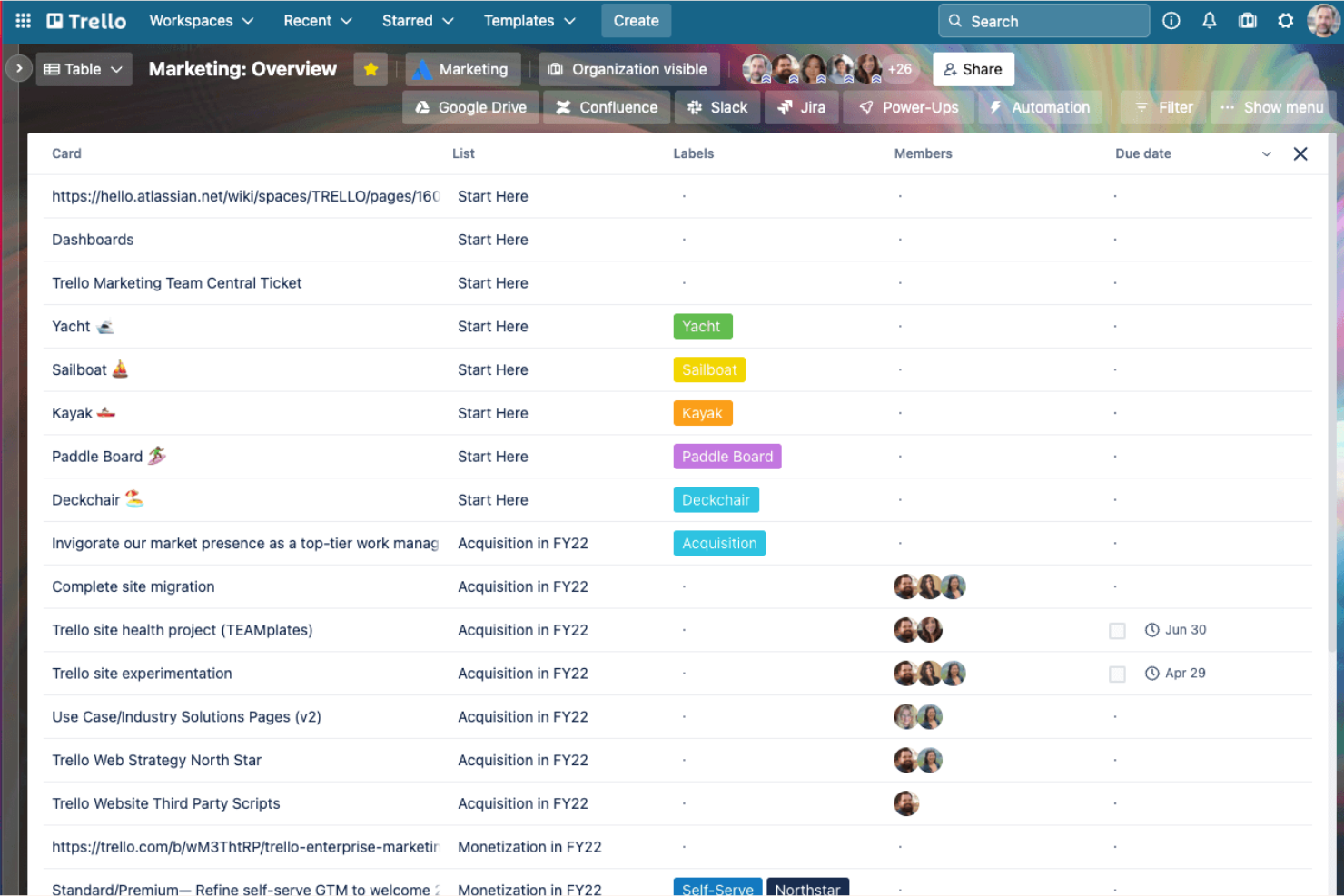
Trello gives small teams and startups a flexible way to organize projects, assign tasks, and track progress visually, making it easy for everyone to see what’s happening and who’s responsible for what.
Who Is Trello Best For?
Small business owners and team leads who want a simple, visual way to manage tasks and workflows.
Why I Picked Trello
I picked Trello as one of the best because I can map out projects visually using Kanban boards, lists, and cards, which makes it easy for my team to see priorities at a glance. I like using labels and checklists to break down tasks and keep everyone aligned on progress. My team uses card comments and attachments to keep all communication and files tied directly to the work, so nothing gets lost in email threads.
Trello Key Features
- Power-Ups: Add integrations like Slack, Google Drive, and Jira to boards.
- Calendar view: Visualize tasks and deadlines on a shared calendar.
- Butler automation: Automate repetitive actions with custom rules and triggers.
- Team board templates: Start projects quickly with pre-built board layouts for common workflows.
Trello Integrations
Integrations include Slack, Google Drive, Jira, Gmail, Microsoft Teams, InVision, Dropbox, Box, Evernote, and Salesforce.
Pros and Cons
Pros:
- Calendar view helps track deadlines together
- Drag-and-drop cards streamline task updates
- Visual boards make project status obvious
Cons:
- Attachments can get buried in card activity
- Limited reporting for communication trends

Best for collaborative document editing
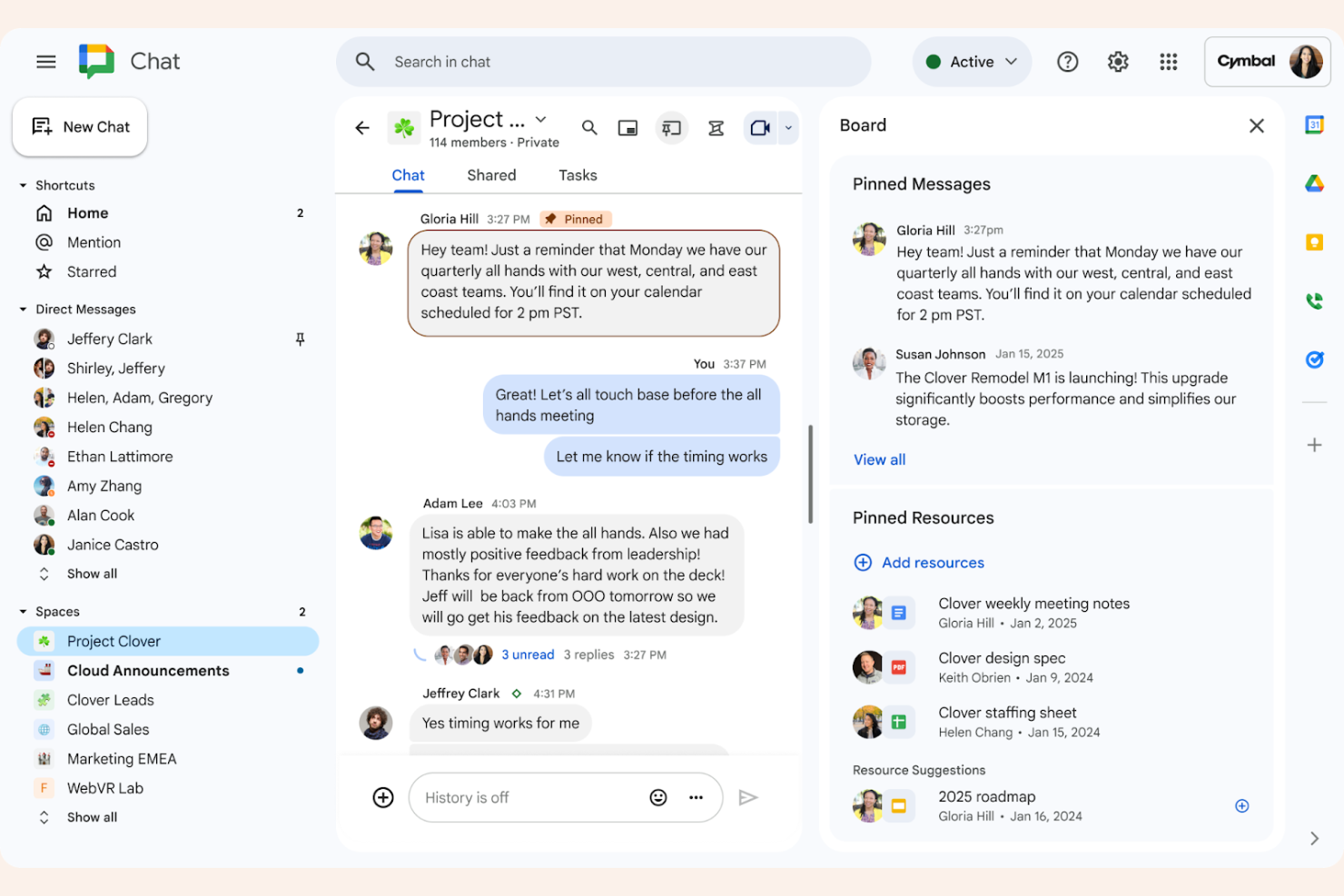
Google Workspace gives small businesses a cloud-based suite for email, chat, meetings, and document sharing, making it easy for distributed teams to collaborate and stay organized in real time.
Who Is Google Workspace Best For?
Remote and hybrid teams that need real-time document collaboration and communication.
Why I Picked Google Workspace
I picked Google Workspace as one of the best because my team can co-edit Google Docs, Sheets, and Slides in real time without version confusion. I like how comments, suggestions, and chat are built right into the files, so we never have to leave the document to discuss changes. My team is able to share files instantly and control permissions with a few clicks, which keeps our project work moving.
Google Workspace Key Features
- Gmail integration: Manage business email with custom domains, which can be paired with a business phone number for a professional reach.
- Google Meet video calls: Host secure video meetings directly from your calendar or email.
- Shared Google Calendar: Schedule meetings and share team calendars for better coordination.
- Google Chat rooms: Create topic-based chat rooms for ongoing team discussions.
Google Workspace Integrations
Integrations include Salesforce, Asana, Zoom, Slack, Trello, Zendesk, Dropbox, Box, and HubSpot.
Pros and Cons
Pros:
- Strong mobile app support for all tools
- Easy file sharing with granular permissions
- Real-time co-editing in Docs, Sheets, and Slides
Cons:
- Limited project management features natively
- Offline access setup can be unreliable

Best with Microsoft 365 integration
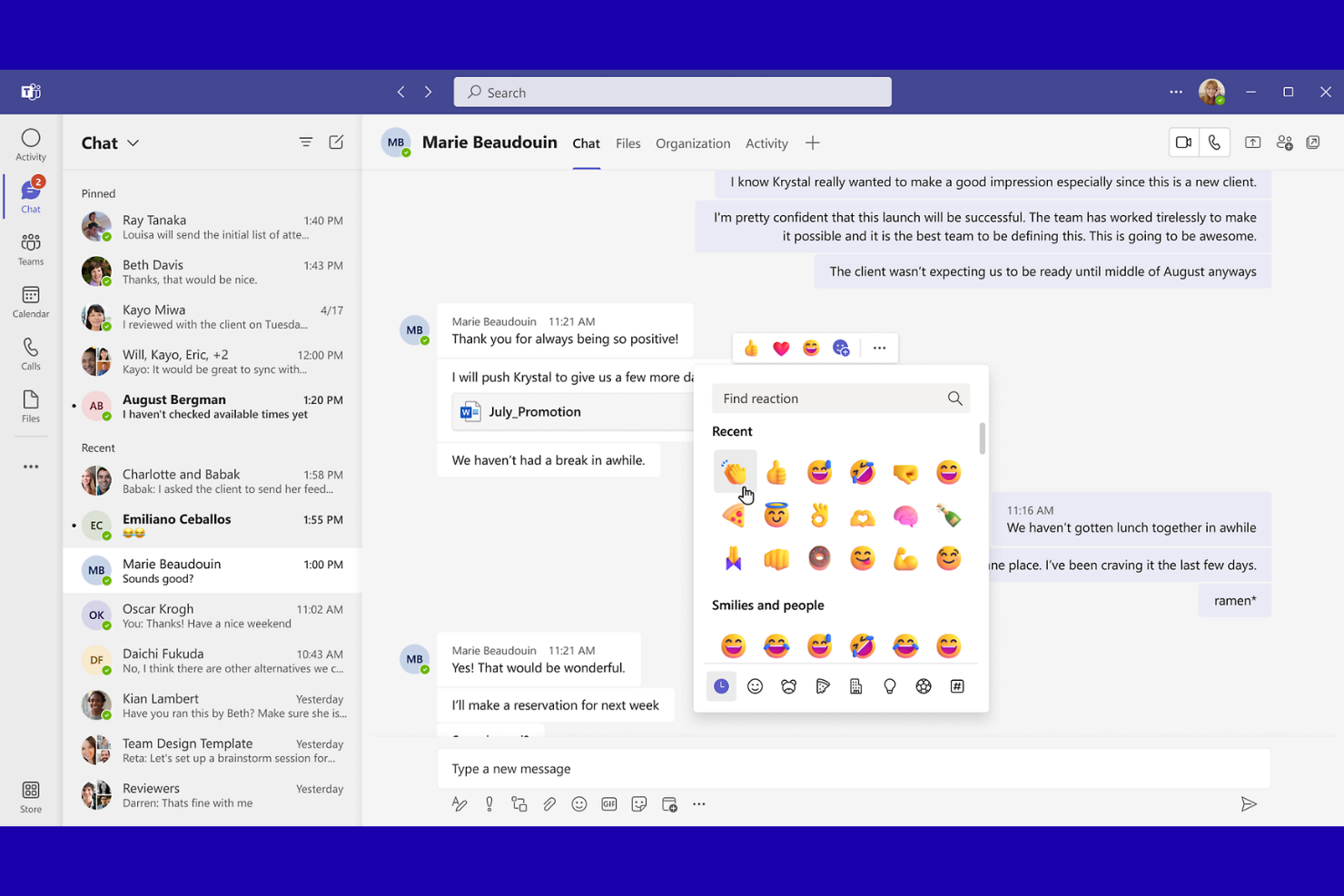
Microsoft Teams is a collaboration platform for small businesses and professional teams who need chat, video meetings, and file sharing in one place to keep projects and daily communication organized.
Who Is Microsoft Teams Best For?
Small to midsize businesses that already use Microsoft 365 for daily operations and collaboration.
Why I Picked Microsoft Teams
I picked Microsoft Teams as one of the best because I can launch video calls, share files, and collaborate on documents right inside the same workspace as my team's chats. I like how Teams syncs with Outlook calendars and lets me schedule meetings without switching apps. My team is able to co-edit Word, Excel, and PowerPoint files in real time, which keeps our project work moving without endless email threads.
Microsoft Teams Key Features
- In-app chat: Send instant messages to individuals or groups within your organization.
- Channel organization: Create dedicated channels for projects, departments, or topics.
- Guest access: Invite external partners or clients to join specific conversations.
- Meeting transcription: Automatically generate searchable transcripts of meetings.
Microsoft Teams Integrations
Integrations include Outlook, OneDrive, SharePoint, Dynamics 365, Trello, Asana, Salesforce, GitHub, Adobe Creative Cloud, and Zoom.
Pros and Cons
Pros:
- Persistent chat channels for ongoing projects
- Built-in video conferencing for up to 300 users
- Deep integration with Microsoft 365 apps
Cons:
- Requires Microsoft account for full features
- Limited search functionality in chat history

Basecamp
Best for centralized team communication
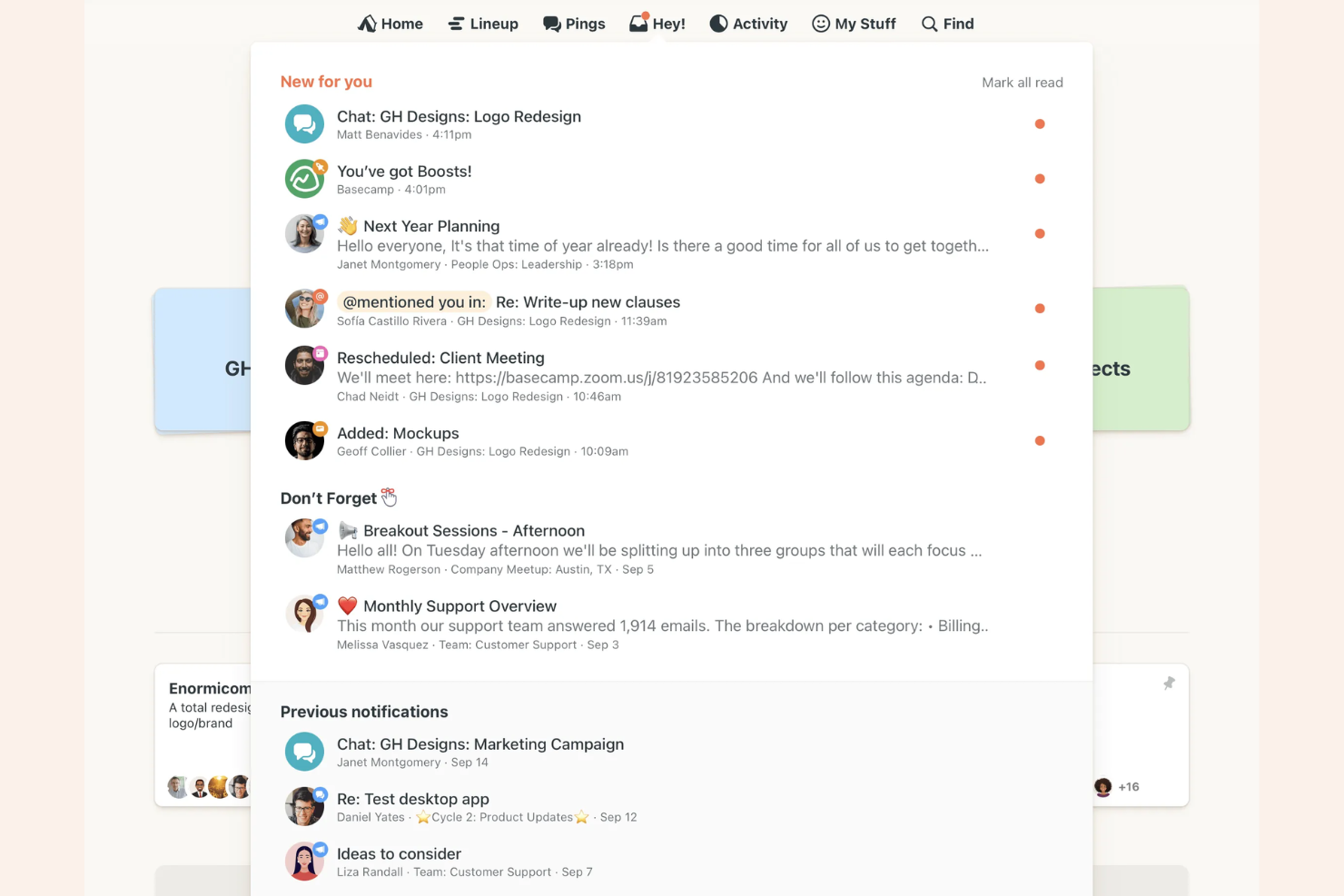
Basecamp is a project management and team communication platform used by small businesses, creative agencies, and consultancies to organize conversations, share files, and keep everyone aligned in one place.
Who Is Basecamp Best For?
Small business owners and team leads who want to centralize project discussions and task management.
Why I Picked Basecamp
I picked Basecamp as one of the best because I can keep all team conversations, project updates, and files in one place using its Message Board and Campfire chat. My team uses the centralized Docs & Files section to avoid digging through email threads or scattered drives. I like how automatic check-ins prompt everyone for quick status updates without extra meetings.
Basecamp Key Features
- To-do lists: Assign tasks, set due dates, and track progress for each project.
- Schedule: View project milestones and deadlines on a shared calendar.
- Client access: Invite clients to specific projects with customizable permissions.
- Hill Charts: Visualize project progress and identify potential bottlenecks.
Basecamp Integrations
Integrations include Slack, Google Drive, Dropbox, Harvest, Everhour, Clockify, GitHub, Zendesk, Trello, and Proposify.
Pros and Cons
Pros:
- Client access allows controlled external collaboration
- Automatic check-ins reduce status update meetings
- Campfire chat enables asynchronous conversations
Cons:
- Lacks advanced reporting features
- Limited formatting options for messages

Podio
Best for custom workflow creation
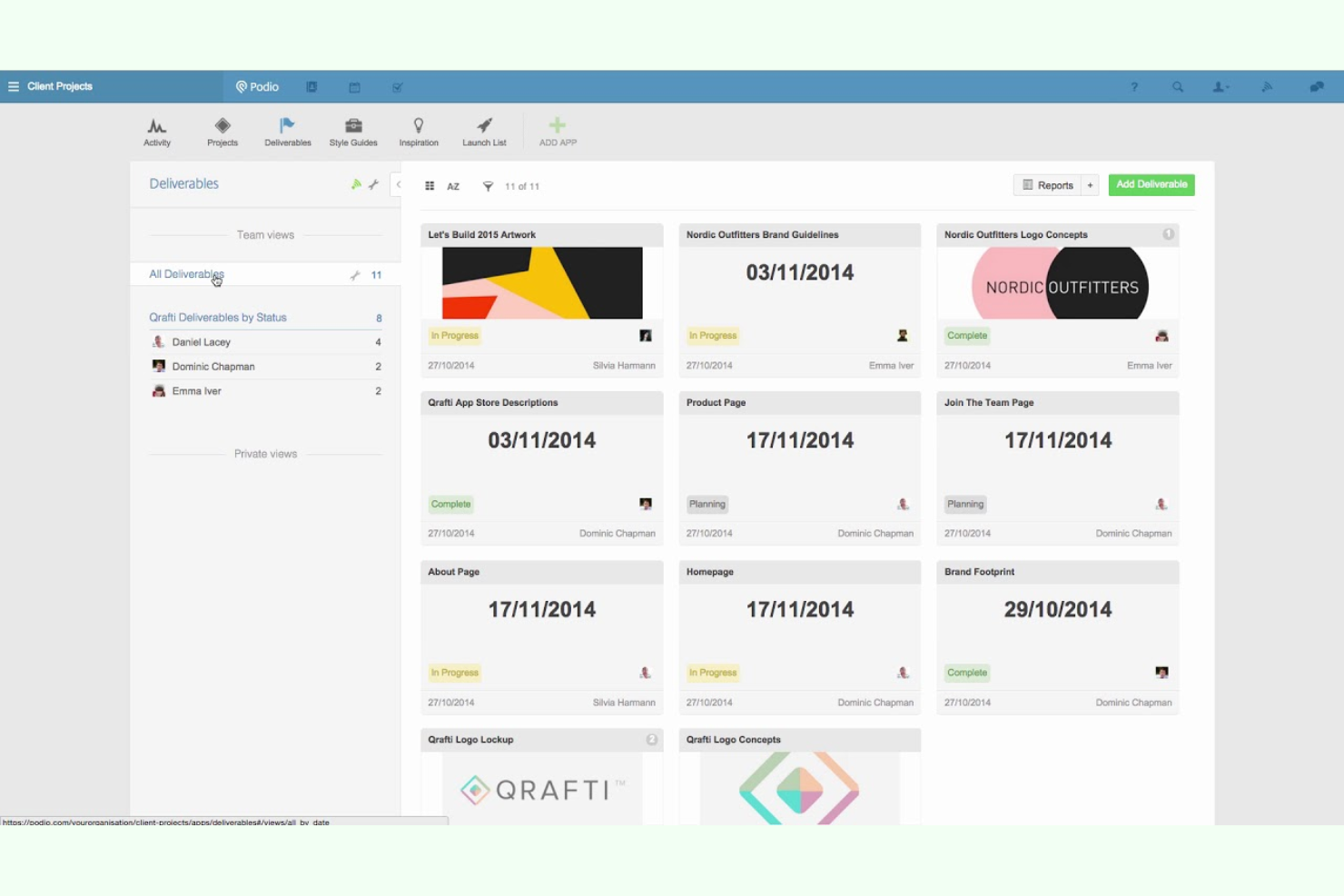
Podio is a flexible work management platform for small businesses and agencies who need to centralize team communication, manage projects, and build custom apps to fit unique workflows.
Who Is Podio Best For?
Podio is a strong fit for small to midsize teams that need to design custom workflows for project collaboration and communication.
Why I Picked Podio
I picked Podio as one of the best because I can build custom workflows using drag-and-drop app builders and automate routine communication between teams. My team uses Podio’s granular permission controls to keep sensitive conversations private. I also like how we can create project-specific chat spaces that match our unique processes.
Podio Key Features
- Activity stream: See all team updates and conversations in a single feed.
- Task management: Assign, track, and comment on tasks within projects.
- File sharing: Upload and share documents directly in workspaces.
- Calendar integration: Sync project deadlines and meetings with external calendars.
Podio Integrations
Integrations include ShareFile, smrtPhone, Plecto, Google Drive, Dropbox, Microsoft Exchange, Evernote, Zendesk, GoToMeeting, and an open API for custom integrations.
Pros and Cons
Pros:
- Granular permission settings for sensitive data
- Workspace chat keeps discussions organized
- Custom app builder for unique team needs
Cons:
- File storage limits on lower-tier plans
- Limited built-in video or voice calling options
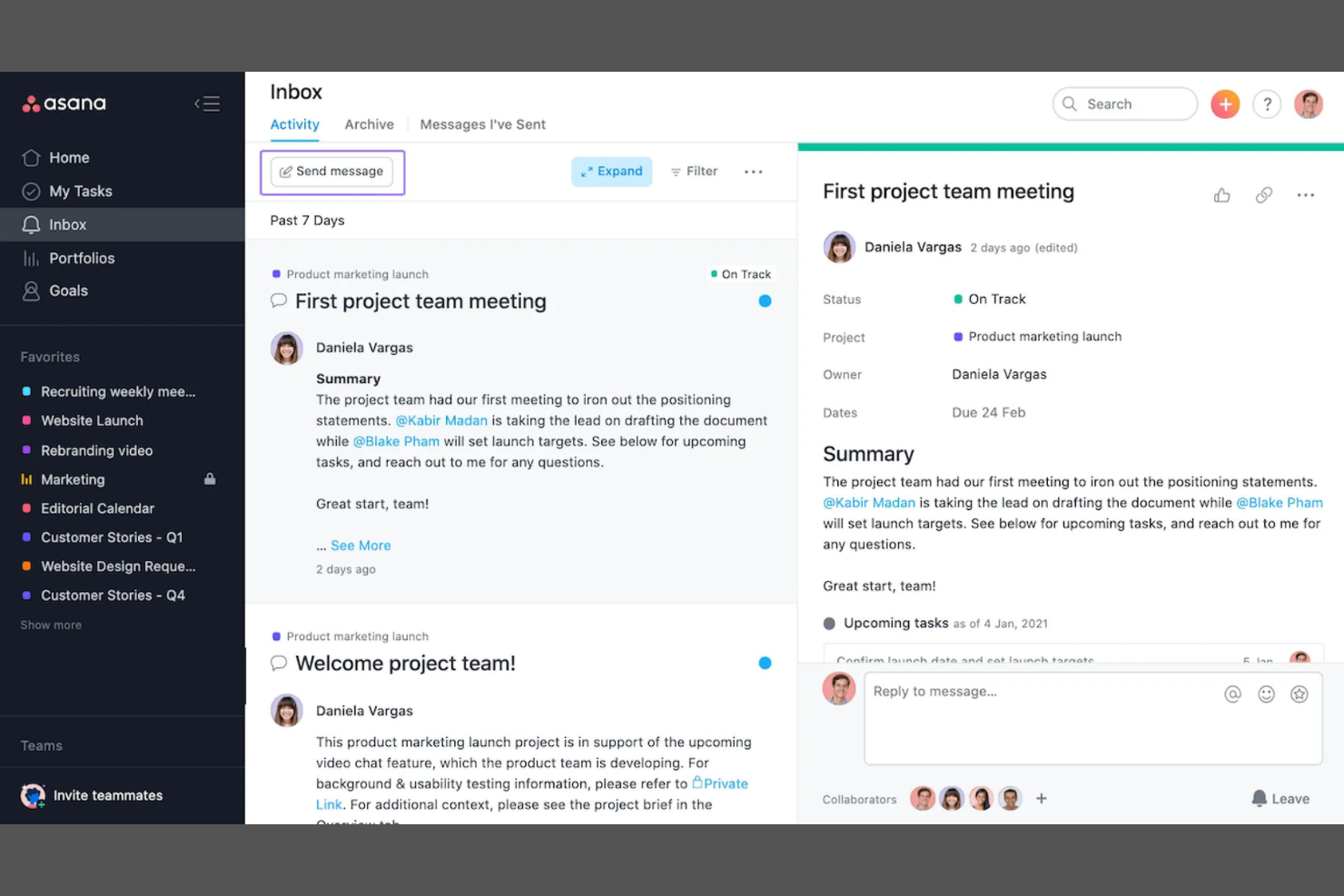
Asana gives project managers and cross-functional teams a centralized workspace to coordinate tasks, manage communication, and keep projects moving without losing track of conversations or responsibilities.
Who Is Asana Best For?
Project managers and operations leads at growing tech companies who need to coordinate complex workflows across distributed teams.
Why I Picked Asana
I picked Asana as one of the best because I can automate recurring tasks and approvals, which saves my team time on manual follow-ups. I like using custom workflow rules to assign tasks and trigger updates when project stages change. My team uses Asana’s timeline and workload features to visualize dependencies and balance assignments across projects.
Asana Key Features
- Task comments: Collaborate directly on tasks with threaded discussions.
- Project milestones: Mark and track key achievements within projects.
- Team calendar: View all team tasks and deadlines in a shared calendar.
- File attachments: Add documents and images directly to tasks for easy reference.
Asana Integrations
Integrations include Slack, Google Drive, Microsoft Teams, Zoom, Salesforce, Gmail, Dropbox, Jira, Outlook, and Box.
Pros and Cons
Pros:
- Custom fields support detailed task tracking
- Timeline view helps visualize project schedules
- Supports comments attached to tasks
Cons:
- Limited video conferencing tools integration
- No built-in chat or direct messaging

Miro
Best for interactive online whiteboarding
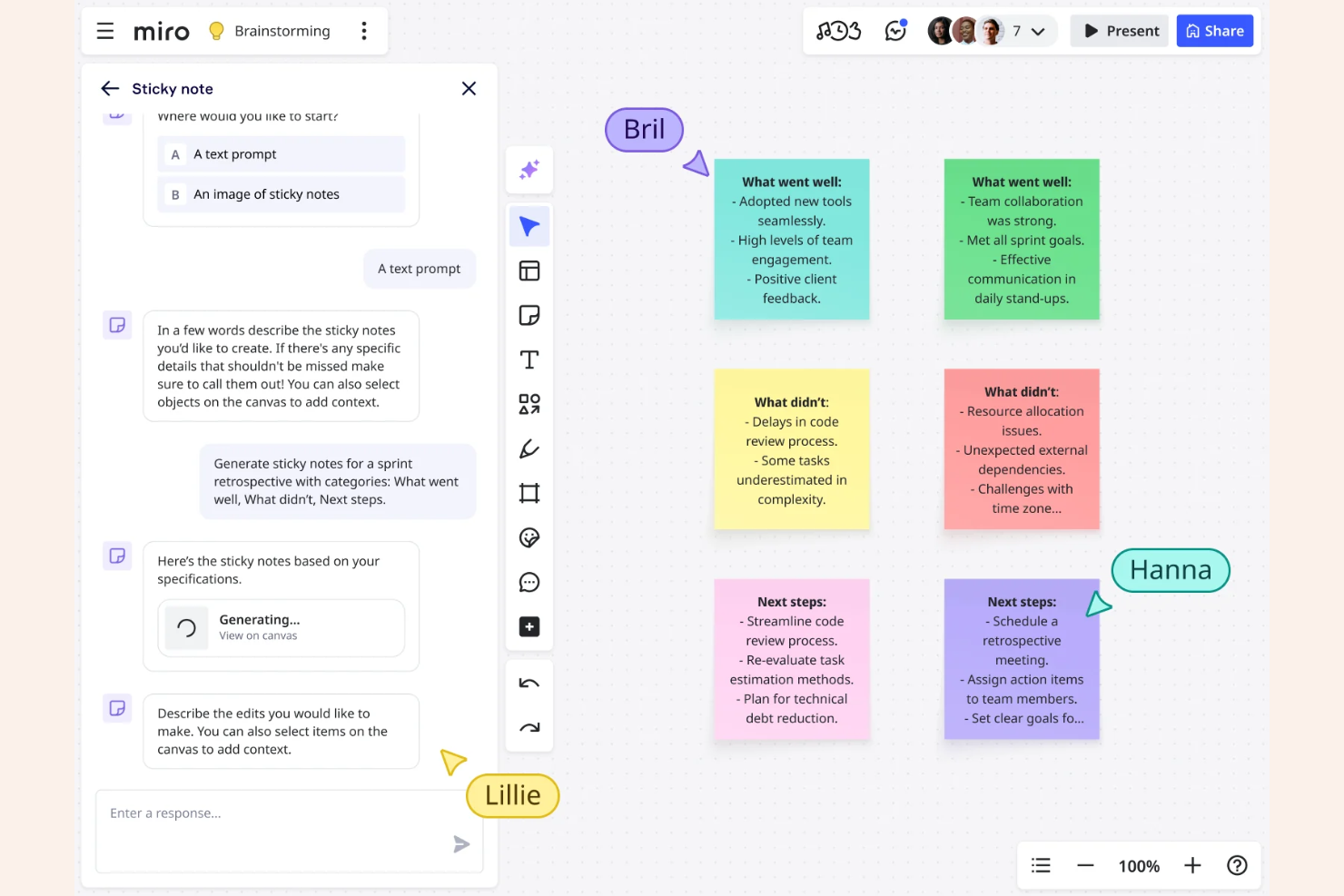
Miro gives distributed teams, agencies, and startups a shared online canvas to brainstorm, map processes, and visually organize ideas in real time for more dynamic project collaboration.
Who Is Miro Best For?
Product managers and creative teams who need a visual workspace for brainstorming and mapping out ideas together.
Why I Picked Miro
I picked Miro as one of the best because I can run live brainstorming sessions with sticky notes, voting, and timers all in one place. My team uses the infinite canvas to map out workflows and processes visually, which helps us clarify complex ideas together. I like using Miro’s pre-built templates for retrospectives and mind mapping, so we can jump straight into collaboration without setup.
Miro Key Features
- Commenting and tagging: Add comments and tag teammates directly on boards for quick feedback.
- Video chat integration: Start video calls within boards to discuss ideas in real time.
- Document and image embedding: Upload and display files, images, and PDFs right on the canvas.
- Presentation mode: Turn boards into guided presentations to walk teams through ideas step by step.
Miro Integrations
Integrations include Microsoft Teams, Google Workspace, Jira, Confluence, Slack, Zoom, Asana, Trello, Dropbox, and Box.
Pros and Cons
Pros:
- Visual mapping tools for process documentation
- Templates for meetings, planning, and workshops
- Real-time collaboration supports distributed teams
Cons:
- Large boards can lag with many users
- Limited board access on free plan
New Product Updates from Miro
Miro Adds Japan Data Residency for Enterprise Customers
Miro has introduced Japan data residency for enterprise customers, offering in-region storage for production data, backups, and metadata, plus in-region compute infrastructure. For more information, visit Miro's official site.
 .

Slack
Best for channel-based team messaging
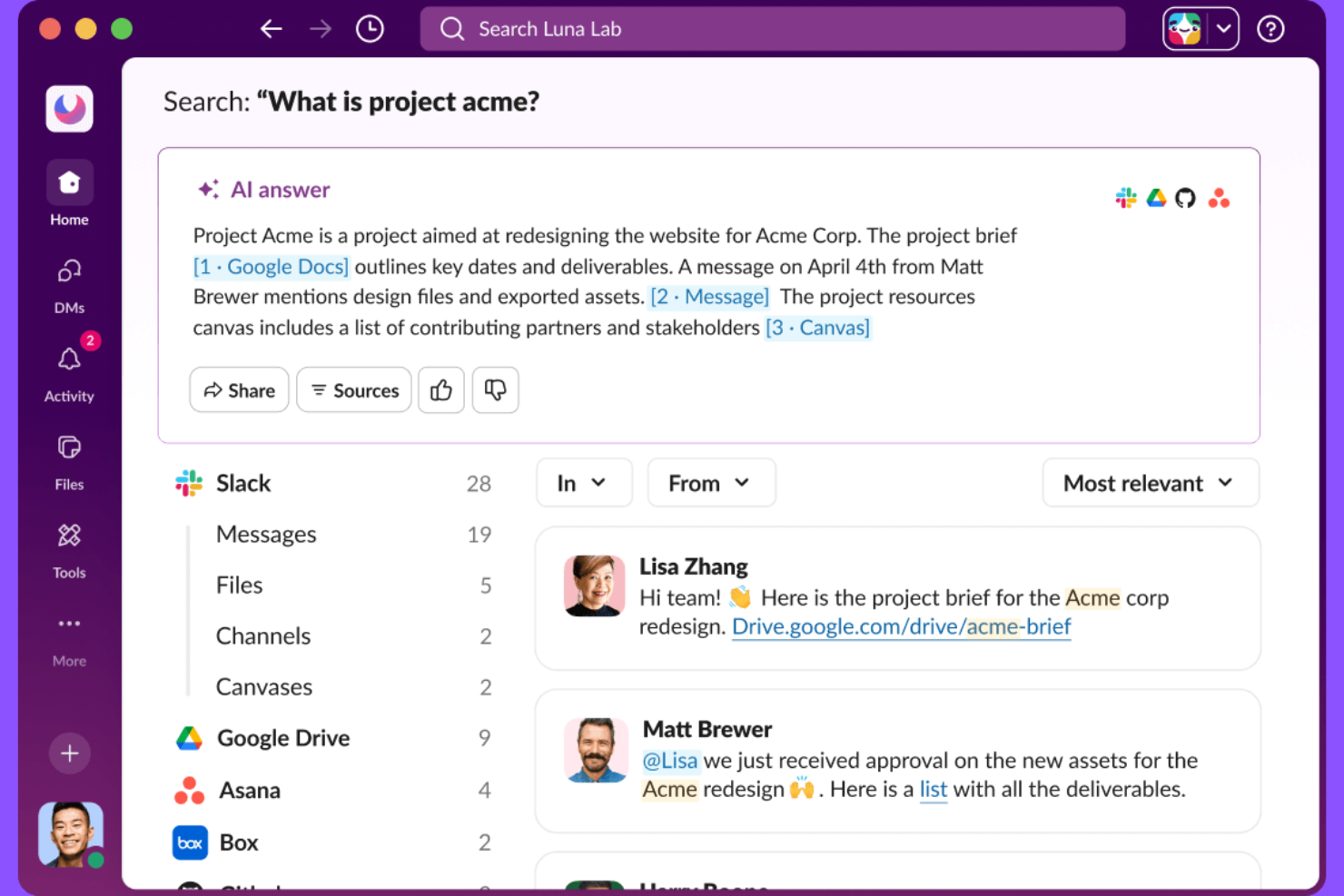
Slack is a messaging platform designed for small businesses and teams that need to organize conversations, share files, and keep projects moving without relying on email or scattered chat apps.
Who Is Slack Best For?
Slack suits small teams and startups that need organized, real-time messaging to coordinate projects and daily work.
Why I Picked Slack
I picked Slack as one of the best because its channel-based messaging lets my team organize conversations by project, topic, or client. I like how we can create private or public channels for different workstreams and use threads to keep discussions focused. My team is able to share files, pin important messages, and quickly search past conversations without losing context.
Slack Key Features
- App integrations: Connects with tools like Google Drive, Asana, and Zoom for streamlined workflows.
- Customizable notifications: Lets users set notification preferences by channel or keyword.
- Workflow builder: Automates routine tasks and approvals with no-code workflows.
- Guest access: Allows external partners or clients to join specific channels securely.
Slack Integrations
Integrations include Google Drive, Asana, Zoom, Salesforce, Jira, Box, AWS, Notion, ChatGPT, and PagerDuty.
Pros and Cons
Pros:
- Integrates natively with many business tools
- Search function quickly finds old messages and files
- Workflow builder automates repetitive team tasks
Cons:
- Audio and video calls lack advanced features
- Message history is limited on free plan

Best for mobile workforce management
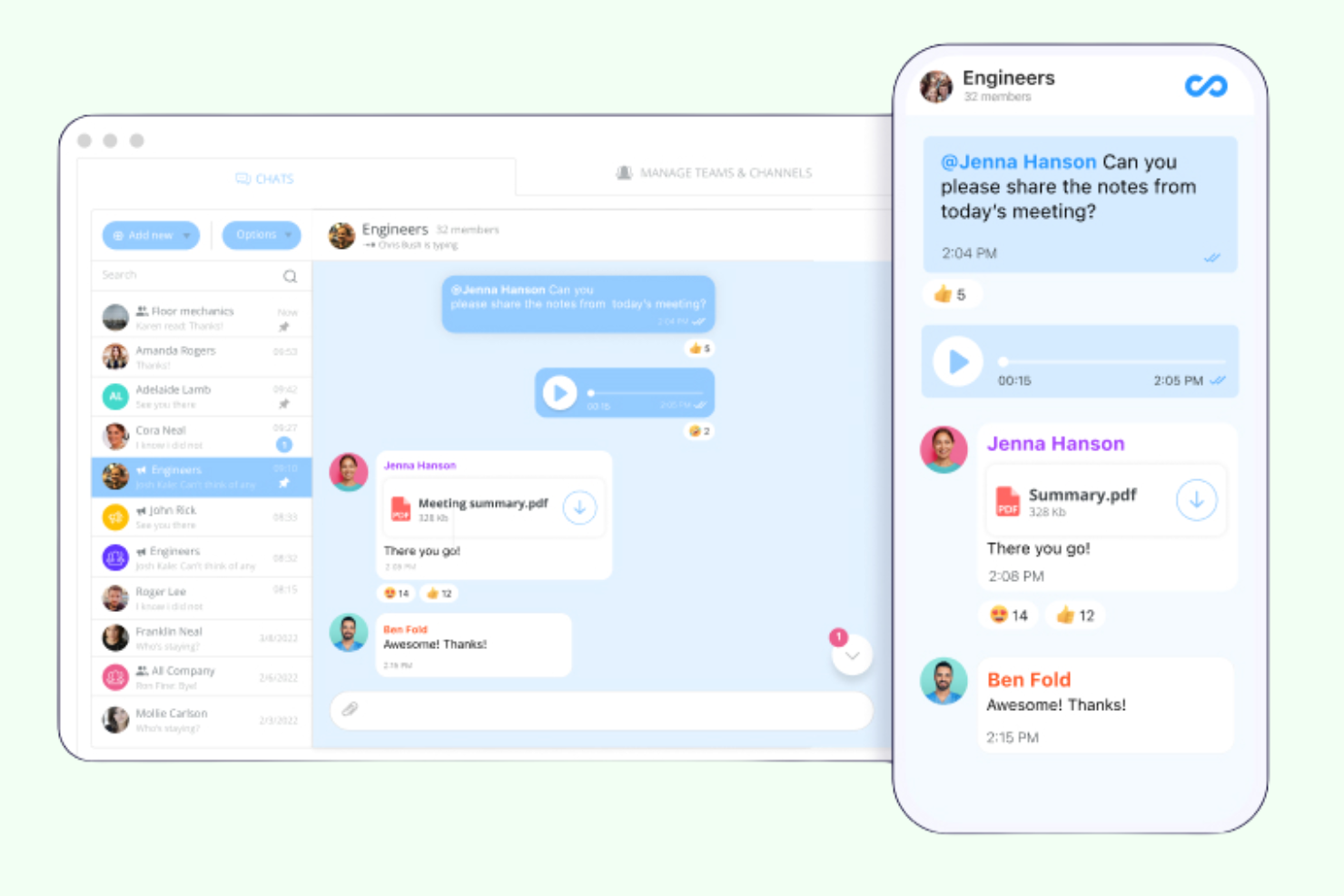
Connecteam is a communication and operations platform built for small businesses with deskless or field teams who need to manage scheduling, daily updates, and real-time messaging from a single mobile app.
Who Is Connecteam Best For?
Connecteam is a strong fit for small businesses with distributed, deskless, or mobile teams in industries like retail, hospitality, and construction.
Why I Picked Connecteam
I picked Connecteam as one of the best because I can manage shift scheduling, time tracking, and team chat all from a single mobile app. My team uses the built-in directory and announcement features to keep everyone in the loop, even when we’re spread across job sites. I like how Connecteam’s mobile-first approach fits the realities of field teams who rarely sit at a desk.
Connecteam Key Features
- Task management: Assign, track, and comment on tasks directly in the app.
- Surveys and polls: Collect feedback from staff to drive employee engagement with customizable surveys and live polls.
- Knowledge base: Store and share important documents, policies, and training materials.
- Event management: Schedule company events and track RSVPs within the platform.
Connecteam Integrations
Integrations include QuickBooks, Gusto, Xero, ADP, Zapier, Wix, Lightspeed, PrismHR, Square, and BambooHR.
Pros and Cons
Pros:
- Employee directory with role-based access
- Customizable forms for daily checklists and reports
- Mobile-first design for field-based teams
Cons:
- File sharing has size and format restrictions
- Admin dashboard can feel cluttered
New Product Updates from Connecteam

Connecteam Adds Automatic Paid Break Actions and Manual Break Windows
Connecteam adds automatic paid break actions and configurable start windows for manual breaks. These updates help teams manage break schedules and maintain accurate timesheets. For more information, visit Connecteam’s official site.
 .
Wrike
Best for customizable project dashboards
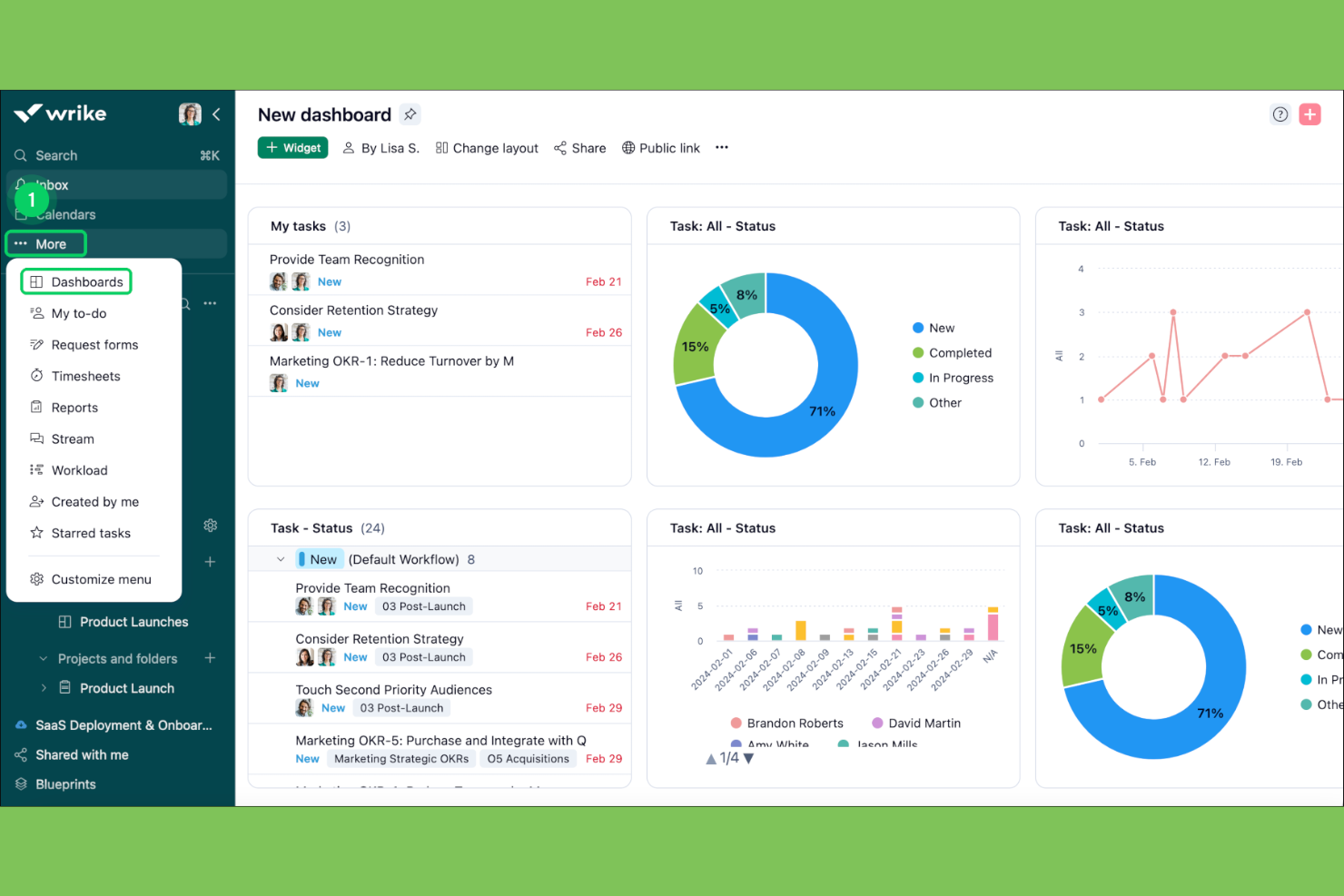
Wrike is a project management platform built for teams who need to coordinate tasks, share files, and communicate updates in one place, making it a strong choice for agencies, consultancies, and fast-moving small businesses.
Who Is Wrike Best For?
Project managers and operations leads at growing small to midsize businesses who need flexible project tracking and team coordination.
Why I Picked Wrike
I picked Wrike as one of the best because I can build custom dashboards that show exactly the project data my team needs—like overdue tasks, project statuses, and workload charts. I like using Wrike’s widget-based dashboards to track multiple projects at once and quickly spot bottlenecks. My team uses the real-time activity stream to keep everyone in sync without switching between tools.
Wrike Key Features
- In-app chat: Message teammates directly within tasks and projects.
- File sharing and versioning: Upload, share, and track document changes in one place.
- Mentions
- Calendar sync: Connect project timelines with Google Calendar or Outlook.
Wrike Integrations
Integrations include Slack, Microsoft Teams, Google Workspace, Adobe Creative Cloud, Salesforce, Zoom, Tableau, GitHub, HubSpot, and Jira.
Pros and Cons
Pros:
- File sharing supports version control and feedback
- In-app chat keeps conversations tied to tasks
- Custom dashboards display real-time project data
Cons:
- Interface can feel cluttered with many projects
- Guest access is limited on lower plans
New Product Updates from Wrike

Wrike Redesigns Workspace Search With New Filters
Wrike introduces a redesigned Workspace Search interface with recent search shortcuts, item type and location filters, and parent-task context. These updates help users find relevant work items and navigate search results efficiently. For more information, visit Wrike’s official site.
 .
Diğer Küçük İşletme İletişim Araçları
İşte kısa listeme giremeyen ancak yine de göz atmaya değer bazı ek küçük işletme iletişim yazılımı seçenekleri:
- Zoho Projects
For built-in time tracking
- Zoom
For video conferencing with large groups
- monday AI Workspace
For visual workflow customization
- ProofHub
For built-in team chat and notes
- Redbooth
For timeline-based task tracking
- GanttPRO
For interactive Gantt chart planning
- Staffbase
For internal employee communications
- CAFLOU
For business process automation
- Missive
For shared inbox collaboration
- ClickUp
For all-in-one task and doc management


How I Evaluate Small Business Communication Tools
I split my evaluation into two layers: the baseline capabilities a tool needs to qualify—like persistent channels and built-in video—and the differentiators that separate good tools from great ones.
Core Functionality (Table Stakes For This List)
When I'm selecting tools for my list, I rank each one on a scale from 0 (does not offer the functionality) to 5 (excels in this area) for each core functionality listed below. Then, I calculate the tool's total score into a percentage. Each tool needs to achieve a minimum total score of 65% to be considered for inclusion.
- Team Messaging Channels: I look for persistent, organized channels where project teams can separate conversations by workstream—like having distinct channels for design reviews, sprint planning, and client updates.
- Video & Voice Calling: Whether it's a daily standup or a stakeholder demo, I evaluate whether the tool supports group video calls with screen sharing and recording built in.
- File Sharing & Storage: Teams constantly pass around briefs, mockups, and specs, so I check that files shared in conversations are previewable, searchable, and stored with enough retention to stay useful.
- PM Tool Integrations: I look at whether the platform connects with tools like Asana, Trello, or Jira so task updates and project notifications flow directly into team conversations.
- Notifications & Mentions: Granular control matters here—I evaluate whether you can @mention teammates in threads, mute noisy channels, and set custom notification schedules to stay focused during deep work.
- Small Business Pricing & Scale: I check that the vendor offers a free or low-cost entry tier suited to teams under 50 users, with transparent per-seat pricing that scales as your team grows.
Once I have a list of tools that meet the criteria, I consider what sets each platform apart.
Differentiating Factors (What Sets Vendors Apart)
Here's how I compare and contrast different vendors:
Standout Features
AI-powered channel summaries and meeting recaps make a real difference for distributed teams—when someone misses a standup, a quick AI recap beats scrolling through hundreds of messages. I also evaluate client and guest access, because project managers regularly need to loop in external stakeholders without exposing internal channels. Workflow automations that trigger deadline reminders or post status updates to a channel save hours of manual coordination each week.
Beyond Features
Small business budgets are tight, so I look at total cost of ownership—whether a vendor's free tier is genuinely usable or just a teaser that forces an upgrade the moment your team hits 10 people. Mobile experience matters too, especially for project managers who split time between meetings and their desk. I check that the mobile app mirrors desktop functionality rather than offering a stripped-down version. Security rounds out my evaluation: SOC 2 compliance and admin controls like SSO and MFA are important when your team handles sensitive client deliverables.
Küçük İşletme İletişim Araçları Nasıl Seçilir?
Uzun özellik listeleri ve karmaşık fiyatlandırma yapılarına kendinizi kaptırmanız kolaydır. Kendinize özgü yazılım seçim sürecinizi yürütürken odağınızı korumanıza yardımcı olmak için göz önünde bulundurmanız gereken faktörleri içeren bir kontrol listesi hazırladık:
| Faktör | Dikkat Edilmesi Gerekenler |
|---|---|
| Ölçeklenebilirlik | 10 kullanıcıdan 100'den fazla kullanıcıya büyürken araç ekibinizi destekleyecek mi? Kullanıcı sınırlarını ve yükseltme seçeneklerini kontrol edin. |
| Entegrasyonlar | Çalışan maaş bordrosu, insan kaynakları veya proje yönetimi sistemlerinize yerel olarak bağlanıyor mu? Manuel geçici çözümler gerektiren araçlardan kaçının. |
| Özelleştirilebilirlik | Kanal, izin ve bildirimleri iş akışlarınıza uyacak şekilde düzenleyebilir misiniz? Yalnızca şablonlar yerine esnek ayarlar arayın. |
| Kullanım kolaylığı | Ekibiniz bunu hızlı bir şekilde benimseyecek mi, yoksa kapsamlı bir eğitim mi gerektirecek? Yaygın kullanıma geçmeden önce küçük bir grupla test edin. |
| Uygulama ve işe alıştırma | Herkesin kurulumunu tamamlayıp iletişim kurmaya başlaması ne kadar sürecek? Veri aktarımı desteği ve işe alıştırma kaynakları hakkında bilgi alın. |
| Maliyet | Gizli ücretler, asgari kullanıcı sayısı veya gerekli eklentiler var mı? Yalnızca aylık ücretleri değil, toplam sahip olma maliyetini karşılaştırın. |
| Güvenlik önlemleri | Araç; şifreleme, erişim denetimleri ve veri gizliliği standartlarına uygunluk sunuyor mu? Hassas bilgileri işlerken belge talep edin. |
| Destek erişilebilirliği | Özellikle standart çalışma saatleri dışında ihtiyaç duyduğunuzda desteğe ulaşabiliyor musunuz? Canlı sohbet, telefon veya e-posta seçeneklerinin olup olmadığını kontrol edin. |
Küçük İşletme İletişim Araçları Nedir?
Küçük işletme iletişim araçları, ekiplerin mesaj alışverişi yapmasına, dosya paylaşmasına ve çalışmaları gerçek zamanlı olarak koordine etmesine yardımcı olan yazılım platformlarıdır. Bu araçlar, doğrudan mesajlaşmayı, grup sohbetlerini ve duyuruları destekleyerek çalışanların bağlantıda ve bilgilenmiş kalmasını kolaylaştırır. Bu ekip iletişim araçları, mobil uyumlu özellikleriyle daha küçük kuruluşların bütçelerine uygun olacak şekilde tasarlanmıştır.
Özellikler
Küçük işletme iletişim araçlarını seçerken aşağıdaki temel özelliklere dikkat edin:
- Doğrudan mesajlaşma: Hızlı sorular veya hassas konular için ekip üyeleri arasında özel, bire bir görüşmeler yapılmasını sağlar.
- Grup iletişim kanalları: Ekiplerin, görüşmeleri düzenli ve erişilebilir tutmak için konu veya proje temelli sohbet odaları oluşturmasına olanak tanır.
- Dosya paylaşımı: Kullanıcıların belgeleri, görselleri ve diğer dosyaları doğrudan iletişim platformu içinde yüklemesine, göndermesine ve bunlara erişmesine olanak tanır.
- Aranabilir mesaj geçmişi: Geçmiş görüşmelerde ve dosyalarda arama yapma olanağı sunarak gerektiğinde önemli bilgilerin kolayca bulunmasını sağlar.
- Anlık bildirimler: Kullanıcıların cihazlarına gerçek zamanlı uyarılar göndererek önemli güncellemelerin veya mesajların gözden kaçmasını önler.
- Kullanıcı rolleri ve izinleri: Yöneticilerin belirli kanallara kimlerin erişebileceğini, duyuru gönderebileceğini veya ayarları yönetebileceğini kontrol etmesini sağlayarak güvenliği ve düzeni destekler.
- Duyuru yayınlama: Liderlerin şirket genelindeki veya ekip genelindeki mesajları herkese aynı anda göndermesini sağlayarak kritik güncellemelerin görülmesini garanti eder.
- Mobil uygulama erişimi: Çalışanların yalnızca masalarında değil, her yerden iletişim kurabilmeleri ve iş birliği yapabilmeleri için özel mobil uygulamalar sunar.
- Diğer araçlarla entegrasyon: İş akışlarını merkezileştirmek ve bağlam değiştirme ihtiyacını azaltmak için takvimlere, proje yönetimi veya İK sistemlerine bağlanır.
Avantajlar
Dahili iletişim araçlarını uygulamak, ekibiniz ve işletmeniz için çeşitli avantajlar sağlar. Yararlanabileceğiniz avantajlardan bazıları şunlardır:
- Daha hızlı karar alma: Gerçek zamanlı mesajlaşma ve grup kanalları, ekiplerin soruları hızlıca çözmesine ve karar almasına yardımcı olur.
- Geliştirilmiş ekip uyumu: Merkezileştirilmiş duyurular ve aranabilir mesaj geçmişi, şirket güncellemeleri ve proje ayrıntıları konusunda herkesin aynı bilgiye sahip olmasını sağlar.
- Uzaktan çalışma için daha fazla esneklik: Mobil uygulamalar ve anlık bildirimler, çalışanların her yerden bağlantıda kalmasına ve yanıt vermesine olanak tanır.
- Basitleştirilmiş bilgi paylaşımı: Yerleşik dosya paylaşımı ve diğer araçlarla entegrasyonlar, belgelerin ve kaynakların dağıtılmasını kolaylaştırır.
- Geliştirilmiş güvenlik ve kontrol: Kullanıcı rolleri ve izinleri, hassas bilgilere yalnızca doğru kişilerin erişebilmesini sağlar.
- Azaltılmış işe alıştırma süresi: Sezgisel arayüzler ve işe alıştırma kaynakları, yeni ekip üyelerinin daha hızlı şekilde işe uyum sağlamasına yardımcı olur.
- Uygun maliyetli çözüm: Hepsi bir arada platformlar birden fazla aracın yerini alarak yazılım giderlerini ve idari yükü azaltabilir.
Maliyetler & Fiyatlandırma
Küçük işletme iletişim araçlarını seçmek, mevcut çeşitli fiyatlandırma modellerinin ve planların anlaşılmasını gerektirir. Maliyetler özelliklere, ekip büyüklüğüne, eklentilere ve daha fazlasına göre değişir. Aşağıdaki tablo, küçük işletme iletişim aracı çözümlerinde yaygın planları, bu planların ortalama fiyatlarını ve genellikle sunulan özellikleri özetlemektedir:
Küçük İşletme İletişim Araçları için Plan Karşılaştırma Tablosu
| Plan Türü | Ortalama Fiyat | Yaygın Özellikler |
|---|---|---|
| Ücretsiz Plan | $0 | Temel mesajlaşma, sınırlı dosya paylaşımı, temel arama ve az sayıda kullanıcı için erişim. |
| Kişisel Plan | $5–$10/kullanıcı/ay | Doğrudan ve grup mesajlaşması, artırılmış depolama alanı, temel entegrasyonlar ve öncelikli destek. |
| İşletme Planı | $10–$25/kullanıcı/ay | Sınırsız kanallar, gelişmiş yönetici kontrolleri, güçlendirilmiş güvenlik, diğer araçlarla entegrasyonlar ve analizler. |
| Kurumsal Plan | $25–$50/kullanıcı/ay | Özel roller, gelişmiş uyumluluk, özel hesap yönetimi, üst düzey destek ve özel entegrasyonlar. |
Küçük İşletmeler için İletişim Araçları SSS
Küçük işletmelerin iletişim araçları hakkında sık sorulan bazı soruların yanıtları:
İşletmemin bir iletişim aracına ihtiyacı olup olmadığını nasıl anlarım?
Ekibiniz konuşmaları takip etmekte zorlanıyor, önemli güncellemeleri kaçırıyor veya dağınık e-postalara ve kısa mesajlara güveniyorsa, özel olarak tasarlanmış bir iletişim aracından yararlanmanız muhtemeldir. Bu platformlar, görüşmeleri merkezileştirmeye ve bilgileri daha kolay bulmaya yardımcı olur.
Küçük işletmeler için iletişim araçları diğer yazılımlarla entegre olabilir mi?
Evet, küçük işletmeler için iletişim araçlarının çoğu proje yönetimi, İK ve dosya depolama platformlarıyla entegrasyonlar sunar. Bu, iş akışlarınızı birbirine bağlamanıza ve manuel veri girişini veya bağlam değiştirmeyi azaltmanıza yardımcı olur.
Bu araçları kullanmanın güvenlik riskleri var mı?
Evet, bulut tabanlı tüm yazılımlarda olduğu gibi güvenlikle ilgili dikkat edilmesi gereken noktalar vardır. Hassas işletme bilgilerini korumaya yardımcı olmak için şifreleme, kullanıcı izinleri ve uyumluluk sertifikaları sunan araçları tercih edin.
Kullanım kolaylığını değerlendirirken nelere dikkat etmeliyim?
Sezgisel gezinme ve minimum kurulum adımlarıyla etkili iletişimi kolaylaştıran araçlara odaklanın. Yeni ekip üyelerinin çok az eğitimle veya hiç eğitim almadan aracı kullanmaya başlayabilmesi iyi bir göstergedir.
Bu araçlar uzaktan veya hibrit ekipleri destekleyebilir mi?
Evet, küçük işletmeler için iletişim araçlarının çoğu dağınık ekipler için tasarlanmıştır ve herkesin her yerden bağlantıda kalabilmesi için mobil uygulamalar, SMS bildirimleri, sesli mesaj seçenekleri ve bulut erişimi sunar.