

10 beste programmer for omdømmehåndtering for byråer 2026

Beste programvare for omdømmehåndtering for byråer – kortliste


Programvare for omdømmehåndtering for byråer er en verdifull ressurs, uavhengig av hvilken bransje du har valgt. Med riktig programvare kan team forbedre kundetilfredsheten og øke synligheten på nettet. Men det kan være en utfordring å finne riktig programvare for omdømmehåndtering for byråer, spesielt med så mange tilgjengelige alternativer.
Med utgangspunkt i min erfaring med prosjektstyringsprogramvare testet og sammenlignet jeg flere av de beste tilgjengelige programmene for omdømmehåndtering for byråer. Deretter samlet jeg resultatene i detaljerte vurderinger for å hjelpe deg med å finne den beste programvaren for dine behov.
Why Trust Our Software Recommendations
Our team has been testing and reviewing software since 2012. As project managers ourselves, we know how difficult—and important—it is to choose the right software.
For this guide, we evaluated tools using hands-on testing and independent research, scoring tools using our selection criteria. We also draw on insights from industry thought leaders and practicing project management experts.
Our reviews reflect our human editorial judgment, not a sales pitch.
Expert reviewers:
Sammenligningstabell: Programvare for omdømmehåndtering for byråer
Denne sammenligningstabellen oppsummerer prisdetaljene for mine utvalgte programmer for omdømmehåndtering for byråer.
| Tool | Best For | Trial Info | Price | ||
|---|---|---|---|---|---|
| 1 | Best for review monitoring across 100+ sites | Free trial + free demo available | From $63/month (billed monthly) | Website | |
| 2 | Best for AI-powered review responses | Free trial available | From $10/location/month | Website | |
| 3 | Best for real-time sentiment analysis | 14-day free trial | From $199/month (billed annually) | Website | |
| 4 | Best for white-label reputation management | Free demo available | Pricing upon request | Website | |
| 5 | Best for automated listings management | Free demo available | From $79/month (billed annually) | Website | |
| 6 | Best for small businesses | Free demo available | From $75/month | Website | |
| 7 | Best for SEO agencies | 14-day free trial + free demo | From $31/month (billed annually) | Website | |
| 8 | Best for review generation | Free trial available | From $110/seat/month | Website | |
| 9 | Best for customer feedback | Free demo available | Pricing upon request | Website | |
| 10 | Best for real-time social listening | 14 day free trial + free demo available | From $599 | Website |


Anmeldelser av den beste programvaren for omdømmehåndtering for byråer
Denne grundige analysen gir en oversikt over hvert program for omdømmehåndtering for byråer. Den går gjennom fordeler og ulemper, funksjonene og de beste bruksområdene.
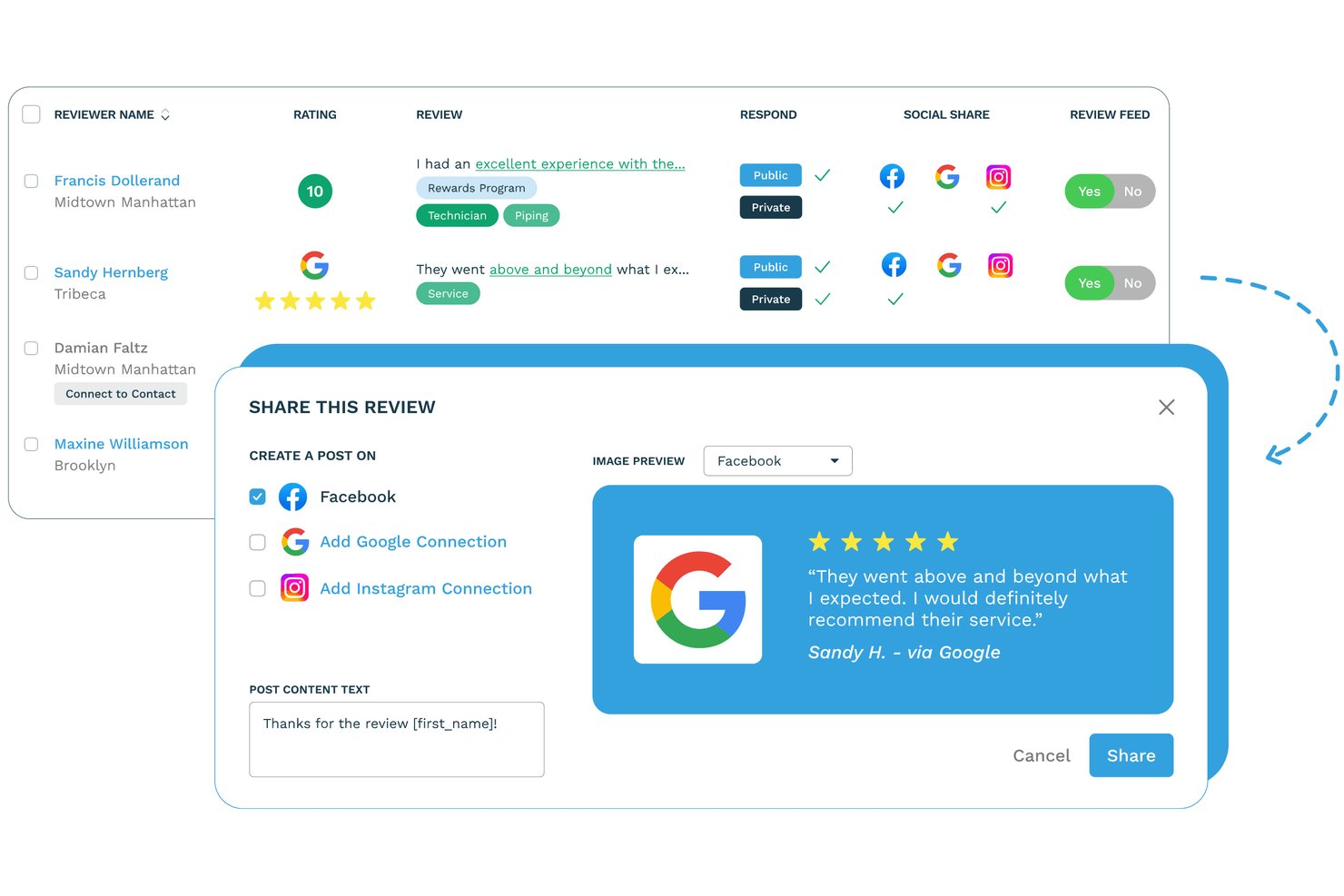
ReputationStacker is a reputation management platform that helps agencies centralize monitoring across 100+ review sites, automates review request campaigns via email and SMS, and surfaces AI-generated responses and sentiment insights across multiple client locations.
Who Is ReputationStacker Best For?
ReputationStacker is a strong fit for agencies managing multi-location clients in review-heavy industries like healthcare, legal, and home services.
Why I Picked ReputationStacker
ReputationStacker earns its spot on my shortlist because of how far its review monitoring reach actually goes. I love that it aggregates reviews from 100+ platforms, including niche industry directories like Healthgrades, Avvo, and Zillow, so agencies serving healthcare or legal clients aren't left chasing reviews across a dozen separate logins. I also like the agency-friendly controls, which make it easy to manage different clients, locations, and team access within the same platform.
ReputationStacker Key Features
- AI review response generation: Drafts contextual, on-brand replies to incoming reviews, with an optional approval step before responses go live.
- NPS collection: Captures Net Promoter Score data from customers alongside the review request survey to quantify sentiment at scale.
- Custom user permissions: Controls which team members can access which client accounts or locations, supporting multi-client agency workflows.
- HIPAA-compliant infrastructure: Enables agencies to manage review campaigns for healthcare clients without compromising patient data privacy.
ReputationStacker Integrations
ReputationStacker has integrations with Google Business Profile and Facebook, plus Zapier and an API for custom connections.
Pros and Cons
Pros:
- HIPAA compliance supports healthcare agency clients
- AI generates on-brand replies to reviews
- Monitors reviews from 100+ industry sites
Cons:
- No tracking for social or web mentions
- White-labeling limited to basic logo removal


RightResponse AI is a reputation management platform for agencies that uses AI to monitor reviews, generate responses, and manage client feedback across multiple review sites.
Who Is RightResponse AI Best For?
RightResponse AI is a good fit for digital marketing agencies managing online reviews for multiple local business clients.
Why I Picked RightResponse AI
RightResponse AI is on my shortlist because its AI handles review responses differently. Instead of generating generic replies, it pulls in "Facts" you've loaded about a client's business, like their happy hour schedule or service specialties, and weaves them into each response. I also like that it picks up on contextual cues in the review itself, so if a customer mentions a specific promotion, the AI references it directly in the reply. For agencies managing multiple client accounts, the Agency Portal lets you switch between clients and locations without juggling separate logins or tabs.
RightResponse AI Key Features
- Sentiment analysis: Breaks down review content by topic and category so you can see what customers are praising or criticizing across locations.
- Competitor review analysis: Runs the same sentiment analysis on competitor reviews, letting you benchmark client performance against local rivals.
- Personalized review requests: Sends AI-generated review request emails or SMS messages that reference specific customer details, like service dates, rep names, or job photos.
- Google Maps rank tracker: Shows how a business ranks on Google Maps for target keywords across a geographic grid, with competitor ranking data included.
RightResponse AI Integrations
Native integrations include Google Business Profile and Yelp. An API is available for custom integrations.
Pros and Cons
Pros:
- Competitor benchmarking tools
- Location-based sentiment breakdown
- Personalized, fact-based AI responses
Cons:
- Some learning curve for setup
- No public integrations listed

Brand24
Best for real-time sentiment analysis

Brand24 gives agencies a way to monitor, analyze, and report on brand reputation across social media, news, blogs, and forums, helping teams spot and address issues before they affect client perception.
Who Is Brand24 Best For?
Brand24 is a good fit for digital marketing agencies that manage online reputation and brand monitoring across multiple clients.
Why I Picked Brand24
I picked Brand24 as one of the best because its real-time sentiment analysis gives my team an immediate read on how audiences feel about a client's brand—not just how often it's mentioned. The AI-powered sentiment scoring automatically categorizes mentions as positive, negative, or neutral, and flags sudden shifts that could signal a PR issue before it escalates. I also like the Anomaly Detector, which alerts my team when mention volume spikes unexpectedly, so we can investigate and respond immediately.
Brand24 Key Features
- Mention feed: Aggregates brand mentions from social media, news sites, blogs, podcasts, and forums into a single real-time stream.
- Influence score: Assigns a score to each source based on its reach, helping you prioritize which mentions deserve the most attention.
- Custom reports: Generates branded PDF reports with mention volume, sentiment trends, and reach data for client presentations.
- Comparison tool: Lets you benchmark a client's brand performance against competitors using side-by-side metrics.
Brand24 Integrations
Integrations include X (Twitter), Facebook, Instagram, YouTube, Spotify, LinkedIn, Reddit, Telegram, TripAdvisor, and TikTok.
Pros and Cons
Pros:
- Sentiment, reach, and intent metrics in one view
- Alerting system for mention spikes and anomalies
- Tracks campaign hashtags with reach and volume metrics
Cons:
- Dashboards can feel cluttered with high volume data
- Some integrations (like CRM) require manual setup
New Product Updates from Brand24

Brand24 Adds Threads Monitoring
Brand24 now monitors public Threads conversations, letting you connect your Threads account and track keyword-matching posts and comments alongside other mentions. For more information, visit Brand24's official site.

Birdeye
Best for white-label reputation management

Birdeye is a reputation management platform built for agencies and multi-location businesses that need to monitor, manage, and improve client reviews, online presence, and customer feedback across multiple channels.
Who Is Birdeye Best For?
Birdeye is a strong fit for digital marketing agencies managing reputation across multiple client accounts, particularly those serving local and multi-location businesses.
Why I Picked Birdeye
Birdeye is on my shortlist because it's built for agencies managing reputation across a large client base. The white-label option lets your agency present the platform under your own brand, so clients interact with your product rather than Birdeye's. The agency dashboard (called Command Central) gives you a unified view of every client account, including adoption metrics, error alerts for broken integrations, and ROI reports you can configure per client. I also like the bulk social publishing feature, where you can group clients by industry or region and push content to hundreds of accounts at once.
Birdeye Key Features
- AI review response agent: Automatically drafts personalized, on-brand replies to reviews by analyzing sentiment, urgency, and any attached images across 200+ review sites.
- Competitive benchmarking: Compares your clients' reputation scores, star ratings, and review counts head-to-head against local competitors, with AI-generated insights on where to improve.
- Listings AI: Manages and syncs business profile information across Google, Apple Maps, Yelp, Facebook, and other high-traffic directories from a single centralized dashboard.
- Customer surveys: Sends automated text and email survey campaigns and uses AI to summarize responses and surface sentiment trends by location.
Birdeye Integrations
Integrations include QuickBooks Online, Salesforce, HubSpot, Clio Manage, Zoho CRM, AthenaHealth, Dentrix, ServiceTitan, Square, and Constant Contact.
Pros and Cons
Pros:
- Error alerts enhance proactive client management
- Bulk social publishing features
- Unified dashboard simplifies multi-client monitoring
Cons:
- AI features might have a learning curve for new users
- Limited customization in some features
New Product Updates from Birdeye
Birdeye Adds Toast Integration for Review Requests
Birdeye’s new Toast integration automatically triggers review requests after completed transactions, helping teams gather more customer feedback with less manual effort. For more information, visit Birdeye's official site.
 .
Synup
Best for automated listings management

Synup helps agencies manage online reviews, business listings, social media, and local SEO from one white-label platform. It’s built for teams handling multi-location clients who need to monitor reputation, improve local visibility, and deliver branded reporting at scale.
Who Is Synup Best For?
Synup is a strong fit for digital marketing agencies and resellers managing local SEO and reputation for multiple business clients under a white-label setup.
Why I Picked Synup
I picked Synup as best for automated listings management because it helps agencies update business information across many client locations without editing each listing one by one. Your team can use automations to push changes to hours, descriptions, categories, and attributes across locations grouped by tag, folder, or category. I also like that Synup tracks listing index status across publishers, so you can show clients whether updates were published and how their local visibility changed. This makes it a good fit for agencies managing multi-location clients that need faster updates, cleaner listings, and client-ready reporting.
Synup Key Features
Some other features in Synup help agencies manage client reputation, reporting, and listing accuracy at scale:
- AI-generated review responses: Draft responses to incoming reviews using client-specific tone and brand voice settings.
- Review generation campaigns: Send automated email or SMS review requests using customizable templates and delivery timing.
- White-label client reporting: Create branded reports with review metrics, listing health scores, and local search data.
- Duplicate listing suppression: Detect and manage duplicate listings across directories from the Synup dashboard.
Synup Integrations
Integrations include Google Business Profile, Google Maps, Facebook, Instagram, LinkedIn, X, Salesforce CRM, HubSpot’s Sales Hub, Zoho, and Square.
Pros and Cons
Pros:
- White-label tools support branded agency reputation services
- Automates review requests through email and SMS campaigns
- Combines reviews, listings, social, and local SEO reporting
Cons:
- Broad feature set may require setup time for agencies
- Advanced workflows rely on CRM or POS integrations

NiceJob
Best for small businesses

NiceJob helps agencies and service-based businesses collect, manage, and showcase client reviews, making it easier to build trust and improve online reputation for their clients.
Who Is NiceJob Best For?
NiceJob is a strong fit for small businesses and the agencies that serve them, particularly in home services, trades, and other local service industries.
Why I Picked NiceJob
I've included NiceJob in my top picks because it's one of the few reputation management tools built specifically around the needs of small, local service businesses — which makes it a natural fit for agencies managing clients in home services, trades, and similar industries. What I like most is the automated review campaign feature: it sends a pre-written SMS and three-email sequence to customers right after a job, without any manual follow-up needed from the business owner. I also like the social proof widgets, which automatically pull new reviews onto a client's website and share them to social media — so agencies can show tangible, visible results without building custom solutions. For agencies managing multiple small business clients, that kind of low-touch automation across accounts is genuinely useful.
NiceJob Key Features
- Referral campaign tool: Send automated referral invitations to existing customers, prompting them to recommend the business to friends and family.
- Insights and feedback collection: Gather post-job customer feedback through surveys to surface satisfaction data before it becomes a public review.
- AI Replies: Automatically generate and send responses to incoming reviews, reducing the manual effort of managing review responses across platforms.
- Website social proof widgets: Embed live review feeds directly onto a client's website to display up-to-date customer stories without manual updates.
NiceJob Integrations
Integrations include QuickBooks, Housecall Pro, Jobber, Clio, ServiceTitan, Salesforce, HubSpot, Zapier, Google My Business, and Facebook.
Pros and Cons
Pros:
- Customer journey and interaction tracking
- Customizable review campaigns
- Automatic social proof generation and website optimization
Cons:
- No built-in customer support features
- Basic reporting and analytics capabilities

Best for SEO agencies

BrightLocal gives agencies and digital marketing teams a platform to manage, monitor, and improve client reputations across local search, helping you track reviews, citations, and local rankings from one dashboard.
Who Is BrightLocal Best For?
BrightLocal is a strong fit for local SEO agencies managing reputation and search visibility across multiple client accounts.
Why I Picked BrightLocal
I've included BrightLocal in my top picks because it's one of the few reputation management platforms built specifically around local SEO—and that distinction matters a lot for agencies. I like that reputation management isn't bolted on as an afterthought here. Review generation via SMS, email, and in-store campaigns connects directly to local ranking performance, so my team can show clients a clear line between review volume and search visibility. The white-label reporting also means I can generate branded, client-ready reports that pull in review data alongside rank tracking and citation health—without manually stitching anything together. That's a real advantage when you're managing a book of local SEO clients and need to demonstrate impact at scale.
BrightLocal Key Features
- Google Business Profile management: Audit, update, and monitor GBP listings across all client accounts from a single dashboard.
- Local citation tracker: Identify missing, duplicate, or inconsistent citations across directories to strengthen local search presence.
- Reputation manager: Monitor reviews across multiple platforms, including Google, Yelp, and Facebook, in one consolidated feed.
- Search rank tracker: Track local search rankings for client keywords across Google, Bing, and Google Maps at a city or zip code level.
BrightLocal Integrations
Integrations include Google Business Profile, Google Analytics, Facebook, Yelp, Trustpilot, TripAdvisor, Foursquare, Bing Places, Twitter, and an API for custom integrations.
Pros and Cons
Pros:
- Localized keyword tracking
- Detailed citation tracking
- Local SEO and reputation integration
Cons:
- Less tools and features for social media management
- Heavy focus on SEO only

Grade.us
Best for review generation

Grade.us gives agencies a centralized platform to manage, monitor, and grow client reputations by automating review requests, tracking feedback across major sites, and providing white-label reporting for multi-location businesses.
Who Is Grade.us Best For?
Grade.us is a strong fit for digital marketing agencies managing reputation for multiple local business clients across industries like healthcare, home services, and hospitality.
Why I Picked Grade.us
Grade.us earns its spot on my shortlist because of how well it handles review generation at scale for agencies. I like that it lets my team run automated review request campaigns via email and SMS, with customizable drip sequences that follow up with clients' customers without manual effort. The funnel-style review flow is particularly useful—it routes happy customers toward public review sites while capturing negative feedback privately before it goes public. For agencies managing dozens of local business clients, that kind of built-in triage makes a real operational difference.
Grade.us Key Features
- White-label client portal: Give each client their own branded dashboard to view review activity, ratings, and campaign performance.
- Review monitoring: Track incoming reviews across Google, Facebook, Yelp, and other major platforms from a single agency-level view.
- Reporting and analytics: Generate client-ready reports showing review volume, average ratings, and sentiment trends over time.
- Multi-location management: Manage review campaigns and monitor reputation across multiple business locations under one account.
Grade.us Integrations
Integrations include Google, Facebook, Yelp, and an API for custom integrations.
Pros and Cons
Pros:
- Print-based review requests for offline customers
- Client-specific review panels
- Highly customizable white-label options
Cons:
- No sentiment analysis
- Lack of built-in survey tools

InMoment
Best for customer feedback

InMoment gives agencies a platform to gather, analyze, and act on client feedback across multiple channels, helping them manage online reputation and improve customer experience for brands in competitive markets.
Who Is InMoment Best For?
InMoment is a strong fit for mid-to-enterprise agencies managing reputation and customer experience programs across multiple client brands or industries.
Why I Picked InMoment
I picked InMoment as one of the best because of how it handles customer feedback at scale across multiple touchpoints. I like that it combines survey tools, review monitoring, and text analytics in one place, so my team can track what customers are saying across channels without jumping between platforms. The AI-powered sentiment analysis is particularly useful—it surfaces themes and patterns in open-ended feedback that would take hours to manually review. For agencies managing reputation across several client brands, that kind of structured insight from unstructured feedback is genuinely hard to replicate.
InMoment Key Features
- Listings management: Manage and optimize local business listings to improve visibility in local search results across multiple locations.
- Automated review requests: Trigger review solicitation campaigns via direct integrations with platforms like Salesforce and HubSpot to increase review volume.
- AI-powered review responses: Generate on-brand, context-aware replies to customer reviews automatically, balancing consistency with authenticity.
- Competitor analysis: Compare your clients' ratings, reviews, and local search performance against competitors to surface strategic insights.
InMoment Integrations
Integrations include Salesforce, Marketo, Zendesk, and an API is available for custom integrations.
Pros and Cons
Pros:
- Predictive customer behavior analytics
- Real-time feedback capture
- Advanced segmentation capabilities
Cons:
- Limited flexibility and ease of integration with other tools
- Time-consuming report customization and generation

Mention
Best for real-time social listening

Mention gives agencies a way to monitor brand reputation across social media, news, blogs, and forums, helping teams identify and respond promptly to online conversations that impact their clients.
Who Is Mention Best For?
Mention suits digital marketing and PR agencies that manage brand monitoring and social listening across multiple clients.
Why I Picked Mention
I included Mention on my shortlist because it surfaces brand conversations in real time. I like that it monitors across social media, news sites, blogs, and forums simultaneously, so my team isn't piecing together client coverage from multiple tools. The real-time alert system is especially useful—when a client gets mentioned in a breaking news story or a viral social post, I can flag it and respond before it gains traction. Mention's sentiment analysis also helps me determine whether a spike in mentions is positive or negative.
Mention Key Features
- Boolean search alerts: Build custom monitoring queries using boolean operators to track precise keyword combinations across web and social sources.
- Share of voice reporting: Compare a client's online presence against competitors to measure their slice of the broader industry conversation.
- White-labeled reports: Generate branded reports with your agency's logo and colors to share directly with clients.
- Spike alerts: Get notified when mention volume for a tracked topic spikes, signaling a potential PR issue or viral moment.
Mention Integrations
Integrations include Facebook, Instagram, X (Twitter), LinkedIn, TikTok, Pinterest, YouTube, Google Business Profile, Slack, and Canva.
Pros and Cons
Pros:
- Real-time monitoring of mentions
- In-depth sentiment and historical data analysis
- Advanced mentions filtering and prioritization
Cons:
- Reported inconsistencies in data accuracy
- Limited automation options
Annen programvare for omdømmehåndtering for byråer
Her er noen flere alternativer for programvare for omdømmehåndtering for byråer som ikke kom med på kortlisten min, men som likevel er verdt å se nærmere på:
- Reputation.com
For healthcare industry
- Vendasta
For digital marketing agencies
- Podium
For local businesses
- Yext
For data accuracy
- Social Places
For restaurant chains
- Aicarma
For brand visibility tracking
- ReviewFlowz
For consistent fresh feedback
- SurveySparrow
For AI-driven review analysis
- ReviewInc
For multilingual review management
- Brandwatch
For social media analytics
- Widewail
For automated review responses
- ICUC
For 24/7 moderation services
- LocalClarity
For detailed location insights
- Localyser
For multi-location feedback


How I Evaluate Reputation Management Software for Agencies
When an agency manages reviews for 50+ client locations, the baseline matters—so I split evaluation into core functionality every tool must have and the factors that separate the best from the rest.
Core Functionality (Table Stakes For This List)
When I'm selecting tools for my list, I rank each one on a scale from 0 (does not offer the functionality) to 5 (excels in this area) for each core functionality listed below. Then, I calculate the tool's total score into a percentage. Each tool needs to achieve a minimum total score of 65% to be considered for inclusion.
- Multi-Client Account Management: I look for a centralized dashboard where you can switch between client accounts without logging in and out, with role-based permissions that keep each client's data separate.
- Review Monitoring & Aggregation: Each tool should pull reviews from major platforms like Google, Yelp, and Facebook—plus industry directories—into one inbox so nothing slips through the cracks.
- Review Response Management: I evaluate whether you can reply to reviews across platforms directly from the tool, including features like response templates and approval workflows for agency teams.
- White-Label & Client Reporting: Agencies need to deliver branded reports, so I check for customizable templates, logo and color theming, and scheduled report delivery to client stakeholders.
- Review Request Automation: I look at how the tool handles outbound review campaigns—whether it supports email, SMS, or both—and how much control you get over timing, sequencing, and targeting.
- Sentiment & Mention Tracking: The tool should surface brand mentions across social, news, and web sources with sentiment analysis, giving agency PMs a quick read on how a client's brand is trending.
Once I have a list of tools that meet the criteria, I consider what sets each platform apart.
Differentiating Factors (What Sets Vendors Apart)
Here's how I compare and contrast different vendors:
Standout Features
AI-powered response generation is a major differentiator when your team handles hundreds of reviews weekly across client accounts. I look for tools that draft brand-aligned replies rather than generic templates. Competitor benchmarking matters too—it lets you show clients how their ratings and review volume compare to local competitors, which adds real weight to strategy conversations. I also evaluate whether the platform offers a client-facing portal so clients can self-serve their reputation data without waiting on a scheduled report.
Beyond Features
Pricing structure matters a lot for agencies. I check whether the vendor prices per location, per seat, or per client—and whether that model still makes sense when you scale from 20 to 200 accounts. Integration with the broader agency tech stack is another factor I weigh, especially connections to CRMs like HubSpot or Salesforce and project management tools your team already uses. I also evaluate onboarding support, because migrating dozens of client accounts onto a new platform is a real lift without dedicated agency enablement resources.
Slik velger du programvare for omdømmehåndtering for byråer
Det er lett å gå seg vill i lange funksjonslister og kompliserte prisstrukturer. For å hjelpe deg med å holde fokus mens du går gjennom din unike prosess for valg av programvare, får du her en sjekkliste over faktorer du bør ha i bakhodet:
| Faktor | Hva bør vurderes |
| Skalerbarhet | Vil programvaren vokse i takt med virksomhetens behov? |
| Integrasjoner | Kan den integreres med de eksisterende verktøyene og systemene dine? |
| Tilpasningsmuligheter | Kan du tilpasse programvaren til dine spesifikke krav? |
| Brukervennlighet | Er programvaren intuitiv og enkel for teamet ditt å lære? |
| Budsjett | Holder prisen seg innenfor de økonomiske rammene dine? |
| Sikkerhetstiltak | Finnes det tilstrekkelige sikkerhetstiltak for å beskytte dataene? |
| Kundestøtte | Er det pålitelig kundestøtte tilgjengelig når du trenger det? |
| Rapporteringsverktøy | Tilbyr den omfattende rapportering for å følge med på ytelsen? |
Trender innen programvare for omdømmehåndtering for byråer
I arbeidet med undersøkelsen hentet jeg inn utallige produktoppdateringer, pressemeldinger og lanseringslogger fra ulike leverandører av programvare for omdømmehåndtering for byråer. Her er noen av trendene som er i ferd med å vokse frem, og som jeg følger med på:
- AI-drevet sentimentanalyse: Mange verktøy bruker nå kunstig intelligens for å gi mer nøyaktig sentimentanalyse. Dette hjelper bedrifter med å forstå kundenes følelser i anmeldelser og omtaler i sosiale medier.
- Kundestemmeprogrammer: Det legges stadig større vekt på å samle inn kundetilbakemeldinger gjennom ulike kanaler, ikke bare tekst. Denne trenden handler om å samle inn og analysere muntlige tilbakemeldinger, noe som kan gi mer omfattende innsikt.
- Avansert datavisualisering: Verktøy tilbyr avansert datavisualisering for å hjelpe brukerne med å tolke tilbakemeldinger enklere. Dette gjør det lettere for team å identifisere trender og mønstre i kundenes sentiment.
- Forbedrede personvernkontroller: Etter hvert som personvern blir stadig viktigere, tilbyr flere verktøy forbedrede personvernfunksjoner. Dette omfatter bedre kontroll over hvordan kundedata lagres og brukes.
- Lokalisert anmeldelseshåndtering: Etter hvert som bedrifter ekspanderer globalt, blir det avgjørende å håndtere anmeldelser i ulike regioner. Verktøy tilbyr lokalisert håndtering for å behandle anmeldelser og tilbakemeldinger på forskjellige språk og i ulike regioner.
Hva er programvare for omdømmehåndtering for byråer?
Programvare for omdømmehåndtering for byråer hjelper bedrifter med å overvåke og administrere sin tilstedeværelse på nettet på tvers av ulike plattformer. Markedsførere, PR-team og kundeserviceledere bruker disse verktøyene til å forbedre merkevarebildet og svare på kundetilbakemeldinger.
Funksjoner som sentimentanalyse, anmeldelseshåndtering og datavisualisering hjelper med å forstå kundenes følelser, håndtere tilbakemeldinger og tolke data effektivt. Dette gjør det mulig for brukerne å opprettholde et positivt omdømme på nettet, noe som til syvende og sist fremmer tillit og troverdighet hos målgruppen.
Funksjoner i programvare for omdømmehåndtering for byråer
Når du velger programvare for omdømmehåndtering for byråer, bør du se etter følgende viktige funksjoner:
- Sentimentanalyse: Hjelper med å forstå kundenes følelser ved å analysere anmeldelser og omtaler i sosiale medier.
- Anmeldelseshåndtering: Gjør det mulig å overvåke, samle inn og svare effektivt på kundeanmeldelser.
- Datavisualisering: Gir detaljerte visuelle rapporter som hjelper med å tolke kundetilbakemeldinger og trender.
- Personvernkontroller: Sikrer at kundedata håndteres på en trygg måte og i samsvar med personvernregelverket.
- Lokalisert håndtering: Håndterer anmeldelser og tilbakemeldinger på flere språk og i ulike regioner for global rekkevidde.
- Automatiserte forespørsler om anmeldelser: Sender forespørsler til kunder om å legge igjen anmeldelser, noe som gjør det enklere å samle inn tilbakemeldinger.
- Varsler i sanntid: Varsler deg umiddelbart når merkevaren din blir omtalt, slik at du kan svare raskt.
- Funksjoner for hvitmerking: Lar byråer tilby tjenester med egen merkevare, noe som styrker verdiforslaget overfor kundene.
- Kundestemmeprogrammer: Samler inn og analyserer muntlige tilbakemeldinger for å gi mer omfattende innsikt i kundeopplevelsene.
Fordeler med programvare for omdømmehåndtering for byråer
Implementering av programvare for merkevare- og omdømmehåndtering for byråer gir flere fordeler for teamet og virksomheten din. Her er noen av fordelene du kan se frem til:
- Forbedret merkevarebilde: Håndtering av positive og negative anmeldelser samt sentimentanalyse kan forbedre virksomhetens omdømme på nettet og oppfatningen av virksomheten i offentligheten.
- Økt kundetillit: Personvernkontroller og nøyaktig datahåndtering bidrar til å bygge tillit hos kundene dine og sikrer at informasjonen er trygg.
- Rask respons på tilbakemeldinger: Varsler i sanntid gjør det mulig for teamet ditt å håndtere kundetilbakemeldinger raskt og forbedre kundetilfredsheten.
- Bedre beslutningstaking: Datavisualisering og analyse gir innsikt i kundeatferd og støtter mer velinformerte forretningsbeslutninger.
- Større global rekkevidde: Lokalisert håndtering gjør det mulig for virksomheten din å håndtere tilbakemeldinger på ulike språk og bidrar til å utvide rekkevidden.
- Effektiv innsamling av tilbakemeldinger: Automatiserte forespørsler om anmeldelser forenkler innsamlingen av kundetilbakemeldinger og sparer tid og innsats.
- Tilpassede tjenestetilbud: Funksjoner for hvitmerking gjør det mulig for byråer å tilby verktøy for omdømmehåndtering med egen merkevare, noe som gir kundene mer verdi.
Kostnader og priser for programvare for omdømmehåndtering for byråer
Ved valg av programvare for omdømmehåndtering for byråer er det nødvendig å forstå de ulike prismodellene og abonnementene som er tilgjengelige. Kostnadene varierer avhengig av funksjoner, teamstørrelse, tillegg og mer. Tabellen nedenfor oppsummerer vanlige abonnementer, gjennomsnittsprisene deres og typiske funksjoner som er inkludert i løsninger for programvare for omdømmehåndtering for byråer:
Sammenligningstabell for omdømmehåndteringsprogramvare for byråer
| Plantype | Gjennomsnittspris | Vanlige funksjoner |
| Gratisplan | $0 | Grunnleggende overvåking av anmeldelser, enkel analyse og begrenset kundestøtte. |
| Personlig plan | $10-$30/bruker/måned | Anmodninger om anmeldelser, sentimentanalyse og kundestøtte via e-post. |
| Bedriftsplan | $50-$100/bruker/måned | Avansert analyse, varsler i sanntid og tilbakemeldinger fra flere kanaler. |
| Storbedriftsplan | $150-$300/bruker/måned | Tilpassede integrasjoner, dedikert kundeansvarlig og omfattende rapportering. |
Omdømmehåndteringsprogramvare for byråer – vanlige spørsmål
Her er noen svar på vanlige spørsmål om omdømmehåndteringsprogramvare for byråer:
Hva er de fire komponentene i omdømmehåndtering?
De fire komponentene i omdømmehåndtering er overvåking, respons, forbedring og markedsføring. Overvåking innebærer å følge med på omtaler av merkevaren din på nettet, mens respons handler om å håndtere tilbakemeldinger raskt. Forbedring fokuserer på å bruke tilbakemeldinger til å gjøre tjenestene dine bedre, og markedsføring fremhever positive opplevelser for å styrke merkevarebildet ditt.
Hvor lang tid tar omdømmehåndtering?
Omdømmehåndtering er en kontinuerlig prosess, og tidsrammen varierer ut fra mål og strategier. Det tar vanligvis minst seks måneder å se betydelige endringer i tilstedeværelsen på nettet og søkemotorrangeringene. Regelmessig overvåking og respons bidrar til å opprettholde og forbedre omdømmet over tid.
Hvordan måler man hvor vellykket omdømmehåndteringen er?
Hvor vellykket omdømmehåndteringen er, måles gjennom forbedringer i anmeldelser på nettet, kundetilfredshet og merkevaresentiment. Endringer i rangeringer i søkemotorer og mengden positive tilbakemeldinger over tid kan også indikere suksess. Analyseverktøy bidrar til å tallfeste disse målene på en effektiv måte.
Kan omdømmehåndteringsprogramvare integreres med andre verktøy?
Ja, mange løsninger for omdømmehåndteringsprogramvare tilbyr integrasjoner med CRM-systemer, sosiale medieplattformer og analyseverktøy. Disse integrasjonene bidrar til å effektivisere arbeidsflyter og sentralisere data, slik at omdømmehåndtering på tvers av flere kanaler blir enkelt.